{The Minister of Trade and Industry, François Kanimba has said that public procurement officers must respect 10% of chances reserved for industries and service providers in the country as per article 41 article of Public Procurement Act, meant to promote local products and services.}
Some of private investors have complained that they do not get such opportunities of supplying to public institutions but, instead, offered to foreigners.
The matter was last week discussed in a senatorial meeting where concerns were raised over giving many of the public tenders to foreign suppliers, which was looked at a deterrence to the development local capacities and industries that would have produced for export as well to reduce balance of trade deficit.
Kanimba asked government institutions to implement the public procurement law.
“We have a public procurement law which offers chances to those operating within the country. The government institutions need to identify Rwandan industries involved in the bidding and accord them chances,” he said.
“We have a great task of reforming public procurement law implementation to promote products made in Rwanda. I hope the parliament will help to achieve this,” he said.
Parents of children that have been undergoing rehabilitation in the 9th intake at Iwawa Rehabilitation Center have argued their children to reform and become good citizens of Rwanda because wrong acts reflected in moral decay are so costly to the country.
Parents made the call last Friday during the passing out of 1,032 young boys who completed different vocational courses at Iwawa Rehabilitation center, Western Province in Lake Kivu.
Freddy Kabanda, who spoke on behalf of parents at the function, called on parents to be more keen in upbringing their children in the right way, avoid drugs and other vises that make them become a burden to the country.
The representative of the trained youth, Kayiranga Emmanuel, assured parents, trainers and the government that they have been fully rehabilitated and will use the acquired skills to transform their lives and contribute to national development.
The Minister of Sports and Culture, Uwacu Julienne, called on parents to concentrate efforts in helping youth to get education and keeping them from bad immorality.
“We have to take care of our children and provide for them. Just as they need food, they as well need parents’ affection. Let’s be close to them,” she said.
The Minister of Youth and ICT, Nsengimana Jean Philbert asked the graduands to maximize benefits of what they learnt. ”You must set plans for the future. There are many opportunities. If you want to get something you have to work for it and a man determines his destiny. If you want development opportunities you will get them. Work in cooperatives, we will support you,” he said.
The former street kids and drug abusers were empowered with such skills as; construction, tailoring and carpentry. They have also learnt about agriculture among others.
{Patents that access health care at Nyamirama health center, Ngera sector in Nyaruguru district have expressed frustrations over the part time delivery of services since it’s closed during nights and over the weekends and have requested for concerned parties to intervene.}
This health center receives patients from Gisagara district in Kigembe and Nyanza sectors as well as Mukura sector in Nyanza district.
They requested ministry of health to recruit an adequate number of nurses so that medical services can be accessed 24 hours a day, seven days a week. “When a person falls sick during the night, we have nowhere to go for treatment since nurses do not work night shifts. We have to wait until morning,” said Mukamana, a resident of Nyamirama sector.
“We wish at least one or two nurses would take nigh duties at the health center. This can help in case an expecting mother gets labour pains during night or other patients. We’re calling upon authorities to enable us access health care services all the time,” said Uwera.
The executive secretary of Ngera sector, Simon Ndayiragije says that they have been receiving citizens’ complaints for long. However, he said, operations of health centers, as per guidelines from the Ministry of Health, indicate that such centers work under the similar conditions as Nyamirama. He promised to do more advocacy to the concerned parties.
“Really, the health center needs to be upgraded since it receives many patients,” he said. Residents also decry poor services at the health center which they say are too slow provided by only two nurses.
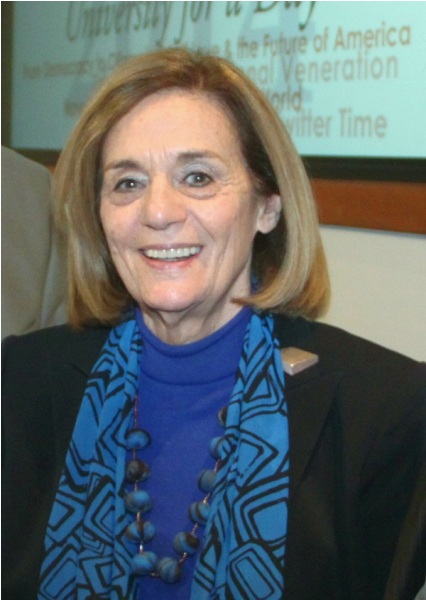
In an online interview IGIHE had with Sondra Myers, a rousing author and frequent lecturer on the arts, humanities and civil society, she introduced us to her journey as a writer and how Rwanda’s success story after the genocide sharpened even more of her will to learn about Rwanda. Sondra tackled various subjects and brought her personal outlook to the role of the Rwandan education system in shaping interdependence, civic responsibility and prosperity.
As a connoisseur and author of different books with democracy as main theme, Sondra also shared with us evocative insights as to how she perceives President Paul Kagame’s decision to stand for a third term as well as her key takeaways after her expeditions and her learning about Rwanda.
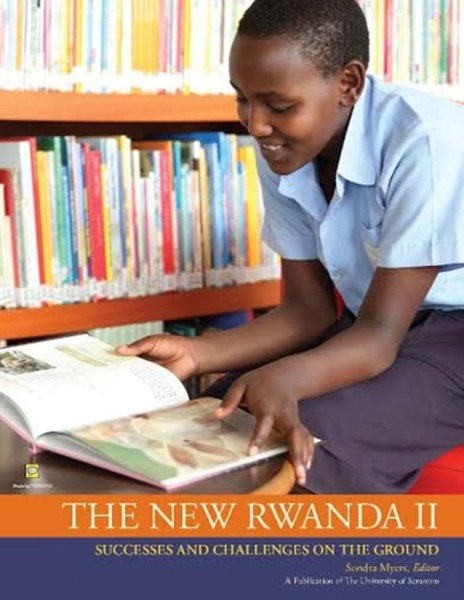
{{IGIHE: What inspired you to write your latest book on Rwanda: “The New Rwanda: Success and challenges on the ground”?}}
{{Sondra Myers:}} I wrote the second book to bring to people’s attention–Rwandans, Americans and anyone else interested, that there were many examples of success in Rwanda; in education, healthcare and numerous other areas, even as there were challenges to be addressed. Rwanda was and is a work in progress–that is in the nature of democracy–it is never a completed task. Rwandans are encouraging home-grown solutions–and they have the traditions that help them to move forward–whereas in many societies, some traditions hold people back. Still they need the encouragement, information and consultation with outsiders to keep in sync with the modern world.
{{IGIHE: Did you learn anything from writing your book? If so what was it? }}
{{Sondra Myers: }} My learning about Rwanda inspired me to write the first book and then the second; I was especially impressed with the energy, creativity and self-confidence of the young people I met; I was dazzled by the success of the Gacaca courts, which I consider to be the most proactive and effective example of truth and reconciliation in the world. The fact that Rwanda does not tolerate corruption is a very big plus, along with its modern use of its enlightened traditions. I call corruption a “weapon of mass destruction.” It is the enemy of progress.
I see the books as useful and encouraging for Rwandans and important for the outside world. The Rwandan Ministry of Foreign Affairs has made the books available in Rwandan embassies world-wide.
{{IGIHE: What is the role of education in democratization process?}}
{{Sondra Myers:}} I believe that the most important–the essential element in democracy is citizens who consider themselves responsible for the public good. You can have democracy without a constitution but you cannot have it without informed and engaged citizens. It takes a while for the culture of citizenship to develop–and education can be a great help in forging a free and open society.
{{IGIHE: Do you recall how your interest in writing about Rwanda originated? }}
{{Sondra Myers:}} I met with my old friend Mike Fairbanks when he was receiving an honorary degree at the University of Scranton. Not having seen each other in a long time, we each told the other what we were doing. He, in brief, was doing economic development, with a focus on entrepreneurship in a number of African countries.
I was doing civic development–helping to develop a culture of citizenship in places where people had not had the opportunity for it, having been subjects at best and even victims of their leaders. My focus had been on what higher education can do to prepare people for democratic citizenship. Accordingly, I would organize and moderate round table discussions with educators on the subject. By the time Mike and I were both ready to do this, he said “It’s got to be Rwanda. Rwanda will be the flagship country of Africa in time!”
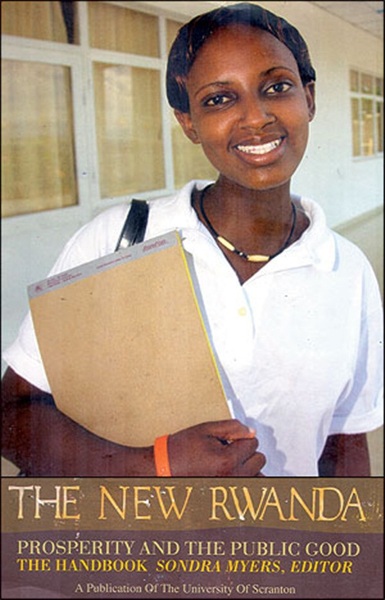
One of the recommendations that came out of that meeting, held in April, 2007, was that there needed to be more public conversation about the subject. That prompted me to do the first Rwanda handbook, The New Rwanda: Prosperity and the Public Good.” My first two handbooks–Democracy is a Discussion (One and Two), had been successful in fostering public discussion and so I modelled the first book after them, but made it country-specific.
{{IGIHE: what are your views about Rwanda`s democracy and the latest referendum whereby the people of Rwanda allowed President Paul Kagame to run for a third term?}}
{{Sondra Myers:}} Democracy is a perpetual work in progress–and Rwanda has gone far in a short time in setting itself in the direction of democracy. It takes people who have been subjects for a long time to believe that they have the right to be responsible for the public good–so educating them to understand that is important. Young people, of course, are very important to the project of building a democracy.
I have met a number of young people in Kigali who have the will and the skills to be good citizens. While there is a great stress on building entrepreneurship, I see citizenship as a partner to entrepreneurship. We need in citizens the same kind of excitement and determination that entrepreneurs have in building their own fortunes and the economic strength of the society to use in building a strong civil society. Abraham Lincoln, one of America’s greatest and most famous presidents, spoke of “government of the people, by the people and for the people.” That is the goal of all people–that is where true freedom lies–and so we are all on that path.
{{IGIHE: What is your current or future project when it comes to Rwanda?}}
{{Sondra Myers:}} I am considering putting my two books in one volume, with a new introduction and a third “book,” looking at the development of the country and its institutions and what it sees as its greatest needs, This third part would be more like an executive summary of highlights over the past couple of years and even new or newly discovered challenges. I might call it The New Rwanda Reader. I am still in the “testing the waters” stage on this new volume–nothing is set in stone.
{Some farmers from Gatsibo district have adopted contract farming where they sign agreements with produce buyers and sell the impending harvests before time of harvesting in a bid to earn an income and meet household needs. }
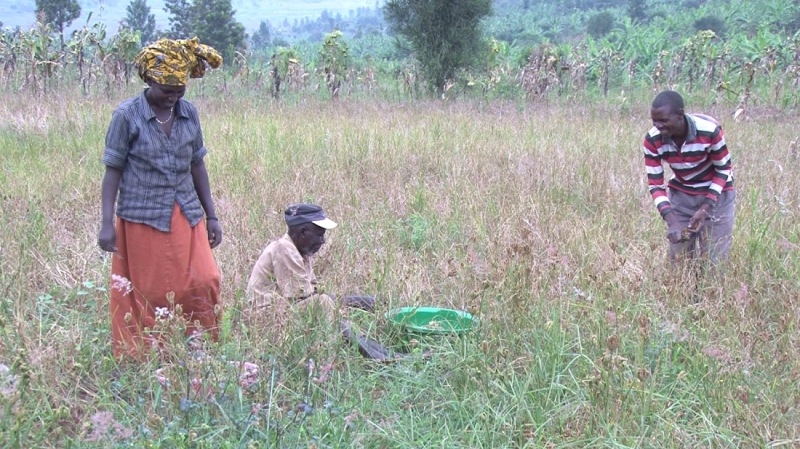
The system Gatsibo residents call “pourcent” is practiced through selling crops before maturity. It is exercised by farmers experiencing too much poverty but get very little money from rich farmers after signing contracts on how to settle transactions when harvesting is due. Some farmers have however cried foul over the system, saying they are paid peanuts by produce buyers.
“We often spend earnings from the harvests on paying debts. When I borrow Rwf10,000 from a produce buyer, he/she may take about three bags of sorghum as a repayment, with each bag weighing one hundred kilograms from which they may get about Rwf 40,000. We lose a lot,” laments Mukamabano Daforoza, a resident of Rwikiniro cell, Rwimbogo sector.
The acting mayor of Gatsibo district, Nzabonimpa Emmanuel, has encouraged farmers to save for hard up days to avoid such outright losses and sell their produce to licensed buyers using well known measures of scale other than using random measurements such as cups and bowls.
{Rwanda National Police (RNP) has pointed out that girls were mostly affected by human trafficking compared to boys. This was revealed on Thursday when RNP in Gicumbi district held discussions with Rwandan Youth Volunteers in Community Policing-RYVCP studying at the University of Technology and Arts of Byumba-UTAB.}
Inspector of Police (IP) Alphonse Kayonga, the District Community Liaison Officer (DCLO) for Gicumbi taught the youth how human trafficking can be tackled.
He requested them to be vigilant and avoid whoever pretends to engage them in human trafficking deals as they try to seduce the youth by promising scholarships or best schools in foreign countries.
“In your response against human trafficking, you have to mobilize your peers to detach themselves from whoever comes promising the moon and mountains because they have bad intentions behind such deeds. You have to immediately inform the police in case you get in contact with such criminals,” he said.
The RYVCP coordinator, Nganeyezu Emmanuel commended the police for the offered tips and requested his peers to always cooperate with police to fight the crime.
The US report released in 2015 on human trafficking/slavery, indicated that there are many foreigners that transit through Rwanda before being taken to other countries where they are engaged in slavery-like activities especially the Middle East.
The Rwanda National Police spokesperson, ACP Célestin Twahirwa told IGIHE that there is no evidence to attest to foreigners trafficked in Rwanda but some Rwandans have been trafficked abroad.
“The crime of human trafficking is new in Rwanda. We have not yet seen people being trafficked to Rwanda save for the 57 Bengalis intercepted in transit to Mozambique; we helped them return to their country. They were going elsewhere not in Rwanda,”
From June 2014 to January 2015, four people were found guilty of engaging in human trafficking.
{Before I proceed to give you 5 things all women of class want from their man, I want to take a minute to shed more light on who a woman of class is.}
A woman of class is very different from the average woman. She’s the type of woman who values womanhood, and conducts herself with some decorum. A woman of class is courteous, she isn’t trashy and she commands more respect than the average woman. Simply put, she is responsible; she is the type of woman who sets reasonable goals for herself and achieves them. She’s not the type of woman to depend on a man for survival, and when she has a man, she supports him fully. This type of woman is the ideal woman, preferred by men over the average woman. But she doesn’t come easy though; women like these have standards for the man they want, and they never compromise.
There are things (character traits, mostly) expected of men who want to be in the life of a woman of class, and they must fulfil all conditions to have a successful relationship with her. Here are 5 of those things.
{{1. THEY WANT ATTENTION / LISTENING EARS}}
If you’re not ready to be available and reachable to a woman of class when she needs you, you might as well kiss the relationship goodbye. Women like this crave attention and listening ears from their man. You got to be willing to listen to everything and anything she has to say if you want to keep her happy. She doesn’t want the type of man who would prioritise his buddies or video game over her, no; she’s way too grown for that.
{{2. THEY WANT TO BE SPOILED}}
To be with this type of woman, you must be very romantic, because she wants you to spoil her in whatever little way you can. Buy her gifts, take her out on special dates and vacations, drop her surprise romantic notes, and remember important occasions in her life.
{{3. THEY WANT HONESTY AND FAITHFULNESS}}
For a woman of class, honesty is everything, and if you’re going to be in her life, you must abide by that code. If you say you love her, let it come from the heart, and not some concocted lie towards a hidden end. Be honest about everything — your income, background, and daily dealings. And you must be a one woman man.
{{4. THEY WANT RESPECT}}
Women have rights, they have feelings, they have emotions, and they expect the men in their lives to be mature enough to respect them. Treat them the way you would your mother, talk to them softly and be in control of your emotions at all times. They don’t want the type of man who would take out his anger and frustrations on them when things get bad.
{{5. THEY WANT DRIVE}}
Women of class are usually goal-setters and achievers, so there’s no way they would settle for a man who is anything less than ambitious and driven, because they too want someone who would motivate them to do more and reach even higher grounds. And of course, a man without drive and ambition is a man who may likely not be great — what right-thinking woman would consider being with someone like that?
So, guys, in a nutshell, women of class do not want your money or wealth, they just want you to be caring and responsible. Not too much, is it? Lol.
{Rwanda National Police (RNP) has issued fresh stern warning against drivers, who violate traffic rules and try to bribe Police officers as a means to escape penalties.}
The warning follows three separate incidents on Saturday when three drivers attempted to offer bribes to Police officers, which led to their arrest.
All suspected bribery cases happened in Rwamagana District.
One of the suspects attempted to offer a bribe of Rwf5, 000 after he was found using an expired mechanical inspection certificate while another one, who tried to offer a bribe of Rwf20, 000 had been found without a cattle transport authorisation, normally issued by a local leader in the sector where the cows originate.
The third suspect, a truck driver was arrested for allegedly attempting to give a bribe of $10 to a Police officer to avoid being penalised for over speeding.
Truck drivers have been blamed for playing a big part in the spate of fatal accidents in the country, mainly due to speeding.
All suspects are currently detained at Kigabiro Police station as investigations continue.
Inspector of Police Emmanuel Kayigi, the Police spokesperson for the Eastern Province, warned that there will be “no mercy for anyone who tries to offer a bribe or corrupt anyone as means to acquire illegal services or correct the wrong with a wrong.”
“We have said this time and again… corruption or bribery is unacceptable either in the country. Fighting it at all levels is among the police priorities,” IP Kayigi said.
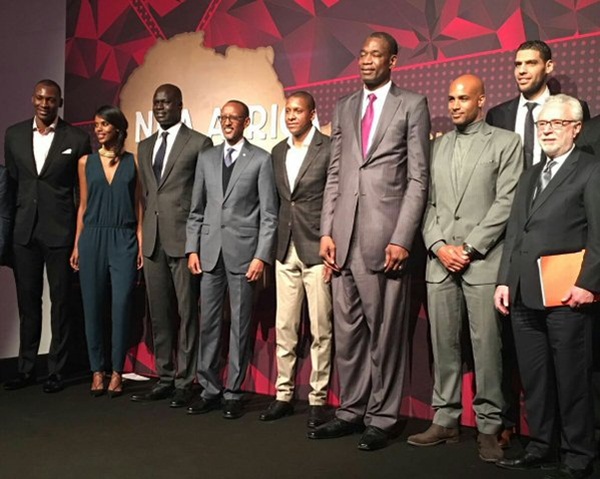
{President Paul Kagame has attended NBA Africa Summit with the American Commissioner of National Basketball Association (NBA), Adam Silver and Masai Ujiri, the manager Toronto Raptors Basketball Team in Canada.}
The festive feeling that started to percolate in downtown Toronto on Thursday roars into a basketball-themed beast of its own for the weekend, culminating in the 65th edition of the all-star game today.
During his speech, Kagame thanked Ujiri as well as African players for their work in promoting basketball on the continent, according to the Twitter account for his office.
In a conversation President Kagame held with CNN journalist, Wolf Blitzerhe, he lauded Masai Ujiri as well as other Africans for their contribution in the development of Basketball in Africa.
He said that sports brings together people and instills a value of commitment and a spirit of team and competition spirit.
President Kagame said that Rwanda has committed to playing a leading role in such activities supposed to contribute to the development of Africa and the World in general.
He highlighted that countries like United States of America and Canada must perceive African countries as partners since most areas of investments are found on this continent.
President Kagame said that Rwanda leadership concentrates efforts in transforming livelihoods of her people with Rwandans themselves being at the center of all innovations.
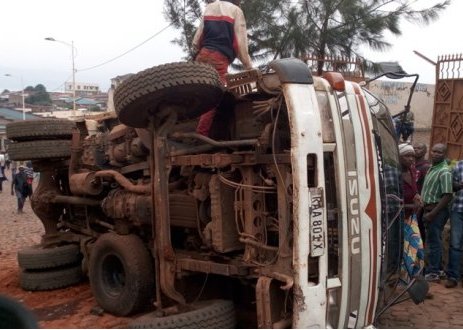
{One person, a turn-boy, was yesterday afternoon severely injured when driver of a vehicle carrying bricks failed to negotiate a turn and got derailed in Gihundwe cell of Kamembe sector at a place known as Matheus, Rusizi district. }
The injured, Baranyeretse Alphonse, was hit by the bricks as the vehicle derailed and the driver jumped out leaving it on a freefall, getting severely injured on the head.
The executive secretary of Kamembe sector, Ntivuguruzwa Gervais has confirmed that Alphonse has been seriously injured.
He and another injured person have been taken to Gihungwe Hospital for medical attention.