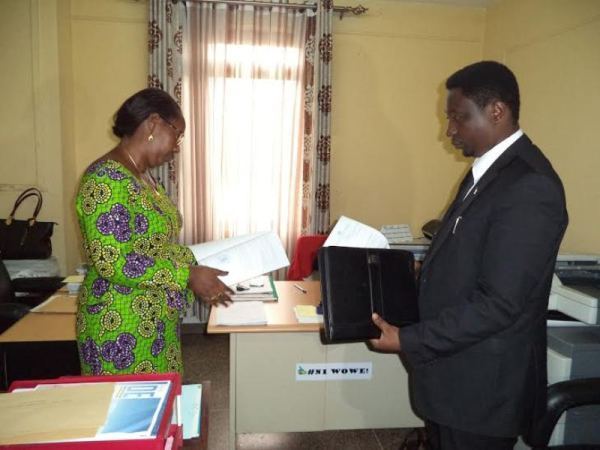
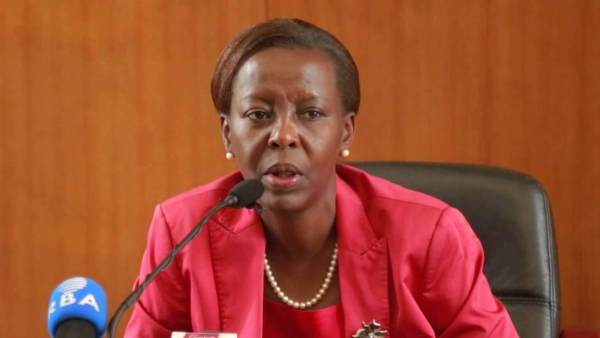
{The government of Rwanda has rejected the appeal of Democratic Green Party of Rwanda which had petitioned for the revision of the law guiding elections and political parties. }
Green Party filed the appeal on May 19th, 2016 to the Prime Minister. The documents were handed in following the initial petitions to National Electoral Commission on 2nd December, 2014 and to the parliament on 20th February, 2016.
Green Party explained, it received the response from Rwanda Governance Board on 31st August, 2016 reacting to 10 points included in its appeal.
The president of Green Party political party Dr.Frank Habineza has told IGIHE that RGB replied that their requests are like an individual’s ideas.
“We were surprised and saddened by the response. We later sat together with members of the political party and came up with a solution of continuing to raise our concern in the forum of political parties in Rwanda. We are also arranging how to talk to our lawyer to file the case in courts,” said Dr.Habineza.
Some of reforms in election law requested by Green Party include the reduction of required votes to allow a private candidate become a parliamentarian where it has to go down from 5% to 2% of votes according to Green Party.
The other petition is about reducing voices required for a political party to be represented in the parliament where it has to go down from 5% to 4%.
Green Party also requested to change a clause that whoever is elected as a local leader has to be relieved of representing of any political party.
Regarding the law guiding political parties, Green Party had petitioned for its revision to remove the article barring political parties from receiving foreign aid.
Green Party also requested the government of Rwanda to avail the financial support to political parties before elections to help in preparation as it happens in Burkina Faso.
Green Party has recently announced that it won’t participate in next year’s presidential elections in case its petitions to the government requesting reforms for better preparations of elections are not respected.
{The Ministry of Agriculture and Animal Resources has unveiled a plan of doubling honey harvest in the country by 2020 from the current 4000 tons per annum. }
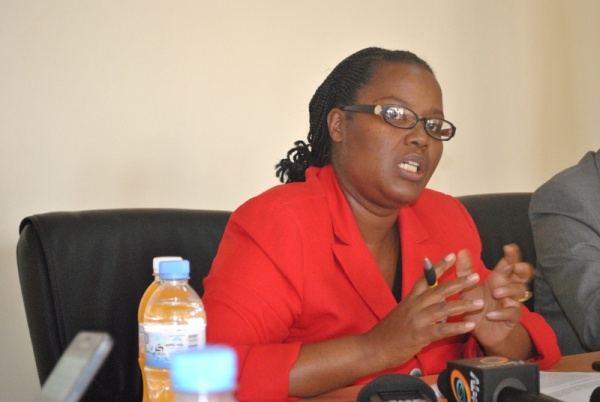
The Minister of Agriculture and Animal Ressources, Geraldine Mukeshimana revealed this yesterday as she launched the ApiExpoAfrica 2016 going on in Kigali from 21st to 26th September 2016.
Dr Mukeshimana said that Rwanda needs innovative bee keepers to boost the harvests, create new jobs and attract investors.
“The existing honey harvest comes from 83 small cooperatives using both traditional and modern hives. We want to attract many investors in apiculture, increase the productivity in transforming our honey harvest using technology and availing it on market. We want to modernize this profession, create new jobs and promote rural areas as well,” she said.
The ApiExpoAfrica 2016 aims at seeking best ways to be embraced in bee keeping as a way of increasing knowledge in promoting honey business and boosting its quality.
The ApiExpoAfrica 2016 hinges on the theme ‘Transforming the economy of Africa’s family: The role of apiculture’.
The ApiExpoAfrica 2016 has been attended by bee keepers and entrepreneurs in honey from different countries like Nigeria, Zimbabwe, Uganda, India, Ethiopia, Kenya, Turkey, Rwanda and Singapore among others.
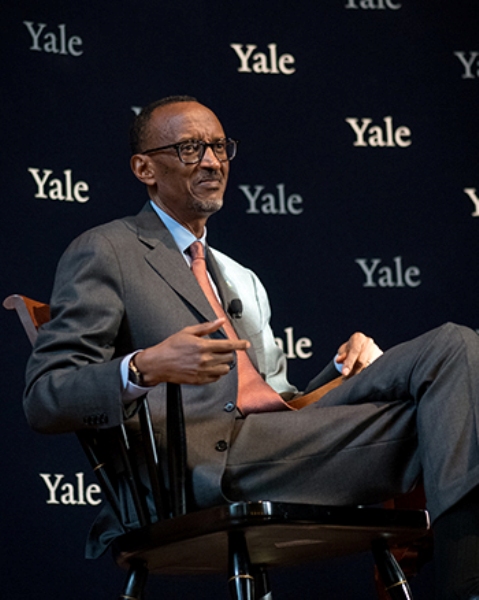
{President Paul Kagame, has urged the world to be skeptical of perceptions of his country put forth by the media and international human rights groups. During a lecture on Sept. 20 at Sheffield-Sterling-Strathcona Hall, he urged his audience to seek to understand his country’s complexity and its history.}
“Don’t just read an op-ed or sign an online petition and assume that that is the end of the story,” he said. “To lead the world and to make it better, you first must better understand it. Be as humble as you are curious.”
President Kagame delivered the Coca-Cola World Fund Lecture at Yale, an annual address sponsored by the Whitney and Betty MacMillan Center for International and Area Studies.
Under his leadership, Rwanda’s living standards have improved markedly, and he has brought social stability to a nation previously torn apart by genocide. His government’s efficiency and lack of corruption is widely acknowledged.
In his talk, Kagame cast his critics as outsiders whose views do not represent the perspective of Rwandan citizens.
“We increasingly base our legitimacy on results and achievements and the views of our citizens rather than external validation,” he said.
He called on the United States and other world powers to shift their approach to developing countries from a position of moral superiority to one of humility and mutual respect.
“The defense of universal values must focus on substantive outcomes rather than on fundamentalism about process, where clearly no one holds a monopoly of wisdom,” he said.
During the question-and-answer portion of the event, moderator David Simon, director of the Yale Genocide Studies Program, expressed concern that the space for political debate in Rwanda is constricted. He asked Kagame whether there is space in Rwanda for democracy and human rights to expand without sacrificing peace and stability.
“There is a lot of space,” Kagame replied. “Maybe some of it is taken actually by outsiders who come into the country and decide for Rwandans. I think that occupies a lot of space.”
An audience member asked Kagame how he responds to critics within his country.
He argued that it was not enough to simply criticize and that his critics must attempt to contribute to the country’s progress.
“People should learn to believe what they see,” he said in response to a question about how he responds to critics within his country. “What we see in Rwanda is progress from almost nothing.”
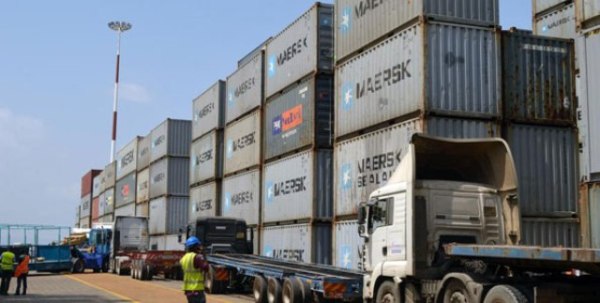
{Local clearing agents in Rwanda have welcomed the decision by shipping lines at Dar es Salaam port to waive container deposit fees. Maersk and Safmarine shipping lines recently agreed to give a waiver on container cash deposit to members of the Rwanda Freight Forwarders Association to reduce the cost of doing business.}
The scheme will first be rolled out as a pilot phase before it can be fully adopted. The development follows bilateral talks held last month between Rwanda and Tanzania to address the current constraints affecting traders at the port, including the question of cash deposits.
Fred Seka, the chairperson, Rwanda Freight Forwarders Association (ADR), said both parties agreed to use an insurance guarantee covered by UAP Insurance to facilitate ease of doing business at the port.
According to Seka, Tanzania Shipping line Ltd accepted the proposed use of Insurance guarantee by UAP and will conduct due diligence to determine clearing agents to be granted the waiver and those that should use insurance guarantee.
“Tanzania Revenue Authority (TRA) has so far granted full access to TANCIS customs system to 30 clearing firms out of the 54 companies that requested to have access to the system; The TPA is working to issue the okayed firms badges and forward the list to Tanzania Ports Authority so that they can have full access to the port and be able to follow up clearance of goods within the port premises,” Seka said in a statement released yesterday.
He also denied media reports indicating that local clearing agents want to replace clearing agents from Tanzania at the port. “We are only coming to deal with Rwandan cargo and not to take Tanzanian jobs,” he said adding that the agents are equally seeking for strong partnerships with their counterparts in Tanzania to further facilitate the ease of doing business along the central corridor.
The two sides further discussed a number of constraints including the high container deposits required by the shipping lines, and non recognition of Rwanda Standards Board’s (RSB) standard mark by Tanzania Food and Drug Authority (TFDA), and agreed to follow up on implementation of commitments by Tanzania Revenue Authority to facilitate and authorise Rwanda Freight Forwarders to lodge documents into their customs system.
Vincent Safari, the national coordinator, Rwanda National Monitoring Committee on NTBs, at the Ministry of Trade and Industry, reassured that Rwandans will only go to clear cargo belonging to Rwandans and urged both parties to ensure strong business ties to facilitate regional trade.
“It is out of fear that allowing Rwandans full access to ports will translate into loss of business on the Tanzania side, which is not true,” he said, adding that there is need to understand the scope of the single customs territory which is designed to ease regional trade. Recently, Tanzania Ports Authority (TPA) announced it will open a liaison office in Kigali next month.
The country office means that importers, clearing agents and exporters will be able to clear goods from Kigali without having to travel to Dar es Salaam. Eng Deusdedit Kakoko, the TPA director general, said in an interview with The New Times last week that the move aims at bringing services nearer to the Rwandan business community, “which will help cut the cost of doing business, and reduce the hurdles within the logistics and supply chain.”
Rwanda-TZ trade numbers Tanzania’s Port of Dar es Salaam is by far the most important port for Rwanda, accounting for over 70 per cent of Rwandan international maritime trade.
More than 90 per cent of other exports (apart from tea and coffee) go through Dar es Salaam, according to figures from the Ministry of Trade and Industry. However, statistics indicate that total trade with Tanzania declined to $68 million in 2015, from $105 million in 2013. Tanzania is Rwanda’s third largest trading partner in the EAC bloc.
On 21 September, the Republic of Rwanda, Italy and the Kingdom of the Netherlands co-hosted the 9th Annual Ministerial Roundtable Discussion on the Responsibility to Protect (R2P), “The Kigali Principles on the Protection of Civilians and the Responsibility to Protect,” in association with the Global Centre for the Responsibility to Protect.
A cross-regional group of ministers representing seven governments contributed to the discussion. The Minister of Foreign Affairs and Cooperation of the Republic of Rwanda, H.E. Ms. Louise Mushikiwabo, the Undersecretary of State for Foreign Affairs of Italy, H.E. Mr. Vincenzo Amendola, the Minister of Foreign Affairs of the Kingdom of the Netherlands, H.E. Mr. Bert Koenders, and the Executive Director of the Global Centre for the Responsibility to Protect, Dr. Simon Adams, opened the meeting before an interactive discussion among participants.
The event served as a platform for participants to reaffirm their support for the Kigali Principles, to announce and encourage new endorsements, and to discuss how the application of the Kigali Principles in current mass atrocity situations can help improve the response to populations at risk. H.E. Mr. Bert Koenders, emphasized the importance of the Kigali Principles, noting, “The increase in civilian casualties, displacement, and human suffering we see in today’s conflicts cannot become the new normal. We need to take action to improve UN peacekeeping. The Kigali Principles bring together political commitment to protect civilians from atrocities including the use of force, accountable and well-prepared military and civilian leadership, well-trained and disciplined troops, and a zero tolerance approach to sexual exploitation and abuse by peacekeepers.
H.E. Ms. Louise Mushikiwabo, noting the difficult decisions that were made regarding sending troops into situations experiencing ongoing mass atrocity crimes, including Darfur, South Sudan and Central African Republic, asserted that “we decided to act so we could make a difference” and commended the Kigali Principles as providing “practical and prudent ways to protect civilians today.”
H.E. Mr. Vincenzo Amendola discussed the significance of R2P in addressing the causes of the refugee crisis in Italy’s region, noting, “Italy has supported since its initial formulation the principle that Governments in the first place must answer to a Responsibility to Protect their own civilian population, that the international community must commit to internationally mandated efforts to supplant Governments when they are unable or unwilling to step in. This is what Italy is doing on a daily basis in the Mediterranean. Since the beginning of 2016, we have rescued over 60.000 desperate women, children and men from near-certain death as they were fleeing from war and truly unfathomable sufferance and desperation.”
Dr. Simon Adams, Executive Director of the Global Centre for the Responsibility to Protect, remarked: “Peacekeepers are often at the frontlines of protecting civilians and stabilizing conflicts in the world today, sometimes paying the greatest sacrifice as they do so. However, despite the presence of sizeable peacekeeping operations, the UN continues to struggle to protect civilians from mass atrocity crimes in the Central African Republic, Democratic Republic of Congo, Sudan and South Sudan.”
The main objective of the discussion was for UN Member States to identify concrete ways of implementing the Kigali Principles, both individually and jointly, and to exchange best practices and identify challenges in improving Protection of Civilians by UN peacekeeping missions. Participants were also encouraged to examine the role of the Kigali Principles in effectively upholding the responsibility of the international community to protect populations from mass atrocity crimes.
The UN Special Adviser on the Prevention of Genocide, the UN Assistant Secretary-General for the Rule of Law and Security Institutions, the Assistant Secretary-General for Human Rights, and the President of International Crisis Group also participated in the discussion.
{{Background on the Kigali Principles:}}
The Kigali Principles on the Protection of Civilians are a set of eighteen pledges for the effective implementation of the protection of civilians in UN peacekeeping. The principles emanated from the High-level International Conference on the Protection of Civilians held in Rwanda on 28 and 29 May 2015. The Kigali Principles address the most relevant aspects of peacekeeping, including assessment and planning, force generation, training and equipping personnel, performance and accountability. While they are framed around the protection of civilians, the principles address broader deficiencies that undermine the effectiveness of peacekeeping operations conducted in volatile situations, including peacekeeper abuse.
[The Kigali Principles on the Protection of Civilians and the Responsibility to Protect->http://reliefweb.int/report/world/kigali-principles-protection-civilians-and-responsibility-protect]
{A Rwandan entrepreneur is hoping to open her country’s first craft brewery and give most of the jobs there to women, and an Ottawa-area brewery has stepped in to help.}
Fina Uwineza, a restaurateur who hails from Kigali, has been spending time at Beau’s All Natural Brewing Company in Vankleek Hill, Ont., to learn more about beer-making after the brewery offered to help Uwineza get started.
“Right now there’s none, there’s no craft beer. We have only two breweries, which are international — Heineken and Skol — so this is going to be amazing and the first craft beer in Rwanda,” Uwineza told CBC Radio’s Ottawa Morning on Wednesday.
The brewery, if it comes to fruition, would employ about five to 15 people. But Uwineza hopes the company will grow everything it needs for the beer locally, which would employ a great deal more people.
Uwineza hopes they’ll mostly be women.
“That’s the main idea so that we can help the women in the village, the women who are less fortunate. That’s my passion, actually … If we can grow all the raw materials in Rwanda, that means I can go to the village and the women will be growing the ingredients, and from there we can really see the impact,” she said.
‘This won’t be a Beau’s brewery’
Steve Beauchesne, co-founder and CEO of Beau’s, became involved after the Ontario Craft Brewers organization — of which he is a member — heard a pitch for help. He said Wednesday his company doesn’t have a financial or ownership stake in the project.
“Just to be very, very clear, this won’t be a Beau’s brewery. This is going to be Fina’s brewery. We’re helping her get the project off the ground,” Beauchesne said.
“Not only is it not going to say Beau’s on the bottle, we’re not going to take any ownership, we’re not going to take any profit. We’re doing this purely to help.”
Beauchesne said he became more interested after learning about growing co-ops in Rwanda, where health and education are provided for.
“It really becomes a sort of family support system, and it’s helping rural families. The brewery itself will probably have, I’m guessing five to 15 people employed, which is great, but the real impact here is going to be the dozens, if not hundreds of women and families that will be benefiting because of the agricultural side of this,” he said.
His brewing team in Vankleek Hill has been working on recipes using traditional ingredients, including bananas and sorghum.
“A lot of what has been cool in craft [brewing] has been rediscovering these kind of lost traditions and reviving them, so that’s got our brewing team really excited, obviously,” he said.
[Entrepreneur taps into local know-how for help with Rwanda’s 1st craft brewery->http://www.cbc.ca/news/canada/ottawa/beaus-beer-rwanda-brewery-1.3771917]
{The chairperson of European Parliament Committee on Women’s Rights and Gender Equality (FEMM), Iratxe Garcia Perez has said that states and institutions should give much value and response to incidences of gender based violence.}
Garcia was speaking on September 21 in an exclusive interview at Isange One Stop Centre at Kacyiru District Hospital, where she led a delegation from FEMM to witness how Rwanda National Police and partners work together to respond to gender based violence.
“We speak a lot about gender based violence, it’s an issue world over…in my country Spain, in Europe and other countries; there are still many women who still suffer gender based violence,” Garcia said.
“This morning we went to the centre of widows and orphans of the genocide and we can now witness how this building [Isange] supports victims of gender violence. To have such tools to support the victims, for us, it’s very important. We want to congratulate Rwanda for this initiative.”
“We are very impressed by Rwanda’s policy on equality and services offered to women, all my recognition for your work; Isange reflects a good example in the fight against gender based violence,” she noted.
Supt. Shafiga Murebwayire, the coordinator of Isange One Stop Centres, who received the delegation, noted that the idea to create Isange was born to bring together services that were previously scattered, costly and inconveniencing to the victims of GBV.
“This is a multidisciplinary and holistic approach that binds various institutions responsible for fighting and preventing GBV including the ministries of Gender and family Promotion, Health, Justice and Internal Security,” said Supt. Murebwayire.
“We have doctors, psychologists, social workers, judicial police officers and this helps a victim to acquire all the necessary services in one place and free of charge,” she added.
“Where necessary, we accompany the victims back to their homes to make sure that they are fully reintegrated in their families because some of them sometimes feel rejected. We work with various entities on grassroots to ensure that they are fully rehabilitated,” Supt. Murebwayire said.
Isange, which started as a pilot project in 2009, has since been expanded to 28 other district hospitals across the country.
It offers free medical, psycho-socio and legal services to victims of GBV and child abuse and has facilitated the public with easy means of communication with a toll-free line – 3029 – which has been essential in getting information from the affected for immediate response.
{Dinner should be eaten at least three hours before you go to sleep and it should be the lightest meal of the day.}
Here are 4 reasons why you should eat dinner early
{{1. Eating dinner late increases your blood sugar }}
Eating dinner too close to bed time isn’t good for your health as it increases your blood sugar and insulin, which makes it harder to sleep.
{{2. Weight loss }}
If you are trying to maintain a healthy weight, it’s important you eat dinner early. When you eat your dinner at least three hours before going to bed, you give your body more time to digest the food. Your body stores excess calories as fat when you eat late.
{{3. Prevents problems with digestion }}
Eating dinner early gives your body enough time to digest the food properly thereby lowering the risk of digestive issues like acidity and acid reflux. Sleeping after a meal slows down your digestion, causing you to feel bloated and uncomfortable.
{{4. Better energy levels }}
Eating dinner early will help you wake up feeling smart and energised. When you eat dinner late, you wake up drained.
{Eighty-eight people suspected of being behind series of cattle theft in the Eastern Province have been arrested in varied police operations.}
The suspects were on September 21 paraded before about 3000 residents in Kabarole Sector of Gatsibo District, during a meeting that was presided over by the Minister of Local Government, Francis Kaboneka.
The community security meeting that brought together residents of Nyagatare and Gatsibo was also attended by Inspector General of Police (IGP) Emmanuel K Gasana, Prosecutor General Richard Muhumuza and representatives of other security organs.
The paraded suspects were arrested in varied joint operations conducted in the past one month in response to the recent spate of cattle rustling especially in the districts of Gatsibo, Nyagatare and Kayonza.
In a similar security meeting held early last month, authorities pledged to break the chain and bring suspects to book, calling for reinforcement of community policing.
According to police records cattle rustling is not a security threat so far, but even if small must be prevented and fought decisively.
“As we promised you, anyone who attempts to destabilise our country in whichever way will not be tolerated. This is why all concerned institutions worked together tirelessly to deliver on your request of bringing to book those suspected of cattle theft,” Minister Kaboneka told the residents.
He further pledged government support in ensuring their welfare but appealed for more partnership in ensuring that security is preserved.
“The Government is committed to seeing you accumulate wealth but that can only be achieved if you take it upon yourselves to have safe and secure communities…You should condemn and confront anyone who stands in your way to prosperity. Confront them with realities and facts on the ground and you will win,” Minister Kaboneka said.
IGP Gasana said that investigations and operations are still going on to track and arrest anyone connected to cattle theft.
“This is the success of good existing partnership with you through community policing and it’s the power of information sharing that led to the arrest of these suspects and recovery of the stolen cows,” IGP Gasana said.
He hastened to add that Rwanda is safe and secure today because of collaboration between citizens, security organs and other institutions.
“To preserve this safety we enjoy today, we must strengthen cooperation and collaboration and develop a sense of ownership.”
Prosecutor General Richard Muhumuza assured residents that such cases will no longer be handled by village mediators but instead prosecuted and tried in courts of law.
Available statistics indicate that from November last year to August this year, about 100 cows had been stolen Nyagatare alone of which majority have been recovered.
At least all the 17 cows that were stolen in Kayonza in this month alone have been recovered and seven people arrested in connection with the act.
Police said files of all the suspects have been completed and forwarded to prosecution.