{During sex, there are certain things most men tend to take note about a woman and these things help give men clues about whether they have a serious chemistry with the woman.}
Below are 5 things most men notice about a woman during sex
{{1. The woman’s ability to take the initiative }}
Even though most men will say this to their partner, most men love it when the woman takes the initiative in bed sometimes. It helps make the moment really exciting and it also shows the man you are excited having sex with him.
{{2. The woman’s body movement }}
During sex, most men tend to take note of a woman’s body movement. Men hate it when a woman lies on the bed like a log of wood. Most men want to see his woman’s body move as that excites him even more.
{{3. What the woman is wearing beneath the clothes }}
It’s important every woman pays attention to what she wears beneath her clothes. It’s useless wearing expensive clothes and worn-out underwear. Your man wants to see you pay more attention to your underwear because he takes note of it during sex.
{{4. How you look }}
Most men pay attention to the way a woman looks during sex. Looking at the wall or ceiling shows you aren’t happy having sex with him. Looking deep into eyes tells him you are enjoying the moment.
{{5. Your hygiene }}
How well you take care of yourself matters because your man will take note of that while having sex with him. Ensure your pubic hairs are well shaved and your hygiene is general good.
{Canadian authorities have deported Jean Claude Seyoboka to Rwanda where he will stand trial for his role in the 1994 Genocide against the Tutsi.}
Escorted by Canadian deportation authorities, the suspect, who is accused of Genocide, extermination and murder as crimes against humanity as indicated on the charge sheet, arrived at Kigali International Airport and handed over to Rwanda National Police (RNP).
Seyoboka, a former soldier in the Ex-Forces Armees Rwandaise (Ex-FAR), had his refugee status revoked by the Canadian Immigration authorities after he had deliberately failed to mention his army links.
It was later found that he also participated in the massacres and the court ruled that he should be deported and face trial in Rwanda.
“The National Public Prosecution Authority guarantees a fair trial to Seyoboka in accordance with the national legislations and other international legal instruments as ratified by Rwanda,” said the Prosecution’s spokesperson, Faustin Nkusi.
“We seize this opportunity to thank the relevant authorities of Canada for the deportation and the continued cooperation in matters of legal assistance and making an effective contribution to the global efforts of eliminating impunity,” he added.
The suspect will be in police custody for questioning pending the transfer of his dossier to the prosecution – a process that won’t exceed five working days as stipulated by the laws.
Prosecution accuse Seyoboka of holding and participating in meetings preparing the genocide and for having participated in the extermination 72 Tutsis in Nyarugenge and supervised several killings.
In 2007, the Gacaca court of Nyarugenge sector tried in absentia and sentenced him to 19 years in jail for his role in the genocide.
Prosecution later issued an international arrest warrant against Seyoboka, however, according to Nkusi, “in article 8 of the organic law terminating gacaca courts provides that the decisions rendered by the gacaca courts will be nullified and the trials will start afresh by the competent court.”
Seyoboka arrived in Canada in 1996, and claimed refugee protection which he was granted. He then applied for permanent residency status.
Seyoboka is the son-in-law of Colonel Elie Sagatwa, one of the leading masterminds of the Genocide and brother to former First Lady, Agathe Kanziga Habyarimana.
In 2012, the same country deported Léon Mugesera to be tried in Rwanda and his case lasted for four years. He was found guilty of crimes related to the 1994 Genocide against the Tutsi and sentenced to life in prison.
{Amizero Dance Kompagnie return with the 5th edition of the East African Nights of Tolerance (EANT), Rwanda’s only festival devoted to contemporary dance. The festival, which includes dance master classes, performances and a seminar, will take place from the 24th to 27th of November, 2016.}
Under the high patronage of the Ministry of Sports and Culture ( MINISPOC) this year’s edition is supported by the Swiss cooperation (DDC), Institut Francais du Rwanda (IFR), Institut Français de Paris (IF), Positive Productions, the Belgian Embassy, the French Embassy, and the Goethe Institut.
EANT was founded in 2012 by the director of Amizero Dance Kompagnie, Wesley Ruzibiza with an aim of promoting contemporary dance, peace and tolerance in Rwanda and East Africa. The festival offers opportunities for young and professional dancers to train in intensive workshops, and introduces dance to disadvantaged youth and schools, as well as providing performances of professional productions open to the public. Now in its fifth year, EANT has opened a platform for contemporary dance as a tool for dialogue in East Africa.
AMIZERO KOMPAGNIE, a Rwandan Contemporary Dance Company started in 2005, is hosting the East Africa Nights of Tolerance. Amizero Kompagnie stages dance performances and plays throughout the year, and tours nationally and internationally.
The festival will present exciting original work from around the continent and Europe. This year’s audience will be dazzled with 10 performances from Rwanda, France, Cote d’Ivoire, Kenya, Cameroun, Uganda, Belgium, DRC and Tanzania.
Performances on November 24, 25 and 27 (venue TBA) have a cover of Rwf2000and on Saturday November 26 at Kimisagara – Maison des Jeunes is free.
{The one week International Course on Kigali Principles on Protection of Civilians (POC) attended by 36 military, police and civilians officers from 14 countries, has concluded at Rwanda Peace Academy, in Musanze District, Northern Province, on 16 November 2016. The Course discussed practical approaches to protect civilians’ lives in armed conflicts.}
The Course was officially closed by Rwanda Defence Force Chief of Defence Staff, Gen Patrick Nyamvumba. The ceremony was also attended by the Kingdom of Netherlands Defence Attaché, Col Michael C. Meyburg and the US Deputy Defence Attaché, Maj Shawn P. Russel.
In his remarks, the RDF Chief of Defence Staff, Gen Nyamvumba, expressed that lack of capacity and willingness to actively intervene still expose many civilians to deadly risks during armed conflicts. “Protection of civilians in the context of UN Peacekeeping operations must be addressed holistically, with a view to improving the performance of all actors who share a stake in protecting innocent civilians from physical violence”, the CDS pointed.
Gen Nyamvumba explained that the Kigali Principles try to address the most relevant aspects of peacekeeping, including assessment and planning, force generation, training and equipping personnel, performance and accountability. “As we witness increased disrespect for international humanitarian law in today’s conflicts, the Kigali Principles commit peacekeeping forces to never again abandon civilians to armed parties looking to do them harm”, he said.
He urged graduates to use the skills and experiences acquired whenever they will have the opportunity to be in peacekeeping mission or a situation to protect civilians.
Both the Netherlands and US Defence Attachés appreciated the joint effort put together by the US, the Kingdom of Netherlands and the Government of Rwanda to organize such training. They reiterated their commitments to support the Peacekeeping initiatives and to join hands in implementing Kigali Principles on POC.
Maj Muyunda Nyoka from Zambia Defence Force told Media that the Course was very beneficial to participants. “ We have learnt that the duty we have as military is protecting civilians and make it our priority when conflicts break out”. He added that peacekeepers should not fail to protect civilians under pretext that the mandate doesn’t allow them to take action.
Maj Francisca Aholo from Ghana Air Force said that the Kigali Principles were made to improve the existing UN guidelines in POC. “We need to concentrate on Civilians and the Kigali Principles tell us not to hesitate, to delay in everything we have to do in protecting civilians.”
Mrs Lauren Spink from the Center for Civilians in Conflicts in Washington DC (currently detached in Goma/DRC), said that the Kigali Principles are very possible to realise. All it requires is the firm commitment and collaboration of all UN military, police and civilians personnel in Peacekeeping theatres, with support of the Security Council and the UN Secretariat.
The Kigali Principles on the Protection of Civilians, adopted in May 2015, are a set of 18 principles, best practices to enhance implementation of civilian protection mandates. They are meant to strengthen the international community’s commitment to effectively protect civilians.
UN Members States that have endorsed the Kigali Principles include: Australia, Austria, Bangladesh, Belgium, Burkina Faso, Canada, Djibouti, Estonia, Ethiopia, Finland, Republic of Macedonia, France, Germany, Ghana, Guinea, Ireland, Italy, Latvia, Malawi, Montenegro, The Netherlands, Niger, Norway, Poland, Romania, Rwanda, Senegal, Slovenia, Sri Lanka, Sweden, Tanzania, Togo, Ukraine, Uganda, United Kingdom, United States, Uruguay and Zambia.
{Occasional smokers can avoid some harmful effects}
Drinking red wine is widely regarded as protective against cardiovascular disease. A new report in The American Journal of Medicine found that a glass or two of red wine before lighting up a cigarette can counteract some of the short-term negative effects of smoking on blood vessels.
Cigarette smoke causes acute endothelial damage, vascular and systemic inflammation, and cellular aging. Red wine stimulates the formation of endothelium-dependent relaxation factors such as nitric oxide, which improve endothelial function in coronary arteries possibly because of the high phenol concentration in red wine.
“However, sparse data exist on the short term potential vasoprotective effects of red wine in smoking-healthy individuals,” explained lead investigator Viktoria Schwarz, MD, of the University of Saarland, Homburg, Germany. “The aim of our study was to investigate the acute vascular effects of red wine consumption prior to ‘occasional lifestyle smoking’ in healthy individuals. We found evidence that preconsumption of red wine prevented most of the vascular injury caused by smoking.”
The study examined the effects of smoking on various biochemical processes in the blood and vessels of 20 healthy non-smokers who volunteered to smoke three cigarettes. Half of the subjects drank red wine one hour before smoking, in an amount calculated to result in 0.075% blood alcohol content. Blood and urine were collected before and after drinking and smoking and continued until 18 hours after smoking.
Smoking is known to cause microparticles to be released into the bloodstream. These particles come from endothelial cells, platelets, and monocytes and indicate that cells in the blood vessels are being damaged. Researchers found that in subjects who consumed red wine before smoking, these cellular changes did not occur.
Another biochemical process affected by smoking is telomerase activity. Telomeres can be thought of as “protective caps” on chromosomes. During aging, these caps can shorten and lose their protective ability. By measuring telomerase activity, investigators determined that the group that smoked without drinking red wine showed a 56% decrease in telomerase activity while the drinking group showed only a 20% decrease.
Inflammation puts stress on cells due to an imbalance in reactive oxygen species production and the body’s antioxidant defenses. According to Dr. Schwarz, “We observed acute proinflammatory changes, namely, leukocytosis, neutrophilia, upregulated levels of IL-6 in serum, and enhanced messenger RNA expression of IL-6 and tumor necrosis factor alpha. Our study adds to the present evidence that the proinflammatory effects in nonsmokers with ‘occasional lifestyle smoking’ could be prevented by red wine consumption.”
Since the study was limited to young, healthy nonsmokers, it is not clear whether these findings apply to the elderly, the ill, or chronic smokers. There was no comparison to different alcoholic and non-alcoholic beverages or whether the results would apply to more than just occasional smokers and drinkers.
These findings underscore the magnitude of acute damage exerted by cigarette smoking in “occasional lifestyle smokers” and demonstrate the potential of red wine as a protective strategy to avert markers of vascular injury. Dr. Schwarz and co-investigators emphasized that they do not intend to motivate occasional smokers to drink or occasional drinkers to smoke. “Nevertheless, this study identified mechanisms suitable to explore damage and protection on the vasculature in humans, paving the way for future clinical studies.”
The number of people in the world with high blood pressure has reached 1.13 billion, according to new research.
The study, led by scientists at Imperial College London, reveals the number of people with high blood pressure has nearly doubled in 40 years.
The team studied changes in blood pressure in every country in the world between 1975 and 2015.
The largest ever study of its kind, the research involved the World Health Organization and hundreds of scientists throughout the world, and incorporated blood pressure measurements from nearly 20 million people.
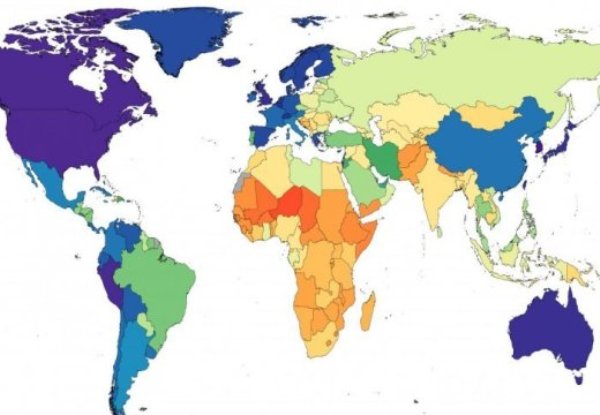
The findings, published in the journal The Lancet, showed that while blood pressure has dropped sharply in high-income countries, it has risen in many low and middle-income countries, especially those in Africa and South Asia.
The UK was found to be the European country with the lowest proportion of people with high blood pressure in 2015, while South Korea, USA and Canada were lowest in the world.
Professor Majid Ezzati, senior author of the study at the School of Public Health at Imperial said: “High blood pressure is no longer related to affluence — as it was in 1975 — but is now a major health issue linked with poverty.”
The authors say the reason for this finding is unclear, but it may be linked to overall better health and increased consumption of fruits and vegetables. The condition is also caught more frequently, and earlier, and managed with medication in high-income countries. These factors may have helped counteract rising obesity, which is a risk factor for high blood pressure.
Professor Ezzati added that poor nutrition in childhood in low income countries may also play a role in the study findings: “Increasing evidence suggests poor nutrition in early life years increases risk of the high blood pressure in later life, which may explain the growing problem in poor countries.”
The research, funded by the Wellcome Trust, also revealed men had higher blood pressure than women in most countries in the world in 2015. Globally, 597 million men had raised blood pressure, compared to 529 million women.
Over half of the world’s adults with high blood pressure in 2015 lived in Asia. Around 226 million people in China have high blood pressure, along with 200 million in India.
The study showed that much of the rise in the number of people with high blood pressure over the last 40 years is also due to a larger, and older, world population.
High blood pressure puts extra strain on the blood vessels and major organs such as heart, brain and kidneys. It is the world’s leading cause of cardiovascular disease, which leads to stroke and heart attacks, and is thought to cause 7.5 million deaths a year across the globe.
Blood pressure is defined by two numbers: systolic pressure, which represents the force your heart pumps blood into the blood vessels, and diastolic pressure, which is a measure of the resistance to the blood flow in the body’s blood vessels. Both numbers are measured in millimetres of mercury (mmHg). High blood pressure is defined as 140/90 mmHg or higher.
The team explained the condition is caused by a number of factors including dietary influences, such as eating too much salt and not enough fruit and vegetables, obesity, insufficient exercise and some environmental factors such as lead exposure and air pollution. The condition is more common in older ages.
Countries with the highest pressure
The country with the highest age-corrected proportion of men with high blood pressure in 2015 was Croatia (38 per cent of the population), while Niger had the highest proportion of women with high blood pressure (36 per cent).
Tackling the epidemic of high blood pressure in low and middle-income countries is one of the most pressing global health challenges, added Professor Ezzati.
“We need economic means and regulation to improve access to high quality food, especially fruits and vegetables, and reduce excessive salt in food. We also need a stronger healthcare system, to identify people with high blood pressure earlier, and improve access to treatment and medication. Without these measures, the world is unlikely to achieve the World Health Organization’s target of reducing the proportion of people with high blood pressure by 25 per cent by 2025.”
The other findings of the paper included:
• In the UK, in 2015 the age-corrected proportion of people with high blood pressure was 18 per cent for men and 12 per cent for women, making the UK 195th in the world for men (6th lowest), and 194th for women (7th lowest). In 1975, 38 per cent of UK men and 28 per cent of UK women had high blood pressure, placing men at 48th in the world (153rd lowest) and women at 96th in the world (105th lowest).
• Average blood pressure for men in the UK in 2015 was 126/72 mmHg (in 1975 it was 130/78 mmHg). Women’s average blood pressure was 117/71 mmHg in 2015 (in 1975 it was 124/77 mmHg).
• The country with the lowest proportion of people with high blood pressure in Europe in 2015 was the UK for both men and women (in 1975 it was Cyprus for both men and women).
• The top five countries with the highest proportion of men with high blood pressure in 2015 were all in Central and Eastern Europe: Croatia, Latvia, Lithuania, Hungary, and Slovenia. Nearly two in five men in these countries had high blood pressure.
• The top five countries with the highest proportion of women with high blood pressure in 2015 were all in Africa: Niger, Chad, Mali, Burkina Faso, and Somalia. Around one in three women in these countries had high blood pressure.
• The five countries with the lowest proportion of people with high blood pressure in 2015 were: South Korea, USA, Canada, Peru, and Singapore. Around one in six men and just over one in ten women have high blood pressure in these countries
• In the USA, the age-corrected proportion of people with high blood pressure was 15 per cent for men and 11 per cent for women in 2015, placing them 2nd lowest in the world. In 2015, men’s average blood pressure in the USA was 124/74 mmHg, while women in 2015 had an average blood pressure of 117/71 mmHg.
• In 2015, 258 million (23%) of the 1.13 billion adults with high blood pressure lived in South Asia (200 million in India) and another 235 million (21%) lived in East Asia (226 million in China).
The team added there were limitations of the study, for instance some countries, particularly those in sub-Saharan Africa and the Caribbean, had less data than others or the data were older. Furthermore, the equipment used to measure blood pressure has changed since 1975 — with most monitors now.
{You think he is your ideal man and you are anxiously waiting for him to propose. Do you really think he feels the same way about you?}
Here are 11 signs your man isn’t ready to marry you
1. He obviously isn’t ready to marry you if he changes the topic or laughs it off everytime you talk about marriage with him.
2. He obviously isn’t ready to marry you if he spends more time with his single friends than with you. That’s a sign he’s more drawn to the bachelor lifestyle.
3. It’s obvious he isn’t ready to marry you if he tells you things are great as it is whenever you talk to him about taking the next step in your relationship. If he tells you this, he obviously just wants to sleep with you and doesn’t see you as his wife.
4. He is obviously not ready to marry you if he keeps his finances off-limit from you. No man marries a woman he can’t trust with his money.
5. He obviously isn’t ready to get married to you if he doesn’t get excited when his friends get engaged. He always feels his friend made the decision in a hurry.
6. He obviously isn’t ready to marry you if he has told you he doesn’t believe in marriage. If he has told you this, he is trying to tell you that he doesn’t believe in marriage with you.
7. He obviously isn’t ready to marry you if he’s not interested in meeting your family or having you meet his own family. A man who isn’t interested in marrying a woman will generally stay away from meeting her family and won’t want her to meet his family.
8. He obviously isn’t ready to marry you if he never includes you when he talks about his future.
9. He obviously isn’t ready to marry you if he gets angry when friends suggest you two will be great together as a couple.
10. He obviously isn’t ready to marry you if he doesn’t ask you about your plans for the future. A lack of interest in your future is a sign he doesn’t see himself having a future with you.
11. He obviously isn’t ready to marry you if he prefers to keep the relationship open and doesn’t get jealous with the idea of you dating other guys. If he is serious about you, he won’t want to share you with another man.
{The Governor of the Northern Province, Jean Claude Musabyimana has urged residents of Musanze District to be a “concrete” first line of defense against criminality and be vigilant against elements that would attempt to destabilize their safety, peace and development agenda.}
The Governor was speaking yesterday in Shingiro Sector where he presided over a community security meeting. About 3000 residents attended the meeting.
It was also attended by the Regional Police Commander (RPC), Assistant Commissioner of Police (ACP) Bertin Mutezintare.
Whereas the Governor lauded the impact of community policing initiatives and existing collaboration between the grassroots leaders and the residents, he noted that the “partnership gaps” and “ownership” by each resident still give chance to wrongdoers to live and carry out evil acts.
“If we are to contain crime, preserve peace and development, we have to work as a team, share information, watch-out for each other and know new characters in the community, which will also help to identify drug dealers, thieves or even people that can be involved in subversive activities,” Governor Musabyimana said.
He particularly tasked the local leaders to be exemplary and represent the people’s interests.
ACP Mutezintare echoed the same message but appealed to the leaders not to engross in unlawful activities.
He, however, observed that the existing level of security paints a clear picture of the importance of community involvement and partnership with security organs to overcome crime.
“Community policing empowers you to be the source of security and safety; we are here to work with you to ensure that that remains the case,” he noted, urging them to always call police or other security organs whenever they suspect anything criminal.
{Trust isn’t given for free; it is earned. To gain someone’s trust and make them trust you, you have to prove a lot by your actions. People will only trust you when they have tested you, and it’s in the things that you do every day that would make people to either trust you or not.}
There are people who are trustworthy and there are people who aren’t trustworthy, and it’s what they do that separate them.
Below are the reasons why certain people are trusted.
{{1. They keep to their words }}
Trustworthy people try as much as possible to keep to their words; when they say something, they try to do it. However, an untrustworthy person would say so much and do nothing. People who say what they do tend to gain people’s trust.
{{2. Honesty }}
Trustworthy persons are honest; they tell the truth always and they don’t live fake lives. They wouldn’t try to be deceitful or take advantage of you. Because of their honesty, people tend to trust them.
{{3. They are reliable }}
Trustworthy people are people you can depend on, no matter what. You can rely on them to be there for you or stick to their words. They are believable and with them you are assured that they won’t hurt you or deceive you or do something negative.
{{4. They have integrity }}
Trustworthy people live a life of integrity; their characters and actions show integrity. They are honest and have good character; they tend to do what’s right.
{{5. They are accountable for their actions }}
Even when they make mistakes, trustworthy people don’t pass the blame onto someone else; they take responsibility for their actions.
{{6. They are consistent}}
Trustworthiness is built with consistency. They aren’t trustworthy today and untrustworthy the next day; they are trustworthy every day.
{{7. They are original }}
Trustworthy people don’t try to live a fake like or be someone else; they are who they are. Trustworthy people are real, and people take them for who they really are.
The key to being trustworthy lies in what you do, not what you say. People will only trust you when they see these qualities in you.
{{Over 1400 residents of Cyanika and Kagogo sectors of Burera district have been equipped with skills of how identify and report drug traffickers and abusers in their area as Rwanda National Police continues the campaign against the vice. }}
Those trained are members of anti-drugs clubs; they were trained on September 14 and 15.
Burera is one of the routes for drug traffickers, especially illicit gin.
Speaking at the training, the Northern Region Police spokesperson, Inspector of Police (IP) Innocent Gasasira, said: “we need to put much efforts in identifying who are the traffickers and consumers are, the routes traffickers use and we collectively block these routes.”
“You can’t have development in a place with illicit substances; you should be part of fighting these substances.”
In his lecture to those that attended the training, IP Gasasira spoke at length about the physiological, social and economic effects of drug abuse saying that “abuse of drugs is costly for our society and places a burden on the economy and communities.”
“Drug abuse occurs most frequently among young people; It thus includes those who have entered or who are just about to enter the workforce, limiting their chances and affecting human resource.”
Cyanika Executive Secretary, Faustin Kayitsinga reminded residents that; “there is usually a well-established link between low productivity, accidents and drug-consumption. Drug abusers in the workforce impose significant on-job risks, thus reducing competitiveness.”
Kayitsinga went on to thank the police for its continued efforts in fighting drug abuse in the area and pledged local leaders’ partnership in fighting the vice.