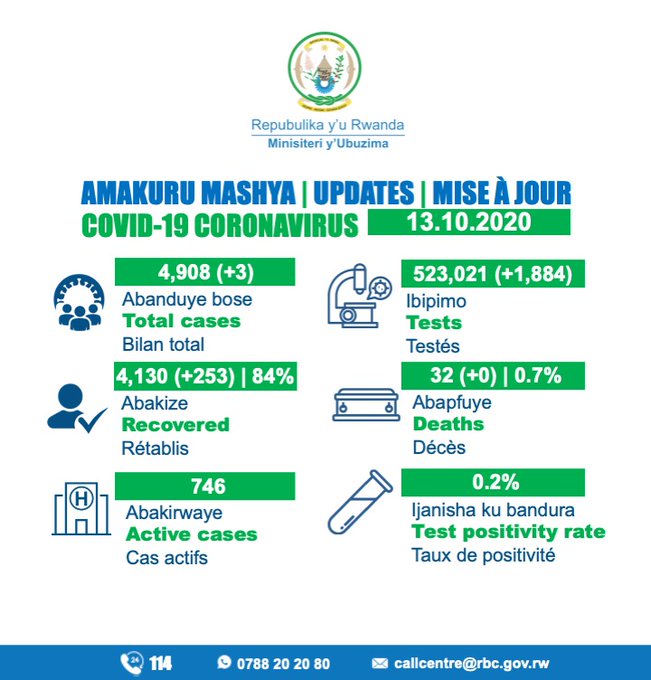
Among the new patients Kigali City registered one while Nyagatare and Rubavu Districts registered one each.
A statement from the ministry said that the number of confirmed cases in Rwanda has reached to 4908 with the latest tests taken Rwanda has executed 523,021sample tests so far; while with the new recoveries the total number of recoveries has now reached 4130. The number of active case is 746 while about 32 people have succumbed to the pandemic.
Rwanda Biomedical Center warned, this week, that despite the declining numbers and some treatment centers closing up, the virus is likely to rebound, thus a need to have citizen vigilance and adherence to government measures against the spread of the New Coronavirus.
Coronavirus symptoms include coughing, flu, and difficulty in breathing. The virus is said to be transmitted through the mucous membranes of the respiratory tract.
Rwandans are required to continue to comply with government regulations, especially with frequent washing of hands and water and soap, wearing masks when leaving home or in public.
The cables, which were concealed in seven sacks as well as the liquors, were intercepted on Sunday, October 11, from six suspected smugglers in Kamarebe Village, Gahinga Cell of Mururu Sector.
They were being sneaked into the country from DR Congo, through River Rusizi. The smugglersescaped arrest towards the same direction, Chief Inspector of Police (CIP) Bonaventure Twizere Karekezi, the Police spokesperson for the Western region, said.
“At around 1pm on Sunday, based on credible information from an informed resident, the District Police Unit (DPU) of Rusizi and Border Security Unit (BSU) worked together to trace the suspected smugglers,” said CIP Karekezi.
The ring of smugglers involved Rwandans and Congolese.
A group of Congolese, he said, brought the contraband through River Rusizi and handed them over to six Rwandans in Gahinga, Mururu Sector.
However, during the process, the six Rwandans, after noticing the Police, abandoned the goods and ran towards the waters. The seized goods were handed over to the Revenue Protection Unit at Rusizi border post,” CIP Karekezi explained.
It is said that the six Rwandans had been just hired to transport the goods to a yet to be known destination.
“Police and other relevant authorities are working together to identify the owner of the goods, to face the law,” he said.
Liquors, second-hand clothes and shoes, food flavors, powdered milk and electric appliances are among the goods that are the common goods usually seized from smugglers in the districts bordering DR Congo, especially in Rubavu and Rusizi.
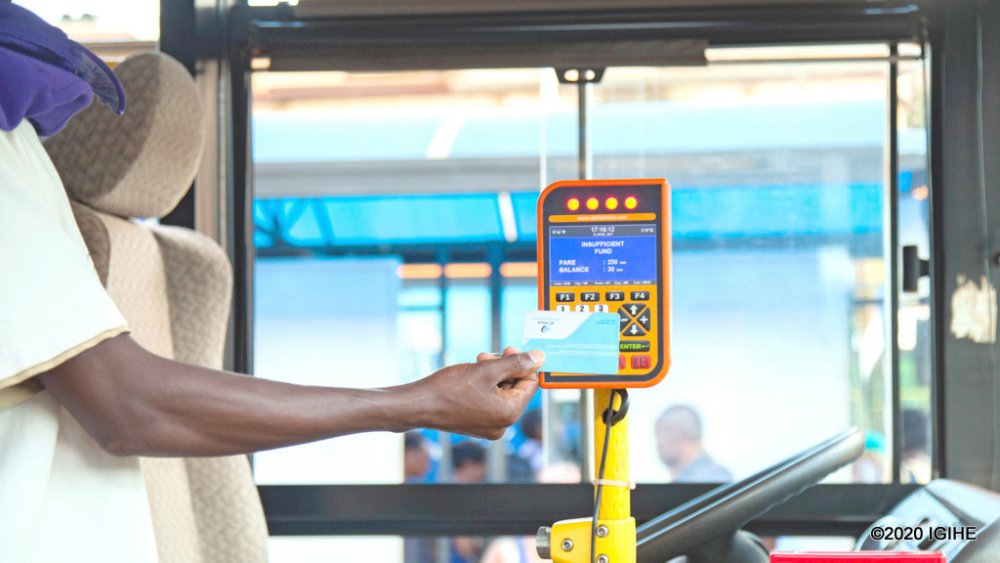
“Public transport will continue with buses operating at full capacity for seated passengers and at 50 percent for standing passengers. RURA will provide guidelines,” a statement issued after the meeting reads in part.
The changes come two weeks after public transport between Kigali and other provinces resumed following suspension owing to a spike in the Covid-19 numbers within Kigali.
The Cabinet meeting chaired by President Paul Kagame maintained in place majority of the guidelines against the covid-19, with a few adjustments made despite high expectations that more sections of the economy would be allowed to reopen.
Bar owners, spas, swimming pools, indoor gyms, and betting houses will have to wait a little longer before they could reopen as the cabinet maintained earlier measures set out 15 days ago.
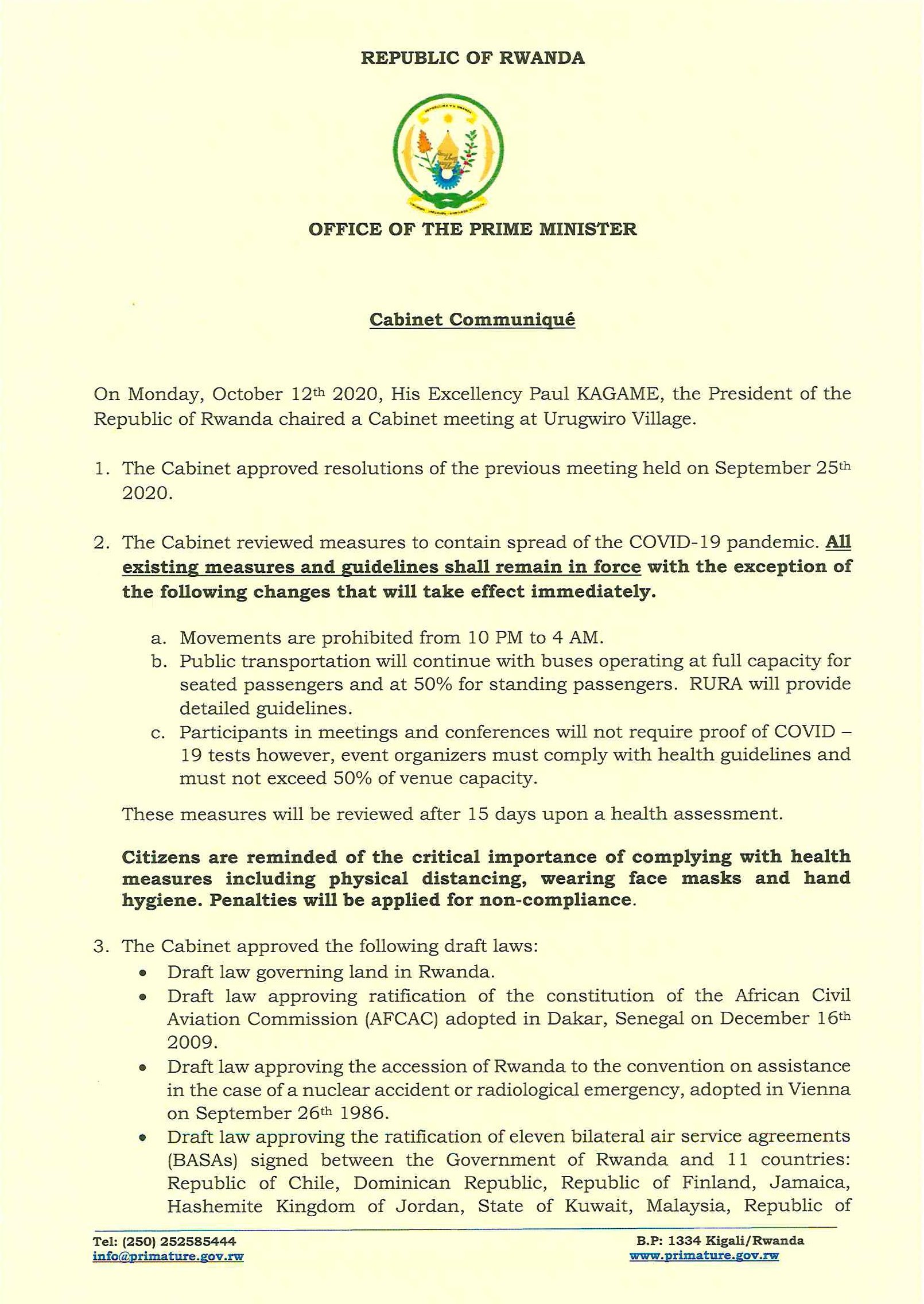
“The Cabinet reviewed measures to contain the spread of the COVID-19 pandemic. All existing measures and guidelines shall remain in force with the exception of the following changes that will take effect immediately,”
“Movements are prohibited from 10 p.m. To 4 a.m.”
Initially, curfew time, as set by the previous meeting, was from 10 pm to 5 am. The new time means you can wake up at 4 am and start your day earlier.
The Cabinet also confirmed that participants in meetings and conferences will not require proof of COVID-19 tests. However, event organizers must comply with health guidelines and must not exceed 50% of the venue capacity.
These measures will be reviewed after 15 days upon a health assessment of the COVID-19 situation.
“Citizens are reminded of the critical importance of complying with health measures including physical distancing, wearing face masks, and hand hygiene. Penalties will be applied for non-compliance,” the statement said.
Bars, nightclubs, concerts, public gatherings as well as places where many people converge are still considered possible hotspots for quick transmission of the virus.
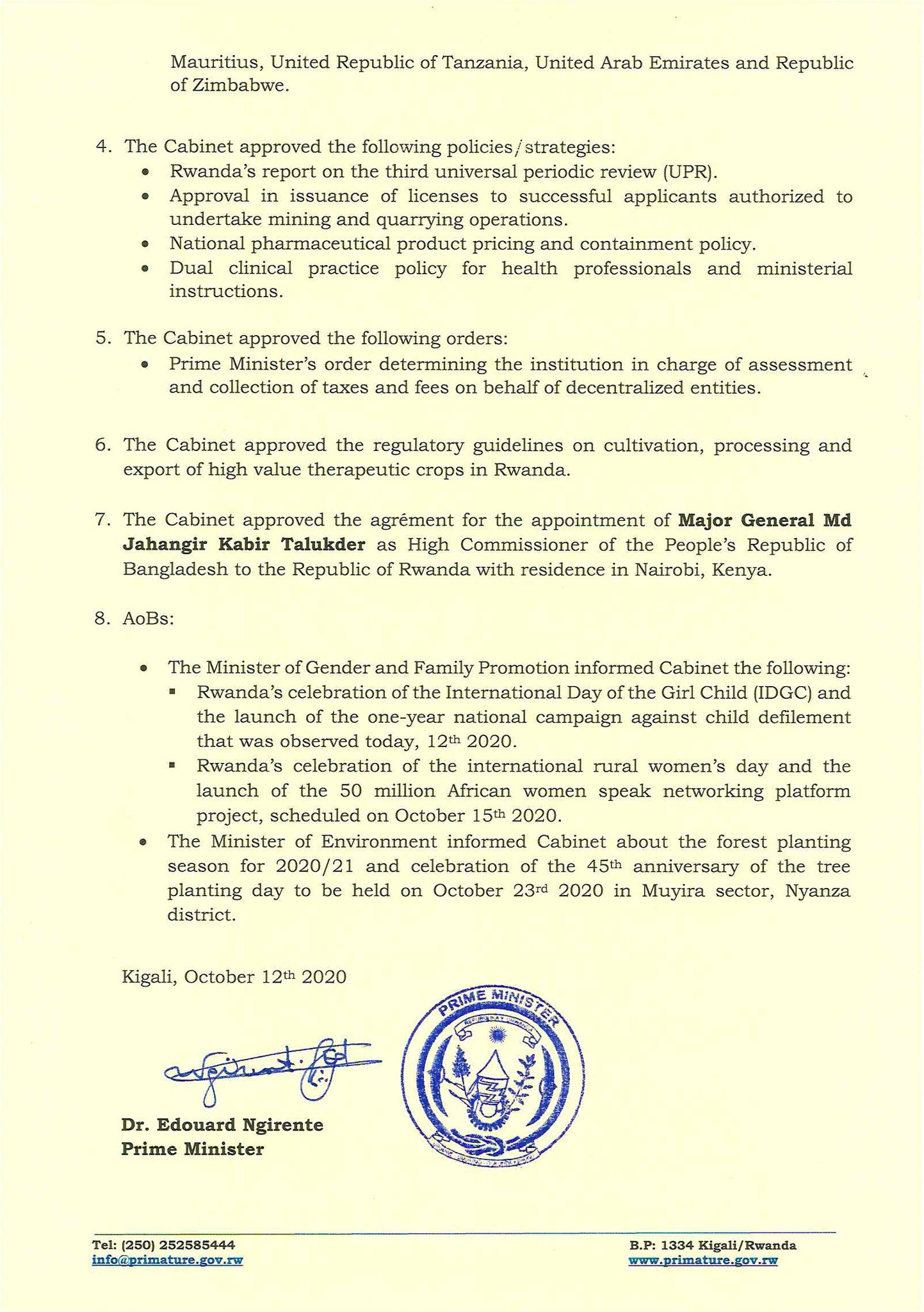
Among other decisions, the cabinet approved the Draft Law Governing Land in Rwanda and the draft law approving ratification of the construction of the African Civil Aviation Commission (AFCAC), adopted in Dakar, Senegal, December 16, 2009.
The cabinet also approved the draft law approving the accession of Rwanda to the Convention on Assistance in the Case of a Nuclear accident or radiological emergency adopted in Vienna on September 26, 1986.
The Cabinet also approved the draft law approving the ratification of 11 bilateral air service agreements (BASAs) signed between the Government of Rwanda and 11 countries including the Republic of Chile, Dominican Republic, Republic of Finland, Jamaica, Hashemite Kingdom of Jordan, State of Kuwait, Malaysia, Republic of Mauritius, United Republic of Tanzania, United Arab Emirates and Republic of Zimbabwe.
The cabinet approved Rwanda’s report on the 3rd Universal Periodic Review (UPR) as well as a policy on the issuance of licenses to successful applicants to undertake mining and quarrying operations In Rwanda.
Also, in the offing is the National Pharmaceutical Product Pricing and Containment policy as well as the dual clinical practice policy for health professionals and ministerial instructions.
The cabinet approved the Prime Minister’s order determining the institution in charge of assessment and collection of taxes and fees on behalf of the decentralized entities.
A cabinet meeting that took place on Monday decided that public transport will continue with buses operating at full capacity for seated passengers and at 50 percent for standing passengers, lifting instructions that were in effect since May, when it was confirmed that public transport or private vehicles were allowed to carry only 50% of the installed passenger capacity.
At the time, travel fares increased by Rwf 31.8 per kilometer in the City of Kigali and Rwf 30.8 per kilometer in the countryside.
The Director General of RURA, Lt. Col Patrick Nyirishema told IGIHE that the new 100% passenger transport regulations will be effective on Thursday.
“It will take effect on Thursday; we first need to provide guidelines to prevent the spreading of the pandemic and set new prices. Prices will be changing, we do not expect them to return to what they were. Otherwise, these prices went up to early 2018. We had planned to change them in March but it coincided with the pandemic outbreak,” said Lt. Col Nyirishema.
“We have completed studies needed for these changes when the pandemic happened. Now with the prevention of the COVID-19 included we have to make new adjustments.”
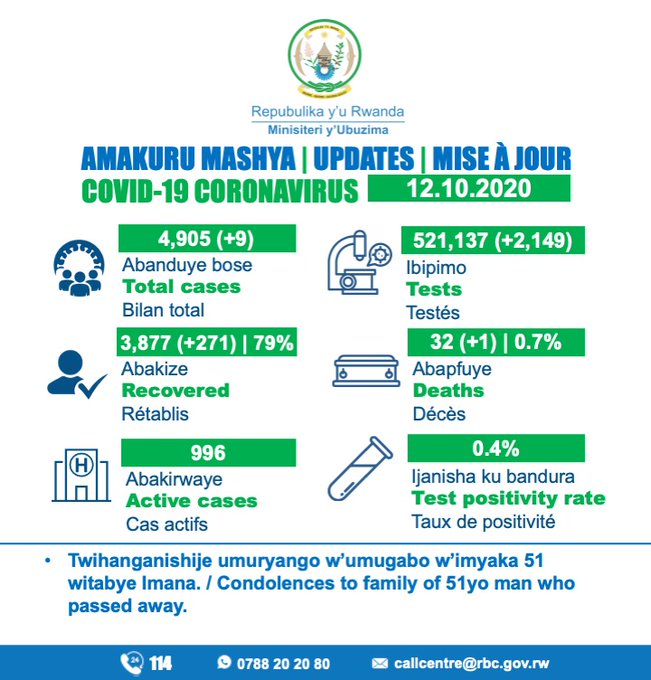
On October 12, nine new infections of the pandemic were found out of 2,149 sample tests, of which eight are truck drivers in Nyagatare District, Eastern Province and Kayonza District also confirmed one positive new case.
on the same day, 271 patients have recovered the virus bringing the number of recoveries to 3877 while the number of active cases is now 996.
Rwanda Biomedical Center warned, this week, that despite the declining numbers and some treatment centers closing up, the virus is likely to rebound, thus a need to have citizen vigilance and adherence to government measures against the spread of the New Coronavirus.
Coronavirus symptoms include coughing, flu, and difficulty in breathing. The virus is said to be transmitted through the mucous membranes of the respiratory tract.
Rwandans are required to continue to comply with government regulations, especially with frequent washing of hands and water and soap, wearing masks when leaving home or in public.
The suspected drug dealers were caught with over 1,800 pellets of cannabis, combined.
They are Fidele Niyonzima, 25, who was found in possession of 301 pellets of cannabis, while the duo of Console Niragire, 31, and Liliane Ntagisanimana, 30, were caught with 1,500 pellets.
Niragire and Ntagisanimana belong to the same ring of cannabis distributors and retailers in Rubavu.
The arrest was a result of credible information received from local community policing partners, which smoothened the operation that saw the alleged drug dealers caught red-handed, according to Chief Inspector of Police (CIP) Bonaventure Twizere Karekezi, the Police spokesperson for the Western region.
“It was because of the strong cooperation between the police and the residents, who shared timely and credible information. One of the women was the alleged wholesaler while the other was in charge of marketing and recruiting new clients,” CIP Karekezi said.
Niragire’s husband is serving a life sentence for the same crime.
“Her husband was a major drug dealer, who was convicted and handed a life imprisonment, so Niragire was also suspected to be involved in the same criminal dealings and was being trailed until she was arrested red-handed,” the spokesperson said.
He also explained that the Police is still looking for other two accomplices, who traffics the narcotics from the DR Congo and supplies the two women.
Meanwhile, Niyonzima had used a seven year-old to deliver the narcotics.
“Niyonzima gave the pellets of cannabis to take them to a point, where he would pick them as a way of preventing any suspicions and to evade arrest.
Good enough, residents had already shared information and Niyonzima was arrested red-handed as he picked the narcotics at the point where the child had left them,” CIP Karekezi said.
He warned against engaging children in such high impact crimes.
The spokesperson further commended the role of the public in identifying and arresting drug traffickers, distributors and retailers.
All the arrested were handed over to RIB for the next legal steps.
Under article 263 of the law nº68/2018 of 30/08/2018 relating to offences and penalties in general, any person convicted as a dealer in “severe drugs” faces between 20 years and life in prison, and a fine of up to Rwf30 million.
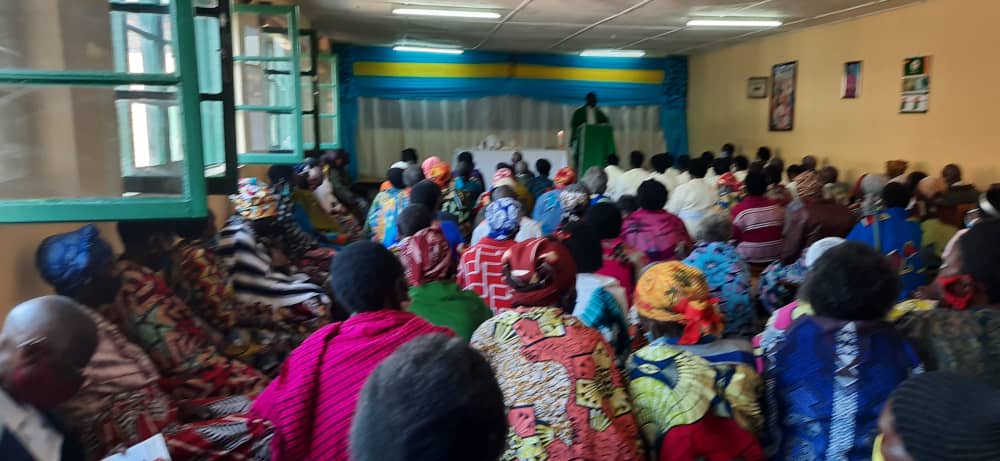
On Sunday, Police and local leaders conducted an inspection in various churches that were permitted to hold religious services in the region, to assess their compliance.
Countrywide, majority churches have continued to follow the recommended safety guidelines during their respective services.
“Out of 72 churches that were inspected in Musanze, Gakenke, Gicumbi and Burera districts, only one–Ruhengeri Cathedral–was found holding services contrary to the directives; it was simply a chaotic situation… everyone there was at high risk of infection,” ACP Reverien Rugwizangoga, the Nothern Region Police Commander, said.
He added: “In the main Cathedral, benches that are designated for two people had four; there was also another chapel, where only the elderly had congregated, congested, praying and in total disregard of social distancing. This was quite absurd, subjecting such a vulnerable group to this level of risk.”
According to World Health Organisation (WHO), COVID-19 is often more severe in the elderly, especially people who are older than 60 years or who have health conditions like lung or heart disease, diabetes or conditions that affect their immune system.
The two priests; Father Emmanuel Ndagijimana, who was presiding over the service inside the main Cathedral, and Father Felicien Nsengiyumva, who was heading the service for the elderly in the chapel, have been penalised accordingly, for the violations.
“Our role as the Police is to implement the directives and ensuring that any issued guidelines are followed. We have equally informed other relevant authorities, and any decision that will be taken against this church for violating the directives… we will ensure that it is implemented accordingly,” ACP Rugwizangoga said.
We remind religious denominations particularly those that were permitted to resume services, to follow strict safety guidelines as issued by relevant authorities and to be responsive in preventing the spread of COVID-19.
The portable patient monitors were handed over during a ceremony which took place on the 9th of October at the Rwanda Medical Supply Warehouse, by, on behalf of TDB, Mr. Regis Rugemanshuro, Rwanda Social Security Board (RSSB) Director General and shareholder representative on the TDB Board of Governors, to Dr. Sabin Nsanzimana, Director General of the Rwanda Biomedical Centre (RBC).
The portable patient monitors – locally procured from Sana Medical Stores Ltd. – will serve to monitor Covid 19-affected adults and paediatric patients in COVID-19 treatment facilities.
“These monitors come in handy and because of their nature-they will contribute greatly to the fight against COVID-19, the aspect of helping paediatric patients was well thought of as well, RBC is grateful for such contributions,” said Dr. Sabin Nsanzimana, RBC Director General.
“While Rwanda has been fairing very well in its fight against the Covid-19 pandemic, with strong prevention and mitigation measures in place, as well as high number of tests proportionally, it is important to keep boosting the country’s capacity, particularly in terms of equipment, so that its health care system continues to deliver in a context of increased demand” said Regis Rugemanshuro, RSSB Director General and shareholder representative on the TDB Board of Governors.
“We are pleased to accompany the Government of Rwanda in its efforts to mitigate the impact of the Covid-19 pandemic” said Admassu Tadesse, TDB President and Chief Executive. “This is part of our broad response plan which, in addition to direct assistance as such via our Covid-19 Emergency Response Programme (CERP), also incorporates a series of financing interventions for financial institutions, sovereigns and enterprises, to help them cope with the shocks of the pandemic”.
Mary Kamari, TDB Corporate Affairs and Investor Relations Executive added that “through CERP, TDB provides, among other interventions, locally manufactured or procured PPEs and equipment – as it is the case in Rwanda. The objective of programme is to support healthcare systems, at the same time as local private sector and employment, whenever possible. Over and above CERP, the Bank extended a USD ½ million grant to the African Union’s Africa Centres for Disease Control and Prevention (Africa CDC).”
According to data from the Rwanda Biomedical Centre, since COVID-19 outbreak in March, Rwanda has recorded 4,866 confirmed cases, 3,216 recoveries and 29 deaths due to the global pandemic. The Government of Rwanda and partners have put in place strong preventive measures that include mass testing. To date, over 504,670 tests have been conducted in an effort to curb the spread of the virus
This comes days after the number of new infections was declining, creating a glimmer of hope that the pandemic could be subsiding across the country.
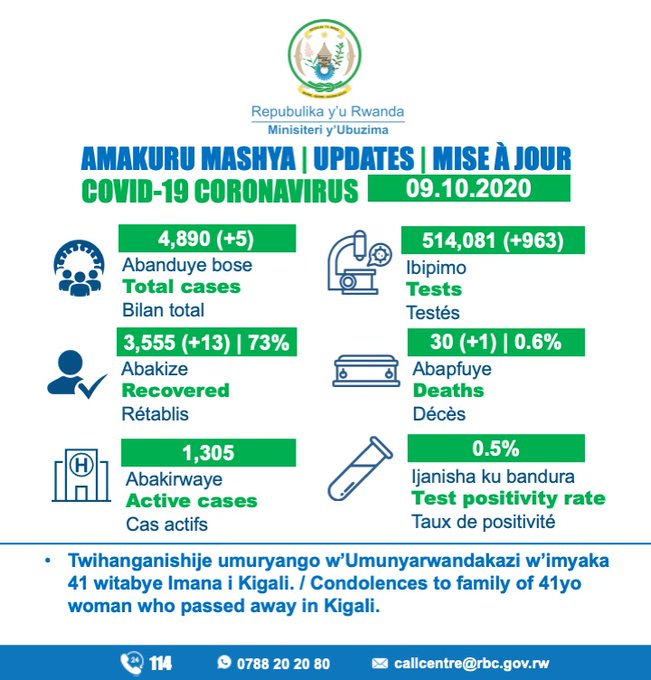
The Ministry of Health on Friday reported 5 new cases out of 963 new tests conducted, taking the total number of cases to 4,890, while the number of recoveries on the same day is 13.
In Rwanda, 514,081 sample testes have so far been taken, with 4890 confirmed cases. Of these, 3555 have recovered while 1305 are still active cases.
Coronavirus symptoms include coughing, flu, and difficulty in breathing. The virus is said to be transmitted through the mucous membranes of the respiratory tract.
Rwandans are required to continue to comply with government regulations, especially with frequent washing of hands and water and soap, wearing masks when leaving home or in public.
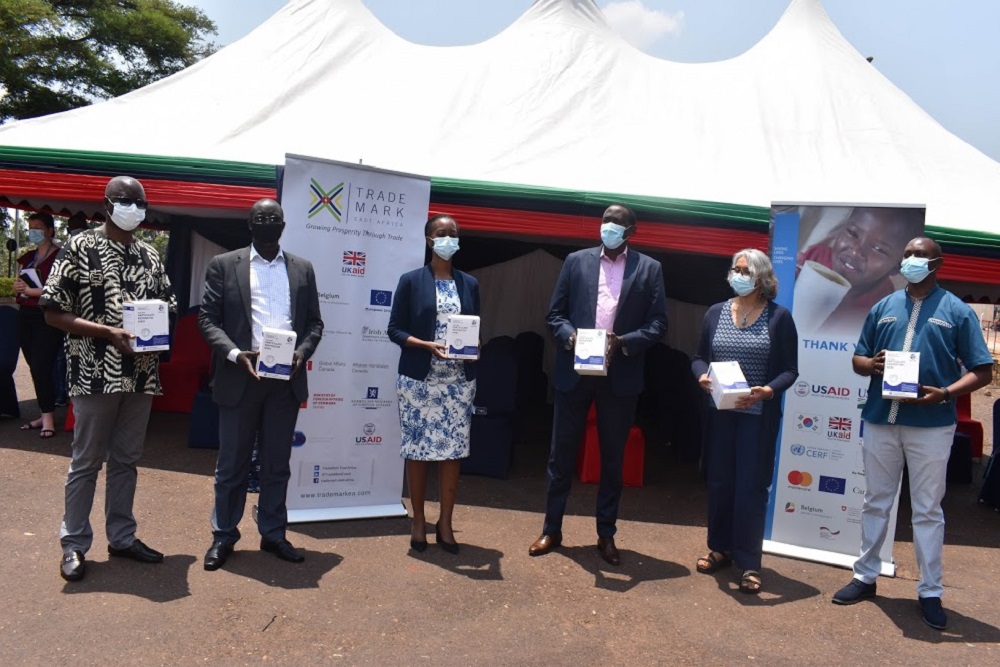
On hand to receive the PPE at World Food Programme on behalf of the government of Rwanda, was the Permanent Secretary, Ministry of Trade and Industry.
The equipment provided include hand sanitizers, hand washing stations, liquid hand washing soap, infrared thermometer, re-usable safety boots, full protective PPE, filtering facepiece respirator, reusable masks, plastic face shield, disposable gloves, hand sanitiser dispensers and disinfectant spray bottles.
Speaking during the handover event the Permanent Secretary in the Ministry of Trade and Industry. lauded the citizens and businesses in Rwanda for their strong compliance with the health protocols issued by the government. The minister said this is paying a huge divided with comparatively lower infection and mortality rates in Rwanda as compared to many African nations.
‘It is clear, we must not relent and must continue all working together, to defeat the virus. Equally important as we fight the pandemic is the need to sustain our economy and seek to recover the lost ground. The PPE provided by TradeMark EA is very crucial in ensuring safe trade continue in and out of our borders’ said the Permanent Secretary in the Ministry of Trade and Industry.
The equipment presented today will enhance the safety and working condition of front-line workers in key borders, which are critical arteries of trade in and out of Rwanda and her neighbours. Among the borders where the PPE will be distributed are Rusumo, Kagitumba, Rubavu and Rusizi 11.
TradeMark East Africa Country Director for Rwanda Patience Mutesi underscored the need for the country to safeguard and boost her trade and economy amidst efforts to contain the Corona Pandemic
‘At TradeMark we have witnessed over the last decade of our work in Rwanda, how trade is able to present great opportunities and lift the standards of living of our people in a sustainable way. Regrettably, the ongoing pandemic has slowed down the wheel of trade especially at the borders, threatening to reverse the huge gains we have made over the years. The equipment we’ve presented today will ensure that trade can continue unhindered in our borders without allowing cross border Covid-19 infections’ said Mutesi.
The TMEA Country Director further revealed that the equipment donated today is part of the Safe Trade Emergency Facility, a US$ 23 million emergency program rolled out by TradeMark East Africa in the East African region in the aftermath of the Covid-19 pandemic that seeks to ensure regional economies continue to trade in a safe way, while curbing cross-border infections.