The statement released last night shows that the deceased is a 71 old man from Kigali.
Among others, 37 patients have recovered. Rwanda confirmed the first COVID-19 patient on 14th March 2020.
Since then, 6428 cases have been found our of 661637 sample tests, 5826 have recovered, 548 are active cases while 54 have succumbed to the virus.
Coronavirus symptoms include coughing, flu, and difficulty in breathing. The virus is said to be transmitted through the mucous membranes of the respiratory tract.
Rwandans are urged to adhere to COVID-19 health guidelines, washing hands frequently using soaps and safe water, wearing face masks and respecting social distancing.
Throughout 90 days of the campaign, Cogebanque will take Rwandans through deeper insights on benefits of using MasterCard products namely Debit, Credit and Prepaid cards while paying for goods and services like settling bills, making withdrawals or shopping online.
As for the campaign, clients using the cards will stand chance to win various prizes including airtime, cash, shopping vouchers, fuel vouchers, laptops, smartphones, airtime, home appliances including fridges among others.
The Head of Marketing and Product Development at Cogebanque, Antoine Iyamuremye explained that the campaign will mobilize Rwandans to leverage the bank’s reliable technology for quick services.
“The campaign comes in difficult times of COVID-19 pandemic. We have various digital products to help clients transact. Therefore, there is need to use reliable cards guaranteeing security to customers,” he said.
The campaign is designed for Cogebanque customers and potential customers using MasterCard products including Debit, Prepaid and Credit specifically helping them to access loans.
Iyamuremye explained that the cards are used globally and encouraged people to take advantage of them to go cashless.
Mastercard products enable customers to make payments easily at any time. They can also withdraw from foreign countries corresponding with prevailing exchange rates.
According to Iyamuremye, the campaign is also an opportunity to reward customers embracing digital banking services as well as celebrating them during the festive season.
“The festive season during which people need to install new home equipment is here. The campaign gives them chance to win weekly prizes where customers can win tickets, fuel vouchers or shopping vouchers to pick corresponding items of choice in supermarkets,” he noted.
The Head of Corporate Banking at Cogebanque, Songa Rwamugire encouraged Rwandans to embrace digital transactions because they are increasingly becoming universal.
“Cogebanque Mastercard Credit card grants you the capability to withdraw or get credit to be repaid within 55 days without interest. These cards are safe, reliable and internationally accredited,” he said.
At the launch of ‘Biroroshye hamwe na Cogebanque Mastercard’ campaign on Wednesday 9th December 2020, three customers who made transactions using designated MasterCards products since lockdown walked away with prizes.
The awardees were selected based on how active they have been using the cards in various transactions. These include Kayigamba Degaule Eugène, Nkomeje Eric and Rubangura Austin, the owner of UPROMEDIA Company. Each received Rwf 200,000 to be transferred to their accounts.
Cogebanque has 28 branches, over 600 agents, and 36 ATM points across the country. These are supported by Mobile banking (USSD on *505# and Mobile App “Coge mBank”), Cards (Mastercards & Smart cash) and internet banking delivery channel accessible through different media.
The Mastercards are accepted worldwide and can be used at over 36 million locations globally.
RGS is an independent annual publication of the RGB that seeks to gauge the state of governance in Rwanda, comprehensively assesses governance in using both primary and secondary data sources.
It is mainly designed to generate credible and reliable data on governance issues, serves as practical tool that drives policy reform in the domain of governance through the identification of areas for improvement and generates actionable recommendations and to contribute to current and authentic knowledge formation about Rwanda.
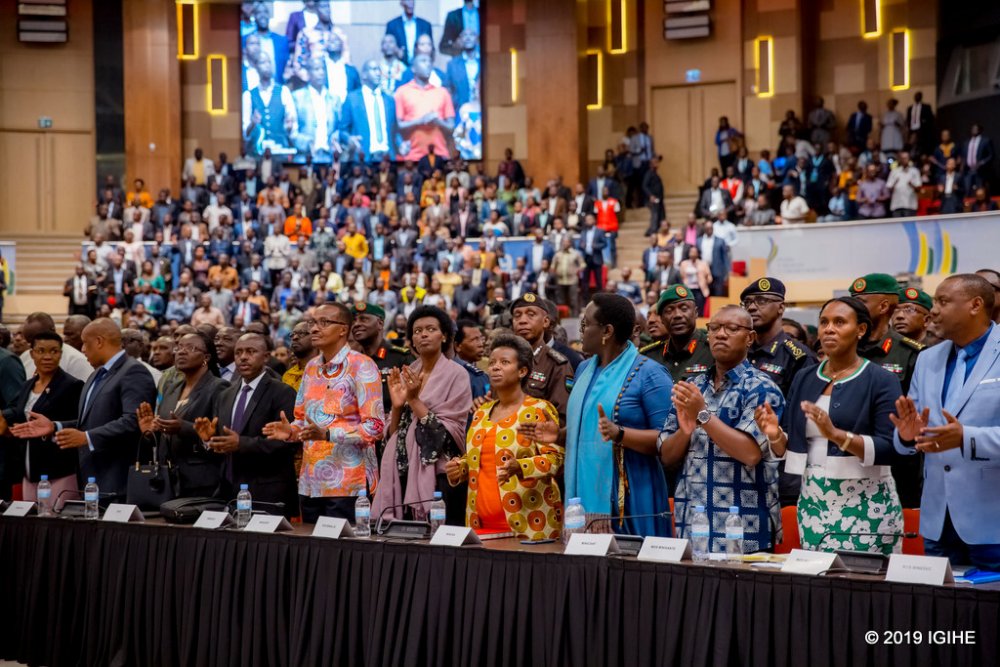
The launch of the 7th scorecard held today has been attended by various officials from private, public institutions, civil society organizations, higher learning institutions and research centers.
The research carried out was entrenched on eight pillars namely; :(1) Rule of Law, (2) Political Rights and Civil liberties, (3) Participation and Inclusiveness, (4) Safety and Security,(5) Investing in Human and Social Development, (6)Control of corruption, Transparency and Accountability, (7) Quality of service delivery,(8) Economic and corporate governance.
The pillar of Security came on top scoring 95,44% in 2020 from 94,29% of 2019, the Rule of Law performed at 87,86% from 84,70 % of last year, Political Rights and Civil liberties scored 85,76 % from 85,17 % while Participation and Inclusiveness got 81,96% from 73 % of last year.
The pillar of Investing in Human and Social Development scored 73,32% from 68,53%, Control of corruption, Transparency and Accountability got 86,28% from 84,28%, Quality of service delivery scored 78,31 % from 70,54 % while Economic and corporate governance scored 78,14% from 76,43% of last year.
The CEO of RGB, Dr. Usta Kayitesi thanked the Government of Rwanda for providing required resources for the production of this index and urged all sectors to improve in areas that still rate poorly.
At the official launch of Rwanda Governance Scorecard 7th Edition, Mr. Fode Ndiaye UN Resident Coordinator commended RGB for setting a good example of self-assessment in the framework of African Peer Review Mechanism.
The pillar of ‘Investing in human and social capital’ is the least performing. Among other areas that need improvement include education, social protection, poverty reduction and climate change resilience.
As for the pillar of Economic and corporate governance ranked 7th with 78.16, it was reported that more efforts are needed in creating off-farms jobs which still ranks at 56.4%.
The Minister in the Office of the Presidency, Judith Uwizeye who graced the event highlighted that Rwandans are the primary beneficiaries of Rwanda Governance Scorecard and assured commitment for the implementation of recommendations.
“We have the interest of generating data that tells us the truth that anybody else cannot tell us. Transformational Governance is a key pillar of National Strategy for Transformation (NST1). Thus, the Government of Rwanda is committed to implement the recommendations of this edition of Rwanda Governance Scorecard for the good of our citizens,” she said.
Safety and security has maintained the lead since the inception of RGS.
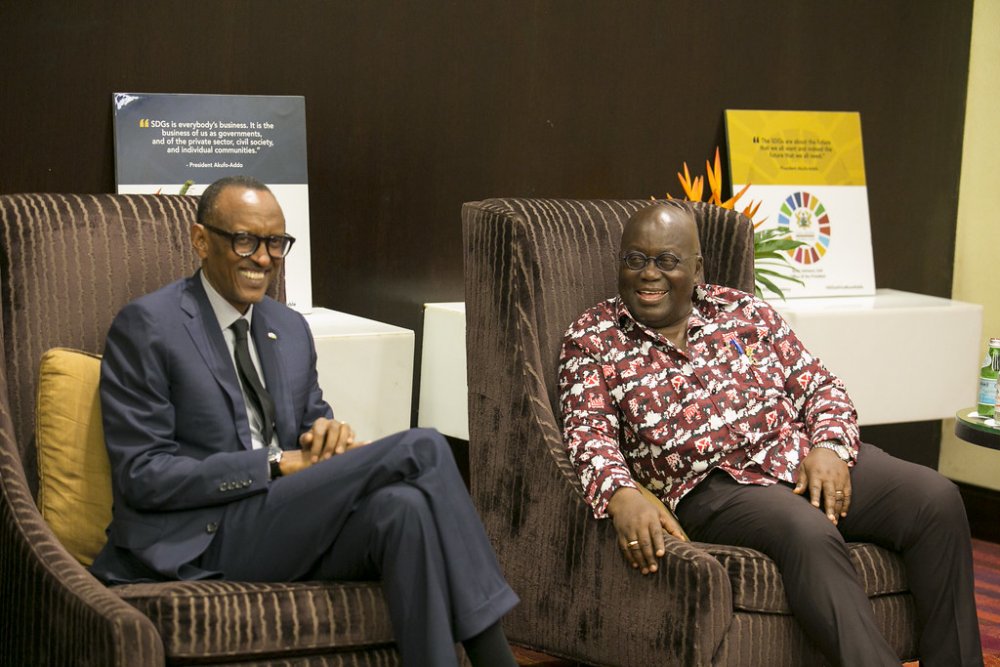
The congratulatory message was delivered via twitter account where Kagame wished him well.
“Congratulations to my brother and friend President Nana Akufo-Addo on your re-election. It is a testament to the trust the people of Ghana have placed in you. We look forward to continued friendship between our two nations and collaboration towards the prosperity of our people,” he said.
Nana Akufo-Addo, 76, was elected to lead Ghana for the second term during elections that took place on 7th December 2020 after obtaining 51,30% votes beating his rival John Mahama who got 47,36%.
Ghana and Rwanda enjoy bilateral relations aimed improving welfare of both countries’ citizens.
The two countries signed air service cooperation agreements that saw RwandAir launching flights to Accra, Ghana since June 2013.
RwandAir flights have eased connectivity and cooperation between both countries.
In 2014, Rwanda’s Private Sector Federation (PSF) signed cooperation agreements with Ghana’s Private Enterprise Federation (PEF) aimed at promoting investment in modern agriculture, tourism, garment industries, investment in construction and mining as well.
At the beginning of last month, Rwanda’s Minister of Foreign Affairs and International Cooperation, Dr Vincent Biruta visited Ghana for two days where he met with the President of Ghana, Nana Akufo-Addo.
Last year, Rwanda opened an embassy in Ghana a position that was previously covered by Rwanda’s ambassador with residence in Nigeria.
News about the death circulated today morning around 7am when a resident saw the suspected murderer, a nephew, ferrying possessions from the house of the old woman who had gone missing for two days. When asked why he was taking away the house equipment, he run away.
The Executive Secretary of Cyabagarura cell, Niyoyita Ally said that the old woman’s body has been found dumped in toilet two days after disapperance.
“The old woman lived alone in the house. She had gone missing since Wednesday. Her nephew aged 25 whom they once lived together has been seen this morning looting the old woman’s house. He was seen by another nephew who asked why the other guy was stealing house equipment yet the owner went missing. He immediately ran away,” he said.
“This incited suspicions that he might be behind the old woman’s death. He is still at large. The next move was to search for the woman an unfortunately found her dead, body dumped in toilet. The old woman died after two goats she possessed were also killed. We suspect the nephew because he is a known notorious thief. The old woman had chased him from home over bad character, “added Niyoyita.
Retrieving the body was still underway by press time.
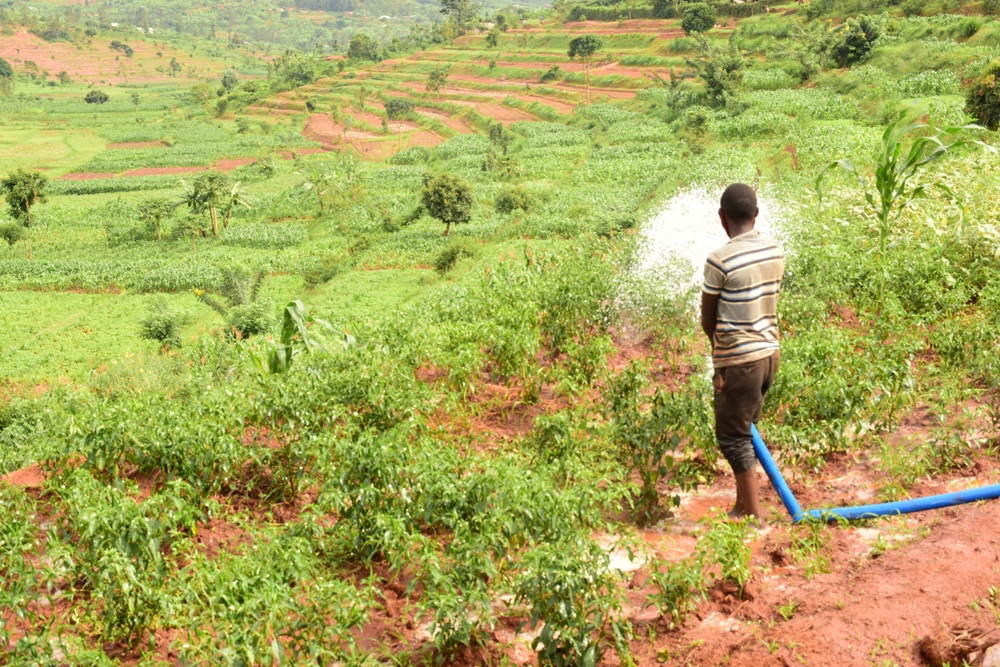
The support is sought by farmers grouped in Gwiza Nzige cooperative which invested in the growing of chili and French beans on 50 hectares. As COVID-19 pandemic emerged, the famers’ business collapsed affecting markets that some of the chili is wasting in gardens.
Hazizi Célestin who planted chili on a half hectare said they had invested much after easily finding buyers for the first produce. However, the situation exacerbated with the pandemic that farmers are counting losses.
“Growing chili was a good income generating project to invest in. Farmers were excited with the produce as they got buyers which motivated them to expand acreage. However, chili has ripened and wasted in gardens because we cannot find buyers. I had invested Rwf 2 million but I have only recovered Rwf 1 million,” he said.
He requested the Government to help them find market to recover the capital because some clients canceled their orders.
The President of Gwiza cooperative which grows chili and vegetables in Nzige sector Uwitonze Euphrem explained that there is a problem of poor market conditions despite available big volumes of chili produce from over 50 hectares.
“We harvest at between six and ten chili tons per week but the buyer picks only two of them. This brings losses and discourages farmers who have invested much. We appeal to National Agricultural Export Development Board (NAEB), Rwanda Agriculture Board (RAB) and our district for advocacy to find market,” he said.
Fred Rwigamba, the Director of Finance and Operations SOUK Investment Group, a firm engaging in growing and exporting fresh horticulture produce from Rwanda, has told IGIHE that they are usually contracted to buy produce from Rubona sector that the produce from Nzige is auxiliary.
“They should be grateful because we help those buying small quantities of their produce. COVID-19 pandemic has affected markets pushing some investors to stop buying their produce. We do it in form of support to farmers because we don’t have large market,” he revealed.
According to the mayor of Rwamagana district, Mbonyumuvunyi Radjab, they have advised farmers to harvest chili and sell it to Rwanda’s market.
“Their venture into growing chili is expensive. However, there is market instability due to the pandemic which put the economy at sea. We advised them to harvest chili and sell the produce to Rwanda’s market even though the price is comparatively lower than what they used to get on the international markets,” he said.
Farmers explain that they used to sell a kilo of chili at Rwf 550 as per agreement with buyers but they currently sell at Rwf 300.
Gwiza Nzige cooperative comprises of 321 members farming on 661 hectares at the hillside and 215 hectares in marshland where they plant chili and maize among other crops.
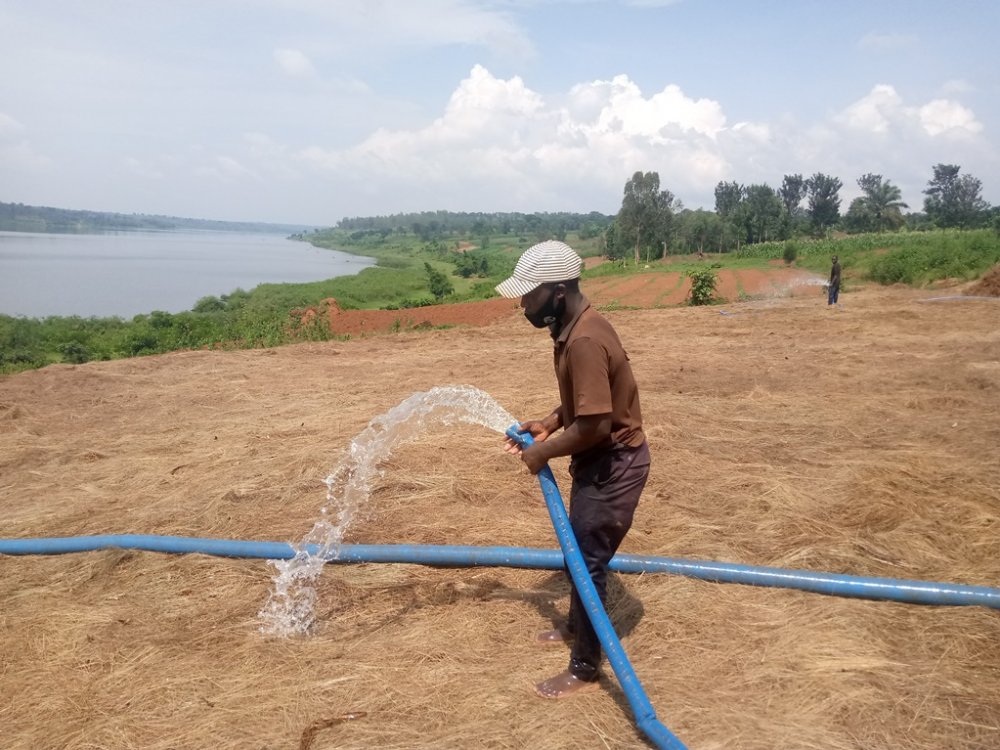
The project is implemented by Rwanda Rural Rehabilitation Initiative (RWARRI) in partnership with Ngoma district with the aim of improving livelihoods and climate resilience of the smallholder farmers by the use of green technologies.
The Executive Director of RWARRI, Belange Uwizeye said that the project will help smallholder horticultural farmers to apply climate friendly solar pumping systems and water reservoirs made of stones and clays.
“We have already grouped farmers into groups and have the land for development of solar pump system and water reservoirs. We expect the beginning of construction activities in January so that infrastructure will have been completed by Summer. We have invested Rwf 250 million. The water reservoir to be constructed will last for 100 years at least,” she noted.
Uwihanganye Sebahire Faustin , a farmer explained that they would struggle to water their crops despite the presence of a surrounding Lake Mugesera.
“We used to water crops twice a week and would use 18 liters of fuel each time per hectare. This cost Rwf 36,000 per week because the price of one liter was at Rwf 1000. At the end of agricultural season, we counted Rwf 600,000 expenses for irrigation and payment of causal workers,” he said.
With the solar pumping system, Uwihanganye explained that such money will be utilized in other income generating activities.
Gahongayire Ancilla also revealed that fetching water from the lake was a complex process that hampered agricultural activities.
“I didn’t plant crops of my choice because I had no means to water crops. Now, I will be planting more vegetables, fruits and improve productivity with assurance of these infrastructures,” she said.
The vice mayor of Ngoma district for economic affairs,Nyiridandi Mapambano Cyriaque underscored that the project aims at improving horticultural productivity enabling farmers to become food-sufficient and engage in market-oriented agriculture.
“Farmers have been using small machines distributed under subsidy-program. We are optimistic that farmers will take advantage of the large, sustainable project to improve productivity and generate more income than ever. Moreover, the project is climate-friendly because it won’t use fuel,” he stressed.
Nyiridandi appealed on farmers to take good care of infrastructures to be made available.
The project is expected to provide job opportunities to 400 residents from Mutenderi and Zaza sectors in the construction of water pipelines and reservoir.
Ngoma district has 1000 irrigated hectares and plans to cover more 388 hectares this year.
The statement released last night shows that new cases were found in Kigali: 24, Rubavu: 15, Huye: 14, Rusizi: 8, Kayonza: 3, Gicumbi: 3, Muhanga: 1, Gisagara: 1, Kamonyi: 1 and Nyagatare: 1.
Rwanda confirmed the first COVID-19 patient on 14th March 2020.
Since then, 6349 people have been infected out of 657 995 sample tests of whom 5789 have recovered, 507 are active cases while 53 have succumbed to the virus.
Coronavirus symptoms include coughing, flu, and difficulty in breathing. The virus is said to be transmitted through the mucous membranes of the respiratory tract.
Rwandans are urged to adhere to COVID-19 health guidelines, washing hands frequently using soaps and safe water, wearing face masks and respecting social distancing.
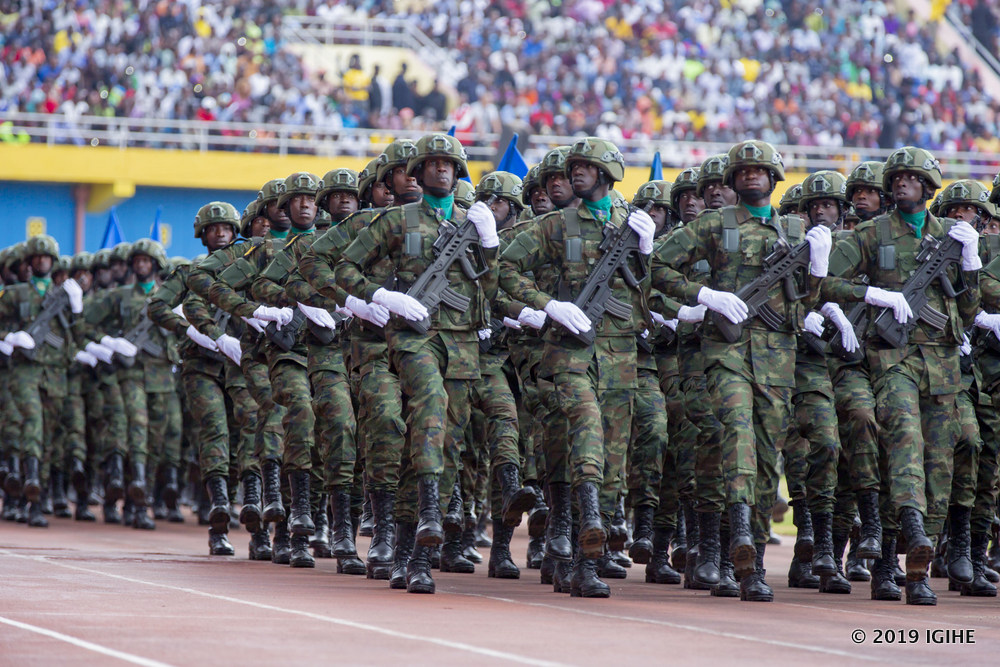
This year’s Umushyikirano will be attended by 500 participants at Kigali Convention Center instead of 2000 who have been attending since inception.
To control the spread of COVID-19 all participants will be tested and respect other health guidelines instituted including hand washing, wearing face masks and social distancing.
Among other changes, this year’s Umushyikirano will last one day on 16th December instead of the usual two days.
It will bring together Rwandans from inside the country and abroad while others will follow activities virtually at different meeting points.
There will be four established centers across in the countryside thus; Karongi, Nyaruguru, Kirehe and Gicumbi, and one at Intare Arena convening 500 participants of YouthConnect summit.
During the council, the president will deliver ‘State of the Nation’ address.
The address is expected to give hope to Rwandans especially during the period when the country’s economy has been shaken by Coronavirus pandemic.
There have been several reshuffles in top Government officials following the previous Umushyikirano. Some institutions got new heads while others have been suspended or appointed to new duties.
Umushyikirano is Kinyarwanda’s equivalent of ‘dialogue’. During the dialogue, participants exchange ideas, share experiences, peer review and question each other. Today Umushyikirano is known as the National Dialogue Council.
As part of efforts to reconstruct Rwanda and nurture a shared national identity, the Government of Rwanda drew on aspects of Rwandan culture and traditional practices to enrich and adapt its development programs to the country’s needs and context.
The result is a set of Home Grown Solutions – culturally owned practices translated into sustainable development programs. One of these Home Grown Solutions is Umushyikirano.
Governed by the Rwandan Constitution (Article 168), Umushyikirano is a forum where participants debate issues relating to the state of the nation, the state of local government and national unity. The Office of the Prime Minister is responsible for the overall co-ordination of Umushyikirano.
Umushyikirano is an annual event chaired by the President of Rwanda that gives Rwandans from all walks of life the opportunity to ask questions directly to their leaders.
The event is attended by members of the Cabinet and Parliament, representatives of the Rwandan community abroad, local government, media, the diplomatic community and others invited by the President.
Those unable to attend in person at Rwanda’s parliament building can participate via telephone, SMS, Twitter and Facebook as well as follow the debate live on television and radio.
The first National Dialogue Council took place on 28 June 2003 and has been held each year since.
Umushyikirano aims to be a leading example of participatory and inclusive governance. It is hoped that by directly engaging with their leaders, Rwandans feel part of the decision making that affects their lives. Umushyikirano also serves as a forum for Rwandans to hold their leaders and government to account.
Once a participant has asked a question, either in person, via Twitter, Facebook, SMS, the web or phone, the leader responsible for that area responds. All questions asked are recorded.
So far, four coronavirus (COVID-19) vaccines have reached the final stage of testing, and one of the frontrunners is making progress toward the goal of proving to be safe and effective.
However, not all aircraft can carry the vaccine as they require storage conditions with temperature ranging between 2 and 8 Celsius degree. Some vaccines on the other hand require storage with Zero Celsius degree or below, which means only designated aircrafts can transport the vaccines.
For instance, AstraZeneca’s vaccine candidate from Oxford University can be stored at normal refrigeration temperatures, not needing the supercool storage the Pfizer vaccine requires. It is the only one with easy transport requirements.
Moderna vaccine manufactured by Americans is expected to remain stable at standard refrigerated conditions of 2° to 8°C for up to 30 days within the 6-month shelf life.
Pfizer or BionTech vaccines already in use in the United Kingdom set conditions for storage in standard refrigerated conditions of 70 Celsius degree while Russia’s Sputnik V vaccine can be stored under same conditions of AstraZeneca.
Health experts show that poor countries or majority of African countries might choose AstraZeneca with moderate storage conditions unlike other vaccines with higher temperature requirements.
It is said that these vaccines take definitive effect after taking it two times.
Towards the beginning of September, the International Air Transport Association (IATA) announced that shipping a coronavirus vaccine around the world will be the “largest transport challenge ever” adding that the equivalent of 8,000 Boeing 747s will be needed.
“Safely delivering Covid-19 vaccines will be the mission of the century for the global air cargo industry. But it won’t happen without careful advance planning. And the time for that is now,” said IATA’s chief executive Alexandre de Juniac.
At the time, he said that flights to certain parts of the world, including some areas of South East Asia, will be critical as they lack vaccine-production capabilities.
Distributing a vaccine across Africa would be “impossible” right now IATA says given the lack of cargo capacity, size of the region and the complexities of border crossings.
Transportation will need “almost military precision” and will require cool facilities across a network of locations where the vaccine will be stored.
IATA urged governments to begin careful planning now to ensure they are fully prepared once vaccines are approved and available for distribution.
{{Is RwandAir ready?}}
RwandAir is one among airlines flying to many African destinations that could intervene in the distribution of the vaccine once approved and ready for distribution.
The CEO of RwandAir, Yvonne Manzi Makolo has told IGIHE that the carrier has been using passenger aircrafts as an alternative for air cargo shipping since the period of lockdown.
She explained that transportation of COVID-19 vaccine might be possible when available.
“We still use passenger aircrafts for air cargo transportation even to Europe. We are studying how we can also transport the vaccines using ordinary airlines when it is time. It has not yet been approved but it is possible. The vaccine has to be transported in special temperature conditions. So, I cannot assure you of accurate information right now because we are still weighing on requirements for transportation of various vaccines,” said Makolo.
Kenya Airways is another regional carrier seeking to play a role in the distribution of Covid-19 vaccines.
Kenya Airways chief executive officer Allan Kilavuka has announced that the airline has been relying on cargo flights to stay afloat during the coronavirus pandemic that has paralysed the global travel, tourism and aviation sectors.
Mr Kilavuka said the national carrier prepared early for a role in taking the vaccines to various countries. “Even before the vaccine was announced, we had set up a cold room in Nairobi at our cargo centre which can store heat sensitive products like medicines,” he said.