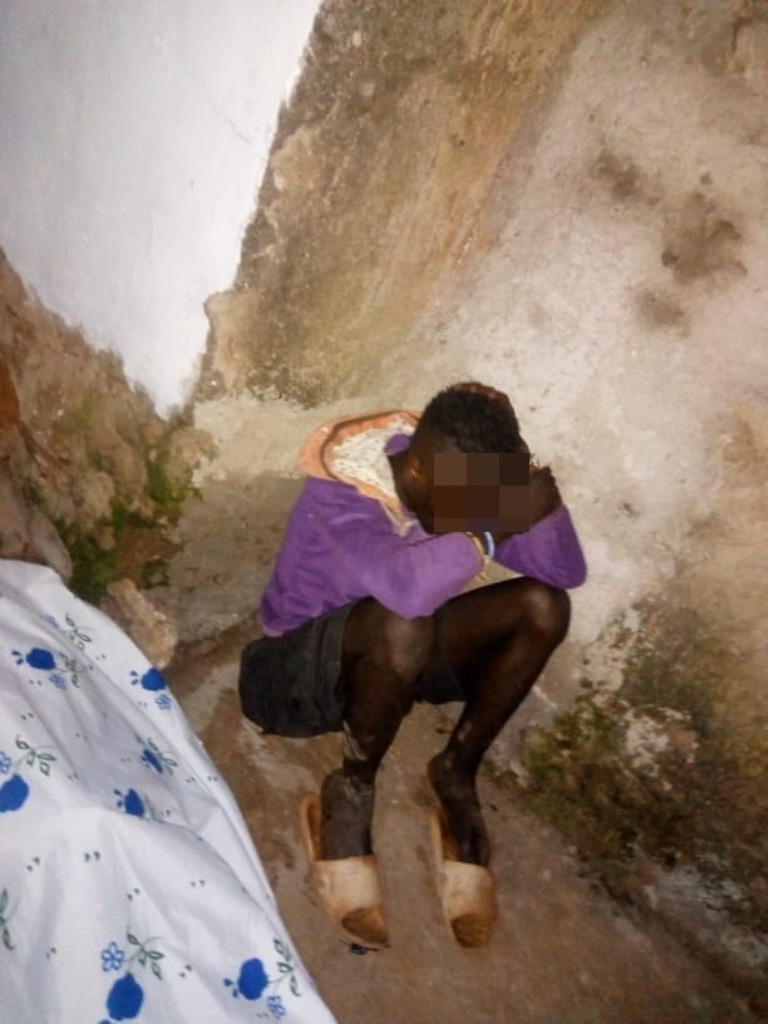
The incident took place on Thursday evening when the street kid hit dead his colleague with a knife.
Residents from Kabahizi cell where the incident happened, has revealed that a donor gave the two children Rwf 500 and shortly started fighting as they failed to share proportionally.
As they fought, one hit colleague with a knife. Residents around took the victim at nearby health facility but died along the way.
Speaking to IGIHE, the executive secretary of Gitega sector, Uzamukunda Anathalie has confirmed the death.
“As the two street kids who wrangled, one hit dead another with a knife,” she said.
Uzamukunda revealed that the street boy was handed to security officials.
Launching the product, Amit Chawla, Airtel Rwanda Managing Director, said: “Imirongo Yose packs have been overhauled, offering even more minutes to call across all networks making it by far the best product in its category on the Rwandan Market”.
“We have increased the number of options to three for daily packs are 3 for weekly packs and ensured that the number of minutes to call either network are evenly matched” added Amit Chawla.
By dialling *255*3#, customers have the option to choose between the smallest Imirongo Yose daily pack has been priced at Rwf100 and gives our clients 10 Minutes to call Airtel and 10 Minutes to call the other network in addition to 10 SMS.
Alternatively, customers also have the option to load a pack priced at Rwf200 which offers 35 minutes to call Airtel and 35 minutes calling the other network in addition to 10 SMS, also with a duration of 24 hours.
This launch also includes a revamp of the weekly Imirongo Yose packs which have a starting price of Rwf500 , offering 70 Minute to call Airtel and 70 Minutes to call the other network plus 10 SMS.
We have also increased the minutes on the pack Rwf 1,000 offering 160 minutes to call Airtel and 160 minutes to call the other network plus 10 SMS and finally we have the largest weekly pack with a price point of Rwf1,500 offering 280 minutes to call Airtel and 280 minutes to call the other network plus 10 SMS.
To load Imirongo Yose voice packs, customers can dial *255*3# or use My Airtel App to select the pack that matches their needs.
For more information on visit https://www.airtel.co.rw/
{{About Airtel Africa Limited:}}
Airtel Africa Limited is a pan-African telecommunications company with operations in 14 countries across Africa. Airtel Africa is driven by the vision of providing affordable and innovative mobile services to all and is supported in pursuing this vision by its largest shareholder, Bharti Airtel. Its product offerings include 2G, 3G and 4G wireless voice and data services and mobile commerce through ‘Airtel Money’. Airtel Africa had over 97 million customers across its operations at the end of December 2018.
Among others, 198 new cases have been found out of 4842 sample tests while 265 have recovered.
The statement released last night shows that some new cases were found in Kigali: 66, Nyamagabe: 20 and Bugesera: 19 among others while Nyanza, Kayonza, Ngoma, Rwamagana, Nyabihu and Nyamasheke recorded zero case.
Rwanda confirmed the first COVID-19 patient on 14th March 2020. Since then, 16 186 people have been tested positive out of 908 224 sample tests of whom 11 617 have recovered, 4356 are active cases while 213 have succumbed to the virus.
Coronavirus symptoms include coughing, flu, and difficulty in breathing. The virus is said to be transmitted through the mucous membranes of the respiratory tract.
Rwandans are urged to adhere to COVID-19 health guidelines, washing hands frequently using soaps and safe water, wearing face masks and respecting social distancing.
MTN Rwanda kicked off the year with a campaign called “Big Tings Happen”, as its commitment to deliver excellence to the company’s 6 million customers. Through this campaign, the company was set to launch a series of innovative and fresh initiatives to make it easier for customers to get things done while creating value and personalised experiences that meet each customer’s unique preferences.
Speaking about how “Idagadure” lives up to this commitment, MTN’s Marketing Operations Senior Manager, Desire Ruhinguka said, “We are glad to announce that all our voice bundles are now open for all customers to call MTN numbers as well as numbers on other networks at no extra cost. Whether a customer enjoys our Irekure, Prestige or Yolo voice bundles – this will be available to them. This is now a permanent feature within all our voice bundles.”
The opening of all voice bundles by MTN is the first in the market, as traditionally voice minutes were only limited to call numbers within the MTN network. This move is aimed at giving customers even more value for their calling needs as they will no longer need to switch SIM cards when they want to call friends & family that are on other networks.
To access MTN Voice Bundles, MTN customers can dial *140# for Irekure, *165# for Prestige and *154# for Yolo.
Leaf works with licensed financial providers across the continent (including integrations with mobile money and a commercial bank), offering a secure and innovative digital wallet to users.
Leaf is an established company with RDB and works through licensed partner institutions in all countries where it is live. The Leaf team resides in Kigali, Gisenyi, Kibuye, Nairobi, and the United States.
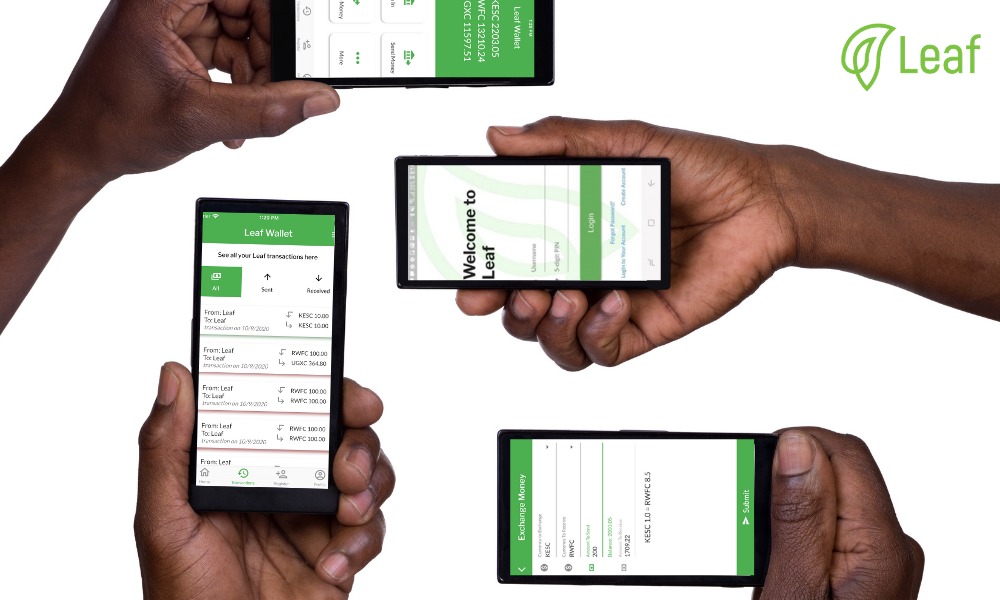
With Leaf Wallet, individuals can send money to friends at home and across borders, store safely without banking fees, and send money from their Leaf Wallet to any Mobile Money number or vice versa. Cashing in to the wallet and Leaf-to-Leaf transfers are free; withdrawing from your Leaf wallet or sending to a mobile money number outside of Leaf costs just 1% (even in other countries).
Users can also hold multiple currencies in their wallet at once and save money with better exchange rates when sending money in different currencies.
Co-founder and Chief Technology Officer of Leaf Global Fintech, Tori Samples, has said that the idea to launch the Leaf Wallet was inspired by persistent challenges experienced by cross border traders and refugees on the African continent when trying to access financial services.
Because of exclusive financial services, refugees and cross border traders are often left carrying cash, which is inexpensive and dangerous. Safe storage on Leaf’s digital wallet that crosses borders reduces both the risk of theft and predatory exchange rates, while also creating an economic identity for users. Users can go cashless, whether they are crossing borders or staying at home during COVID-19.
Additionally, Leaf is trying to solve the expensive remittance, transfer, and exchange rates across the continent. East Africa, in particular, has some of the highest fees for international transfers. Leaf is trying to solve this.
“This is what Leaf wants to address,” Co-Founder and CEO, Nat Robinson, said.
“Everyone can use Leaf Wallet and tap into the cross border digital financial services we offer, at home or across borders. Users can easily store money, or send and receive with other Leaf users, at no cost. You can easily send money in one currency and have friends and family receive money in another currency—instantly—with better exchange rates. We know that everyone is struggling during COVID-19. With Leaf, users can continue to pay and send money digitally even while they are staying safe at home.”
Leaf Wallet can be downloaded from the Google Play store or the App Store. After registering for an account from the smartphone app, Leaf can be used on the app or on USSD (*801*53# in Rwanda, *284*53# in Uganda, *483*153# in Kenya). Users can register other people on their smartphone app, even friends and families that don’t have smartphones themselves. Once a user is registered, users can access their Leaf account with a basic phone.
A new client is only required to present identification (national ID, refugee ID, passport, voter card) and a selfie holding their ID to register for a Leaf Wallet account. This helps keep the system protected against fraud and bad actors.
Tori Samples explained that Leaf wallet is secure and that clients can keep money on their account for as long as they want. Even if they lose their phone, they can continue to access their Leaf wallet safely.
In the next few months, Leaf plans to expand to the Democratic Republic of Congo (DRC), Tanzania and the United Kingdom, before expanding to other African countries.
{{About Leaf: }}
Google Play: https://play.google.com/store/apps/details?id=com.leafglobalfintech.leaf_app&hl=en&gl=US
App Store: https://apps.apple.com/us/app/leaf-wallet/id1535607145
Website: https://leafglobalfintech.com/wallet-2-0/
Social Media: @LeafGlobalTech
Customer care: +250786816336
The body was sited yesterday in Karumuna village, Kanzenze cell of Ntarama sector in Bugesera district.
Sources reveal that fishermen in River Akagera marshland saw a sack floating on water which they retrieved and found a man’s body inside. They immediately alerted local leaders.
The executive secretary of Ntarama sector, Uwamugira Beatha has told IGIHE that the body was found around 2pm.
“The body was seen by fishermen at work. We found it in a sack but we have not established the cause of death. The deceased is aged between 40 and 50,” she said.
“The body was found in a marshland. It is far from inhabited areas. People who saw the body first explained that it was flowing from River Akagera, retrieved it but don’t know the deceased,” added Uwamugira.
She revealed that the body was taken to ADEPR Nyamata Hospital for postmortem.
Security officials have also launched investigations for more details of the death.
RBC has revealed this via Twitter handle noting that the exercise to test motorcyclists, bus drivers and others who continued working during the lockdown imposed in Kigali, will last two days starting from Friday 5th to 6th February 2021.
“We will conduct tests at Amahoro Stadium, Stade Regional and IPRC Kicukiro. Individuals to be tested will be informed through associations under which they operate,” reads the statement in part.
RBC announces the development, few days before Kigali goes out of lockdown after three weeks as decided during the cabinet meeting held on 2nd February 2021.
Rwanda confirmed the first Coronavirus patient on 14th March 2020. Since then, 15 988 people have been tested positive out of 903 382 sample tests of whom 11 352 have recovered, 4426 are active cases while 210 have succumbed to the virus.
The Ministry of Health shows that the prevalence of new infections, recoveries and deaths stands at 3.7%, 71% and 1.3% respectively.
The suspect has been living with the deceased, Uwimana Florence, as spouses in Nyabubare village, Kayonza cell of Kayenzi sector in Kamonyi district. They had sired two children together.
It is said that Ntigurirwa returned home on Thursday at around 2am, hit her wife with a hoe in the head as she came to open the door.
Local leaders and security officials rushed to the scene upon information provided by the spouses’ daughter and launched a man hunt for the suspect who had escaped.
IGIHE has learnt that Ntigurirwa was yesterday arrested by residents of Nyagasozi village, Gihinga cell in Gacurabwenge sector and handed to sector officials as confirmed by the executive secretary of Gacurabwenge sector, Nyirandayisabye Christine.
He was taken to nearby police station.
“They saw him roaming around and informed their village leader that they detected a strange individual. He was arrested because the village leader already had the picture of the suspect,” she said.
Article 107 of the Law Nº68/2018 of 30/08/2018 stipulates that a person killing another willingly commits an offense. Upon conviction, he is liable to life sentence.
The Minister made the revelation yesterday during a press briefing revolving around Africa’s readiness to distribute Covid-19 vaccine.
The conference featured different participants including the World Health Organization (WHO) Regional Director for Africa, Dr Matshidiso Moeti; Minister Ngamije and his counterpart of Malawi, Khumbize Kandondo Chiponda as well as Richard Mihigo, WHO Africa immunization coordinator.
Dr. Ngamije said that Rwanda is prepared enough to receive the vaccine expected to help the country enhance COVID-19 management.
“We are pleased that we will be able to vaccinate medical doctors, nurses, community health workers and others facilitating enforcement of Covid-19 preventive measures. Acquiring the vaccine gives us hope to reduce Covid-19 deaths,” he said.
Minister Ngamije recently explained that Rwanda expects to receive the first batch of 102,000 vaccines by 15th February 2021.
The vaccines in the first batch manufactured by Pfizer/BioNTech, will also be distributed to other African countries including Tunisia, South Africa and Cap Vert.
As Rwanda gets ready to receive vaccines, some citizens have expressed concern that their beliefs do not allow to take these vaccines.
Ngamije said that citizens must be educated before getting vaccinated.
“The good thing is that they trust health services in the country. This is not the first vaccine we are introducing. They clearly understand that we have thorough management system. There is an independent, Food and Drug Authority (FDA) that was also involved in the process of approving the vaccine. It makes citizens trust the vaccine meets standards,” he said.
On 3rd February 2021, Rwanda’s health workers attended discussions with one of experts at Yale University who carried out research on Pfizer vaccine. He shared information to be passed to colleagues.
“Health workers need to share authentic information because they can be the right source. We shall work with leaders as usual because we integrate various institutions in such campaigns. We have no worries that citizens will reject the vaccine. I will be glad to be vaccinated first to give an example,” said Ngamije.
Dr Matshidiso Moeti also highlighted that they are working with UNICEF, among other partners, to share credible information about the vaccine.
Rwanda targets to vaccinate 60% of its population this year and continues to mobilize funds to cover more citizens.
The First Lady delivered the message yesterday on 4th February 2021 at the occasion of celebrating the World Cancer Day under the theme ‘I Am and I Will.’
World Cancer Day is an opportunity to recognize global commitment to actions that will lead to impacting progress in reducing the global impact of cancer and create a cancer-free world.
It is a global uniting initiative led by the Union for International Cancer Control (UICC). Cancer is the second leading cause of death globally. Cancer is the uncontrolled growth of a group of cells in the body. It can occur at any age and if not detected at the right time and is not treated, it can increase the risk of death.
The First Lady has reminisced on the adverse impact of cancer and called for proactive measures to prevent it.
“Let us remember that behind global cancer statistics is a mother, a father, a sibling or a child, whose life will never be the same again after their diagnosis,” she said.
“On this World Cancer Day, let us pledge to continue educating our people about the importance of living healthy lifestyles, which include regular medical checkups, in order for our communities to receive the necessary treatment in time,” added Jeannette Kagame.
The World Health Organization (WHO) shows that cancer over 9.6 million died of cancer in 2018.
Recent studies estimate about one out of six people worldwide died from cancer that’s more than HIV/AIDS, tuberculosis, and malaria combined. Hence, to raise the awareness of cancer and encourage its prevention, World Cancer Day is observed annually on February 4 as an international event.
Globally, cancer is among the leading causes of death, claiming over 70% of its victims in low- and middle-income countries, where prevention and treatment remain limited. In 2018, estimates from the International Agency for Research on Cancer (IARC) indicate the incidence in Rwanda to be 10,704 new cancer diagnoses, 4,520 cases among men and 6,184 cases among women were registered and annual mortality rates stood at 7,662. In addition, 50% to 60% of all cancer patients require radiotherapy in the course of their treatment.
The increasing cancer burden in Rwanda, and the limited accessibility of the general population to treatment, required the Government of Rwanda to act.
As per last year’s figures, WHO reported that less than 10% of the population in need was able to access treatment and about USD 1 million was spent on international transfers for radiotherapy treatment in Rwanda in four years.
On World Cancer Day celebration last year, Rwanda inaugurated the up to date Cancer Centre equipped with Radiotherapy. President Paul Kagame spoke on the important role the new centre will play in the lives of patients living with cancer, “now, many more Rwandans will be able to get the care they need with their families close by”, he said.
The Government of Rwanda embarked on a journey to decrease the burden of disease through prevention, early detection, treatment, and care interventions. In 2016, the idea for a modern radiotherapy cancer centre, called Rwanda Cancer Centre (RCC), was established at Rwanda Military Hospital (RMH) in Kanombe as the first step in ultimately providing a full-service cancer centre. At the time, RMH already had advanced and existing cancer services in place and the human resource skills required to run the radiotherapy.
The facility launched last year complemented existing prevention, diagnosis, and treatment services including a 20-bed chemotherapy unit already in operation. In addition, the centre will allow full scale up of screening and early detection for cancers such as cervical, breast, and those related to hepatitis C virus.
Rwanda’s future plans indicate further diagnostic and inpatient services to be gradually added in order to provide comprehensive cancer treatment and palliative care to those with late state diagnosis. In addition, specialists are currently being trained in order to provide the necessary skill level.
The launch date coincided with the official launch of the first National Cancer Control Plan, the National Cancer Registry, and the National Cancer Management guidelines, three key milestones for the success of the cancer centre. The implementation of the 2020-2024 National Cancer Control Plan is intended to reduce cancer mortality and morbidity nationwide.