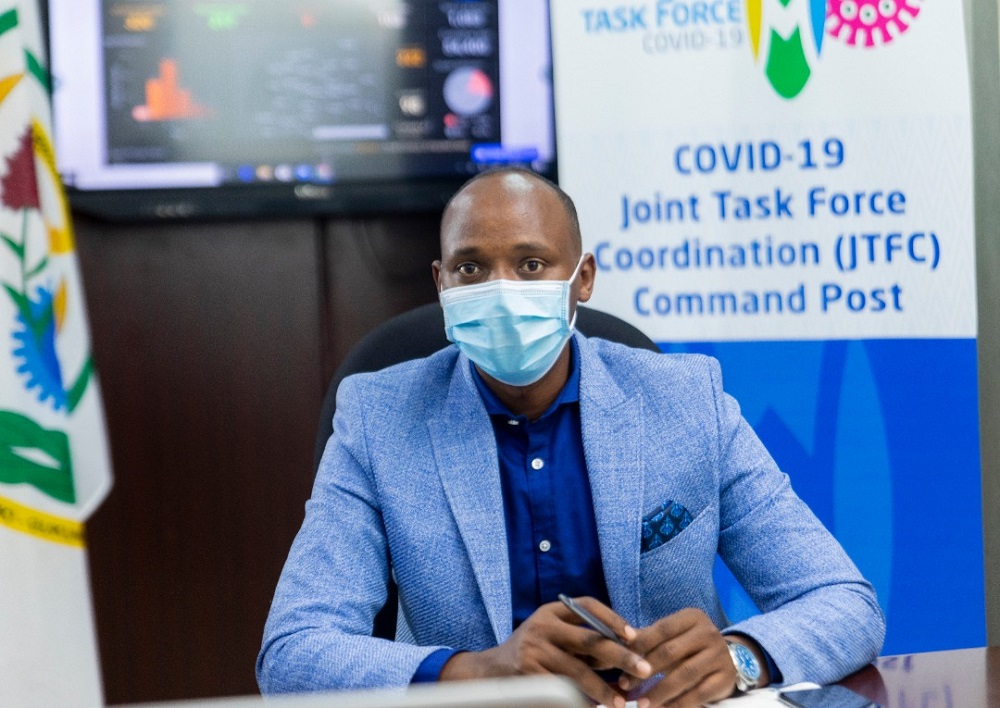
Among others, 130 new cases have been found out of 4963 sample tests while 401 patients have recovered.
The statement released last night shows that the majority of new cases have were found in Kigali: 39, Nyamagabe: 22 while Gicumbi and Nyagatare recorded 11 cases respectively.
Rwanda confirmed the first COVID-19 patient on 14th March 2020. Since then, 16 941 people have been tested positive out of 931 150 sample tests of whom 13 389 have recovered, 3323 are active cases, 229 have succumbed to the virus while 18 are critically ill.
The Ministry of Health shows that the prevalence of new infections, recoveries and deaths stands at 2.6%, 79% and 1.3% respectively.
Coronavirus symptoms include coughing, flu, and difficulty in breathing. The virus is said to be transmitted through the mucous membranes of the respiratory tract.
Rwandans are urged to adhere to COVID-19 health guidelines, washing hands frequently using soaps and safe water, wearing face masks and respecting social distancing.
Bamporiki has revealed this during an exclusive interview with IGIHE, few days after Rwanda celebrated Heroes Day on 1st February 2021.
“There are processes required to be acclaimed as a hero, but we experience heroism every day whether in police, military, public and private institutions. Young people are overseeing measures with dedication in a way that reflects heroism,” he said.
“Some of them carry out their task as usual in a way that the value of heroism is reflected from their acts. To this end, some young people are not complacent like the rest of the world whereby you can find a 25-year old young person being far sighted and anticipating what will happen after passing on,” added Bamporiki.
The celebration of Heroes Day was held during difficult times of Coronavirus pandemic when Rwanda’s youth is actively engaged in the fight against the pandemic in collaboration with the Government to sensitize the public on preventive measures.
At least 9000 young people were recorded participating in such voluntary work helping people to respect preventive measures in public places like markets, bus terminals, entrances of complex business buildings among others.
Bamporiki explained that such commitment is a great gesture giving hope to preserving heroism.
“Apparently, the participation of youth in enforcement of preventive measures gives hope to other aspects of livelihoods. As far as I am concerned, Rwanda will always have heroes and we should reach a point where we don’t need to make such a list, for instance, mentioning that 10,000 young people are helping us to prevent COVID-19. These include the youth volunteers deployed in different corners at markets exposed under the Sun, and young policemen overseeing prevention measures,” he says.
“It is not essential to make the list but it is necessary to stand for such heroism, whereby people need to live by heroic acts because it is the tradition in which they were raised. This is the context of the country’s expectations, and how we believe it should be done,” added Bamporiki.
Heroism among Rwandans can be reflected through one’s outstanding deeds in different areas and selfless commitment to inclusive development.
It can be manifested through selfless acts like paying sacrifice for the nation, protecting the country’s sovereignty, selflessly promoting national economy, social wellbeing, good leadership, promoting technology among other areas.
Rwanda has been celebrating National Heroes Day since 1999, with heroes classified into three categories; Imanzi, Imena and Ingenzi.
Those classified in Imanzi are; late Gen. Maj Fred Gisa Rwigema former commandant of Rwanda Patriotic Army and Unknown Soldier.
Imena includes King Mutara III Rudahigwa, Michel Rwagasana, Agathe Uwiringiyimana, Félicité Niyitegeka and Nyange Students.
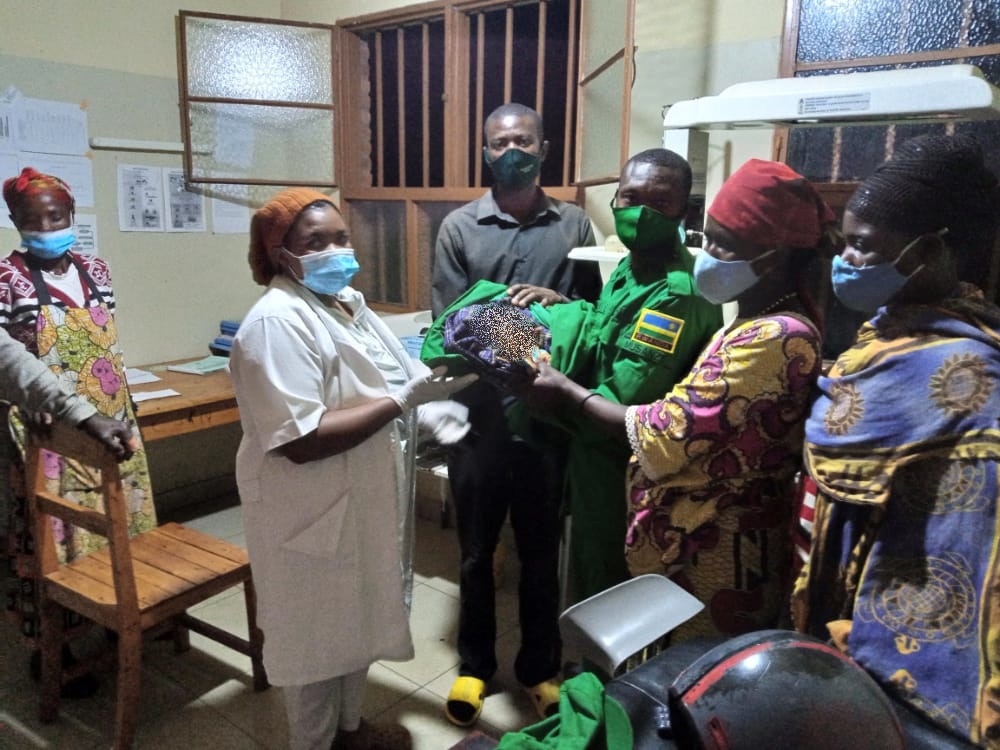
The child was yesterday retrieved by District Administration Security Support Organ (DASSO) following a tip-off from passersby that heard the baby’s innocent whimpers inside the toilet.
The executive secretary of Gacaca sector, Anaclet Habinshuti has told IGIHE that the new born child has been taken to Ruhengeri Hospital.
“When DASSO members were tipped off last evening, they rushed and rescued the baby alive. The child has been taken to the hospital and has no health problems. Relevant institutions have started investigations to identify the culprit. We have not yet identified any suspect,” he said.
The baby appearing to have born recently was first taken to Karwasa Health Center and later to Ruhengeri Hospital to take care of her or identify if she has any health problems.
On 25th January 2021, Muhoza Primary Court remanded Maniriho for 30 days, a decision which he appealed against.
Following the appeal, the court rejected the request yesterday citing many reasons pinning him.
The court said that Maniriho admitted to have had sex twice with the child, impregnated her and gave her money to undergo abortion lest she abandons school.
The court revealed that cited reasons are enough to pin him for suspected crimes.
As Maniriho appeared in Musanze Intermediary Court on 3rd February 2021, he claimed to have admitted these crimes because he was threatened with a gun pointed to his head and inflicted body harm in detention.
Musanze Intermediary Court insisted the decisions by Muhoza court are founded and upheld 30–day remand because he is suspected of cruel crimes and would tamper with investigations once released.
It was also decided that his concerns will be analyzed as trial begins in depth.
Maniriho was arrested on 9th November 2020. He is suspected of defilement, facilitating abortion and causing death of Iradukunda Emelance aged 17.
Egide Ntirandekura, 29, was arrested in Mbogo cell, Bukorota village with the stolen motorcycle number plate RE 882Y. The motorcycle belonging to one Mugenzi Mayisha, also a resident of Gikonko Sector in Gisagara, was stolen on January 23, when suspected thieves broke into his house at night.
Superintendent of Police (SP) Theobald Kanamugire, the Police spokesperson for the Southern region, said that Mugenzi reported the alleged theft at Gikonko Police station, the following morning.
“Mugenzi woke up in the morning only to find his motorcycle had been stolen from the house by unknown people. Thieves entered through the front door and Mugenzi suspected they could have used a key that he had lost,” said SP Kanamugire.
“Police later received information from a resident reporting a neighbor—Ntirandekura—who was selling a motorcycle. The resident was well informed that Ntirandekura did not have a motorcycle and suspected him to be a thief.
Police officers deployed impounded the motorcycle and took Ntirandekura into custody after realizing that it was the same motorcycle stolen from Mugenzi last month,” he added.
Ntirandekura was handed over to RIB at Gikonko station.
Mugenzi was all joy when he was informed that his motorcycle had been recovered and the suspected thief arrested.
“It was close to a month since my motorcycle was stolen; I was losing hope that it will be recovered. I thank the resident, who provided information and for the true spirit of community policing. I also thank our Police for their efforts and working with the people in fighting crimes, which also resulted into the recovery of my motorcycle,” Mugenzi said.
Article 166 of the law determining offences and penalties in general, states that any person convicted of theft is liable to imprisonment for a term of not less than one year and not more than two years and a fine of not less than Rwf1 million and not more than Rwf2 million, community service in a period of six (6) months or only one of these penalties.
However, in article 167, the penalty doubles if the theft was committed through burglary.
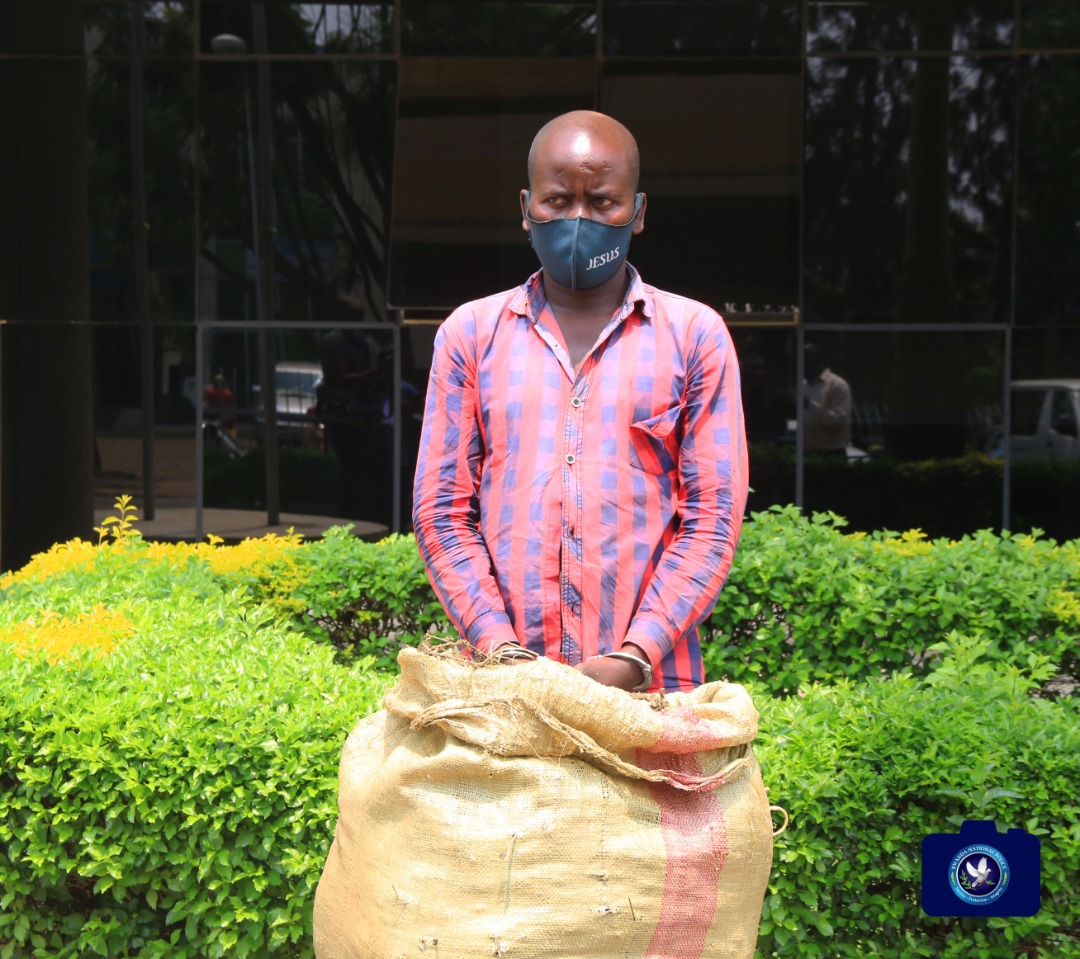
Mpirirwe, a Ugandan national was intercepted in Kivuye Sector in Burera District as he crossed into Rwanda with a sack of cannabis weighing 20kgs.
While speaking to journalists at the Police metropolitan headquarters in Remera, Mpirirwe admitted that this was one of many deliveries he orchestrated over a period of time.
He also talked of how he successfully trafficked 10kgs of cannabis into Rwanda from Uganda, recently.
“Previously, I was supplying two local dealers, who would call me and order a particular quantity of cannabis. I would either deliver the narcotics myself to an agreed destination in Rwanda, through a porous border or they would send children to carry them from Uganda. I came to learn that these two clients were arrested and sentenced to life in prison,” narrated Mpirirwe.
Following the arrest of his two former clients, Mpirirwe went dark, until recently.
“I was recently contacted by other Rwandan drug dealers placing orders. I was arrested as I delivered 20kgs of cannabis,” Mpirirwe explained.
RNP spokesperson, CP John Bosco Kabera said that Mpirirwe will be charged with trafficking and distributing narcotics in Rwanda.
“This was not his first time; Mpirirwe was reported by other drug dealers arrested recently, whom he had supplied 10kgs of cannabis,” CP Kabera said.
He advised that no good will come out of trafficking, selling and abusing drugs apart from arrest, imprisonment, poisoning people and fueling other crimes committed by people under the influence of drugs.
CP Kabera commended the role of the public in particularly fighting drug-related crimes through provision of credible information on trafficker, local distributors and dealers in their communities.
RNP, he said, mapped out major trafficking routes especially districts bordering neighboring countries from where narcotics are trafficked.
Burera alongside Gicumbi, Rubavu, Rusizi, Kirehe and Nyagatere are among the identified major trafficking routes.
Cannabis is classified as a Cannabis is classified as a “very several drug” under the Ministerial Order No.001/MoH/2019 of 04/03/2019 establishing the list of narcotic drugs and their categorization.
Under article 263 of the law determining offences and penalties in general in Rwanda, anyone convicted for dealing in “severe narcotic drugs” faces between 20 years and life in prison and a fine between Rwf20 million and Rwf30 million.
The statement released last night also shows that 190 cases have been found out of 16811 sample tests, 359 have recovered while 16 patients are critically ill.
The statement released last night also shows that 190 cases have been found, 359 have recovered while 16 patients are critically ill. The majority of new cases were found in Kigali: 54, Karongi: 34, Kayonza: 17, Nyamagabe: 16 and Nyagatare: 14.
Rwanda confirmed the first COVID-19 patient on 14th March 2020. Since then, 16 811 people have been tested positive out of 926 187 sample tests of whom 10272 have recovered, 3597 are active cases while 226 have succumbed to the virus.
Coronavirus symptoms include coughing, flu, and difficulty in breathing. The virus is said to be transmitted through the mucous membranes of the respiratory tract.
Rwandans are urged to adhere to COVID-19 health guidelines, washing hands frequently using soaps and safe water, wearing face masks and respecting social distancing.
The public has had perceptions that consuming a lot of lemon, ginger and applying Aromatherapy helps Covid-19 patients to recover though it was not scientifically proved.
As a result, lemon has been rare and expensive on Rwanda’s markets as some people stored them in bulk for Covid-19 treatment purposes.
Dr. Nsanzimana has told RBA that consuming quantities of lemon and ginger doesn’t add up to recovery but rather can worsen health conditions.
“I once met people carrying lots of eucalyptus. I asked them, where are you taking them? They replied that it is in context of fighting Covid-19. We don’t allow the application of Aromatherapy in health sector but rather might cause side effects. People should avoid such vice,” he said.
“Ginger tastes like chili. The more you consume much ginger, the more it damages the stomach. These lemons also contain acid. The stomach gets complications when the acid is too much. Many people have recovered from Covid-19 but claimed that stomachaches remained. We made follow up and established these complications emanate from these plants,” he said.
Dr. Nsanzimana explained that all foods have specific nutrients and vitamins and discouraged people from taking excessive quantities because it becomes destructive.
“Lemons contain vitamin C. A person is not required to drink much dose exceeding recommended vitamin C. By consuming much doses, a person is putting own health at risk. To this effect, you are destroying your health if you consume ten cups of lemon and ginger per day,” he said.
Dr. Nsanzimana highlighted that consuming average quantities of lemons and ginger is normal like other foods that overconsumption doesn’t add up to combating Covid-19.
“Drinking tea with moderate ginger lemon is helpful because it can strengthen immune system somehow but doesn’t kill the virus,” he revealed.
Dr. Nsanzimana warned evangelists encouraging people to drink lemon and ginger instead of seeking medical attention.
To date, Covid-19 has no vaccine that health facilities use existing medicaments to treat related symptoms.
Some vaccines have been manufactured but do not prevent Coronavirus infection at 100%.
Akimitoni was initially a primary school and became Groupe Scolaire Akimitoni in 2011 as the Government of Rwanda introduced Nine Year Basic Education program.
It is now ten years since the program was introduced but students have never used computers at the school.
Students told IGIHE, they only cover theoretical part of ICT skills course, or sometimes walk over 5 kilometers to use computers from another school.
Niringiyimana Désiré, a student at G.S Akimitoni says, he has touched a computer five times only since he went to the school.
“It is unfortunate that I have used computer five times only since I joined the school three years ago. We don’t have computer skills because we only cover theoretical part without practical session. To this end, we cannot properly attend to homework requiring us to check online sources,” he said.
Dukuzumuremyi Elisa, 17, says he is not able to identify different parts of a computer’s hardware.
Another student, Iradukunda Esta has said that the lack of computers at the school pushed her to change course options in advanced level.
“We only study ICT theories that we don’t apply. I had planned to study Computer Science in advanced level but poor education especially in ICT has prompted me to change options because I cannot compete with others yet I am starting from scratch,” he said.
Mukawera José has also revealed that he used a computer four times within three years noting that some of his colleagues didn’t get a single chance to use computers.
Hitimana Jean Baptiste, a teacher of ICT at G.S Akimitoni says he struggles to teach the course without computer.
“I sometimes take students to G.S Kabatwa to access computers. It takes time to reach the school and return which delays or cancels attendance to other courses on timetable. In some cases, prefer to go there over the weekend but not all students are available as a matter of beliefs,” he said.
“I am supposed to teach Excel component but there are no equipment. I am currently using the laptop of the head teacher but my timetable ends after showing two or three students. I seem to be doing nothing because showing how Microsoft Excel to 3 out of 45 students is shameful,” added Hitimana.
They have appealed for Government support to get computers.
The head teacher of G.S Akimitoni, Sebatware Gabriel has explained that concerned officials were informed of the problem.
“It is known that the school has no computers because we didn’t have enough rooms,” he said.
Sebatware said the school was supposed to receive computers in 2019 but lacked space for computer lab.
He expressed optimism that the issue will be addressed soon because rooms have been completed.
The mayor of Nyabihu district, Mukandayisenga Antoinette has told IGIHE that she is aware of the problem highlighting that the school will receive computers after making preparations.
“It is a worrying situation that children don’t have computers. The problem had persisted because the school didn’t have rooms reserved for computer lab but these rooms have been constructed. They will receive computers soon as they finish setting up all required equipment including desks and tables,” she explained.
Food delivery, the provision of sanitary items, and electronic gadgets are among essential services needed in daily lives but people face difficulties to access them easily during lockdown.
However, customers using online marketplaces have got ease as they can place orders and receive goods from the comfort of their homes.
Since Rwanda imposed lockdown in March 2020, quite a number of people have been embracing online shopping as the easiest way.
Some online marketplaces have land-based stocks used to deliver to clients while others connect buyers and sellers through distributor’s website or application.
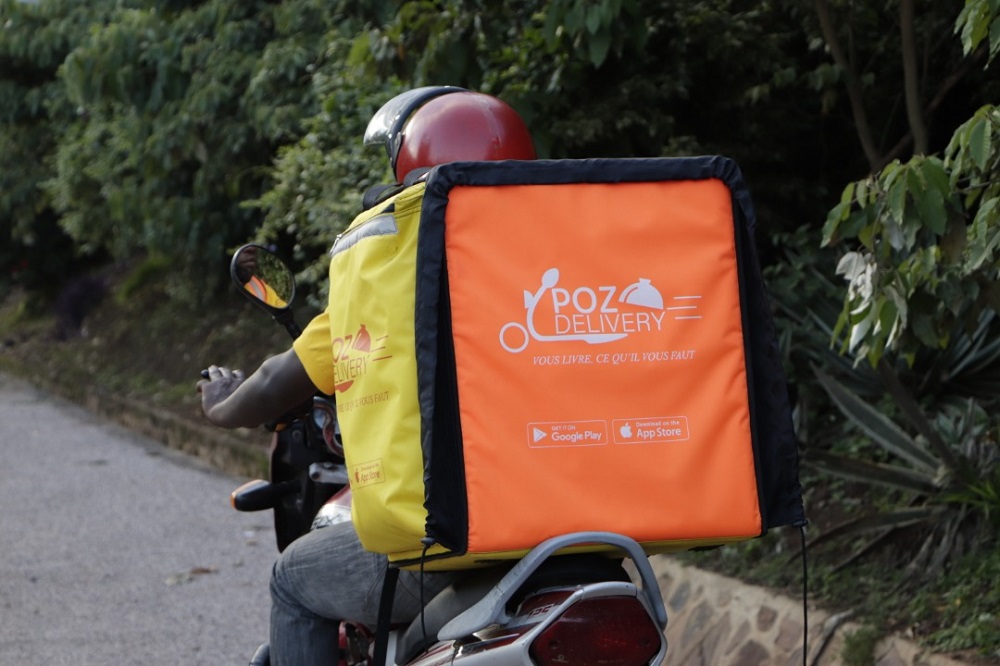
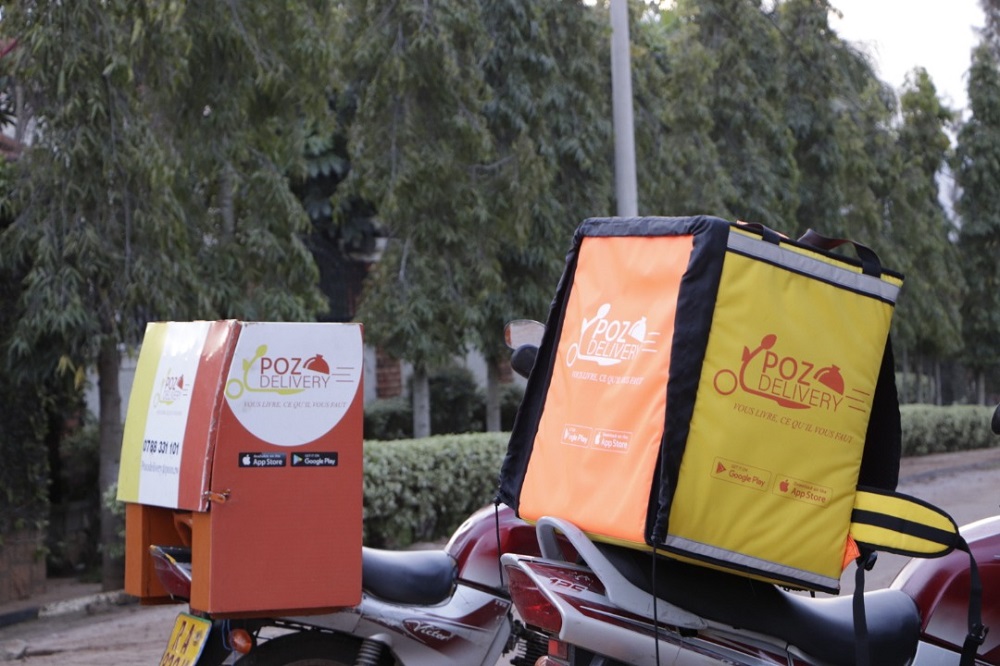
Pozo delivery is one of such companies tapping into online platforms to improve service delivery. Pozo delivery works with over 35 companies selling fresh, cooked foods and connects them to buyers.
Customers seeking to place orders of their choice can install Pozo delivery app to access details about available foods and partner companies.
After placing orders, foods are packed and delivered not later than 45 minutes from wherever in Kigali.
Considering the increased demand, the company’s management affirms that online shopping has been gaining momentum especially during lockdown.
Murenzi Herve, the Managing Director of Pozo delivery has told IGIHE that the youth were majority clients but elders also embraced online shopping as an alternative due to lockdown restrictions.
“The youth are normally active users of technology that they were accustomed to place orders. It is not easy to convince a parent to buy online, many of them prefer land-based shops to touch and taste their products before buying,” he said.
“The lockdown pushed them to place orders with us because they had no other alternatives. This gave them chance to witness our top notch services which they appreciated and continued to work with us,” added Murenzi.
As he explained, the lockdown increased clients to 70% which Murenzi considers a great improvement in e-commerce.
“We used to serve between 80 and 100 clients per day. The number has however risen to 120 clients from across Kigali placing orders on daily basis. This gives optimism fore-commerce to thrive because they have already witnessed how efficiency it is ,”revealed Murenzi.
In a bid to contain spread of Coronavirus pandemic, Pozo delivery has adopted cashless payment system.
“Clients would place orders and pay cash in hand upon arrival. We currently encourage them to use MoMo Pay to avoid cash in hand that could spread Coronavirus,” he said.
E-commerce continues to gain momentum in Rwanda as the Government continues to scale up efforts to promote technology and internet penetration. Currently, over 5 million Rwandans are internet users.