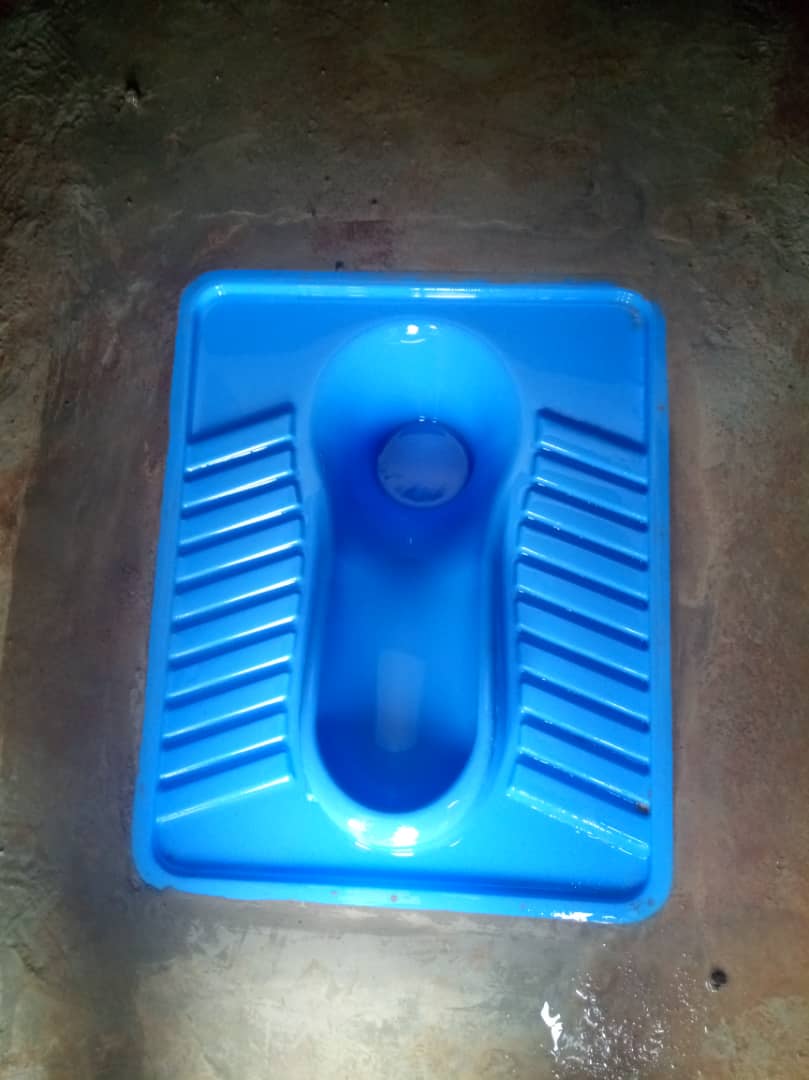
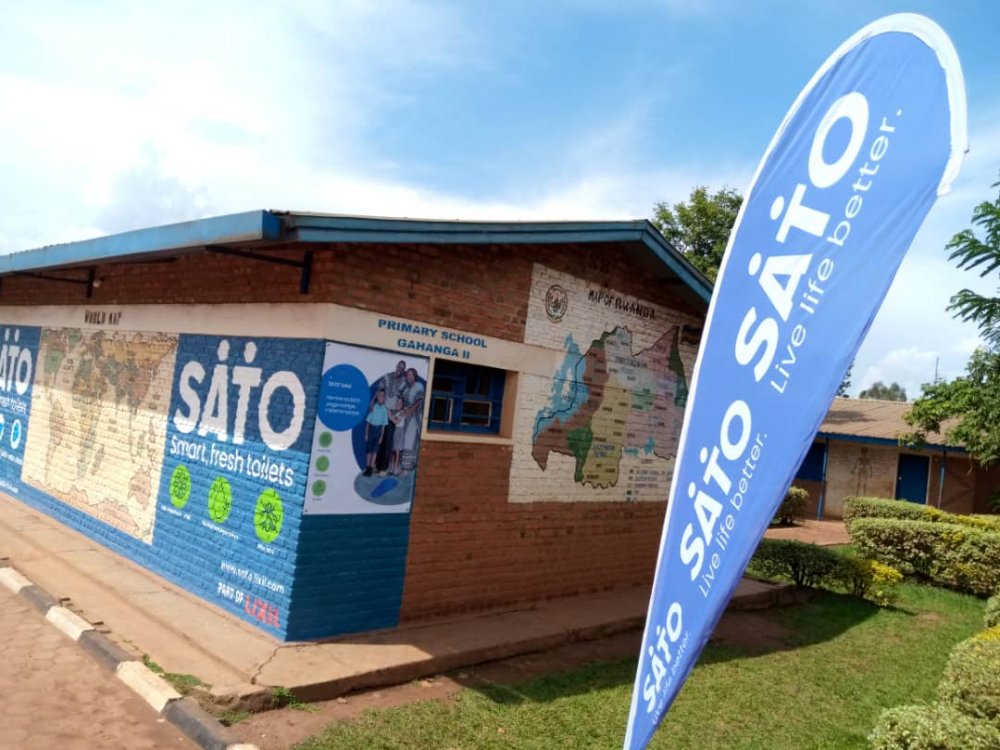
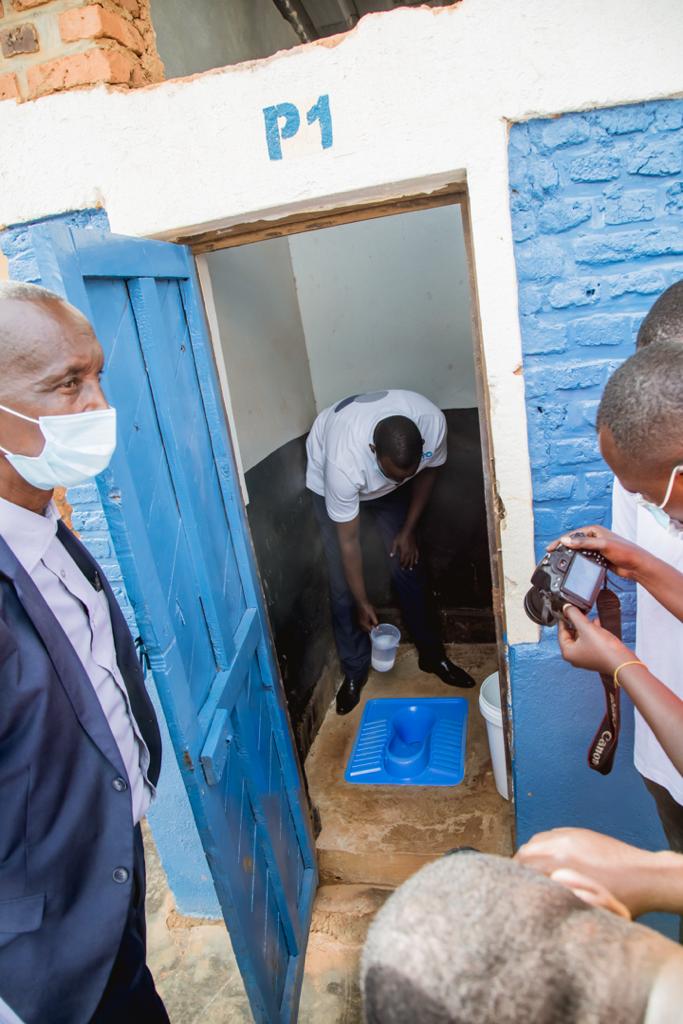
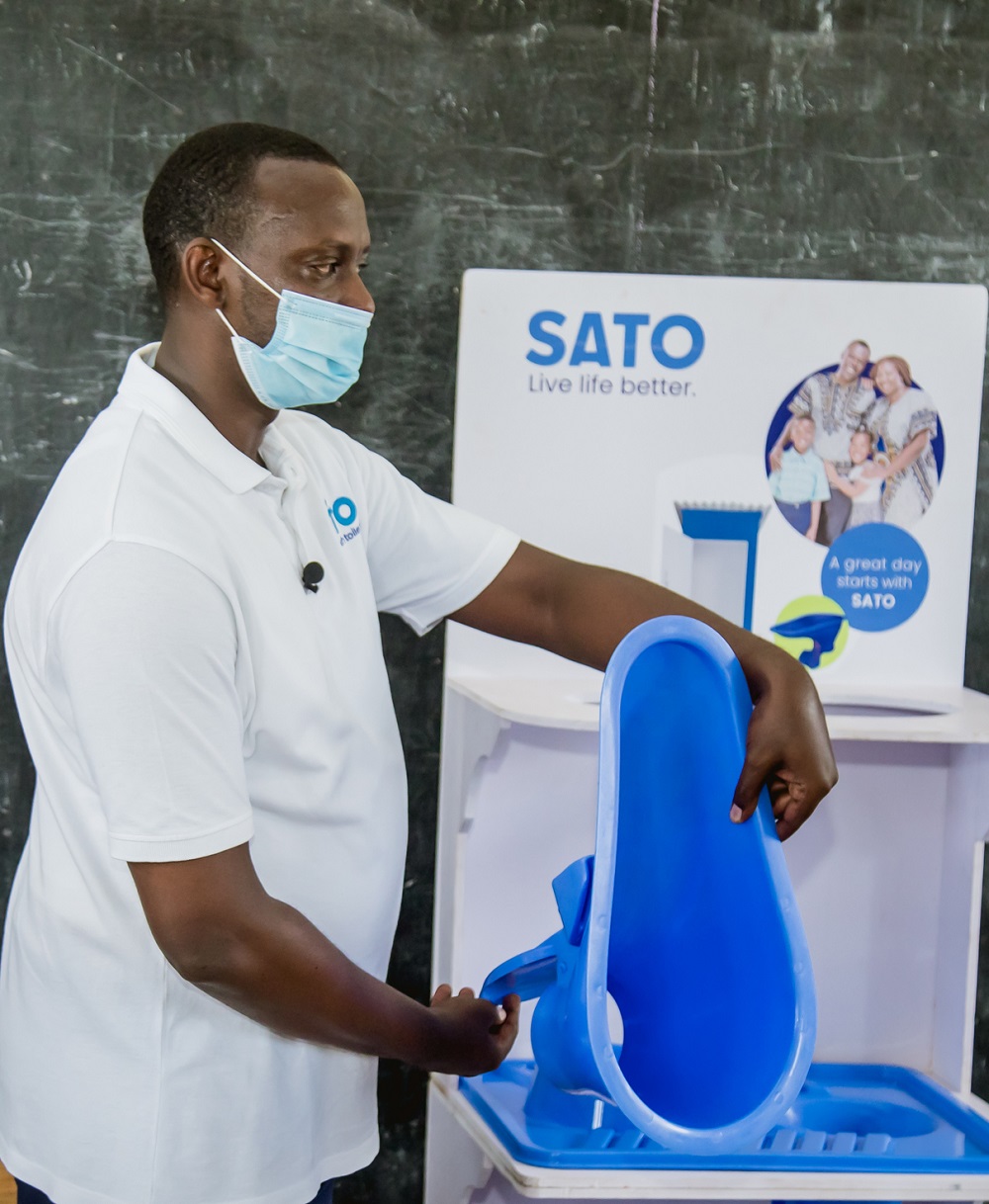
The donation took place on 31st March 2021 in presence of the SATO Rwanda and the school’s management.
Rubaduka Mathias, heading the Anglican Church in Gahanga parish said that SATO Rwanda has helped the school to maintain hygiene and prevent poor sanitation related diseases.
“The school’s hygiene has improved since we received the self-sealing toilets. Unlike other toilets, there are no flies inside and children use them easily. They don’t smell bad because they are automatically sealed or unsealed when necessary. Our special thanks go to SATO Rwanda management for the support,” he said.
The Managing Director of SATO Rwanda, Ntaganira Cyrus has said that the company’s toilets are unique in a way that they don’t require much water while cleaning them.
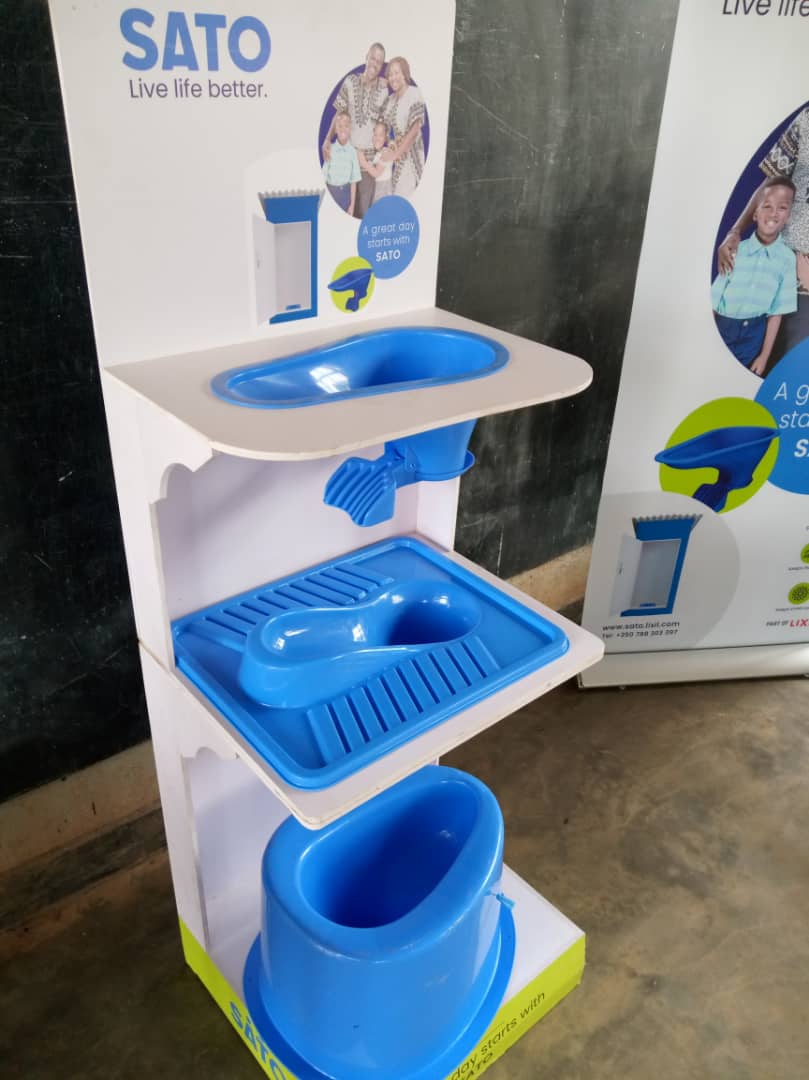
“SATO toilets are made of plastics. They have uniqueness of a trap door that automatically opens and closes itself. They are particularly self-sealed or unsealed after use. Among others, these toilets allow immediate flow of disposed human waste and do not require much water while cleaning that one cup is enough,” he said.
Ntaganira said they have chosen to donate these toilets to help the school improve hygiene and use standard facilities.
“Existing toilets attracted flies because they were not sealed. This would facilitate the transmission of diseases like diarrhea and verminosis,” he noted.
Among others, Ntaganira said the toilets are a solution to parents worried that their children might fall in toilets because they have tiny holes.
In a bid to support existing COVID-19 preventive measures, the company also donated two water taps known as ’SATO tap’ that use small quantities of water.
SATO toilets are available in hardware shops and wholesalers can resupply from Ecomem.co.Ltd Gisozi Kigali
The statement released last night also shows that 76 people have caught the virus, 70 recovered while 6 are critically ill.
Rwanda confirmed the first Coronavirus case on 14th March 2020. Since then, 22243 people have been tested positive of whom 20472 have recovered, 1460 are active cases while 311 have succumbed to the virus.
Coronavirus symptoms include coughing, flu, and difficulty in breathing. The virus is said to be transmitted through the mucous membranes of the respiratory tract.
Rwandans are urged to adhere to COVID-19 health guidelines, washing hands frequently using soaps and safe water, wearing face masks and respecting social distancing.
The suspects arrested in Fumbwe Sector are identified as Erneste Muhirwe, 26, and Thomas Habimana, 44.
Chief Inspector of Police (CIP) Hamdun Twizeyimana, Eastern Region Police Spokesperson, said the alleged theft and subsequent arrest of the two prime suspects followed a complaint filed by the mining firm–Union Stone Wolfram Mining Company Limited.
“The management of the mining company reported series of mineral theft from their wolfram concession in Fumbwe Sector and suspected some of their employees to be behind it.
For Muhirwe and Habimana being prime suspects, Police searched the former’s house, he was found with the 64kgs of wolfram,” CIP Twizeyimana said.
According to Muhirwe, they stole the minerals on different occasions, but he declined to disclose their clients.
The management of the mining company applauded Rwanda National Police for their quick intervention to recover their stolen minerals and the arrest of the suspected thieves in real-time.
Muhirwe and Habimana were handed over to RIB at Musha station.
Under article 166 of the law relating to offences and penalties in general, anyone convicted for theft faces an imprisonment of between one and two years and a fine of between Frw1 million and Frw2 million, a six-month community service or one of these penalties.
Article 54 of the law on mining and quarry operations, states that; “any person, who undertakes mineral or quarry exploration, exploitation, processing or trading without a licence commits an offence.”
Upon conviction, the offender is liable to imprisonment for a term of between two and six months and a fine of not less than Rwf1 million and not more than Rwf5 million or only one of these penalties.
The court also may order confiscation of any seized minerals in storage, trading or processing without a license.
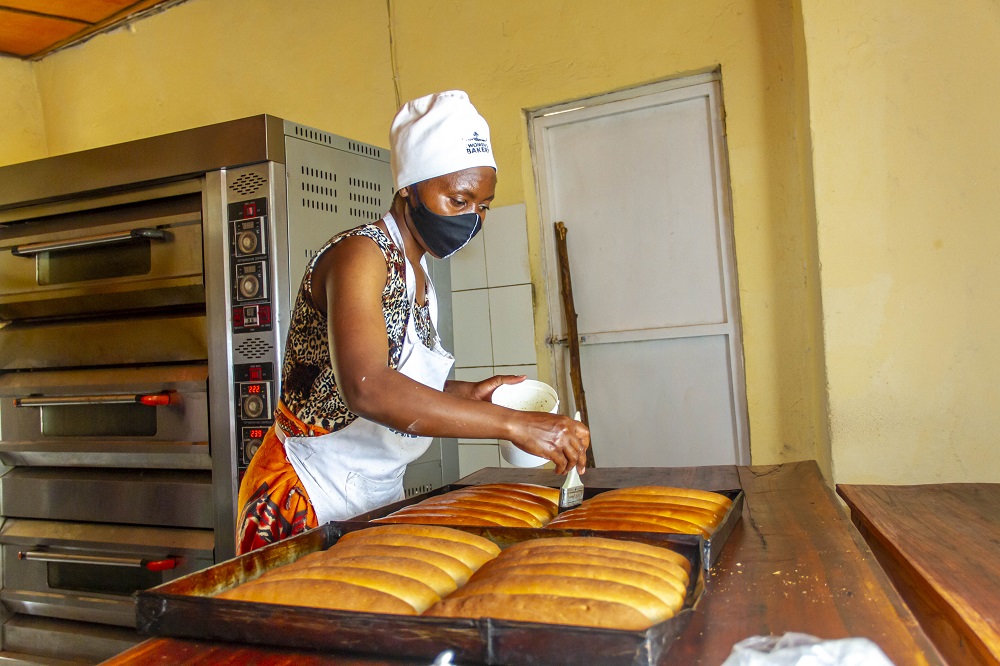
The Women’s Bakery supports women above 25 years of age, who never had a chance to get employed. The bakery makes delicious and nutritious bread without any additives or chemicals.
The development and communications manager at The Women’s Bakery, Umutoniwase Françoise said that the enterprise has branches in Gicumbi and Kamonyi (Ruyenzi) districts helping women to run bakeries and produce nutritious bread in their own communities.
“We empower women, prioritizing those who most need the support. For instance, we choose women who don’t have any knowledge of how to design projects or those who never had a chance to be employed. In Gicumbi, we even included women from the refugee camp,” she said.
After the training, the women bakers are able to grow financially, to put their children through school, to contribute to reducing malnutrition, just with one bread at a time. As Umutoniwase said, the women’s bakery is committed to using locally sourced ingredients made in Rwanda for all the bread produced.
“Each of our products is made with locally available ingredients like flour, vegetables, fruits, and nuts. We also make our varied types of bread, rich in nutrients without any additives, so it expires after three or four days. Our breads contain the proteins that our bodies need.
Umutoniwase also noted that the bakery plans to expand and establish branches across the country, so as to contribute to the access of gainful employment for women and also contribute to the sustainable growth of Rwanda’s economy. She therefore urged Rwandans to support these women, who are baking a unique collection of delicious, nutritious and affordable breads for their communities.
The Women’s Bakery was established in 2015, its flagship is in Remera and it works with Vuba Vuba Rwanda, to ensure that clients can easily order for the bread of their choice and have it delivered in the comfort of their homes or workplaces.
Empowering women, with one piece of bread at a time!
The development has been revealed by the Ministry of Infrastructure via Twitter handle.
“It was in February 2018, 3 years now after the start of the rehabilitation and upgrading works of the of 208 Km Kagitumba-Kayonza-Rusumo road. Today, this regional road network is an emblematic facility connecting Northern and Central Corridors, constructed at a cost of $376.5 million,” reads the tweet.
Speaking to IGIHE, the deputy Director General of Rwanda Transport Development Authority (RTDA), Patrick Emile Baganizi has said that construction activities were carried out smoothly without delays.
He explained that the road is expected to facilitate connectivity among cross border traders.
“The road paves the way for development activities in Nyagatare, Kayonza and Kirehe districts. The road will also boost connectivity among regional countries. You remember that trucks transporting goods from Mombasa port use the road to reach Kagitumba as well as those from Dar es Salaam to Rusumo border. Using quality roads reduces time trucks used to spend along the road,” he said.
Rwanda began countrywide vaccination program on 5th March 2021 after receiving approximately 400,000 vaccines through Covax initiative while 50,000 vaccine doses were donated by India.
The second dose of AstraZeneca is offered between 8 to 12 weeks while the second shot for Pfizer vaccine takes between 21 to 28 days.
Inoculation exercise for the second shot kicked off in Kigali yesterday on Friday 2nd April 2021 while those who received AstraZeneca doses will be communicated on vaccination schedule in due time.
In a statement released yesterday, the Ministry of Health assured the general public that they will be vaccinated as the country receives more vaccines gradually.
“Rwanda has carried on Covid-19 vaccination campaign with two types of vaccines namely AstraZeneca and Pfizer that have been approved by WHO for emergency use. We are thankful to Rwandans for having adhered to this campaign that kicked off on March5, 2021. We can assure you that everyone who needs the vaccine will be offered it, as more vaccines will arrive in the near future,” reads the statement in part.
“The Ministry of Health informs the public that effective from April 2 to 21, 2021 Rwandans who received their first dose of Pfizer vaccine will get the second shot. The Ministry of Health sends an SMS to individuals informing them about the date of the second dose,” adds the statement.
Any individual who received the first dose of the Pfizer vaccine but did not receive an SMS in due time, may contact the Call Center (Toll free): 114 or contact the nearest health facility for more information or assistance.
The Ministry has revealed that dates for administering the second shot for AstraZeneca recipients will be communicated in coming days.
It has also reminded recipients the second dose of Covid-19 vaccine to continue observing Covid-19 prevention measures including wearing masks properly, physical distancing, and regular hand washing and avoiding large gatherings in closed areas.
Rwanda has so far vaccinated 290,000 people who received the first AstraZeneca dose while 51,000 received Pfizer doses.
Figures from the Ministry shows that the number of vaccine recipients is still low compared to targeted people. However, efforts to seek more vaccines are underway as Rwanda has bought more 500,000 AstraZeneca vaccines at a cost of US$ 1.6 million, awaiting delivery.
Aloys Habimana, 52, was arrested red-handedly in Marumba village, Gihonga Cell of Busasamana Sector.
Western Region Police Spokesperson, Chief Inspector of Police (CIP) Bonaventure Twizere Karekezi, said the suspect Habimana, who hails from the neighbouring Mudende Sector, had just received the consignment from a supplier in DR Congo through a porous border in Rubavu District.
“ANU officers had information that Habimana is a drug dealer and was trailing him. They later received information that he had ordered for 6000 pellets of cannabis from DRC, but the supplier delivered only 5000 pellets, which he was caught up with. We are still following up on other people connected to his drug-dealing ring, including those that Habimana supplies,” said CIP Karekezi.
The suspect and exhibits were handed to Gisenyi RIB Station for further investigation.
The spokesperson applauded residents of Rubavu and the region in general, for continued partnership and ownership especially in the fight against drug dealing and smuggling.
Art 3 of the Ministerial order nº 001/moh/2019 of 04/03/2019 establishing the list of narcotic drugs and their categorisation classifies Cannabis in the category of very severe narcotics.
Article 263 of the law No. 68/2018 of 30/08/2018 determining offences and penalties in general states that “any person who, unlawfully produces, transforms, transports, stores, gives to another or who sells narcotic drugs and psychotropic substances commits an offence.
In case of “very severe narcotic drugs” the offender is liable to between 20 years and life imprisonment and a fine of between Rwf20 million and Rwf30 million.
The statement released last night also shows that 249 people have caught the virus, 90 recovered while 6 are critically ill.
Rwanda confirmed the first Coronavirus case on 14th March 2020. Since then, 22167 people have been tested positive of whom 20398 recovered, 1459 are active cases while 310 succumbed to the virus.
Coronavirus symptoms include coughing, flu, and difficulty in breathing. The virus is said to be transmitted through the mucous membranes of the respiratory tract.
Rwandans are urged to adhere to COVID-19 health guidelines, washing hands frequently using soaps and safe water, wearing face masks and respecting social distancing.
The group, which had flouted the national directives meant to prevent the spread of the COVID-19 pandemic, were converged in the house of one Claudine Mukamuzungu located in Kimisagara Cell, Birama Village.
Their arrest came two days after the arrest of 41 others, who were also found in a house in Katabaro cell also in Kimisagara Sector, worshipping.
Mukamuzungu, who hosted the prohibited congregation, said she has been holding similar prayers with people coming from different parts of Kigali.
“We are from different churches but we come together at my home for worship. I know that what I did to host this gathering is against the government directives and regret for my action,” said Mukamuzungu.
Jean Bosco Karengera, another violator from Kinyinya Sector in Gasabo District, said he has several times congregated with many other people at Mukamuzungu’s house.
The group was found congested in a small living room.
According to the Executive Secretary for Kimisagara Sector, Charles Havuguziga, the collaboration between security organs, local government entities and the citizenry through community policing, helps to detect such violations.
“Two days ago, we found 41 people holding prohibited prayer gathering in Katabaro village, today we have arrested 43 others. This signifies strong partnership at all levels, which facilitates easy flow of information on violators,” Havuguziga said.
RNP Spokesperson, Commissioner of Police (CP) John Bosco Kabera warned against such errant behaviours.
“Rwanda National Police commends those who abide by the national health and safety guidelines but also go an extra mile to report such violations,” CP Kabera said.
He added: “Guidelines on religious services are clear and so are other directives guiding other services in the country, all which must be adhered to.”
Places of worship were allowed to resume with no more than 30% of maximum occupancy.
CP Kabera urged believers to follow the government prevention measures and not to be misguided by some religious individuals or leaders.
Higiro, 49, was listed through ‘Angaza Awards’ program recognizing outstanding women in East Africa with expertise creating impact and reshaping banking and financial sector’s management.
The awards are given to outstanding women in honor of their contribution to the banking and financial services sector.
These awards seek among other things, to raise to number of women involved in decision making positions at different financial institutions.
The Angaza Award criteria included an assessment of the applicants’ area of responsibility and contribution to firm performance. Scores were also awarded for achievement that transcended the institution and resulted in the sector and, or community shared value creation.
Professionals in Banking, Capital Markets, Insurance, Investment Banking, Fintech, Fund Management, Microfinance, and Savings and Credit Cooperatives (SACCOs) were invited to submit their applications or nominations via the Kenyan Wallstreet Award Web page.
Lina Higiro emerged the 3rd among top 10 Women Shaping East Africa’s Banking and Finance Sector following a four-month entry period which saw professionals from Kenya, Rwanda, South Sudan, Tanzania and Uganda submit applications.
Lina serves as Chief Executive Officer of NCBA Bank PLC, one of the fastest growing banks in Rwanda. Higiro was appointed the CEO of NCBA Bank Plc in July 2018. She has over 10 years’ experience in banking covering SME lending, product and business development, strategic planning, marketing and communications and sales.
Previously she was the Chief Operating Officer of AB Bank Rwanda for a period of two years, served five years as the Head of Strategy and Marketing at I&M Bank Rwanda and four years as the Head of SME banking at Fina Bank Rwanda (now GTBank), where she launched the business unit.
Her global experience includes sales, research, and service delivery in various sectors such as real estate, education, NGO’s and energy in Canada and South Africa respectively. She holds an MBA, Bachelor of Commerce and a Diploma in
Communication.
A key approach to her leadership is to foster institutional growth through digital-led efficiency and staff engagement.
In her first years as CEO, Lina consolidated operations, revised the business model and introduced new income and customer segments, resulting in a remarkable growth in operating income by 141 percent, driven by a 163 percent growth of the loan portfolio.
She has delivered five key digitization and efficiency projects, which attracted new customers and grew the bank’s deposit base by 99 percent ($21m to $41m) between 2019 and 2020; and mobile money customer base to represent 80 percent of Rwanda’s active mobile money users.
Lina’s leadership style has resulted in a positive culture within the bank, which is rated the highest in the NCBA group in terms of employee satisfaction.
During her leadership, the bank that was initially called Commercial Bank of Africa, Rwanda (CBA Rwanda) rebranded to NCBA Bank Rwanda Plc following the merger with NIC Group Plc.
Commenting on the merger last year, Lina Higiro, Chief Executive Officer of NCBA Bank Rwanda Plc said the new brand identity will help the bank leverage the strength and value of NCBA Group to reach more customers.
“Our new brand identity sets us apart in a bold and distinctive way that resonates very well with our customers,” she said.
“With the financial strength, expertise, regional connectivity and expanded range of products and services, NCBA Bank Rwanda PLC is set to become a market leader in corporate, retail, asset finance and digital banking within the region,” she added.
Nuru Mugambi, the Chairperson of Angaza Awards Judges Panel & Director Public Affairs Kenya Bankers Association said that these women are quietly, behind the scenes, creating an impact for their organizations and in turn shaping the financial sector.
“They have certainly earned the recognition and we congratulate them for their accomplishments. I often am asked ‘where are the women,’ when it comes to board appointments. Considering the financial sector employs thousands of women, we recognize that this list is not exhaustive, but it is a start in showcasing the many women who are ready and able to serve,” he said.
{{Top ten list:}}
1. Mary Wamae, Executive Director, Equity Group Holdings PLC (Kenya)
2.Catherine Karimi, Chief Executive Officer, APA Life Assurance Company (Kenya)
3. Lina Higiro, Chief Executive Officer, NCBA Bank PLC (Rwanda)
4. Elizabeth Wasunna Ochwa, Business Banking Director, Absa Bank PLC (Kenya)
5. Joanita Jaggwe, Country Head of Risk and Compliance, KCB Group PLC (South Sudan)
6. Millicent Omukaga, Technical Assistance Expert on Inclusive Finance, African Development Bank (Kenya)
7. Emmanuella Nzahabonimana, Head of Information Technology, KCB Group PLC (Rwanda)
8. Judith Sidi Odhiambo, Group Head of Corporate Affairs, KCB Group PLC (Kenya)