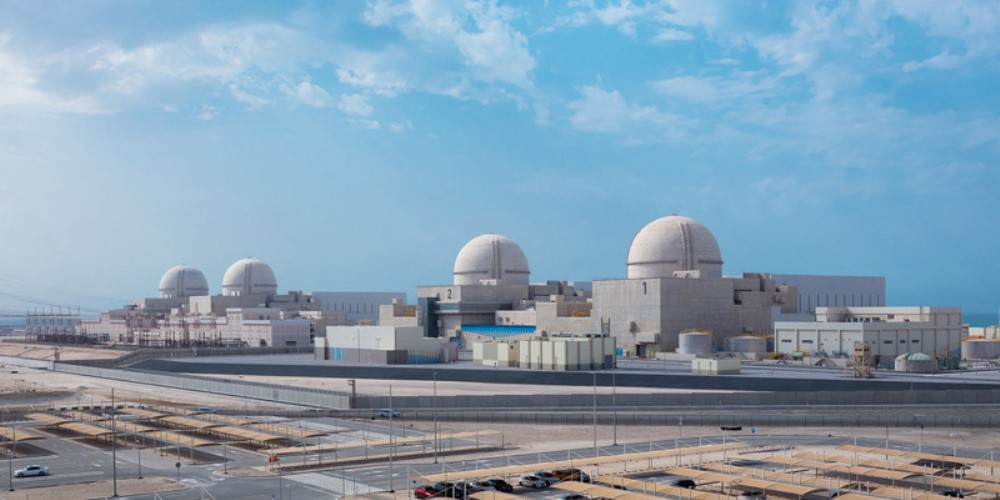
Under its Peaceful Nuclear Energy Program, the UAE has entered a historic new era of clean electricity production with the launch of ‘Barakah Nuclear Energy Plant’ which paves the way for significant economic, social and environmental benefits.
The Emirates Nuclear Energy Corporation (ENEC) has recently announced that Unit One of the Barakah nuclear energy plant has begun commercial operations.
Located in the Al Dhafra region of the Emirate of Abu Dhabi, the plant has four APR-1400 units.
ENEC’s operating and maintenance subsidiary, Nawah Energy Company, successfully started commercial operations of the plant’s first unit.
According to sources, the 1400MW unit will deliver sustainable electricity constantly, to be supplied to the national grid.
Abu Dhabi Prince Sheikh Mohamed bin Zayed Al Nahyan said that the development was a significant milestone in the United Arab Emirates’ (UAE) vision for sustainable, knowledge-based economic prosperity.
Commenting on the development, ENEC chairman Khaldoon Khalifa Al Mubarak said: “The UAE set a clear roadmap with solid principles to ensure this project was developed in accordance with the highest international industry standards of safety and quality with full transparency.”
“Our investment in pioneering technologies and the decarbonisation of our electricity production not only advances the UAE’s clean energy leadership, but also produces tangible socioeconomic and environmental benefits,” he added.
ENEC CEO Mohamed Al Hammadi said the plant is a landmark in UAE’s journey towards clean energy.
“After more than a decade of strategic planning, program development and construction, today we are confidently marking the start of a new chapter in the UAE’s transition to cleaner energy sources,” he noted.
Unit 1 of the Barakah Nuclear Energy Plant has started commercial operations, becoming the first source of clean electricity for the Arab World .
Barakah Unit 1 Commercial Operations is the result of more than a decade of effort by Emirati-led, multinational teams to deliver on the UAE’s clean energy vision.
The plant is anticipated to bring positive change by delivering clean electricity, making great strides to tackle climate change, creating jobs and supporting industries, promoting R&D and technological advancement.
From now onwards, the first unit of the Barakah plant is currently delivering thousands of megawatts of emissions-free electricity 24 hours a day, seven days a week, for more than 60 years. It also set to grow, with three more units well on their way to generating clean electricity in coming years.
This huge amount of clean electricity will support the UAE in making giant strides in meeting its climate change goals and becoming a global clean energy leader.
{{Read on: }}
[UAE enters historic new era of clean electricity production as ‘Barakah Nuclear Energy Plant’ starts commercial production ->https://en.igihe.com/IMG/pdf/enec_information_leaflet.pdf]
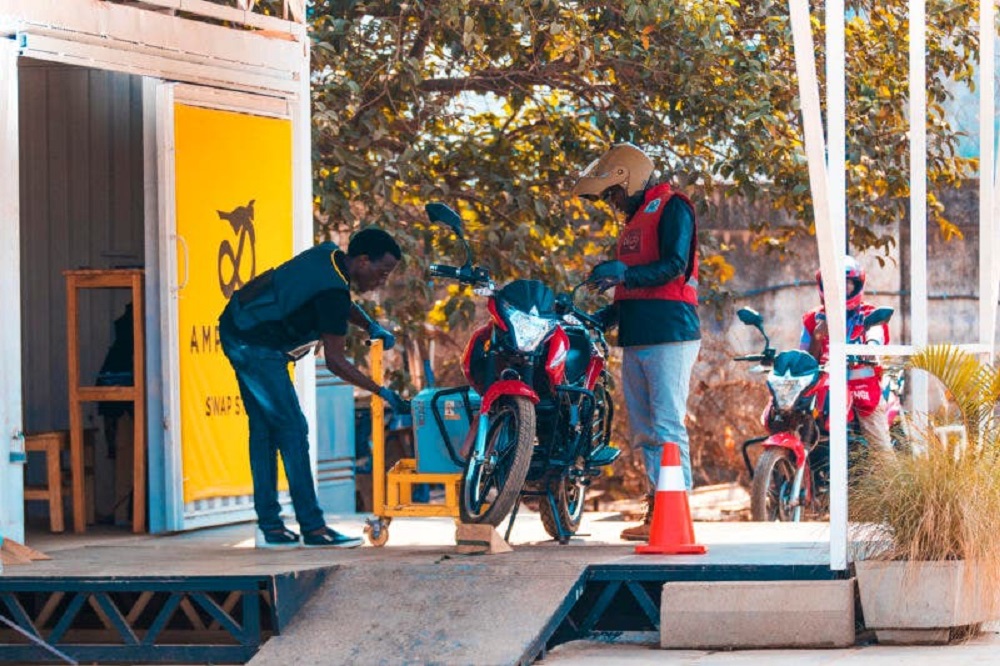
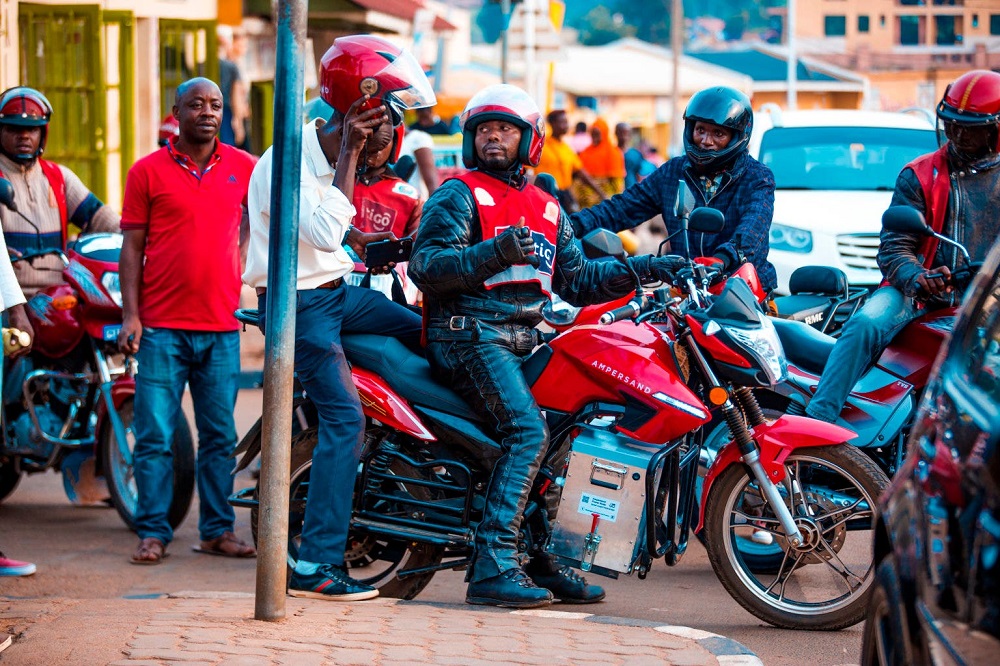
Headquartered in Kigali, Rwanda, Ampersand assembles and finances electric motorcycles (‘e-motos’ or ‘e-bodas’) that are cheaper, cleaner and better performing than the 5 million petrol motorcycle taxis in use across East Africa.
Ampersand’s vehicles produce at least 75% less carbon than petrol motorcycles and zero tailpipe emissions. Ampersand also builds and operates a network of battery swap stations, allowing drivers to change batteries faster than refilling a tank with petrol.
EIF’s historic US$ 3.5 million investment allows Ampersand to rapidly scale its electric motorcycle and swap station network in Rwanda. This includes hundreds more e-motos on the road, and dozens more battery swapping stations.
The investment also enables Ampersand’s expansion beyond Rwanda’s borders, and fuels the company’s research and development arm, putting Ampersand on track to electrify East Africa’s entire motorcycle taxi fleet by 2030.
Since its commercial launch in May 2019, Ampersand’s fleet of 35 drivers and e-motos have covered over 1.3 million kilometers and over 7000 drivers are on their waiting list.
EIF’s investment builds on the startup’s acceleration through StartupBootcamp, early-stage funding from FactorE Ventures in 2018, generous support from the Rwanda Green Fund, USAID’s Development Innovation Ventures, Shell Foundation, the UK FCDO’s Frontier Technology Livestreaming fund, the New Zealand Government, and a loan from Blue Haven Initiative’s Catalytic Fund.
Commenting on the development, Josh Whale, Founder and CEO of Ampersand said: “We’re thrilled to have EIF on board for this historic investment. We now have the momentum to scale our operations to electrify all of East Africa’s 5 million taxi motorcycles by 2030. EIF’s support further dispels the myth that electric transport will happen in rich nations first and trickle down to developing countries later, second-hand.”
James Everett, the Managing Partner of EIF expressed delight for the partnership expected to contribute a lot to climate change mitigation.
“We have confidence in the Ampersand team, and we believe the time is right. We are very excited to partner with Ampersand as the company scales in Rwanda and expands across East Africa. We believe that electrifying 2 and 3 wheeled vehicles in developing countries represents one of the low hanging fruits for climate change mitigation globally, and can have a profound positive impact on urban air quality,” he noted.
The commemoration that lasts 100 days is taking place for second time during Coronavirus pandemic whereby talks will be delivered virtually through mainstream media including televisions and radios as well as other social media platforms.
Over the years, people have been reported and arrested for threatening genocide survivors, uprooting their crops, stabbing their livestock or destroying their houses among other violent acts during commemoration period.
Among others, it has been observed that propagandists, roaming perpetrators and their supporters often use this time to spread genocide ideology, deny and trivialize the 1994 Genocide against Tutsi which continue to pain survivors who endured with both physical and psychological trauma.
It is worrying situation that such propagandists intend to mislead people especially the youth considered as the backbone of the nation’s future and hold back the strides Rwanda has made in unity and reconciliation.
IGIHE has talked to Fidèle Ndayisaba, the Executive Secretary of Rwanda National Unity and Reconciliation Commission (NURC) to hint on attitudes that should characterize people during the commemoration period.
As he explained, the first move towards fighting genocide ideology is participation in commemoration events.
“The first move is to participate in commemoration events. Physical meetings have been limited by Covid-19 but we encourage people to watch, listen talks aired through mainstream media and various social media platforms. This helps to understand better history of the 1994 Genocide against Tutsi, comfort each other and stand in solidarity,” he said.
Ndayisaba also reminded the public that they should be selective because some media houses are used to spread propaganda, sow hatred and mislead people.
He highlighted that majority of them are YouTube channels and other media houses from abroad working under the arms of people denying and trivializing Genocide against Tutsi.
Ndayisaba further stressed that emphasis should be drawn on self-protection and protecting others during this commemoration period by avoiding to give attention to misleading speeches and publications sowing hatred. Journalists are also urged to avoid propaganda that misleads people.
Ndayisaba explained that Rwandans should stand against acts of genocide ideologists and advised them to stand united and comfort genocide survivors.
During his message marking the beginning of commemoration events, President Paul Kagame said that Rwandans should not be afraid to resist people denying genocide.
He was commenting on the presentation of the Executive Secretary of the National Commission for the Fight against Genocide (CNLG), Dr. Jean-Damascène Bizimana that shed light on evidences of the preparation and execution of the 1994 Genocide against Tutsi.
“What Jean-Damascène Bizimana has just told us, those are facts. Facts of our history, facts about what happened, and the responsibilities thereof. For those deniers, if they have no shame, why should I have fear?” he noted.
Rwanda is commemorating for the 27th time under the theme ‘Remember-Unite-Renew’
The request was made yesterday on Thursday 8th April 2021 during the commemoration of genocide victims in the district.
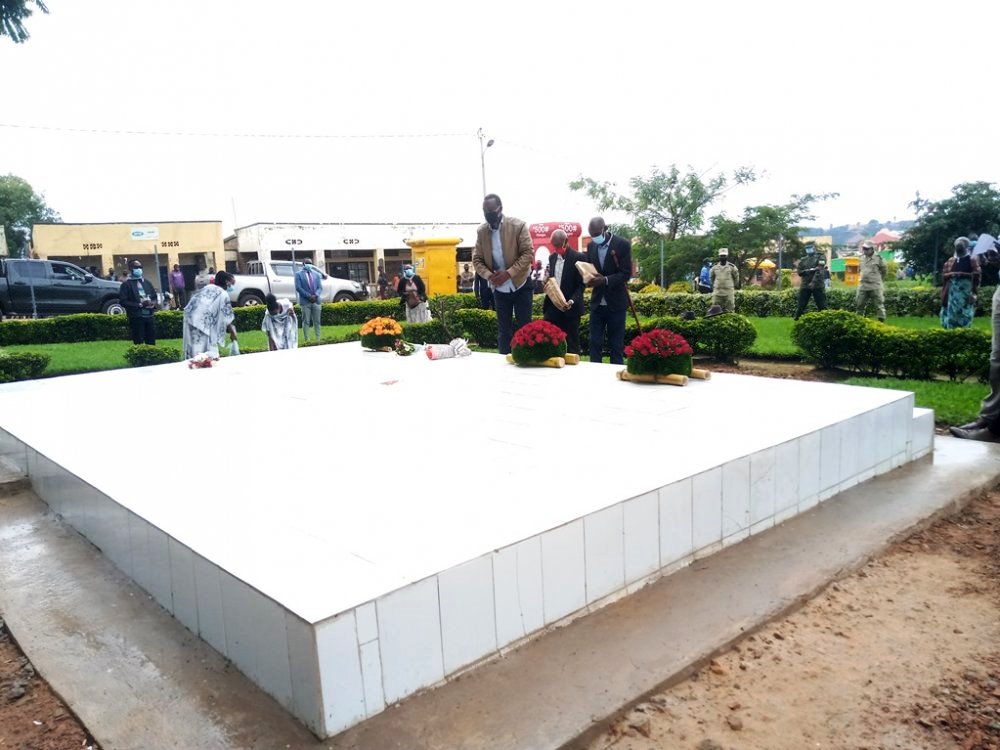
The event that took place at Mukeri and Gisuma genocide memorials located in Byumba sector attracted minimal participation of mourners in compliance with COVID-19 preventive measures.
Munyakazi André, a survivor with relatives buried at Mukeri memorial said that it is shameful to see some memorials without roofing that water penetrates inside easily.
He appealed to the Government for action to have these memorials upgraded.
“For instance, you can see that it is raining on this memorial. It would be better if the memorial is upgraded and get roofing because rain water usually penetrates inside the cemetery and destroys remains of deceased relatives,” he said.
Munyemana Augustin from Kageyo sector said that water drainage channels should be constructed and proceed with further upgrading works to ensure remains are kept in safe conditions.
Kamizikunze Anastase, the President of IBUKA, organization umbrella of genocide survivors in Gicumbi district has said that three of six memorials are not roofed.
He however explained that they plan to relocate these memorials to one memorial at district level that will be properly constructed.
The mayor of Gicumbi district, Ndayambaje Félix has explained that they are seeking a solution to build one memorial that will accommodate remains from five memorials in different areas.
“We have a plan to build a decent genocide memorial at district level whereby some memorials can be integrated. We are holding talks with the National Commission for the Fight against Genocide. We have already submitted a proposal to run two memorials including one of Tutsis killed during the 1994 Genocide and another one of victims killed on accusation of espionage,” he said.
Ndayambaje revealed that the genocide memorial at district level is expected to be built in Mutete sector at a cost of over Rwf 800 million.
Gicumbi district has six memorials, three of which accommodate remains of 1541 genocide victims.
These include Mutete, Rutare, Nyarurama, Mukeri and Mugina genocide memorials as well as Gisuna memorial accommodating killed victims accused of espionage.
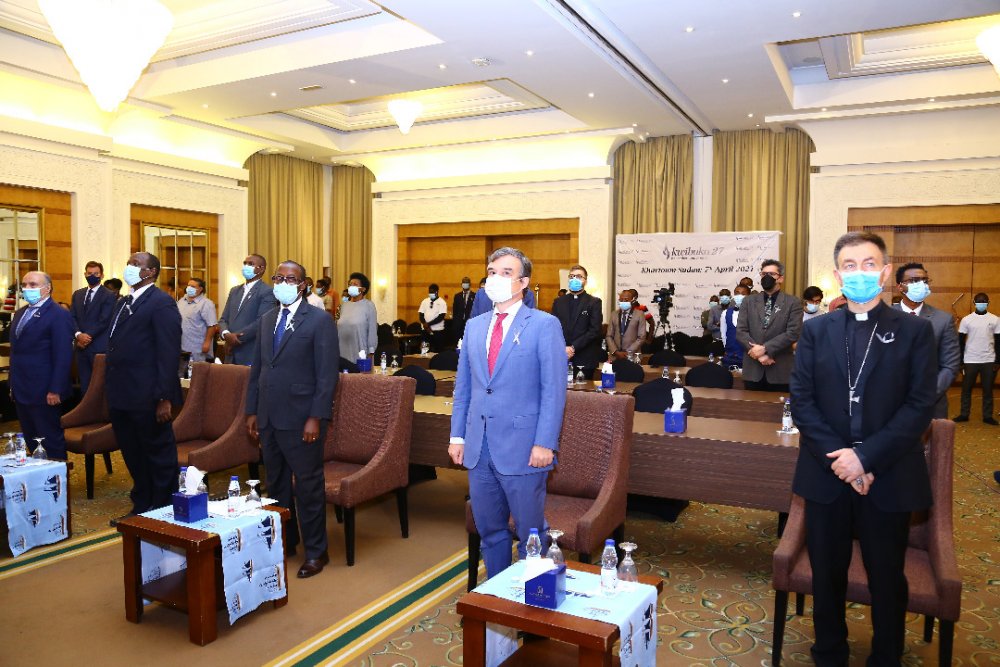
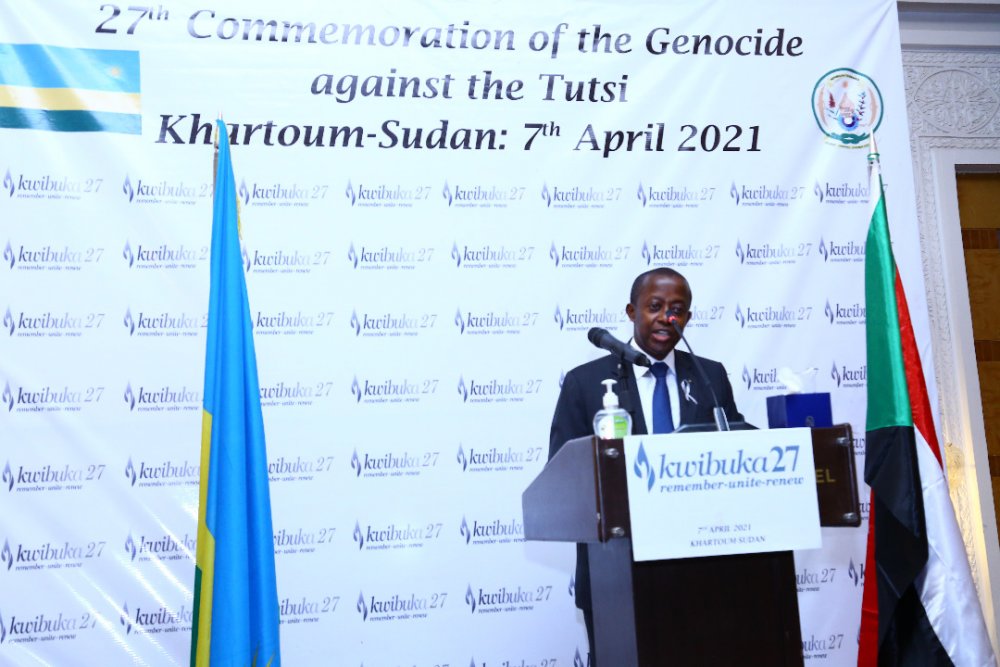
The event was held on Wednesday, 7th April 2021, at El-salam Hotel in Khartoum, attended by Members of the Diplomatic Corps accredited to Sudan, Heads of Regional and International Organizations, Business Community, Civil Society, Rwandan Community in Sudan and representatives of Media Houses in Sudan.
The event was also attended by a delegation of the Government of the Republic of the Sudan led by H.E Ambassador Khalid Farah, Director General of the African Affairs Department in the Ministry of Foreign Affairs; who was also the Guest of Honor.
The Commemoration event was attended physically and virtually due to the prevailing COVID-19 pandemic. There was strict observance of health measures against COVID-19 for all invitees that were in physical attendance.
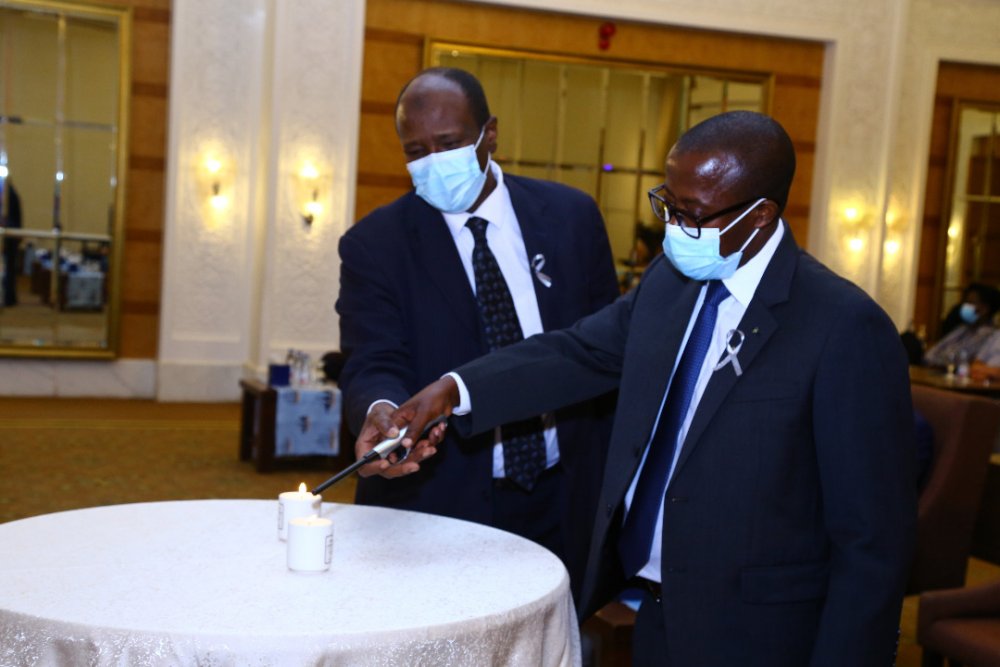
Beside the remarks of the day, the commemoration event included lighting of the Candle of Hope as a symbol of hope and resilience and the One Minute of Silence in honor of the victims of the 1994 Genocide against the Tutsi.
In his remarks the Head of Rwanda Diplomatic Mission in the Sudan, Mr. Abel Buhungu, welcomed and thanked the Guest of Honor, Ambassador Khaled Farah, the Director General for the Department of Africa at the Ministry of Foreign Affairs.
He also extended a warm welcome to the audience for positively responding to the invitation.
“Today, marks twenty seven (27) years since the 1994 genocide against Tutsi whose seeds of disunity and exclusion were planted by the colonialists back in 1930s and got nurtured and flourished by the two post-independence Republics until 1994,” said Mr. Buhungu.
He outlined details of early planning during the colonial rule, and post-independence regimes. As example, he informed the audience of a demeaning social research involving measuring of lengths and width of peoples’ noses by the colonialists back in 1932 and that findings were used as basis for issuance of discriminatory ethnic-based National IDs to all Rwandans back in 1933.
Mr. Buhungu went further to mention how discrimination and ethnicity politics got entrenched with participation and facilitation of the Catholic Clergy in 1957 in aid to the policy of the colonialists.
The Catholic Clergy facilitated the drafting of the Hutu Manifesto in 1957 followed by the infamous ten Hutu Commandments.
These infamous policy documents and the discriminatory ethnic-based IDs were first tangible seeds that fruited into cyclic killings and mass production of Tutsi refugees (into neighboring DRC, Uganda, Burundi and Tanzania) including in 1959, 1960, 1961, 1962, 1973, 1982, 1990 and 1992.
The climax of this exclusion and hate was the 1994 genocide against Tutsi which aimed at their total annihilation. A genocide that lasted from 7th April until 4th July 1994 and decimated over a million innocent lives. The fastest mass murder in human history.
Buhungu recalled the final report (S/1994/1405) of the Commission of Experts established pursuant to UNSC Resolution 935 (1994), that among others attested to the fact that: “there exists overwhelming evidence to prove that acts of genocide against the Tutsi group were perpetrated”. He also mentioned the conclusions of the appeals Chamber of the International Criminal Tribunal for Rwanda (ICTR) issued on 16th June 2006 a Judicial notice (ICTR – 98-44-AR73(C).
He also recalled the failure of international Community to prevent the Genocide despite early warning including by General Romeo Dallaire, the Canadian Commander of the UN Assistance Mission for Rwanda (MINUAR). Unfortunately, a part of this UN force that was deployed in Rwanda withdrew back to their home countries when genocide begun on 7th April 1994.
Buhungu thanked the Rwanda Patriotic Front (RPF) for the heroism in moving quickly and against many odds ably stopping the 1994 genocide against Tutsi.
“The RPF led Government has since the end of the genocide commendably worked hard in uniting and reconciling Rwandans as well as impressively rebuilt the economy albeit from an extremely low base of 1994. This is despite a very hostile environment that had been occasioned by the genocide where, as example survivors had to co-exist with some of their yester-year tormentors,” argued.
He called for a joint campaign to bring to justice the perpetrators of this heinous crime who are still roaming the globe. He commended countries especially in the West that have lately increased arrests of these genocide fugitives. These genocide fugitives are either tried in the jurisdictions of their countries of residence or they are extradited to Rwanda for trial.
The most recent case in point is the infamous genocide financier, Felicien Kabuga who was arrested in France and is now undergoing trial in The Hague. He expressed need for a coordinated global action to deny genocide fugitives and their support networks easy platform for carrying on with revisionism and denial as the last phase of any Genocide. It is by these actions that the International community can avoid another epic failure on their part or avoid ever having another genocide anywhere.
He ended by highlighting the impressive progress made in Rwanda over the last 27 years in the areas of good governance, unity, justice, reconciliation and economic development. He appreciated the state of Bilateral Relations between Rwanda and The Sudan as the host Country that are buttressed by a number already signed Memorandums of Understanding (MoUs) or Agreements.
In his remarks, Ambassador Khaled Farah expressed solidarity of the Government of Sudan with the people of Rwanda during this period of commemoration. He uttered his belief that the commemoration aims at promoting strong collective memory which is very essential for bringing about sustainable nation building and Genocide prevention in the future.
He then quoted the speech of President Paul Kagame during Kwibuka26 as saying “ The lessons of our history have united us. They teach us the value of good leadership that cares for the well-being of all Rwandans. We learned the importance of working together to build the better future of all Rwandans”.
Ambassador Khaled applauded the achievements that Rwanda has gained in the post genocide period and affirmed that Sudan would benefit from these realized success stories of Rwanda.
He concluded by reaffirming the commitment and cooperation of the Government of the Sudan with Rwanda on its journey of transformation.
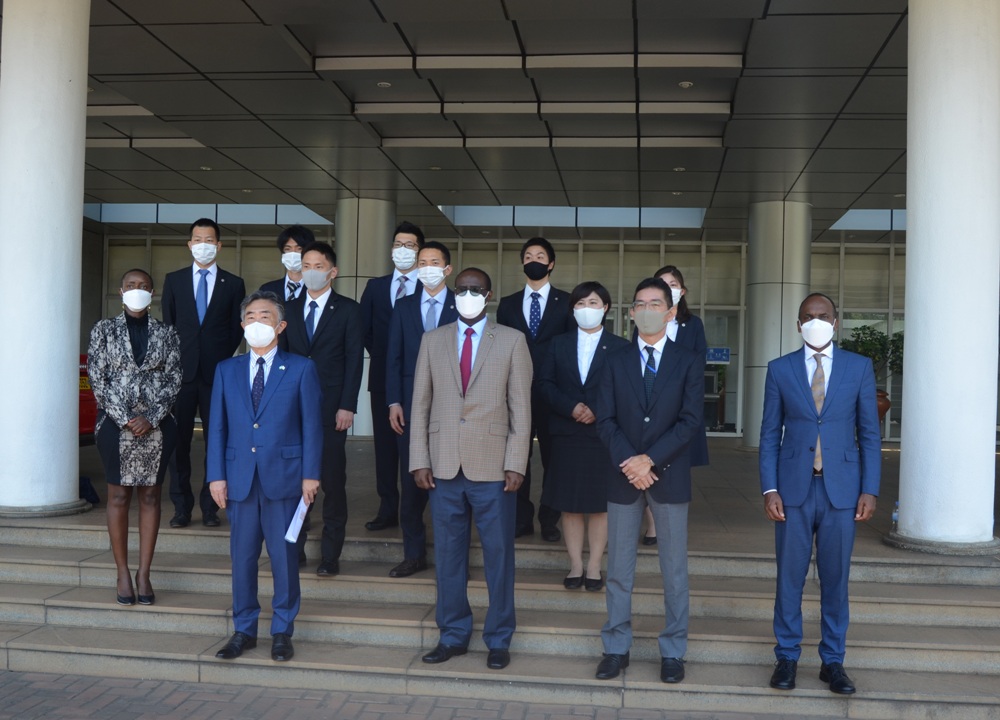
On Thursday 8th April 2021, the team of Japanese volunteers paid a courtesy call to the Minister of State for East African Community Affairs in the Ministry of Foreign Affairs,Prof. Nshuti Manasseh.
The team was accompanied by ambassador of Japan in Rwanda, Masahiro Imai and Maruo Shin, the chief representative of JICA Rwanda.
The Ministry of Foreign Affairs revealed that they discussed, among others, bilateral relations and the JICA resuming the Japan Overseas Cooperation Volunteers’ activities in Rwanda.
Rwanda registered 44 volunteers from Japan as of March 2020 who returned home as Coronavirus emerged.
Despite their return, JOCV continued to assist Rwandan residents virtually.
These volunteers arrived again in Rwanda on 3rd April 2021 expected to resume their activities in the districts of Kayonza, Kirehe, Musanze, Ngoma and Rwamagana effective from Friday 9th April 2021.
These volunteers also visited Kigali Genocide Memorial yesterday morning where they paid respect to the victims of the 1994 Genocide against the Tutsi in solidarity with the people of Rwanda during this commemoration period.
JICA has released a statement showing that resuming volunteerism activities is entrenched on the fact that Rwanda has made giant and promising strides towards fighting COVID-19.
Japan volunteers started activities in Rwanda in 1987 through JICA. These activities halted in 1993 and resumed after 12 years in 2005.
A total of 300 youth volunteers from Japan in the age bracket of 20 and 30 have so far involved in volunteer activities in Rwanda with major interventions in proper maintenance of water and sanitation infrastructures, building capacity for coffee farmers and promoting science based education among others.
The suspects arrested in Nkongi Village of Kangamba Cell have beens identified as Eric Dusengimana, 28, Seraphine Mukandera, 28 and Chantal Nyirambarushimana, 35.
According to the Eastern Region Police Spokesperson, Chief Inspector of Police (CIP) Hamdun Twizeyimana, the suspects were apprehended in partnership with local leaders following a tip-off by the area residents.
“Police received information about two people, who were frequenting the homes of Mukandera and Nyirambarushimana. Residents reported that they saw these same two men burrying unknown objects in the backyards, which raised suspicion and suspected a foul-play,” CIP Twizeyimana said.
He added: “Police officers were dispatched and began with searching the house of Mukandera where they discovered blue ink-stained clothes. During interrogation, Mukandera disclosed that one Onesphore Manirafasha came to her house on April 03, from Kigali with money amounting to Rwf227,000, which he gave to Eric Dusengimana.”
The money, Mukandera explained, was later buried in her backyard by Dusengimana.
The money was later unearthed and the duo taken into custody.
“Police officers continued to search the house of Nyirambarushimana, where other counterfeit bills amounting to Rwf170,000 were unearthed in the backyard. Nyirambarushimana also disclosed that it was given to her by Onesphore Manirafasha,” CIP Twizeyimana said.
Manirafasha, who is yet to be arrested, was recently released from prison after completing his two-year sentence for fraud and deception.
The suspects were handed over to RIB at Karenge station as the search for the prime suspect, Manirafasha, continues.
Article 269 of Law No 68/2018 determining offenses and penalties in general states; any person who, fraudulently counterfeits, falsifies or alters coins or bank notes which are legal tender in Rwanda or abroad, notes issued by the Treasury with its stamp or brand, either banknotes or alike that have legal tender in Rwanda or abroad, or one who introduces or issues in Rwanda such effects or notes with knowledge that they are forged or falsified, commits an offence.
Upon conviction, he/she is liable to imprisonment for a term of not less than five years and not more than seven years.
The statement released last night shows that the majority of new cases were found in Nyaruguru: 19, Nyamagabe: 17, Ruhango: 14, Nyanza: 12, Gisagara: 11 and Kigali 9.
Rwanda confirmed the first Coronavirus case on 14th March 2020. Since then, 23 152 people have been tested positive of whom 20 870 have recovered, 1968 are active cases while 314 have succumbed to the virus.
A total of 348,926 people have been vaccinated since Rwanda began countrywide inoculation program on 5th March 2021.
Coronavirus symptoms include coughing, flu, and difficulty in breathing. The virus is said to be transmitted through the mucous membranes of the respiratory tract.
Rwandans are urged to adhere to COVID-19 health guidelines, washing hands frequently using soaps and safe water, wearing face masks and respecting social distancing.
Rusingiza was arrested in Rushenyi village, Nyakabungo cell in Mpanga Sector where he was fleecing residents promising to provide electricity to their homes. He is a resident of Nyamabuye Sector also in Kerehe District.
Chief Inspector of Police (CIP) Hamdun Twizeyimana, the Police Spokesperson for the Eastern Region, said Rusingiza had already fleeced eight people by the time of his arrest.
“He was posing as REG employee and falsely promising electricity connectivity with a charge Rwf10,000 per person . Some of the victims, later suspected him to be a conman after he failed to deliver, and reported him to the Police which led to his arrest,” CIP Twizeyimana said.
Article 174 of law nº68/2018 of 30/08/2018 determining offences and penalties in general, any person who, by deception, obtains another person’s property, whole or part of his/her finance by use of false names or qualifications, or who offers positive promises or who threatens of future misfortunes, commits an offence.
Upon conviction, he/she is liable to imprisonment for a term of not less than two years and not more than three years, and a fine of not less than Rwf3 million and not more than Rwf5 million.
Impersonation, under article 279, attracts an imprisonment of between two and three years and a fine of between Rwf300, 000 and Rwf500, 000.
These remains will be relocated from different memorial sites and cemeteries under the ongoing program to preserve few memorials that can be properly managed.
The Representative of IBUKA, organization umbrella of genocide survivors in Rubavu district, Bisengima Innocent has told IGIHE that 100 days of commemoration will be marked by relocation of remains of genocide victims from cemeteries to different genocide memorials located in the district.
He explained that 147 remains will be relocated from a memorial in Nyamyumba, Rutsiro district to Nyundo memorial on 9th April 2021.
“We shall commemorate from homes but have organized three major events during the 100 days of commemoration. On 9th April, we shall relocate 147 remains of genocide victims from Nyamyumba and Kivumu sectors in Rutsiro district in the former Commune Nyamyumba to Nyundo genocide memorial. On 30th April, we shall also accord decent burial to 142 remains recently exhumed at Gisenyi airstrip and relocate Rugerero memorial,” said Bisengimana.
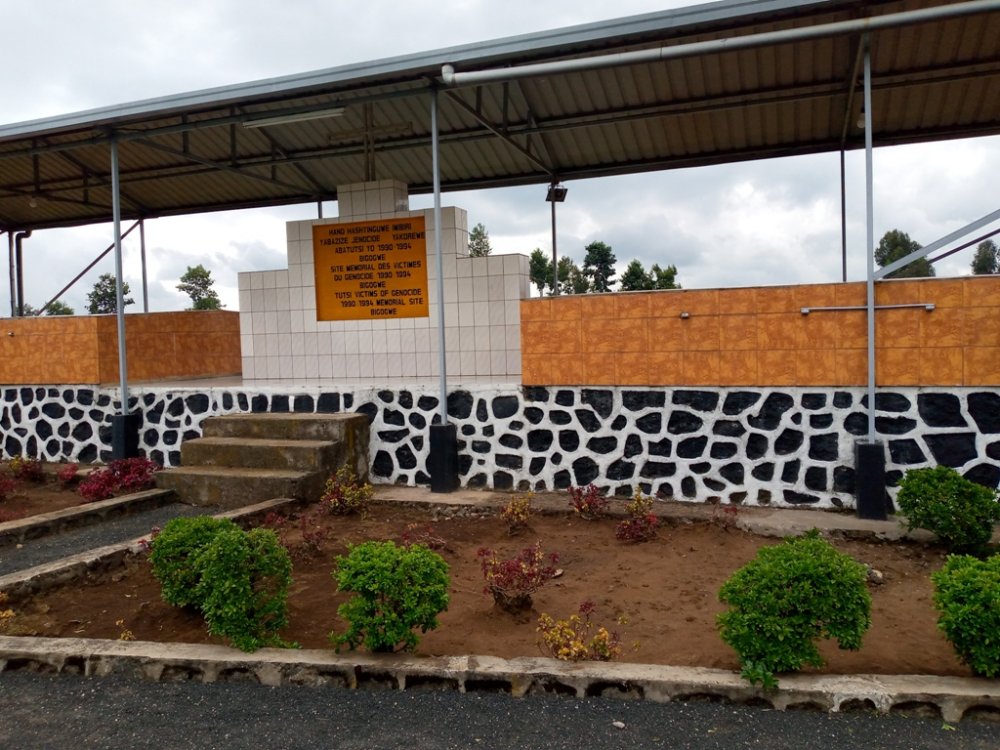
He went on to explain that more 17 remains of genocide victims exhumed recently will be buried at Bigogwe genocide memorial in Kanzenze sector.
Bisengimana appealed on residents to reveal whereabouts of more remains of genocide victims to be buried decently and requested them to shun all forms of genocide ideology that could undermine unity and reconciliation efforts.