The stunning announcement came just hours after electoral officials had declared Deby, 68, the winner of the April 11 presidential election, paving the way for him to stay in power for six more years.
Deby “has just breathed his last defending the sovereign nation on the battlefield” over the weekend, army spokesman General Azem Bermandoa Agouna said in a statement read out on state television.
Deby’s campaign said on Monday that he was headed to the frontlines to join troops battling “terrorists”.
The circumstances of Deby’s death could not immediately be independently confirmed due to the remote location. It was not known why the president would have visited the area or participated in ongoing clashes with the rebels who opposed his rule.
Rebels based across the northern frontier in Libya attacked a border post on election day and then advanced hundreds of kilometres south across the desert.
Deby came to power in a rebellion in 1990 and is one of Africa’s longest-serving leaders.
They were killed after the interim President, Théodore Sindikubwabo, held a hate speech in the area mobilizing Interahamwe militia to kill Tutsi.
Patricie Mukaruyonza, a genocide survivor has revealed that Sindikubwabo’s speech was the trigger of Tutsi killings in the area.
“Sindikubwabo held a speech telling Interahamwe that no one should escape them. He said’ they wanted future generations to ask how Tutsi looked like’. That is when the situation worsened in this area when a President dared pronouncing such words instead of saving people,” she said.
After Sindikubwabo’s speech, Mukaruyonza explained, Interahamwe stormed the area, burnt Tutsi inside the church as they fired bullets along with soldiers.
Tutsi killed at Simbi Parish located in former Commune Maraba had come from neighboring communes and former Prefecture Gikongoro.
27 years after Genocide against Tutsi, survivors in Simbi and Maraba sectors are grateful for the visionary leadership that stopped it.
They also advise the youth to stay awake and desist people that continue to fuel genocide ideology.
“Our children are taught to distinguish right from wrong, stand against people misleading them because some of youth are nowadays trivializing Genocide. Most of them are trying to conceal their parents’ role in Genocide. They are spreading what they were taught. That is another challenge we are still facing but we shall win,” Aphrodis Nsengimana.
The President of Ibuka, organization umbrella organization of Genocide survivors in Huye district, Théodate Siboyintore has said that people fueling genocide ideology continue hurt survivors.
“We have recorded two cases in Simbi. These include abusive words to genocide survivors. There is another case in Mukura where someone cut down bananas of a
genocide survivor and threatened him that he is the next to be stabbed. This evidences that genocide ideology is persistent in communities,” he revealed.
He revealed this yesterday in a talk show aired on RBA, few hours after Rwanda released the report detailing France’s role in Genocide against the Tutsi.
“The Rwanda’s report has been presented to the cabinet today. It will be appropriately handed over to France in coming days. It is reasonable that the country will read it and give feedback,” he said.
Minister Busingye went on to explain that the report ‘is a great milestone’ that emphasizes facts spoken about France for so long and observed that its findings complement ‘Duclert report’.
A team of legal experts led by American jurist Robert F Muse from the Washington-based law firm Levy, Firestone Muse LLP, on Monday, April 19 handed their report on the role of France in the 1994 Genocide against the Tutsi, a report that was presented to the cabinet chaired by President Paul Kagame.
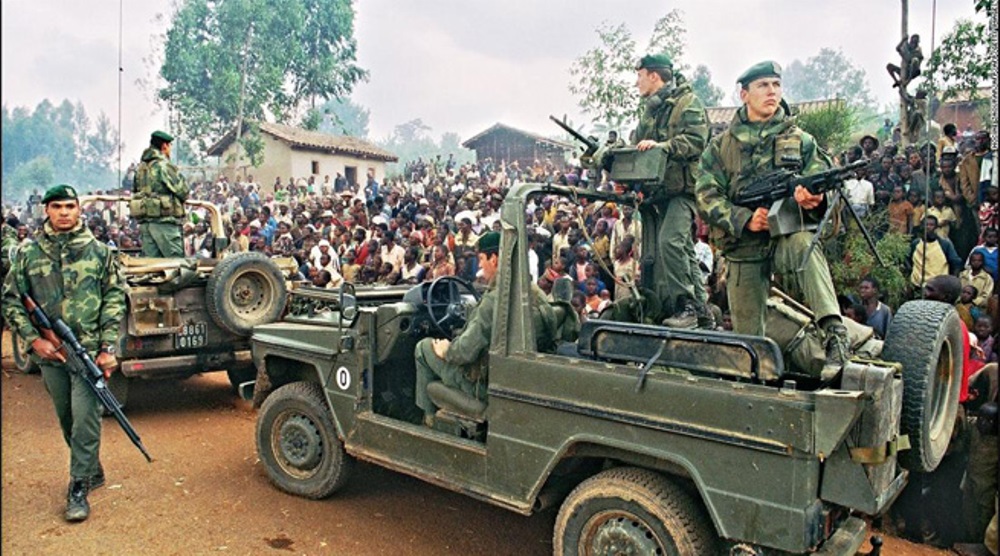
The report shows that the French government was neither blind nor unconscious about the Genocide and provided unwavering support to the Genocidal government that was in power then.
The 600-page report dubbed; ‘A foreseeable Genocide: the role of the French Government in connection with the 1994 Genocide against the Tutsi’ was a result of four years of research. It was commissioned in 2017 by the Rwandan government.
Minister Busingye has revealed that Rwanda, France had longstanding relations that continued to exist during darks moments the country went through which prompted to suspect France’s role during the 1994 Genocide against Tutsi.
In 2019, French President Emmanuel Macron commissioned a team of expert researchers and historians to review archives on Rwanda, France relations between 1990 and 1994 analyzing the country’s role during Genocide against Tutsi.
The report presented to Macron on 26th March 2021 revealed that France bears “heavy and overwhelming responsibilities” over tragic history that led to the 1994 Genocide against the Tutsi which took lives of over 1 million victims.
The Government of Rwanda welcomed the report saying it “represents an important step toward a common understanding of France’s role in the 1994 Genocide against the Tutsi”.
Recently in April 2021, Prof. Vincent Duclert who headed the team of expert researchers and historians who analyzed French Government’s official archives presented the report to President Paul Kagame in Kigali.
He revealed this yesterday on Monday 19th January 2021 as Rwanda officially released its report on the role of French Government during Genocide against Tutsi.
The report was made by a law firm based in the United States of America (USA), Levy Firestone Muse.
Bob Muse, a partner at Levy Firestone Muse presented findings of the report to the Government of Rwanda during a special cabinet meeting that convened yesterday at Village Urugwiro.
The 600-page report is entitled “A Foreseeable Genocide: The Role of the French Government in Connection with the Genocide against the Tutsi.”
Minister Biruta has revealed that the report was made on the request of Rwanda.
”The report follows the recent one made by expert commission of researchers and historians commissioned by President Macron. It is not a response to the first report. They were made differently at different times. What is clear in this report is that the French Government at the time bears a significant responsibility in failing to prevent a foreseeable Genocide. They saw all the signs and were aware of the planning and execution of the genocide but did not act to prevent it,” he said.
The report features testimonies from different people including President Paul Kagame and other RPF Inkotanyi cadres.
Both reports indicate that French Government bears responsibility during Genocide against Tutsi.
“Duclert report reviewed archives until 1994 but Rwanda’s report also analyzed the period after 1994 where it reflects on events that intended to tamper with evidences on the role of French Government during Genocide against Tutsi,” said Minister Biruta.
He also highlighted that Rwanda’s hinted on records of former French President, Mitterand on Genocide and what Rwanda suspected to have fueled ‘Genocide deniers’.
“It also draws attention on events and evidences after Genocide including trial of eight senior military officials accused by Jean Louis Burguiere. This prompted Rwanda to spend time following up these court cases,” he said.
Minister Biruta explained that Rwanda’s report is not meant for criminal investigation even though it was made by lawyers.
“The Government of Rwanda doesn’t intend to use the report for criminal investigation but a fact-finding report meant to clarify historical facts,” he noted.
The third batch left Kigali International Airport headed by Superintendent of Police (SP) Prosper Nshimiyimana.
They are part of FPU-1 contingent of 240 officers commanded by Chief Superintendent of Police (CSP) Faustin Kalimba, which will be deployed in Malakal, Upper Nile State.
Later in the evening, at about 6pm, the last batch of 80 officers, who are part of the replaced contingent commanded by CSP Fabien Musinguzi, also returned home after a successful tour-of-duty.
Commissioner of Police (CP) John Bosco Kabera, Commissioner for Public Relations and Media, presided over the departure and arrival of the last cohorts.
“On the behalf of Rwanda National Police leadership, I welcome you back home and commend you for the integrity and discipline you exhibited, whith helped you to successfully accomplish the duty and maintain the good image of RNP and the country in general,” CP Kabera said while welcoming the last group of the replaced contingent.
The RNP spokesperson reminded them to observe all government directives set to contain the pandemic of COVID-19.
CSP Musinguzi said “it was a successful tour-of-duty” despite some challenges experienced.
“We have successfully completed our mandate although we faced challenges associated with the Covid-19 pendemic. We conducted separate duties such as the protection of civilians in internally displaced camps, UN personnel, security of key installations and humanitarian assistance, and other tasks contributing to the social welfare of the citizens,” said CSP Musinguzi.
The rotation was conducted in batches as part of the COVID-19 prevention measures, where cohorts are required to first spend 14 days in quarantine before undertaking any peacekeeping duties
This is the sixth rotation of FPU-1 in South Sudan following the maiden deployment of the first contingent in 2015.
The statement released last night shows that 46 people have caught the virus, 167 recovered while 6 are critically ill.
Rwanda confirmed the first Coronavirus case on 14th March 2020. Since then, 23934 have been tested positive of whom 22408 recovered, 1200 are active cases while 326 have succumbed to the virus.
A total of 349,702 people have been vaccinated since Rwanda began countrywide inoculation program on 5th March 2021.
Coronavirus symptoms include coughing, flu, and difficulty in breathing. The virus is said to be transmitted through the mucous membranes of the respiratory tract.
Rwandans are urged to adhere to COVID-19 health guidelines, washing hands frequently using soaps and safe water, wearing face masks and respecting social distancing.
The training is conducted by Rwanda National Police (RNP) in partnership with Regional Center on Small Arms (RECSA) and the US Embassy in Rwanda.
Eighteen Police officers from various units of RNP are attending the course, which was officially opened by the Deputy Inspector General of Police (DIGP) in charge of Operations, Felix Namuhoranye.
Present was also RECSA Executive Secretary, Lt.Gen Badreldin Elamin Abdelgadir and US Embassy Assistant Regional Security Officer, Diana Kaiser.
DIGP Namuhoranye said RNP considers capacity building as one of its “key priorities” in building a knowledge-based and professional policing.
He commended all entities that support the RNP training programmes in different policing disciplines
“This training is aimed at equipping participants with required basic knowledge and skills towards enhancing weapon and ammunition management in the region,” DIGP Namuhoranye said.
RNP, he said, considers capacity building as one of its key priorities a reason as to why police officers are trained in various fields including weapon and ammunition management and control.
This, he added, is meant to further improve the skills and knowledge of officers to properly manage armories.
“We all know that ineffective management of weapons and ammunitions may threaten people’s safety and security, and may relatively impact on socio-economic development of countries. Course participants should bear in mind that ammunitions, explosives or weapons, when poorly managed, could end up in the hands of criminals… terrorists who can in-turn jeopardize national and regional security,” DIGP Namuhoranye said.
He challenged the trainees to use what they will acquire from the training to effectively manage armories in their respective units, but also share the knowledge and skills with other officers.
Lt. Gen Badreldin said RECSA is investing in weapon and ammunition programme to respond to challenges that have been caused by accumulation of ammunitions and weapons in the region thus increasing armed conflicts, violent crimes and terrorism, among others.
“The course is considered important to our member states because it helps to control the population with small arms beginning with security agencies, by establishing effective control systems to safeguard, in a proper manner, weapons and ammunitions in accordance with international recognized standard,” Lt.Gen Badreldin said.
In her remark, Diana Kaiser, the US Embassy Assistant Regional Security Officer thanked Rwanda for its safety and security, and the existing collaboration in the region and around the world and its role in peacekeeping missions.
She applauded the Government of Rwanda for its weapon management programme and pledged continued partnership in matters of security.
Rwanda’s report shows that France played a role during Genocide against Tutsi because ‘it was aware of long-term plan to exterminate Tutsi’.
The report of 600 pages is entitled “A Foreseeable Genocide: The Role of the French Government in Connection with the Genocide against the Tutsi.”
The reported was presented by Bob Muse, a partner at Levy Firestone Muse, a law firm based in Washington (United States).
He presented the report through a special cabinet meeting convened at Village Urugwiro.
IGIHE has learnt that Levy Firestone Muse made the report in collaboration with law firm based in Rwanda including MRB ATTORNEYS (MRB), Trust Law Chambers and Certa Law.
Rwanda’s report drew emphasis on the period before, during and after Genocide.
The report served with different archives and speeches delivered by different people including RPF Inkotanyi cadres, former FDLR combatants, top Government officials and former employees of the United Nations among others.
On 26th March 2021, a committee of 13 expert researchers and historians delegated by Emmanuel Macron presented its findings on the role of France during Genocide against Tutsi.
The report indicated that France bears “heavy and overwhelming responsibilities” over tragic history that led to the 1994 Genocide against the Tutsi which took lives of over 1 million victims.
It was presented two years, after the delegation of 13 historians started reviewing archives on France, Rwanda relations between 1990 and 1994.
The report blames the then French President, François Mitterrand, for a “failure” of policy towards Rwanda in 1994. The findings were made public after years of French official secrecy over links to the Government led by Juvenal Habyarimana.
President Macron appointed the 15-member commission two years ago, giving them access to presidential, diplomatic, military and intelligence archives.
Among the archives are those of Mitterrand, who had close ties to former Rwandan President Juvénal Habyarimana.
Rwanda’s report on the role of France during Genocide was made since 2018.
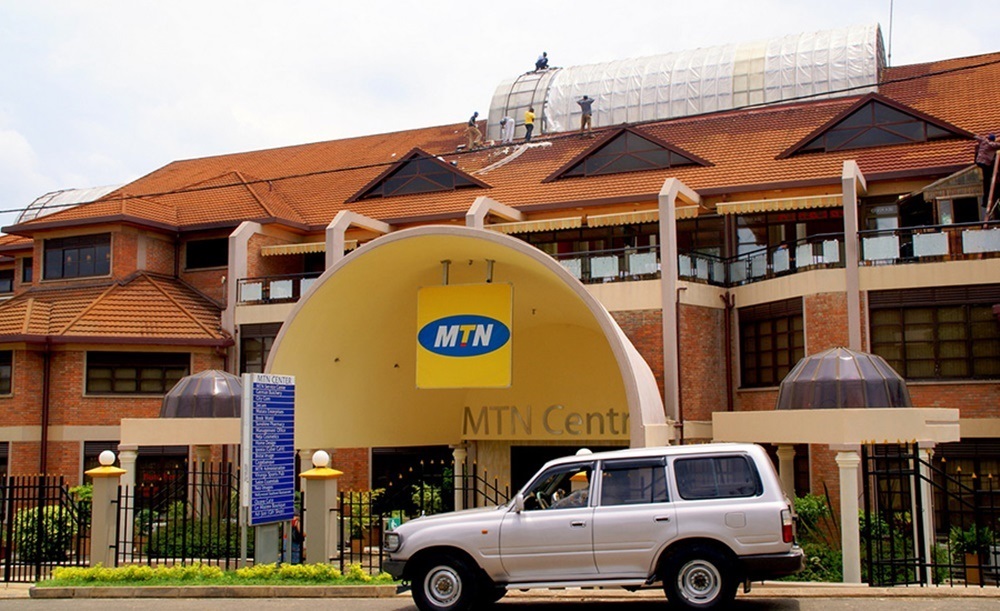
The announcement follows the approval by the Capital Market Authority (CMA) and the Rwanda Stock Exchange (RSE) of MTN Rwanda’s listing by introduction on the RSE and the approval of Crystal Telecom’s (CTL) shareholders to distribute the 20% of MTN Rwanda’s shareholding held by CTL to CTL shareholders effective from the listing date.
The listing of MTN Rwanda will see 1,350,886,600 ordinary shares with a nominal value of Rwf 1 each being registered with the RSE at an initial listing price of Rwf269 per ordinary share. CTL shareholders will become direct shareholders in MTN Rwanda and be able to trade their MTN Rwanda shares on the RSE.
Commenting on the development, Mitwa Ng’ambi, CEO of MTN Rwanda, said: “The official listing of MTN Rwanda’s shares on the RSE will take place on 4th May 2021. We look forward to participating in the capital markets of Rwanda and see this as an exciting opportunity for the investor community at large to participate directly in the ownership of MTN Rwanda. We are also excited to welcome former CTL shareholders as MTN Rwanda shareholders.”
CMA Executive Director Eric Bundugu also welcomed the listing.
“We welcome MTN Rwanda’s listing by introduction on the RSE as a demonstration of an international company local investors can continue to participate in as well as being an attraction to foreign investors into the Rwandan capital market. The listing will also continue to provide liquidity for existing and future shareholders,” he noted.
Iza Irame, CTL’s CEO expressed delight for the important transaction becoming reality.
“It will allow our shareholders to retain their economic interest in MTN Rwanda while gaining from the efficiency and visibility that comes with direct ownership,” she said.
Celestin Rwabukumba, CEO of the RSE highlighted that the listing of MTN Rwanda is a great and welcome development for the market as it increases capitalization.
“The company being of a good size adds on the number of leading brands to our Exchange and offers more visibility into the company’s operations to shareholders and the general investing public, which in turn should trigger more interest from potential new investors going forward,” he stressed.
MTN Group President and CEO Ralph Mupita also considered called the listing a great milestone. “Enabling Rwandans the opportunity to participate in the company’s success is part of our work to promote local ownership and participation in MTN businesses across our markets, and to create shared value,” he noted.
Mupita added that the listing was particularly significant given the increasing importance of broadband access in driving economic and industrial development across Africa.
{{About MTN Rwandacell
}}
MTN Rwandacell Plc (MTN Rwanda) is the market leader in mobile telecommunications in Rwanda. Since 1998, it has continuously invested in expanding and modernising our network and is now the country’s No 1 internet network. MTN Rwanda offers various services to subscribers, including innovative propositions such as personalised voice and data offers with MTN Irekure. The company is also the front runner in mobile financial services in Rwanda with Mobile Money, MoMoPay and MoKash Loans and Savings.
Inspired by the belief that everyone deserves the benefits of a modern connected life, MTN provides a diverse range of voice, data, digital, fintech, wholesale and enterprise services to more than 280m customers in 21 markets.
Speaking to IGIHE, Mukarurinda has talked about the role of Gacaca courts in reconciling Genocide survivors and how they have helped her to forgive perpetrators who killed relatives.
Raised in former Kayumba sector, Mukarurinda was a follower of the Catholic Church. In 1959, the then Government expelled their families from Kigali and settled them to Bugesera where they continued to endure oppression.
Mukarurinda passed Primary Six national examinations but was delisted from students allowed to pursue education in secondary school because she was a Tutsi.
As she narrated, Tutsi were ousted from leadership positions that time and replaced by Hutus so that they could facilitate the provision of a list showing Tutsi targeted to be killed.
“In 1991, our children and brothers realized that things had fallen apart. The then Government started making a list of Tutsi employed in public institutions to be killed. Cell leaders and village leaders were also relieved saying that no Tutsi will assume leadership position again, “revealed Mukarurinda.
They continued to endure persecution until 1994 when the long-planned Genocide began.
On 13th April 1994, she said, a bus brought soldiers and Interahamwe militia in Ntarama and started killing Tutsi.
“They had guns and grenades to kill whoever identified as Tutsi. I was outside with a 9-month old baby on the back. It saw them setting the church ablaze. As they started firing, I immediately run away with my husband,” she revealed.
On 29th April 1994, soldiers reached them in a papyrus marshland where they had sought refuge and heinously killed her children.
“They were many soldiers who surrounded the papyrus marshland and shortly reached me. I heard them saying ‘return them home in Ethiopia’. They entered the papyrus thicket and started stabbing us. They hit me with a thick wooden truncheon on the head and split my nine year old bay into two parts,” she said.
Mukarurinda explained that RPF Inkotanyi soldiers later came to rescue them and started providing first aid to heal the wounds of those who were still breathing.
{{Journey to forgiveness }}
After the 1994 Genocide against Tutsi, Mukarurinda supported unity and reconciliation efforts despite tragedies she went through.
In 2003, she become a judge in Gacaca traditional court that was established to provide a solution for the complex nature of the cases related to the 1994 Genocide against the Tutsi.
During her duties, Mukarurinda learnt that perpetrators who killed relatives confessed and apologized.
“I was appointed the secretary of Gacaca court in Nyamata. Perhaps, God wanted to make me strong. I used to see files of genocide suspects and meet with convicted perpetrators. Some of them were released upon Presidential mercy,” he noted.
It was not easy for Mukarurinda for forgive a perpetrator who stabbed her but she gradually calmed down when perpetrators revealed whereabouts her parents were killed and dumped.
More perpetrators continued to come for apology that she finally felt relaxed and forgave them. Mukarurinda currently belongs to the same unity and reconciliation group along with forgiven perpetrators.
“We work together and belong to the same unity and reconciliation group. I neither feel suspicious nor associate them with wrongful acts in daily lives because I forgave them,’ she said.
The President of IBUKA in Bugesera district, Chantal Bankundiye has also emphasized that Gacaca courts played a great role in reuniting Rwandans.
“We appreciate the contribution of Gacaca courts and the Government for introducing the approach because it would take so long for many Genocide survivors to get justice considering the enormous backlog of genocide-related cases. Moreover, Gacaca courts helped to unite genocide survivors and perpetrators,” she revealed.
“Unity and reconciliation in Bugesera district stands at good progress despite the sorrow and nightmare Tutsi went through in the area. As of today, there are genocide perpetrators who apologized to offended survivors and forgiven as others who completed their sentence are underway to join the journey,” added Bankundiye.