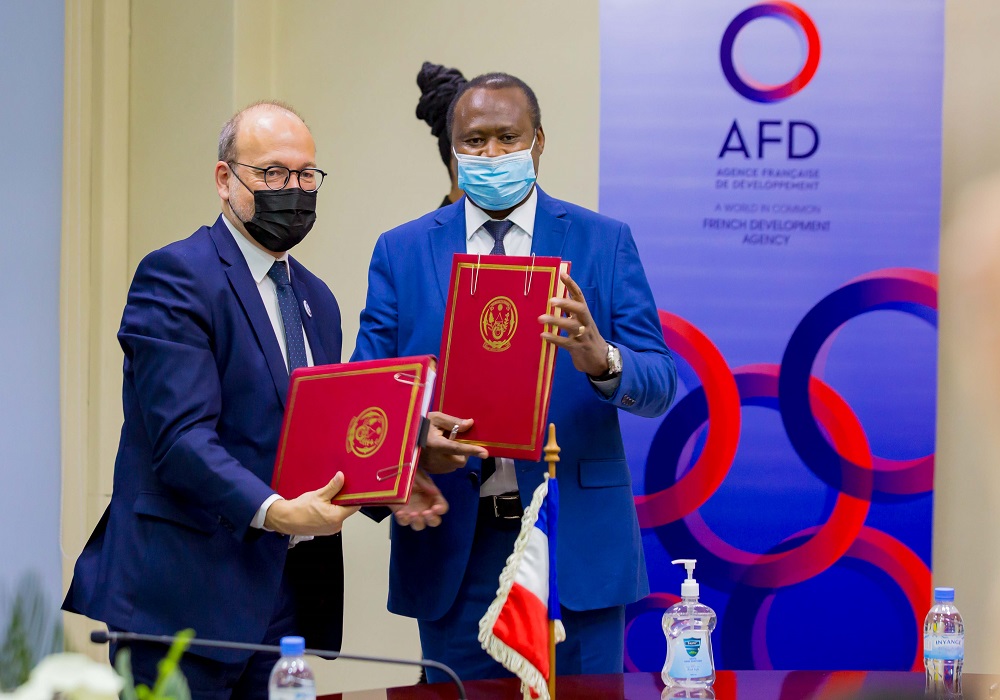
The budgetary financing will support Rwanda’s COVID-19 health response plan through vaccine purchase and distribution as well as Social Protection Response Plan.
The financing agreement was signed by Dr. Uzziel Ndagijimana, the Minister of Finance and Economic Planning, on behalf of Government of Rwanda and Chief Executive Officer Mr. Rémy Rioux, on behalf of AFD.
This financing will make it possible in particular to support the health system priority measures of increasing detection and diagnostic capacities, enhancing the case management capacity, and ensuring continuity of patient cares especially for pregnant women.
The financial support will also help to strengthen social protection response plan which is structured to support three core areas that include strengthening and extending existing Vision Umurenge Program delivery system; setting up a direct support system for the informal sector; and establishment of complementary support measures to preserve the access of the poorest to education and basic health care.
In his remarks after the agreement signing, Minister Ndagijimana said: “This support comes at a critical moment as Rwanda looks forward to reopening its economy and return to pre COVID-19 pandemic normalcy. It will augment our COVID-19 vaccine purchase efforts, reinforce our health and social protection systems thereby ensuring proper handling of COVID-19 pandemic and beyond but also protecting vulnerable people.”
Mr. Rémy Rioux, the AFD’s Chief Executive Officer said the support reinforces existing efforts.
“While Covid-19-related mortality was brought under control in the country by strong and exemplary measures of containment, the social and economic consequences, particularly for precarious workers in the informal sector, need to be addressed.AFD, via its Health in Common initiative, is therefore keen to support Rwanda in its social protection measures to limit the effects of the crisis on the most vulnerable populations,” he noted.
AFD has since the beginning of COVID-19 pandemic strengthened its bilateral cooperation with Rwanda.
So far AFD has provided a budget support worth Euro 40 million and project support worth Euro 80 million for energy access as well as Euro 5.8 million for technical and vocational education.
Currently both countries are exploring several areas of cooperation that may include Energy, digital transformation, Education, health, private sector development among others.
The Centre is located near Kigali Convention Center, Kimihurura Sector, Gasabo District. The center was initially expected to be inaugurated in 2020 but construction activities delayed and were completed in April 2021 due to COVID-19.
The former French Cultural Center building used to be called ‘Centre D’Echanges Culturels Franco-Rwandais’ and was located in Kiyovu, nearby the city center’s main roundabout.
It was closed in 2014 by Kigali City Officials because the structure was not in line with the new City Master Plan.
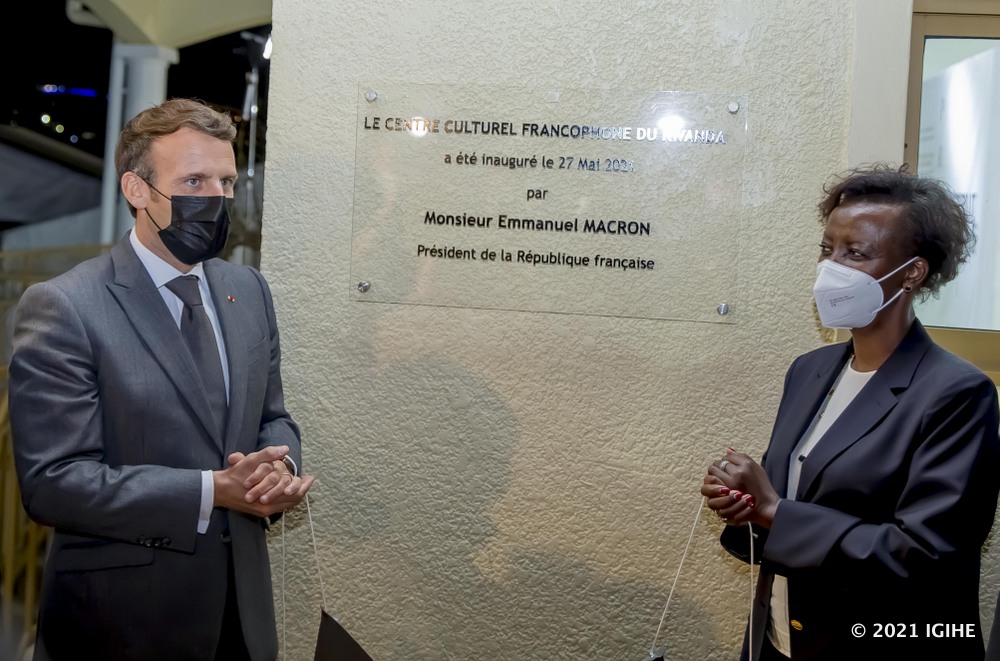
As he inaugurated the center yesterday on the first day of his visit to Rwanda, Macron said that it should be a place to promote French language, culture and and innovations.
“French language has become an international language through invention, innovation, conquest, colonization, ambitions of French people in the past centuries to make it a dominant language […] The good thing is that French language was reinvented and spoken in many countries,” he said.
“There are men and women writing in French, innovating in their language, reinventing it and the center of that language is based in Africa with presence of very young and dynamic French writers and speakers,” he added.
Since 2014, the cultural center office was in France’s Embassy in Rwanda, where its activities like entertainment and book reading were held in Kigali Public Library and the Goethe Institute in Nyarugenge District.
It has a section dedicated to learning French, culture-based training and providing official French language certification, boasts a large outdoor stage that can host shows and concerts.
The French Cultural Centre will also host cinema screenings for the general public, and workshops among others.
Macron said that Rwanda’s youth should tap into opportunities presented by the French Cultural Center noting that they also stand chance to get scholarships in coming years.
Macron arrived in Rwanda on 27th May for a two-day official visit.
Upon arrival, he visited Kigali Genocide Memorial and later participated in a joint press conference with his counterpart of Rwanda, Paul Kagame.
His coming to Rwanda is considered a major milestone to turning a new page for both countries relations blurred by France’s failure to admit its role during the 1994 Genocide against Tutsi.
As he visited Kigali Genocide Memorial on Thursday, Macron admitted his country’s responsivity during the Genocide .
“Standing here today, with humility and respect, by your side, I have come to recognize our responsibilities,” said Macron.
He said that France had a duty to admit the “suffering it inflicted on the Rwandan people by too long valuing silence over the examination of the truth.”
Macron said that only those who had survived the horrors “can perhaps forgive; give us the gift of forgiveness”.
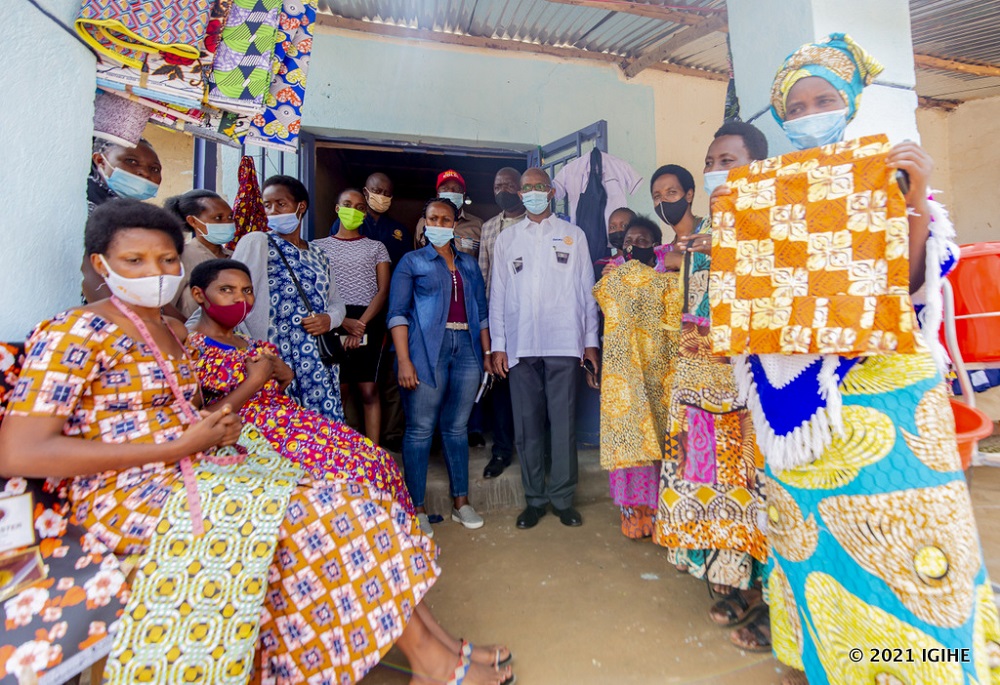
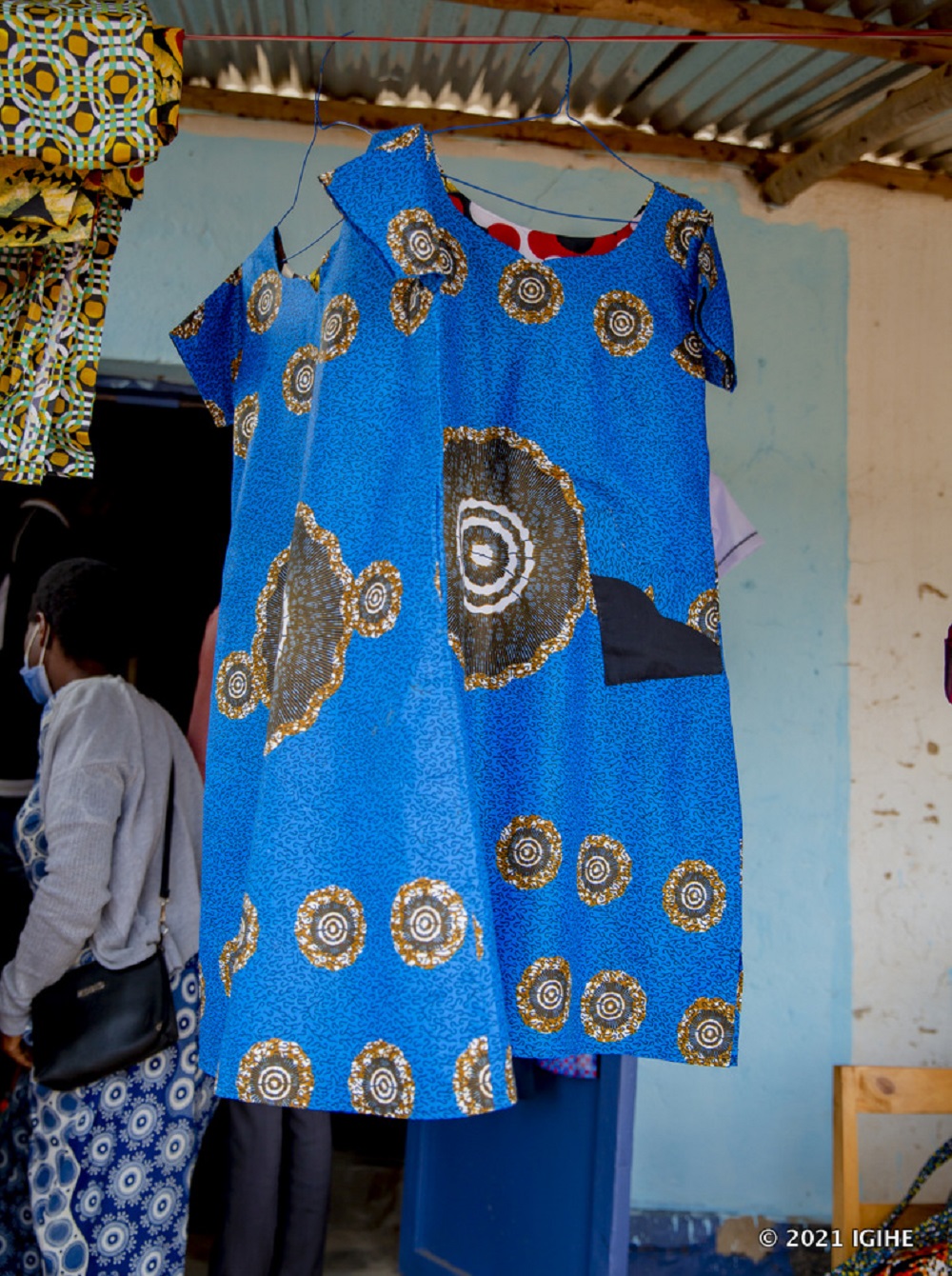
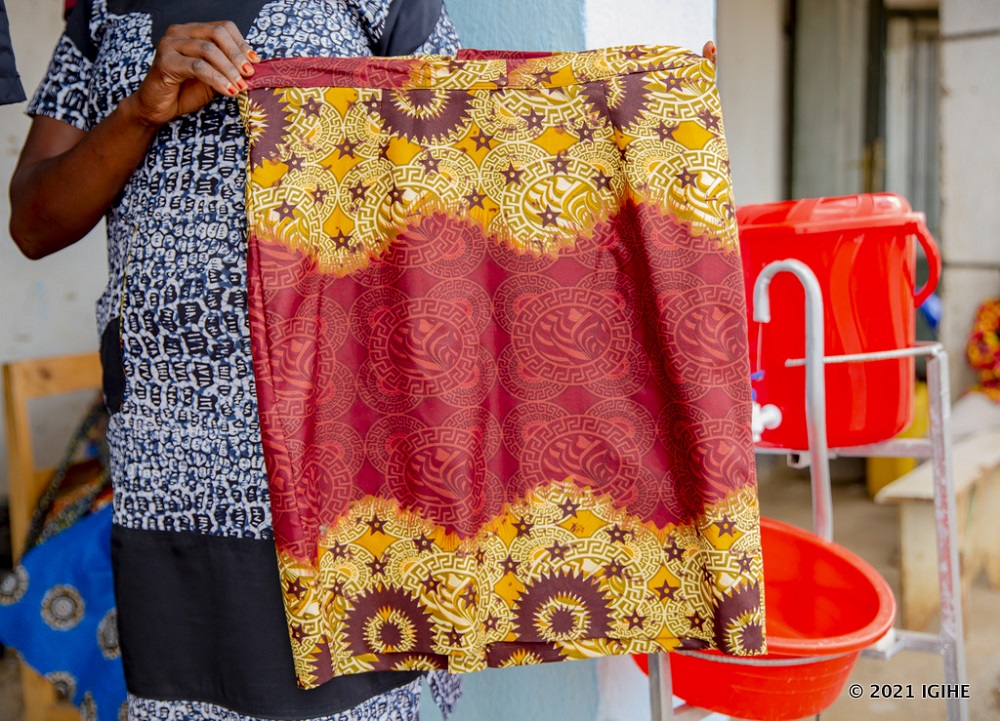
These beneficiaries made the revelation on 22nd May 2021 as the committee of Rotary Club Kigali Mont Jali visited them at their respective working sites in Kinyinya sector, Gasabo district to witness how their sewing projects have brought positive transformations to their lives.
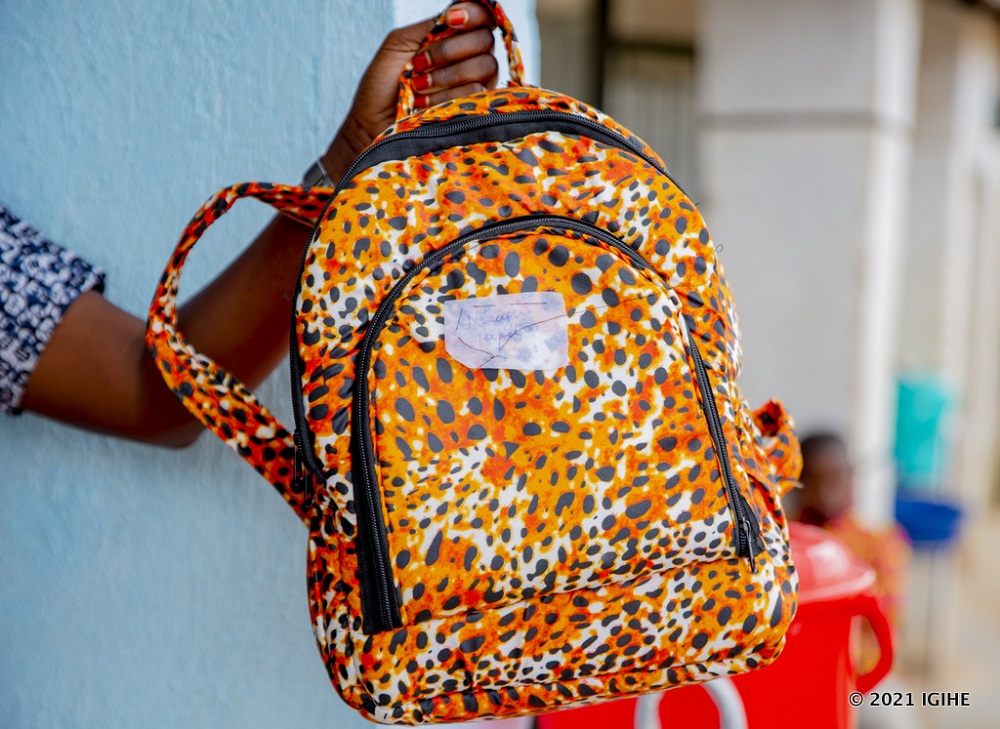
Initially, Rotary Club Kigali Mont Jali provided 10 sewing machines and other necessary equipment to 10 vulnerable residents in Kabeza cell, Kanombe sector in Kicukiro district who were also equipped with tailoring skills and started working in November 2019.
The second batch of 10 beneficiaries from Batsinda cell, Kinyinya sector in Gasabo district receiving sewing machines in January 2021 after acquiring relevant skills.
Selected beneficiaries include mothers whose children’s education is funded by Rwanda Children Educational Foundation (RCEF). The organization which promotes education among vulnerable families trained beneficiaries on tailoring techniques.
The Head of Small and Medium Enterprises at RCEF, Jean Pierre Ntirenganya thanked Rotary Club Kigali Mont Jali for supporting these residents to attain transformed livelihoods.
“RCKMJ has walked with us from the beginning until they completed training. Today, they are no longer learning but have acquired hands-on skills used to generate income,” he said.
The President of Rotary Club Kigali Mont Jali, Gérard Handika also commended RCEF for bringing together beneficiaries which contributed to the success of the programme.
“We want them to continue working courageously. More great things will come their way as they get more resources,” he noted.
Beneficiaries who spoke to IGIHE said they were hit hard and had no hope for improved livelihoods until donors introduced the project.
Now, they speak with a voice of hope and optimism for ever-lasting transformations.
“I received the sewing machine in 2019 at a time when I could not afford children’s school fees. Today, the situation has changed. I pay school fees, feed my family, wear smart clothes and sew for my children as well,” said Peace Mukagakwaya.
Gertrude Musabyimana was a street vendor before receiving a sewing machine.
“I am grateful to donors from the bottom of my heart. I no longer feel isolated because I have been capacitated to generate income like other entrepreneurs. I have turned into a smart resident leading decent life, accessing basic needs and helping members of the community to wear smart clothes,” she revealed.
RCEF was created in 2013 and licensed by Rwanda Governance Board (RGB) in 2017. Today, it provides school fees and for over 120 students, subscribes them for Mutuelle de Santé and gives them necessary kits as well.
In 2019, Rotary Club Kigali Mont Jali celebrated 20 years since it launched humanitarian assistance programs to promote Rwandans’ welfare in general.
Rotary Club Kigali Mont Jali was established in 1999 as a subsidiary of Rotary Club Kigali Doyen, which was launched in Rwanda 50 years ago.
Like other rotary clubs, Kigali Mont Jali focuses on providing support to addressing problems facing the world by combating illiteracy and poverty, contributing to the provision of safe water, handling disputes, fighting outbreaks and combating through the provision of poliomyelitis vaccinations among other activities supporting the needy.
The operation was conducted on Wednesday, May 26, in collaboration with local leaders following information provided by residents.
They were all apprehended in Ruyaya Village, Gacurabwenge Cell of Byumba Sector.
Gicumbi District Police Commander (DPC) Superintendent of Police (SP) Jean Bosco Minani said the racket has been breaking into people’s houses at night stealing assorted valuables.
“There have been a number of burglaries and rackets ambushing residents at night snatching their valuable belongings. Through collaboration with local authorities and residents, Police managed to compile names of individuals, who belong to the same group of thieves, which facilitated the successful operation,” said SP Minani.
Majority of the suspects, the DPC said, are recidivists, who were either released from prison or transit centre for related crimes.
SP Minani lauded the importance of community poling, particularly neighbourhood watch and sharing information in real time to jointly address challenges of lawlessness.
“If you suspect someone to be engaged in any criminal act or planning one, always be quick to share the information; Police will act swiftly to authenticate the information and help to foil any planned crime or arrest anyone connected to a specific identified crime,” said the DPC.
They were caught with about 1000 litres of an illicit drink called Nyirantare, according to Superintendent of Police (SP) Theobald Kanamugire, the Police spokesperson for the Southern region.
SP Kanamugire said the names of producers and sellers of illicit brew were compiled by local leaders and residents.
“At the home of one of the suspects, Theophile Shumbusho, 33, Police recovered 350 litres of Nyirantare brew. Another four dealers; Jacques Bampenda, Janvier Rwamakuba, Andre Murangwa, and Claude Minani Mugaga were found with 120 litres each while one Jean Baptiste Hishamunda had 160 litres,” said SP Kanamugire.
He added that all the six suspects had bars in their respective homes where they were selling the susbtances.
Article 5 of the Ministerial order Nº 001/MoH/2019 of 04/03/2019 establishing the list of narcotic drugs and their categorisation classifies alcoholic drinks produced without complying with standards and other laws; on the list of simple narcotic drugs.
The seized substances were disposed of.
SP Kanamugire urged the public to stop producing and consuming the harmful drinks and report those who operate these illegal distilleries.
“Continuous operations targeting illegal distilleries and local bars in the region selling these substances have been enhanced, so we warn everyone still dealing in producing or selling illegal brew to stop.
These harmful substances influence other criminal practices as well as domestic and sexual violence.”
He further reminded that bars are still closed under the government directives on prevention Covid-19 spread.
Article 263 of the law determining offences and penalties in general states that; any person who, unlawfully produces, transforms, transports, stores, gives to another or who sells narcotic drugs and psychotropic substances, commits an offence.
Upon conviction, he/she is liable to imprisonment for a term of not less than seven years and not more than ten years and a fine of not less than Rwf5 million and less than Rwf10 million in regard to “simple narcotics.”
The statement released last night shows that 26 people have caught the virus while 84 recovered.
Rwanda confirmed the first Coronavirus case on 14th March 2020. Since then, 26 843 people have been tested positive of whom 25 453 have recovered, 1039 are active cases while 351 have succumbed to the virus.
A total of 350, 400 people have been vaccinated since Rwanda began countrywide inoculation programme on 5th March 2021.
Coronavirus symptoms include coughing, flu, and difficulty in breathing. The virus is said to be transmitted through the mucous membranes of the respiratory tract.
Rwandans are urged to adhere to COVID-19 health guidelines, washing hands frequently using soaps and safe water, wearing face masks and respecting social distancing.
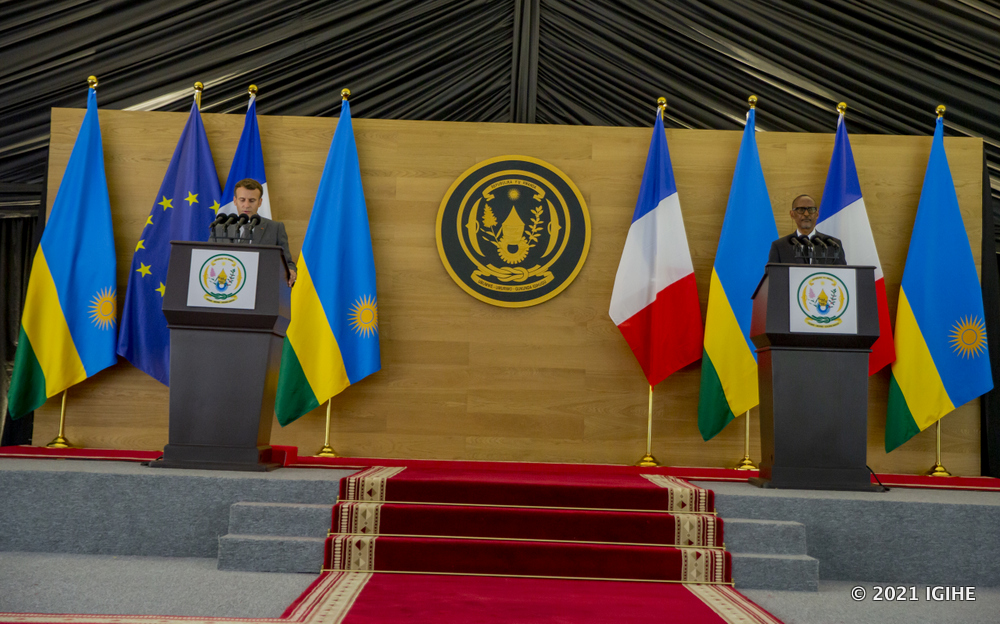
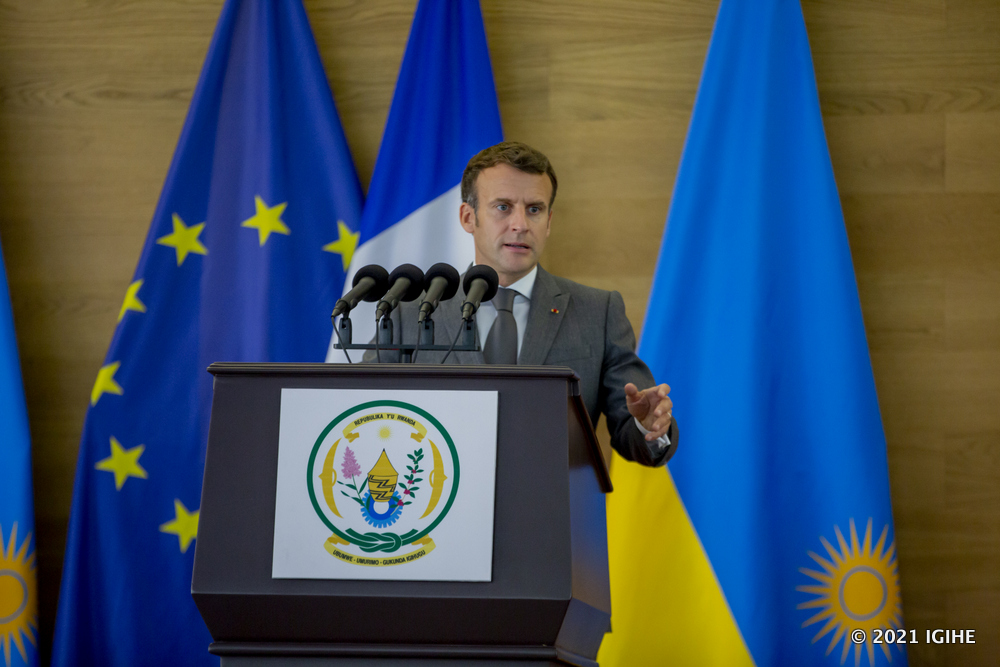
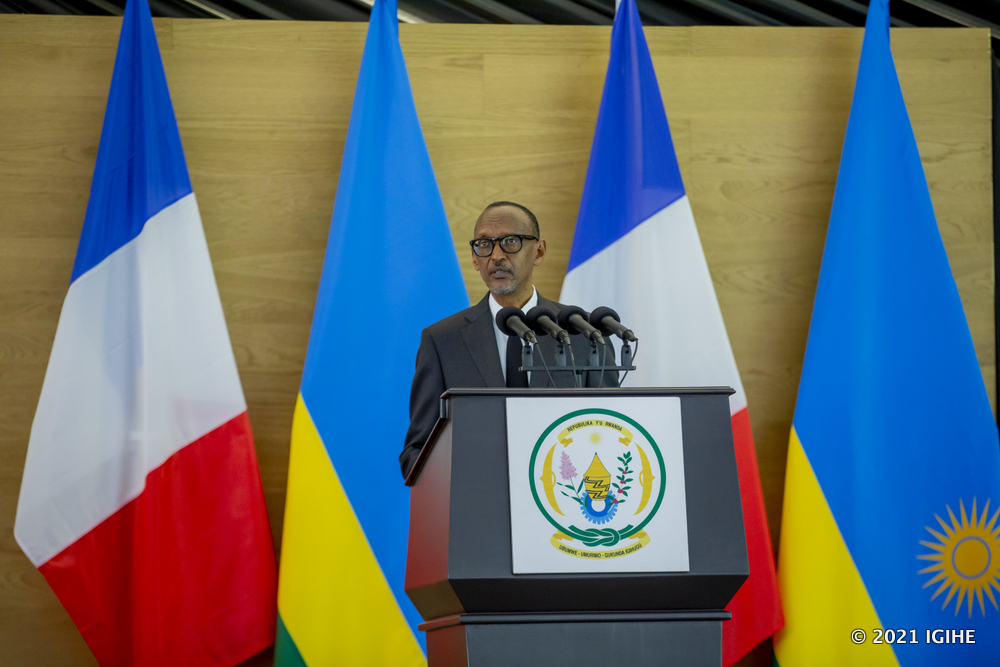
Kagame made the appreciation today in a joint press conference with Macron on his the first day of his visit to Rwanda.
Kagame said that Macron’s visit is a moment to speak to the present and to the future, while reflecting on the past ‘that brought us here’.
He highlighted the visit paves the way for improved bilateral relations to the benefit of both countries’ peoples, economically, politically, and in terms of culture.
France and Rwanda are going to relate much better, to the benefit of both our peoples, economically, politically, and in terms of culture.
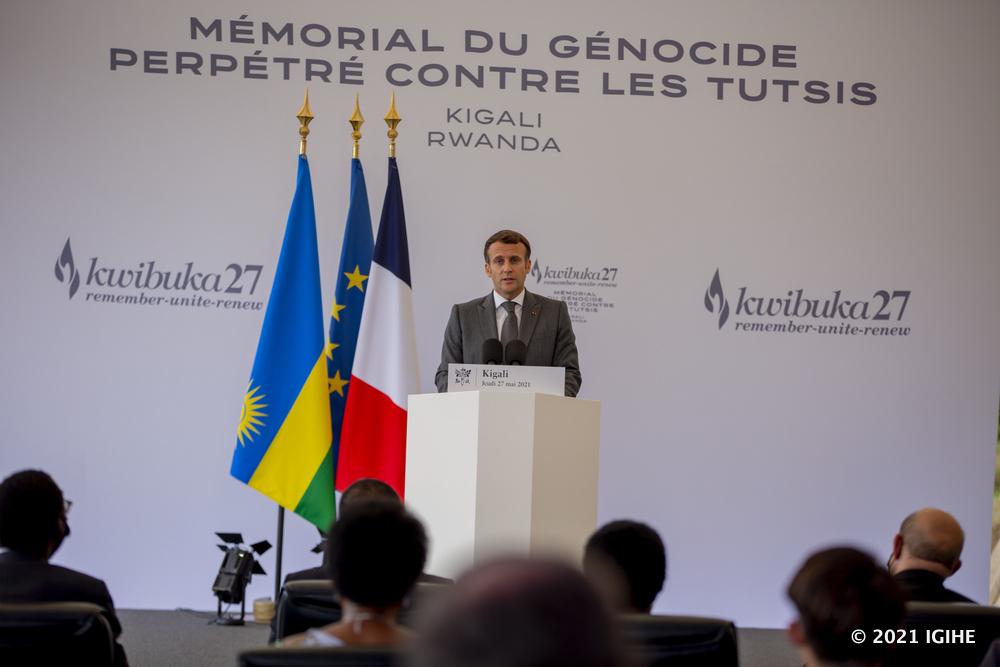
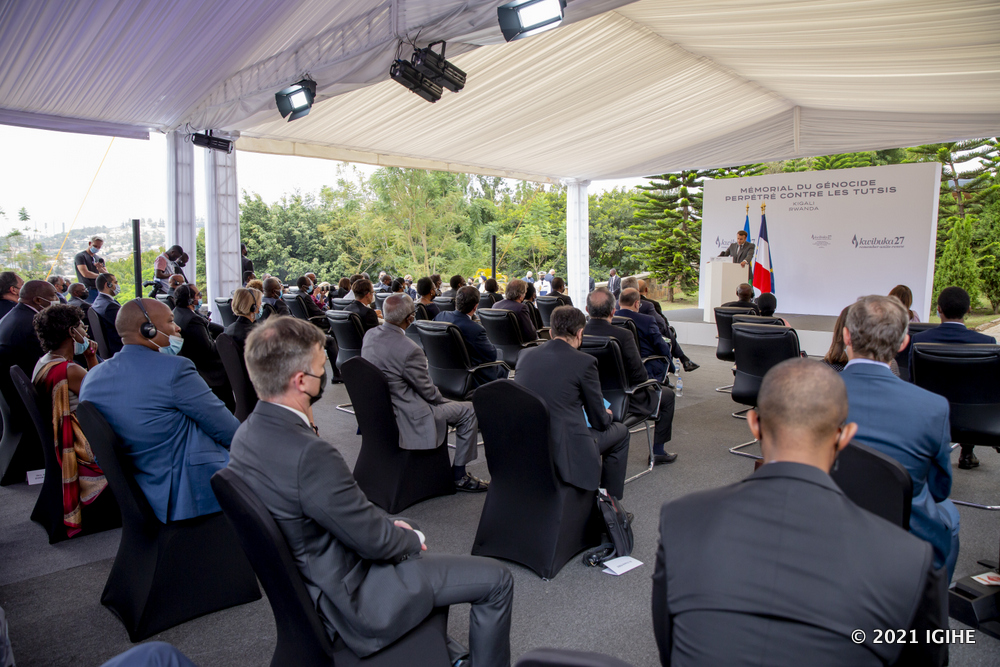
As he arrived in Rwanda for two-day state visit; French President, Emmanuel Macron visited Kigali Genocide Memorial where he paid tribute to over 250,000 victims laid there and later delivered a speech during which he admitted his country’s role in the 1994 Genocide against Tutsi and reiterated commitment to bring Genocide fugitives to face justice.
“Standing here today, with humility and respect, by your side, I have come to recognize our responsibilities,” said Macron.
He said that France had a duty to admit the “suffering it inflicted on the Rwandan people by too long valuing silence over the examination of the truth.”
Macron said that only those who had survived the horrors “can perhaps forgive; give us the gift of forgiveness”.
Speaking during a joint press conference, Kagame observed that Macron made a powerful statement at the memorial considered more valuable than an apology.
“The President has just made an important statement at the Kigali Genocide Memorial. This was a powerful speech, with special meaning for what is taking place now, and which will resonate well beyond Rwanda. His words were something more valuable than an apology: they were the truth,” he said.
“Speaking the truth is risky. But you do it because it is right, even when it costs you something, even when it is unpopular,” added Kagame.
Kagame stressed that Macron has made a major step towards truth and hailed the tremendous courage.
“Despite some loud noises and voices, President Macron took this step. Politically and morally, this was an act of tremendous courage. These risks paid off because there was good faith on both sides,” he noted.
“It was important not to rush the process. The facts had to be properly established. Our respective societies also needed the chance to debate and deliberate. One step led to another. And that is how we got to this point, which is itself another step, and a major one,” stated Kagame.
The President said that individuals from Rwanda and France have kept asking questions, year after year, demanding clarity. They come from civil society, academia, and journalism.
He explained that some of them are simply concerned citizens.
“We would not be here today without their tireless efforts, and I wish to record our profound thanks and appreciation. The truth heals. This is the principle upon which Rwanda’s entire project of national unity and reconciliation is based. That has been our experience as Rwandans. There is no shortcut,” stated Kagame.
{{Full speech}}
First, I want to welcome you, President Macron, my friend, and your delegation, to Rwanda.
Today is a moment to speak to the present and to the future, while reflecting on the past that brought us here.
The President has just made an important statement at the Kigali Genocide Memorial. This was a powerful speech, with special meaning for what is taking place now, and which will resonate well beyond Rwanda.
His words were something more valuable than an apology: they were the truth.
Speaking the truth is risky. But you do it because it is right, even when it costs you something, even when it is unpopular. Despite some loud noises and voices, President Macron took this step.
Politically and morally, this was an act of tremendous courage.
These risks paid off because there was good faith on both sides. It was important not to rush the process. The facts had to be properly established. Our respective societies also needed the chance to debate and deliberate. One step led to another. And that is how we got to this point, which is itself another step, and a major one.
In Rwanda and France, so many individuals, who are too numerous to name, have kept asking questions, year after year, demanding clarity. They come from civil society, academia, and journalism. Some are simply concerned citizens. We would not be here today without their tireless efforts, and I wish to record our profound thanks and appreciation.
The truth heals.
This is the principle upon which Rwanda’s entire project of national unity and reconciliation is based. That has been our experience as Rwandans. There is no shortcut.
Our conviction, from the beginning, was that the process of reckoning with the role of France had to follow the same logic. And in any case, we knew it could not be harder than reconciling with ourselves.
No grain of truth has been sacrificed. But the weight of responsibility has been put back where it belongs: with those who made the decisions. Whether or not there are trials, justice is also rendered by the court of history. And the work of historical documentation must continue, jointly.
This quest for truth has occurred in the context of the complexity of the challenges that Rwanda has faced over the last 27 years. Rwanda could easily have remained a failed state. Some may even have felt vindicated by that. Others actually worked to make sure that Rwanda failed.
But we worked together as a nation to design solutions for our unique challenges. And indeed, on every dimension, including human rights, the Rwanda of today is objectively a nation transformed for the better. We continue to exist as a united people, against all odds. And we are constantly striving to be better still.
There is a way of looking at Africa, from the outside, that automatically associates every success with some huge cost in terms of fundamental values and freedoms.
This is not to say that Africa has no bad actors. It does. They are there; they may even be numerous. But no more so than everywhere else in the world. The difference is that Africa as a whole comes to be defined by those bad actors, whereas elsewhere, these bad actors are exceptions.
This assumption creates a reference point where Africa is always down, while others are up. It secures those others in the conviction that they have a natural right to do and say whatever they want in relation to Africa, to give lessons and pass judgment on our choices. Unfortunately, some of our own in Africa also participate in this negative enterprise.
The dynamic goes on almost forever, as if it is unstoppable or inevitable. But it is not. You stop it by doing what you believe is right, and which, in the end, may indeed prove to be right.
The veneer of moral superiority is very thin, once you start to scrape at it. Beneath it hides racism, a denial of the intrinsic and equal worth of every human being. It was racism that made a foreseeable genocide in Africa seem tolerable.
Racism and genocide ideology exist on the same continuum. They are forms of dehumanisation, and they pose a growing threat to society in every continent. Our civilised world must come together to fight racism and genocide ideology in a concerted and consistent fashion.
There are attitudes inherited from the past that have needed to change, for a long time. And I want to say that President Macron is among those who realised that things need to change, and he is taking a strong stand in trying to bring about that change.
It is not about speaking on Africa’s behalf, but rather ensuring that the voices of Rwandans and Africans can join together with the rest of the world in pursuit of common objectives, irrespective of where we come from.
President Macron is someone who listens, and he is committed to supporting Africa based on what Africa itself has chosen. This is different, it is better, and it can last.
Fundamentally, this visit is about the future, not the past.
France and Rwanda are going to relate much better, to the benefit of both our peoples, economically, politically, and in terms of culture.
But the relationship between our two countries will never be entirely conventional. There is a special familiarity resulting from the complex and terrible history we share, for better or for worse. We have chosen to make it for the better.
We wish to form a strong and sustainable relationship, based on priorities that matter to both Rwanda and France. This includes many of the items discussed in our bilateral meeting today, such as investment, digitisation, gender equality, climate change, cultural exchange, and support for entrepreneurship, small businesses, start-ups, and especially youth empowerment. Rwanda shall be a strong partner in all of these areas.
Mr President, I once against thank you and your delegation for being with us here today. I thank everyone who is here for your kind attention. I now invite my friend President Macron to make his statement, and then we will be happy to take your questions.
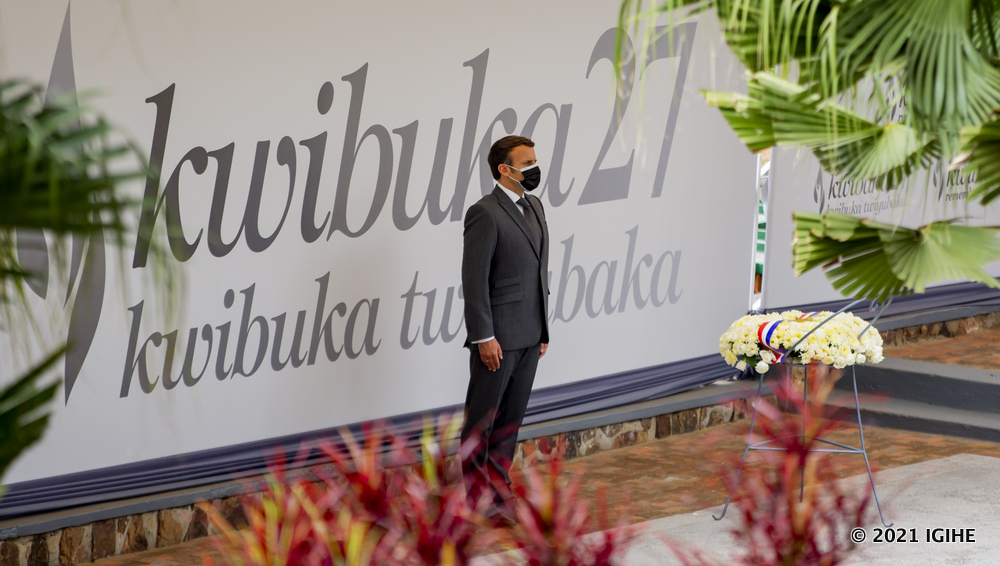
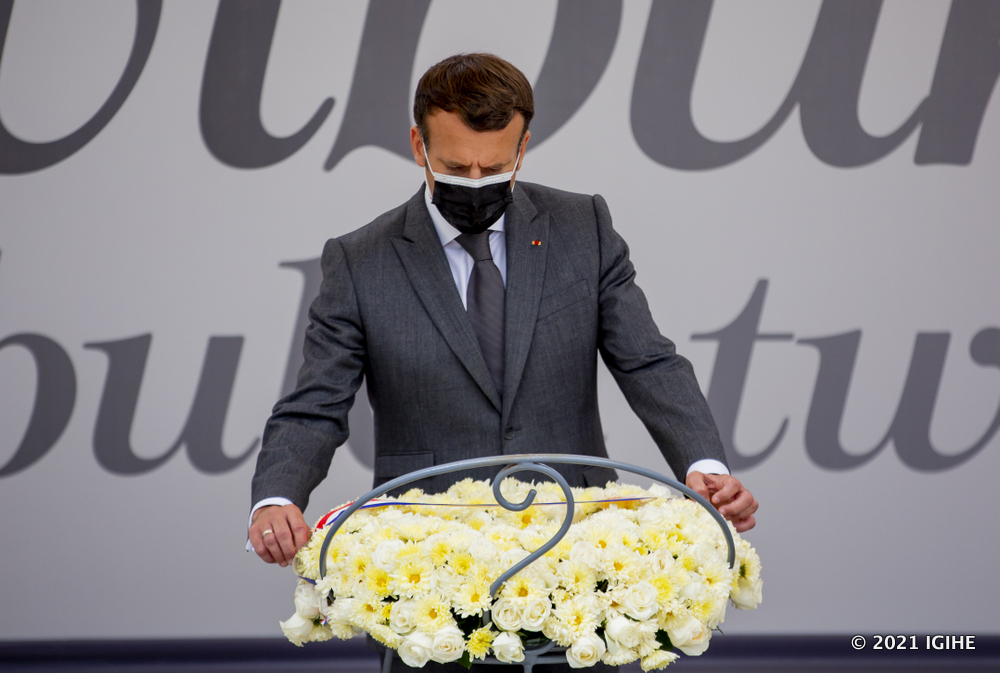
Macron admitted to French guilt over its role during Genocide against Tutsi today as he visited Kigali Genocide Memorial located in Gisozi where more than 250,000 victims are laid to rest.
“Standing here today, with humility and respect, by your side, I have come to recognize our responsibilities,” said Macron.
He said that France had a duty to admit the “suffering it inflicted on the Rwandan people by too long valuing silence over the examination of the truth.”
Macron said that only those who had survived the horrors “can perhaps forgive; give us the gift of forgiveness”.
Rwanda, France relations deteriorated after the 1994 Genocide against Tutsi. Macron is the first French leader to visit the country in ten years.
“France did not listen to those who warned it about the impending extermination in Rwanda and stood de facto by a genocidal regime,” Macron said.
He stated that France “was not an accomplice” in the genocide but ended up siding with Rwanda’s “genocidal regime” and bore an “overwhelming responsibility” in the slide toward Genocide.
When the genocide started, “the international community took close to three months, three interminable months, before reacting and we, all of us, abandoned hundreds of thousands of victims”.
“France’s failures contributed to “27 years of bitter distance” between the two countries,” he said.
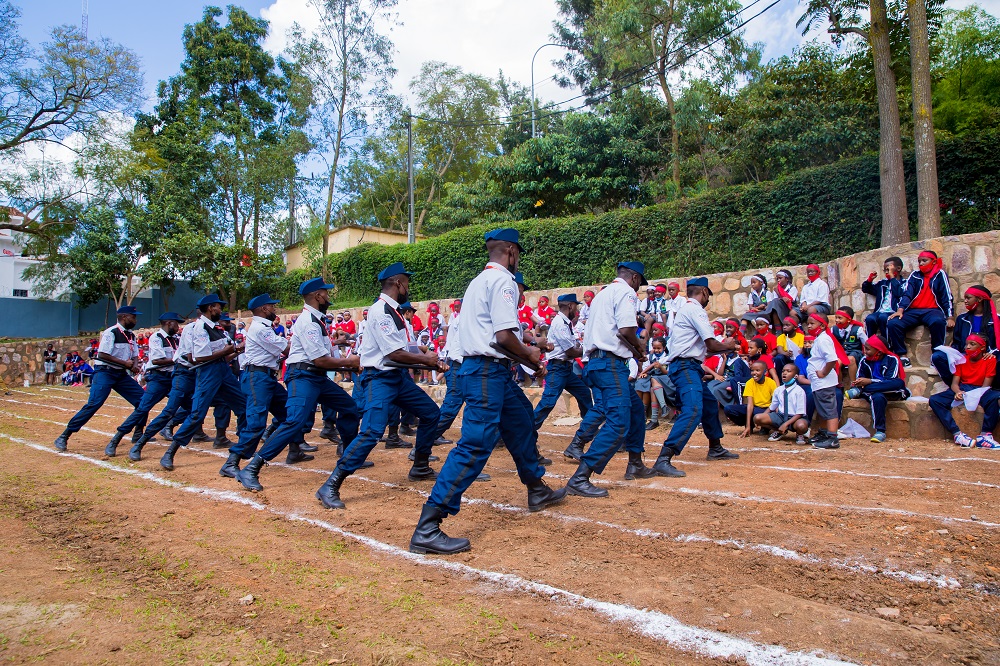
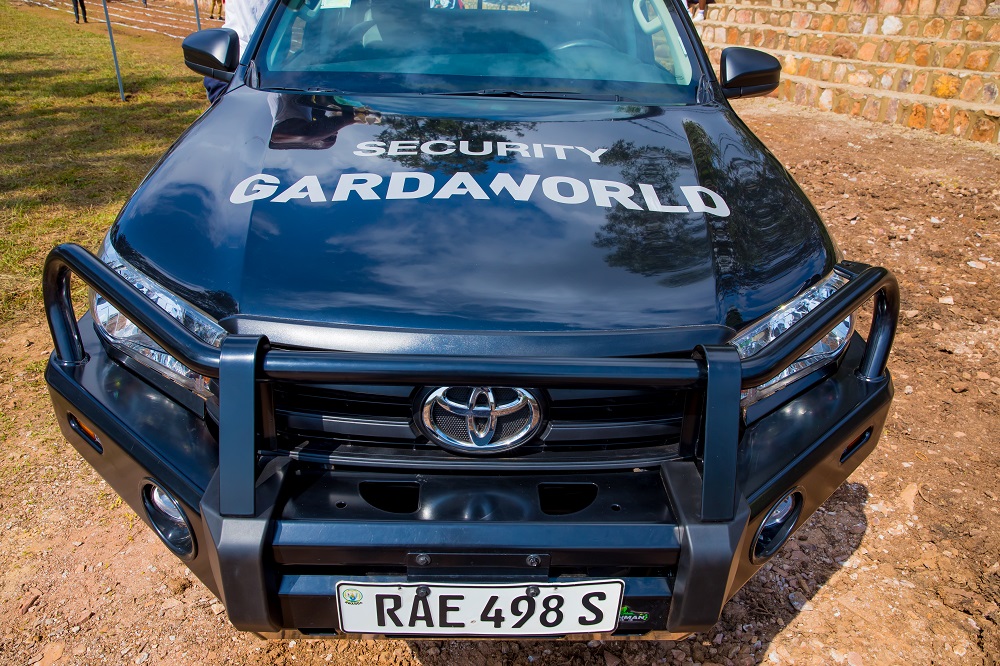
The company was unveiled on Friday 21st May 2021 during a ceremony graced by Rwanda Development Board (RDB) officials who assured continued support to tap into presented investment opportunities.
Operating in 15 countries across the world, the company subsequently acquired Agespro in 2016 and KK Security in 2020 2020 but remained trading under their respective brand names.
Speaking during the official launch of Gardworld operations in Rwanda, Tuyishimwe Pacifique, the Ag Investment Officer at RDB urged the security firm to come upwith innovations on Rwanda’s market.
“I would like to express gratitude for your commitment to invest in Rwanda. Rwanda remains open for all investors with inspiring vision. It is a huge opportunity to invest in Rwanda as one of safest countries,” he said.
Gardaworld Managing Director for East Africa, Nicolas Arnold explained that they were inspired by the country’s security and provided conducive business environment to invest in Rwanda.
Oliver Westmacott, President, and COO of GardaWorld Security Services- Middle East and Africa revealed that acquiring two reputed security firms reflects their vision and aspirations to improve efficiency.
“ It is becoming evident that we are achieving our goals in Africa, Rwanda , the region and internationally. We are excited to continue expanding and look forward to deepening our relationship with Rwanda and her people. GardaWorld looks forward to contributing positively to the Rwandan economy in the years to come,” he noted.
Westmacott reiterated commitment to intensify training to enhance professionalism and improve employees’ welfare through recognition of best performers and promotions.
With more than 3,700 security staff in Rwanda, GardaWorld takes pride as one of leading security companies in the country.
Apart from security, the company also offers fire extinguishing solutions and services, training on environment preservation, medical evacuation support, flight security and cyber equipment among others.
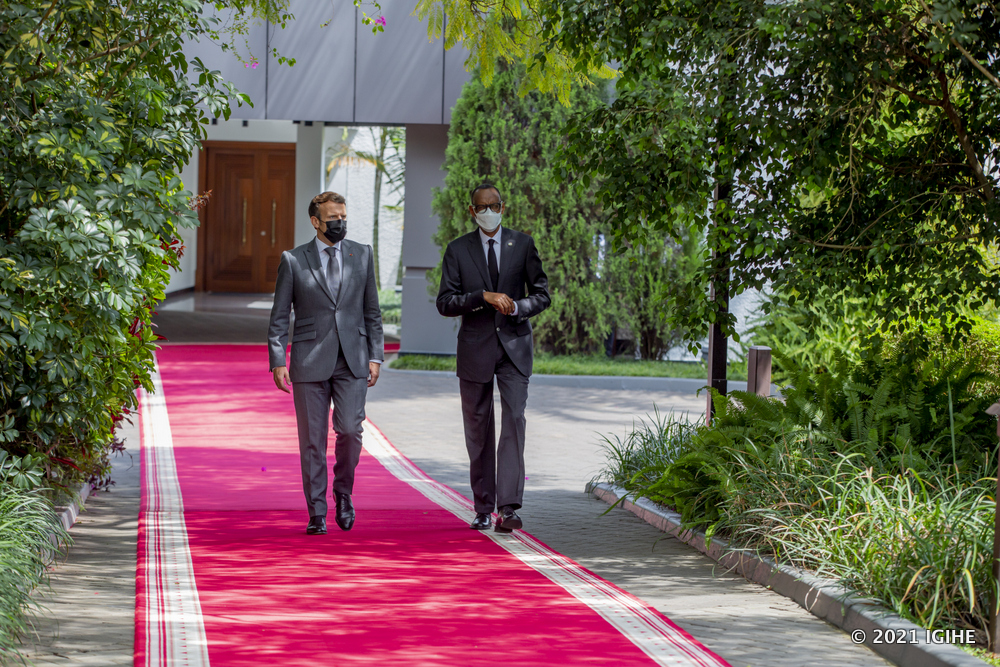
As he arrived at Kigali International Airport today morning, Macron was welcomed by Rwanda’s Minister of Foreign Affairs and International Cooperation, Dr. Vincent Biruta.
He was later welcomed by his counterpart of Rwanda, Paul Kagame at Village Urugwiro around 9am from where he headed to Kigali Genocide Memorial.
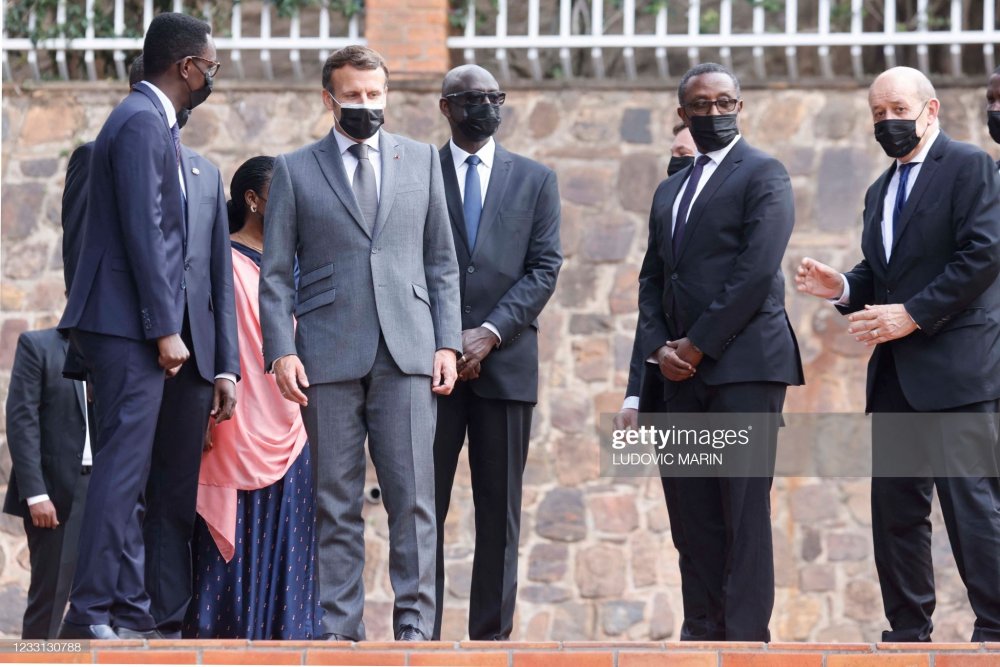
At the memorial, Macron has been welcomed by the Minister of Justice and State Attorney General, Johnston Busingye and the Minister of Foreign Affairs, Dr. Vincent Biruta among others.
Before laying wreaths at the mass graves, Macron toured different facilities at the memorial to learn more about tragic history that led to the 1994 Genocide against Tutsi.
Macron is the second French President visiting Kigali Genocide Memorial after Nicolas Sarkozy in February 2010.
The Minister of Foreign Affairs, Jean-Yves Le Dria and parliamentarians including Hervé Berville hailing from Nyamirambo in Rwanda are among top officials accompanying Macron on his historical visit.
Macron is in Rwanda for two-day maiden visit since he took office in 2017.