The two sectors were placed under lockdown after registering upsurge in new COVID-19 cases.
The statement signed by the Minister of Local Government, Jean Marie Vianney Gatabazi dated Tuesday 1st June 2021 reads that lockdown has been lifted in the two sectors effective 2nd June 2021.
The Ministry urged the general public to continue adhering to COVID-19 preventive measures and reminded them that movements in Karongi district are prohibited from 7pm to 4am.
“Grass root leaders are urged to follow up compliance with these guidelines,” reads the statement in part.
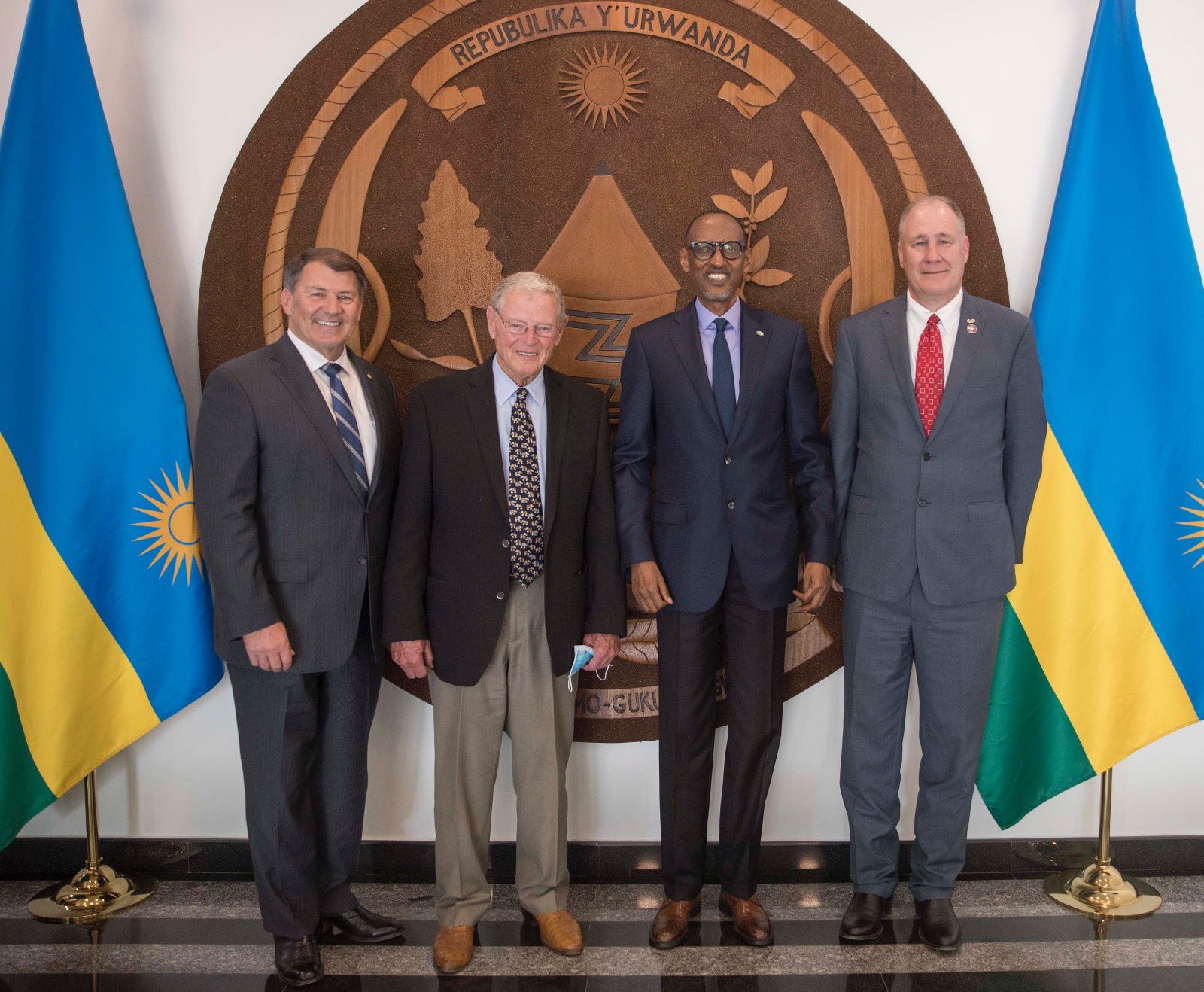
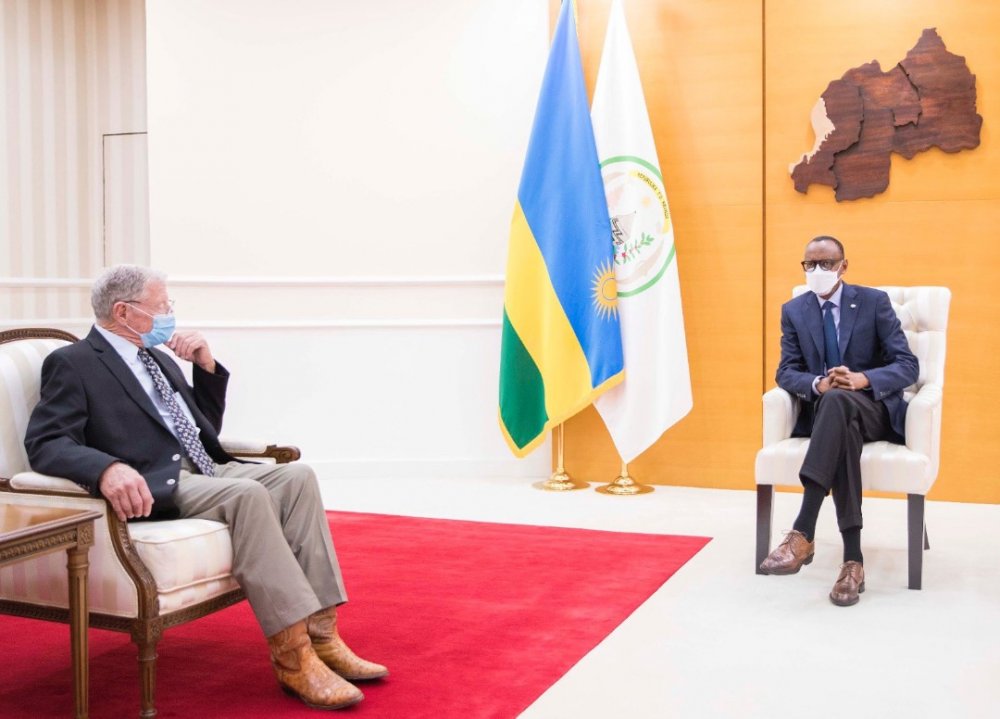
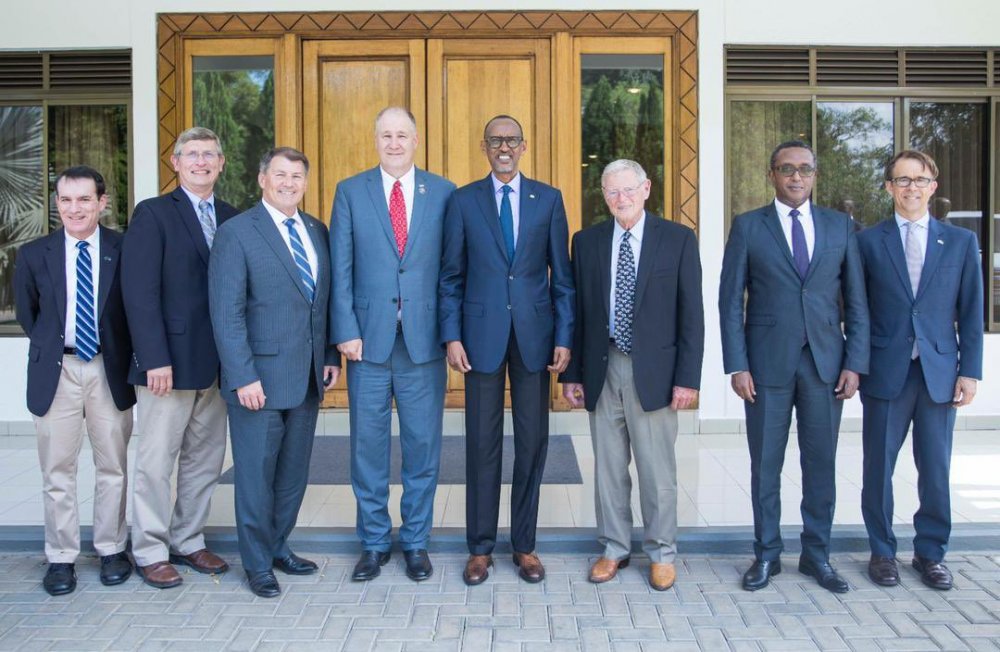
The Presidency has via Twitter handle revealed that discussions took place at Village Urugwiro but didn’t point out areas of discussions.
Senator James ‘Jim’ Mountain Inhofe, 86, who led the delegation has been representing Oklahoma State since 1994.
In 2018, he presented President Kagame’s outstanding achievements including the liberation struggle to stop Genocide to US Senate. Inhofe is also known for his interest in African affairs.
At the time, Inhofe said that he has friendship with many leaders on African continent including Head of States and Prime Ministers noting that there are special reasons pushing him to dedicate time to talk about one particular individual who is President ‘Paul Kagame’.
He started with the 1994 Genocide against Tutsi that took lives of over 1 million victims who were heinously killed within 100 days.
Senator Inhofe said that UN troops deployed in the country abandoned victims while the international community remained silent including Bill Clinton who was leading America at the time.
“It stopped because of one man who is Paul Kagame along with a group of Rwanda refugees from Uganda whose parents fled the country’s mass violence three decades before,” he said.
He explained that there were two choices after stopping Genocide including revenge or forgiveness and reconciliation but ‘he chose the last option’ for Rwandans to have a common future.
During his recent visit to Rwanda, he commended Rwanda’s cleanliness, registered development in terms of infrastructure, growing of tea, coffee, security and steadfast economy.
Senator Inhofe explained that Kagame has changed Africans’ mindsets to foreigners not because he doesn’t want to work with them but encouraging them to develop home grown solution towards achieving self-reliance.
Inhofe visited Rwanda at different times and held talks with President Kagame.
The taxi-moto was recovered on May 30, from two suspected thieves, who were also arrested.
The acting District Police Commander for Musanze, Chief Inspector of Police (CIP) Speciose Kayitesi identified the arrested prime suspects as Alexandre Tuyizere and Florence Nabana.
In the evening of May 29, at about 7pm, Bizimana, who was transporting a passenger, was ambushed by a group of people as he arrived at what was allegedly the final destination of the passenger in Cyuve Sector, Karwasa Cell.
The group of thieves assaulted Bizimana before stealing his motorcycle and mobile phone.
CIP Kayitesi said that during the attack, Bizimana and some residents who had come for his rescue, managed to identify one of the members of the Tuyizere.
“With information on one of the prime suspects, Police tracked down Tuyizere and arrested him on May 30, Gacaca Sector, Karwasa in Kavumu Village.
Tuyizere later led Police officers to the house of Florence Nabana in the same area, where they recovered the motorcyle and the latter also taken into custody,” CIP Kayitesi said.
She added that the search for other members of the criminal group is still under way.
Tuyizere and Nabana have been handed over to RIB at Cyuve station.
Article 166 of the law determining offenses and penalties in general states that any person convicted of theft is liable to imprisonment for a term of not less than one year and not more than two years and a fine of not less than Rwf1 million and not more than Rwf2 million, community service in a period of six months or only one of these penalties.
The penalty for theft doubles if: theft is carried out during the night or by more than one person.
Under article 168, if theft is carried out with violence or threats, the penalty is an imprisonment for a term of not less than five (5) years and not more than seven (7) years and a fine of not less than Rwf3 million and not more than Rwf5 million.
The statement released last night shows that 60 people have caught the virus out of 4382 sample tests while 167 recovered.
Rwanda confirmed the first Coronavirus case on 14th March 2020. Since then, 27 023 people have been tested positive of whom 25 850 recovered, 816 are active cases, three are critically ill while 357 have succumbed to the virus.
The Ministry has reported that 188,768 people have received the second vaccine shot including 21,082 inoculated yesterday.
A total of 350,000 people have been received vaccines since Rwanda began countrywide inoculation programme on 5th March 2021.
Coronavirus symptoms include coughing, flu, and difficulty in breathing. The virus is said to be transmitted through the mucous membranes of the respiratory tract.
Rwandans are urged to adhere to COVID-19 health guidelines, washing hands frequently using soaps and safe water, wearing face masks and respecting social distancing.
IGP Dr. Kainja and his delegation are in Rwanda since Sunday for a five-day bilateral visit aimed at strengthening cross-border cooperation between Rwanda National Police (RNP) and Malawi Police Service (MPS) as defined in the Memorandum of Understanding between the two institutions.
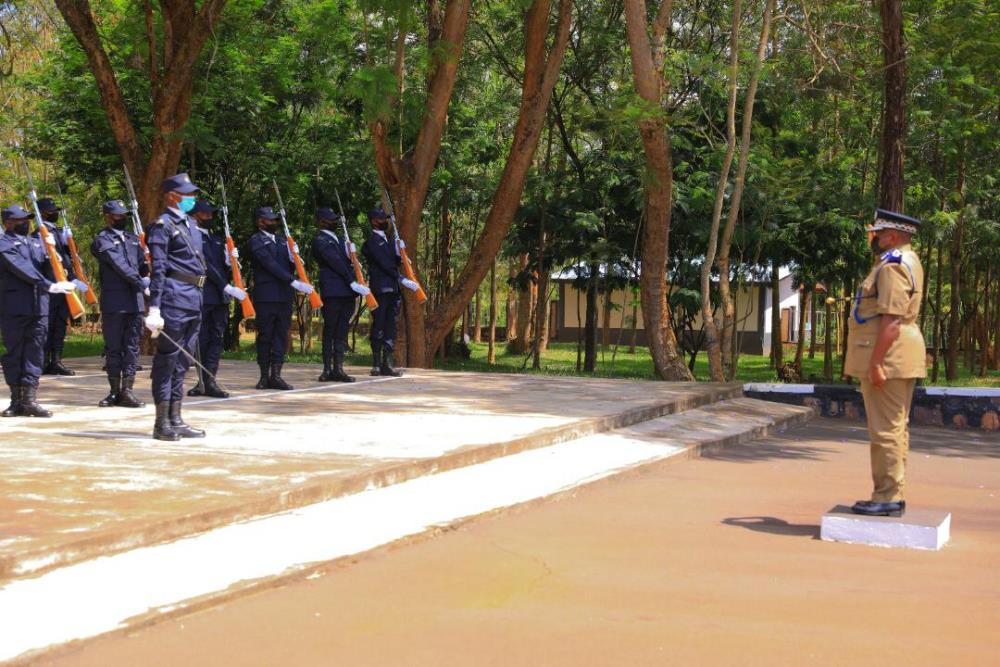
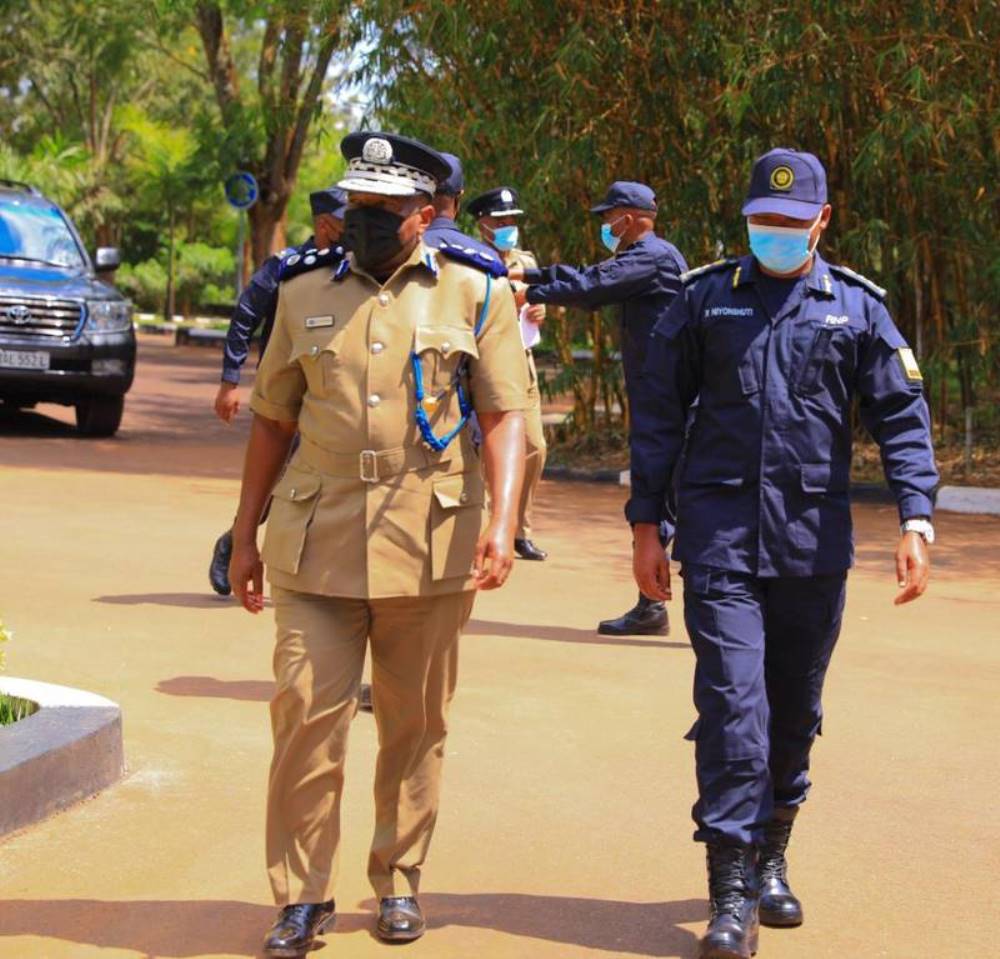
IGP Dr. Kainja and his delegation were received at PTS Gishali by the Commandant of the School, Commissioner of Police (CP) Robert Niyonshuti.
Through a presentation, the Commandant gave them an overview of PTS, its wings, and various courses offered.
“PTS was established to equip Police officers with skills, knowledge and the right attitude required of a professional Police officer and to offer quality services to people living in Rwanda but also in other countries through peacekeeping operations,” said CP Niyonshuti.
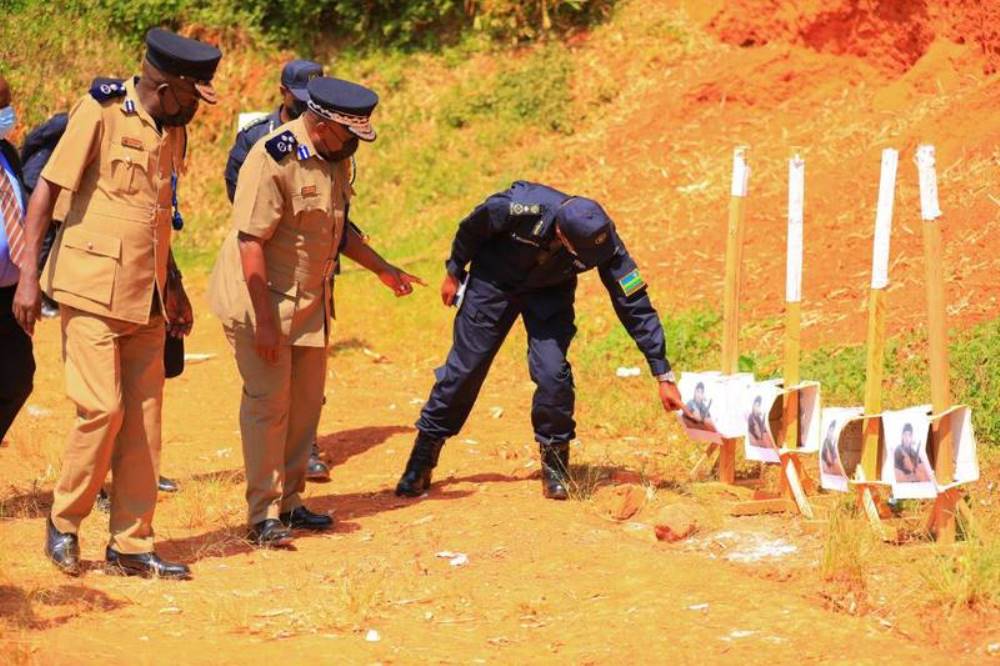
IGP Dr. Kainja and his delegation also toured various wings of the School as well as the range ground and the Formed Police Units (FPU) Training base camp.
PTS Gishari is one of three RNP schools. It shelters Cadet and Basic Police Course wings, Peace Support pre-deployment Training Centre, Gishari Integrated Polytechnic (GIP) as well as Police Logistics school.
It also conducts other specialized courses in areas of gender based violence and road traffic, refresher courses among others.
In his remark, IGP Kainja lauded the capabilities and training programmes of the School, some of which he said will be included in their training curriculum back home.
“This Police School has made tremendous progress in policing programmes,” IGP Dr. Kainja said.
He added: “We are impressed by the excellent, quality, and school performance. This indicates the advanced capability in public order maintenance and advanced response to criminals and terrorism. We wish some of our officers will be sent here to join your next trainings.”
Bank of Kigali Plc. has entered into a strategic partnership with Sheer Logic Management Consultants (SLMC), a specialized company providing Human Resources consultancy and training services to a diverse set of industries and economic sectors; both private and public.
The partnership with Sheer Logic Management Consultants involves outsourcing part of Bank of Kigali front line services in a bid to improve productivity and efficiency; therefore, offering a better experience to its customers. Additionally, partnering with SLMC will support the transformation journey the bank has embarked on to digitize its services.
“The decision to outsource the management of Bank of Kigali front line services to Sheer Logic Management Consultants followed a thorough process and is in line with best practices in the industry. This partnership will allow us to better serve our customers and deliver more value to our shareholders” said Dr. Diane Karusisi, Bank of Kigali CEO.
Sheer Logic Management Consultants has been providing Human Resources consultancy, staff outsourcing, recruitment and training services in East and Central Africa for over 20 years. Bank of Kigali will leverage SLMC expertise to train, motivate and increase employee performance.
{{About Bank of Kigali Plc.}}
Bank of Kigali Plc. is the largest commercial bank in Rwanda, by total assets. In 2017, Global Credit Ratings affirmed Bank of Kigali’s long-term and short-term national scale ratings of AA-(RW) and A1+(RW) respectively with a stable outlook.
The Bank has won several back-to-back international and regional banking awards from EuroMoney, The Banker, Global Finance Magazine, and EMEA Finance. Bank of Kigali has been recently awarded “Best Bank in Rwanda 2021” by Global Finance.
A renowned boutique management consulting firm with a strong presence in the East African region, Sheer Logic Management Consultants prides in having the coveted prize for the leading talent sourcing firm in Kenya (2019/20) according to Global Brands International. Incorporated in 1997, it has presence in Kenya, Mombasa, Uganda, Tanzania and Rwanda.
The veteran academic will be the most senior representative of the university group in the region and will have oversight of its activities across Africa, including policy development, research, enterprise and innovation, and alumni engagement, among others.
Prof. Lwakabamba will drive business development in the region, using his vast experience, knowledge and network of contacts. He will build collaborative relationships and partnerships to assist long-term knowledge transfer.
The Africa Hub will serve as a base for Coventry University Group in the region, enabling new relationships and strengthening established ones.
Located at Kigali Heights, next to the Kigali Convention Centre, the Hub is part of the university group’s plan to develop a sustainable network of multi-faceted overseas offices. Coventry University Group’s ambition is to have a presence near to its stakeholders in key regions and follows the success of the Singapore and Dubai hubs.
Prof Lwakabamba earned his BSc and doctoral degrees in engineering in the United Kingdom and has held senior positions in higher education in Tanzania and Rwanda. He has also served in the cabinet of the Rwandan government, first as minister of infrastructure and then as minister of education.
Commenting on his appointment, Prof. Lwakabamba said: “ I am delighted to join Coventry University, which is one of the most entrepreneurial universities I know. For me, it is exciting to be part of an institution with great potential to make a difference for our African economies.”
Professor Mohamed Loutfi, the Vice-Chancellor’s Envoy, Coventry University Group said that Prof. Lwakabamba brings long-standing experience to build further relations within the region.
“We are excited to welcome Prof Silas Lwakabamba as the inaugural managing director of the Africa Hub. He is an exceptional leader, with a distinguished track-record in sub-Saharan countries. His wealth of experience, extensive network of strategic contacts, and profile as a highly respected thought leader will certainly add to Coventry University Group’s understanding and building of further relations within the Sub-Saharan Africa region,” he stressed.
Coventry University Group is focused on creating a global reputation as one of the world’s leading education providers and has achieved success as a leading recruiter of international students. Increasingly, through partnerships and directly, the university group is delivering education internationally. Its network of international hubs will support this work, helping to develop, oversee and manage all of the university group’s activity in their region.
The Board of Directors of the African Development Bank Group has approved US$84.22 million in loans and grants to electrify nearly 80,000 rural households in south Rwanda. The project will advance the country’s goal of universal electrification and benefit small businesses and youth.
The funds comprise a loan of US$36.77 million from the Bank Group’s African Development Fund and a US$47.45 million ADF grant. The approval was made on 26 May.
The Transmission System Reinforcement and Last Mile Connectivity project will provide first-time electricity connection to 77,470 households to the grid, entailing the construction of 595 km of medium voltage distribution lines and 1,620 km of low voltage distribution networks in six southern Rwanda districts. The project will also see the upgrade, rehabilitation and extension of 1,720 km of low voltage network, and distribution of transformers in secondary cities with high load.
The project is expected to improve power supply reliability and stability across the country, expand electricity access and contribute to reducing greenhouse gas emissions by enabling access to clean energy. The project is also expected to bolster education by extending students access to light for study, and benefit small and medium enterprises while enhancing job creation for youth.
The statement released yesterday shows that the project is part of the Rwanda Universal Energy Access Program (RUEAP), which seeks among other goals, to achieve universal access to electricity by 2024. It is also aligned with the country’s long-term development framework, Vision 2050.
The project also draws from two of the Bank’s High-5 strategic priorities: Light Up and Power Africa and Improve the Quality of Life for the People of Africa.
DOT will work with local organizations to help young people tap into IBM’s free Open P-TECH’s (ptech.org) career readiness curricula. The platform equips learners with competencies in foundational technologies used in all industries, such as AI, cloud computing and cybersecurity, along with professional workplace skills like design thinking, teaming, and presentations.
Together, the organizations will aim to reach at least 40,000 young people in 8 countries – Rwanda, Tanzania, Uganda, Zambia, Malawi, Ghana, Jordan and Lebanon. 70% of the youth will be young women.
The pandemic has laid bare the gaps and inequitable access to the digital literacy, employment and entrepreneurship skills that youth require to innovate, compete for jobs, or start businesses in a digital economy. The gender gap is extreme – with women over 50% less likely to be online than men in least developed countries where 390 million women remain unconnected.
Poised to change this are IBM’s new Open P-TECH digital education platform with its potential to scale within formal and informal education systems, and the support of DOT’s network of young leaders with the facilitation, coaching and peer-to-peer talents that are critical to the effectiveness, application and retention of online learning.
“Providing career skills to youth, particularly young women and those from under-resourced communities, can be life changing,” said Justina Nixon-Saintil, IBM Vice President and Global Head, Corporate Social Responsibility.
“With resources like IBM Open P-Tech bolstered by the efforts of organizations like Digital Opportunity Trust, we aim to advance equity and create access to opportunity,” she added.
The collaboration brings together complementary experience and assets: IBM with its technology and business expertise, and DOT with its extensive channels to youth and local community ecosystems.
DOT’s research shows that young people with these skills become the leaders and contributors to the digital transformation of their communities, countries, and economies.
DOT Founder and CEO Janet Longmore said: “DOT and IBM have a history working together and developing the mutual trust that underpins successful collaboration. This partnership, around the Open P-TECH platform, is an example of how the private sector and a social enterprise with “feet on the street” can mobilize their assets to benefit youth and young women in marginalized, rural and remote communities. We share a belief that youth want opportunities to be the innovators and catalysts of digital transformation, shaping the future of work in an inclusive world.”
{{About Digital Opportunity Trust}}
Digital Opportunity Trust (DOT) works with youth, the private sector, governments, and community-based organizations towards a collaborative vision of communities around the world shaped by daring social innovators.
As an international organization with locally-managed offices in Ethiopia, Jordan, Kenya, Lebanon, Rwanda, South Africa, and Tanzania, DOT has worked in 25 countries as development innovators and catalysts since being founded in 2001. DOT’s growing network of 6,000 local youth have created opportunities for over 1 million people in communities across Africa, the Middle East, Latin America, and Indigenous Canada. Learn more about DOT at https://dotrust.org.
{{About IBM Open P-TECH}}
Open P-TECH is a digital education platform focused on workplace learning and digital skills. The platform, building on the industry-leading P-TECH program, equips learners with foundational technology competencies. Training in technologies such as AI, cloud computing and cybersecurity, along with professional skills like design thinking, that are highly valued in the market set Open P-TECH apart. Open P-TECH is available to students and teachers worldwide at https://open.ptech.org.
On Monday, IGP Dan Munyuza and his visiting counterpart chaired a bilateral meeting at the Rwanda National Police (RNP) General Headquarters in Kacyiru.
It was also attended by the Deputy IGPs; Felix Namuhoranye of Operations and Jeanne Chantal Ujeneza of Administration and Personnel.
IGP Munyuza observed that the visit cements the existing bilateral cooperation between the two law enforcement institutions and that it will strengthen the collective resolve in addressing policing challenges to ensure the safety and security of people.
Rwanda National Police and Malawi Police Service signed a cooperation pact in March 2019 to formalize cross-border partnership in various disciplines of policing including training, joint operations, tracking and exchange of criminals, combating terrorism, drug trafficking, organized crimes, and information sharing on security related matters, among others.
“Cooperation is a cornerstone in addressing contemporary security challenges such as terrorism, cybercrimes, drug trafficking, human trafficking and financial crimes among others.
These crimes continue to threaten safety and security of our peoples. With such an interaction, we can together lay strategies and establish operational frameworks to deal with these threats with much emphasis on Islamic State-linked terrorism in our respective regions,” IGP Munyuza said.
Terrorist networks, he added, have spread in the region and terror cells have been established in some parts of Africa, which calls for fast response and working more closely together to confront terrorism cells in countries and regions.
He emphasized the need for practical framework and permanent forums through which the respective officers will be meeting periodically to review, share information and draw coordinated actions to respond to security challenges especially on armed groups and terrorism activities within and beyond the two borders.
IGP Munyuza reiterated RNP’s commitment to the cooperation and collaboration for the mutual benefit of the people in Rwanda and Malawi.
On his part, IGP Kainja said that the bilateral meeting provides a platform through which the relationship and cooperation between the two Police institutions will be strengthened, and a chance to explore new areas of cooperation in the fight against transnational organized crime.
He observed that in a globalized world, most often, countries face common challenges that require joint efforts to address. However, added, there are times when countries are also confronted by unique challenges that require specific partners.
“There is no doubt that some Rwanda citizens living in Malawi may be persons of interest to the Rwandan National Police and as such the two Police institutions need to cooperate on information and intelligence sharing. This will help to avoid making Malawi a haven for criminal elements affecting Rwanda,” IGP Kainja said.
He said that strong cooperation will innovatively identify strategies that can be mutually implemented to protect the two countries from terrorism and contribute to regional safety and security.
During his stay in Rwanda, IGP Kainja will also visit RNP schools and other development projects in the country.