Jeannette Muhawenimana, 25, was arrested at about 7pm in Bisesero Village, Kiremera Cell, Kanzenze Sector where she was waiting for a cargo vehicle to Kigali.
Chief Inspector of Police (CIP) Bonaventure Twizere Karekezi, the Police spokesperson for the Western region, said that Police had earlier received information about Muhawenimana’s plan to traffic the narcotics to Kigali.
“Earlier information provided by some members of the public, indicated that Muhawenimana, who is suspected to be a drug dealer, had a new consignment of cannabis, which she was trying to traffic to Kigali from Rubavu,” CIP Karekezi said.
“Police officers tracked her to Bisesero Village, Kiremera Cell, Kanzenze Sector, where she was waiting for a cargo truck to transport a sack of irish potatoes to Kigali. When officers poured the potatoes, they recovered over 500 pellets of cannabis, she was immediately taken into custody and handed over to RIB at Kanama station,” he added.
She disclosed that she got the narcotics from another supplier, who trafficked them into Rwanda from DRC and that she had a client in Kigali whom she was going to supply.
It is the second time that Muhawenimana has been arrested in drug related crimes.
CIP Karekezi lauded the impact of community policing through information sharing, which facilitates to identify and arrest drug dealers and break supply chains.
Cannabis is classified as a “very severe narcotic drug” in Rwanda
Under article 263 of the law determining offences and penalties in general states that; any person who, unlawfully produces, transforms, transports, stores, gives to another or who sells narcotic drugs and psychotropic substances, commits an offence.
Upon conviction for “very severe narcotics,” the offender faces between 20 years and life imprisonment, and a fine of up to Rwf30 million.
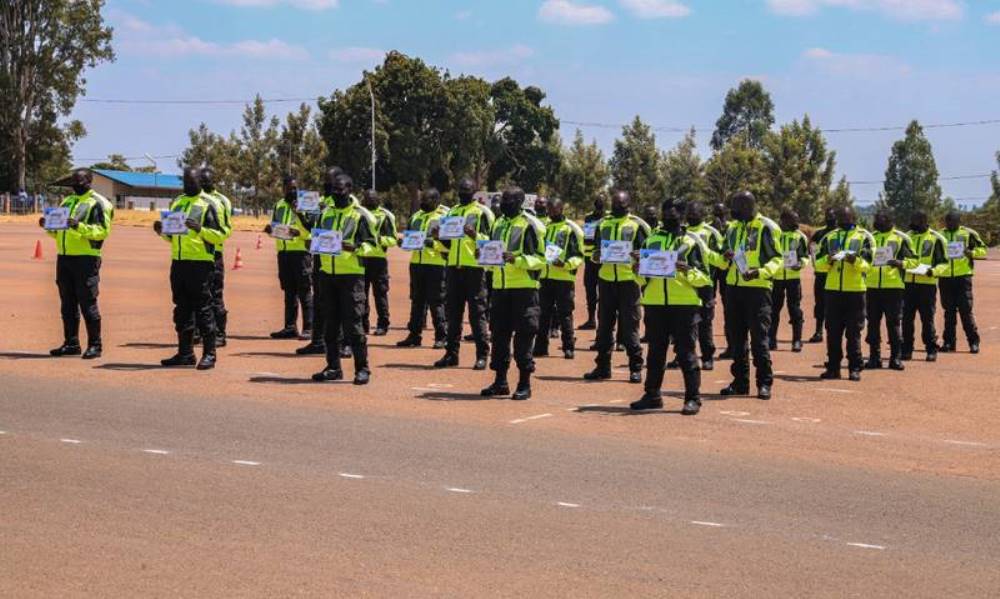
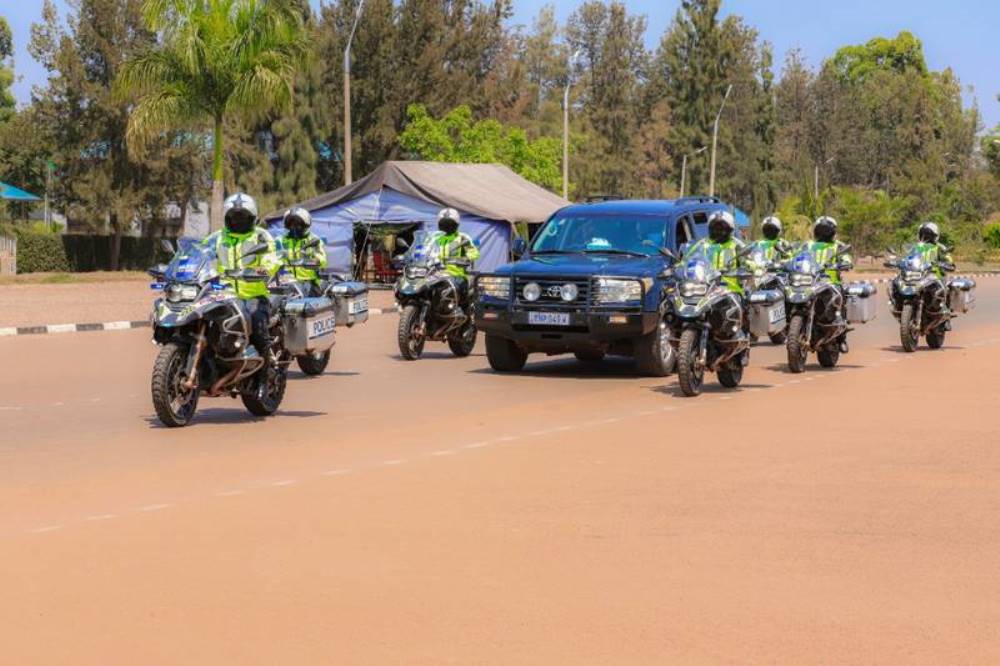
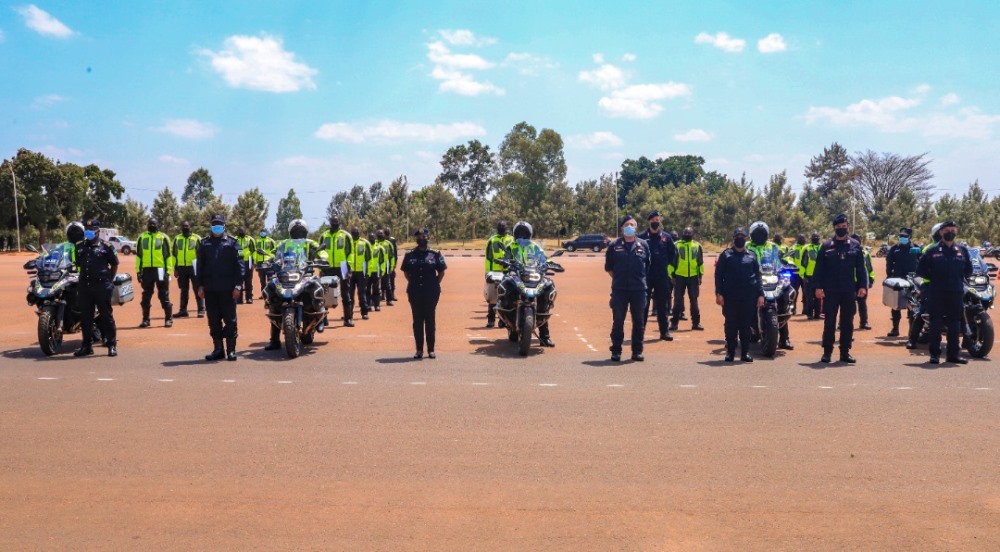
The training was conducted by Rwanda National Police (RNP) in partnership with the Italian Police Carabinieri. Trainees were drawn from Traffic and Road Safety (TRS) department, VIP Protection Unit and Police Disciplinary Unit (DPU).
The course covered various aspects of traffic including acceleration, deceleration and emergency breaking; techniques to be used in case of fall from the motorbike, control in emergency, and search techniques.
The Deputy Inspector General in charge of Administration and Personnel, DIGP Jeanne Chantal Ujeneza, while speaking at the closing of the training, said that the course is paramount to RNP in developing and enhancing knowledge and skills of motorbike riders.
The event was also attended by Brigadier General Stefano Dragani, the Carabinieri Liaison Officer to Rwanda.
DIGP Ujeneza said that the course strengthens the existing relations between RNP and Carabinieri.
“Rwanda is committed to be an attractive destination for international association meetings, and one of the enabling pillars is to ensure a secure and safe environment for all; protection of people and their property is one of the key responsibilities of RNP, including ensuring road security,” DIGP Ujeneza said.
She added that prevention of road accidents require training of road traffic personnel, construction of adequate infrastructure and sensitization of road users, the framework in which this course was initiated.
She urged the trainees to fully utilize the knowledge and skills acquired.
Brigadier General Stefano Dragani, lauded the courage and discipline exhibited by the trainees during the course.
He pledged further courses to improve the capabilities of Police officers in their daily policing tasks.
Assistant Inspector of Police (AIP) Aloys Mutagire and CPL Peruth Mukandayisenga are among the trainees, who completed the course.
“I have gained vast skills such as passing through corners in high speed, emergency breaking, VIP protection and demonstrations during ceremonies,” said AIP Mutagire.
Prior to this course, Cpl Mukandayisenga never imagined being a professional motorbike rider.
“I am now a professional rider and able to ride a motorbike under different circumstances to execute my duties,” said Cpl Mukandayisenga.
Officials say vaccines are highly effective against the Delta variant, now the dominant variant worldwide, though the study reiterated that one shot of the vaccines is not enough for high protection.
The study, published in the New England Journal of Medicine, confirms headline findings given by Public Health England in May about the efficacy of COVID-19 vaccines made by Pfizer-BioNTech and Oxford-AstraZeneca, based on real-world data.
Wednesday’s study found that two doses of Pfizer’s shot was 88% effective at preventing symptomatic disease from the Delta variant, compared to 93.7% against the Alpha variant, broadly the same as previously reported.
Two shots of AstraZeneca vaccine were 67% effective against the Delta variant, up from 60% originally reported, and 74.5% effective against the Alpha variant, compared to an original estimate of 66% effectiveness.
“Only modest differences in vaccine effectiveness were noted with the Delta variant as compared with the Alpha variant after the receipt of two vaccine doses,” Public Health England researchers wrote in the study.
Data from Israel has estimated lower effectiveness of Pfizer’s shot against symptomatic disease, although protection against severe disease remains high.
PHE had previously said that a first dose of either vaccine was around 33% effective against symptomatic disease from the Delta variant.
The full study published on Wednesday found that one dose of Pfizer’s shot was 36% effective, and one dose of AstraZeneca’s vaccine was around 30% effective.
“Our finding of reduced effectiveness after the first dose would support efforts to maximize vaccine uptake with two doses among vulnerable groups in the context of circulation of the Delta variant,” the authors of the study said.
Freehold land title refers to a property title by which the owner of the land owns it for perpetuity. In other words, freehold land title ownership has no limit in time for the landowner and its beneficiaries.
Ujiri has received the land in consideration of special circumstances of strategic national interests pursuant to the Constitution of the Republic of Rwanda of 2003 revised in 2015 and the law no 27/2021 of 10/06/2021 governing land in Rwanda in its article 6.
The Presidential Order approving the freehold title to Ujiri was published in the Official Gazette of 19th July 2021after proposal by the Minister of Environment and approval by the Cabinet Meeting of 12th June 2021.
The land in plot n° UPI 1/02/13/04/972 with surface of two point four hectares (2.4 Ha) is located in Amahoro village, Rukiri II cell, Remera sector, Gasabo district in the City of Kigali.
The Presidential Order granting the land reads that Ujiri must use the land for which the freehold title is granted to serve the purpose of its allocation in conformity with the agreement signed with the Government of Rwanda and the business plan approved by competent authority, land use laws and other documents determined in accordance with relevant laws.
In case of non-compliance, the Government of Rwanda has the right to cancel freehold title for the land in accordance with relevant laws.
IGIHE has learnt that Ujiri shall use and exploit the land for setting up Ujiri Court chain of community centers to provide Boutique Hotel, community Courts, food courts, merchandise outlets, basketball and tennis courts services.
Ujili, 51, is a close friend of Rwanda who contributed to the establishment of Kigali Arena following discussions with President Paul Kagame as they watched NBA All-Star Game in Toronto, Canada.
Giants of Africa (GOA) is a basketball camp founded by Masai Ujiri as a platform to explore and nurture basketball talent among African youth.
It started in 2003 in Nigeria but in 2014 Ujiri took it outside of the country.
The renovation of the basketball court at Club Rafiki, Nyamirambo, launched on August 8, 2017 and camps to promote youth’s basketball talent since 2015 are among fruits of Ujiri’s contribution to the development of basketball in Rwanda and the African continent.
In February 2020, Kagame and Ujiri announced the Giants of Africa festival that was expected to take place in Kigali, August 2020, bringing together 11 countries.
At the time, Kagame thanked Masai Ujiri for his work with Giants of Africa and said that the camp is crucial in developing the talents of African youth.
Masai Ujiri also thanked the president for his role in the development of Africa and the way he puts into action everything he pledges, including the building of Kigali Arena.
“I thank President Kagame for his amazing work and for accepting that this camp takes place here. Africans must win because we are the winners.”
Born in 1970, Masai Ujiri is a Nigerian-Canadian professional basketball executive and former player and is the president of basketball operations of the Toronto Raptors in the National Basketball Association (NBA).
After a modest playing career, Ujiri became a scout in 2002, first for the Orlando Magic and then the Denver Nuggets. In 2008, he joined the backroom staff of the Toronto Raptors.
Ujiri returned to the Nuggets in 2010 as general manager and executive vice president of basketball operations, and helped turn the team’s fortunes around, returning them to the playoffs. As a result, he was named the NBA Executive of the Year in 2013. The following season, Ujiri returned to the Raptors as General Manager.
In the summer of 2016, Ujiri relinquished his title as General Manager to Jeff Weltman and accepted the position of president of basketball operations.
As president, Ujiri worked to usher in a period of sustained success, helping the team win its first NBA championship in 2019.
SMEs have been significantly impacted by the COVID-19 pandemic with its attendant lockdowns and disruptions to supply chains, plummeting sales, lost revenue and operational challenges. In response to feedback from our customers, Ecobank through its Commercial Banking Segment is helping business owners close the digital skills gap within their chosen fields and improve the digital capabilities of their employees.
Josephine Anan-Ankomah, Group Executive, Commercial Banking for the Ecobank Group has said that businesses need to leverage digital skills to thrive and reiterated the bank’s commitment to support the cause.
“The COVID-19 pandemic has turbocharged the shift towards digital. It is essential that businesses adapt so that they are able to compete effectively in today’s rapidly changing landscape. Ecobank’s Commercial Banking is committed to supporting SMEs across our pan-African footprint. Through this partnership with Microsoft, LinkedIn, GitHub and Ecobank Academy we are offering training to equip business owners and their employees with the digital skills that they need to stay connected to their customers. We are intent on ensuring that our SME customers remain relevant, grow and succeed in the post COVID-19 era,” she noted.
SMEs are invited to register for the upcoming webinar taking place on July 26.
The Global Skilling initiative program is available on an online portal where SMEs can register, and start their learning journey for any of the 10 in-demand skill sets (Customer Services; Digital Marketing; Financial Analysis; Graphic Design; IT Support/Help Desk; Project Management; Sales; Data Analysis; IT Administration; And Software Development).
They can complete the virtual programme at their own pace and at times that work best for them. The programme runs until 31st of December 2021.
Ibrahim Youssry, Regional General Manager, Middle East and Africa – Multi market region at Microsoft also expressed readiness to build digital talent pipelines.
“We are committed to building digital talent pipelines to support the workforce of the future, and our Global Skilling Initiative is an important part of this process. But beyond the future workforce, digital talent will also support more local innovation, as developers and entrepreneurs are empowered to create locally relevant solutions that best address the challenges and needs of African countries. Startups and SMEs play a critical role in innovation, economic growth and job creation, and expanded access to digital skills is one of the key steps needed to foster a successful economic recovery,” he said.
The Global Skilling Initiative is just another example of how Ecobank wants to help SMEs reach their full potential and play a vital role in driving Africa’s economic resurgence.
{{Other support initiatives for SMEs include:}}
•The Ecobank Marketplace eCommerce solution for businesses to grow their sales on digital marketplaces
•And the Ellevate programme to provide women-led/owned/focused businesses with loans, cash management solutions, training and mentoring opportunities.
{{About Ecobank Transnational Incorporated (‘ETI’ or ‘The Group’) }}
Ecobank Transnational Incorporated (‘ETI’) is the parent company of the Ecobank Group, the leading independent pan-African banking group. The Ecobank Group employs over 14,000 people and serves about 29 million customers in the consumer, commercial and corporate banking sectors across 33 African countries.
The Group has a banking license in France and representative offices in Addis Ababa, Ethiopia; Johannesburg, South Africa; Beijing, China; London, the UK and Dubai, the United Arab Emirates. The Group offers a full suite of banking products, services and solutions including bank and deposit accounts, loans, cash management, advisory, trade, securities, wealth and asset management. ETI is listed on the Nigerian Stock Exchanges in Lagos, the Ghana Stock Exchange in Accra, and the Bourse Régionale des Valeurs Mobilières in Abidjan.
For further information please visit www.ecobank.com
{{About Microsoft}}
Microsoft (Nasdaq “MSFT” @microsoft) enables digital transformation for the era of an intelligent cloud and an intelligent edge. Its mission is to empower every person and every organization on the planet to achieve more.
For more information, news and insights from Microsoft, please visit Microsoft’s global and regional news center via http://news.microsoft.com and Middle East & Africa News Center (microsoft.com)
Kagame made the observation on Thursday 22nd July 2021 as he delivered remarks at ‘Building The Bandwidth Meeting’ organized by the United Nations Educational, Scientific and Cultural Organization (UNESCO) in collaboration with the Varkey Foundation and CJ Cultural Foundation.
It was attended by UNESCO Director General, Audrey Azoulay and Sunny Varkey, the Founder and Chairman of Varkey Foundation which is a philanthropic organisation established to improve the standards of education for underprivileged children throughout the world among others.
As he addressed participants, Kagame stressed the need to develop inclusive policies to ensure no girl is left behind and shared Rwanda’s experience.
“The COVID-19 pandemic has significantly affected all aspects of national life, and education has not been spared. The disruption of in-person classes has exposed, more than ever, the gap in digital access, skills, and online learning for all children, especially girls. We have the opportunity to re-engage in the cause of girls’ education so that they are not left even further behind,” he said.
“In Rwanda, we continue to make significant investments in digital infrastructure and training for our young people. For example, the Rwanda Coding Academy admits 50 percent girls and aims to resolve the shortage in engineers through a focused engineering program at high school level,” added Kagame.
Among others, Kagame reminisced how centres of excellence in ICT including Carnegie Mellon University-Africa, the University of Rwanda, and the African Institute of Mathematical Sciences have dedicated scholarships for female candidates and stressed the need to ensure that ‘the ongoing global health crisis does not erode these initiatives, and other similar efforts around the world, aimed at bridging the digital gender divide’.
Kagame further stated that narrowing the gap also requires sustaining efforts for inclusive economic growth, guarantee security and community safety, and continuing to promote gender equality more generally.
“Through partnership with UNESCO and other regional and global initiatives, Rwanda will continue to advocate and act, to ensure girls have access to the digital resources and skills they need,” he affirmed.
The deceased is the driver identified as Saidi Mugerwa while two other people onboard who survived with serious injuries include Aimable Nsabimana and Théoneste Mushimiyimana.
The accident took place in Bushekeri sector, Nyamasheke district on Thursday 22nd July 2021 around 1p.m.
The Mayor of Nyamasheke district, Appolonie Mukamasabo has told IGIHE that the truck swerved from the main road and tripped in 50 meters.
“The accident happened when the truck from Kayonza to Rusizi district arrived at Gasakura business center after crossing Nyungwe forest. The driver died immediately while two others survived with serious injuries,” she said.
Injured people were rushed to Gisakura Health Center and later transferred to Bushenge Hospital for medical attention.
Police and local leaders seized 2kgs of cannabis and 1,350 litres of assorted illicit drinks from the suspects.
The 2kgs of cannabis were seized from two women identified as Jacqueline Sifa, 34, and Rehema Uwayisenga, 27, in Shwemu Village, Gisa Cell, Rugerero Sector of Rubavu District.
Chief Inspector of Police (CIP) Bonaventure Twizere Karekezi, the Police spokesperson for the Western region, said that Police was tipped off by residents.
“Area residents called Police at about 6pm reporting that two women (Sifa and Uwayisenga) were trafficking narcotics to supply clients in Rugerero trading center. An operation was swiftly conducted and the duo was arrested red-handed in possession of 2kgs of cannabis,” CIP Karekezi said.
Following their arrest, Sifa disclosed that the narcotics belong to his husband whom she only identified as Hubert and that they were sneaked into Rwanda from the Democratic Republic of Congo (DRC).
The said Hubert was recently released from prison after completing the sentence for the same crime.
About 13 other people were arrested in Muyogoro and Rukira cells of Huye sector, Huye district with 1,030 liters of illicit brew commonly known as Igikwangari.
Another producer of illicit brew called Felicite Mukaremera, 34, was apprehended with 320 liters in Museke Village, Kigoyo Cell, Kanjongo Sector of Nyamasheke District.
The Southern region Police spokesperson, Superintendent of Police (SP) Theobald Kanamugire said that the producers and sellers of illicit brew were identified and reported by residents and local leaders.
The Ministerial order Nº 001/MoH/2019 of 04/03/2019 establishing the list of narcotic drugs and their categorization classifies cannabis in “very severe narcotic drugs” while alcoholic drinks produced without complying with standards and other laws; are on the list of “simple narcotic drugs.”
Article 263 of the law determining offences and penalties in general states that; any person who, unlawfully produces, transforms, transports, stores, gives to another or who sells narcotic drugs and psychotropic substances commits an offence.
Upon conviction for “very severe narcotics,” the offender faces between 20 years and life imprisonment, and a fine of up to Rwf30 million.
In regard to “simple narcotics” the offender faces a term of not less than seven years and not more than ten years and a fine of not less than Frw5 million and less than Rwf10 million.
The statement released last night shows that 1309 people have caught the virus out of 22 818 sample tests while 869 recovered.
Rwanda confirmed the first Coronavirus patient on 14th March 2020. Since then, 61 375 people have been tested positive of whom 43 924 recovered, 16 747 are active cases, 78 are critically ill while 704 have succumbed to the virus.
A total of 418,773 have been vaccinated since Rwanda began countrywide inoculation programme on 5th March 2021.
Coronavirus symptoms include coughing, flu, and difficulty in breathing. The virus is said to be transmitted through the mucous membranes of the respiratory tract.
Rwandans are urged to adhere to COVID-19 health guidelines, washing hands frequently using soaps and safe water, wearing face masks and respecting social distancing.
In a document dated May 28 seen by AFP, Judge Carmel Agius of the Mechanism for International Criminal Tribunals (MICT) said he had instructed the court registrar “to transfer Ngirabatware to Senegal for the enforcement of his sentence as expeditiously as possible” after the conclusion of a separate case.
Ngirabatware was the Minister of Finance and Economic Planning between 1990 and 1994.
He was convicted in December 2012 for inciting, aiding and encouraging Interahamwe militiamen in his home district of Nyamyumba in northwestern Rwanda to kill and rape their Tutsi neighbours.
An initial sentence of 35 years was reduced to 30 years in 2014 after the rape conviction was set aside. The sentence was otherwise confirmed in a review in 2019.
In the separate case, Ngirabatware and three others were found guilty on July 25 of having tried to bribe or intimidate witnesses to have his conviction overturned.
Ngirabatware, a Swiss-educated economist born in 1957, is the son-in-law of Felicien Kabuga, a major figure who is accused of having bankrolled the 1994 Genocide against Tutsi. He was arrested in a suburb of Paris in May 2020.
The sentence against Ngirabatware was handed down by the International Criminal Tribunal for Rwanda (ICTR), which closed down in 2015, handed over its work to the UN-backed MICT.
Ngirabatware fled Rwanda in July 1994, finding work in research institutes in Gabon and France before being arrested in Germany in 2007 and transferred to the ICTR the following year.