The deceased include four men from Gatsibo, Rusizi, Ruhango and Nyamagabe districts as well as five women from Gicumbi, Kirehe, Kigali, Rusizi and Karongi districts.
The statement released last night also shows that 448 people have caught the virus while 10 recovered.
A total of 622,695 people have been vaccinates since Rwanda began countrywide inoculation program on 5th March 2021.
Coronavirus symptoms include coughing, flu, and difficulty in breathing. The virus is said to be transmitted through the mucous membranes of the respiratory tract.
Rwandans are urged to adhere to COVID-19 health guidelines, washing hands frequently using soaps and safe water, wearing face masks and respecting social distancing.
The town has been under the control of rebels for the past five years.
Rwanda recently on 9th July 2021 started the deployment of 1000 troops of the Rwanda Defence Force (RDF) and the Rwanda National Police (RNP) to Mozambique to fight rebel groups linked the Islamic State of Iraq and the Levant (ISIL).
The group sometimes calls themselves al-Shabaab, although they do not have known links with the Somali al-Shabaab.
The situation started worsening in October 2017 when armed extremists linked ISIL launched an insurgency in the Cabo Delgado region of Mozambique.
Since then, Mozambique Defence Armed Forces have been battling the extremists while many civilians were displaced by the fighting.
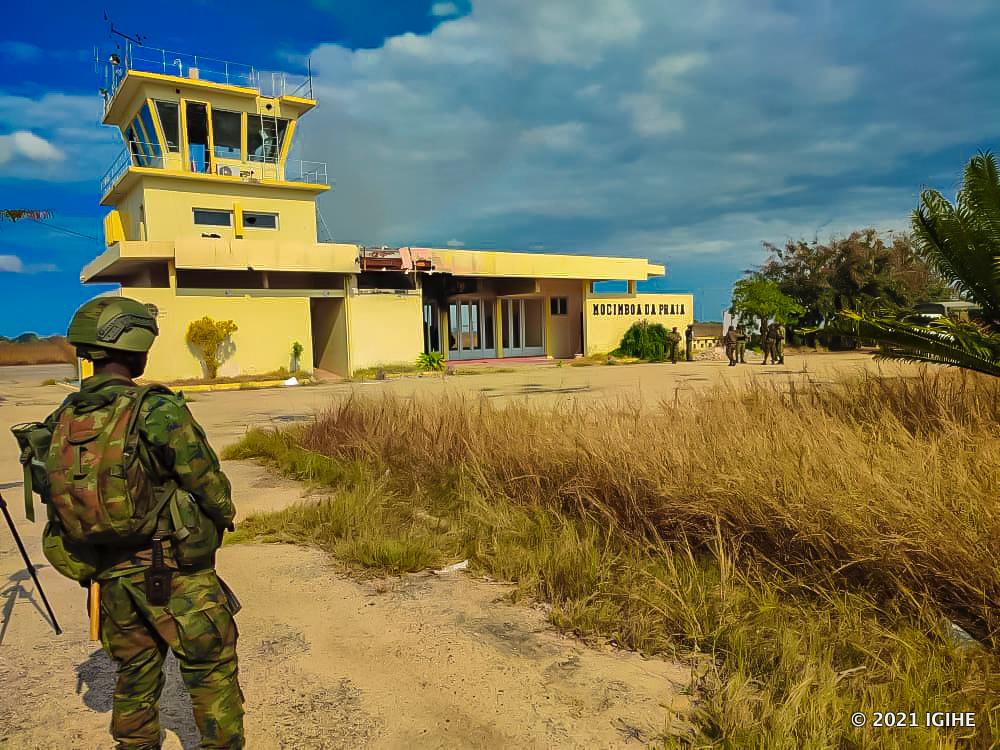
Following different attacks, the militants seized the port town of Mocimboa da Praia August 2020.
One day before seizing Mocimboa da Praia, RDF killed four insurgents and seized weapons including four RPGs, 3 SMGs and various documents.
Rwandan troops also vanquished rebels from the region known as ‘1st May’ after maneuvering through Njama.
IGIHE journalist reporting from Mozambique has said that the port town has been seized on Sunday 8th August 201 around 8a.m.
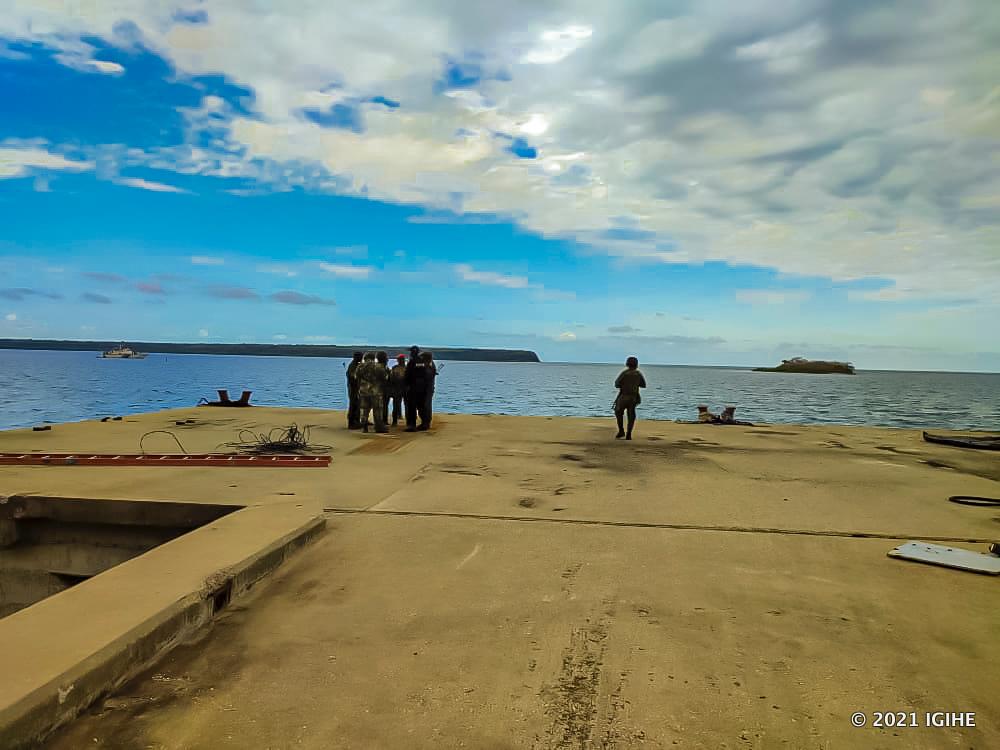
Major infrastructures where security was tightened after capturing Mocimboa da Praia include an airstrip and a major port in the area.
IGIHE has seen Mozambican soldiers celebrating victory after capturing the port town.
The Commander of Rwandan soldiers deployed to Mozambique, Brig Gen Pascal Muhizi has told IGIHE that the main objective was to root out enemy pockets from the town and conduct offensive attacks.
“This place is Mocímboa District which has been the stronghold for insurgents. Rebels used to withdraw to this area after plotting attacks rebels. They have been living here for more than five years,” he said.
After capturing the town, key infrastructures have been handed over to Mozambican forces.
Commander Oscar A. Lucas, a senior military officer in Mozambique represented his country at the handover of the port considered the major passageway for goods.
“The port holds great significance to Mozambique. It is also the gateway for rebels destabilizing our citizens […] Seizing this port is very meaningful to people of Mozambique and the Government,” said Commander Lucas.
He also commended RDF for contribution that led the victory.
“The contribution of Rwandan soldiers is of critical importance. We take this opportunity to voice appreciation to Rwandans because we would not be here hadn’t it been their support,” stated Commander Lucas.
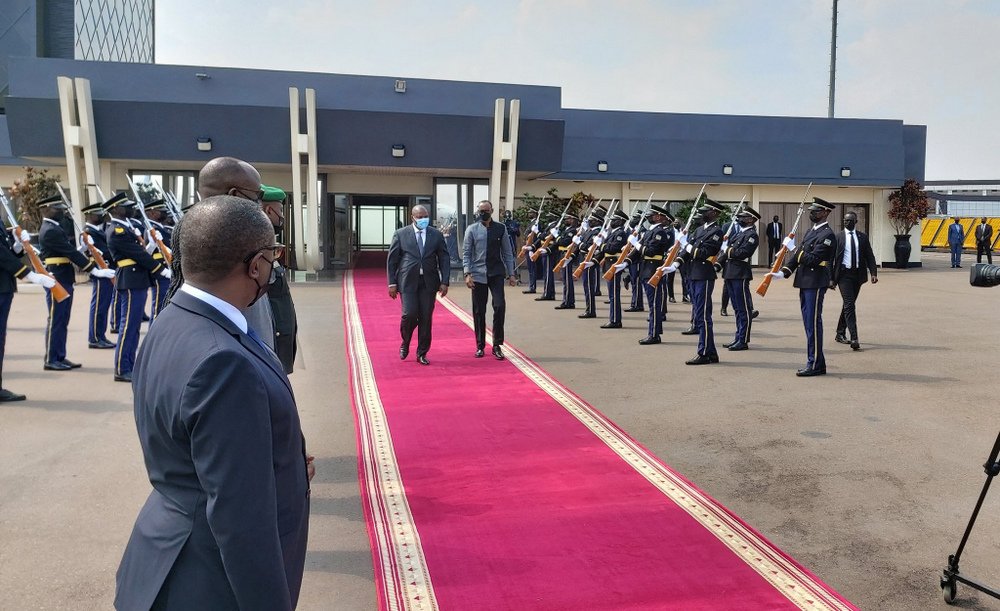
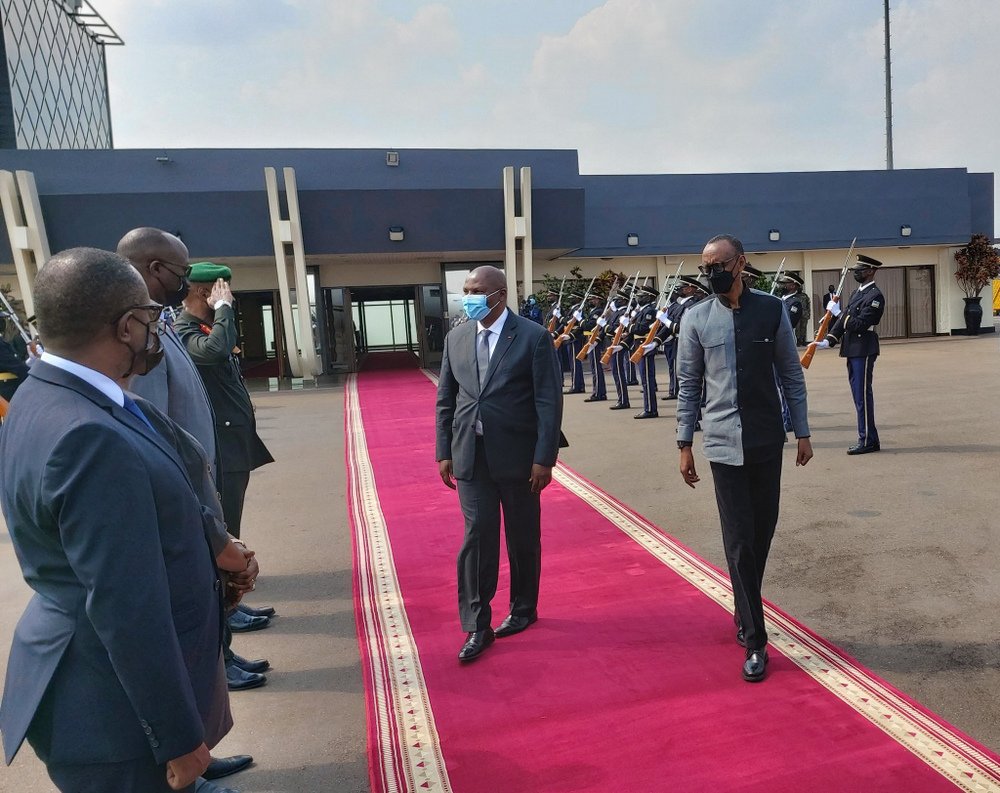
Touadéra began his visit to Rwanda on Thursday 5th August 2021.
Upon arrival at Kigali International Airport; he was welcomed by the Minister of Foreign Affairs, Dr. Vincent Biruta.
Touadéra was also received by Kagame at Urugwiro Village where both heads of state held closed-door meeting and later witnessed the signing of four bilateral agreements before addressing members of the press.
These agreements were signed in the areas of mining, transport development, security and economic development.
As they delivered remarks, both heads of state recommitted to further strengthen bilateral ties for mutual interests.
On his first day in Rwanda, Touadéra visited the Campaign Against Genocide Museum located at the Parliament Building in Kimihurura where he received explanations on Rwanda’s liberation journey. He was also hosted at a State Banquet held at Kigali Convention Center.
On 6th August 2021, Touadéra visited Kinigi IDP Model Village, which was inaugurated on 4th July 2021. The model village consists of homes for 144 families, a secondary school, an Early Childhood Development Center (ECD), health center and other facilities.
Rwanda and CAR have been for long enjoying cordial relations whereby Rwanda is helping the country engulfed by wars to restore peace. Rwandan troops have been deployed to CAR peacekeeping mission since 2014.
On 20th December 2020, Rwanda deployed more special forces to CAR under existing bilateral cooperation signed in 2019.
Ahead of Touadéra’s visit, Rwanda started the deployment of an additional Infantry Battalion of 750 military personnel on Tuesday 3rd August 2021 to the United Nations Multidimensional Integrated Stabilisation Mission in Central African Republic (MINUSCA).
Located in Cabo Delgado in the northern part of Mozambique, ‘1st May’ is 10- kilometer away from Macimboa da Praia considered the stronghold for rebels behind insecurity in the country.
Rwanda recently on 9th July 2021 started the deployment of 1000 troops of the Rwanda Defence Force (RDF) and the Rwanda National Police (RNP) to Mozambique to fight rebel groups linked the Islamic State of Iraq and the Levant (ISIL).
The group sometimes calls themselves al-Shabaab, although they do not have known links with the Somali al-Shabaab.
The situation started worsening in October 2017 when armed extremists linked ISIL launched an insurgency in the Cabo Delgado region of Mozambique.
Since then, Mozambique Defence Armed Forces have been battling the extremists while many civilians were displaced by the fighting.
Following different attacks, the militants seized the port town of Mocimboa da Praia August 2020.
They have been also plotting attacks to neighboring countries including Tanzania from the base.
Today’s fighting saw RDF killing four insurgents and seizing weapons including four RPGs, 3 SMGs and various documents. Rwandan troops have vanquished rebels from ‘1st May’ after maneuvering through Njama.
The attack has been plotted in 65 kilometers away from Afungi airport protected by personnel from RNP.
Afungi is among two major mobility corridors that Rwandan and Mozambican troops have maneuvered through to reach Mocimboa da Praia considered the stronghold for rebels.
Today’s attack leaves ‘1st May’ in the hands of RDF becoming an addition to “Quelimane 2” and other areas of concentration seized from rebels.
It is expected that displaced citizens will return home after quelling insurgents in Mocimboa da Praia.
Rwanda deployed troops to Mozambique to fight insurgency following the request of President Filipe Nyusi.
The forces were expected to join hands with the Southern African Development Community (SADC) troops which also arrived in Mozambique but have not yet started operations.
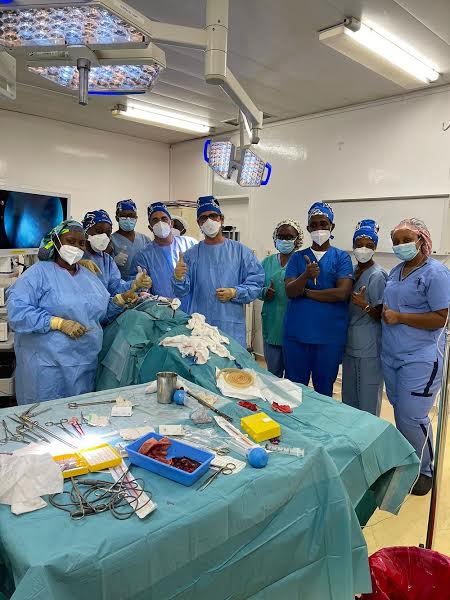
VATS is a minimally invasive surgical technique used to diagnose and treat problems in the chest.
During a VATS procedure, a tiny camera (thoracoscope) and surgical instruments are inserted into your chest through one or more small incisions in your chest wall. The thoracoscope transmits images of the inside of your chest onto a video monitor, guiding the surgeon in performing the procedure.
The delegation led by Dr. Diego González Rivas, a specialist in thoracic surgery came to offer a 2-day masterclass on single incision video-assisted thoracic surgery at King Faisal Hospital.
Rwanda has one specialist in thoracic surgery at King Faisal Hospital. The training is expected to increase the number of doctors with such expertize in Rwanda.
Dr. González hailing from Japan came to Rwanda along with other specialists from China, Morocco, Spain and Russia.
They are set to spend two days at the hospital and chart ways for future cooperation.
Speaking to the media, Dr. González explained that he started applying the minimally invasive thoracic surgery in 2010 in Japan and has since then toured different countries to train other medical doctors.
He highlighted that Video-assisted thoracoscopic surgery is different from the traditional technique which is painful and takes long for recovery.
“The difference between thoracotomy [classic one] and single incision video-assisted thoracic surgery is that we have to do a big incision, spread the ribs make at least 12 cm incision, and create a big hole on the chest to operate with direct view. This is very painful for the patient because he/she has to stay at the hospital around ten days,” he said.
“With this technique, we use small incision like two centimeter incision and we can do the same with thoracoscopic instruments and the endoscopic camera and operate the patient watching the screen. We don’t need to put hands inside the chest. That is the patient has less pain, better recovery and can go home in two days with little pain. The difference is very huge,” added Dr. González.
Dr. González revealed that he developed this technique since 2010 and has been traveling around the world to train medical doctors.
“I have operated in around 120 countries so far. Most of visited countries started developing this technique. Of these, more than 20 countries are African countries. The technique is nowadays being performed all over the world that some countries use it as the main approach,” he underscored.
Dr. González further stated that the training is the beginning for future collaboration.
“I came here because I wanted to teach doctors how to do it better. The team is interested and we shall continue to keep in touch. They may come to our training center or come back to assist them,” he noted.
The CEO of King Faisal Hospital, Prof. Miliard Derbew has explained that discussions with the delegation led by Dr. González so that similar trainings can be offered locally
The mechanism to facilitate such trainings is to be put in place so that Rwandan doctors can be acquainted with necessary skills in nine months.
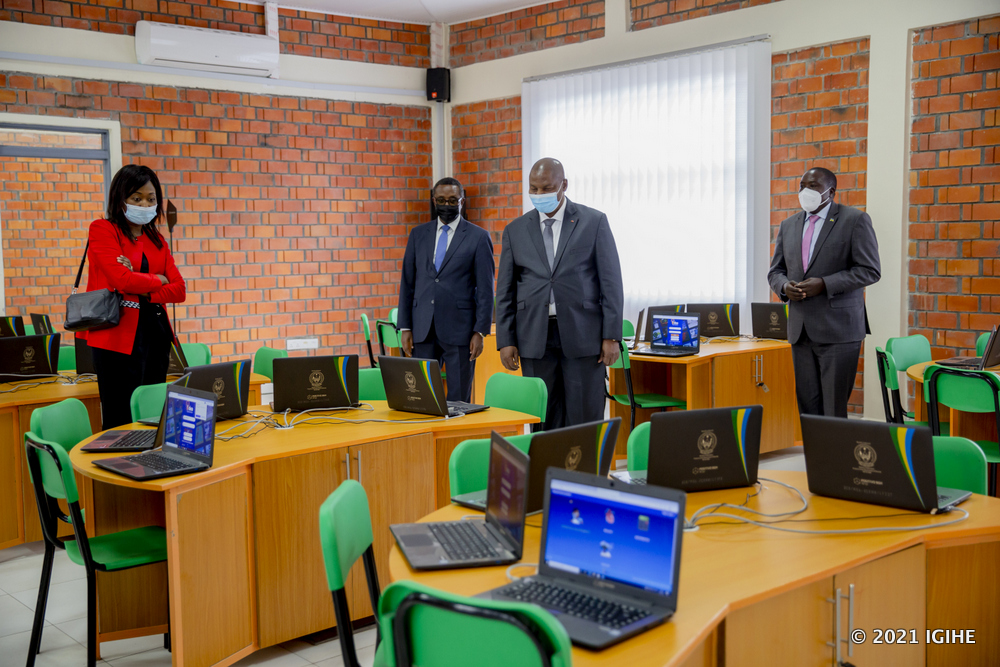
During his visit on Friday 6th August 2021, Touadéra was accompanied by government officials including the Minister of Foreign Affairs, Dr. Vincent Biruta and Minister of Local Government, Jean Marie Vianney Gatabazi.
Touadéra toured different parts of the model village including a health center, accommodations, Early Childhood Development Center (ECD), primary and secondary school.
He was taken through the background of the model village inaugurated on 4th July 2021 as Rwanda marked the 27th Liberation Day which is home to residents from informal settlements.
Located in 12 kilometers away from Musanze town, Kinigi Model Village was constructed by Rwanda Defence Force (RDF).
It is made of six three-storey blocks with 24 homes each. A home has three bedrooms, two bathrooms, a kitchen and a living room, with ready furniture, beds, mattresses and a television set.
The model village also has poultry houses for 8000 chickens and sheds for other livestock, nursery school, health post, business center workshop, playgrounds and kitchen gardens among others.
Construction activities were completed at a cost of Rwf 26, 611, 466, 699 of which Rwf8, 047,653,297 was allocated for construction of homes, Rwf1, 589, 619, 026 for health center while Rwf3,350, 166, 058 was utilized to build a school and Early Childhood Development Center at the village.
Among others; Rwf1, 874, 637, 199 was utilized to buy 102 cows and 8000 chickens for resettled residents; business center workshop, garden preparation and planting fruit trees cost Rwf1, 874, 637, 199 while the remaining activities including tarmac road, electricity installation and expropriation took Rwf11 billion.
Minister Gatabazi explained that construction of model villages began as Rwanda’s home grown solution initiated by President Paul Kagame.
“As he toured different sections of the model village, President Touadéra wanted to know how such villages come into existence. He was specifically keen on witnessing livelihoods of resettled residents and how beneficiaries are selected. We told him that Kinigi is a major hotspot for tourism activities where tourists visiting Virunga National Park are also curious to interact with residents. We also explained how residents in the surroundings of this park benefit from tourism revenues to improve livelihoods,” he said.
Gatabazi revealed Rwanda’s model can be emulated in CAR as a country mired by conflicts to resettle citizens.
“CAR is a country that has dreadful experiences with wars that have not yet ended. Citizens have been faced with insecurity but need decent settlement in model villages after overcoming these problems through elections,” he said.
Touadéra was elected CAR President for the second term during elections held in December 2020. At the time, Rwanda sent special forces to secure selections.
On the first day of his visit to Rwanda, both countries signed four bilateral agreements in the areas of defence cooperation, mining, transport and economic development.
So far, he has visited the Campaign Against Genocide Museum located at the Parliament Building in Kimihurura and headquarters of Rwanda Defence Force.
Touadéra will also tour several conservation and eco-tourism destinations before his departure on 8th August.
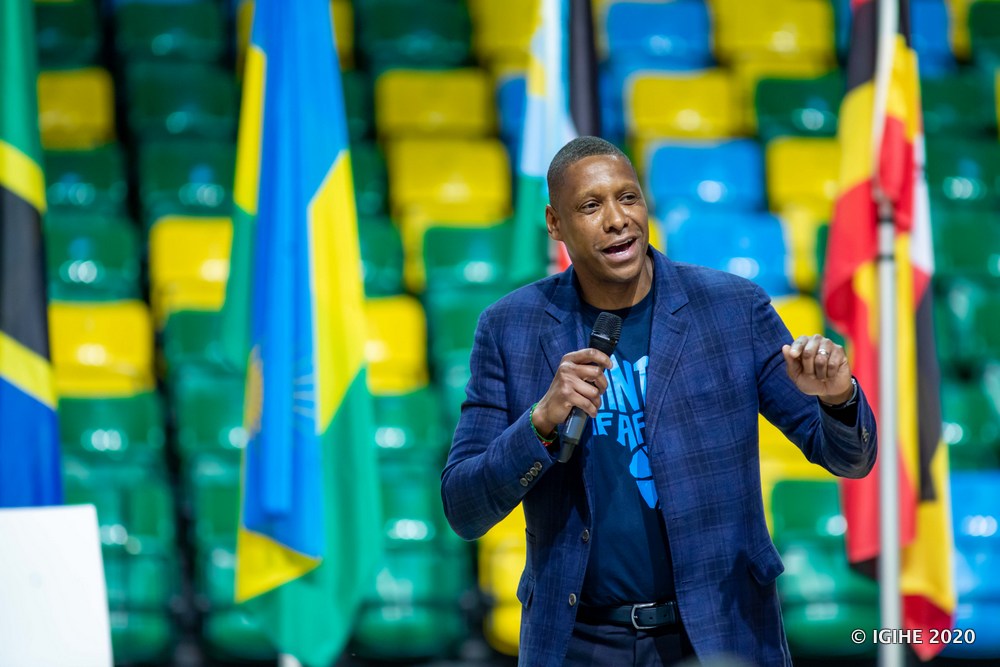
“Great sportsmen impact their games. Great leaders impact their communities. Masai Ujiri does both, and we’re very pleased he is returning to the Raptors as vice-chairman and president,” Maple Leaf Sports and Entertainment chairman Larry Tanenbaum said.
“Masai and MLSE share the goals of bringing another NBA Championship to Toronto, and off the court, working towards making our city, country and world a better place. These are exciting times, and we look forward to all that comes next for our team, for Masai and for his family. Masai, we’re glad you’re staying home.”
Ujiri has led the Raptors since 2013. During his tenure, the Raptors have moved into their state-of-the-art practice facility at OVO Athletic Centre, hosted an NBA All-Star Game, formed Raptors 905, their G League franchise, and in 2019 won the NBA Championship, the first team outside the United States to accomplish the feat.
“On the court, our goal is clear: to bring another championship to Toronto. Our team is united in that mission. Nothing else will do. We will bring young talent to this city. We will value the veteran players who got us here,” Ujiri said. “I’ve said it before and I’m saying it again: We will win in Toronto.”
Ujiri’s commitment to his work off the court remains unwavering. He continues as president of Giants of Africa, the non-profit he co-founded in 2003, which urges youth to Dream Big and uses sports as a tool for advancement. This summer, he will travel to Africa to unveil new GOA-funded sports infrastructures, so youth there will have access to quality facilities.
In addition to his work with GOA, Ujiri intends to take on new challenges, including advocating for equality and fair treatment for marginalized people in the justice system, and focusing on the issue of child soldiers and peace. In 2020, Masai launched thatshumanity.org, inspired by his experiences and the lessons learned from leaders like Nelson Mandela. His non-profit interests will be represented by WME.
“To be able to stand with Larry Tanenbaum and the MLSE board as we confront these challenges is huge,” Ujiri said. “To share a vision of what we believe can be possible, and understand the work we have to do to get there, is a huge reason I’m so glad to be back in Toronto. I am very grateful for their confidence and their support.”
Ujiri grew up in Zaria, Nigeria. He played at college basketball in the United States, and began his career in professional sports as a scout. Ujiri was appointed general manager of the Denver Nuggets in 2011, becoming the first African GM in pro sports, and won the 2013 NBA Executive of the Year award. In Toronto, he has also served as director of global scouting and assistant general manager.
The Minister for Foreign Affairs and East African Cooperation, Ms Liberata Mulamula, said in Dar es Salaam on Thursday that some of the lessons learnt during the visit include developing infrastructure and putting in place a conducive environment for investment and economic growth.
According to Ms Mulamula, it was also useful to note how bolstering Export Processing Zones (EPZs) can boost the country’s chances of attracting investors.
“We developed our own EPZs some years back; but it looks like there were some issues that needed to be worked on,” said Ms Mulamula, briefing journalists on major takeaways from President Hassan’s just-ended two-day visit to Rwanda.
In efforts to improve Rwanda’s balance of payments, factories operating under the Special Economic Zones system in that country are required to export at least 40 percent of their products.
Until 2016, figures from the Rwanda Development Board (RDB) show that Tanzanian businesses had invested slightly over US$80 million in Rwanda’s economy.
She said the Tanzanian delegation saw just how having a conducive investment environment – including economic infrastructure like roads, water and electricity – helps to attract investors.
{{Business environment}}
Rwanda is in a league of its own when it comes to improving the business environment.
It jumped an impressive 76 places – from 143 to 67 – on the World Bank’s Doing Business 2010 Report, becoming the first African country to top the list as the world’s biggest business reformer.
However, Rwanda did not rest on its laurels – and has continued to improve year after year. It was the second easiest place to do business in in Africa – and the 38th globally in the 2020 World Bank Doing Business Report.
The Reports, which are compiled annually, assess 190 countries using 10 indicators in business regulation. These include starting a business, dealing with construction permits, getting electricity, registering property, getting credit, protecting minority investors, paying taxes, trading across borders, enforcing contracts, and resolving insolvency.
Rwanda was ranked second in Africa after Mauritius – and first in the East African Community. It is also the only low-income country in the Top 50.
The Report also has Rwanda’s global ranking drop to 38th place from 29th last year, mainly caused by the World Bank’s change in reporting methodology.
With President Hassan stepping up efforts to improve Tanzania’s business environment since she assumed office on March 19, 2021, analysts believe this should rank high on the list of takeaways.
Most of the shared views stem from President Hassan’s visit to two strategic factories established in Rwanda by foreign investors: a Volkswagen car assembly, and the Mara Phones Factory.
Analysts expressed mixed sentiments, following Rwanda’s performance as an ideal investment hot-spot, with most stating that Tanzania as East Africa’s second-biggest economy needs to be at the forefront in attracting Foreign Direct Investments (FDIs).
During a discussion on the social audio space ‘Kumekucha’ on ClubHouse, the Member of Parliament for Nzega Rural, the former Tourism minister Hamis Kigwangalla, commented on the matter, saying Tanzanian laws, culture and political spectrum play a big role in dictating the country’s direction for socioeconomic development.
“We need leaders who have the intention and hunger to see Tanzania develop. What will make us succeed is not our geographical position or our ports, but systems that are deeply entrenched in our financial mechanism and cultural alignment. That’s how we will attract investors like the Mara Group,” he counselled.
Kigwangalla – who is also a businessman and the proprietor of a few investments in Tanzania – said that during his time as Tourism minister, he held meetings with investors. One of the things they complained about was high taxes.
“Investors are made to pay multiple taxes, some of them inordinately high. This discourages both local and foreign investors from investing in Tanzania. Such taxes and bureaucratic tendencies have an adverse impact on the tourism sector, with small tour companies failing to keep the business going,” he stressed.
Kigwangalla suggested possible solutions to some of the problems that impede Tanzania’s business potential. According to him, a cultural revolution is very important.
“This can be passed through our education system for future generations,” he said.
He added that leadership ideology (socialism) and economic ideology need to go hand in hand. “We can have Ujamaa along a free market economy.”
Referencing a book titled ‘Why Nations Fail’ by economists Daron Acemoglu and James Robinson, Kigwangalla said Tanzania has what it takes to become prosperous. However, there were a few areas – especially in leadership, education, and culture – that need to be revisited.
One of the attendees of the social audio space, Peter Serukamba said Tanzania has advantages over the other countries in the region: geographical edge and natural resources. “Why haven’t these been fully utilized? We need to look at where we have failed in this… The impediments to investment, unpredictable laws, being overly skeptical about investors’ motives,” he lamented.
{{Plentiful opportunities}}
Being the second largest economy in East Africa, Tanzania has a lot to offer and benefit from its ties with Rwanda.
According to Ms Mulamula, during the visit, Tanzania secured a number of investment opportunities that it needs to tap – especially in providing raw materials for Rwandan industries, as well as preparing a curriculum for teaching Swahili in that country.
During the visit, the entourage included ministers from strategic sectors, including the ministers for Works, Transport and Communication; for Industry and Trade; Mand for Investments. There also were heads of the Tanzania Ports Authority (TPA), Air Tanzania Company Limited and Tanzania Railway Corporation (TRC).
She noted that the trip was in response to an invitation from Rwanda President Paul Kagame that also focused on strengthening neighbouring relations but also an opportunity for the President to introduce herself to President Kagame and his people at large. Following the State visit to Rwanda, President Hassan has finalized her trips to neighbouring countries except Southern Sudan.
“Both the President’s talked about pushing strategic projects in both countries including the optic fibre backbone by having an agreement that ensures Rwanda uses our fibre to strengthen its information sector,” she said.
Further President Hassan toured its automobile industries and learnt that Tanzania could be a potential market taking into consideration that they produce three to six for their own use but if Tanzania became a reliable market they could increase. In view of this, she said President Hassan directed ministers in charge of the sector to follow up and identify markets for the cars.
Ms Mulamula said Rwanda also had a mobile phone industry identified as Maraphone, a good thing that has created employment especially for women.
“Tanzania could also provide granite minerals for production of phones and car batteries which is an opportunity to export raw materials,” she said.
She said on medicine, they agreed that both countries could assist each other with Covid-19 facilities and that was why it was important to sign an MoU to signal the agreement.
Meanwhile, she said they also agreed to cooperate in the transport sector especially as Rwanda depends on Tanzania’s Dar es Salaam port by 90 percent for both imports and exports. According to her, Rwanda also requested to be allowed to use the Tanga port which they have started.
On the issue of Kiswahili language, she said Rwanda said it planned to make it a national language and include it in its education curriculum of which President Kagame requested for experts from Tanzania to help in its preparation
About immigration, she said the immigration department has been directed to facilitate smooth passing of people from both countries.
The statement released last night shows that 629 people have caught the virus out of 12180 sample tests, 25 recovered while 44 are critically ill.
A total of 601,357 people have been fully vaccinated since Rwanda began the countrywide inoculation programme on 5th March 2021.
Coronavirus symptoms include coughing, flu, and difficulty in breathing. The virus is said to be transmitted through the mucous membranes of the respiratory tract.
Rwandans are urged to adhere to COVID-19 health guidelines, washing hands frequently using soaps and safe water, wearing face masks and respecting social distancing.
Present was also the Inspector General of Police (IGP) Dan Munyuza and DIGPs Felix Namuhoranye of Operations and Jeanne Chantal Ujeneza of Administration and Personnel.
The retirees include four Assistant Commissioner of Police (ACP), six senior officers, 102 junior officers, 80 non-commissioned officers as well as 24 constables.
Minister Busingye thanked the retirees for their sacrifice and dedicated service to their country, and for retiring with honour and dignity.
“Some of you were part of the liberation struggle and pioneers of this professional Police force. This is the time to look back at your journey in active service, the values, unity, peace and security you fought for. It is time to recognize and celebrate the contribution of each and every one of you in this liberation journey, which continues. You served a country that appreciates,” Minister Busingye said.
“Where you live, travel, go to church, where your children go to school; maintain discipline, be exemplary and good ambassadors. Continue to serve your country in many other capacities in your communities and in your new life,” he added.
People in Rwanda, he said, sleep well and feel safer due to dedicated Police officers who work day and night, 24/7 adding that this is a yardstick for the trust Rwandans have in their Police force. He further took time to laud the role of RNP in fighting the pandemic of Covid-19 through enforcement of the directives and awareness of the prevention practices.
IGP Munyuza, on his part, thanked the retirees for their contribution in building a professional Police force and ensuring a safer and secure country.
“Your dedicated service and love for your country will continue to be remembered and what you fought for will be sustained by those that you have left behind,” IGP Munyuza said.
Although the officers have retired from active service, the Police Chief reminded them that their services will be required whenever need arises. He further urged them to continue sustaining what they strived for and achieved as well as the values and honesty, which defined them throughout their career.
“Your thoughts and ideas are still needed to further build a secure country that befits Rwandans. Be good ambassadors for Rwanda National Police (RNP); continue to be Police partners to fight anything that can cause insecurity including Covid-19, and be part of all activities geared towards the country’s sustainable development,” IGP Munyuza told the retirees.
ACP (rtd) Anthony Kulamba, who spoke on behalf of the retirees, expressed joy for the pride accorded to them as they retire from active service.
“We thank His Excellency Paul Kagame, the President of the Republic of Rwanda for having led the liberation struggle, stopped the 1994 Genocide against the Tutsi, and reunited Rwandans, a strong pillar for the new and peaceful Rwanda we all enjoy today.
We thank him for his visionary leadership, a foundation for strong institutions and good governance. The RNP is one of those strong institutions that were founded on this visionary leadership, and we are joyful to have been part of this family,” Kulamba said.
He added: “We are happy for serving our country in this capacity and honoured for this day when we are retiring with pride. We have retired from active service but we will continue to serve our country in other capacities in our communities as we join hands with local leaders and the people to sustain and build on what was achieved,” he added.