The suspects are accused of connivance in making forged documents.
COPCOM accuses the suspects to have misallocated over Rwf1, 709,575,648 from.
During previous hearing, suspects denied accusations claiming that they are linked to poor management which has mired the cooperative.
As the court resumed the hearing on 10th September 2021, some of suspects said that they cannot proceed in the absence of co-accused with medical records confirming their sickness.
Other suspects requested enough time to analyze their dossiers before trial begins in substance.
In consideration of the medical records, the court has adjourned the trial to 27th September 2021 from 8a.m.
The report released by the World Travel and Tourism Council (WTTC) in 2020 indicates that tourism contributed 10.9 percent to Rwanda’s GDP growth in 2019 making it the second Sub-Sahara African country with fastest growing tourism sector.
The growth reflects Rwanda’s efforts to market the country as a destination for tourists through Visit Rwanda campaign, gorilla conservation efforts, building infrastructures to host international conferences, reintroducing new animal species and protecting national parks among others.
Since 2000, Rwanda designed ambitious tourism development blueprint targeting to earn US$800 million by 2024 which might be affected by effects of COVID-19.
{{Doubled tourism revenues }}
The research carried out by the African Leadership University (ALU) on the impact of wildlife to Africa’s economy, indicates that Rwanda’s tourism revenues increased from US$200 in 2010 to over US$400 million in 2019.
The research shows that some of visitors come to Rwanda for different reasons including excursion, visiting families, study trips, working visits and exploring business opportunities.
{{Rwanda, Arsenal partnership}}
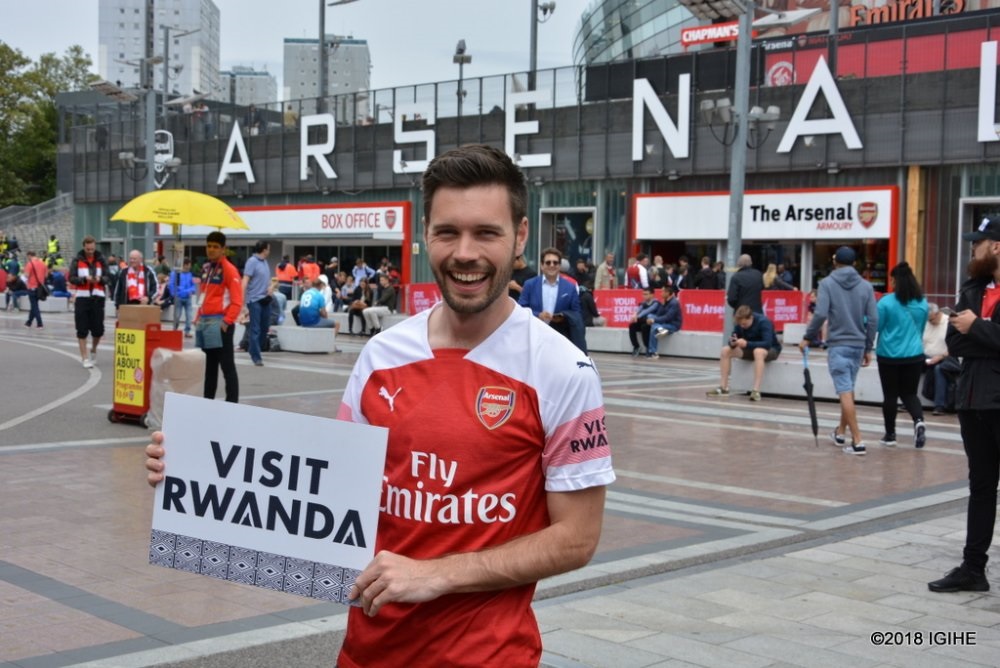
In 2018, Rwanda entered partnership with Arsenal Football Club that saw the ‘Visit Rwanda’ logo featuring on the Premier League club’s left sleeve.
Through the Rwanda Development Board (RDB), Rwanda initially signed three-year deal worth Euro 30 million.
By the end of the first year of the partnership, Rwanda’s tourism revenue increased by 17% to US$498 million in 2019 from US$425 million in 2018.
Leisure tourists from Europe increased by 22% and by 17% from the UK.
Following the positive feedback, Rwanda announced recently in August 2021 that the partnership with Arsenal Football Club has been extended.
“After a successful start to the 3-year partnership with Arsenal Football Club, the Rwanda Development Board decided in 2019 to renew the partnership, which was then announced on 14 May 2021, during the launch of the club’s 2021/22 away kit,” reads part of the message released via Twitter handle.
According to RDB, the renewed partnership will build on the gains made over the last 3 years and ‘contribute towards Rwanda’s economic recovery strategy following the COVID-19 pandemic, particularly in the tourism sector’.
“The partnership will also continue to leverage Arsenal’s expertise to develop football locally in Rwanda, with a focus on improving the quality of coaching at the grassroots level for girls and boys,” adds the tweet.
Apart from the partnership, the research carried out by ALU also shows that gorilla conservation efforts have also yielded big attracting a large number of tourists from across the world.
Figures show that Virunga National Park contributed 91.7% of tourism revenues from four national parks in 2019 where 50 percent of tourists visiting the park were attracted by gorillas.
The gorilla naming ceremony held every year since 2005 has also contributed immensely to attracting tourists particularly celebrities joining Rwanda for the flagship conservation event marketing Rwanda’s tourism.
In 2018, the ceremony which is among most high profile events brought together 65,000 participants from different corners.
{{Conservation efforts}}
Following the 1994 Genocide against Tutsi, Rwanda embarked on a resilience journey and improved its visibility on the global scene through different activities to lure tourists and investors, tightening security, building infrastructures including hotels, preserving national parks and maintaining high standards of cleanliness among others.
In 2008, Rwanda banned the use of plastic bags and intensified measures to maintain hygiene where Kigali City is among cleanest cities worldwide.
Through ongoing conservation efforts, Rwanda has so far separated human population from parks fencing off demarcations for some parks, introduced a scheme to share tourism revenues with residents in the surroundings of parks, and reintroduced extinct species like lions, rhinos to Akagera National Park which is currently home to big five animals.
The report of the National Institute of Statistics of Rwanda (NISR) released in 2020 indicates that the park registered 321,745 visitors; Virunga National Park which is home to gorillas was visited by approximately 308,333 tourists while Nyungwe National Park recorded 93.528 visitors between 2005 and 2017.
Statistics show that Akagera and Nyungwe contributed 5.9% and 2.4% of tourism revenues from National Parks in 2019.
In June 2020, RDB announced reduced prices for gorilla permits which are available for as little as US$200 for Rwandans and nationals of East African Community (EAC) residing in Rwanda, and $500 for foreigners who are resident in Rwanda. International tourists are required to pay US$1,500.
The suspected drug dealers identified as Theoneste Niyomugabo, 21 and Twizerimana Hitabatuma, 34, were intercepted on Saturday 11th September 2021 in Nyakigezi village, Gakoro cell, Rugera sector as they carried the narcotics on a bicycle.
The Western region Police spokesperson, Chief Inspector of Police (CIP) Bonaventure Twizere Karekezi has said that the suspects were intercepted by traffic Police officers on duty.
“Traffic Police officers who were on duty in Nyakigezi village, stopped three people who were on one bicycle ridden by Theoneste Mugabo with a sack. When Police officers searched the sack they found it contained pellets of cannabis. Mugabo and Hitabatuma were arrested while the third accomplice fled in the process,” CIP Karekezi said.
Upon their arrest, the suspects disclosed that they got the narcotics from Musanze District and that they were enroute to Muhanga District to supply their clients.
CIP Karekezi warned commercial bicyclists and taxi-moto operators against engaging or facilitating drug traffickers
The two suspects were handed over to RIB at Rugera station for further investigation while the search for accomplices is still ongoing.
The Ministerial order nº 001/MoH/2019 of 04/03/2019 establishing the list of narcotic drugs and their categorization classifies cannabis in the category of “very severe narcotics.’’
Article 263 of law No 68/2018 of 30/08/2018 determining offenses and penalties in general states that any person, who unlawfully produces, transforms, transports, stores, gives to another or who sells narcotic drugs and psychotropic substances, commits an offence.
Upon conviction for “very severe narcotics,” the offender faces between 20 years and life imprisonment, and a fine of between Rwf20 million and Rwf30 million.
Mugabe’s children had challenged Chief Zvimba’s controversial ruling, arguing he acted outside his jurisdiction when he found former First Lady Grace Mugabe guilty of violating tradition by burying the strongman at his homestead.
Zimbabwe’s founding father died of cancer in 2019 aged 95.
His family claimed his final wish was for President Emmerson Mnangagwa not to preside over his funeral.
The former First Lady was ordered to facilitate the exhumation of the long-serving ruler’s remains for reburial at a national shrine for luminaries of the country’s 1970s liberation war. She was fined five cows and two goats.
Ms Mugabe, who is said to be indisposed and seeking treatment in Singapore, was tried in absentia.
The traditional leader said he was “giving powers to those who are permitted by law to exhume Mugabe’s remains from Kutama and rebury them at the National Heroes Acre in Harare”.
But Mugabe’s three children, Bona, Bellarmine Chatunga and Tinotenda Robert, filed an appeal with a local magistrate’s court, arguing that “Chief Zvimba erred at law by making an order that overturns a burial order in respect of the burial of the late Robert Mugabe, when the chief had no judicial authority to interpret legal acts from superior legislation to his jurisdiction”.
The siblings said the chief made a mistake by “making an order that affects property rights of a party that is not part of the proceedings”.
They accused the chief of making a “false finding of fact, which amounts to an error at law when he found that the late Robert Mugabe was buried inside a house.”
The appeal was dismissed by a magistrate in the former ruler’s hometown of Chinhoyi.
Following Mugabe’s death in Singapore in 2019, a standoff ensued between the government and his family over his final resting place, stretching for nearly three weeks.
According to the UNESCO, one year into the COVID-19 pandemic, close to half the world’s students are still affected by partial or full school closures, and over 100 million additional children will fall below the minimum proficiency level in reading.
In Thailand, schools have been closed for more than four months due to the third wave of the COVID-19 pandemic causing a crisis of students’ dropping out. Without the government’s support, the dropout rate will increase by 10 to 15 percent, according to the Bangkok Post report.
In addition, EEF (Equitable Education Fund) said the poor Thai students receiving higher education are only 5 percent due to educational inequality, with about 670,000 children not attending school due to the government’s lack of support for school infrastructure, teachers, and curricula.
Natalie Bergman, a human rights lawyer proposed active government support as a way to deal with the reality of Thai children.
“More teenagers have dropped out of school since the pandemic and are going to work to support their families. The government should support computers, smartphones, and the internet free of charge for students’ online studies and also guarantee legal rights and vaccination of immigrant workers’ children,” she said.
“Thai government should not use violence against children in an anti-government protest,” added Natalie.
Kowit Phothisan, an editor of Way Magazine also shared the reality of child labor around the world.
“There are 160 million children who is not in school, but in labor, with 79 million children aged 5 to 17 working in environments that are harmful to children. They must be chosen to work for a living. This is the reality of children around the world, and to address this, we urge the government to invest in social protection programs for vulnerable children and families first,” he noted.
Bow Nuttaa Mahattna, a human rights advocate reminisced on the contribution of NGOs. “NGOs can raise awareness about the reality that children’s human rights are violated and seek solutions through their communication channel,” he said.
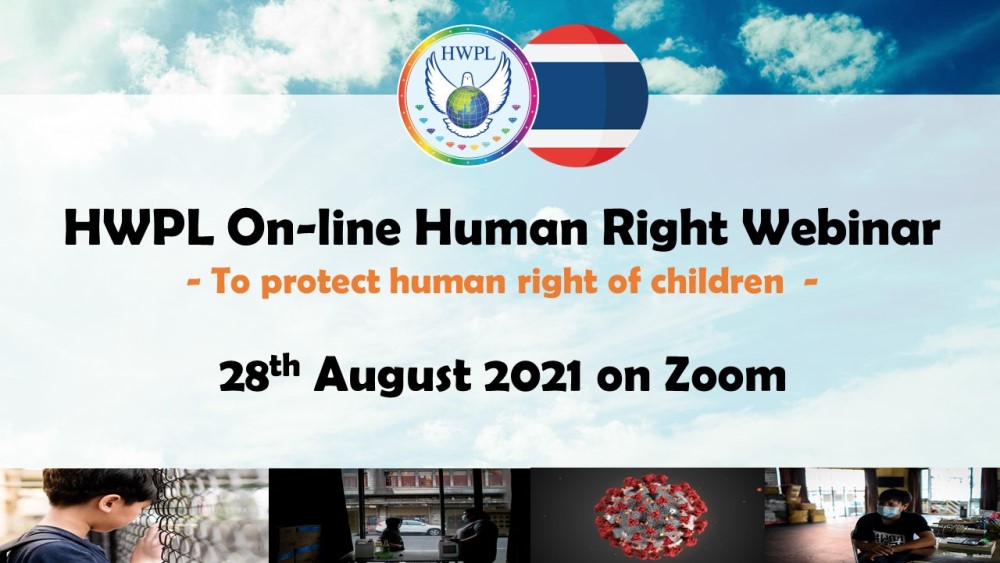
HWPL is calling for social and nationwide efforts to protect children’s human rights and the right to education triggered by the coronavirus outbreak.
The organization seeks to find practical solution to raise awareness of human rights, including the invention of a legal framework for peace, religious harmony, human rights webinars, peace education for students and citizens, and voluntary work.
Amb. Gatete was speaking to the media on Thursday 9th September 2021 where he revealed that almost all discussions and feasibility study have been finalized.
“We have made two major steps paving the way for implementation. The first is about meeting all requirements to begin construction of the railway. The second is about making a holistic project study preceding construction. In fact, we have completed all basic preparations,” he said.
“The remaining task is to work with the African Development Bank which helped us to design the project’s study so that we can discuss sources of funds to build the railway, consider how much we have and need as well as determining how best they can be utilized. This is what we are discussing,” he added Amb. Gatete.
He revealed that dates for a meeting bringing together stakeholders to finalize talks on the source of funds are to be confirmed in the near future.
“Construction works will begin right after settling this issue,” said Amb. Gatete.
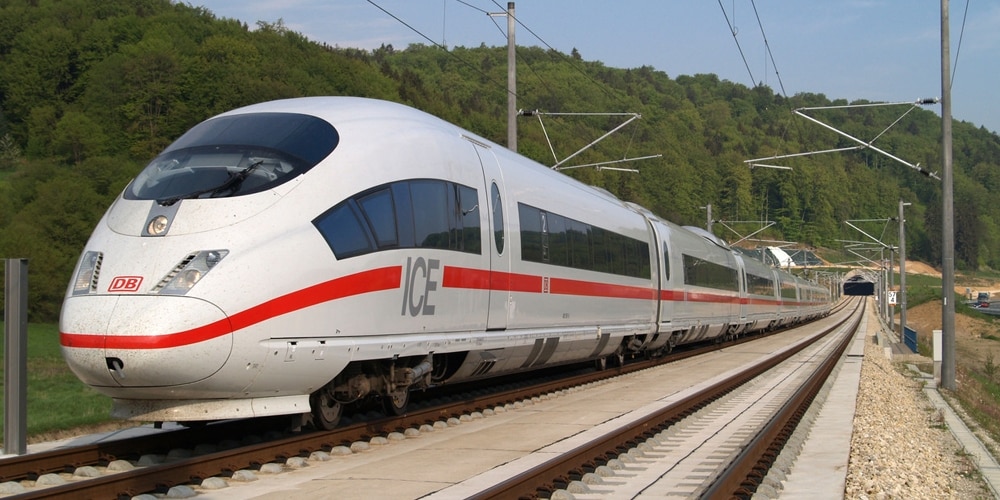
Isaka-Kigali is a joint 532 km railway project between Rwanda and Tanzania expected to be completed at a cost of USD$3.6 billion.
The project is much anticipated between both countries especially for Rwanda as a landlocked nation.
Sources reveal that Rwanda is required at to pay US$4,990 per single container carrying 25,400 kgs. Once completed, the railway anticipates reduced transport costs by 40% hence positively impacting on Rwanda’s imports and exports.
Among others, the project will be impactful particularly for Rwandan traders considering the fact that 70% of Rwanda’s imported or exported cargos are transited through Dar es Salaam Port.
Rwanda and Tanzania began discussions for the construction of Isaka-Kigali railway in 2000. It will follow the track from Dar es Salaam, through Isaka and Rusumo in Kirehe before reaching Kigali.
Agreements to construct the 532-railway initially expected to be completed at a cost of US$ $ 3.6 billion were signed on 9th March 2018.
On the side of Rwanda, the 532-km railway will pass through Rusumo border to Kigali city (at headquarters of Dubai Ports in Kicukiro). There will be an extra 18-km part of the railway leading to Bugesera International Airport.
The railway on the side of Rwanda will be 138 km with the rest of 394 being on Tanzania side.
Of the total US$3.6 billion estimated cost; Tanzania shall meet US$2.3 billion while USD $ 1.3 billion is required on Rwanda’s side.
It was recently reported that landmarks for Isaka-Kigali railway passage have been erected from Rusumo to Ndera in Kigali city.
Construction of the railway is underway on the side of Tanzania.
It is expected that the railway will be expanded to the democratic Republic of Congo (DRC), once the country’s request is approved.
Apart from Isaka-Kigali railway, Rwanda also joined Northern Corridor countries including Kenya, Uganda and South Sudan for the implementation of a $13.8 billion flagship railway project that links Mombasa to Kigali and the railway expected to dramatically boost East African’s position as a regional economic hub.
The duo includes a Gynecologist and Anesthesiologist.
It is said that the patient died as the duo performed a surgical procedure at the hospital.
Speaking to IGIHE, the Spokesperson of RIB, Dr. Thierry B. Murangira has confirmed their arrest noting that investigation is underway.
“It is true. RIB has arrested a Gynecologist and Anesthesiologist from Baho International Hospital. Their arrest is part of ongoing investigation into the death of a 54-year old woman who died on 9th September 2021,” he said.
The hospital’s management has condoled with the bereaved family and friends explaining that more details about circumstances of the woman’s death will be established following the ongoing investigation.
The hospital said that doctors tried their best to save her life but ended up in vain.
The body was taken to Kacyiru Hospital for postmortem.
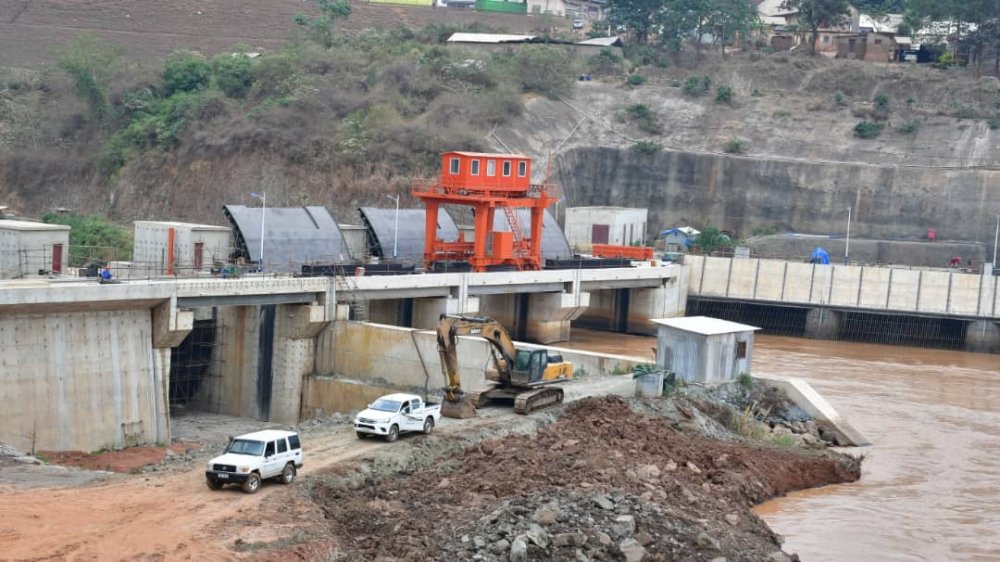
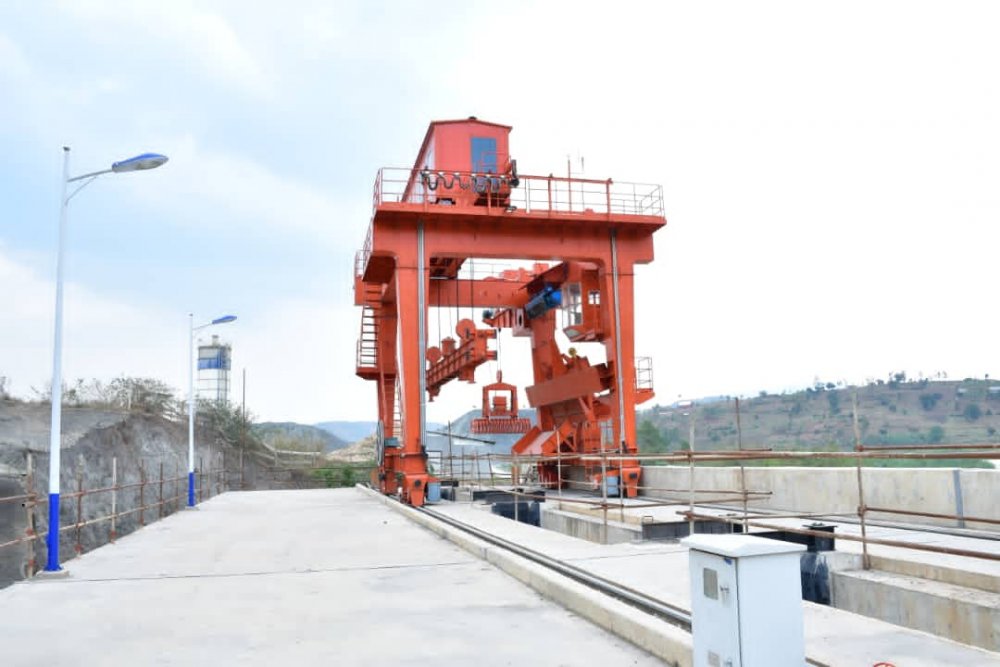
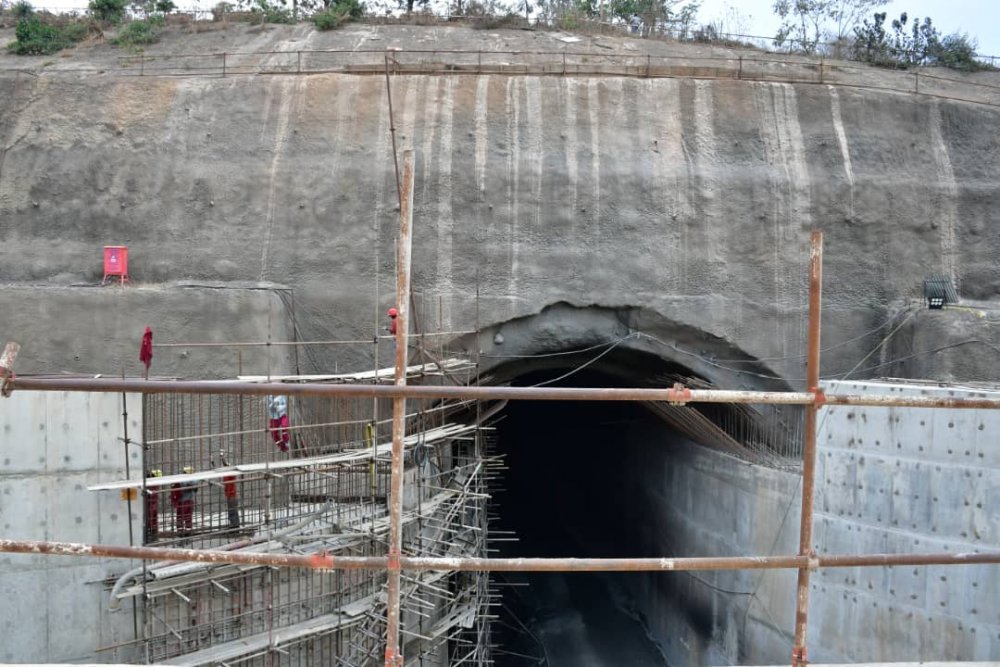
The plant is part of the Regional Rusumo Falls Hydroelectric Project (RRFP) under joint development by the Governments of Republic of Burundi, Republic of Rwanda and United Republic of Tanzania through a commonly owned Rusumo Power Company (RPCL).
The joint development was entered by the three governments through a Tripartite Agreement signed on 16th February, 2012.
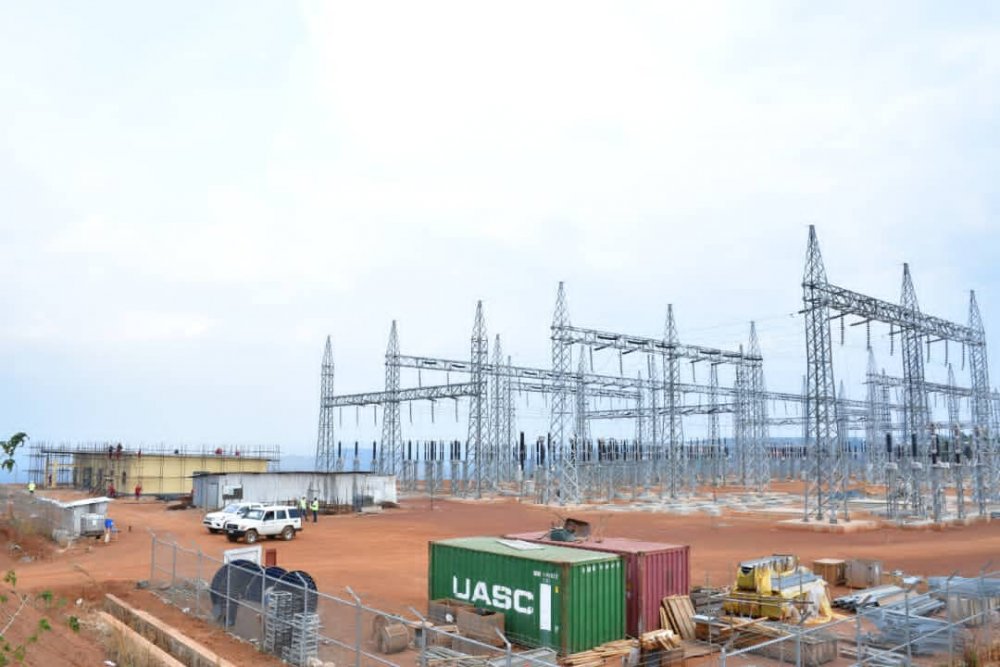
The project is located at Rusumo Falls, at the common border of Rwanda and Tanzania on River Kagera. The power production facilities are located entirely on the south side of the bank of the Kagera River in Tanzania, while the substation is located on the northern side of the bank of the river in Rwanda.
Construction works which started in 2017 were supposed to be completed in 2020 but the project stalled due to different challenges as explained by the project manager, Darren George Protulipac hailing from Canada.
“Construction works have stalled due to encountered challenges related to contracted companies which began activities late and restrictions occasioned by COVID-19 pandemic as activities were underway. However, we are progressing well towards the final phase. We are left with minor construction works and hope that the power plant will start producing electricity for Rwanda, Tanzania and Burundi towards the beginning of 2022,” he said.
Apart from the main plant, Darren has revealed that a power transmission facility to supply electricity to the three countries is also under construction in Rusumo.
He explained that the power plant will provide 26.6 megawatts to each beneficiary country which might increase.
Construction the plant expected to cost US$120 million (approximately Rwf120 billion) is fully funded by the World Bank while other activities including electricity transmission lines are estimated at US$60 million (approximately Rwf60 billion).
Théoneste Higaniro, the Head of Power Generation Projects at Rwanda Energy Group (REG) has said that the project is expected to add up to Rwanda’s efforts to achieve universal electrification by 2024.
Once the power plant is completed, Higaniro said, generated electricity will be supplied to Rwandan residents through Bugesera and Shango transmission lines.
Figures from REG show that the cumulative connectivity rate stood at 65.9% of Rwandan households including 48.1% connected to the national grid and 17.8% accessing through off-grid systems (mainly solar) as of August 2021.
Burindwi was caught red-handed with 1,673 pieces of assorted skin whitening products worth of Rwf3 million.
The whitening lotions including Beauty, Caro light, Coco Pulp, Epiderme crème, White Max, Diana, Diprosal, Dermasol, and Bio plus were found in his shop located in Bukinanyana village, Butare cell, Ngoma Sector.
The suspect admitted that he was buying the outlawed harmful lotions from dealers in Muhanga District. He further explained that the dealers in Muhanga traffic them into Rwanda from the Democratic Republic of Congo (DRC) mainly heading to City of Kigali.
The Southern region Police spokesperson, Superintendent of Police (SP) Theobald Kanamugire said that the suspect was arrested as a result of strong partnership between the Police and the general public through information sharing.
“RPU received information from a resident that Burindwi was selling in his shop ‘Chez Gikongoro’ assorted types of skin bleaching lotions.
An operation was conducted at the same shop and Burindwi was found with 1,673 pieces of outlawed cosmetics,” SP Kanamugire said.
He reminded the public that skin whitening creams and oils were banned in Rwanda due to their adverse health effects to users.
The Southern region spokesperson warned anyone selling the banned oils and creams that RNP has strengthened operations against smugglers and those selling them in shops.
The suspect was handed over to RIB at Huye Police station for further legal process as the search for suppliers is still underway.
The outlawed creams and oil brands contain chemicals such as mercury and hydroquinone, which can cause liver damage, reduce resistance to bacterial and fungal infections, and increase anxiety, according to the World Health Organization (WHO).
Medics suggest that the two toxic chemicals; hydroquinone and mercury react with ultraviolet rays and lead to more pigmentation and premature aging.
The more these products are used the less melanin the body produces, and this leads to an increased risk for skin cancer.
Article 266 of the law determining offenses and penalties in general, states that any person, who produces, sells, or prescribes harmful products; cosmetics or body hygiene substance or any other products derived from plants, commits an offence.
Upon conviction, he/she is liable to imprisonment for a term of not less than one year and not more than two years and a fine of not less than Frw3 million and not more than Rwf5 million or one of these penalties.
The statement released last night shows that 470 people have caught the virus out of 11378 sample tests, six recovered while 18 are critically ill.
A total of 932,692 people have been fully vaccinated while 1,711,757 received the first dose of COVID-19 vaccine since Rwanda began countrywide inoculation program.
Rwanda is administering types of vaccines including AstraZeneca, Johnson & Johnson, Pfizer and Sinopharm and targets to cover 60 percent of the population by June 2022.
Coronavirus symptoms include coughing, flu, and difficulty in breathing. The virus is said to be transmitted through the mucous membranes of the respiratory tract.
Rwandans are urged to adhere to COVID-19 health guidelines, washing hands frequently using soaps and safe water, wearing face masks and respecting social distancing.