The Acting Executive Secretary of Boneza sector, Jean Claude Mbanzabugabo has said that the incident happened in the night of Tuesday 5th October 2021 in Bikono village of Bushaka cell.
“It is true that two men brought the teacher to sector offices in the night of Tuesday claiming that he was caught red handed raping a patient with mental disorders. They heard the girl crying, informed village leaders that the suspect was arrested and brought to our offices. We also handed him to Police,” he said.
Mbanzabugabo urged residents to report crimes on time.
The accused teacher is detained at Ruhango Police Station in the area while the mentally ill girl aged 31 was taken to One Stop Center at Murunda Hospital for assistance.
The incident took place in Cyungo cell of Rulindo district, Northern Province in the night of 6th October 2021 around 10 p.m.
The executive secretary of Cyungo sector, Jeannette Mutuyimana has told IGIHE that the car derailed after hitting a slope along the road leaving two people onboard dead.
“The accident happened on a steep part of the road. Considering the disposition of vehicle wreckages, it is apparent that it might have derailed after brake failure,” he said.
Mutuyimana said, by press time, that the deceased hail from Cyuve sector in Musanze district adding that their bodies have been taken to Mushongi Health Center pending transfer to Nemba Hospital in Gakenke district.
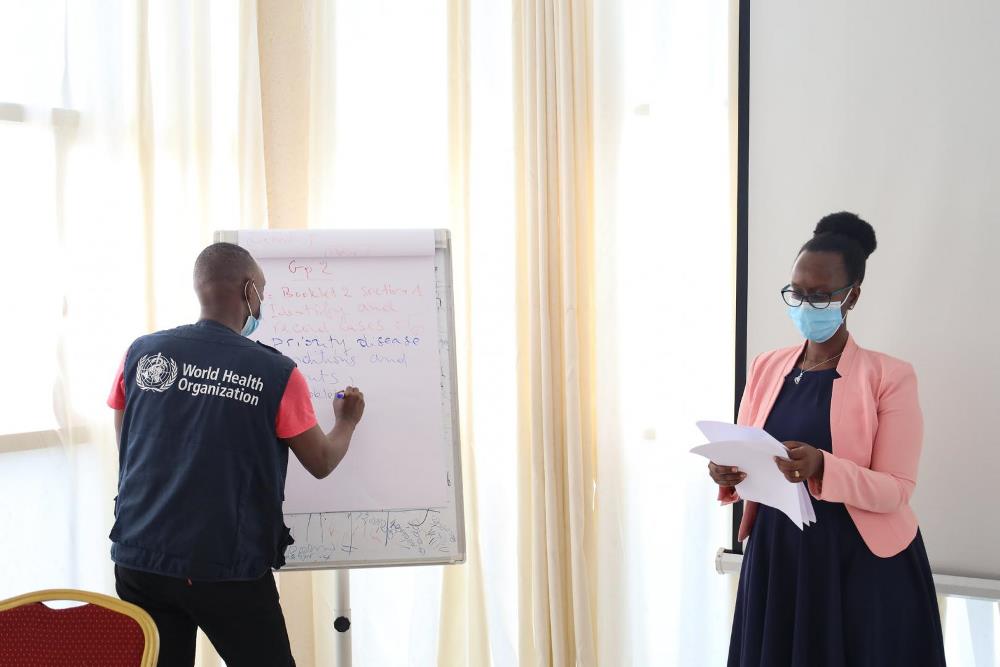
For 5 days, participants at the workshop will adapt the IDSR TGs developed by WHO African Regional Office (AFRO) to Rwanda’s context. Adeline Kabeja, Director of the Surveillance Unit has officiated the opening of the workshop on behalf of Dr. Edson Rwagasore, Division Manager Public health surveillance and emergency preparedness and response.
In her remarks, Kabeja highlighted her trust in the skills and knowledge of the technicians gathered in the workshop.
“Participants in this workshop constitute a multi-disciplinary team. They are from the central and district levels. The participant diversity, knowledge, experience, commitment as well as the consultative approach we will use constitutes a positive aspect for the success of this workshop and the work ahead,” she said.
In 1998 the IDSR strategy was adopted by countries in the WHO African Region (AFRO) for implementing comprehensive public health surveillance and response systems at all levels of the health system. The goal of IDSR is to efficiently integrate multiple vertical surveillance and response systems and linking information with public health action. The role of IDSR in enhancing prompt detection and timely response to public health events at all times cannot be overemphasized.
Rwanda adopted the IDSR in 2002, with the development of country specific TGs and accompanying tools. Since inception, two editions have been implemented.
However, in view of changing public health landscape and the lessons learnt from multiple recent outbreaks including the unprecedented Ebola Virus Disease outbreak in West Africa and in the neighboring Democratic Republic of Congo as well as the ongoing COVID-19 pandemic, the review of the IDSR TGs was thus necessitated.
The guidelines clearly describe what needs to be established at each level of the health system from the national, sub-national and community in order to prepare, promptly detect and timely respond to priority diseases, conditions and public health events and threats that are responsible for preventable illnesses, deaths and disabilities in local communities. The guidelines also recommend thresholds for action for identifying and responding to the threats.
Following Kabeja’s remarks, Dr. Elizabeth Mgamb, WHO Rwanda outgoing Emergency team lead invited participants to leverage on their past experiences to consolidate the most pragmatic guidelines.
“This workshop is timely as it will allow us to contextualize the third edition TG to the situation by using the experience and lessons learned during the implementation of the second IDSR TGs and COVID-19 pandemic to enhance IDSR systems in Rwanda. For IDSR to be implemented successfully in a consistent manner, it requires national standardized guidelines and training modules,” said Dr. Mgamb.
Dr. Lyndah Makayotto, WHO Rwanda incoming Emergency team lead took participants through an overview of the 3rd edition TGs and training modules: “Successful implementation of IDSR will require a well-trained, competent and dedicated workforce. Outbreaks are detected by our frontline health workers at community and facility level and not in our offices in Kigali. As the saying goes, we are as strong as our weakest link,” noted Dr. Makayotto.
Following Dr. Makayotto’s presentation at the launch of the workshop on 6th October 2021, Dr. Alfred Rutagengwa, WHO Rwanda Public Health Officer and Kabeja organized participants into work groups to review technical guidelines and Training Modules (TMs).
By the end the 5-day workshop, Rwanda will have adapted the 3rd edition IDSR TGs and TMs to the health system in Rwanda, set a date for the training of trainers and developed a list of national trainers for implementing IDSR in Rwanda.
The IDSR TGs and TMs in Rwanda will take in consideration: the broader context of health systems strengthening; the better coordination between human and animal surveillance; the improved use of laboratory network capacity in surveillance and response; and better community engagement in public health interventions that require a strong community based surveillance (CBS), and event based surveillance (EBS) strategies.
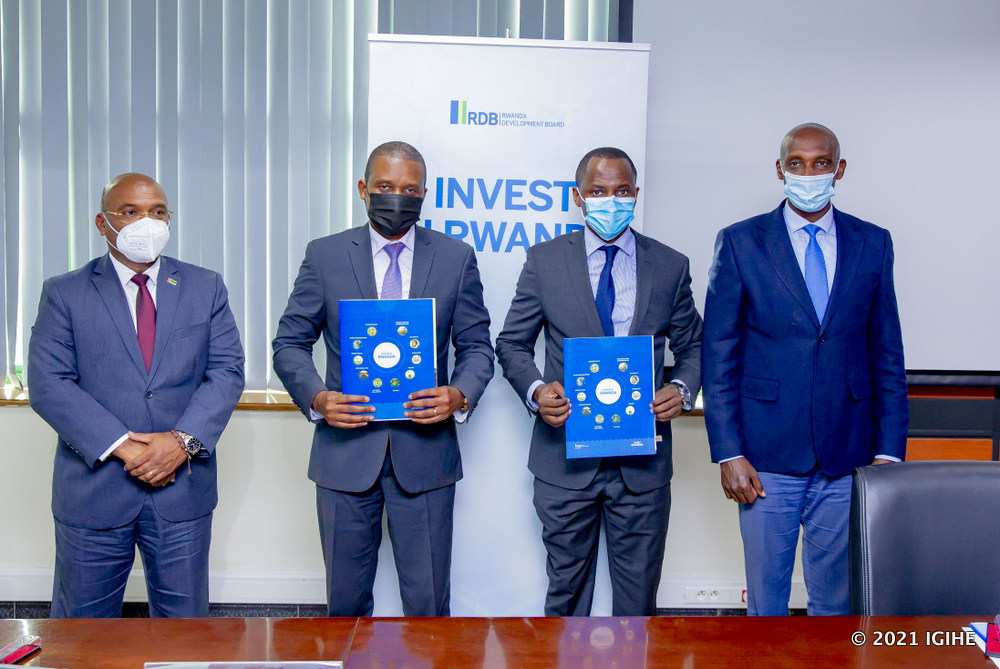
The MoU was signed on Wednesday 6th October 2021 between the Rwanda Development Board (RDB) and Investment and Export Promotion Agency (APIEX) on behalf of Mozambique.
During the ceremony; Mozambique was represented by the Minister of Trade and Industry, Carlos Alberto Fortes Mesquita; Presidential Adviser, Omar Ossumane Momade Mitha and Luis João Matsinhe, the National Director of Studies and Economic Analysis at the Ministry of Planning and Development among others.
Meanwhile, Rwanda was represented by senior economic advisor to the President of the Republic, Francis Gatare; Minister of State in the Ministry of Finance and Economic Planning , Richard Tusabe and the Permanent Secretary at the Ministry of Trade and Industry among others.
Rwanda showcased investment opportunities to the visiting delegation from Mozambique and took them through different incentives to provide favorable business environment for Rwandans and foreigners.
The Deputy CEO of RDB, Zephanie Niyonkuru said that the signed MoU lays the foundation for implementation of priority activities under the framework set between both heads of state when President Paul Kagame visited Mozambique recently.
“Both heads of state assigned us to make possible efforts so that private investors can benefit from existing cordial bilateral relations. The signed agreement is just the beginning and a fruit of discussions held during the visit,” he said.
Niyonkuru said that both countries agreed on cooperation to support and facilitate business communities to invest in each of the two countries.
The visiting delegation is also expected to interact with members of the private sector in Rwanda to take them through investment opportunities in Mozambique and available incentives.
RDB and the private sector also plan to visit the country Mozambique to explore areas of investments and invite Mozambicans to invest in Rwanda as well.
“We are exploring different areas of investment including agro-processsing. Concerning trade, Mozambique is connected to the sea and borders with five countries. This signifies that it is easy to transport goods to other countries when you are running business there,” explained Niyonkuru.
The Director General of APIEX, Gil da Conceicao Bires has revealed that they are set to encourage Mozambican investors to invest in Rwanda.
“We have been impressed. Rwanda has ample investment opportunities particularly in agriculture. Rwanda has a variety of crops which can be exported to our country. Besides, we are members of the Southern African Development Community. Trading with us provides direct linkages to these country members,” he said.
Gil Bires explained that Rwandans can also explore investment opportunities in agriculture, trade, and infrastructure and health sector among others.
The meeting was attended by the Inspector General of Police (IGP) Dan Munyuza, Deputy IGPs; Felix Namuhoranye of Operations and Jeanne Chantal Ujeneza of Administration and Personnel as well as heads of departments, units and RNP schools.
IGP Munyuza, who welcomed the Minister gave an overview of the current status and projections of Rwanda National Police.
“RNP was established in the year 2000 with only 3,000 personnel, which has since increased to over 17,000 Police population,” IGP Munyuza said.
RNP was created following the merger three organs that had the policing mandate at the time. These are Gendarmerie Nationale under the Ministry of Defence, the Communal Police in the Ministry of Internal Affairs and the Judicial Police in the Ministry of Justice.
“RNP has strived to build the capacity in different policing fields. However, much more remain to be achieved to make Rwanda a crime-free country,” said IGP Munyuza.
IGP Munyuza pointed out that RNP prioritizes community policing, among others, which plays a big role in preventing and controlling crimes.
“In the daily duties of RNP, we strengthen cooperation and collaboration with other judicial institutions, security organs, local leaders, public and private entities as well as the general public, through community-oriented policing, which contribute to the better security management,” IGP Munyuza explained.
He further said that the Police discipline has improved over time due to enhanced command and control, close supervision and inspection as well as improved welfare.
Minister Ugirashebuja thanked RNP for the milestone and noted that the existing security is the real indice indicating the Police performance.
“The efforts to realize the current security in Rwanda are impressive and commendable, and international reports have shown the quality and professionalism of our Police, which further defines the security we enjoy today in Rwanda where people feel safe and secure to move day and night,” Minister Ugirashebuja said
“This excellent security we enjoy today did not happen by accident; it is a result of hard work, good leadership and dedicated personnel,” he added.
The Minister said that as the country develops also challenges evolve including crimes, which require the increase in capacity building and acquisition of modern policing equipment.
The minister later toured various RNP facilities at the General Headquarters, including the Police Command and Coordination Center (CCC) and National Emergency Command Center (NEC).
The statement released last night shows that 132 people have caught the virus out of 7602 sample tests, three recovered while six are critically ill.
A total of 1,689,619 people have been fully vaccinated while 2,136,028 received the first dose of COVID-19 vaccine since Rwanda began countrywide inoculation program on 5th March 2021.
Coronavirus symptoms include coughing, flu, and difficulty in breathing. The virus is said to be transmitted through the mucous membranes of the respiratory tract.
Rwandans are urged to adhere to COVID-19 health guidelines, washing hands frequently using soaps and safe water, wearing face masks and respecting social distancing.
The two hotels also emerged 25th and 26th best in the world in Readers’ Choice Awards organized by Condé Nast Traveler.
Readers’ Choice Awards are organized annually where transatlantic readers submit responses rating their travel experiences across the globe to provide a full snapshot about the places they can’t wait to return to next.
This year, readers were requested to vote 12 best resorts.
The two hospitality establishments that topped resorts on the African continent are owned Kerzner International, a leading international developer and operator of destination resorts, ultra-luxury hotels and residences and innovative entertainment and gaming experiences.
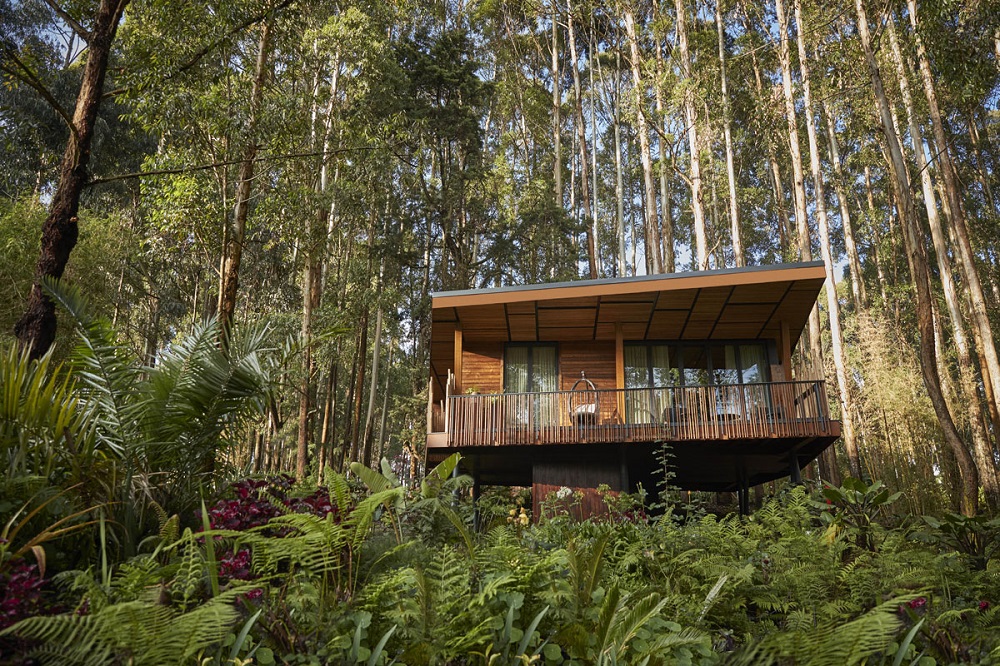
Apart from One&Only Gorilla’s Nest and One&Only Nyungwe run by a Dubai-based firm, Virunga Lodge is another facility based in Rwanda which has been ranked the 8th on the continent.
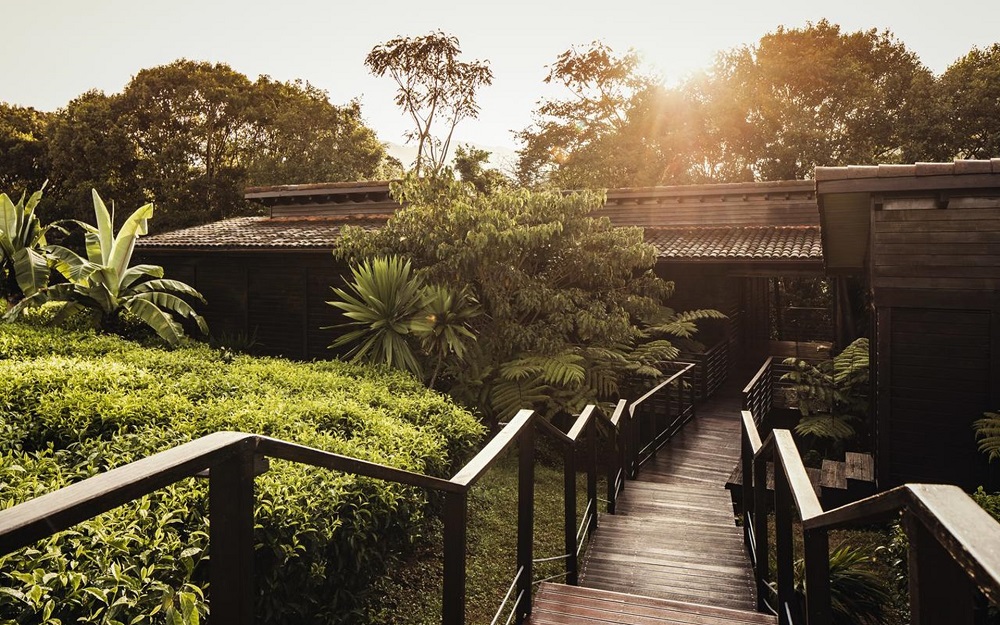
One & Only Gorilla’s Nest is a multi-luxurious lodge on the foothills of the National Park. It targets high-end tourists.
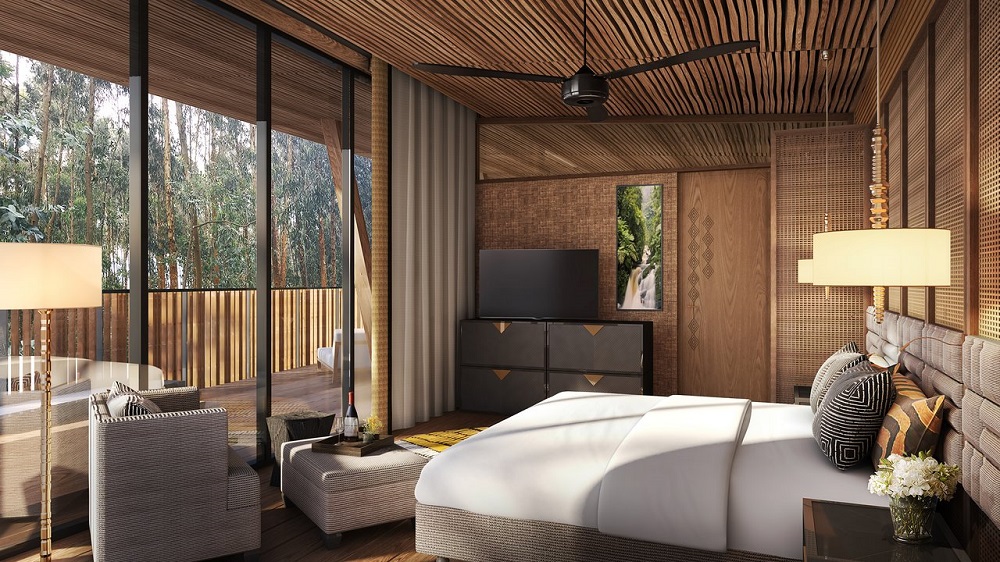
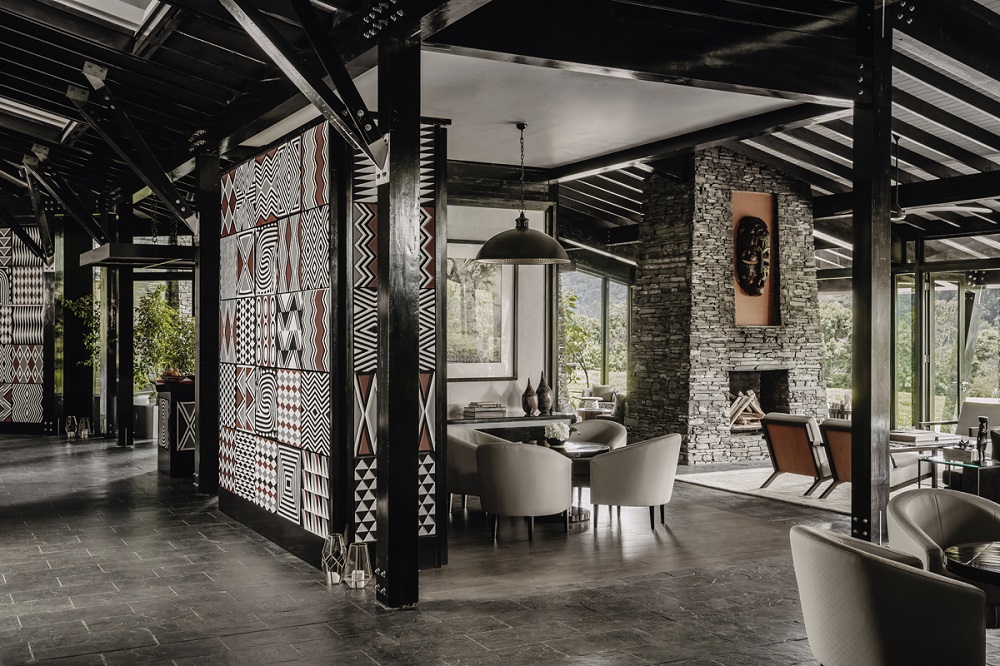
The five-star facility has 21 cottages decorated with Rwandan cultural items including Imigongo paintings and other artworks.
Imigongo paintings are a truly indigenous Rwandan art form. They are made from cow dung and dirt made into clay. They are not only very soft and fragile but so beautiful.
Completed at a cost of US$65 million, it was officially inaugurated in February 2020 following two years of construction activities.
On the other hand, One & Only Nyungwe House is another five-star facility built in 2010 in the midst of Nyungwe National Park in partnership with the Government of Rwanda.
Boasting an infinity pool, One&Only Nyungwe House offers premium 5-star accommodation. Guests also have exclusive access to the One&Only Spa and One&Only Gym. The lodge provides a garden to unwind in, as well as free private parking on site. Guests have access to a terrace and a barbecue area.
The rooms at One&Only Nyungwe House are air-conditioned and include a mini bar, a private balcony and tea and coffee making facilities. They come with an in-room safe, a private bathroom and a flat-screen TV.
In-house dining options include Dining Room, which provides a convenient spot to enjoy a meal. Each evening, guests are welcome to relax in the comfortable lounge bar. Kamembe International Airport is only a 45-minute drive from One&Only Nyungwe House, and a shuttle service is provided for those staying at the property.
The surrounding countryside ensures plenty of opportunity for scenic walks.
Among others, Thorntree River Lodge from Zambia emerged the 3rd followed by Beyond Sandibe Okavango Safari Lodge from Botswana while Volcanoes Safari Lodges from Uganda was ranked to the 5th position.
He made the revelation on Tuesday 5th October 2021 during the celebration of World Teachers’ Day.
The shop brings a discounted bargain where educators from accredited education institutions can access necessities, including foodstuff, home appliances, and scholastic materials for their children at a low price. Teachers can also shop on debt and pay later.
The idea to create the shop followed teachers’ concerns that their salary is low compared to market prices.
Though it was founded in 2017, the first shop was opened in February this year.
Other shops are expected to be launched in different districts gradually.
Speaking during the celebration, Mukarutesi assured teachers that their shop might be opened in the near future.
“You wish to get teachers’ shop was taken into consideration. Efforts to create it are underway. I have followed up personally where commercial buildings in which the shop will operate have been booked already,” she said.
Mukarutesi explained that the shops will first be opened in Bwishyura, Rubengera and Gasenyi with expectations to be extended to other sectors gradually.
In 2006, the Government introduced Umwalimu Savings and Credit Cooperative (SACCO), a teachers’ credit and savings scheme meant to improve their lives through easy access to financial services and loans at moderate interest rate.
Karongi district registers 80% of teachers who built own houses after securing loans from Umwalimu SACCO.
Once they are up and running, the shops will be an extra milestone to improving teachers’ welfare.
Taussi Nyampundu, representing teachers’ association in Karongi district revealed that they have attained remarkable progress to be proud of.
“We have registered tremendous progress where 80% of teachers have own houses. We also run small businesses and farming activities among others,” she said.
During the ceremony, best performing teachers were also awarded with laptops and other electronic gadgets.
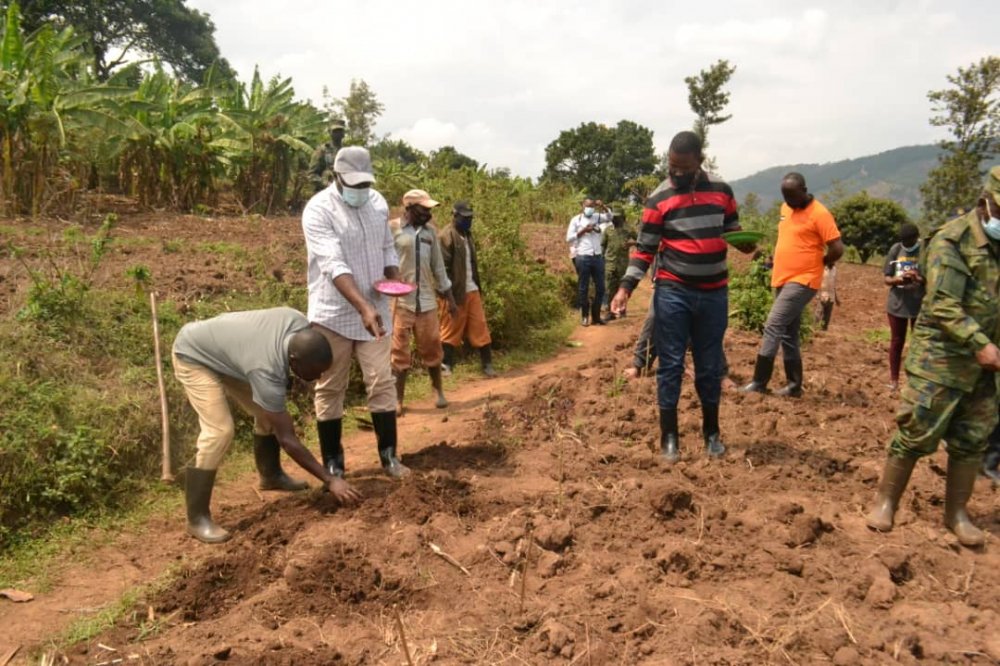
Farmers voiced the appreciation on Tuesday 5th October 2021 at the launch of the Agriculture Season 2021/2022 A held in Rwabutazi cell of Gatore sector.
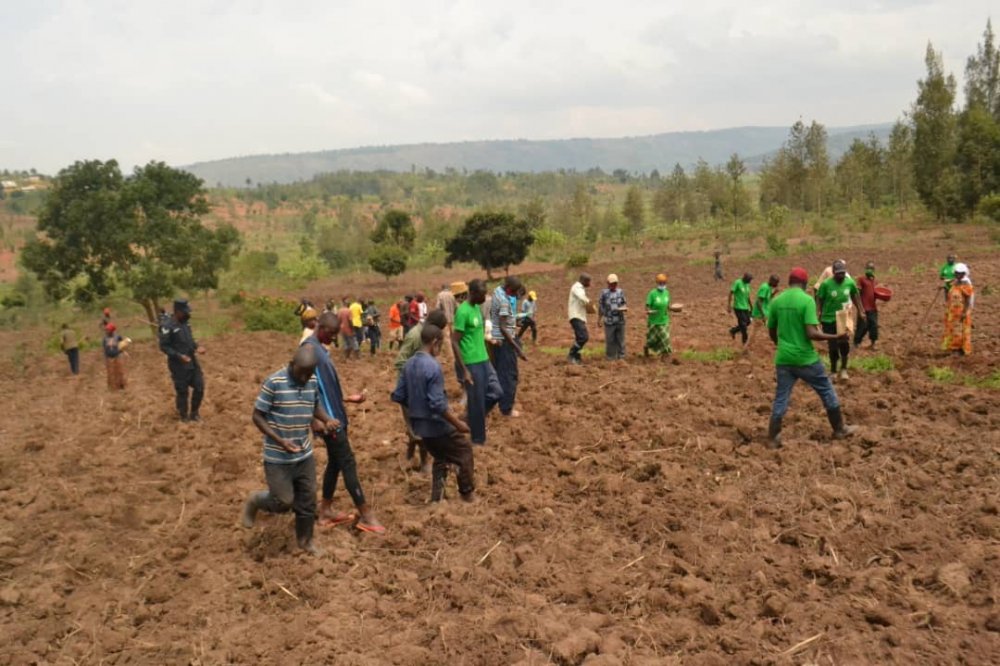
The launch coincided with the planting of maize seeds on 120 hectares exploited by a group of farmers from Gatore.
Fred Kuradusenge, a resident of Cyunuzi of Gatore sector has explained that land consolidation helped him to grow crops appropriately to reap enough yields to feed his family and make reserves for the market.
As Kuradusenge revealed, his maize produce has increased from 2 to more than five tonnes per hectare after embracing land consolidation.
“We would harvest at least 2 tonnes per hectare which have increased to five and more after adopting land consolidation,” he said.
Alex Nizeyimana has also explained that farmers using selected seeds and fertilizers have reaped big compared the yields they used to harvest before when farmers were accustomed to crowding seeds.
“We used to crowd seeds and the produce not rewarding our efforts. Today, the situation has changed as we plant one selected variety of seeds which helps to increase yields. For instance, the produce has doubled from 200 to 400 on a small arable land,” he said.
Nizeyimana explained that consolidating land facilitates easy and timely provision of fertilizers and benefit from the support of agricultural extension officers all together.
“There are several advantages of land consolidation. Farmers plant, weed crops and harvest maize at the same time. Our efforts were dispersed before land consolidation but we currently spray designated chemicals at the same time to prevent crop diseases,” said Liberatha Murekatete, another farmer.
The Governor of Eastern Province, Emmanuel Gasana has also highlighted that land consolidation helps farmers to increase yields.
“Consolidating land helps farmers to receive advises from agriculture extension workers easily. They are also equipped with best farming techniques and convenient ways of applying fertilizers at the same time which subsequently increases produce,” he said.
Gasana urged farmers to grow crops on time respecting tips from extension workers.
Kirehe district will grow crops on 36,000 consolidated hectares during the agriculture season 2021/2022 A.
Of these, beans will be planted on 9000 hectares, soy on 210 hectares, cassava on 800 and rice on 816 hectares.
Habimana was arrested in Karambo Village, Cyangugu Cell, Kamembe Sector with two fiber optic cables, which he unearthed.
The Western region Police spokesperson, Chief Inspector of Police (CIP) Bonaventure Twizere Karekezi said that information about Habimana acts of vandalism and theft of fiber-optic internet cables was provided by residents.
“Some areas residents saw Habimana in the bush digging and they became suspicious. When they approached him, the found that he was exhuming under-ground internet cables. They called the Police and the suspect was put into custody. He had already vandalized and stolen 8 metres of the fiber optic cables, which he was caught with,” CIP Karekezi said.
Habimana did not divelge further information on where he was to take the cables of other people involved.
CIP Karekezi commended residents, who shared information leading to the arrest of the suspect. He further said that investigations are still underway to identify and bring to justice those that Habimana was working with.
The spokesperson appealed to the public to protect such infrastructures and to report any sort of vandalism.
The suspect was handed over to RIB at Kamembe for further legal process.
Article 182 of the law relating to offences and penalties in general states, “any person, who maliciously demolishes or damages in any way, in whole or in part of construction, building, bridge, dams, water pipes and their routes, railway rails or any other means of communication or electric power infrastructure, wells or any other constructions, which do not belong to him/her, commits an offence.”
Upon conviction, he/she is liable to imprisonment for a term of not less than three (3) years and not more than five (5) years with a fine of not less than Rwf3 million and not more than Rwf5 million.