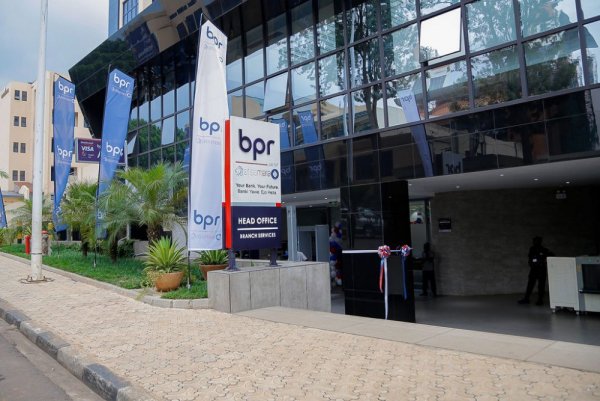
As part of its overall strategy, the bank aims to make it easy for customers to access credit from the bank.
It has therefore, reviewed and amended the main credit access conditions for personal banking loans including Home loans, Personal loans, Home Equity and Vehicle loans.
The key adjustments made include the unsecured personal loans limit that has been increased from Rwf 15 million up to Rwf30 million.
Monthly installments on Home, Personal and Vehicle loans will be up to 50% of the customer’s net monthly disposable income up from the existing limit of 35% of the customer’s net monthly income.
Among others; the amount the bank can lend in form of Home Equity will be up to 70% of the assessed market value of the property while A customer with an existing loan in the bank and has repayment capacity as stated above is eligible to access top ups on their current loan balance.
Commenting on the announcement, Banque Populaire Du Rwanda Plc, Managing Director, Mr. Maurice K. Toroitich said that the move is part of the bank’s strategic initiative to make it easy for our customers to do business with us. Reviewing and adjusting our existing loan conditions is therefore aimed at simplifying and making it possible for our customers to achieve their goals.
“We exist as a bank to make it possible for all our stakeholders to achieve their goals, and we are always looking for those barriers in policies, processes and systems that make it difficult especially for our customers to do business with us, so that we redefine them to become simpler and easier to serve our customers. That’s why we have reviewed our existing credit access conditions to be able to offer a compelling value propositions to our customers to enable them to make progress,” he said.
Both new and existing BPR customers with a stable monthly income are eligible to access up to Rwf 30 million in unsecured personal loans, if they fulfill all the terms and conditions. Under the new criteria, BPR customers with an existing loan facility will also be eligible for a loan top up.
Xavier Shema Mugisha, the bank’s Chief Business Officer also highlighted that by increasing the limit on unsecured personal loans, and increasing the monthly repayment limit up to 50% of the customer’s net monthly income, the bank is striving to improve the livelihoods of its clients after identifying that the existing conditions were challenging to a big number of customers.
“The previous Unsecured Loan limit of Rwf15 million often limited consumers’ options in acquiring assets or other needs. For example, “customers taking out loans to purchase assets such as land or a vehicle, the previous amount limited options for the acquisition but now with the new changes, customers will have the opportunity and freedom to do more and improve their ways of living,” he noted.
BPR customers who are eligible and want to access a loan top up can visit their nearest branch to start the application process.
{{About BPR Bank }}
The BPR journey started in 1975 as a community based savings and credit scheme and subsequently transformed to become a fully-fledged commercial bank in 2008 with a core focus in Retail and SME Banking.
In January 2016, Atlas Mara acquired a stake in BPR, which was subsequently merged with Atlas Mara’s existing operation, BRD Commercial Bank that resulted in the merged entity becoming the second largest bank with operations cross Retail, SME and Corporate Banking. In August 2021, KCB Group Plc acquired majority shareholding in the company through the purchase of all the shares held by ATMA and ARISE BV. Consequently, BPR Plc is now a subsidiary of KCB Group Plc. BPR currently operates through an extensive network of 137 branches, 51 ATMs and 350 bank agents across the
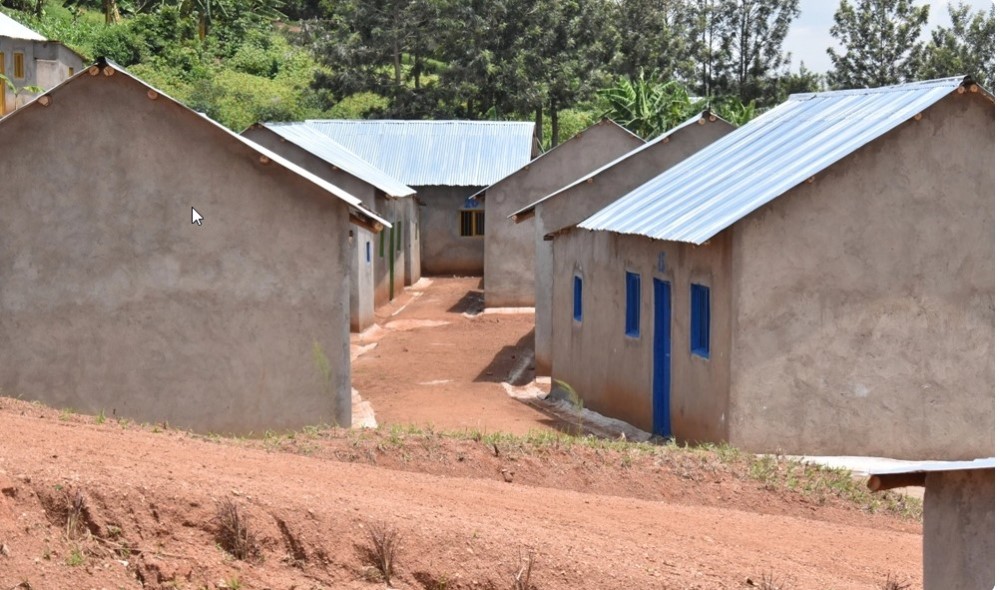
The houses constructed by Gisagara peat power plant, were handed over on Tuesday 2nd November 2021, to beneficiaries including residents who had no shelter and others living in old structures.
Delphine Ukubereyimfura, one of beneficiaries explained that she has been facing hard life with her children as they had had no permanent shelter since her husband cohabited with another wife.
“I have spent long time accommodated by good Samaritans because our thatched cottage house was demolished. My husband casted me aside to cohabit with another wife. Since then, I have been leading hard life because I paid rental fees after sweating on daily casual work. I pledge to take good care of received house and work hard to improve my wellbeing. I also commend the good leadership for liaising with partners to build houses for us,” she said.
François Mbanzabagabo also revealed that he has been living in a dilapidated building that it would rain on him inside.
“I am grateful for receiving a new decent house. I am now safe from life hazards along with my children,” he said.
Apart from houses donated to vulnerable residents, the plant also build latrines for Kabumbwe Primary School located in the area and donated a television to Kabumbwe cell to help residents stay updated on trending issues.
The operations manager at Gisagara Peat Power Plant, Tonci Tadic has revealed that the donation is part of the company’s pledge to contribute to improved wellbeing of surrounding community.
“Our activities in this area are meant to promote residents’ welfare. We remain committed to sharing part of revenues for residents’ improved wellbeing,” he said.
As Tadic explained, the plant has so far built houses for 34 vulnerable families in Gisagara district and pledged to subscribe 1000 households for community based health insurance (Mutuelle de Santé) every year.
The plant has also donated school kits to learners at Kabumbwe Primary School and plans to connect the facility to clean water.
Residents in the area have also been receiving cows and small livestock from the plant.
The Acting Mayor of Gisagara district, Athanase Ntaganzwa has said that residents have benefited a lot since construction of the plant began in Mamba.
“Residents from different cells surrounding the plant have received different support including cows that have reproduced among others. Beneficiaries got milk, and compost which helped them to increase agricultural yields,” he noted.
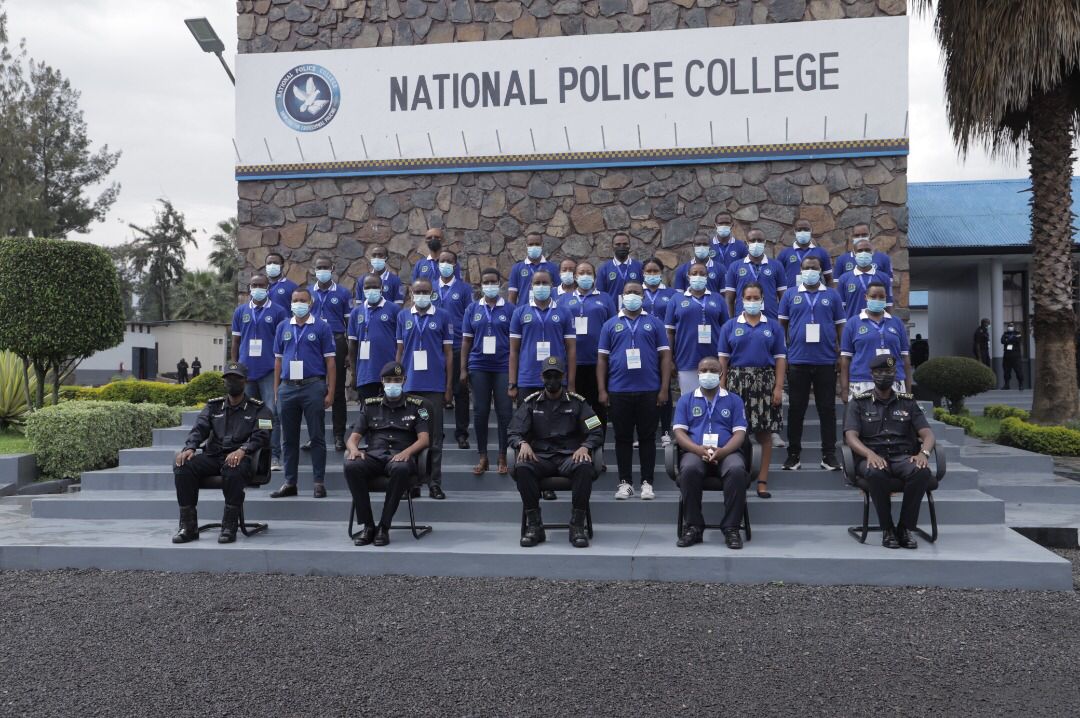
IGP Munyuza made the remarks on Tuesday, November 2, while officially closing the five-day Training of Trainers (ToT) for 49 members of Rwanda Youth Volunteers in Community Policing (RYVCP) at the National Police College (NPC) in Musanze District.
The training in socio-economic transformation, governance and crime prevention was held under the theme: “The role of youth volunteers in the implementation of governance programmes.”
IGP Munyuza thanked the youth volunteers for their role in the national socio-economic development and crime prevention and urged them to continue the spirit of patriotism.
“Your role is commendable particularly in this period of Covid-19 where you have volunteered and worked hard in reinforcing the national response to the pandemic,” IGP Munyuza said.
He added: “The pandemic has not been totally defeated, yet there are other pressing concerns such as smuggling, criminal acts associated with narcotic drugs especially by the young people, smuggling and other trans-border illegal trade practices. We also have crimes facilitated by technology including spreading negative propaganda. Be focused and be at the frontline to fight against such crimes… exhibit the same spirit that you showcased in fighting Covid-19 and other human security activities that you have conducted in the past.”
Richard Kubana, the Director General in the Ministry of Local Government in charge of Community Mobilisation and Youth Volunteers Coordination, said that the purpose of the training has been achieved and hopes that participants will utilize the knowledge acquired during the training.
“This training of trainers for the selected members of youth volunteers has met its objectives. We have adopted 16 key resolutions, which will be implemented including sharing knowledge and skills acquired to their colleagues down to the grassroots to have the same understanding and priority focus in the country’s socio-economic development and security matters,” said Kubana.
One of the trainees, Jean Claude Ndagijimana, who is in charge of national youth volunteers coordination, said that the training was a source for vast knowledge to guide their volunteerism mission.
They were arrested in separate operations conducted on Monday, November 1.
The Southern region Police spokesperson, Superintendent of Police (SP) Theobald Kanamugire identified the arrested drug dealers as Felecien Niyigena, 23, and Solange Mukandekezi, 26.
At the time, they were found in possession of combined 630 rolls of cannabis.
“Niyigena was arrested in Kabeza Village, Mukinga Cell, Nyamiyaga Sector of Kamonyi District with 330 pellets of cannabis while Mukandekezi was found in possession of 300 pellets in Nyamure Village, Nyacyina Cell, Gashenyi Sector, Gakenke District,” SP Kanamugire said.
The suspected drug dealers, he added were reported by the residents.
“On Monday at about 10pm, Police received information from residents of Mukinga about Niyigena, whom they suspected of being a drug dealer. Police went to his home where they recovered 330 pellets of cannabis in his bedroom,” said the spokesperson.
Mukandekezi, on the other hand, was at the time enroute to City of Kigali where she was to supply her customers, according the District Police Commander for Gakenke, Senior Superintendent of Police (SSP) Gaston Karagire.
“Police received information at about 6pm, from a resident in Nyacyina that Mukandekezi was waiting for bus at the station to go to Kigali, and that she had a consignment of cannabis. Police intercepted her at the bus station, searched her luggage and recovered an envelope containing 300 pellets of cannabis,” said SSP Karagire.
Upon her arrest, Mukandekezi disclosed that she had got the narcotics from Karambo sector and was going to supply her clients in the City of Kigali.
SP Kanamugire lauded the vigilance and responsiveness of the residents.
The Suspects were handed over to RIB for further legal process.
Cannabis is classified among the ‘very severe narcotics’ under the Ministerial order nº 001/moh/2019 of 04/03/2019 establishing the list of narcotic drugs and their categorisation.
Article 263 of law No 68/2018 of 30/08/2018 determining offenses and penalties in general states that any person, who unlawfully produces, transforms, transports, stores, gives to another or who sells narcotic drugs and psychotropic substances, commits an offence.
Upon conviction, the offender faces between 20 years and life imprisonment and a fine of between Rwf20 million and Rwf30 million.
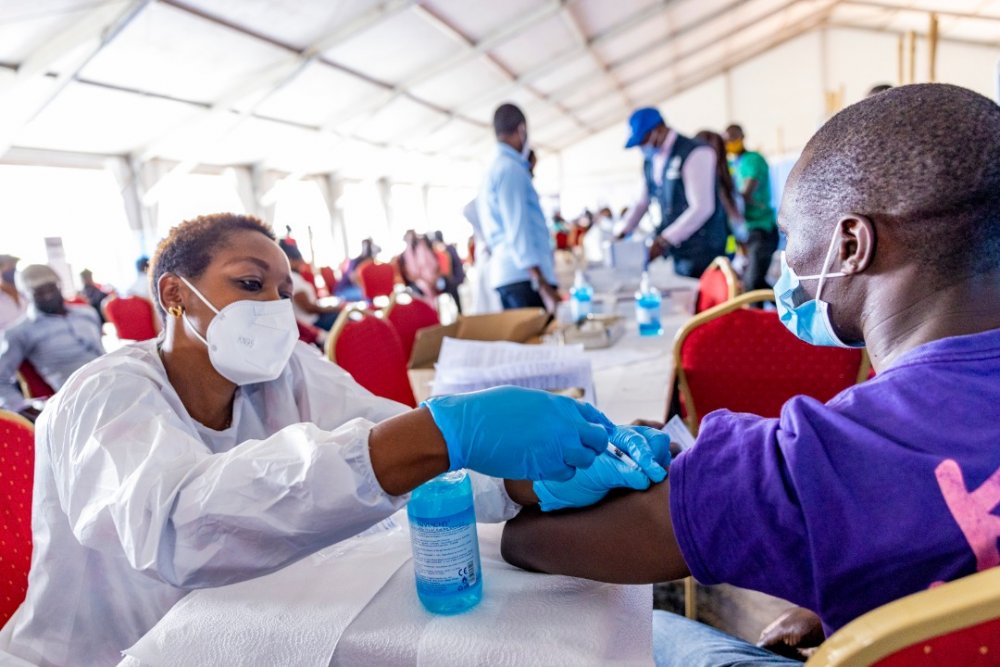
A total of 2,063,159 people have been fully vaccinated against COVID-19 while 3,937,599 received the first dose of COVID-19 since Rwanda began countrywide inoculation program on 5th March 2021.
Coronavirus symptoms include coughing, flu, and difficulty in breathing. The virus is said to be transmitted through the mucous membranes of the respiratory tract.
Rwandans are urged to adhere to COVID-19 health guidelines, washing hands frequently using soaps and safe water, wearing face masks and respecting social distancing.
Over the years, Rwanda National Police (RNP) has engaged all road users to educate them on safer road usage and influence behavioral change to fight and prevent fatal human decisions like impaired driving, which lead to loss of lives.
Awareness against intoxicated driving was also part of the RNP nationwide Gerayo Amahoro campaign.
Nonetheless, some motorists continue to put people’s lives on the edge when they go on the wheel or ride motos while drunk.
Thus, Rwanda National Police has heightened its operations to fight such reckless human behaviours.
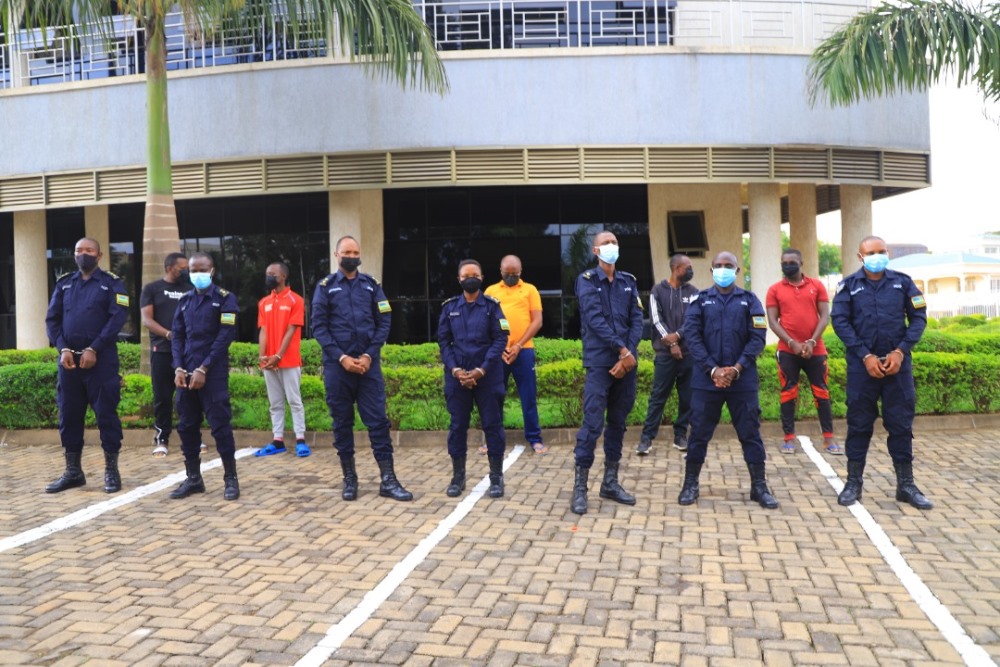
In the latest operations conducted between October 28, and November 1, on various roads of City of Kigali, RNP arrested 45 motorists, who were under the influence of alcohol.
They include one Olivier Irakoze, 17, who was caught on Monday, November 1, at about 10pm, riding under influence of alcohol and without any traffic related documents including a permit.
They were all showed to the media, on Tuesday, November 2, at Nyarugenge District Police Unit offices in Rwezamenyo Sector, Nyarugenge District.
Didace Dushimimana, one of the drivers paraded, said that he was arrested in Kibagabaga, Gasabo District after Police found 1.47 millilitres of alcohol content in his blood.
The maximum blood alcoholic content for one to drive or ride is 0.8 millilitres
RNP Deputy spokesperson, Chief Superintendent of Police (CSP) Africa Sendahangarwa Apollo urged motorists to change their mindsets and put safety first.
“Police will not tolerate any act which can lead to road accident and loss of lives, such as intoxicated driving,” CSP Africa said.
He said that fighting drunk driving and violation of other traffic rules and regulations is part of the daily operations of the Traffic and Road Safety Department to ensure safer roads for all.
The statement released yesterday shows that the provider of foreign currency exchange services has been revoked over non-compliance with regulatory requirements.
“Unimoni Bureau De Change Ltd’s Forex Bureau and Payment Service Provider licences have been revoked with immediate effect due to non-compliance with regulatory requirements,” reads the statement in part.
BNR has warned the public that whoever deals with the company has to bear consequences at own risk.
Unimoni is part of Finablr, a global platform for Payments and Foreign Exchange solutions.
With a global reach spanning over 170 countries, Finablr companies processed over 150 million transactions in 2018, managing nearly US$ 115 billion for customers.
The International Renewable Energy Agency (IRENA), headquartered in Abu Dhabi, is on the right course of rallying multilateral efforts behind energy transitioning as a pathway to a sustainable future.
With 166 member states, IRENA stands out as a uniquely global energy hub and a source of guidance and support for stakeholders across the world. Through its 2021 World Energy Transitions Outlook, the Agency presents to member states policy frameworks necessary to advance a transition that is aligned with a global net zero future, while being just and inclusive.
With over 300 partners collaborating under IRENA’s climate investment platform, stakeholders with viable projects in renewable energy and climate investment around the world can bank on the Agency for resource mobilization. By 2020, the IRENA/ADFD Project Facility resulted in the selection of 32 renewable energy projects that benefited from $350 million in concessional loans and improved lives of over 2.5 million people around the world.
In Africa, IRENA has supported different national and regional programs and initiatives including Africa Clean Energy Corridor, a regional initiative to accelerate the development of renewable energy potential and cross-border trade of renewable power within the Eastern Africa Power Pool (EAPP) and Southern African Power Pool (SAPP). This is in addition to West Africa Clean Energy Corridor, a regional initiative supporting the creation of a regional power market in the West Africa Power Pool.
For IRENA, the expansion of renewables goes beyond the provision of reliable energy and climate protection.
“Energy is the key to development in Africa and the foundation for industrialization. Like in Europe and other parts of the world, the expansion of renewables goes beyond the provision of reliable energy and climate protection. Economic development as a whole will benefit and new jobs and opportunities for entire industries will emerge,” wrote IRENA Director-General Francesco La Camera in a recent IRENA-German Federal Ministry for Economic Cooperation and Development joint report on renewables in Africa.
Energy transitioning has emerged as an important pillar of addressing climate change, one of the critical global challenges of our time. Carbon dioxide levels and other greenhouse gases in the atmosphere worsen the global warming, affecting lives and disrupting economies.
In the face of such challenges, mobilizing collective climate action is very vital in pursuit of environment-saving initiatives and global climate targets of limiting global temperature rise to 1.5°C and a net carbon zero future by mid-century under Paris Agreement and the Climate Ambition Alliance.
Within this global framework of saving the environment, the Kigali Amendment to the Montreal Protocol signed on 15th of October, 2016 in Kigali – Rwanda is another landmark global commitment to reduce the production and usage of powerful greenhouse gases in a move that could prevent up to 0.5 degrees Celsius of global warming by the end of this century, while continuing to protect the ozone layer.
For Rwanda, whose first Permanent Representative Ambassador Emmanuel Hategeka presented his credentials to IRENA on 3rd May 2021, increasing the share of renewable energy is enshrined in a clear national vision of becoming a green, climate resilient and low carbon economy by 2050.
Advancing environmentally friendly practices is an integral part of Rwanda’s development. This is further emphasized in a statement from H.E President Paul Kagame speech at a Climate Change Panel at World Economic Forum – Davos in January 2015: “As we look forward to development, we are not making a choice between environment and prosperity. We are rather looking at how we combine both because one supports the other.”
{{Ambitious plan, attractive incentives}}
Rwanda targets to achieve universal access to electricity by 2024 with a production capacity of 556MW of which renewable energy will constitute 60% of the energy mix mainly from hydro projects and solar energy. As of end August 2021, access to electricity in Rwanda is recorded at 65.4% with 47.6% grid connections while 17.8% accounts for off-grid connections. The current installed power generation capacity is 235.6MW.
To achieve the above target, the Rwanda Government has developed a Least Cost Power Development Plan that gives priority to renewable energy projects. These mostly include hydro projects (MHPP 33MW, HPP 133MW and hydro pump storage 80MW).
Solar power is also expected to contribute a significant share of electricity generation with solar power plants connected to the grid currently at 5% but as technology improves and prices of storage decrease, there is a plan to increase the share.
IRENA’s analysis published in March 2021 shows that 543MW of on-grid solar PV could be cost-effectively deployed by 2040, and a number of small off-grid systems could be added in rural areas, increasing the share of renewable energy to above 60 percent.
Rwanda’s ambitious targets in renewable energy are built on sharp rise in renewables over the last decade. In terms of installed capacity, Hydro power grew from 48 MW in 2010 to 116.6 MW in 2020 while solar power reached 12.1MW from 0.3MW over the same period. The two constituted 54% of the total national installed capacity in 2020. In terms of energy generation, Hydropower increased from 177 GWh in 2010 to 527.1 GWh in 2020 while solar jumped from 0.3 GWh to 18 GWh with the two making 61% of the total national energy generation in 2020.
Attractive incentives and facilitation package have been put in place to facilitate investments in renewable energy and energy efficiency in Rwanda.
For private developers in the power sector, incentives include provision of investment certificate for the investor’s special treatment, a variety of non-fiscal and fiscal incentives, tax exemption including VAT on importation of some RE equipment, free repatriation of profits, preferential corporate income tax of 15%, Corporate income tax holiday of up to seven years for energy projects producing 25MW with 50M investment and provision of RDB aftercare support to registered projects with Investment certificate.
Rwanda also offers investment facilitation for Renewable Energy projects, including Power Purchase Agreements of 25 years as minimum, Established Legal Framework to stimulate Public Private Partnership, Standard Independent Power Purchase Agreements, Renewable Energy Fund (REF) to support Off Grid solar and Clean Cooking Technologies development, Result Based Financing and Technical Assistance to increase private sector players and consumer capacity through studies, trainings and awareness campaigns.
Stepping up cooperation with IRENA could give an impetus to ongoing Rwanda’s energy transitioning.
“Enhanced partnership with IRENA will promote exchange of knowledge and best practices in renewable energy. We will work together in resource mobilization efforts to implement our Nationally Determined Contribution especially for renewable energy targets. We look forward to scaling up in our cooperation in renewable energy transitioning for a greener future of Rwanda,” ambassador Emmanuel Hategeka said.
The growing Rwanda-IRENA cooperation opens doors to public and private entities in Rwanda and East Africa. In addition to knowledge and best practices exchange, actors can share projects for consideration by partners collaborating under IRENA’s climate investment platform.
{{Some key ongoing and new projects in Rwanda that may attract IRENA partners under climate investment platform}}
1. Capitalization of the Renewable Energy Fund to support in addressing the affordability challenge for low-income households through the Result-Based Financing framework, managed by Rwanda Development Bank and Rwanda Energy Group/ Energy Development Corporation Limited.
The project encompasses Support to private companies through low-cost loans or direct equity; Grants to strengthen the Standalone Systems value chain, Grants to establish a testing or verification center for Standalone Off-grid System components, Establishment of a regional production and assembly center for off-grid systems, Support of off-grid connected households towards higher tier access energy level and Support in establishing productive use opportunities from Standalone systems owners
2. Construction of Green City. The Green City Kigali is a key project that will develop a blueprint that can be replicated across the country. The project has some parallels with Masdar City in Abu Dhabi in terms of sustainability and green technology. The costing of Green City Delivery is estimated at $5 billion over the next decade. The first phase requires approximately $86 million for the construction of 1,680 housing units.
3. Financial support (Equity, Concession loans, Grants, RBF) in the dissemination of clean cooking technologies in institutions like schools, hotels and restaurants and households by adopting energy efficient cooking fuels such as LPG, high efficient pellets, briquettes and wood stoves. Its key component include Capacity building and awareness campaigns, Provide equipment to the National Clean Cooking Testing Lab, Improved Cook Stoves and LPG Subsector.
4. Energy Efficiency in the Transmission and Distribution Infrastructure with major components of Investment in the dissemination of smart meters to allow for the establishment of the time-of-use tariffs, Upgrade of Transmission and Distribution Infrastructure to n-1 capabilities and Upgrade of transformers in six Secondary Cities
5. Energy Efficiency for appliances. This project envisages the Capitalization of the Cool Lease Fund for the dissemination of energy efficient cooling appliances plus Awareness and promotion of dissemination of efficient lighting appliances.
6. Renewable Energy Generation project with a focus on Rehabilitation of Nyabarongo I Hydro Power Plant; Construction of small hydropower plants with a total installed capacity of around 20MW and Installation of Pump Storage at Nyabarongo II Hydro Power Plant.
7. Proof of concept for transportation and cooking with methane gas (compressed) from Lake Kivu, currently a PPP project under development.
IRENA underlines that East African region including Rwanda requires significant levels of investment in its power generation infrastructure
“To meet the needs of rapidly growing economies, the East African region including Rwanda requires significant levels of investment in its power generation infrastructure. It is important that such long-term planning decisions are well-informed and present a balanced picture of all potential pathways including renewable energy options,” said Francesco La Camera, Director-General of the International Renewable Energy Agency.
Rwanda joined IRENA in June 2009 and has been an active member since then. Renewable energy is expected to play a central role in delivering Rwanda’s ambitious Nationally Determined Contribution (NDC), submitted to the United Nations Framework Convention on Climate Change in May 2020 that features a 38% reduction of greenhouse gas emissions compared to business as usual by 2030. The country’s efforts to limit its contribution to climate change and adapt to the consequences over the next decade will require approximately US$11 billion.
The disbursement was the result of successful achievements of the third set of 9 policy actions by the Government of Rwanda.
The trigger-based disbursement of the loan has been divided into three tranches in which the first tranche equivalent to US$36 million (40%) was disbursed in December 2019 and the second tranche (US$28 million) in July 2020. The total disbursement from the start of the program amounts 10 billion Japanese yen (approximately US$ 91 million).
Rwanda’s Minister of Finance and Economic Planning (MINECOFIN), Dr. Uzziel Ndagijimana has commended the achievements made in the policy actions and a good cooperation between the Government of Rwanda and Japan through JICA.
The program is implemented by the Ministry of Agriculture and Animal Resources (MINAGRI), Rwanda Agriculture and Animal Resources Development Board (RAB), National Child Development Agency (NCDA) and Rwanda Biomedical Centre (RBC).
The key achievements during the third tranche include the initial development of the Rwanda’s first Food Composition Table, district-level planning and implementation of Nutrition Dense Food (NDF) production, Nutrition-sensitive crop calendars, development of Community-Based Nutrition Program (CBNP) Implementation Guidelines, and introduction of Child Scorecard as a tool to monitor access to nutrition related services.
The Program targeted 12 Districts with the highest stunting rates; namely Rutsiro, Rubavu, Burera, Nyaruguru, Ngororero, Nyamagabe, Nyamasheke, Gakenke, Gisagara, Gicumbi, Musanze and Ngoma District.
Mr. Maruo Shin, the Chief Representative of JICA Rwanda Office hailed the achievement and appreciated the efforts made by the relevant ministries, agencies and local government authorities in Rwanda for successful implementation of the program despite the challenges brought by COVID-19 global pandemic. He also reassured the JICA’s commitment to its continuous support in eradicating malnutrition and fighting against stunting in Rwanda.
It is highly expected that the program contributes for improvement of nutritious status of Rwandan people and leads to the socio-economic development of the country.
Xinhua News Agency was founded on November 7, 1931, in Ruijin, in southeast China. Its coverage of Africa news came well before the start of its permanent presence on the continent: the first Xinhua bureau in Africa was set up in Cairo, Egypt, in December 1956. Xinhua’s first sub-Saharan bureau was inaugurated in Accra, Ghana, in February 1959.
Many of Xinhua’s earlier reports on Africa were about the continent’s independence movement and the interactions of the People’s Republic of China with African countries emerging from colonial rule, such as Premier Zhou Enlai’s historic visit to Egypt, Algeria, Morocco, Tunisia, Ghana, Mali, Guinea, Sudan, Ethiopia and Somalia from December 1963 to February 1964.
By the end of 1965, Xinhua had 16 bureaus in Africa, about one-third of its total 51 overseas branches.
Xinhua Kigali bureau was founded in 2011.
Fast forward to 2021, Xinhua now has full-time correspondents or freelance contributors in 48 sub-Saharan countries.
Xinhua’s Africa regional bureau, established in Nairobi in 1986, coordinates news coverage of and subscriber service in sub-Saharan Africa, where it has more than 140 full-time editors and reporters.
Over the years, Xinhua has strived to make Africa’s voice heard and present a full picture of the continent to its subscribers in China and around the world, upholding its principles of objectivity, justice, truth and accuracy.
Xinhua, which has taken on challenges of the information age and embraced new technologies such as 5G and artificial intelligence, now offers wire services in 15 languages (Chinese, English, Spanish, French, Russian, Arabic, Portuguese, Japanese, Italian, Thai, Indonesia, Urdu, Korean, Turkish, and German), with content in a full range of media formats, catering to subscribers and the general audience around the world. Xinhua also maintains an extensive presence on all major social media platforms, including posts in Swahili put out by a dedicated team at its Africa Regional Bureau.
As the state news agency of the world’s largest developing country, Xinhua stories cover the full spectrum of Africa’s development, from politics, economy, society, culture, to technology and sports.
Xinhua maintains sound cooperation and friendly exchanges with major media counterparts across Africa, contributing to deeper understanding and enhanced trust between China and “the fastest growing and most promising continent in the world,” as described by Chinese President Xi Jinping in his speech at the China-Africa Business Forum in Johannesburg, South Africa, on December 4, 2015.
Xinhua is looking forward to a more prosperous and developed Africa when Xinhua celebrates its centenary in 2031.