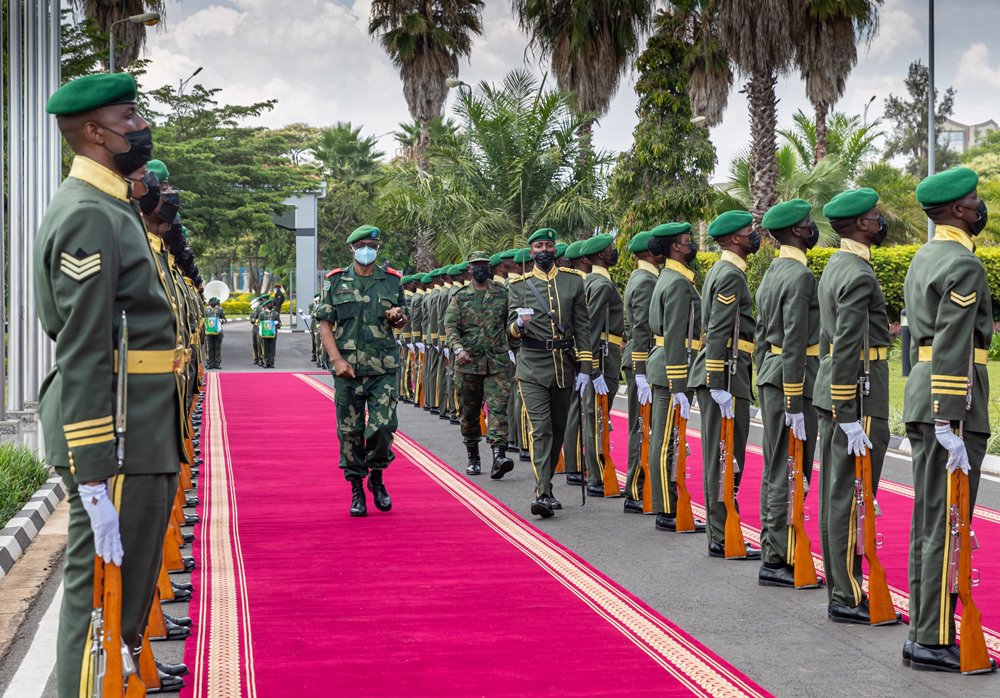
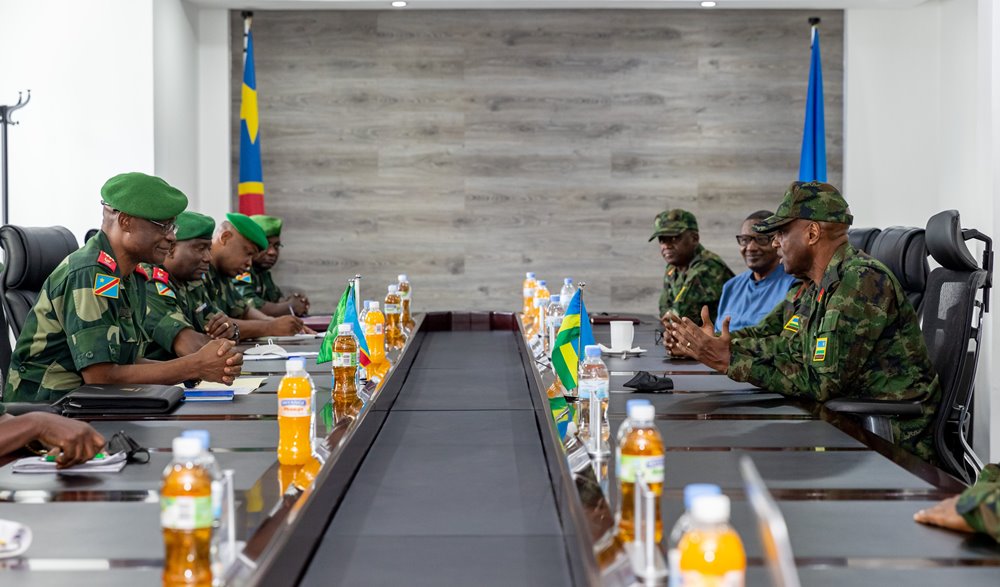
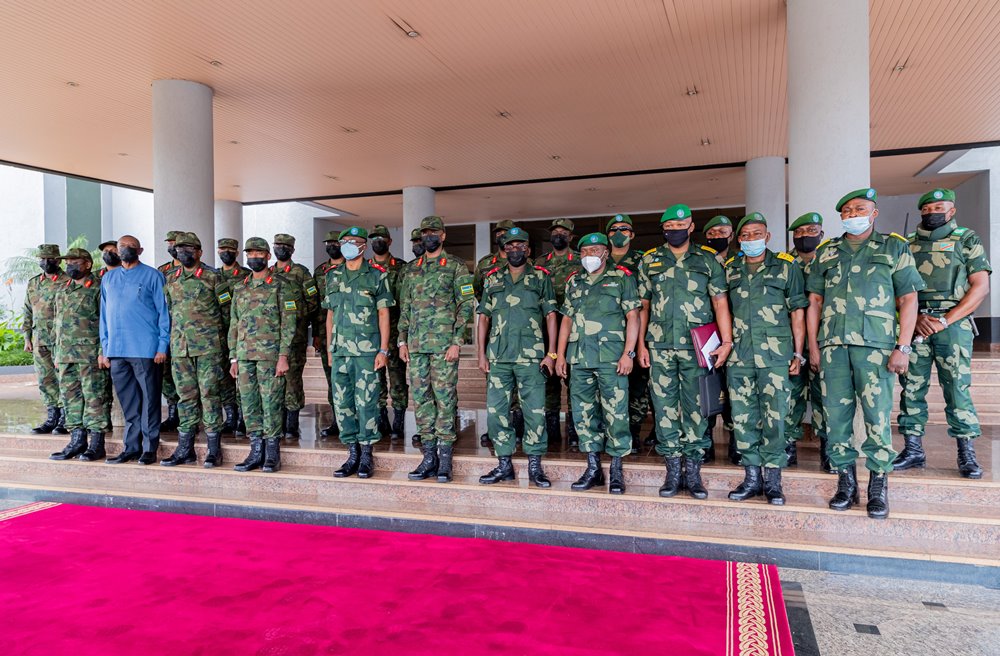
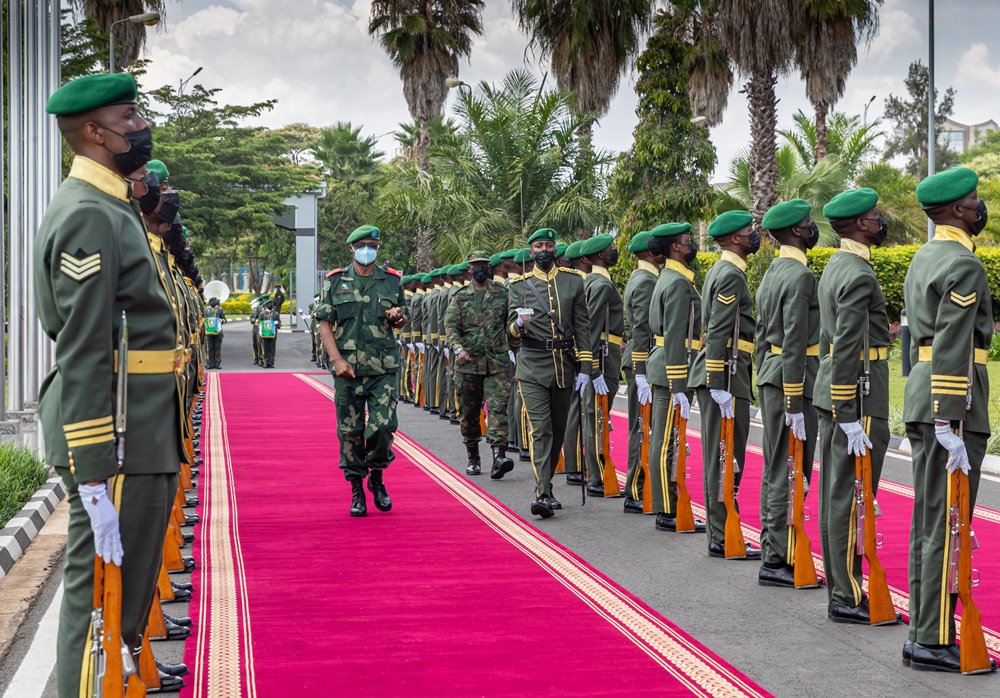
Their discussions focused on the regional security situation and the fight against terrorist groups.
“Our delegation is here to discuss a framework of plans established with our neighboring countries in dealing with terrorist groups and other transnational threats. This conforms with recommendations from the African Union to combine effort in fighting threats that hinder our collective development,” Gen Mbala Munsense said.
Gen Mbala Munsense added that the discussions also looked at mutual efforts to prevent negative forces operating along both countries’ borders in a bid to strengthen relationships ‘towards the mutual development of our people’.
On recent allegations that M23 elements conducted an attack on DRC territory from Rwanda and Uganda, the FARDC Chief of General Staff, Gen Mbala said: “We have opted to give time to the Expanded Joint Verification Mechanism (EJVM) to do its work and give us precisions on the situation.”
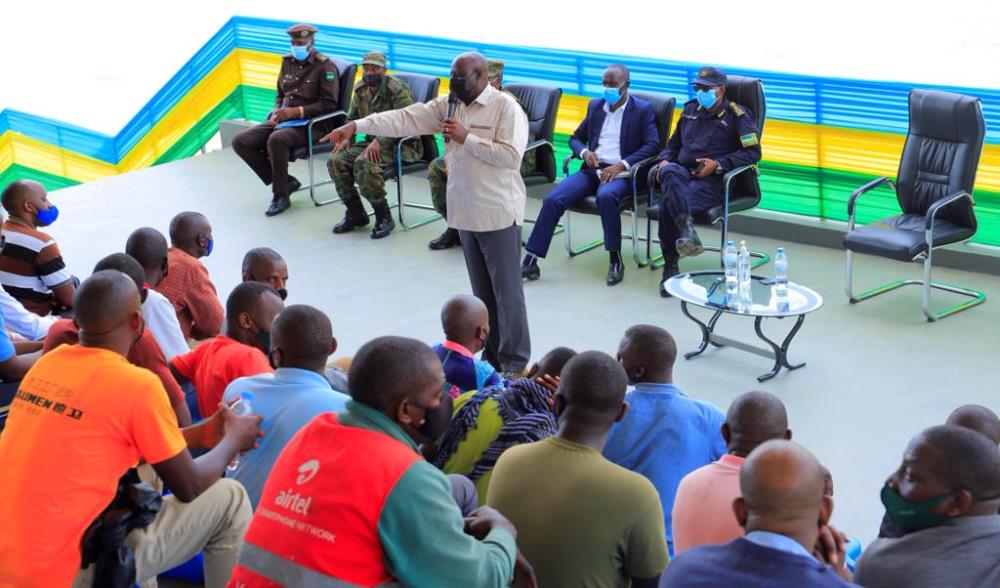
The call was made during the meeting with more than 1000 commercial motorcyclists operating in different parts of Nyagatare District, on Tuesday 9th November 2021 at Nyagatare stadium where Police and local leaders pointed out a number of unlawful acts involving taxi-moto operators and in which some of them have been arrested.
The taxi-moto operators are organized in 21 cooperatives registered and operating in Nyagatare.
Some of highlighted crimes involving the motorcyclists include smuggling, drug trafficking and illegal cross-border.
In the last three months, 28 taxi-moto operators have been arrested in Nyagatare District while transporting smuggled goods, drug trafficking and facilitating people to cross illegally through porous borders.
The outreach aimed at emphasizing the ideals of community policing, and was presided over by the Governor of the Eastern Province, CG Emmanuel K. Gasana and the Regional Police Commander (RPC), Commissioner of Police (CP) Emmanuel Hatari.
The campaign also involved testimonies from reformed motorcyclists, who were previously engaging in or facilitating wrongdoers. They encouraged colleagues to be responsive, look at their transport profession as their way to better their lives and family development.
The campaign also tackled the issue of road safety with taxi-moto operators identified as one of the vulnerable groups largely because of their recklessness on the road.
Governor Gasana reminded the motorcyclists to improve their wellbeing through the right channels.
“If you want to cross the border, use the legal crossing points with legal documents. You also need to report anything illegal, boost your cooperatives and join Ejo Heza saving scheme,” he told the motorcyclists.
Ejo Heza is an inclusive scheme targeting both salaried and non-salaried workers to help accumulate savings for a dignified and secure old age.
RPC, CP Hatari warned of the repercussions for engaging in criminal practices like drug trafficking, smuggling, illegal cross-border and reckless road usage.
“You risk arrest and long term imprisonment, auctioning your motorcycle because the law stipulates that any mobile impounded smuggling goods must be auctioned and the owner is slapped fines,” CP Hatari told the taxi-moto operators.
Under the East African Community Management Act, which is also applicable in Rwanda, seized smuggled goods under article 199, are auctioned.
The automobile used in fraud and smuggling, is also auctioned and the driver slapped a fine of US$5,000.
Trafficking drugs also attracts a sentence of between seven years and life in prison.
“There are so many risks involved in illegal cross-border because some of them have been arrested and beaten when they are caught in Uganda,” CP Hatari noted.
He went on to urge them against riding under the influence or alcohol, regulate their speed and to avoid reckless maneuvers, which lead to accident and loss of lives.
The campaign is expected to be extended to all the remaining districts of Eastern Province.
The operations were conducted between 6th and 9th November 2021 on various roads of Kigali. It is part of the efforts to curb one of the major causes of road accidents.
In Rwanda, driving or riding is prohibited if the blood alcohol concentration (BAC) is above 0.8 millilitres.
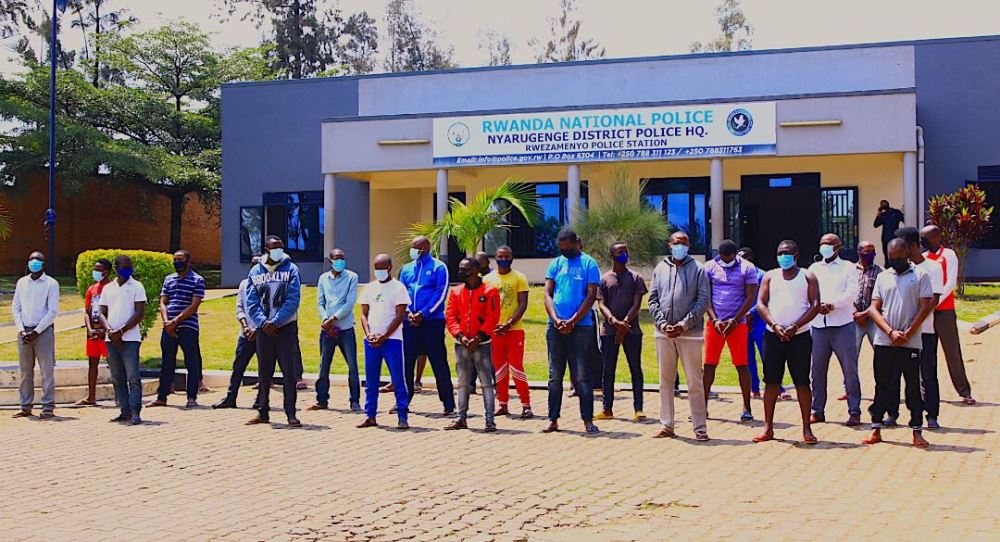
The 28 motorists were paraded before the media on Wednesday, November 10, at Nyarugenge District Police Unit in Rwezamenyo Sector, Nyarugenge District.
RNP Deputy spokesperson, Chief Superintendent of Police (CSP) Africa Sendahangarwa Apollo warned motorists against such life-threatening practices.
“Drunk-driving is among the major causes of road accidents and this is why these traffic operations are conducted to save lives. These 28 people were arrested in a span of four days. They were all driving or riding while drunk, which was not only risky to their lives but also to other road users, whom they can knock since they are intoxicated and in a situation where they can easily make poor driving judgement,” CSP Africa said.
Leopold Rwemera, one of the arrested driver, said he tested 2 millilitres of BAC, when he was arrested on November 6.
Like Rwemera, Claude Nambajimana, a taxi-moto operator said that he had taken alcohol before he was arrested on November 8, in Rugando Cell, Kimihurura Sector in Gasabo District.
A breathalyzer indicated that Nambajimana was 0.99 drunk.
CSP Africa sternly warned motorists against the intolerable behaviours of deliberately violating road safety rules and regulations.
He appealed on bar operators to take measures to ensure that their customers do not drive or ride when they leave their spots while drunk.
“Bars have resumed services after a long period. Hospitality establishments should not only comply with the Covid-19 prevention guidelines but also take precautionary measures to help their customers to get alternative means to get home safe, if they are drunk,” CSP Africa advised.
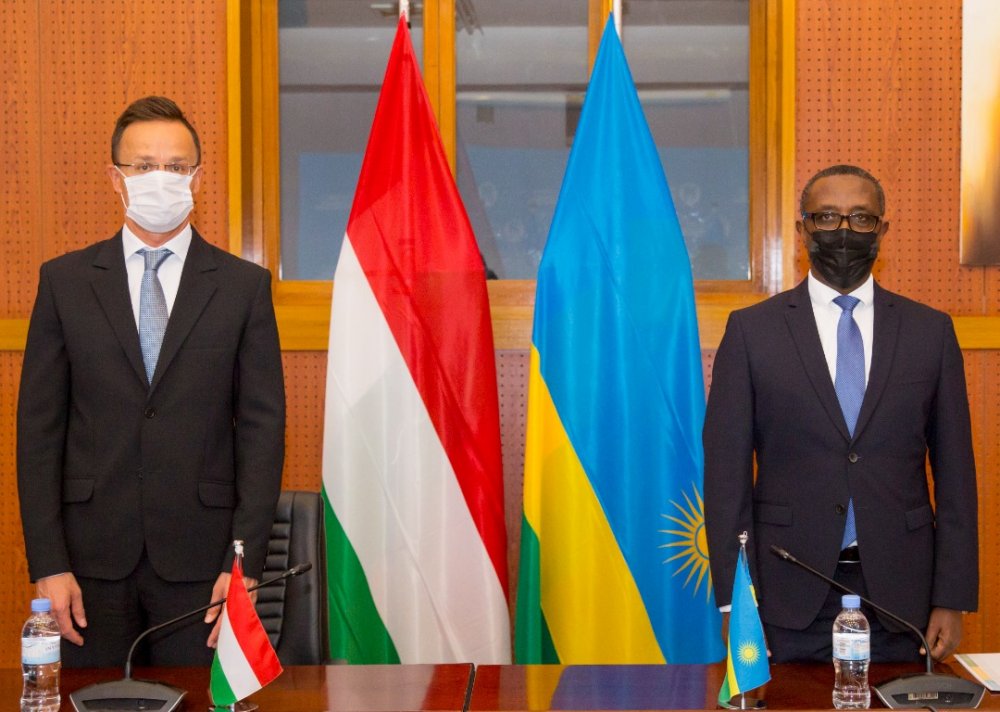
The agreement was signed on Wednesday 10th November 2021 during a ceremony held in Kigali City. Rwanda was represented by the Minister of Foreign Affairs, Dr. Vincent Biruta while Hungary was represented by Péter Szijjártó, the Minister of Foreign Affairs and Trade.
The funds will be utilized to expand and increase the production capacity of Karenge Water Treatment plant located in Rwamagana District.
The plant currently has the capacity to produce 15,000 cubic meters per day of which 12,000 are supplied to residents of different parts of Kigali and 3,000 cubic meters to residents of Rwamagana District.
Minister Szijjártó has explained that some of major activities include increasing the plant’s production capacity to 36,000 cubic meters per day.
In addition to increased production, Hungarian Minister of Foreign Affairs said that the credit line will also be utilized to build six-kilometer water supply network.
He went on to explain that Hungarian companies will contribute to the implementation of the project.
These companies will intervene in budget planning, supervision and digitization among others.
He revealed that the agreement also opens doors for Hungarian technology in the expansion of water supply networks to one of developing African nations noting that Hungary is ready to explore investment opportunities in Africa.
Rwanda has also signed with Hungary more agreements in the areas of air transport, health and education where the country will offer scholarships to Rwandan students.
Minister Biruta has also said that Rwanda and Hungary are committed to further strengthen existing cordial relations.
“Our cooperation is commendable and we are committed to further strengthen relations between governments, trade and both countries’ people. We are set to prioritize those areas with optimism that our relations will be beneficial to Rwanda’s development programs,” he said.
Hungary is a landlocked country in Central Europe. It is ranked as the 9th most complex economy according to the Economic Complexity Index. The country GDP was estimated at US$154, 56 billion in 2020 with service sector contributing 55.8%.
Much of the credit goes to a new revenue-sharing scheme, with five percent of tourism-generated revenue pumped back into the surrounding towns and villages. The new income has allowed locals to replace poaching with tourist-related businesses and other activities linked to the parks’ conservation.
In 2011, the tourism department of the Rwandan Development Board (RDB) spent at least $66,500 on individual and community projects near the tourist sites. Projects range from building classrooms to buying cows for local residents. More than 50 cows have been distributed to villagers in the northern Nyabihu district, near the Volcanoes National Park.
Since 2005, the RDB, that manages Rwanda’s national parks, has set aside five percent of the park’s admittance fees paid by tourists for local communities, financing more than 220 projects. Members of parliament recently recommended that the percentage be brought up to 10 percent to boost development in the communities bordering the parks.
Today, foreign tourists must pay a $750 admission fee to enter the Volcanoes National Park, known for its mountain gorillas. For a Rwandan, that price is $50. In 2010, the park welcomed almost 30,000, mostly foreign visitors – generating significant resources for local development projects.
Poaching and honey harvesting
In 2008, a community trust called SACOLA (Sabinyo Community Livelihoods Association) was created in Kinigi, in the northern Musanze district. Its aim is to bring communities around the Sabyinyo volcano to work together for sustainable conservation and drive socio-economic development in the area. It has about 50,000 members, many of whom are former poachers and honey harvesters.
The results are remarkable: the villagers have a new cultural center, water tanks, new houses and plots of land. SACOLA owns a luxury tourist lodge, whose profits they reinvest directly in local development and conservation initiatives.
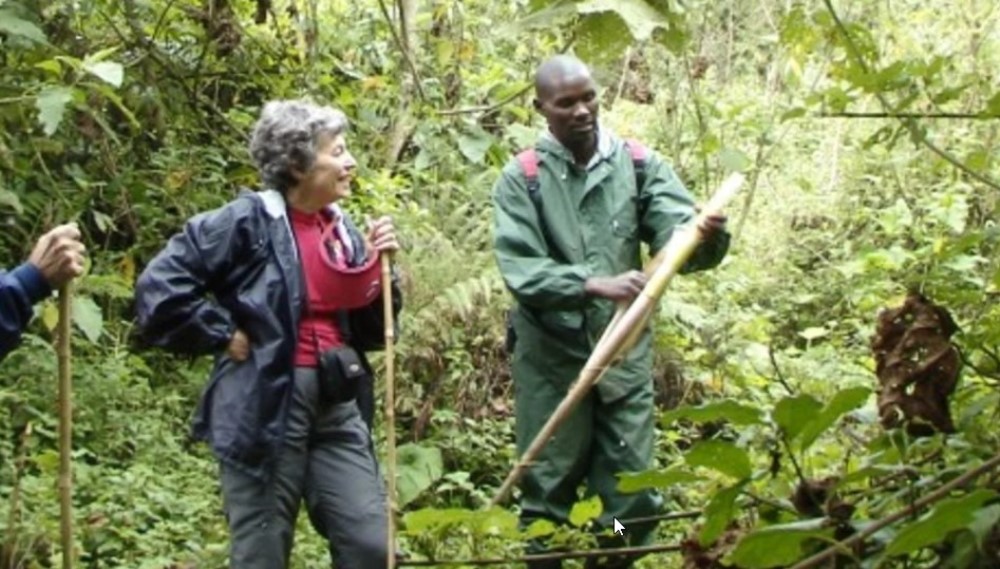
The bamboo craft center in Gahunga, in the northern Burera district, is another positive initiative. The aim of the project is to help local communities to cultivate bamboo. The RDB tourism department initiated the project to end the conflicts between the Volcanoes National Park and the neighboring villagers, who used to cut the park’s bamboo.
The center employs those who were destroying the park just a few years ago. “I was always at risk of being shot by a park ranger when I cut the park’s bamboo. But now I’m happy, I work at the center,” says Serugendo Bavugirije, a former poacher. “Conservation has been good to me.”
In this center, employees make bamboo bracelets, beds, chairs and decorative elements. “We don’t need to go to the park anymore, because now we have access to bamboo. And now we are making money,” adds Serugendo.
The tourism department’s employees used to try and secure the park border to protect it and control illegal activity, but current methods are more efficient. “We want the communities bordering the park to take advantage of the revenue generated by the local natural environment. It’s a way of integrating them into the park conservation process, to make them more responsible by working with them closely,” explains Prosper Uwingeri, head of conservation at the Volcanoes National Park.
According to SACOLA President Pierre Célestin Nsengiyumya, the trust has built 20 homes for the homeless and financed the high school education of 20 children from poor families in the Kinigi and Nyange areas. It has also distributed 50 cows to the region’s poorest and built six schools in the Musanze district. Finally, it contributes to the region’s electrification program.
Near the western province’s Nyungwe forest, there are four co-ops that are fighting poverty. “Before, the villagers would follow tourists and beg for money. Today, instead, they sell art and do traditional dances,” says Uwizeyimana Donatille, a manager at the Friends of Nyungwe co-op.
All around Rwanda’s national parks, activities are being developed to enable local residents to live off the resources generated by the parks without destroying what makes them rich and attractive.
Thanks to its decisions on the procurement of coronavirus vaccines and its swift vaccination campaign, Hungary is now in a position to vaccinate anyone who wants the jab, Szijjártó said in a video before leaving for a trip to Africa.
“We have enough vaccines for first, second, and third doses, and we have a reserve,” the minister said. “Hungary can afford to help the countries that are in a difficult situation. This way we can give the vaccines we haven’t used at home to the African countries.”
According to Hungary today, Szijjártó said he will deliver the 300,000 vaccine doses to Rwanda on Wednesday. He added that on the way there he will stop in Victoria, the capital of Seychelles, for talks on the continued training of their doctors and nurses in Hungary and to sign a tourism agreement.
However, according to Magyar Közlöny, while the government is indeed giving away vaccines to African countries, much more than what Péter Szijjártó had said a few hours earlier.
According to the decisions signed by Prime Minister Viktor Orbán, 24.hu reports, the government will not give away 1.1 million coronavirus vaccines, but more than 1.2 million, because
-* 800,000 doses of AstraZeneca will be given to the Republic of Ghana,
-* 105,600 doses of Sinopharm and 200,000 doses of AstraZeneca for the Republic of Rwanda,
-* 105,600 Sinopharm for the Republic of Gambia.
After Rwanda, Szijjártó will fly to Turkey to take part in a meeting of the foreign ministers of the Turkic Council member countries, followed by a ministerial summit on Friday.
During the summit, Hungary will hand over a donation of 200,000 vaccine doses, Szijjártó said, noting a decision by the Turkic Council countries to jointly support the African countries in their defense against the pandemic.
The Ministry of Health has reported that Rwanda has recorded one more COVID-19 death bringing the death toll to 1335.
The statement released last night also shows that 22 people have caught the virus out of 7854 sample tests.
A total of 2,347,604 people have been fully vaccinated while 4,652,255 received the first dose of COVID-19 vaccine since Rwanda began countrywide inoculation program on 5th March 2021.
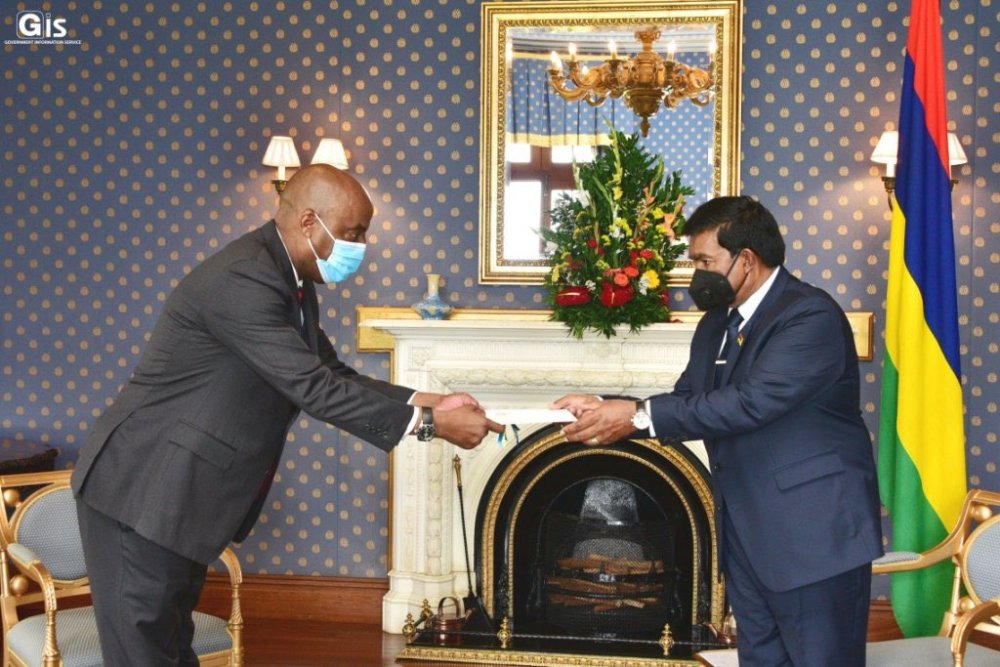
In a statement following the meeting held on Monday 8th November 2021, the Ambassador highlighted that discussions with the President focused on the bilateral cooperation between Mauritius and Rwanda as well as multilateral cooperation pertaining to COVID-19.
Prithvirajsing commended existing bilateral ties founded on mutual respect and reiterated commitments to deepen relations.
The ceremony was held few days after presenting letters of credence to represent Rwanda in Lesotho.
Ambassador Kayihura was previously the High Commissioner of Rwanda to Tanzania from 2014 to 2019. He was also the Ambassador from 2008 to 2014 in the Republic of Korea; Liaison Officer at the Office of the President at the Republic of Rwanda from 2001 to 2008; and First Secretary from 1996 to 2001 at the Embassy of the Republic of Rwanda.
Rwanda and Mauritius have been enjoying cordial relations. In 2014, both countries signed agreements to facilitate investment, trade and cooperation.
Both countries are also ranked among top investment destinations on African continent.
Resilience in execution of an offensive and defensive strategy saw regional subsidiaries grow their Group contribution to deposits to 42% up from 40%, revenue to 37% up from 30% and profit before tax to 26% up from 21%. Agility saw the 27% growth in total funding deployed into public and private sectors resulting in 36% growth in lending.
Diversification driven by a regional approach with operations in 6 countries helped in diversifying sovereign risks and a currency mix risk of 56.6% local currency and 43.4% foreign currency risk mitigating exchange and translation risks. An inclusive business model for all market segments and sectors of the economy and segments and class of the population demography helped to mitigate loan book quality and performance leading to an NPL of 8.9% compared to Kenya industry performance of 13.9% NPLs.
The offensive growth strategy has seen a 23% growth in net loans and advances and a 62% growth in investment in Government securities resulting into a 29% growth in interest income. The growth in earning assets have been funded by a 48% growth in long-term funds of Kshs.104.8 billion up from Kshs.70.7 billion and a 27% growth in customer deposits of Kshs.875.7 billion up from Kshs.691 billion driving total assets growth of 27% to Kshs.1.184 trillion up from Kshs.933.9 billion.
Higher quality non funded income grew faster at 29% to Kshs.31.4 billon up from Kshs.24.3 billion than net interest income which recorded a 23% growth to Kshs.48.5 billion up from Kshs.39.3 billion. FX-trading income grew by 40% to Kshs.5.6 billion up from Kshs.4 billion. E-commerce revenue grew to Kshs.953.5 million up from zero. Bond trading income increased to Kshs.2.6 billion up from Kshs.2.2 billion.
The Group is increasingly shifting from its legacy brick and mortar model of fixed cost structure of branches and ATMs to variable cost, self-service model of client’s own electronic devices or third-party infrastructure. Out of the 975.1 million transactions processed for the 9 months of the year, only 30.1 million transactions or 3% of all transactions were handled at the legacy bank by branches and ATMs with the digital bank handling and processing 945 million transactions or 97% of all the transactions with the self-service customers’ own device mobile channel handling and processing 90% of digital transactions.
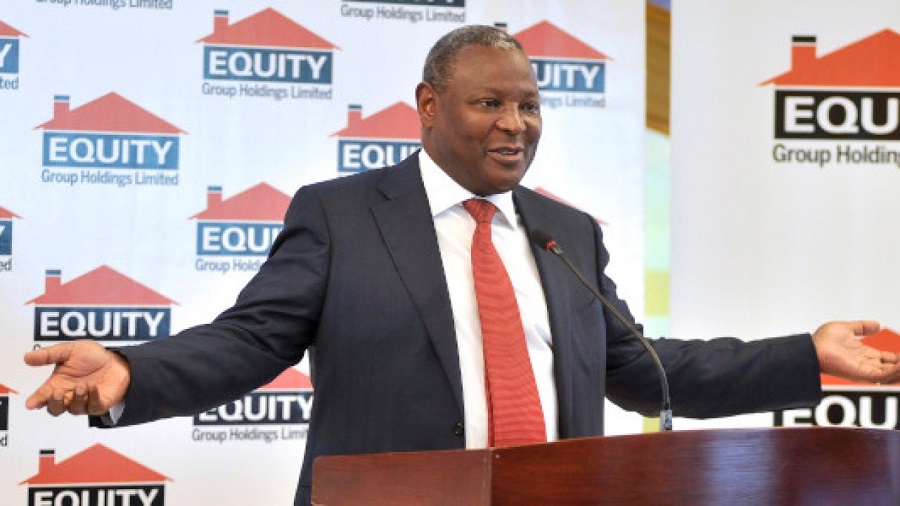
“Increasing mobile internet and e-commerce are becoming the preferred channels of choice for payment processing and lifestyle fulfillment with 74% of customers opting for cashless transactions, “said Dr. Mwangi the Group CEO while releasing the results.
Merchants digital payments ‘Pay with Equity” (PWE) transactions grew by 408% from 3.1 million transactions to 15.8 million transactions while the value of the transactions grew by 392% from Kshs.17.1 billion to 84.1 billion. Retail personal internet (Eazzy Net) transactions grew by 287% from 400,000 transactions to 1.5 million transactions with value transacted growing by 404% from Kshs.16.6 billion to Kshs.83.5 billion. Corporate internet banking transactions grew by 42% while the value of transaction grew by 77%. Eazzy App transactions grew by 82% while the volume transacted grew 153%. “Covid has acted as a tail wind to the adoption of digital banking making us transform into a Big Tech in the financial services sector” added Dr. Mwangi.
The Group has continued to closely manage the COVID-19 accommodated loans of Khs.171 billion. Loans worth Kshs.122 billion have resumed repayment, Kshs.4 billion has been downgraded to NPL and provided for (Under stage 3) with Kshs.45 billion constituting 7% of the total outstanding gross loan book of Kshs.608 billion remaining under Covid-19 moratorium.
“We are glad we accommodated our customers to adapt to the COVID-19 environment, to adjust, repurpose and retool their businesses to be fit for purpose in the new normal. This not only kept the lights of our economies on, but helped a lot of businesses survive, retain their employees, support their families and reduce transition of a health pandemic into a social an economic meltdown” added Dr. Mwangi.
Close management of the loan book and strong customer relationship management saw improvement of the PAR (Portfolio at Risk) to 8.9% down from 10.8% with NPL (Non-performing loan) provision coverage improving to 91.2% up from 86% and a coverage of 104% with loan credit guarantee facilitation. The improvement in quality of the loan book and its management had a significant impact on the financial performance of the Group driven by reduction of cost of risk from 4.8% to 1.4% to record a 68% reduction of loan loss provisions to Kshs.4.6 billion down from Kshs.14.3 billion helped record a 3% decline in total operating expenses.
The growth of Group total funding grew by 27% driven by growth in customer deposits by 27% up from Kshs.875.7 billion from Kshs.6.91 billion was matched with a slower pace of growth of loan book of 23% up to Kshs.559 billion from Kshs.453.9 billion. Liquidity ratios strengthened to 59.5% up from 55.7% as a result of increased investment in Government securities which grew by 62% to Kshs.361.3 billion up from Kshs.222.8 billion.
“The strong liquidity position puts us in a pole position to take advantage of market opportunities while deployment into higher yielding asset class with a revenue growth opportunity and better yields and margins.
Efficiency gains resulted in improved cos to asset ratios and cost to income ratio despite the lag in deployment of growth funds to high yielding assets. Best improvements were noted in the more mature subsidiaries of Kenya, Uganda and Rwanda.
Efficiency gains enhanced Group return on Equity to 24% up from 16.9% while return on assets improved to 3.2% up from 2.5%.
Equity BCDC in DRC continued to offer confidence of good investment decision. Deposits grew by 51%, assets by 47%, revenue by 94%, profit before tax 150%. Cost to asset ratio improved from 7.7% to 4.5% while return on Equity improved to 11.1% u from 10%. Giving us strong confidence in our DRC story. We continue to confront the challenges of our subsidiaries in Tanzania and South Sudan
“We are releasing these results at a time that we have taken lessons from our business model of economic and social twin engine. We have confirmed that a shared value business model is economically viable and sustainable. Doing well can go hand in hand with doing good. Our corporate social arm, Equity Group Foundation has scaled its operations to reach a spend od US$513 million in social investment programs, reaching 37,000 secondary school Wings to Fly scholarships, 17,000 University scholarship under the Equity Leadership Program, 3,000 TVET scholarships and 700 Global university scholarships, while 46 Equity Afia clinics are now operational with 572,707 patients visits. To support global initiatives to combat climate change, we have planted 7.1 million trees and financed and distributed 303,000 clean energy products,” said Dr. Mwangi.
“To help build back better and support the world’s focus on purpose we have scaled our financial inclusion programs reaching 2.3 million women and youth with an 11-week financial training programs. We have supported 2.24 million small scale farmers to convert into agri-businesses trained 317,000 MSMEs in entrepreneurship and accessed them Ksh.111.5 billion in credit facilities while offering our Group infrastructure to support disbursement of Kshs.92.7 billion in cash transfers to over 3.4 million households,” added Dr. Mwangi.
Inspired by the work of the Equity Group Foundation and the success of the COVID-19 response programmes, where we contributed US$1.7 million to support public and faith based hospital with Personal Protection Equipment’s (PPEs) and accommodating our borrowers with principal plus interest repayment breaks of up to 3 years. We are launching an ambitious US$5 billion business and private sector COVID-19 recovery program.
The audacious post Covid-19 recovery program entails supporting 5 million SMEs with loans up to Kshs.0.5 trillion to accelerate recovery and growth and growth post COVID-19 with a view of creating 25 million direct jobs and another 25 million indirect jobs. The initiative is in partnership with governments of the 6 countries we have operations in and will centre on promotion of cross border trade under the East African community and African Continental Free Trade Area protocols. The program has won the support of United Nations (UN) under the sustainable development goals template, Development Banks, Mastercard Foundation under our Young Africa Works partnership and the Private Sector business actors” added Dr. Mwangi.
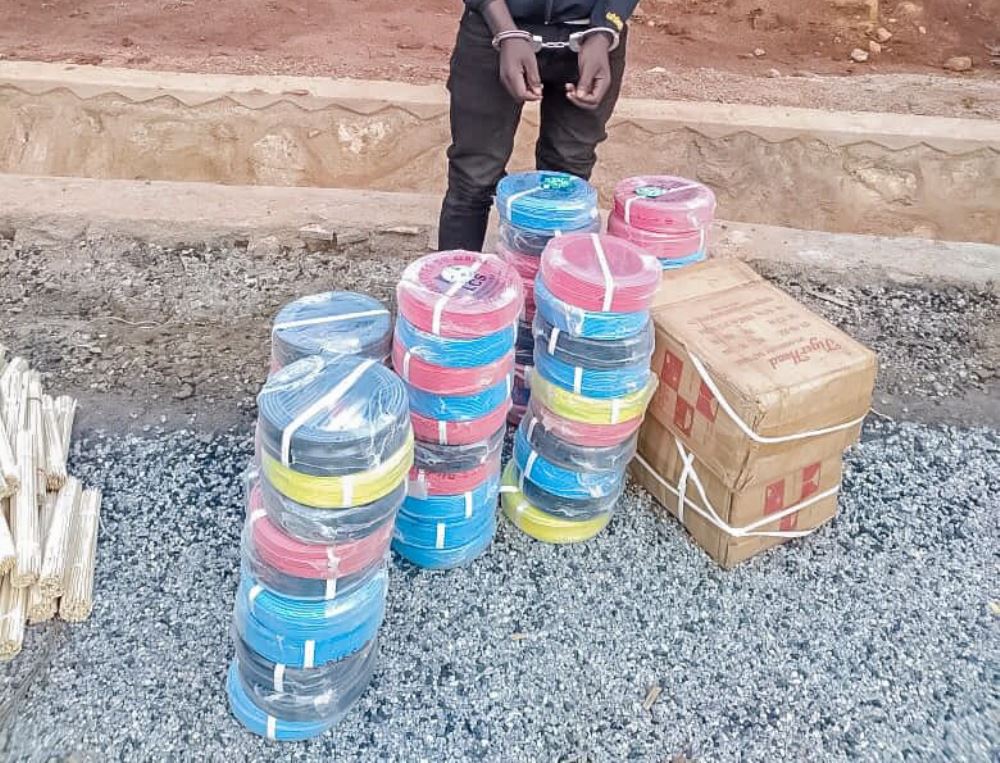
At the time, Niyomugabo, who was intercepted in Mwoya Cell, Nyagisozi Sector, was sneaking the cables into Rwanda from the neighbouring Burundi.
The Southern region Police spokesperson, Superintendent of Police (SP) Theobald Kanamugire said that the suspect was arrested due to information provided by local residents.
“RPU had information about people, who smuggle banned and substandard electric cables into Rwanda from Burundi, through porous borders. Niyomugabo was identified as one of of the smugglers,” said SP Kanamugire.
He added: “RPU officers trailed Niyomugabo; he met his suppliers at a place called Iviro, picked the cables and boarded a bus to also supply his customers in Huye, Muhanga and Kigali. The bus was stopped and Niyomugabo was taken into custody and the cables seized.”
Following his arrest, Niyomugabo claimed that he was being hired by traders to pick the banned cables from other suppliers in Burundi.
This time, he argued, he had been hired by a trader in Huye District to collect the cables from Burundian suppliers and deliver them to his shop. Niyomugabo said that he was supposed to be paid Frw20, 000 after delivering the cables.
It is, however, said that Niyomugabo was part of the chain that smugglers the substandard and banned cables to Kigali.
This time, he was to deliver the cables to another person in Huye, who would also find a way to transport them to Muhanga to another person tasked to smuggle them to clients in City of Kigali.
‘Senegal’ are among the substandard electric cables that were banned by Rwanda Standards Board (RSB).