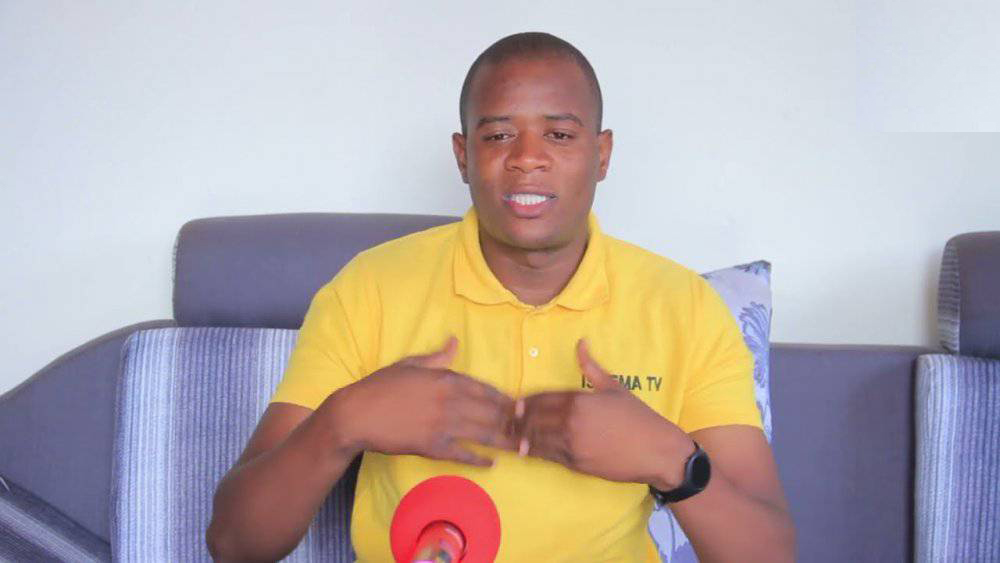
The Prosecution has announced plans to file an appeal few days following the sentence handed to Niyonsenga.
The young man was convicted of four crimes including forgery, impersonation, and criminal obstruction of security officials and humiliating state officials.
“Prosecution has lodged a 2nd appeal in the case against Niyonsenga Dieudonné alias Cyuma Hassan. The grounds for appeal is to correct an error convicting Cyuma for the crime of humiliating public service officials, a crime that was repealed in 2019,” reads the statement released by NPPA on Tuesday 16th November 2021.
The Prosecution has requested that the other three charges, related to assault and criminal obstruction of security officials, practicing journalism without the required permit, forgery and presenting forged press cards as well as the sentence remain unchanged.
The crimes were committed on 15th April 2020 when he declined to obey security officials that requested him to comply with COVID-19 preventive measures.
At the time, he was arrested and later acquitted by Gasabo Intermediary Court. The Prosecution appealed against the verdict whereafter, he was handed seven-year sentence by the High Court which also ordered his arrest. He was detained on 11th November 2021 one day after court delivered the verdict.
His body was seen in the morning of Tuesday 17th November 2021 in Karambi village, Karambi cell of Rubona sector.
The Acting Executive Secretary of Rubona sector, Adeotatus Sichoke has told IGIHE that the spouses clashed as the wife failed to believe that the money was stolen.
“We were alerted in the morning that someone was found hanging from a tree with a rope made from banana fibres around the neck. Her wife was around. She told us that her husband woke up the previous day to sell goats and buy a pig but the money was stolen immediately,” he said.
It is said that the husband returned home in the evening and got in heated argument with her wife who could not believe how the money was stolen.
“After wrangles, the husband put his clothes in a sack and stepped out their house. The wife pursued him and returned home after failing to reach her husband. In the following morning, residents informed the woman that her husband was hanging from a tree,” explained Sichoke.
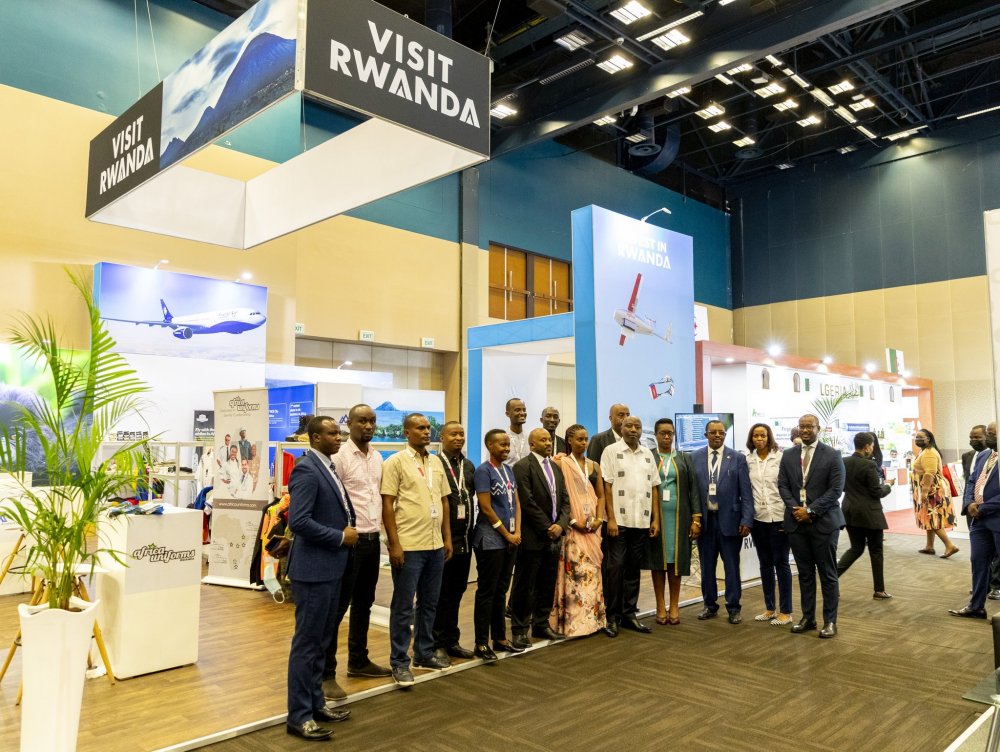
Rwanda is among other African countries participating in the trade fair.
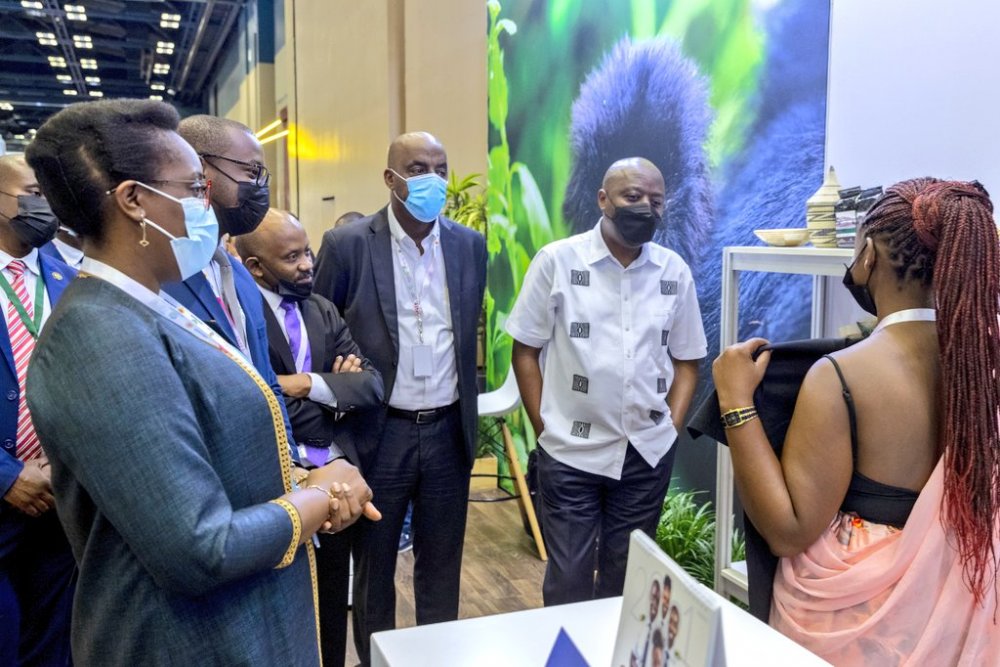
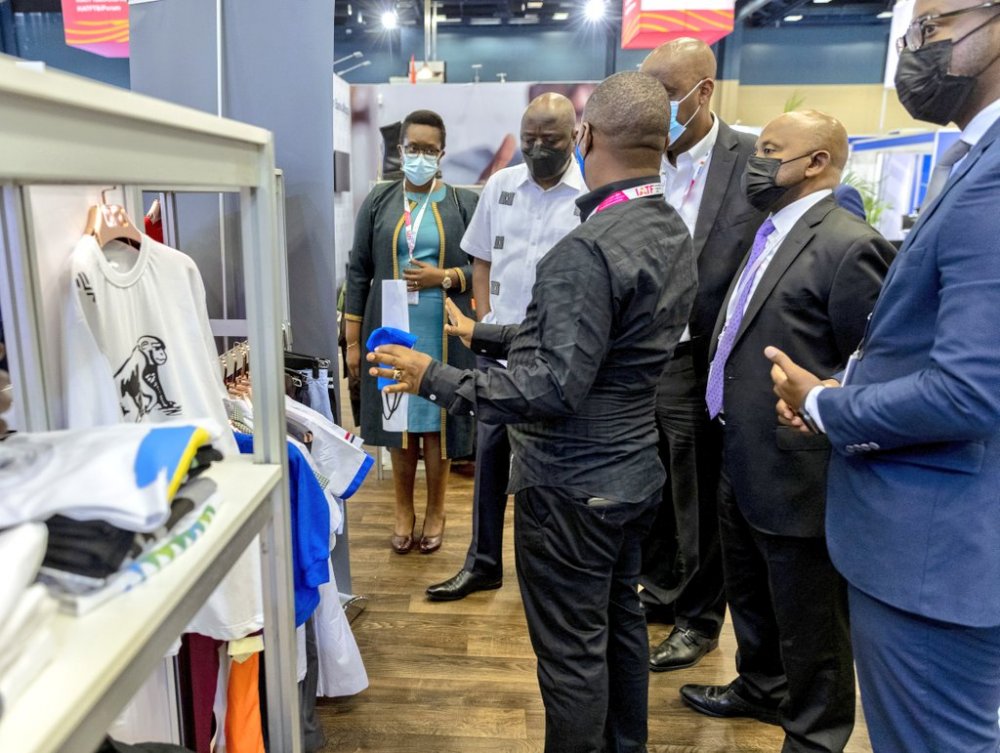
Premier Ngirente who went to South Africa to attend the trade fair representing President Paul Kagame, has visited different stands marketing Rwanda’s visibility, showcasing Rwanda’s efforts in blood delivery using drones among others.
He was accompanied by the Minister of Trade and Industry, Beata Habyarimana and other Rwandan investors including Gerard Sina.
As he delivered remarks at the opening ceremony yesterday, Premier Ngirente urged African countries to deepen their collaboration as embedded in the intra-Africa supply chains if they are to improve economic resilience and growth outcomes during COVID-19 pandemic.
The event which runs from 15th through to 21st November, is expected to close upwards of US$40billion worth of deals signed and is being attended by over 1,100 entities exhibiting their goods and services to over 10,000 delegates, visitors and buyers from over 95 countries from the continent and beyond.
In recognition of the potential of the youth in the Continent, this year’s event will have a designated youth agenda – African Youth Startup – where a one stop pavilion will provide information for the youth on necessary business startup knowledge as well as hold their hands. More than 300 youth carefully selected from the whole of Africa are participating in the pavilion because the Youth are believed to be the continent’s future for investment trade and development.
Organised by the African Export-Import Bank (Afreximbank) in collaboration with the African Union (AU) and the African Continental Free Trade Area (AfCFTA) Secretariat, the second Intra-African Trade Fair (IATF2021) provides a platform to promote trade under the AfCFTA.
It will bring together continental and global buyers and sellers, and will enable stakeholders to share trade, investment and market information as well as trade finance and trade facilitation solutions designed to support intra-African trade and the economic integration of the continent. In addition to establishing business-to-business and business-to-government exchange platforms for business deals and advisory services, IATF2021 also operates IATF2021 Virtual, an interactive online platform that replicates the physical event.
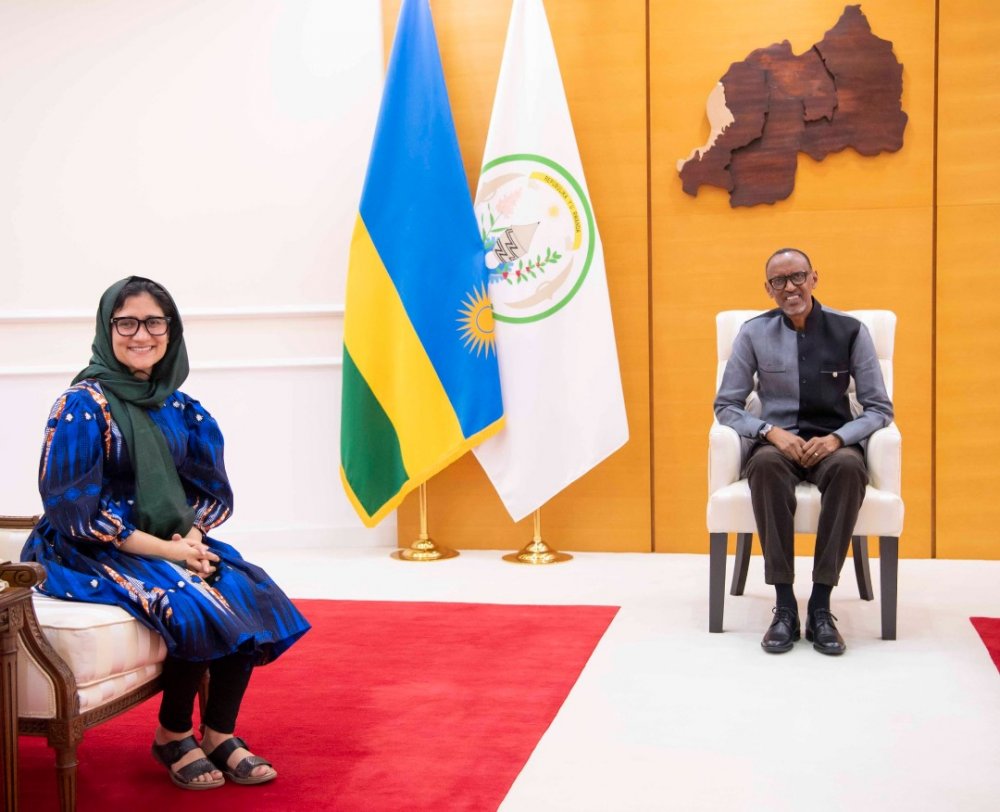
Shabana,31, comes to Rwanda two months after her school relocated to Rwanda due to political chaos that engulfed the country as Talibans took power.
A total of 250 girls from the school arrived in Rwanda on 24th August 2021 as they await the situation to normalize.
Their relocation was facilitated by different countries including Qatar, the United States of America (USA) and Rwanda as the host country.
Talibans regained control of Afghanistan on 15th August 2021, 20 years after they were removed from power in a US-led military invasion.
Since then, citizens started fleeing the country fearing likely violence that could arise from political instability.
At the time, Shabana reiterated commitment to keep striving for women’s rights in her country.
Born and raised in Kabul, the capital of Afghanistan; Shabana finished high school in the US through the State Department’s Youth Exchange Studies program. She attended Middlebury College in Vermont, graduating magna cum laude in International Studies and Women & Gender Studies in 2011. In 2016, Shabana was awarded an honorary doctorate from SOAS University of London.
While at Middlebury, Shabana was awarded a Davis Peace Prize, with which she built wells in the outskirts of Kabul—and was selected as one of Glamour Magazine’s Top 10 College Women of 2010. She also received the Vermont Campus Compact 2011 Madeleine Kunin Public Service Award for outstanding leadership and service to others.
While still in college, Shabana co-founded School of Leadership, Afghanistan (SOLA), whose mission is to provide access to quality education for girls from across Afghanistan. SOLA is the only all-girls boarding school in the country.
Shabana has also served as the National Gender Mainstreaming Advisor at the Ministry of Rural Rehabilitation and Development’s National Solidarity Program in Kabul, but left the position in 2012 to focus on SOLA full time.
In addition to leading SOLA, Shabana is a global ambassador for Girl Rising, a call to action seeking investment in girls’ education worldwide. Among others, she was named one of National Geographic’s 2014 Emerging Explorers, and one of CNN International’s Leading Women of 2014.
In 2018, Afghan President Ashraf Ghani and First Lady Rula Ghani awarded Shabana the Malalai Medal, one of Afghanistan’s highest national honors, for her work in promoting girls’ access to education.
The agreement was signed on Wednesday 10th November 2021 during a ceremony held in Kigali City. Rwanda was represented by the Minister of Foreign Affairs, Dr. Vincent Biruta while Hungary was represented by the visiting Minister of Foreign Affairs and Trade, Péter Szijjártó.
The funds will be utilized to expand and increase the production capacity of Karenge Water Treatment plant located in Rwamagana District.
In addition to increased production, it is expected that the credit line will also be utilized to build six-kilometer water supply network while Hungarian companies will contribute to the implementation of the project.
These companies will intervene in budget planning, supervision and digitization among others.
According to Szijjártó, the agreement also opens doors for Hungarian technology in the expansion of water supply networks to one of developing African nations noting that Hungary is ready to explore investment opportunities in Africa.
During his stay in Rwanda, he also met with officials from different ministries with whom they discussed ways to deepen both countries’ cooperation.
The Minister also had time to attend the press conference, in which he revealed more projects that are still under the pipeline, as both countries look for ways to benefits from each other’s expertise.
Addressing members of the press recently, Szijjártó responded to different questions and shed light on more projects under pipeline as both countries seek to share expertise and strengthen cooperation based on mutual respect.
{{Excerpts:}}
{{What are the terms of agreements for this loan and how will it be utilized?}}
Hungary has very highly developed water management and water industry technologies. These technologies can be offered very bravely to Rwanda to improve the level of standard here when it comes to supply of drinkable water.
That’s why we agreed on this credit program, which is the biggest of Hungary in Africa. The US$52 million will be used to modernize and extend the capacities of the water treatment plant of Kigali from 15 000 to 36 000 cubic meters on a daily basis.
Hungarian companies are ready to provide the engineering and planning functions, the technical support. Products and technologies which are going to be applied here, will be developed in Hungary.
The Minister of Infrastructure here informed us that the bid is going to be announced in Rwanda, and then followed by an announcement in Budapest, Hungary. So, we count on one and half to two years long execution phase, after which the drinkable water supplied in Kigali will be to a much higher level of standard.
{{Can we expect more Hungarian investment in other sectors in Rwanda?}}
Yes, we are already negotiating with your Ministry of Finance about the involvement of Hungarian companies in the framework of reconstructing a hospital in the Western part of your country. These are companies, especially interested in coming to invest in Rwanda in field of IT, manufacturing of medicines and alternative energy generation.
So, these companies will take advantage of another loan program offered by Exim Bank Hungary, US$46 million credit loan has been open for these companies to invest on market-bases here in Rwanda.
{{How about Rwanda’s investment in Hungary?}}
Definitely, we would like to welcome the presence of Rwandan companies and Rwandan economy in Central part of Europe. In order to achieve that, we signed the agreement on the cooperation on civic aviation that the first air connection between Rwanda and Central European region could be launched between Rwanda and Hungary. This is a very important pre-condition.
We have agreed also on exchanging diplomats in order to make well here among the young people and among the population as it is. We have also offered 20 scholarships to Rwandan students on an annual basis in Hungarian universities, fully financed by the Hungarian state, and there is a growing demand for that.
This year, we received 319 applications for those 20 spots, this shows that Rwandan young people would like to come to know Hungary, which is a great news for us.
{{Why did it take to establish relationship relations between both countries?}}
Before 2010, the current opposition party was in power, they just concentrated on the Western side of Europe and on the Trans-Atlantic relationship in their foreign policy strategy.
Since we have been in power, we have introduced two strategies: Eastern opening and Southern opening, and in the framework of Southern opening, we put much emphasis on African countries. And we understand that big development program should take place in Africa in order to avoid big outflow of people from this region.
You know Hungary and the whole European Union has been faced with tremendous challenges of massive illegal migration, and we know that in order to avoid further waves, we have to bring development programs to these countries, which are the basis resources of migration. That’s why we are happy that [we have partnerships] with Rwanda, Seychelles, Egypt, Morocco, Cape Verde, we have a wide range of programs for economic development.
Although we could have come earlier but now we are speeding the process, trying to make up some time.
{{What’s the secret for Hungarian development?}}
The key for our economic success has been the application of the low tax rates. The lowest tax rate of Europe has to be paid in Hungary. This helps investors to come and this helps new jobs to be created.
In our economic policy, we concentrate on job creation, because we know that when you provide jobs to the people, you can provide long term foreseeable perspective in the future. If you give aid to the people that put them in a different position. So, ensuring the job creation to be successful, ensuring opportunities more and more investors to come and create jobs, I think that’s the best way an economy can be developed.
This is what we have been doing in the last 11 years and it’s proven to be successful. 11 years ago, Hungarian economy was at the edge of falling down. Since then, because of low tax rate, because of flat tax, because of encouraging investors to come, we are among the countries with high growth rate in Europe and the globally also.
Each of the start-ups walked away with US$10,000 seed funding during a graduation ceremony of 24 entrepreneurs who completed Tourism Inc training program organized by Entrepreneurial Solutions Partners (ESP), a global management consulting firm in partnership with Mastercard Foundation.
Tourism Inc is an incubator for youth-led start-ups in the Tourism and Hospitality sector.
Graduates in the fourth cohort were trained on marketing, human resources management, financial management and benefited from consultancy services among others.
Marie Christelle Ishimwe, the co-owner of a company dubbed Nish making children’s garments is among awardees. She explained that the training helped them to reshape their project and pledged to efficiently utilize received funds.
“I have been excited to emerge among award winners who walked away with US$10,000 each. I will use the funds to market my products and improve the visibility of the company to attract more customers,” he said.
Samuel Karangwa, is another graduate who owns a company dubbed Punda Group Ltd which links mason helpers to engineers.
He revealed that received money will help the company to digitalize operations.
“The award has great significance to our company. It came by surprise because there were 24 participating entrepreneurs all with promising projects. The funds will help us to improve efficiency. We did not integrate technology into our operations before the training. People seeking our services used to be assisted via phone call. We are planning to stick to technology and create an application facilitating people to access our services,” he said.
So far, a total of 110 entrepreneurs of whom 67 percent are women have received training under Tourism Inc since 2019. The have created 168 new jobs.
{{Plan to create 30,000 jobs}}
The Country Head of Mastercard Foundation in Rwanda, Rica Rwigamba has explained that Tourism Inc falls under the organization’s Hanga Ahazaza initiative launched in 2018 to help the youth create 30,000 new jobs by 2023.
“Tourism Inc is among our projects implemented by Entrepreneurial Solutions Partners. The project is only designed to work with entrepreneurs from tourism and hospitality industry. We have been running this program for almost two years. Over 100 have benefitted from the program which will continue supporting them for the next two years,” she said.
Rwigamba revealed that Mastercard Foundation has 13 partners helping the foundation to implement different youth empowerment projects with special attention to girls and women.
The Senior Project Manager at ESP, Nima Yusuf has explained that they expend possible efforts to train as many as possible women where the incubation program has started yielding big.
“Recently, one of our graduates won funding from Google. He was not the first one to receive the funding. Besides, Tourism Inc has opened doors for new opportunities and other connections,” he said.
Apart from funding the incubation program,. Mastercard Foundation also plans to create 30 million jobs by 2030 through ‘Young Africa Works’ initiative.
Created in 2012 with the purpose to tackle the global sanitation challenge, SATO is an award-winning social business which aims to empower underserved communities so they can live safer and more confident lives. SATO Toilets offers innovative, aspirational yet affordable sanitation and hygiene solutions for a better toilet experience.
The company’s products have been developed based customers’ needs. They range from SATO toilet and connection systems to SATO taps for hand washing.
SATO’s solutions are associated with durability and are easy to clean and easy to install.
SATO’s toilets are made of plastics and placed directly over pits.
The SATO leader in Rwanda, Cyrus Ntaganira has said that the unique design of SATO toilets allays fears for children using them and help to prevent poor hygiene and sanitation related diseases.
“These toilets will promote hygiene among students and prevent diseases emanating from poor hygiene because they are easy to clean helping to eliminate bad odors and keep away flies. The school accommodates many students some of whom feared to use pit latrines lest they fall in holes. Our toilets are safe for children and user friendly” he said.
Ntaganira explained that the company plans to mobilize every Rwandan household to own SATO toilets to maintain hygiene and prevent diseases resulting from poor sanitation.
Doreen Kobusingye, a student in primary 3 has told IGIHE that hygiene standards have improved since they started using SATO toilets.
“Previously used open pit toilets attracted flies and produced bad odour that using them was not safe. We are however grateful that new toilets upgraded with SATO are always clean enough. It would be better if we could also have similar toilets at home to improve hygiene and sanitation,” she said.
The representative of parents with children at the school, Marie Claire Umumararungu has said that she will mobilize her colleagues to install and own SATO toilets at home.
“Improved Hygiene and sanitation is the source of good health and helps children to concentrate on studies. We are not only thankful that the company has donated these SATO toilets for free, but also we want to make possible efforts to help students maintain hygiene at home by using similar toilets,” she noted.
With footprints in different countries, SATO has been operating in Rwanda since 2017.
It has three types of SATO toilets which all of them have uniqueness of a trap door that automatically opens and closes itself with a water seal mechanism which all eliminates bad smell, Flies and other insects that would spread germs. They are also safe for kids, easy to clean and can be installed at any toilet slab be on mud , wooden or concrete slab which makes SATO a toilet for everyone everywhere.
Another note was on SATO stool which is Much user-friendly for elderly people who have difficulties to squat and are also easy to use by differently abled people.
This year, SATO Rwanda also donated SATO toilets to Gahanga II Primary School located in Gahanga sector, Kicukiro district and GS Remera Catholique.
SATO toilets are affordable and available in hardware shops across the country.
Wholesale businesses can find SATO products at Ecomem Co LTD located in Gisozi-Kigali.
The premier was speaking at the opening of the Intra-African Trade Fair-IATF running from 15th to 21st November 2021 in South Africa.
The trade fair has brought together over 10,000 delegates and more than 1000 exhibitors from across the continent.
The opening ceremony was graced by South African President, Cyril Ramaphosa; former Nigerian President and chairperson of the IATF 2021 Advisory Council, Olusegun Obasanjo and other dignitaries including heads of state an governments.
Held for the second time, the exhibition was organized by Afreximbank, African Union (AU) and African Continental Free Trade Area (AfCFTA) Secretariat.
Minister Ngirente who represented President Paul Kagame at the ceremony said that the exhibition takes place in the right time.
“It comes as a good opportunity to build on successes of the first Intra-Africa Trade Fair, which took place in Egypt in 2018, where African businesses registered trade and investment deals worth over US$ 32 billion,” he said.
One of the key flagship projects of Africa’s Agenda 2063 is the establishment of the African Continental Free Trade Area (AfCFTA) to accelerate intra-African trade and boost Africa’s trading position in the global market place.
The theme of this year’s Trade Fair focuses on a new African Continental Free Trade Agreement (AfCFTA) as a key player to boosting Intra-African trade and investment.
Premier Ngirente stressed that COVID-19 pandemic has further illustrated the value of integration.
“It showed us the fragility of reliance on external supplies, the areas to improve in our systems, and the importance of ensuring that integration is key in our countries’ broader development agendas. Improving economic resilience and growth outcomes during this period will therefore require African countries to deepen their collaboration as embedded in the intra-Africa supply chains,” he said.
Statistics show that Africa’s economy is expected to rebound from a contraction of 2.1% recorded in 2020 to 3.4% growth in 2021 and 4.6% in 2022.
“Despite this projected positive recovery in 2021, other figures indicate that Africa still lags behind other continents. And lowering trade costs for deeper integration of markets is one of the key strategic responses to bridge this gap. Therefore, there has never been a better time for supporting Intra-African trade than today,” said Premier Ngirente.
He explained that Rwanda has expended much effort in different areas which is expected to foster innovation, research, infrastructure development and make the country the best investment destination.
Premier Ngirente said that Rwanda in collaboration with other partners, is in the final stages of establishing a vaccine manufacturing facility to contribute to the fight against COVID-19 and other diseases.
As he arrived in South Africa, he was received by President Ramaphosa.
As he delivered remarks, President Cyril Ramaphosa said that trade is built on a bedrock of investment and stressed the need to find ways of attracting more investment into African economies and encourage African businesses to invest in each other’s countries.
“This is the time for action. As countries let us work with speed to resolve any outstanding issues around the AfCFTA, let those countries who have not already ratified it do so and let us take the necessary steps towards domestication. South Africa stands ready to work closely with all African countries to forge more balanced, equitable and fair trade relations among African nations,” he noted.
Olusegun Obasanjo also said that the Intra-African Trade Fair (IATF) will foster Africa’s 2063 agenda to transform the continent into a global powerhouse.
He also said the trade fair was an opportunity to glamourise the African trade market to attract stakeholders for business investments.
“The IATF is the largest and go-to trade and investment firm of the African continent,” Obasanjo said.
“The trade fair is also one of the key initiatives in support of the implementation of the African Continental Free Trade Area.
Before meeting with Kagame , Muraleedharan and his delegation held talks with Rwanda’s Minister of Foreign Affairs, Dr. Vincent Biruta aimed at fostering bilateral relations and cooperation.
The two sides committed to take their relations to new heights both at bilateral and multilateral levels.
Rwanda and India enjoy existing cooperation in the areas of agroculture, health and energy.