They are Joseph Hategekimana and Francois Uwimana, who were arrested at a traditional wedding in Gasharu Village, Katarara Cell of Ntyazo Sector.
Uwimana is the groom while Hategekimana was the master of ceremony.
Superintendent of Police (SP) Theobald Kanamugire, the Southern region Police spokesperson, said that the two men were identified and arrested during the usual inspection and enforcement of the directives
“During the enforcement, Police realised that Joseph Hategekimana was using forged Covid-19 test results not sent by Rwanda Biomedical Centre. Hategekimana also disclosed that received help from the groom, Uwimana. Both were taken into custody,” SP Kanamugire said.
Hategekimana had saved Uwimana’s contacts as RBC. And when Uwimana sent him the edited RBC test results, it appeared as the message originated from RBC.
SP Kanamugire warned the public against such criminal practices.
The suspects were handed over to RIB at Ntyazo station for further legal process.
Article 276 of the law determining offences and penalties in general states that any person, who in any manner, forges or alters documents by forged signature or fingerprint, falsifying documents or signatures or impersonation, forging agreements, its provisions, obligations, or discharged obligations, commits an offence.
Any person who, with fraudulent intention, produces a false written document, causes to write false statements or produces a conflicting declaration, is considered to commit the offence of forgery.
Upon conviction, he/she is liable to imprisonment for a term of not less than five (5) years but not more than seven (7) years and a fine of not less than Rwf3 million and not more than Rwf5 million or only one of these penalties.
The worshippers, who belong to different religious denominations, were found in the house of one Fred Mugabe, 42, located in Mugali Village, Rutaraka Cell in Nyagatare Sector. The host, Mugabe was also arrested.
They belong to Catholic, Adventist, Anglican, EPR and ADEPR churches and had come from different parts of the district.
“We were aware of the directives but we did not imagine Police getting the information about our gathering,” Mugabe reckoned.
The Eastern region Police spokesperson, Chief Inspector of Police (CIP) Hamduni Twizeyimana said that the violators were arrested following a tip off by local residents.
“These are some of the inappropriate behaviours and practices that derail the national efforts against the pandemic. We commend the responsiveness of the public against such prohibited gatherings and related practices,” CIP Twizeyimana said.
The violators were taken to Nyagatare Police station where they were educated on health measures and guidelines against Covid-19, tested for Covid at own costs and hand administrative fines.
The council was scheduled on 22nd December 2021 at Kigali Convention Centre.
The decision follows the confirmation of new COVID-19 variant dubbed ‘Omicron’ and strict measures implemented to contain the spread of the virus.
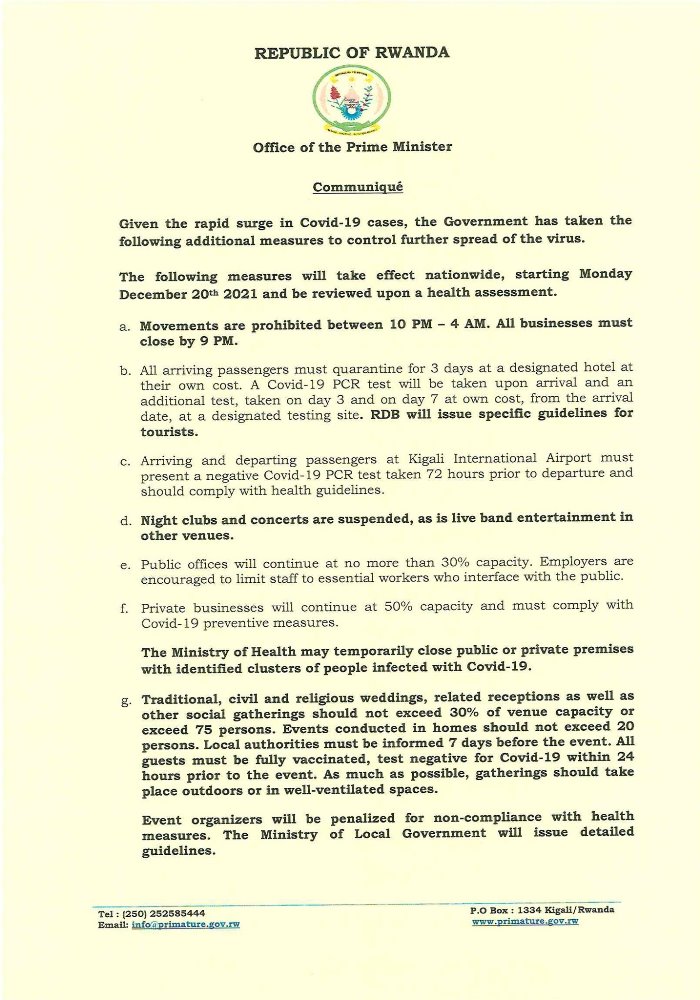
As per current directives, movements are prohibited from 10p.m to 4a.m while all businesses must close by 9p.m.
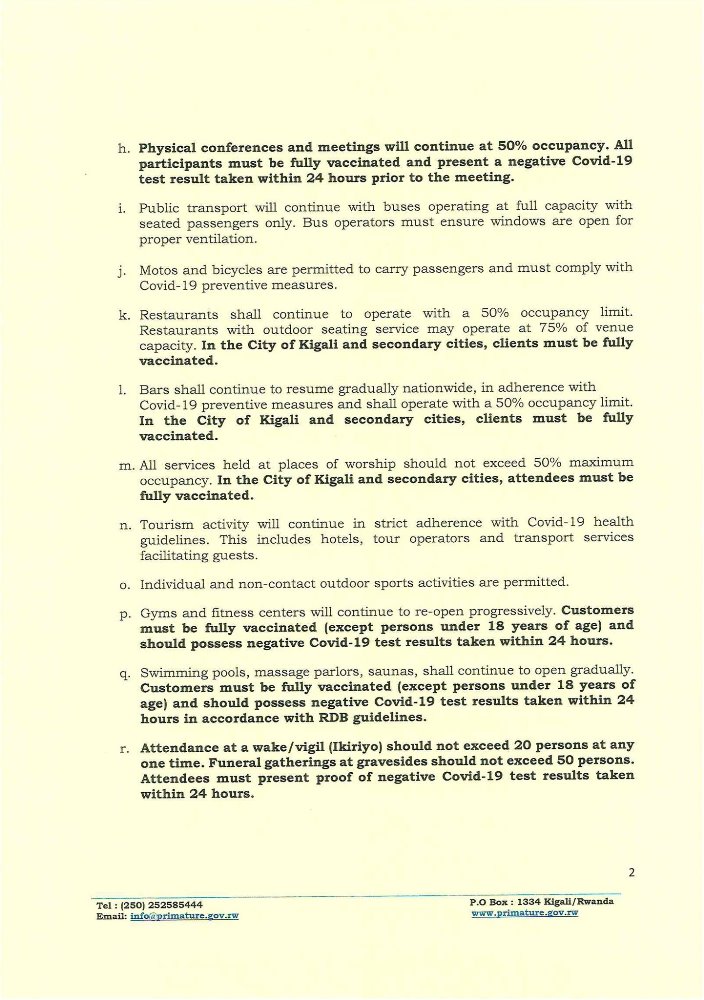
Physical meetings are allowed to continue without exceeding 50% occupancy while participants are urged to present negative COVID-19 test results.
Two days following the release of new directives on 17th December 2021, Rwanda confirmed 383 new COVID-19 cases including 283 from Kigali City.
On 18th December, the Minister of Health, Dr. Daniel Ngamije attributed the rise in cases to Omicron variant noting that the country needs to implement stringent measures to contain the pandemic.
IGIHE has learnt that the latter is among major reasons that triggered the adjournment of Umushyikirano.
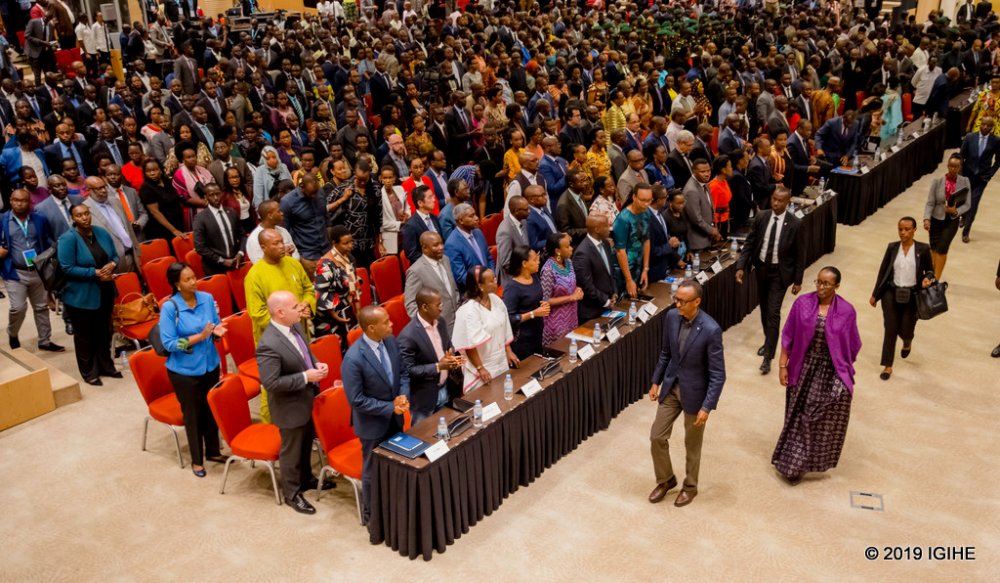
The council was expected to bring together government officials, parliamentarians, Rwandans within the country and abroad among others.
The 18th National Dialogue Council cancelled in 2020 was scheduled on 16th December 2020. It was cancelled by the cabinet meeting held on 14th December which also postponed all national events.
During the council, the president delivers ‘State of the Nation’ address.
Umushyikirano is Kinyarwanda’s equivalent of ‘dialogue’. During the dialogue, participants exchange ideas, share experiences, peer review and question each other. Today Umushyikirano is known as the National Dialogue Council.
As part of efforts to reconstruct Rwanda and nurture a shared national identity, the Government of Rwanda drew on aspects of Rwandan culture and traditional practices to enrich and adapt its development programs to the country’s needs and context.
The result is a set of Home Grown Solutions – culturally owned practices translated into sustainable development programs. One of these Home Grown Solutions is Umushyikirano.
Governed by the Rwandan Constitution (Article 168), Umushyikirano is a forum where participants debate issues relating to the state of the nation, the state of local government and national unity.
The Office of the Prime Minister is responsible for the overall co-ordination of Umushyikirano.
The new measures are imposed following the emergence of new variant of COVID-19 dubbed Omicron. On Thursday, Rwanda registered 125 new COVID-19 cases which increased to 153 on the next day.
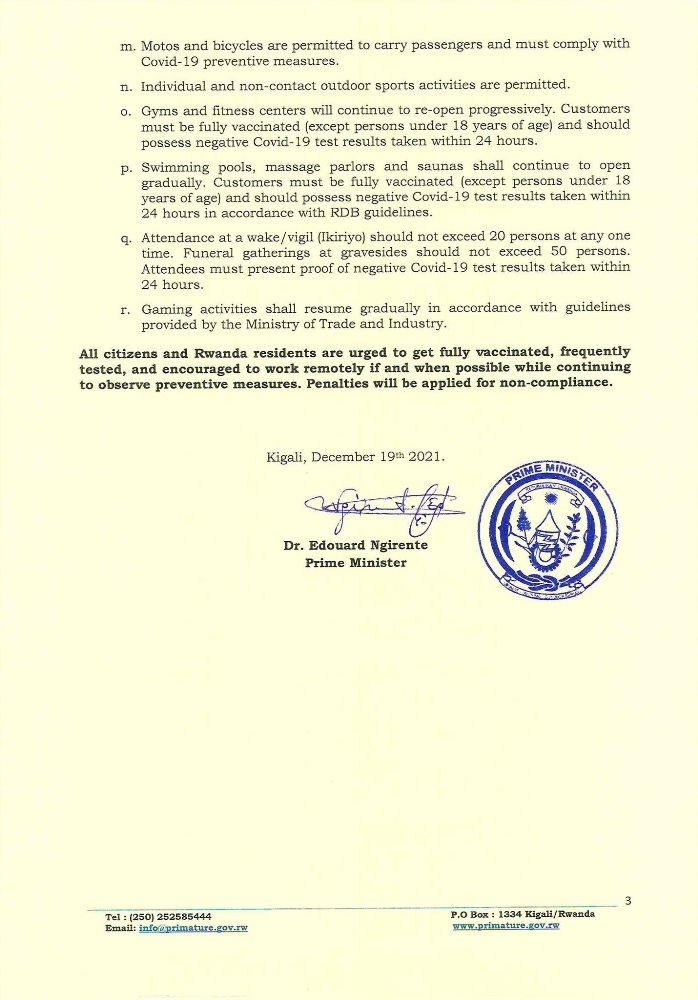
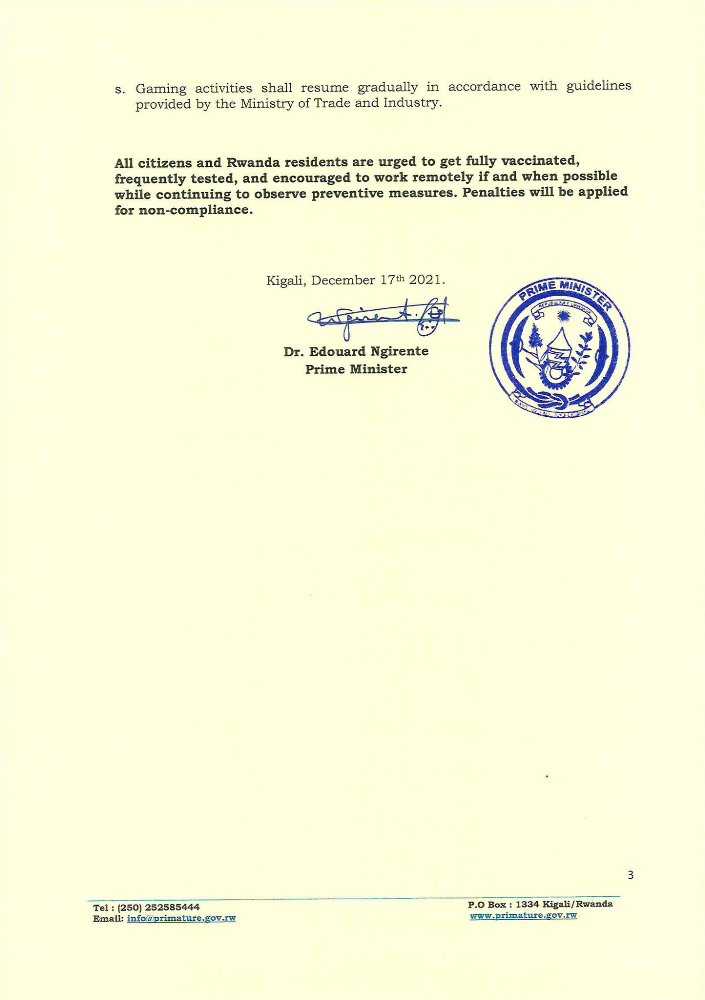
The communiqué released by the Office of Prime Minister shows that all businesses must close by 9p.m.
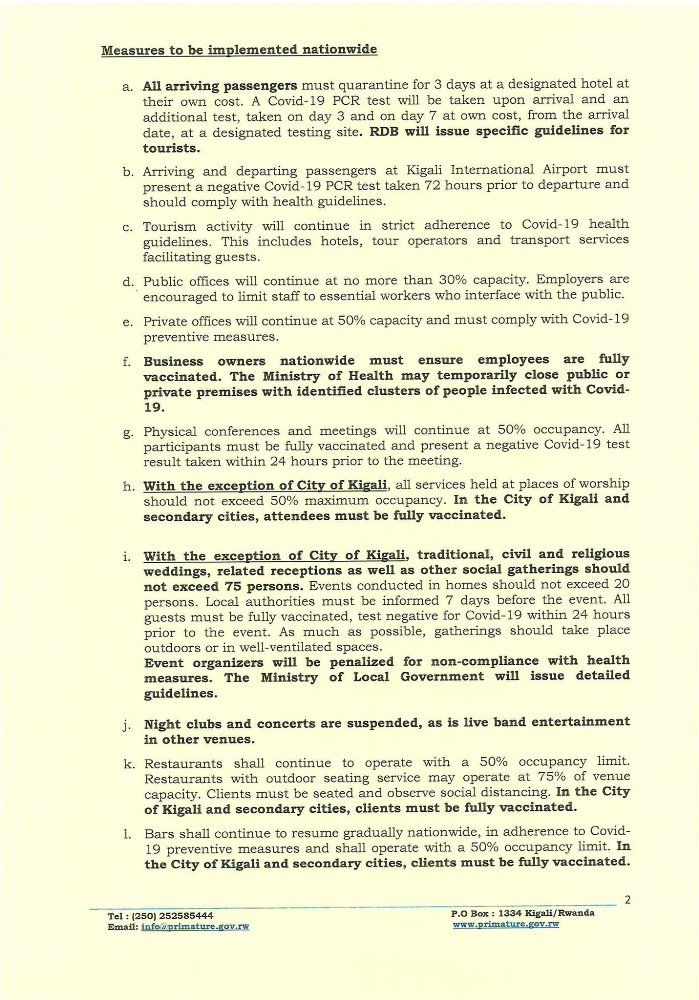
Concerts and live band entertainment have been suspended. Traditional, civil and religious weddings related reception as well as other social gatherings should not exceed 30% of venue capacity or exceed 75 persons.
Among others; events conducted in homes should not exceed 20 persons while local authorities must be informed 7 days before the event.
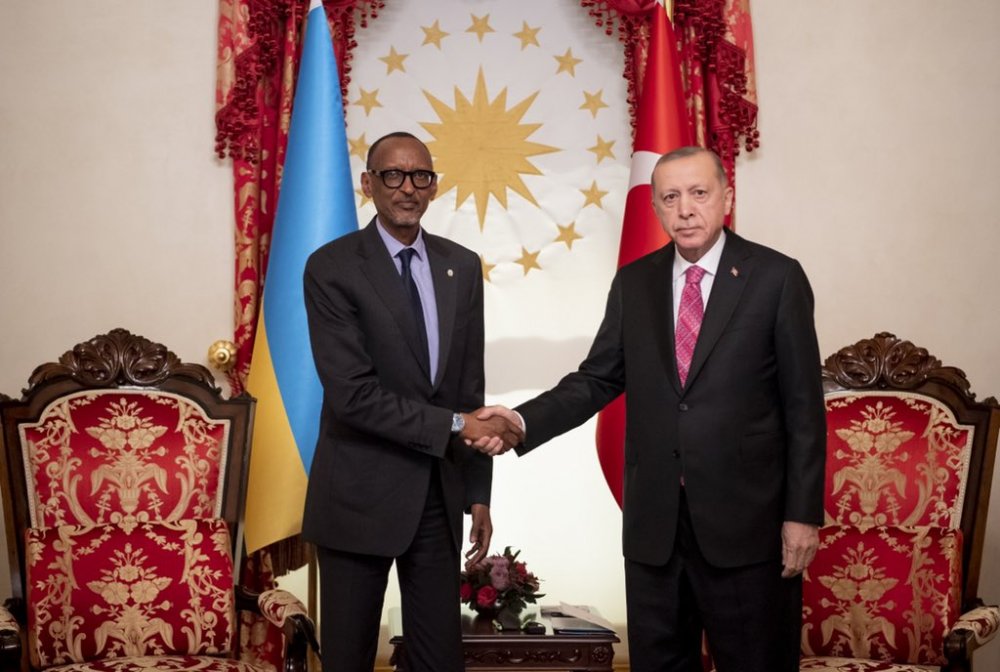
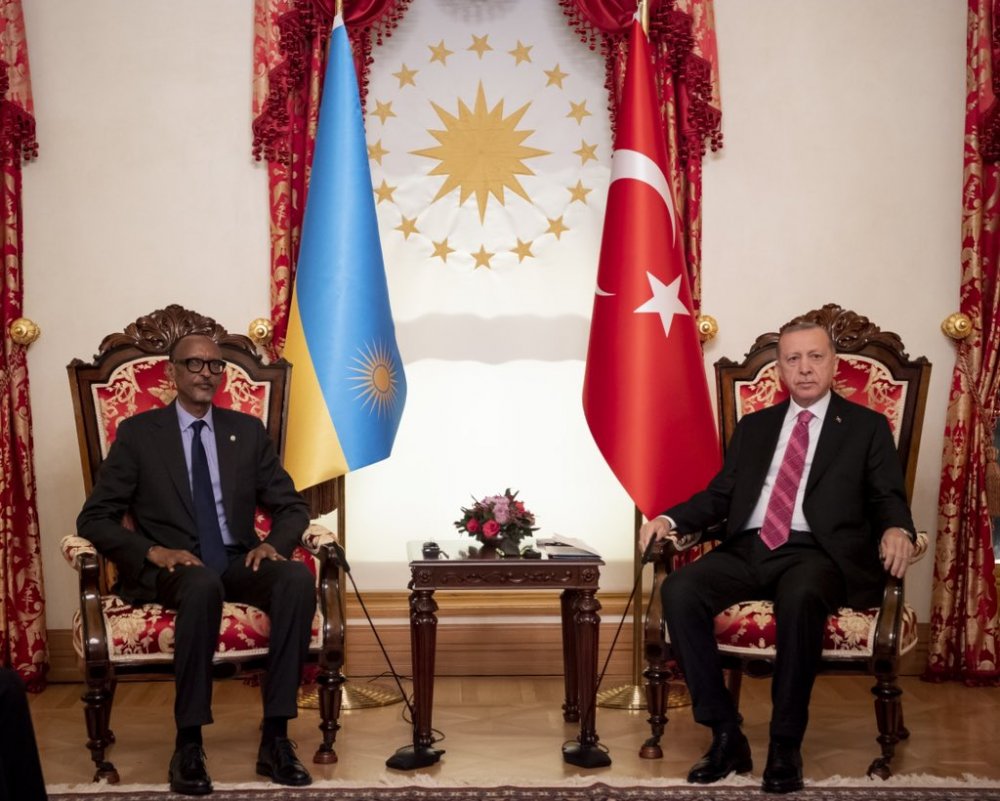
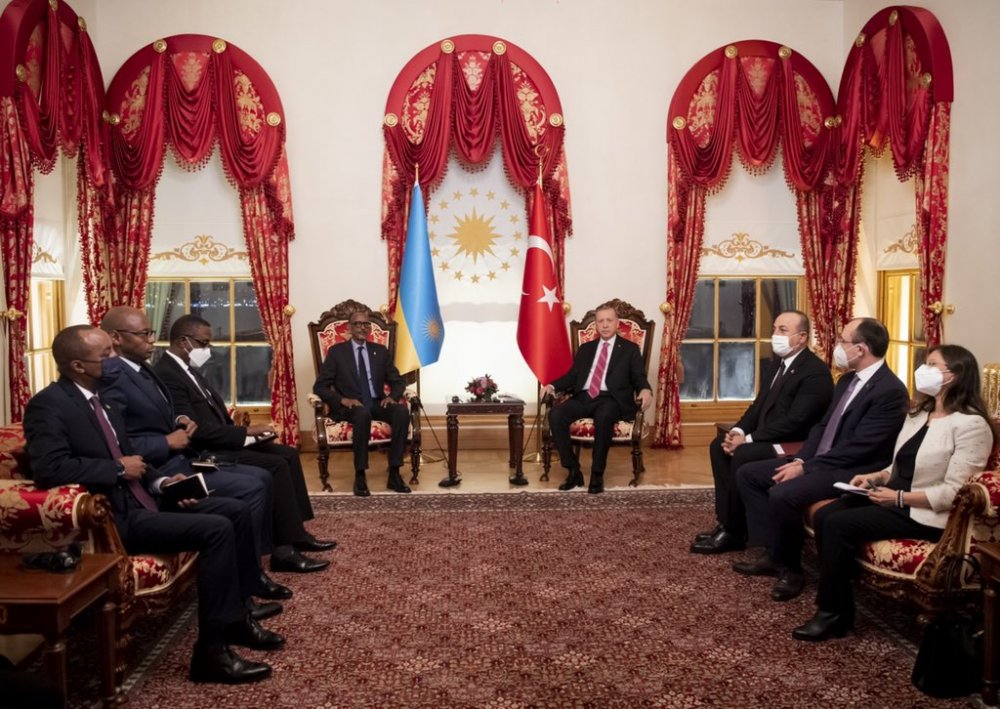
Kagame is among Heads of State and Government from across Africa who attended the summit scheduled on 17th and 18th December 2021.
As he held talks with his counterpart, Kagame was accompanied by officials including the Minister of Foreign Affairs and International Cooperation, Dr. Vincent Biruta.
The bilateral meeting held ahead of the 3rd Africa-Turkey Partnership Summit, revolved around strengthening cooperation between Rwanda and Turkey.
Rwanda and Turkey have been enjoying friendly relations. Turkish Embassy in Kigali started its functions in December 2014 while Rwanda’s Embassy in Ankara was opened in August 2013.
In September 2021, Minister Biruta visited Turkey where he met with his counterpart, and signed memoranda of understanding on cooperation in the areas of sports, education and industry.
At the time, Dr. Biruta interacted with Turkish businesspeople and commended the country’s contribution to Rwanda’s response to COVID-19.
In 2019, both countries’ bilateral trade volume stood at US$32.4 million and US$81 million in 2021.
Through Türkiye Scholarships Programme, 35 students from Rwanda received opportunities to pursue studies in Turkey in 2019/2020.
So far, 182 Rwandan students have been granted scholarship to study in Turkey since 1992.
Both countries also enjoy cooperation in the areas of security. In 2020, Rwanda National Police (RNP) and Turkey National Police (TNP) agreed to strengthen cooperation in varied policing disciplines especially in areas of capacity building.
The two Police institutions renewed the commitment when Inspector General of Police (IGP) Dan Munyuza visited Turkey at the invitation of his Turkish counterpart, Dr. Mehmet Aktas to enhance the existing cooperation between the two police forces.
In 2015, the Governments of Rwanda and Turkey signed security agreements to reinforce the existing bilateral cooperation between the two countries.
Also signed in the same event held in Ankara, was a memorandum of understanding between Police institutions of the two countries to cooperate in areas of training, focusing on counter terrorism, cybercrimes, Special Forces training and Training of Trainers (ToT) courses, among others.
Col Gatarayiha once served as the Director General of Rwanda Directorate General of Immigration and Emigration for three years.
The Minister of Defence has also promoted Non-Commissioned Officers (NCOs) and other ranks including four Warrant Officer II promoted to Warrant Officer I.
Among others, 14 NCOs have been promoted from Sergeant Major to Warrant Officer II while 10 Staff Sergeants have been promoted to Sergeant Major.
The Minister has also elevated 225 from Sergeant to Staff Sergeant, 2836 from Corporal to Sergeant and 12690 from Private to Corporal.
As per figures released by the National Institute of Statistics (NISR), the service sector remained the main contributor with 48% of GDP followed by agriculture with 23% and industry with 21% of DGP while the remaining 7% is attributed to net tax on products.
Rwanda and the rest of the world continued to experience COVID-19 effects in 2021.
According to NISR, the economy was affected by several measures taken to limit spread of the pandemic, leading to negative GDP growth, in the second, third and fourth quarters in 2020. However, economic recovery measures were put in place leading the GDP to grow by 3.5% and 20.6% in Q1 and Q3 in 2021 respectively.
In the third quarter of 2021, the GDP grew by 10.1 percent compared to the same quarter in 2020.
NISR shows that most economic activities have recovered to pre-Covid-19 levels except few such as hotels and restaurants, transport activities, administrative and support services.
On the third quarter, the agriculture sector grew by 6%, industry by 12% while services grew by 11%.
In agriculture, food crops grew by 6% due to a good harvest of agricultural season B and C of 2021. The production of export crops increased by 2% due to an increase of 4.7% in the production of coffee and 9.1% in the production of tea.
In industry, construction activities increased by 15%, manufacturing activities grew by 7% due to a 6% in the increase in the production of processed foods and 32% increase in manufacturing of non-metallic products. Mining and quarrying increased by 30%.
In service sector, transport grew by 19%, hotels and restaurants grew by 62% following a decrease of 55% in the third quarter of 2020. Education activities grew by 140% compared to the same quarter of 2020 where schools were partially closed.
Financial services activities grew by 11%, information and telecommunication services grew by 14% while human health and social work activities increased by 5%.
The Smart Education Project aims to improve Rwanda’s education ICT infrastructure by building an education platform system and establishing a dedicated networks system, provide a solid foundation for digital teaching, education resources sharing, and teaching methods innovation and the education level improvement for Rwandan citizens.
Speaking after the signing of the framework agreement, the Minister of Finance and Economic Planning, Dr. Uzziel Ndagijimana said: “This support will contribute to Rwanda’s National Transformation Strategy with a particular focus on building a knowledge-based economy through providing quality education for all”.
Commenting on the development, the Ambassador of the Peoples’ Republic of China to Rwanda, Mr. Rao Hongwei said: “As Rwanda continues to place ICT at the center of education, China is more than happy to be part and offer our concrete help. I firmly believe that the Smart Education Project will contribute to the betterment of digital infrastructure in Rwanda’s education sector and provide a solid foundation for teaching and learning based on data and information. It will create a strong impetus to the development of education in a quality and balanced way, to the cultivation of talents, and ultimately to Rwanda’s social economic development”.
The Government of Rwanda through the Ministry of Education is embarking on promotion of digital learning by increasing the number of schools connected to affordable internet connectivity and setting up a cost effective education content sharing system through “Smart Education”.
The project scope will focus on three main areas. These are dedicated education network, education data center as well smart campus and school network. The Project will connect 63 universities and higher learning institutions, and 1,437 schools from pre-primary to secondary and TVET schools.
China continues to be a strong development partner to Rwanda through continued support and cooperation in major sectors of the economy namely Transport, Agriculture, Health, Education and construction of Office buildings, among others.
The CPD training programs are being offered in primary and secondary schools in 17 districts across Rwanda through VVOB’s five-year program: Leading, Teaching and Learning Together (2017-2021), which is being implemented in partnership with the Mastercard Foundation’s Leaders in Teaching initiative.
The graduates are part of the second, third and fourth cohort out of four planned in the CPD certification and diploma courses offered by the University of Rwanda – College of Education (UR-CE) with VVOB’s support. VVOB and UR-CE together have delivered these certificate and diploma courses for system and school-based leaders and have provided opportunities for school leaders to encourage one another in supportive Professional Learning Communities (PLCs).
“We congratulate the 2500+ graduates that completed the CPD Diploma and certificate courses. This graduation represents a milestone in the professional careers of our district, sector and school leaders, who are now equipped to fulfil their key roles in improving the quality of teaching and learning in schools,” said Marianne Kiggundu, Country Programmes Manager for VVOB in Rwanda.
The graduates include Head Teachers, Deputy Head Teachers, District Directors and Officers of Education, Sector Education Inspectors, Teacher Training College (TTC) Tutors, School-Based Mentors, and School Subject Leaders for Science, Technology, Engineering and Mathematics (STEM).
A diploma course in Effective School Leadership has equipped Head Teachers and Deputy Head Teachers with the competencies to fulfil their roles as school leaders.
A certificate course in Educational Mentorship and Coaching has provided School-Based Mentors and School Subject Leaders in STEM with effective tools and skills to facilitate professional development activities in schools.
At the same time, a certificate course in Educational Mentorship and Coaching is also offered to District Directors and Officers of Education, as well as the Sector Education Inspectors to equip them with the competencies to coach school leaders effectively, and to initiate and sustain professional learning communities of school leaders.
The training programs have boosted the confidence and skills of education actors and nurtured more positive attitudes.
School leaders feel more capable of effectively leading their schools, and School-Based Mentors, STEM Subject Leaders, and Sector Education Inspectors have more confidence in their coaching and mentoring skills.
“My participation in the CPD Programme equipped me with skills to collaborate more with teachers to ensure that students learn better,” Françoise Mukagatete, deputy head teacher at G.S Kabere Kamonyi district.
“The course I attended has changed how I support STEM teachers. Before, I lacked the skills. Before, mentoring and coaching wasn’t done properly, and we did not know how it should be done. Now, due to the training, we know what it is, how to do it and, as a result, we see improved quality of teaching,” said STEM School Subject Leader at G.S Nyinawimana, Gicumbi district.
Ultimately, the goal of the Leading, Teaching and Learning Together (LTLT) program and the Leaders in Teaching initiative was to improve learning outcomes in basic education through enhanced school leadership and teaching so young people have opportunities to find work or create their own businesses.
“Teachers are at the heart of the education system and ensuring their professional development is how we make sure that our students are educated with up-to-date methods,” says Rica Rwigamba, Rwanda Country Head of the Mastercard Foundation.
The LTLT program ran from January 2017 until December 2021, covering all primary schools in six districts and all secondary schools in 14 districts.
{{By the end of 2021:}}
• 809 Head teachers, 545 of Deputy Head teachers and 20 district officials have been trained on Effective School Leadership.
• 228 Sector Education Inspectors, 1,253 School-Based Mentors, and 1,522 STEM School Subject Leaders and Math School Subject Leaders have been trained in Educational Mentorship and Coaching.
• In primary education, the program also trained 48 of Teacher Training College tutors in Educational Mentorship and Coaching with a specific focus on induction programs for new teachers.
• The majority of the sectors have now formed Professional Learning Communities and every targeted school now organizes at least two Communities of Practice (CoP) sessions per year.
Commenting on the development, Dr. Alphonse Uworwabayeho, senior lecturer at UR-CE and LTLT programme coordinator said: “I am proud and privileged to say that the UR-CE/VVOB programme left behind a lasting impression. The academic staff who were involved in this programme are now more knowledgeable and better equipped in their respective responsibilities. Before this programme was introduced, there was no continuous professional development programmes in our college. It is VVOB which initiated it and we are very grateful for that.”
Through these improved CPD support systems, thousands of other teachers and students have been reached indirectly. To learn more about the impact of the LTLT program in Rwanda, download our endline evaluation report.
{{About VVOB}}
VVOB – education for development is an international non-profit organisation with over 35 years of experience in quality education. Through capacity development, VVOB provides support to ministries of education in Africa, Asia and South America to improve (initial) professional development of teachers and school leaders in early childhood, primary, general secondary, and technical and vocational education.
For more information on VVOB, please visit: www.vvob.org
{{About the University of Rwanda UR-CE}}
The University of Rwanda-College of Education (UR-CE) is a specialized institution in teacher education with academic, assessment and certification of all teachers at secondary school level.
For more information on UR-CE, please visit: https://ce.ur.ac.rw/
{{About the Mastercard Foundation}}
The Mastercard Foundation works with visionary organizations to enable young people in Africa and in Indigenous communities in Canada to access dignified and fulfilling work. It is one of the largest, private foundations in the world with a mission to advance learning and promote financial inclusion to create an inclusive and equitable world. The Foundation was created by Mastercard in 2006 as an independent organization with its own Board of Directors and management. For more information on the Foundation, please visit: www.mastercardfdn.org
The certification cements the Bank’s commitment to prioritising customer safety and satisfaction. ISO 20000 is proof that the Bank’s service management system is robust enough in the delivery of all IT-related services and is also aligned with its current and future needs.
In his remarks while receiving the certification, Equity Banks Managing Director, Hannington Namara noted that the recognition from the BSI was a testament to the Bank’s investment in IT systems and infrastructure to meet and exceed the ever-changing needs of the customer.
“Technology is the backbone of the services we deliver, and this is why we strive to achieve global standards when it comes to the systems, we deploy to serve the needs of our customers in an increasingly digital world. This ISO 20000 certification assures our customers that we have in place appropriate governance to safeguard customer privacy and security,” said Namara.
Other goals for ISO 20000 on service management include protecting revenue flow into the business by providing stable IT services, meeting the Bank’s obligations to stakeholders, including its customers, regulators, shareholders and suppliers, and lastly making IT a business enabler.
While ensuring the Bank has better defined and better-aligned services, increased visibility and control, the service management system also provides a structured framework for setting IT service management objectives, processes, and outlines responsibilities for key stakeholders.
{{About Equity Bank Rwanda}}
Equity Bank Rwanda began its operations in 2011 and is registered as a commercial bank by the National Bank of Rwanda. The Bank has its Head Office located in Kigali, with a foot-print of 15 branches and is supported by 3173 agents, 1861 merchants and a network of 22 ATMs.
Equity Bank Rwanda is a subsidiary of Equity Group Holdings Plc, a financial services company listed at the Nairobi Securities Exchange, Uganda Securities Exchange, and Rwanda Stock Exchange. In addition to Equity Bank Rwanda, the Group has banking subsidiaries in, Kenya, South Sudan, Uganda, Tanzania, DRC, and a Commercial Representative Office in Ethiopia. It has other subsidiaries in investment banking, insurance, telecom, fintech and social impact investments.
Equity Group is the largest bank in the region in assets of Kshs 1.12 trillion (USD 11.2 billion). It is also the biggest bank in deposits, market capitalization of USD 2billion and with a customer base of over 15 million customers. The Group has a footprint of 337 branches, 58,756 Agents, 34,941 Merchants, 691 ATMs and an extensive adoption of digital banking channel.
The Banker Top 1000 World Banks 2021 ranked Equity Bank 754 overall in its global ranking, 62nd in soundness (Capital Assets to Assets ratio), 55th in terms of Profits on Capital and 20th on Return on Assets. The Banker’s Top 100 African Banks 2020 placed the Bank in position 7 overall among the top 10 Banks in Africa, 5th place on soundness, position 9 on growth performance, 8th on return on risk and position 6th in terms of profitability and on leverage category.
In the same year, Moody’s gave the Bank a global rating of B2 with a negative outlook same as the sovereign rating of the Kenyan government due to the Bank’s strong brand recognition, solid liquidity buffers and resilient funding profile, established domestic franchise and extensive adoption of digital and alternative distribution channels. Equity Group Holdings Plc is regulated by the Central Bank of Kenya.