Dr. Nsabimana has been serving as the Director General of Rwanda Utilities Regulatory Authority (RURA) prior to his new appointment.
He had also served as Vice Mayor in charge of Urbanization and Infrastructure at the City of Kigali before moving to RURA.
Meanwhile; Amb. Gatete who held the position for four years has been appointed Rwanda’s Ambassador to the United Nations Headquarters in New York.
Another appointee is Eng. Patricia Uwase who has been serving as the Permanent Secretary to the Ministry of Infrastructure. She has been named Minister of State in the same Ministry.
{{Who is Dr. Nsabimana?}}
Dr. Ernest Nsabimana received a Bachelor of Science in Civil Engineering (2005) from the University of Rwanda (former National University of Rwanda).
In March, 2010, He obtained a Master’s and Ph.D. combined scholarship (in Civil Engineering) at Kyung Hee University in South Korea. In June, 2015, he obtained a Ph.D. degree in Civil Engineering with a specialization in Geotechnical and Transportation Engineering. During his PhD course, dr. Nsabimana published various scientific papers in peer reviewed journals. He has research interests and expertise in Transportation infrastructure such as Highway Engineering, Airport Engineering, Railway Engineering, Urban Infrastructure and Utilities planning.
Since September 2015 to November 2018, he served as Senior Lecturer of Civil Engineering at IPRC-Kigali and Coordinator of Rwanda TVET Trainer Institute (RTTI) at RP. He also served as part time lecturer of Geotechnical Engineering and Transportation Engineering at Jomo Kenyatta University of Agriculture and Technology (JKUAT-Kigali Campus), Airport and Railway Engineering at INES Ruhengeri, Transportation and Traffic Engineering, and Urban Utilities Planning at Dedan Kimathi University of Technology in Kenya (DeKUT).
Dr. Nsabimana has also a very strong industrial exposure. He has been working as Structural, Geotechnical, Transport, Pavement and Materials Engineer on various road and building construction projects across the country.
Since November 2018 to August 2019, Nsabimana served as Principal of IPRC Karongi under Rwanda Polytechnic (RP). Since August 2019 up to December 2020, he served as the Vice Mayor in charge of Urbanization and Infrastructure of the City of Kigali (CoK) until prior to his appointment as the Director General of Rwanda Utilities Regulatory Authority (RURA).
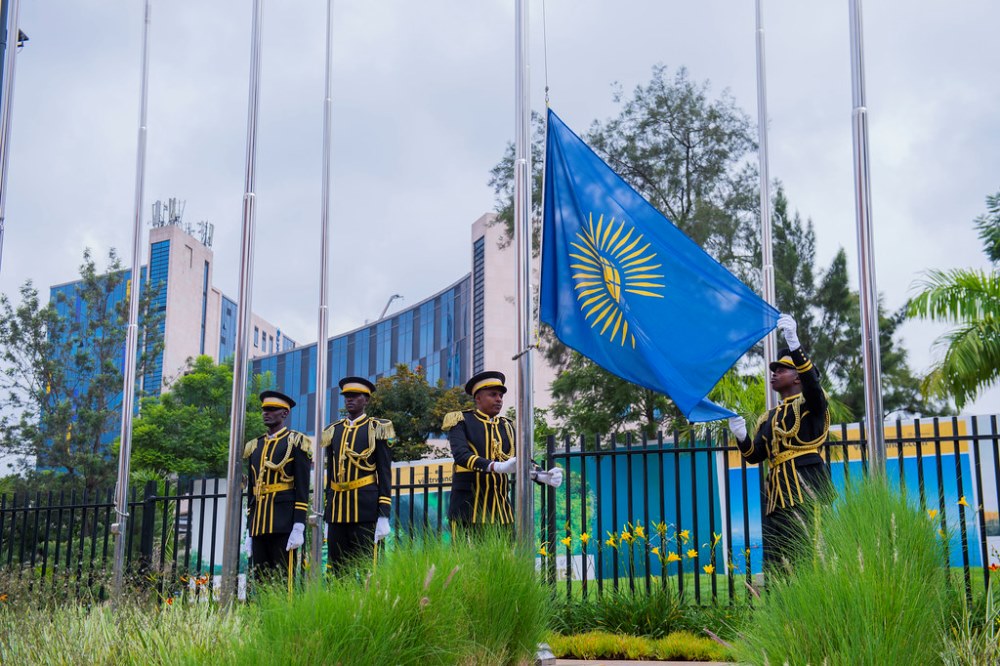
CHOGM was due to have been held in Kigali in June 2020 but was postponed twice due to the impact of the COVID-19 pandemic.
CHOGM is customarily held every two years and is the Commonwealth’s highest consultative and policy-making gathering. Commonwealth leaders selected Rwanda as host for their next summit when they met in London in 2018.
Through a statement released on Monday 31st January 2022, President Kagame welcomed participants of the meeting expected to discuss, among other things, ways to address COVID-19 related challenges.
“Rwanda is pleased to welcome all delegates and participants to Kigali for a safe and productive CHOGM Rwanda 2022. The last two years have made it clear to us that we are more connected than ever before and we must work together to achieve the tangible and sustainable results we want. The long awaited meeting will be an important occasion to come together to address the challenges caused by the COVID-19 pandemic and to build on innovative technological and economic opportunities to solve other key problems facing our citizens,” he said.
The Secretary-General Scotland also expressed delight that the meeting is set to take place following years of adjournment.
“I am delighted that the Commonwealth family can finally be reunited, four years on from our last CHOGM in London. Our meetings in Rwanda will give us a real opportunity to reaffirm the values that bind the Commonwealth together and focus on vital issues, including the recovery from the COVID-19 pandemic, tackling climate change and poverty, boosting trade and promoting sustainable development – all issues that can only be dealt with decisively through multilateral cooperation and mutual support,” she stated.
“We have adapted throughout the pandemic, holding ministerial meetings online. It is with great joy and anticipation that I look ahead to a face-to-face Commonwealth Heads of Government meeting,” Scotland added.
Scotland has also commended the Government and people of Rwanda for their outstanding commitment and dedication to delivering an exemplary CHOGM in Kigali.
“I thank all Rwandans for their grace and fortitude in undertaking such detailed preparations to ensure a safe, secure and productive CHOGM that drives the Commonwealth forward in these trying times,” she said.
The upcoming CHOGM due in Kigali will be the first to be held in Africa for over a decade.
The Commonwealth is a voluntary association of 54 independent and equal sovereign states. The Commonwealth spans the globe and includes both advanced economies and developing countries. Thirty-two of members are small states, many of which are island nations.
Its Secretariat supports member countries to build democratic and inclusive institutions, strengthen governance and promote justice and human rights.
The Commonwealth work helps to grow economies and boost trade, deliver national resilience, empower young people and address threats such as climate change, debt and inequality.
Member countries are supported by a network of more than 80 intergovernmental, civil society, cultural and professional organisations.
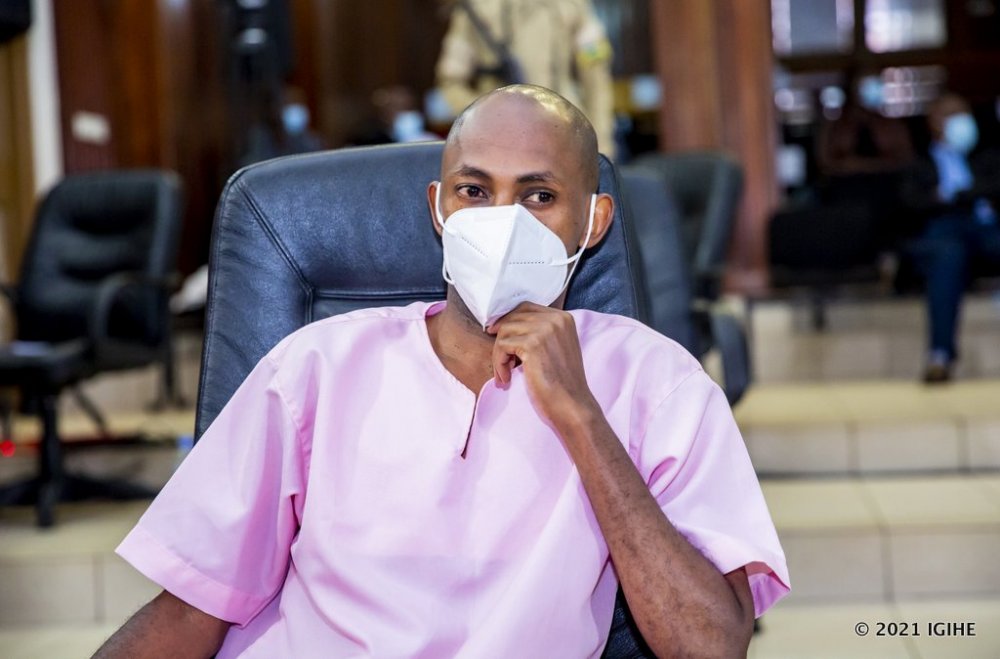
Sankara appealed for leniency on Monday 31st January 2022 appearing before the Court of Appeal along with co-accused individuals convicted of terrorism charges.
On 20th September 2021, the High Court Special Chamber for International and Cross-border crimes convicted former President of MRCD-FLN terrorist group, Paul Rusesabagina of terrorism charges and handed him 25-year jail term while Callixte Nsabimana alias Sankara, the former spokesperson for the terror group was sentenced to 20 years behind bars.
The remaining nineteen co-accused individuals were sentenced from three to 20 years.
Following the ruling, the accused, plaintiffs and the Prosecution were given 30 days for appeal.
Later on, it was said that 13 of convicts and 74 survivors of FLN attacks who sought compensation expressed dissatisfaction with the judgment separately and filed an appeal.
During trial proceedings, 94 survivors of the attacks sought over Rwf1 billion but the court resolved that few of them would get compensated and the amount was below demanded compensation. Towards the end of last year; the Prosecutor General, Aimable Havugiyaremye said that the appeal was filed following dissatisfaction with verdicts.
He also revealed that the Prosecution was not happy with the acquittal of Rusesabagina on the formation of an irregular armed group and handed sentence among others.
Rusesabagina who did not appeal against the 25-year jail term, had boycotted the court during trial proceedings citing zero expectation of fair trial.
The convicts faced charges including the formation of an irregular armed group, membership of a terrorist group, financing terrorism, murder as an act of terrorism, arson as an act of terrorism, attempted murder as an act of terrorism, and assault and battery as an act of terrorism.
The crimes were committed since 2018 when MRDC/FLN combatants plotted attacks to Rwanda which claimed lives of nine innocent residents in the Southern Province.
They left many others gravely injured, and caused significant material and economic damage in South-West Rwanda.
As the appeal hearing resumed on 31st January 2022, only 19 convicts appeared before court in-person while Matakamba Jean Berchmans attended virtually from Mageragere Prison.
Today’s court session saw the accused appealing against their sentence. It was postponed on 28th January 2022 due to the absence of Herman Twajamahoro, the defense lawyer of three convicts.
Appearing before the court, seven of the accused individuals have requested lenient punishment while five sought suspended sentence.
The seven individuals seeking lenient punishment requested the court to consider different reasons including the fact that they are brought to court for the first time, pleading guilty during interrogations and trial in substance.
Sankara said the court needs to consider that the 20-year jail term deprived him of his chance to be reintegrated into Rwandan community, that he would complete the sentence in his advanced ages (57).
Sankara told the court that he endured suffering since he was aged 12 when he lost both parents and six siblings.
He told the court that having publicly distanced himself against his political party RRM and MRCD/FLN, his poor health conditions suffering from blood pressure and stomachache should be considered to hand him a lenient punishment.
Sankara said that he became an enemy of countries he accused of having supported FLN including Burundi, Uganda and the former President of Zambia, Edgar Lungu noting that he has become a changed man who want to be loyal to the Government of Rwanda where he is assured of safety and contribute to national development.
Among others, the former FLN spokesperson requested the court to consider the fact that there are FLN combatants who were taken to Mutobo Demobilization Center as well as other Genocide suspects who received lenient punishments and reintegrated into the Rwandan community after pleading guilty and apologizing.
“As I have been doing it during interrogation, to the Prosecution, High Court and in front of you, I apologize again for what happened and promise you to become an exemplary citizen, abiding by all laws of the country once you grant me the chance of receiving a reduced sentence to be reintegrated into Rwandan community,” Sankara said.
His defence lawyer, Jean Rugeyo also supported his clients’ request highlighting that Sankara has become a changed man ready to contribute to his nation’s development with no intentions to drag himself into criminal acts again.
The Presiding Judge, François Regis Rukundakuvuga asked Rugeyo what he thinks is inappropriate in the High Court’s decision. He replied that the court did not reduce the jail term as per client’s wishes.
Sankara said that he doesn’t want to be acquitted because he is aware of the severity of the crimes he committed but requested for a kind of punishment that rehabilitates him into a more responsible citizen.
The Prosecution has requested the court to reject the appeal noting that it is not founded.
The Government of Rwanda closed the border with Uganda in March 2019. At the time, Rwanda had started accusing Uganda of supporting dissidents intending to threaten its security and illegally incarcerating Rwandans who were also subjected to torture on accusations of being spies.
[The Government of Rwanda announced the decision to reopen the border->https://en.igihe.com/news/article/rwanda-to-reopen-gatuna-border-post-with-uganda] on 28th January 2022 through a statement issued by the Ministry of Foreign Affairs.
The development was reached few days following the visit to Rwanda of Lieutenant General Muhoozi Kainerugaba, Senior Presidential Advisor on Special Operations and Commander of Land Forces of the Uganda People’s Defence Forces (UPDF) on 22nd January 2022 where he held talks with President Paul Kagame on restoring bilateral ties to normal.
As IGIHE visited the border on 30th January 2022, preparations for the long-awaited reopening were underway that Rwanda started receiving nationals returning from Uganda.
On the side of Uganda, the upgrading of border infrastructures is ongoing to serve as many as possible passengers.
The former President of the African Development Bank, Donald Kaberuka is among Rwandans who crossed the border for the first time after reopening.
He was heading to Kabale in Uganda to attend the burial of Emmanuel Mutebile, who previously served as the Governor of Uganda’s Central Bank.
Speaking to RBA, the Deputy Spokesperson of the Government of Rwanda, Alain Mukuralinda has said that the reopening of Gatuna border is a great milestone to the normalization of bilateral relations but reminded citizens that it does not completely put an end to issues they have been facing.
He however observed that the move serves as the beginning of a process to bring the situation back to normal.
Facilities for COVID-19 tests have been set up at Gatuna border like other borders linking Rwanda to Uganda.
Gatuna is the first reopened among three land borders connecting Rwanda to Uganda. The remaining borders include Kagitumba and Cyanika. Before the reopening, passengers travelled to Uganda by flight.
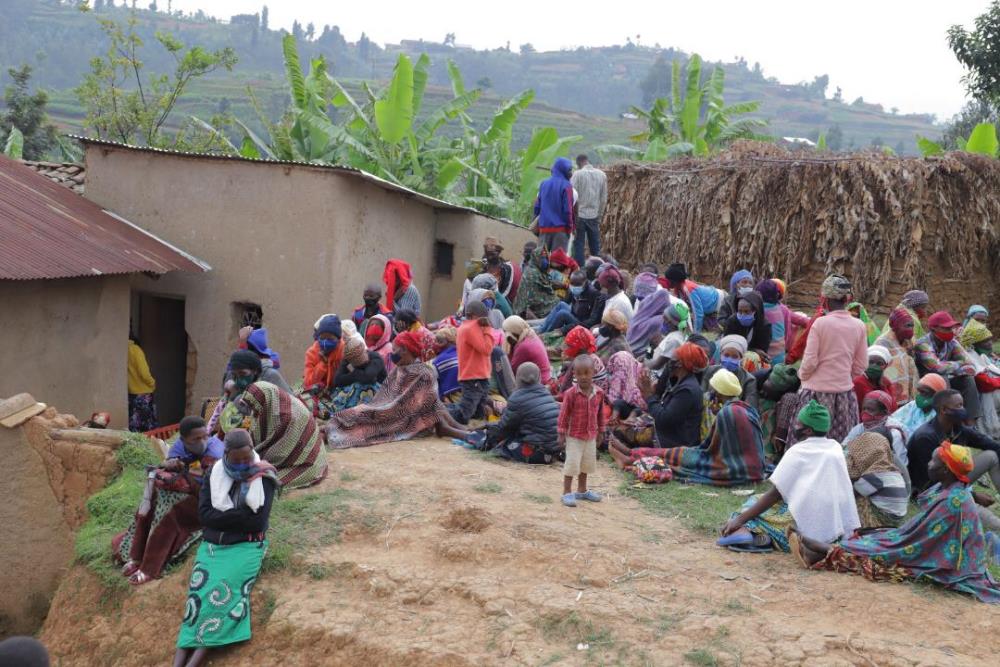
Police and local authorities found them congregating at the home of one Marie Rose Nyirahuku, at about 2pm.
All the violators were tested for Covid-19 test, with two of them being positive.
The Southern region Police spokesperson, Superintendent of Police (SP) Theobald Kanamugire said that Police was tipped off by some concerned local residents.
“Residents in Kigeme reported a big group of people, who were congregating at the home of Nyirahuku and making loud noise. An operation was swiftly conducted and they were found overcrowded praying and without face masks,” said SP Kanamugire.
“Out of the 175 violators, who came from different sectors, two tested positive, which raises more concerns about the likely spread among other congregators.
Two people have not taken the Covid-19 jabs while other six had taken only one shot,” he added.
Religious services are only allowed in places of worship that were authorized to resume after fulfilling the required safety measures, but only those who are fully vaccinated are allowed to attend the services.
SP Kanamugire thanked residents, who reported the violations and warned those, who continue to disregard the national efforts to contain the spread of Covid-19 but rather spread it.
The violators were also educated on Covid-19 prevention health measures, tested at own cost, and handed administrative fines while others were vaccinated.
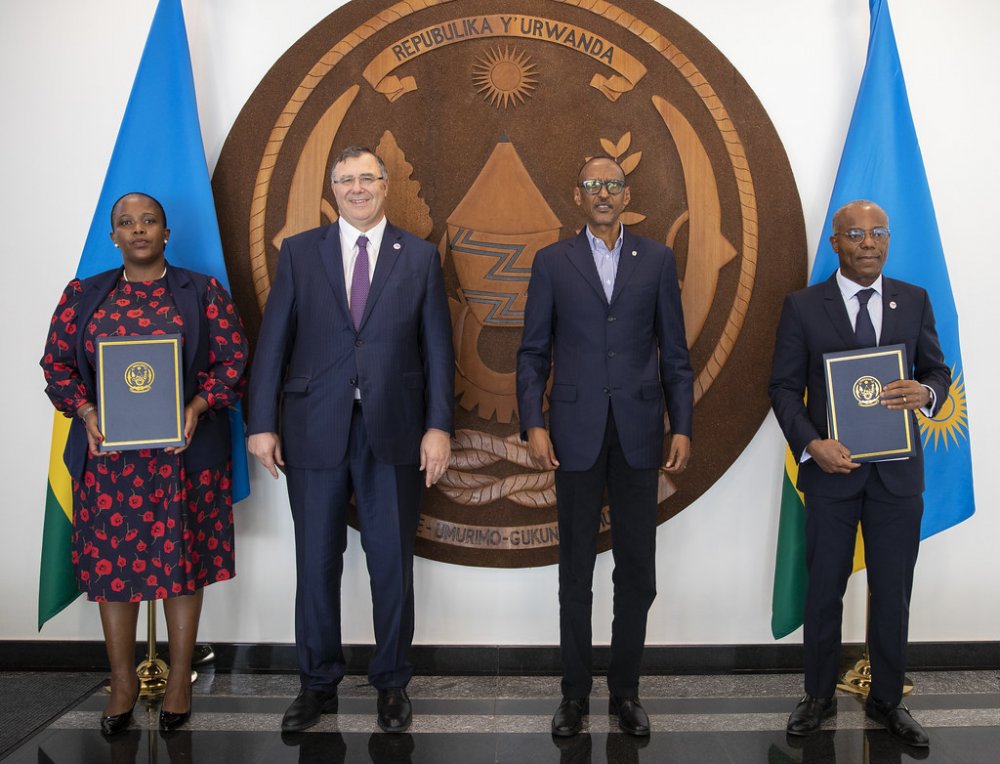
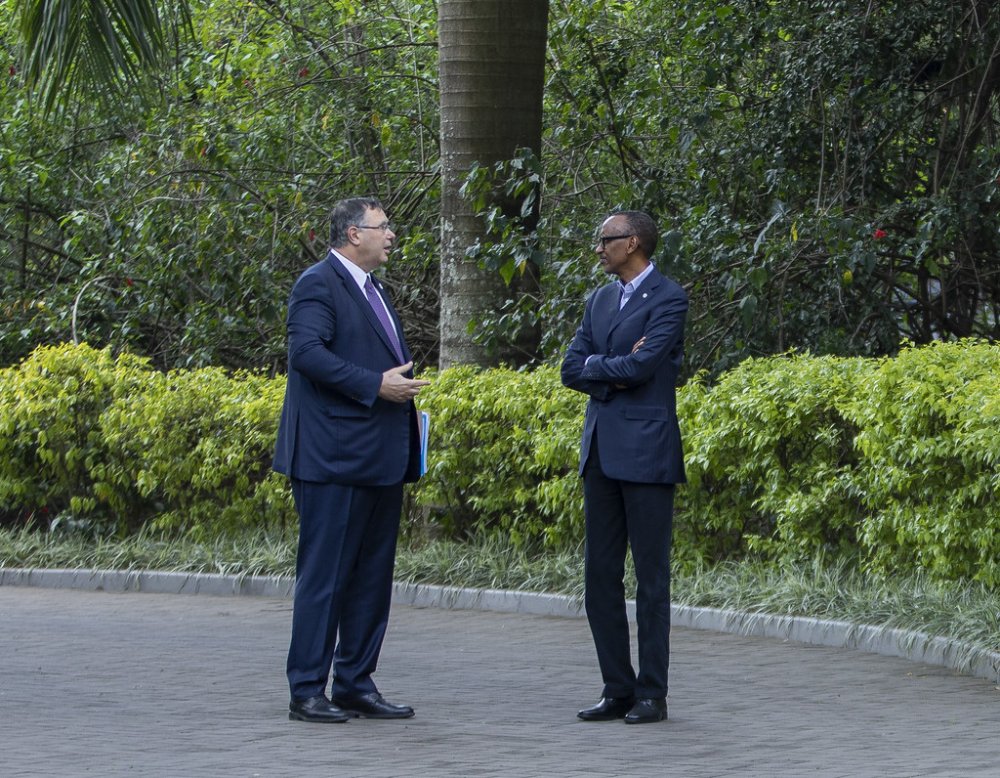
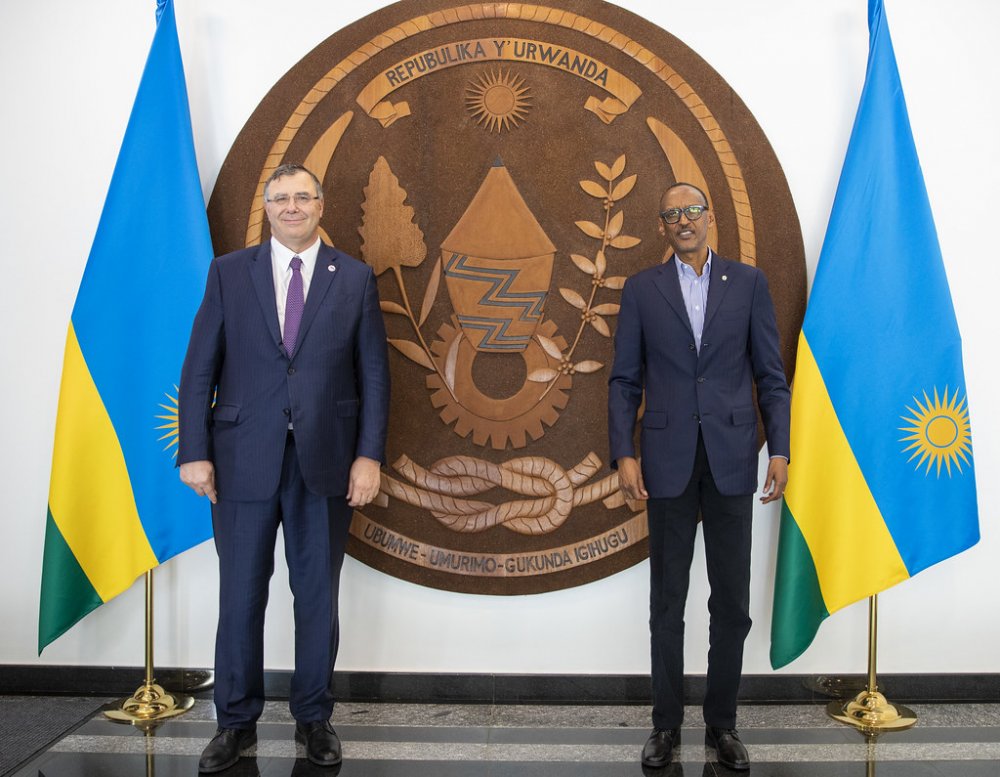
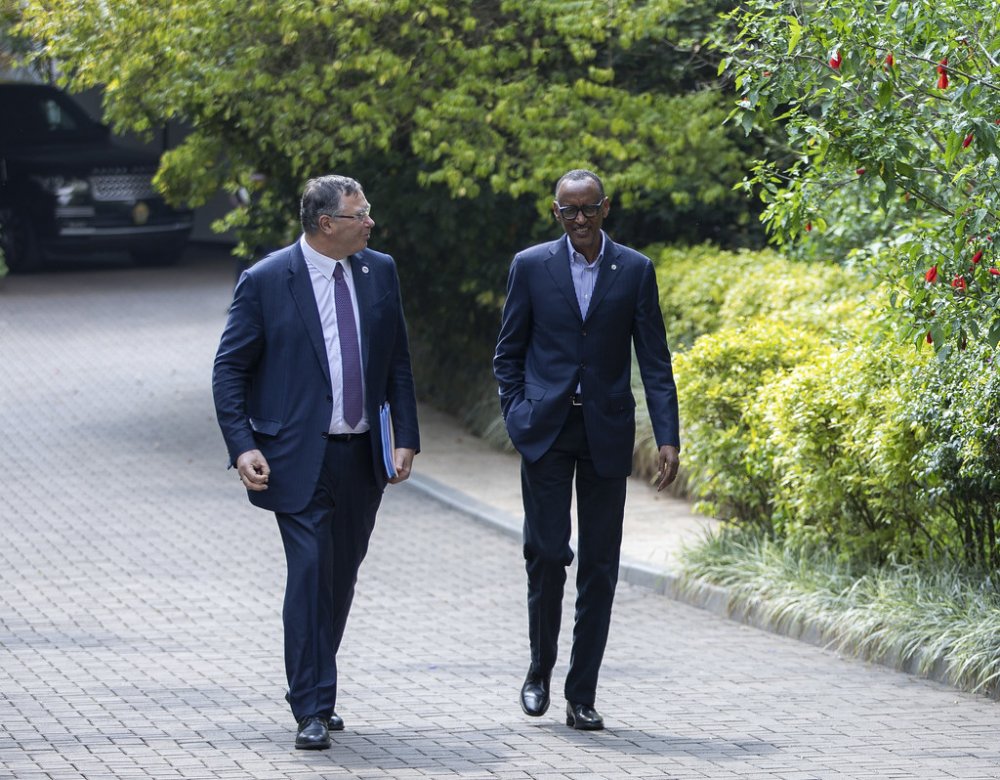
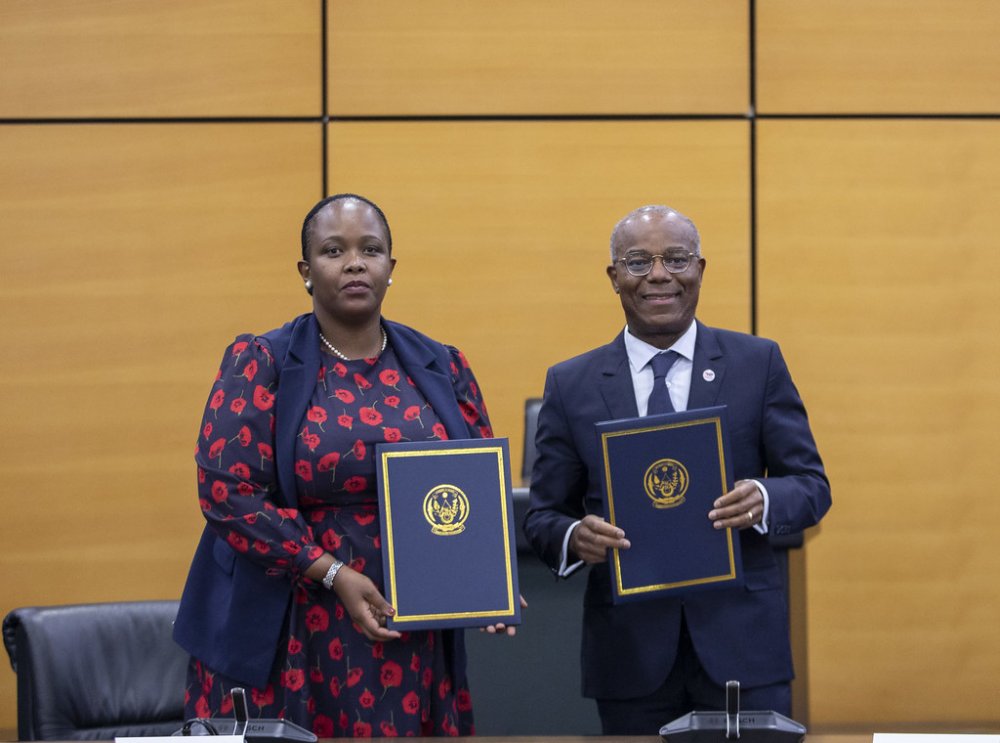
After holding talks on Sunday 30th January 2022, they also witnessed the signing of a Memorandum of Understanding (MoU) between Rwanda Development Board (RDB) and TotalEnergies to develop collaboration in various sectors.
Kagame thanked Pouyanné for his visit to Rwanda and launched collaboration through signed agreements.
Pouyanné who also met with member of Rwanda’s Private Sector revealed that TotalEnergies pledged to fast track the implementation of signed agreements in the areas of energy and education among others.
He underscored that the coming to Rwanda is a result of cordial relations between Rwanda and France and urged Rwandan investors to expand footprints to Mozambique where TotalEnergies runs different projects.
The chairperson of the Association of Petroleum Importers in Rwanda (ASIMPER), Eric Mutaganda said that TotalEnergies is set to open doors to Rwanda and expected to provide different opportunities.
TotalEnergies runs operations in more than 130 countries.
The French firm has an investment worth US$20 billion in Cabo Delgado, Mozambique under a project dubbed ’Liquefied Natural Gas’.
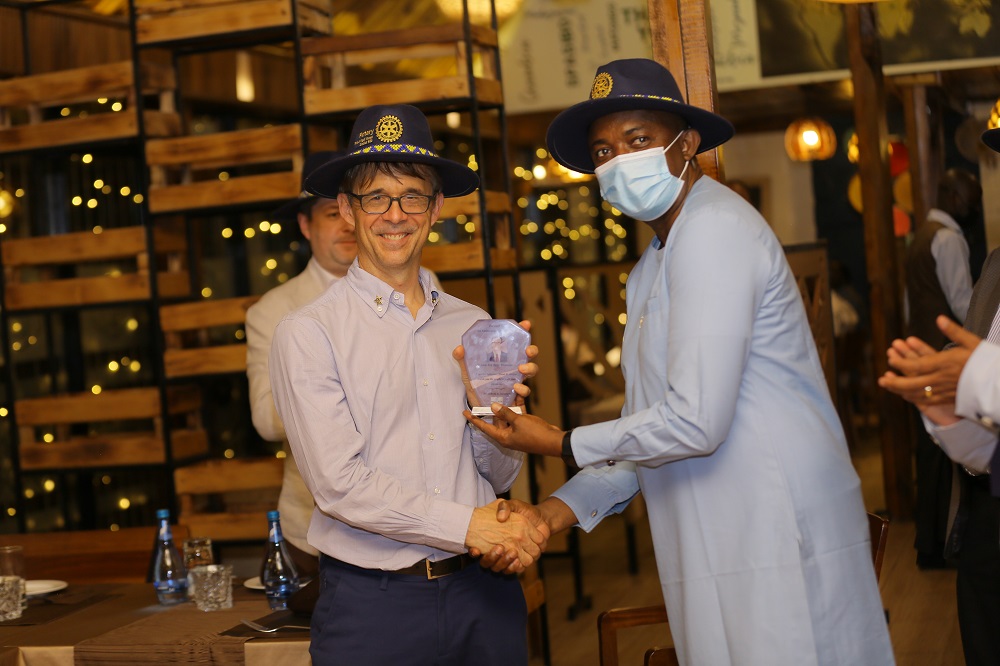
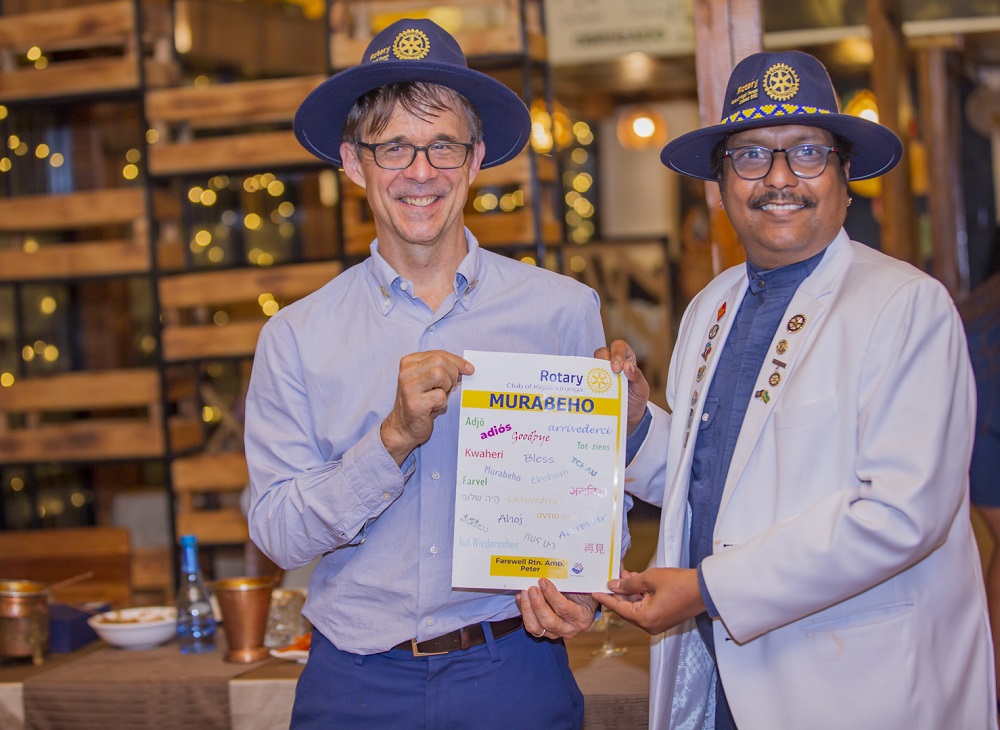
During the ceremony held on Friday 28th January 2022, Rotarians also shared dinner with Amb. Vrooman and wished him well in his future endeavours.
They also reminisced on good moments they have had with him during his four-year tour of duty in Rwanda and commended his contribution to Rotary Club.
Rotarians also described Amb. Vrooman as a man with virtues and humility.
“You don’t see that diplomatic fame in him. He is so humble to the Club. There is no activity done for Rwandan community that he missed. He empathized with people and helped vulnerable people and joined members during tree planting exercises among others,” said Rotarian Kelechi Anyanwu Reginald, one of the Club’s members.
“Even though he is in high diplomatic position, he has done extraordinary work and supported the society by contributing to various projects. Vrooman has actively participated in our Club and supported both Rotarians and Rotaracts,” revealed Suman Alla, the President of Rotary Club of Kigali Virunga.
President Suman highlighted that they Rotarians have learnt a lot from values of Amb. Vrooman, particularly, his humility.
“He is a humble man. It took us to great learning from him because you can go far in your professional life, in diplomacy or business but when it comes to Rotary, we are all equal. He has shown it by setting an example by doing what he does,” Suman affirmed.
Rotary Club members also disclosed that Amb. Vrooman was welcoming and open to interact with anyone seeking to engage in discussions on the way forward for particular projects to materialize.
“Rotary Club of Kigali Virunga has been my home for last four years in terms of non- professional work. The Opportunity to practice about self and to support the Rwandan community were possible through the Club,” said Peter Vrooman.
He recalled some of activities in which he contributed through the Club, namely; the construction of a transit accommodation facility for cancer patients in Kibagabaga, supporting schools, improving people’s livelihoods, planting trees and kitchen gardens among others.
Amb. Vrooman pledged to continue working with Rotarians to impact the society positively.
Rotary Club of Kigali Virunga is one of seven Rotary Clubs in Rwanda.
Peter Hendrick Vrooman had presented credentials to President Paul Kagame on 6th April 2018 replacing Erica Barks-Ruggles who had held the position since 2014.
During his tour of duty, Vrooman was particularly admired for friendly interactions with Rwandans and efforts to learn Kinyarwanda where he was heard at different times holding speeches in the language.
The recent report of National Agricultural Export Development Board (NAEB) shows that Rwanda generated US$444.8 million (over Rwf447 billion) from agriculture in 2020/2021 fiscal year.
Apart from tea and coffee, fruits and flowers are among businesses generating huge returns in the country. Of the horticultural produce exported within the region in 2020, vegetables came on top with 62.5% of total earnings while fruits accounted for 37.25%. At the global market, earnings from vegetables stood at 37.49% while fruits accounted for 62.75%.
The figures reflect how agriculture presents huge opportunities with high returns and gives optimism that the country’s ambitions to promote agricultural exports are being achieved.
The Government of Rwanda continues to facilitate cross border traders through implemented measures and agreements with partner countries.
It is against this backdrop that Rwanda has signed trade agreements with member states of the Common Market for Eastern and Southern Africa (COMESA). The country also signed similar agreements countries from the European Union and East Africa among others.
All these agreements are expected to remove barriers restricting farmers’ access to markets, improve their livelihoods and enhance their contribution to national economy as well.
Considering the aforementioned agreements as well as high demand and profitability of horticultural produce, we thought it could be your turn to tap into available opportunities and become a millionaire.
This article elaborates some areas of investments in horticulture that could make 2022, the beginning of a new era for a prosperous future.
{{Passion Fruit}}
Passion fruit is an ideal product to grow on Rwandan soil.
Varieties grown in Rwanda are Passiflora edulis (Purple passion fruit) and Passiflora flavicarpa (Yellow passion fruit), Sweet passion fruit, Giant passion fruit, Banana passion fruit.
Passiflora Edulis (Purple passion fruit) which grows between 6 to 8 months in Rwanda is the most appreciated on the European market.
Demand for Passion fruit in the European market is estimated at about 375,300 tonnes per year, which translates to about $861 million every year.
As per report released by ‘Manufacturing Africa report’ recently in 2022, the export of passion fruit to the EU can fetch a gross profit margin of 48%, assuming a wholesale price of US$4840 per tonne.
This report also indicates that the transport costs to the EU is approximately US$1800/tonne if the exporters take advantage of Rwandair subsidized tariffs.
Jackson Mugisha, the CEO of Jacks Business Group, a company that works with investors to cultivate Passion fruits, says that the fruit is highly demanded on the market and promising to generate high profit.
“If you want to enter into the passion fruit business it is better to work with experienced companies/farmers that embraced best practices because it is more reliable,” he says.
There are other cooperatives like ‘Coopedush’ which works with many farmers to promote and generate returns from passion fruit business.
NAEB also says that Passion fruit is good crop promising to bring quick profit to the farmers.
Passion fruits mainly grown in Gakenke, Rulindo, Gicumbi, Musanze and Burera districts.
{{Chia Seeds }}
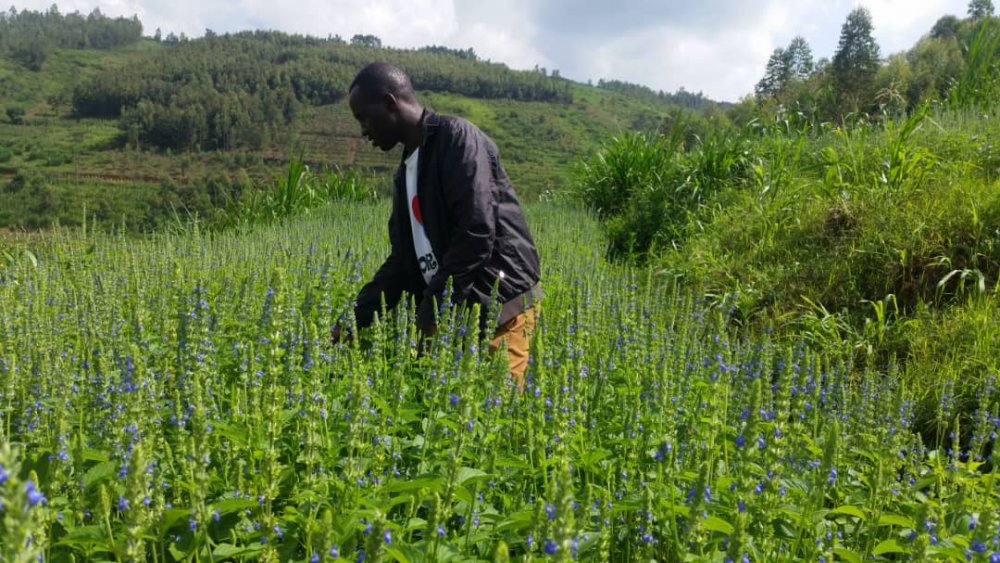
Chia seed is an organic product that has been farmed in Rwanda for the past four years. This is one of the few crops that a farmer grows with market assurance as farmers sign a contract with buyers before.
Chia seeds became widely popular in Rwanda after Bertrand Nkurikiyimana from Akenes and Kernels started this project in Ngoma in 2022.
The companies founded by Rwandan diaspora in Belgium and Zambia as an initiative to invest in homeland and contribute to national economy, Akenes and Kernels Ltd and Api organic Rwanda work with Rwandan farmers to grow the crop for exportation.
As the leading exporters of chia seeds in Rwanda, they first sign contracts with farmers as potential buyers.
One of the farmers who works closely with Akenes and Kernels, Fabrice Mukwiye said: “Chia seeds are profitable in a short period of time because their demand is high on the market.”
Between 800kgs and 1200 kgs can be harvested on one hectare. One kilogram is costs Rwf 3000.
They are used for various purposes prompting high demand in the European and Latin American market. Among the many benefits, Chia seeds helps with blood pressure and reduce the risks of heart diseases, to name a few.
Currently Chia seeds are grown in Kirehe, Bugesera, Kayonza, Nyagatare and Rwamagana districts.
{{Chili/hot pepper}}
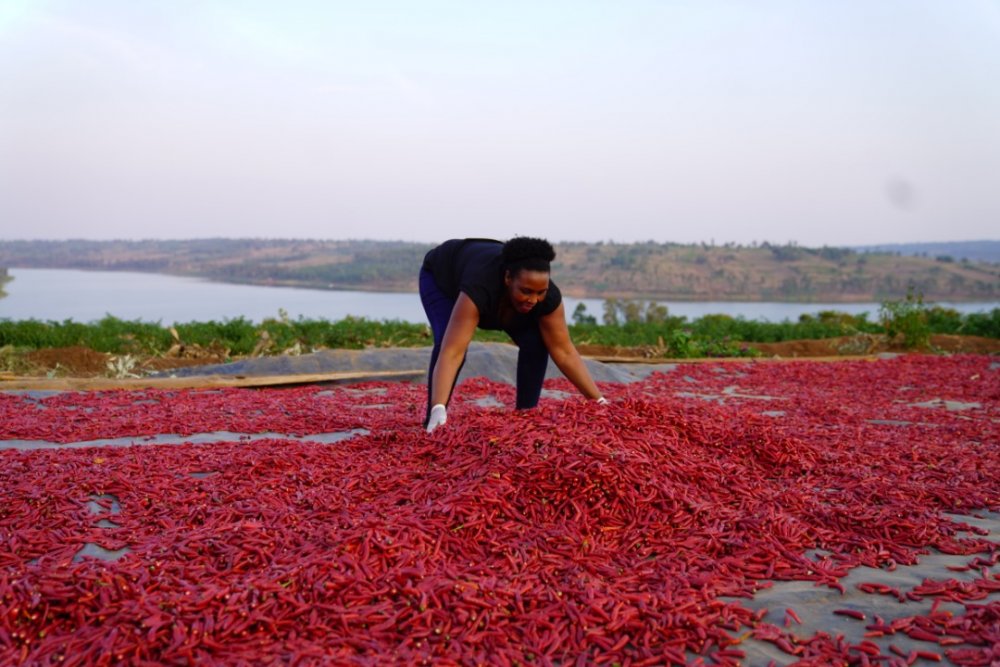
Chili is in high demand on the European and Chinese market.
Some of the varieties grown in Rwanda are the Rwandan bird eye chili, Red chili, Orange chili, Yellow chili and Habanero.
According to the ‘Manufacture Africa report’, European demand for chilli is roughly 1.5 million tonnes per year, which translates to about US$ 2.7 billion, while China needs 78,500 tonnes at a value of US$56 million.
The same report showed that the export of Fresh Chili to the EU can fetch a gross profit margin of 49%, assuming a wholesale price of US$ 4,360/tonne.
The transport cost to the EU is approximately US$ 1,800/tonne if the exporters take advantage of RwandAir’s subsidized tariffs.
Chili Farmers in Rwanda, reveal they can easily expect half a million Rwandan Francs per week for every 21 Acres of Land farmed.
Some of small holder farmers are working with Gashora farms, the biggest Chili exporter in Rwanda that landed a deal to supply 50,000 tonnes of dried chili worth $100 million to China as local partners.
As per NAEB’s annual report for 2019/20, chili was produced on 881.2 Ha at different sites of Rwabicuma, Muyanza, Musha, and different scattered individual farms located in Ndengo sector of Kayonza district and Kabare sector, Nyagatare, Kicukiro, Bugesera and Rusizi district.
{{Macadamia Nuts}}
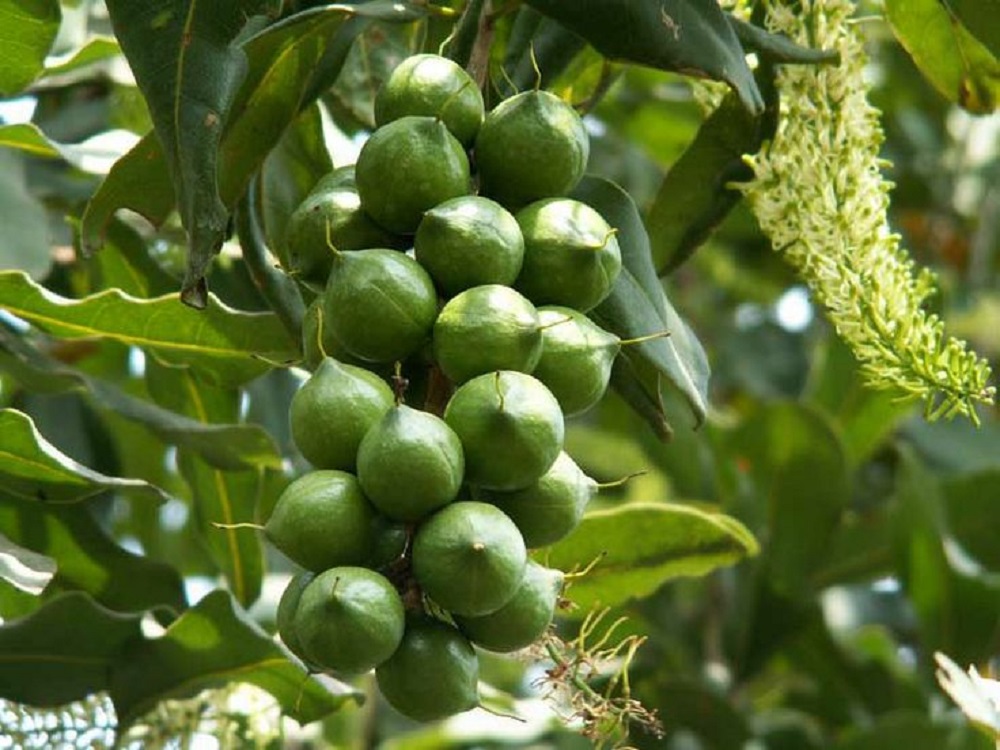
Macadamia presents a significant investment opportunity for export oriented investors servicing the global market.
A single Macadamia tree bears fruit in 4-5 years, and the profit becomes higher as it gets bigger, one single tree can bear between 50-75kgs.
A Rwandan Farmer that harvests 50-75kgs can expect the profit between Rwf17,500-26,000 in case a kilogram is sold at rwf350.
According to NAEB, there are two processing firms in Rwanda namely; Norlega Macadamia Rwanda Limited and Rwanda Nut.
Norlega Macadamia Rwanda Ltd supplies to local clients such as Hotels, supermarkets and RwandAir.
This type of crop is highly demanded globally and mostly exported to Kenya, Japan and Turkey. A kilogram is generally sold at US$10-20.
NAEB shows that Rwanda produces about 16,000 metric tonnes that generate US$30 million annually.
This nut is currently grown in the Southern, Eastern provinces and the southern part of Northern Province.
{{French beans}}
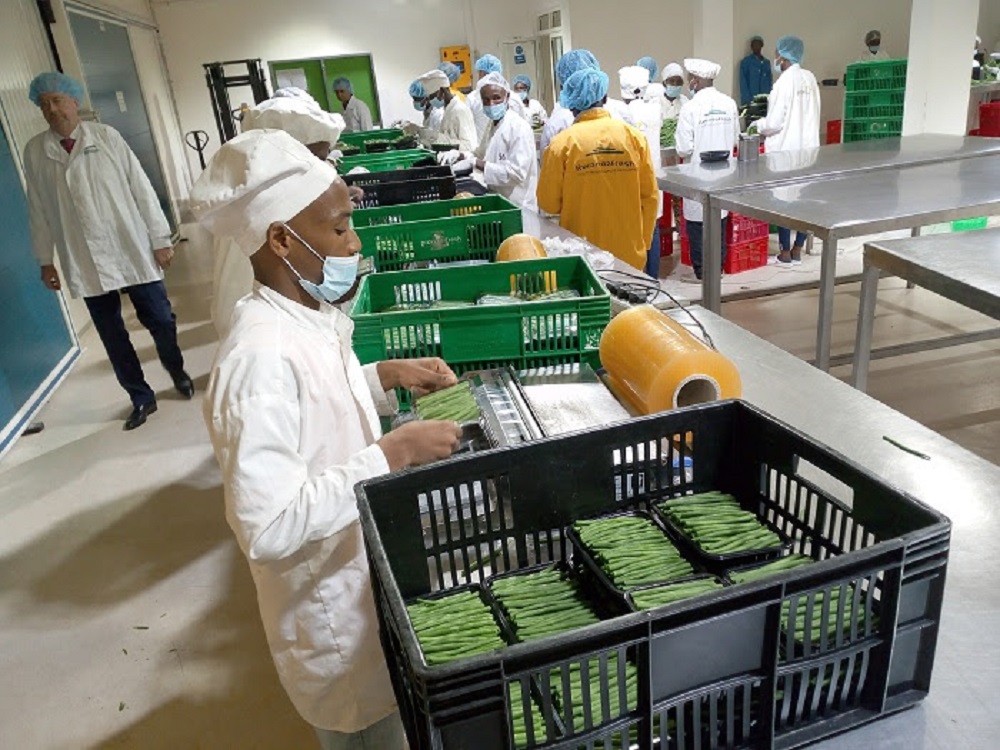
Fresh beans are a profitable crop for which there is a year-round demand. French beans from Rwanda are mainly exported to the United Kingdom, Belgium, France and Dubai.
At least 10 tonnes can be harvested on one hectare and sold at Rwf500 per kg.
NAEB says that processing of the French beans, including canning and freezing, has not yet started in Rwanda. This could be a good business idea and opportunity for investors.
The report released in 2020 by a Netherland based firm named ‘Traide’ indicated that Rwanda exported 451,000 tonnes of French beans in 2018 that the export continues to grow exponentially.
Gicumbi district in the Northern Province is the leading producer of French beans.
Other passengers were rescued by fishers who brought them back to the dock.
The executive secretary of Bushenge sector, Damas Uwimana has told IGIHE that the accident happened as wind gusted the boat when it rained.
He requested passengers traveling with boats to always wear life jackets and notify relevant authorities of their trip and the number of passengers onboard.
Eighteen of passengers onboard were rescued alive while the search for the missing person is ongoing.
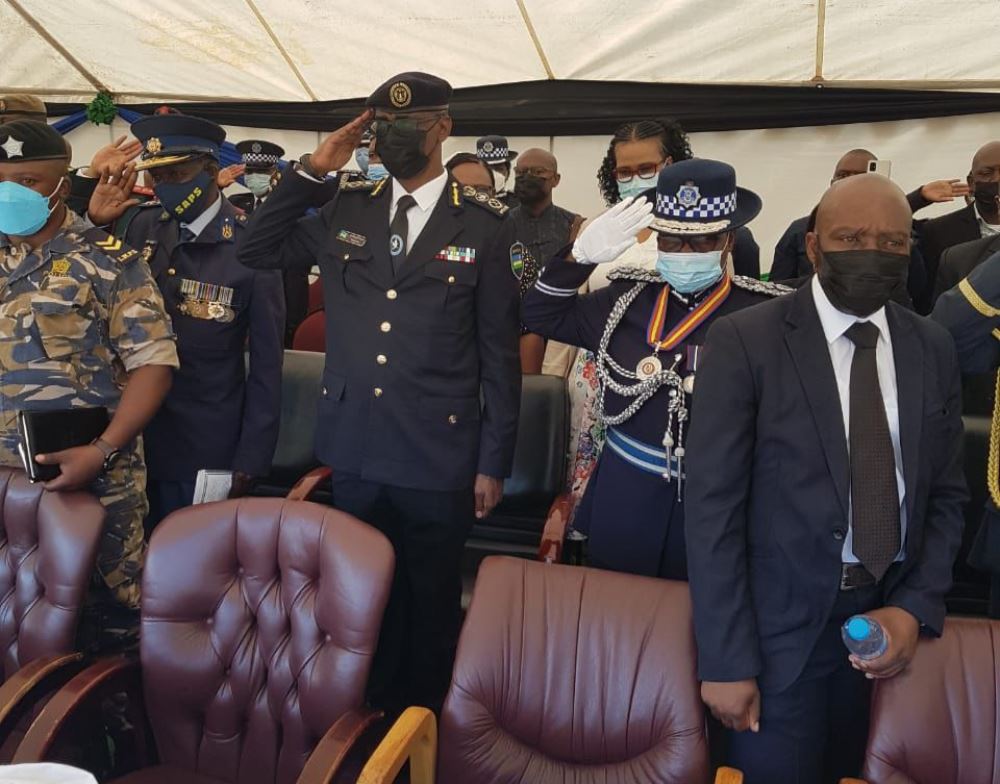
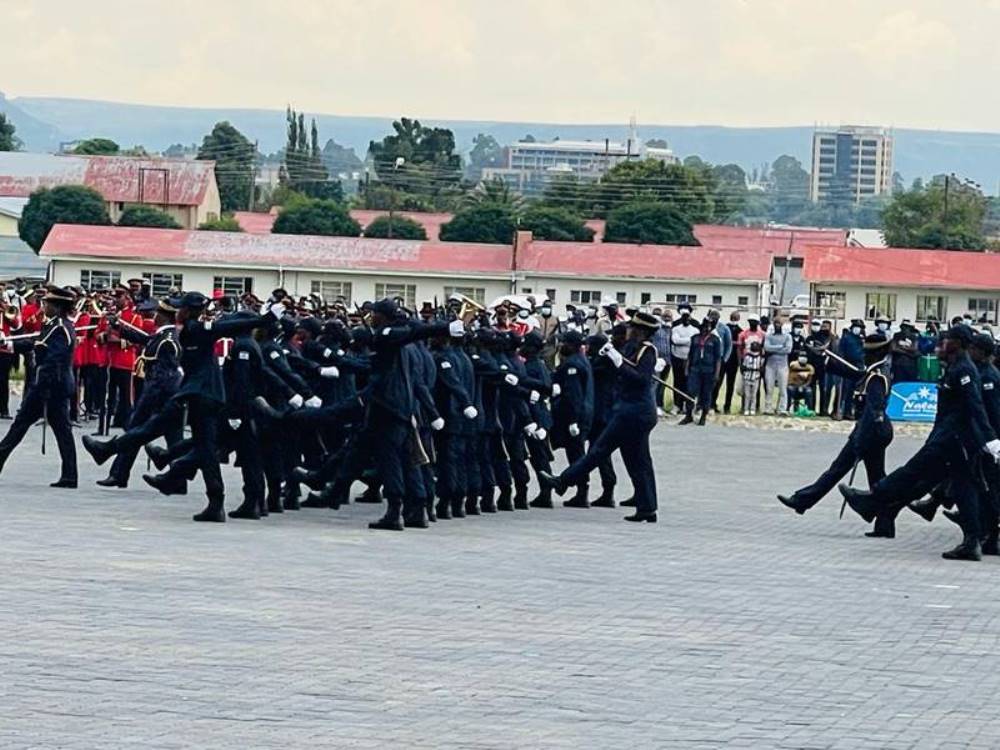
At the pass-out, IGP Munyuza was accompanied by Rwanda’s High Commissioner to South Africa, Amb. Eugene S. Kayihura, who is also accredited to the Kingdom of Lesotho.
The Police Chief is in Lesotho since January 25, at the invitation of his counterpart, Commissioner of Police Holomo Molibeli as the two Police institutions continue to strengthen cooperation in various matters of policing to face emerging security challenges collectively.
The pass out ceremony was presided over by the Prime Minister of the Kingdom of Lesotho, Dr. Moeketsi Majoro.
Other present at the colourful ceremony was the Minister for Police and Public Safety for Lesotho, Lepota Sekora, Commander of Lesotho Defence Force, Lt. Gen Mojalefa Letsoela, the South African Police Service National Commissioner, Lt. Gen. Khehla Sitole, and Senior Deputy National Commissioner for Eswatini Police, Dr. Lydia Dlamini among others.
Rwanda National Police (RNP) and Lesotho Mounted Police (LMPS) signed a memorandum of understanding in Kigali in August 2021 outlining key areas of cooperation, including partnership against terrorism, organized and transnational crimes; capacity building in community policing; exchange of information and expertise; as well as training opportunities and expertise development.
Other areas include development and exchange of training materials and curricula, combating proliferation of small arms and light weapons, timely exchange of information on criminals and criminal activities, and joint operations.
During the bilateral meeting between IGP Munyuza and his host Commissioner Molibeli on Wednesday, the two Chiefs of Police recommitted to making the pact a success and to explore other areas of partnership against transnational organized crimes and capacity development.