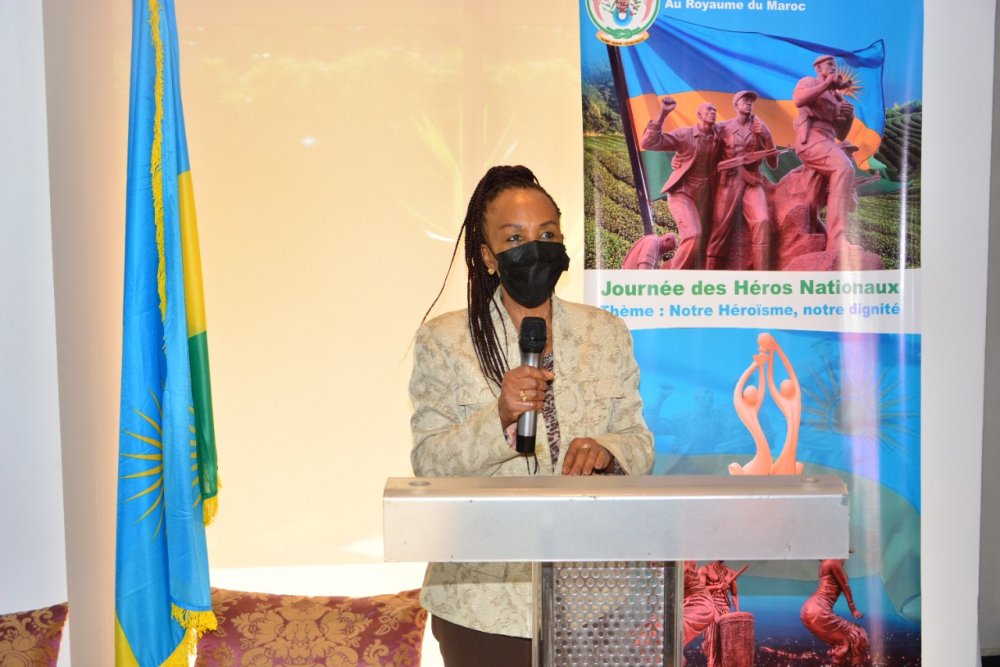
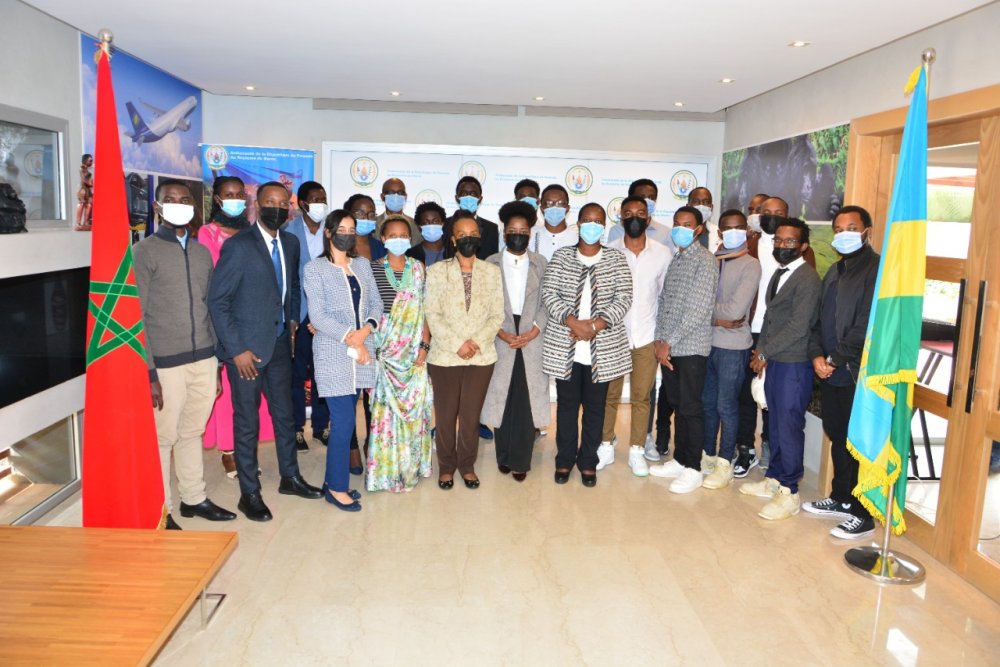
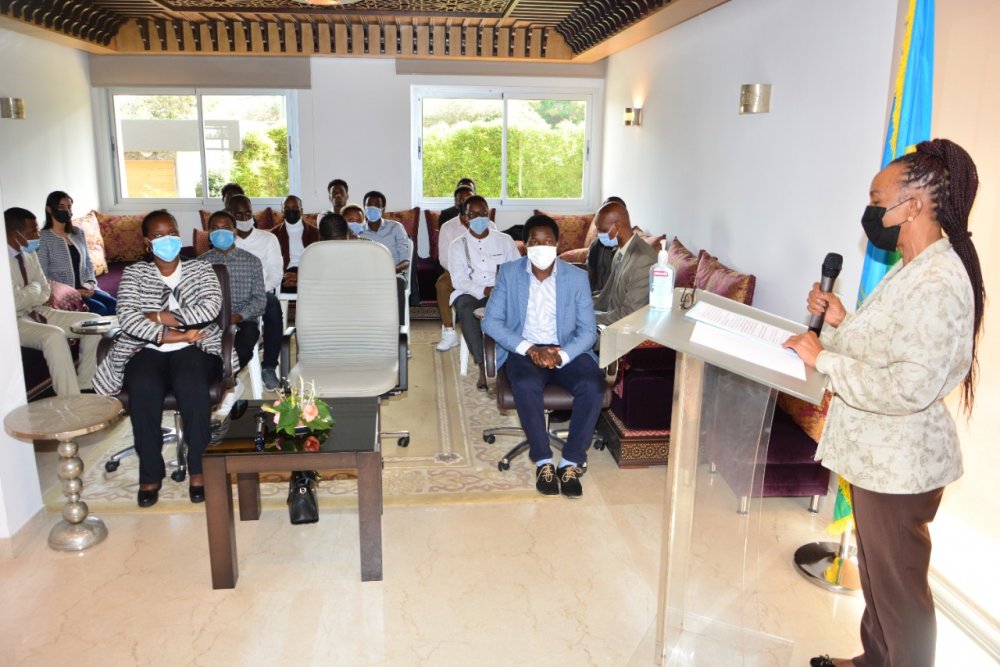
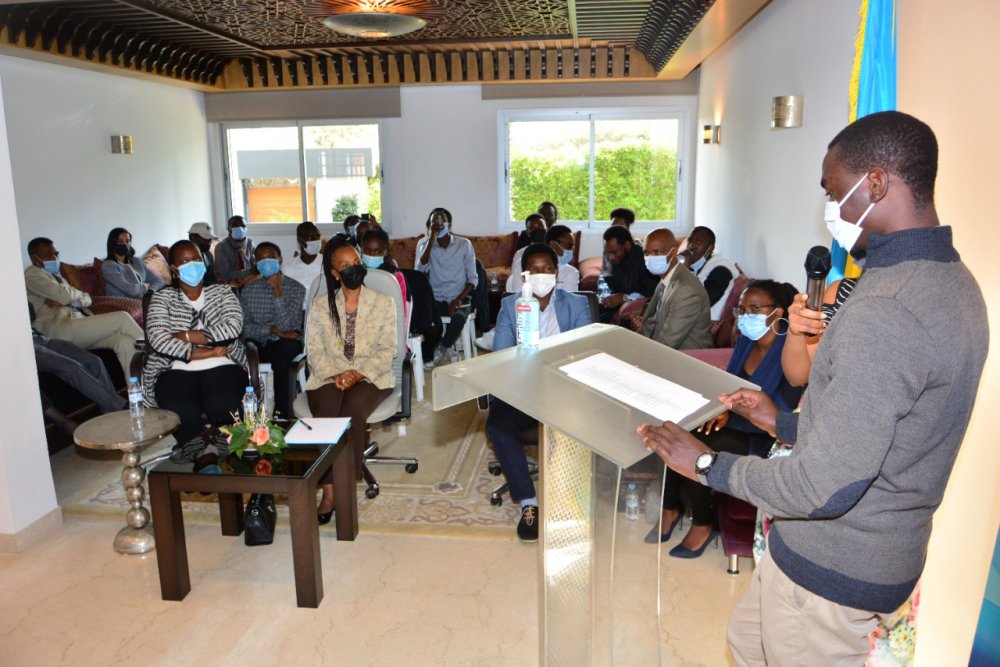
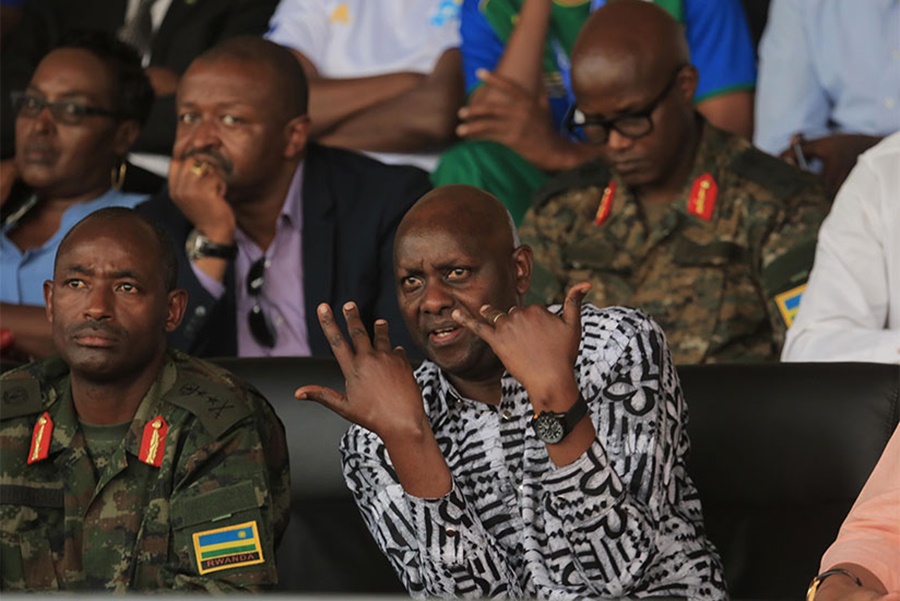
Nicolas Rwaka, the director of research in Chancellery for Heroes, National Orders and Decorations of Honor (CHENO) reminded the youth to uphold heroism in whatever they do.
Rwanda’s Ambassador to Morocco, Zaina Nyiramatama thanked Rwanda’s visionary leadership that promotes the culture of heroism which continues to play a critical role in national development.
He also urged the youth to stand against behaviours that can tarnish Rwanda’s reputation.
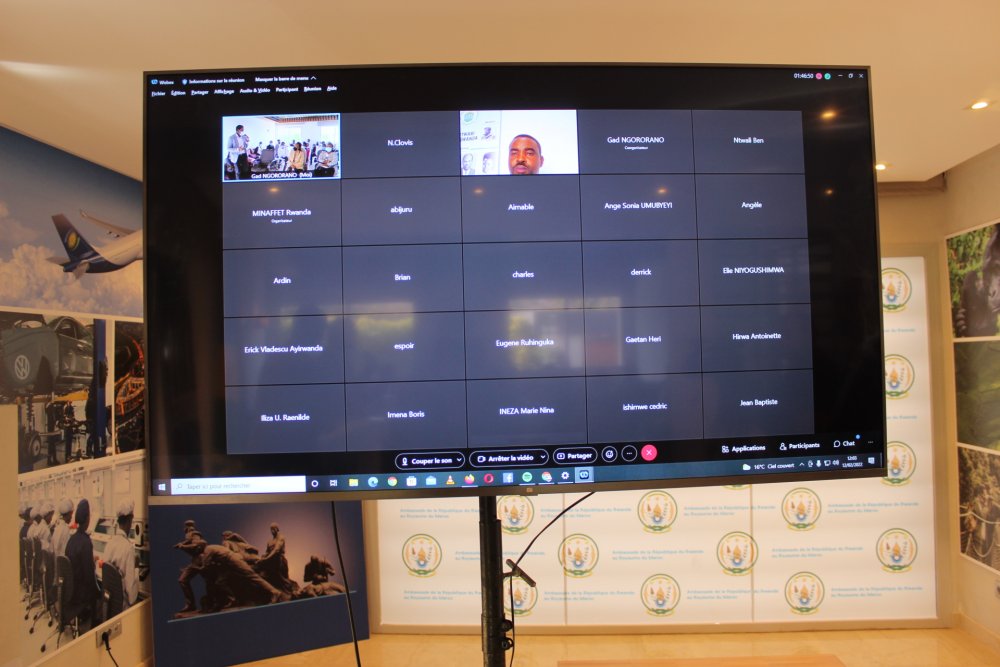
Participants of the event who shared ideas, commended Rwandans’ heroism and stressed the need for regular talks reminding them on values that should be embraced.
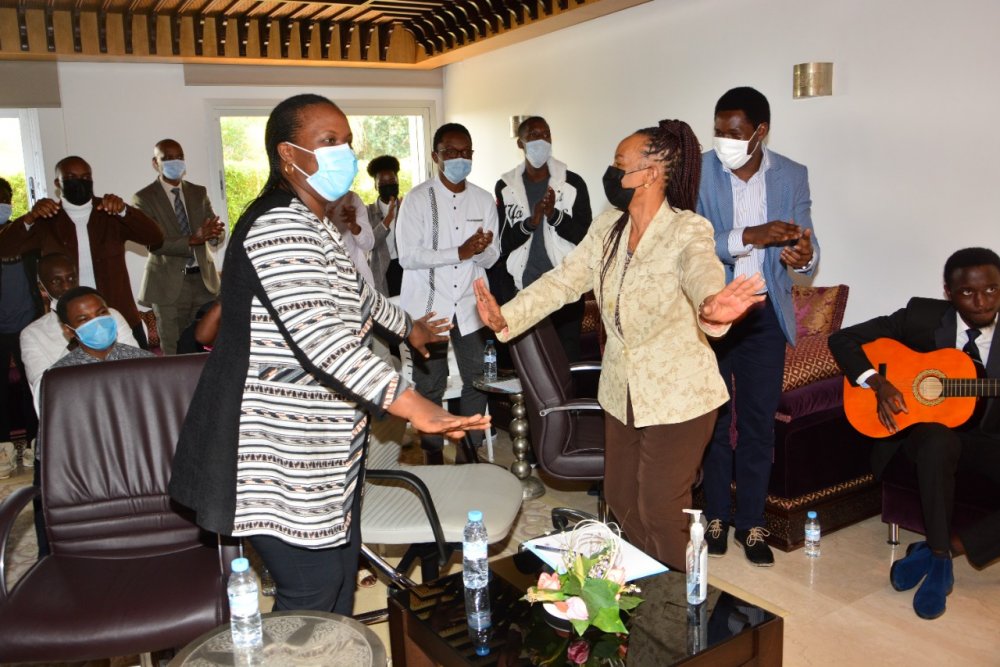
The ceremony was also characterized by performances including poem recital and songs praising heroes.
The majority of Rwandans living in Morocco is comprised of students studying n the country through existing partnership with Rwanda.
Rwanda’s embassy in Morocco was opened in 2020. It oversees Rwanda’s interests in other countries including Tunisia, Guinea and Mauritania.
The National Heroes’ Day is celebrated on 1st February every year.
This year’s ceremony was held under the theme ‘ Our Heroism, Our Dignity’.
According to the law establishing the Chancellery for Heroes, National Orders and Decorations of Honor “a hero is any person who pursues objectives he/she undertakes to obtain a special achievement for the public interest and with high proven integrity, sacrifice and noble courage in his/her acts and who avoids being a coward in his/her actions in very trying situations.”
{{Rwandan heroes are classified into three categories namely:}}
{{Imanzi:}} The unknown soldier and Major General Fred Gisa Rwigema.
{{Imena:}} Mutara III Rudahigwa, Rwagasana Michel, Agathe Uwiringiyimana, Niyitegeka Félicité and Nyange students.
{{Ingenzi:}} No hero was classified in this category.
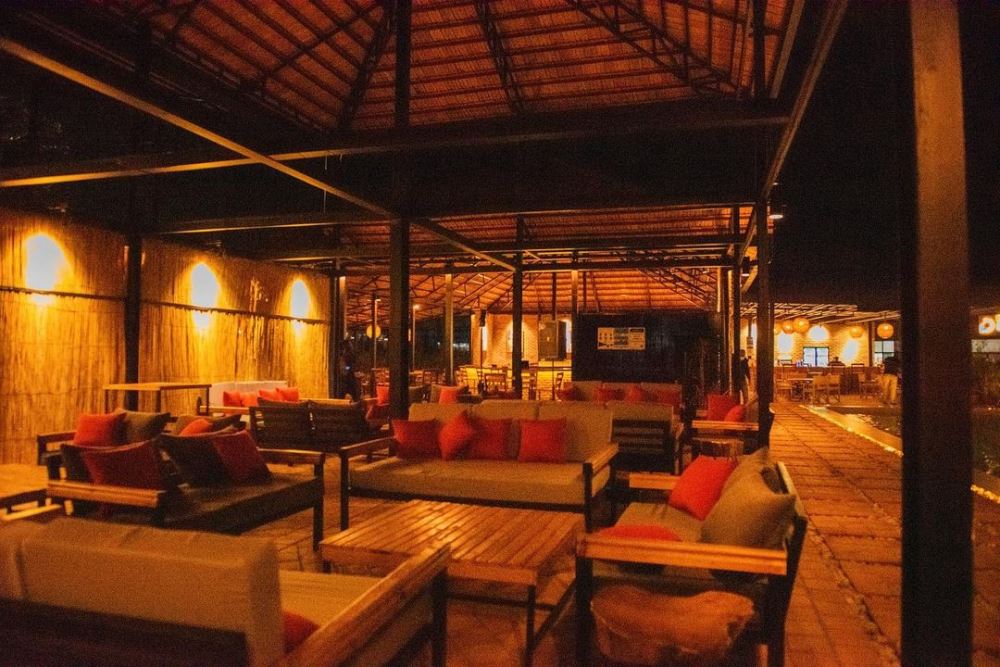
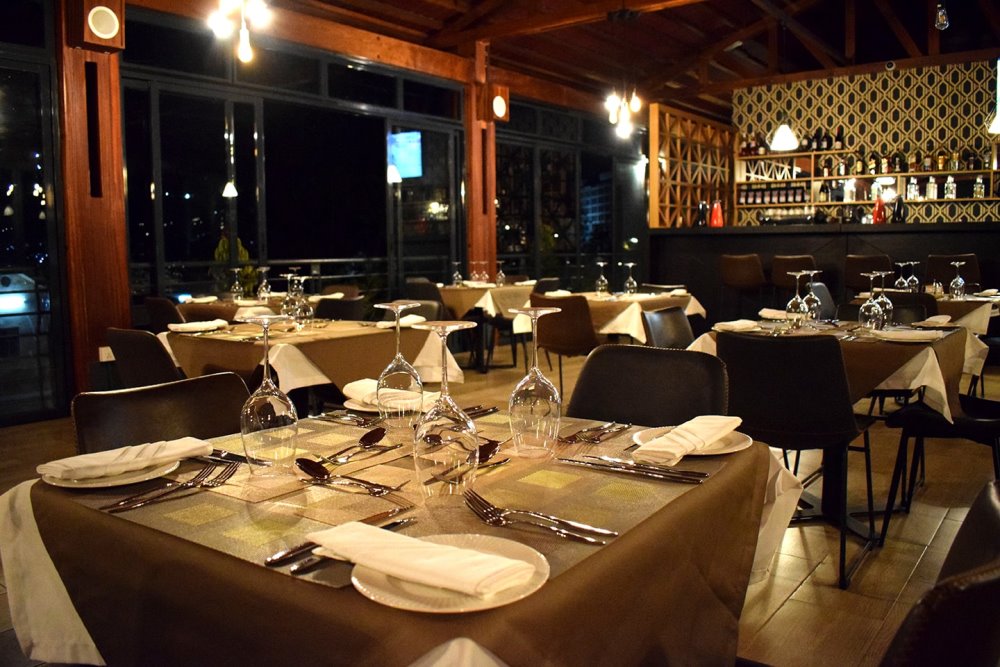
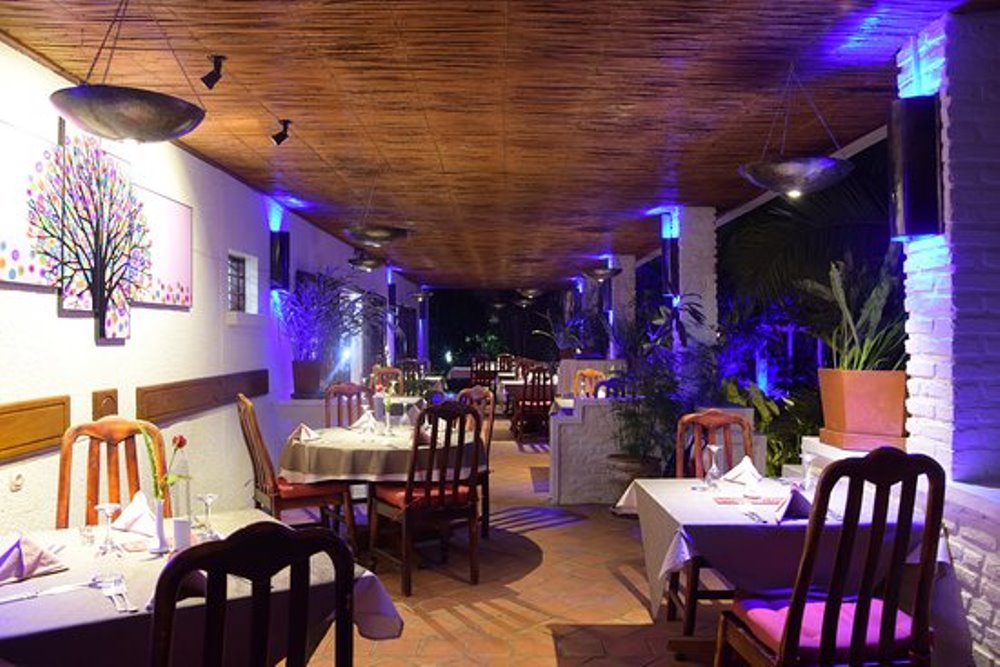
Located in Remera, Molato Restaurant & Bar is not yet popular but has a romantic and private setting. The menu is not extravagant and it is affordable, the music and vibes are also incredible.
{{M Hotel }}
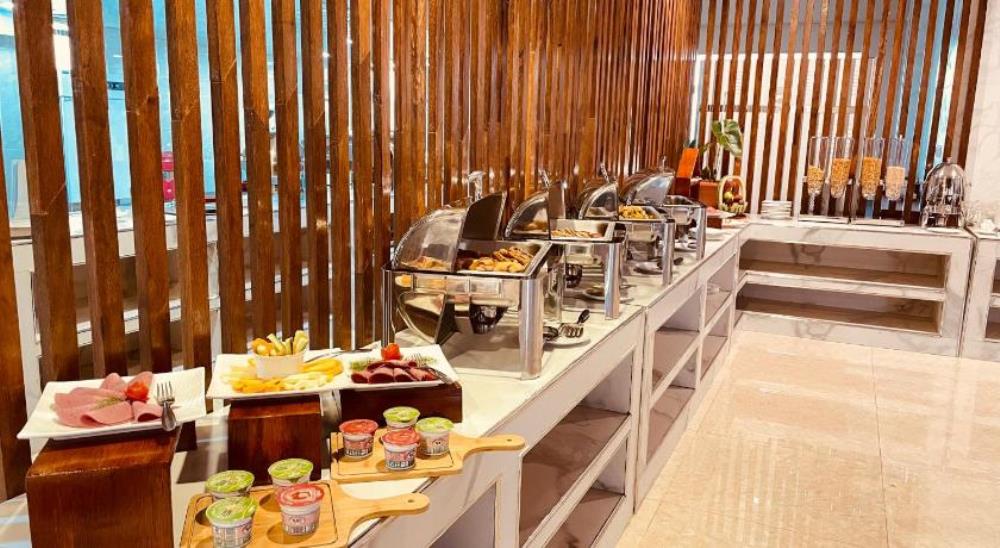
Having opened recently, M hotel is located in town. It has an amazing interior. The prices are affordable and their customer service is quick.
{{Mythos Boutique Hotel }}
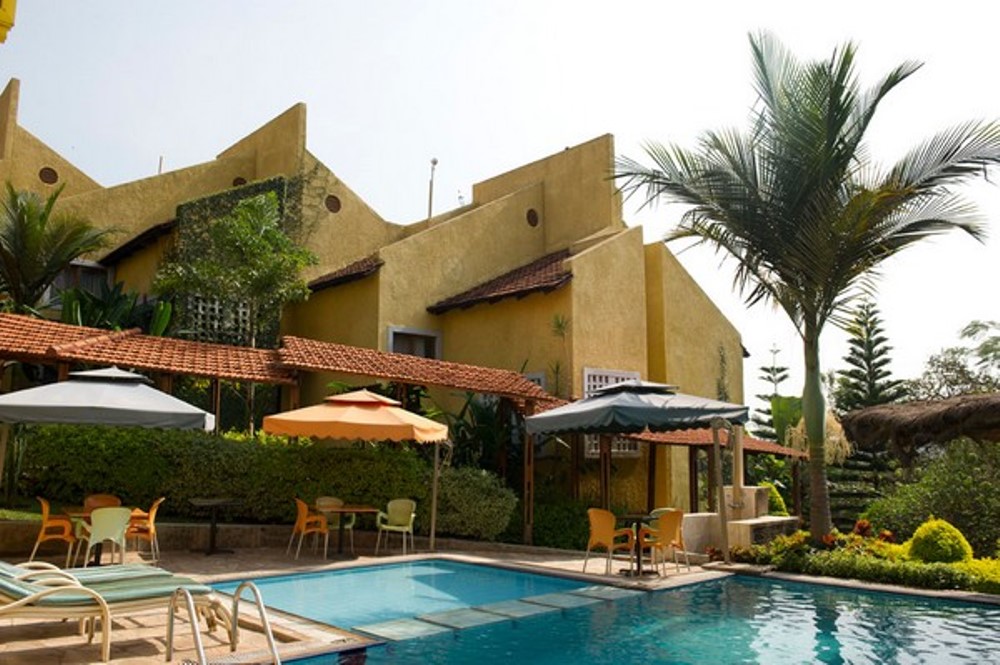
Mythos is located in Kiyovu. It is also a fancy place older people can go to. It is classy and affordable.
They are giving a scrumptious 4-course dinner plus a bottle of wine for Rwf70,000 for two and other packages you read on their instagram page ‘The_mythos_hotel”
{{Stipp Hotel Kiyovu }}
Also located in Kiyovu Stipp Hotel has fine dinning options and a beautiful setting. their prices are neither too high nor too low it is affordable depending on placed order.
{{The Retreat Boutique Hotel}}
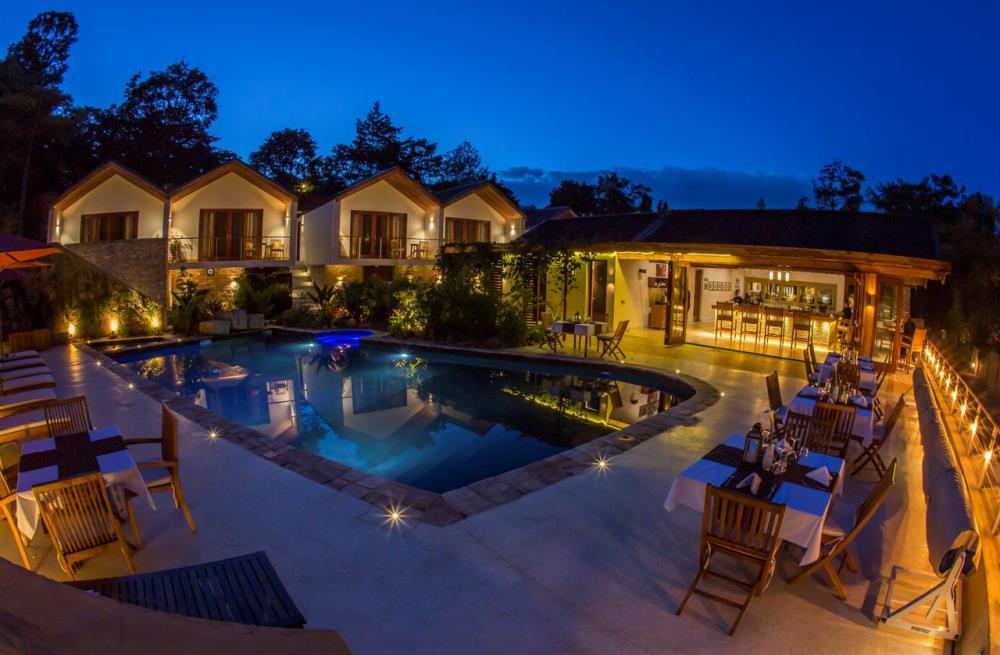
The Retreat is also located in Kiyovu and has one of the best designs. Their menu is inclusive with many options. The facility is somehow expensive but worth every penny.
{{Nyurah}}
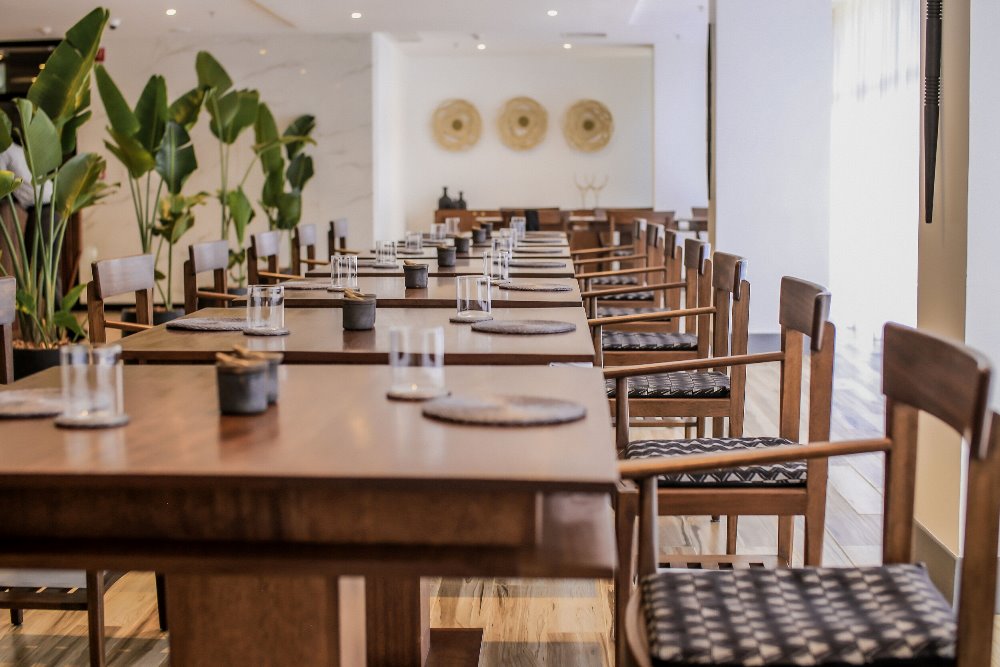
Nyurah Restaurant is a fancy modern place. It is located in the new BPR building in town and has one of the best customer services.
Through their instagram ‘Nyurah_kgl’ they welcomed people on this special day to enjoy fine food paired with Rwandan saxophonist Joshua.
{{Papyrus}}
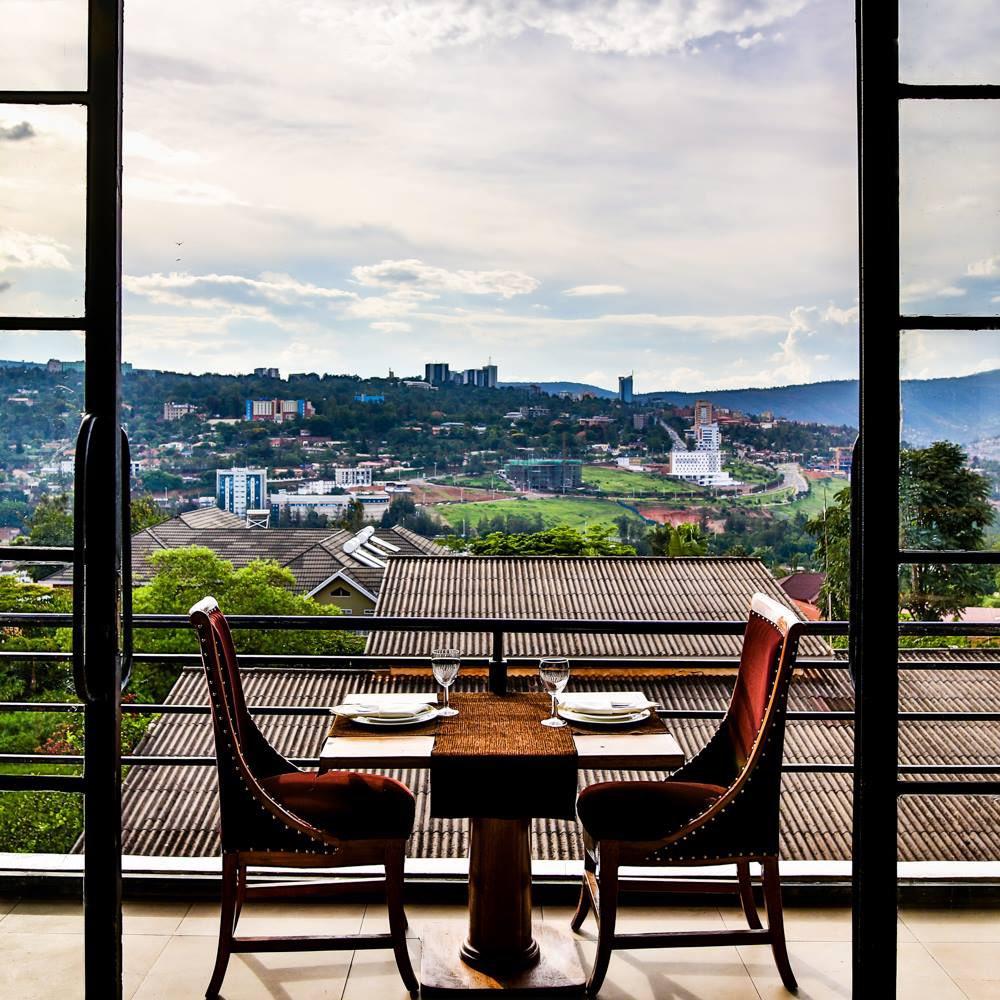
Papyrus Restaurant is located in Kimihurura. It is a good place to go out with your valentine.
Papyrus’ menu is affordable and if you want to look at Kigali’s beautiful view, you can sit on the upper section of the restaurant.
{{L’epicurien}}
L’epicurien is a French cuisine restaurant located in Kimihurura. It has a romantic setting and has many course dinners and wonderful desserts included.
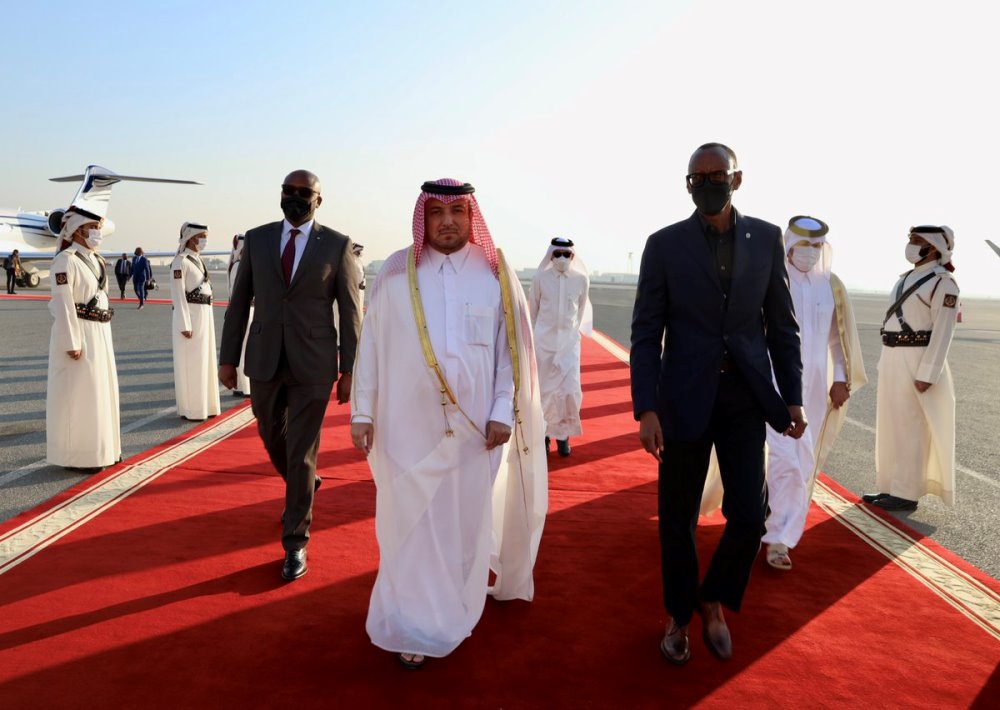
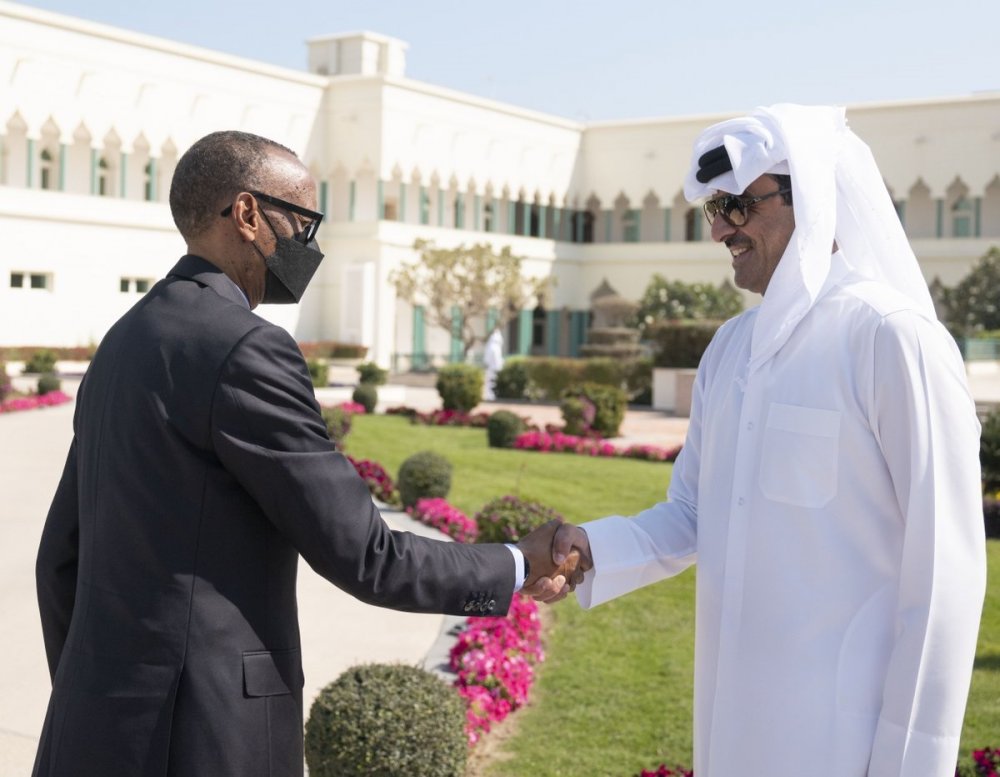
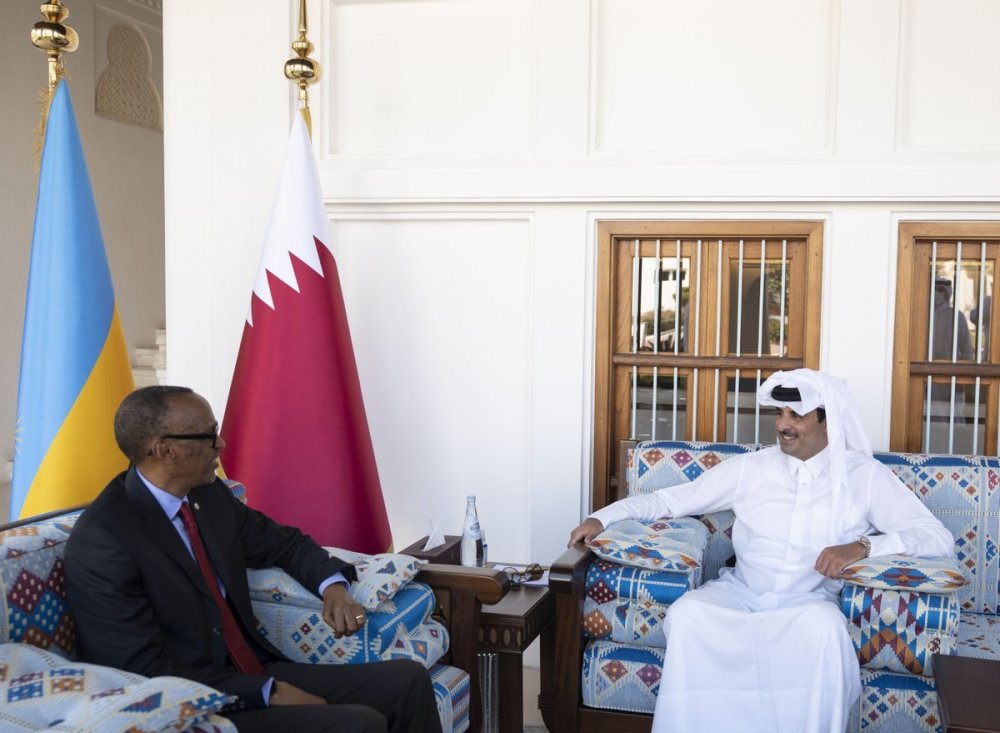
Rwanda’s Presidency has revealed that President Kagame met with the Emir of Qatar, Sheikh Tamim bin Hamad Al Thani at Sheikh Abdullah Bin Jassim Majlis at the Amiri Diwan for a productive discussion on bilateral relations and the ongoing successful areas of cooperation between the two countries.
The Head of State was last in Qatar in October 2021. At the time, he met with the Emir of Qatar, Tamim bin Hamad Al Thani to discuss ongoing areas of bilateral cooperation.
The two sides discussed bilateral relations between Qatar and Rwanda as well as ways to support and enhance them in various fields of cooperation, especially in the economy, trade, and investment.
They also exchanged views on regional and international issues of common interest.
The discussions were held in the attendance of a number of Qatari Ministers alongside the members of the official delegation accompanying Kagame.
Qatar enjoys vibrant relations with Rwanda.
In April 2019; the Emir of Qatar, Sheikh Tamim bin Hamad Al Thani came to Rwanda for two-day working visit.
At the time, both heads of states also visited Akagera National Park which is home to the big five animals.
During his stay in Rwanda, President Kagame and Sheikh Tamim bin Hamad Al Thani the Emir of Qatar witnessed the signing ceremony of four agreements meant to promote various development sectors between both countries.
These include 4 agreements in sectors of culture, sports, tourism and business events and aviation travel and logistics.
They were added to existing ones signed in Doha, Qatar when President Kagame visited the country at the end of 2018. These were related to air service transport services, promoting and protecting joint investment and cooperation in trade and technical areas among others.
In May 2017, Rwanda and Qatar signed agreements in diplomatic cooperation. Qatar Airways aircraft conduct flights from Doha to Kigali among other destinations including Dubai.
On 26th May 2015, both countries signed cooperation agreements to fight against drug abuse on the sidelines of Qatar International Anti-Drug Forum held in Doha.
Among others, Qatar’s interests in Rwanda include a 60% stake in Bugesera International Airport, currently under construction and a 49% stake in RwandAir.
QIA’s portfolio companies are also supporting the Rwandan government’s efforts to make the central African country a global tourism destination.
On Wednesday 14th July 2021, Qatar inaugurated a new embassy building located in Kimihurura, Kigali City.
The embassy’s former office was located at the opposite side of Kigali Marriot Hotel in Nyarugenge district.
At the time, Rwanda’s Minister of Foreign Affairs, Dr. Vincent Biruta said that the launch of the new embassy is another milestone to deepen bilateral relations further.
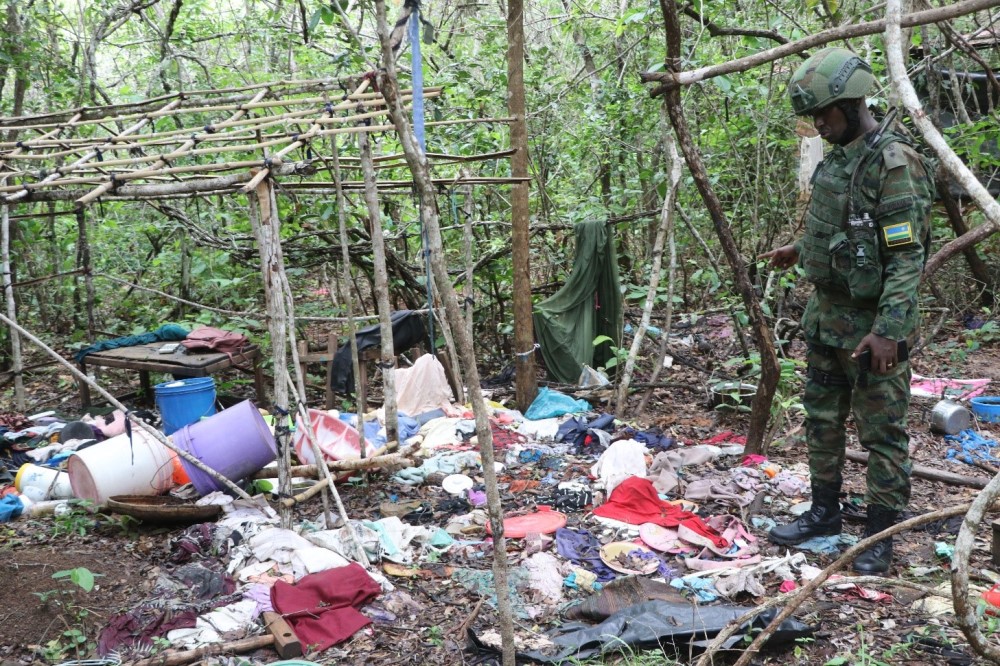
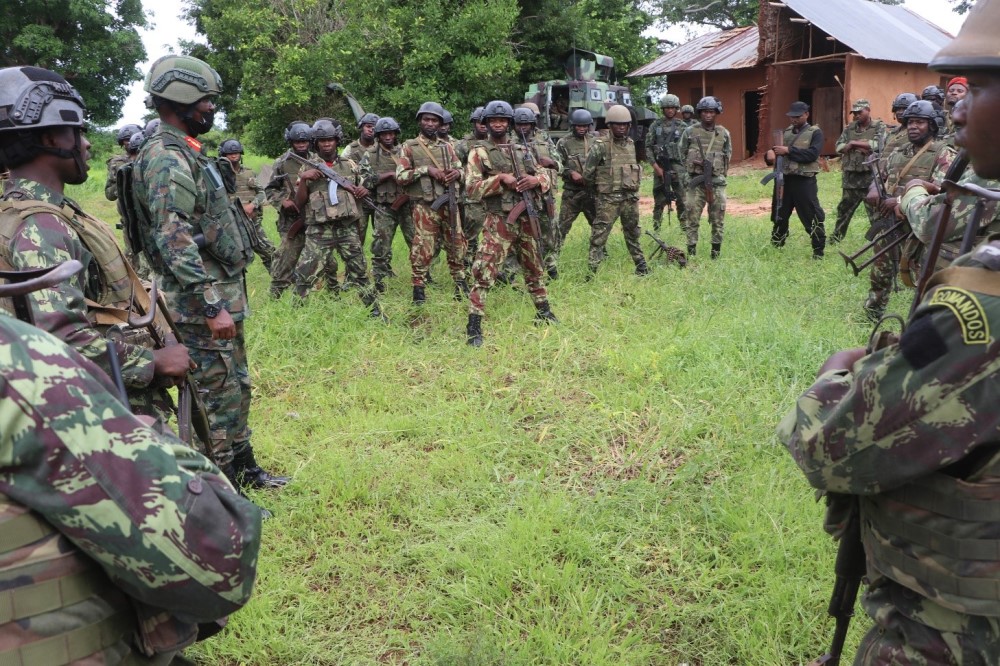
The terrorists fled the new positions towards Muidube District inside the SAMIM designated sectors of responsibility.
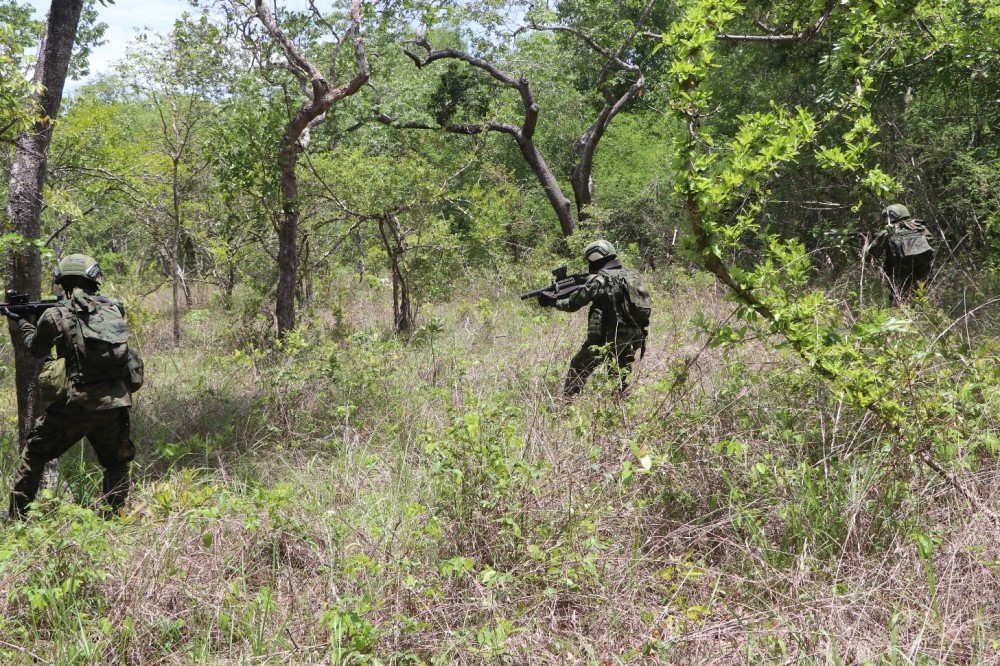
In most recent operations against the insurgents, 17 civilians were rescued from insurgents on-the-run. Among the rescued were women and children while two terrorists were captured and two insurgents armed with light weapons were killed in the ambush.
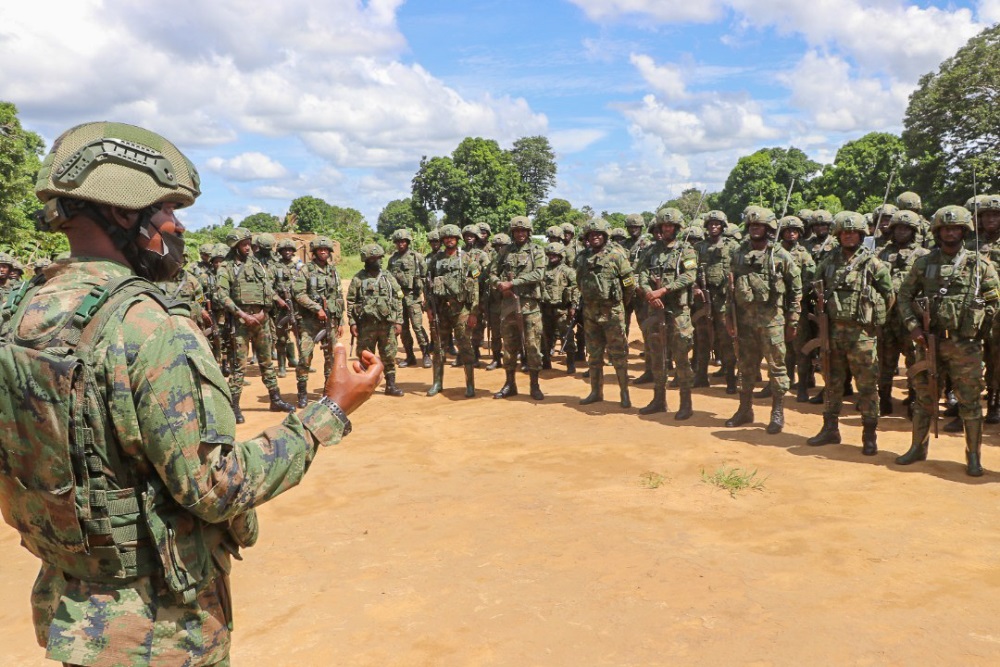
The Task Force Battle Group Commander, Brig Gen Pascal Muhizi visited the Mozambican troops in Nhica do Ruvuma and Rwanda security forces in Pundanhar and congratulated them for the work done.
He informed them that the Ansar sunna Wa Jammah (ASWJ) terrorists were seriously weakened by the joint forces actions but cautioned them to remain vigilant at all times.
Rwanda started the deployment of 1000 troops of the Rwanda Defence Force (RDF) and the Rwanda National Police (RNP) to Mozambique on 9th July 2021, to fight rebel groups linked to the Islamic State of Iraq and the Levant (ISIL).
The group sometimes calls themselves al-Shabaab, although they do not have known links with the Somali al-Shabaab.
The situation started worsening in October 2017 when armed extremists linked ISIL launched an insurgency in the Cabo Delgado region of Mozambique.
Since then, Mozambique Defence Armed Forces have been battling the extremists while many civilians were displaced by the fighting.
The joint operations between Rwandan and Mozambican troops yielded big where different regions including Palma, Awasse, Mocímboa Da Praia, Quionga, Tete, Maputo, Nhica Do Rovuma, Quelimane, Chinda and Mumu were seized from rebels.
As at 5th September 2021, Rwandan and Mozambican troops who were joined by the military mission of the Southern African Development Community (SADC) had captured almost all areas of Cabo Delgado Province where the remaining work was predominantly about launching offensives to quell enemy pockets from their hideouts and help displaced citizens to return to their homes.
Rwanda initially sent 1000 troops to Cabo Delgado honoring the request of Mozambique to support efforts to quell terrorist groups.
The troops had increased to nearly 2000 by the end of the year 2021.
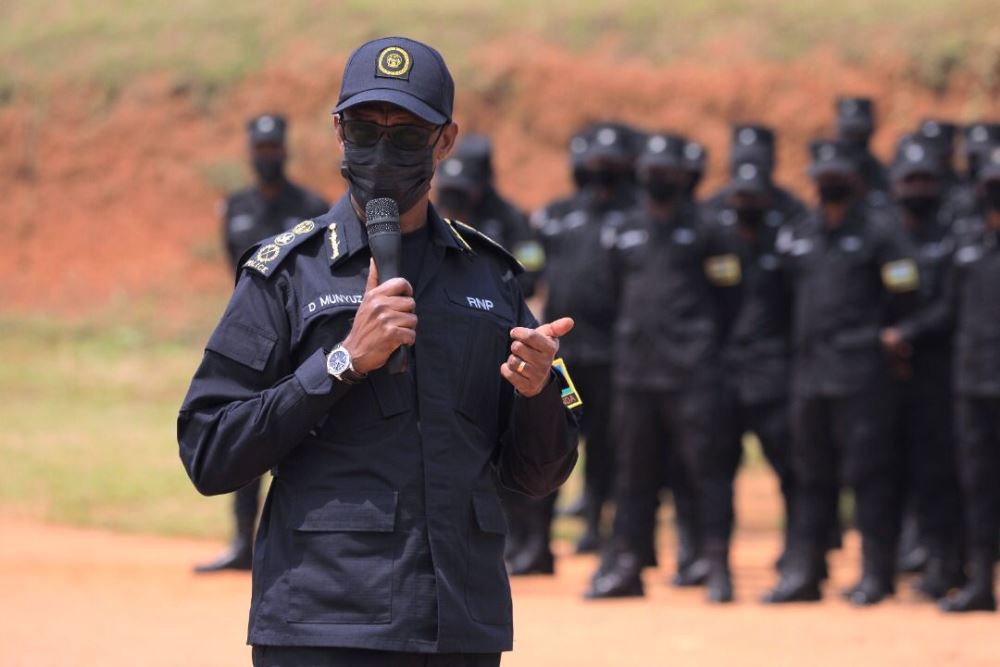
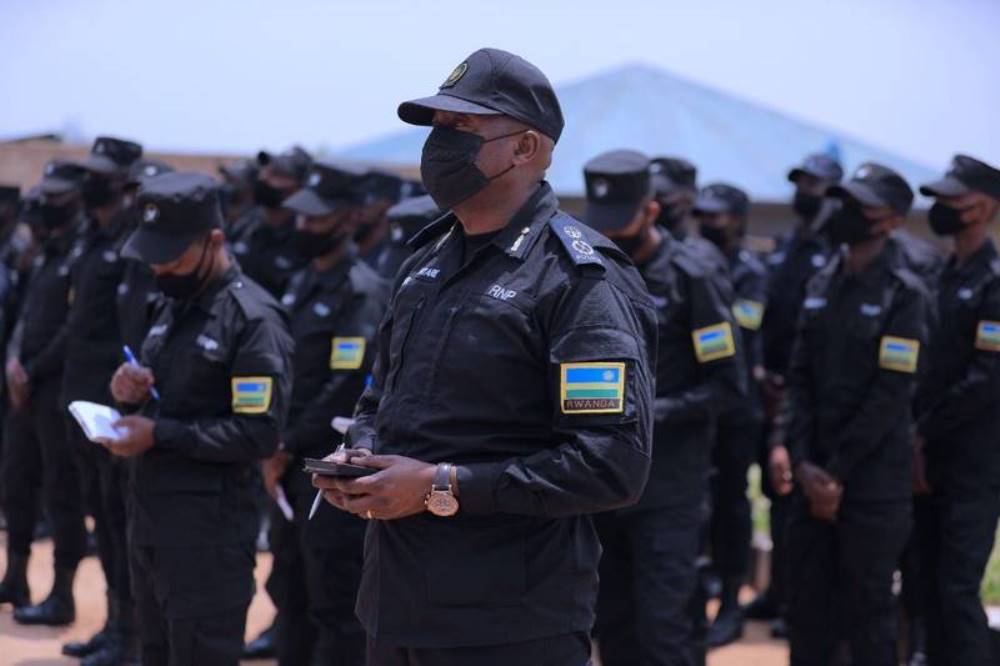
IGP Munyuza was received at SIF unit headquarters in Kimironko, Gasabo District, by the Commanding Officer, Assistant Commissioner of Police (ACP) Bertin Mutezintare.
While addressing the officers, IGP Munyuza said that the responsibilities of Special Intervention Force must be elaborated in action by every officer attached to the unit and to beware of their impact to the national security and development.
The Police Chief reminded the officers to continue training and to always be ready and equipped with the required skills to confront any security threats.
“Training must be continuous to move with the evolving security environment so as to remain ahead to effectively counter the emerging security challenges like terrorism. As the security environment continue to evolve, you must also dominantly keep improving your skills to overcome any kind of threat to security and the wellbeing of the people,” IGP Munyuza emphasized.
He reminded the officers to avoid any form of malpractice such as corruption due to its ill-effects to the national economic development and security.
“Put the national interests over personal interest, be defined by discipline, resilience and patience. Avoid any malpractice in particular corruption, which affect the image of the force and the country in general, and hinders the national security and economic development. This is why RNP adopted a zero tolerance doctrine against graft as a frontline law enforcement institution,” IGP Munyuza explained.
He further urged them to work and support the people, respect the rule of law and to avoid negligence or any other behavior that can tarnish the RNP image.
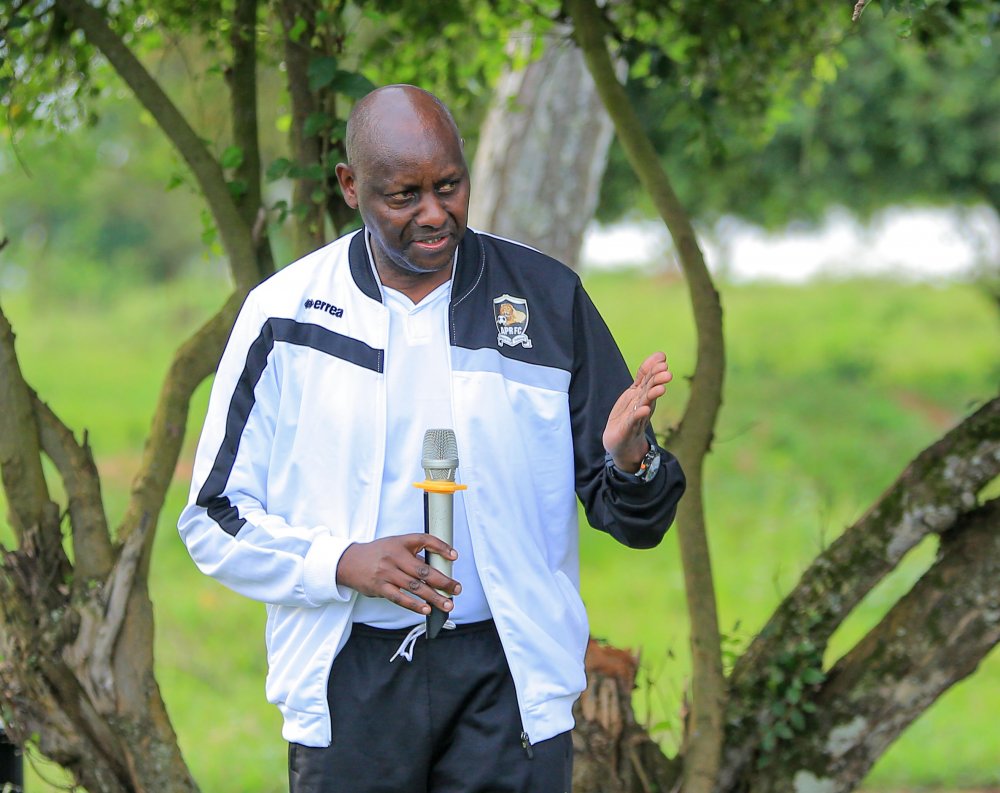
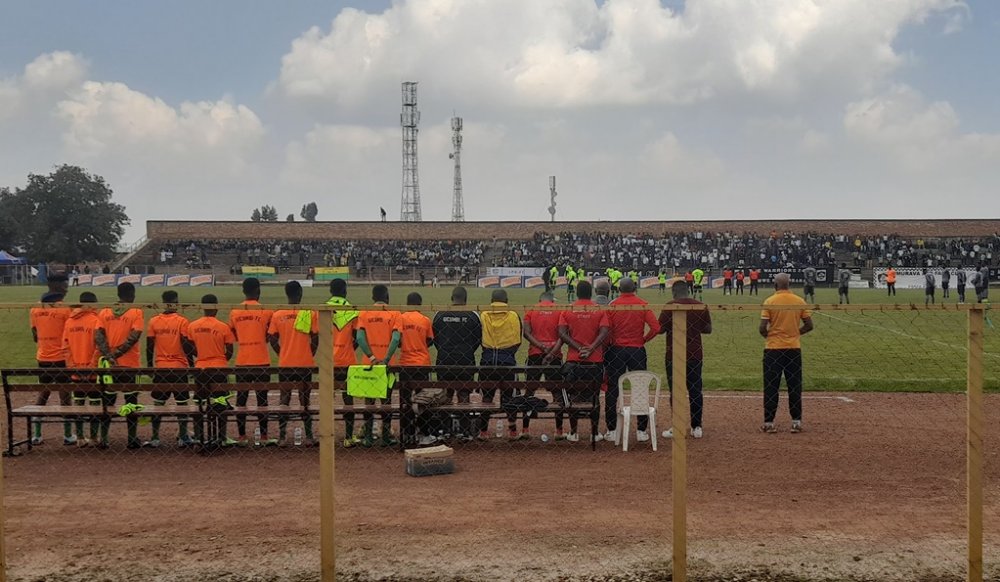
Before starting the match that saw APRFC beating Gicumbi with 2-0 at Gicumbi stadium on Sunday 13th February 2022, a minute of silence was observed in honour of late Lt Gen Musemakweli who died one year ago.
He served as the Chairman of APR FC from 2013 until January 2021.
After defeating Gicumbi, APRFC maintained the leading position with 37 points followed by Kiyovu Sports with 32 points.
The teams were facing off for the 16th day of the league’s first division.
The Rwanda Football Federation (FERWAFA) had announced that late Lt Gen Musemakweli would be honoured at the match, particularly reflecting on his contribution to the progress of football in Rwanda.
The federation also revealed via Twitter handle that it stands in solidarity with the APRFC family during the commemoration of Lt Gen Musemakweli.
Lt Gen Jacques Musemakweli breathed the last on 11th February 2021 at Kanombe Military Hospital where he was getting medical attention.
He was among RPA soldiers that liberated the country and stopped the 1994 Genocide against the Tutsi.
Lt Gen Musemakweli held different senior positions in RDF leadership including; commander of Republican Guards, Army Chief of Staff and Reserve Force Chief of Staff.
On 12th January 2018, President Paul Kagame and the Commander in Chief of RDF promoted Jacques Musemakweli from the rank of Major General to Lieutenant General.
Among others, Lt Gen Jacques Musemakweli once served as the commander of the Republican Guards prior to his appointment as Army Chief of Staff in 2016.
At the time, he was at the rank of Major General. In April 2019, Lt Gen Musemakweli was appointed the Commander of Reserve Forces prior to 3rd February 2019 when he became RDF Inspector General.
He served as the Chairman of APR FC from 2013 until January 2021 after taking post from Maj Gen Alex Kagame who was leaving for studies in China.
Lt Gen Musemakweli was recently replaced by Maj Gen Mubaraka Muganga to the position in January 2021.
He was serving as RDF Inspector General prior to his demise.
It is said that the girl hailing from Nyakarera cell of Ruhango sector was killed in the night of 9th February 2022. Her body was seen in the morning of Friday 11th February by an old man foraging grasses for his livestock.
The executive secretary of Murunda sector, Alida Icyizihiza has confirmed the death and arrest of the two security guards.
“We learnt about Nirere’s death in the morning of Friday on tip off from a resident and alerted Rwanda Investigation Bureau. Two suspects are detained at Gihango RIB Post while the body has been taken to Murunda Hospital for postmortem,” he said.
The six early-career women scientists in the developing world have been rewarded for demonstrating research excellence in the area of climate action and the environment.
The prize recognizes that these scientists have often overcome great challenges to achieve what they have.
According to foundation, the prize also acknowledges the scientists’ commitment to leading and mentoring young scientists, and to improving lives and livelihoods in their communities and regions. One prize is awarded to a scientist in each of OWSD’s four regions, plus one additional prize in any region. In 2022, two additional prizes were given exceptionally.
These regions include Africa, Latin America and Caribbean, Asia and Pacific as well as Arab Countries.
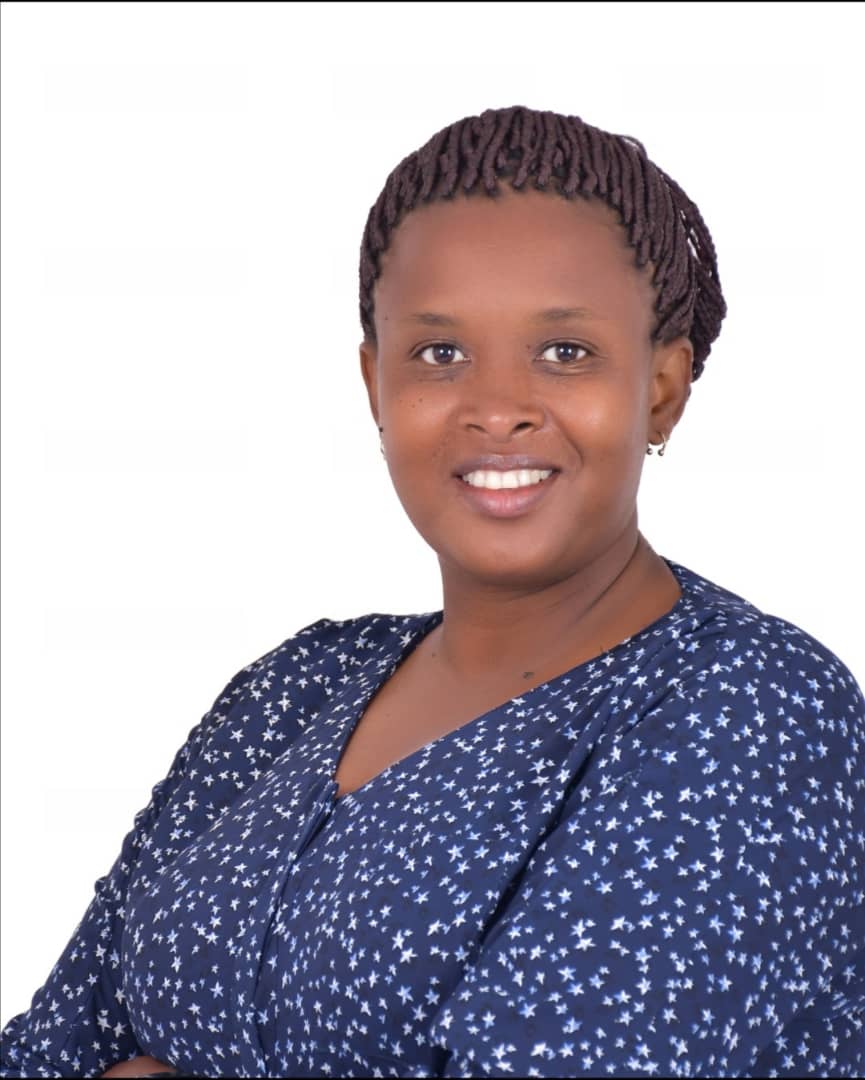
Dr. Myriam Mujawamariya is a lecturer in the department of Biology at the University of Rwanda.
Dr. Mujawamariya is helping Rwanda to prepare for climate change by studying how various types of indigenous trees respond to different climate scenarios. Erosion is a major environmental concern in Rwanda, and many efforts are being put into landscape restoration and ecosystem-based adaptation. However, greater knowledge is needed about how trees will respond to higher temperatures and other climatic changes, as well as which trees can best support ecosystem services such as soil stabilization, climate regulation, biodiversity, and bioenergy.
Dr. Mujawamariya tested the physiological responses of 20 native species grown at three sites along an elevation gradient, to simulate different climate change scenarios, using [the unique Rwanda Tropical Elevation Experiment, Rwanda TREE project->https://www.rwandatree.com/]. The project will contribute to understanding of how climate change will influence tropical forest cover, carbon sequestration and biodiversity not only in Rwanda, but in all of Africa’s Western Rift Valley region and beyond.
She Mujawamariya received her bachelor’s degree in biology at the former National University of Rwanda in 2007, and a master’s degree in plant sciences, specializing in natural resources management, from Wageningen University in the Netherlands in 2012. She received her PhD in natural sciences, specializing in environmental science, from the University of Gothenburg, Sweden in 2021. She began working at the University of Rwanda in 2007 as a Tutorial Assistant, and then Assistant Lecturer since 2013; in 2021, she was promoted to Lecturer.
Dr. Mujawamariya is a member of the Association for Tropical Biology and Conservation and is a Research Associate at the Center of Excellence in Biodiversity and Natural Resources Management (CoEB).
She has won numerous grants for her work, including the Belgian ARES grant, and grants from the Rwanda National Council of Science and Technology, the Swedish International Development Cooperation Agency (Sida). She has participated in many community outreach activities through the University of Rwanda and CoEB to raise awareness for biodiversity conservation, including educating school children about environmental protection.
Other awardees include Abeer Ahmed Qaed Ahmed, of Al-Saeed University; in microbiology (Arab region – Yemen); Heyddy Calderon, of the Instituto de Geología y Geofísica; in hydrology (Latin America & the Caribbean – Nicaragua); Gawsia Wahidunnessa Chowdhury, of the University of Dhaka; in aquatic ecology (Asia and the Pacific – Bangladesh); Flor de Mayo González Miranda, of San Carlos University; in environmental engineering (Latin America & the Caribbean – Guatemala) and Ashani Savinda Ranathunga of the University of Moratuwa; in geotechnical engineering (Asia and the Pacific – Sri Lanka).
The OWSD President Jennifer Thomson has said that ‘what 2022 winners are doing is absolutely outstanding’ highlighting that climate change ‘is the most pressing challenge of our time, and these women are finding innovative and effective ways to address it in their local contexts. We hope this award is the first of many for them’.
Each award winner will receive a prize of US$ $5,000. They will have the opportunity to be recognized and participate in several high-profile conferences and events. The first of these will be the annual meeting of the American Association for the Advancement of Science (AAAS), where they will take part in a panel discussion during the Minority and Women Scientists and Engineers breakfast, February 19.
They will also take part in the International Conference on Gender Action and Climate Change at Istanbul Aydın University (IAU) in Turkey, March 24, and in the EuroScience Open Forum in Leiden, the Netherlands, July 13-16 2022.
Past OWSD-Elsevier Foundation Award winners have been received by their country’s presidents and celebrated by local, national and international media. They have received other prestigious awards and fellowships including the L’OREAL-UNESCO For Women in Science Fellowships and the British Council Award.
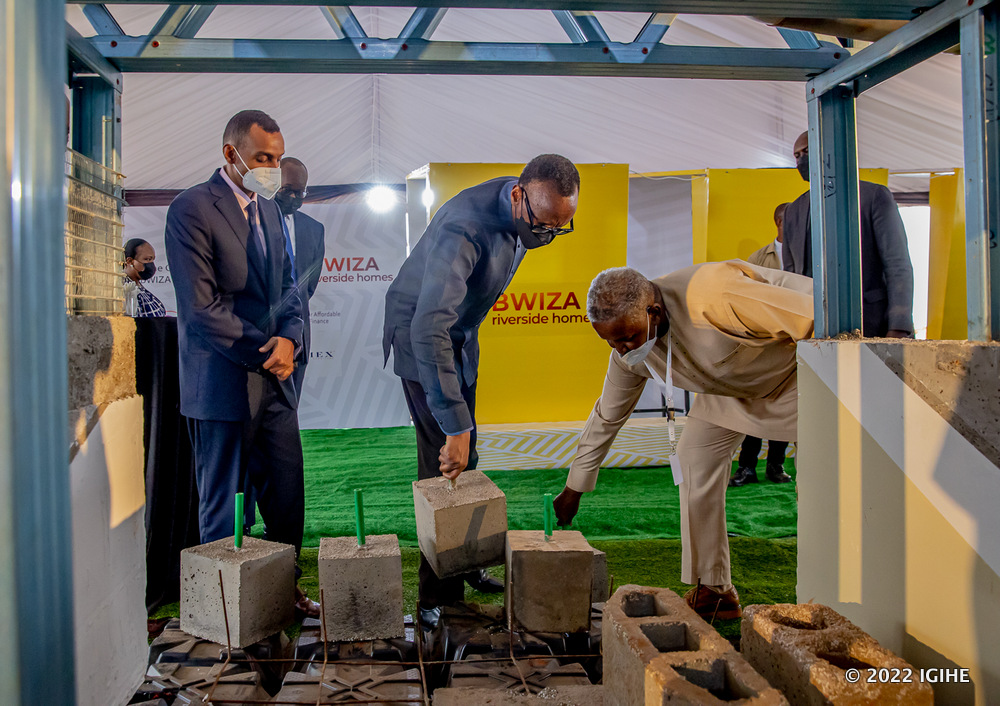
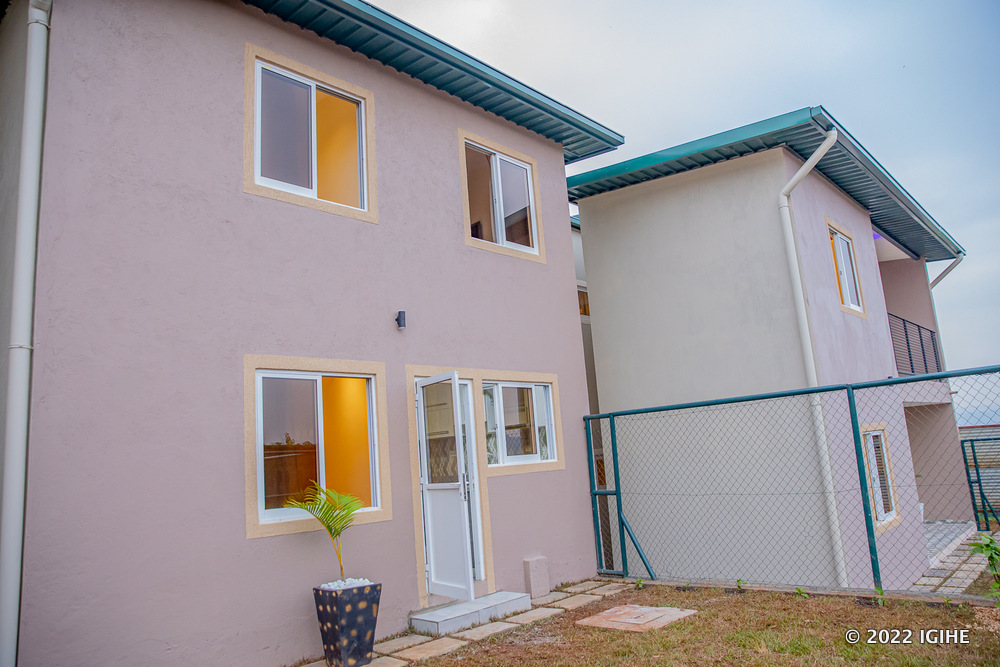
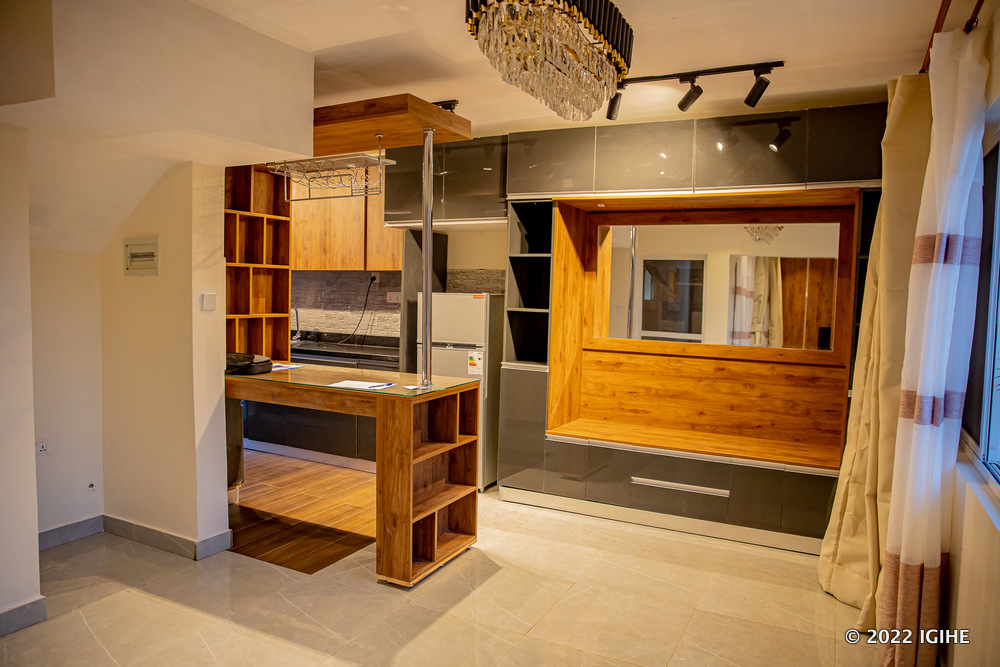
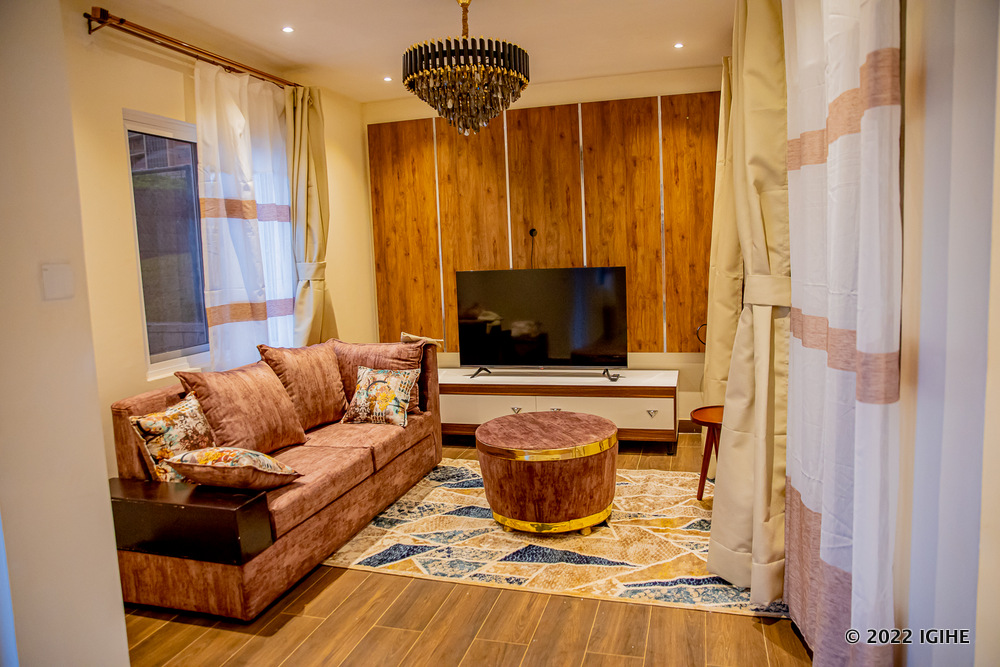
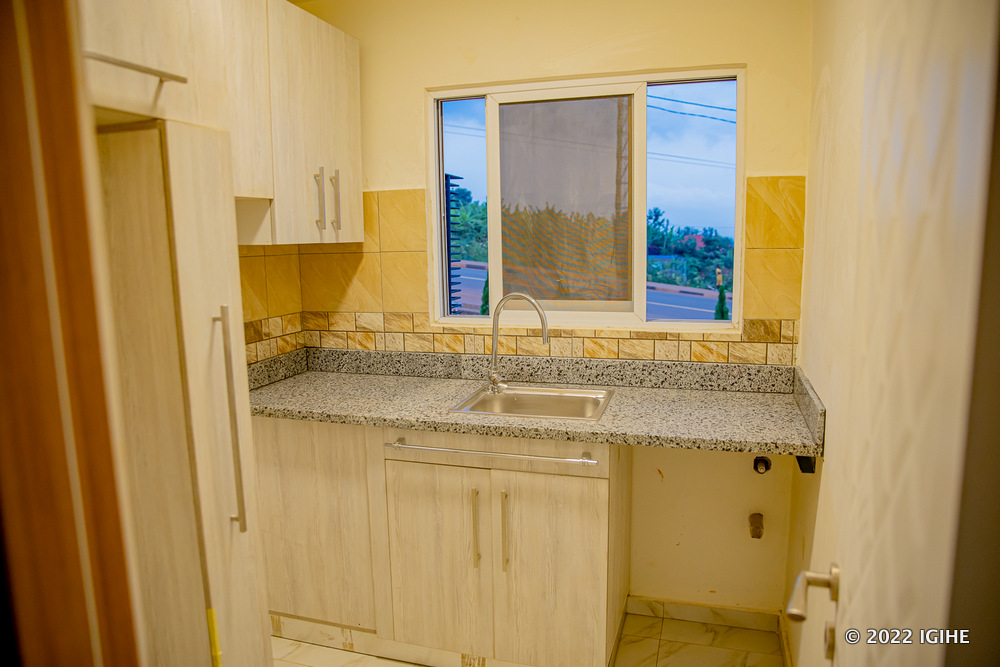
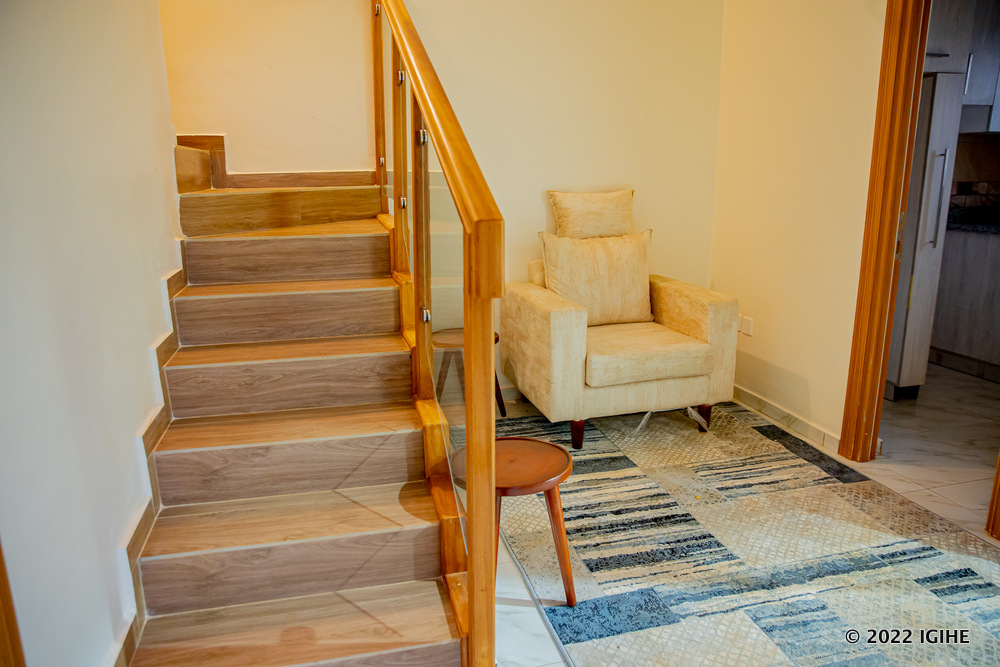
The multibillion eco-friendly homes are developed under a project dubbed ‘Bwiza Riverside Homes’ run by ADHI Rwanda Ltd.
ADHI Rwanda is a subsidiary of ADHI Corporate Group established in 2011 in Gabon.
The Bwiza Riverside affordable homes community project was designed primarily with first-time homeowners in mind. Qualifying buyers will choose from four distinct affordable home sizes and styles.
Each of housing units at the estate is estimated to cost between Rwf16 million and Rwf35 million.
Rwanda entered agreements with ADHI Rwanda Ltd in November 2020 to implement the project to be completed in five phases.
So far, seven model units have been completed. They are part of out of 245 units expected to be completed this year.
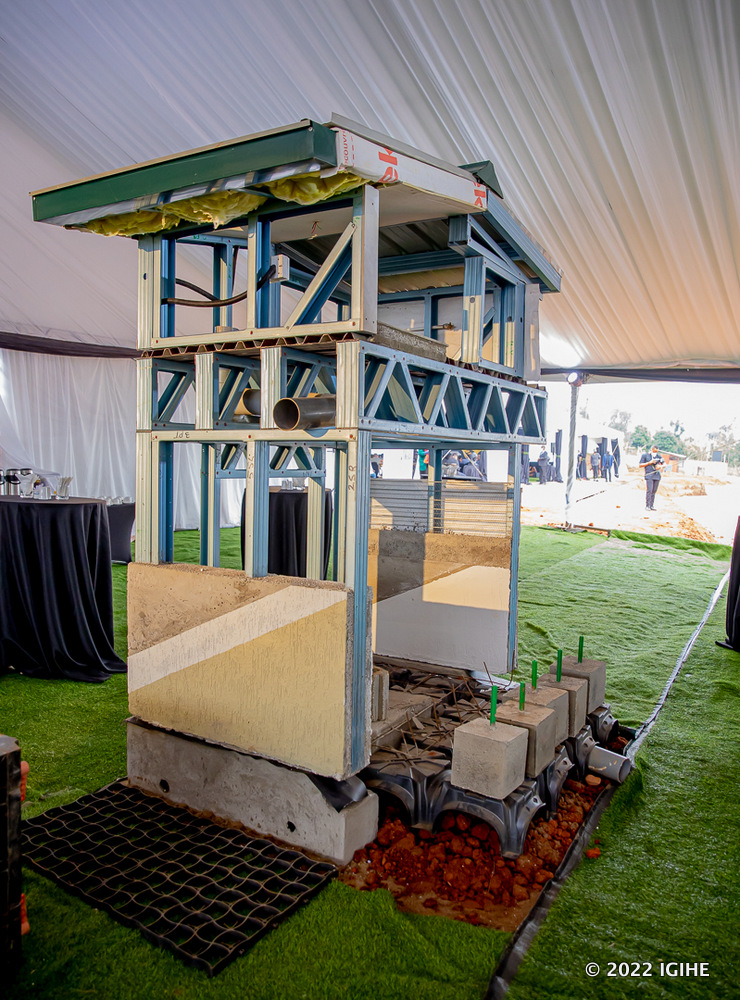
The unique construction method used in building ADHI homes consists largely of a patented system of light steel frames combined with lightweight concrete and other innovative elements to create green-certified homes.
The method results in 53% on-site energy savings and future cost savings for homeowners. Furthermore, Bwiza Riverside will use green infrastructure to develop a sustainable community with a low carbon footprint.
The government of Rwanda aims to create 150,000 new dwellings annually to meet the projected demand of 5.5 million dwellings by 2050. Through initiatives like the affordable housing program, the government seeks to address low and middle-income communities’ housing challenges.
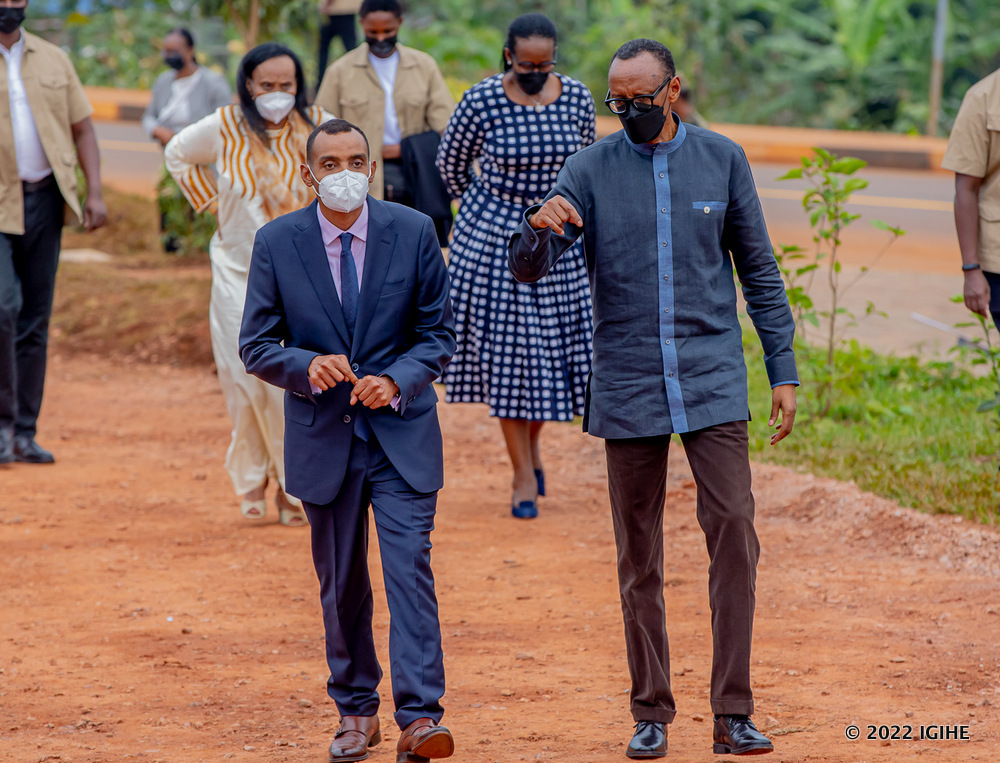
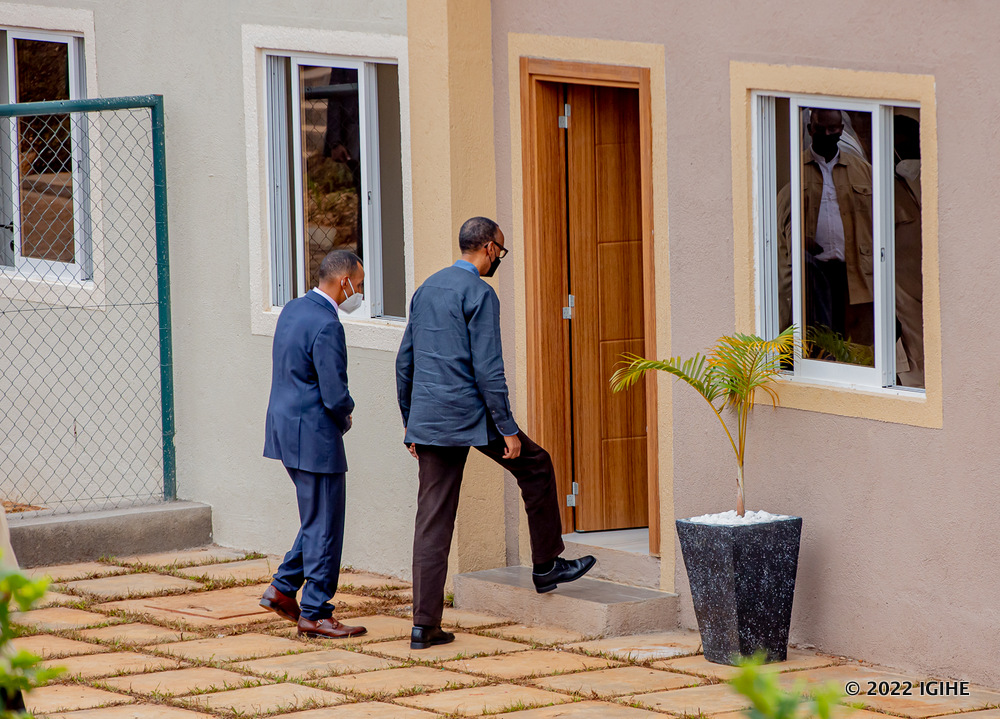
As he inaugurated the project worth Rwf100 billion on Friday 11th February 2022, Kagame was accompanied by First Lady Jeannette Kagame.
The ceremony was attended by different dignitaries including Government officials, bank leaders, diplomats accredited to Rwanda and members of the private sector.
The Head of State said that he met Soleman Idd, the founder and Chairman of ADHI Group in a couple of years ago where he was taken through the technology in housing and how it can lead to achieving affordable housing for ‘our population’ particularly those without high income. As he explained, Kagame told the investor that he wanted to see what he was talking about.
“That is how he set up this model to demonstrate what is possible. Keeping faith with Soleman, I think we have arrived at having something standing by which we can judge that the problem we have had for a long time can be addressed. This is just the beginning. There is a lot of work to do,” he said.
President Kagame emphasized that there is need for training and materials that have to be accessed locally for the project’s sustainability.
He promised the investor that the Government of Rwanda will remain a strong partner.
“If we can move faster, that should be our aim. On the side of Government, we feel we should do whatever is possible within our means to have our people access the kind of affordable houses that are needed in so large numbers. But today, we saw what is possible; we are going to stick with it and will demand that every one of us in the Government system does what we can possibly do to make significant progress,” Kagame noted.
“We have partners who want to support the Government to be able to house our people. I think they have seen what is possible with this model. I also think, it invites all of us for this strong partnership we can forge to be able to achieve what needs to be done,” he added.
At least 300 million housing units are needed globally not later than 2030 to address housing needs particularly in the Sub-Saharan Africa and Southern Asia.
Commenting on the project, Clare Akamanzi, RDB CEO, said: “We welcome the investment by ADHI in the provision of affordable housing. It boosts the government’s goal for urbanisation to reach 35 per cent by 2024. However, we need to see more houses being built as there is still a significant gap to meet the demand for affordable housing. We encourage more developers to take advantage of the existing incentives, which include the provision of infrastructures like roads, water and electricity, and a reduced corporate income tax of 15 per cent.”
During the unveiling, guests toured five completed model homes, which will serve as the “blueprints” for all other housing units to be built over the next two years. Upon completion of the development, Bwiza Riverside will comprise 1,680 affordable houses and 720 luxury units.
In addition to the affordable homes, ADHI Corporate has established a training academy for Innovative and Sustainable light steel frame construction. Academy students receive on-site, competence-based training to prepare them for future employment opportunities. As such, the academy students will form a key component in the building of Bwiza Riverside.
To ensure access to affordable financing, enabling more Rwandans to purchase homes in the project, ADHI Corporate has partnered with the Development Bank of Rwanda (BRD).
Commenting on the uniqueness of the housing project, Soleman Idd, the ADHI Chairman, said: “Our construction method is innovative yet uses proven technologies and materials that, when combined, result in faster, cheaper, stronger, and long-lasting buildings. Our built houses suffer minimum impact from the weather, seismic damage, wind and fire, rust, rot, and humidity. With our in-house training, skill development, certification and tools, we also empower both genders economically.”
{{About ADHI Corporate}}
The ADHI Corporate Group was established in 2011 in Gabon and is dedicated to innovation, sustainability and empowerment. Their sustainable construction method is a patented system that uses modular parts pre-made in a factory for faster and more affordable construction. This method addresses climate change concerns while providing homes that are well-suited to African climates.
As part of the national directives, the farmers were required to first do a Covid-19 test, and Sibomana’s results came positive. Health workers told him to self-isolate to prevent the transmission of Covid-19.
Superintendent of Police (SP) Alex Ndayisenga, the Northern Region Political and Civic Education Officer (RPCEO) has said that Sibomana instead defied the quarantine order and went to different bars to drink.
Sibomana was arrested later on Thursday Seta Village, Rukandabyuma Cell of Rugengabari Sector where he was found drinking, for defying the quarantine and deliberately spreading Covid-19.
“Community health counselors had been informed earlier about Sibomana’s positive results, as usual, to continue monitoring his health situation,” SP Ndayisenga said.
He added: “The counselors were prompted to call the Police and health workers after they found Sibomana in a bar in Seta, drinking. It also emerged that this was the second bar that he had visited to drink after testing positive for Covid-19 and being told to go into isolation.”
All those who were in contact with Sibomana were traced and tested for Covid-19 but their tests came out negative. However, health workers are monitoring them closely and were advised to report in case anyone experiences any signs.
SP Ndayisenga warned that the law punishes any person, who deliberately spreads an illness and cautioned the public against defying government directives meant to curb the spread of the pandemic.
Sibomana was taken to APADEC Kabona Isolation site for quarantine before handing him over to RIB for further legal action.
Article 117 of the law determining offences and penalties in general states that any person, wilfully transmits to another person an illness likely to cause disability, commits an offence.
Upon conviction, he/she is liable to imprisonment for a term of at least two years and not more than three years and a fine of not less than Rwf300,000 and not more than Rwf500, 000.
In case the illness transmitted is incurable, the penalty is imprisonment of at least 20 years and not more than 25 years and a fine of more than Rwf500, 000 and not more than Rwf1 million.