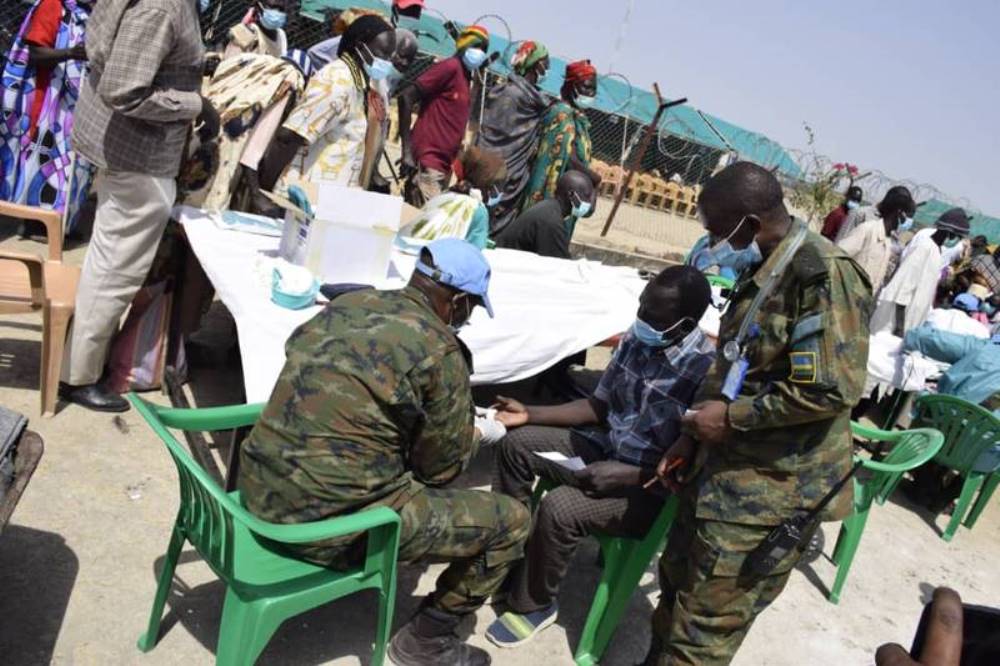
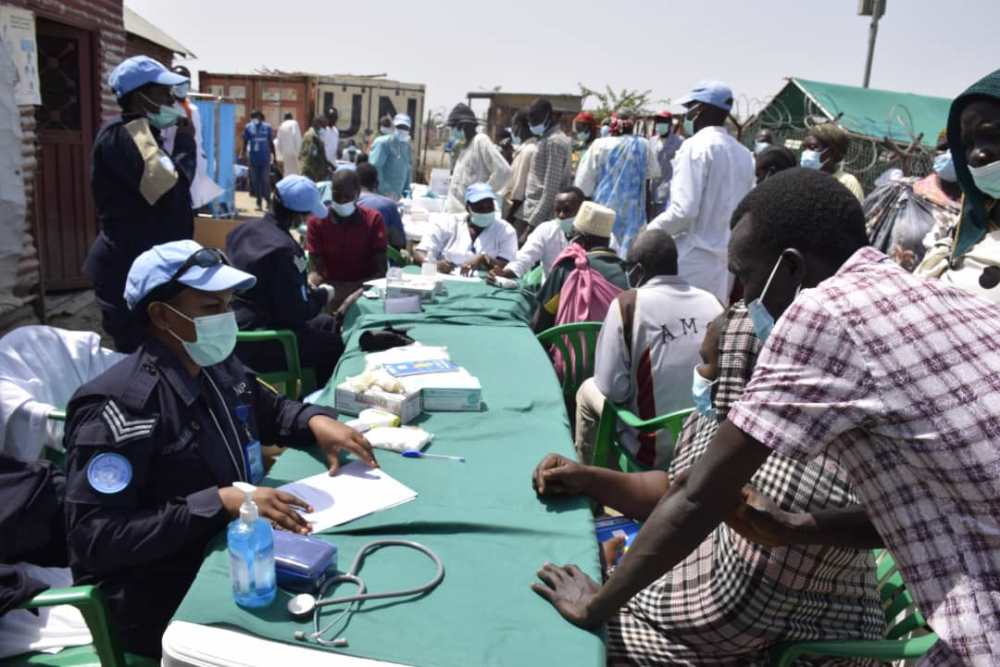
The medical exercise by Rwanda Formed Police Unit-One (RWAFPU-1) and Rwanda battalion in partnership with the humanitarian group, was launched on Monday, March 28, to provide awareness on prevention and control of Non Communicable Diseases.
“This is a four-day humanitarian exercise, which is part of our human security activities and protection of civilians, who were displaced by violent conflicts,” said Chief Superintendent of Police (CSP) Faustin Kalimba, the contingent commander for RWAFPU-1, said.
On the first day of the medical outreach, Rwandan peacekeepers provided healthcare to 177 people, with focus mainly on diabetes and high blood pressure.
“Some of the patients were transferred to the hospital and the UN Level II clinic for further medical attention. Others were given medical advice including regular checkup,” CSP Kalimba said.
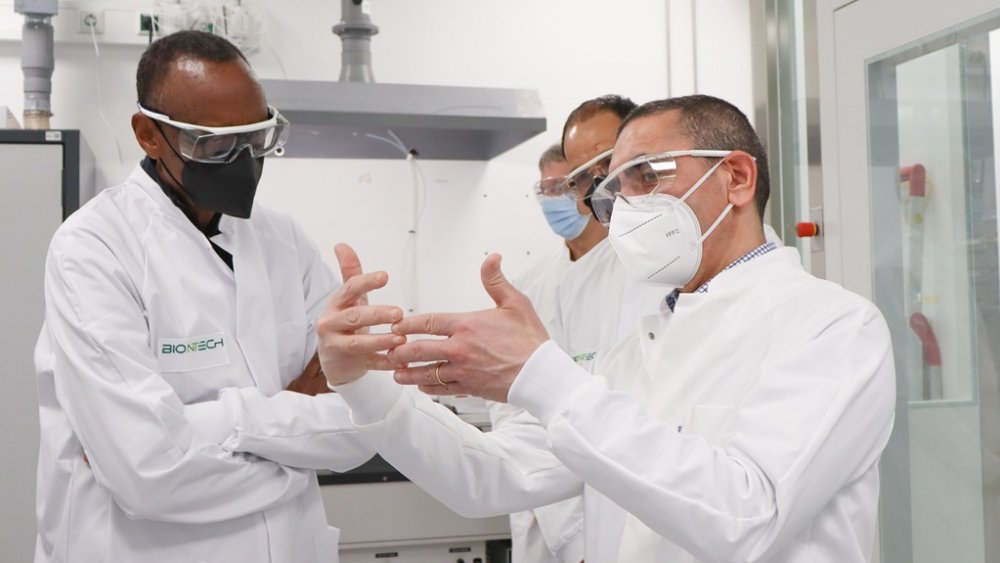
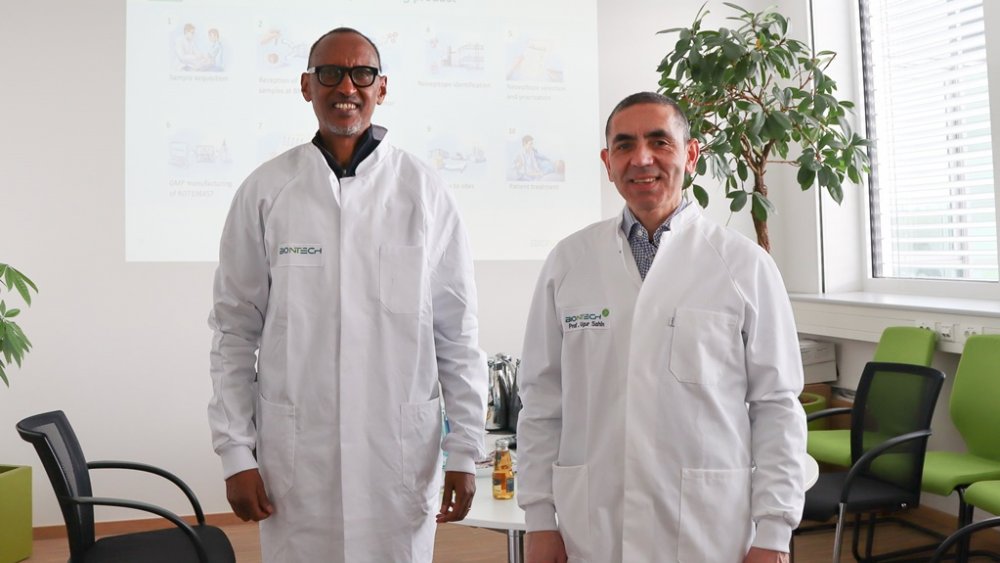
Kagame toured the facility based in Germany on Tuesday 29th March 2022.
Following the visit, Kagame revealed via Twitter handle that he had an opportunity to tour the facility, alongside Şahin and his wife Ozlem Tureci, the firm’s founding couple.
“I had the great opportunity to visit with Uğur Şahin at BioNTech Group facility in Mainz, Germany. Impressive innovations in biotech HighLevelStuff. A very good person and couple he and Dr. Özlem Türeci are!” he tweeted.
Şahin who received Kagame founded BioNTech Group along with her wife, Özlem Türeci who is also part of board members and his former lecturer, Prof. Christoph Huber.
BioNTech in collaboration with Pfizer, manufactured Pfizer-BioNTech COVID-19 vaccine which offers 95% protection.
In February 2022, President Kagame attended high-level BioNTech Vaccine Equity for Africa meeting during which BioNTech Group’s modular container prototype known as BioNTainers was unveiled.
The prototype will be used to manufacture vaccines in African countries including Rwanda later this year.
The Head of State attended the meeting in Germany along with Macky Sall, the President of Senegal, which has been also selected among first countries to host BioNTech’s vaccine manufacturing plants on African continent.
At the time, Kagame said that the modular production system is a breakthrough which puts vaccine manufacturing within the reach of countries.
“Vaccine equity is not about what happened in the past. It is about the future. There could be another pandemic. But we will be faster and better prepared next time, because of this strong partnership between BioNTech and Africa,” he noted.
The President underscored that the choice to deploy the solution first in Africa ‘is a strong signal that a system designed to succeed on our continent can help speed up the pace of innovation for all of us’.
“A commitment of this scale from a major pharmaceutical company is something we have never seen in Africa, and we recognize its significance. Rwanda is firmly committed to this partnership and we will do our part to ensure its success and sustainability,” he said.
Africa uses 25% of vaccines manufactured every year. Of these, the continent only produces 1% and imports the remaining percentage. The figures evidence how the African continent lags behind in vaccine manufacturing.
The issue exacerbated during COVID-19 pandemic where Africa was the last continent to receive vaccines as countries with manufacturing plants hoarded them.
The situation awakened the continent to bridge the gap through strengthening its capacity to manufacture enough vaccines locally without heavily relying on imports.
However, the continent needs partners to be able to access advanced technology deployed to manufacture vaccines.
There has been a positive progress with the mRNA technology which can be deployed to produce multiple types of vaccines within a short timespan unlike the past when it would take up to five years.
So far, BioNTech has taken bold strides to introduce the technology in Africa where it signed agreements with countries including Rwanda and Senegal to set up vaccine manufacturing plants.
Founded in 2015 in Burera District, Sanit Wing is a local small business that produces soaps and detergents from avocado.
Their products range from Avocado oil, Skincare products like Sanatavo skincare and many more.
Sanit wing is also developing the entire avocado value chain to great heights to solve some challenges facing communities.
James vainqueur Bimenyimana, the Marketing Manager at Sanit said the company supplies to different districts where products can be found in different shops amidst financial constraints to expand products range.
“We are still struggling because we do not have adequate equipment to achieve our goals,” he noted.
Alexis Nshimiyimana, the Founder and Managing Director of Sanit Wing has said that he started this company with Rwf65,000 capital, which he had saved from his previous job.
Nshimiyimana has disclosed that they have a high demand for avocado oil on the international market but cannot meet production capacity.
“We have had orders of Avocado oil beyond our capacity. We have clients in Nigeria, Namibia, Egypt, and the USA who are ready to buy 20,000 liters of avocado oil every month. But the challenge is that we shall be able to produce meet that capacity in 2023,” he said
Nshimiyimana explained that there are more products with high demand like cosmetics.
To tackle this challenge, the company seeks to engage impact investors, mostly the ones from the agriculture sector and others committed to reduce poverty.
The company plans to invest in modern equipment in 2023 to meet global demand and leverage on advantages of the African Continental Free Trade Area to create multiprocessing branches in Tanzania, Zimbabwe and Cameroon.
“We are planning to uplift the avocado value chain in Rwanda and create a stable market for the avocados involving smart contacts (Blockchain technologies) to make avocado farming smarter. We also plan to create over 6000 decent jobs across the value chain by 2025,” said Nshimiyimana.
He further stated that their goal is to tackle the problem of relying on imports.
“We wish to contribute to Rwanda’s economy but before that, we need help from the Government, the private sector, impact investors and Rwandans at large,” he said.
In a bid to help small businesses to thrive, the Government of Rwanda has put in place different initiatives to help young entrepreneurs and women along their journey.
For example, Business Development Fund (BDF) works with beneficiaries from different sectors like agriculture and others by offering grant to women and young entrepreneurs who have applied for loans from financial institutions not exceeding Rwf10 million.
BDF provides up to 15% while the beneficiary repays the loan up to 85%.
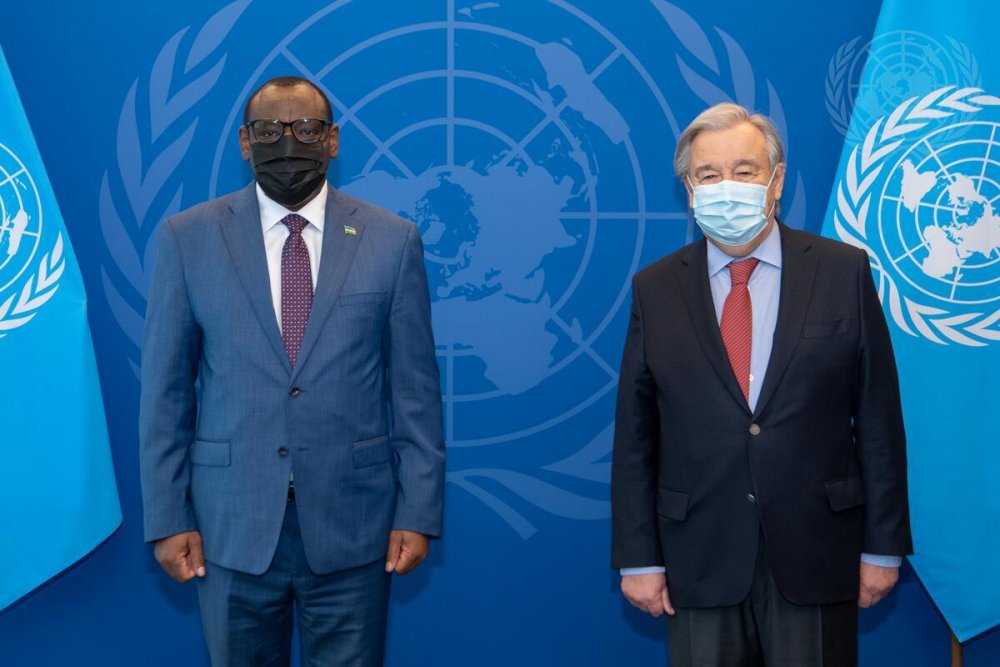
He presented credentials during a ceremony held on 28th March 2022 at UN Headquarters in New York.
After credentials, Amb. Gatete expressed commitment to strengthen existing partnership.
“ I look forward to continuing to deepen our partnership to advance UN work. Once again I thank HE President Paul Kagame for the opportunity to represent Rwanda as Ambassador and Permanent Representative to the UN,” he tweeted.
Amb. Gatete who previously served as the Minister of Infrastructure was appointed Rwanda’s ambassador to UN on 31st January 2022 replacing Valentine Rugwabiza.
Amb. Gatete held different positions where he served as the Minister of Finance and Economic Planning from 2013 to 2018.
He had previously served as the Governor of the National Bank of Rwanda (2011 to 2013), having previously served as its Deputy Governor. Amb. Gatete also served as Rwanda’s Ambassador to the United Kingdom, Ireland, and Iceland from November 2005 to December 2009. He is also currently a member of the Presidential Advisory Council.
Prior to that, Amb. Gatete had served successively as the Secretary General and Secretary to the Treasury in the Ministry of Finance and Economic Planning, Personal Representative of the President on NEPAD Steering Committee in the Office of the President, Coordinator of the National African Peer Review Mechanism (APRM), member of the APR National Commission ; and Member of the NEPAD’s African Partnership Forum (APF) and the Director General for Social and Economic Affairs. He also worked with United Nations Development Programme (UNDP) – Kigali-Rwanda, as a National Economist.
Amb. Gatete has held various positions on Key Boards of Directors including: Chairman of Rwanda Revenue Authority and School of Finance and Banking as Chairman ; member of the Board of the National Bank of Rwanda ; Chairman of National Privatization Technical Committee ; and Vice-Chairman of Community Development Fund.
He also held positions in other key taskforce committees serving as Chairman of the National Treasury Management Committee and Co-Chair of Development Partners Coordination Group.
Amb. Gatete holds a Master’s in Agricultural Economics from the University of British Columbia, Vancouver, B.C., Canada (1993) and an undergraduate degree from the same University (1991). Upon completion of his undergraduate and postgraduate studies, Amb. Gatete worked in Canada as an Economist ; Agriculture and Agri-food Canada, Statistics Canada, University of British Columbia and Algonquin College.
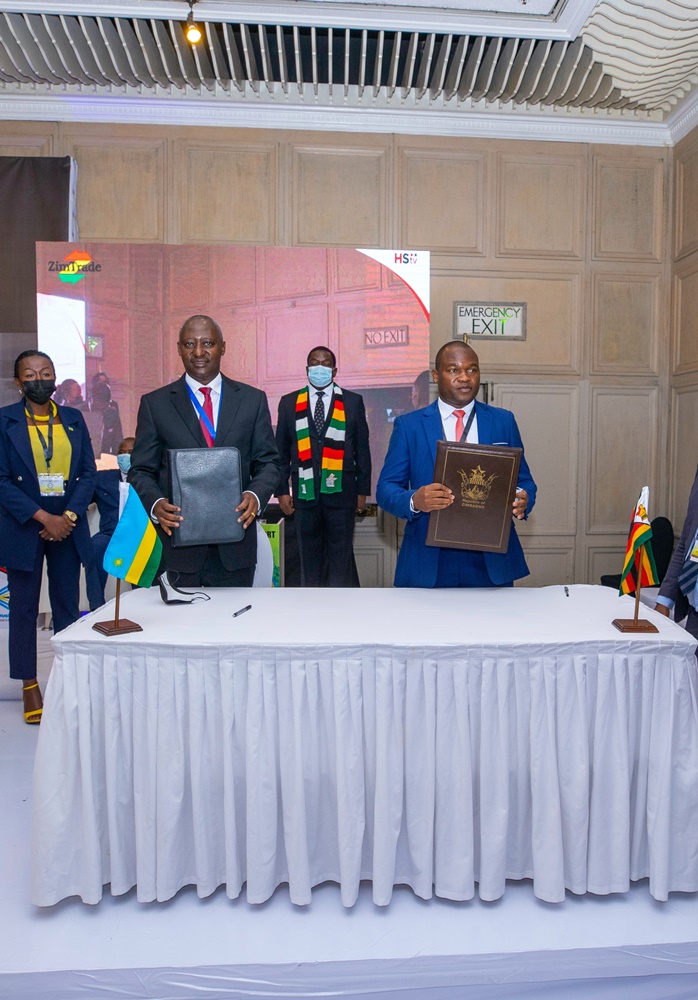
The conference is a reciprocal meeting following the Kigali conference which took place in September 2021. It brought together senior government officials and over 40 private companies from Rwanda to explore areas of collaboration and partnerships between the two countries.
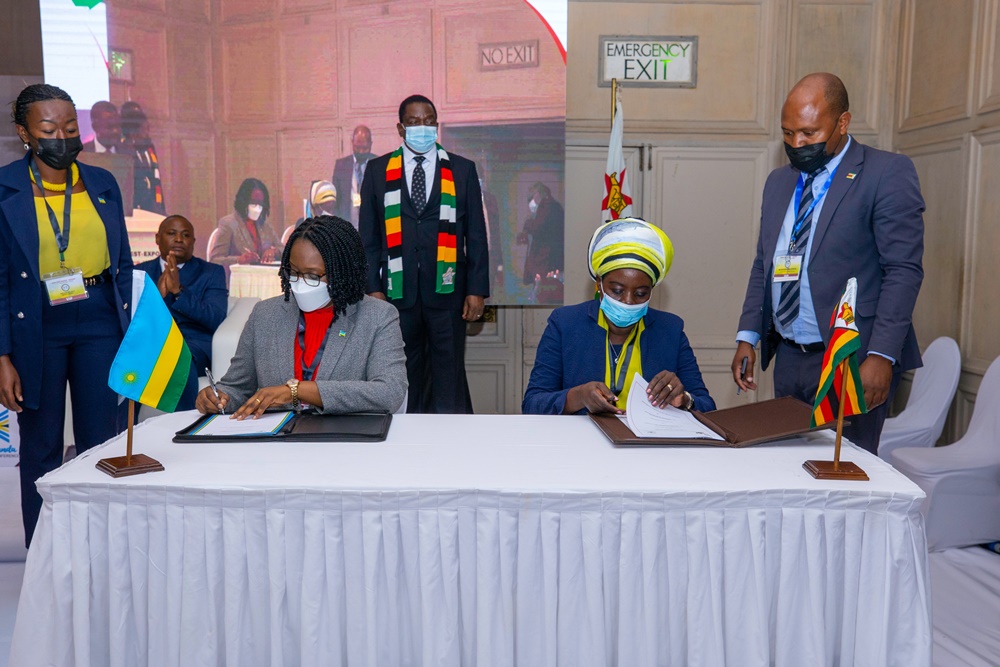
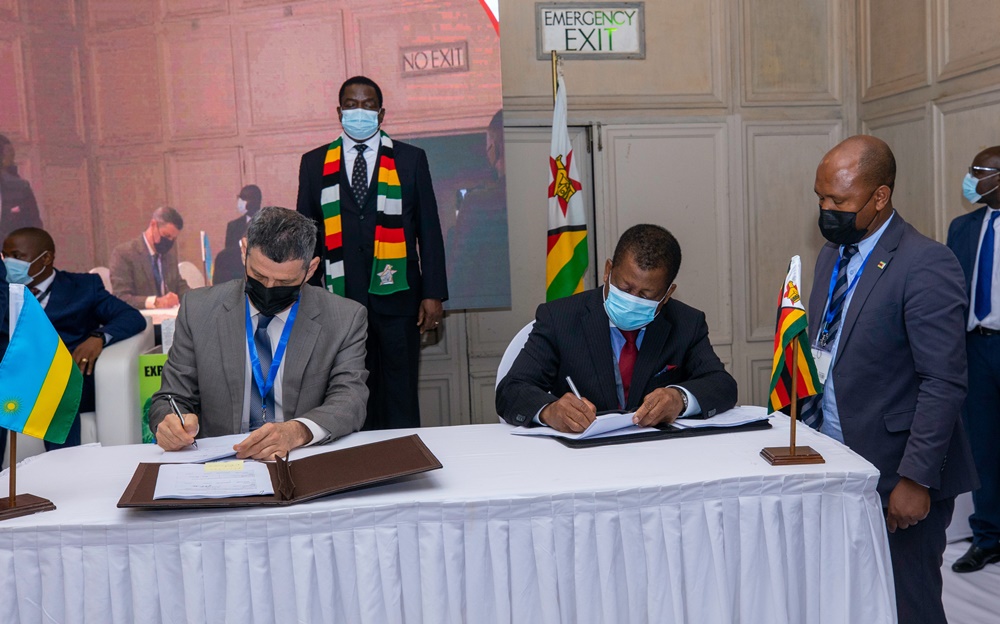
During the opening of the conference officiated by Dr. Emmerson D. Mnangagwa, President of Zimbabwe, who also witnessed the signings, Rwandan Government officials and the Private Sector Federation signed agreements with their Zimbabwean counterparts in the areas of commercial and economic relations, trade and investment, as well as energy.
Speaking while officiating the opening of the conference, President Mnangagwa said: “This timely visit demonstrates the focus, commitment and determination to the prime objectives we set for ourselves in broadening the trade and investment partnerships between our two countries. We have a collective responsibility to shift the historical trend which was characterized by low trade volumes between our two friendly countries despite the existence of huge potential between our two economies.”
On building on the partnerships between Rwanda Development Board and ZimTrade, Mnangagwa challenged both strategic bodies of each jurisdiction to deploy their capabilities and all-encompassing institutional capacities towards driving the sustainable socio-economic development of both countries.
Speaking on behalf of the Rwandan delegation at the conference, Rwanda’s Minister of Trade and Industry, Beata Habyarimana said the conference is taking place at an opportune moment in the bilateral relationship being forged between both nations.
“Our cooperation has indeed grown exponentially in the last 5 years with several agreements signed in education, energy, agriculture, mineral resources, ICT, and tourism. The trade and investment conference we are opening today, Rwanda and Zimbabwe are leading by example,” she noted.
Commenting on the important lessons from COVID-19, Minister Beata said: “COVID-19 showed the importance of close collaborations among nations in facing global challenges. The urgency of Africa’s self-reliance in reinforcing trade and investment ties in Africa is essential in achieving a common objective of achieving social and economic transformation”
During first trade and investment conference between Rwanda and Zimbabwe in Kigali, 5 memorandums of understanding were signed in the areas of agriculture and livestock, environment and climate change, tourism and business events, ICT and e-Government.
The second conference, taking place over the next two days will see participants engage and network in various business to business sessions, panel discussions on topics such as strategies for business growth, and procedures for doing business in both countries.
This contribution from the Japanese Government will boost the efforts of UNHCR in various health related services accessed by refugees and the host community in and around the Mahama Refugee Camp.
The generous support from the people of Japan announced recently on 24th March 2022, will contribute to the strengthening of the basic health cares systems; improving water and sanitation conditions, especially in areas where there are high risks of Covid-19 spread; addressing Covid-19 infection and prevention through knowledge and development of effective prevention habits and behaviours for children and adolescents.
In addition, this contribution will also enhance the provision of protection and psychosocial support to the most vulnerable displaced persons and the host community, such as Gender-Based Violence (GBV) survivors.
At the end of February 2022, the Mahama Refugee camp, located in Kirehe District, Eastern Province, hosted 55,907 refugees – mainly Burundian and Congolese.
The project will be implemented for a duration of 11 months, from February to December 2022, thanks to the generosity of the Japanese government and the people of Japan.
Mr. Ahmed Baba Fall, the UNHCR Representative to Rwanda, commended the government of Japan for its continued support in providing humanitarian assistance to persons of concern in Rwanda; noting that the support will not only allow UNHCR to cover life savings needs in the sectors of protection health and WASH, but also to strengthen the Covid-19 response in Mahama camp and the host communities.
“We’re happy to get this lifesaving support as we continue to mitigate and prevent the impacts of Covid-19 on refugees and the host community. Ensuring adequate healthcare is accessible to the people we serve is a key part of ensuring their protection, while durable solutions are being sought. We are thankful for the Japanese government for standing with refugees during this global pandemic,” said Mr. Baba Fall.
Masahiro Imai, the Ambassador of Japan to Rwanda said: “It is our pleasure that this project through our support will improve the health of refugees in Mahama Camp and their living environment, including water and sanitation, and contribute to infection prevention through Covid-19 risk awareness education. Japan appreciates the efforts which have been made by the Rwandan Government and UNHCR in this regard, and we wish to continue working with them”
The Government of Japan has an excellent track record of supporting UNHCR’s humanitarian work globally. In Rwanda, Japan has supported UNHCR operations with funding amounting to over 10 million US$ over the past 10 years.
Following the admission, the Democratic Republic of Congo becomes the regional bloc’s seventh member.
As he addressed the EAC Heads of State Summit, President Uhuru Kenyatta, who is the chairperson of the Summit, said the admission of the DRC to the EAC will enable the community to achieve much needed development.
“Today, 29th, is a historic day in the history of the EAC as we admit the DRC into the EAC. We have already considered and agreed in our closed session and the Summit has taken the decision to admit the DRC into the EAC,” said President Kenyatta.
“The admission of the DRC into DRC is historic not only for our countries but our continent at large.”
“For people who are looking for prosperity, this is a very important issue. We welcome the DRC into the EAC,” said President Yoweri Museveni of Uganda.
“We now need to work on peace in the Eastern Congo, because that part of the region has been having problems for some time.”
President Paul Kagame also congratulated DRC for the admission.
“I congratulate our brothers and sisters from the DRC and welcome them into the EAC. I urge all the institutions of the EAC to accelerate the admission of the DRC processes in accordance with the Treaty and our rules of admission,” he said.
“It is our expectation that the DRC will ratify the admission on time to allow the community to benefit from the integration,” said Tanzanian President Samia Suluhu Hassan.
The Vice President of Burundi, Bagombanza has also highlighted that ‘coming together will benefit the community to achieve its integration agenda’.
The summit to admit the DRC was attended by President Samia Suluhu Hasan (Tanzania), President Yoweri Museveni (Uganda), President Paul Kagame (Rwanda), Vice President Prosper Bagombanza (Burundi), Minister in the Office of the President Dr. Barnaba Marial Benjamin (South Sudan), and the DRC President Felix Tshisekedi.
Its admission will double the EAC’s land size to 4.7 million square kilometres from the current 2.4 million square kilometres.
Its population will rise to 275 million from 183 million, which is the current total population of the existing six partner states.
Among others, the development will make EAC one of the largest trading blocs in Africa, opening a corridor from the Indian Ocean to the Atlantic coast.
The latter becomes the first tea factory fully owned by farmers in Rwanda. For the past ten years, farmers co-owned the factory with an investor, Ian Wood who had 55% shares.
The handover ceremony of the factory was also attended by representative of tea farmers, the Minister of Agriculture and Animal Resources, Dr. Geraldine Mukeshimana and British national, Sir Ian Wood who established The Wood Foundation.
WoodFoundations has through his company dubbed East African Tea Investment Ltd acquired 55% shares of the Mulindi Tea Factory when it was privatized by the Government of Rwanda in 2012 to enhance management and productivity.
A total of 5000 tea producers grouped in two local smallholder tea cooperatives will take over the management of the facility & tea industrial block on 175ha.
Speaking at the event, Premier Ngirente thanked Sir Ian Wood, the Chairman of The Wood Foundation for all his philanthropic activities in tea business in Rwanda.
He highlighted that The Wood Foundation has played a significant role in improving the livelihoods of the smallholder tea farmers and empowering rural communities through business development, capacity building and financing.
The Premier appreciated the contribution of The Wood Foundation to the entire tea sector in Rwanda and called upon cooperatives to whom, Mulindi Factory Factory has been handed, to ensure the factory remains profitable and operates in the interests of the farmers.
Considering the achievements including capacity building, whereby more than 4,700 farmers graduated from Farmer Field Schools and 170 farmers and staff received corporate governance training, Premier Ngirente expressed optimism that smallholder farmers in Mulindi Factory Company are well empowered to take over the management.
He also appreciated the factory’s contribution to exports’ growth and reiterated Government’s support to farmers.
“The Government of Rwanda appreciates the contribution of Mulindi Factory Company to the entire tea sector in Rwanda. This factory is leading in terms of volume of tea produced in Rwanda, accounting for an average of 12% of the national production and 10% of exports,” Premier Ngirente said.
“We especially appreciate that under the management of the East African Tea Investments (EATI), the annual green leaf production has increased. The Government of Rwanda is committed to continue supporting tea growers to whom, Mulindi Factory Company has been handed, to ensure the factory remains profitable and operates in the interests of the farmers,” he added.
Sir Ian Wood, Executive Chairman of The Wood Foundation said that it has been a matter of great pride and satisfaction to work with the tea farmers at Mulindi.
“It was difficult, to begin with, but with the investments and significant training programmes, the farmers’ performance and their income have greatly improved. We are very pleased to be handing over a well-established successful company and will continue to provide some support for an interim period,” he noted.
The Government of Rwanda has always supported initiatives aiming at enhancing the tea sector, one of the top sources of the country’s revenues. Currently, the sector has a direct workforce of 60,000 people who produce one of premium quality black CTC teas in the world.
Speaking at the event, Minister Mukeshimana said: “I look forward to seeing continued growth at Mulindi, that the business maintains a high standard of professionalism and governance, and that it continues to act in the interest of its members.”
Marie Louise Mujawimana, 49, was arrested Monday, March 28, in Inyarurembo Village, Kiyovu Cell, Nyarugenge Sector with over 2,000 pieces of assorted banned skin bleaching cosmetics worth over Rwf1.6 million.
RNP spokesperson, Commissioner of Police (CP) John Bosco Kabera said that the outlawed products were recovered in Mujawimana’s store in Kiyovu.
“The RNP Anti-Smuggling and Organized Crime, reacting on a tip-off, searched Mujawimana’s house in Kiyovu where they recovered over 2000 pieces of assorted skin whitening cosmetics, which are banned in Rwanda, and Mujawimana was also arrested,” CP Kabera said.
Mujawimana disclosed that she was buying the harmful creams and oils from street vendors. She said that she has another supplier from Rubavu District, whom she identified as Mukamana Vestine.
CP Kabera said that law enforcement organs are still working together to locate and arrest Mukamana, the alleged supplier.
Article 266 of the law determining offenses and penalties in general, states that any person, who produces, sells, or prescribes harmful products; cosmetics or body hygiene substance or any other products derived from plants, commits an offence.
Upon conviction, he/she is liable to imprisonment for a term of not less than one year and not more than two years and a fine of not less than Rwf3 million and not more than Rwf5 million or one of these penalties.
The delegation that includes police officers and other officials from different entities, headed by Traore Wodjo Fini, the advisor to the Minister of Interior for Ivory Coast, is in Rwanda since March 27, for a working visit.
While welcoming the delegation, DIGP Ujeneza said that Rwanda National Police is always open to share its experiences and to learn from one other.
“Your visit to the Rwanda National Police will focus on building the capacity of the police, including continuous training, human resource management and logistics. Rwanda National Police remains committed to move jointly to train and develop the capacities of our police officers and forces, and to strength bilateral cooperation between our two institutions,” DIGP Ujeneza said.
While in Rwanda, the delegation will visit RNP schools and other facilities as part of their working visit.
Mr. Traore said that they are happy to choose and to learn from Rwanda as a country that has achieved a lot in all aspects, including policing and security in general.
“We visited Rwanda National Police to understand, share experience and expertise on how the police works with and for the people. We are looking at three main things; human resource management, professionalism and training programmes that prepare Rwanda Police officers to work with and serve the people,” Traore said.