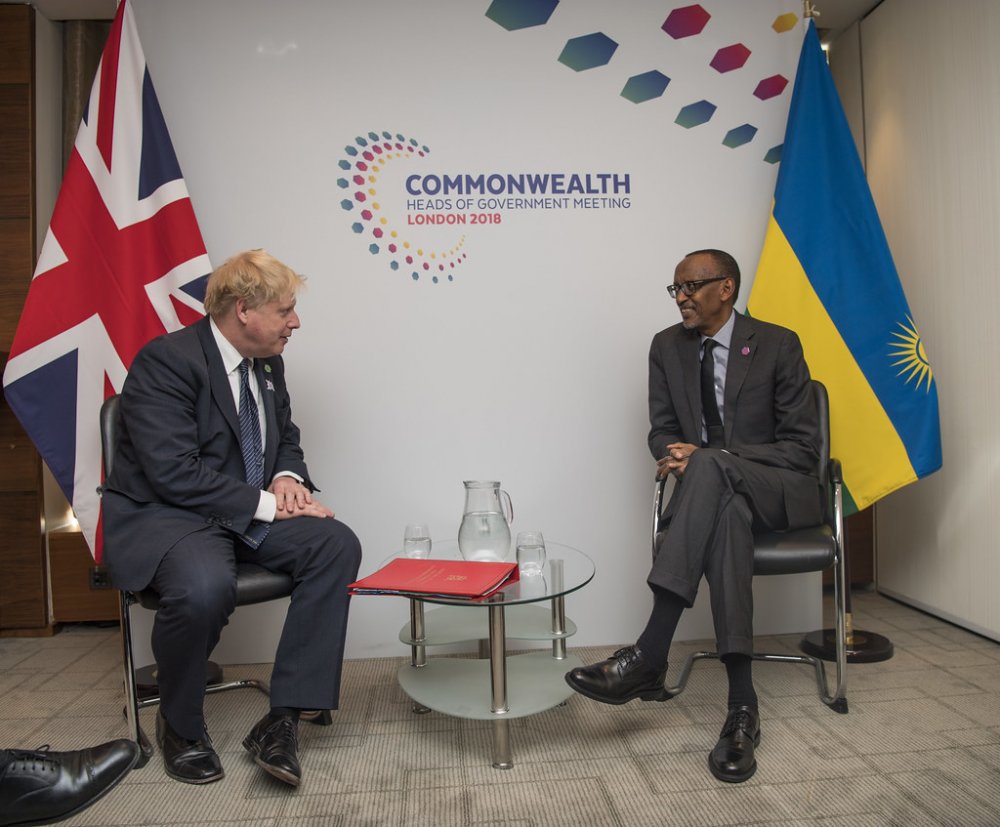
He voiced the appreciation via a phone conversation with President Paul Kagame on Tuesday 19th April 2022.
A statement released by the Office 10 Downing Street, the Office of the United Kingdom (UK) Prime Minister shows that Boris Johnson reiterated his determination to work closely with Rwanda to tackle this pressing issue and break the business model of people smuggling gangs, while supporting refugees through safe and legal routes.
“The Prime Minister also set out the UK’s support for Ukraine and the need for the international community to come together against Russia’s unjustified invasion,” reads part of the statement.
The Prime Minister also set out the UK’s support for Ukraine and the need for the international community to come together against Russia’s unjustified invasion.
The statement also indicates that both leaders looked forward to the Commonwealth Heads of Government Meeting in Kigali, Rwanda in June.
Rwanda and the United Kingdom (UK) signed Migration and Economic Development Partnership last week that will see Rwanda hosting asylum seekers from the country illegally.
Under this program, the UK will provide an upfront investment of £120 million to fund invaluable opportunities for Rwandans and migrants including secondary qualifications, vocational and skills training, language lessons, and higher education.
These asylum seekers from African countries and others outside the continent will be treated decently like Rwandans upon arrival. It is expected that those willing to return to their mother lands will be helped to do so.
Unlike asylum seekers and refugees from Libya living in Gashora Transit Camp, the ones from UK will be housed in specially-selected accommodation facilities where they will wait for asylum claims to be processed.
The partnership between both countries reflect Rwanda’s commitments to protecting vulnerable people around the world, and ensuring development and prosperity for Rwanda and its people.
Rwanda’s history has embedded a responsibility to protect vulnerable people around the world. After the 1994 Genocide against the Tutsi, Rwanda has been an active contributor to peacekeeping missions where it is the largest troop contributor in Africa.
Rwanda was once one of the world’s leading producers of refugees, and as such is particularly concerned with taking urgent steps towards more humane solutions to the global migration crisis.
Rwanda already hosts almost 130,000 refugees from multiple countries including neighbours like the DRC and Burundi.
The country also accommodates other refugees from countries like Afghanistan and evacuees from Libya who have full legal and employment rights.
During a successful first year of the multi-year partnership and despite the COVID-19 pandemic, the event showcased the country as a world-class tourism and investment destination and highlighted Africa’s growing sports industry. The inaugural season also brought to Kigali notable global personalities, former NBA players and legends to witness the historic inaugural season.
The second edition of the BAL, which started in March with stops in three countries, saw Dakar, Senegal host the Sahara conference, Cairo, Egypt hosting the Nile conference. The season will finish off in Kigali with an eight-game Playoffs and the Finals.
Through the partnership, Visit Rwanda branding is being prominently displayed, and the best of what the country has to offer is being broadcasted on channels such as ESPN to thousands of basketball and sports fans across the world. In addition, this season will see The BAL and RDB collaborate on youth development and social responsibility initiatives in Kigali on the sidelines of the playoffs.
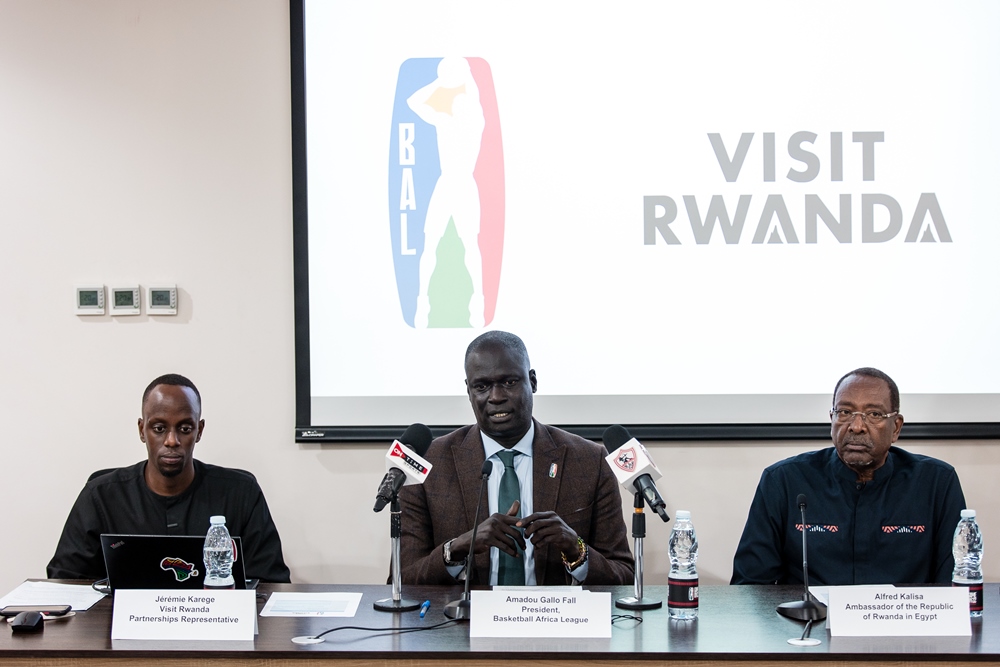
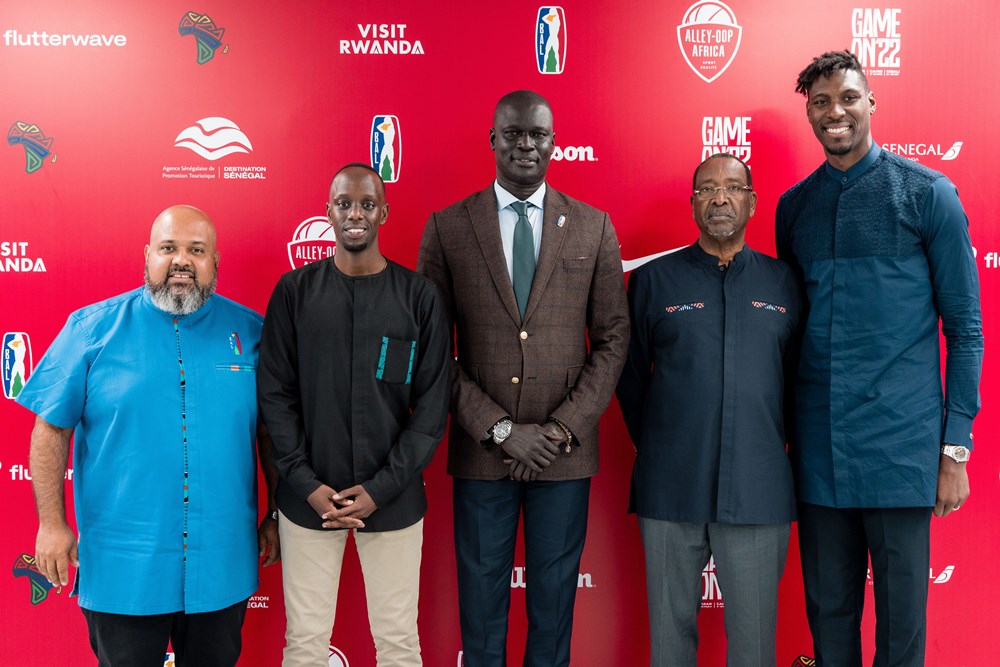
The two partners organized a media event attended by over 20 journalists from various countries at the Dr Hassan Moustafa Sports Hall in Cairo, Egypt. They touched on the impact of the partnership, the upcoming Playoffs and what to expect when in Kigali in May.
Commenting on the development, Basketball Africa League President Amadou Gallo Fall said: “As we set to return to the world-class Kigali arena to play our second consecutive BAL final, teaming up with RDB and Visit Rwanda reflects our belief that sport, and basketball, can be an economic growth engine for the continent. Rwanda continues to lead the way for tourism in Africa, and this partnership highlights an African continent that is creative, vibrant, and ready to tell its story.”
Speaking during the media briefing Rwanda’s Ambassador to Egypt, Albert Kalisa, highlighted that sports and tourism are important to Rwandans at all levels.
“We have the responsibility to ensure Rwandans continue to take pride in their culture and in all sports engagements, like the BAL, that uplift our nation. We are very happy to see The BAL returning home to Rwanda for the second time, and we look forward to welcoming all visitors to Kigali in May,” he noted.
Eight teams from across the continent, including Rwanda’s Rwanda Energy Group (REG), who topped the Sahara Conference in Dakar, Senegal, will compete in the Playoffs. The Kigali Arena will host all the Playoffs games, with the second edition of the finals taking place Saturday, 28 May.
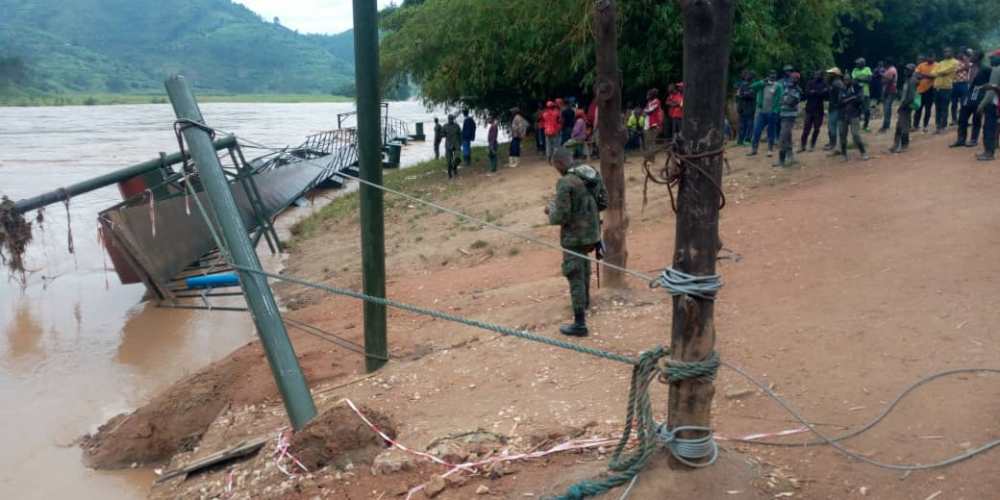
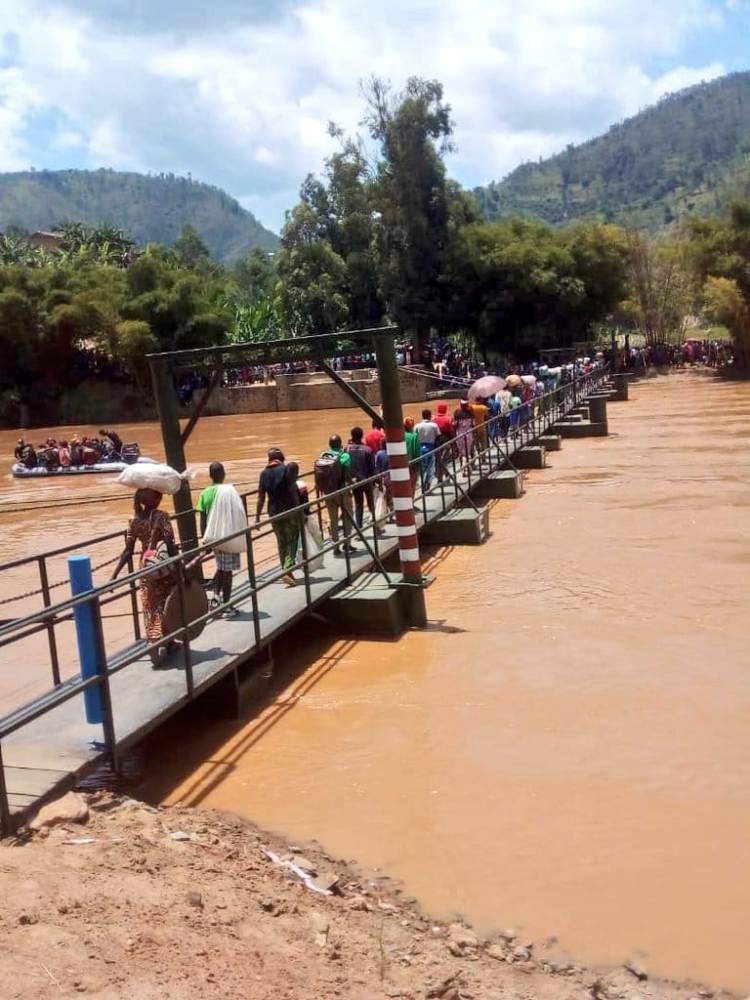
The 60-meter bridge was inaugurated on 11th April 2022 following nearly three months of rehabilitation works.
The Governor of Southern Province, Alice Kayitesi has told IGIHE that the destruction was occasioned by heavy downpour.
“The bridge was destroyed during night hours. Technicians have informed us that the incident resulted from heavy rain which saw River Nyabarongo flooding. Structures of bridge in matter are placed on the side of Muhanga in Rongi Sector,” she noted.
Kayitesi has explained that Rwanda Defence Force (RDF) Marine Regiment has arrived in the area to help residents cross the river using boats and support movements between both districts.
The Governor also revealed that a team of technicians and the Engineering Brigade which had built the bridge and Rwanda Transport Development Authority (RTDA) visited the area to seek how they can work together to fix the issue.
Rehabilitation of the bridge had been completed at a tune of more than Rwf185 million.
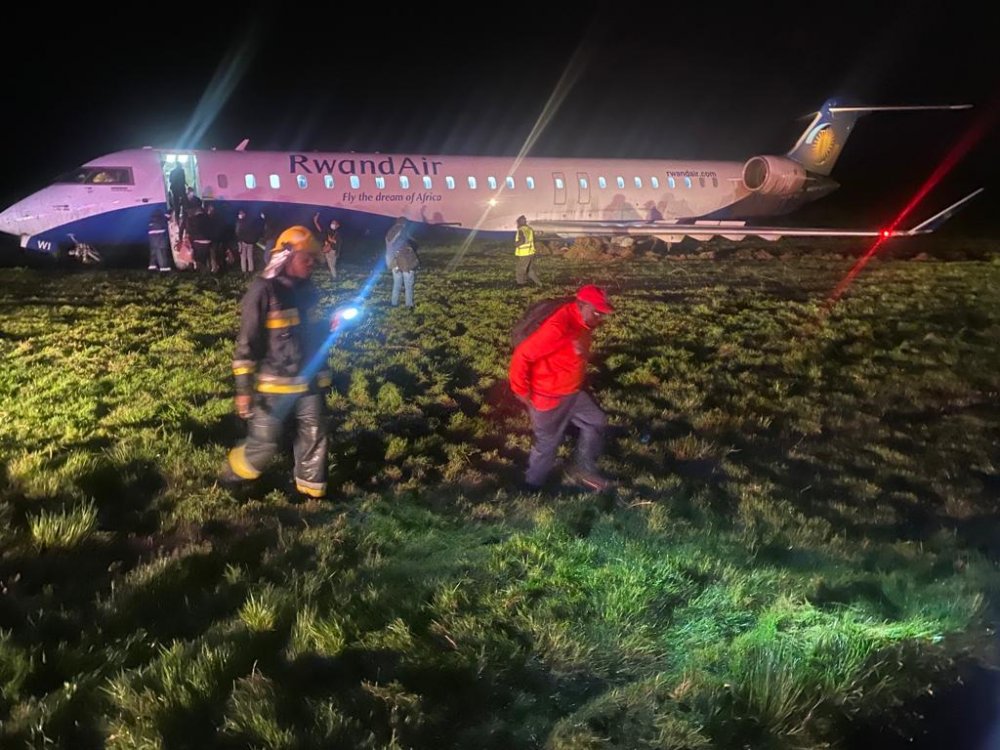
The incident saw the aircraft landing in grasses nearby the airport’s runway. In a statement released today, RwandAir revealed that all passengers and the WB464 flight crew deplaned safely with no reported injuries.
The Communications Manager at RwandAir, Fiona Mbabazi has told IGIHE that the runway excursion during the process of landing is not unusual.
“It results from bad weather or slippery ground at an airport. No one was injured. All people are safe,” she said.
RwandAir is among airlines from the region and Africa that have rarely faced technical issues delaying passengers’ flights and accidents.
One of the plane’s accidents that dominated news headlines is an incident that occurred on 12th November 2009 at13:15 where the RwandAir’s aircraft crashed into the VIP lounge two minutes after taking off from the Kigali International Airport, killing one passenger.
The Rwandan passenger died shortly after reaching King Faisal Hospital in Kigali. At the time, the plane was headed to Uganda and had fifteen people on board.
The plane crash put airport business activities at standstill for hours.
The then management of RwandAir told the media that the plane (Jetlink Bombardier CL-600-2B19) leased from the Nairobi-based Jetlink Express, had technical difficulties with the engine shortly after taking off and required an emergency landing.
The plane crashed at a time when another plane- Kenya Airlines was preparing to take off but the pilot dodged and crashed into the VIP lounge.
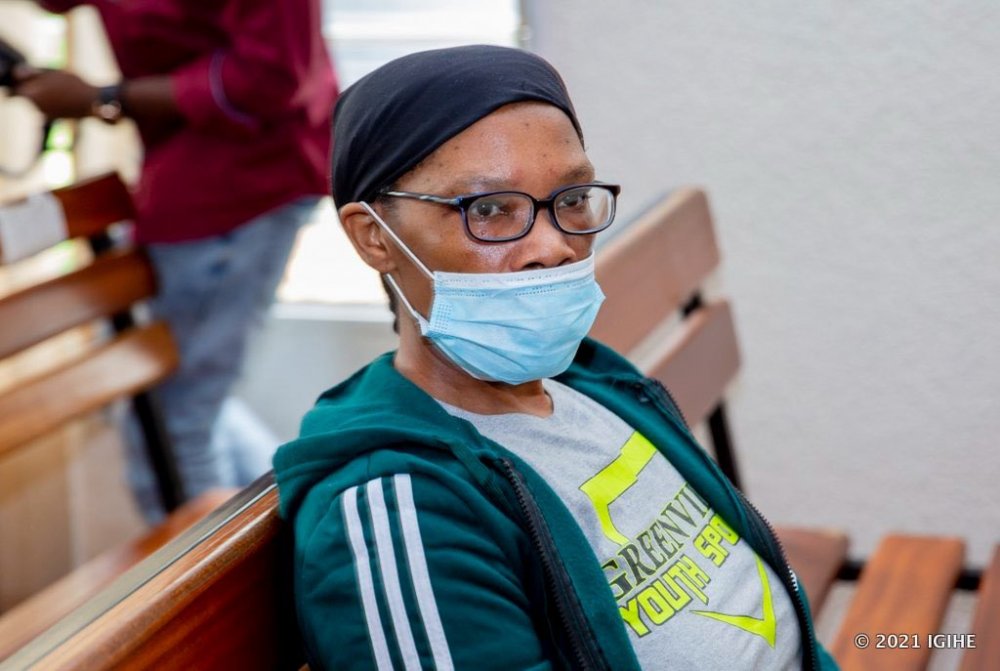
The ruling was read on Tuesday 19th April 2022. Following the verdict, the Chinese was immediately arrested to serve his jail-term in Rubavu Prison.
His files had been sent to the Prosecution on 30th August 2021.
Shujun Sun was accused along with Alexis Renzaho, an engineer who was in charge of mining operations and Leonidas Nsanzimana, a security guard at the Chinese company operating in Rutsiro and Nyamasheke districts.
They were arraigned before court on account of complicity in torture.
On 21st September 2021, Gihango Primary Court remanded Shujun Sun and the two co-accused individuals.
The accused appealed against the decision where Karongi Intermediary Court released Shujun Sun on bail on 14th October 2021. At the time, the court ordered the confiscation of his passport and charged a bail fee of Rwf10,000,000 as surety.
After suspecting people to have stolen his minerals, Shujun Sun convened a meeting and issued a warning that whoever caught roaming around his quarry or suspected of theft will be beaten at a place called Golgotha where he erected a wooden pole.
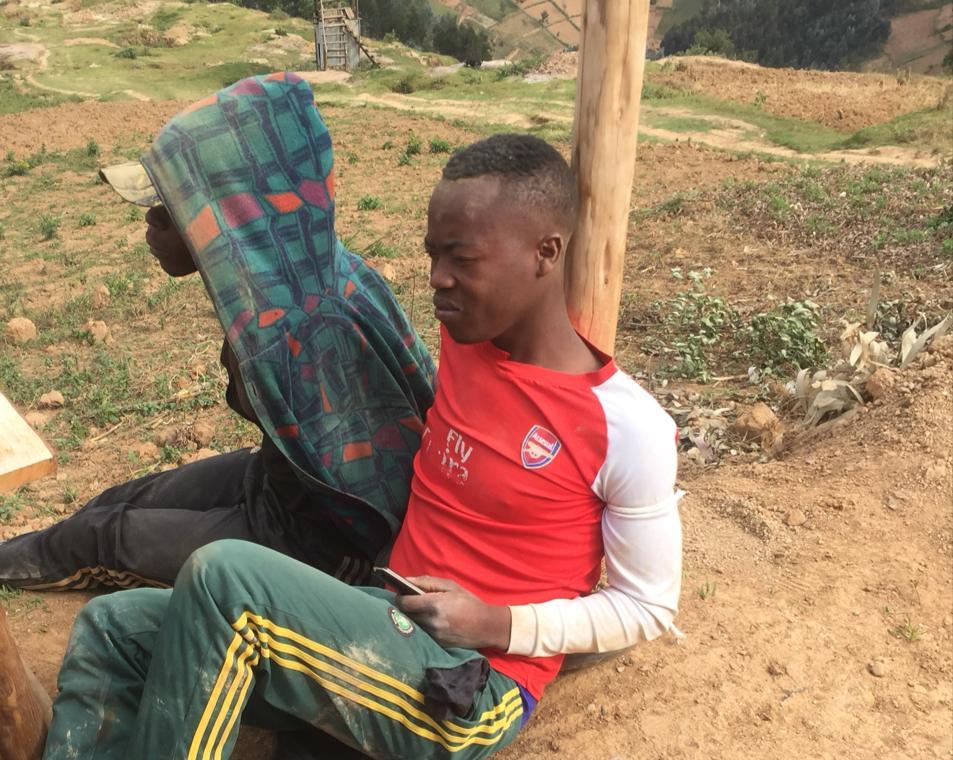
The Chinese man used the pole to inflict corporal punishment on two suspected young men tied on a timber with a rope in Nyamasheke.
The viral video in which the Chinese man was seen whipping the young men served as an evidence to sue him along with his accomplices, Alexis Renzaho and Nsanzimana on account of torture.
Shujun Sun who was represented by defence lawyers admitted to have beaten the young men explaining that the assault was not to the level of torture.
He however admitted to have assaulted and injured them which he attributed to persistent theft at his company called Ali Group Holdings Ltd, which local leaders were aware of.
Considering available evidences, the Prosecution requested the court to hand 20 years sentence to Shujun Sun.
During trial proceedings, victims of the assault including Azarias Niyomukiza, Gratien Ngendahimana, Deo Bihoyiki and Thomas Baributsa requested compensation.
After analyzing the case and hearing both sides, Karongi Intermediary Court explained that there are enough evidences pinning the Chinese man, Shujun Sun on torture crime.
The court said that Alexis Renzaho was an accomplice who collaborated with Shujun Sun.
The court also acquitted Leonidas Nsanzimana over lacking enough evidences pinning him.
The court handed 20-year sentence to Shujun Sun and 12-year jail term to Renzaho.
The court also ordered that Shujun Sun and Renzaho will pay compensation worth Rwf2.5 million to each victim of the torture. They will also pay defence lawyers of the plaintiffs.
Shujun Sun and Renzaho have been given one month to have appealed against the decision.
[{{Related story: Chinese Embassy in Rwanda advises citizens against self-administered justice}}->https://en.igihe.com/news/article/chinese-embassy-in-rwanda-advises-citizens-against-self-administered-justice]
Environmentalists say that single-use plastic bags take up to 300 years to photodegrade.
Plastic bags break down into tiny toxic particles that contaminate the soil and waterways, and enter the food chain.
They also contribute to pollution, blockage of channels, rivers and streams, and landscape disfigurement.
In Rwanda, manufacturing, use, importation or sale of plastic carry bags and single-use plastic items are prohibited under article 3 of law N° 17/2019 of 10/08/2019 relating to the prohibition of manufacturing, importation, use, and sale of plastic carry bags and single-use plastic items in Rwanda.
In article 10, any person, who imports plastic carry bags and single-use plastic items is liable to the dispossession of those plastic carry bags and such items, and to an administrative fine equivalent to ten times the value of those plastic carry bags and single-use plastic items.
In article 11, a wholesaler of plastic carry bags and single use plastic items is liable to an administrative fine of Frw700, 000 and dispossession of those plastic carry bags and such items.
In article 12, a retailer of plastic carry bags and single-use plastic items is liable to an administrative fine of three hundred thousand Rwandan francs (FRW 300,000) and dispossession of those plastic carry bags and such items.
Rwanda National Police (RNP), therefore, continues to enforce these laws and policies to fight environmental degradation and to protect the ecosystem.
In the latest operation against these non-biodegradable products conducted on Monday, April 18, RNP arrested one Claude Ndayishimiye, 34, in Kayonza Cell, Mukarange Sector in Kayonza District with 200 cartons (40,000 pieces) of plastic bags, which were sneaked into Rwanda from Uganda.
Superintendent of Police (SP) Hamduni Twizeyimana, the Eastern region Police spokesperson, said that Police was tipped off by someone in Kayonza taxi-park, where Ndayishimiye was trying to board a public vehicle.
“Ndayishimiye was attempting to board a commuter in Kayonza taxi-park heading to Kabarondo when someone suspected his luggage to be containing the illicit bags and called the Police,” said SP Hamdun Twizeyimana.
“Indeed, when Police officers arrived and checked his luggage, they found it contained 40,000 pieces of polythene bags in 200 cartons. He was immediately arrested and the outlawed packaging products impounded to RIB station in Mukarange, where he is currently detained pending further investigations.”
Ndayishimiye admitted that he trafficked the plastic bags into the country from Uganda and had customers to supply in Kabarondo.
SP Twizeyimana commended the resident, who shared information leading to the arrest of the suspect and seizure of the plastic bags.
He equally warned people who smuggle, sell and use these outlawed products, and advised the public to use the alternative environmental friendly packaging products.
Dreams did we have?
Those who didn’t lose their dreams lost life and limb. Little were we! Belittled were our ambitions,
We, the innocent souls stripped of the identity in our lands, Leaders we gave our trust stabbed us till we were no more.
My dream was to evacuate my family from the misery of poverty. But our vision was shuttered by a confusion of our indifferences,
Preachers taught that Tutsis had no home, that their souls would wander in the depths of hell.
So determined to give us hell, I questioned what had happened to humanity and leaders who vowed to protect us.
Certain occasions became depressions, thinking how much I lost and what I was about to endure.
Every second gone, was a life-long gone.
Sorrowful sounds were at their highest pitch begging for easier ways to die Surrendering to the butchers was a sign of desperation,
Such shady ideology, I knew my time was up, up and down I played ignoring the fact.
Tick-tack my heart raced into the nothingness of despair.
Jordan and James, joyful as they were, I never imagined their fate would end up so unfortunate, laying in the fields mercilessly tortured, begging the tyrants to make it quick.
Oh! How oblivious of their origins?
So much life unlived, so many promises unfulfilled, and for what? Now I despise my life even in disguise,
They said you are not one of us, but I asked are you sure?
Parents widowed; children orphaned; a calamity that stormed our nation. Leaving a few but none of whom envisioned a better recuperation.
Hatred jungled people’s hearts.
Rain, rain go away was our cry, but pain, pain flowed in us like a waterfall
Scared we ran to the mountains and hid into forests, but death haunted us beyond imagination.
Hope lost, Immortality our wish.
Survival wasn’t an option at all but a miracle.
We prayed, begged for our life but beggars have no choice, after losing it, I said the die is cast.
Our enemy wished our extinction, they killed our hope, but our unity was engrafted in our mother country.
Fierce they looked upon us, death an unquestionable outcome. Beheaded were our throats but not our thoughts.
Thoughts of a better Rwanda, Rwanda as a free country.
Today I live, because heroes lived
Peace they left in our hearts to live again
But the idea of Memento Mori (Remember you shall die) was stuck in us. Every day I question my existence
And live for those who left us
Their bodies were left in this merciless world but their kindness will forever be cast onto us.
Endless love we promise you, courage we owe you.
The tears you shed and the cross you carried will be a synopsis of the past we should never go back to.
{{I READ YOUR STORY BUT YOU LIVED THAT STONY STORY
POET: NSHUTI SERGE
SCHOOL: Nu-Vision High School. Class: Year 13 PCM}}
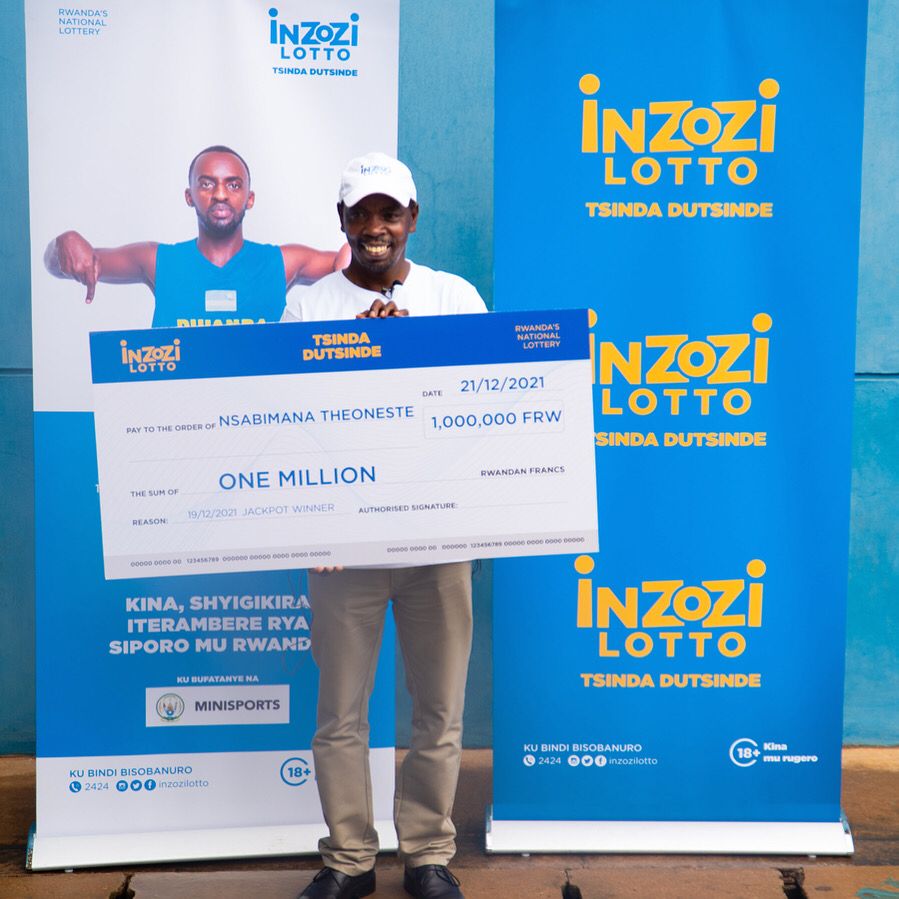
Rwanda’s national lottery, Inzozi Lotto, was launched in December 2021 by locally registered firm Carousel Ltd in partnership with the Ministry of Sports with a goal to help uplift professional sport in the country and benefit Rwandans participating in the lottery’s games.
Initially, the jackpot was set to Rwf1 million but has increased to Rwf5.5 million, three months after its inauguration.
Inzozi Lotto is very unique in a sense that participants stand big chances to grow their finances while revenues of the lottery are spent to promote sports in Rwanda.
Individuals can participate through two games including {{Quick Lotto}}, where a player where one will be asked to choose one number within 35 (0 to 34) and precise the stake amount. The system draws a number and if you match it, you win 15 times tax exclusive of your stake. For instance, if your stake is Rwf5000, you can win up to Rwf75,000. The lotto takes place every 10 minutes with recommended stake amount ranging from Rwf300 and Rwf10,000.
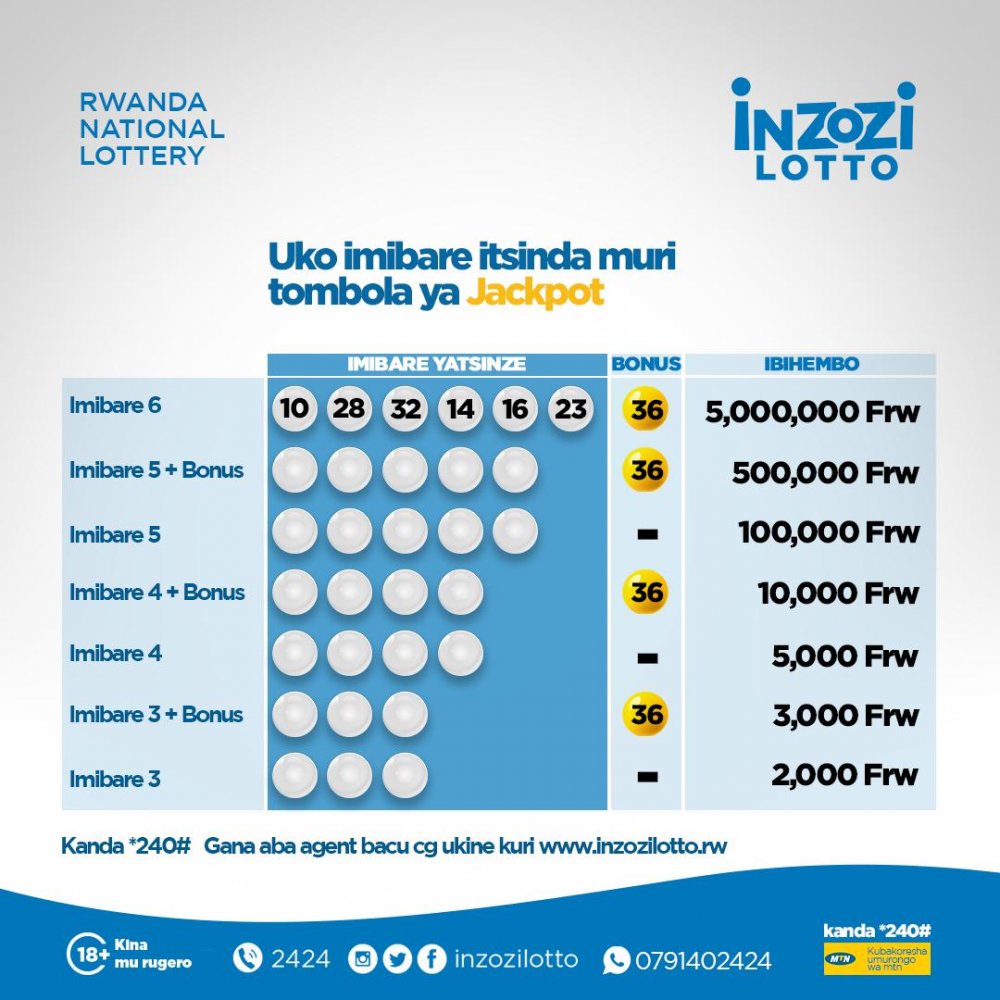
The second game is {{JackPot Lotto}} where the player selects a series of six numbers within a pool of 49 numbers that start from 1 to 49, to make it one combination.
In Jackpot Lotto, tickets cost Rwf500 and each ticket has six digits.
Players can either pick out the numbers themselves or have the system generate random numbers for them.
To play Inzozi Jackpot Lotto, you need to pick six numbers (from 1 to 49) to make a line on your ticket.
The winner receives Rwf5.5 million.
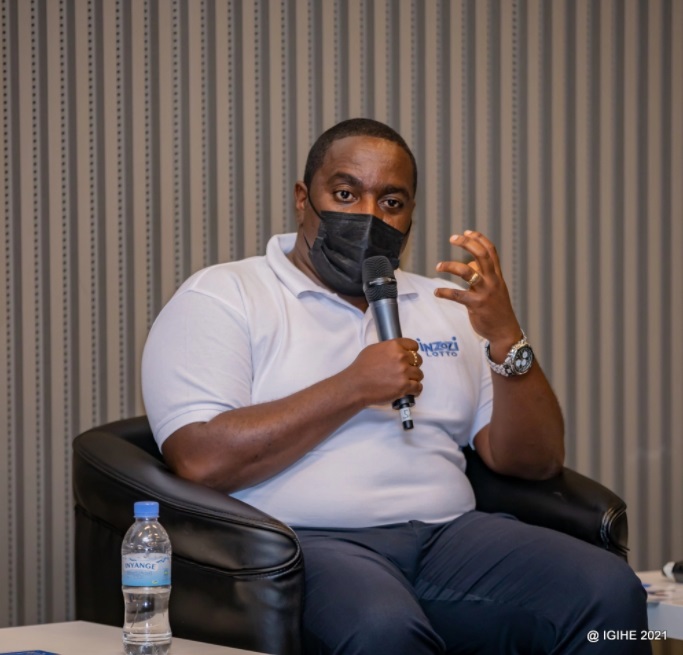
The Deputy Managing Director of Carousel Ltd which manages Inzozi Lotto, Nshuti Thierry has said that the lotto has several advantages for Rwandans.
“We encourage people to participate in the lotto so that they can stand chance to win Rwf5.5 million that can transform their lives,” he said.
“The more the number of participants increase, the more the grand prize increases, hence benefitting the winner and Rwanda’s sports in general,” added Nshuti.
Rules stipulate that 47% of the stake amount is awarded to participants, 20% is invested in the development of sports, 18% is reserved for taxes while the remaining percentage is reserved for different activities of Inzozi Lotto.
Figures released in February 2022 show that the lotto attracted nearly 300,000 participants who played using their phones and other platforms in three months.
At the time, cash prizes worth Rwf36 million had been handed over to winners. Of these, Rwf15 million was reserved for the development of sports.
Inzozi Lotto is part of activities of Carousel Ltd. The company has entered 10-year agreements with the Ministry of Sports in Rwanda to promote sports policy.
Rules and regulations restrict the participation of people aged below 18.
Inzozi Lotto has agents in different parts of the country, majority of whom being in Kigali, Musanze and Rubavu. The number is expected to increase to cover all parts of the country.
Interested individuals can play through the support of agents, visit the website www.inzozilotto.rw or dial *240# using mobile to participate.
Following the crash of the plane which carried former President Juvenal Habyarimana on 6th April 1994, the plan of Genocide against Tutsi was executed in different parts of the country but killings did not immediately begin in Butare as the then Governor Jean Baptiste Habyarimana opposed the plan.
His reaction angered genocidaires who overthrown and killed him on 17th April 1994. On 19th April 1994, the interim President Sindikubwabo went to Butare where he sensitized Hutus to kill Tutsis which served as the beginning of killings in the area with extreme cruelty.
Today, a large part of the former Butare Prefecture is in Huye District.
The latter has released a book featuring history of the 1994 Genocide against the Tutsi in the area written in March 2020 by researchers from ‘Menya aho uva kugira ngo umenye aho ujya’ association translated as ‘Know where you are coming from, to shape your future’ led by Prof. Déo Byanafashe. The book is comprised of more than 200 pages.
The research whose findings are published in the book was conducted in 14 sectors of Huye District including Gishamvu, Karama, Kigoma, Kinazi, Maraba, Mbazi, Mukura, Ngoma, Ruhashya, Huye, Rusatira, Rwaniro, Simbi and Tumba.
It was conducted between March and May 2020 to 165 respondents from former Commune Mbazi, Maraba, Huye, Ngoma, Gishamvu, Ruhashya, Runyinya, Kinyamakara and Rusatira.
The book also features information from different archives related to Genocide history and testimonies.
The Mayor of Huye District, Ange Sebutege has said that the book’s soft copy is available on the website of Huye District to be easily accessible to everyone.
He explained that Genocide against Tutsi in Butare was executed on order of the then President of the Republic which highly influenced people to execute Genocide plan.
{{People lived in harmony}}
Research findings show that people in Butare Prefecture used to live in harmony before the advent of colonizers who played a big role in dividing Rwandans.
Discrimination and ethnic divisionism led to killings that targeted Tutsis in 1959 under the so-called Social Revolution.
This came after the announcement of 10 commandments of Hutus by Joseph Habyarimana Gitera, hailing from Butare, in 1959 who also founded APROSOMA political party.
The commandments followed the publication of a document known as Hutus Manifesto in 1957 where some of Hutu elites indicated that there was political tension between Hutus and Tutsis.
Joseph Gitera Habyarimana in collaboration with Grégoire Kayibanda mobilized Hutus to kill Tutsis.
This led to 1959 massacres against the Tutsis whose houses were destroyed while those who survived were subject to torture and persecutions.
The persecutions continued until 1990 when RPF Inkotanyi launched the Liberation Struggle.
{{Uniqueness of Genocide in Butare}}
The President of Ibuka in Huye District, Theodate Siboyintore has said that road blocks were mounted in different parts of Butare following the sensitization of Sindikubwabo. These include one before Ihuriro Hotel which housed the then Minister of Family Promotion, Pauline Nyiramasuhuko. The hotel has an underground section where Tutsis were raped.
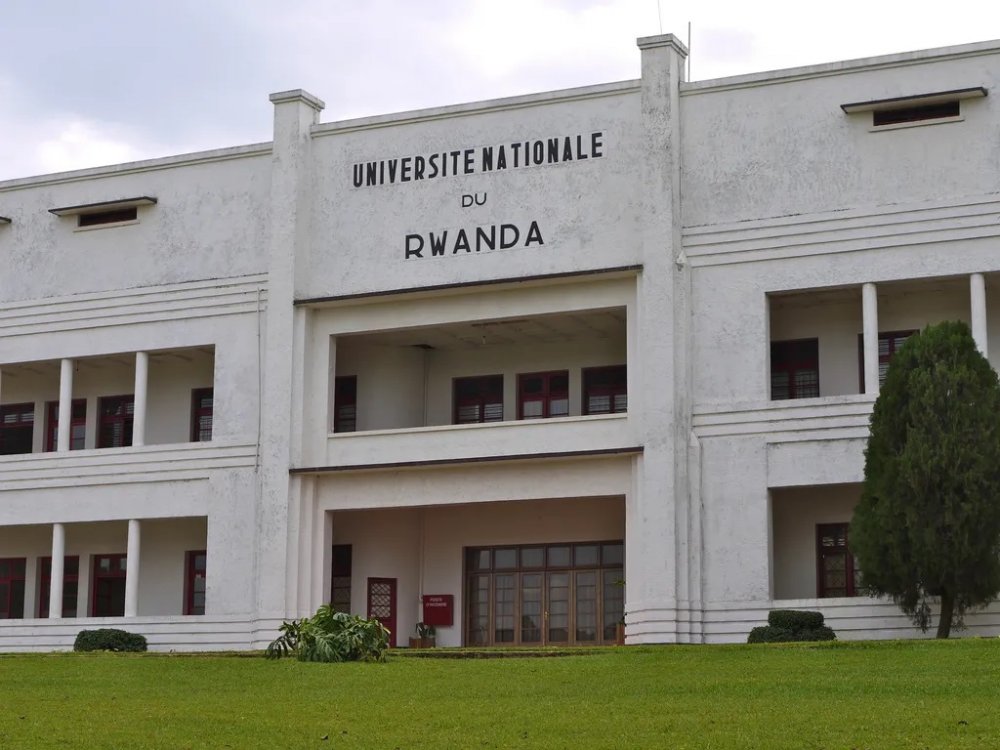
Other road blocks were mounted before the National University of Rwanda, Ku Mukoni, in Cyarwa; Rango; Huye town at a place popularly known as Kwa Bihira; before Faucon Hotel; at Kabutare, and CHUB among others.
Local leaders worked with soldiers, gendarmes and Interahamwe militia to plot attacks to kill Tutsis.
In Ngoma town (currently in Ngoma Sector), Tutsis were taken from their homes to be killed at the Arboretum forest behind the National University of Rwanda while others were killed at roadblocks.
Others were killed at CHUB, ESO, Butare Prefecture Head Office, at Kabakobwa, in Cyarwa and Tumba, at SORWAL and Karubanda Junior Seminary.
At the University of Rwanda, some of Hutu students killed Tutsi colleagues and teachers of torture and killed girls after raping them.
In Communes that formed Butare Prefecture, a large number of Tutsis were killed in Simbi and Sovu in Commune Maraba, at Cyahinda Parish in Commune Nyakizu, Byiza Stadium in Commune Mbazi, at ISAR- Rubona and ISAR Songa in Commune Ruhashya and Nyaruhengeri Parish.
Butare Prefecture accommodated a large number of Burundian refugees who participated in killings and returned home after committing the atrocities.
Butare Prefecture borders with Gikongoro Prefecture. The latter had many killers who crossed to Butare to reinforce Hutus to kill Tutsis.
The Mayor of Huye District, Ange Sebutege has said that Butare Prefecture was turned into a killing ground where the severity of killings were much worse than other provinces.
He revealed that many leaders heading different institutions including the University of Rwanda, ISAR, IRST and SORWAR among others played a role in the Genocide.
“Their participation saw Genocide in the area executed at high level,” he said.
Butare was also home to the school of non-commissioned officers (ESO) which reinforced Interahamwe militia and other genocidaires.
{{Leaders’ participation}}
Many authorities from the interim government led by President Sindikubwabo from Butare highly participated in the killings of Tutsi.
Sindikubwabo hails from Save Sector of Gisagara District (in former Butare Prefecture). The former Prime Minister, Jean Kambanda hails from Gishamvu Sector as well as Pauline Nyiramasuhuko, the former Minister of Family Promotion.
Butare was also home to the former Director General of a matchstick plant dubbed SORWAL , Alphonse Higaniro; former head of ISAR, Ntahontuye Ndereyehe Charles and the former Vice Chancellor of the University of Rwanda, Nshimiyumuremyi Jean Berchmas among others including parliamentarians and mayors of all 20 communes of the prefecture.
Others are Jean Chrysostome Ndindabahizi who headed Région Sanitaire de Butare; Emmanuel Munyangendo, the former Director of LABOPHAR and Simon Ntigashira, the head of National Museum.
The National University of Rwanda also had many intellectuals including lecturers, researchers and students who participated in the Genocide hugely.
{{Helpless victims who fled to Butare}}
The President of Ibuka in Huye District, Theodate Siboyintore has said that many Tutsis fled to Butare considering the fact that the killings of Tutsis had not yet started in the area. As he explained, they hoped protection in the area but were later killed.
“Many of them came from Nyaruguru, Nyamagabe seeking protection but were also killed,” he noted.
{{The death of Queen Rosalie Gicanda in Butare}}
On 20th April 1994, Queen Rosalie Gicanda was killed on the order of Ildephonse Nizeyimana from ESO.
Witnesses say that Nizeyimana partnerwd with other military officers including Lt Colonel Muvunyi Tharcisse and others from Ngoma military barracks led by Lt Ildephonse Hategekimana and gendarmerie led by Major Cyriaque Habyarabatuma and Interahamwe militia.
Those who stormed the home of Gicanda nearby headquarters of Commune Ngoma include Lt Bizimana alias Rwatsi, Lt Gakwerere, Corporal Aloys Mazimpaka and Dr. Kageruka.
At the queen’s home, they found other hunted people including Jean Damascène Paris, Marie Gasibirege, Aurelie Mukaremera, Callixte Kayigamba and Alphonse Sayidiya.
Others include Uzamukunda Grace who survived gunshots and died of natural cause after the Genocide.
She was a daughter of Jean Damascène Paris who provided testimonies of circumstances under which Queen Rosalie Gicanda and other people who stayed with her were killed.
Captain Nizeyimana was convicted of Genocide crime and sentenced to 35 years while Lt Colonel Muvunyi was also convicted of Genocide crime and handed 15-year jail term.
{{Killings continued until Inkotanyi intervened}}
People who talked to IGIHE have revealed that killings of Tutsis in Butare were overseen by Minister Nyiramasuhuko in collaboration with his son Ntahobari until RPA soldiers rescued Butare on 3rd July 1994.
However, killings continued in rural areas but genocidaires fled as Inkotanyi intervened.
Clement Mbaraga is a survivor from Butare whose five siblings were killed but parents and one sibling were rescued by inkotanyi.
“We hid on the roof of Brother’s House in Kabutare. We heard gunshot as Inkotanyi arrived to rescue nuns staying there,” he said.
“In the next morning, there was extreme silence. We saw residents and soldiers fleeing. Inkotanyi came here and saved us. That is how we were rescued,” added Mbaraga.
Séraphine Namana and Jeanne Umurerwa also revealed that they were desperate waiting for the death but they hope was restored as Inkotanyi captured Butare.
{{Every sector has a Genocide memorial}}
Each of 14 sectors in Huye District has a Genocide Memorial. Butare District currently has 18 memorials of the 1994 Genocide against the Tutsi and three graves.
“Due to the severity of Genocide, there are some sectors which have more than one memorial while others have three memorials and graves. This shows the uniqueness and how Tutsis were killed in a large number in Butare,” Sebutege noted.
Efforts are underway to relocate remains of Genocide victims from graves to memorials.
According to Sebutege, Huye will start building a Genocide memorial at district level which will have different sections.
One of them will be reserved for exhibition of history of Genocide against Tutsi in former Butare Prefecture.
He passed on in the morning of Sunday 17th April 2022.
It is said that Shimwe died as he went out for a dance with friends. Medical doctors are still conducting a postmortem to establish cause of his death.
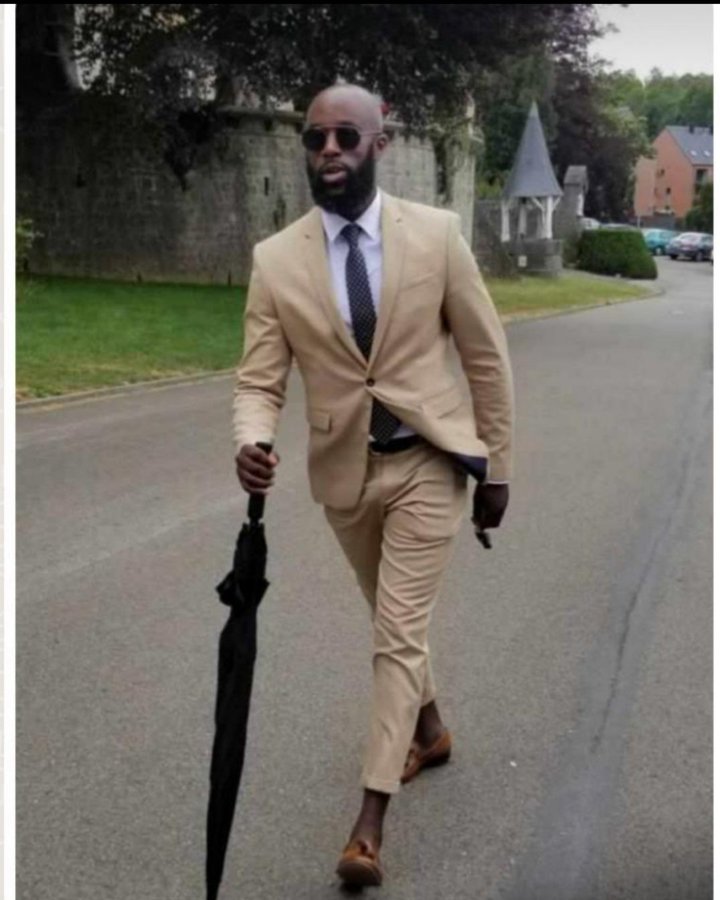
Rodolphe Shimwe Twagiramungu died at the age of 34. He was a rising artiste who produced songs including ‘Mama’.
His father, Twagiramungu who currently lives in Belgium was born in former Cyangugu Prefecture in 1945.
He served as Rwanda’s Prime Minister between 1994 and 1995.
Twagiramungu was among presidential aspirants who lost elections in 2003 following the interim government established after the 1994 Genocide against the Tutsi.