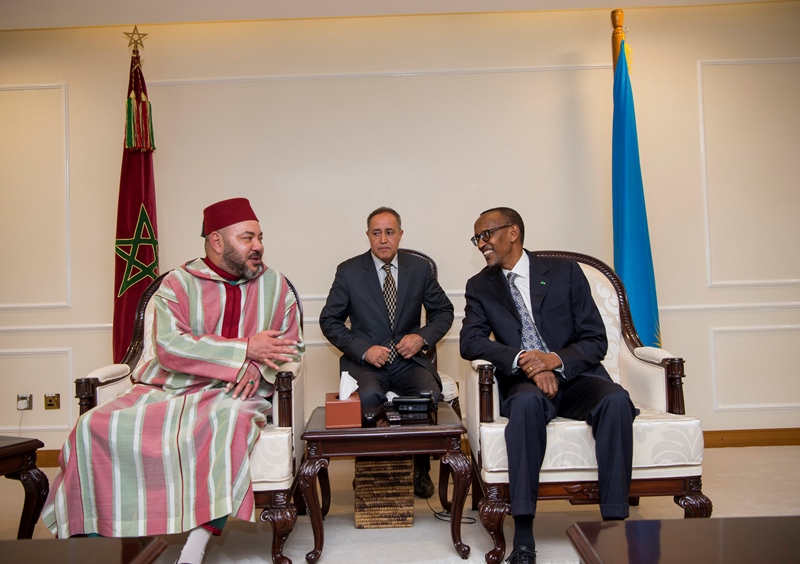
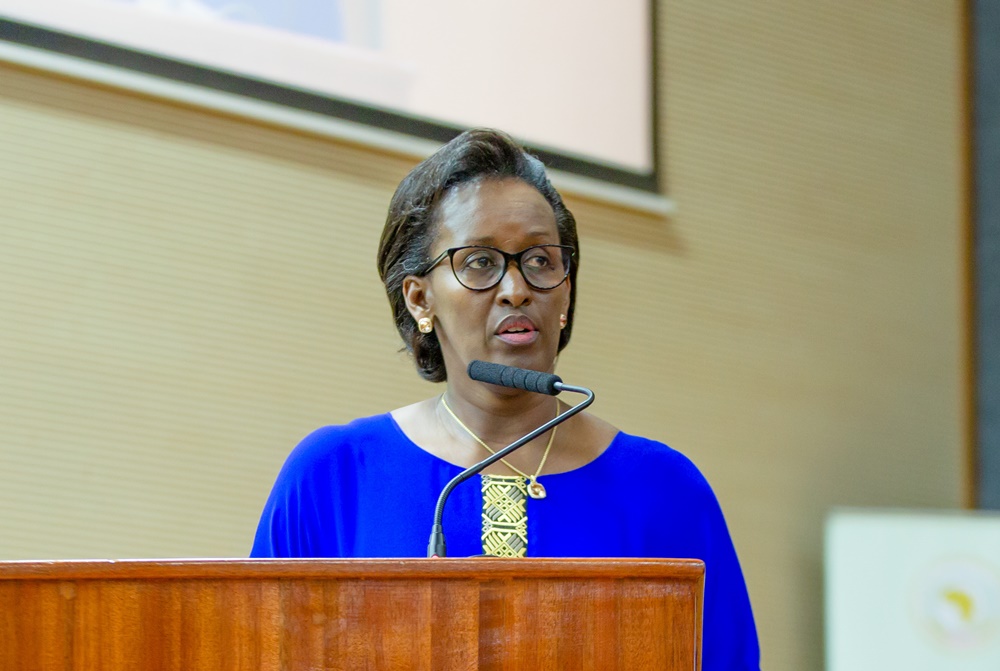
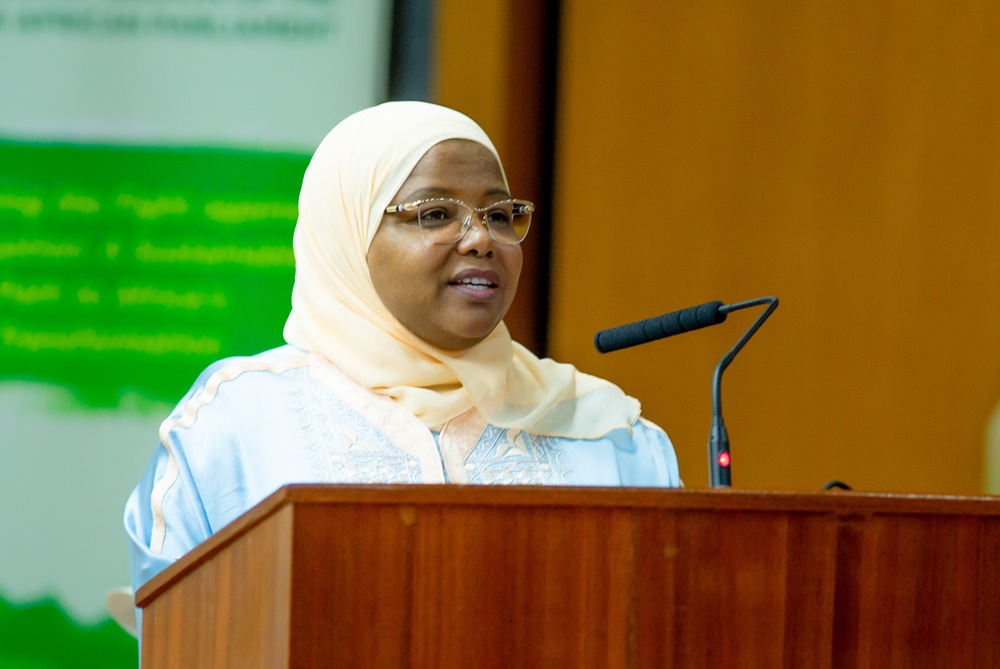
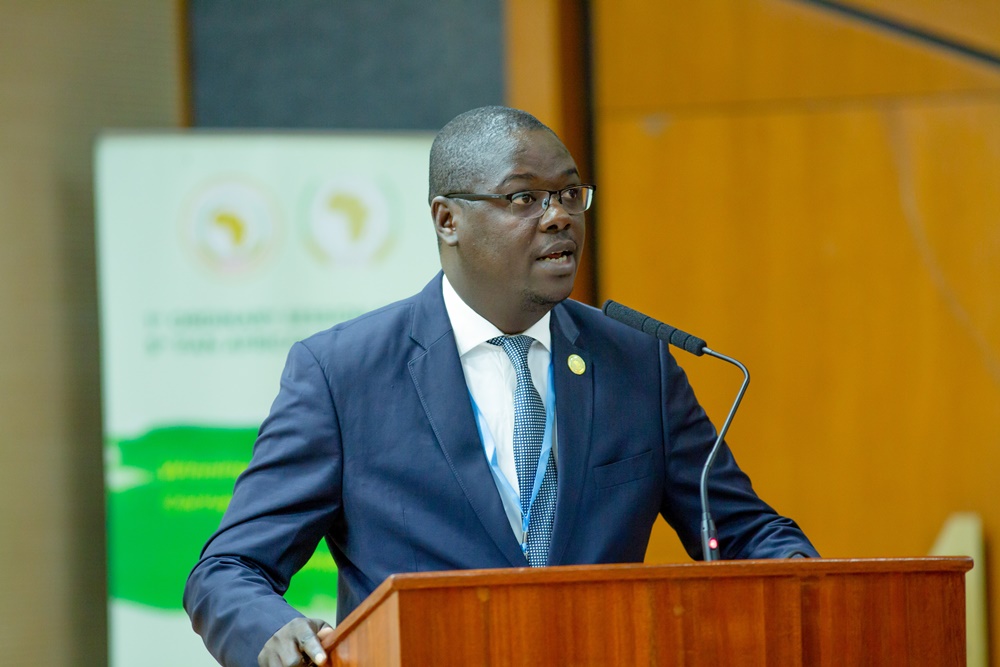
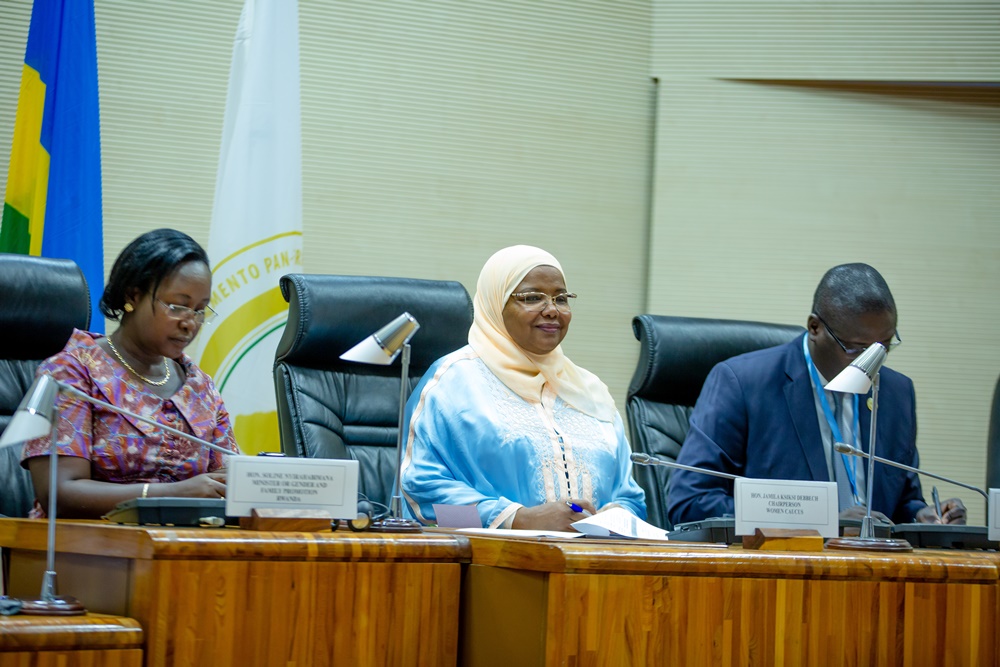
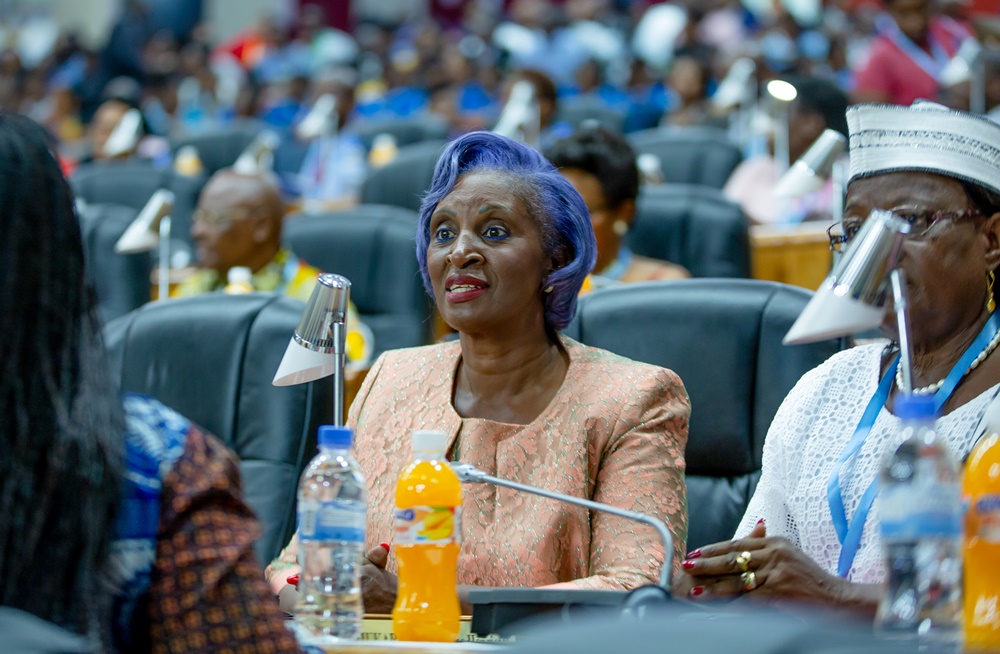
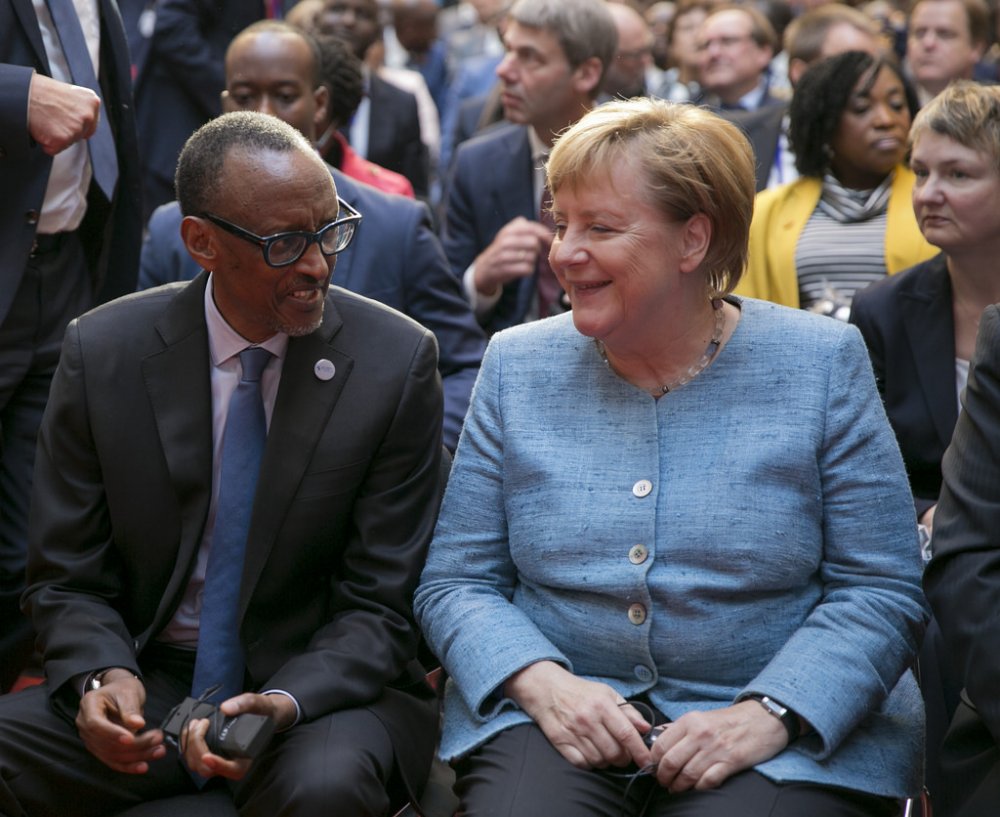
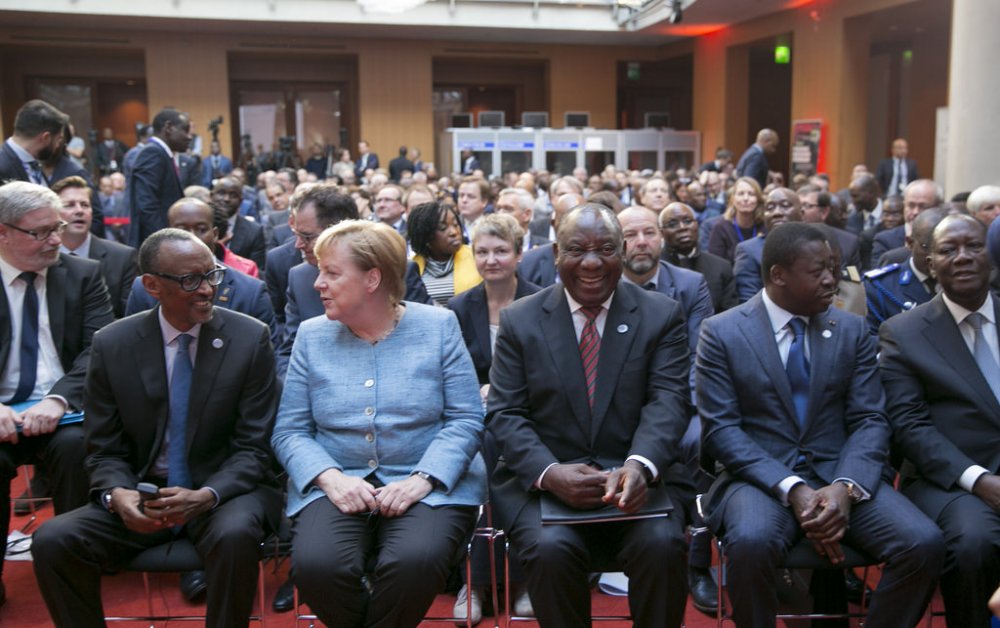
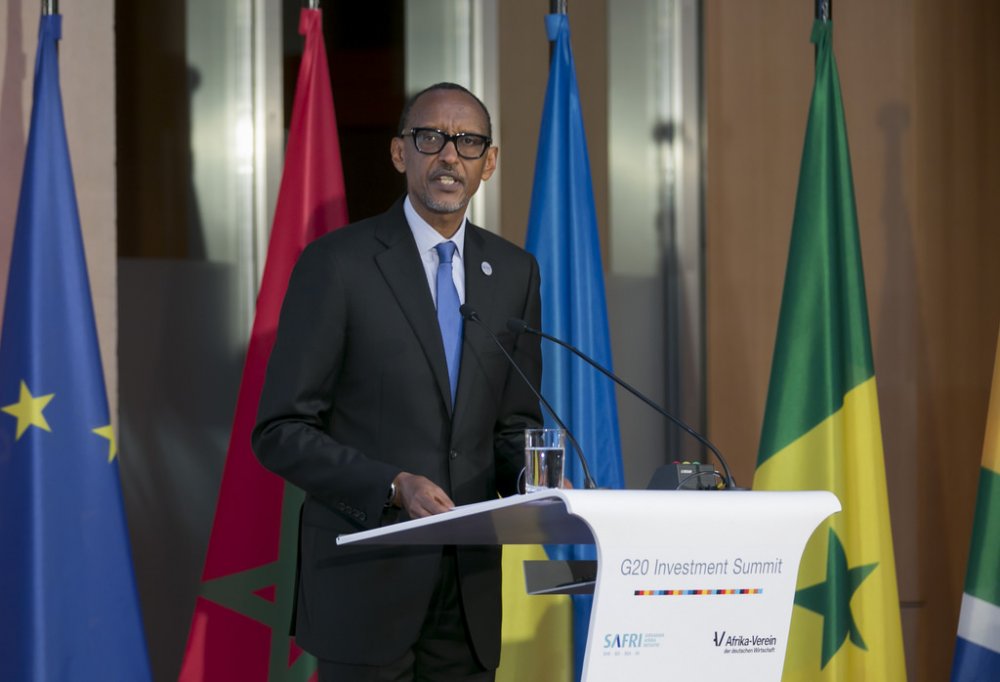
President who is also the Chairperson of the African Union was delivering a Keynote Address at the Opening Ceremony of the first Ordinary Session of the fifth Pan-African Parliament (PAP) underway in Kigali.
“Important changes are underway on our continent, and in the wider world, and we have to be ready to meet them. It is about getting our house in order, doing what is right for our people, and speaking with one voice to advance Africa’s interests. Working together is the only way to give Africa’s position the weight it deserves, in the wider geopolitical context. At the same time, illusions of moral hierarchy, that divided continents, and people are crumbling rapidly, as we have been seeing. Responsibility for Africa’s security and prosperity is firmly in our hands. We must meet the imperative of good governance, with innovations and solutions drawn from Africa’s rich experiences and cultures, even as we remain open to benefit from the best global insights,” President Kagame said.
President Kagame further stressed that the role of Pan African parliamentarians was key in speeding up the ratification of African Continental Free Trade Agreement, the Protocol on the Free Movement of Persons, and other key pillars of Agenda 2063, as part of their continued contribution to continental transformation.
Major General Albert Murasira was appointed following a cabinet reshuffle by President Paul Kagame recently to replace General James Kabarebe who had been at the helm of Defense Ministry from April 10, 2010. General Kabarebe was appointed to serve as a Senior Presidential Adviser on security matters.
The ceremony, which took place at the ministry headquarters in Kimihurura, was witnessed by MoD and Rwanda Defense Force (RDF) top leadership including Gen Fred Ibingira, the Reserve Force Chief of Staff and Lt Gen Jacques Musemakweli, the RDF Army Chief of Staff among other high army officers.
Speaking after the handover and takeover ceremony, Major General Murasira stressed his commitment to follow his predecessors’ footsteps and the partnership between the army and the citizens that leads to the enjoyable security Rwanda has.
“We enjoy security because there has been a partnership between the military and other security organs, but most especially with Rwandans. We also work with others that include foreigners in different peacekeeping missions in the region, on the African continent or elsewhere around the World,” said Maj. Gen. Murasira.
The new Defense Minister also pointed out that Rwanda alone cannot enjoy security while its neighboring countries face insecurity, adding that in his tenure, he will ensure the sustainability of what has been achieved.
Major General Albert Murasira also handed over the office to the new Chief Executive Officer (CEO) of Zigama Credit and Saving Society (CSS), Major General Emmanuel Bayingana. The handover ceremony was witnessed by the Chairman of the Board of Directors of Zigama_CSS, Dr. James Ndahiro.
Major General Albert Murasira becomes the tenth Minister for Defense since Rwanda became independent in 1962. The Minister for Defense is responsible to the Government for all matters concerning the Defence policy, the conduct of Defence and implementation of Defence programmes.
Major General Albert Murasira holds a Master’s of Science in project management with merit from the University of Liverpool in the United Kingdom (2016). He also attended the former National University of Rwanda from 1983 to 1988 where he received a Bachelor of Sciences in Mathematics (1986) and Licence in Mathematics (1988).
Twagiramungu who served as Rwanda’s Prime Minister from 1994 to 1995 and now lives in exile in Belgium, usually posts on social media about the ‘double’ genocide in Rwanda and that the 1994 genocide against the Tutsi was never deliberately prepared by perpetrators.
Individuals and officials have been requesting to investigate and pursue Twagiramungu pay for his ‘statements’ that are considered to have the plot to deny and minimize the 1994 genocide where more than million people were killed.
In a tweet, Tom Ndahiro who is a Genocide scholar appealed to Rwanda and Belgium’s criminal investigation organs to open a case file against Twagiramungu whose ‘senility has led to severe criminality’.
Tom Ndahiro was referring to a French tweet by Faustin Twagiramungu posted on October 20 this year that says that genocides in Africa have taken place in three countries colonized by Belgium in history.
The tweet in case loosely translates as, “Genocides in Africa have taken place in three countries colonized by Belgium: DRC: 10,000,000 Congolese nationals killed under King Leopold II (1887-1907) +6,000,000 by Paul Kagame, Rwanda: 1,000,000 killed by FPR and FAR in 1994 and Burundi, 3,000,000 Hutus killed in 1972 by the Tutsi Army”.
Referring to the tweet, the Genocide scholar, Tom Ndahiro tweeted, “I suggest Rwanda’s RIB [Rwanda Investigation Bureau] and Belgium department of criminal investigations should open a case file against this old man whose senility has led him to severe criminality. His denialist discourse is disgusting. His hatred towards genocide survivors and their rescuers is visceral.”
The Minister of State in the Ministry of Foreign Affairs and International Cooperation, in charge of the East African Community, Amb. Olivier Nduhungirehe said, in another tweet, that “It’s very sad to see an old Rwandan politician in his 70s, who miraculously escaped the genocide machine in 1994, who was given an opportunity by the RPF Inkotanyi to serve as Prime Minister, becoming not only a genocide denier but a real lunatic, as time goes by.”
In an interview with IGIHE, the Chief Prosecutor of Rwanda, Jean Bosco Mutangana said statements by Twagiramungu can lead to crimes of denial and denigration of the 1994 Tutsi genocide.
Mutangana said, “He (Twagiramungu) states that the genocide was never prepared and Habyarimana’s regime never planned for the genocide. This is far different from what was approved by the International Community showing that the genocide was a planned plot as the Interahamwe militias were trained and the genocide ideology was taught in schools so that Tutsis were killed for so many years till 1994.”
Mutangana further said Twagiramungu cannot hide behind what he calls freedom of speech and then say whatever he wants.
“Rwanda’s prosecution will never tolerate those statements. We are going to analyze them and what will be found as crimes to be prosecuted, a case will be opened against him. We will work with those countries he lives in as we usually collaborate,” he said.
“We are ready to start an investigation on him, with the country he lives in. If he wants to become a genocide denier, he will be put on a list of criminals to be persecuted on genocide negation,” Mutangana added.
Rwanda’s Chief Prosecutor further noted that is a responsibility for the Prosecution to pursue everybody in line of genocide denigrators and deniers “the same as others who intend to commit it like FDLR.’’
Supporting a double genocide theory for Rwanda and stating or explaining that genocide committed against the Tutsi was not planned is considered as an offense. Genocide denial contravenes the spirit of the 1948 UN Convention on the Prevention and Punishment of the Crime of Genocide.
Genocide ideology law punishes the crimes that include denial of genocide, minimization of genocide, and justification of genocide, with a term of imprisonment of not less than two years but not exceeding four years, with a fine of not less than Rwf500,000 but not exceeding Rwf1,000,000 for each count.
Born August 14 in 1945, Faustin Twagiramungu served as Rwanda’s Prime Minister from July 19, 1994, to August 28, 1995, when he resigned and exiled to Belgium.
In 2003, he came back to Rwanda and ran for the President’s office as an independent candidate and lost the elections having got 3.62% of votes while President Paul Kagame emerged winner with 95.0%.
In his remarks on October 19, 2018, the president noted that the efforts of leaders in coordinating actions should be the basis for wishes of Rwandans.
Among the 19 ministers of the cabinet and seven state ministers, there are four that are coming for the first time and two more that are returning.
Dr. Richard Sezibera, the former Health Minister was appointed Foreign Affairs Minister, replacing the outgoing Louise Mushikiwabo who was elected to head the International Organization Francophonie (OIF).
Solina Nyirahabimana, former Gender and Family Promotion Minister regained her post replacing Espérance Nyirasafari who was appointed Sports and Culture Minister.
Those who joined the cabinet for the first time include; Maj. Gen. Albert Murasira, the Minister of Defense; Anastase Shyaka, Minister of Local Governance; Soraya Hakuziyaremye, Minister of Trade and Industries and Paula Ingabire, Minister of ICT.
Other officials that took oath include DCG Dan Munyuza who was appointed to head Rwanda National Police and CP Félix Namuhoranye, his deputy.
Some of the new officials said what they plan to do for Rwandans.
Foreign Affairs Minister Dr. Richard Sezibera said that he will cooperate with others in building on what has been achieved by the outgoing Louise Mushikiwabo.
‘‘Those are heavy responsibilities but which have a true leader, the President of the Republic. What is done within this ministry is planned by him. There is no doubt that these responsibilities will be achieved despite their heaviness because Rwanda must achieve what she has committed to do,” he said.
He said that he will keep up the momentum of the country towards the way to its vision.
Dr. Sezibera said that Rwanda learned from her history and uplifted herself from the abyss in which those who hated her wanted to throw her. He said this was made possible by establishing sustainable strategies.
“Rwanda is a country that is respected at the international level. We have a stable and inclusive leadership which longs for national development where citizen participation is essential. Even though these are heavy responsibilities, that cooperation will make them easy,” he promised.
The new Local Government Minister Prof. Anastase Shyaka, who has been the CEO of Rwanda Governance Board (RGB) since 2011 said that the position he was appointed to but involves heavy responsibilities.
Prof Shyaka was also the Executive Secretary of Rwanda Governance Advisory Council (RGAC) between 2008-2011.
He said that he will work with others to address challenges in local government institutions.
‘‘We know the solutions to the problems we have. What we need to focus on is implementing them so that they benefit citizens.’’
Soraya Hakuziyaremye, the Minister of Trade and Industries replaces Vincent Munyeshyaka.
Hakuziyaremye, 42, was Special Advisor to Foreign Affairs Minister Louise Mushikiwabo between 2012-2014. She targets to develop investment in the country.
‘‘I’m going to work with the entire government to serve Rwandans. Rwanda is moving faster but we must work harder because other countries are learning from us in a bid to raise their trade and economy. All we have to do is work with investors in accelerating development,” she said.
Hakuziyaremye announced that she will employ the experience she got from abroad to promote the industrial sector.
“What I bring is applying the experiences I have learned from the international community. The fact that I worked in London where I headed Global Banking and was vice-president of ING Bank in London, things will be done much faster. If we work together, we shall scale the heights,” she said.
In the Ministry of ICT, Paula Ingabire, 35, replaced Jean de Dieu Rurangirwa.
Her goal is to promote innovations based on technological infrastructures that the country has built in developing the economy.
“The goal is to strengthen innovation and promote talents because it is necessary for us in the journey to being a hub of geniuses in science and technology,” she said.
Ingabire studied technology at Massachusetts University, USA.
She was head of Investment at Rwanda Development Board and Coordinator of Kigali Innovation City.
The reshuffle saw 11 women named among 19 ministers, 50% of positions went to women occupying 13 of 26 positions and reduced cabinet size from 31 to 26.
The swearing of the new cabinet was on Friday presided over by the President of the Republic of Rwanda, Paul Kagame who administered the oath of six new ministers including Prof. Anastase Shyaka who replaced Francis Kaboneka as the Minister of Local Governance and Dr. Richard Sezibera, the new Minister of Foreign Affairs replacing Louise Mushikiwabo who was recently elected Secretary General of the International Organization of la Francophonie (OIF).
Other new ministers include Maj. Gen Albert Murasira, the Minister of Defense replacing Gen. James Kabarebe and Solina Nyirahabimana who replaced Esperance Nyirasafari in the Ministry of Gender and Family Promotion.
Soraya Hakuziyaremye was sworn-in as Minister of Trade and Industry replacing Dr. Vincent Munyeshyaka while Paula Ingabire replaced Jean de Dieu Rurangirwa at the helm of the Ministry ICT and Innovation.
The Head of State also witnessed the oaths of Dan Munyuza who was appointed the Inspector General of Police and Felix Ntamuhoranye who is the new Deputy Inspector General of Police in charge of Operations.
Kagame said people have abilities and talents but nobody alone can lead the country to achieve its needed development targets. “We have to collaborate and link activities and our energy in all we do and always work remembering we work for the country and its citizens, it is not for ourselves alone,” he said.
“Rwandans aspire to achieve a lot which is good when done fast. We should always understand this in that way. Everybody but mostly authorities’ contribution is required for the country to achieve its goals. That’s all we expect from new and current leaders,” he added.
The Minister of Foreign Affairs, Dr. Richard Sezibera thanked President Kagame for entrusting him with ‘heavy’ duties he hopes to fulfill inspired the commendable job done by his predecessor, Louise Mushikiwabo.
“They are big duties but we have the leader, who is experienced and firm in them, the President of the Republic. All what is done in this Ministry [of Foreign Affairs] are planned by the President. I believe that I will collaborate with others to build on the commendable job done by Louise Mushikiwabo.”
The new Minister of Trade and Industry, Ms. Soraya Hakuziyaremye told the media that it is a great blessing to be trusted to serve the nation.
“I am going to start working with the team and the entire government. Rwanda is fast developing but we need to keep working hard as other countries are learning from us to develop their economies. What I bring is to use what I studied from abroad. We will sit down and work with beneficiaries in a bid to speed up the development as the Head of State asked us,” she said.
In a tweet, Moussa Faki Mahamat said that on the African continent, Rwanda continues to be on top as the country with the largest number of women in the government followed by Ethiopia.
“Rwanda continues to lead on gender parity in ministerial and parliamentary appointments, closely followed by Ethiopia. The momentum to recognize men and women as equal in politics is vital as we work towards The Africa We Want. Congratulations to the people and governments of Rwanda and Ethiopia,” Musa Faki tweeted.
The AU Commission Chairperson expressed his extolling congratulations to Rwanda following a cabinet reshuffle by Rwanda’s President Kagame on Thursday evening, October 18.
The reshuffle saw 11 women appointed as ministers among 19 ministers, making 58% of the cabinet.
All put together with the Government Secretaries, 50% of positions went to women as they occupy 13 in 26 positions following the reshuffle.
The reshuffle reduced members of the cabinet from 31 to 26.
Women in the new cabinet are in addition to 61.3% of women in parliament, the biggest number of women in parliament in the world.
New changes saw Prof. Anastase Shyaka become the new Minister of Local Governance while Ms. Ingabire Paula is the Minister of ICT and Innovation, a new Ministry.
Ms. Solina Nyirahabimana is the Minister of Gender and Family Promotion, Ms. Nyirasafari Esperence, Minister of Sports and Culture replacing Julienne Uwacu while Ms. Kamayirese Germaine, Minister in Charge of Emergency Management which saw the Minister of Disaster Management and Refugee Affairs removed from government.
The other new Minister is Ms. Soraya Hakizumuremyi, Minister of Trade and Industry replacing Dr. Vincent Munyeshyaka who has been dropped.
Judith Uwizeye is the Minister in the Office of the President with Marie Solange Kayisire, being Minister in the Office of the Prime Minister in charge of Cabinet Affairs.
Dr. Vincent Biruta remains the Minister of Environment while Dr. Uzziel Ndagijimana retains Ministry of Finance and Economic Planning with Dr. Eugene Mutimura still at the helm of the Ministry of Education.
Dr. Geraldine Mukeshimana is still the Minister of Agriculture and Animal Resources and Rosemary Mbabazi is still heading the Ministry of the Youth.
Johnston Busingye is the Minister of Justice and the Attorney General while Fanfan Rwanyindo Kayirangwa keeps as the Minister of Public Service and Labor as Dr. Gashumba Diane leads the Ministry of Health.
Ms. Julienne Uwacu, who was Minister of Sports and Culture, Vincent Munyeshyaka former Minister of Trade and Industry were among the five ministers who were dropped from the Government.
{{Changes in public institutions
}}
Col (Rtd) Kalibata Anaclet is Director General of External Security while
Lieutenant Colonel Gatarayiha Regis is Director General of Immigration and Emigration.
In Rwanda Revenue Authority, Bizimana Ruganintwari is Commissioner General while
Kanyangeyo Agnes is Deputy Commissioner General.
In Rwanda Social Security Board (RSSB), Richard Tushabe is Director General whereas Rwankunda Christian, Deputy Director in charge of Funds Management.
James Musoni who was dropped from the post of Minister of Infrastructure in February this year has been appointed Ambassador of Rwanda to Zimbabwe.
IGP Emmanuel Gasana who was the Head of Rwanda National Police is appointed Governor of the Southern Province. The new police IGP is Dan Munyuza.
Dressed in black shoes, a black suit, a checked shirt and sun glasses, Kanyankole was represented by two defense lawyers, Emmanuel Rukangira and Alice Umuliza while prosecution was represented by Michel Nshimiyimana and Charles Kanyove.
The accusations are based on the decisions he individually took at different occasions in giving loans worth about US$ 12 million.
Prosecution told court that in one of the counts, Kanyankole asked and received illegal benefits in order to offer a service when one Abdou Gahima representing Good Harvest Primary School applied to take over a loan of Rwf591,351,688 owed by Parmalac belonging to Omar Nzamwita. Parmalac company had failed to pay back the said loan.
Prosecution says on realizing that Gahima did not have all the requirements to access the loan, Kanyankole asked and received a bribe of Rwf 50 million through BRD staff, a one Juvenal Karema.
Prosecution states that in September last year, Kanyankole individually approved a loan to Abdou Gahima without the knowledge of BRD loans committee, which (the committee) he later arbitrarily disbanded without following standard administrative procedures.
Other illegal benefits that Kanyankole allegedly asked from Gahima include a medical device that treats back complications.
On favoritism, prosecution says Kanyankole committed the offense when he illegally approved loans including US$ 8 million given to Top Service, a local fertilizer distributing company, with neither the involvement and or approval of BRD’s Loans’ Committee nor in consultation with the Board of Directors, which under the Bank’s regulations, approves all loans of more than Rwf600 million.
Prosecution explained that the mortgages presented were registered in the names of a different company, UWIMU, in form of produce stores in Musanze District, which (UWIMU) was also still servicing a BRD extended loan facility. Another show of favoritism raised by prosecution is when the accused single-handedly granted US$ 3 433 200 million loan to Trust Industries in 2017.
The loans committee decided to stop the loan on account of poor loan servicing by Trust Industries in the past but Kanyankole reportedly approved the loan to Trust Industries on June 22, 2017.
Abdou Gahima who was in court as a witness testified that Kanyankole used Juvenal Karema to ask him for the bribe in order to be granted the loan. Gahima said he gave the money to Karema who later gave it to Kanyankole.
Gahima said after giving the bribe to Kanyankole, his loan application was approved without producing any security. He also revealed that he bought the medical equipment for Kanyankole’s back soothing.
Prosecution said that all accusations and attendant evidence are well documented in the case file, calling upon court to keep the suspect in government custody because if released on bail he might interfere with investigations and alter the course of justice.
{{Kanyankole defends himself
}}
On illegal benefits he got from Abdou Gahima, Kanyankole said it didn’t happen and he didn’t commit it. He said, “There was no reason for me to ask the bribe from him [Gahima].”
On the Rwf50 million he is alleged to have received from Gahima, he said, “That is a naked lie intended to harass me. How was I given that sum of money? Was it handed to me by cash in a bag? Was it by cheque? Was it by bank? That never happened and it can never be. I want to emphasize that it is not possible.”
His lawyers said he could not ask the bribe to buy €61 sun glasses because he was able to buy them by himself.
Kanyankole pleaded not guilty of all the accusations and told court that every decision he took had been approved by the Board of Directors.
He says he is sick, won’t flee justice if granted bail
Kanyankole applied for bail saying he back and stomach ache problems. He said his address is known and can’t flee justice.
“The investigation has been done for a year now. I am no longer the Director of BRD so I cannot interfere with investigations. I suffer from the back and stomach illnesses and I have got medical documents to prove my submission,” he explained.
“Having been in financial management positions for 15 years, nobody has ever complained about my integrity. Gahima is wrongly accusing me because we did not agree on the management of this project and its loan paying processes,” he added.
Kanyankole’s lawyer Rukangira said the investigations have been done for a year and there’s no evidence to pin his client of not consulting BRD Board of Directors before approving the loans and so asked court to release him on bail.
The decision on Kanyankole’s bail application will be read on October 23, 2018 at 4:00pm.
Located in Nyarugenge District at the top of Mount Kigali, the substation was upgraded from 10 MVAto 20MVA transformers to meet electricity demands in the four districts under the Grid Reduction Project, which targets to reduce annual power losses from 19.6 per cent.
The substation construction was sponsored by the European Union which granted Rwanda a €12 million funding.
The other portion of the funding will be used to construct the 27 kilometres power line linking Jabana Substation in Gasabo District, Mount Kigali substation and Gahanga Substation based in Kicukiro District.
Part of the money will also be used to construct new stations including Nzove station, installing digital power meters and 8000 transformers.
As he launched the new substation at Kigali Mountain, the Minister of Infrastructure, Amb. Claver Gatete commended the European Union for the funding it gave Rwanda and the role the Organization plays in strengthening power stations in Rwanda.
“The European Union continues to support Rwanda in different programs. Now we can witness good changes and reliable power supply,” Minister Gatete said.
Amb. Gatete explained that the substation will start operating on October 20, this year, and will mark the end to frequent power outages that were usually experienced by residents of the four districts.
The Director General for International Cooperation and Development at the European Union, Stefano Manservisi, commended Rwanda for efficiency in using the money, expressing optimism that reliable and adequate access to electricity will improve the investments and boost private businesses.
“We are happy for our contribution to these activities as we believe they will improve the private investments. Electricity is one of the factors that highly support the investment in countries,” he said.
The Chief Executive Officer of the Rwanda Energy Group, Eng. Ron Weiss said, “this project will help reduce the volume of energy lost.”
Eng. Ron Weiss said that in 2016/17 energy loss was 21.1%, reducing to 19.6% in 2017/18.
Statistics by the Rwanda Energy Group indicate that 46.6% of the Rwandan households are connected to electricity, targeting 100% by 2024.
From January to October 2018, disasters mostly caused by the heavy rains, floods, landslides and lightning took 234 lives and injured 268 people; destroyed 264 houses, 9412 ha of cropland, and killed 797 livestock among other damages.
The Ministry of Disaster Management and Refugee Affairs revealed the numbers in a press conference on the International Day for Disaster Reduction (IDDR), which is marked on October 13 each year.
This marked the launch of the IDDR week that runs from October 13 to 19, 2018 with a theme; “Mitigating Disasters to Reduce Economic Losses.”
Launching the DRR Week, the Minister of Disaster Management and Refugee Affair, Hon. DE BONHEUR Jeanne d’Arc reminded Rwandans that disaster risk reduction requires everyone’s efforts.
“The disaster risk mitigation activities require more unified efforts. From individuals to the public and private institutions, NGOs and other partners should take part in execution of disaster mitigation mechanisms in place. Specifically, we invite Rwandans to respect all disaster mitigation measures in place,” she said.
Minister De Bonheur further asked Rwandans to join hands in disaster mitigation measures like tightly fixing the roofs of their houses, leaving the disaster high risk zones, recovering and digging new water canals.