Emmanuel Ainebyoona, a spokesperson for the Ministry of Health, in a statement issued in Kampala, the capital of Uganda, said the number of dead since the virus was first reported in the country on Sept. 20 now stands at 17.
Ainebyoona said as of Oct. 9, the cumulative number of confirmed cases was 48 after four new confirmed cases were registered in the last 48 hours. Of the 48 confirmed cases, nine are health workers. The cumulative number of recoveries is 14 people.
Earlier Monday, Ainebyoona confirmed that a team of senior World Health Organization (WHO) officials was in the country to discuss support for the Ebola response. According to the WHO, the senior officials will also attend the High-Level Emergency Ministerial Meeting on Cross Border Collaboration for Preparedness and Response to Ebola Virus Disease scheduled for Oct. 12.
The dead included three Congolese soldiers, said the source, who spoke under customary anonymity, without offering further details.
On Tuesday, another helicopter belonging to the Uganda army crashed at the Kabarole border area between the two countries, during joint operations between the two armies to hunt down the Allied Democratic Forces (ADF), a rebel group.
According to the Congolese army’s media service, the helicopter hit a cluster of power lines. A Ugandan soldier and a Congolese soldier died in the crash that happened Tuesday, confirmed Mak Hazukayi, spokesperson for the joint Congolese-Ugandan military operations.
Since last year, the armies of the DRC and Uganda have launched joint military operations in the northeastern DRC to hunt down ADF rebels.
In Rumangabo, a town of the North Kivu province, currently the epicenter of violent armed conflicts between the government army and rebels of the March 23 Mouvement (M23), around 4,000 displaced people are scattered across different schools, making classrooms and resources more scarce than before.
Marie Simire and her six children, who fled the city of Bunagana which was taken control by the rebels, now live in a small makeshift house in a school. Her husband was killed by a stray bullet on his way home while he was working the fields when the government army and the M23 crossed fires.
Like most of her fellows in the village, she and her children fled for days on foot and finally settled down in the school during the summer vacation. As the new school year started on Sept. 5, life has become more harsh and difficult.
“I arrived here with my children for a few months without taking anything from our abandoned house in Bunagana. Now the studies have resumed but I do not have the capacity to send my children to class due to the lack of means and difficult conditions in which we currently live at this site,” she explained.
Jean-Baptiste Habyarimana, the head of the Rumangabo center primary school, pointed out the cruel fact that the school is at capacity and the massive displacement have become a huge conundrum for both the displaced refugees and the school kids.
“The schools are almost totally occupied by displaced people from villages far from this city. A situation that makes it difficult for us to function as a school,” said Habyarimana.
Schools are jam-packed with people seeking refuge, some displaced children spend their day chopping wood and selling it at the makeshift market as the only way to survive.
“The majority of the children at this site do not go to school. This is how they prefer to resort to these jobs of cutting just to survive. We deplore this situation, which risks affecting the future of these children in the long term,” insisted Katitima Justin, head of a make-shift refugee site in Rumangabo.
Asked by Xinhua about the current school situation in areas troubled by clashes between the army and the M23 rebels, the military governor of North Kivu Constant Ndima acknowledged that about 70 percent of the schools are being affected.
“This situation which has affected the school sector since the start of the school year is more than dramatic and it goes beyond our jurisdiction at the provincial level,” said Constant Ndima, promising “quick solutions” for the affected children.
For the military authorities of North Kivu, the effective solution remains that of restoring peace in this part of the country as soon as possible in order to allow the displaced population to return to their homes.
For Simire, however, going home seems like a sheer delusion as her hometown is still in the hands of the rebels who are deemed as “terrorists” by the Congolese government.
Since the end of March 2022, the M23 has been on the offensive in DRC’s northeastern province of North Kivu, where several townships fell into the hands of the rebels for months.
Ruto, who retained one serving cabinet secretary, appointed former deputy prime minister Musalia Mudavadi as the prime cabinet secretary, a newly created position.
He also appointed the former Central Bank of Kenya (CBK) Governor Njuguna Ndung’u to be the cabinet secretary for the National Treasury.
Ruto, who nominated current and former lawmakers to the Cabinet, said the prime cabinet secretary’s office is the most senior after that of the President and deputy president’s office.
Ruto told a televised news conference in Nairobi, the Kenyan capital, that the prime cabinet secretary will assist the deputy president and the president in liaison with the interior ministry.
“He will oversee the government projects. He will coordinate the national legislative agenda,” Ruto said.
The president also appointed former Machakos County Governor Alfred Mutua to be the cabinet secretary for Foreign Affairs and Kithure Kindiki, former Senate deputy speaker, as the cabinet secretary for Interior.
According to the Constitution, Kenya’s Cabinet should contain no fewer than 14 but no more than 22 cabinet secretaries.
Ruto also appointed former National Assembly Speaker Justin Muturi as the Attorney General, Mercy Wanjau as secretary to the Cabinet, and Monica Juma, who was the serving cabinet secretary for Energy in the previous government, as National Security adviser.
The nominees will be subjected to vetting by the National Assembly.
The president also announced the resignation of Inspector-General of Police Hilary Mutyambai who he said has proceeded on terminal leave and the resignation of the head of the Directorate of Criminal Investigations George Kinoti.
“After discussing with Mutyambai, I have accepted his terminal leave,” Ruto said.
Ruto said Kinoti has formally resigned, having served as the country’s top detective under former President Uhuru Kenyatta.
The president said he will pick someone to act in the place of Kinoti as his replacement awaits.
Felix Kulayigye, a military spokesperson, tweeted that the MI-24 helicopter developed a mechanical fault while in flight and the pilot made an emergency landing.
“Fortunately no casualties both to the occupants of the plane and on the ground,” he said.
Kulayigye said a team has been dispatched to the crash site from the air force headquarters to establish the cause of the accident.
Last year in February two cadet trainees of the Uganda military were injured when a military helicopter they were traveling in crash-landed soon after take-off at the Entebbe International Airport, 40 km south of Kampala, the capital of Uganda. The February accident occurred just after a week when another Ugandan military helicopter crashed in Somalia, injuring four soldiers on an African Union peacekeeping mission.
In January 2020, the military lost two soldiers in a Jet Ranger which crashed in the central district of Gomba.
The theme of the event organized by the China Cultural Center in the commercial capital of Dar es Salaam was tourism promotion and culture exchange between China and Tanzania.
Wang Siping, the cultural counselor of the Chinese Embassy in Tanzania and director of the China Cultural Center in Tanzania, said China’s Ministry of Culture and Tourism took this event as an opportunity to strengthen cultural and tourism exchanges and cooperation with other countries.
“It’s important to remove the barriers, conflicts and superiority between different civilizations with communication, mutual appreciation and coexistence, in order to promote the establishment of a community with a shared future for mankind,” said Wang.
A series of videos were presented through five main themes, highlighting the diversity of China from multiple aspects, such as cultural heritage, tradition, gastronomy, natural landscape, modernity and economic development.
The China Cultural Center also invited some Chinese students studying in Tanzania, and Tanzanian students who have studied in China or are going to study in China to celebrate the event.
“I believe their respective feelings and impressions about China and Tanzanian tourism are more vivid and convincing than our text and picture introductions,” said Wang.
Gladstone Mlay, the acting director of Marketing for the Tanzania Tourist Board (TTB) under the Ministry of Natural Resources and Tourism, also introduced recent developments in the Tanzanian tourism sector to China.
Mlay appealed to the Chinese community to invest in the tourism sector in Tanzania, saying the country offered a number of opportunities, including accommodation facilities, sightseeing, tour operation business, conference centers, food services, recreational facilities, and training institutes.
The suspected case was a 46-year-old woman who died on Aug. 15 in Beni, a town in North Kivu.
The case received care at the Beni Referral Hospital, initially for other ailments, but subsequently, exhibited symptoms consistent with Ebola virus disease, said the statement, noting that the country’s National Institute of Biomedical Research (INRB) is in the process of testing samples to determine if the patient contracted Ebola.
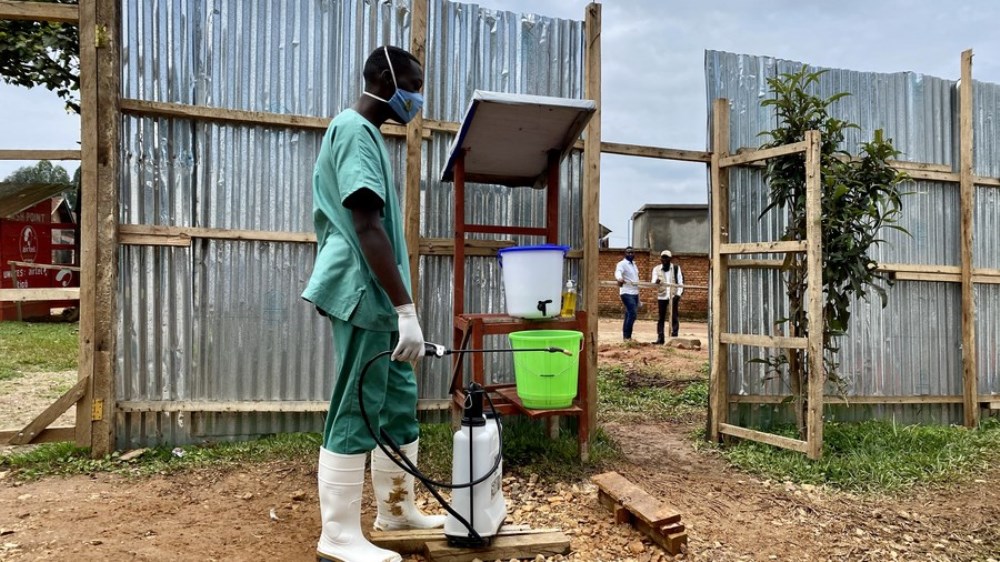
This file photo taken on March 21, 2021, shows a medical worker disinfecting a local Ebola treatment center in North Kivu province, northeastern Democratic Republic of the Congo (DRC). (Photo by Alain Uaykani/Xinhua)
Health authorities in DRC are investigating a case suspected of Ebola virus disease, in the country’s northeastern province of North Kivu.
BRAZZAVILLE, Aug. 21 (Xinhua) — Health authorities in the Democratic Republic of the Congo (DRC) are investigating a case suspected of Ebola virus disease, in the country’s northeastern province of North Kivu, as DRC’s latest Ebola epidemic was declared over in early July, said the World Health Organization (WHO) regional office for Africa via a statement Saturday.
The suspected case was a 46-year-old woman who died on Aug. 15 in Beni, a town in North Kivu. The case received care at the Beni Referral Hospital, initially for other ailments, but subsequently, exhibited symptoms consistent with Ebola virus disease, said the statement, noting that the country’s National Institute of Biomedical Research (INRB) is in the process of testing samples to determine if the patient contracted Ebola.
“While the analysis is ongoing, WHO is already on the ground supporting health officials to investigate the case and prepare for a possible outbreak,” said Matshidiso Moeti, WHO Regional Director for Africa.
On July 4, the DRC officially declared an end to the latest Ebola outbreak that erupted less than three months ago in Mbandaka, the capital of the northwestern Equateur Province. There were four confirmed cases and one probable case, all of whom died, in the latest outbreak. It was the third outbreak in the province since 2018 and the country’s 14th overall.
The military in a statement it tweeted said its medical department together with the ministry of health and the World Health Organization will, starting on Aug. 19, vaccinate the troops including those operating along the common border with the DRC.
Ambrose Musinguzi, Chief of Medical Services, said the troops in eastern DRC face a high risk of contracting the deadly disease.
“The vaccine to be applied which is from Merck is 100 percent effective. We have used it before in Uganda not only to health workers but also in districts of Kasese and Bundibugyo and in some units of UPDF (Uganda People’s Defense Force),” said Musinguzi.
Henry Kyobe Bbosa, the UPDF Epidemiologist, said the army medical personnel have been trained as Ebola Rapid Response Team and Vaccinators to contain and control the outbreak.
“We have conducted TOT (Training of Trainers) workshop of 30 experts in different areas who are going to train other medical workers in the field who will in turn be conducting case findings, managing alerts and carry out vaccination. We are also to deploy three mobile laboratories to be able to manage any signal case,” Bbosa said.
He said there are potentially sporadic unmasked Ebola outbreaks that require contingent measures, in case if any of the troops get infected, the rapid response team is able to respond, manage and treat.
Uganda and DRC in November last year launched joint military operations against the Allied Democratic Forces (ADF), an insurgent group hiding in the jungles of eastern DRC.
The ADF is an affiliate of the Islamic State in central Africa and is also blamed for the bombings in the Ugandan capital Kampala last November that left six people dead and 33 others injured.
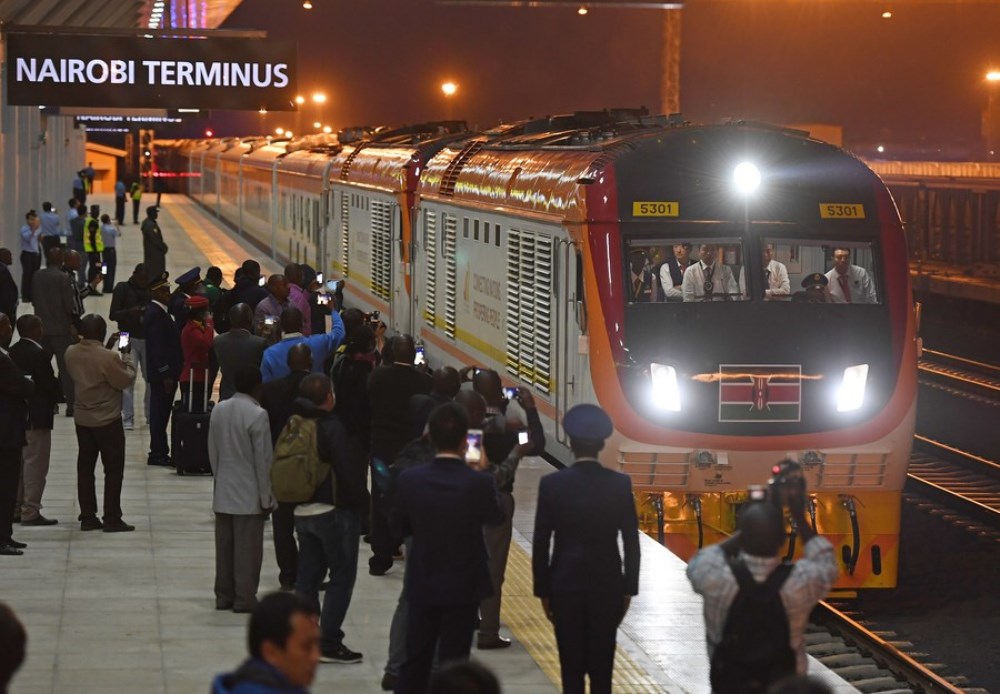
Since 2018, time spent on the 328-km journey has been reduced to four hours thanks to the Mombasa-Nairobi Standard Gauge Railway (SGR) passenger train service launched in May 2017.
Financed mainly by China and constructed by China Road and Bridge Corporation, the 480-km railway connecting Mombasa, the largest port in East Africa, and Kenya’s capital city of Nairobi is a flagship project under the China-proposed Belt and Road Initiative, and is Kenya’s largest infrastructure project since its independence in 1963.
Mghoi said the efficient, reliable and affordable mobility, which the SGR has always guaranteed her whenever she travels to meet new clients, has boosted her career.
The SGR is “an extremely good experience in the last few years,” James Macharia, Kenya’s cabinet secretary for transport, infrastructure, housing and urban development, told Xinhua. “We can expect a lot more profitable operations going forward.”
As a strategic infrastructure project, the SGR is aiding the realization of Kenya’s two flagship socio-economic transformation blueprints — the Vision 2030 and the Big Four Agenda, said Philip Mainga, managing director of Kenya Railways Corporation.
{{Less time on road, more opportunities}}
With the SGR, Mghoi is able to reach her destination on time and negotiate for a potential business opportunity with ease. She said the punctuality has helped her cement trust and confidence with her clients.
Mghoi belongs to a growing army of Kenyan skilled labor force, entrepreneurs and tourists who have embraced the SGR service.
The Mombasa-Nairobi SGR and the additional 120-km Nairobi-Naivasha SGR have also facilitated the hauling of bulk cargoes to the hinterlands.
With the SGR freight service, it takes eight hours to transport bulk cargoes like raw materials from the Mombasa port to an inland container depot in Nairobi, as opposed to around two days using the century-old Meter Gauge Railway constructed by British colonialists, said Edward Opiyo, terminal manager at Nairobi Freight Terminals Limited, a logistics firm.
As logistics firms are now able to transport bulk cargoes in a speedy, cheaper, efficient and environmentally-friendly manner, they have built a cordial relationship with major clients, Opiyo said.
Transit hours and the cost of hauling bulk cargoes to neighboring landlocked countries have also been reduced, injecting fresh vitality into regional supply chains, he said.
The SGR has enhanced Kenya’s trade with neighboring countries and offered an economic lifeline to member states of the East African Community, said Mainga.
In the last five years, the modern railway has transported 20 million tons of cargoes and about 8 million passengers, elevating Kenya’s status as a regional manufacturing, trade and logistics hub, he noted.
“I must say we are lucky. We are doing more exports and diversification of goods than before. We are seeing a dynamic change due to what the SGR is doing in terms of exports,” he said.
The Mombasa-Nairobi SGR is projected to contribute 2-3 percent to Kenya’s GDP, said Mainga, adding that the railway has become a dominant player in Kenya’s pursuit of inclusive growth, as it has revolutionized transportation of passengers and bulk cargoes, stimulated commerce and investments and fostered job creation for local youth.
{{Mutual understanding, respect, trust }}
Mainga said the SGR is also benefiting local people as skills transfer has reached 80-90 percent.
“Now our people are able to run the operations, to drive their locomotives, to carry on with signal work, to repair and maintain our wagons,” he said.
Recruited in 2017 by the SGR operator Afristar Railway Operation Company, Harrison Kinyanjui, a 26-year-old economics major, has received rigorous training on railway operation and management from Chinese tutors, and progressed quickly to become the first Kenyan to work at the SGR dispatch center in Nairobi.
Currently the assistant superintendent of the center, Kinyanjui said their work is to organize train operations using a centralized traffic control system in the center, which is “the brain and heart for all SGR train operations.”
“The Chinese experts have taught us very well. They now have the confidence to leave us to work independently, and we are very, very proud that we came here not knowing anything about train dispatching, but we are now very competent,” he said.
“You see the Kenyan government and the Chinese government work together. We want to thank both governments for the support they have given us,” said Mainga.
As Afristar has been committed to prioritizing safe operation, boosting movement of passengers and goods and enhancing localization, the SGR’s socio-economic outcomes have gained trust and recognition by the Kenyan government and people, Li Jiuping, general manager of Afristar, told Xinhua.
“To create high-performing Sino-Kenyan teams, Afristar fosters cross-cultural working relationships and promotes mutual understanding, respect and trust,” Li said.
Ugandan President Yoweri Museveni is the first visiting head of state to travel by Kenya’s SGR in March 2019. He said the enhanced efficiency in handling cargoes has been beneficial to the economies of both Kenya and Uganda, and to other countries that depend on the Mombasa port for import and export, including Rwanda, Burundi, South Sudan and the Democratic Republic of Congo.
Within the framework of the Forum on China-Africa Cooperation, the SGR is among many China-Kenya infrastructure cooperation projects which are leading the Sino-Africa cooperation, Chinese Ambassador to Kenya Zhou Pingjian told Xinhua.
{{Eco-protection priority}}
Before the SGR project started, there had been fears that the railway could harm biodiversity, as it would snake through the Tsavo National Park, Kenya’s oldest and largest wildlife sanctuary, home to iconic species such as elephants, giraffes and zebras.
To ensure their safety, the SGR contractor built electric fences on both sides of the track, and wide underpasses at short intervals to facilitate their movement.
Besides wildlife, mangrove forests are well protected, too. Ali Mohamed, a 44-year-old resident of a serene village overlooking a mangrove swamp on the northwestern edges of Mombasa, said that besides regulating coastal weather, the installation of overpasses and culverts has ensured that there was minimal disturbance to the mangrove forest, which is an important fish breeding site.
“I visited the SGR when its construction started and witnessed restoration of the previously degraded sections of the mangrove forest in our locality,” said Mohamed, also founder of Bidii Creek Conservancy, a Mombasa-based green lobby.
The SGR has provided best practices on blending conservation with infrastructure development, he said.
Five years since its launch, the SGR has earned accolades from local officials and conservationists for prioritizing ecological protection along its corridor.
Nancy Githaiga, country director for Kenya at Nairobi-based African Wildlife Foundation, said wildlife protection measures initiated by the SGR contractor should inform future efforts to develop mega infrastructure projects while safeguarding integrity of biodiversity hotspots in Kenya.
Green ethos has been placed at the center of SGR operations, bringing benefits to local communities in terms of clean air and tranquil landscapes, said Mainga.
The design and execution of the project adhered to local environmental protection laws, ensuring a healthy relationship between the contractor and local communities, said Cosmas Makewa, station master at the Mombasa SGR Terminus.
Unlike trucks, SGR trains plying along the corridor have not been emitting smoke to the atmosphere, boosting Kenya’s quest for improved air quality, said Makewa.
The SGR project highlighted the viability of China’s vision of ecological civilization, according to Leopold Omondi, a campaigner with Nairobi-based green lobby Pan African Climate Justice Alliance.
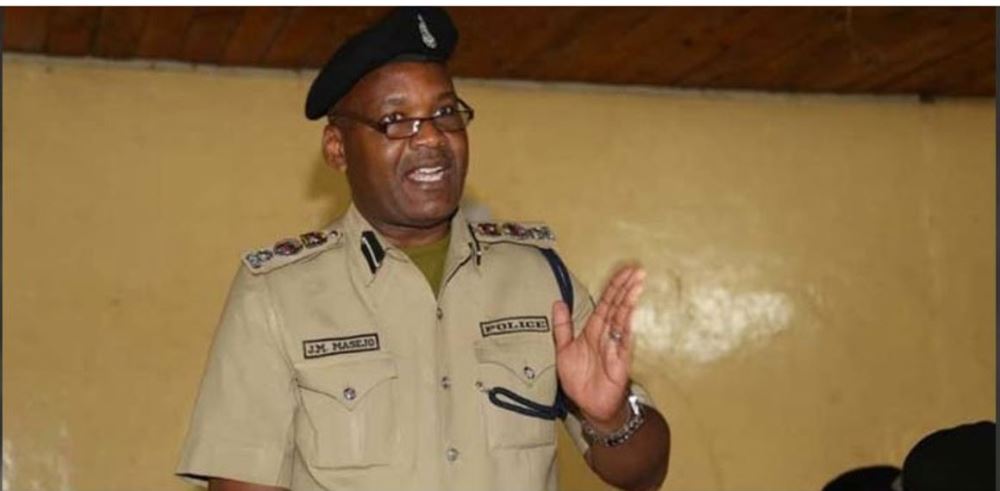
The Arusha Regional Police Commander, Justine Masejo in a press statement on March 11, said the Chinese national (name withheld) was abducted in Karatu district.
Commander Masejo said the police on Mach 7, received a report from a Chinese national, Lian Qiang (44) from Bonanza saying that one of their employees had disappeared under mysterious circumstances while working in Karatu.
The Chinese man was and his driver was in a Toyota Kluger with registration T571DLQ.
He said Giang later received a call from the kidnappers demanding a ransom of $ 100,000 for the man to be released.
The commander said after a thorough investigation the suspects were arrested at a lodge located in Ada Estate in Kinondoni, Dar es Salaam.
He said that after the search, the abducted Chinese national was found withe arms and legs tied by the suspects.
“We found them with a Toyota Kluger with registration number T 982DQA a car that belongs to Bonanza company which was stolen on February 8 and we found two knives, a hammer and drill machine and five cables all belonging to Bonanza,” he said.
However, one of the kidnappers was identified as a Chinese national who had been fired for misconduct by Bonanza Company.