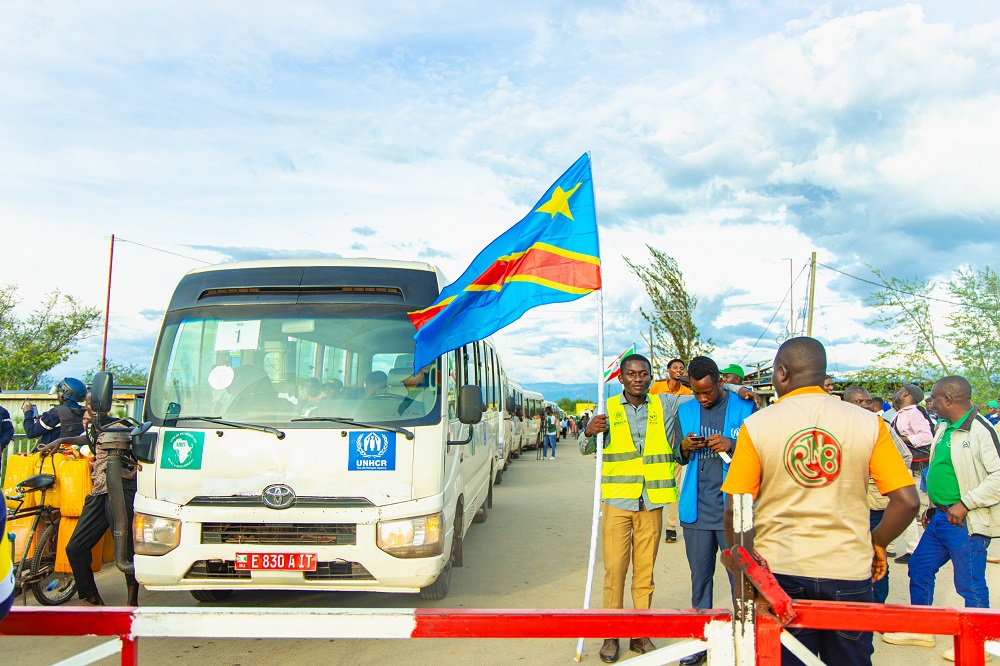
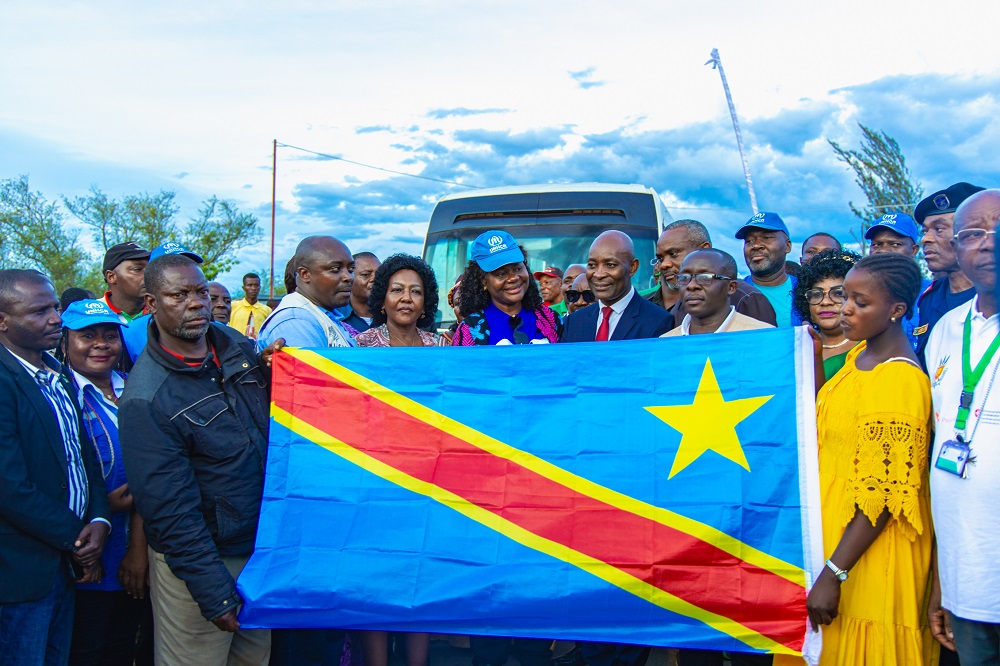
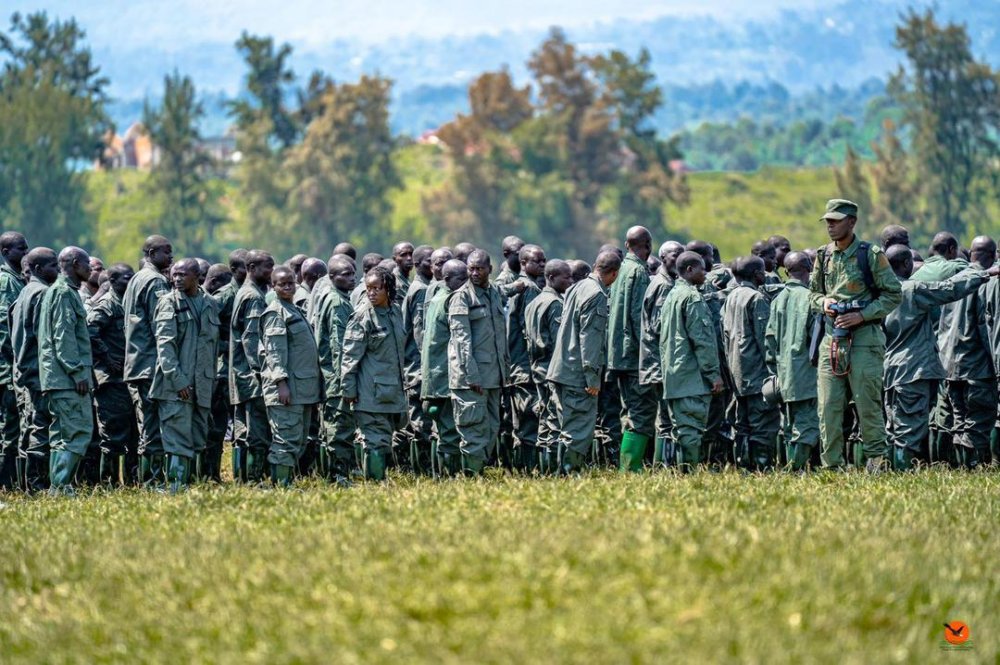
The United Nations High Commissioner for Refugees (UNHCR) announced that on April 23, 2026, it facilitated the voluntary return of the first group of 462 Congolese refugees who had been living in Busuma refugee camp in Ruyigi Commune.
The repatriation follows discussions between representatives of Burundi, the DRC, and UNHCR. These talks came after Burundi reopened the Gatumba border in March, which had remained closed for nearly four months due to security concerns.
According to UNHCR, clashes that took place in the Ruzizi Plain late last year forced more than 100,000 Congolese civilians to seek refuge in Burundi, where they were hosted in camps located across different parts of the country.
Jean-Jacques Elakano, the Deputy Governor of South Kivu Province appointed by the DRC government, said the refugees had been living in extremely difficult and inhumane conditions.
He stated, “Our fellow citizens were living in conditions unfit for human beings, almost like hell. The return of this first group will certainly encourage others to come back as well. They need to feel safe and be welcomed by their families so they can reintegrate smoothly into their communities of origin.”
Refugees in the camps in Burundi also faced serious shortages of food and clean water. More than 40 Congolese refugees died in December 2025 from diseases linked to poor sanitation, while others attempted to flee by crossing the Ruzizi River because the border was still closed at the time.
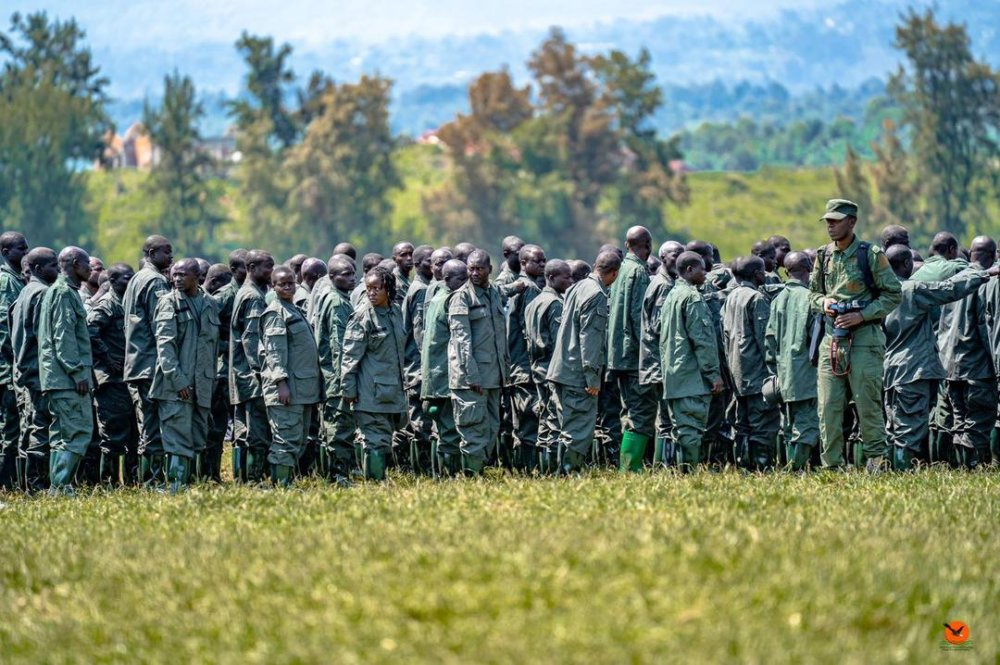
Congolese refugees in Burundi begin repatriation after nearly four months of hardship.Congolese refugees crossing through the Gatumba border.They were welcomed by leaders from various institutions in South Kivu.
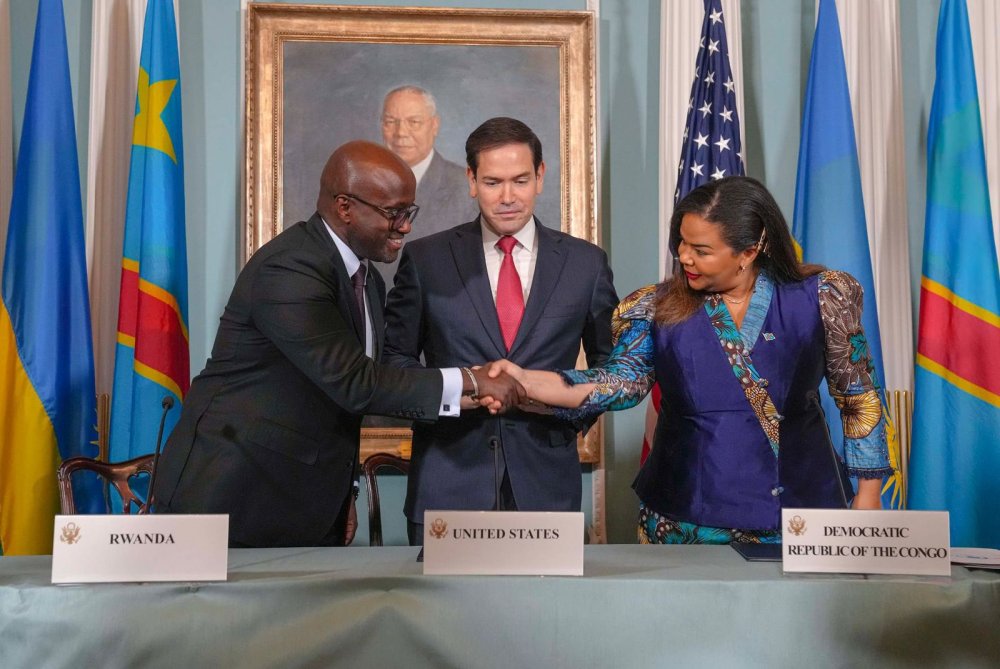
The meeting, held under the framework of the Joint Oversight Committee, marked its fifth session since the agreement was signed on June 27, 2025, in Washington, DC.
According to the joint statement released by the U.S. State Department, the Committee reviewed progress made since the March 17–18, 2026 meeting, with both Rwanda and the DRC providing updates on efforts to ease tensions and advance implementation of agreed measures on the ground.
The State of Qatar also briefed the meeting on ongoing negotiations between the DRC and AFC/M23. The Committee expressed strong support for these talks and welcomed Switzerland’s role in hosting the latest round of discussions in Doha, stressing the importance of this track in reinforcing the broader peace process.
Participants reaffirmed their commitment to sustaining momentum in the implementation of the agreement and building on the progress already achieved.
Rwanda and the DRC also expressed appreciation to the United States, Qatar, the African Union Commission, and Togo for their continued support in promoting peace and stability in eastern DRC and the wider Great Lakes region.
The Washington Peace Agreement outlines key measures, including efforts to dismantle the FDLR terrorist group, address security concerns, and contribute to long-term regional stability.
Massad Boulos, Senior Advisor to the U.S. President Senior Advisor for Arab and African Affairs, said both sides had reiterated their commitment to de-escalation and continued implementation of the agreement.
“The State Department hosted a productive meeting with our partners on the Joint Oversight Committee to review progress on the DRC-Rwanda Peace Agreement signed last June.
“Both the DRC and Rwanda reaffirmed their commitment to de-escalation and continued implementation of the Peace Agreement, building on progress from our March meetings in Washington. Grateful to the African Union, Togo, and Qatar for their contributions as we work to support a lasting peace in the Great Lakes,” he wrote on X.
The peace agreement signed in June last year had set a 90-day timeline for dismantling the FDLR and lifting Rwanda’s defensive measures. However, nearly a year later, little progress has been achieved.
Although on March 29, the Congolese army announced plans to launch operations against the FDLR, Rwanda maintains that the group continues to operate freely.
Massad Boulos, senior advisor to President Donald Trump, addresses the media at the U.S. Embassy in Kigali, Rwanda, Tuesday, April 8, 2025. Nearly a year after signing Washington peace agreement, little progress has been achieved.
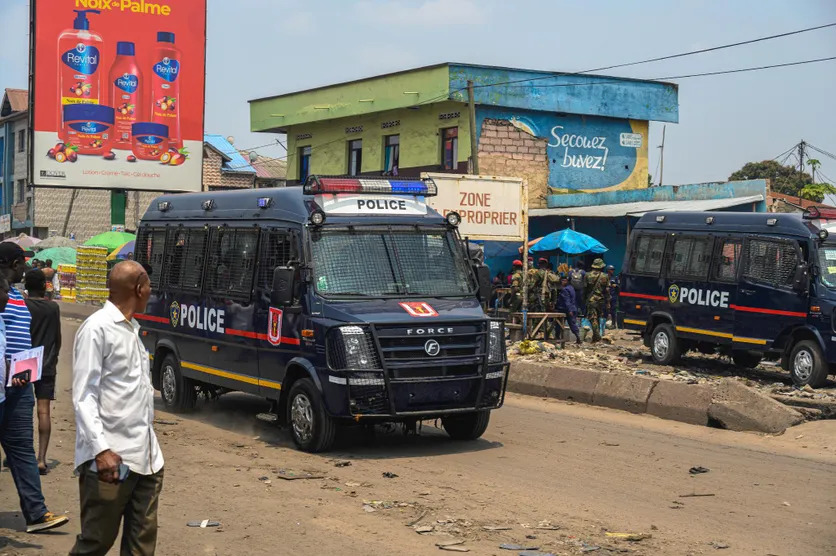
The unrest, which involved heavy exchanges of gunfire between the two branches of the Democratic Republic of the Congo’s (DRC) security forces, reportedly stemmed from a disputed arrest operation.
The clashes ignited on the afternoon of April 21 in the Mabulu area along Elengesa Road. According to local reports, officers from a police rapid response unit were in the process of arresting several youths suspected of theft.
The situation escalated when FARDC soldiers stationed nearby intervened to obstruct the arrests. Witnesses noted a troubling development as some of the youths, allegedly members of the notorious Kuluna criminal gangs, aligned themselves with the soldiers to confront the police.
The fighting quickly spread from Elengesa Road toward Kibambi 1 Road, eventually reaching a police station on Kimfumu Road. As the gunfire intensified, students at a nearby school were forced to lie on the floor to avoid stray bullets, while residents fled the area or barricaded themselves in their homes as the standoff transitioned from a local dispute into a broader tactical skirmish.
The violence resulted in significant property damage, including the complete destruction of a small police station and the reported looting of several residential houses during the chaos.
Makala Mayor Ngudia Kabongo confirmed the extent of the damage on April 22 but offered a reprieve regarding casualties.
“No fatalities have been recorded in these clashes,” Kabongo stated, though he acknowledged that the destruction of the police post and the trauma to the community were significant.
By the evening of April 22, the central government moved to de-escalate the situation. A joint team of senior military and police officials was deployed to Makala to conduct coordinated security operations and re-establish a unified command structure.
The clashes ignited on the afternoon of April 21 in the Mabulu area along Elengesa Road. According to local reports, officers from a police rapid response unit were in the process of arresting several youths suspected of theft.
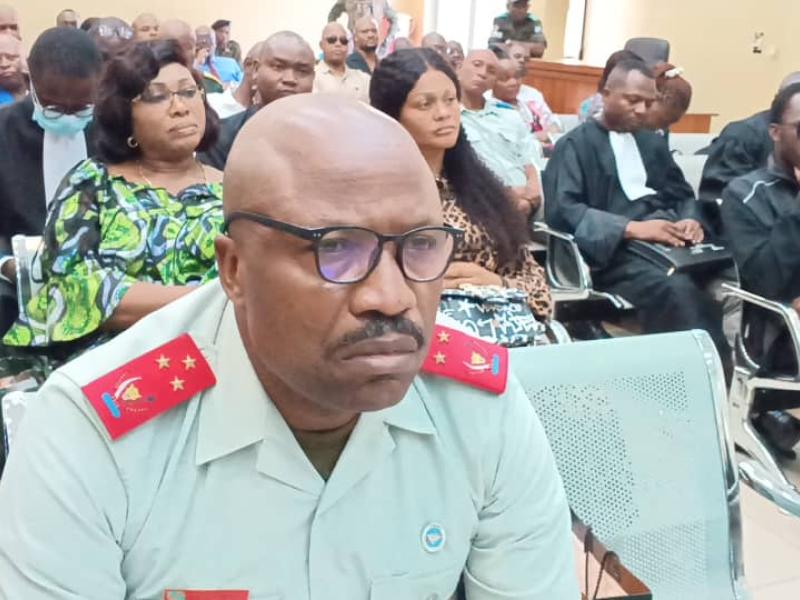
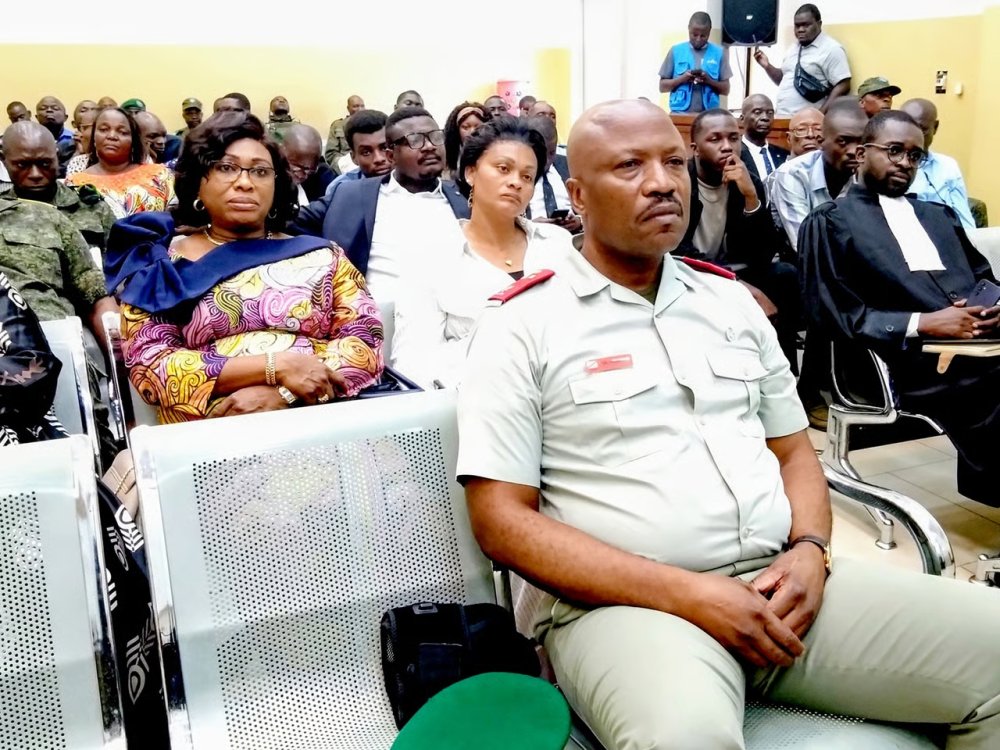
Lt Gen Yav previously commanded the DRC’s third defence zone. He was arrested in September 2022 after M23 rebels captured large parts of North Kivu Province.
The prosecution, represented by Lt Gen Lucien-René Likulia, alleged that Yav had been in contact with an official from the Rwandan government, claiming that messages found on his phone served as evidence of their collaboration.
However, testimony presented in court revealed inconsistencies. Among the witnesses were Lt Gen Constant Ndima, former governor of North Kivu, and Maj Gen Sylvain Ekenge Bomusa, former spokesperson of the Congolese army—but their accounts contradicted each other.
Lt Gen Ndima told the High Military Court that Yav had received a message from retired General James Kabarebe, a senior figure who previously held key roles in Rwanda’s military. When asked whether he had personally seen the message, Ndima admitted that he had not.
In a surprising turn, Maj Gen Ekenge, who also served in North Kivu, stated instead that the message had come from an aide to Gen (Rtd) Kabarebe—not from Kabarebe himself.
The prosecution was further questioned on whether it could present the alleged messages from Yav’s phone, which has been in custody for four years. It responded that accessing the device had been difficult due to multiple security passwords set by the officer.
When pressed to identify anyone who had actually seen the messages, the prosecution cited Maj Gen Peter Cirimwami, a former North Kivu governor. However, it acknowledged that he could not testify, as he died in January 2025. With the evidence still unverified, the court turned to experts from the national cyber security agency (CNC) to attempt to access the phone and retrieve the alleged messages.
Yav’s lawyer, Charles Ngwapitshi, argued that the inclusion of Gen (Rtd) Kabarebe in the case was intended to exaggerate its significance, given his prominence in Rwanda’s security establishment.
“After what was said by Gen Ndima, it is clear there is a problem from the outset,” Ngwapitshi told the court. “To strengthen their case against Gen Yav Irung Philémon, they had to inflate it by introducing the name of James Kabarebe. I want to understand why there are so many contradictions.”
Although the CNC had been expected to submit its findings after being granted additional time, it informed the court on April 21 that it had not retrieved the alleged messages and requested an open-ended extension.
Ngwapitshi maintained that the prosecution’s case lacked merit, urging the court to reach a swift decision so that his client—who has spent four years in detention—can reunite with his family.
Presiding judge Lt Gen Joseph Mutombo Katalayi ruled that the court could not grant an indefinite extension without a clear deadline. He ordered the CNC to return Yav’s phone, effectively halting the forensic examination.
The decision marked a significant blow to the prosecution. Ngwapitshi reiterated that the case was baseless, describing it as “an empty shell.”
The court set May 5, 2026, as the date when both the prosecution and the defense will present their final submissions, which will inform the final judgment.
Lt Gen Yav previously commanded the DRC’s third defence zone.
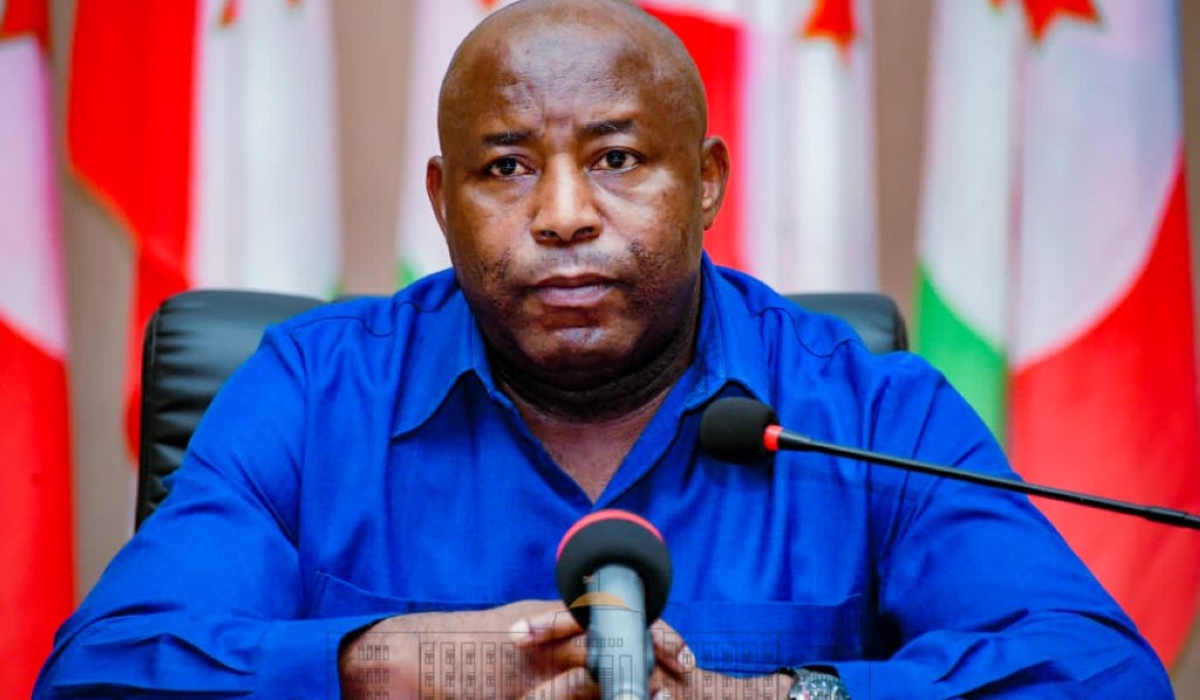
He made the remarks during an interview with Yaga Burundi.
When asked whether the presidential jet was still in Madrid, President Ndayishimiye confirmed that it remains there. The journalist then questioned why it had not been sold as scrap metal.
“Then what is stopping it from being sold as scrap metal so that Burundians can see how to pool resources and raise money?” a journalist from the outlet asked.
In response, President Ndayishimiye acknowledged that he had also considered the idea, but said he refrained from pursuing it out of concern over public reaction.
“That idea also crossed my mind. I said to myself: I know Burundians, they are quick to get angry and would say I have stolen their plane. They would accuse you, thinking it is that simple. So I wondered what exactly should be done with it,” he said.
He explained that the situation surrounding the aircraft has persisted for years without a clear resolution, making it difficult for even officials to provide consistent explanations.
According to him, at one point, he even questioned whether the aircraft actually existed, prompting him to dispatch a verification mission to Spain.
“One day I said: what if they are lying, does that plane even exist? I said that and appointed the Prime Minister to lead a delegation, together with officials from ACB, to go to the airport in Spain. I said I would only believe it once they showed me proof. They went and recorded clear videos, including the Burundian flag,” he said.
He added that delays in resolving the issue have persisted over time, noting that, unlike humans, outcomes are not always immediate and require patience. Ndayishimiye also revealed that Burundi continues to incur costs for parking the aircraft at its current location in Madrid.
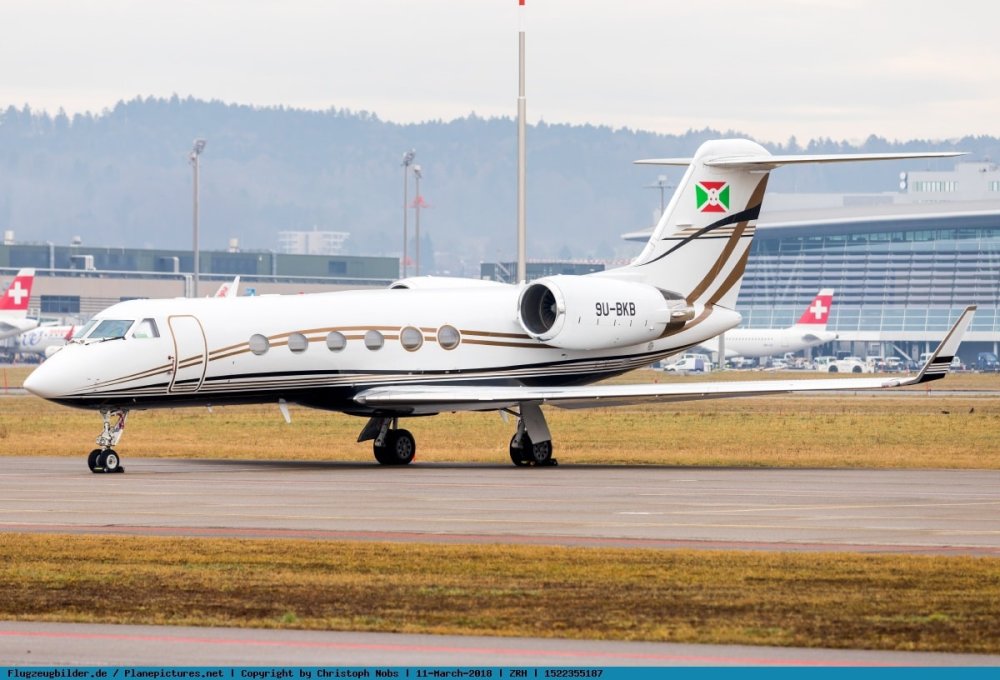
The aircraft in question is a Gulfstream IV presidential jet, which has remained grounded at Madrid airport in Spain after developing technical problems that could not be immediately resolved.
Burundi received the aircraft in 2016, after acquiring it from the United States, where it was manufactured. It was reported to have cost about €8.5 million, equivalent to approximately 14.5 billion Burundian francs.
The jet replaced a Falcon 50 previously used by the Burundian presidency, which was sold in 2007.
In 2017, the government decided to lease out the aircraft after it began deteriorating, particularly as then-President Pierre Nkurunziza was not undertaking international travel at the time.
It later emerged that the aircraft had developed technical faults requiring repairs, but it has remained out of service for years.
Although the jet is still parked in Madrid, Ndayishimiye noted that those who previously handled it confirmed it has technical issues and that specialists capable of repairing it are based in the United Kingdom.
Burundian President Évariste Ndayishimiye, in a recent interview, explained that the situation surrounding the aircraft has persisted for years without a clear resolution, making it difficult even for officials to provide consistent explanations.The grounded plane replaced a Falcon 50 previously used by the Burundian presidency, which was sold in 2007.
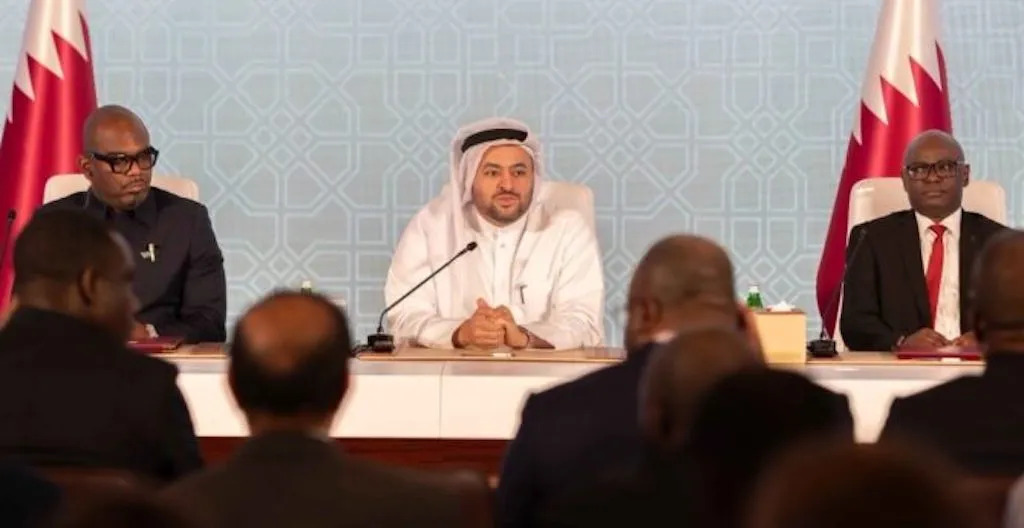
The discussions were facilitated by Qatar, the United States, Switzerland, the African Union Commission, and Togo in its role as African Union mediator, with participation from the International Conference on the Great Lakes Region (ICGLR).
The talks focused on strengthening humanitarian access, establishing mechanisms to monitor a ceasefire, and advancing confidence-building measures, including the release of detainees.
Humanitarian access and civilian protection
The two sides made substantial progress toward a protocol on Humanitarian Access and Judicial Protection, agreeing on the urgent need to ensure life-saving assistance for civilians in eastern DRC.
Both parties committed to comply with international humanitarian law, international human rights law, and international refugee law, as well as constitutional principles of the DRC.
They further agreed to prohibit attacks on or destruction of essential civilian infrastructure, including food supplies, agricultural areas, water systems, energy networks, telecommunications infrastructure, and health and education facilities.
The agreement also emphasises the protection of humanitarian workers and the guarantee of safe, rapid, and unimpeded access for aid delivery. Humanitarian assistance will be provided based on need, without discrimination on political, ethnic, religious, or social grounds.
“The Parties undertake to facilitate the transport of medical and humanitarian relief supplies by impartial humanitarian organisations to support the functioning of healthcare facilities and other medical units in areas affected by armed conflict,” a joint statement released by the parties reads.
Ceasefire monitoring mechanism activated
In a significant step toward implementing the ceasefire under the Doha Framework, the parties, together with ICGLR, signed a memorandum of understanding operationalising the Expanded Joint Verification Mechanism Plus (EJVM+).
This mechanism enables the Ceasefire Oversight and Verification Mechanism (COVM) to begin surveillance, monitoring, verification, and reporting on compliance with the permanent ceasefire.
Initial verification missions are expected to be planned within a week, with logistical support from the United Nations Organisation Stabilisation Mission in the DRC (MONUSCO).
Prisoner release within 10 days
As part of confidence-building measures, the parties also agreed to release prisoners within ten days, in line with a previously established detainee release mechanism signed in September 2025.
Under the agreement, the DRC government is expected to release 311 prisoners linked to AFC/M23, while the rebel group will free 166 individuals held from the government side.
The International Committee of the Red Cross (ICRC) provided the relevant detainee lists to facilitate the process under agreed procedures.
The parties reaffirmed their commitment to sustaining momentum in the peace process and advancing remaining protocols under the Doha Framework. They also agreed to submit proposals for next steps to the mediation team to expedite negotiations.
After repeated setbacks in the implementation of the ceasefire, including accusations by AFC/M23 that Kinshasa forces have continued to carry out drone strikes on civilian populations, questions remain over whether the latest commitments will succeed in breaking the cycle of mistrust and restoring stability on the ground.
As part of confidence-building measures, the parties also agreed to release prisoners within ten days, in line with a previously established detainee release mechanism signed in September 2025.
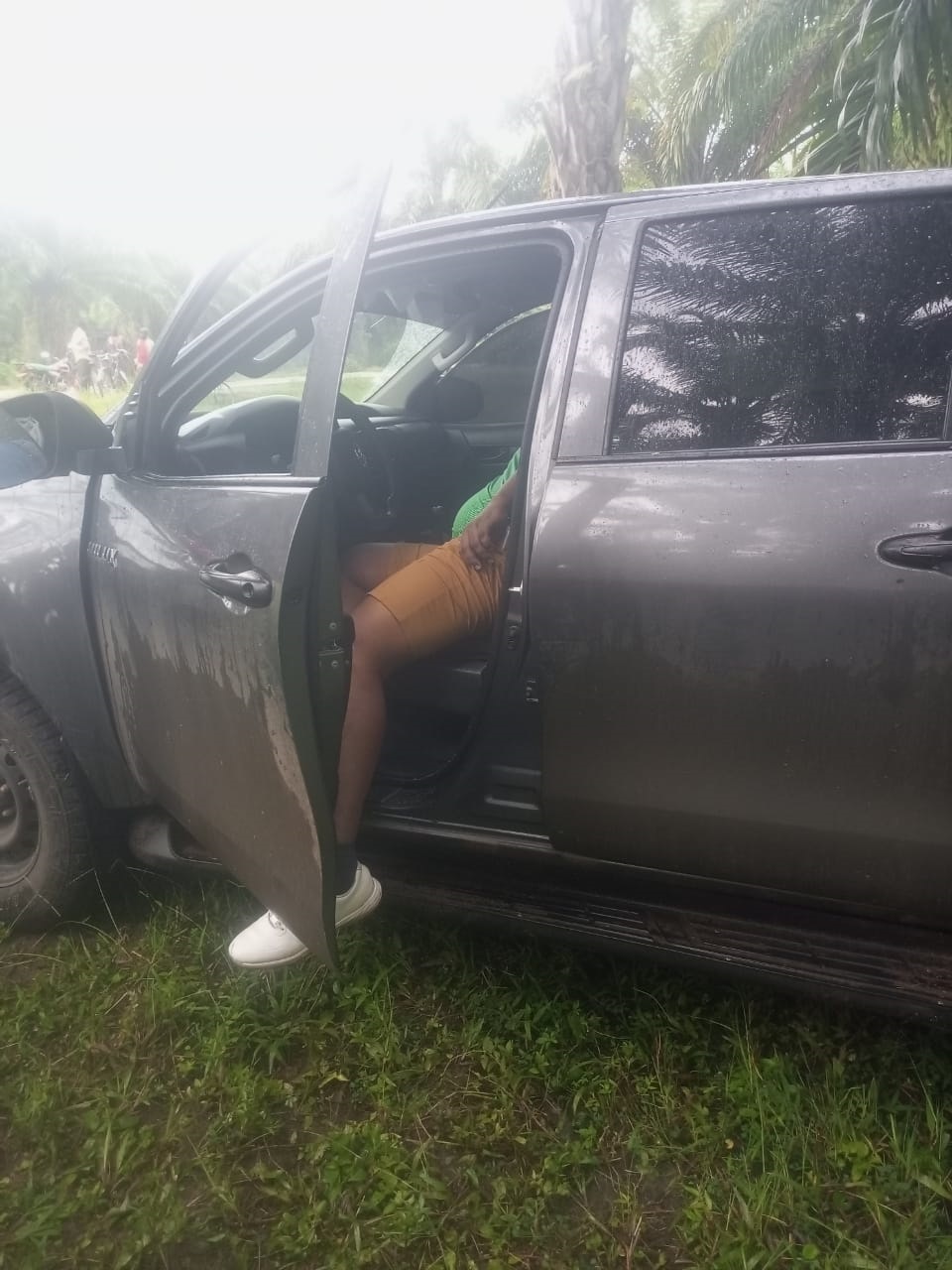
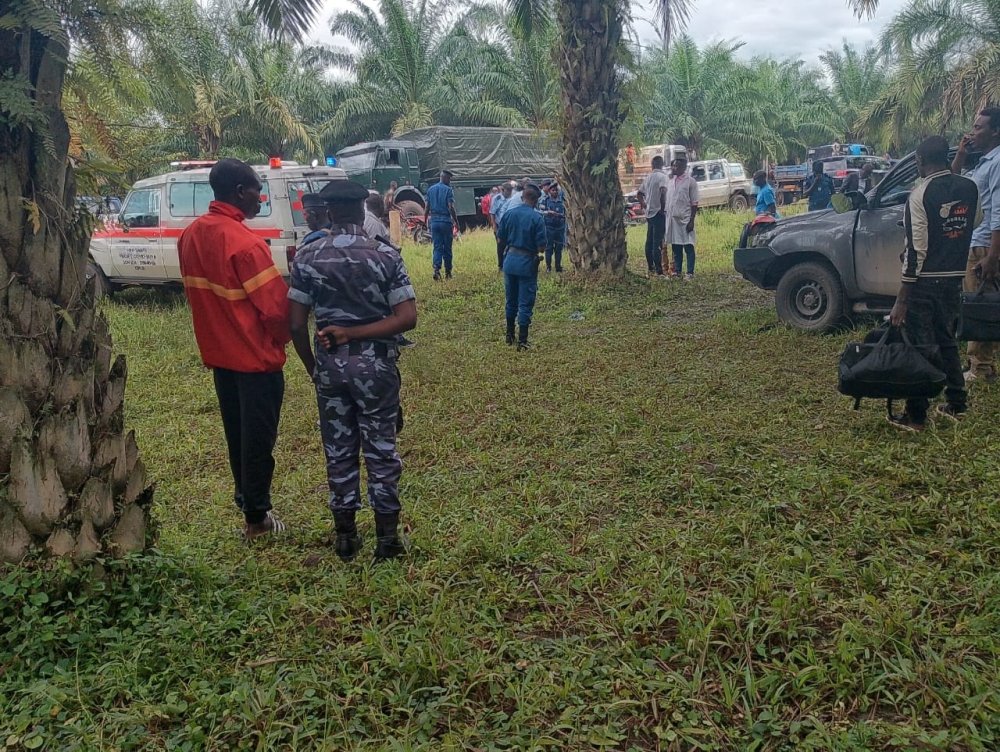
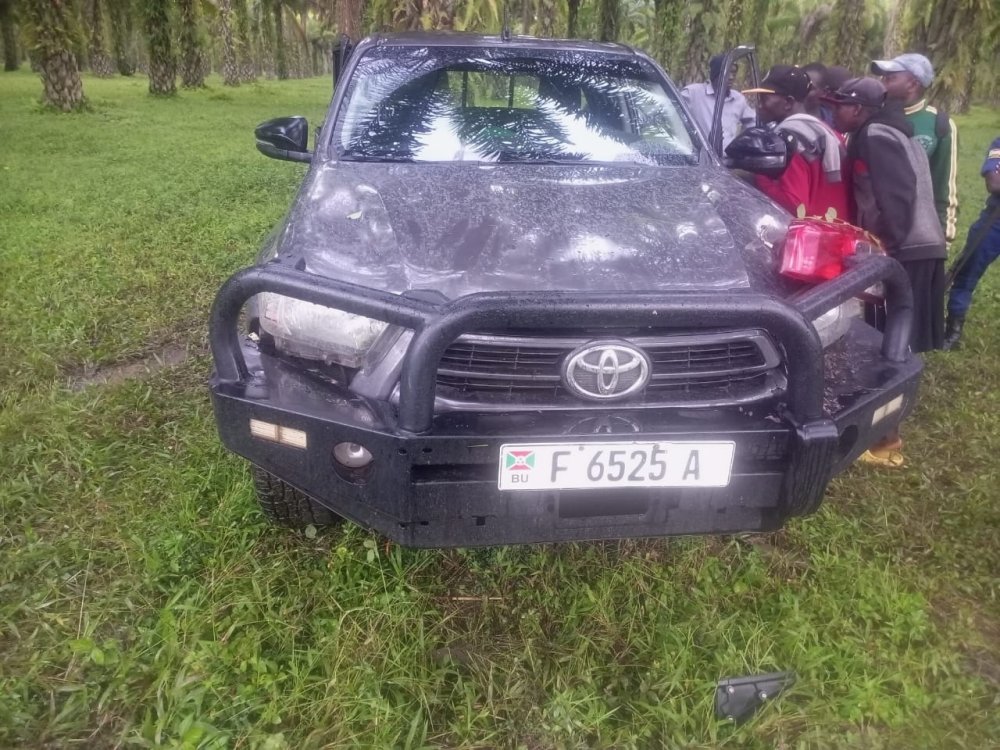
On the morning of April 16, Bugaga’s vehicle was found parked in a palm plantation in Kivoga, near the Bujumbura–Bubanza road. His body was discovered in the front seat, with one leg hanging out through the left window.
Reports indicate that when people later accessed the scene, the body had been repositioned, placing Minister Bugaga in a seated position inside the vehicle in a way that would make it difficult for a casual observer to immediately realize he had died inside the car.
One of the first elements that raised suspicion was the absence of his security detail. In Burundi, a government official of his rank is normally accompanied by security personnel at all times, making their absence unusual.
A close friend of the late minister said that before his death, Bugaga had expressed fear, although he did not clearly explain what he was afraid of. The same friend said he had been planning to leave Burundi for Canada, but later changed his mind.
The friend, who is based in Europe, added that Bugaga had asked for assistance in preparing for relocation, saying, “One day before his death, he urged me to speed up the plan.”
Other accounts suggest that amid growing fears, Bugaga had consulted friends about the possibility of resigning, but they advised him against it, warning that it could create political tension with the government of President Évariste Ndayishimiye.
Human rights activist Pacifique Nininahazwe also questioned the official version of events. He stated that Bugaga’s Toyota Hilux was found in Kivoga without a rear license plate and that no visible signs of a nearby accident scene were present, raising questions about whether the incident actually occurred there.
He further noted unusual details, saying: “The first strange thing is that the car key was not inside the vehicle but was found in Gabby Bugaga’s bag. Did he drive without a key? Or did he park the car, remove the key, lie down, and place his leg out of the window while waiting for death?”
In an official statement, the Secretary-General and government spokesperson of Burundi, Jérôme Niyonzima, insisted that there is no doubt Bugaga died in a road accident and stated that no investigation is necessary.
However, the president of the Ligue Iteka human rights organization, Anschaire Nikoyagize, warned against rushing to conclusions. He called for an independent investigation to establish the truth.
Nikoyagize noted that since President Ndayishimiye came to power in June 2020, 2,248 bodies of people who died under unclear circumstances have been recorded in Burundi, suggesting that Bugaga’s death should also be thoroughly examined rather than automatically classified as an accident.
The deal was concluded during peace talks held in Switzerland from April 13 to 17, 2026, with support from Qatar and the United States.
Under the agreement, the DRC government is expected to release 311 prisoners linked to AFC/M23, while the rebel group will free 166 individuals held from the government side.
The prisoner exchange is seen as a confidence-building measure aimed at supporting ongoing peace efforts.
Both parties indicated that the list of prisoners to be released was provided by the International Committee of the Red Cross, in line with an agreement previously signed on September 14, 2025.
On April 14, 2026, the two sides also agreed to operationalise a revised international mechanism tasked with monitoring the ceasefire, known as EJVM+. This body will include three representatives from each side.
The decision to establish EJVM+ was initially made during earlier peace discussions held in Doha, Qatar, last year. However, its implementation had been delayed due to persistent tensions between the DRC government and AFC/M23.
The mechanism is now expected to begin overseeing the ceasefire within a week. Troops from the United Nations peacekeeping mission in the DRC (MONUSCO) are also set to support its operations.
The Government of the Democratic Republic of Congo (DRC) and the AFC/M23 rebel coalition have reached an agreement to release more than 400 prisoners within the next 10 days.
Reports indicate that residents of Kivoga, a neighborhood in Bujumbura, noticed a car parked off the road in a palm grove at around 8:00 a.m. on Thursday. When they moved closer to check, they found him dead inside the vehicle.
People who recognized him confirmed he was Minister Bugaga and promptly alerted security authorities, who have since opened an investigation into the circumstances surrounding his death.
The spokesperson for the Burundian government, Jérôme Niyonzima, confirmed Bugaga’s death but told the media that more details would be released later.
Security personnel, including soldiers and police officers, arrived at the scene where Bugaga was found before taking it to hospital.
Preliminary investigation reports indicate that before his death, Bugaga was not accompanied by his security detail, raising concerns about the circumstances surrounding his death.
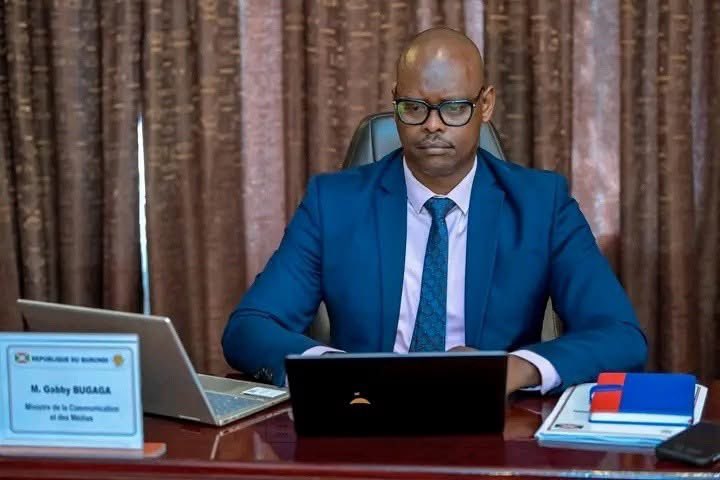
Bugaga was widely known for his earlier career as a journalist with the national broadcaster, RTNB. He also held various positions, including roles in the Senate and the National Independent Electoral Commission (CENI).
He was appointed Minister of Communication and Media in early August 2025.
Gabby Bugaga had been serving as Burundi’s Minister of Communication and Media since August 2025.His vehicle was found parked in a palm plantation near the roadside, raising suspicion among nearby residents.Security forces have since arrived in the Kivoga area to begin investigations into the circumstances surrounding his death.Bugaga was found dead in his vehicle.
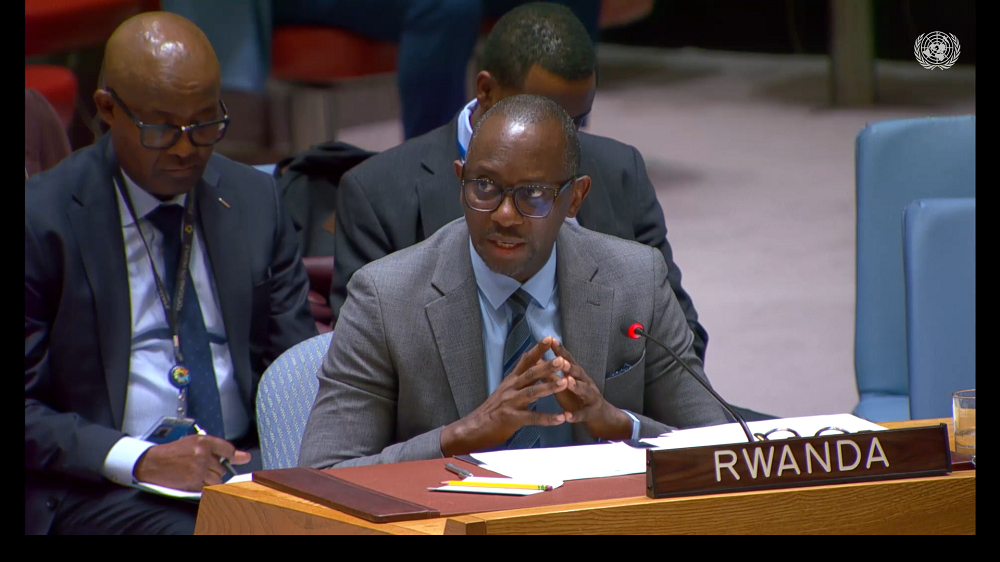
Speaking at a Council briefing on the Peace, Security and Cooperation Framework for the DRC and the Great Lakes region on Wednesday, Rwanda’s Deputy Permanent Representative, Robert Kayinamura, said the continued presence of the FDLR in eastern DRC constitutes an “existential threat” to Rwanda and a major obstacle to peace efforts in the region.
“There can be no credible path to peace without its effective and irreversible neutralisation,” he told Council members, reiterating Kigali’s long-standing position on the armed group.
The meeting came a week after Rwanda commemorated the 32nd anniversary of the Genocide against the Tutsi at the UN General Assembly Hall. Kayinamura noted that some of those responsible for the genocide fled into the DRC and remain active today, a factor he said partly motivated the establishment of the regional Peace, Security and Cooperation Framework in 2013.
Rwanda maintained that it has consistently upheld its commitments under the Framework over the past decade, but argued that key drivers of instability have not been addressed. According to Kayinamura, this reflects “a failure of implementation” rather than a weakness in the agreement itself.
He stressed that the FDLR issue has remained unresolved despite repeated engagement with UN officials, regional mediators, and successive Special Envoys.
Rwanda also expressed concern over what it described as escalating hate speech, ethnic targeting, and violence against Rwandophone communities in eastern DRC, including the Banyamulenge. Kayinamura said the continued portrayal of these communities as foreigners undermines the objectives of the Framework.
“These realities point to deep-rooted challenges that must be addressed directly. Sustainable peace cannot be built on avoidance,” he said.
The Rwandan envoy emphasised that peace in the DRC and stability in the broader Great Lakes region are inseparable, warning that selective implementation and accountability would not produce meaningful results.
While reaffirming support for ongoing diplomatic efforts, including ceasefire arrangements and processes in Washington and Doha, Rwanda also backed interim security measures such as a buffer or interposition force to help stabilise the situation as political negotiations continue.
Kayinamura posed two recurring questions Rwanda has raised in implementation discussions: how the root causes of the conflict remain unresolved after 13 years of the Framework’s existence, and why hate speech and persecution of communities continue unabated.
“If these issues remain unresolved, what basis do we have to expect a different outcome?” he asked Council members.
He concluded that after more than a decade, the path forward is clear and requires full and consistent implementation of agreed commitments. Rwanda, he said, remains engaged in good faith but stressed that success depends on all parties meeting their obligations.
“There is no military solution to this crisis,” he said. “Only a genuine return to the principles of accountability, cooperation, and mutual respect will deliver sustainable peace for our region.”
Speaking at a Council briefing on the Peace, Security and Cooperation Framework for the DRC and the Great Lakes region on Wednesday, Rwanda’s Deputy Permanent Representative, Ambassador Robert Kayinamura, said the continued presence of the FDLR in eastern DRC constitutes an “existential threat” to Rwanda and a major obstacle to peace efforts in the region.