{Rubavu residents have raised concern over the health centers’ failure to give them treatment under Mutuelle de santé medical scheme, especially if their ailments are related to the kidney performance, referring most of them to seek medical check-up from Gisenyi Hospital where a Dialysis machine has been installed. }
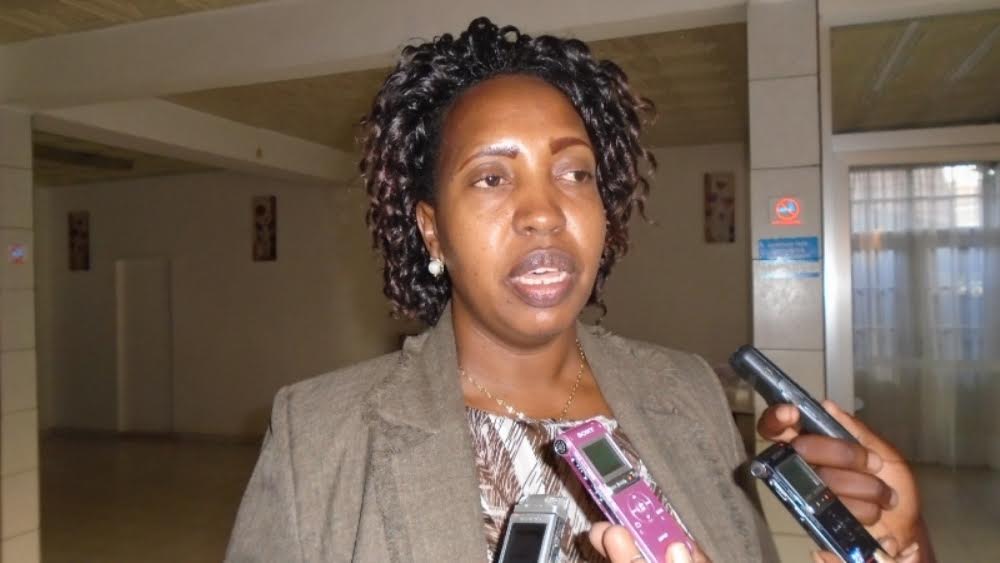
Munyaburanga Olive, a female caretaker of her husband suffering from a kidney ailment has told RBA that she is required to pay over Rwf 1 million per month to get medical attention. “I pay Rwf 1,080,000 per month. We pay the hard-earned money for treatment, otherwise the patient would be dead by now. ,” she said.
A number of patients and or their extended families in the area are said to have sold their properties to get money to foot medical bills leaving them wallowing in deeper poverty. They have appealed for government intervention to allow them get kidney treatment using Mutuelle de santé.
“We are overwhelmed with huge medical bills. It would be better if the government helped us to get assisted using mutuelle de santé,” said one patient.
Maj. Dr. Kanyankore William, the director of Gisenyi Hospital said that almost 95 % of kidney patients use mutuelle de santé yet its insurance doesn’t cover payments of kidney disease.
“Patients don’t come to us because most of them use mutuelle de santé. The equipment used to treat kidneys are expensive but we are holding discussions so that mutuelle de santé subscribers can be treated,” he said.
Gisenyi is among the four Hospitals in Rwanda with kidney treatment capabilities. Others include King Faisal Hospital, University Teaching Hospital of Kigali (CHUK) andUniversity Teaching Hospital of Butare (CHUB).
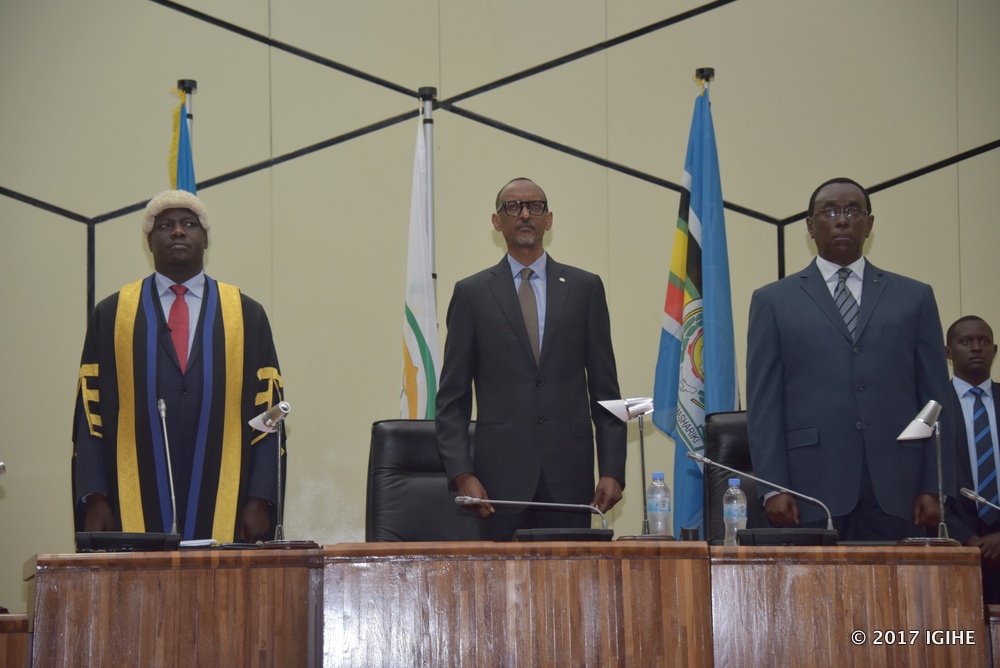
{Only five days are left for President Paul Kagame to present recommendations meant to see the overhauling of the African Union during the 28thAfrican Union Summit to be held in Addis Ababa, Ethiopia, where it has headquarters. }
The meeting will host a wide range of activities including elections of the chairperson of AU commission.
East Africa will be represented by Fowsiyo Yusuf Haji Adan, the former foreign affairs ministers of Somalia and Amina Mohammed of Kenya.
The overhaul committee includes Rwandan Dr. Donald Kaberuka, the former President of the African Development Bank, and DrAchaLeke – a Senior Partner at McKinsey & Co.; Dr. Carlos Lopes, the Executive Secretary of the United Nations Economic Commission for Africa, Strive Masiyiwa – Executive Chairman of Econet Wireless, and Tito Mboweni, former Governor of the South African Reserve Bank.
Others include a team of women : J. Mohammed – Nigeria’s Minister of Environment; Mariam MahamatNour – the Chadian Minister of Economy, Planning, and International Cooperation; Cape Verde’s Cristina Duarte – the Former Minister of Finance and Planning, and Cameroonian economist Vera Songwe, the Regional Director for West and Central Africa at the International Finance Corporation.
{Results from a survey carried out by Transparency International last year have indicated that Rwanda is the 3rd least corrupt African country and 54th Worldwide. }
Rwanda was at 44th place among world’s least corrupt countries in 2015 but it has since lost six places.
Countries in which corruption research was carried increased worldwide from 168 to 176 in 2016 and Rwanda tops as the least corrupt in the East African region followed by Tanzania which stands at 116th place worldwide.
According to the report, Botswana tops African countries with least corruption cases while Somalia is ranked the worst corrupt country worldwide.
The chairperson of Transparency International Rwanda, Ingabire Marie Immaculée has expressed dissatisfaction of the position of Rwanda saying it is unclear how Botswana outperforms Rwanda.
Denmark and New Zealand emerged world’s least corrupt countries.
{The Minister of Justice, Johnston Busingye has said that that when the government wins court cases against individuals it cannot have big amounts of money in compensations compared to what courts award to individuals that defeat government in courts because of circumstances surrounding different cases. }
The Minister explained that individuals attach different financial claims on such as effects on incomes, family, servicing bank loans, stress, anger, among others which translate into huge sums for compensation.
“We may however ask compensation for the defense lawyer, to let them see that we took time to prepare for the court case. It is in most cases impossible to assume that we will have equal compensation with the person who took us to court,” he added.
Minister Busingye made the observation yesterday as he was responding to the questions raised by parliamentary commission in charge of social welfare which inquired into why the government receives little compensation yet people who defeat government in court cases are compensated millions of money.
The commission had raised concerns as to why the government receives Rwf 2500 or 4000 in court cases compensation while an individual who wins the court case against the government receives millions of money.
{The Public Service Commission has handed to the Ministry of Justice a list of public institutions and individuals whose actions caused financial losses to government. The culprits will be pursued individually. }
The list indicates that 51 government institutions were dragged to courts involving 254 employees. The government won 39 court cases, equivalent of 25% and was defeated in 115 cases, 75%.
Many of the cases arise from individual officers taking wrong decisions.
During discussions the Minister of Public Service and Labor, Judith Uwizeye held with parliamentary commission in charge of social welfare yesterday to respond to concerns of details in a report from Public Service Commission ,she explained that they are waiting for ministerial order to start penalizing culprits.
“The Public Service Commission has decided that managers will be individually held accountable for the losses incurred,” she said.
The Minister of Justice, Johnston Busingye has confirmed that individuals whose actions and decisions resulted into financial losses shall be held individually to account for their actions.
“This year, we will summon individuals whose actions led to loss of government money. We will pursue the subjects individually,” he said.
Currently, there are 152 individuals suspected of having misappropriated government resources but have since requested to refund the monies involved before they are taken to courts of law.
Inappropriate decisions and actions by government employees 2012 to 2015 cost the government a total of Rwf 524, 270,595 and $17,400.
{The Rwanda government has allayed any rumours that Father Nahimana Thomas, a vehement government critic, might be stopped from entering the country. }
The Immigration and Emigration Directorate Public Relations Office has clarified that Father Nahimana Thomas is welcomed to Rwanda, a move which follows circulated grapevine news that Nahimana who was supposed to land in Kigali yesterday evening may have been barred.
According to the statement from the Rwanda Immigration office; on 22nd January 2017, the Immigration Officer at Kigali International Airport alerted SN Brussels and other airlines, about issues in Nahimana travel status which is routine procedure.
Butera Yves, the Public Relations Officer stated that Nahimana had applied for a Visa as a French citizen, and yet he was also in possession of an expired Rwandan Passport.
Commenting on the previous attempt of Nahimana to come to Rwanda, Butera explained that the priest had used the East African Tourism Visa adding that he is yet to notify Immigration that he acquired dual citizenship, as provided for by Rwanda Immigration Law.
“Nahimana is welcome to Rwanda, as any other citizen. He is also aware of these administrative and Immigration procedural requirements,” reads part of the statement welcoming Nahimana to Rwanda.
Reverend Father Thomas Nahimana is known for his scathing attacks against the government of Rwanda and revisionism through his website, ‘Le Prophète’ (the prophet) based in France where he has lived for 11.
After a failed return to Rwanda in November 2016, the founder of ‘Ishema’ political party has announced that he will arrive in Kigali at the beginning of 2017 to start campaigns ahead of presidential elections scheduled for 4th August 2017.
Nahimana first announced he would return to Kigali on 23rd November 2016 but, it was later reported, that he was barred from entering Rwanda over incomplete travel documents which he claimed to be false.
Nahimana, 45, was born in Cyangugu diocese and has been living in France from where he has been spreading politics of hatred and discrimination.
He formed ‘Ishema’ political party on 28th January 2013 through which he spread his political ideology.
During his remarks during RPF Inkotanyi Political Bureau at the end of 2016, President Paul Kagame was surprised by how a fugitive like priest Nahimana Thomas could be barred from entering Rwanda saying he should be allowed entry and if he has committed any crime be pursued later in the courts of law.
By closure of business yesterday, Nahimana had not landed in Rwanda leading to his critics describing him as a liar.
A statement released by his political party indicated that he would land at Kigali International Airport from Paris on Monday 23rd January 2017 at 19:30 hours in KLM airplane belonging to Netherlands.
The aviation company had announced that KL 537 airplane would take off from Netherlands at Schiphol i Amsterdam airport at 9:55 hours to reach Kigali at 19:20 hours.
Rwanda’s ambassador to Belgium, Olivier Nduhungirehe has via Facebook page posted that priest Nahimana may have not traveled as his political party and him had announced.
“Priest Nahimana neither boarded KL 537 flight nor arrived at Schipol (Amsterdam) airport. That was really a complete lie because people have seen him at Zaventem airport in Belgium,” he said.
“Be preparing for another lie through the media. This priest is a great liarr,” he added.
The village comprises of traditional buildings made of thatched cottages and bamboo replicating the style of buildings in ancient Rwanda.
Inside the buildings are displayed various Rwanda cultural and historical vestiges, symbols reserved for tourists so they can have a glimpse of what the ancient Rwanda experienced.
The lined small buildings are segmented in categories where some buildings are reserved to represent particular cultural trends. Some include traditional tools used by smiths, a milk yard, a rock upon which sorghum grains would be ground into flour known as ‘urusyo’ while other buildings are reserved for exhibitions of how local banana brew known as ‘urwagwa’ was produced using a boat , and display of traditional medicine used in Rwanda during the reign of kings.
The village also has a house reflecting the situation at king’s palace, traditional lodges where troops gather for cultural performances as it happened during the reign of kings in Rwanda.
At the entrance, is an old man who is always on standby to recite bravery poems ‘icyivugo’ as part of welcoming visitors of the village.
There are also more old men with spears and shields (ingabo) depicting how security was protected in the past.
On the next traditional building , you find an old man with various traditional medicaments used in the past to treat diseases. His building is surrounded by a garden of planted seeds of herbs from which traditional medicine are extracted all of which are shown to visitors.
On the central part of the ‘Iby’iwacu Cultural Village’ is a king’s palace where tourists enter and receive explanations on components that made the king’s building.
At the entrance of the palace is an old man sitting on the traditional stool performing Inanga, a traditional musical instrument which he does on daily basis as it would happen while entertaining the King.
Apart from the exhibitions, the cultural village has traditional songs and dancers along with other people gathering for traditional ceremonies and performances including drummers and people reciting pastoral poems in recognition of cow’s value and bravery reflecting how the King was entertained.
They also hold ceremonies demonstrating weddings in the past where a bride would be carried on a traditional stretcher carried over the shoulders of strong men to the groom ‘ingobyi’.
‘ Iby’iwacu Cultural Village’ was built in 2006. It was mainly created to employ former poachers and their families to have transformed livelihoods through depiction of Rwanda’s culture.
Havugimana Jean Bosco, the chief guide at the village explained to IGIHE that the village was aimed at helping former poachers participate in forest protection and improve household livelihoods.
He explained that a dancer can earn Rwf 40,000 while drummers and old men reciting poems of bravery among others can earn Rwf 30,000 per month.
The village was initiated by Sabuhoro Edwin a private investor who was already working with tourists.
{{Employed former poachers and families grateful }}
Mukandayisenga Drocelle, is among employees at ‘Iby’iwacu Cultural Village’ from Nyabigoma cell of Kinigi sector. As a daughter of former poacher, she attests that the village brought so many positive transformations in their lives because they can easily find Mituelle de santé and school fees for children.
Ntibanyendera Martin, an old man from Rukingo village, Murago cell, Gataraga sector of Musanze district has told IGIHE that earnings from the village enabled him to pay school fees for his child who has now completed secondary school.
Hategekimana Eric, a young man from Kinigi who was a cow attests to have built a house worth Rwf 900,000 with earnings from ‘Iby’iwacu Cultural Village’.
{Rwandans will effective next week start enjoying a new local version of Facebook-a social media platform that has connected the World.}
The New Kinyarwanda version of Facebook will be launched during the Transform Africa Summit due on Monday 19 to Wednesday 21, in the capital Kigali.
“The whole Facebook interface will be changed into Kinyarwanda,” Didier Nkurikiyimfura, Director General of ICT in the ministry of Youth and ICT told News of Rwanda.
By Monday afternoon, Rwandans could be clicking on Facebooks’ Kinyarwanda icons to access social media services.
“The new Kinyarwanda version will be applicable immediately after the launch during the summit,” Nkurikiyimfura told News of Rwanda.
If added, Kinyarwanda will become Facebook’s 10th language added to its Africa and Middle East languages used on the social media platform.
Founded on 4 February 2004 by An American IT entrepreneur, Mark Zuckerberg, Facebook uses 95 languages across Africa and Middle East, Americas, Asia-Pacific; Eastern Europe as well as Western Europe.
The social media platform enjoys millions of subscribers, with tens of thousands of multinational companies using it as a sources of information and advertisement.
A constitutional review team composed of the council of parliamentary committee chairpersons backed by the seven-member Constitutional Review Commission experts, was instituted to help Parliament work on amendments for the 12-year old Constitution.
The team, led by Speaker Donatille Mukabalisa, yesterday tabled before parliament the draft of the amended Constitution, a move that was welcomed by MPs, specifically commending the speed with which they have worked to have the first draft ready.
Having been amended four times since its adoption in 2003, the current amendments are unique, especially Article 101, which stipulates the term limits for the head of state, and can only be amended by a national referendum.
The proposed amendments were presented by the Deputy Speaker in charge of legislative affairs, Jeanne d’Arc Uwimanimpaye, who is the team’s rapporteur.
In the same respect, the team, according to Uwimanimpaye, sought to make the draft revision of the Constitution more user-friendly, easier to interpret and not conflicting with other legislations in place.
While the amendments were unanimously approved and endorsed by the Plenary, some lawmakers proposed a number of other changes that can be considered during an extensive review of the law at the committee level.
Genesis
The constitutional review process was triggered by demands by millions of Rwandans, who, beginning early this year, filed petitions at Parliament calling for the amendment to the supreme law to allow President Paul Kagame’s continued leadership.
Under the current Constitution, Kagame cannot lead the country beyond 2017 because he is serving his second seven-year term that expires that year.
Armed with the different milestones the country has achieved under Kagame’s leadership and outlining what more they expect from him, over 3.7 million Rwandans submitted to parliament their written petitions, specifically calling for the amendment of Article 101.
On July 14, both chambers of Parliament, in separate sittings, supported the wishes of the people and basing on the principle that power belongs to the people, and launched countrywide consultations to gather more views from Rwandans of different constituencies.
After the consultations, the legislators initiated a law establishing a Constitutional Review Commission, a team of seven experts that was to help the MPs in overhauling the Constitution before it can be put to a referendum.
Three weeks ago, the commission, which is headed by Augustin Iyamuremye, started its work with the committee of chairpersons of standing committees of the lower chamber and collectively, came up with the amendments tabled yesterday.
Les Amis Sportifs’ Jean-Claude Uwizeye stormed to an emphatic victory with a 4:26 advantage at the Tour of Kigali on Sunday that covered a total distance of 124.9km to register his first domestic career win in style.
The 21-year old was among a group of six riders including Janvier Hadi (Benediction), Aime Mupenzi, Jean-Bosco Nsengimana (Benediction), Jeremie Karegeya (Cine Elmay) and Mathieu Twizerane(CCA) that broke away at the start of the race in Bugesera, at the border of Rwanda and Burundi.
Hadi and Nsengimana, who are fresh from the Tour of Rio that ended a week ago, took turns at the front but Uwizeye would hold on till the first circuit around Amahoro Stadium in Kigali to drop Nsengimana and take a minute lead before going all out to register a fine finish in the seventh event of the inaugural Rwanda Cycling Cup that also attracted riders from Democratic Republic of Congo.
“I am so thrilled with this win especially because it is the first time I am winning a race in my two-year cycling career. I decided to breakaway because I was feeling good and have been training well,” said the visibly excited Uwizeye.
This is the third win for the Rwamagana-based side that also saw Joseph Aleluya bag the Kivu race from Muhanga to Rubavu in April, which was the first event of the Rwanda Cycling Cup.
Last year’s Tour du Rwanda winner Valens Ndayisenga won the men’s individual time trial at the National Championships in June.
Les Amis Sportifs coach John Rugamba was pleased with his side’s performance with Aleluya coming sixth after posting 3:26:34.
“There was nothing surprising about Uwizeye’s performance because he has gained race experience and is determined to win. He is a young rider whose future is looks very bright,” said Rugamba.
The Rwanda Cycling Cup is comprised of 10 events and is sponsored by Cogebanque and Skol.
{{Rwanda Cycling Cup event winners}}
1. Kivu Race – Joseph Aleluya (Les Amis Sportifs)
2. Race to Remember – Janvier Hadi (Benediction)
3. National Championships – Road Race Joseph Biziyaremye (Cine Elmay), individual time trial Valens Ndayisenga (Les Amis Sportifs)
4. Race for Culture – Janvier Hadi (Benediction)
5. Northern Circuit – Jean-Bosco Nsengimana (Benediction)
6. Western Circuit – Patrick Byukusenge (Benediction)
7. Tour of Kigali – Jean-Claude Uwizeye (Les Amis Sportifs)