The graduation ceremony took place at the academy’s Commercial and Cabin Crew Training center on October 7, 2017, graduating
262 aviation professionals from different African countries.
In total, the academy has graduated 50 pilots, 66 aviation maintenance technicians, 120 cabin crew and 26 Equipment and Facility Maintenance technicians; 10 majoring in Industrial Mechanics and 16 in Industrial Electricity.
This round of graduates includes a total of 34 Cameroonian, Rwandese, Equatorial Guinean, Togolese, and Congolese nationals, which testifies Ethiopian Pan African stance and key role in the development of African aviation.
According to Tigrai Online, the Ethiopian Airlines Group Chief Executive Officer, Mr. Tewolde GebreMariam congratulated and welcomed the new graduates to the airline’s dedicated workforce, gave out diplomas to all the graduates, flight wings to graduating pilots and cabin crew and achievement award to graduates with outstanding academic performance.
“Education is the greatest Equalizer in our world today and Human Resource Development (HRD) is one of the Four Pillars of our Vision 2025 Strategic Growth Plan. In line with this belief we have invested adequately in capacity building in the Ethiopian Aviation Academy, which is the largest and most modern in the continent of Africa,” Tewolde said
“The Academy has been training and graduating the required Aviation Professionals both for Ethiopian Airlines Group and other partner airline around the region. It has the capacity to support our vision 2025 growth plan with adequate aviation professionals and to contribute its share towards the development of Aviation in Africa. While I congratulate today’s graduates for their success, I also wish them the best of success when they join our winning Team of strong work force,” he added.
Currently, the academy trains 2000 aviation professionals per annum and it envisages enhancing its intake capacity to 4,000 by 2025.
Ethiopian Aviation Academy is a full ICAO TRAINAIR plus member and IATA Accredited Training Center.
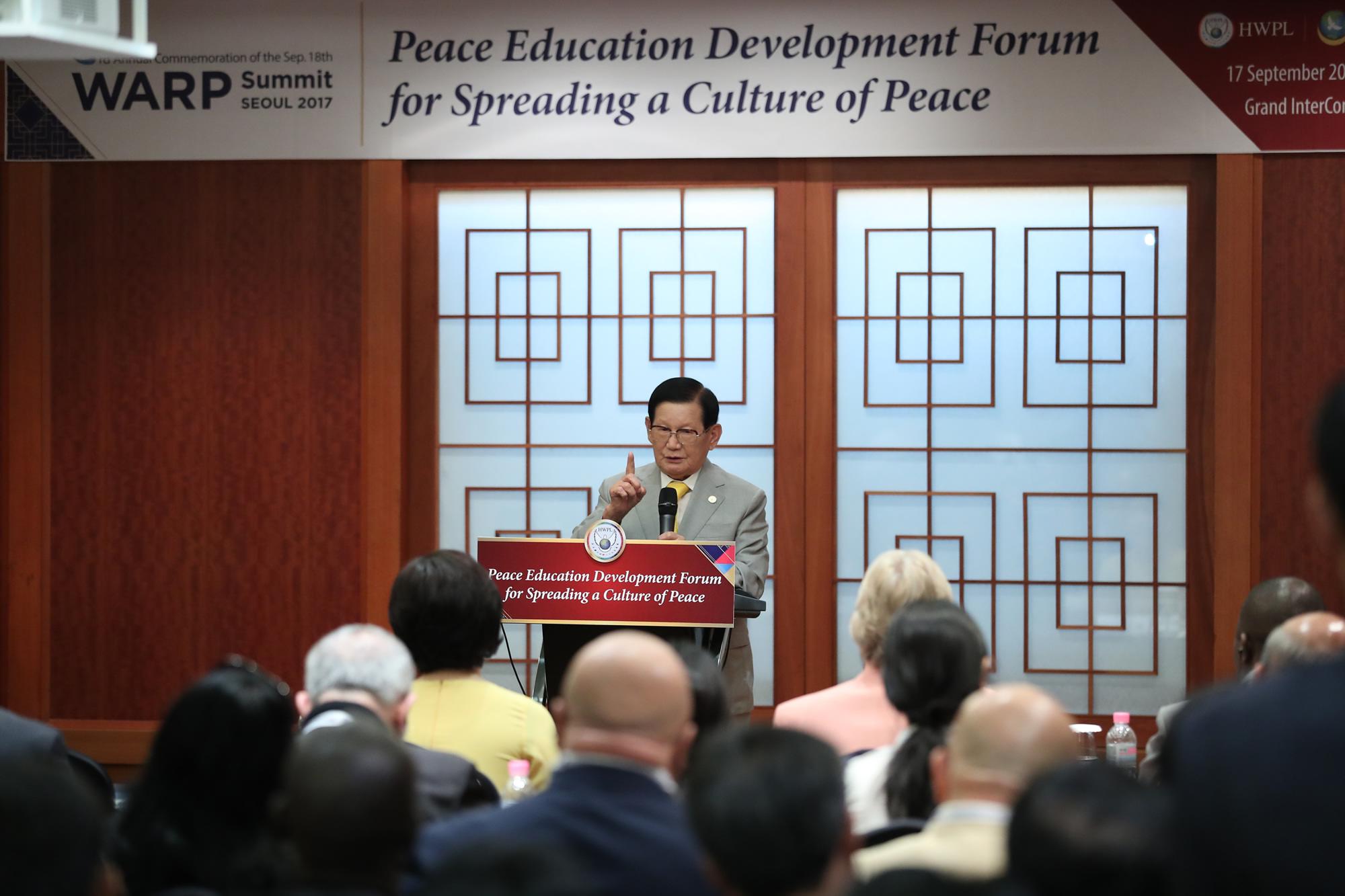
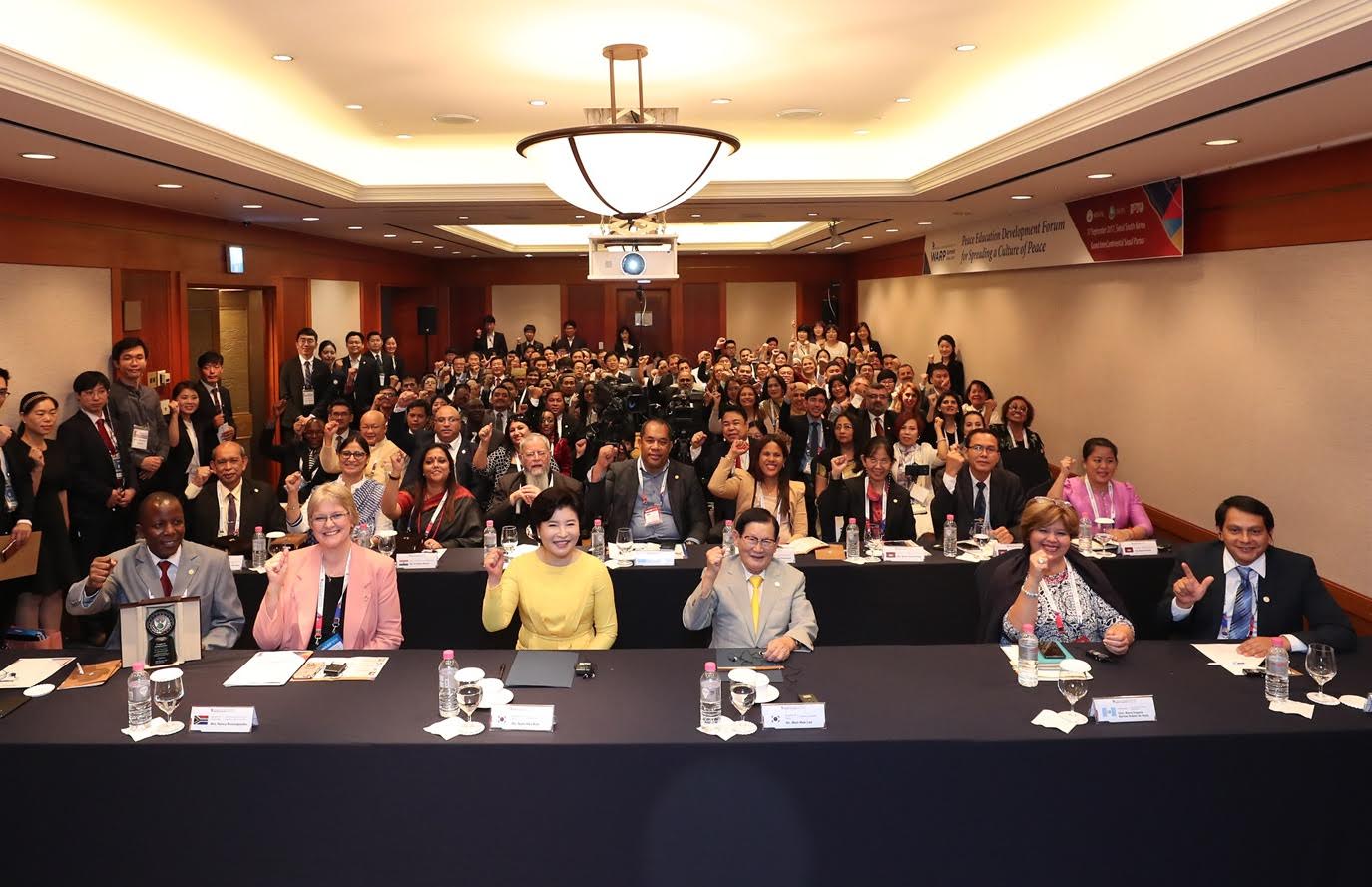
The discussion about the development of peace education took place on the first day of the 3rd Annual Commemoration of the World Alliance Religions’ Peace (WARP) Summit held in Seoul, Republic of Korea on September 17, organised by Heavenly Culture, World Peace, and Restoration of Light (HWPL) under the UN ECOSOC.
As a part of “establishing collaborative governance for development and implementation of the Declaration of Peace and Cessation of War (DPCW) drafted by HWPL in 2016 to advocate international cooperation with participation of civil society in peace building efforts, the forum with education specialists as participants diagnosed the current issues of education in countries and discussed introduction and application of peace education inspired by HWPL.
Chairman Man Hee Lee of HWPL emphasized comprehensive application of peace education by saying, “We need peace education specifically for today. We ourselves should be the reality of peace education. Without the spirit of peace in himself, how can he possibly educate peace to students? To do this, peace education must start from family so that the family becomes peaceful with the spirit of peace.”
Maria Eugenia Barrios Robles de Mejía, Vice Minister of Education in Guatemala, said “We should help the citizens of tomorrow be more tolerant of each other and know that a dialogue is the way to accept their differences and solve their conflicts.”
Participants discussed ways to enhance communication and network for inventing methodology and curriculum of peace education for future generations and to raise awareness of the need for teachers’ understanding of the value of peace with detailed educational contents.
“When we as teachers take up the responsibility to speak to our students, and be the necessary role models concerning how we speak, relationships and the adherence to order within society, we will start seeing the results in our students.” said Nancy Roussopoulos, former Principal of Camps Bay Preparatory School in Cape Town, South Africa.
Prof. Juan Carlos Torres from Don Bosco University shared his teaching experience of peace education by saying “When I applied the focus of ‘conflict resolution’ value of HWPL, with children 5-9 years old, the result was surprising. The change in attitude in their faces and joy was drawn on the paper. This education will change and form these values within their hearts as a permanent change.”
As an action plan to develop peace education discussed at the high-level meeting with education specialists last year, HWPL has established HWPL Peace Academies with 127 education institutions in nine countries including India, Israel, Kosovo, and the Philippines.
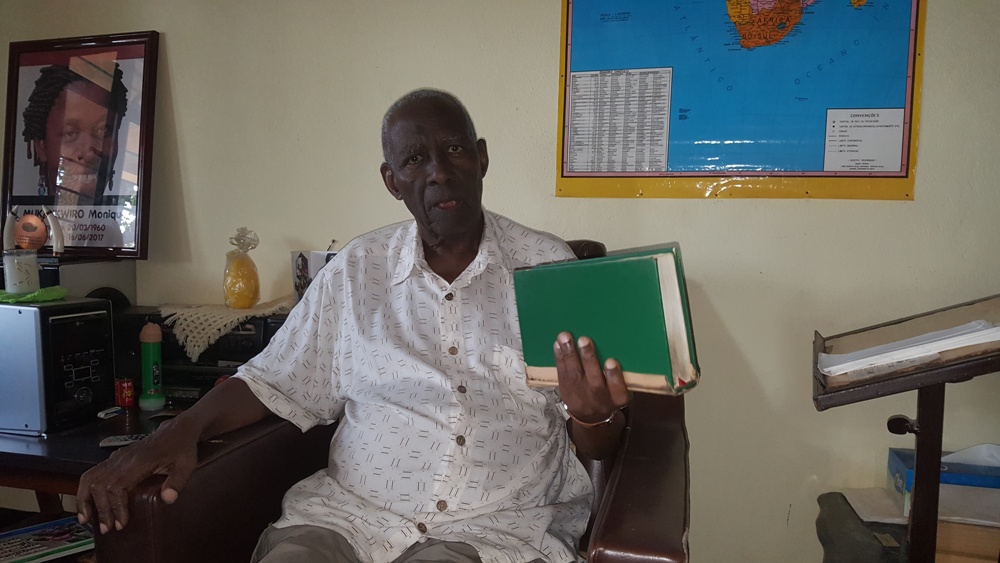
Ensconced in his chair at home on Friday at 4.00pm local time, retired Pastor Naasson Hitimana plays gospel music on the radio on his left side, has a Bible on the cockpit by his right and awaits a visitor he was told about, none else but a journalist from IGIHE. Elder Hitimana has got another chance to break loneliness and engage in a lengthy talk, definitely as long as 25 minutes compared to 10 minutes of the previous talk when he got tired and the talk was postponed until another schedule.
His caregiver is away for a gospel mission, a housemaid is busy outside, Pr Hitimana sits alone in a big modern house located in Kicukiro District, Kicukiro Sector, Gasharu Cell. He shakes hands again with the visitor who had been there a week before but the elderly cannot recall the face until he is reminded. He picks Bible and explains how he usually loses mind on everything starting from Bible verses he had memorised and used for around 40 years. He talks of frailty that comes with elderhood.
He says he was born at the time birth days were not recorded but it was later guessed and recorded for him as born in 1932, meaning he is now 85 years old but he says he is older than that. He started teaching at primary school in 1947 and was later sent to Cameroon where he spent four years receiving pastoral training and came back to Rwanda in 1962 with a qualification as a Pastor for a Christian church. He served the church until 1998, the time he retired due to frailty of ageing.
Hitimana, whose wife and some children passed away while other children live overseas including a son working in England, has no close family member around him but a nephew, young Pastor Désiré Niyomugabo, who committed the last seven months to staying with his paternal uncle, Hitimana. Retired Pastor Hitimana lives on his pension and rent of his two houses but sympathises with older persons who do not have means to afford their needs.
“I had always heard of a local adage ‘Gusaza ni Ugusahurwa’ (loosely translated as ageing is losing all) but I could not understand its real meaning until this age. An older person loses all capabilities to do what they used to do for and find themselves in need of someone else to provide everything just as a little baby needs. I have means to pay my housemaid but I imagine how challenging is the life of older person without such means, it is worrisome!” He says.
Pastor Hitimana urges churches to work closely with governments to provide eldercare by establishing centres for older persons who do not have caregivers, provide them with space for expressing their views and contribute to decisions that affect their well-being.
“Imagine that we need someone to take water and do us a bath yet young people also have got responsibilities and need to work for their prosperity. Centres for older persons would help better because they can hire workers and pay them for the job. It is a huge but crucial project; its elaboration should start now,” he adds before concluding, “Thank you for coming to talk with me.” He stops talking, stands up, leans on walls and walks to bed for rest.
The concerns were shared by a number of other older persons that IGIHE visited including Tesla Bayijuka, 93, Louise Bamurange, 84, both living at Muhima Sector in Nyarugenge District and members of elderly support group ‘Nsindagiza’ based in Remera Sector of Gasabo District.
Fourth Rwanda Population and Housing Census, 2012 released in 2014 indicates that there were 511,738 elderly persons (aged 60 and above) living in Rwanda, representing 4.9% of 10,515,973 population. According to National Social Protection Strategy 2011, only 24,300 aged 65 years and above (7.4%) had access to a pension from the Rwanda Social Security Board (RSSB). United Nations’ definition of older person considers aged 60 years and above.
{{Activists advocate for particular policies }}
Well over 10 years through Age Demand Action (ADA), rights activists have advocated for international convention on the rights of older persons, participation of older persons in governments’ decisions that affect them and having choice about their lives in their respective families.
Elie Mugabowishema, the president of Nsindagiza, a local non-governmental organisation that advocates for rights and social welfare of older persons, told IGIHE last week that there is still a lack of international convention and local policies about the rights and welfare of older persons.
He urged the Government of Rwanda to set up particular platforms through which older persons can channel their concerns as children, youth, women and people with disabilities have theirs.
Béatrice Mushimiyimana, the coordinator of Nsindagiza activities, said most of older persons suffer serious depression and stigma resulting from isolation and creating space for them to participate in the country and family’s life would be the best solution as well as developing effective social protection schemes for older persons.
Madeleine Nirere, the Chairperson of National Commission for Human Rights, said that after the recent outreach in which the commission learnt about lack of proper protection of older persons, the commission recommends government to develop a policy on eldercare and support existing charitable centres for older persons.
She added that considering the frailty of older persons, they deserve special care, saying that Rwanda should ratify and implement obligations in international and regional instruments on older persons’ rights and protection.
Ms Nirere stressed that older persons’ close and extended family members, neighbours, close government entities and Rwandan society at large should take responsibility of eldercare.
{{Government finds no gap}}
Minister of State in charge of Social Affairs and Social Protection at the Ministry of Local Government, Dr Alvera Mukabaramba, told IGIHE last Friday that government does its best to support all vulnerable people and older persons constitute the majority of beneficiaries of social protection schemes such as cash transfer under Vision 2020 Umurenge Programme (VUP) and Community-Based Health Insurance (Mutuelle de Santé).
“Not all elderly persons need support. Some are receiving their pension while others have children or other family members supporting them. We are working on a comprehensive social protection policy considering together all categories of the disadvantaged as the current policy will expire in 2018,” she said.
She said that only people with disabilities have their particular policy being developed because their case is not only about social aspect but fall in different ministries such as Ministry of Infrastructure for their mobility, Ministry of Education for their special needs in education and Ministry of Health for their special healthcare.
Dr Mukabaramba urged young people to save for their old age, saying that every working Rwandan, not only monthly salary earners but also informal sector actors including those on government support schemes, has to save for pension as a sustainable solution for ageing demands.
“Government seeks to strengthen pension scheme and poor people who will join the scheme will receive government’s incentives according to law which is now in Parliament. Meanwhile, children should not forsake their old parents and government will intervene where necessary,” she said.
{{
International Day of Older Persons
}}
Dr Mukabaramba said Rwanda will mark International Day of Older Persons, which is usually marked on 1st October, on 8th October in Nyamasheke District at a national level and in all districts under the theme “Stepping into the Future: Tapping the Talents, Contributions and Participation of Older Persons in Society.” Nyamasheke is the second district, after Gicumbi, with the highest number of older persons.
Global AgeWatch Index report 2015 ranked Rwanda as 89th out 96 countries studied including 11 on African continent, the position that Minister Mukabaramba refuted saying that there are obviously Rwanda’s commitments towards older persons which were not reported and ensured of reporting all to win a better ranking in the next report.
The study measured four key domains for older people: income security, health status, capability, and enabling environment –factors that older people say are necessary for them to be able to function independently.
Protocol to the African Charter on Human and Peoples’ Rights on the Rights of Older Persons in Africa adopted by the 26th ordinary session of the Assembly convened in Addis Ababa, Ethiopia on January 31, 2016, stipulates that “States Parties shall ensure that the 1991 United Nations Principles of Independence, Dignity, Self-fulfillment, Participation and Care of Older Persons are included in their national laws and are legally binding as the basis for ensuring their rights.”
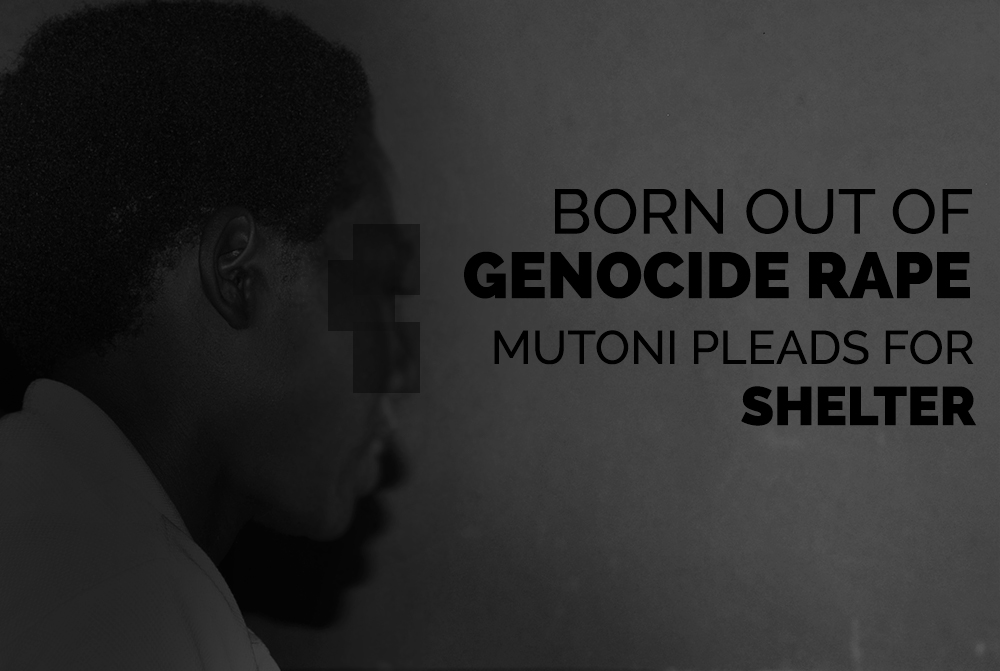
Well over 23 years after the Genocide, Kankindi has no distinct place to call home. She has always suffered extreme trauma that never allows her to go back to stay in her home place. Consequently, she has not benefited from any government of Rwanda’s special support which has provided almost all vulnerable Genocide survivors with houses and other basic needs.
Recounting her Genocide ordeal to IGIHE, Kankindi says her father took the entire family to seek refuge at his son-in-law’s home in the neighbourhood when killings started in their area but the man handed them to the hit-men (interahamwe) who killed others but Kankindi, then 20-year old, was rescued by her cousin’s husband who told her to go away so that she does not die in his sight.
She went back to her sister whose husband locked her in the room and started raping her daily for about a week before she managed to escape and left Gisagara for Kamonyi where she had another married sister. She did not know she was impregnated by her sister’s husband until end of month when she did not experience her menstrual cycle.
“When I got here in Kamonyi, I realised that I was pregnant and later produced a daughter. I hated life especially when I saw girls of my age getting married and others completing studies. When my daughter was 6-months old I felt I didn’t want the child, I hated her and I wished I had been killed too in Genocide,” narrates Kankindi and talk ends here as her trauma resurfaces, loses conscious, daughter locks all doors, counsellor comforts her, later takes her to bed and talk shifts to the daughter.
Daughter, Mutoni (not her real name) says her mother usually gets traumatised and runs out on the streets and sometimes disappears from home for some days. “When we notice signs of her trauma, we lock all doors so that she does not go out on the streets,” says Mutoni.
When Gacaca jurisdictions started, Kankindi went back home in Gisagara to testify on what she saw during the Genocide. Her sister’s husband who raped her got jailed and the sister bitterly hated Kankindi, threatening her to have no peace as long as her husband is in prison. Kankindi failed to stay in her home area because of scornful words from neighbours, sister and her children but the environment also triggers her trauma. She decided to stay in Kamonyi where she does not have any property but lives on subsistent agriculture on the farm left by her sister to four children.
{{
Daughter’s school dropout }}
Kankindi’s daughter, Mutoni, dropped out of school when she was in senior three in 2015 when her school fees support from Solace Ministries, a local charity, was reduced from Rwf70,000 to Rwf40,000 per term. Her mother was unable to top up. She is currently working on the farm and sometimes at construction sites to earn a living.
Mutoni, 22, who has never seen her father (currently serving his sentence), had all along believed her father died in Genocide until she learned of her birth circumstances in 2012 when her mother opened up. She wishes to have their own house and get more professional training in construction so that she can earn a better living when she gets a job upon completion.
“Our hosting family (her cousins) was mistreating us and sent us outside their house. They chased us out of their house but since we had nowhere to go, we settled in their old kitchen with a falling wall and leaking roof. I and my mother started a very hard life without food, no shelter, no clothing, not even a blanket; we persisted until one of the cousins got us back into the main house but we are still facing harassment here,” she says.
“My prayer is for our own house. I am a grown-up girl and work to earn our living. We can live happily away from here. My mother often gets traumatised, she cannot stay nearby her offenders in Gisagara District, and we wish to have a house somewhere else.”
{{
FARG, Sector pledge support}}
While most Genocide survivors have benefited from Government special schemes which provided them with adequate housing and other basic needs, Kankindi’s case has all along been unknown to officials of local government and the Fund for Neediest Survivors of Genocide (FARG) which promotes social welfare of the survivors.
Christine Nyirandayisabye, Executive Sectretary of Runda Sector in Kamonyi District, says she has been unaware of the case for over eight years in the office but assured she is going to look for Kankindi and help her get on the list of FARG beneficiaries and establish how she can be further helped in accessing support through other government programmes.
Eng. Théophille Ruberangeyo, Director General of FARG, says he is going to follow up the issue and make sure she gets on the list of beneficiaries regardless of where she stays if she has proof of being a Genocide survivor. Kankindi obviously has the proof.
Ruberangeyo says they prefer to build houses for neediest survivors in their home areas where they have other resources like land which helps in farming activities especially because the government usually gives them cows but adds FARG also helps survivors settle where they feel comfortable after investigating the threats in their home areas.
“She is entitled to FARG support. She, first of all, needs counselling to help recover from that trauma. We have a counsellor in every district who is going to help her. Then, we shall provide her with adequate shelter,” he says.
Though the daughter, Mutoni, is not eligible for FARG support because she is not a Genocide survivor, Ruberangeyo promised to do advocacy personally to the Ministry of Local Government so that she gets support to take her back to school.
Every year, FARG builds new houses and renovates existing ones for vulnerable Genocide survivors. This year alone, 369 new houses and renovation of 331 existing ones are expected to be delivered at the budget of Rwf9.5 billion.
The 2014 report indicated that 1,687 households of Genocide survivors had no shelters but 1,483 households have so far got houses while 204 will get theirs in the near future.
Other border posts recently upgraded to suit this purpose are those of Rusumo, Nemba, and Kagitumba at the borders with Tanzania, Burundi, and Uganda, respectively. Gatuna at the border with Uganda is under construction.
La Corniche border boasts of ample and ultramodern space for all services offered at a customs area; animal inspection, customs, and immigration all housed under one roof.
“This modernisation means quick clearance of goods, as well as cuts on time and money costs. At Rusumo and Kagitumba, customs procedures have drastically reduced. Previously, cargoes underwent two procedures in Rwanda and repeated them in Tanzania. It was not good for business and tax,” says RRA Deputy Commissioner for Customs, William Musoni.
The border between Rwanda and DRC handles a heavy traffic of small traders.
“Approximately 50,000 persons go through this border daily. Most of them are small traders. So as they graduate to the formal sector, there must be facilities to sustain that growth. This new facility is one of those,” says Mr. Pierre Damien Bazimaziki, Private Sector Federation Vice Chair in Rubavu District.
The modernisation of customs processes is tied to the overall national philosophy of improving trade environment to facilitate businesses.
In an interview with {{IGIHE}}, Ryan said that he and his family will miss Rwanda where they met wonderful people. Excerpts;{The Cabinet has approved the new EU resident ambassador to Rwanda. Are you going for a new mission?}
Yes, the EU has nominated Ambassador designate Nicola Bellomo as my successor, and this has now been approved by the Rwandan Cabinet. My four year assignment as ambassador to Rwanda has come to an end, and I will be returning to my headquarters in Brussels.
{
What is the image of EU-Rwanda cooperation that you are leaving behind?}
EU cooperation with Rwanda is strong, and growing. Most of it is budget support, and the task of the EU Delegation in Kigali is to engage more deeply in policy dialogue with government, to share views, and to ensure that EU financial support, benefits the lives of each citizen in this country.
{Are you happy with your four-year service in Rwanda?}
It has been immensely stimulating working in Rwanda, linking closely with my other EU member state ambassador colleagues, to represent EU policies and values, and above all to build an understanding, however modest and incomplete, of the nature of society, ambition and governance among Rwanda’s 12 million citizens. The European Union is reaching out to Africa, and Rwanda is an exemplary vantage point from which to explore how the EU-African relationship can be improved economically and politically.
What do you think your successor should focus on during his time in Rwanda?
I will leave it to my dear friend Nicola Bellomo to make his own judgement on future areas of focus. He has a wide experience of Africa. One of the beauties of changing ambassadors every four years is that it injects new thinking and perspectives into the partnership.
{Which challenges have you faced during your time of service?}
There are so many positives to anyone privileged to live and work in Rwanda that it seems grudging to mention challenges. There have been astounding changes over my brief stay. The Kigali skyline has transformed dramatically in response to modernisation, the economy exudes a reassuring sense of confidence. The challenge is to strike the right balance in sharing economic wealth so that all feel they have a stake in the success.
My challenge is to see how our EU programmes can help in this, in working with government and civil society to tackle the fundamental issues of poverty, hunger and youth unemployment. I am optimistic, since government attaches priority to these problems. Rwandans impress me with their deep sense of wisdom, natural justice and appreciation of the state of the nation – whether farmer, trader or wealthy entrepreneur, woman or man. My humble hope is that these qualities are harnessed so that civil society gradually can play a more distinct role in this country’s progress. It is happening, but the potential remains substantial.
{What do you speak about your meet with Diana Rwigara?}
It is quite normal for diplomats to meet presidential aspirants. I met others. On Top Tower, my family’s safety was the concern..
{What will be your memory of Rwanda? }
My memories and impressions of Rwanda are shaped by the charming people I have met. As ambassador, many citizens from all walks of life wish to come and discuss, to offer ideas, to give guidance, and to know what the EU thinks! I owe each of them a huge debt of gratitude. We are here to learn, to assess, to recommend to our authorities.
My particular pleasure has been bouncing down country roads to visit communities and projects, however remote, to meet villagers and leaders, talk to students, and to let them know that the European Union is not some remote notion but an ever-present partner. I am helped enormously in this by a great team of colleagues in the Delegation. They are a pleasure to work with. I am indebted to each of them.
{Can you share with us how you feel as you bid farewell to Rwandans?
}
It has been a privilege to call Rwanda home for the last four years. That it is one of the most beautiful countries in Africa is beyond question. I and my family will very much miss Rwanda and its wonderful people.
Among requirements they requested to submit are social status category proof (ubudehe) and admission letter from the college.
REB said there are some 677 that applied to study in UR, but did not apply for scholarship.
REB says that priority of admission was given to students who performed well in high school leaving examinations, students preferring vocational studies and those in first or second ubudehe category.
On the occasion, Mpayimana promised his supporters to run for elections in the upcoming parliamentary elections.
“I have been pleased with meeting Rwandans living in France. I thank all Rwandans from around the world that voted for me in the recent presidential elections,” reads a statement on his website.
“I would like to announce that I will run in next year’s parliamentary elections” he said.
In presidential elections, PhillipeMpayimana who run as an independent candidate got 0.73% of the total vote being the second after President Paul Kagame who got 98.79% and Frank Habineza from Democratic Green Party of Rwanda trailed with 0.48%.
The President co-chaired two working sessions. The session on ‘Enabling Digital Entrepreneurship for 2030’ examined how governments and private sector can work together to promote e-commerce and other technology-based businesses. In a discussion on Current Work on Future Directions, the chairs of the various Working Groups on Technologies in Space and the Upper Atmosphere had an opportunity to share key outcomes of their activities.
President Kagame pointed out that the Broadband Commission offers a platform for countries to identify key issues and work together towards finding solutions.
“The need to overcome our differences for the common good is a challenge we all face. Let us keep working hard at it. We must continue to mobilise the ordinary consumer and find a framework that enables us to find common solutions,” President Kagame said.
The Head of State called on Commission members to not be deterred by things that don’t happen even where it looked obvious.
“When we succeed, we must use this as a demonstration. It is not an easy, but possible and we must continue to push forward. Our efforts remain vital in ensuring that broadband and ICT receive the attention they deserve in the global development agenda,” President Kagame said.
The 14th meeting also saw the introduction of ten new commissioners.
Concluding the gathering, President Kagame presented outgoing Director General of UNESCO Ms Irina Bokova, who also serves as the vice co-chair of the Broadband Commission, with a special plaque in recognition of her work over the years.
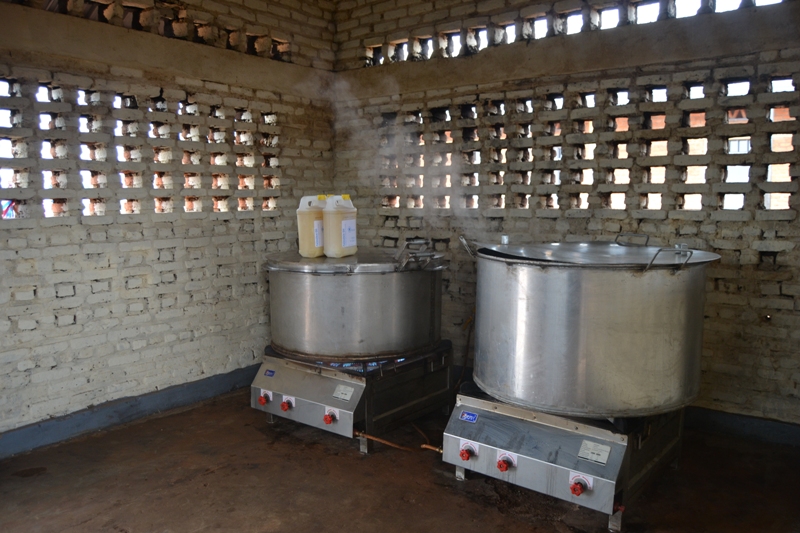
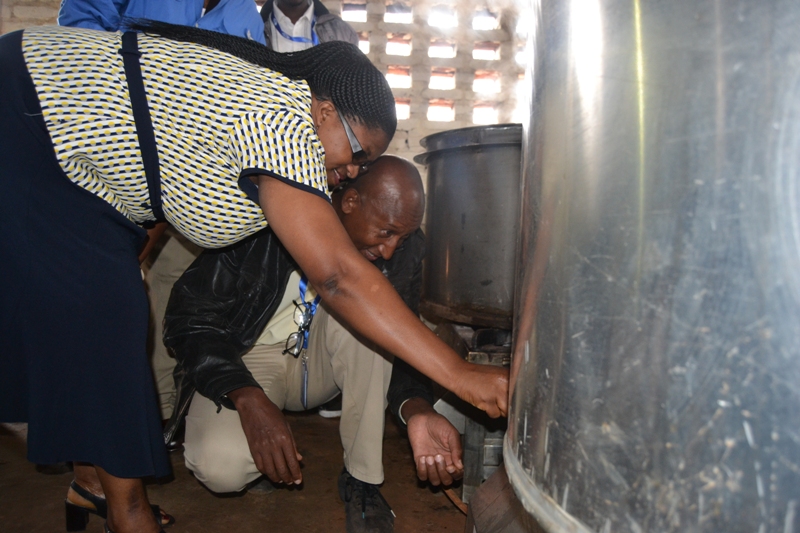
The pilot phase has been conducted in Nyarushishi and Kijote refugee camps in Nyabihu District. The opening ceremony took place in Nyarushishi camp in Nkungu Sector of Rusizi district on Friday.
Speaking at the event, the Minister for Disaster Management and Refugee Affairs , Jeanne d’Arc Debonheur said that beside environment conservation, the exercise will reduce money spent on buying firewood and invest it in other development activities.
“It was observed that we used to spend much money in buying firewood, affecting other development activities. It also affects our forest cover, breeding erosion and other disasters which leave lives and environment susceptible to destruction,” she said.
She said it has been taking Rwf900 million every year to buy firewood, but now it will take a half of the budget and the rest will go in development activities.