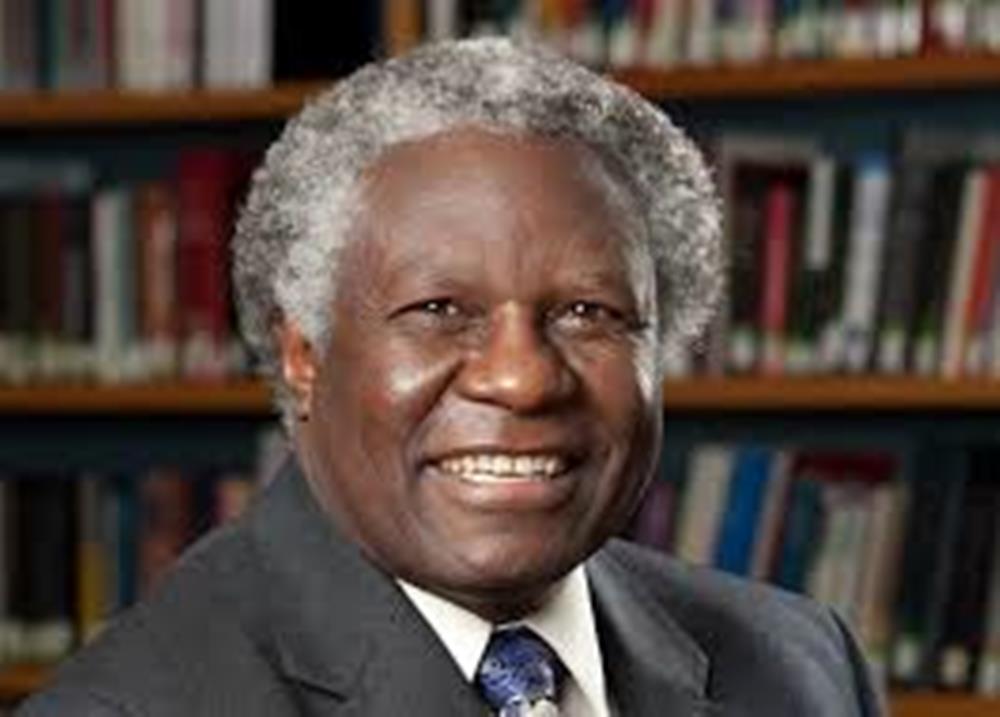
Through his twitter handle, Kagame said that Africa has lost a brilliant mind.
“Saddened to hear of the passing of Prof Calestous Juma. We have lost a brilliant mind who was dedicated to innovation, education and Africa’s prosperity. Condolences to his family and friends. May he rest in peace,” reads the Head of State’s tweet.
Others who expressed their condolences include, the Minister of Foreign Affairs and East African Community Affairs, Louise Mushikiwabo who said that Africa has lost a very important African who was always striving to serve the continent.
“Calestous was a very valuable African, always wanting his brilliant mind to serve the continent! May his family and Havard colleagues find in his life strength and solace!” reads the Minister’s tweet.
According to Daily Nation, Calestous was unwell for the past two years.
“Prof has been unwell for the past two years and today we received the sad news of his passing. Any more details will come from his family,” Calestous lawyer, Peter Wanyama told Daily Nation yesterday.
{{About Calestous}}
According to Daily Nation, in 2012, 2013 and 2014 Calestous had been listed among the most influential 100 Africans by the New African magazine.
He began his career as a science teacher in Mombasa between 1974 and 1978 before becoming the first science and environment journalist for Daily Nation between 1978 and 1979.
He later started his own magazine, Ecoforum.
It was during his brief stint at the Nation that environmental issues were prominently covered by Kenyan media.
He later worked as an editor and researcher at the Environment Liaison Centre in Nairobi between 1979 and 1982.
The scientist, who attained a teacher’s certificate from Egoji Teacher’s College in 1974, also held a PhD in Science Policy Research from the University of Sussex.
At the time of his death, he was teaching graduate courses on science, technology and development policy and biotechnology at Harvard University.
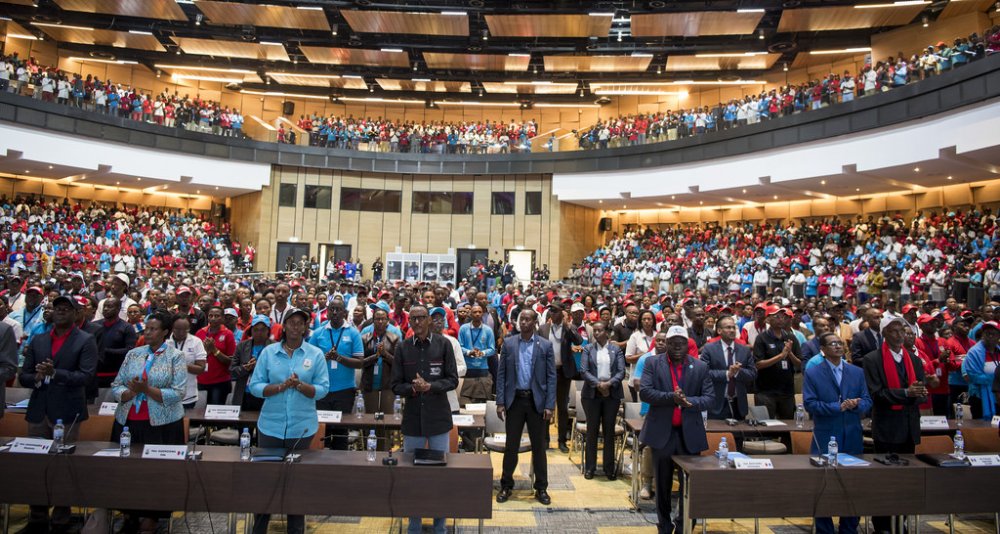
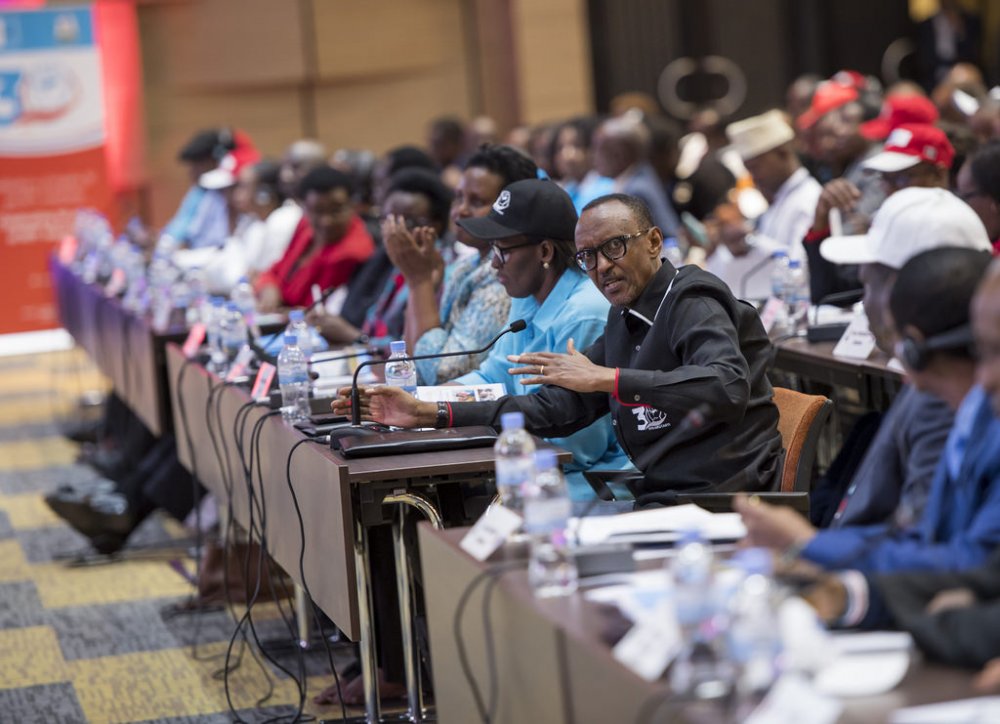
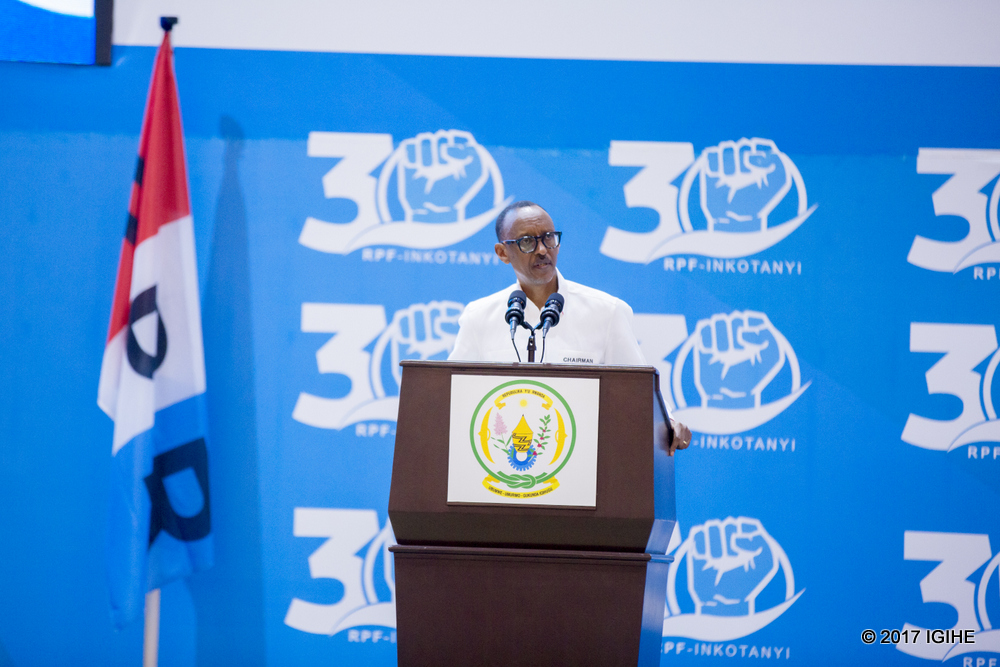
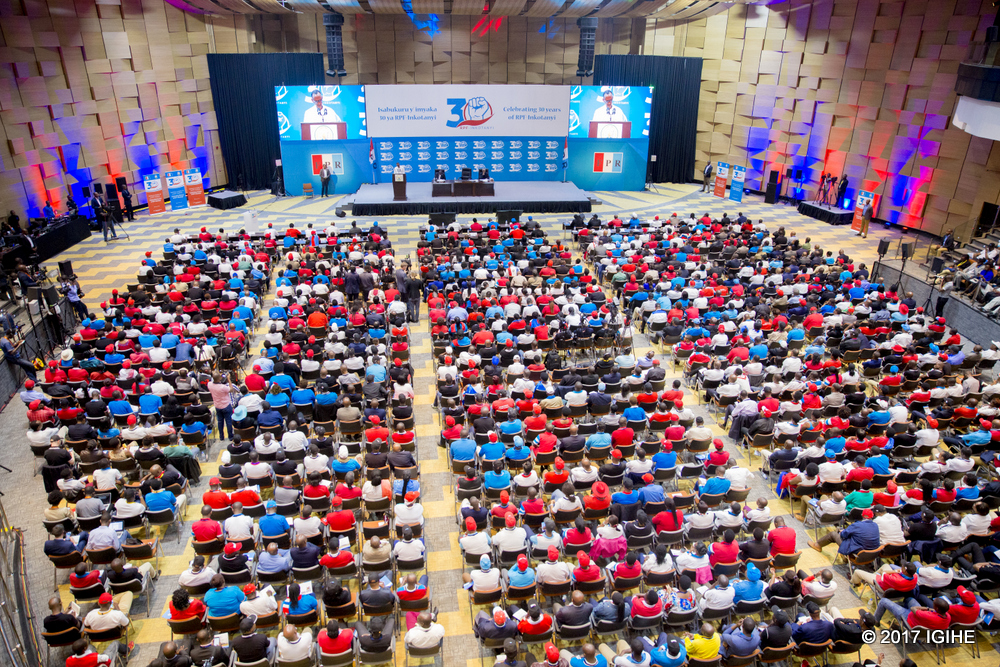
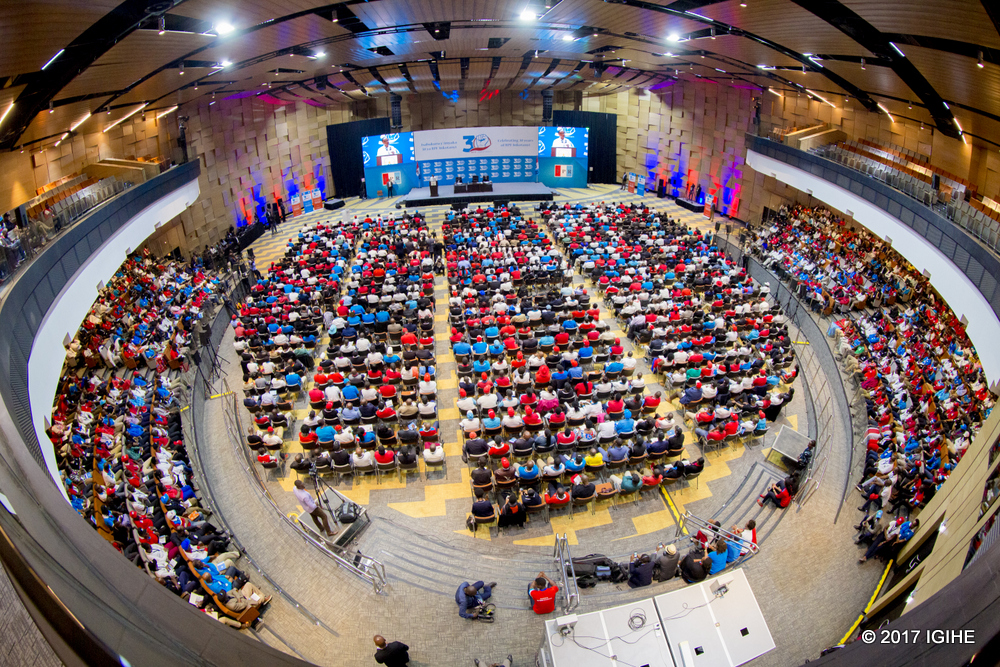
Kagame was speaking Friday in RPF’s Congress in Kigali ahead of 30 year anniversary main event slated on Saturday
He said about 23 years ago, Rwanda was being looked as a failed state or just on the way to be the state.
“When they were proven wrong, they changed the narrative that we would be a failed state in the distant future,” he said.
“We must not be strayed by misguided theories of so-called governance experts. We do things the way we believe the way is better for us,” he said.
Speaking on human capital to drive Rwanda’s journey of transformation, Kagame said that “it is not that we don’t have the human resource, we just do not have enough to drive this going by our pace,”
Kagame said that Rwandans should not be shy in their interests.
“As long as we have looked into it and its implications, we cannot look for approval from anywhere else,” he noted.
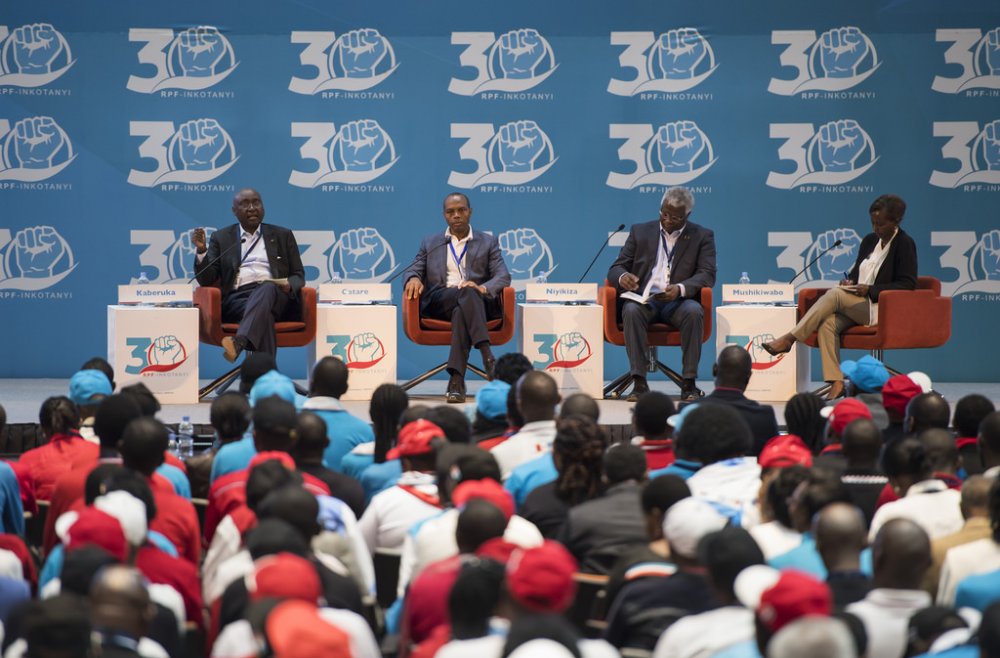
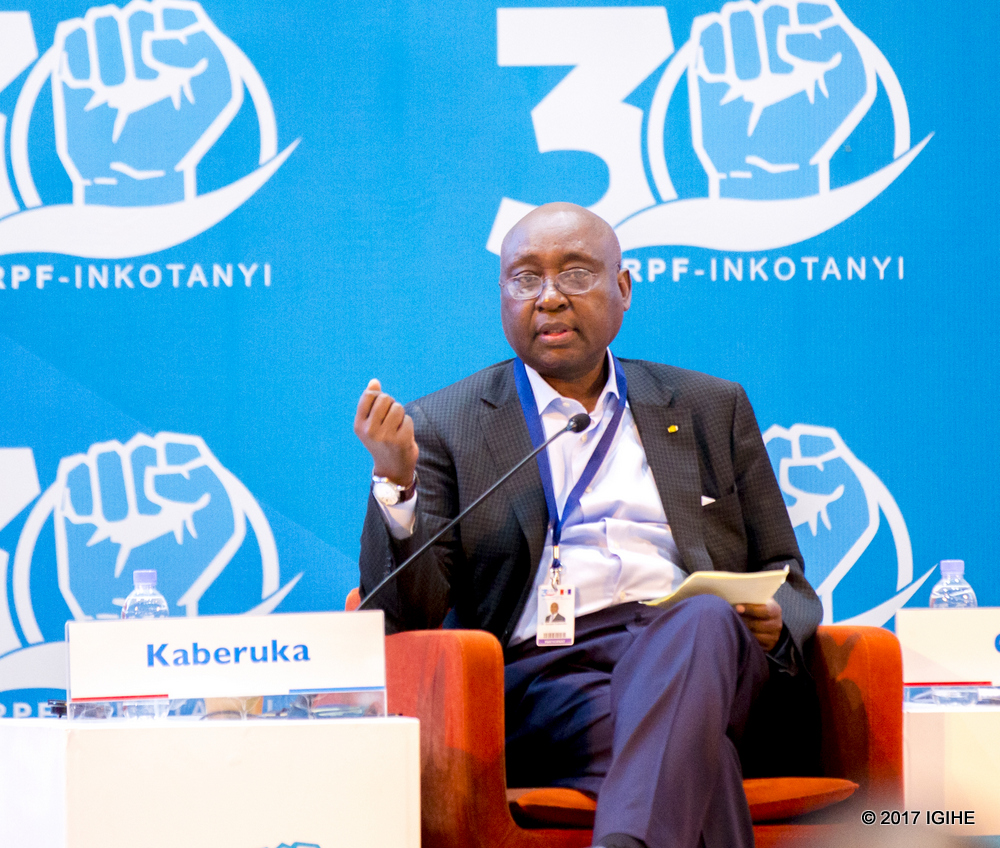
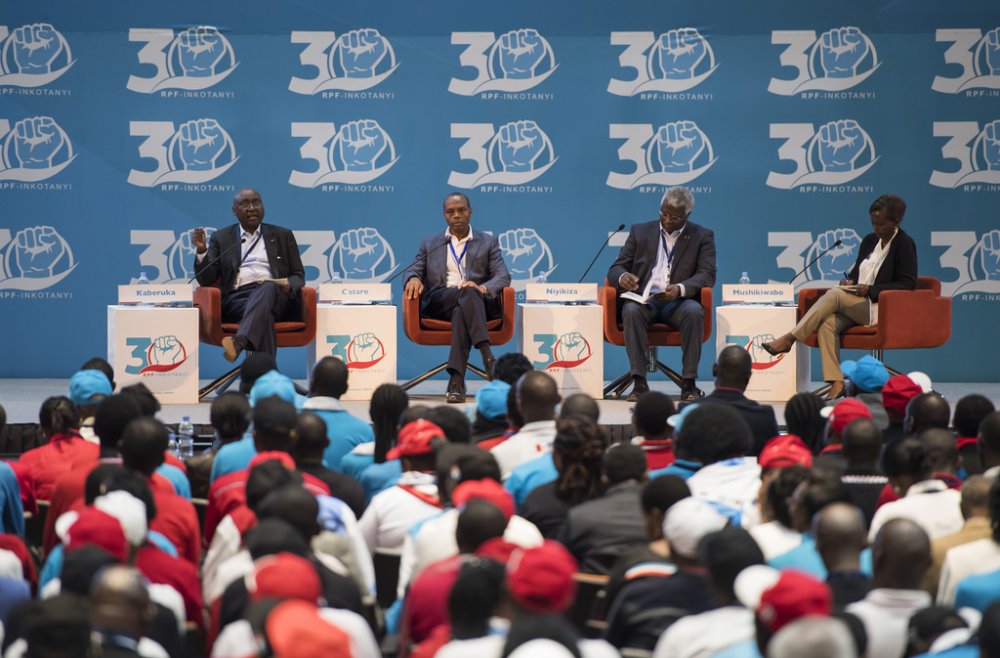
Kagame was speaking after the panel discussion of former African Development Bank Group President, Dr. Donald kaberuka, Rwanda Mining and Petroleum Board Chief Executive Officer, Francis Gatare; the US based Lifting and Empowering All Families Pharmaceuticals CEO, Dr. Clet Niyikiza and the Minister for Foreign Affairs and East African Community, Louise Mushikiwabo.
Their discussions revolved around the topic ‘Shaping Rwanda for Global Challenges’.
On the panel, Kaberuka urged the youth to find solutions for their own problems within Africa, rather than looking for greener pastures outside the continent.
Dr Kaberuka was speaking Friday at the Rwanda Patriotic Front (RPF)-Inkotanyi Congress in Kigali.
He was in the panel with the Rwanda Mining and Petroleum Board Chief Executive Officer, Francis Gatare; the US based Lifting and Empowering All Families Pharmaceuticals CEO, Dr. Clet Niyikiza and the Minister for Foreign Affairs and East African Community, Louise Mushikiwabo. Their discussions revolved around the topic ‘Shaping Rwanda for Global Challenges’.
Dr Kaberuka said the global circumstances, that prevailed at the time former Rwanda Patriotic Army (RPA) launched the liberation struggle, marked what was called Afro-pessimism. ‘The global order was: what can we do for Africa?’
“The RPF then has major role to play in changing the narrative. We did not want to be objects of pity,” he said.
He said one thing that has shaped Rwanda after the RPF assumed leadership is the determination to deliver on what is set out to do.
“Very few countries have managed to do that and I witnessed that during my time at African Development Bank Group as president,” he said adding that the RPF has demystified the biblical tale of David versus Goliath concept on the Worldview of Africa.
Kaberuka reminded the youth to find solutions for their own problems in Africa.
“To the youth here, I want to tell you that Africa should wake up to the reality that the solution to our problems is here on the continent. We should stop looking elsewhere,” he urged youth.
Mushikiwabo said that Rwandans must not waste their energy on roadside politics. She said Africa must put her efforts together.
Niyikiza noted that to be able to navigate the unpredictable global challenges, Africans must instill into their children the culture of thinking big, innovate and have strategies in place to protect the innovations.
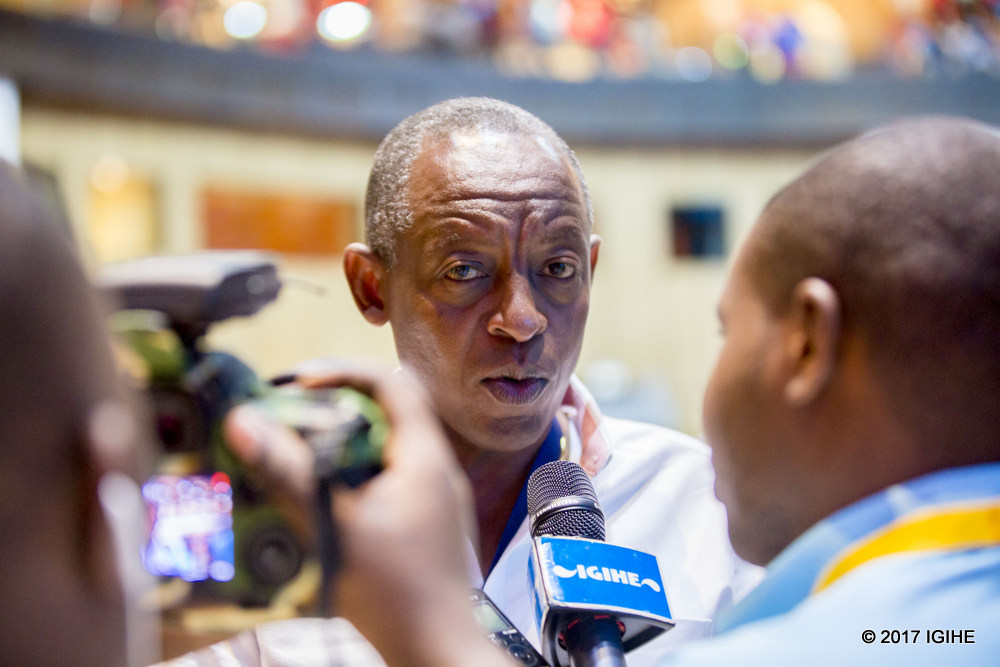
Speaking to IGIHE on the sidelines of the Rwanda Patriotic Front (FPR)-Inkotanyi Congress in Kigali on Thursday, Kimonyo said the talks consider giving Kenyan nationality to those Rwandans or repatriated them to Rwanda.
In 1940, a number of Rwandans were taken as slaves by British colonialists to Kenya to work in tea plantation in different parts of the country. As a result, currently there are about 500 descendants from those slaves living in Kenya.
In 1945, these Rwandans were given Kenyan nationality and identity cards but their IDs were confiscated 30years later, depriving them rights to nationality. They were, then, given temporary IDs that are renewable every three months.
Over 40 years in Kenya now, they are denied equal rights with Kenyans.
Among these rights include government education scholarships, opening bank accounts among other rights that a stateless person cannot access.
They have always applied for the nationality but they are still in ambiguity.
“We are discussing so that those who wish to live in Kenya can be given nationality and those willing to come back to Rwanda will be repatriated. They have spent several years in that country as they went there before Kenyan independence,” he said.
In 1980, Kenyan government had decided to repatriate them but then Rwandan government rejected them saying that they were Kenyans.
According to Kimonyo, Rwanda has embarked on bringing back her nationals and this is why the country welcomes all those who wish to come back home.
“All Rwandans living abroad are free to go back to their country and those who wish to stay there are also free to do so,” he said.
Article 7 of Rwandan Constitution stipulates that every person has a right to nationality and dual nationality is permitted. The Constitution states that no Rwandan may be deprived of Rwandan nationality of origin.
According to the Constitution, Rwandans or their descendants who were deprived of their nationality between 1st November 1959 and 31st December 1994 by reason of acquisition of foreign nationalities automatically reacquire Rwandan nationality if they return to settle in Rwanda
According to MINISANTE, the World Health Organisation (WHO) released advisory note concerning water-pipe tobacco smoking, stating that they cause health effects and recommended actions for regulators.
The note by the WHO expressed that Shisha Tobacco smoking is damaging, addictive and dangerous on human lives.
The note says that the smoke that emerges from water-pipe contains numerous toxicants known to cause lung cancer and heart diseases among others.
“Accordingly, the Ministry of Health informs general public that the use, advertisement and import of water-pipe tobacco smoking known as Shisha Tobacco is banned on Rwandan territory effective from 15th December, 2017,” reads the ministry’s statement released on Thursday.
The statement cautions the public that failure to comply with the notice, sanctions as provided by the law will be applied.
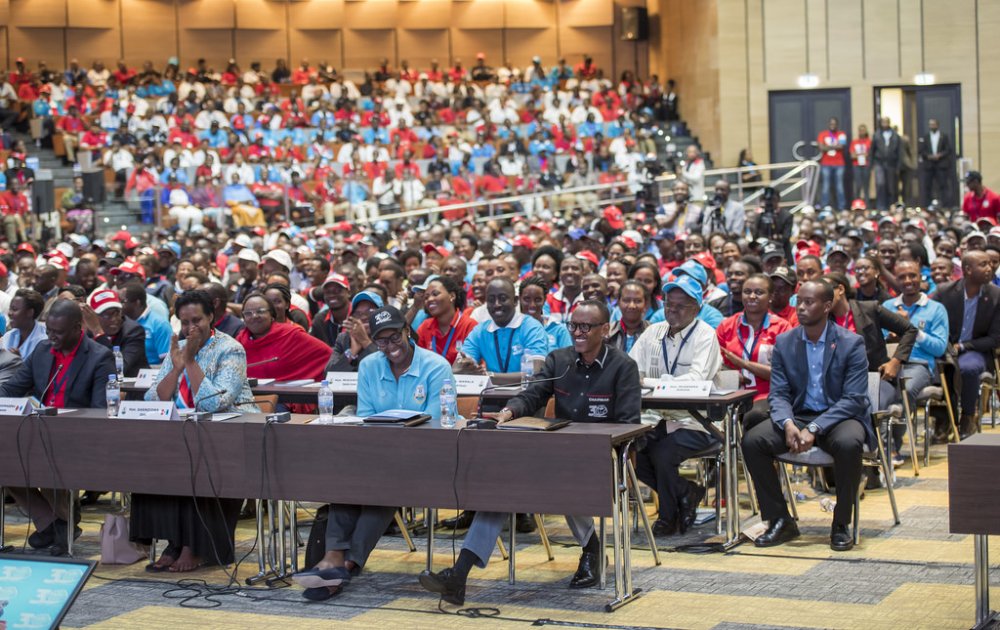
Kagame was speaking Thursday at the RPF Congress in Kigali ahead of 30th Anniversary celebrations slated on Saturday.
Congratulating RPF members on the 30th Anniversary, Kagame said that it is a milestone not only of years but of efforts that changed the course of history of Rwanda as well as the character.
He said RPF emerged as a response to Rwanda’s serious problems caused by bad politics. These problems, he said, include a divided country with no direction, where citizens’ rights were abused, deprived of dignity and security.
“To change the situation, commitment and great sacrifice were required. It also took ideological clarity corresponding with actions and behavior,” he said.
He said liberation meant facing new challenges including resistance to change, to learning and a sense of entitlement from those who thought the country owed them something.
Kagame said during the struggle, some people got astray, put personal interests above the core values of the RPF and accepted to be used by external forces who never wanted RPF to move forward and be who they must be.
“Knowing their weaknesses, external forces used praises, they told them they were better than the ones they fought with, better than their fellow Rwandans and they went from being leaders to being tools of external forces,” he explained.
For Africans with no pride and no dignity, Kagame said, the promise of citizenship in a foreign country was enough.
“When their plans failed, they were satisfied with being taken to a foreign country to become security guards at a bank or at a store,” he said.
“They failed to see that when you are a tool of external forces, no one will stand by you when you are no longer useful and that is what happened when they were faced with failure,” he said.
Kagame said they cannot let these challenges deter the party from the goals they have set.
“Our citizens expect us to succeed. To deliver on development, for their children to go to school, for citizens to earn a livelihood, we cannot afford to fail our citizens,” Kagame noted.
He said they have to ask themselves what example they are setting for the youth, adding that their legacy to youth should be about how they build the country and forge the identity as Rwandans.
“As cadres of RPF-Inkotanyi, we should not be bragging about what others can learn from us. That is not who we are or the values we stand for. Let us focus on the many challenges we still face and solve them,” he urged.
“You have to think of yourself as a leader who puts those you serve first, a leader who thinks about how to work with their peers. Not leaders who put themselves first. Those are not our values,” he added.
He said anything they accomplish is meaningless if they do not have the right values guiding them.
“What we are celebrating today are the achievements of a generation. But we cannot be short sighted. We must think of what we can do today to benefit the generations to come. All the challenges we have faced, and the milestones we have reached, they should all serve as lessons that we should use to move forward,” Kagame urged RPF Cadres.
Speaking about external threats, Kagame said “the power to protect what we have achieved, who we are and what we stand for is within us.”
Back to the liberation struggle, Kagame said when the United Nations Assistance Mission for Rwanda (UNAMIR) commander tried to tell former Rwanda Patriotic Army not to fight because the French had superior weapons, he gave him two messages to deliver: ‘Tell them there is no greater death than accepting what is happening now. Tell them they are human beings who bleed like we do’.
The force also appealed to the general public to enjoy in the usual peaceful manner without disrupting beliefs and celebrations of other people.
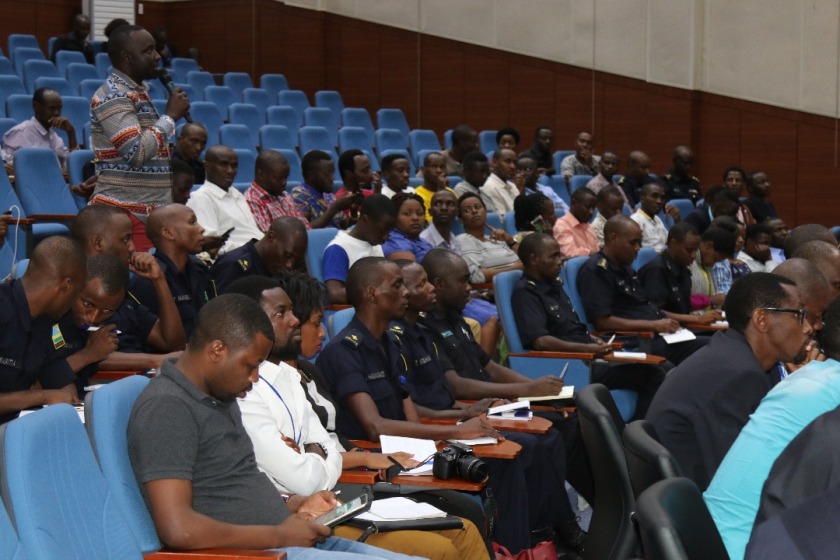
While opening a periodic Police-media interaction, on Wednesday, aimed at strengthening partnerships for quality service delivery, the Inspector General of Police (IGP) Emmanuel K. Gasana, said “Police value the contribution of the media in informing and educating the public on security related matters.”
The periodic session brings together the Police and media practitioners to discuss issues pertaining security and partnership with the media in policing.
Police Chief said the safety, security and peace that people in Rwanda enjoy today will continue to be fostered in partnership with the general public and the media in particular to jointly raise awareness and fight any threat to the wellbeing of the people.
“There are individuals that look at such festivities as an opportunity to engage in criminal acts like stealing or taking advantage of unsuspecting people for their valuables,” IGP Gasana said, calling for usual vigilance and real time information sharing on any suspected wrongdoers.
He reminded parents to monitor and guide their children especially minors as they celebrate and prevent them from engaging into malpractices like abusing alcoholic beverages and going into entertainment spots, which is prohibited by law.
“As various security operations continue to be conducted as usual, citizens are required to be involved and continue working with the Police by reporting any suspicious behavior that might require targeted checks,” IGP Gasana added.
He further advised people to drink and enjoy responsibly while avoiding engaging in violence like fighting to ensure a peaceful and crime-free festive season.
Presenting on the state of road safety in the country, the Commissioner for Traffic and Road Safety department, Commissioner of Police (CP) George Rumanzi, cautioned motorists against drunk-driving, speeding, recklessness and bad maneuvers, which are most common during the festive season, and at times, causing fatal accidents.
The Museum is built in the Parliamentary building which was once known as Conceil National de Developement (CND) because the building hosted the Rwandan Patriotic Front (RPF) politicians and the 600 man protection force (3BN) from 28th December 1993 as they were in the preparations for the installation of Broad Based Transitional Government and the National Transitional Assembly.
These 600 man protection force were the ones given the order first on April 7th 1994 by the Rwanda Patriotic Army (RPA) Chairman of High Command, Major General Paul Kagame, now the President of the Republic to break out from their initial positions defend themselves and rescue victims of genocide in their vicinity when campaign against genocide began.
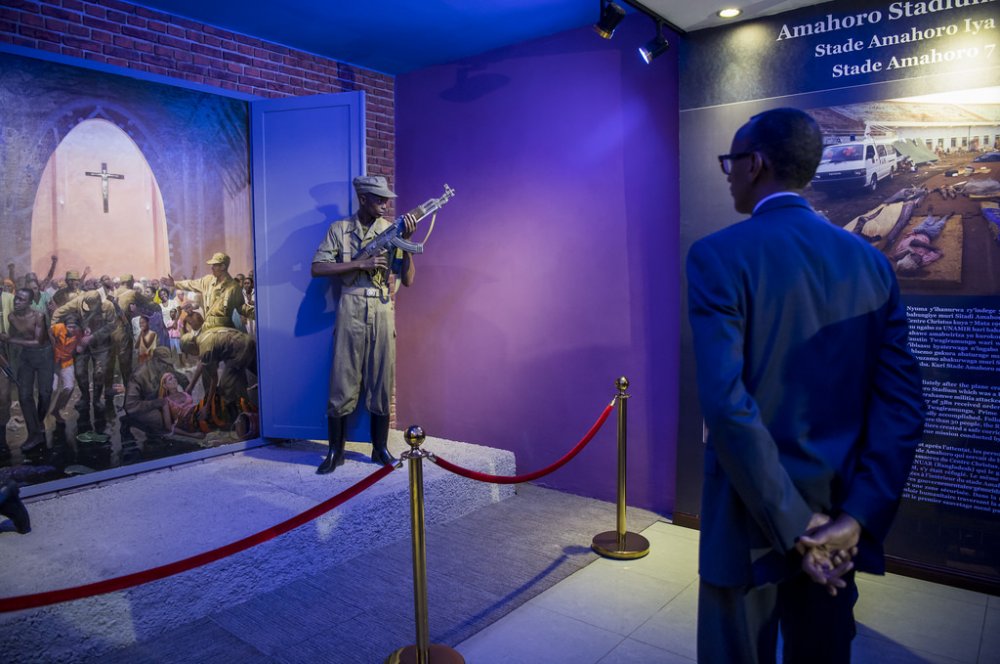
The Museum depicts in details how the Campaign Against Genocide Plan was executed by RPA following the withdrawal of UN troops leaving the targeted Tutsi under the mercy of the genocidaires and how RPA forces who were in the war of liberation took the unilateral decision to stop Genocide, rescue vistims of genocide and defeat the genocidal forces.
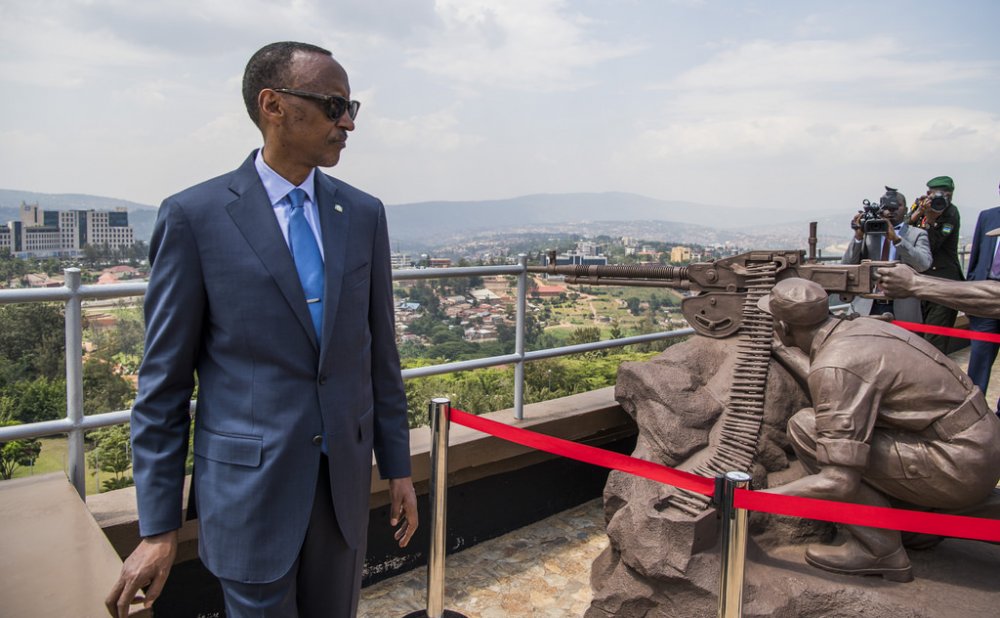
The museum has its outer part comprised of monuments including that of the 12.7mm Machine Gun that helped in containing the advancing genocidal forces.
The Internal part of the museum has nine main galleries or rooms, the most important one being the gallery showing Maj. Gen. Paul Kagame in his capacity of Chairman RPA High Command giving the order to stop the genocide.
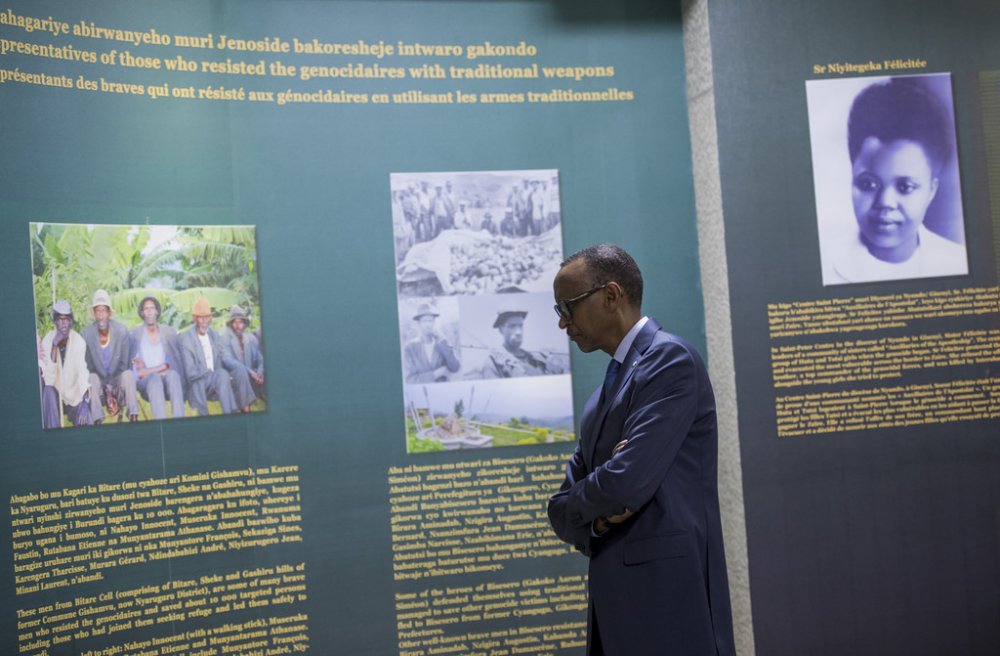
Other galleries show exhibition about peace process, Genocide Preparation and Genocide execution, defeat of Genocidal forces and Rescue Victims of Genocide, enemy defeat and humanity in the face of genocide, among others.
The external part is composed with monuments where the main monument faces the entrance of the parliamentary buildings and narrates the story of rescue missions carried out by the RPA.
The second monument bears a soldier holding a 12.7mm Machine Gun that helped in containing the advancing genocidal forces. The third monument is in honour of the soldiers who perished during the rescue operations.
The monument placed on top of the Parliamentary buildings is a statue of two soldiers operating a heavy machine gun that helped RPA defeat forces that were based at Camp of Presidential Guards (Camp GP)
Kabarebe was summoned to appear before the Paris judge on December 14th and confront James Munyandinda who says that he witnessed the involvement of RPA in the attack on 6th April, 1994.
Contesting the credibility of this witness, Kabarebe’s lawyers drastically declined the summons.
”It is impossible to consider the Minister of Defense in office to go to France to face such a problematic person. Kabarebe’s lawyers declared on Monday December 11th in the office of Judge Jean-Marc Herbaut.
The judge assigned the judicial investigation on the attack of the plane of former President Juvénal Habyarimana. Judge Herbaut and his colleague Nathalie Poux demanded Kabarebe to face a witness identified as James Munyandinda.
{{A slow breakdown in diplomatic relations}}
On Monday, Maingain and Forster sent two French magistrates an eight-page letter outlining Rwanda’s grievances over an investigation which, since 2006, has provoked the irritation of the authorities and the Rwandan population. Since then, the two countries encountered a crack in their diplomatic relations. If the lawyers do not wish to speak on the file, one of their clients, however, agreed to deliver to Jeune Afrique the content of the mail (read below).
The lawyers’ argument is divided into five points. “Our clients have already cooperated with the courts and answered all questions regarding this case,” they said. At the end of 2010, Gen Kabarebe, Franck Nziza and five other Rwandans suspected by the French courts attended a hearing in Burundi by Judge Trévidique who was in charge of the investigation.
The main point developed in the courier was the reliability of the witness’s statements dating back to 1994, that relate to the subject of the attack, or the conditions in which he claims to have left Rwanda in 2008.
On the first point, the defense provides an attestation before notary of Sam Nkusi. In his statement, Munyandinda affirms that back in December 1993, he delivered Motorola phones to Gen Kabarebe. He claims that the phones were used to plan the bombing out of prying ears.
But according to Sam Nkusi, these allegations are impossible: first, because he (Munyandinda) himself was living in Canada at the time and did not set foot in Rwanda between September 1993 and July 1994; plus, at that time, Rwanda did not have the infrastructure needed to use such devices.
As for his departure, Munyandinda signed a report on October 1, 2008 by Emmanuel Ndahiro, who was at the time, the personal physician of President Paul Kagame and head of the secret services.
“He told me that one of my old comrades, Richard Kabano, was a refugee in Uganda and that he threatened the national security by spreading information on the massacres perpetrated in Rwanda. He explained to me that he had chosen me because he knew how close I was to Richard Kabano.
Munyandinda pretended to accept the mission, he entered Uganda with an official passport that was given to him the day before, then he disappeared to avoid any retaliation.
“Since then I have been hiding in Uganda,” he says. I know myself that I’m wanted by the Rwandan Security Services which seek to eliminate me. ”
As hectic as it is, the version delivered by this miracle witness is actually stretched and the two Rwandans convened in mid-December delivered to the French justice a wheelbarrow of documents (some of which are published by JeuneAfrique here below, with the agreement of one of the interested parties) which clearly testifies this version as untrue. This includes a certificate from his own wife who still lives in Rwanda.
James Munyandinda actually left the country very formally, at his request, to go for a master’s degree in finance in Britain. Tuition fees were even partially paid by the Rwandan army which also provided a service passport specifically for this purpose.
For the defense of the seven Rwandans, Munyandinda would be only the umpteenth puppet to date which Rwanda National Congress (RNC) pulls the strings. This movement of opposition in exile, adept of a reversal of the regime by force, has indeed provided on a plateau to the French judges, since 2011, several miracle witnesses accusing the RPF of being at the origin of the attack.
Paradoxically, the lawyers of the indicted persons seem the most eager to finish, convinced that the charges against their clients have crumbled over the handling recorded in the instruction. “We confirm the request already formulated to close this instruction and we formally renew this request,” they write at the end of their missive.
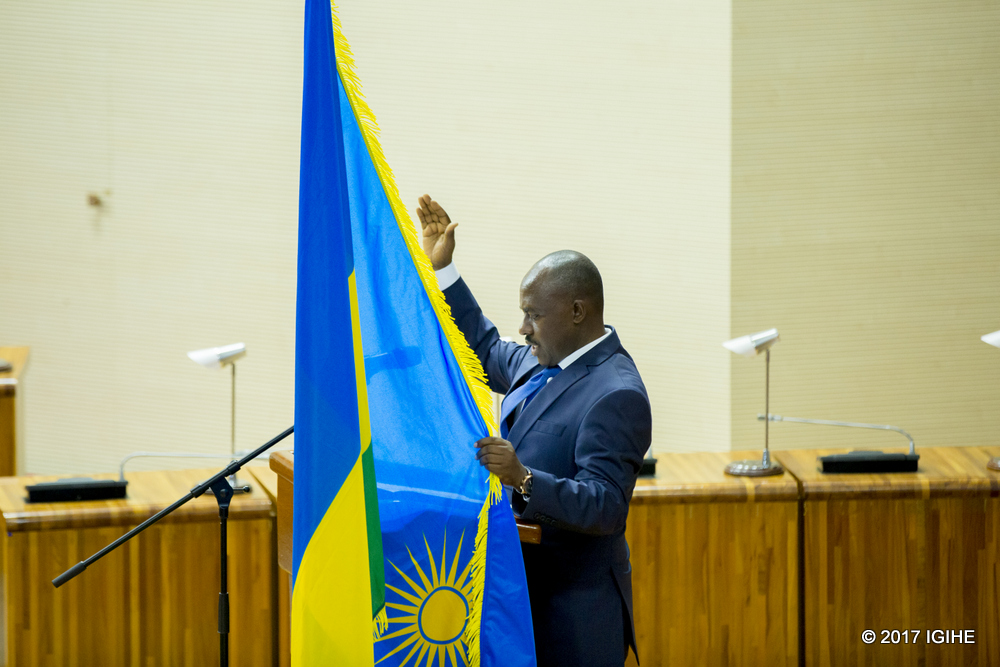
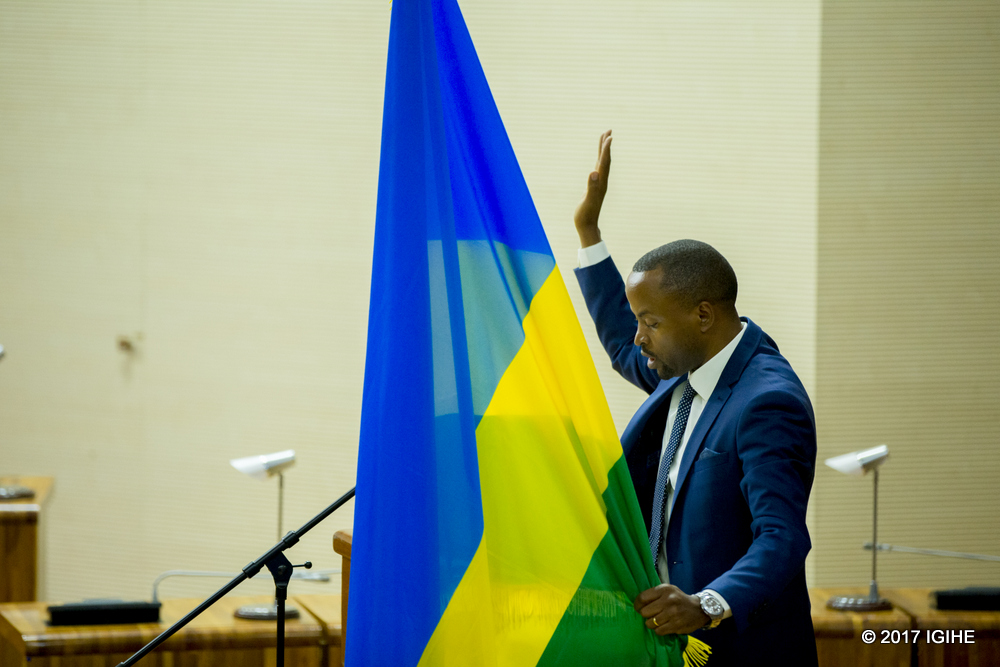
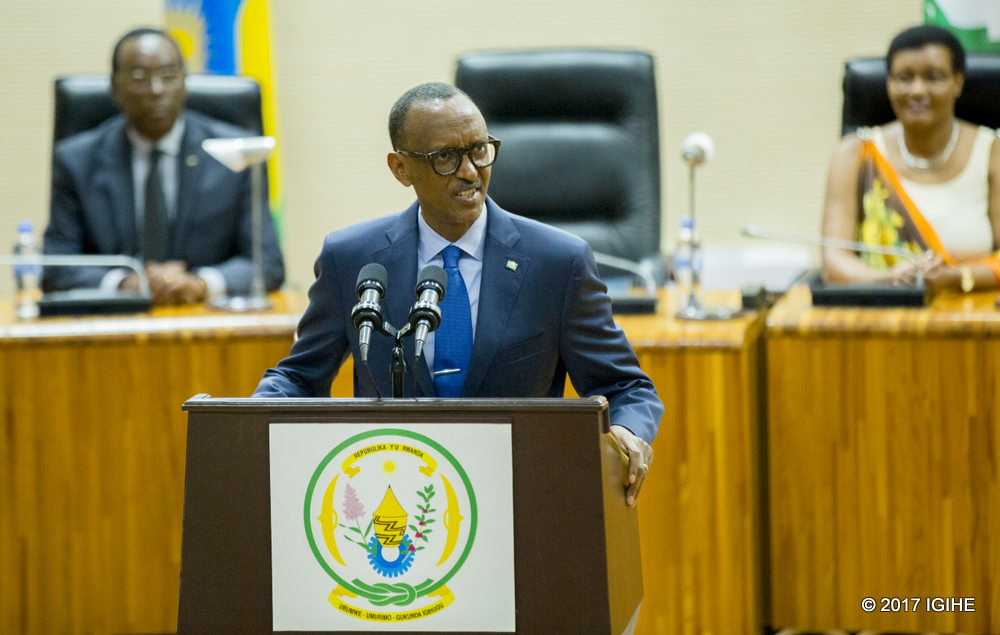
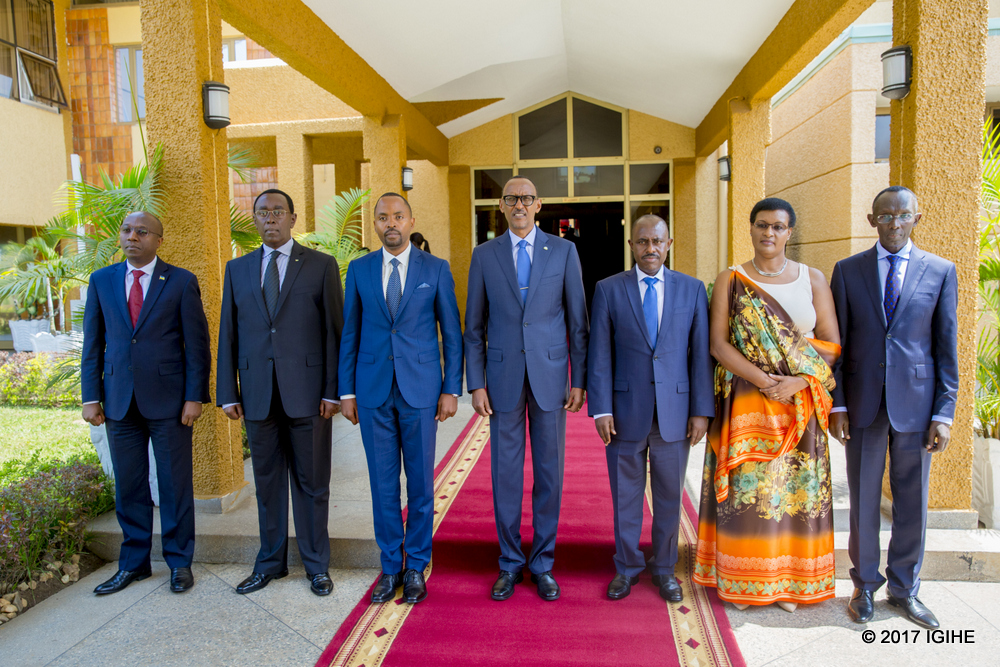
Kagame welcomed new cabinet members and ensured them his support and partnership in country’s course to development.
“You are welcome new ministers who have sworn-in now. We are all ready to support and cooperate with you to keep developing our country,” he said.
Kagame also commended everyone’s good deeds to the country.
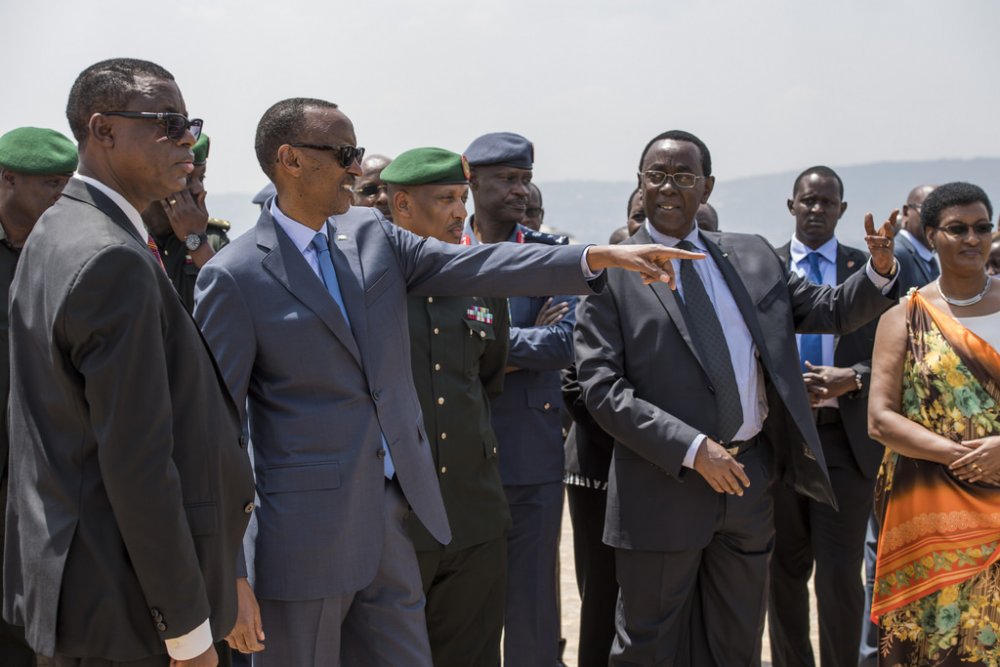
At the same occasion, Kagame inaugurated the ‘Campaign Against Genocide Museum’ at the Parliament buildings.
Prior to the appointment last week, Mutimura had been the coordinator of African Centers of Excellence Project. He replaced Dr. Papias Musafiri Malimba who had been on the post since June 2015.
On the other hand, Rurangirwa had been the Integrated Financial Management Information and System (IFMIS) Project Coordinator at the Ministry of Finance and Economic Planning. He replaced Jean Philbert Nsengimana who had headed the ministry since 2011.