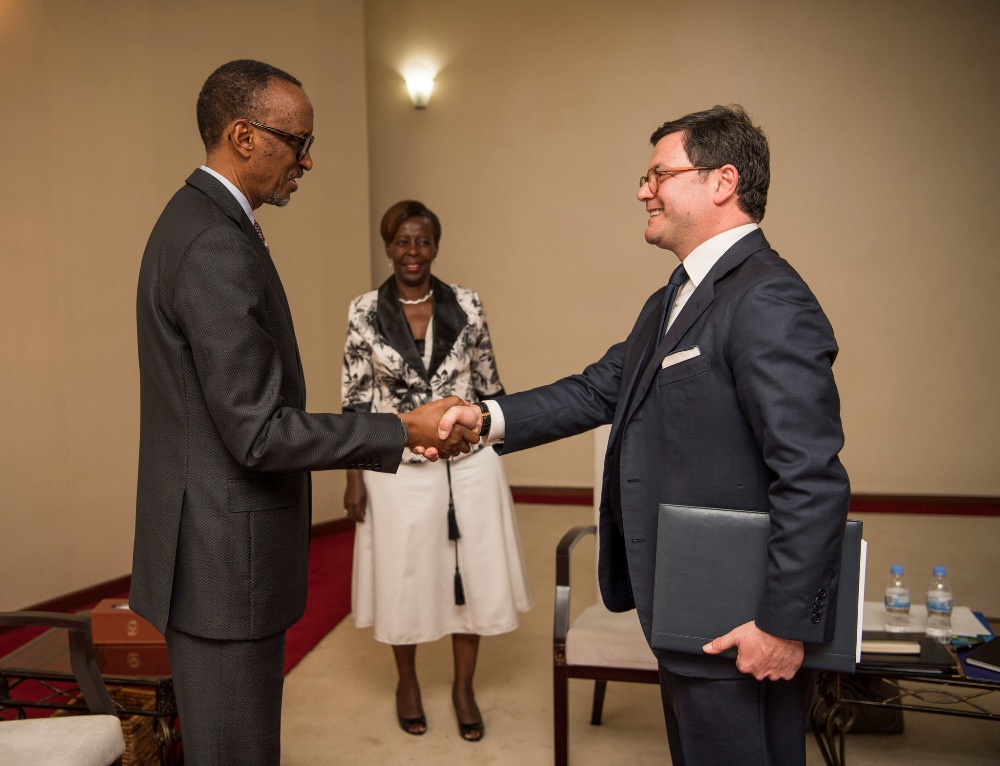
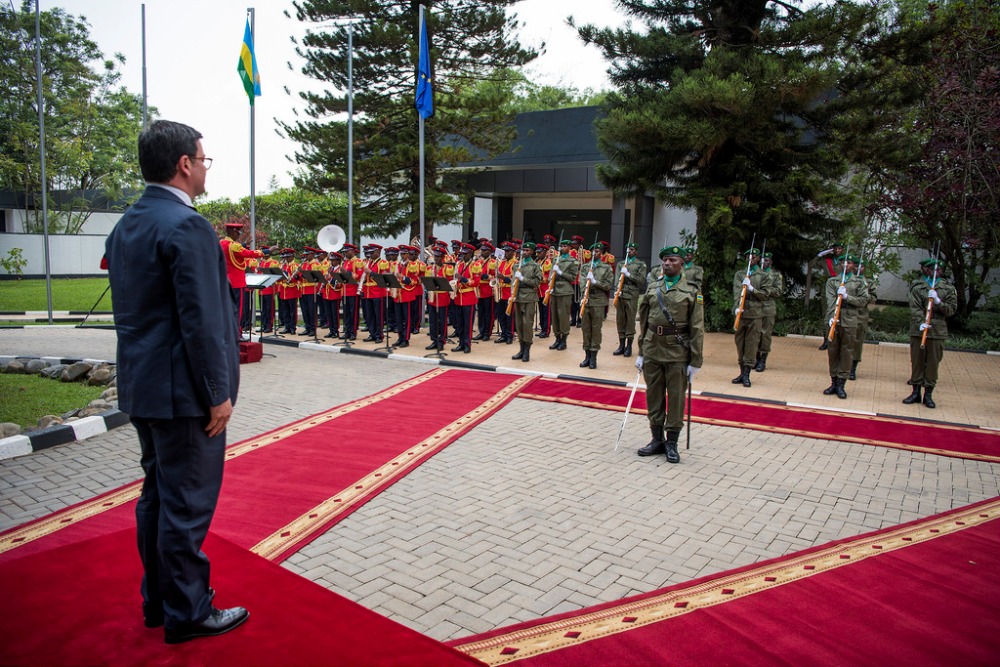
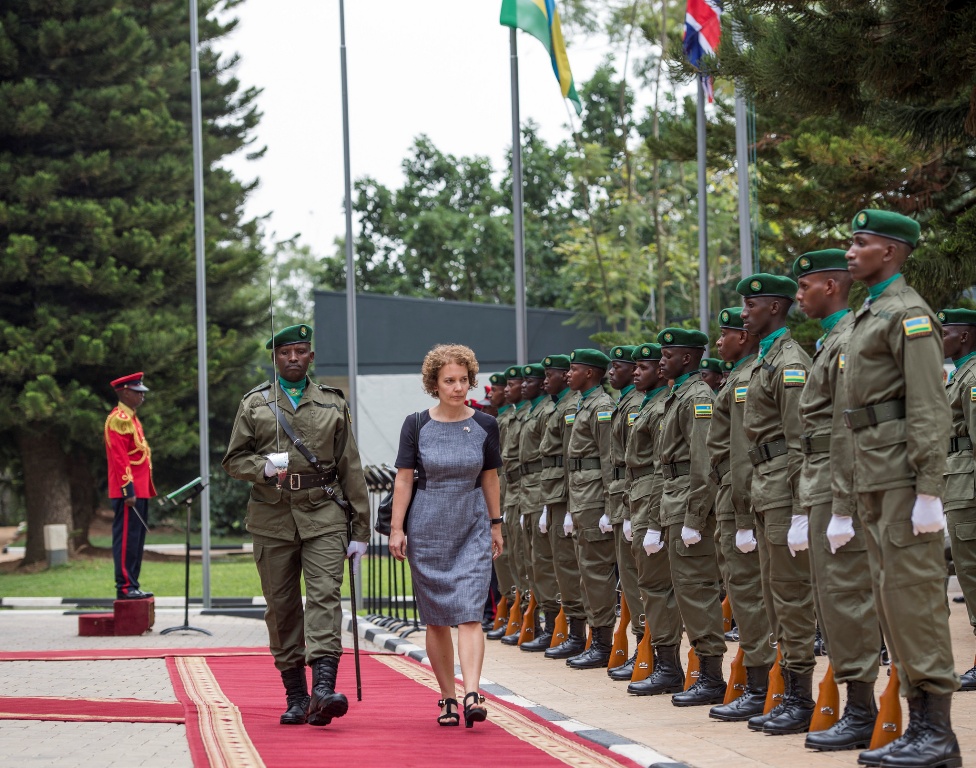
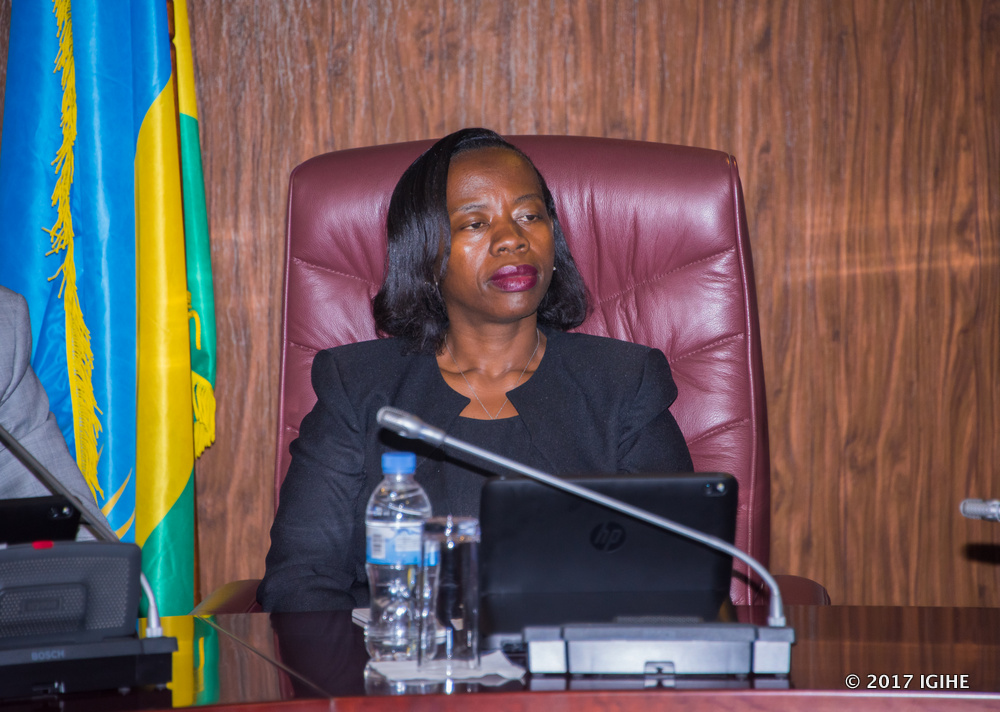
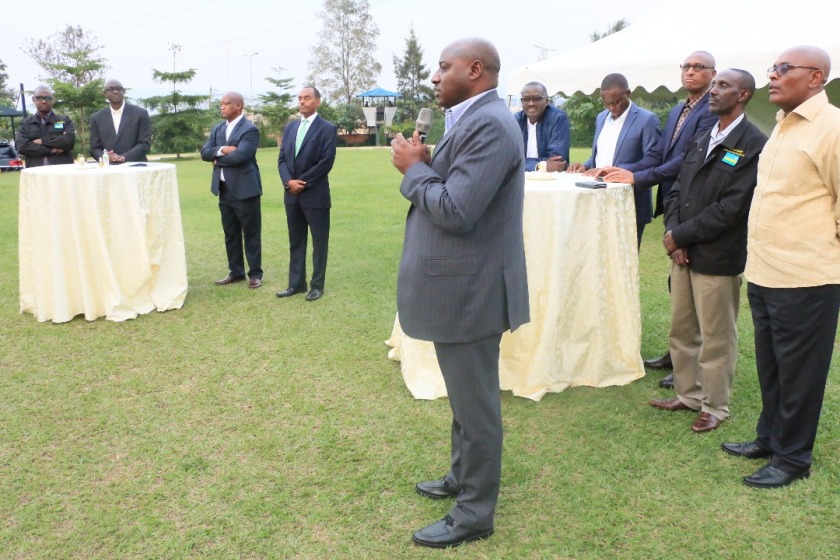
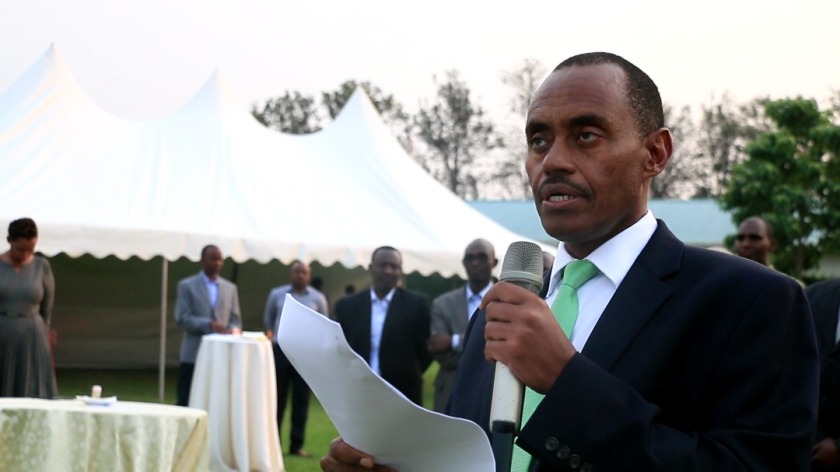
In the event that took place in Village Urugwiro on Tuesday, Kagame received credence letter for Mrs. Julia Pataki, Romanian Ambassador with Residence in Nairobi, Kenya.
Also received is credence letter for Mr. Konstantinos Moatsos, Grecian Ambassador with residence in Nairobi, Kenya. Also the Head of State received Ms. Rakiatou Mayaki, Nigerian Ambassador with residence in Pretoria, South Africa.
Kagame also received credence letter for Seyed Morteza Mortazavi, Iranian Ambassador with residence in Kampala, Uganda. Among presented their credentials is Mr. Nicolla Bellomo, European Union Ambassador with Residence in Kigali.
Also Kagame received credentials for Oumar Daou, Malian Ambassador with residence in Kigali. Also received is Mr. Abdalla Hassan Eisa Bushara, Sudan’s Ambassador with residence in Kigali.
Kagame also received credentials for Ms. Lulit Zewdie Gebremariam, Ethiopia Ambassador with residence in Kigali and Ms. Joanne Lomas, United Kingdom Commissioner with residence in Kigali.
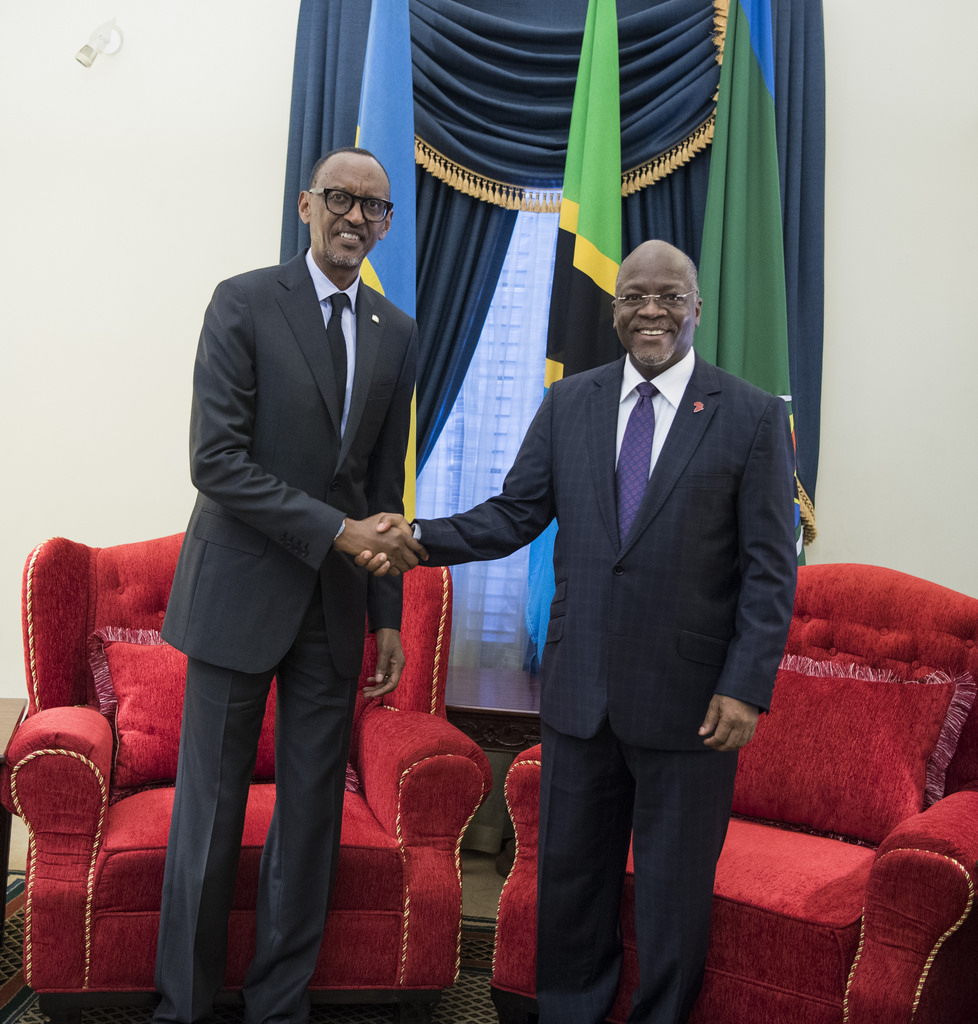
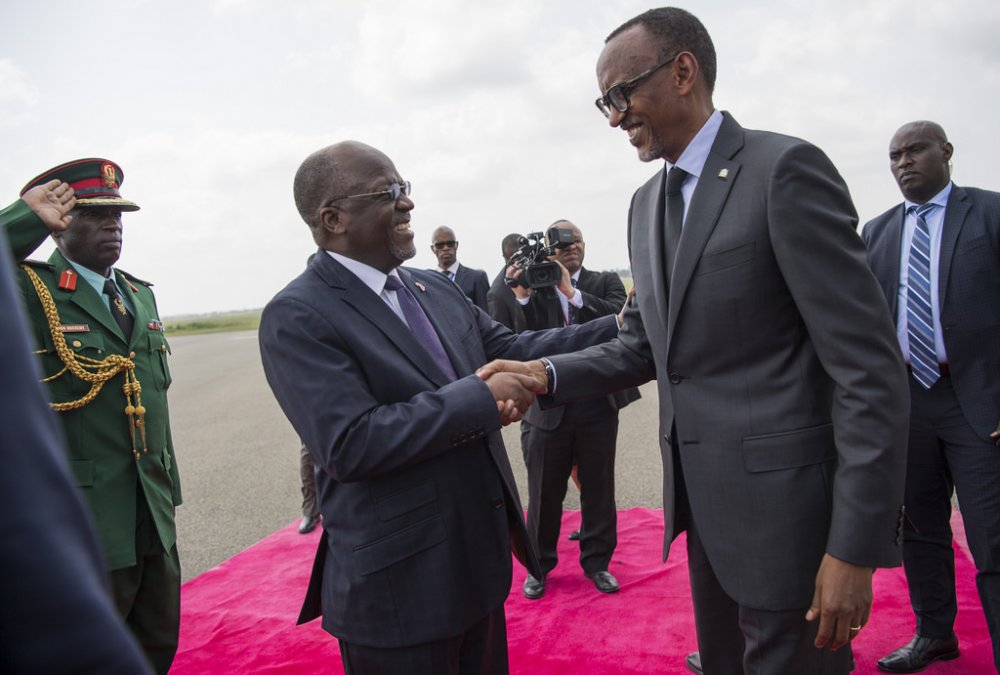
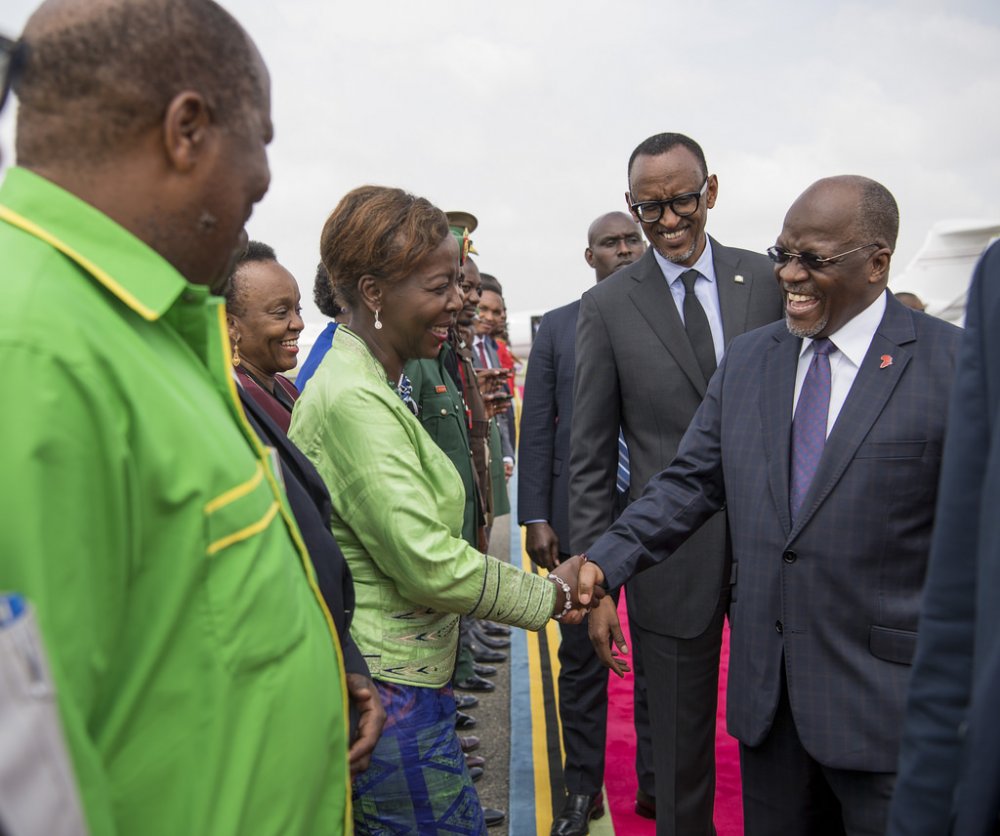
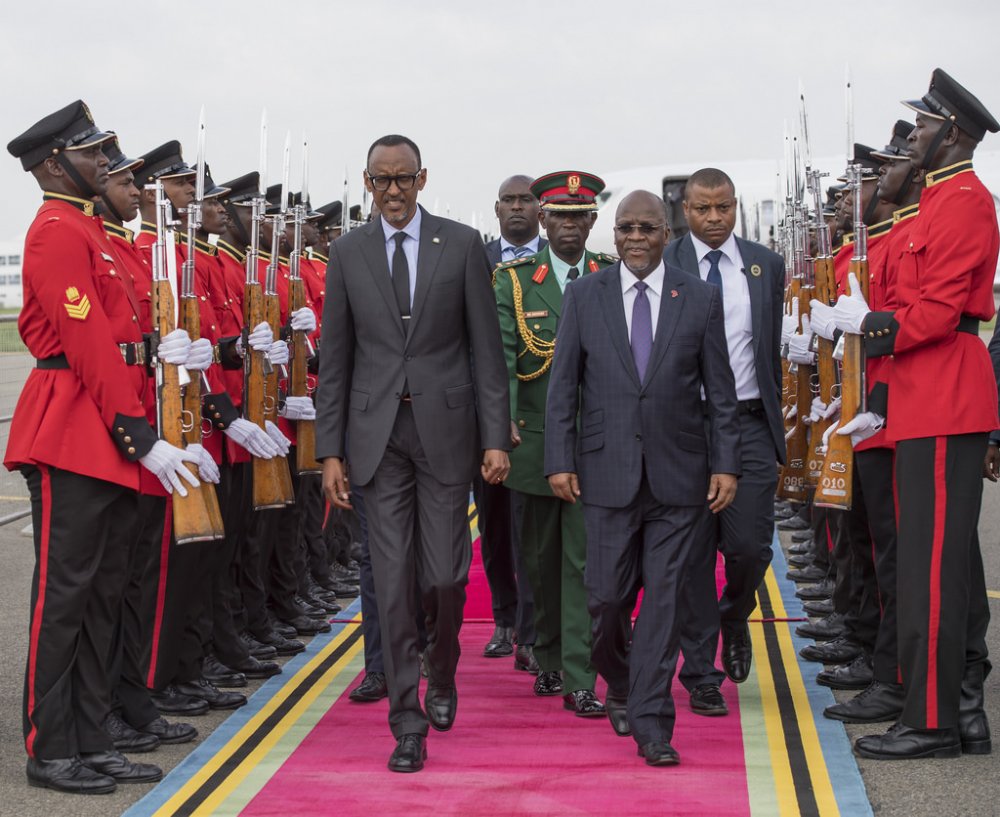
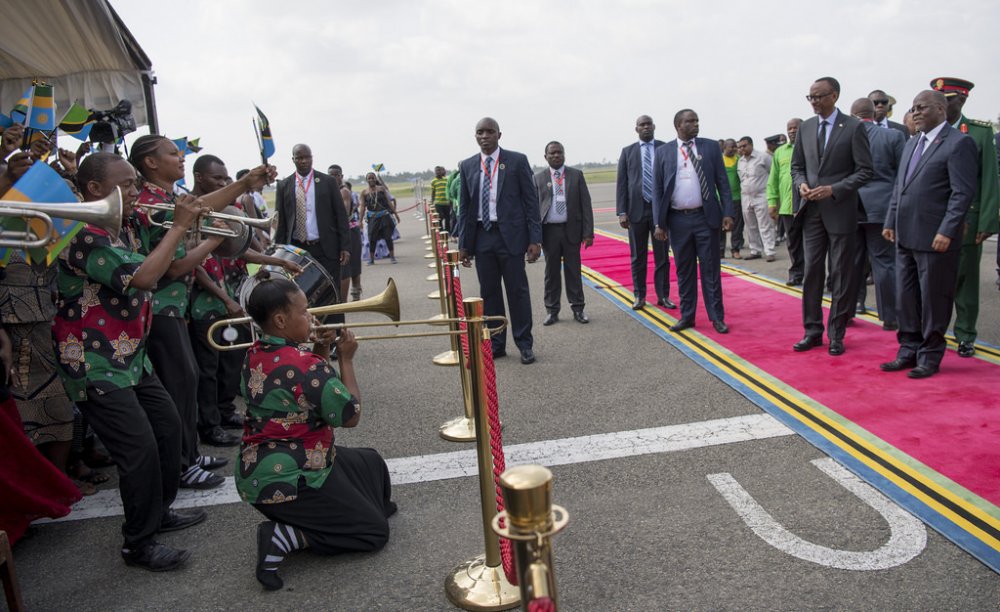
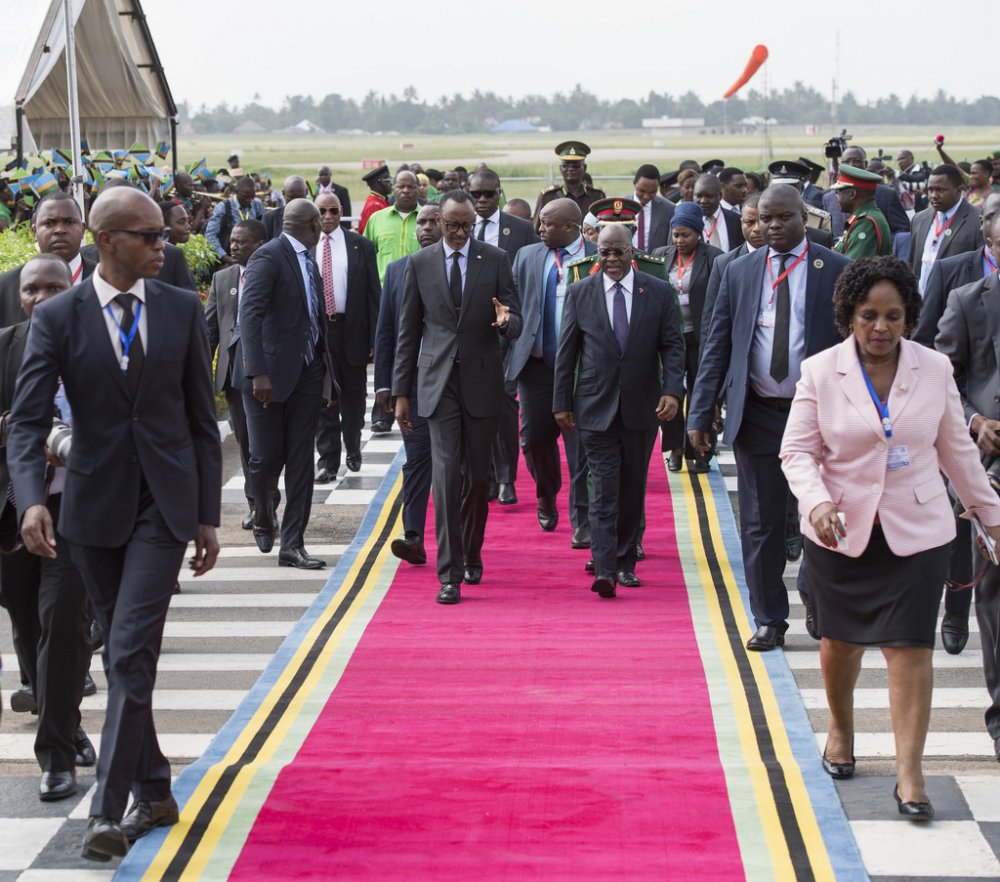
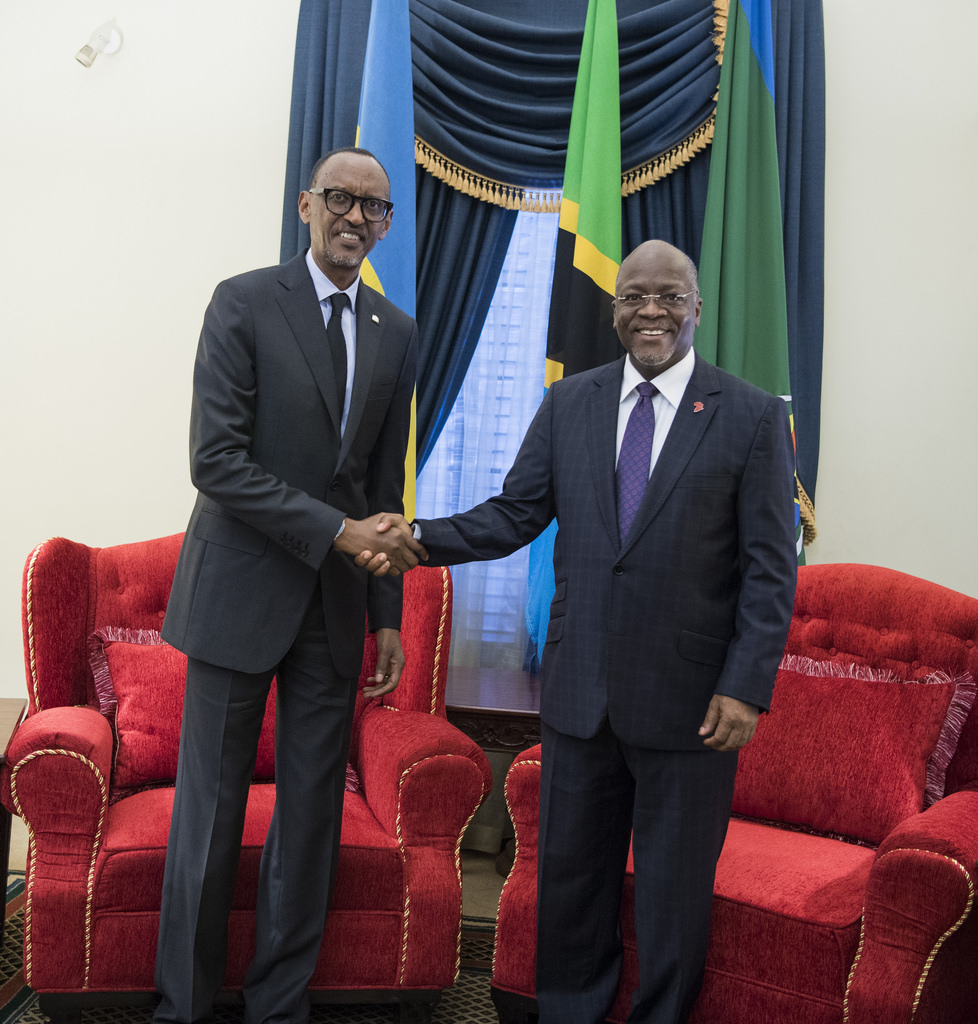
During President Paul Kagame’s last week visit to Tanzania, he agreed with President John Magufuli to construct a 400-kilometer standard gauge railway (SGR) line from Isaka to Kigali.
After talks between both Heads of States, Magufuli told media that the construction of the railway line will be jointly financed by the two countries.
While he was speaking to national broadcaster, RBA yesterday, the Manager of Planning and Research Division at Rwanda Transport Development Agency (RTDA), Fabrice Barisanga said that the 2014 action plan revealed that the whole railway project from Dar es Salaam to Kigali will be 1464 kilometers.
He said that currently, they are looking at 494 kilometer Isaka-Kigali phase where Rwanda has 150kiliometers to construct.
“Action plan shows us that the whole project will take us $2.5 billion. It is a big project that requires enough financial means,” he said.
“It is in line with President Kagame’s visit in Tanzania where he and Tanzanian president agreed to fast-track the project. For us Technicians, we are ready to start implementation based on Head of States’ agreements,” he explained.
The project will pass through Eastern Province’s Districts of Kirehe-Ngoma-Bugera to Kicukiro District in Kigali, Masaka Sector.
Study shows that properties for 2450 people will be affected by the project.
Speaking to IGIHE, the State Minister of Transportation in the Ministry of Infrastructure, Jean de Dieu Uwihanganye said that both countries should agree on ways to find the financing sources.
“As they have requested us, in two weeks, we will have agreed on the way to go,” he said.
Construction works for Tanzanian part have started and works are being implemented in two phases. The first phase is Dar es Salaam-Morogoro with 330 kilometers and Morogoro- Makutupora with 426 kilometers.
The railway is expected to ease transportation between Rwanda and Tanzania. Currently, 70% of Rwanda’s importations pass through Tanzania.
The rates prevailing up until 2017 were set in 2008 and have been superseded by events such as the increase in claims trend by third parties, increased cost of spare parts and reinsurance, the Central Bank (BNR) has said in a statement.
“Following the industry’s revised motor insurance premium rates effective January 01, 2018, the National Bank of Rwanda (BNR) as the regulator of Rwanda’s insurance sector would like to inform the public that it is aware of the increased premiums and the factors that led to this increase,” reads the statement signed by BNR Deputy Governor,Dr. Monique Nsanzabaganwa.
In a statement issued yesterday, BNR says that the insurance sector plays a critical role to the development of the economy including risk transfer and indemnification thereby facilitating financial intermediation, savings mobilization, as well as facilitation of trade and commerce.
However, over the past few years, the insurance sector in general and the motor insurance in particular has faced significant challenges including significant losses driven mainly by weak underwriting and price undercutting as well as high claims ratios.
To address these concerns, the Central Bank in 2013, commissioned ActServ, an insurance consultant firm, to conduct to conduct an actuarial study of motor insurance in order to assess the technical profitability of this sub-sector and determine minimum premium rates.
The study recommended an upward revision of premium rates at the time but these were not immediately implemented and the performance of the motor insurance sub-sector continue to deteriorate.
The rates prevailing up until 2017 were set in 2008 and have been superseded by events such as the increase in claims trend by third parties (e.g. bodily injury compensation currently calculated between Rwf2,500 to Rwf3,000 per day against Rwf500 before 2010), increased cost of spare parts and reinsurance.
“It is against this background that the premium rates were revised upwards by the Association of Insurers in Rwanda(ASSAR) with effect from 1st January 2018. The change in prices will remove distortions that were threatening to crush this sector. If the sector was to collapse, the consequence on the economy would be disastrous, knocking off billions of economic wealth from the Gross Domestic Product (GDP) index,” reads the statement.
The BNR ensures that they will continue working together with different stakeholders to ensure that the financial sector in general and the insurance sector in particular is financially sound and stable.
BNR also urges the public to be vigilant drivers, to report and avoid fraud as well as ensure that claims are not overstated. These will help in keeping rats affordable going forward.
In the discussion on Monday, Sarkozy told Kagame that he was happy to step again in Rwanda after a long time. The presidency is yet to announce the purpose of the visit.
The discussion also featured Rwandan Minister of Foreign Affairs and East African Community Affairs, Louise Mushikiwabo.
Sarkozy ruled France from May 16, 2007 to May 15, 2012. He is credited by Rwanda for doing the best during his tenure to revive the two countries relations which strained after the 1994 Genocide against the Tutsi in which France allegedly supported the perpetrators.
Sarkozy also visited Rwanda in 2010 and admitted that his country did not do enough to prevent or stop the genocide but did not apologise for France’s alleged role.
Rwanda expelled French ambassador Dominique Decherf in 2006 after that the French judge Jean Louis Bruguière had issued arrest warrants against Rwanda’s top leaders over the shooting of a plane in which died former President Juvénal Habyarimana in 1994.
After succeeding Jacques Chirac in the French presidency, Sarkozy restored the relations in November 2009 and new ambassador Laurent Contini was sent to Kigali a few days later. Contini was recalled by France in 2011 and Rwanda rejected his replacement Hélène Le Gal and France later sent Michel Flesch who was admitted in Kigali.
Flesch was recalled in 2015 and Rwanda has not approved his successor since then.
Visiting Rwanda in 2010, Sarkozy told media that France regretted its “errors” which contributed to the genocide but stopped short of apologising for role.
“What happened here is a defeat for humanity. What happened here compels the international community including France to reflect on the errors that stopped us from preventing and halting this abominable crime,” he said.
Shortly after Sarkozy visit, President Kagame also visited France to attend the conference of Heads of State of countries that use French language.
Kagame told media at the occasion that Rwanda wanted partners, not those who wanted to give Rwanda directions.
“We are looking at opening in the first half of the year. Volkswagen South Africa is continuing with its plans to introduce an integrated mobility strategy for Rwanda that includes an assembly operation. Details will be announced within the next few weeks,” Stefan Mecha, director of sales and marketing at Volkswagen SA, told Rwanda Today.
He said the plant will be located at the Special Economic Zone in Kigali, and will focus on producing at least 1,000 vehicles in its first year of operation.
The plant will primarily assemble a new model of Volkswagen called “Think Blue,” which is said to be environmentally friendly and the electric versions of its VW Golf model.
Last year in September, Thomas Schafer, the chief executive of Volkswagen SA, said the company plans to double production of assembled vehicles annually once the plant is up and running.
The exact cost of the plant will be provided when a team of Volkswagen’s executives visit Rwanda in the coming weeks.
{{Feasibility study
}}
Last year, the carmaker completed a feasibility study of the project, which Rwanda Development Board said was positive.
Officials at Rwanda Development Board were not available to comment by press time, but the deal is expected to create new jobs and boost the country’s industrial sector.
Volkswagen stands to get a seven-year corporate income tax holiday if it invests at least $50 million — an incentive reserved for investments in the manufacturing, energy, tourism, health and ICT sectors.
Although organisations like ActionAid argue that the country revenue through such tax holidays, the government says the incentives will lure more investors, create multiple jobs and lead to economic growth.
Rwanda recorded its largest investment of 2017 in September last year when American firm Symbion Energy signed an investment agreement with the government worth $370 million to develop methane-generated power plant in Lake Kivu.
The official send-off party was held at the RNP General Headquarters in Kacyiru, and presided over by the Minister of Justice and Attorney General, Johnston Busingye.
Present was also the Inspector General of Police (IGP) Emmanuel K. Gasana and DIGPs; Dan Munyuza of Operations and Juvenal Marizamunda of Administration and Personnel.
Minister Busingye thanked the retirees for their patriotism and distinguished service to their country, urging them to exhibit the same discipline in the new life.
He further paid tribute to those, who took part in the country’s armed liberation and the contribution of each and everyone in building a professional Police force.
“We are here to honor your contribution and bid you farewell in a dignified manner that befits your service,” said Minister Busingye.
He hastened to add that their retirement is only a “suspension of active service” adding that the “mission continues.”
Minister Busingye further urged them to join hands with other Rwandans to serve the nation in other capacities to continue to drive the country’s transformation process.
IGP Gasana said that the officers served their country well with integrity, and that they are retiring with dignity.
The Police Chief reiterated their “exemplary service” and acknowledged individual and collective contribution to peace, safety and security and the overall service delivery of the force.
“Rwanda National Police recognizes the journey moved, the hurdles faced and challenges overcame together,” IGP Gasana said.
“We will certainly continue to count on you in other policing capacities…calling on you when need arises and tapping on your knowledge,” he added.
Speaking on behalf of the retired officers, Assistant Commissioner of Police (rtd) Elisa Kabera, acknowledged the support of the RNP leadership and the country in general, and for having faith in their abilities.
Tanzanian President John Magufuli told a news conference in Dar es Salaam after talks with Rwandan President Paul Kagame yesterday that the construction of the railway line will be jointly financed by the two countries.
“We have directed ministers of foreign affairs from the two countries to meet next week to start charting out the financing model,” said Magufuli.
“We want the construction of the railway line to start immediately because the feasibility studies and all other preparations are complete,” said the Tanzanian leader.
Tanzania has already started construction of the standard gauge railway in two phases from Dar es Salaam to Morogoro covering 330km, and from Morogoro to Makutupora in Dodoma covering 426km, using locally sourced funds to the tune of about 3 billion U.S. dollars, according to President Magufuli.
“Both President Kagame and I have agreed to look for loans to speed up the construction of the railway line,” said Magufuli.
Magufuli added that Tanzania fully supported president Kagame’s candidacy for the AU chairmanship.
“I am happy to work with president Magufuli and other African leaders. They have given me these responsibilities because they are ready to give me support to enable me accomplish my tasks,” said Kagame.
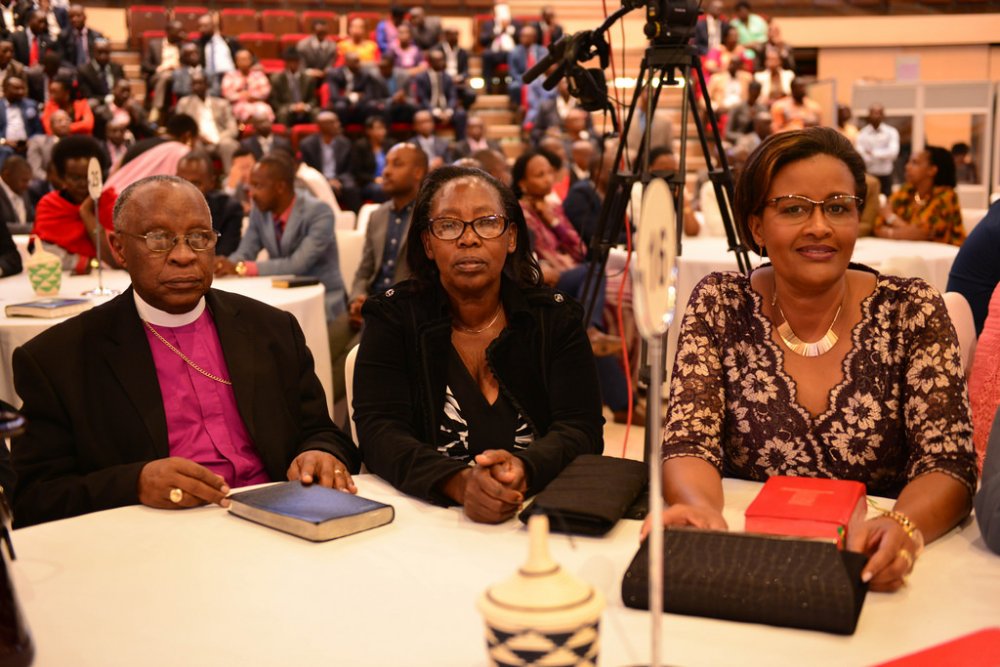
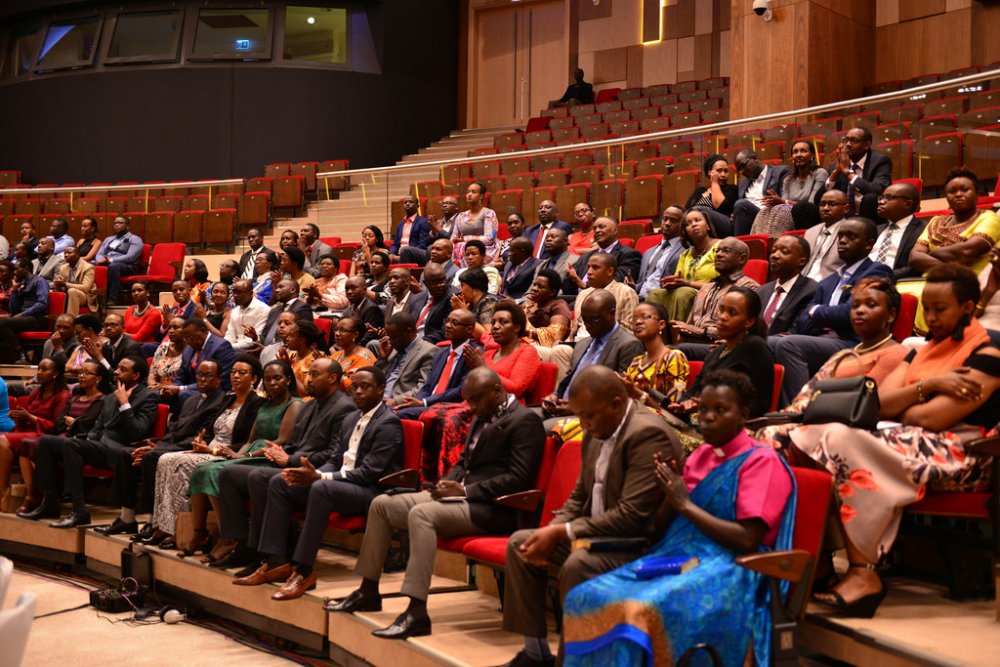
The premier was speaking Sunday at the National Prayer Breakfast that took place at the Kigali Convention Centre. Organised annually by Rwanda Leaders Fellowship, the prayer attracts top government, church and civil society leaders.
Dr Ngirente presided over the prayer as President Paul Kagame who usually does it was visiting Tanzania on Sunday.
The 23rd edition of the prayer considered the increasing drug abuse among the youth as a serious issue that must be tackled through concerted efforts to nurture youth who can contribute to the national development.
“Rwanda Government values the youth a lot. They constitute around 70% of the population and no development is possible without their hand. They are our labour force and future leaders. We have to instil good values in them at their early age to give them good vision,” said Dr Ngirente.
He urged church leaders to encourage the youth to match their religious beliefs with good deeds and make sure they walk their talk.
“Raising well our children will reduce the number of drug users. We have to fight drugs with all our efforts and God is on our side because he wants good life among his creatures,” he said.
President Kagame also called for tight fight against drugs during the National Dialogue Council last month.
Rwanda Education Board (REB) embraced the fight a fortnight ago, announcing that students going to study abroad will have to submit a medical certificate from a recognised hospital proving that they are drug-free.
It was reported that Trump described El Salvador, Haiti and Certain African nations as ‘Shithole countries’ during a meeting with senators on Thursday.
Trump made the remarks while opposing a proposal he was presented about restoring protections for immigrants from those countries as part of bipartisan immigration deal.
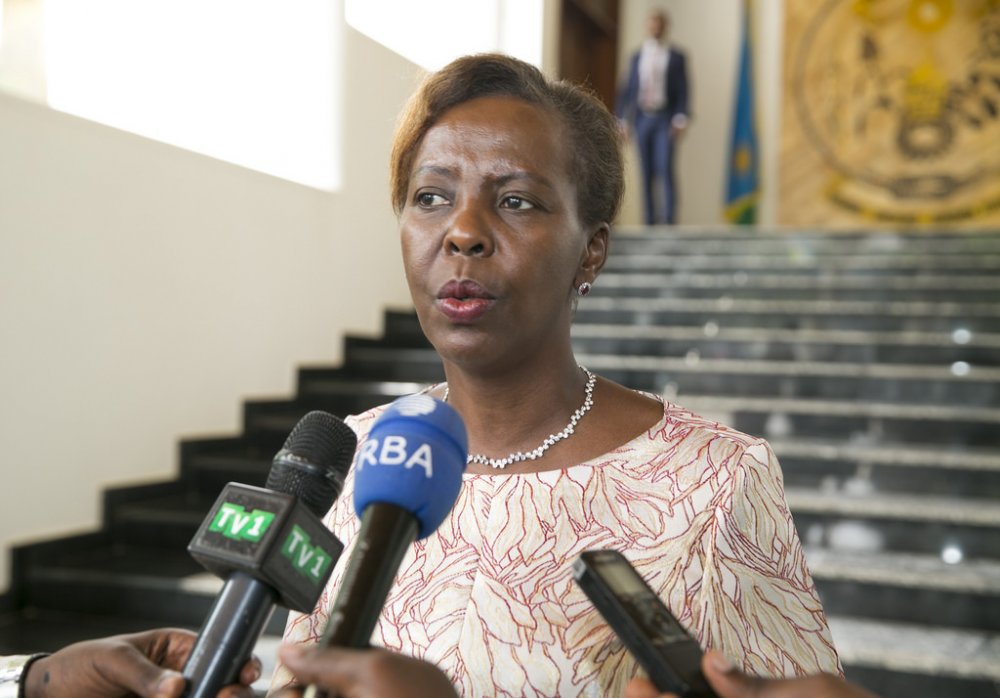
Asked by the media about her reactions on Trump’s words on Saturday, Mushikiwabo said that they are ‘appalling words’.
“First of all, if these words were spoken, it is so appalling. The second is that there are things concerning Africa that were referred to, Africa should face them,” she said.
“In other words, Africa as a continent should do everything to restore the dignity for African people and prove our worth as a continent. Such words, though I am not sure they have been used, but if so, they are appalling and inappropriate,” she added.
{{Different leaders, organisation condemn the remark}}
Different organisations and leaders condemned the remarks and called for Trump apology.
The African Union Mission in Washington said that Trump should apologise for the statement he made.
“The African Union Mission wishes to express its infuriation, disappointment and outrage over the unfortunate comment made by Mr. Donald Trump, President of the United States of America, which remarks dishonour the celebrated American creed and respect for diversity and human dignity,” reads the statement issued.
“The African Union Mission condemns the comments in the strongest terms and demands a retraction of the comment as well as an apology not only to Africans but to all people of African descent around the globe.”
“The language of Donald Trump that the African continent, Haiti and El Salvador are “shithole countries” is extremely unfortunate. We are certainly not a “shithole country”. We will not accept such insults, even from a leader of a friendly country, no matter how powerful,” reads the President of Ghana Nana Akufo-Addo’s tweet.
Ebba Kalondo, the spokesperson for AU Chairperson Moussa Faki, told AFP that Trump’s statement “truly flies in the face of accepted behaviour and practice.”
“This is not only hurtful, I think, to people of African origin in the United States, but certainly to African citizens,” she said.
“It’s an extremely upsetting statement,” she added.
Some 130,000 Burundian and Congolese refugees in camps in Rwanda rely on humanitarian assistance to meet their food needs. They receive from WFP either monthly food distributions or cash transfers so that they can buy food in local markets.
“We thank donors for their continued generosity and support, while urging them to further fund humanitarian assistance so that we can give refugees the assistance they depend on,” said WFP Rwanda Country Director Jean-Pierre de Margerie.
Full rations for refugees provide 2,100 calories per person per day, the minimum for a healthy life. Until November 2017, WFP provided 16.95 kilograms of food to each refugee each month, mainly maize, beans, vegetable oil and salt. Other refugees received 7,600 Rwandan Francs (US$9) to buy food in local markets. However, funding shortages forced WFP to trim assistance to 90 percent in November and December. The funding situation is now so bad that from January WFP reduced the ration sizes even further – to 75 percent.
However, refugees identified as particularly vulnerable, such as children under five years of age, school children, pregnant and nursing mothers as well as people living with HIV and tuberculosis patients under treatment still receive a full ration of nutrition support from WFP.
The Ministry of Disaster Management and Refugee Affairs and UN agencies are currently scaling up implementation of a Joint Strategy on Economic Inclusion of Refugees to enable more of them to become self-reliant and contribute to the economic development of their host communities.
“Now more than ever is the time to find innovative and long-term solutions for refugees in Rwanda,” said UNHCR Representative Ahmed Baba Fall. “Donors have also expressed the need for a change in practice to ensure that limited funding is targeting the needs of refugees more appropriately.”
It is a priority to identify and pursue comprehensible and sustainable pathways for refugees in the Rwandan context. In this light, the ambition is to align the provision of assistance to refugees with the Rwandan National Social Protection system.
UNHCR, WFP and others have started moving towards targeting to ensure the needs of the most vulnerable are considered, while continuing supplementary feeding and promoting self-reliance by supporting a Government pledge to ‘graduate’ 18,000 camp-based refugees from food and/or cash for food assistance programmes by mid-2018.
The strategy will also strive to create access to formal employment opportunities for up to 60,000 refugees and have a similar number using banking services by mid-2018.
WFP relies entirely on voluntary contributions for its humanitarian and development programmes. WFP requires US$2.5 million every month to provide full food or cash assistance to refugees in Rwanda. If WFP receives no new funds, deeper reductions to cash and food may be necessary in coming months. Some US$11 million are needed to restore full support for the next six months.
As of December 2017, UNHCR had secured only 19 percent of its total funding needs, amounting to US$ 20.3 million out of US$ 104.5 million. These resources are required to ensure unhindered access to protection and to invest in comprehensive solutions for over 170,000 refugees hosted in Rwanda, as well as to support the voluntary repatriation of Rwandan returnees, mainly from the Democratic Republic of Congo.