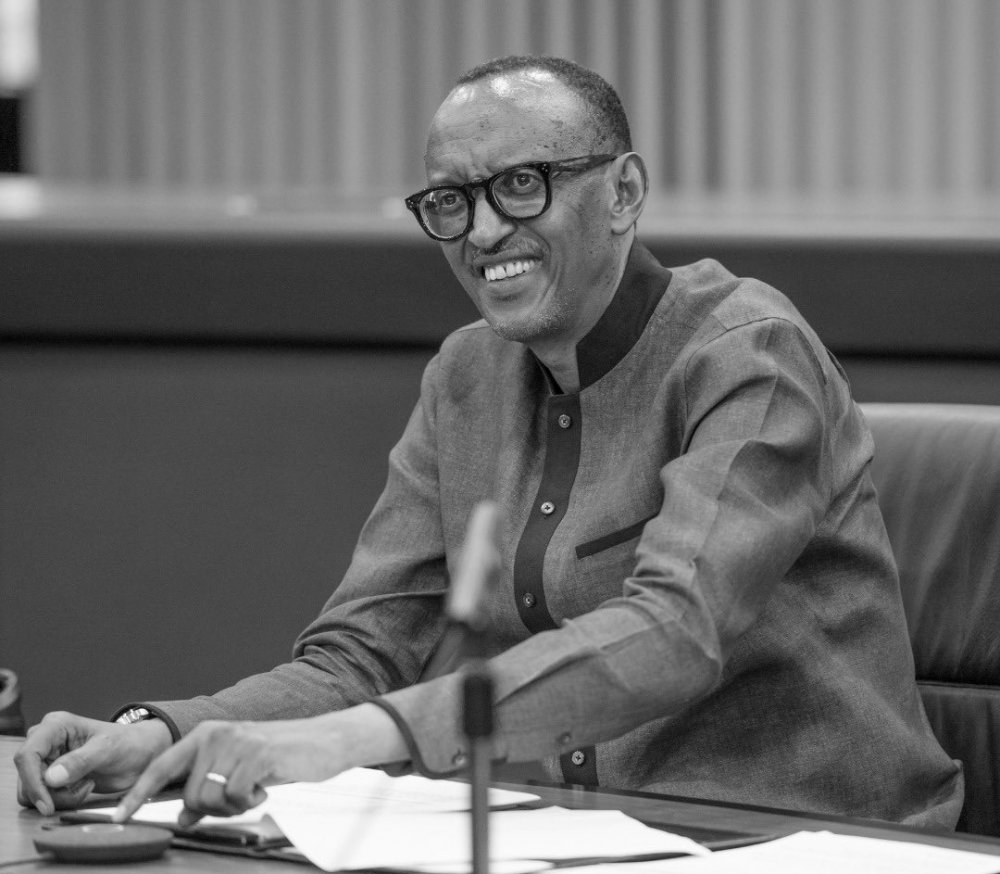
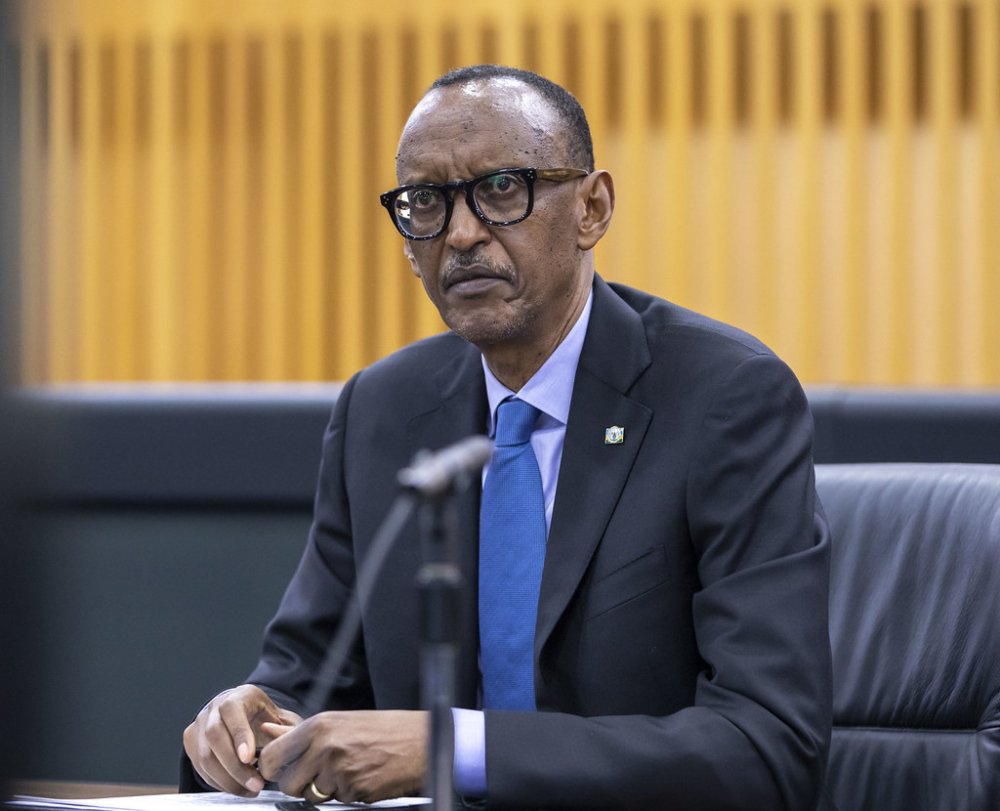
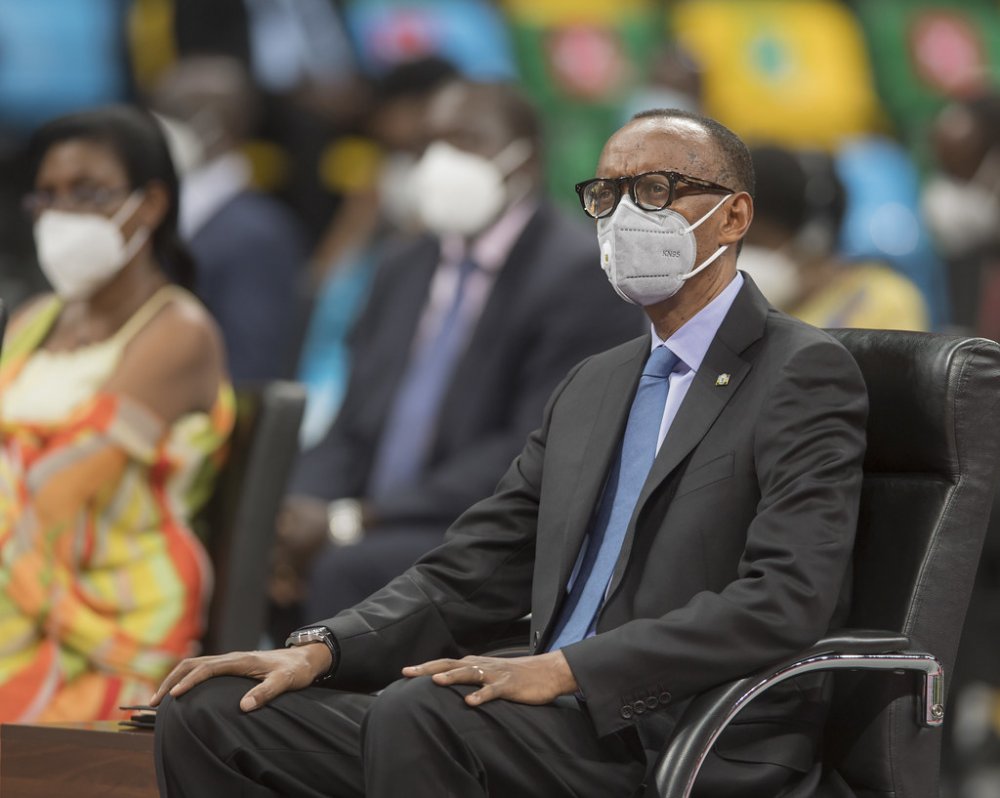
{President Paul Kagame has emphasized the need to embrace the use of technology in daily lives which is increasingly becoming a prerequisite upon which the good jobs of the future will rely on.}
Kagame was yesterday speaking at the 9th Smart Africa Board Meeting during which he joined other Heads of State and Government, their representatives and other delegates.
President Kagame said that seven more countries have joined Smart Africa since the last Board Meeting, in May 2019. This brought membership to 31 countries. The new members are; Algeria, Cap Verde, the Democratic Republic of Congo, Mauritania, Morocco, Sierra Leone and Zimbabwe. The organization also got new membership from the private sector, including Tahaluf Al Emarat, BICS, and Softbank.
To this end, President Kagame emphasized the importance of the partnership with the private sector for smart Africa and stressed the need for increased investments in technology which is at the helm of future progress.
“We place a high value on what you as business leaders bring to these efforts. We will continue working together with you very closely, to make the necessary investments and also ensure a common standing of how to proceed. This is especially evident in the process of recovering from Covid. The pandemic has shown that connectivity is not a luxury, it is a necessity,” he said.
“Increasingly, the provision of education and health services depends on digital infrastructure. The good jobs of the future will also rely on technology skills, and a digital identity. The mission of Smart Africa really seats the center of everything we are trying to do, as a continent and with our partners around the world,” added Kagame.
The meeting also assessed ways of reducing internet cost by 2025, the master plan for developed rural areas, seeking how to start Smart Africa embassies and establishment of Smart Africa Academy among others.
Smart Africa is a bold and innovative commitment from African Heads of State and Government to accelerate sustainable socio- economic development on the continent, ushering Africa into a knowledge economy through affordable access to Broadband and usage of Information and Communications Technologies.
Other Partners of the Smart Africa Alliance include the African Union, the ITU, World Bank, the African Development Bank, the United Nations Economic Commission for Africa, the Global System for Mobile Communication (GSMA) and the Internet Corporation for Assigned Names and Numbers (ICANN).
Rwanda is among other African countries where people are expressing willingness to stay. As of today, Rwanda’s Ministry of Foreign Affairs reports over 100 returnees who have visited the country and expressed willingness to stay.
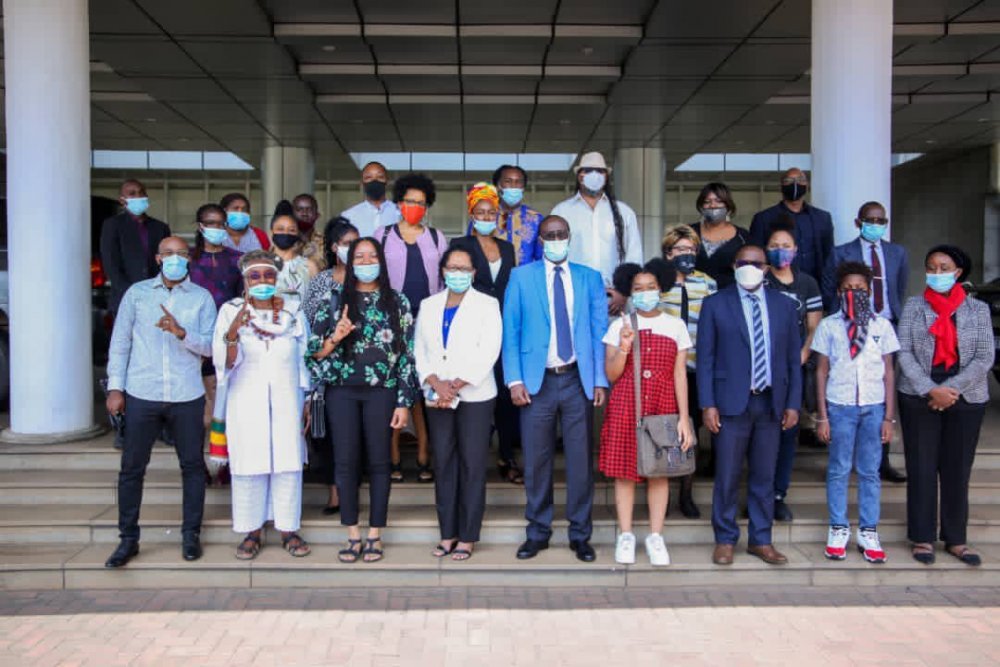
In is under this background that the Minister of State in charge of the East African Community in the Ministry of Foreign Affairs and International Cooperation, Prof. Nshuti Manasseh has today received 16 returnees of African descent from the USA and other parts of the world who are working to settle and make Rwanda their home.
He assured Rwanda’s readiness to host them and took them through opportunities awaiting them as they settle in Rwanda.
The delegation comprises of experts in education, technology, arts, entrepreneurs from the United States of America, Canada, England and the Caribbean.
Majority of these brothers attribute the decision of abandoning former countries to racial discrimination against them.
Marsha Favis born in California of the United States left the country and is currently living in Rwanda along with her children.
“We didn’t get chance to properly identify ourselves, our origin and live with our homeland communities. There is abusive education to our children abroad. We are not taught that black people are capable. But rather taught that only white people are so. Contrary, we have rights to reach our aspirations here with the presence of role models like President Paul Kagame our children can learn from. The President here is a black person, and so the Minister. Everyone resembles my son,” she said.
“He is very tall yet this arouses problem is the USA. By settling here, he will not be a black man but just a man. I am here a woman not a black woman. Children grow with positive ambitions when they see people resembling them achieving great things,” added Marsha.
Marsha explained that Rwanda is the safe place to heal them of segregation wounds.
She was inspired by the country’s security, visionary leadership under the auspice of President Paul Kagame. She has appreciated and is currently under processes of obtaining nationality.
Marsha share similar ambitions with Imahkus Okofu, another returnee from US who has already started operations in Rwanda.
Nicknamed ‘Mama One Africa’, Okofu was born in New York, USA. She visited African countries including Tanzania, Ghana and Rwanda at different times.
“I never felt at ease during my stay in USA. I fled USA in 1990 over racial discrimination and failing to enjoy equal rights like other nationals,” she said.
“I was not willing to come to Africa before due to ill things spoken about Africa. I regretted by the time I visited Ghana to find different reality. I would have come before,” added Imahkus Okofu.
She explained that Africans would limit their desires to stay in USA if they knew the reality.
Imahkus Okofu has made a decision to spend most of her time in Rwanda, Ghana and Tanzania where she has activities.
As they met with Prof Nshuti, some of the returnees were with children.
Ella Jackson is the daughter of Ellen Jackson and Michel Jackson. The family has made final decision to settle in Rwanda.
“We have spent four months here in Rwanda. It is a better, neat place, well organized and has kind people. In fact, everything here is extremely amazing. I have got new friends and I am getting familiar with the environment gradually. I mostly like to visit Nyamirambo when we are shopping,” said Ella.
Prof Nshuti promised all the necessary support for returnees to get identification documents and meet their goals in Rwanda.
The suspects are segmented into two groups mainly the group comprising of 25 led by Rtd Major Mudathiru Habib (a former RDF soldier) facing charges including formation and being part of an irregular armed group or joining it, conspiracy against the established Government or the President of the Republic, maintaining relations with a foreign government with the intent to wage a war and formation of or joining a criminal group.
They were captured last year in terrorism activities in the Democratic Republic of Congo (DR Congo), as part of an intensified campaign by the Congolese military against militia groups operating in the country. The 25 suspects were extradited to on 18th June 2019. Another suspect connected to the case is Pte a Jean Bosco Ruhinda who escaped to DRC forests. He is tried in absentia because he has not yet been captured.
Another group connected to the case includes Corporal Viateurv, Corporal Jean Bosco Dusabimana and Private Champagnat Igitego led by Pte Dieudonné Muhire.
They are accused along with two civilians Pacifique Muhire and Richard Nzafashwanimana.
The group is accused of escaping the military, conspiracy against the Government or intending to overthrowing it by means of war or other powers, formation of a criminal group and subsequently seducing new recruits, and taking part of terror group’s activities.
The 31 co-accused were present in court except Private Ruhinda tried in absentia.
Prosecutor Capt Jacques Rugamba has requested the Military High Court to accept the request of the prosecution based on provided evidences.
He also requested the court to consider 10-year sentence separately for the crime of joining irregular armed group.
“We seek ten-year sentence for 30 of 32 suspects excluding Major Rtd Habib Mudathiru and Pte Muhire Dieudonne. They particularly conspired with founders of the armed group because Mudathiru was involved in recruitment for P5 and training recruits how they would plot a war against the Government of Rwanda. We request 15-year sentence for him and Pte Muhire Dieudonne,” he said.
On the accusation of maintaining relations with a foreign government with the intent to wage a war and formation of or joining a criminal group, the prosecution sought 25-year sentence for suspects in the group led by Mudathiru.
On the accusation of forming a criminal group, the prosecution requested 10-year sentence for all the 32 suspects.
The prosecution also sought 20-year sentence for all the 32 suspects over terror activities.
On the charge of conspiracy against the established Government, the prosecution requested life sentence for each of the 32 suspects.
Pte Champagnat Igitego also faces genocide ideology charge for which the prosecution demanded 7-year sentence and Rwf 1 million fines.
On the accusation of escaping the military, the prosecution requested 2-year sentence for Pte Muhire Dieudonne and Pte Ruhinda.
“Finally, we request the Military High court to consider the article 61 and 62 of the penal code determining crimes and punishments, and approve the presence of a coordinated terror activities. Thus, the court should hand the heaviest punishment to all the 32 suspects, life sentence to everyone,” stated the prosecutor.
The prosecutor, however, told the court to consider that Muhire Pacifique facilitated processes by admitting and apologizing for all crimes which should be taken into account while making the judgment.
The prosecutor explained that heavier punishments determined by laws would leave a lesson to those seeking to join terror groups intending to destabilize Rwanda’s security.
Following the request for life sentence, suspects requested the court to alleviate their punishments and apologized to the Government and Rwandans.
The hearing is expected to be concluded on tomorrow when the court will announce dates for reading the ruling.
Kagame made the string observation yesterday as he participated in the virtual 14th Extraordinary African Union Summit dedicated to the African Union’s 50th anniversary declaration on Silencing the Guns in Africa, which is also the theme of the year 2020.
“The only sustainable way to silence the guns in Africa is to deal directly and swiftly with the political and economic factors that create the conditions for violence and strife in the first place. Accomplishing this is within our power as a continent and it must be our priority,” he considered.
President Kagame observed that there is progress made in strengthening the African Union’s ability to contribute meaningfully to peace and security and observed that more efforts need to be rallied to squarely address the issue.
“Progress has been made in strengthening African Union’s ability to contribute meaningfully to peace and security. One example is the operationalization of the African Union Peace Fund, which has been funded by Member States at the highest level since it was established in 1993, with nearly $200 million. This is a good step but we must recognize that conflict cannot be ended by treating the symptoms of cleaning up messes after the fact,” he said.
Kagame commended the African Union Commission, as well as the High Representative for Silencing the Guns, Ambassador Lamtane Lamamra , for the efforts made toward fulfilling this mandate.
Conflict, violence and insecurity continue to be major threats to realising the African Union’s Agenda 2063. To address widespread instability in Africa, and with the aim of leaving a continent at peace to the next generation, Africa’s leaders committed to working towards a continent free from conflict by 2020.
It has been seven years since the declaration, which has become known as Silencing the Guns in Africa by 2020, and four years since the Master Roadmap of practical steps towards implementing its objectives was adopted.
President Kagame, however, observed that there is still a long journey to end conflict in Africa because backsliding still happens in some places.
“Africans, of course, are the ones who pay the price. The self-evident need to renew this program for another ten years is an acknowledgement that we have collectively fallen short,” noted Kagame.
During the summit, a minute of silence was observed in memory of fallen AU peacekeepers and victims of violence in Africa.
The Declaration on Silencing the Guns in Africa by 2020 was adopted by the assembly in 2013.
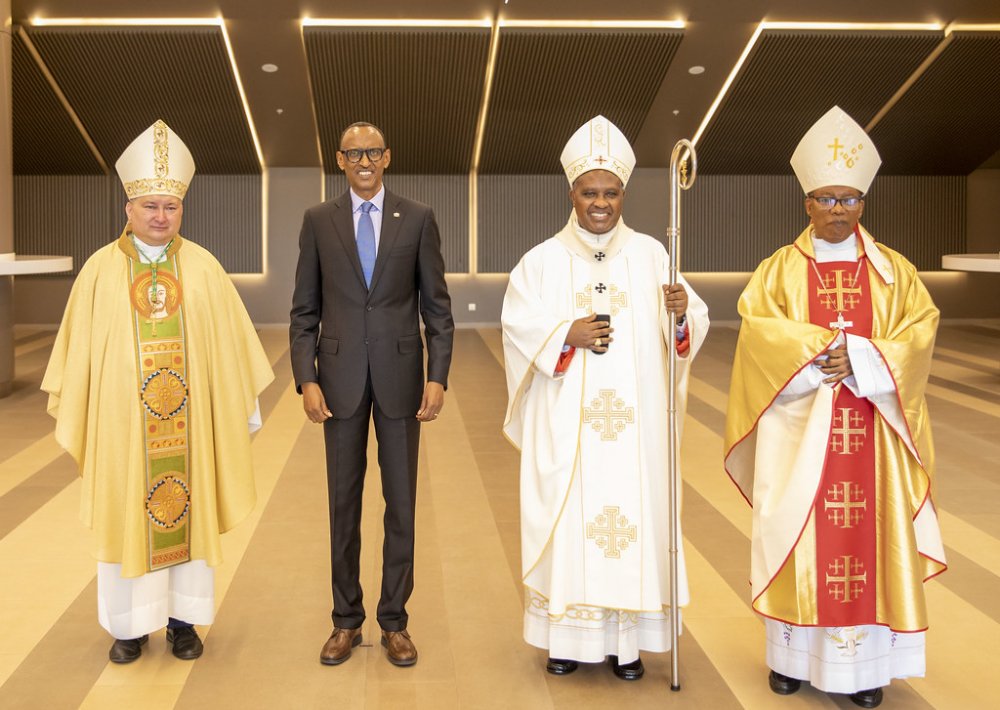
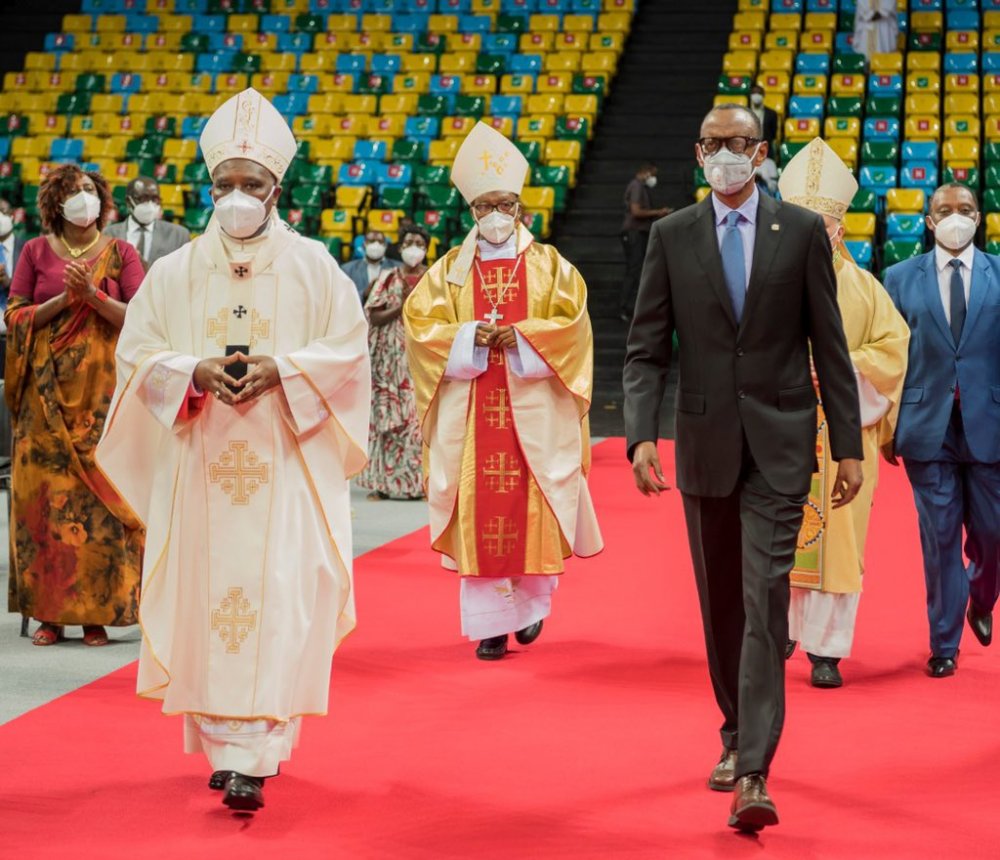
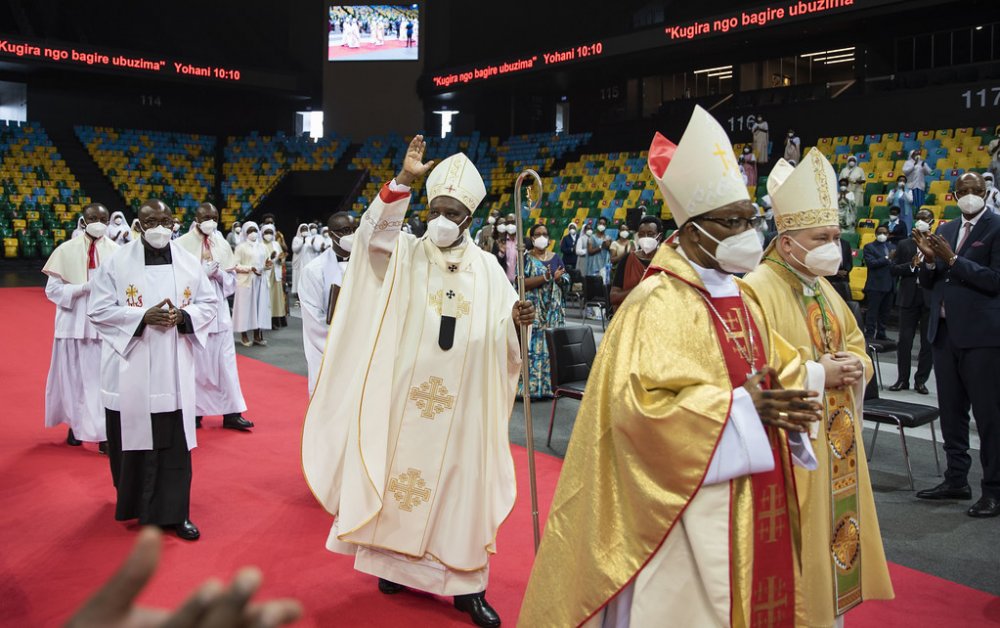
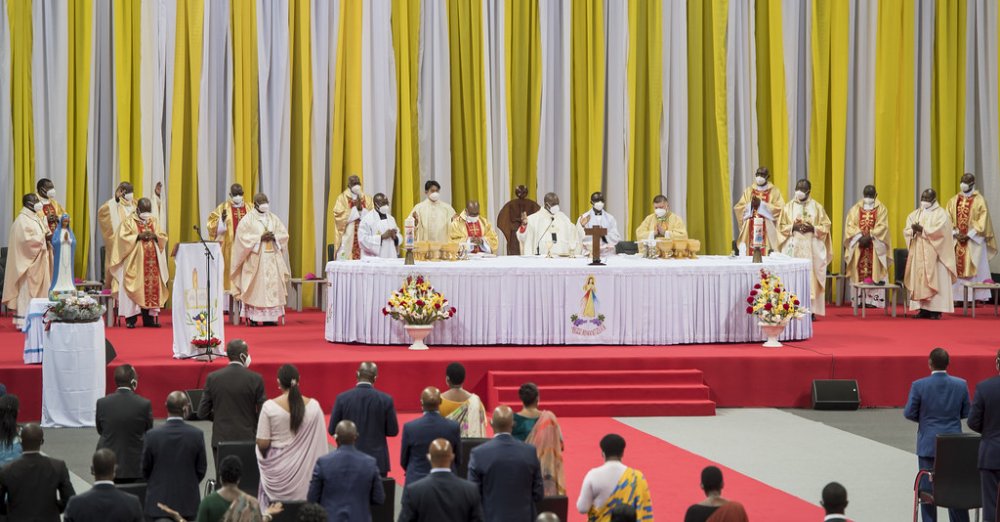
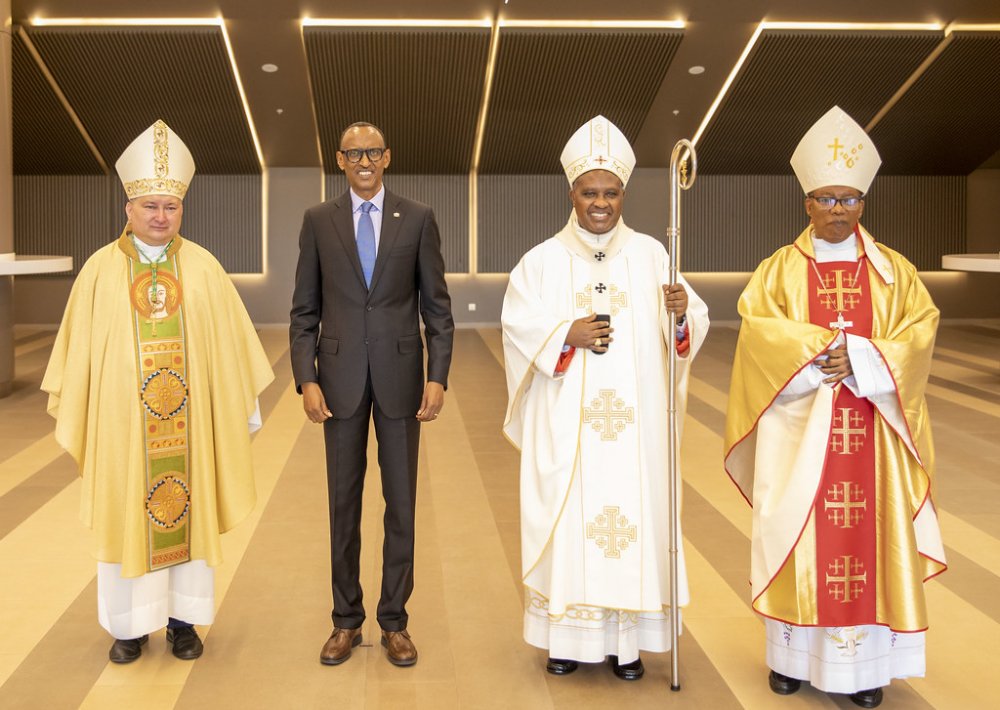
Kagame made the remarks today as he joined catholic faithfuls from across the country at Kigali Arena, in a thanksgiving ceremony in honour of the first ever Rwandan cardinal, His Eminence Antoine Kambanda.
Antoine Cardinal Kambanda was officially created on 28 November in the Vatican.
Addressing the congregation, President Kagame expressed gratitude to Pope Francis for trusting Cardinal Kambanda to be amongst the Pope’s closest advisors.
Kagame said that the trust is founded on the wise judgement and proven commitment throughout Cardinal Kambanda’s service to the Church in Rwanda who also showed that he is able to contribute to the Church on the global stage.
“Today, all of us Rwandans have great joy because the Catholic Church of Rwanda has a Cardinal. It’s the first time this has happened in the last 120 years,” said Kagame.
“When a Rwandan rises through the ranks because of his or her proven courage and commendable performances, be it in Rwanda or on the international stage, we are all happy. The trust and dignity that the Pope has given you is also ours as Rwandans,” he added.
President Kagame reflected on Rwanda, Vatican relations which is on good progress and thanked Pope Francis who relentlessly proved commitment to boost relations correcting what went wrong over the past.
This is related to the role of Catholic Church in Rwanda during the 1994 Genocide against the Tutsi. Considering the involvement of Catholic Church members during the genocide, Pope Francis made a step further and apologized on behalf of the church.
“His Holiness does this not only in Rwanda but also other countries across the world. We cannot forget to thank him for that. We thank you Cardinal Kambanda for the new step, and we hope you will collaborate with others to serve well the church, Rwanda and Rwandans,” he said.
President Kagame highlighted that, in the long and rich history of the country, the Church in Rwanda has been a partner in improving the wellbeing of Rwandans through education, health, and development. He said that partnership should continue and stressed the need to invest more.
“The downs that characterized the history of Rwanda and the Catholic Church which also destabilized the country’s welfare, should not be given priority,” he said.
“I think we pulled a lesson from that and discovered what missed that time. We seek whatever preventing reoccurrence and helping us to make steps forward towards reconstructive journey building partnership, the country and its citizens,” added Kagame.
He expressed optimism that Cardinal Kambanda will root on his own history with many lessons and leverage the dark past to shape the future.
“We are on the path towards achieving great things and collaboration. We have been through the journey for over the past twenty years and beyond seeking to do great things, improve collaboration and rebuild. It should not stop, we should not feel complacent. We should be always committed to do that,” said Kagame.
President Kagame emphasized that the willingness of Pope Francis is promising for collaboration to draw special attention on good deeds and leave behind evils.
Cardinal Kambanda thanked Kagame for joining The Catholic Church and the congratulation message sent to him after appointment.
He also expressed delight for joining Christians after his new special appointment to comfort believers.
“ I am excited to join all of you to thank God and share with you the blessing acquired during my installation as Cardinal. Today, I bring the blessing here in Rwanda,” he said.
The President of Rwanda’s Episcopal Conference, Bishop Philippe Rukamba revealed that they were proud for the milestone and good news for all Rwandans.
“His Eminent Cardinal, your installation as cardinal made us happy. We interacted with different people on televisions, radios and social media channels expressing gratefulness because they showed how a person becomes cardinal,” he noted.
“You are adding up another stage to a long sequence of Christians and clerics Rwanda has ever had. Since the past, we are always aware that God spends the day elsewhere and returns to sleep in Rwanda. Your appointment as cardinal convinced us to understand this enough and helped us to understand the impact of Catholic Church in Rwanda globally,” added Rukamba.
He thanked Cardinal Kambanda for his contribution help Rwandans heal from wounds of the 1994 Genocide against the Tutsi as the head of Justice and Peace Commission among Rwanda’s Catholic Church Bishops.
“We consider your installation as cardinal as something proving that we are on the right psychiatric journey because it helps a Christian to pardon like Christ and God,” he said.
Bishop Rukamba explained that promoting unity and reconciliation under the championship of President Paul Kagame was the enabler to restore peace among Rwandans.
The Mass was also attended by other bishops from the Democratic Republic of Congo, Burundi , diplomats accredited to Rwanda, representatives of different faith based organizations among others.
Kambanda was born on 10th November 1958 in Kigali. He attended Primary school in Buurndi and Uganda and continued with secondary school studies in Kenya. He graduated in theology at Grand Seminaire Nyakibanda in Butare Diocese.
Kambanda is among priests ordained by Pope Jean Paul II on 8th September 1990 during his visit in Rwanda. The ceremony took place in Mbare, in the current Shyogwe sector in Muhanga district, Southern Province.
He was nominated the Bishop of Kibungo Diocese on 3rd May 2013 by Pope Francis.
Kambanda was later in 2018, appointed the Archibishop of Kigali Diocese prior to his installation as Cardinal in November 2020.
The mass organized to celebrate the first-ever Rwanda’s Cardinal took place at Kigali Arena.
Cardinal Kambanda expressed delight for joining Christians after his new special appointment to comfort believers.
“ I am excited to join all of you to thank God and share with you the blessing acquired during my installation as Cardinal. Today, I bring the blessing here in Rwanda,” he said.
The President of Rwanda’s Episcopal Conference, Bishop Philippe Rukamba revealed that they were proud for the milestone and good news for all Rwandans.
“His Eminent Cardinal, your installation as cardinal made us happy. We interacted with different people on televisions, radios and social media channels expressing gratefulness because they showed how a person becomes cardinal,” he noted.
“You are adding up another stage to a long sequence of Christians and clerics Rwanda has ever had. Since the past, we are always aware that God spends the day elsewhere and returns to sleep in Rwanda. Your appointment as cardinal convinced us to understand this enough and helped us to understand the impact of Catholic Church in Rwanda globally,” added Rukamba.
He thanked Cardinal Kambanda for his contribution help Rwandans heal from wounds of the 1994 Genocide against the Tutsi as the head of Justice and Peace Commission among Rwanda’s Catholic Church Bishops.
“We consider your installation as cardinal as something proving that we are on the right psychiatric journey because it helps a Christian to pardon like Christ and God,” he said.
Bishop Rukamba explained that promoting unity and reconciliation under the championship of President Paul Kagame was the enabler to restore peace among Rwandans.
The Mass was also attended by other bishops from the Democratic Republic of Congo, Burundi , diplomats accredited to Rwanda, representatives of different faith based organizations among others.
“The Continental Free Trade Area is the lifeblood of our continent’s integration and prosperity. It will also be the primary portal through which Africa engages with its partners around the world on trade and investment. We must therefore work together continuously to protect and strengthen this pact for the sake of the generations that follow us.”
Kagame made the remarks on Saturday as he participated in the 13th Extraordinary Sessions of the Assembly of the African Union (AU) which took place virtually.
The 13th Extraordinary AU Summit began on the morning of 05th December 2020 to finalise the instruments of African Continental Free Trade Area so that trading may commence on 1st January 2021. After the opening ceremony with statements by the Chairperson of the AU, President Cyril Ramaphosa of South Africa, the Chairperson of the AU Commission, Moussa Faki Mahamat, and the Secretary General of the AfCFTA Secretariat, Wamkele Mene, participants moved into closed session.
President Kagame made a statement during the closed session stressing the importance of the AfCFTA to Africa’s integration and prosperity agenda.
He congratulated the African Ministers of Trade, the African Union Commission, and the new AfCFTA Secretariat for successfully overseeing the technical negotiations.
“I wish to congratulate the African Ministers of Trade, African Union Commission and the new AfCFTA secretariat for successfully overseeing the technical negotiations. The remaining negotiations should be completed as soon as possible in order to maximize the benefits of higher trade volumes for all of us,” he said.
Kagame stressed that the African Continental Free Trade Area will always be associated with the name of President Mamadou Yusuf of Niger ‘who has led this process on behalf of the assembly’ and thanked him for outstanding contributions.
Among others, Kagame observed that it is a collective achievement which could not have happened without the strong support of the African heads of state and Government who have remained steadfast throughout the journey.
He noted that such level of commitment ‘will continue to be necessary to sustain the agreement and make it successful’.
A World Bank report released in December 2019 on the AfCFTA showed that the common market would benefit the African continent in different ways.
The African Continental Free Trade Agreement which was signed by 44 African countries on March 21st, 2018 in Kigali shows that a single market for goods and services across Africa will lead to poverty reduction. At least 30 million Africans (1.5% of Africans) will rise above the poverty line.
The report shows that 12 million people in West Africa, 9.3 million in Central Africa and 4.8 million in East Africa will rise above the poverty line. The AfCFTA has the potential of lifting 67.9 million Africans (3.6% of Africans) to middle income status by 2035. That is a $5.50 income per day.
The AfCFTA will connect 1.3 billion African citizens from 54 countries and is expected to generate $3.4 trillion annually. This trade bloc will improve Intra-African trade and definitely solve the problem of food import in Africa.
The Continental Free Trade Area was expected to start operating on July 1st, 2020 but was delayed due to Covid pandemic. The starting date has been extended to 1st January 2021.
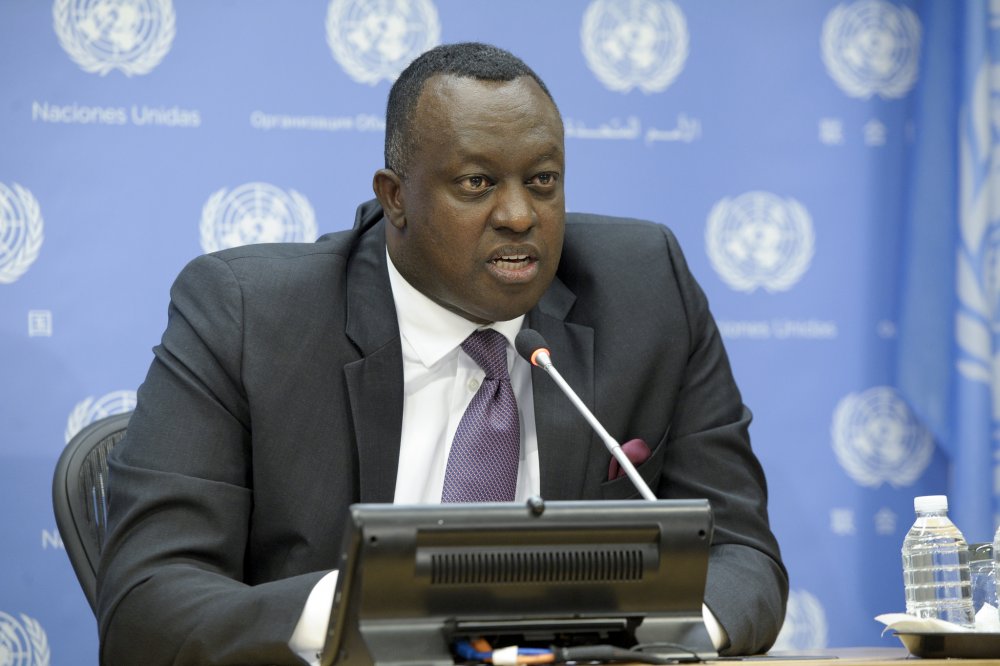
Gasana, 58, served as Rwanda’s ambassador to the United Nations in New York since 2012 until 2016. At the time, Rwanda replaced Gasana and summoned him but never returned to the country.
Since then, he was reported for involvement in different activities intended to destabilize Rwanda’s security. He is said to have coordinated RNC members’ discussions with the President of Uganda, Yoweri Kaguta Museveni in which he was asked to join their activities.
In March 2019, Gasana was part of discussions that brought together President Museveni and Charlotte Mukankusi , the head of diplomacy in RNC.
The letter from the family of Gasana to which IGIHE has a copy, signed by his sister Alice Gasana shows that the entire family was shocked to hear a relative involved in wrongful acts.
Apart from cooperation with dissidents intending to destabilize Rwanda’s security, he was recently reported to have raped two times, a Rwandan girl who was conducting an internship at the embassy in 2014.
“On behalf of the family, I, Gasana Alice wishes to take this opportunity to share my heartfelt feelings with Rwandans over things talked about my brother Eugène-Richard Gasana for more than four years,” reads part of the statement.
As the eldest sister in the family of four, she narrated a bit of Gasana’s history recounting how they lived together in Burundi and Europe.
She explained that, during his teenage hood, Gasana was kin on Laws though other people wanted Gasana to become a diplomat which finally came true.
“Concerning the brother I am telling you, it has been four years hearing bad news against him discomforting me, the entire family and other relatives. He was reported to have committed some acts individually and conspiring in other activities all of which disturbs the family and relatives,” noted Alice Gasana.
As the eldest and head of family, Alice Gasana, reacted on behalf of the family and relatives to condemn acts reported to her brother noting that it is against virtues acquired during childhood.
“That is why, I take this opportunity on behalf of the family to condemn and distance myself from shameful acts reported to my brother because they are against virtues we acquired during our childhood,” she said.
Alice Gasana highlighted that her brother should be held accountable individually because the family was not involved.
“We have been shocked as a family. We were extremely shocked to hear the name of a sibling reported in such shameful acts. I take this take to declare that the family is completely against the acts,” she said.
“Brother Gasana, I know well that you used to respect myadvises. As your commitment to apologize is still pending, I apologize on your behalf as a sibling.”
Kagame made the remarks yesterday as he addressed the African Continental Free Trade Area (AfCFTA) Business. He noted that the Covid pandemic has delayed the start of trading and advised all to stay on course.
“Two years ago, we signed a historic agreement, and together wrote a new chapter in the story of African integration. The Covid pandemic has delayed the start of trading but we must stay on course,” he said.
Kagame revealed that doing more business with each other will be mutually beneficial for countries adding that it will also help to build the capacity to compete internationally.
“In Africa, we will start trading amongst ourselves in a few weeks. We need the private sector to be fully involved. That means, all of you gathered here with us today. We have to work closely together, to ensure the right frameworks are in place for the success of this process,” he noted.
“In addition, we must continue to communicate the benefits of free African trade to our citizens, especially, young people and mobilize them to remain engaged for the next phases of African Integration,” added Kagame.
The President also congratulated and welcomed Wamkele Mene , the new Secretary-General of the CFTA Secretarial and thanked the African Union Commission, for organising this Business Forum, which has become a tradition with each Summit.
A World Bank report released in December 2019 on the AfCFTA showed that the common market would benefit the African continent in different ways.
The African Continental Free Trade Agreement which was signed by 44 African countries on March 21st, 2018 in Kigali shows that a single market for goods and services across Africa will lead to poverty reduction. At least 30 million Africans (1.5% of Africans) will rise above the poverty line.
The report shows that 12 million people in West Africa, 9.3 million in Central Africa and 4.8 million in East Africa will rise above the poverty line. The AfCFTA has the potential of lifting 67.9 million Africans (3.6% of Africans) to middle income status by 2035. That is a $5.50 income per day.
The AfCFTA will connect 1.3 billion African citizens from 54 countries and is expected to generate $3.4 trillion annually. This trade bloc will improve Intra-African trade and definitely solve the problem of food import in Africa.
The Continental Free Trade Area was expected to start operating on July 1st, 2020 but was delayed due to Covid pandemic. The starting date has been extended to 1st January 2021.
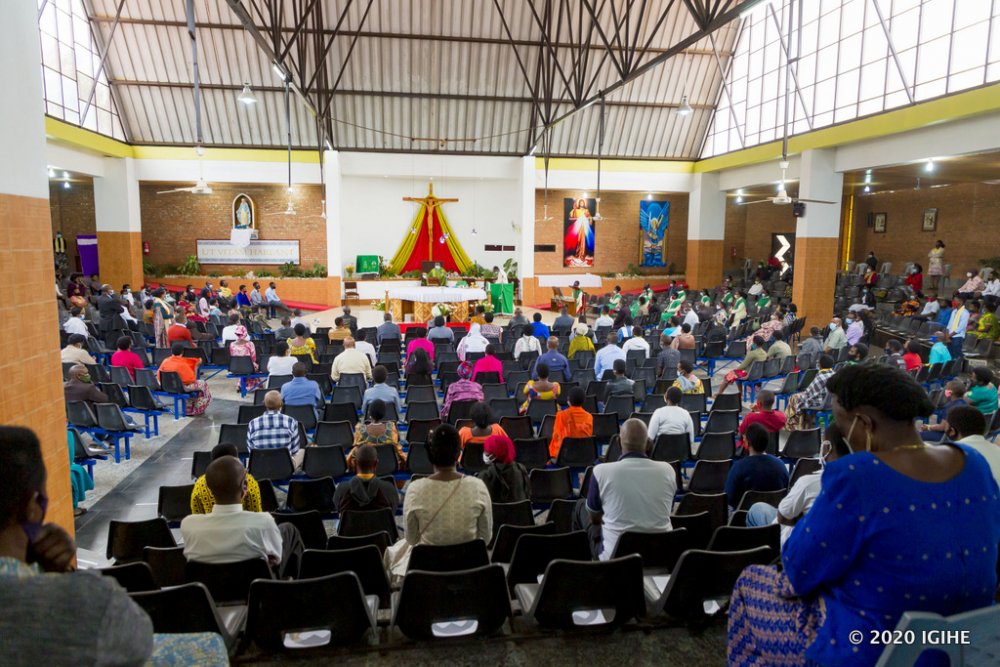
Places of worship are required to accommodate 50% of their capacity and respect all COVID-19 control measures including social distancing, washing hands, and wearing of face mask.
Under the newly issued guidelines, the Ministry of Local Government has revealed that ‘faith-based organizations can organize religious gatherings for more two days of choice per week and inform local leaders from the sector in which a church is located’.
The two days will be additional to existing proclaimed days of worship especially, Friday for Muslims; Saturday for Adventists and Sunday for other churches.
Burial and wedding ceremonies will also continue to be observed anytime respecting COVID-19 guidelines.
The guidelines also indicate that religious gatherings for people in advanced ages from 65 and above should be exclusively held except those leading church services.
Children from six and above have been also allowed to go to pray together with their siblings or parents.
Baptism and other sacraments will be ordained respecting COVID-19 health guidelines.