Researchers analyzed post-surgery blood samples and linked the presence of circulating tumor cells — cancer cells that have broken away from a tumor and entered the bloodstream — to increased recurrence odds, said a statement from Australia’s Centenary Institute on Wednesday.
Around 5,500 Australians face diagnosis annually for head and neck cancer, which affects the lining of the mouth, throat and voice box. While many patients respond well to treatment, a significant number experience relapse, often with limited early warning, said the study published in the European Journal of Surgical Oncology.
Follow-up care relies heavily on scans and clinical exams, which do not always spot early relapse risks, said study co-senior author Jonathan Clark, director of Head and Neck Cancer Research at Australia’s Chris O’Brien Lifehouse, in collaboration with Centenary Institute.
“Our findings suggest that detecting circulating tumor cells could provide additional information to help identify patients who may benefit from closer monitoring after surgery,” said study lead author Dannel Yeo, laboratory head at the Centenary Institute’s Center for Cancer Innovations.
The findings add to growing evidence that blood-based biomarkers could play an important role in more personalized cancer care, the researchers said.
In a statement, the network said the casualties included 10 women, based on preliminary information from the area.
Rocket shelling destroyed the town’s only health center, and medical staff working there were assaulted, with one of them arrested and remaining unaccounted for, the statement said.
The network condemned what it called a “large-scale violation” that caused civilian deaths, spread fear among residents, and targeted health facilities, triggering a wave of displacement toward nearby villages amid deteriorating humanitarian conditions.
The Emergency Lawyers, a legal group, said on Tuesday in a separate statement that the RSF’s attack on Monday included an armed raid and the burning of several homes. It was preceded by drone strikes targeting several civilian locations, including the health center, residents’ homes, the market, and guest houses, resulting in civilian deaths and injuries, and forced displacement of residents.
An eyewitness from the nearby city of Kabkabiya told Xinhua that dozens of families had arrived in the city in recent hours after fleeing Mustariha.
“They were in shock. Some walked long distances on foot. Many spoke of heavy shelling and homes being burned, and they were unable to take any belongings with them,” the witness said, speaking on condition of anonymity.
Mustariha is considered a stronghold of Musa Hilal, one of the leaders of a branch of the Rizeigat tribe, from which several RSF commanders originate. Since the outbreak of fighting in Sudan, Hilal has declared his support for the Sudanese army and allied with the joint forces, which includes armed Darfuri groups fighting alongside the army.
The RSF has not yet commented on the attack.
Since April 15, 2023, Sudan has been engulfed in an armed conflict between the Sudanese Armed Forces and the RSF, resulting in thousands of deaths and injuries and the displacement of millions of people inside and outside the country, while regional and international efforts continue to seek a ceasefire.
Iran’s Foreign Minister Seyed Abbas Araghchi said on Tuesday Iran is determined to reach a “fair and equitable” deal with the United States as soon as possible.
In his remarks posted on X, Araghchi said the two sides have a “historic opportunity” to strike an unprecedented agreement that addresses mutual concerns and achieves common interests, adding that a deal is within reach if diplomacy is prioritized.
His comments came ahead of a third round of indirect nuclear negotiations between Tehran and Washington, scheduled for Thursday in Geneva. Two rounds of indirect talks were held earlier this month, centered on Iran’s nuclear program and the possible lifting of U.S. sanctions.
Also on Tuesday, Iran’s Deputy Foreign Minister for Political Affairs Majid Takht Ravanchi said Iran is ready to do “whatever necessary” to reach a nuclear agreement with the United States.
“We want to do whatever necessary to make it (an agreement) happen. We will enter the negotiating room in Geneva with all sincerity and goodwill,” Ravanchi said in an interview with NPR radio.
“We hope that our goodwill and good approach would be reciprocated by the Americans, and if there is a political will on all sides, I believe that the deal can be reached as soon as possible,” he added.
Meanwhile, during a meeting in Tehran with Armenian Defense Minister Suren Papikyan on Tuesday, Iranian Defense Minister Aziz Nasirzadeh reiterated his country’s firm resolve to defend itself.
He said Iran does not seek war, “but if a war is imposed on the country, it will defend itself strongly and give an unforgettable lesson to enemies.”
The remarks followed a drill held by Iran’s Islamic Revolution Guards Corps (IRGC) along the Iran’s southern coast, the semi-official Fars news agency reported on Tuesday.
Iranian forces practiced the scenario of “strongly defending” the country’s coasts and islands, and the IRGC Ground Forces’ special forces carrying out operations to prevent the enemy from approaching Iran’s southern coasts.
The exercise took place amid continued U.S. military buildup in the Middle East and media reports that U.S. President Donald Trump was considering launching an initial attack on Iran.
Israel media reported Tuesday that eleven U.S. F-22 stealth fighter jets have landed at an Israeli airbase in southern Israel, as part of Washington’s regional military reinforcement against Iran.
The world’s largest aircraft carrier, the USS Gerald R. Ford, which is en route to the Middle East, has arrived in the Mediterranean Sea. It will join the USS Abraham Lincoln carrier strike group and other guided-missile destroyers already deployed near Iran.
Trump on Monday refuted media reports that Dan Caine, the chairman of the Joint Chiefs of Staff, warned against attacking Iran.
In a social media post, Trump said that if a decision is made on conducting military operations against Iran, “it is his (Caine’s) opinion that it will be something easily won.”
Iran’s Foreign Minister Seyed Abbas Araghchi (R) attends a joint press conference in Tehran, Iran, Jan. 18, 2026.
The organisation’s new office is located in Gishushu, placing it within Kigali’s growing tech ecosystem and providing a central base for A2SV’s education and incubator programs.
Founded in 2019 by former Google software engineer Emre Varol, A2SV is a free, non-profit initiative providing high-impact technical education to top-performing university students across Africa. Its mission is to bridge the gap between local university training and the expectations of global tech employers.
What began as a single, informal class at Addis Ababa University with just 22 students has grown into a continent-wide program. To date, A2SV has trained more than 1,200 software engineers from 22 African countries, with alumni securing over 120 job offers from global firms including Google, Amazon, LinkedIn, Bloomberg, and Meta.
A2SV’s model combines rigorous training, mentorship, and real-world project experience to develop globally competitive technologists. The program identifies promising students through a competitive selection process that includes solving data structure and algorithm problems and participating in technical and behavioural interviews.
Once selected, students receive intensive training both in-person and remotely, covering foundational software engineering concepts, problem-solving, and soft skills. Education is delivered in small groups, often with three educators for every thirty students, ensuring each participant receives personalised guidance.
Students work on digital products designed to address local African challenges, such as Eskalate, which connects developers to global companies; DIME, a digital money transfer platform; and Skillbridge, which helps bridge gaps between universities and the workforce. Beyond education, A2SV functions as an incubator, hiring top alumni to develop new solutions while mentoring the next generation of talent.
Graduates are connected to internships and full-time roles at top tech companies, and the program remains entirely free for participants through partnerships with universities. In Rwanda, A2SV has partnered with the University of Rwanda and the Adventist University of Central Africa.
Shema Katende, A2SV’s marketing lead, explained that Kigali was chosen for its supportive environment for innovation and its growing pool of IT talent.
“Rwanda has systematically become a hub for innovation,” he said. “The government’s strong support and youth-focused initiatives made Kigali the ideal base for A2SV to scale across the continent.”
The Gishushu office now serves as the central hub for both the academy and incubator, attracting students, mentors, and developers to work on projects with both local and international impact.
The program emphasises building a strong foundation in programming, particularly in data structures and algorithms, which sets it apart from traditional boot camps.
Adolphe Ngoga, a Rwandan IT graduate, is now part of the team on Eskalate, the organisation’s platform that connects African developers with companies around the world. The program gives developers the opportunity to work on real software projects and gain experience with international teams.
“By the time I joined, more than a dozen developers had already secured roles with U.S.-based companies, showing that these opportunities are truly possible,” said Ngoga, who joined A2SV nearly three months ago when the company relocated to Rwanda.
Mohamed Yasir, a Sudanese team lead who started as a student at A2SV a few years ago, highlighted the importance of mentorship and mastering foundational skills, saying, “Starting with the basics is key. If you understand data structures, algorithms, and how to collaborate with your team, you can take on bigger challenges.”
He advises emerging tech talent to focus on mastering foundational skills and adapting to the evolving landscape, including artificial intelligence: “AI is not here to replace us; it’s here to support developers. Learning how to collaborate with AI and communicate effectively is key to succeeding in today’s tech landscape.”
As A2SV grows in Kigali, founder Emre Varol emphasised the need for partners, investors, and philanthropists to help scale the initiative.
“Our goal is not to promise overnight transformation, but to do the rigorous work required to build a durable pipeline of technical talent and locally rooted ventures,” he remarked.
With its new base in Kigali, A2SV is positioning itself as a launchpad for a continent-wide vision, connecting African engineers to the global tech stage while simultaneously addressing real challenges in education, healthcare, and finance.
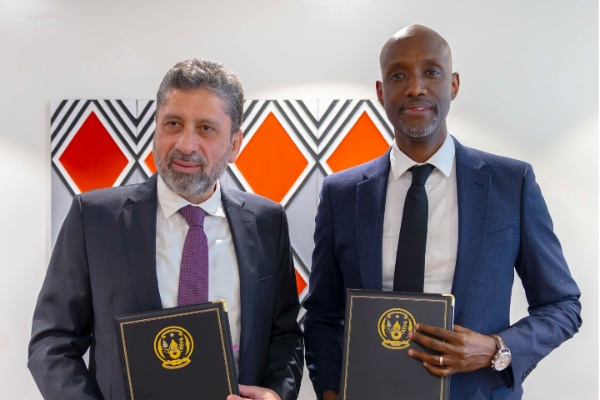
A2SV new office in Gishushu, Kigali.Founded in 2019 by Emre Varol, A2SV is a free, non-profit initiative that provides high-impact technical education to top-performing university students across Africa. The program emphasises building a strong foundation in programming, particularly in data structures and algorithms, which sets it apart from traditional boot camps.A2SV CEO Emre Varol (right) and the company’s Executive Public Relations Officer, John Bunyeshuri. The CEO emphasised the need for partners, investors, and philanthropists to help scale the initiative.Shema Katende, A2SV’s marketing lead, explained that Kigali was chosen for its supportive environment for innovation and its growing pool of IT talent.Adolphe Ngoga, a Rwandan IT graduate, is now part of the team on Eskalate, the organisation’s platform that connects African developers with companies around the world.Mohamed Yasir, a Sudanese team lead who started as a student at A2SV a few years ago, highlighted the importance of mentorship and mastering foundational skills
The National Agricultural Export Development Board (NAEB) has announced ongoing efforts to expand international markets for Rwanda’s agricultural products.
The announcement comes as Rwanda participates for the fifth time in the Paris International Agricultural Show (SIA), an international agriculture and livestock exhibition held annually in France. The event takes place at Paris Expo–Porte de Versailles from late February to early March each year.
In an interview with IGIHE, Janet Basiima, Export Market Development and Innovation Division Manager at NAEB, said Rwanda continues to broaden market access while strengthening the global visibility of its agricultural products.
She noted that although this marks Rwanda’s fifth participation, the exhibition itself has been held for more than six decades.
“We came with around 15 exporters showcasing tea, coffee, honey, and other agricultural goods. Our participation is aimed at expanding markets for Rwanda’s agricultural and livestock products,” she said.
Basiima added that the delegation is not only exhibiting but also engaging potential buyers who import products from Africa to explore new trade partnerships. She emphasized that, beyond the more than 100 countries represented at the exhibition, France itself remains a significant market for Rwanda.
She further highlighted that France ranks fourth among destinations for Rwanda’s agricultural exports. According to Basiima, the presence of RwandAir flights to Paris three times a week provides a strategic advantage, making it easier to transport Rwandan products to newly secured markets.
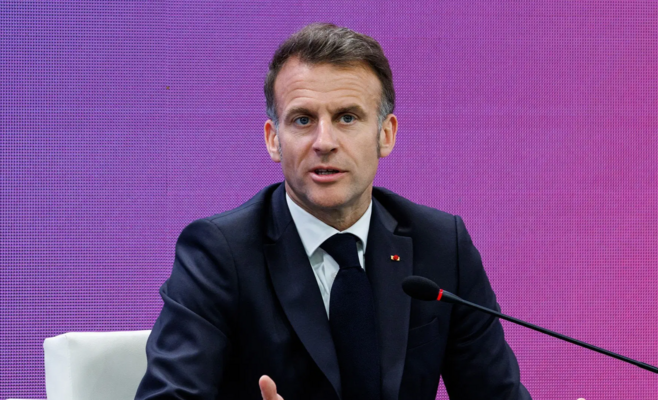
This year’s exhibition opened on February 21, 2026, and was officially launched by French President Emmanuel Macron, as is customary each year.
Rwanda is exhibiting at Pavillion Seven, where it is showcasing progress in developing export-ready agricultural and livestock products. The country is represented by NAEB and the Embassy of Rwanda in France.
The exhibition provides a valuable platform for farmers, entrepreneurs, traders, and investors to exchange expertise, foster partnerships, and promote innovation in agriculture and livestock development.
Janet Basiima, Export Market Development and Innovation Division Manager at NAEB, said Rwanda continues to broaden market access while strengthening the global visibility of its agricultural products. The exhibition provides a valuable platform to promote innovation in agriculture and livestock development.The event takes place at Paris Expo–Porte de Versailles from late February to early March each year. Nzungize is among participants representing Rwandan companies exporting coffee.
The new capital will support the continued expansion of Spiro’s industry-leading battery swapping network across existing and new markets, while further advancing the company’s proprietary technology platform, including automated battery swaps, fast charging, and renewable energy integration.
“Demand for Spiro’s innovative, industry-leading battery swapping infrastructure continues to grow and is reshaping mobility in Africa by providing reliable, clean transportation options across the continent,” said Kaushik Burman, CEO of Spiro.
“With strong financial backing and cutting-edge technology, Spiro is leading Africa’s transition to sustainable mobility. This new funding reinforces our vision of building a robust, scalable energy network tailored for Africa by Africans.”
“Spiro’s growth exemplifies the power of Made-in-Africa, for-Africa solutions,” said Gagan Gupta, Founder of Spiro. “By combining local insights with global best practices, we are creating a resilient, green energy ecosystem that supports economic development and climate goals. This funding empowers us to bring affordable clean energy and mobility to millions of Africans while deploying an industry leading energy infrastructure that will contribute meaningfully to a greener future in Africa.”
Laurène Aigrain, Managing Director of Africa Go Green Fund highlighted that Spiro has built a strong platform that is delivering tangible impact across multiple African markets, and expressed delight at supporting the next phase of its growth as it scales critical clean mobility infrastructure.
“This transaction reflects our commitment to backing commercially robust businesses that combine innovation with measurable environmental and social impact.”
“Spiro is one of the largest and fastest-growing players in the pan-African e-mobility market,” said Raghav Sachdeva, CIO of Nithio.
“They have demonstrated that electric mobility can scale rapidly while delivering real economic value to riders and meaningful emissions reductions. We are proud to support Spiro’s continued growth and see e-mobility as a critical pillar of Africa’s clean energy transition.”
Spiro is operational in six countries; Kenya, Uganda, Rwanda, Nigeria, Benin and Togo, with pilots underway in Cameroon and Tanzania. To date, Spiro has deployed more than 80,000 electric bikes, circulated over 300,000 batteries, completed more than 30 million battery swaps, established over 2,500 swap stations, and enabled more than one billion CO₂- free kilometres travelled.
The company remains committed to advancing the UN Sustainable Development Goals related to clean energy, sustainable cities, and climate action.
“Driving Africa’s transition to electric mobility is central to how we view sustainable economic development across the continent,” said Oluranti Doherty, MD, Export Development at Afreximbank. “By supporting Spiro, Afreximbank is committed to financing the future of sustainable African trade; we are promoting a green industrial value chain that keeps innovation at the forefront of a just energy transition.”
Spiro has more than 80,000 electric motorcycles.The new capital will support the continued expansion of Spiro’s industry-leading battery swapping network across existing and new markets.Spiro has achieved over one billion kilometres of low-carbon emissions travel.
The 20-year-old, who also won a yellow jersey, made his decisive move with just three kilometers remaining, breaking clear from the peloton and holding off the chasing riders to cross the line solo. At the 1 km mark, he had a lead of 45 seconds, which had slightly narrowed to 35 seconds, while Pau Marti, in the yellow jersey, struggled to maintain pace in the chasing group.
Earlier in the stage, the front group of 12 riders had established a 50-second gap over the peloton, featuring riders such as Ribeiro, Mulugeta, Mulubrhan, Aman, Vanhuffel, and Marti. Zomermaand also claimed the final climbing points at Bushenge Hill (km 127), edging past Mulubrhan and Vanhuffel. Solo breakaway attempts by Eritrea’s Nahom Araya earlier in the stage added drama, but the chasing group gradually reeled him back, including Duarte Marivoet of Lotto – Groupe Wanty.
Rwanda’s top rider
Rwanda’s own Samuel Niyonkuru of Team Amani finished 10th, emerging as the highest-placed Rwandan on Stage 3. Tackling the hilly 145 km course with determination, Niyonkuru stayed with the leading group for most of the stage, fending off the chasing pack to secure a top-ten finish.
Stage 3 Results (Elite – Top 10)
Jurgen Zomermaand (Development Team Picnic PostNL) – 3:44:53
Lucas Van Gils (Lotto – Groupe Wanty) – +20.36s
Matteo Vanhuffel (Development Team Picnic PostNL) – +20.50s
Jose Said Cisneros Diaz De Leon (Soudal Quick-Step Devo Team) – +28.22s
Yafiet Mulugeta (Eritrea) – +28.43s
Henrique Da Silva Avancini (Localiza Meoo / Swift Pro Cycling) – +28.93s
Oliver Mattheis (Bike Aid) – +29.09s
Awet Aman (Istanbul Team) – +29.27s
Samuel Niyonkuru (Team Amani) – +43.81s
The race continues on Wednesday, February 25, with Stage 4 starting in Karongi at 12:00 and concluding in Rubavu over a 127.2 km route.
Zomermaand made his decisive move with just three kilometers remaining, breaking clear from the peloton and holding off the chasing riders to cross the line solo.Locals turned up along the road and on top of their buildings to witness the race.Stage 3 of the Tour du Rwanda stretched from Huye to Rusizi, covering 145.3 km of challenging terrain.
In a statement released on Tuesday, MONUSCO said the assessment mission, running from February 23 to 27, follows consultations with Democratic Republic of the Congo President Félix Tshisekedi, who also serves as chairperson of the ICGLR.
The statement noted that the deployment is a preparatory step toward operationalising the agreed ceasefire architecture. The team is evaluating access, security, logistics, and engagement requirements to ensure that future monitoring and verification efforts are credible, safe, and operationally feasible.
The initiative comes amid sustained diplomatic efforts to stabilise eastern DRC. In October 2025, the DRC government and the AFC/M23 rebel alliance signed the Doha Framework for Comprehensive Peace Agreement in Doha, establishing a joint monitoring and verification mechanism to investigate and prevent ceasefire violations. Observers from the United States, the African Union and Qatar are also part of that mechanism.
MONUSCO recalled that under UN Security Council Resolution 2808 (2025), the mission is authorised to support the implementation of a permanent ceasefire. This includes backing the Ceasefire Oversight and Verification Mechanism as well as the Expanded Joint Verification Mechanism Plus (EJVM+), created following the Doha agreement.
During their stay in and around Uvira, the joint team will assess political, security, logistical and socio-environmental conditions to inform comprehensive planning for a future deployment.
“Effective ceasefire monitoring is intended to reduce violence and create the necessary space for a durable political solution,” said Vivian van de Perre, Special Representative of the UN Secretary-General in the DRC and Head of MONUSCO ad interim.
She noted that, unlike in North Kivu and Ituri, MONUSCO’s mandate in South Kivu is limited to ceasefire monitoring and does not include Protection of Civilians responsibilities under Resolution 2808 (2025).
The mission emphasised that the current deployment is exploratory in nature. The scale and configuration of any subsequent ceasefire monitoring presence will depend on agreed parameters, security guarantees and operational requirements.
ICGLR Executive Secretary Dr. Mbita Luwabeha said regional cooperation remains key to lasting stability. “The Great Lakes region has vast potential for peace and prosperity. By uniting and cooperating, we can tackle challenges and create a brighter future for everyone,” he said.
Repeated ceasefire violations and ongoing hostilities have hampered efforts to stabilise the region, and it remains to be seen if the latest attempt to implement a lasting truce will succeed.
During their stay in and around Uvira, the joint team will assess political, security, logistical and socio-environmental conditions to inform comprehensive planning for a future deployment. The assessment mission runs from February 23 to 27.The team is evaluating access, security, logistics, and engagement requirements to ensure that future monitoring and verification efforts are credible, safe, and operationally feasible.
French Foreign Minister Jean-Noel Barrot on Tuesday voiced unsatisfaction after U.S. Ambassador to France Charles Kushner failed to attend a summons by the French Foreign Ministry, saying diplomatic representatives must respect established protocol.
Speaking to French media France Info, Barrot said that when one has the honor of representing one’s country in France, one need to respect diplomatic customs and responds to summonses from the foreign ministry.
Barrot described the ambassador’s absence “a surprise,” pointing to Kushner’s “personal responsibility” in the matter. He noted that summoning an ambassador when explanations are required is a routine diplomatic practice.
“This in no way affects the relationship between France and the United States,” Barrot said. “However, it will naturally affect his ability to carry out his mission in our country.”
The French minister reiterated that France does not accept foreign interference in its domestic political debate and said the purpose of the summons was to seek clarification.
The summons followed statements by the U.S. embassy on social media about the death of Quentin Deranque, a French far-right activist, which French authorities viewed as inappropriate.
On Friday, the U.S. Embassy said on X account that “violent left-wing extremism is on the rise, and its role in Quentin Deranque’s death demonstrates the threat it poses to public safety.”
On Monday, France restricted Kushner’s access to senior government officials after he failed to attend a summons from the French Foreign Ministry.
According to French media reports, Deranque was seriously injured during a clash between rival radical groups at a conference in Lyon on Feb. 12. The event was organized by a member of the hard-left party La France Insoumise (LFI). Deranque later died from his injuries.
French Foreign Minister Jean-Noel Barrot on Tuesday voiced unsatisfaction after U.S. Ambassador to France Charles Kushner failed to attend a summons by the French Foreign Ministry
The latest guidance involves additional ad valorem duties covered by seven executive orders signed from Feb. 1, 2025 to Aug. 6, 2025, according to a bulletin issued by the U.S. CBP on Feb. 22.
The U.S. Supreme Court ruled last Friday that U.S. President Donald Trump’s sweeping tariffs under IEEPA meant for use in national emergencies were illegal, officially striking down the global tariffs introduced since April.
“In light of recent events, the additional ad valorem duties imposed pursuant to IEEPA shall no longer be in effect and, as soon as practicable, shall no longer be collected,” the executive order said.
Trump authorized all executive departments and agencies to immediately take appropriate steps to terminate the collection of the additional ad valorem duties imposed under the IEEPA.
CBP has collected as much as 175 billion U.S. dollars in duties pursuant to the IEEPA, according to an estimate by Penn-Wharton Budget Model.
Meanwhile, the Trump administration is scheduled to impose an additional 15 percent tariff on imported goods from all countries starting Tuesday, according to a White House proclamation and one of Trump’s social media posts on Saturday.
Section 122 of the Trade Act of 1974 allows the president to impose duties of up to 15 percent for up to 150 days on any and all countries to address “large and serious” balance of payments issues. After 150 days, Congress would need to approve their extension.