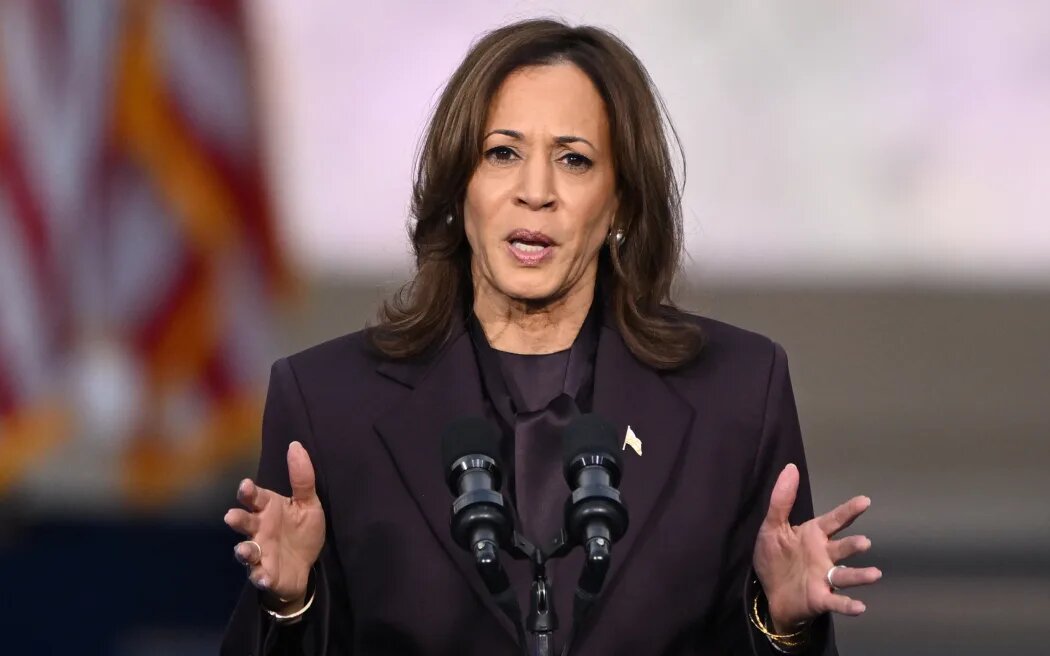
Addressing her supporters and the nation from her alma mater, Howard University in Washington, D.C., Harris acknowledged that the election outcome was not what Democrats had anticipated, but she urged them to accept the results.
“We must accept the results of this election,” she stated on Wednesday, calling for unity and respect for the democratic process.
The 60-year-old Vice President expressed deep gratitude for the journey and pledged her continued commitment to America’s future, including the values of freedom, opportunity, fairness, and dignity for all people.
“My heart is full today—full of gratitude for the trust you have placed in me, full of love for our country, and full of resolve,” she said, visibly moved. “The outcome of this election is not what we wanted, not what we fought for, but hear me when I say: the light of America’s promise will always burn bright as long as we never give up and as long as we keep fighting.”
Harris revealed that she had spoken with Trump earlier in the day to congratulate him on his victory and assured him of a smooth transfer of power.
“I told him that we will help him and his team with that transition, and we will engage in a peaceful transfer of power,” she added.
As Vice President, Harris will play the ceremonial role of President of the Senate during the certification of Trump’s victory on January 6, 2025.
Harris’ public concession marks the end of a tumultuous election season, during which the two rival candidates fiercely sought public support, trading sharp barbs as they pursued their bids for the White House.
Harris had aspired to make history as the first Black woman and first female U.S. president, but that dream dimmed on Wednesday morning as Trump secured key states to surpass the 270 electoral vote threshold needed to win the presidency.
The Republican candidate, who lost to President Joe Biden in the 2020 election, won several battleground states, including Wisconsin, Michigan, Pennsylvania, Georgia, and North Carolina, securing a non-consecutive term in office—a feat last achieved by Grover Cleveland 132 years ago.
As of Thursday morning, Trump had garnered 295 electoral college votes, with Harris trailing at 226. Trump also holds a popular vote lead of more than five million votes.
In his return to power, Trump defied numerous odds, surviving repeated scandals and multiple indictments, including charges related to hush money payments, mishandling classified documents after leaving office, and alleged interference in the 2020 election.
Political pundits believe that Trump’s primary focus on the economy and his promise to contain illegal immigration ultimately resonated with enough Americans, leading to the Democrats’ resounding defeat.
Trump’s victory has already sparked a wave of global recognition as leaders from around the world are stepping forward with congratulations and praise, lauding his resilience and the renewed diplomatic possibilities his win brings.
With excitement and anticipation, international figures have hailed Trump’s political resurgence as a pivotal moment for America and the world, their words reflecting deep respect for his persistence and a shared hope for strengthened alliances.
The first to acknowledge the Republican Party candidate’s victory was Nayib Bukele, President of El Salvador, who wasted no time in affirming his support.
In a message of confidence, Bukele tweeted, “Congratulations, President-elect.” His prompt recognition paved the way for an array of international leaders to echo his sentiment, marking this victory as a truly global affair.
In the same spirit, Rwandan President Paul Kagame extended warm congratulations to President-elect Donald Trump, recognizing his historic and decisive victory as the 47th President of the United States.
Kagame praised Trump’s message of partnership based on mutual respect rather than imposition, expressing a strong desire to work collaboratively for the shared benefit of both nations in the years to come.
Ethiopian Prime Minister Abiy Ahmed Ali joined in with words that resonated with optimism and partnership.
“Congratulations to President Donald Trump on your election victory and comeback. I look forward to working together to further strengthen the relationship between our two countries during your term.” Abiy said in a statement.
From Burundi, President Evariste Ndayishimiye offered his own congratulatory note: “I extend my heartfelt congratulations to President-elect Donald Trump on your historic election victory and convey my wishes for success as you lead America forward with purpose and conviction. I look forward to further strengthening the Burundi-USA cooperation.”
President Recep Tayyip Erdoğan of Turkey responded to the news with a personal touch, referring to Trump as a friend. “I congratulate my friend Donald Trump,” he said warmly and went on to express his hopes for a strengthened U.S.-Turkey relationship, emphasizing shared global challenges.
“I hope that relations between Turkey and the United States will be strengthened, that regional and global crises and wars, especially the Palestinian issue and the Russian-Ukrainian war, will end, and I believe that more efforts will be made for a more just world.”
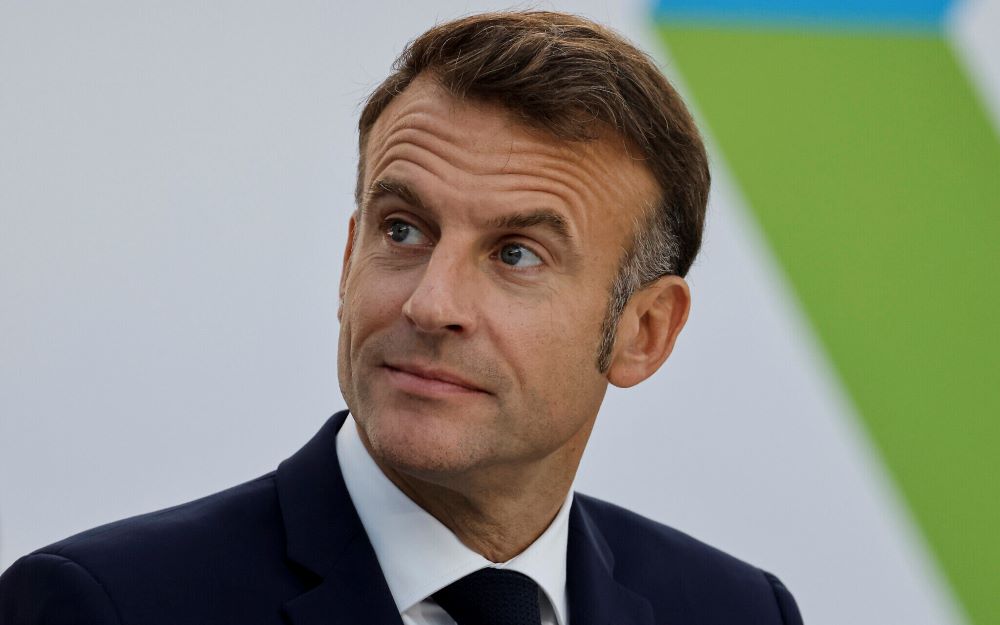
Across the continent, French President Emmanuel Macron shared a note of familiarity and ambition.
“Congratulations, President Trump. Ready to work together as we did for four years. With your convictions and mine. With respect and ambition. For more peace and prosperity.”
Macron’s message, nodding to their past cooperation, conveyed a desire to continue addressing global challenges in tandem.
Hungary’s Prime Minister Viktor Orbán also added his enthusiastic endorsement. “The biggest comeback in U.S. political history! Congratulations to President Trump on his enormous win. A much-needed victory for the World!”
Meanwhile, from the heart of Africa, President Félix Tshisekedi of the Democratic Republic of Congo extended warm congratulations on behalf of his nation. In a message shared on the Congolese presidential Twitter account, Tshisekedi expressed his intent to build upon the already positive relations between the U.S. and the DRC.
“On behalf of the Congolese people and in his own name, President Félix Tshisekedi extends his warmest congratulations to Donald Trump for his great victory in the presidential election of USA.
The Head of State said he was ready to collaborate with the newly elected American President and to deepen the strategic partnership between the RDC and the U.S., which already maintain good friendly and cooperative relations.”
From the East African region, Kenyan President William Ruto said, “On behalf of the Government and the people of the Republic of Kenya and on my own behalf, I convey to Your Excellency, my warmest congratulations on your election as the 47th President of the United States of America.”
South Africa’s Cyril Ramafosa said, “Congratulations to United States President-Elect on your return to the Presidency. I look forward to continuing the close and mutually beneficial partnership between our two nations across all domains of our cooperation.”
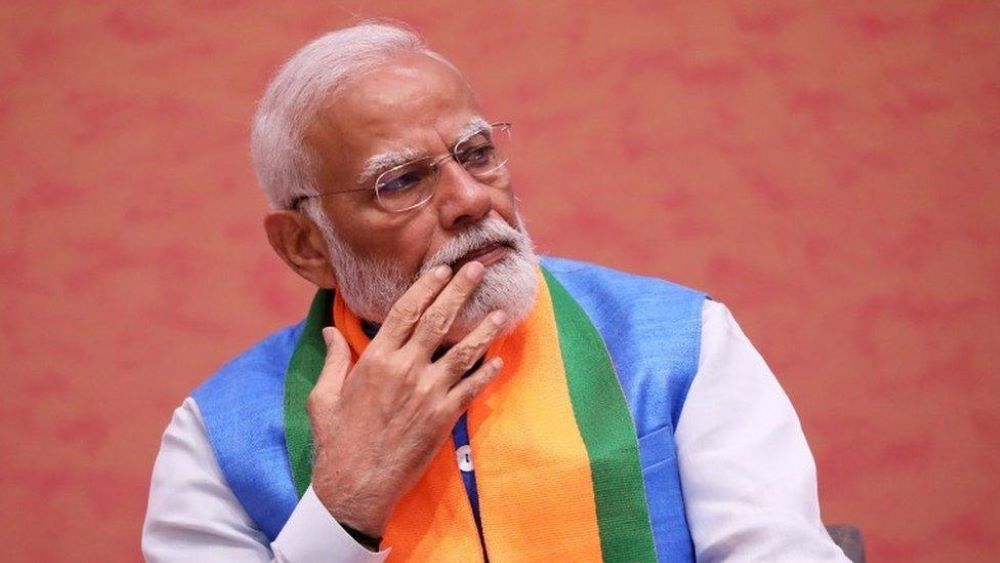
Narendra Modi, India’s Prime Minister said, “Heartiest congratulations my friend Trump on your historic election victory. As you build on the successes of your previous term, I look forward to renewing our collaboration to further strengthen the India-US Comprehensive Global and Strategic Partnership. Together, let’s work for the betterment of our people and to promote global peace, stability and prosperity.”
In a show of solidarity and great admiration, Ukrainian President Volodymyr Zelensky gave the longest and most passionate message.
He said, “Congratulations to Donald Trump on his impressive election victory! I recall our great meeting with President Trump back in September, when we discussed in detail the Ukraine-U.S. strategic partnership, the Victory Plan, and ways to put an end to Russian aggression against Ukraine.”
“I appreciate President Trump’s commitment to the “peace through strength” approach in global affairs. This is exactly the principle that can practically bring just peace in Ukraine closer. I am hopeful that we will put it into action together.”
He added, “We look forward to an era of a strong United States of America under President Trump’s decisive leadership. We rely on continued strong bipartisan support for Ukraine in the United States. We are interested in developing mutually beneficial political and economic cooperation that will benefit both of our nations.”
Zelensky emphasized that Ukraine, as one of Europe’s strongest military powers, is committed to ensuring long-term peace and security in Europe and the Transatlantic community with the support of allies.
Trump served as the 45th President of the United States from 2016 to 2020, after which he was succeeded by Democrat Joe Biden in an election that was disputed by the Republican candidate.
While Biden had initially launched a campaign to defend his seat, he dropped out of the race in July to endorse Harris. The 81-year-old withdrew from what would have been a rematch between him and Trump, primarily due to concerns about his age.
In a ruling delivered on Wednesday, November 6, 2024, the Kicukiro Primary Court also imposed a fine of Frw 190,000 for the two offences. However, the 21-year-old was acquitted of the charge of fleeing the scene after causing an accident.
The suspended sentence means that Muheto will not serve time immediately, but the sentence could be enforced if she commits the offences again within one year.
The former pageant queen was arraigned in court on October 31, 2024, following her arrest for the traffic offences.
The prosecution had told the court that Miss Muheto had been drinking at a bar named “Atelier du Vin” around midnight before attempting to drive home. Due to her limited driving skills and high level of intoxication, she crashed into an electricity pole and a tree.
She was accused of fleeing the scene after the crash but later returned to retrieve her phones, only to find that the police had already arrived. She then reportedly claimed that she was not the driver of the vehicle.
The prosecution noted that this was not her first offence, pointing out that she had been previously cautioned and apologized for similar behaviour on September 23, 2024. They urged the court to find her guilty on all charges and sentence her to a one-year and eight-month jail term: six months for drink-driving, two months for driving without a permit, and one year for fleeing the scene after causing an accident.
In her plea, Miss Muheto admitted to driving under the influence and causing the accident but denied fleeing the scene.
She pleaded for leniency, requesting the court to spare her from a jail term, citing her remorse.
Miss Muheto stated that she is involved in national projects aimed at combating child stunting and is a student at the African Leadership University, where she needs to continue her studies.
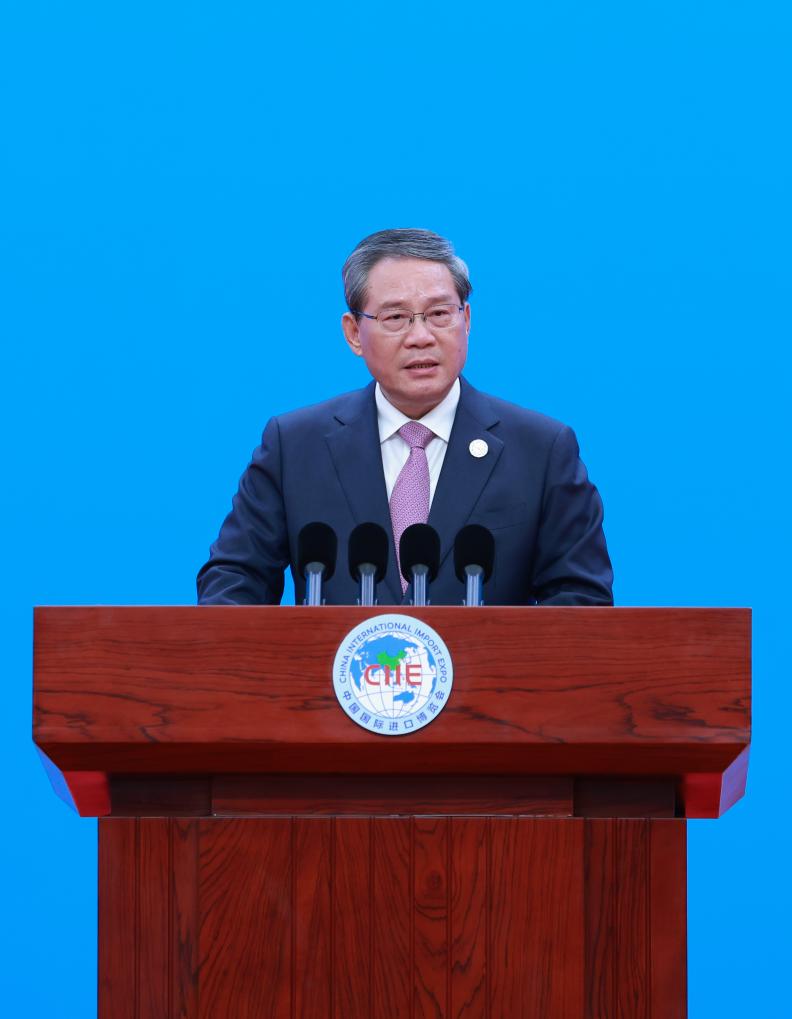
Li made the remarks during his keynote speech at the opening ceremony of the seventh China International Import Expo (CIIE) and the Hongqiao International Economic Forum in Shanghai.
Hosting the CIIE is an important measure for China to expand opening up and cooperation, representing China’s solemn commitment to the world, Li said.
If the first CIIE was a one-way invitation from China to the world, then each subsequent edition has become a mutual commitment between China and the world, reflecting the shared aspiration for opening up and cooperation, the premier said.
Li stressed the need to strengthen consensus on opening up, adding that all parties should jointly adhere to international economic and trade orders and rules and earnestly fulfill multilateral and bilateral economic and trade agreements.
China will further expand institutional opening up and actively align with high-standard international economic and trade rules, Li said, pledging efforts to implement the strategy for upgrading pilot free trade zones.
Li said the country is willing to open up its enormous market further, including implementing the unilateral opening up and offering zero-tariff treatment for all tariff lines from the least developed countries, and effectively turn the huge market into great global opportunities.
China firmly safeguards the multilateral trading system with the World Trade Organization at its core and supports developing countries in sharing more benefits of globalization, Li said.
He said China stands ready to continue close coordination and cooperation with all parties in international economic organizations, take the lead in exploring the implementation of the Investment Facilitation for Development Agreement, and join efforts to build an open world economy.
“The fundamentals of the Chinese economy remain sound, and the Chinese government is capable of promoting steady economic growth and contributing more to global development and the welfare of humanity,” said the premier.
In their speeches at the ceremony, foreign leaders and heads of international organizations remarked that the CIIE has become an important international platform for promoting trade and investment and boosting opening up and cooperation.
They voiced their confidence in the Chinese economy and its prospect, and expressed willingness to advance cooperation with China in jointly building the Belt and Road as well as in areas such as economy, trade, connectivity and green development, maintain free trade, and promote equality, progress and sustainable development in the world.
This growth reflects the expansion of Rwanda’s higher education sector, which has seen about 20 new institutions gain approval to operate in the country over the past seven years.
While some of these institutions offer specialized international programs, they are not the only schools drawing foreign students.
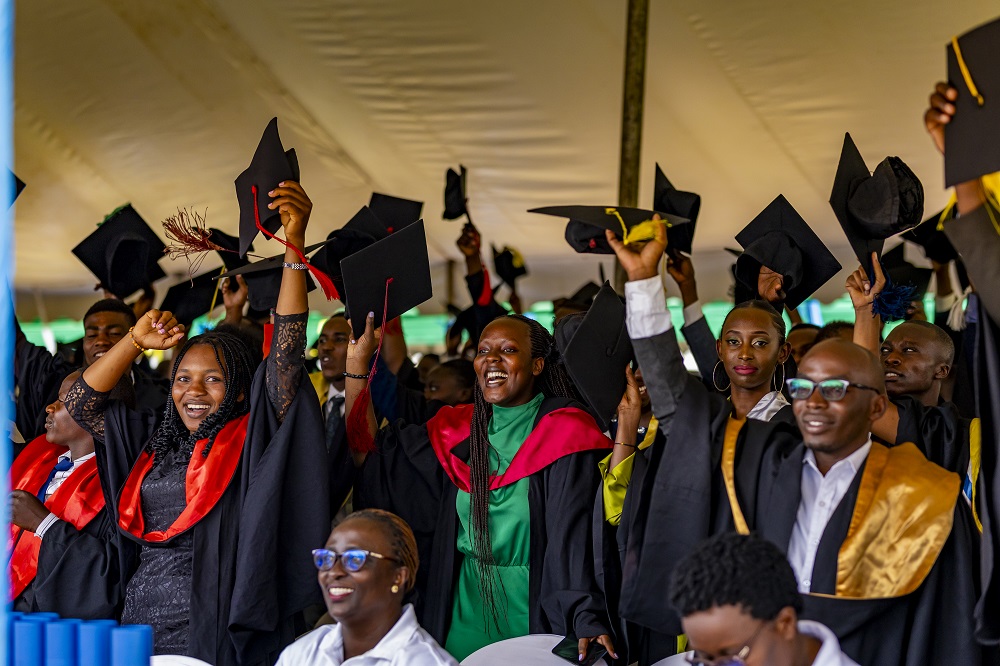
For instance, in October 2024, more than 8,000 students graduated from the University of Rwanda, 126 of whom were international students.
HEC data shows that in the 2017/2018 academic year, there were about 1,397 international students, with numbers now ballooning to over 9,100.
Speaking before the Parliamentary Committee on Education, Technology, Culture, Sports, and Youth, HEC Director General Dr. Rose Mukankomeje highlighted both the successes and the challenges of this growth.
“The number of international students has increased, but some arrive with insufficient information about study requirements and face unexpected challenges,” she said.
To address this, HEC is working closely with immigration authorities to ensure that information on study requirements is readily accessible online and that students can secure visas upon arrival.
“No one should come as a tourist and then attempt to enroll in school,” she emphasized.
Dr. Mukankomeje also raised concerns about individuals who enter Rwanda under false pretenses, sometimes claiming to seek work but lacking proper employment documentation.
She noted cases where people with medical backgrounds enroll in unrelated courses, such as computer programming, as a strategy to obtain equivalency documents and ultimately secure employment.
In October 2024, Prime Minister Dr. Edouard Ngirente reaffirmed the commitment to enhancing the quality of education at the University of Rwanda, which continues to attract international students. He stressed that maintaining high educational standards remains a top priority.
Since 2017, the number of highly qualified faculty members with Ph.D. degrees has also seen substantial growth, increasing from 776 to 1,195 in 2024.
The Republican Party candidate, who lost to President Joe Biden in the 2020 election, secured several battleground states, including Pennsylvania, Georgia, and North Carolina, to surpass the 270 electoral votes needed to defeat his Democratic rival in this year’s polls.
As of Wednesday afternoon, Trump had garnered 277 electoral votes, surpassing the 270 threshold and dimming Harris’ hopes of becoming the first Black woman and first female U.S. president. Harris is trailing Trump with 224 electoral votes.
With Trump leading Harris in the Electoral College and holding a popular vote lead of more than five million, the Associated Press and major networks such as CNN have called the election in Trump’s favour, though the world awaits the final official results.
This historic victory makes Trump the first U.S. president to secure a non-consecutive win in over a century, a feat last achieved by Grover Cleveland 132 years ago.
Early on, Trump declared victory as the 47th president of the United States as it became increasingly clear he would defeat Harris.
Addressing his supporters at the Palm Beach County Convention Center in West Palm Beach, Florida, Trump described his ballot triumph as a “magnificent victory for the American people” that would usher in a “golden age” for the country.
“This will truly be the golden age of America. It will make America great again. There was no other path to victory,” he told his supporters.
Trump promised Americans he would make them “very happy” and “very proud” of their vote.
“We have a country that needs help, and it needs help very badly,” Trump said. “We’re going to fix our borders. We’re going to fix everything about our country.”
Trump, who has promised to spur economic growth by boosting tariffs and trade and decisively deal with illegal migration, was also ecstatic that Republicans had regained control of the Senate in this year’s election.”
“The number of victories in the Senate is incredible. You’ll have great senators, and it looks like we will be keeping control of the House of Representatives too,” he added.
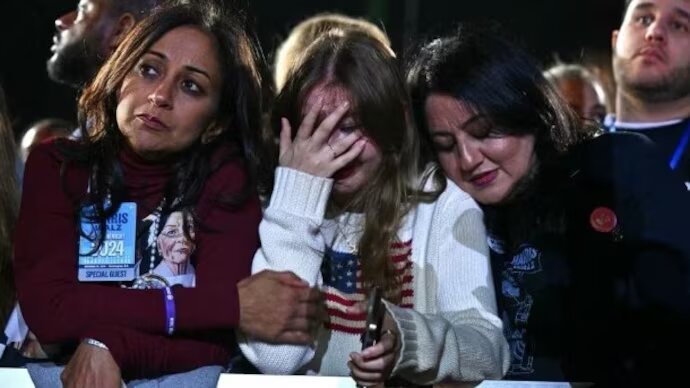
Meanwhile, dejected supporters of Harris, who had gathered at Howard University for an election watch party, left after Trump took an early lead in the election, which had been described as neck-and-neck.
The mood dampened further after Harris’ campaign co-chair Cedric Richmond announced that the candidate would not address them, suggesting that she would speak about the election later on Wednesday.
“We still have votes to count. We still have states that have not been called yet. We will continue overnight to fight to make sure that every vote is counted, that every voice has been heard. So you won’t hear from the Vice President tonight, but you will hear from her tomorrow,” Richmond told the supporters.
Amb. Nduhungirehe has told TV 10 that the Rwandan government made this decision to protect its citizens from potential violence during the protests.
The demonstrations are being led by supporters of Venancio Mandlane, leader of the Podemos party, following the Mozambican electoral commission’s announcement that Daniel Chapo of the Frelimo party won the October 9, 2024, presidential election with 70.6% of the vote.
Some opposition figures allege that Rwandan forces, usually stationed in Cabo Delgado province, have been deployed to Maputo to suppress the protests.
However, both the Rwandan government and the European Union have denied these claims.
“Messages have circulated on social media from Mozambican politicians inciting violence against Rwandans, particularly on November 6 and 7, coinciding with the protests in Maputo,” Minister Nduhungirehe stated.
He further revealed that Rwandan citizens, especially business owners, are advised to close their shops during this period.
When asked about the safety of Rwandan nationals in their residences, Minister Nduhungirehe expressed confidence in the Mozambican security forces’ efforts to maintain order and protect all residents.
The 78-year-old is inching closer to victory after winning Pennsylvania, Georgia and North Carolina key battleground states, putting him just three electoral votes shy of the 270 threshold needed to defeat his rival, Democratic Party candidate Kamala Harris, who is trailing with 224 electoral votes.
Addressing his supporters at the Palm Beach County Convention Center in West Palm Beach, Florida, Trump described his ballot triumph as a “magnificent victory for the American people” that would usher in a “golden age” for the country.
“This will truly be the golden age of America. It will make America great again. There was no other path to victory,” he told his supporters.
Trump promised Americans he would make them “very happy” and “very proud” of their vote.
“We have a country that needs help, and it needs help very badly,” Trump said. “We’re going to fix our borders. We’re going to fix everything about our country.”
In his speech, Trump praised tech billionaire Elon Musk as a “super genius” while thanking those who contributed to his campaign on Election Night.
“A star is born: Elon,” Trump said, directing his message to the SpaceX and X owner.
“Only Elon can do this,” he said about a recent SpaceX launch. “That’s why I love you, Elon,” he added.
Trump was also ecstatic that Republicans had regained control of the Senate in this year’s election.
“The number of victories in the Senate is incredible. You’ll have great senators, and it looks like we will be keeping control of the House of Representatives too,” he added.
The 2024 presidential election was initially expected to be a rematch between Trump and President Joe Biden, who defeated him in 2020. However, Biden dropped out of the race in July and endorsed Harris after a disastrous debate that heightened concerns about his age.
Trump’s victory is significant, as it would make him only the second president to serve non-consecutive terms after Grover Cleveland—a feat last achieved 132 years ago.
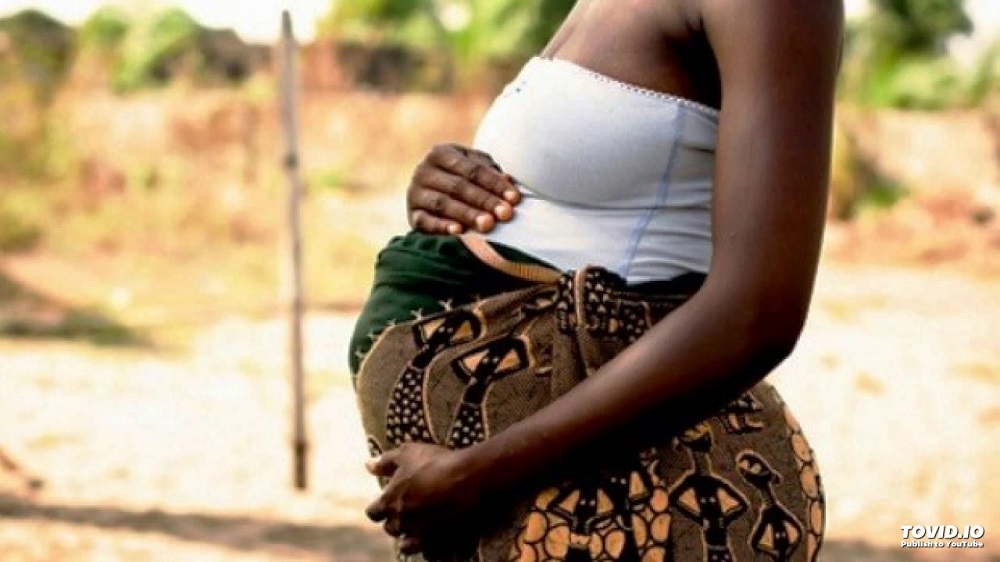
The legislative groundwork for surrogacy was laid in July 2024 with the publication of the revised Law on Persons and Family, which formally acknowledges surrogacy and establishes guidelines for its practice in Rwanda.
This law specifies that reproduction between spouses may occur naturally or with the help of reproductive technologies, including surrogacy. Article 279 of the law clarifies that assisted reproduction between a married man and woman may include a third party through a legally binding contract.
Minister Nsanzimana explained that there is demand for surrogacy services in Rwanda among couples facing infertility issues. The proposed regulations specify that surrogates should be between 21 and 40 years old.
According to statistics from Kanombe Military Hospital, 15% of women seeking gynecological care experience infertility. In East Africa, infertility affects 30% of couples, many of whom struggle to access necessary treatments.
However, Deputy Beth Murora expressed concern that surrogacy could be exploited as a commercial enterprise.
“While semen donations and surrogacy services aim to support those unable to conceive naturally, there is a risk of commercialization. I am aware of cases where young adults may be pressured into donating under ethically questionable circumstances.”
Dr. Nsanzimana addressed these concerns, emphasizing the need to prevent the commercial exploitation of surrogacy.
“Our objective is to prevent this law from becoming a gateway for profit-driven practices. We’ve observed cases in other countries where surrogacy became a business, often leading to exploitation of young women. We want to ensure that such loopholes do not emerge here.”
Deputy Valens Muhakwa proposed setting limits on the number of times a person could act as a surrogate, citing health and ethical concerns.
“Similar to family planning guidelines, limits could help prevent individuals from participating in multiple surrogacies within a short period,” he suggested.
Additionally, MP Anasthase Nabahire raised concerns about the law’s restrictions, which limit surrogacy to married couples, excluding single individuals who may wish to have children.
“This law is designed to assist married couples facing infertility, but what about single individuals who want children? Couldn’t the law be amended to include provisions for them?”
Minister Nsanzimana responded that while the current legislation focuses on married couples, it could be expanded in the future to be more inclusive.
The cost of surrogacy in Rwanda initially stood at around 3.5 million Rwandan Francs but is expected to decline as insurance providers integrate surrogacy coverage.
According to the law, the mother of a child born through assisted reproductive technology is the one named in the surrogacy contract.
Surrogacy, introduced globally in 1986, has grown popular in many developed countries, where, for instance, approximately 750 children are born through surrogacy each year in the United States.
Rwanda’s move to regulate surrogacy brings it into line with an increasing global trend, yet lawmakers remain cautious about its implementation.
The watch party at Howard University had begun with music pumping and crowds dancing; however, the mood started to dampen as results from the Tuesday election began to trickle in, with the Republican Party surging ahead.
The heartbroken crowd, which had initially cheered as races were called in favour of Harris, was later seen booing as states were called for Trump.
Some of the disappointed Harris supporters began to leave the party after Harris Campaign co-chair Cedric Richmond announced that the candidate would not speak until later on Wednesday.
“We still have votes to count. We still have states that have not been called yet. We will continue overnight to fight to make sure that every vote is counted, that every voice has spoken.
“So you won’t hear from the Vice President tonight, but you will hear from her tomorrow,” Richmond told the supporters.
Trump is expected to reclaim the presidency after losing to Democrat Joe Biden in the 2020 election.
He has already secured three key battleground states, putting him ahead with 267 electoral college votes against Harris’s 214. He now only needs three more electoral votes to reach the 270 threshold to win the presidency.
The 78-year-old candidate is projected to win Pennsylvania, North Carolina, and Georgia—the first three battleground states to be called in the U.S. presidential election—leaving Kamala Harris with only a slim chance to make history as the first Black woman and female U.S. President.
The 2024 presidential election was initially expected to be a rematch between Trump and Biden, but Biden dropped out of the race in July and endorsed Harris after a disastrous debate that heightened concerns about his age.