In 2018, when the first CIIE was held, the Danish company displayed a vivid mosaic made by over 100,000 LEGO bricks featuring Jinbao, the mascot of the CIIE, and introduced science, technology, engineering, art and mathematics (STEAM) courses for Chinese schools. This year, the company is highlighting the potential of play for innovation and its commitment to sustainability.
“Since the first CIIE, we’ve introduced 29 novelties at the expo, among which 19 sets are inspired by Chinese culture and traditions,” said Paul Huang, senior vice president of the LEGO Group and general manager of LEGO China.
The LEGO Group is one of the 186 firms and institutions that have appeared at the CIIE seven years in a row, and many of them have signed up for next year’s event.
The CIIE’s full-time attenders have stood witness to and benefited from the evolution of the expo and the Chinese market at large, and have continued to make adjustments so as to take advantage of emerging trends and markets.
At the first CIIE, global industrial technology giant Schneider Electric signed cooperation agreements primarily in the manufacturing and construction industries, but has since expanded to encompass various sectors, including oil and gas, infrastructure, commercial construction, life sciences, transportation, and water services and environmental protection.
As China develops new quality productive forces, innovative technologies are driving the transformation toward digitization and green low-carbon development, which have provided Schneider Electric with a broader space for development, according to Yin Zheng, Schneider Electric executive vice president managing China and East Asia.
Zhang Xiqiang, executive vice president of Nestle S.A. and CEO of Nestle Zone Greater China, said the company has observed that the Chinese consumer market is gradually entering an era of scientific and rational consumption. “The demand in the Chinese food industry continues to evolve, shifting from simply eating well and eating enough to eating healthily and seeking delight from the experience,” he said.
The Swiss company has brought over 420 exhibits sourced from 14 countries and nine major business units, covering niche markets including baby nutrition, health science, confectionery and pet care.
The Singapore Business Federation (SBF) has led a delegation of nearly 400 representatives from 44 Singaporean businesses, marking the SBF’s seventh year at the CIIE.
SBF CEO Kok Ping Soon said the federation is very encouraged to see that the companies are no longer limited to the food and beverage sector. “We are starting to see companies responding to China’s call for more high-quality investment in fields like biotech,” he said.
To mark its seventh consecutive participation, U.S. material-science giant Dow Inc. has brought the most robust lineup and planned for the most agreements signed at the event in its history at the CIIE.
“As we celebrate our 45 years of operations in China, we are looking forward to China’s continued opening up policies that will enable us to further strengthen our deep roots and grow alongside the Chinese economy,” said Kevin Kolevar, vice president of Dow Inc.
Mohamed Youssef, head of the Egyptian Businessmen’s Association, said the “initiative is unique and has started to achieve solid results over the past six years.”
Data showed that in 2022, the fifth CIIE saw 73.5 billion U.S. dollars worth of tentative deals reached for one-year purchases of goods and services, which, Youssef said, occurred while “the world was recovering from an economic crisis resulting from COVID-19.”
Despite the pandemic and regional and international tensions, China’s success in concluding big business deals during the 2022 CIIE was “such a great achievement,” Youssef said.
He said China, the world’s second-largest economy, plays a vital pivotal role in balancing the world’s economic powers.
Youssef emphasized that through the CIIE and the Belt and Road Initiative (BRI), China aims to establish win-win partnerships with developing countries and assist them in making the best use of their resources to achieve development and growth.
“China enhances its relations with other countries via partnerships based on mutual benefit, and the BRI has opened the door for China to view African countries with this vision,” he added.
The head of Egypt’s business community emphasized that African countries, rich in human and natural resources, can benefit from strong partnerships with economically powerful nations capable and willing to drive development in these societies.
Youssef said that the growing Egyptian-Chinese relations will significantly enhance the trade and investment exchange between Egypt and China.
Egypt can be one of the leading destinations for Chinese investment to manufacture products in great demand in the Chinese market, said Youssef, noting that Egypt is a key partner in the China-proposed BRI.
He said one of the CIIE’s key achievements has been its role in introducing the global business community to the opportunities in the Chinese market.
“The expo opens opportunities for all participating countries to exchange information about the comparative and competitive advantages of their products, and thus contributes to and encourages inter-trade between participating states,” Youssef said.
The Egyptian business leader stressed that the participation of both developing and developed countries in the 7th CIIE indicates their awareness that “the CIIE is a very important window not only for the Chinese market but also for the markets of many countries participating in this expo.
They shared their views at the U.S.-China Agricultural Trade Cooperation Forum, held as part of the ongoing seventh China International Import Expo (CIIE), which runs from Nov. 5 to 10.
{{LONG-STANDING PARTNERSHIP}}
For Jim Sutter, CEO of the U.S. Soybean Export Council, the international marketing arm of U.S. Soy, China is a key trading partner and the relationship with China is “critically important.”
“U.S. Soy and many other commodity groups here have long-term collaboration relationships with China,” Sutter said, noting that in the case of U.S. Soy, China has been a partner for 42 years.
“We appreciate China’s leadership in opening up and promoting trade,” he said. “Trade is critically important for all of our agricultural commodities. And we’re happy to have a country like China, recognizing that and talking about the importance of it at a forum like the CIIE which is all about trade.”
The world’s first national-level expo focused on imports, the CIIE has featured a section dedicated to U.S. food and agriculture companies since last year, aiming to help them explore the Chinese market.
This year, the section attracted 14 participants. Impressively, within just the first hour of its operation, the total turnover hit 600 million U.S. dollars, according to data from the American Chamber of Commerce in Shanghai (AmCham Shanghai).
“China is our largest and most important market,” said Allisa Lau, China Director of Cotton Council International, a non-profit trade association that promotes U.S. cotton fiber and products, while speaking of the long-standing China-U.S. ties in the cotton industry.
The Chinese and American cotton industries have maintained very close cooperation over the years, and this is not only because of their interdependence but also their mutually beneficial and supportive relationship, Lau said.
{{TOWARD SUSTAINABLE FUTURE}}
At the forum, many speakers shared similar views that despite the changing global landscape, China-U.S. agricultural cooperation remains beneficial for both countries to shift toward a more sustainable development path.
Janna Fritz, Vice-Chair of the U.S. Soybean Export Council, described the strong China-U.S. relationship in the soybean industry as a “beacon of hope and strength” for global agriculture. The mutually beneficial ties have influenced agricultural practices and lifestyles in both countries, she said.
China’s growing demand for sustainable, high-quality crops has set a high standard for soy purchases in terms of both quality and sustainability, Fritz said. She added that U.S. soy farmers “understand that mission” and will continue to help China meet its ambitious sustainability goals.
Also eyeing the huge cooperation potential, Steve Reinhard, Chair of the United Soybean Board, said that China has entered a stage of high-quality development as it strives to meet the people’s increasing need for high-standard products.
“Our commitment to sustainability could serve as a new productive force for Chinese partners to help with China’s high-quality development,” Reinhard said.
To facilitate this growing partnership, the CIIE has set an example for connecting U.S. agriculture firms with long-term Chinese partners. According to AmCham Shanghai, U.S. companies continued to land orders even after their participation in the expo last year, and the cumulative turnover from these orders has now reached 3 billion dollars.
At the opening ceremony of this year’s expo, Chinese Premier Li Qiang reaffirmed the country’s commitment to “turning its enormous market into global opportunities.” He said in the keynote speech that the country has fully implemented all the opening-up measures announced at the previous six CIIEs, and will continue to expand market access to more sectors.
Ryan LeGrand, president and CEO for the U.S. Grains Council, said that trade in agriculture is a “bright spot” in a complicated relationship between the U.S. and China.
“I think it’s entirely possible that our ideological differences may set a ceiling in our relations, the trade sets a floor in our relations,” LeGrand said, noting that agricultural trade, in particular, helps “set that floor and maintain that foundation.”
“When trade works, the world wins. And I think that certainly applies in the U.S.-China relationship,” he said.
Xi, also general secretary of the Communist Party of China (CPC) Central Committee and chairman of the Central Military Commission, made the remarks during an inspection tour in the province from Monday to Wednesday.
On Monday afternoon, Xi visited an exhibition of ancient bamboo and wooden writing slips from the dynasties of Qin (221-207 BC) and Han (202 BC-AD 220) at a museum in Yunmeng County, the city of Xiaogan.
After learning about the content of the slips and their value, Xi stressed intensified archaeological research to provide a solid foundation for carrying forward fine traditional Chinese culture and boosting cultural confidence.
Before the invention of paper, bamboo and wooden slips were the primary writing medium in ancient China. They have been discovered in various parts of the country, offering a rare glimpse into the nation’s time-honored history.
On Tuesday morning, Xi visited a vegetable farm in Jiayu County, the city of Xianning.
Noting that technological progress is essential for modern agricultural development, he urged local officials and residents to embrace technological advancements and further boost vegetable production to bring tangible benefits to more people.
He then traveled to a village in Jiayu to inspect local elderly care facilities and community services. He called for more targeted measures to address public concerns, with a focus on the needs of older people and children.
Xi visited a villager’s home and talked with the family about their livelihood and access to medical and elderly care services.
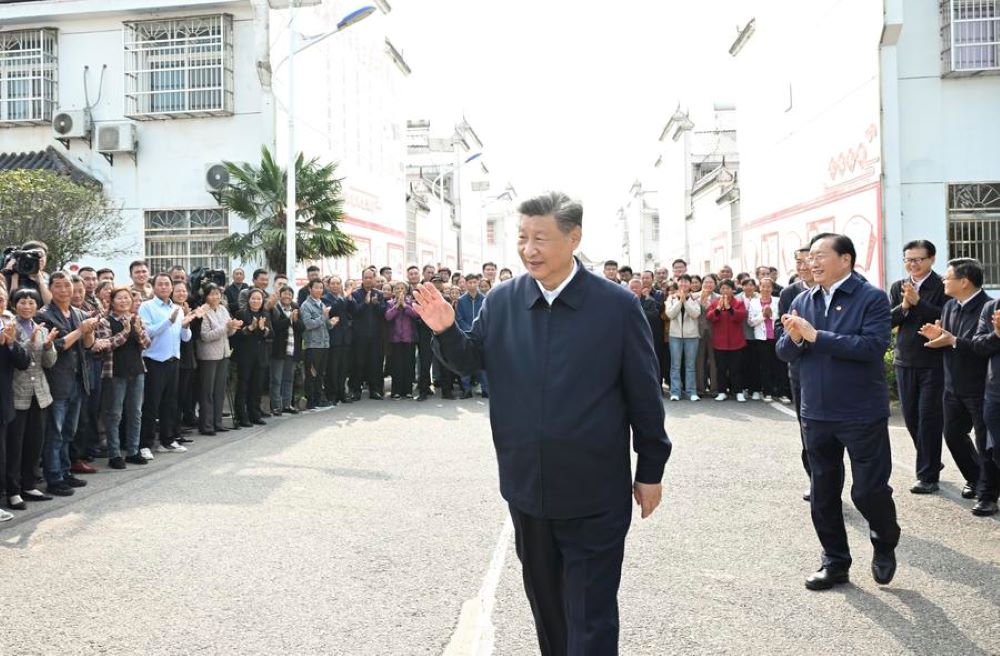
As villagers bid him a fond farewell, Xi said that to advance Chinese modernization, efforts must be made to speed up rural revitalization. He encouraged the villagers to boost the economic returns of specialty industries and make their village more beautiful under the Party’s leadership.
On Tuesday afternoon, Xi inspected the Wuhan Institute of Industrial Innovation and Development, where he learned about the achievements of the technological innovation supply chain platform and talked with researchers and business leaders.
He called on scientists, researchers and entrepreneurs to contribute to boosting the overall performance of China’s innovation system and modernizing its industrial system.
On Wednesday morning, Xi was briefed on the work of the CPC provincial committee and the provincial government of Hubei, and he acknowledged the province’s achievements.
Hubei should forge ahead to bring about new achievements in technological and industrial innovation, Xi said, noting that the province should enhance research to achieve more fruitful results in developing core technologies in key fields and develop new quality productive forces in accordance with its local conditions.
Xi stressed that restoring the eco-environment of the Yangtze River is a top priority.
He also said that Hubei needs to integrate itself comprehensively into the unified national market, promote the positive interplay and common development of businesses under all forms of ownership, and participate actively in high-quality Belt and Road cooperation.
Hubei should strive to deliver in the integrated development of its urban and rural areas, as well as comprehensive rural revitalization, Xi said.
He urged the province to center on the metropolitan areas of Wuhan to advance the coordinated development of city clusters in the middle reaches of the Yangtze River.
He also called for efforts to consolidate and expand poverty alleviation achievements, accelerate the revitalization and development of old revolutionary base areas, and ensure the people’s well-being through solid work on various fronts.
Xi underlined the importance of boosting cultural resource protection and the innovative development of the cultural sector, enhancing origin-tracing studies and exhibitions of the Yangtze River civilization, and developing the cultural tourism sector into a pillar industry.
Noting that the year 2024 will end in less than two months, Xi stressed the need to push forward with various work, especially the economic work, in an effective and solid manner, so as to deliver on the economic and social development goals for the whole year.
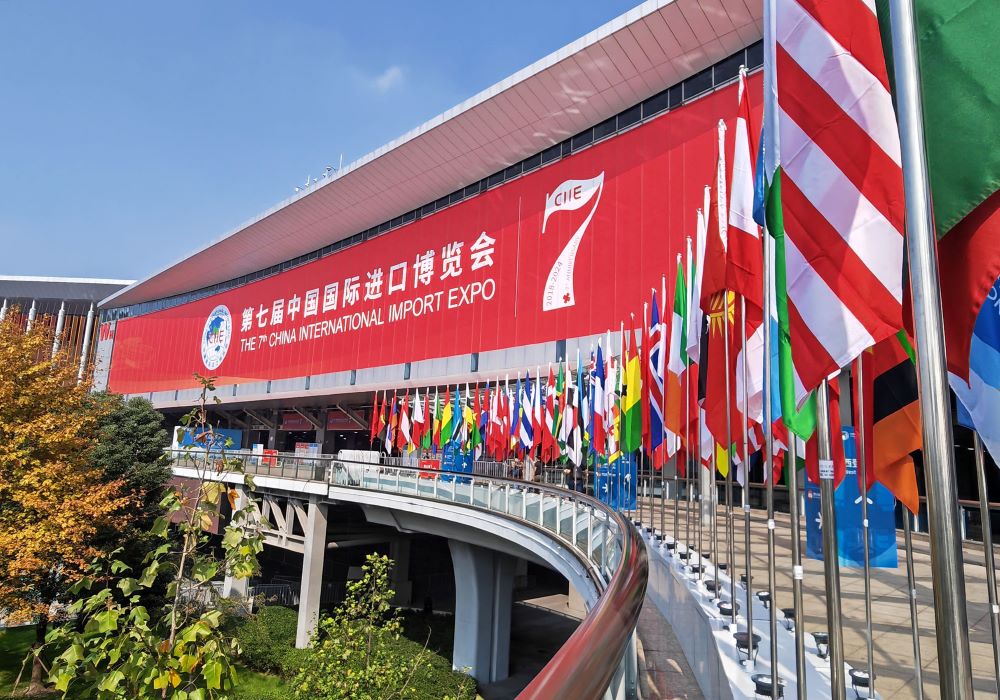
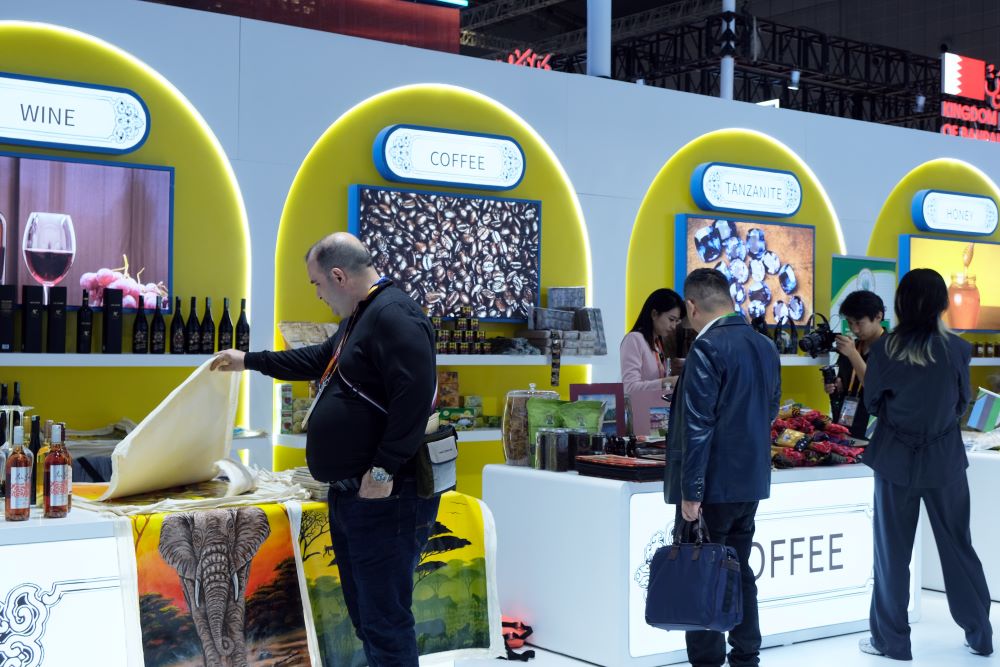
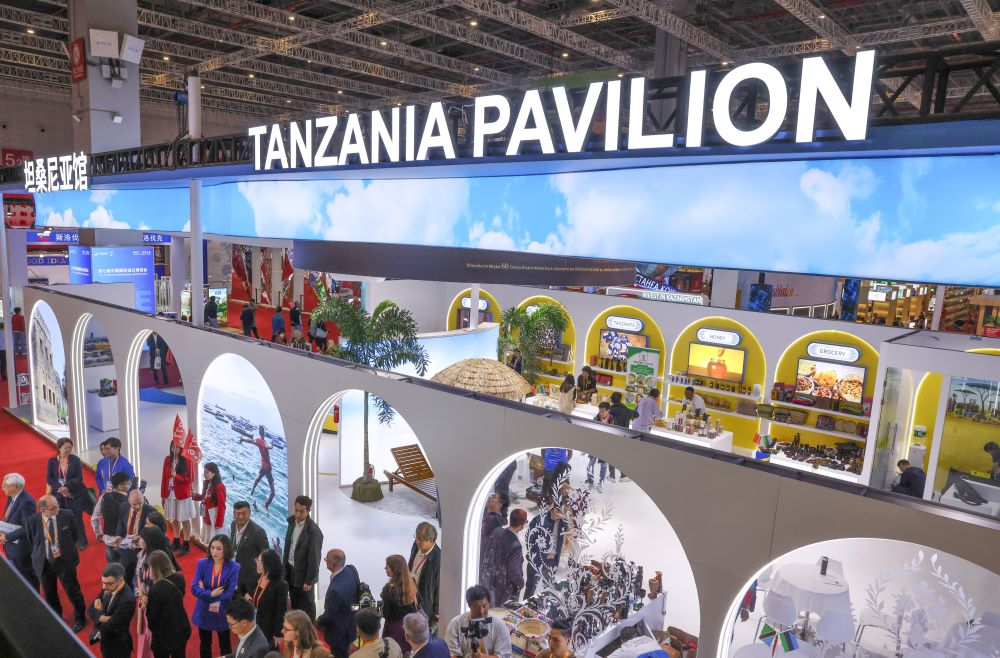
Two months later, the 7th CIIE opened in Shanghai. Various African products were showcased, and investment talks took place, aiming to turn China’s big market into an ample opportunity.
China’s sincerity in continuing to open up has been showcased to the world through the CIIE, as well as its principles of sincerity, real results, amity and good faith toward Africa.
{{Open market}}
Since its first edition in 2018, the CIIE has leveraged China’s vast market advantages and served as a vital platform for international procurement, investment promotion, and openness and cooperation. As China opens its door to Africa wider, more agricultural products are joining the CIIE to gain a share of the Chinese market.
Ethiopian coffee is a familiar presence at the expo. Since its debut in 2019, Ethiopian coffee has gained significant recognition and increased visibility in the Chinese market, said Ruth Wondosen Tesfaye from Addis Coffee.
“CIIE offers a unique platform to engage directly with consumers and distributors, which will be invaluable for enhancing our export strategies,” Ruth told Xinhua in Shanghai, adding that China’s large market and increasing demand for unique products, such as coffee from Ethiopia, present immense potential for African businesses.
This is the first CIIE for Madagascar’s mutton products this year. China imported its first mutton from Africa in September when mutton from Madagascar was cleared at Changsha Customs in central China.
Michel Anondraka, director general of agriculture and livestock at Madagascar’s Ministry of Agriculture and Livestock, said in a recent interview with Xinhua that China’s huge market would boost production for local livestock farmers and speed up the African country’s agricultural modernization.
Tanzanian honey also made its debut this year. “This expo is a significant opportunity for honey businesses across Tanzania, as it not only paves the way for our products to enter the Chinese market but also marks a solid step for Tanzanian honey brands in the global market,” said Jackson Mponela, production manager for commerce and development at Tanzania Future Enterprises Company Limited, which produces, processes, packages, and sells beekeeping products.
Khozeni Farming from South Africa joined this year’s expo for the first time with their avocados. Nkateko Khoza, CEO of the farming company, told Xinhua that the Chinese market will bring new growth opportunities for the South African avocado industry, adding that the opportunity will allow the company to at least double its growth in the next three to five years.
{{Policy support}}
Philip Myburgh, group head of trade at Standard Bank Business and Commercial Banking, told Xinhua in a written interview that policy support is one of the main drivers of the growing economic and trade cooperation between China and Africa.
He explained that under the FOCAC, there are broad initiatives supporting African countries’ participation in the CIIE to facilitate trade.
Since the 8th FOCAC Ministerial Conference in 2021, China and Africa have steadily advanced the forum’s initiatives, including the “green channel” for African agricultural products entering China. Inspection and quarantine processes have been expedited, and tariff exemptions expanded, benefiting Africa’s flower industry, avocado, citrus, coffee and other agricultural products.
China’s trade promotion measures have significantly boosted Africa’s exports to China. In the first nine months of this year, China’s imports from Africa reached 626.74 billion yuan (about 87 billion U.S. dollars), marking a 10.3 percent year-on-year increase, according to data from the General Administration of Customs.
This year, the CIIE welcomes Mauritian sugar. Since the China-Mauritius Free Trade Agreement took effect in 2021, Mauritius’s sugar industry has seen opportunities in the Chinese market.
Sugarcane is one of the most important crops on the island, which is known as the “Sweet Island.” Once accounting for nearly a third of the country’s GDP and over 90 percent of export revenue, the sugar industry still contributes over 2 percent to Mauritius’ GDP.
Devesh Dukhira, CEO of the Mauritius Sugar Syndicate, told Xinhua that the Chinese market’s long-term contribution will be substantial, thanks to the CIIE and the China-Mauritius FTA.
{{Global South}}
This year at the CIIE, the Global South is heavily featured. The 7th Hongqiao International Economic Forum has spotlighted “Sustainable Development of Global South and China-Africa Cooperation” as a key topic for discussion, aiming to offer insights and recommendations for fostering inclusive growth within the least developed countries.
Myburgh said the CIIE can play a crucial role in helping developing countries reduce poverty and achieve sustainable development by providing access to new markets, investments, technology, and knowledge.
China has always been committed to promoting South-South cooperation. During this year’s FOCAC Beijing Summit, China announced it has decided to give all the least developed countries having diplomatic relations with China, including 33 countries in Africa, zero-tariff treatment for 100 percent tariff lines. This has made China the first major developing country and the first major economy to take such a step.
The action plan, adopted at the Beijing summit, which outlined 10 partnership initiatives to guide the next phase of China-Africa cooperation, could have a far-reaching impact on the people of Africa, said Peter Kagwanja, Chief Executive at the Africa Policy Institute in Kenya.
“What we appreciate is the fact that China is opening up the market for Africa,” he told Xinhua at this year’s CIIE. “China is a real and true friend of Africa.”
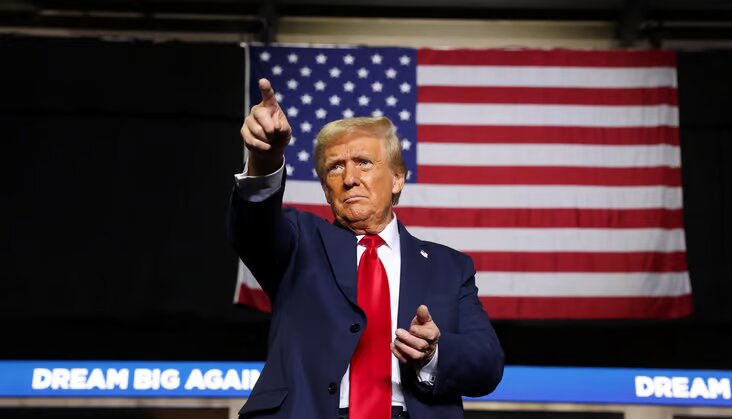
The victory, hailed by a host of African and world leaders, is historic, as Trump becomes only the second president to make a comeback to the White House, following Grover Cleveland’s return 132 years ago.
He served as the 45th President of the United States from 2016 to 2020, when Democrat Joe Biden ascended to the presidency in a disputed election that saw Trump supporters attack the United States Capitol in Washington, D.C., on January 6, 2021.
The agitated Republican supporters sought to keep Trump in power by preventing a joint session of Congress from counting the Electoral College votes to certify Biden’s victory.
With his return to power, dozens of African heads of state have congratulated him, with some hoping for a diplomatic reset with America and others aiming for reciprocal economic and development partnerships between Africa and the United States.
Trump has consistently promoted the America First policy, which many world leaders view as a reflection of a desire to limit U.S. interference abroad.
As Trump prepares to assume office for a second non-consecutive term, we highlight some of his initiatives in Africa that shaped his first term.
{{Prosper Africa}}
The Trump administration launched the Prosper Africa initiative in 2018 with the aim of increasing two-way trade and investment between the United States and African countries.
The program sought to encourage private sector engagement in Africa, fostering economic opportunities by simplifying access for American businesses to African markets.
This partnership has created thousands of jobs and opened new markets for both regions.
Additionally, Prosper Africa has played a vital role in strengthening U.S.-Africa trade under frameworks such as the African Growth and Opportunity Act (AGOA).
{{Trade Relations}}
Trump’s administration was keen on renegotiating and strengthening bilateral trade agreements with partner states such as Kenya under a comprehensive Free Trade Agreement (FTA), which was later discontinued by the Biden administration in favor of the US-Kenya Strategic Trade and Investment Partnership (STIP).
Notably, unlike the Trump-era FTA, STIP does not capture tariff barriers for American firms doing business in Kenya.
Pundits say Trump’s agreement with Kenya was part of a broader strategy to encourage African countries to engage more with the U.S. on a trade basis rather than through traditional aid frameworks.
{{Support for Counterterrorism Efforts
}}
During Trump’s first term, U.S. support for counterterrorism efforts in Africa was a critical aspect of his foreign policy, with a focus on combating extremist groups that posed threats to regional stability and global security. The U.S. military maintained a significant presence in countries affected by terrorism, particularly in East and West Africa.
In East Africa, the primary focus was on Somalia, where the extremist group Al-Shabaab, an affiliate of Al-Qaeda, continued to wreak havoc. The U.S. supported the African Union Mission in Somalia (AMISOM) and Somali forces through training, intelligence sharing, and direct military assistance. The Trump administration authorized airstrikes against Al-Shabaab targets to disrupt their operations and degrade their capabilities. For example, in 2017, the U.S. launched a series of strikes that targeted Al-Shabaab leaders and training camps, severely disrupting their operations.
In West Africa, U.S. efforts centered on groups like ISIS-affiliated organizations and Boko Haram, a terrorist group active in Nigeria and the Lake Chad Basin region. The U.S. military supported the governments of Nigeria, Niger, and Chad by providing training and equipment to local forces fighting ISIS and Boko Haram. In 2018, the U.S. approved the sale of military equipment to Niger to bolster its counterterrorism capabilities. This partnership aimed to enhance the operational effectiveness of local armies in the fight against groups that had pledged allegiance to ISIS in the Sahel and beyond.
Diminished Aid with Focus on Self-Reliance
During his presidency, Trump proposed significant cuts to U.S. foreign aid, signaling a shift toward a more self-reliant approach in dealing with Africa and other regions. This shift was central to his “America First” policy, which aimed at reducing the U.S.’s financial commitments abroad and encouraging African nations to take greater responsibility for their own economic growth and stability.
One of the most notable examples of this shift was the administration’s proposal to reduce funding for U.S. development aid programs, such as the U.S. Agency for International Development (USAID). In the 2020 budget, Trump sought to cut foreign aid by about 21%, including cuts to various programs aimed at addressing poverty, health, and education across the African continent.
While this approach was welcomed by some African leaders who viewed it as a step toward economic independence, critics argued that it risked undermining important development programs that help address immediate needs such as health crises and poverty alleviation.
{{Health and Development Programs
}}
While his administration initially sought to cut funding for programs like the President’s Emergency Plan for AIDS Relief (PEPFAR), public pressure led to the continuation of support for critical health initiatives. PEPFAR funding was preserved and continued to play a vital role in HIV/AIDS prevention and treatment across Africa.
{{China Counter-Strategy
}}
Trump’s approach to Africa was also shaped by a broader geopolitical strategy to counter China’s growing influence on the continent. U.S. officials voiced concerns about what they termed as Chinese debt-trap diplomacy and emphasized American investments as alternatives to Chinese loans.
This strategy has contributed to the continued tensions between China and the United States to date as each seeks dominance in the region.
Overall, while Trump’s initiatives were welcomed by some leaders in Africa, they were viewed by his critics as transactional, with a stronger emphasis on economic and security interests.
As he prepares to assume his new mandate, it remains to be seen how these previous policies will shape America’s policies in Africa. But there is a growing concern about his hard stance on immigration and threats to deport persons with no permission to reside in the United States.
This is particularly concerning considering that in 2022, around 13,000 African migrants were recorded at the US-Mexico border, according to US Customs and Border Protection data. By 2023, this figure had quadrupled to 58,000. Some migrants are seeking refuge abroad due to challenges related to war and poverty.
The passenger plane, named “Ethiopia: Land of Origins,” landed Tuesday at the Bole International Airport in Addis Ababa, the capital of Ethiopia.
Speaking at the official welcoming ceremony, Ethiopian Airlines Group Chief Executive Officer Mesfin Tasew said with the addition of the A350-1000, Ethiopian Airlines is poised to expand its global reach, connecting more destinations across five continents.
“The A350-1000 is the first of four airplanes we will receive in the coming few months. The addition of A350-1000 aircraft into our fleet represents our desire to continue leading the aviation sector in Africa and effectively compete in the aviation industry worldwide,” Tasew said.
The A350-1000 variant has 395 passenger seats across business and economy classes, making it the largest aircraft in Ethiopian Airlines’ fleet.
“The A350-1000 aircraft is built with state-of-the-art aerodynamics, a carbon-fiber fuselage, and the most fuel-efficient technology, reducing 25 percent carbon dioxide emissions compared to previous generations’ twin-aisle aircraft,” Tasew added.
For his part, Hadi Akoum, representative of Airbus, said the A350-1000 aircraft is the first of its kind to be operated by an Africa-based operator and will enable Ethiopian Airlines to enhance its premium service and reduce operating costs.
“With its state-of-the-art technology, the A350-1000 is better environmentally friendly and offers the largest business class, to reduce operating costs per seat,” Akoum said.
Ethiopian Airlines has become one of the fastest-growing carriers globally since it started operations in 1946.
According to the company, it commands the lion’s share of the African passenger and cargo network operation, with its youngest and most modern fleet to more than 150 domestic and international passenger and cargo destinations across five continents.
In the 2023/2024 fiscal year alone, agricultural exports generated $839.2 million (around Frw1.1 trillion), a slight decrease from the previous year’s $857.2 million (approximately Frw1.2 trillion).
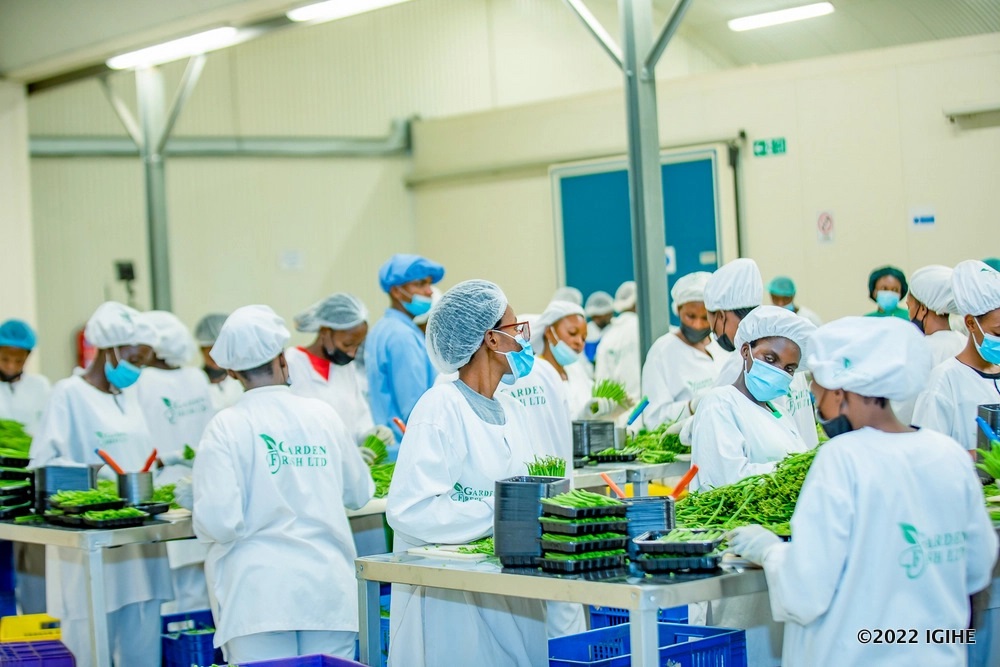
The export volume for this period included 261.6 million kilograms of vegetables, fruits, and flowers, contributing $233.6 million (over Frw317 billion) to the economy.
Across the five years, Rwanda exported 170.8 million kilograms of vegetables, 86.4 million kilograms of fruits, and 4.3 million kilograms of flowers, earning $128.5 million, $79.5 million, and $25.4 million, respectively, from each category.
Air transportation advancements have significantly boosted export capacity. For example, in 2023, RwandAir cargo flights transported 4,595 tons of goods to major markets in Dubai, the UK, and Belgium.
The Rwandan government has prioritized agricultural development as a key component of its National Strategy for Transformation (NST2), targeting a 6% annual growth in the sector.
Efforts focus on increasing market-driven production, expanding irrigated land to 85%, and promoting the use of fertilizers and high-quality seeds to boost output by more than 50%.
These goals are in line with Rwanda’s Fifth Strategic Plan for Agricultural Transformation (PSTA5), backed by a $5.4 billion budget (over Frw7 trillion), which seeks to modernize the sector and drive self-sufficiency while turning farming into a business-oriented activity.
NAEB CEO Claude Bizimana underscored this goal during an event where exporters were provided with nine refrigerated trucks worth over Frw829 million to maintain the quality of perishable goods during transport.
At the event, Marie Ange Claudine Ingabire, Managing Director of Tropi Wanda, an agricultural export company, also received a cold truck.
Since 2020, her business has expanded from 8 employees to a team of 321, along with 2,000 contracted farmers. Tropi Wanda now exports 82 tons of vegetables and fruits weekly, including chili peppers, passion fruits, and avocados.
Ingabire highlighted the company’s efforts to “establish markets, develop cold storage to reduce losses, and utilize cargo planes for timely exports.” She expressed her commitment to boosting production to meet NST2 targets without interruptions.
The Rwandan government has set an ambitious goal to double exports across sectors from $3.5 billion to $7.3 billion over the next five years.
Under PSTA5, agricultural exports alone are projected to grow from $857 million in 2022/2023 to nearly $2 billion, while creating 644,000 jobs in the agriculture value chain, up from the current 400,000.
The business exhibition of the world’s first national-level exposition dedicated to imports has attracted about 3,500 exhibitors from 129 countries and regions this year. Notably, a record high of 297 Fortune 500 companies and industry leaders are attending the six-day expo. And more than 400 new products, new technologies and new services are unveiled.
Experts believe the large scale of the expo highlighted the global companies’ confidence in the Chinese market and their commitment to further development in China despite the sluggish global economic recovery.
{{ENORMOUS MARKET}}
China is willing to open up its enormous market further and will continue to expand market access to sectors including telecommunications, the internet, education, culture and healthcare in an orderly fashion, Premier Li said in a keynote speech at the opening ceremony of the 7th CIIE.
The sound fundamentals of the Chinese economy remain unchanged, according to Li, adding that the country’s new growth drivers are fast-growing, with double-digit investment growth in high-tech industries and development booms in emerging industries including artificial intelligence, advanced manufacturing and the green economy.
During a meeting on Monday with select exhibitors and buyers attending the expo, Li said that China is able to sustain steady economic recovery, improve the quality and capacity of its market, and provide more extensive growth space for global businesses in terms of trade, investment and innovation. He added that the Chinese market is still one of the best choices for companies worldwide.
The keen interest from global participants has shown the growing influence of the CIIE and the charm of the Chinese market and also highlighted China’s determination to push forward the building of an open world economy, said Zhao Fujun, a researcher with the Development Research Center of the State Council.
In 2018, China inaugurated the CIIE to build an open platform for international trade cooperation and to support free trade and economic globalization, making it a “golden gateway” to the world’s second-largest consumer market.
More than 420 billion U.S. dollars worth of tentative deals were signed at the CIIE’s earlier six editions since 2018. Beyond the event, global companies can reach a larger customer base and make further investments in the country.
Toshinobu Umetsu, president and CEO of Shiseido China, said he is very inspired and encouraged by Premier Li’s emphasis on China’s commitment to continuing high-level opening-up and to sharing development opportunities with the rest of the world.
The Japanese cosmetics giant will continue to strengthen its long-term investment in China. It has never wavered in its confidence and determination to invest in China, as the incredible vitality and resilience of the Chinese market make it a very important international market, Umetsu said.
German healthcare and agribusiness giant Bayer AG is among more than 180 companies and institutions that have attended all seven editions of the CIIE since 2018.
Bayer’s participation at the expo demonstrates its unwavering commitment to this important market, said Bill Anderson, chairman of Bayer AG Management Board.
“International cooperation and economic globalization are important factors in the world’s development. That’s why Bayer is glad to be part of the expo for the seventh consecutive year,” said Anderson.
{{NEW OPPORTUNITIES}}
The CIIE unlocks new opportunities for the world, Bayer said, adding that it will actively leverage this vital platform to continuously unleash its innovative potential while looking forward to forging partnerships with global collaborators.
Penne Kehl, Asia Pacific Group president of Cargill Agriculture and Trading, expects a very busy schedule at the import expo, including meeting with customers and partners and signing a few important deals and partnerships. U.S. food giant Cargill has participated in CIIE for seven consecutive years.
As its influence grows, the expo is attracting new foreign enterprises over the years. Canadian sportswear giant Lululemon is among the first-time participants.
The Chinese mainland is Lululemon’s largest market outside of North America and is also one of the most dynamic and exciting ones, which is key to driving the company’s international business, said Calvin McDonald, CEO of Lululemon.
“It’s an exciting opportunity to showcase the brand, drive awareness to our growth story and what we have planned for the future,” said McDonald. He added that Lululemon will continue to open more stores in the country, adding to its current 137 stores in 41 cities.
China offers free booths and other support measures to 37 least-developed countries to help them showcase their products at the import expo. It also expanded the exhibition area for African agricultural products.
China has been opening up its market to Africa, enabling transformation on the African continent, said Peter Kagwanja, founder and president of the Africa Policy Institute.
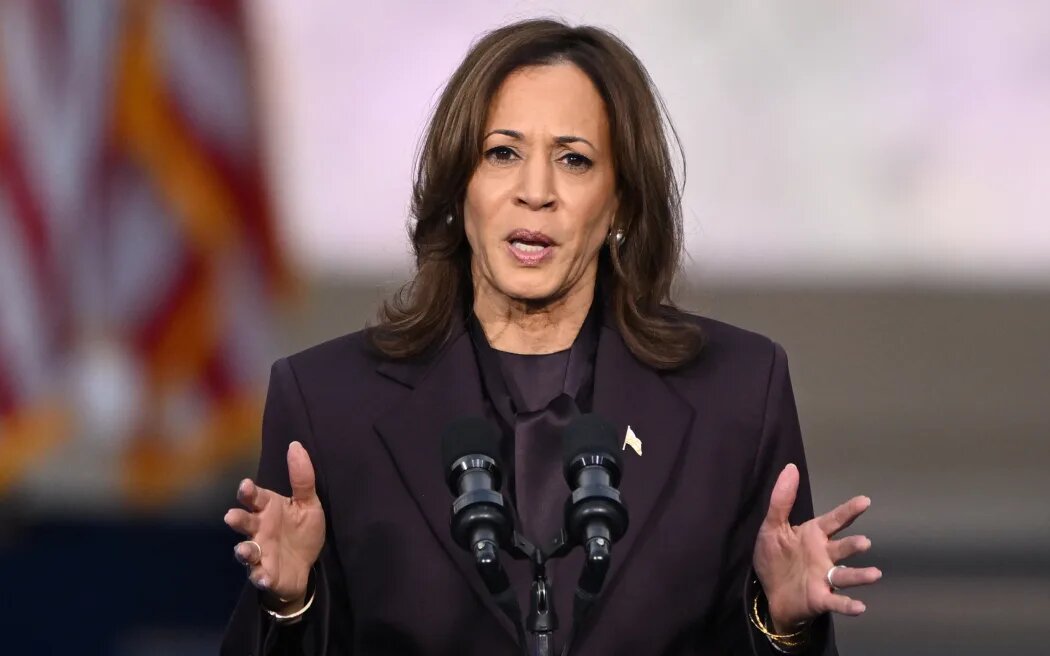
Addressing her supporters and the nation from her alma mater, Howard University in Washington, D.C., Harris acknowledged that the election outcome was not what Democrats had anticipated, but she urged them to accept the results.
“We must accept the results of this election,” she stated on Wednesday, calling for unity and respect for the democratic process.
The 60-year-old Vice President expressed deep gratitude for the journey and pledged her continued commitment to America’s future, including the values of freedom, opportunity, fairness, and dignity for all people.
“My heart is full today—full of gratitude for the trust you have placed in me, full of love for our country, and full of resolve,” she said, visibly moved. “The outcome of this election is not what we wanted, not what we fought for, but hear me when I say: the light of America’s promise will always burn bright as long as we never give up and as long as we keep fighting.”
Harris revealed that she had spoken with Trump earlier in the day to congratulate him on his victory and assured him of a smooth transfer of power.
“I told him that we will help him and his team with that transition, and we will engage in a peaceful transfer of power,” she added.
As Vice President, Harris will play the ceremonial role of President of the Senate during the certification of Trump’s victory on January 6, 2025.
Harris’ public concession marks the end of a tumultuous election season, during which the two rival candidates fiercely sought public support, trading sharp barbs as they pursued their bids for the White House.
Harris had aspired to make history as the first Black woman and first female U.S. president, but that dream dimmed on Wednesday morning as Trump secured key states to surpass the 270 electoral vote threshold needed to win the presidency.
The Republican candidate, who lost to President Joe Biden in the 2020 election, won several battleground states, including Wisconsin, Michigan, Pennsylvania, Georgia, and North Carolina, securing a non-consecutive term in office—a feat last achieved by Grover Cleveland 132 years ago.
As of Thursday morning, Trump had garnered 295 electoral college votes, with Harris trailing at 226. Trump also holds a popular vote lead of more than five million votes.
In his return to power, Trump defied numerous odds, surviving repeated scandals and multiple indictments, including charges related to hush money payments, mishandling classified documents after leaving office, and alleged interference in the 2020 election.
Political pundits believe that Trump’s primary focus on the economy and his promise to contain illegal immigration ultimately resonated with enough Americans, leading to the Democrats’ resounding defeat.