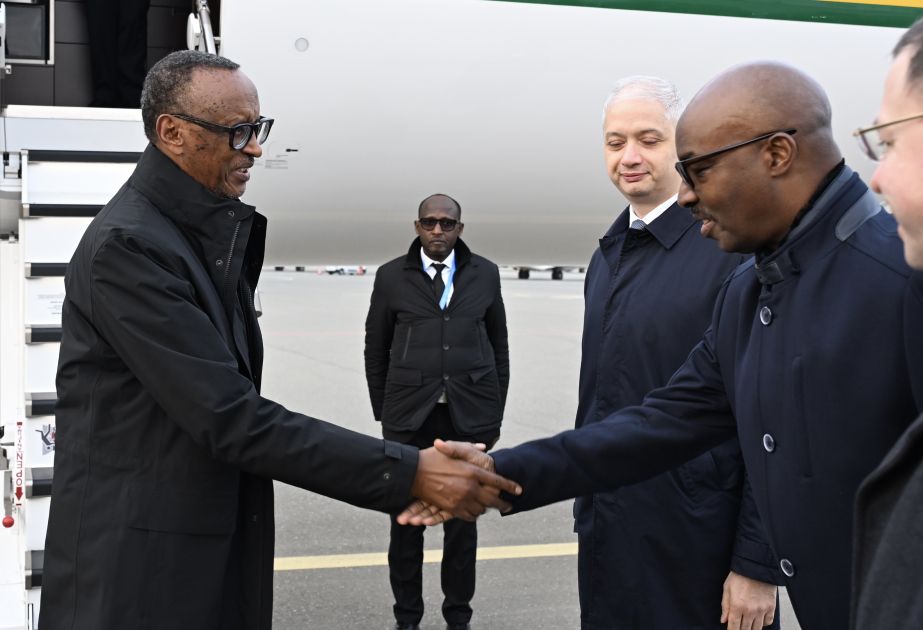
At the Kigali Genocide Memorial in Gisozi, President Duda paid his respects to the victims of the 1994 Genocide against the Tutsi which took lives of more than 1 million victims. In the memorial’s guest book, he expressed profound sorrow for the events that unfolded in Rwanda in 1994.
In his written statement, President Duda conveyed that the people of Poland stand in remembrance of the millions of innocent lives lost during the Genocide against the Tutsi.
The visit to the Kigali Genocide Memorial offered a poignant lesson on the dangers of divisive ideologies fueled by external influences that saw neighbors turning against each other, and the social fabric torn apart.
President Duda emphasized the historical significance of the Genocide, pointing out that it serves as a universal lesson, illustrating that allowing hatred to fester can lead to the complete destruction of a nation.
However, he commended Rwanda for its resilience, highlighting the remarkable role that justice and forgiveness played in the country’s reconstruction.
In the past year, countries worldwide have been actively engaged in AI development tailored for local languages, reflecting their profound considerations in the domain of digital sovereignty.
{{Emergence of diverse AI models}}
In late 2022, the release of the English generative AI ChatGPT by the U.S.-based company OpenAI sparked a global trend in developing generative AI models for local languages.
Notably, in China, models like Baidu’s ERNIE Bot and iFlytek’s Xinghuo have undergone rapid iterations, showcasing impressive Chinese language-processing capabilities and serving as productivity tools for many businesses.
“China has made rapid progress in relevant research, with some cross-domain large models achieving breakthroughs, and the development trend of large models for vertical domains is also very promising,” Chen Xiaoping, chairman of the AI Ethics Committee of the Chinese Artificial Intelligence Association, told Xinhua.
The generative AI landscape is also thriving in Europe. In France, by September of the previous year, 79 startups were already specializing in the field. Notably, Mistral, an AI company valued at almost 2 billion euros (around 2.15 billion U.S. dollars), stands out for introducing the versatile “Mixtral8x7B” model proficient in French, Spanish, Italian, English, and German.
In Russia, YandexGPT said it outperformed ChatGPT 3.5 in Russian language responses and has passed the Russian Unified State Exam.
Simultaneously, countries like Japan, South Korea, Vietnam, and Singapore are actively participating in the development of generative AI models tailored to their respective languages.
{{Building sovereign AI capabilities}}
This global trend not only underscores the dynamic evolution of generative AI across diverse linguistic landscapes, but also highlights the growing significance of “sovereign AI” worldwide.
“Sovereign AI” is a frequently mentioned concept in the wake of the popularity of generative AI. It generally refers to a country’s support for AI infrastructure development, training large models with data that align with the country’s culture and thinking, and fostering a local ecosystem for AI products.
People and countries now recognize that they have to utilize their own data, keep their own data, process that data, and develop their own AI, said Nvidia Corp chief executive Jensen Huang.
Last year, French Finance Minister Bruno Le Maire publicly stated that France and Europe at large must develop their own generative AI. He pledged to increase the funds raised to invest in tech innovation.
Similar concerns have been voiced by various countries, including India.
“We are determined that we must have our own sovereign AI,” Rajeev Chandrasekhar, Indian minister of state for electronics and information technology, said recently.
“People realize that they can’t afford to export their country’s knowledge, their country’s culture for somebody else to then resell AI back to them,” Huang said.
Such words underscore a significant challenge in developing sovereign AI globally.
Currently, American enterprises dominate the field of AI, and for other countries to keep pace, they must adopt American products, and such dependence could potentially constrain their subsequent development.
Against this backdrop, data analysis experts caution that the predominant use of English in building AI language models, coupled with most suppliers originating from the United States, may result in a heavy reliance on American providers, leading to a lack of full independence in many AI technologies.
{{Tackling potential digital divide}}
The global development of generative AI is uneven, potentially leading to new inequalities.
UN Secretary-General Antonio Guterres said at the World Economic Forum Annual Meeting earlier this year: “We need a systematic effort to increase access to AI so that developing economies can benefit from its enormous potential. We need to bridge the digital divide instead of deepening it.”
Chen pointed out that for the new problems arising in the era of AI, it is necessary to pursue a unity of economic and social benefits while maintaining high-quality development, to effectively ensure and improve the well-being of society and mankind as a whole.
In this process, China has shown good momentum in the field of AI.
Ronnie Lins, director of the China-Brazil Center for Research and Business, told reporters in April last year that Brazil’s AI development is not yet sufficient, while China and the United States have invested heavily in AI.
AI could have an impact on jobs globally, Lins noted, expecting China to leverage its strengths and contribute to creating new opportunities for young people through the application of new technologies.
The Global Forum on the Ethics of AI 2024 addressed the aforementioned issues. In the current landscape of diverse language AI developments, Gabriela Ramos, assistant director-general for the Social and Human Sciences of UNESCO, emphasized the need for global cooperation.
“We need true global coordination and knowledge-sharing to build a responsible AI ecosystem that benefits everyone,” said Ramos.
Nicholas Nkongho Manchang, the sub-prefect of Bamenda II, a subdivision of the region, was kidnapped at gunpoint with five other individuals in Ntumbaw village, a local security official said.
“The sub-prefect and the other officials were traveling by road to attend an official ceremony in another town when they were stopped and taken to an unknown destination. We are actively searching for them. There was no military convoy with the sub-prefect at the time of the abduction,” the official who asked not to be named told Xinhua Tuesday night.
No group has claimed responsibility for the abduction.
Separatist fighters have been active in the region since 2017 after they began clashing with government forces in a bid to create an independent region in Cameroon’s two Anglophone regions of Northwest and Southwest.
The African Union Transition Mission in Somalia (ATMIS) said Wednesday that the delegation led by AUCF coordinator Adebayo Kareem on Tuesday held talks with AMIS Force Commander Sam Okiding, the military component leadership, and sector commanders focusing on the recently revised AU rules of engagement.
“Discussions focused on implementing and adhering to the recently revised African Union Rules of Engagement, now aligned with ATMIS mandates to bolster civilian protection efforts,” ATMIS said in a statement issued in Mogadishu, the capital of Somalia.
As part of their week-long visit to Somalia, the delegation will engage with various stakeholders, including government officials, ATMIS, UN, and civil society groups to further enhance civilian protection during the transition process, the AU mission said.
The AUCF team aims to enhance AU’s capacity to ensure that the pan-African body’s peace support operations are continuously planned and conducted in compliance with international human rights law, including regional human rights instruments, and international humanitarian law, as well as applicable standards of conduct.
The call for a ceasefire is primarily motivated by the collective desire for a substantial release of prisoners and prisoners of war detained in Israel and Gaza since October 2023. Sheikh Mohammed bin Abdulrahman bin Jassim Al Thani, the Prime Minister of Qatar, praised Hamas’s initial response, although specific details remain undisclosed.
According to reports from the BBC, a Hamas leader revealed that their response includes provisions for the reconstruction of the damaged Gaza, resettlement of the affected population, and assistance for refugees. Additionally, Hamas has proposed changes in the treatment of war casualties, advocating for the transfer of the wounded to foreign hospitals.
US Secretary of State Antony Blinken announced that representatives from the concerned countries are engaged in discussions about Hamas’s response on February 7, 2024, to chart the next course of action.
The Ministry of Health in Gaza reported over 27,000 deaths in the region since late 2023 when Israeli army attacks were initiated. In contrast, Israel’s government claimed 1,200 casualties in the Hamas attack on October 7, 2023.
The joint press briefing followed a closed-door meeting between the two leaders and the signing of two Memoranda of Understanding (MoU) for trade and economic cooperation, as well as collaboration in green technologies, environmental engineering, geology, and energy efficiency.
The agreements were signed by Minister of Foreign Affairs Vincent Biruta and Andrzej Szejna, Polish Secretary of State in the Ministry of Foreign Affairs.
Kagame acknowledged the positive outcomes of collaboration in education, citing the presence of Rwandan students in Polish universities. He emphasized the importance of developing the sectors covered by the signed agreements to enhance resilience in the face of global challenges.
“We have accomplished a lot together, the diplomatic presence in our respective countries will only serve to accelerate and solidify the good progress we are making,” he said.
President Duda, recognizing the hardworking societies of both countries, expressed Poland’s interest in credible partnerships with African nations that share common values.
He highlighted the deepening ties, especially with an increasing number of Rwandan youth studying in Poland, extending an invitation for interested Rwandans to enroll in military studies.
To streamline the implementation of agreements and ongoing economic projects, Kagame and Duda are set to engage in a roundtable discussion with Polish and Rwandan business leaders.
They aim to explore potential opportunities and address challenges, fostering further bilateral relations.
Both leaders expressed optimism about the forum, emphasizing its role in leveraging sector-specific opportunities in both countries. Rwanda, positioning itself as a gateway to Africa, anticipates utilizing Poland as a gateway to expanding and diversifying its export market into more European countries.
Diplomatically, both nations reciprocated by opening embassies, with Rwanda inaugurating its Embassy in Warsaw in 2021.
As part of his agenda, President Duda will pay respects at the Kigali Genocide Memorial and visit the School and Education Centre for Visually Impaired Children in Kibeho and the Polish Mining Company, LuNa Smelter in Kigali.
In related international engagement, Polish President Andrzej Duda’s visit to Rwanda follows stops in Kenya and precedes a visit to Tanzania. This aligns with Poland’s international mission initiated in 2017 to foster relations with African countries.
This announcement, made on February 6, 2024, coincided with his presentation of the report from the Rwanda Governance Board (RGB).
The report highlighted that the current service delivery stands at 78.8%, falling short of Rwanda’s goal within the seven-year plan to achieve 90% good service delivery by 2024.
Musabyimana discussed the existing programs designed to alleviate citizens from poverty, acknowledging their limited reach in comparison to available resources.
This has led to dissatisfaction among those not reached, who perceive it as a denial of services by concerned leaders, thereby causing a surge in discontentment with local government services.
Musabyimana attributed these limitations to the country’s capacity, acknowledging that, of the 315,327 people currently in poverty-alleviation programs, additional individuals are gradually being included as resources become available.
Addressing anomalies in the selection process for beneficiaries, Musabyimana acknowledged well-known issues among leaders in choosing households for assistance.
He emphasized the need for addressing these issues and noted that some leaders engaging in improper practices are being punished. He also highlighted the problematic attitude of some individuals who expect constant assistance, leading to issues when it is not feasible.
To enhance accuracy and transparency in the provision of information on impoverished households, Musabyimana announced a shift to digital record-keeping. This initiative aims to reduce errors and enable better tracking to ensure that those selected for support are deserving recipients.
The Minister outlined plans to increase the government’s capacity to improve citizen welfare, expand outreach to all those in need, and encourage active participation in poverty-alleviation programs. He acknowledged the challenges of limited resources, emphasizing the importance of managing expectations.
The poverty alleviation program, launched in November 2023, involves a two-year commitment for participants.
The government collaborates with partners, and depending on increased means, additional individuals may be included. Participants make agreements regarding their expected progression out of poverty, setting annual goals and adopting strategies for implementation.
While Rwanda has made significant strides in poverty reduction, with rates declining from 60.4% in 2000 to 38.2% in 2017 and extreme poverty dropping from 40% to 16% over the same period, poverty alleviation remains a key focus of Rwanda’s Vision 2050.
The nation is committed to transforming lives by eradicating extreme poverty by 2024 through the implementation of the National Strategy for Transformation (NST1).
Analysis from the 2022 National Population and Housing Census reveals that 887,508 individuals are living in extreme poverty, with an additional 3,139,395 in moderate poverty, totaling 4,026,903 people, which comprises 30.4% of the population.
Rural areas bear the brunt of poverty, with 3,502,686 individuals (37.3%) affected, compared to 13.4% in urban areas.
At the provincial level, both the Western and Southern provinces exhibit similar poverty rates of 35%, with the percentage dropping to 34.6% in the Eastern Province and significantly lower to 9.5% in Kigali City. Notably, the 2012 census identified the Western and Eastern provinces as having the highest poverty rates at 42% each.
At the district level, poverty rates vary, with districts like Gisagara, Nyanza, Rutsiro, Nyamagabe, Ngororero, Nyaruguru, Gatsibo, Nyagatare, and Ngoma experiencing rates ranging between 37% and 45%.
Conversely, districts such as Rulindo, Muhanga, Rwamagana, Musanze, and Gakenke boast poverty rates below 30%. Within Kigali City, Kicukiro showcases the lowest poverty rate at 6.7%, followed by Nyarugenge at 9% and Gasabo at 11.1%.
Individuals aged 30 to 44 constitute the majority of the population living in poverty, with the National Institute of Statistics of Rwanda (NISR) attributing their vulnerability to poverty to the establishment of independent households.
Regarding government services like Mutuelle de Sante, subscriptions are increasing alongside capacity building. Out of the 1,264,467 individuals expected to pay for themselves in the 2023/2024 financial year, 1,057,600 have already paid 100%, equivalent to 83.6% of those required to subscribe for Community Based Health Insurance (CBHI).
During his presidential campaign on December 18, 2023, Tshisekedi committed to seeking parliamentary approval for potential military action against Rwanda if provoked by the M23 armed group in Goma.
He conveyed that in the event of an incident in Congo, specifically in Goma, the President would convene Parliament to request authorization for war against Rwanda. This position was reiterated in an interview on Top Congo FM, where it was emphasized that the Congolese army has the capability to strike in Kigali without leaving Goma.
In a discussion in Kinshasa on February 6, 2024, Muyaya was asked about Tshisekedi’s failure to seek parliamentary approval following the recent explosion in the Mugunga area near Goma, confirmed by the Congolese army as the work of M23.
Muyaya explained that the government is currently engaged in military operations, but certain protocols must be followed. He said that declaring war is not a viable option as new institutions are being established. “Despite the President’s desire, it is not feasible under the present circumstances as outlined in the Constitution,” he said.
Highlighting the ongoing military operations, Muyaya underscored that the Congolese army is actively confronting M23 positions with advanced weaponry. He asserted that efforts are being made to neutralize the enemy and restore security in the country.
Tshisekedi’s assertion is grounded in the belief that the M23 group receives support from the Rwandan army, a claim vehemently denied by the Government of Rwanda. Rwanda maintains commitment to non-interference in the internal affairs of the Congolese people.
Rwandan Police spokesperson for the Eastern Province, SP Twizeyimana Hamduni, shared details, stating, “That family lived in the Southern Province and lived in conflict. They left that Province and went to live in Ndego Sector. They bought a house that the man registered on himself without telling the wife. The conflict continued.”
He continued, “On January 30, they got into trouble and went to the village office and said that they will not have any more problems after reconciliation.”
SP Twizeyimana also noted that after this encounter, neighbors saw the family once more on a Saturday but didn’t witness their presence afterward.
The tragic discovery came to light when concerned residents reported a strange smell, leading the police to investigate.
SP Twizerimana explained, “Yesterday, the people called the police and said that there might be a problem in the house next to them because there is a strong smell. The police went there together with the local authorities, they broke the padlock, entered and found a man hanging from a rope. They entered another room and found a woman with her head cut off, and their child, a machete was also found on the scene.”
Regarding the investigation, SP Twizerimana said, “So far, the Rwanda Investigation Bureau has started an investigation to find out what killed him, but it is said that the man who killed them ended up killing himself.”
The police spokesperson emphasized the role of substance abuse, stating, “People should avoid alcohol and other drugs because they cause conflicts.”
He also urged individuals to refrain from infidelity, noting, “they are also causes of conflicts at home.” Furthermore, he appealed to residents to seek assistance from local authorities instead of hiding their problems until they escalate to such tragic outcomes.
Police officers engaged primary and secondary students, teachers, pedestrians, cyclists, motorcyclists and drivers on road safety practices.
The outreach was conducted across different roads in Kigali and highways in the districts of Musanze, Rulindo, Nyamasheke, Ngororero, Nyagatare, Gatsibo, Ngoma, Kirehe, Bugesera, Kayonza, Muhanga and Nyanza.
It focused on educating students house to cross the road both at Zebra Crossing and where they don’t exist; dangers of using a phone while crossing the road and refraining from reckless practices of playing in the middle of the road, which in some cases has resulted into fatal accidents.
Drivers and taxi-moto operators were equally reminded of their duty to make road safe for all by respecting traffic rules and regulations.
They were particularly urged to do away with practices such as speeding, using a phone when driving or riding, bad maneuvers, wrong overtaking, drunk-driving, and driving or riding under stress which are some of major causes of accidents.
Pedestrians were also reminded to refrain from holding onto moving vehicles, reckless maneuvers, transporting big luggage and not to operate beyond 6p.m.
Gerayo Amahoro road safety awareness campaign started in 2019 to sensitize road users with the ultimate objective of changing behaviors to make road safety a choice and culture.