Navigating a difficult global landscape, China has remained committed to its regional development goals, focusing on the integration of sustainable technologies and digital advancements, Kasemsit, a member of the APEC Business Advisory Council (ABAC), said in a recent exclusive interview with Xinhua.
“China has been a very dedicated and consistent player in whatever they said they would do, and they have been on track,” he said.
From electric vehicles to renewable energy solutions, Kasemsit noted that China’s production and export capacity have enabled cost-effective access to technology, especially in sustainable sectors, essential for emerging economies striving to achieve their environmental targets.
Underscoring the importance of collaborative platforms in addressing common challenges ranging from digital transformation to food security and climate change, Kasemsit praised China’s vision for an Asia-Pacific Community with a Shared Future and highlighted the need for deeper cooperation among the 21 APEC member economies.
“China’s vision of a shared future is more pertinent than ever. We need more platforms to bring people together and discuss different issues that everyone is facing at the same time, so there is no point closing doors and trying to do away with organizations or groupings like APEC,” Kasemsit said.
As APEC heads into the 2024 summit hosted by Peru, Kasemsit expressed optimism about the continuation of inclusive and sustainable themes introduced in previous years while calling for a renewed focus on long-term collaboration, particularly in areas such as climate change, digital transformation and sustainable agriculture.
With steady commitment and collaboration, APEC will continue to advance economic integration, technological adoption and sustainable growth, he said.
APEC gatherings, renowned for blending economic discussions with cultural exchanges, often feature leaders donning local attire for the iconic “family photo.” This no-tie tradition is seen as a way to cut down on the formality that high-level meetings usually involve.
In these meetings, Xi’s remarks showcase not only his eloquence but also his wit, vividly conveying his vision for Asia-Pacific cooperation. Over the years, his incisive words and catchphrases have offered fresh perspectives on advancing regional growth and fostering deeper collaboration among APEC members.
{{SWEET POTATOES}}
During the 2016 APEC gathering, also held in Lima, Xi used an analogy to describe the relationship between China and the wider Asia-Pacific region, comparing it to sweet potatoes, a food native to Latin America.
He explained that while the vines of sweet potatoes may stretch in all directions, they all grow out of their roots. “Similarly, no matter what level of development it may reach, China, with its roots in the Asia-Pacific, will always contribute to the region’s development and prosperity.”
That metaphor holds even truer today. Since joining APEC in 1991, China has become a key trading partner and export market for the majority of APEC members. According to China Customs, China’s trade with APEC economies reached a historic high, surpassing 21 trillion yuan (about 2.92 trillion U.S. dollars) in the first 10 months of 2024, marking a 5.7 percent increase from the previous year and accounting for 59.1 percent of China’s total trade.
In its efforts to promote free and open trade and investment in the Asia-Pacific and beyond, China has reduced its overall tariff level to 7.3 percent.
“China cannot develop in isolation from the Asia-Pacific while the Asia-Pacific cannot prosper without China,” the Chinese leader made these remarks when he debuted at the APEC stage in Bali, Indonesia, in 2013, highlighting the interconnected growth of the region.
Connectivity stands out as one key theme of Xi’s vision for Asia-Pacific development. He once invoked a concept from traditional Chinese medicine to illustrate APEC cooperation: when there is free flow, there is no pain; when there is pain, there is no free flow. “Connectivity makes the economic arteries of the Asia-Pacific flow more smoothly,” he explained.
During his 2013 trip to Indonesia, Xi proposed the 21st Century Maritime Silk Road, a pivotal component of the Belt and Road Initiative (BRI), and proposed plans for establishing the Asian Infrastructure Investment Bank to support the BRI.
To date, more than half of APEC’s 21 economies have engaged in Belt and Road cooperation, with signature projects like the Jakarta-Bandung High-Speed Railway in Indonesia and Chancay Port in Peru aiming to help strengthen trade networks and drive growth across the region.
“President Xi has put forward a series of proposals and initiatives to enhance Asia-Pacific regional cooperation, and the BRI is a major one to promote regional comprehensive connectivity,” said Liu Chenyang, director of the APEC study center at Tianjin-based Nankai University.
“These efforts led by President Xi have also shown the world China’s determination to take root in the Asia-Pacific and benefit the region in the long run,” Liu said.
“A LONE GOOSE CANNOT MAKE A FORMATION”
While hosting the 2014 APEC meeting by Yanqi Lake in Beijing’s northern suburbs, Xi compared the 21 APEC economies to 21 swan geese.
The lake got its beautiful Chinese name because the migrant swan geese would flock there for rest each spring and autumn. In Chinese culture, swan geese symbolize faithfulness, resilience, and determination, flying in unison toward a shared destination despite great distances.
“We are meeting here at Yanqi Lake to enhance cooperation and embark on a new flight to shape a new vision for the development of the Asia-Pacific region,” he said. “A lone goose cannot make a formation.”
As a steadfast champion for unity, Xi called on APEC economies to stay committed to mutually beneficial cooperation and fully leverage each other’s strengths to promote development for all. “We should replace the ‘winner-take-all’ mentality with an all-win approach and work together for great development and prosperity of our region,” he noted.
Founded in 1989, APEC was designed to foster economic growth and facilitate free trade and investment across the Asia-Pacific region. Throughout the years, thanks to the joint efforts of its members, the Asia-Pacific region has served as a vital engine of the world economy, driving what Xi has called “the Asia-Pacific miracle.” The latest IMF data show the region contributes approximately 60 percent to global economic growth.
The APEC economies, covering several continents and home to one-third of the world’s population, vary significantly in their development paths and economic conditions. Acknowledging the differences and divergences among those in the region, Xi emphasized, “Those who cherish the same ideals and follow the same path can be partners, and so can those who seek common ground while reserving differences.”
In 2014, under Xi’s chairmanship, APEC economies endorsed a roadmap to advance the Free Trade Area of the Asia-Pacific (FTAAP), initially proposed in 2006 in Hanoi, Vietnam. This endorsement was widely viewed as a milestone, marking the official start of efforts to transform a broad vision into concrete actions aimed at elevating Asia-Pacific regional economic integration to a new level.
Sharing Xi’s vision, Montri Mahaplerkpong, executive board member of the Federation of Thai Industries, said, “Adhering to the objective of driving APEC together, whether in big, small or medium-sized economies, we have plenty of room in this world to move the economy forward together, as long as we have the will to make it better.”
“I believe all 21 APEC member economies could do hand-in-hand collaboration by seeking common ground while shelving differences,” said Montri.
{{IN SAME BOAT}}
“I was looking at the vast ocean when I boarded the ship, and it struck me that we are all indeed fellow passengers in the same boat,” Xi said while addressing the 2018 APEC CEO Summit hosted at a distinctive setting — onboard the giant cruise Pacific Explorer in Port Moresby, Papua New Guinea.
“As we brave the rough waters of the global economy and confront the many risks and challenges, it is all too befitting that we have come together on this ship to chart the course for future development and cooperation,” he noted.
APEC has faced unprecedented challenges in recent years, from trade frictions to geopolitical tensions. Against this backdrop, Xi has consistently championed genuine multilateralism and warned against antagonism and confrontation. “The Asia-Pacific is no one’s backyard and should not become an arena for big power contest,” he emphasized in the 2022 Bangkok meeting.
During the 30th APEC Economic Leaders’ Meeting held in San Francisco last year, Xi posed a critical question: “Where will Asia-Pacific cooperation be headed in the next 30 years?” And he has provided an answer with Chinese insights — build an Asia-Pacific community with a shared future.
“Community” has always been the keyword of Xi’s foreign policy. At his APEC debut in 2013, Xi urged member economies to strengthen “the sense of community of common destiny.” Five years later in Port Moresby, he advocated for jointly building “a community with a shared future in the Asia-Pacific” to address common challenges.
In 2020, as the world grappled with the pandemic and its economic fallout, Xi, while attending the annual APEC gathering via video link, elaborated on his vision to build an Asia-Pacific community with a shared future featuring openness and inclusiveness, innovation-driven growth, greater connectivity, and mutually beneficial cooperation.
The 2020 meeting saw APEC members adopt the Putrajaya Vision 2040 as the guiding framework for future work, calling for the creation of an open, dynamic, resilient, and peaceful Asia-Pacific community.
As Xi prepares to join other Asia-Pacific leaders for discussions under the theme of “Empower. Include. Grow,” observers have set their expectations for the upcoming meeting in Lima.
“The role of APEC in facilitating dialogue among political and economic leaders is more crucial than ever at this time of growing protectionism and economic decoupling,” said Hans Hendrischke, professor of Chinese business and management at the University of Sydney Business School.
China has always been active in pushing emerging market economies and developing countries in the Asia-Pacific region to realize more efficient development, said Dora Isabel Gonzalez, a researcher at the Faculty of Higher Studies of the National Autonomous University of Mexico in Acatlan.
“I believe President Xi’s trip to Peru will strongly promote economic, trade and investment cooperation and sustainable development in the Asia-Pacific region and even globally,” said Gonzalez.
We bring you top headlines, breaking developments, government updates, and trending topics to provide a comprehensive view of the issues that matter most.
{{Rwanda unveils climate finance strategy at COP29 to combat climate challenges
}}
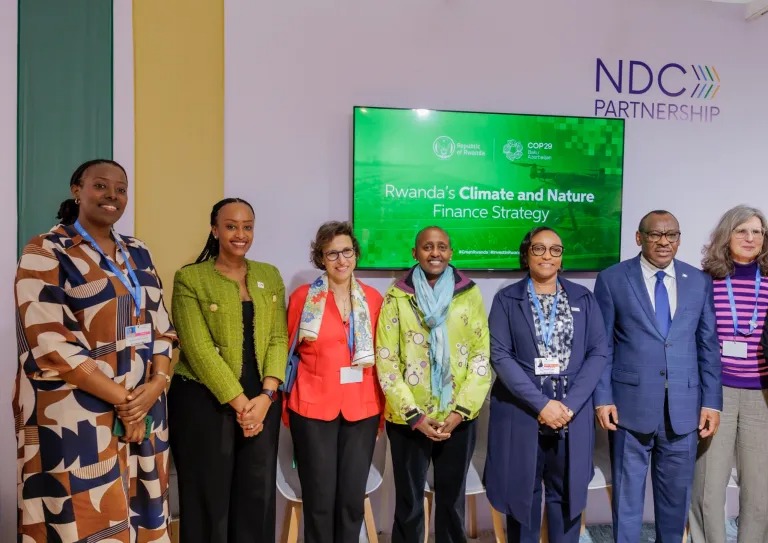
At COP29, Rwanda introduced its ambitious Climate and Nature Finance Strategy, a multi-sectoral approach to address climate change’s severe impacts.
Teddy Mugabo, CEO of the Rwanda Green Fund, highlighted Rwanda’s vulnerability, citing $300 million in climate-related losses in 2022 and over $415 million in damage from flash floods in a single day in May 2023.
Mugabo emphasized the urgent need for sustainable development, warning that inaction could lead to GDP losses of 5-7% annually.
The strategy aims to position Rwanda as a sustainable finance hub, leveraging the Kigali International Financial Center (KIFC) to attract green finance investments. Key components include collaboration between the Environment and Finance Ministries, the Green Fund, and private sector partners.
Innovative financing mechanisms, like blended finance through the IREME Invest facility, have already raised $260 million to support green projects. Mugabo called for global collaboration, underscoring Rwanda’s commitment to a climate-resilient, carbon-neutral future by 2050.
{{Ugandan gov’t ordered to compensate journalists assaulted by the military with Shs150m
}}
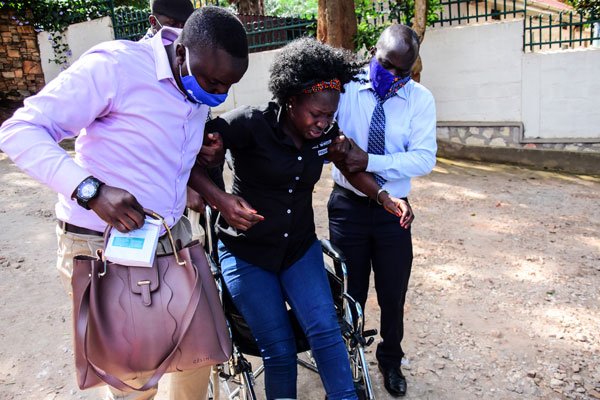
The Ugandan High Court has ordered the government to pay Shs150 million in compensation to journalists Timothy Murungi and Henry Sekanjako, who were assaulted by Uganda People’s Defence Forces (UPDF) soldiers in 2021.
The journalists were covering a protest linked to opposition leader Robert Kyagulanyi’s petition to the UN Human Rights Office when they were attacked. Murungi and Sekanjako, working for New Vision, suffered physical and psychological injuries, with each awarded Shs75 million for the harm endured.
The court ruled that the assault violated the journalists’ constitutional rights, including freedom of the press, dignity, and protection from torture. Supported by the Uganda Journalists Association, the case highlighted the broader issue of press suppression.
While the Attorney General defended the military’s actions, the court held the government responsible, condemning the assault as “inhumane, cruel, and degrading.” However, the court declined to mandate a public apology from the military.
{{Russia writes off $20 Billion in African debt
}}
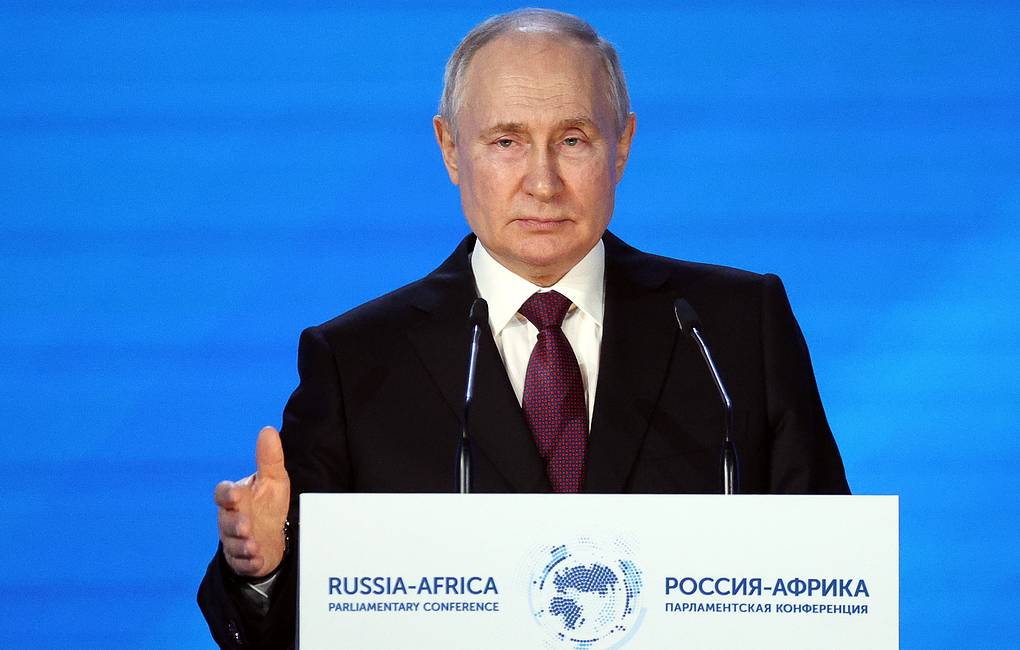
Russia has written off $20 billion in debts owed by African countries, redirecting these funds towards development projects.
Russian Deputy Foreign Minister Mikhail Bogdanov, also the special envoy for the Middle East and Africa, highlighted that this debt relief enables the implementation of socio-economic projects within African nations.
The announcement followed the First Ministerial Conference of the Russia-Africa Partnership Forum, held on November 9-10 in the Sirius Federal Territory on Russia’s Black Sea coast.
The event drew around 1,500 delegates, including more than 40 African ministers. Through debt forgiveness and a refinancing program, Russia aims to strengthen its support for African countries’ socio-economic growth.
{{Donald Trump has appointed leaders in key administrative posts
}}
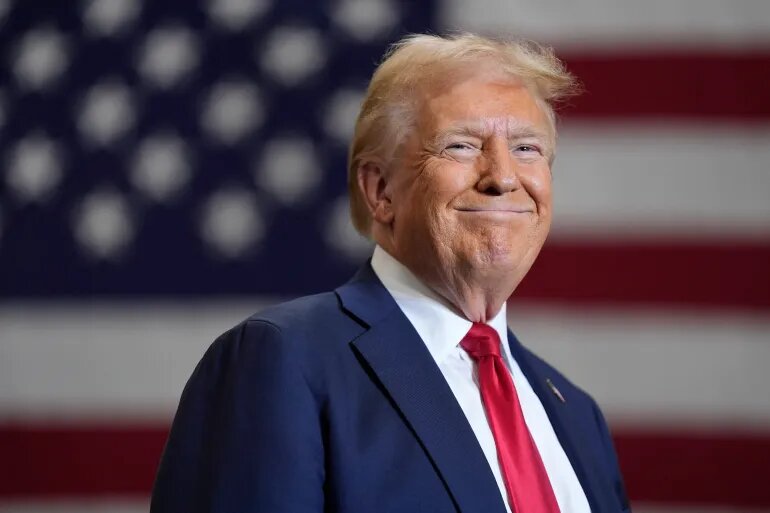
Donald Trump has announced key positions in his incoming administration as he prepares to return to the White House. These appointments highlight Trump’s focus on loyal allies and experienced figures, poised to steer U.S. policy in defence, diplomacy, and national security.
On Wednesday, November 13, Trump officially made a pick for one of his most important Cabinet positions, choosing Rep. Matt Gaetz as attorney general. Here are the major names selected for key roles in the Trump administration
{{White House Chief of Staff – Susie Wiles:}} As Trump’s former campaign manager, Wiles becomes the first woman to hold this role, centralizing control over the administration’s operations and strategy.
{{Secretary of State – Sen. Marco Rubio: }} Rubio’s appointment places him in charge of U.S. foreign policy, influencing international alliances and diplomatic efforts worldwide.
{{Attorney General – Rep. Matt Gaetz:}} Overseeing the Department of Justice, Gaetz will handle federal law enforcement and legal policy, making him a powerful figure in U.S. justice administration.
S{{ecretary of Defense – Pete Hegseth:}} A veteran and media personality, Hegseth will command the Pentagon, overseeing military policy and national defence.
{{National Security Adviser – Rep. Mike Waltz:}} This role grants Waltz direct influence over security strategy and crisis management, shaping responses to both domestic and global threats.
{{Director of National Intelligence – Tulsi Gabbard: }} Gabbard will oversee the U.S. intelligence community, coordinating efforts across agencies to protect national security.
{{Secretary of Homeland Security – Gov. Kristi Noem: }} Noem will oversee domestic security, focusing on issues such as border control, immigration, and counter-terrorism efforts.
{{CIA Director – John Ratcliffe:}} Returning to a familiar role, Ratcliffe will lead intelligence gathering operations crucial to national defense and international intelligence.
{{US Ambassador to the United Nations – Rep. Elise Stefanik:}} As the U.N. ambassador, Stefanik will represent U.S. interests on the global stage, impacting international diplomacy and humanitarian policies.
{{US Ambassador to Israel – Gov. Mike Huckabee: }} Huckabee’s role involves key decisions in U.S.-Israel relations, influencing policy in the Middle East and supporting U.S. allies in the region.
{{Elephant mother heartbreakingly sacrifices one baby to save the other from Lions
}}
In Tarangire National Park in Tanzania, a distressing scene highlights the strength and resilience of motherhood, an elephant matriarch was forced into a tragic choice when her newborn twins were threatened by a pride of lions.
Isolated in open terrain, without the support of a herd, she faced an unthinkable decision: attempt to save both calves, risking all their lives, or focus on protecting one to ensure its survival.
The mother elephant charged repeatedly at the lions, using every ounce of her strength to fend off the attackers. Despite her fierce efforts, one twin was ultimately snatched by the pride, a loss captured on video that conveys the brutal realities of life in the wild.
Wildlife experts noted the resilience of the matriarch, who, though unable to save both calves, exhibited remarkable courage in the face of overwhelming odds.
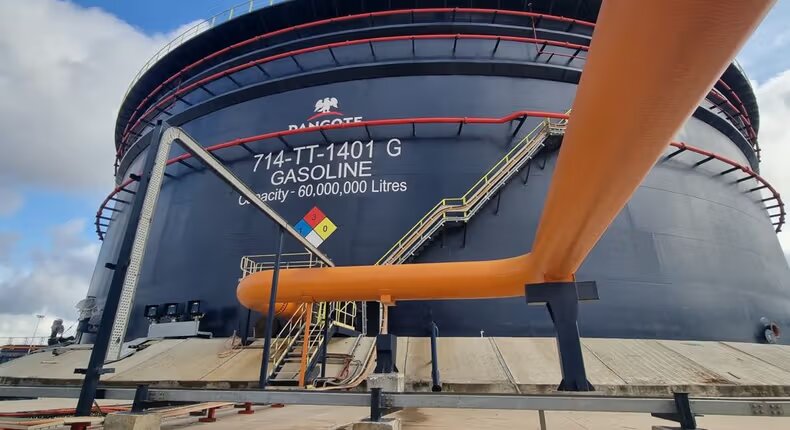
Dangote Refinery is in discussions with eight African countries including South Africa, Angola, Niger Republic, Chad, Burkina Faso and Central African Republic and Namibia for fuel supply deals.
This development comes after Ghana indicated interest in purchasing fuel from the refinery, with projections to save $400 million monthly on costly imports from Europe.
The discussions were described as being at an advanced stage and, if successful, the Lagos-based refinery will have expanded its reach across the African continent.
In September 2024, Dangote Group chairman Aliko Dangote stated that the refinery will meet the demand for petrol, diesel, and other products across Sub-Saharan Africa, pledging high-quality fuel that aligns with global standards.
However, pricing disputes with Nigerian petroleum marketers, who argue that the refinery’s petrol prices are high, have created challenges. As the refinery reaches full capacity and negotiates competitive pricing, local marketers may find incentives to shift toward domestic procurement.
{{Suicide bombing shakes Brazil’s Three Powers Plaza, leaving attacker dead
}}
A suicide bombing struck Brazil’s Three Powers Plaza in Brasília, causing evacuations and halting government proceedings. The attack, which took place on Wednesday, November 13, 2024, evening, resulted in the death of the attacker, Francisco Wanderley Luiz, 59, who was identified as the sole casualty.
Two explosions occurred around 7:30 pm local time; one outside the Supreme Federal Court near the prominent ‘Lady Justice’ statue and another from a parked car close to the Chamber of Deputies, the lower house of parliament.
The suspect, originally from Santa Catarina, had previously issued threats against politicians and Supreme Court justices on social media. In 2020, Luiz had run unsuccessfully for city council in Rio do Sul, receiving only 98 votes.
Authorities responded quickly, with Brasília’s Federal District Governor Ibaneis Rocha labeling it a suicide attack. The blast has led to heightened security, with ongoing investigations into Luiz’s motives and any potential connections.
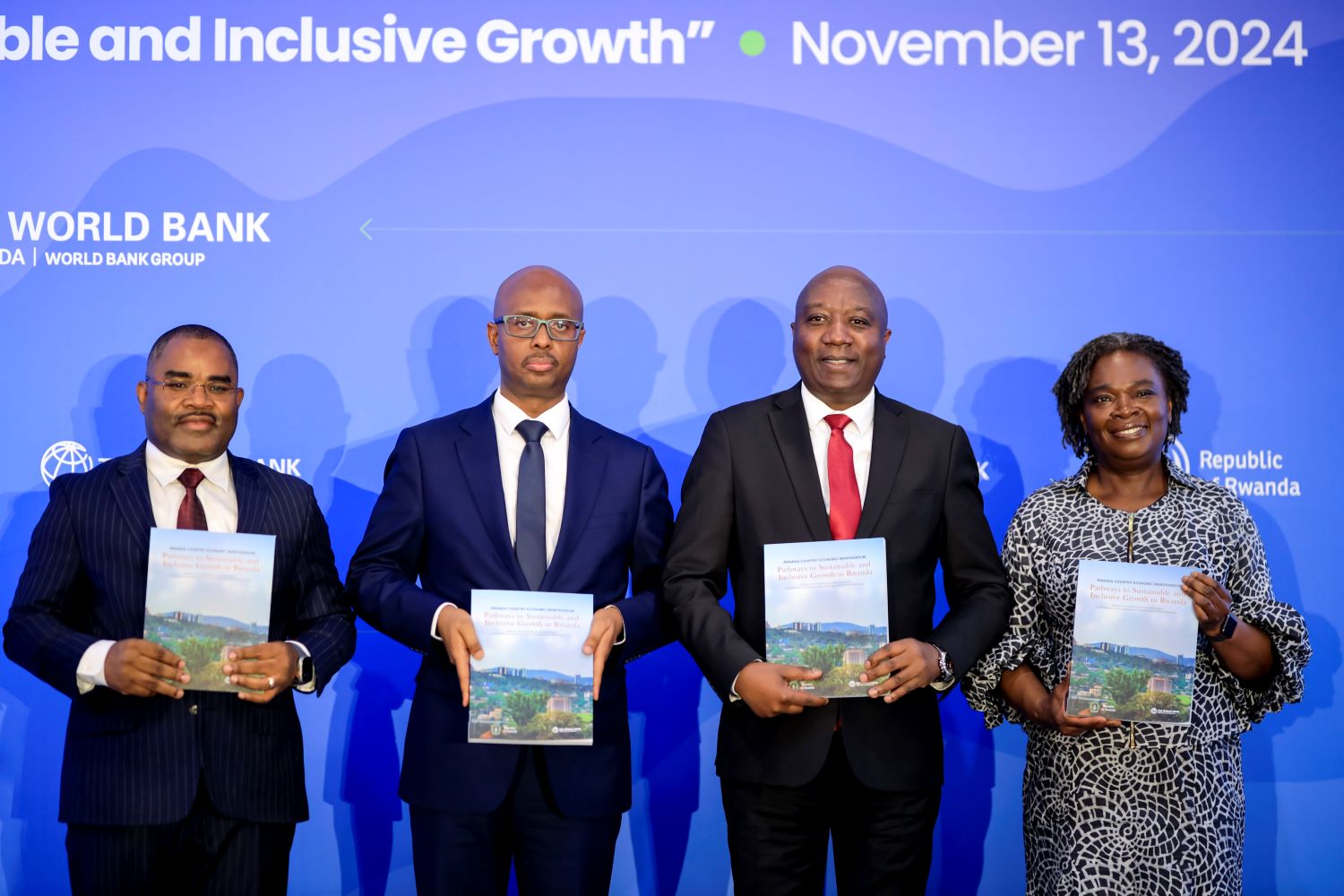
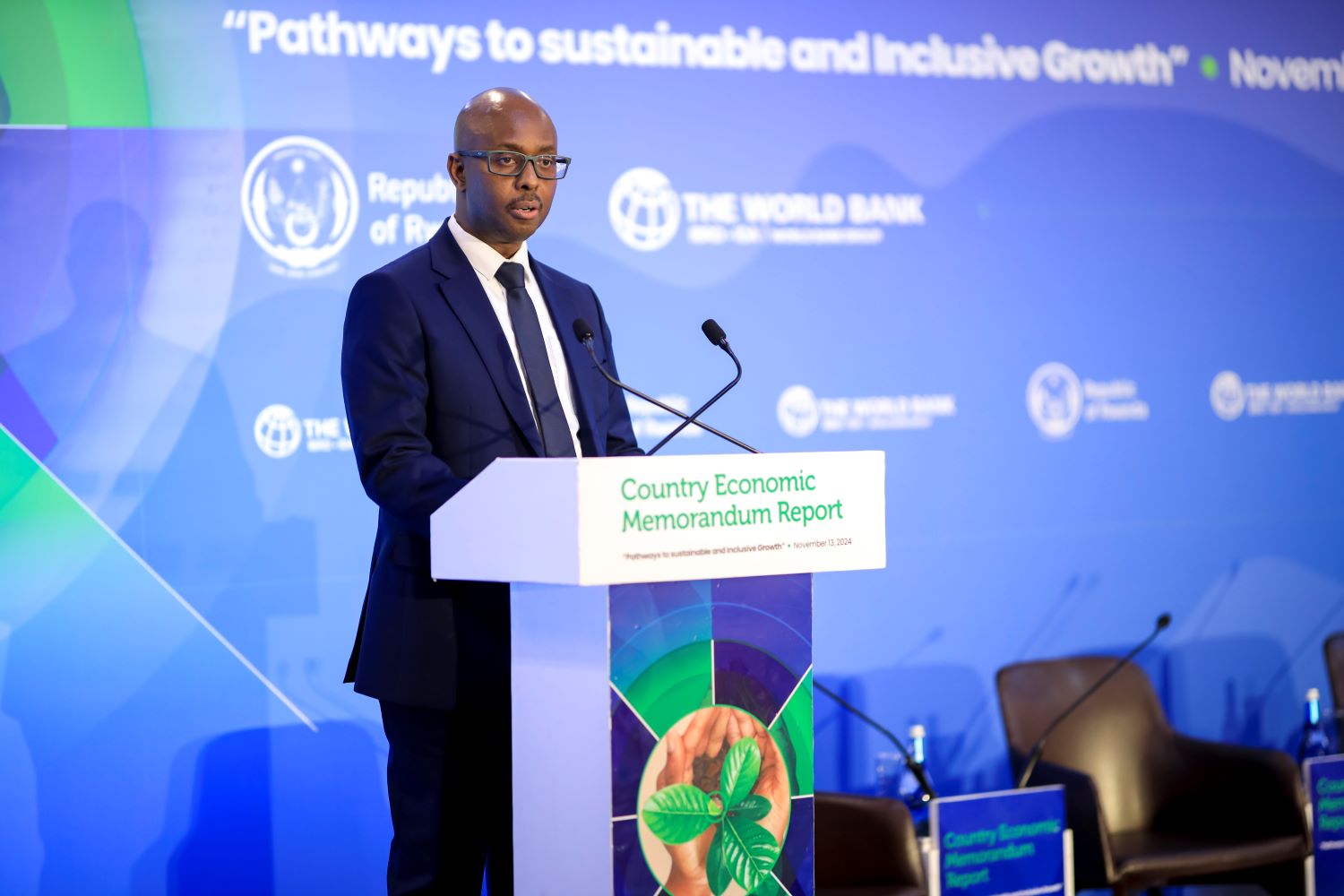
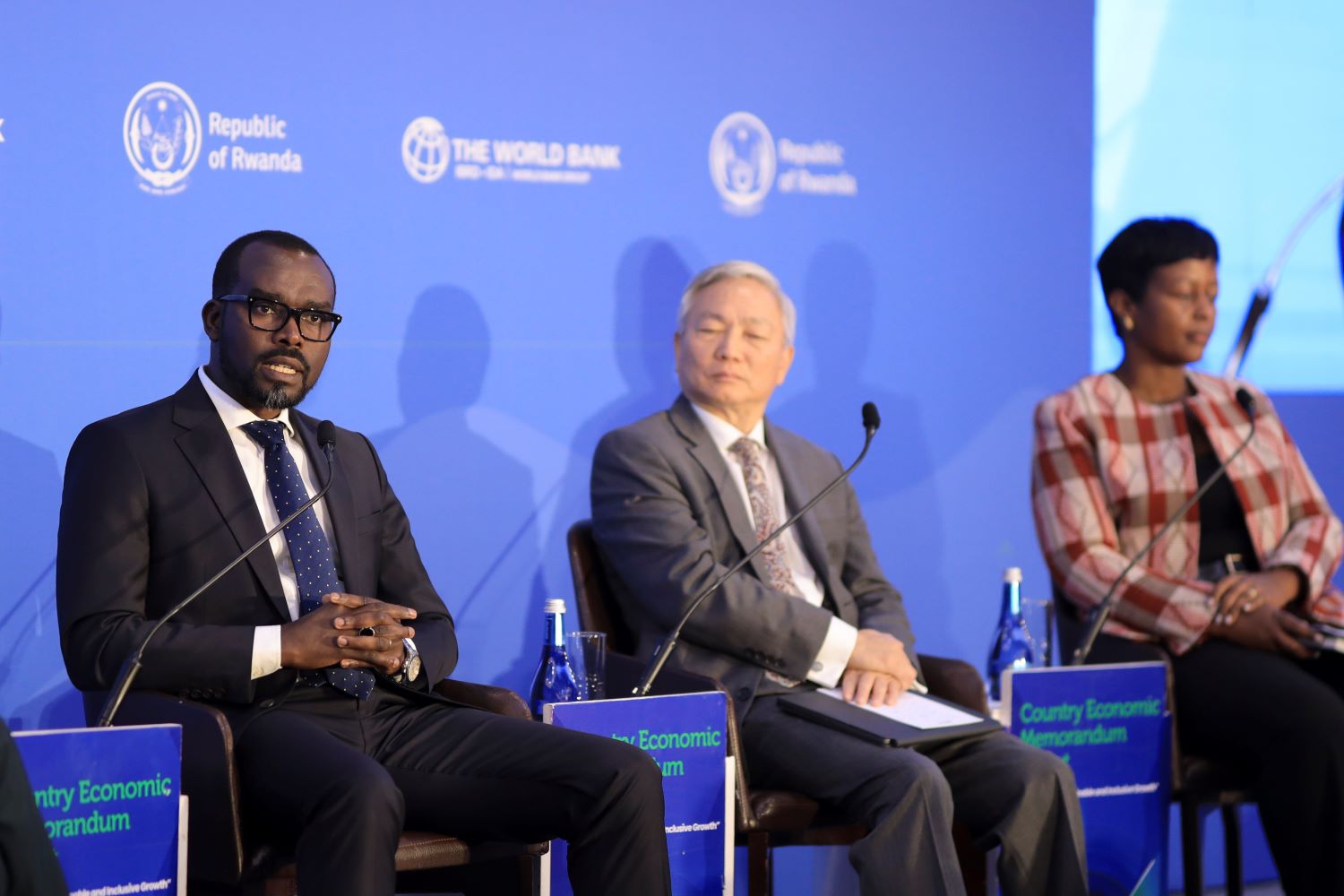
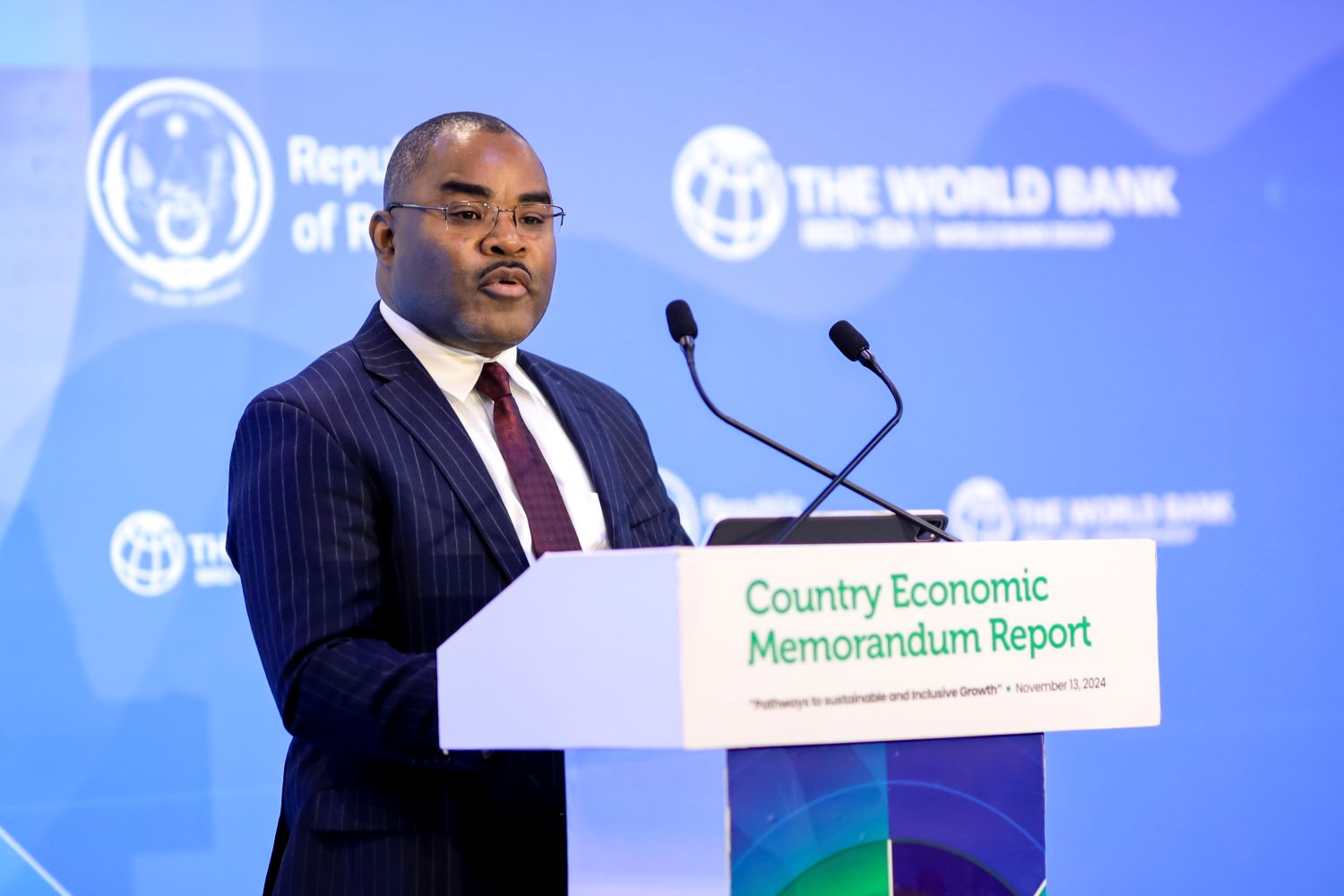
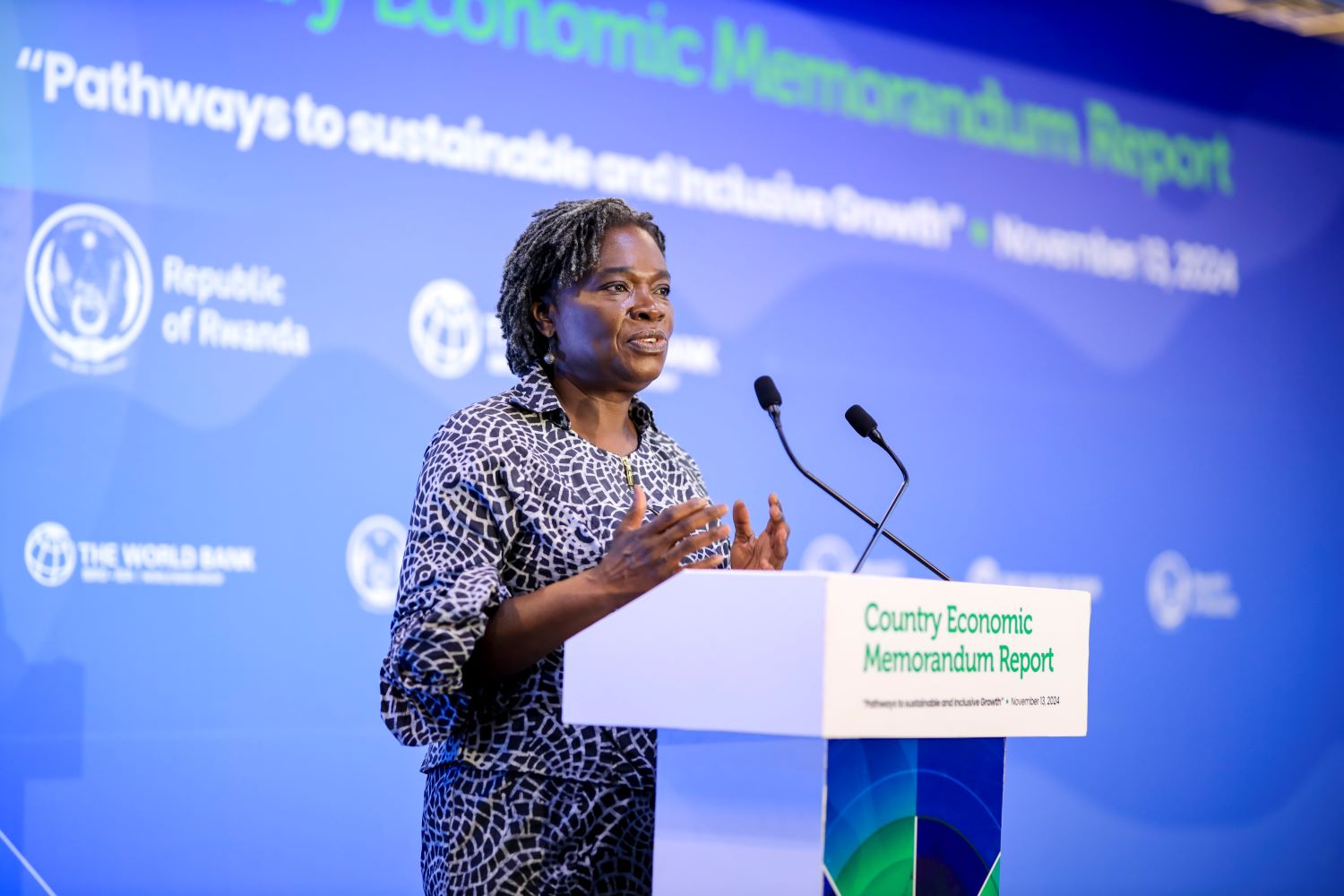
The comprehensive report, a collaborative effort between the Government of Rwanda and the World Bank, highlights the country’s significant economic achievements and presents recommendations to sustain growth in alignment with the second National Strategy for Transformation (NST-2).
Rwanda has shown impressive economic resilience, with GDP growth averaging 7.4% annually between 2000 and 2023. This growth has been accompanied by improvements in social indicators, including life expectancy nearing 70 years, enhanced healthcare access, and expanded educational attainment.
The CEM highlights opportunities for Rwanda to build on these achievements by expanding private sector engagement, strengthening human capital, and enhancing agricultural resilience—critical drivers to sustain and accelerate Rwanda’s path toward high, sustainable growth.
The report serves as a roadmap to address current economic challenges and seize emerging opportunities across key sectors, including private investment, education, agriculture, and climate resilience. It provides policymakers, stakeholders, and development partners with actionable insights to support the country’s ambitious growth and inclusivity goals.
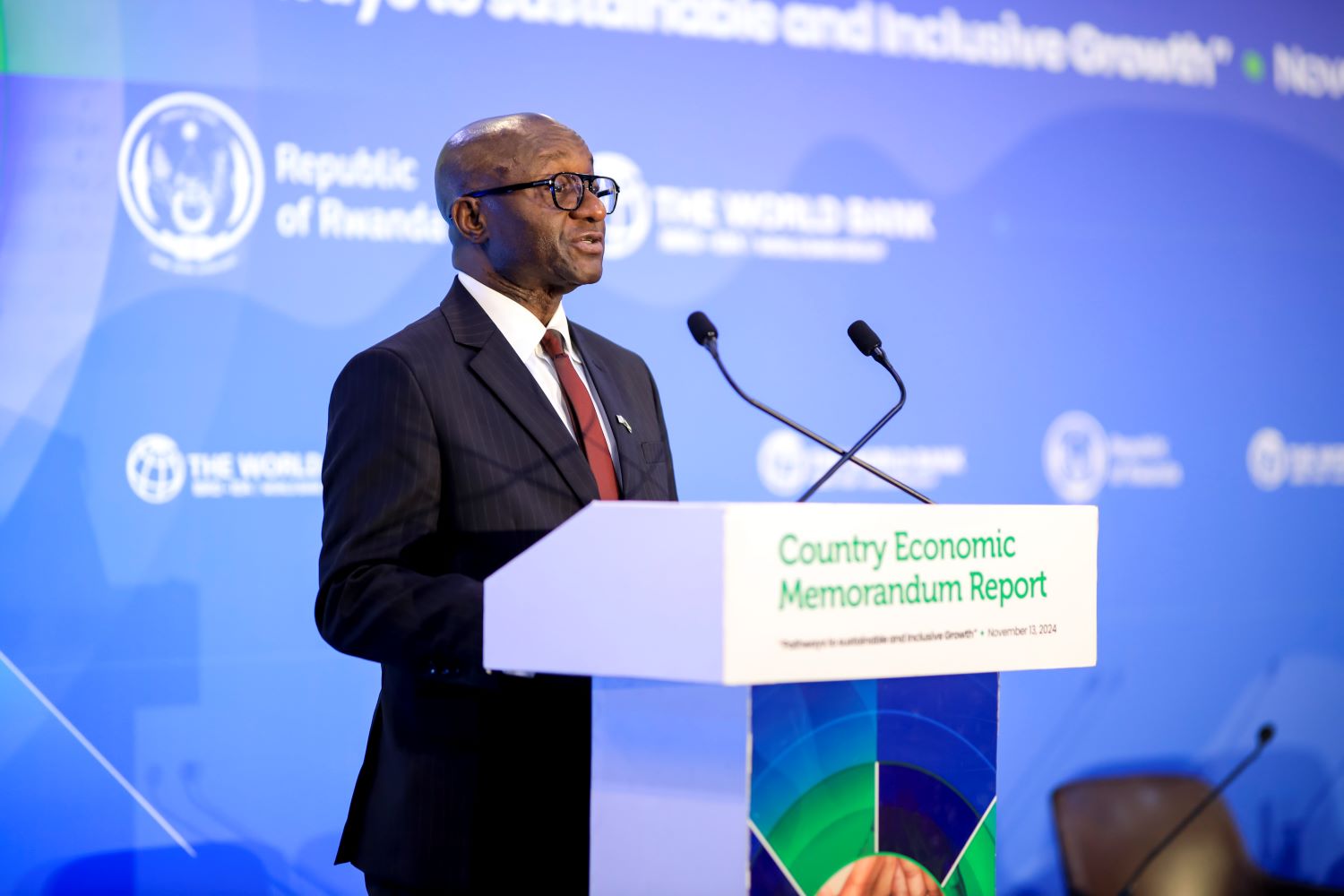
The Minister of Finance and Economic Planning, Yusuf Murangwa, affirmed that Rwanda’s impressive progress over the past years has laid a solid foundation for economic growth and social well-being.
“To achieve the ambitious targets set in NST-2, we must now prioritize enhancing productivity, fostering private sector engagement, and investing in our people. The CEM provides a strategic framework to address these priorities, guiding us toward a more inclusive and resilient economy,” the minister stated.
Key findings from the CEM underscore Rwanda’s effective growth strategy, driven by public investment, alongside a promising opportunity to further boost growth through increased private sector involvement. With the private sector currently contributing a non-negligible share to GDP, the report highlights substantial potential for expansion, particularly in the services and manufacturing sectors.
The CEM recommends a series of reforms aimed at enhancing competition, increasing access to finance, bolstering domestic savings, and fostering innovation and ICT development. Additionally, it underscores the importance of regional integration to expand market access and promote sustainable trade partnerships.
Speaking at the launch, World Bank Country Manager Sahr Kpundeh emphasized the strength of the partnership between the Government of Rwanda and the World Bank, noting that the collaboration underscores a shared commitment to Rwanda’s vision for sustainable growth.
“The CEM’s recommendations provide clear pathways to greater economic resilience and shared prosperity. With strategic policy adjustments, we are confident Rwanda can foster a diversified economy that brings widespread benefits to all Rwandans,” Kpundeh said.
The report further highlights Rwanda’s human capital as a cornerstone for achieving long-term growth. It recommends sustained investment in education, skills development, and healthcare. By nurturing a skilled and healthy workforce, Rwanda can unlock new growth potential across generations.
The CEM also emphasizes opportunities in nature-based solutions to address climate risks. By prioritizing conservation and nature-based initiatives, Rwanda can tackle climate challenges while advancing its development goals.
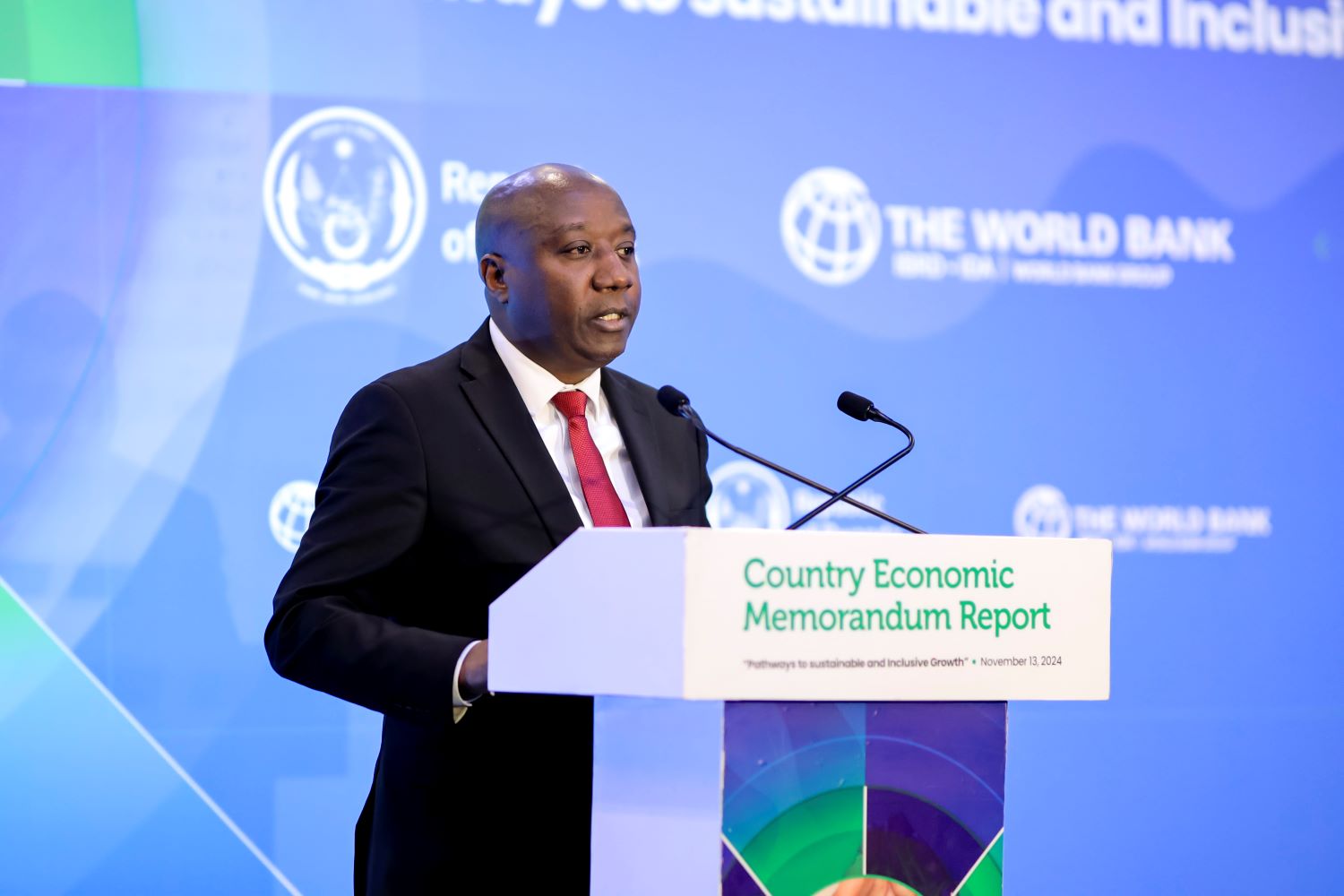
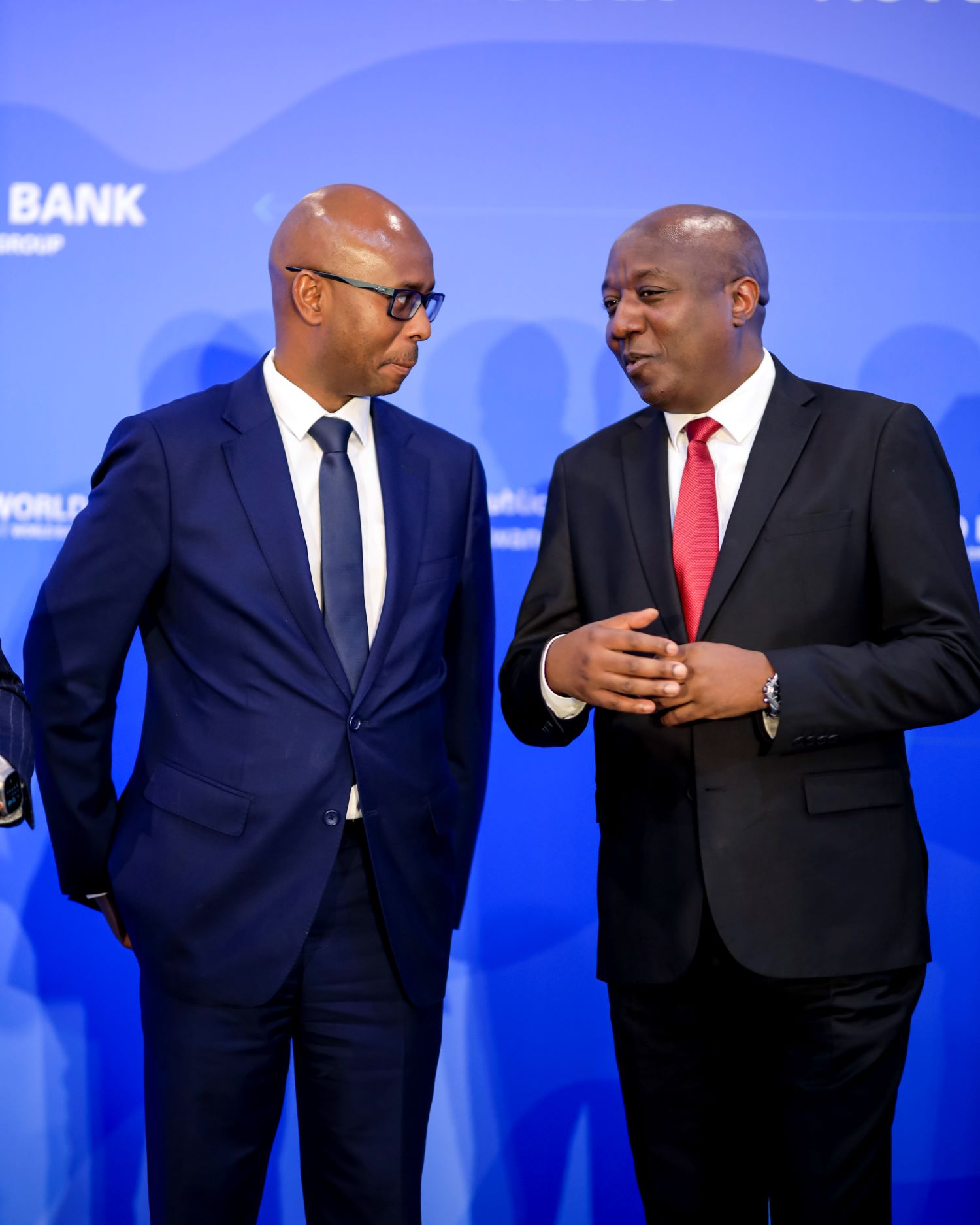
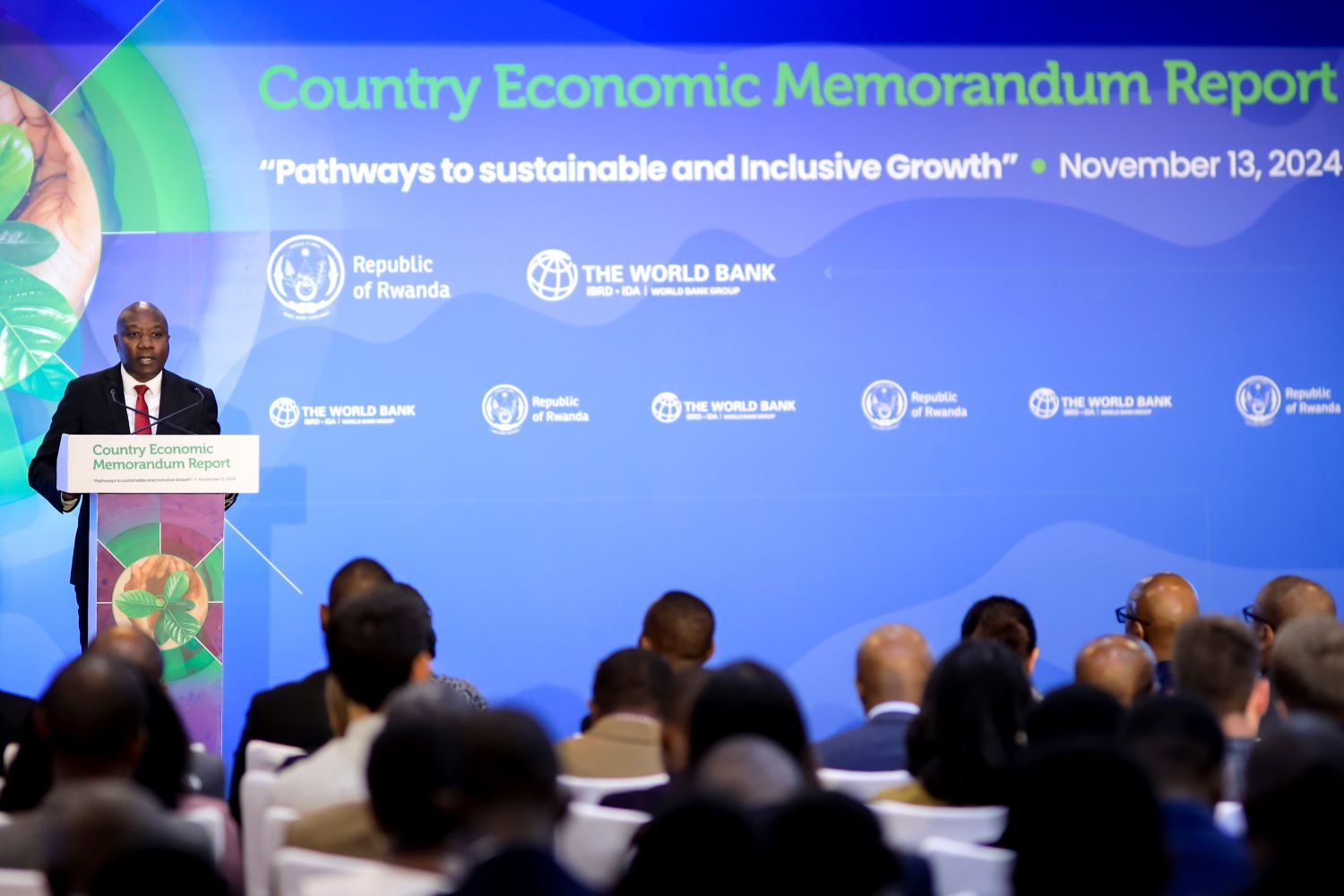
Prime Minister Ngirente expressed the government’s commitment to leveraging lessons learned from the study to address the challenges identified.
“Rwandans are eager for development, and our government is committed to pushing forward toward the aspirations of Vision 2050. Despite facing external shocks and challenges, even in difficult times, we are determined to keep moving forward,” the Prime Minister stated.
The report will serve as a guiding document for policymakers and stakeholders collaborating to build a brighter, more resilient, and inclusive future for Rwanda.
This is according to a report by the World Bank and the Government of Rwanda, which highlights the state of the country’s economy and outlines the steps needed to achieve inclusive and sustainable development in alignment with the second National Strategy for Transformation (NST-2).
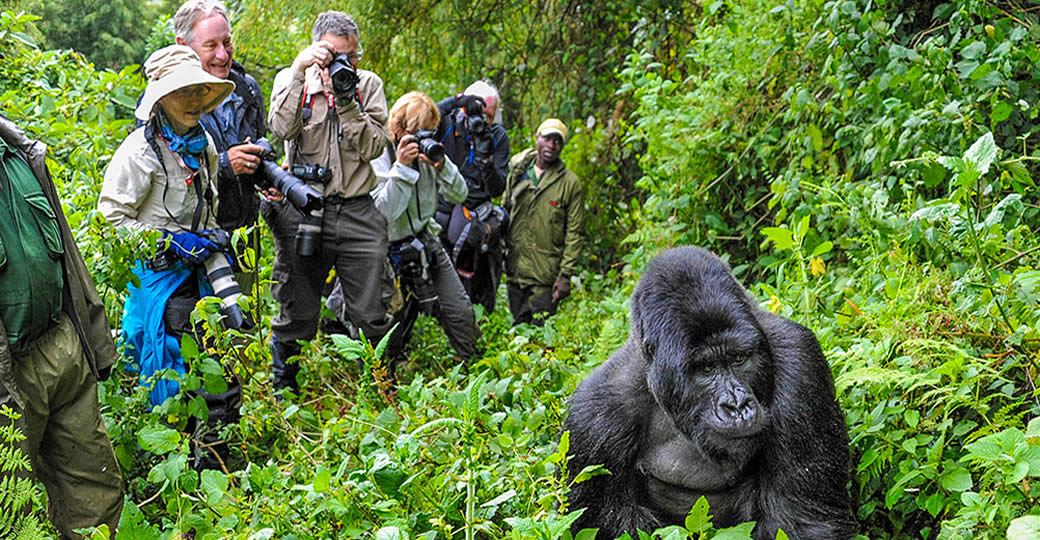
Gorilla trekking activities are expected to generate the most revenue for the tourism sector, at $200 million in 2024, followed by other leisure activities ($110 million), conferences ($90 million), visiting friends and relatives (VFR tourism/travel) ($86 million), business travel ($68 million), and revenue from other visitors ($46 million).
Nature-based tourism (NBT) is estimated to account for 80 percent of visitors entering Rwanda for leisure or conferences, playing a significant role in job creation, particularly by increasing formal jobs in rural communities near game parks.
The new report, titled Pathways to Sustainable and Inclusive Growth, was launched on Wednesday, November 13, 2024, in Kigali at a ceremony presided over by Prime Minister Édouard Ngirente.
According to the report, the rapid recovery and expansion of the tourism sector following the COVID-19 pandemic, which slowed the country’s biggest foreign exchange earner, is a key objective for the government.
The World Bank said that achieving this will require additional financial resources from the non-state sector to support fast-growing productivity gains.
The report further highlights Rwanda’s human capital as a cornerstone for achieving long-term growth. It recommends sustained investment in education, skills development, and healthcare. The authors of the report note that by nurturing a skilled and healthy workforce, Rwanda can unlock new growth potential across generations.
The report also emphasizes opportunities in nature-based solutions to address climate risks and advance the country’s development goals.
Prime Minister Ngirente expressed the government’s commitment to leveraging lessons learned from the study to address the challenges identified.
“Rwandans are eager for development, and our government is committed to pushing forward toward the aspirations of Vision 2050. Despite facing external shocks and challenges, even in difficult times, we are determined to keep moving forward,” the Prime Minister stated.
The Minister of Finance and Economic Planning, Yusuf Murangwa, affirmed that Rwanda’s impressive progress over the past years has laid a solid foundation for economic growth and social well-being.
“To achieve the ambitious targets set in NST-2, we must now prioritize enhancing productivity, fostering private sector engagement, and investing in our people. The CEM provides a strategic framework to address these priorities, guiding us toward a more inclusive and resilient economy,” he stated.
World Bank Country Manager, Sahr Kpundeh, emphasized the strength of the partnership between the Government of Rwanda and the World Bank, noting that the collaboration underscores a shared commitment to Rwanda’s vision for sustainable growth.
“The Rwanda Country Economic Memorandum (CEM) recommendations provide clear pathways to greater economic resilience and shared prosperity. With strategic policy adjustments, we are confident that Rwanda can foster a diversified economy that benefits all Rwandans,” Kpundeh stated.
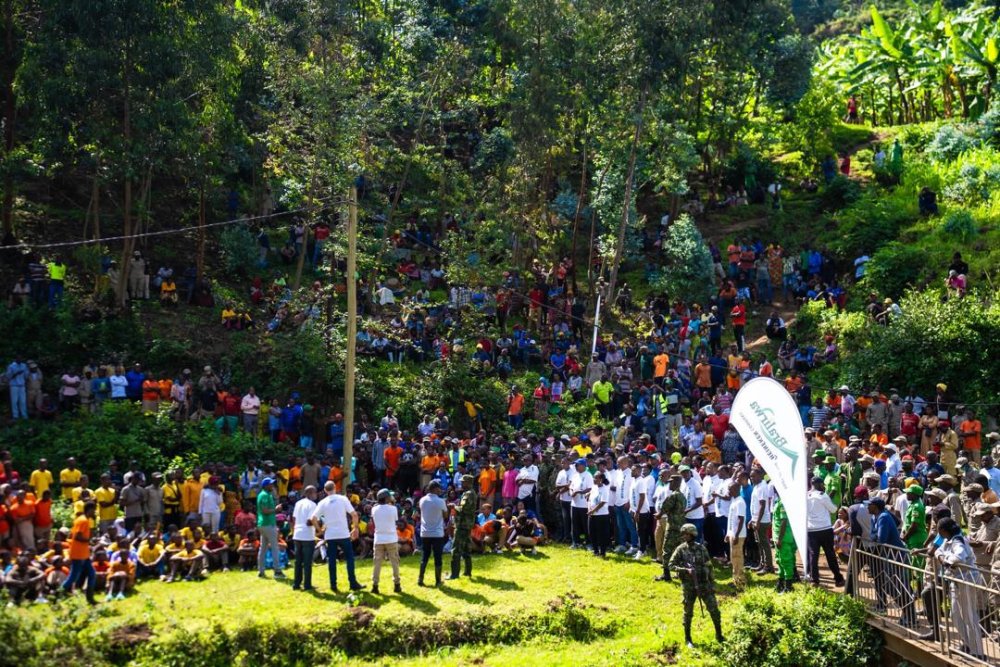
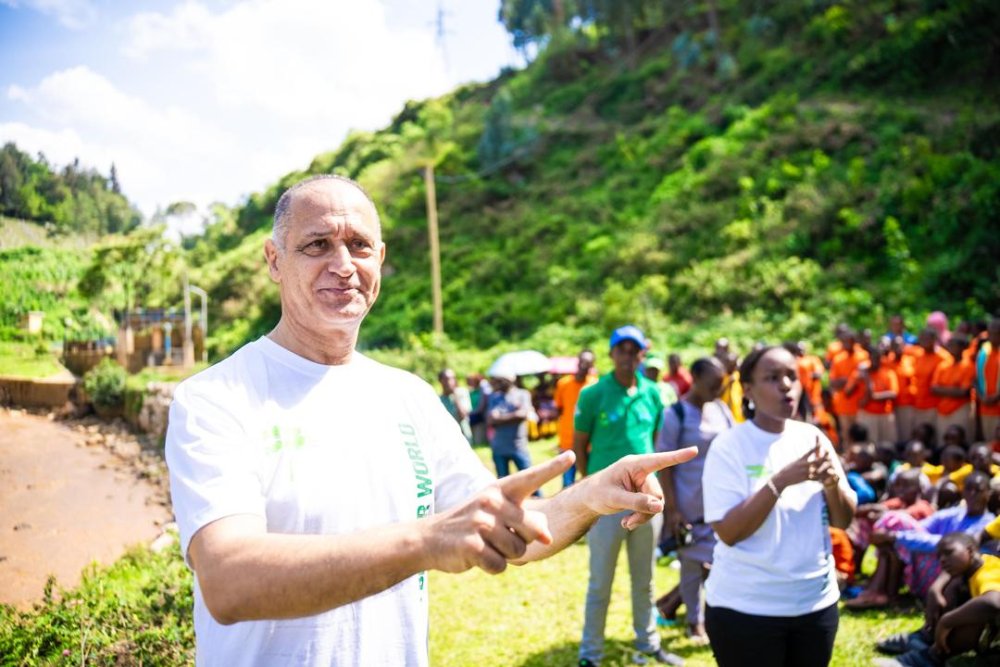
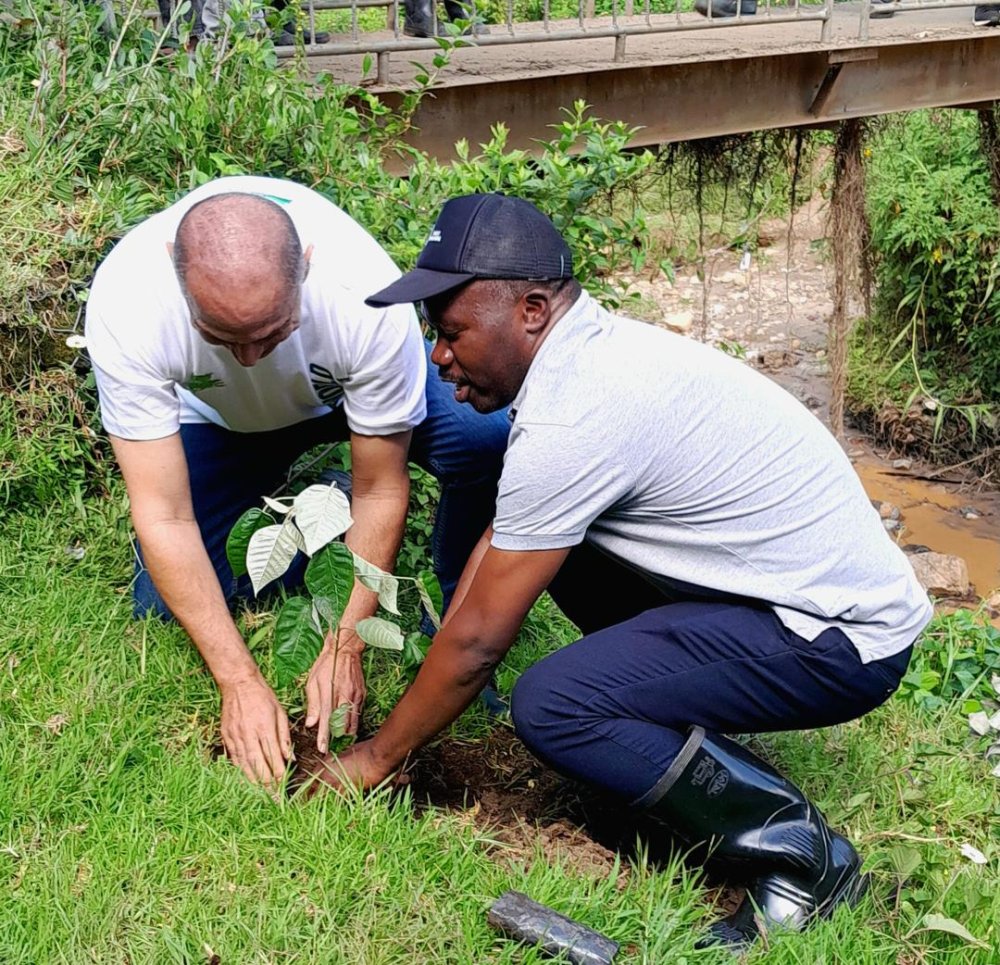
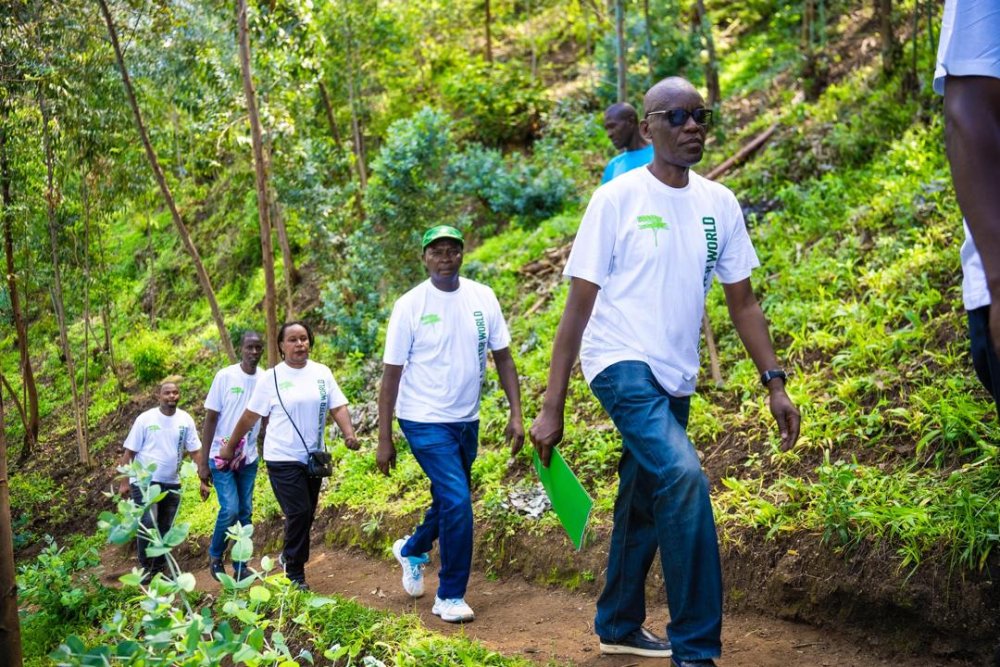
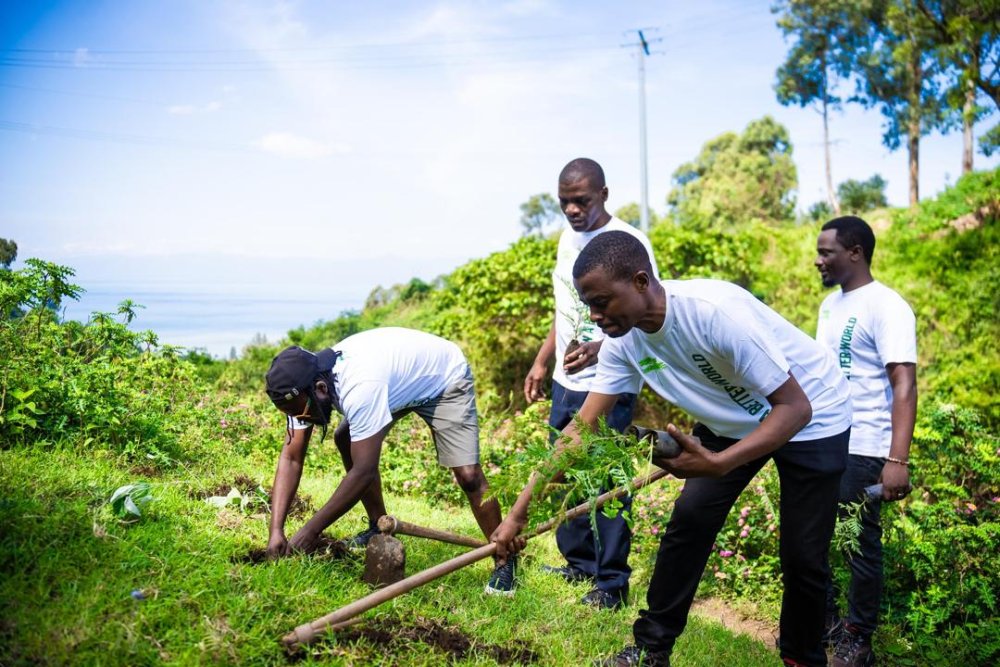
As part of the company’s ‘brew a better world’ agenda, Bralirwa donated 5,000 fruit trees and agroforestry seedlings to the residents of Gisenyi Sector in Rubavu District and joined the community for tree planting in a bid to sensitize them on the importance of environmental conservation.
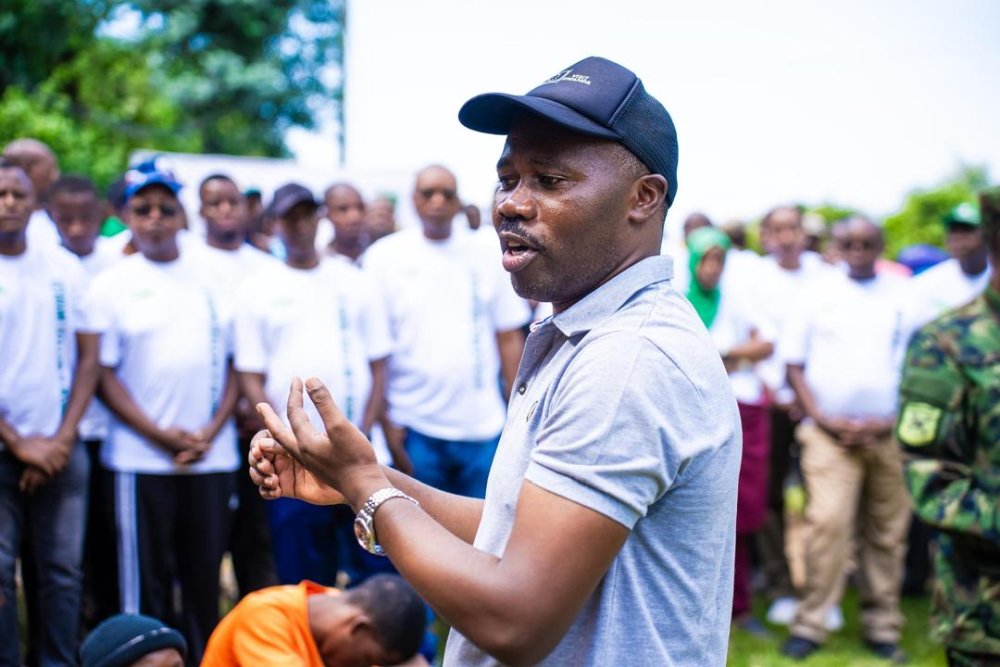
The communal activity, which was graced by the Mayor of Rubavu district, Mr. Mulindwa Prosper, among other distinguished district authorities, was attended by over 200 participants who were thrilled to have some of the fruit trees within their homesteads to improve livelihoods, prevent soil erosion and support biodiversity.
In his remarks, the Managing Director of Bralirwa, Mr. Etienne Saada, reiterated the company’s efforts towards replenishing watersheds and nature in close collaboration with key stakeholders. “As a company, we are committed to sustainability and environmental stewardship. Today’s initiative is one of many steps we are taking to create healthier ecosystems and a better planet for generations to come,” said Mr. Etienne.
Bralirwa plants 20,000 trees every year. While 5,000 trees were planted in Rubavu District last week, the remaining will be evenly distributed to districts of Nyarugenge, Kicukiro and Rwamagana during this year’s planting season.
The Mayor of Rubavu District, Mr. Mulindwa Prosper, thanked Bralirwa for their consistent contribution to the environmental conservation efforts within the district and called upon the residents of Gisenyi sector to preserve the trees for their benefits to the community.
“Our district takes great pride in our ongoing collaboration with Bralirwa and our shared efforts towards the social, environmental and economic development of the District,” said Mr. Mulindwa.
In September, Bralirwa donated garbage collection bins to cooperatives working along the shores of Lake Kivu in Nyamyumba sector, Rubavu district in commemoration of the world cleanup Day, under the theme ‘make room for life’. Last year, the company donated 20 million Rwandan Francs for construction materials to the victims of flooding in Rubavu in partnership with Rwanda Red Cross Society.
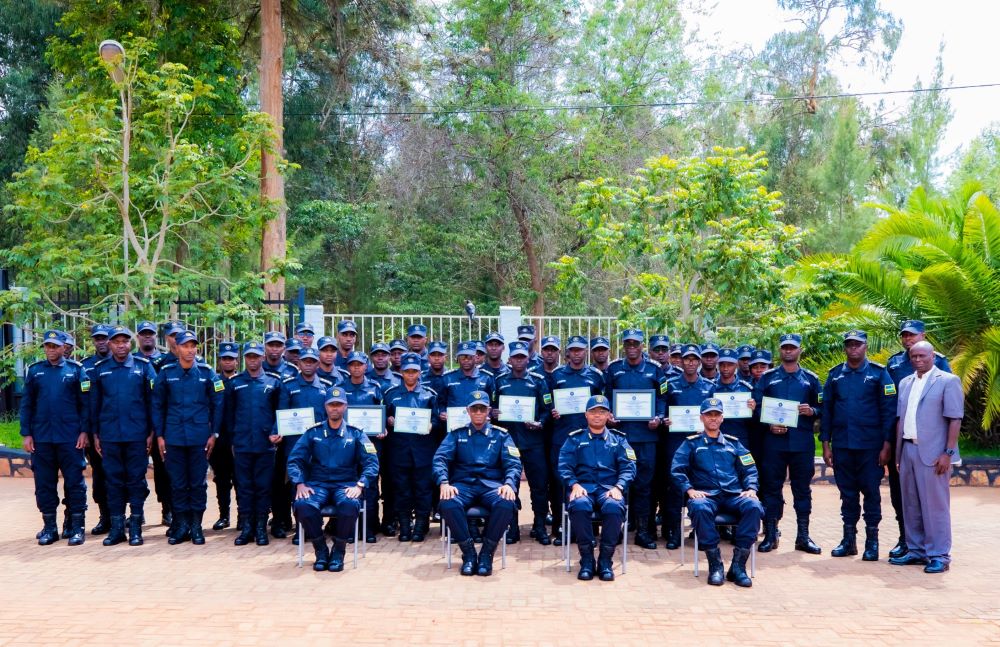
The Deputy Inspector General of Police (DIGP) in Charge of Operations, CP Vincent Sano, presided over the pass-out of the 14th intake.
The PTCC was designed to expand the tactical command that shapes leadership, strengthens decision-making abilities and reinforces the importance of teamwork and communication.
DIGP Sano said that the skills acquired are essential for training environments and in real-world scenarios where the stakes are high but with a thin margin for errors.
“The complexities of modern law enforcement demand a continual enhancement of skills, knowledge and strategies. You have all demonstrated a profound understanding of these demands,” DIGP Sano said.
He reminded them that leadership in a tactical setting is more than just making decisions. “It’s about understanding the terrain, knowing your team, adapting to changing conditions, and having the foresight to anticipate what lies ahead; it’s all about accountability, both to those you lead and to the mission at hand.”
He urged the trainees to always remember the Rwanda National Police (RNP) core values of ‘Service, Protection and Integrity’ as principles that will guide them through most challenging situations, and to remain a pillar of trust.
The five-month course covered key aspects related to communication, special operations, routine and operational staff work, policing strategies, laws, crime investigation, and leadership, command and management, among others.
The Commandant of PTS, Commissioners of Police (CP) Robert Niyonshuti, said that course participants engaged in Command Post and Field Training Exercises, including tutorial and final exercises.
They also visited the Kigali Genocide Memorial and the Museum for the Campaign against Genocide.
“These visits were a powerful reminder of the role police officers play in protecting human rights, promoting justice, and fostering social harmony,” CP Niyonshuti said.
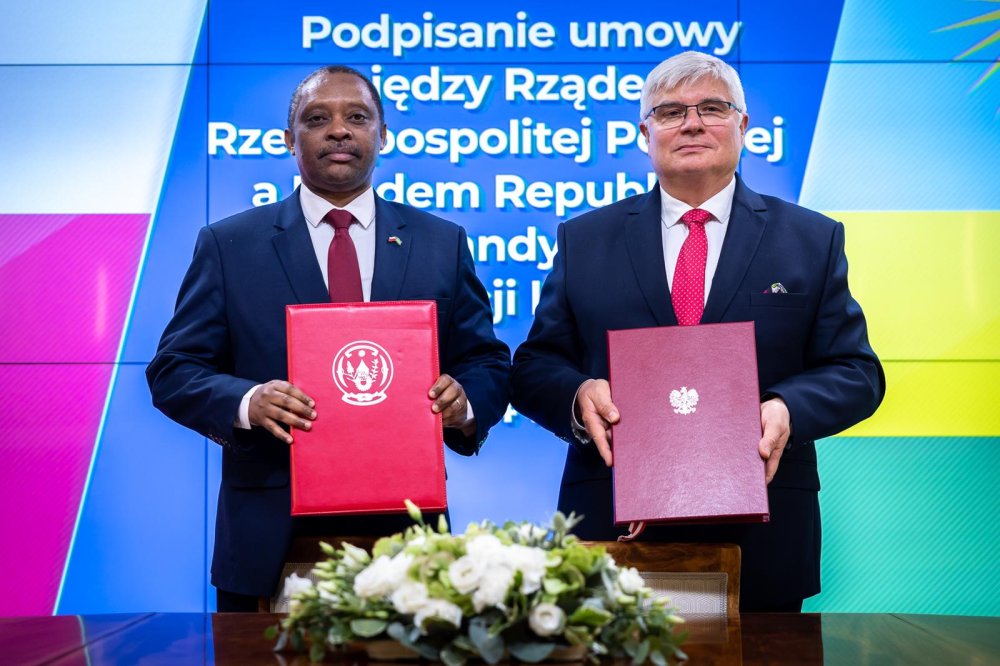
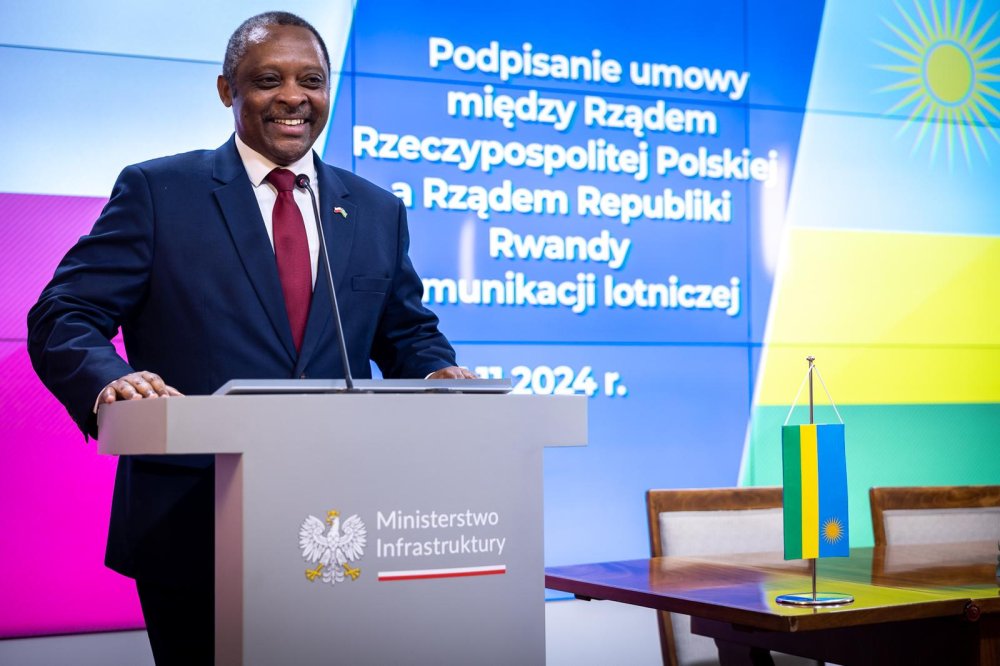
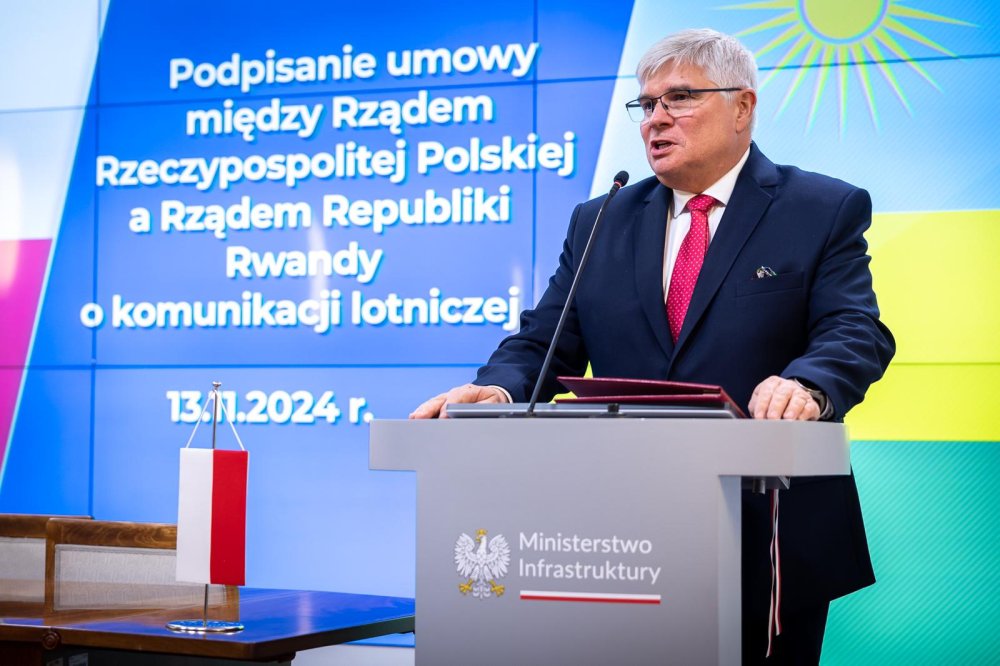
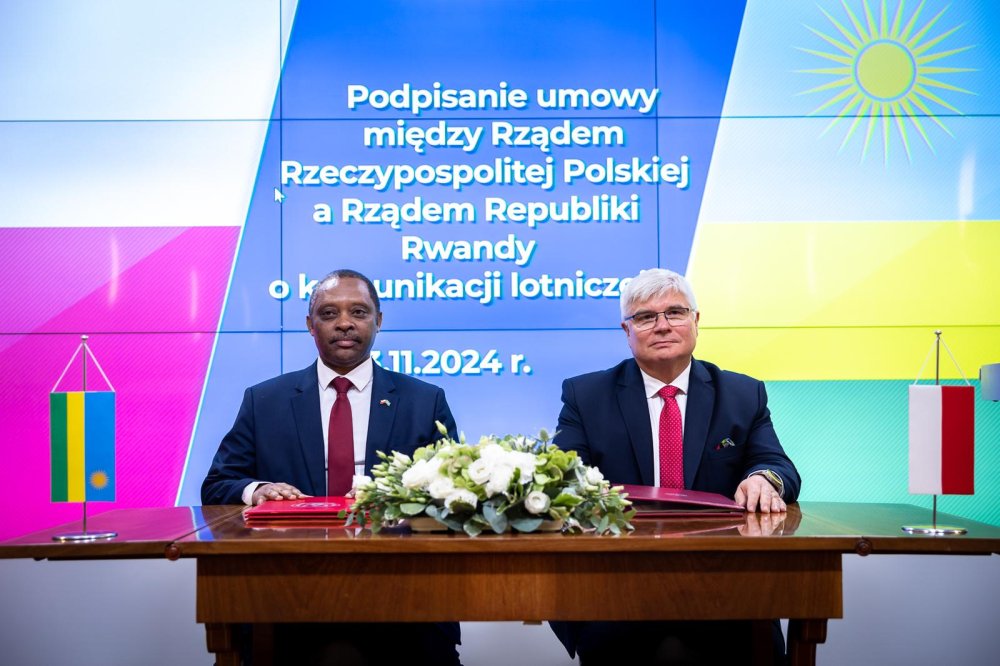
The agreement was formalized on Wednesday, November 13, 2024, in Warsaw.
Rwanda was represented by ambassador to the country, Prof. Anastase Shyaka at the signing ceremony while Poland was represented by Lasek Maciej, Secretary of State in the Ministry of Infrastructure and the government’s plenipotentiary for the aviation sector.
Lasek described the agreement as a milestone that strengthens ties between the two nations.
“I am convinced that direct connections between Poland and Rwanda will contribute to increased trade, tourism, and stronger bonds between our nations.”
Prof. Shyaka, speaking to IGIHE, highlighted that the agreement will significantly enhance economic and tourism cooperation.
He emphasized that it lays the groundwork for RwandAir and Polish national carrier to establish partnerships, facilitating travel not only between Poland and Rwanda but also with neighboring European countries.
{{Unlimited opportunities}}
The agreement grants airlines from both countries the freedom to operate an unlimited number of passenger and cargo flights.
This initiative aligns with a broader strategy to develop an air network connecting Europe and Africa.
Establishing this direct flight connection marks a significant step forward in strengthening Poland-Rwanda relations and engaging both countries in a path toward sustainable and mutually beneficial cooperation.
As a music teacher at Green Hills Academy, he now spends his days teaching piano and music production to young students, sharing his knowledge and passion for the arts. For Konstantin, Rwanda has become a chosen home, a place where he can explore his interests in music, art, and cultural exchange in a way that feels both fulfilling and impactful.
Known among locals as “Nsengiyumva”, a Rwandan nickname he adopted after hearing it in conversation, Konstantin has embraced his new life with genuine enthusiasm. The name, which initially caught his attention because of its unique sound, has since become a friendly identifier that reflects his commitment to integrating into Rwandan culture.
Although he’s still learning Kinyarwanda, he is determined to improve, believing that language is a key part of understanding the place he now calls home.
Konstantin’s journey in music started long before he arrived in Rwanda. He began playing piano as a child and was involved in choirs and even composed his own songs. His love for music led him to study it professionally in Germany, and over the years, he gained experience in music production, composing for theater, and teaching.
“My decision to come to Rwanda was fueled by a desire to work on cultural projects, and I have since found a vibrant community of artists, musicians, and performers in Kigali,” he explains
In his role at Green Hills Academy, Konstantin teaches students not just about music but also about the importance of creativity and discipline in achieving one’s goals. He encourages his students to think of their dreams as “works in progress,” explaining that goals need dedication and practical steps.
“Music, like life, is all about the little steps that make up the big picture. For me, teaching is about more than imparting technical skills; it’s about inspiring my students to find their voice and their confidence through art,” he says.
In addition to his teaching, Konstantin has become somewhat of a social media personality in Rwanda. His videos, which often feature humorous moments as he attempts to master Rwandan customs or speak Kinyarwanda, have earned him a modest following.
“It all started with a playful video correcting a friend’s pronunciation of his nickname, which quickly went viral. From there, I began sharing more lighthearted content, surprising myself with how much people enjoyed my funny takes on everyday Rwandan life,” he recalls.
Outside of his online presence, Konstantin is deeply engaged in Rwanda’s creative scene. He appreciates the country’s efforts to support the arts, noting how the government and various organizations work to provide opportunities for artists and musicians.
“There’s a strong energy here for the arts, and people genuinely enjoy participating in it. However, there some challenges, particularly the gap between well-established artists and those just upcoming. I believe that with more performance venues, mentorship, and funding, young artists could more easily find their way and make a name for themselves,” he advised.
Konstantin also has strong opinions about the role of values in art. For him, creative work should have purpose and integrity, not just a drive for fame or money. He’s cautious of the global trend of social media sensationalism, particularly when it leads to superficial or provocative content for the sake of attention.
“Art should be meaningful and have a positive impact. If it’s just for show, it loses its value. This perspective aligns with my approach to teaching and my belief that creativity can be a powerful tool for personal and social growth,” he says.
Moving forward, Konstantin hopes to continue contributing to Rwanda’s art scene, helping young artists find their way and encouraging a community of creativity. He’s also eager to keep learning Kinyarwanda, deepening his understanding of the country that has welcomed him so warmly.
“In just a few years, I have gone from being a visitor in Rwanda to becoming an active member of the creative community. Rwanda isn’t just a place to live; it’s a place where I can grow, share, and connect with others through the universal language of music and art,” he emphasizes.
Through his teaching, his performances, and his lighthearted videos, Konstantin has found a way to bridge cultures, inspire young minds, and make a lasting impact in a country that has captured his heart.