Putin made these comments during a press conference shortly after preliminary election results showed him winning with 87% of the vote.
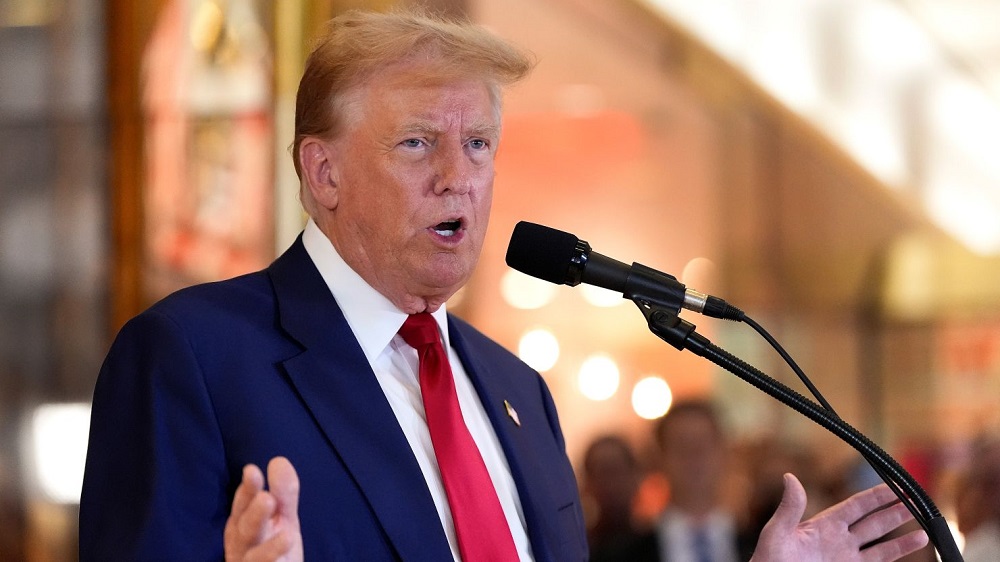
He said, “The whole world is laughing at what’s happening in America. We are behaving better than America’s detractors in other countries. But what’s happening there is not democracy, it’s a disaster.”
RT reported that the candidate President Putin was referring to as being obstructed by the United States is Donald Trump, who has been facing legal challenges, despite having been endorsed by his party, the Republicans, as their candidate for the elections in November this year.
Putin emphasized that it’s clear to the entire world that America can no longer claim to be a teacher of democracy.
However, he reaffirmed that Russia does not interfere in foreign elections and is ready to work with whoever the American people choose as their president in the upcoming elections.
The conference is taking place in Nyamata, Bugesera District.
Maj Gen Andrew Kagame, Deputy Reserve Force Chief of Staff and Exercise Director welcomed the delegates and highlighted the necessity of collaboration during this planning conference to ensure the success of the upcoming training exercise.
He urged everyone to engage actively in the planning session, aiming to enhance comradeship and readiness within the EAC armed forces.
The conference is scheduled from 18th to 20th March 2024.
The decision was reached at EU’s Foreign Affairs Council in Brussels, where ministers discussed EU support for Ukraine and the situation in the Middle East.
UAF will allow the EU to further support the evolving needs of the Ukrainian Armed Forces “through the provision of both lethal and non-lethal military equipment and training,” the Council said.
Since the start of the Russia-Ukraine conflict in February 2022, the EU has given or committed over 138 billion euros in aid to Ukraine, of which 28 billion euros was military support. (1 euro = 1.09 U.S. dollar)
The Russian presidential elections were held for three days from March 15 to 17. Under Russian presidential election regulations, a candidate who receives more than 50 percent of the votes will secure victory.
He made these comments during a campaign event in Vandalia, Ohio, suggesting, “We should be lending them the money instead of just giving it to them. That will keep them on their toes and eventually they will have to pay us back. Lend it to them so they feel it’s their responsibility. Don’t just hand them $60 billion.”
Trump continued by expressing his astonishment at the amount of money Zelenskyy manages to bring back to Ukraine from the U.S., saying, “Every time [Zelenskyy] comes to America, he leaves with $50 billion or $60 billion. That’s money I’ve never made in my life. He’s truly a better businessman.”
Trump’s comments come in the context of the ongoing war between Russia and Ukraine that began in February 2022. Since the conflict’s onset, the U.S. has been the leading supporter of Kyiv’s government, providing a total of $113 billion in military, economic, and general aid.
He also criticized NATO countries for what he described as their mockery of American “stupidity” for providing substantial assistance to Ukraine.
The U.S. recently announced plans to provide Ukraine with $300 billion in military aid, intending to use $285 billion of Russian assets seized by the U.S. to finance weapons to support Ukraine.
With its roots stretching back to the times of Yan State during the Spring and Autumn and Warring States periods, Shunyi has evolved from its ancient moniker, Shunzhou, into a modern-day beacon of high-end manufacturing, international exchanges, and urban-rural harmony.
The district with its strategic location, booming economy, comprehensive public services, remarkable natural environment, and its status as a hub of internationalization, is not just living up to its historic legacy but is on the fast track to defining the future of Beijing.
{{Strategic significance}}
Shunyi District stands out as a testament to strategic urban planning and development. It is positioned as a critical zone for international aviation, an innovation-driven economic powerhouse, and a model for urban-rural coordination.
Its transport infrastructure is unparalleled, with the Beijing Capital International Airport, two metro lines, and six expressways making it a nexus of connectivity.
The district’s ongoing development of major infrastructure projects, like the Beijing-Miyun Expressway and BCIA landside MRT Line, underscores its role as a key gateway to Beijing and beyond.
{{Economic dynamism}}
Shunyi’s economy is a robust blend of the airport economy, high-end services, and modern manufacturing.
The establishment of the BCIA Airport Economic Zone has catapulted Shunyi into the forefront of China’s airport economy, supported by favorable policies and a thriving industry cluster effect.
With over 60% of its GDP stemming from high-end services and home to approximately 500 prestigious financial institutions, Shunyi’s financial sector is booming.
The district also takes pride in its modern manufacturing landscape, featuring leaders in automobile manufacturing, aviation, and high-tech industries.
{{Public services and cultural flourish}}
Shunyi District excels in providing top-notch public services, from its comprehensive business service packages to its rich cultural and educational landscape.
It hosts three universities, numerous high-quality schools, and cultural landmarks that have become iconic internet-famous sites. The district’s commitment to public culture has led to the establishment of extensive culture complexes and coverage of cultural centers, fostering a vibrant community life.
{{Environmental oasis}}
Shunyi’s natural environment is a jewel within Beijing. With two main rivers, expansive green spaces, and the largest swamp wetland in Beijing’s flatlands, the district is a green model city and a national ecology demonstration zone.
Its commitment to environmental sustainability is evident in its high green coverage rates and the normalized appearance of blue-sky days, making it an exemplary livable town.
{{Internationalization}}
Shunyi District’s internationalization efforts have fostered a vibrant expatriate community, supported by a network of international schools and global business forums.
The district’s welcoming environment for foreigners, coupled with its active participation in international relations, positions Shunyi as a cosmopolitan hub within Beijing.
{{Forward-looking}}
As Shunyi District continues to develop, it holds fast to its vision of being a key new town in the flatlands, leading in high-end manufacturing and the development of the “Two Zones”.
By harnessing new development concepts and integrating into Beijing’s overall growth strategy, Shunyi is not just looking towards its future but is actively shaping it.
Shunyi District is more than a geographic location; it’s a dynamic community where history, innovation, and livability converge.
It offers a unique blend of opportunities for residents, businesses, and visitors alike, making it a prime destination for those seeking to experience the future of Beijing’s urban development.
With its solid foundation and forward-looking vision, Shunyi District stands ready to welcome the world to its doorstep, embodying the essence of a strong industry, excellent city, and beautiful life.
The DRC government accused Rwanda of supporting the M23 group and decided to terminate economic and transportation agreements with Rwanda. In February 2022, the DRC also expelled the Rwandan Ambassador, Vincent Karega. Rwanda refutes the allegations and urges DRC to solve internal problems without dragging neighbors into its mess.
Tensions continued to rise between the two nations, especially after the Shootings from the DRC into Musanze District in March, May, and June, until Presidents Paul Kagame and Félix Tshisekedi met in Angola in July 2022.
During mediation talks led by Angolan President João Lourenço, the leaders agreed to de-escalate tensions.
Despite the resolutions made in Luanda, tensions persisted. In September 2022, French President Emmanuel Macron facilitated a meeting between Presidents Kagame and Tshisekedi in New York on the sidelines of the United Nations General Assembly, where they agreed to alleviate tensions and collaborate in combating terrorism.
In November 2022, President Lourenço visited both countries to discuss adherence to their agreements, aiming to prevent severe consequences, including war between Rwanda and the DRC.
However, an agreement reached in a meeting in Luanda to cease fighting in North Kivu and disarm M23 and FDLR was not honored.
Guinea-Bissau’s President, also the leader of the West African regional bloc, visited Rwanda and the DRC for mediation talks, but the outcomes were not disclosed and appeared inconclusive as fighting continued and the DRC maintained accusations against Rwanda, which Rwanda denied.
In October 2023, UN Secretary-General António Guterres released a six-month report on the security situation in the Great Lakes region, warning of the potential for open conflict between the DRC and Rwanda due to reciprocal accusations of supporting armed groups.
The United States entered the mediation effort towards the end of 2023, committing to help the two countries improve their relationship, including intelligence support. Following U.S. intervention, Presidents Kagame and Tshisekedi agreed to reduce military presence near their borders and disarm the M23 and FDLR.
However, France accused Rwanda of supporting M23 in December 2023, showing a biased stance towards the DRC’s complaints. The Rwandan government criticized these accusations, highlighting historical instances of France’s involvement in the region, particularly through ‘Operation Turquoise’.
The U.S. also showed a biased stance towards the DRC in February 2024, urging Rwanda to stop supporting M23 and withdraw troops alleged to be in North Kivu, while seemingly ignoring the DRC’s collaboration with FDLR. This led Rwanda to question the impartiality of the U.S.’s mediation efforts, suggesting a politicized approach.
Presidents Kagame and Tshisekedi have agreed to meet and discuss resolutions to their issues, with President Lourenço facilitating the talks, though the timing and location have not been confirmed.
Dr. Rurangwa claimed that while studying in the United States, his property located in Kimihurura, Kigali, was sold in what he describes as an illegal manner, ultimately acquired by a person named Ntabareshya Papias.
In the lawsuit filed in 2019, Dr. Rurangwa claimed that his land was sold using a document falsely declaring his death, issued by the local administration in Kibangu, Muhanga District, his place of origin.
He further explained that these documents were validated by a judge in the Local Court, enabling Ntabareshya to take possession of the property. Dr. Rurangwa argued that his lawsuit was based on the violation of the East African Community (EAC) laws, seeking to reclaim his property, as it was sold illegally.
The representative of the Rwandan government denied Dr. Rurangwa’s allegations, stating that the government had no involvement in the transfer of his property. It was pointed out that the actions were taken independently by his wife, his sisters, and the buyer, thus the government should not be held accountable.
The trial was scheduled for March 15, 2024, in Arusha, Tanzania. However, Dr. Rurangwa did not appear for the hearing despite being notified, while the Rwandan government was represented in court.
The judges decided to dismiss the case due to the plaintiff’s absence from the hearing.
KKOG Rwanda is a subsidiary of KKOG GLOBAL. -a US corporation incorporated under the laws of the State of California, United States, whose mission is to become the market-leader in medical cannabis cultivation on the African continent.
The company capitalizes on its ability to cultivate world-class organic medical cannabis and develop industry-leading growing, propagation and crop selection techniques. With a focus on the African continent, KKOG Inc. has developed key partnerships and global distribution channels alongside a unique local community development model that allows for capacity building and economic growth opportunities.
Its operations are spread across African countries including Rwanda- where the company assisted the Government of Rwanda (GoR) in its framework, but also commenced the construction of Rwanda’s first cannabis facility on 5-hectares in Musanze district-which is scheduled to be completed in May 2024.
“The facility will be the first of its kind with extraction and research components as well as cannabis end product development. There are plans to begin distillation to create the first cannabis infused liquors at the facility in 2025,” said Rene Joseph, the Founder and CEO of KKOG Rwanda.
In 2010, the Ministry of Health proposed a law to allow cannabis to be used for medical purposes in the country.
In 2021, Rwanda passed an order making cannabis legal for medicinal purposes.
Although Rwanda legalized medical marijuana, recreational cannabis uses and sales remain illegal in the country and the Rwandan government enforces strict penalties for the illicit production, distribution, and consumption of cannabis.
For instance, Rwanda Development Board (RDB) said that they will ensure that in no way the cannabis growth can leak out of the farm to go to the domestic market or to the wrong users. RDB stated that the cannabis crops will be in a designated place, and there will be very strong measures, whether it is CCTV cameras, watch towers, street lights, and human security- meaning that the process involved will extremely secure.
RDB says the legalization of cannabis for medical use doesn’t affect the legal framework of the country but considers cannabis production as a top investment opportunity as global cannabis production were projected to grow from $28.3 billion raked in 2021, to $197.7 billion in 2028 at a compound annual growth rate of 32 percent.
RDB has projected that Rwanda can attract at least Rwf19 billion (about $17.5 million) investment in the production of cannabis for export and KKOG has invested $10 million since coming to the local market to unlock this potential.
KKOG CEO, Joseph says he commends the government for embracing the economic potential of medicinal cannabis, the decision not only opens doors for exponential job growth but also signifies a progressive approach towards expanding Rwanda’s GDP.
“I extend my sincere gratitude to all parties involved. The Government of Rwanda has been integral in pioneering this legislation, we recognize their foresight and dedication to fostering growth and innovation,” Joseph said in a statement.
“I would be remiss to not mention the efforts of RDB staff of whom without their assistance and direction this endeavor would not have been as smooth and clear today,” he noted. There are others companies in Rwanda who already have “provisional license” to do the same but in order to get an actual license, the companies are required to purchase the land and build a facility on it just as KKOG – which is the only one to do so far.
{{Access to markets and scalability}}
KKOG is the largest licensed company in Africa with other multiple cannabis extraction facilities on the continent: 1000 hectares in DR Congo, 500 hectares in Zimbabwe as well as a extraction and research factory in Masasa in Harare, 200 hectare farm and seedbank in Malawi, 140 hectares in South Africa; as well as a presence in Lesotho, Ghana, Sierra Leone, Uganda, and Tanzania among others.
KKOG says it has committed to fulfil its objectives to empower and train small and commercial farmers in financing their desire to enter the sector as well as be their exclusive Off-taker, thus sowing the seeds of financial prosperity for all.
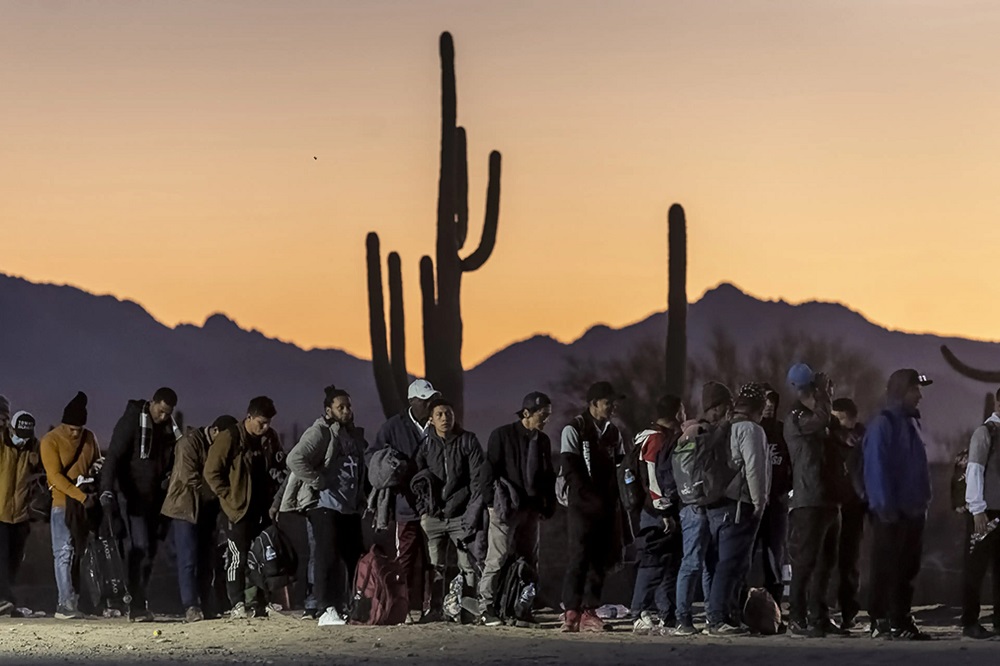
According to IPPR, deporting 20,000 migrants who have entered the UK since 2023 could cost between £1.1 billion and £3.9 billion. This means that the transfer of each migrant to Rwanda could cost around £228,000.
Marley Morris, an IPPR Associate director focusing on migration, trade, and communities, argued that deporting migrants to Rwanda would be more expensive for the UK government than supporting them within the UK.
He stated, “In this government program, billions will be sent to Rwanda to deport people who have arrived in the UK illegally since the passage of the law governing unauthorized migrants.”
A spokesperson for the UK’s Home Office criticized the IPPR’s figures as speculative and accused them of ignoring the facts and emphasized that without innovative solutions, the cost of housing migrants could reach £11 billion per year by 2026.
He argued that illegal migration endangers lives and fosters human trafficking, justifying the search for solutions to this long-standing issue.
The spokesperson further suggested that deporting migrants to Rwanda is a cost-effective measure aiming to prevent unauthorized entry into the UK.
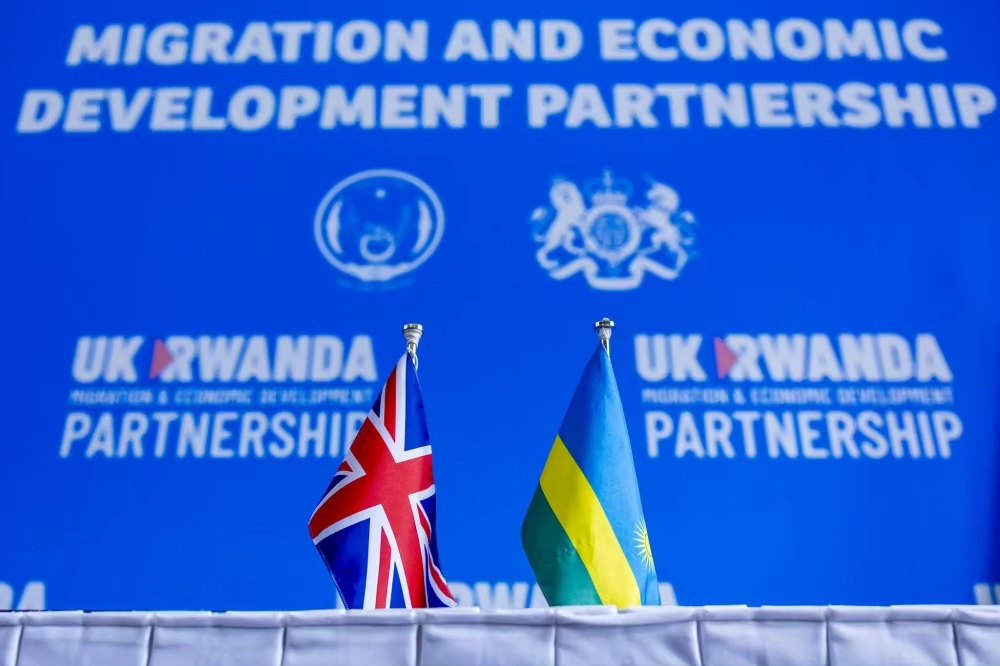
The strategy is part of an updated agreement between the UK and Rwanda signed in December 2023, intending to deport approximately 30,000 migrants to Kigali over five years.