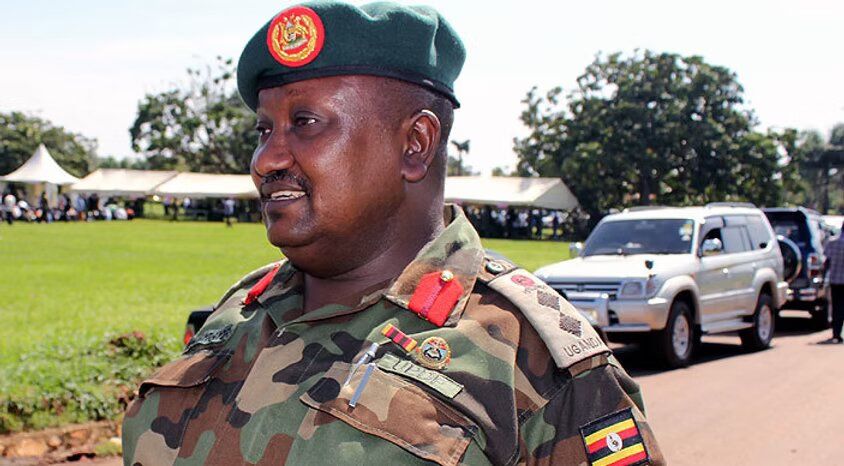
Museveni made the remarks on Thursday, July 25, 2024, while accusing “imperialists” of sponsoring the protests witnessed in the country on Tuesday, July 23, 2024.
In a statement shared on social media, the Ugandan Head of State said he had received credible intelligence that the protests were sponsored. He warned that he won’t allow “imperialists” to meddle with the internal affairs of Uganda.
“All those involved should know that Uganda is not a neo-colony where those shallow schemes can be deployed,” President Museveni stated.
Museveni noted that organizers and participants of the demonstrations were “planning very bad things” and the “evidence in court will shock many”.
“Those very bad things will come out in court when those arrested are being tried,” Museveni said as he lauded the security forces for foiling the demonstrations.
He argued that if the protests were patriotic, peaceful and coordinated with the police he would have been the first to join.
The President contrasted the failed protest with a past anti-corruption march in 2019 organized by Ugandan military officer Lt. Col. Edith Nakalema, saying he was ready to participate in a similar exercise.
“In the year 2019, Nakalema organized us and we marched from the city Square through Kampala Road to Jinja Road and went to Kololo. So many people were there- Bishops, Soldiers, Wanainchi, etc.
“…Nakalema can co-ordinate with the genuine anti-corruption fighters for a similar effort, especially on a Sunday,” he added.
He, however, emphasized that heavily populated suburbs in the country should never be used for demonstration as they will “damage the little wealth creation that our people are painstakingly building up”.
More than 70 youths accusing members of parliament of graft were arrested on Tuesday during a march to parliament.
The protesters stormed the streets of Kampala after drawing inspiration from weeks of youth-led protests in Kenya that forced President William Ruto to dissolve his cabinet and withdraw proposed tax hikes.
The Ugandan Head of State had warned against such demonstrations, saying those behind the plans were “playing with fire”.
“The Rusizi-Bugarama road was built in 2004 and was expected to last 15 years according to the initial study. This indicates that the road exceeded its designed lifespan in 2019, and since then, it has shown significant deterioration,” RTDA said in a statement.
RTDA is awaiting sufficient funds to comprehensively rebuild the road.
“While we await adequate funding for a durable reconstruction of this road, the current activity is ongoing maintenance to address the existing damage with the available budget.” reads the statement.
“In this regard, a 12-kilometer section of this road has been repaired, including filling potholes over a 7-kilometer stretch, building a 300-meter wall, and constructing a 2.4-kilometer segment in the Nzahaha area.”
RTDA’s announcement comes amid concerns from residents about the state of the road.
Aloys Hitimana, from Karagizwa Village, Kigenge Cell, Nzahaha Sector, told IGIHE that the dust on this road is troubling.
He said, “It’s a problem because the dust covers dishes, clothes, and fruit tree leaves. What we desire is for them to repair the road so we can get rid of the dust.”
Anne Marie Dusabe, a mother, voiced worries that the dust could lead to respiratory infections for both her and her children.
RTDA has stated that they are collaborating with other entities to rebuild the road, but in the meantime, they are focusing on repair works.
The implementation of these activities is expected to begin at the end of August 2024.
This came during the first preparatory committee meeting for the fourth International Conference on Financing for Development (FfD4), which is held in Addis Ababa, the Ethiopian capital, on July 22-26.
UN Secretary-General Antonio Guterres, addressing the meeting in a video message, highlighted the persistent challenges developing nations face and the imperative for ambitious global financial reforms.
The UN chief said the fourth International Conference on Financing for Development, which will be held in Spain next year, provides a unique opportunity to tackle these challenges head on.
“Together, we can deliver not only a financial system, but a world that is more just, equitable and sustainable,” said Guterres.
Calling on world leaders to adopt ambitious reforms to deliver affordable long-term financing at scale and deliver the SDG stimulus, Guterres said the upcoming conference is an opportunity to reform an international financial system that is “outdated, dysfunctional and unfair.”
He called for “maximum political will” to act and rescue the 2030 Agenda for Sustainable Development.
UN Deputy Secretary-General Amina Mohammed told the meeting the “disheartening reality” that only 17 percent of SDGs targets are on track, pointing to severe financial constraints facing developing countries.
“Many developing countries cannot invest in their future as they struggle to meet their immediate needs – paying salaries and meeting debt service,” Mohammed said. “The economic outlook for developing countries remains bleak. While the global economy has been described as resilient, there is a soft landing in the North but there is a crash landing in the South.”
She highlighted that the need for reform was evident in 2015, and the shocks since 2020 underline the urgency of delivering on commitments and creating an international financial architecture that can overcome global financial divisions.
“If we are to rescue the SDGs, we need much greater urgency, and much higher ambition,” Mohammed stressed, outlining six key areas for action — tackling the debt and development crisis, enhancing access to long-term, affordable financing, closing gaps in the global financial safety net, establishing a fair and effective international tax system, harnessing international capital markets, and responding to calls for global economic governance reform.
Ethiopia’s Finance Minister Ahmed Shide called on all stakeholders to exert concerted efforts in undertaking a comprehensive reform of the global financing system.
The preparatory committee meeting starts the process culminating with the FfD4 in Spain in June-July 2025. More preparatory committee sessions are scheduled to be held in New York in December and Mexico City in February next year.
In a continued effort to boost food security, the Rwandan government has been urging landowners to either make productive use of their agricultural land or hand it over to those who can cultivate it.
According to a ministerial order relating to temporary requisition of land and termination of land ownership contract issued on July 11, 2024, any agricultural land of five hectares or more that remains unused can be temporarily requisitioned.
Article 5 of the order allows the City of Kigali or any district with legal status to request the Minister to seize such unexploited land if it has been idle for at least one year without a reasonable excuse. If local authorities have previously notified the landowner to utilize the land, and there has been no compliance without a valid reason, the land can be seized. However, it is crucial to have evidence that these notifications reached the landowner.
Before any seizure, a 90-day notice is given to the landowner. If the landowner presents a plan to use the land within a year or leases it to someone capable of productive use, the seizure is halted. The order specifies that the temporary seizure lasts for three consecutive years for agricultural or livestock land and ten years for forestry land from the date the Minister notifies the landowner.
The seized land is managed by the Ministry responsible for land, but the Minister can assign it to individuals who have the capability to use it productively. This delegation can also be done to improve someone’s welfare upon request from the Mayor of the City of Kigali or the relevant district mayor.
Applicants seeking to utilize the requisitioned land must submit their plans to the City of Kigali or the district, demonstrating their technical and financial capability. They must also agree to compensate for any damage to existing property on the land. If the delegation aims to improve welfare, the government maintains the necessary infrastructure.
The order also allows landowners to terminate their land agreements if they no longer need the land. This can happen if the land is situated where basic infrastructure like roads, water, and electricity have been established, or where construction permits have been granted but the land remains unused for five consecutive years.
Additionally, land agreements can be terminated for land located in areas designated for land use and management plans or in model areas set by the Kigali City Council or district council.
Upon finding valid reasons for terminating a land agreement, the City of Kigali or the district submits a request to the Chief Registrar of Land Titles. If validated, the Chief Registrar issues a 90-day written notice to the landowner.
If the landowner fails to provide a valid reason for non-compliance within these 90 days, the agreement is terminated. The land is then assessed for value, and the new user compensates the former landowner for the infrastructure minus its cost. Subsequently, the land is registered in the new user’s name.
Prime Minister Édouard Ngirente announced President Paul Kagame’s decision to drop Dr. Mujawamariya from the Cabinet on Thursday morning, citing matters of accountability under investigation.
“Pursuant to the Constitution of the Republic of Rwanda, especially its Article 116; today, 25th July 2024, Dr. Jeanne d’Arc Mujawamariya has been dismissed from her position as Minister of Public Service and Labour (MIFOTRA) due to matters of accountability under investigation,” the Prime Minister announced.
Dr. Mujawamariya’s dismissal comes barely two months after she was appointed Minister of Labour.
The long-serving public officer, with a career spanning more than two decades in government, was among several ministers affected by a Cabinet reshuffle initiated by President Kagame on June 12, 2024.
She previously served as Minister of Environment for the Republic of Rwanda from 2019.
From 2013 to 2019, she served as the Ambassador of Rwanda to Russia. Prior to that, she had been the Vice Chancellor and Rector of the Kigali Institute of Science and Technology from 2011 to 2013.
From 2008 to 2011, she held the position of Minister in the Prime Minister’s Office in charge of Gender and Family Promotion.
She was the Minister of Education from 2006 to March 2008, and before that, from 2005 to 2006, she served as the Minister of State in Charge of Higher Education within the same ministry.
Between 2003 and 2005, she was the Minister of State for Primary and Secondary Education in the Ministry of Education of the Rwandan government.
Earlier in her career, from 2001 to 2003, she worked as a lecturer of Physical Chemistry in the Faculty of Education, Department of Biology and Chemistry at the National University of Rwanda.
In a historic moment in the cause of Palestinian liberation, as descried by Chinese Foreign Minister Wang Yi, the Palestinian factions inked a declaration on ending divisions and strengthening unity.
In the Beijing Declaration, they agree to realize national unity among all factions within the framework of the Palestine Liberation Organization (PLO).
Experts that CGTN spoke to applauded the significance of the Declaration and called it another major diplomatic victory for China’s dedication to promoting peace in the Middle East following the detente between Saudi Arabia and Iran through Beijing’s mediation in March 2023.
{{Milestone in intra-Palestinian reconciliation}}
Speaking at the closing meeting of the reconciliation dialogue among Palestinian factions on Tuesday, Wang said the most important consensus reached at the dialogue is to achieve grand reconciliation and unity among the 14 factions.
The core outcome is to make clear that the PLO is the sole legitimate representative of all the Palestinian people, said Wang, also a member of the Political Bureau of the Communist Party of China (CPC) Central Committee.
The most significant highlight is the agreement to form an interim national reconciliation government focusing on the post-war governance of Gaza, and the strongest call is for the creation of a truly independent Palestinian state in accordance with relevant United Nations (UN) resolutions, Wang said.
The Chinese foreign minister extended his congratulations on the success of the Beijing dialogue and the signing of the Beijing Declaration.
Speaking to CGTN’s Global Watch, Rong Ying, a senior research fellow at the China Institute of International Studies, said that the signing of the Beijing Declaration is a milestone for Palestine’s internal reconciliation.
This is the first time since the start of the Palestine-Israel conflict on October 7, 2023, that Palestinian factions have reached a reconciliation agreement, Rong noted.
The reconciliation is an essential step for Palestine to speak with one voice in the international community, said Yu Guoqing, professor at the Chinese Academy of Social Sciences and executive director of the Chinese Association of Middle East Studies.
It is also a major step towards ending the current conflict in Gaza, realizing a ceasefire and making post-war arrangements, Yu told CGTN.
Moreover, it marks an indispensable step towards the realization of a Palestinian state on the basis of the two-state solution, he stressed.
In a third-step approach unveiled on Tuesday, China also proposed to promote Palestine to become a full member of the UN.
Palestine has been a non-member observer state at the UN since November 2012. By June 2024, it had been recognized as a sovereign state by nearly 150 countries, with China among the first to do so.
{{China’s peace efforts}}
The latest round of talks came after Fatah, the Palestinian National Liberation Movement and the largest faction of the multi-party PLO, and Hamas, the Islamic Resistance Movement that runs Gaza, held talks on promoting intra-Palestinian reconciliation in Beijing at the end of April.
It also marked the first time that the 14 Palestinian factions gathered in Beijing for a reconciliation dialogue. At Tuesday’s closing meeting, Mahmoud al-Aloul, Fatah’s deputy chief and head of its delegation, and Moussa Abu Marzouk, who leads the Hamas delegation, gave speeches.
It is not easy logistically for representatives of all 14 factions to meet in Beijing since they reside in different places, some in the West Bank and others overseas, according to Yu.
“At present, I believe only China is able to bring together these factions, whose stances vary,” he said.
Yet it is only natural for China to make the get-together happen because Beijing has long been sincerely pushing for peace among different Palestinian factions, with an eye on the resolution of the Palestine issue, Yu added.
In the Beijing Declaration, the factions also expressed their appreciation for China’s sincere efforts to support the rights of the Palestinian people, end Palestine’s division and accommodate different stances.
“That speaks volumes for China’s image,” said Yu. “China seeks no interests for itself when it comes to Middle East issues.”
It shows the world once again that China, as a permanent member of the UN Security Council and a responsible major country, is practicing the concept of building a community with a shared future for mankind and the Global Security Initiative in the Middle East with real actions, he said.
China is contributing to the lasting security and peace in the Middle East and to the region’s development in the future, said Yu.
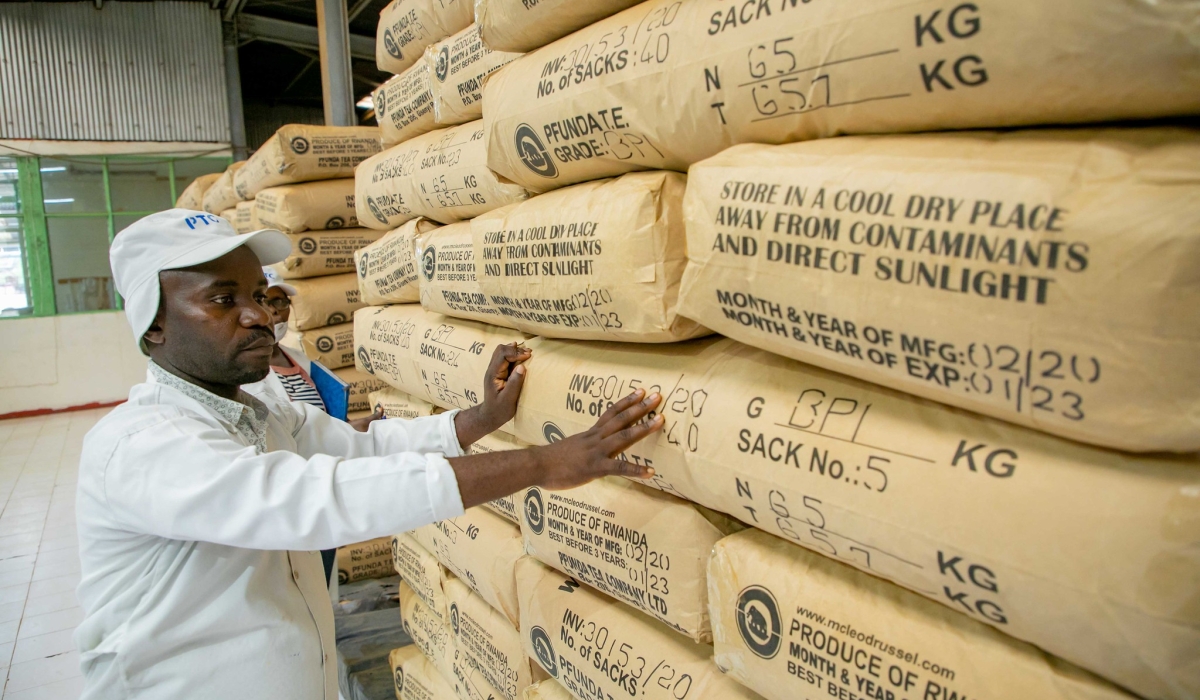
This facility inaugurated on July 24, 2024 has the capacity to process up to 650,000 liters of milk daily and receives 50,000 liters of milk per hour.
Speaking at the event, Ngirente emphasized that the new factory will significantly benefit farmers and herders while advancing the country.
He highlighted that the factory’s capacity to process and store 650,000 liters of milk per day ensures a steady market for herders’ milk, reducing waste.
“It will address the milk market issue, particularly for the herders’ milk we want to prevent from going to waste,” he stated.
Rwanda’s milk production increased from 776 million liters in 2017 to over a billion liters in 2023.
Ngirente urged livestock farmers to increase milk production by raising high-yield cows and using modern grass seeds.
He also stressed the importance of addressing livestock diseases collectively, assuring continued government support.
Standard guidelines stipulate that supplied milk is first inspected to ensure it meets quality standards, then filtered and cooled to 4 degrees Celsius before being stored.
Arsene Ntazinda, the Milk Powder Plant Manager, explained that the facility has two reception areas for milk, each capable of handling at least 25,000 liters.
The milk must be transported in specialized vehicles and then processed to separate the cream, resulting in distinct cream and milk products.
Ntazinda mentioned that milk consists of 87-90% water. During processing, the water is evaporated, leaving 10-12% of the original milk volume.
The plant uses technology to ensure that the milk’s nutrients are preserved during processing. The water removed from the milk is treated to be environmentally safe and is used for irrigation and other plant operations.
The plant has two state-of-the-art laboratories: A Physico-Chemistry Lab and a Microbiology Lab, which provide results within 24 hours.
“Normally, results might take 48 hours to five days, but here we receive them very quickly,” Ntazinda stated.
James Biseruka, the Managing Director of Inyange Industries, highlighted that the plant sources milk from across the country, producing goods for both domestic and international markets.
“We can process 650,000 liters of milk from across the country, and it’s exciting that our nation is now entering the international market. Unlike before, when we imported powder milk, Inyange now produces it locally,” he said.
Biseruka revealed that over $54 million has been invested in the plant. Since April 2024, the plant has processed 4.2 million liters of milk sourced nationwide.
“This investment has provided farmers with reliable market for their milk,” he emphasized.
Biseruka also mentioned that the products made at the plant would reduce the need for some imports.
“This plant allows us to cut down on imports and provides alternatives to imported milk powder.”
Besides milk powder, the Inyange Milk Powder Plant also produces ghee, cheese, and other dairy products. The milk powder is packaged in 25kg and 50kg bags, primarily for industrial use. It is designed to reconstitute into liquid milk when mixed with water.
Biseruka emphasized that Inyange Industries continually drives innovation, with its daily operations requiring packaging materials, chemicals, and other supplies that foster the growth of related industries.
The plant, equipped with advanced technology, employs 270 workers, and farmers supplying milk have been paid Rwf1.3 billion since April 2024.
The construction of the milk powder factory in Nyagatare Sector, Rutaraka industrial zone, began in October 2021.
“My deepest sympathies to Prime Minister Abiy Ahmed Ali and the victims of the devastating landslides that have claimed hundreds of lives in southern Ethiopia. Rwanda stands in solidarity and support with the people of Ethiopia during this difficult time,” President Kagame posted on his X handle.
According to media reports, the landslides occurred on Sunday evening and Monday morning, triggered by heavy rains in the remote mountainous area of the Gofa zone in Southern Ethiopia.
Local authorities have reported that the search for survivors is “continuing vigorously,” but warned that the “death toll could rise.”
The Communications Affairs Department in Ethiopia disclosed that at least 148 men and 81 women were killed in the Kencho-Shacha locality in the Gofa Zone on Monday.
In May 2024, floods affected more than 19,000 people across several zones in Ethiopia, displacing over 1,000 and causing significant damage to livelihoods and infrastructure.
In 2017, at least 113 people died when a huge Stack of rubbish collapsed in a landfill on the outskirts of Addis Ababa.
Rwanda has also experienced similar tragedies. On the night of Tuesday, May 3, 2023, heavy rains led to floods and landslides that claimed over 130 lives.
However, the region has witnessed other devastating landslides.
In February 2010, mudslides in the Mount Elgon region of Eastern Uganda killed more than 350 people. The deadliest landslide in Africa occurred in Sierra Leone’s capital, Freetown, in August 2017, where 1,141 people died.
In a twist of events, Ruto handed critical dockets including Finance, Energy and Mining, to opposition leader Raila Odinga’s allies in what has been perceived as an attempt to appease the protesters demanding radical changes in government.
Addressing the media at State House, Nairobi, Ruto hoped his new cabinet would revive efforts to deflate anti-government protests that have been going on for weeks.
President Ruto nominated the chairman of the ODM party, John Mbadi, as Cabinet Secretary for National Treasury and Economic Planning (Finance). He also picked ODM deputy leaders Wycliffe Oparanya and Ali Hassan Joho to head plum dockets previously held by his loyalists.
Oparanya has been nominated to head the Ministry of Co-operatives and Micro, Small, and Medium Enterprises (MSMEs) Development, while Joho will be in charge of the Ministry of Mining, Blue Economy, and Maritime Affairs.
Minority Leader Opiyo Wandayi, also a senior member of Odinga’s ODM party, has been nominated as Cabinet Secretary for Energy and Petroleum.
Seven more new appointments were made in addition to the [11 that Ruto announced last week->https://en.igihe.com/news/article/president-ruto-retains-6-ministers-in-new-cabinet-appointments#:~:text=They%20are%20Kithure%20Kindiki%20(Interior,takes%20over%20the%20Roads%20docket.].
Salim Mvurya was moved from the Ministry of Mining and Blue Economy to the Ministry of Investments, Trade, and Industry. Kipchumba Murkomen is set to become the Minister of Youth Affairs, Creative Economy, and Sports after a stint at the Road and Transport docket.
Former Trade Minister, Rebecca Miano, will be in charge of the Tourism and Wildlife portfolio.
Alfred Mutua has been nominated to head the Ministry of Labour and Social Protection, while former Attorney General Justin Muturi has been nominated to head the Ministry of Public Service and Human Capital Development. Stella Soi Lang’at is set to take over as the new Minister for Gender, Culture, the Arts, and Heritage.
The ODM party is the main opposition party in Kenya. It is also the largest party in the Azimio la Umoja – One Kenya coalition, which was formed in the run-up to the 2022 presidential elections.
The Ministry of Finance and Planning recently found itself at the center of the Kenyan protests after drafting the Finance Bill 2024, which sought to raise $2.7 billion local revenue through collection of additional taxes.
Former Prime Minister, Raila Odinga last week opposed calls for President Ruto to resign over government failures and instead called for dialogue to resolve the issues raised by the youth.
While announcing the additional members of the cabinet, Ruto promised to tackle corruption in government by undertaking stringent measures.
“I will be proposing the amendment of the Evidence Act, Criminal Procedure Code, as well as other necessary changes, to expedite and prosecute corruption cases within six months,” he said.
Additionally, the president pledged to propose amendments to the Witness Protection Act to protect and incentivize whistleblowers as well as enhance witness protection.
Sources say that Nemeyimana, on the night of July 23, 2024 staked to drink 13 bottles of the local brew that had been bought for him. Unfortunately, after consuming 11 bottles he accepted defeat and decided to go home only to be discovered dead on the roadside.
It is suspected that his death resulted from the effects of excessive quantities of the brew. The incident occurred in Rugerero Village, Muhambo Cell, Cyumba Sector.
An eye witness who spoke on condition of anonymity narrated that Nemeyimana was reportedly seen at a bar that night, where he accepted a bet from a 24-year-old acquaintance to drink 13 bottles of Nesha.
“After consuming 11 bottles, he began to feel weak and chose to go home. He was later found lying dead on the roadside near a church,” the eye witness said.
SP Jean Bosco Mwiseneza, spokesperson for the Rwanda National Police in the Northern Province has said that individuals suspected of any involvement in Nemeyimana’s death have been apprehended.
“An investigation is underway to determine the exact cause of death. Two individuals suspected of being responsible have been taken into custody and handed over to the Byumba RIB station,” he stated.
SP Mwiseneza urged the public to report any potential risks to safety promptly. The deceased’s body has been taken to Byumba Hospital for an autopsy.