Expected to conclude on October 29, 2024, approximately 60 witnesses are expected to testify during the trial.
Rwamucyo, 63, previously headed the Public Health Department at the National University of Rwanda (UNR) and worked as a doctor in Lille before relocating to Maubeuge, France. He also practised medicine in Belgium.
Rwandan prosecution accuses Rwamucyo of forming death squads, inciting people to commit genocide, providing weapons for the killings, and taking Tutsi women and girls hostage.
In September 2009, a Gacaca court sentenced him to life imprisonment in absentia after determining that his crimes were connected to the 1994 Genocide against the Tutsi.
French prosecutors have charged Rwamucyo with genocide, complicity in genocide, involvement in planning genocide, crimes against humanity, and conspiracy to commit genocide.
Emmanuel Daoud, a lawyer representing the human rights organizations LDH and FIDH, stated that Rwamucyo committed these crimes as he openly supported the government that planned the genocide.
“He was openly anti-Tutsi and publicly expressed his support for the genocidal government,” Daoud said.
However, Dr. Rwamucyo’s lawyer, Philippe Meilhac, has maintained that his client is innocent of the charges.
Rwamucyo was arrested by Interpol in May 2010 but was released on bail after four months.
The Court of Appeal in Versailles ruled that he would stand trial in France due to his French citizenship.
If found guilty, he could face life imprisonment.
Rwamucyo’s trial is the eighth in France related to the 1994 Genocide against the Tutsi in Rwanda, which claimed the lives of more than one million people.
The Office of the Prime Minister announced these appointments on the evening of Monday, September 30, 2024.
Among other significant appointments, Michelle Byusa has been named Permanent Secretary in the Office of the Prime Minister, while Irene Murerwa succeeds Michaella Rugwizangoga as Chief Tourism Officer at RDB.
Jules Ndenga has been appointed CEO of Aviation Tourism Logistics (ATL), while Eva Nishimwe is the new Managing Director of Rwanda Airports Company (RAC).
Additional appointments include Isabelle Mugwaneza as Strategic Advisor in the Ministry of Foreign Affairs, Marie Mediatrice Umubyeyi as Executive Secretary of the National Women’s Council (NWC), and Brave Ngabo as Executive Secretary of the National Youth Council.
On Monday, Nduhungirehe reacted to an article published by Africa Intelligence, which claimed that during a recent ministerial meeting in Luanda, Angola, the DRC had requested Rwanda withdraw its forces and the M23 rebels before signing an agreement aimed at combating the FDLR.
Minister Nduhungirehe dismissed the claims as false, explaining that during the discussions in Luanda on September 14, 2024, M23 was not part of the agenda.
“This is false information spread by ill-intentioned officials. During the 4th Ministerial Meeting under the Luanda Process, held in Angola on September 14, 2024, military and intelligence experts from all three countries, including the Head of Military Intelligence from the DRC, reiterated their support for the harmonized plan they had adopted in Rubavu on August 29-30, 2024, to neutralize the FDLR and lift Rwanda’s defensive measures. They all three requested the Ministers to endorse it,” Nduhungirehe said.
The intelligence experts who convened in Rubavu had proposed steps to neutralize the FDLR, a group Rwanda sees as a long-standing threat to its security, due to its close cooperation with the Congolese army (FARDC).
The Rubavu meeting, attended by DRC intelligence officials, resulted in conclusions meant to be ratified by the ministers in Luanda, with DRC representatives initially in agreement.
However, Nduhungirehe explained that upon arrival in Luanda, the situation shifted. The DRC’s Foreign Minister, Thérèse Kayikwamba Wagner, refused to sign the conclusions reached by the experts regarding the eradication of the FDLR.
“This plan was endorsed by the Foreign Ministers of Angola and Rwanda. However, the DRC’s Foreign Minister alone rejected the harmonized plan and opposed a new meeting of experts proposed by the facilitator for September 30 to October 1, 2024, to develop a concept of operations [CONOPS] for the plan,” Nduhungirehe stated.
Regarding claims of discussions about M23 withdrawing from Congolese territory, Nduhungirehe dismissed these as baseless.
“There was no plan discussed for the withdrawal of M23 from Congolese territory, a territory that is also theirs,” he noted.
DR Congo’s reluctance has reportedly delayed further meetings aimed at restoring relations between the two countries.
In a statement issued on Monday, September 30, 2024, the agency announced that it is deploying experts to assist Rwanda’s investigation and response to the Marburg outbreak.
“The staff will use experience from responding to outbreaks of Marburg virus disease and similar diseases in other countries to support epidemiology, contact tracing, laboratory testing, disease detection and control along borders, and hospital infection prevention and control,” the statement reads in part.
The CDC is part of the United States Department of Health and Human Services (HHS) and is headquartered in Atlanta, Georgia. Its primary role is to protect public health by controlling and preventing the spread of diseases, particularly infectious diseases. It also addresses health issues related to non-communicable diseases, environmental health, occupational safety, injury prevention, and health promotion.
The agency established its office in Rwanda in 2002 and has, over the years, worked with the government to strengthen health systems and prevent communicable diseases. This includes training scientists through the Field Epidemiology Training Program (FETP), which enhances Rwanda’s capacity to investigate disease outbreaks.
The CDC has also collaborated closely with the Rwandan government to implement the President’s Emergency Plan for AIDS Relief (PEPFAR) and the President’s Malaria Initiative, co-implemented by the United States Agency for International Development (USAID).
The agency noted that these past investments and partnerships have strengthened core capabilities, which can now be utilized in response to the current outbreak.
Rwanda confirmed its first-ever Marburg outbreak four days ago, with 26 cases and eight deaths reported as of Sunday, September 29, 2024.
The government has since announced measures to curb the spread of the virus, including the suspension of hospital visits, the banning of wakes and home vigils (locally known as Ikiriyo) in cases of death caused by Marburg, and the restriction of burials related to Marburg deaths to a maximum of 50 people.
Additionally, all healthcare facilities have been directed to implement a protocol for receiving and providing services to clients exhibiting symptoms of Marburg disease through the strict application of infection prevention and control (IPC) measures.
According to Boona FM, the incident occurred on Sunday, September 29, 2024, in Kamonyi Village, Northern Division of Kisoro Municipality, Uganda.
Ntirivamunda, in his 40s, had gone to a local bar to purchase meat, which he shared with his visiting daughter.
Witnesses said that, after consuming the meal, a piece of meat became lodged in Elias’ throat, causing him to lose consciousness and tragically die on the spot.
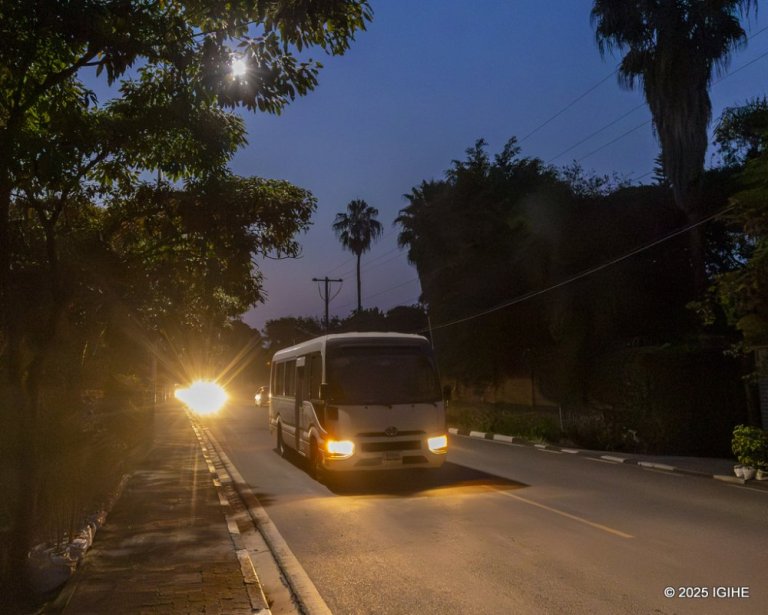
The survey highlights that public transport is more commonly used in urban areas, with 25.9% of employed people in the City of Kigali relying on it for their commute.
In contrast, the usage of public transportation is notably lower in rural areas, where only 2.6% of employed individuals use it.
According to the survey, 8.3 million of Rwanda’s 13.2 million population are of working age, with 4.3 million currently employed.
Among those employed in Kigali, over 61% commute on foot, while 12.7% use personal vehicles.
In March 2023, the Rwandan government introduced 12 new public transport routes in Kigali, increasing the total number to 79.
The recent addition of 200 new buses has helped ease congestion at bus stations, particularly during peak hours when commuters are traveling to and from work.
In other urban areas, 75.3% of workers also walk to work, and 10.2% rely on private means of transportation.
In rural areas, only 5% of workers use private cars, with a mere 2.6% utilizing public transport.
The visit to the country was confirmed by Foreign Affairs Minister Olivier J.P. Nduhungirehe and the office of Latvia’s President, Edgars Rinkēvičs, on Monday, September 30, 2024.
Nduhungirehe described the visit as historic as it marks the first official visit by a Rwandan president to the Baltic States, which comprise Latvia, Estonia, and Lithuania. It is also the first official visit by an African president to Latvia.
During the visit, President Kagame will meet with Latvia’s highest-ranking officials, including President Edgars Rinkēvičs, Speaker of the Saeima (the Parliament of the Republic of Latvia), Daiga Mieriņa, and Prime Minister Evika Siliņa.
Additionally, during President Kagame’s visit, a memorial plaque dedicated to the victims of the 1994 Genocide against the Tutsi in Rwanda will be unveiled at the Latvian National Library on Wednesday, October 2, 2024.
Talks between Presidents Kagame and Rinkēvičs will focus on bilateral relations between Rwanda and Latvia, current security challenges in Africa and Europe, and cooperation within international organizations.
The two heads of state last met at the 78th session of the UN General Assembly in New York in September 2023. At that meeting, they discussed Rwanda’s regional engagements in Africa, particularly in peace efforts in Mozambique and the Central African Republic, as well as its involvement in UN peacekeeping missions.
President Rinkēvičs expressed Latvia’s appreciation for Rwanda’s firm stance on protecting international law and voiced interest in educational cooperation.
Latvia, located in northeastern Europe, is one of the smaller countries on the continent, covering an area of 64,589 square kilometers. It shares borders with Lithuania to the south and Estonia to the north and has a population of approximately 1.88 million people.
The country gained independence from the Soviet Union in 1991 after decades of occupation. Latvia’s landscape features rolling hills, dense forests, and sandy beaches along the Baltic Sea coast.
Riga, the capital and largest city of Latvia, is renowned for its stunning architecture, which includes Art Nouveau buildings and medieval churches. The official language, Latvian, is a Baltic language with ancient roots.
The forum gathered key government representatives and business leaders, including Hazza AlQahtani, UAE Ambassador to Rwanda, and John Mirenge, Rwanda’s Ambassador to the UAE. The event was also attended by several Rwandan business owners operating in the UAE, and UAE investors with interests in Rwanda.
In his keynote address, Amb. AlQahtani emphasized the robust and developing relationship between the UAE and Rwanda.
“It is my privilege to welcome you to this important platform for the business communities of the UAE and Rwanda. This forum reflects our shared ambition to strengthen commercial ties, foster innovation, and create sustainable economic growth for both nations”.
Amb. AlQahtani outlined the strategic opportunities available for Rwandan businesses across various sectors, including real estate, renewable energy, technology and logistics.
“The UAE offers a dynamic and globally recognized business environment. With a strategic location, world-class infrastructure, and a government committed to economic diversification, we present an attractive destination for international investments,” he said.
Amb. AlQahtani highlighted the UAE’s ongoing efforts to solidify its position as a global economic hub, noting that the country’s non-oil foreign trade reached AED 1.4 trillion in the first half of 2024; a 25% increase in exports.
He also stressed the UAE’s ambitious goal of achieving AED 3 trillion in non-oil trade by the end of 2024.
“This demonstrates our commitment to fostering long-term economic prosperity, and Rwanda can play a significant role by capitalizing on opportunities across sectors such as AI, agri-tech, and renewable energy,” Amb. AlQahtani added. “By identifying synergies between our economies and addressing any challenges that may impact the growth of bilateral trade, we can pave the way for more robust collaboration.”
He encouraged Rwandan entrepreneurs to explore emerging industries, particularly in the fields of green technology, advanced manufacturing, and smart agriculture.
On behalf of Rwanda, Amb. John Mirenge reiterated the country’s enthusiasm for welcoming UAE investments.
“Rwanda is committed to supporting UAE businesses that are looking to establish or expand their presence in our country. While we have seen positive developments, there is room for much more, and I strongly encourage more UAE businesses to consider Rwanda as a prime destination for growth,” Mirenge said, calling for a concerted effort to elevate bilateral trade to new heights. He encouraged Rwandan entrepreneurs to explore emerging industries, particularly in green technology, advanced manufacturing, and smart agriculture.
Leading the physical delegation in Kigali was Juliana Muganza, Deputy CEO of the Rwanda Development Board (RDB), alongside representatives from the Private Sector Federation (PSF), the National Agricultural Export Development Board (NAEB), and the Ministry of Trade and Industry.
In her remarks, Muganza emphasized the growing importance of UAE-Rwanda partnerships and the critical role these partnerships play in driving Rwanda’s Vision 2050 agenda.
“We have laid a solid foundation for foreign investment, and we are confident that collaborations like these will continue to unlock new opportunities for growth and development in both nations,” she said.
The forum also featured participation from key UAE institutions including the Ministry of Foreign Affairs, the Ministry of Economy, the Fujairah Chamber of Commerce and Industry, and the Ras Al Khaimah Chamber of Commerce & Industry, with officials sharing insights into the UAE’s strategic sectors, including AI, food security, and logistics.
Both Rwandan and UAE officials expressed optimism for the future of trade and investment between the two nations. This platform has once again demonstrated that the partnership between Rwanda and the UAE is not only resilient but has considerable also filled with boundless potential to develop further.
“We look forward to seeing more initiatives that will strengthen our economic ties and contribute to the prosperity of our people,” Muganza concluded.
With both countries already seeing tangible benefits from their cooperation, the meeting solidified the foundation for deeper collaboration, offering Rwandan businesses a gateway to one of the world’s most vibrant economies while presenting UAE investors with new opportunities in Rwanda’s rapidly expanding market.
The 21-year-old software engineers’ AI project, dubbed Bwenge, was ranked first among 18 projects reviewed by judges in the 48-hour competition on Sunday, September 29, 2024, securing them Frw 5 million in cash prizes and VIP passes to the Global AI Summit on Africa in April 2025.
Bwenge is an AI-powered chatbot that allows any citizen with a phone, even without internet access, to make a call and access digital government services. The bot has been integrated with IremboPay, a payment solution for Rwanda’s one-stop shop for government services, to ensure seamless payments.
“You can ask the bot how to do things, for example, how to start a business in Rwanda, and it will provide you with a detailed guide,” Izabayo explained.
“You can also request an SMS on how to pay for an application, and it will send you a direct text. You can then call, and the system will prompt you to make a payment through mobile money (MOMO).”
Another interesting feature of the chatbot is its telephone agent, which allows two people who speak different languages to have a conversation on a call, with the bot translating for each of them.
Izabayo and Clarence are graduates of the Rwanda Coding Academy and work at Pivot Access and Rwanda Social Security Board (RSSB), respectively. The two young software developers could not contain their excitement after winning the top prize on their very first attempt at such a competition.
“This journey was really interesting; it showed us what we can accomplish in less than 48 hours. We were thinking about what we could do to provide value to the whole Rwandan society, especially for those who don’t have access to the internet,” Clarence beamed, adding that ironically they were among the last groups to apply for the hackathon, just a few hours before the application deadline.
The duo is open to collaborating with other partners to implement and explore other ideas leveraging artificial intelligence.
“We have the ability to do more things. Now we are using a phone, but one can use WhatsApp to send requests. The possibilities are endless,” Izabayo concluded.
Peter Charles Djomga, Director of Software Engineering at Irembo, said the project has the potential to revolutionize access to information, especially for persons with limited internet access.
“The project can have a huge impact in Rwanda because the way it’s deployed allows people without internet to access information by just calling a phone number. It can have a huge impact in urban and rural areas,” Djomga stated, emphasizing that the pioneering event was organised to create solutions that address real-world challenges and drive meaningful impact in Rwanda.
The second place went to a team of four developers with a technology titled Immersive AI. It’s a platform that enables businesses and individuals to create their own AI workflow agents to automate processes and improve productivity. The project developers included Dirac Murairi, Landelin Gihozo, Julien Barezi and Kevin Nkusi.
Somatek AI clinched the third place. The project was also undertaken by group of four young software developers, who built an AI-powered browser extension that simplifies complex technical documentation. The team, comprising Janvier Ntwali, Laura Celine Ishimwe, Dean Daryl Murenzi, and Leny Pascal Ihirwe, developed the extension to assist the government in its recently rolled-out scheme to train one million coders under the second National Strategy for Transformation (NST2) by 2029.
“Given that most Rwandan youth are low-proficient English speakers, we decided to create a solution for them to transcribe technical documentation to their level for better understanding and learning experiences,” the team explained.
The two teams won Frw 2 million and Frw 1 million, respectively.
In developing practical AI solutions, the participants leveraged large language models (LLMs) and locally built technologies. Teams had the opportunity to access IremboPay APIs to integrate cutting-edge digital payment solutions into their projects. Pindo, a partner of the event, also provided access to its latest speech-to-text and text-to-speech AI models for voice-enabled applications.
Twenty teams comprising 63 individuals were initially selected to participate in the competition from a pool of more than 130 teams, but only 18 teams made it to the final stage and had their projects reviewed by a panel of eminent judges from Irembo, C4IR, and RSSB, among other partners.
Esther Kunda, the Director General of Innovation & Emerging Technologies at the Ministry of ICT and Innovation in Rwanda and Alain Ndayishimiye, Project Lead for AI/ML at C4IR Rwanda, were among the judges.
Ndayishimiye commended the dedication of all the teams in the competition, highlighting the creativity in their projects.
“Over the past 48 hours, we have witnessed remarkable technical ingenuity, creativity, and collaboration, turning many ideas into real MVPs that address some of the country’s most pressing challenges,” he remarked.
He emphasized that every participant, irrespective of the contest’s outcome, should take pride in their accomplishments and push themselves to achieve even more.
“Regardless of the results, you should be proud of your achievements. We look forward to more initiatives like this, aligned with the AI policy, to support local talent and foster meaningful change,” he added.
Rwanda confirmed its first-ever Marburg outbreak five days ago with 26 cases and eight deaths registered as of Sunday September 29, 2024.
To control the further spread of Marburg, the Ministry of Health announced on Sunday night that only one caregiver would be allowed per patient at a time.
All healthcare facilities have been directed to implement a protocol for receiving and providing services to clients exhibiting symptoms of Marburg disease through the strict application of infection prevention and control (IPC) measures.
Other new measures introduced include the banning of wakes and home vigils, locally known as ‘Ikiriyo’, in cases of death caused by Marburg.
Additionally, funeral services for those who have died from Marburg will be limited to no more than 50 attendees.
The government also stated that in the wake of the MVD outbreak, open-casket viewings will not be permitted in homes, churches, or mosques. These will only be held in designated areas within health facility premises, and with a limited number of people.
Furthermore, the Ministry of Health emphasized that normal business and activities will continue, with a strong focus on reinforcing personal hygiene measures.
The ministry urged the public to avoid close contact with symptomatic individuals. The main symptoms of the virulent disease are high fever, severe headaches, muscle aches, vomiting, and diarrhoea.
“By diligently following these guidelines, each one of us is making an invaluable contribution to protecting ourselves and each other,” the Ministry stated, adding that additional measures will be announced in the coming days.
Earlier on Sunday, Health Minister Dr. Sabin Nsanzimana said the government had identified approximately 300 people who had contact with infected individuals, all of whom are being tested to determine whether they are infected.
“We have many contacts, and the number continues to grow as we trace them. Nearly 300 people have been identified so far, and that number may increase because the interactions vary. They might have had casual contact, such as greeting each other, or closer contact, like caring for or being a patient,” Minister Nsanzimana added.
The contacts include both those who live with the infected and others from different areas.
The minister urged the public to stay calm and continue their daily activities as usual, reassuring them that the measures being taken to combat the MVD outbreak are promising.