The date, officially recognized by the United Nations as the International Day of Reflection on the Genocide, holds deep meaning for the Rwandan community.
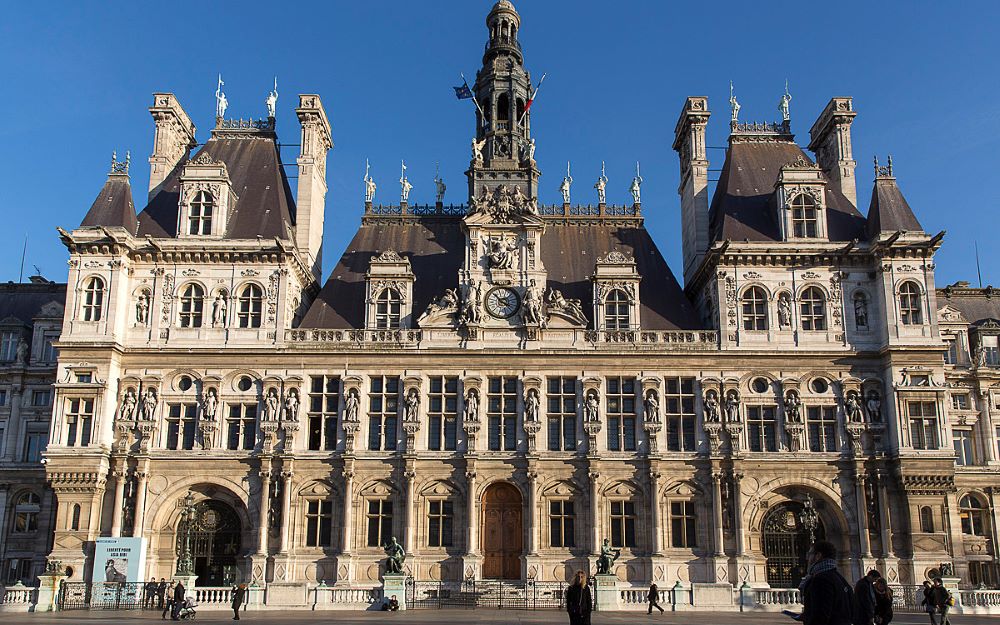
The President of the Rwandan diaspora in France, Rwanda’s Ambassador to France, François Nkulikiyimfura and representatives of survivor organizations, had raised concerns with the mayor, warning that the event could undermine genocide remembrance efforts.
Critics of the concert say some of the scheduled performers, including Maître Gims and Youssoupha, have previously expressed controversial views about Rwanda, adding to the tension already present between the Rwandan and Congolese communities in Paris.
While the concert was allegedly intended to raise funds for children affected by conflict in eastern Congo, UNICEF France, the intended beneficiary, has declined to be associated with the event if it goes ahead on April 7, citing the significance of the date.
The Mayor’s office, in a statement released on March 25, said the concert’s timing was inappropriate and risked disturbing public order, especially in light of recent hateful rhetoric targeting Rwandans and Tutsis circulating online.
Authorities also noted that protests had already been planned should the event proceed as scheduled.
Hidalgo formally requested the Prefect of Police to prohibit the concert, emphasizing the potential for disruption and the need to respect the day of mourning and remembrance.
The event was organized by HWPL (Heavenly Culture, World Peace, Restoration of Light), a South Korea-based peace organization, under the theme “Building Bridges for Korean Reunification: Establishing Legal and Practical Frameworks for Peace.”
It brought together approximately 1,000 domestic and international leaders to present a unified plan for nationwide peace and reunification.
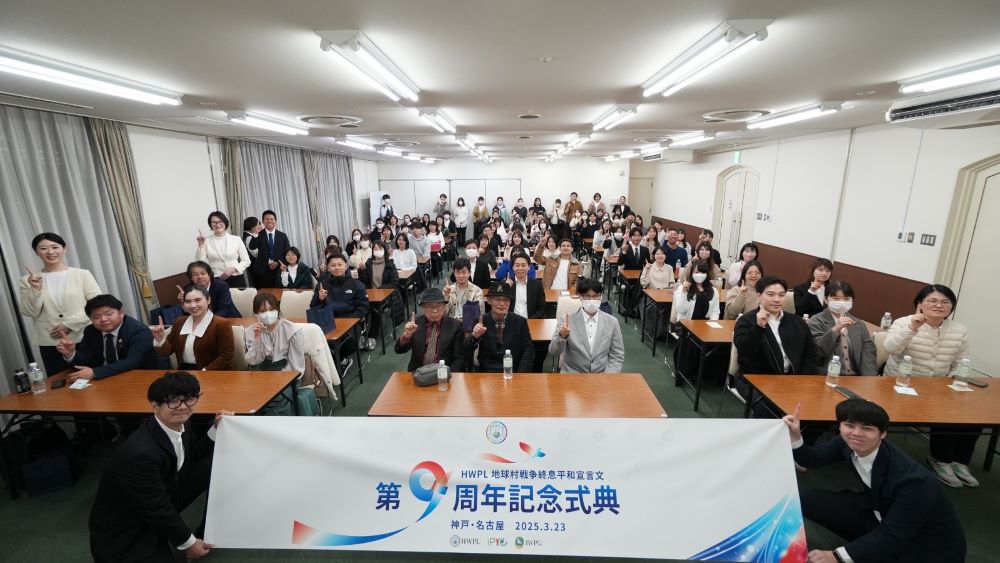
On March 23, a commemorative ceremony took place in Osaka, Japan, gathering around 80 peace advocates, citizens, and HWPL members who came together to express their shared aspiration for global peace.
Since its proclamation on March 14, 2016, the DPCW has served as the foundation for HWPL’s global peace-building efforts. The 10-article, 38-clause document was developed in collaboration with legal experts from 15 countries and provides a robust legal framework to prevent and resolve conflicts while promoting a culture of peace.
The Osaka ceremony opened with a reflection on the significance of the DPCW and its origin in South Korea. Attendees were offered an in-depth look into the legal foundations of the DPCW and its growing influence in the international peace community. The event also underscored the importance of active participation by individuals, communities, and governments in creating lasting peace.
Leaders from HWPL’s Kobe and Nagoya branches shared their plans for future activities, emphasizing the organization’s intent to expand its peace efforts throughout Japan. The announcement further encouraged participants and strengthened expectations for continued collaboration.
Additionally, the event featured a membership registration drive and a petition in support of the DPCW. Attendees engaged meaningfully by writing and sharing heartfelt peace messages.
One of the guest speakers, Mr. Morimoto Tadanori, Yamato Takada City Representative from the Nara Prefectural Japan-North Korea Friendship Association, remarked, “It was truly inspiring to witness how people can come together in the shared mission of promoting peace. And it would be wonderful to see more young people from Japan actively participating in these events. Their involvement is crucial in shaping a peaceful future for all.”
HWPL plans to expand peace initiatives actively in Japan and strengthen collaboration with various organizations and individuals to advance international peace efforts.
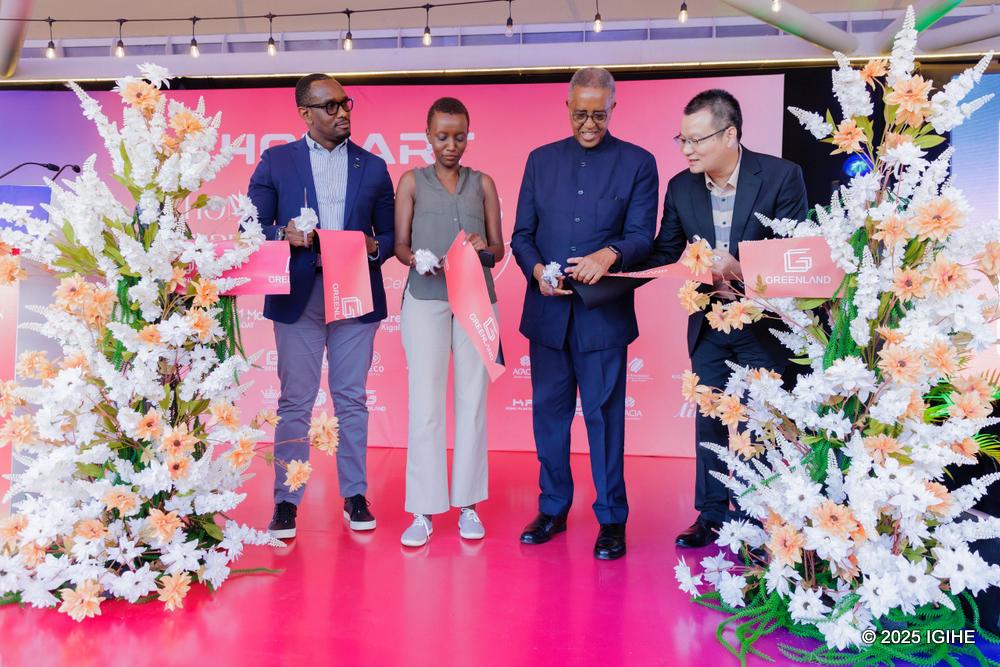
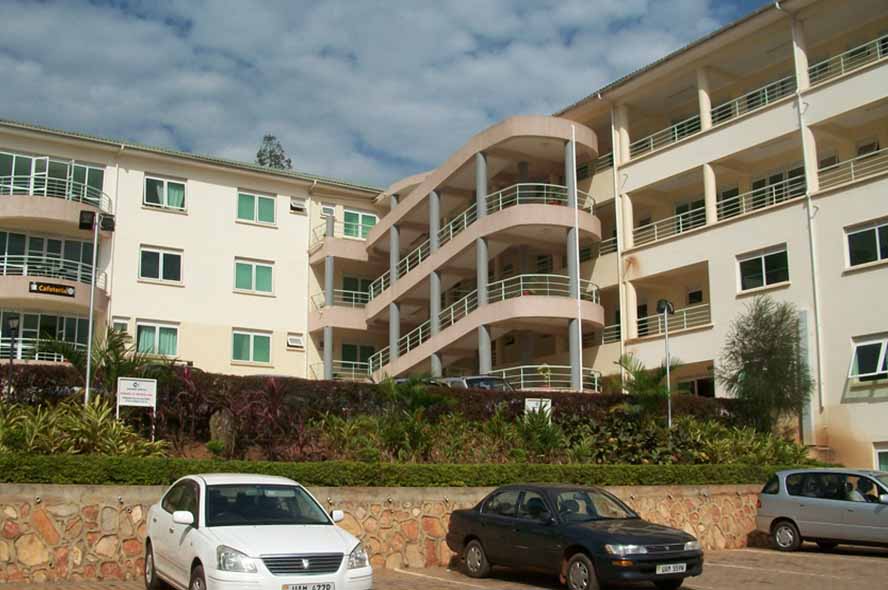
Located in the city center, Greenland Plaza is situated in the Nyarugenge District, Muhima Sector.
Xiao Ben, the investor and owner of Homart Group, revealed that his company continues to invest in residential housing, noting that since his arrival in Rwanda in 2009, he has increasingly invested due to the country’s security, cleanliness, and good governance.
Over the past years, his company has invested more than $200million (close to Frw300billion) in various projects, including the construction of factories like Kigali Ceramics and Kigali Plastics, as well as residential buildings such as Phoenix Plaza, Rose Garden, and Elizabeth Golf apartment , all of which have already been sold.
In 2021, construction began on Greenland Plaza, a project that started during the COVID-19 pandemic. Despite the challenges, Xiao explained that they were determined to see it through as promised to their clients.
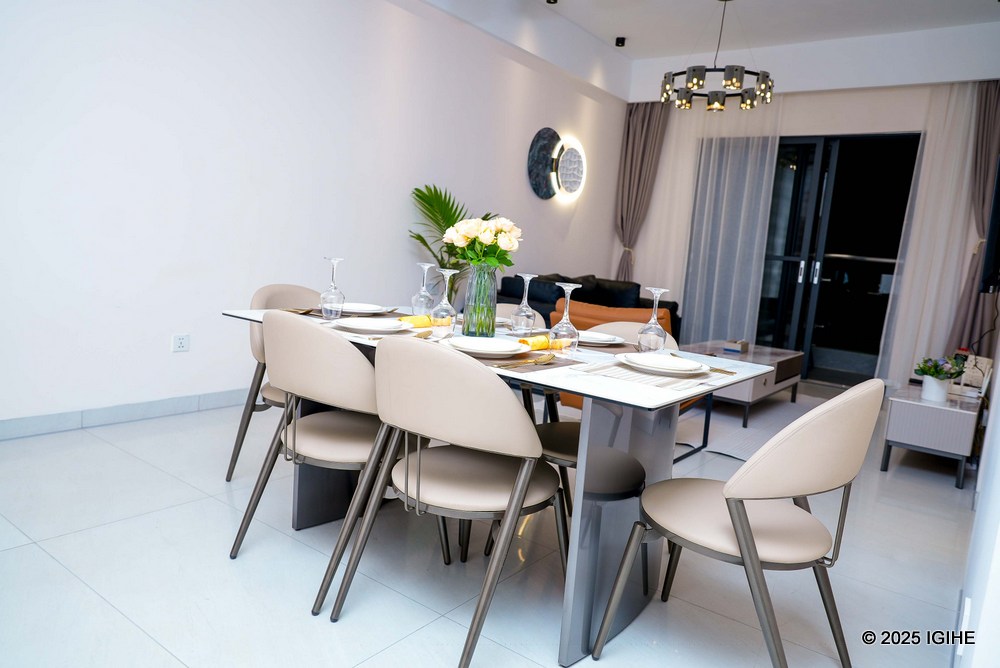
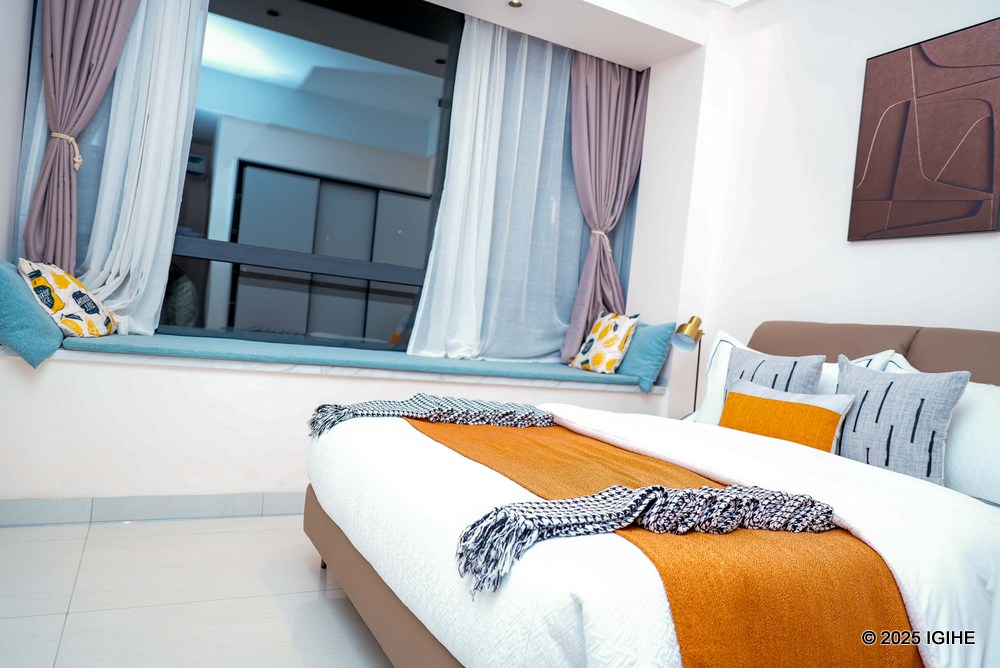
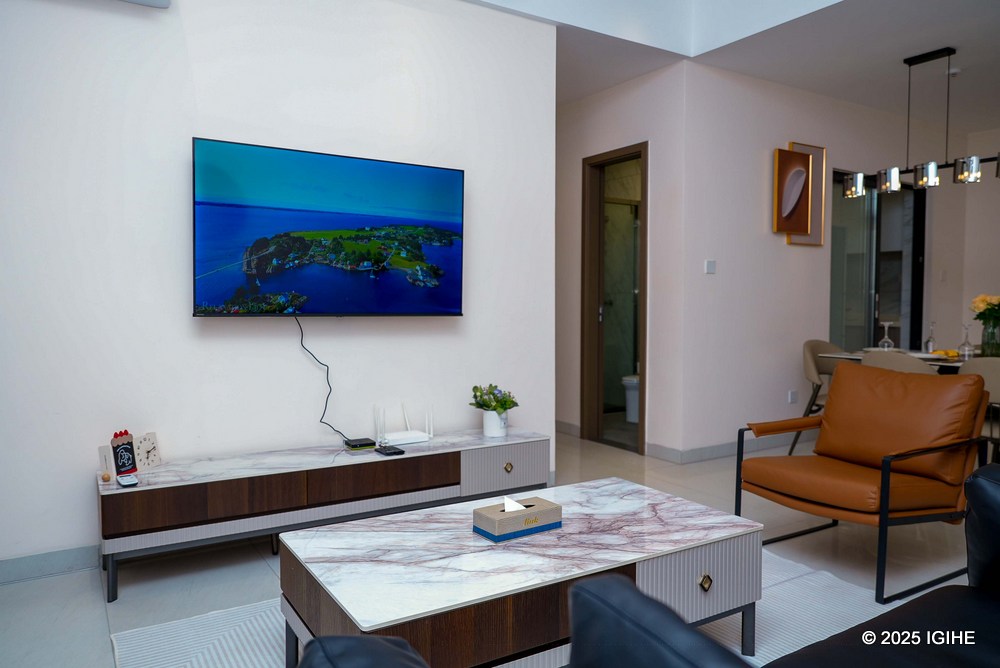
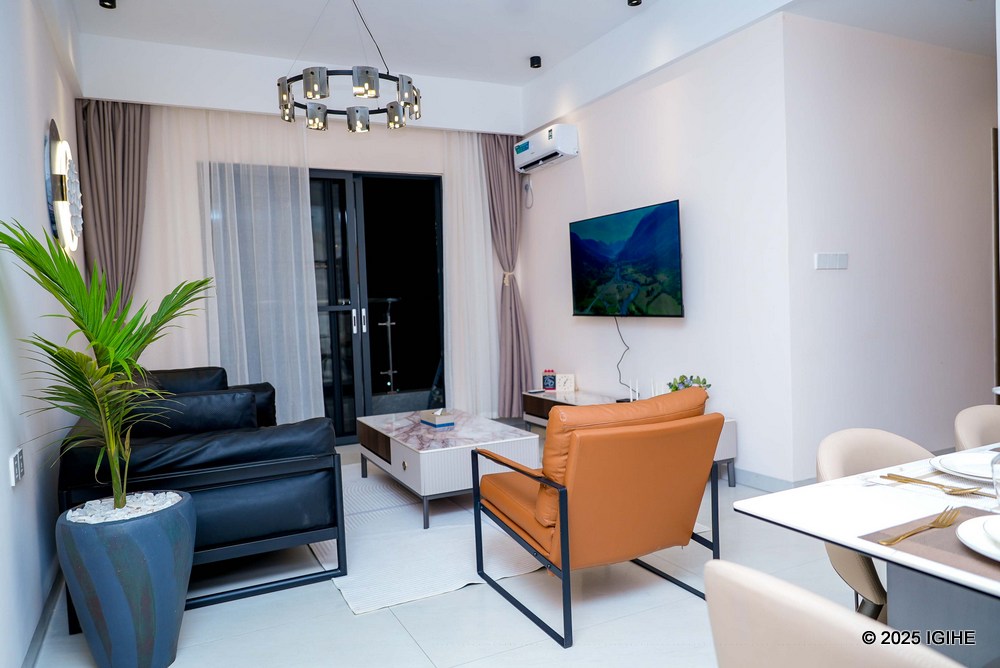
Greenland Plaza has two phases each with 84 units, in total 168 units out of 168 units, 130 were already sold out. The apartments include one, two and three-bedroom units.
The Greenland project has successfully completed Phase 1, which is currently operational. Construction for Phase 2 is underway, with plans for it to be functional in the near future. Additionally, Phase 3 is set to begin construction soon, marking the continued progress and expansion of the development.
Xiao confirmed that many investors, particularly from China, choose to invest in and purchase properties in Rwanda due to the country’s safety and rapid development. He said, “I have lived in over 27 African countries, but I chose to invest in Rwanda because it is a country with a promising future.”
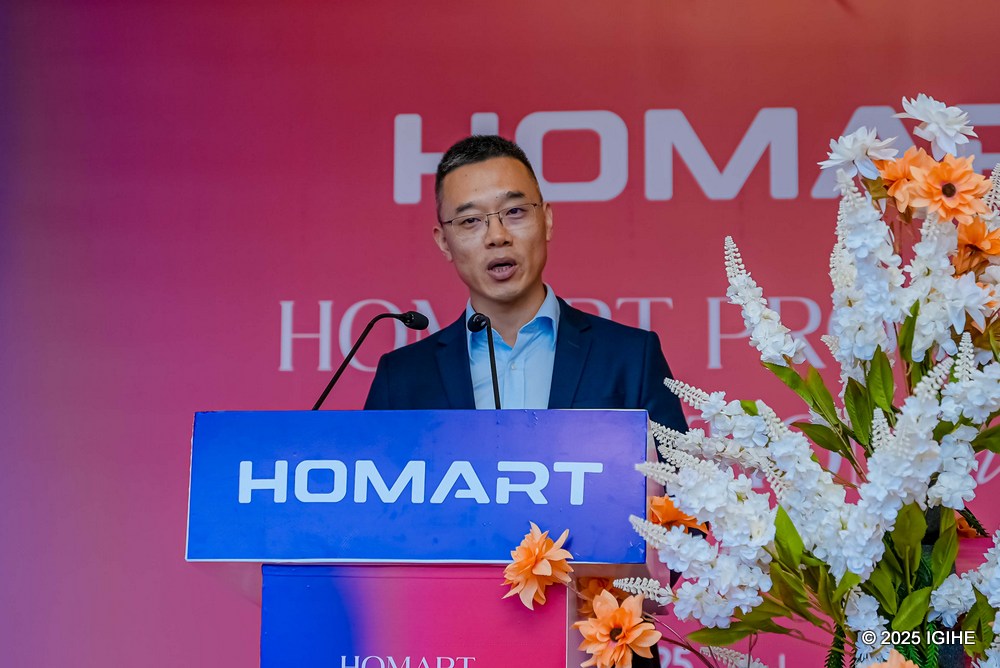
Simon Lee, the CEO of Homart Group, thanked their partners and customers, stating that the trust they have from clients helps the company achieve its goals.
“The housing sector in Rwanda is growing every day, and we expect to see more developments. Our partners, coming from over 40 countries, show the confidence they have in Rwanda’s housing market,” he said.
He emphasized that investing in Rwanda is a unique opportunity that should not be missed, adding that purchasing an apartment at Greenland Plaza is an excellent choice, as the apartments are modern, well-equipped, and offer 24-hour security.
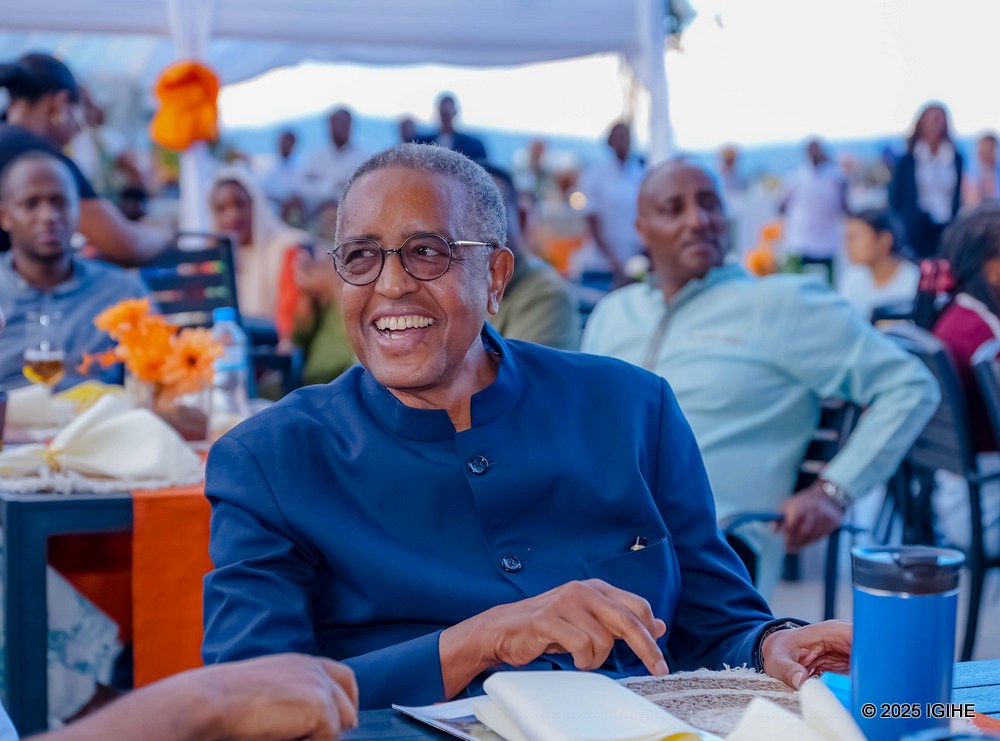
One of the buyers at Greenland Plaza, Philbert Bimenyimana, who won a car as a prize, expressed his happiness with the reward, highlighting that it showed how Homart Group values its customers and that their efforts are yielding positive results.
Marie Solange Muhirwa, the Director of Planning in Kigali, thanked Homart Group for its investment in various development projects that benefit the country, assuring them of continued collaboration in future endeavors.
Homart Group has become a prominent player in construction, with projects in ten African countries, including Tanzania, Kenya, Rwanda, Burundi, Uganda, Malawi, Ethiopia, Côte d’Ivoire, Mali, and the Democratic Republic of Congo (DRC).
Speaking on Sanny Ntayombya’s “Long Form” podcast, Sellars shared insights from his global career and recent research in Rwanda. He offered a roadmap for leaders to harness the potential of this new generation while addressing entrenched habits holding the country back.
Sellars, who has led teams across Australia, Asia, the U.S., and Switzerland, founded T.E.S. to distill decades of leadership lessons into practical tools.
In Rwanda, he has worked with 33 leaders across the banking, construction, and health sectors, surveying 200 peers and reports. His findings reveal that Rwandan leaders excel in people-oriented skills like achievement, self-actualization, humanism, and affiliation, surpassing global averages.
“These leaders are well above the world averages,” he said, attributing this to “a level of awareness of others and a consciousness of what needs to be done.”
He, however, noted that some leaders’ reluctance to take risks could hinder the government’s broader agenda to transform Rwanda into a regional economic powerhouse.
Sellars observed that Gen Z—a generation he describes as opinionated, emotionally intelligent, and eager for happiness—has much to offer. According to him, Unlike their predecessors, who were shaped by fear and survival, these young Rwandans enter the workforce with security and ambition.
“They’re probably the first generation to have that since God knows when,” Sanny interjected, noting their contrast with leaders “trained by trauma.”
Sellars sees opportunity here, but it demands adaptation. “They get bored quickly,” he said. “If you don’t challenge them, they’ll check out or leave.”
So, how can Rwandan leaders turn Gen Z into an asset? “Delegate effectively,” Sellars advised.
“Set clear expectations upfront, not late-stage control. Move people across functions. A cameraman in marketing brings fresh visuals, while a marketer in sales crafts better messaging.”
He emphasized accepting failure without punishment. “Magic happens between silos, but it requires risk,” he said.
For a generation that doesn’t defer to authority—“they don’t call you sir, they don’t title emails properly”— he emphasizes that leaders must let go of their egos.
“The most effective leaders are incredibly hard to offend,” he said.
This shift, Sellars argues, could also ease another Rwandan leadership trap, which he describes as overworking.
“The most senior people are working 12-hour days, most of the weekend,” he said. “My hope is that the message I’m sharing is: You are doing a great job—slow down. Those extra 20 hours destroy more value than they create.”
His own sabbatical story drives this point home. After leaving his Australian team for three months, he returned to find them delivering their best performance yet.
“You created a team that was independent and brilliant,” his boss told him, giving him the highest rating of his career.
Sellars’ recent research highlights Rwanda’s strengths and weaknesses. While aggressive styles like competition and opposition, common in the U.S. and Australia, are less prevalent in Rwanda, he notes that passivity remains a persistent challenge.
“The most effective leaders in Rwanda are the ones investing heavily in helping their people succeed,” he said.
Sellars tested his ideas at leadership retreats in Nyamuhazi last year, and he believes they worked. Leaders opened up about their struggles, and one even reported that her team performs better now that she’s stopped micromanaging.
Looking ahead, Sellars connects Rwanda’s future to its leaders and how they tap into Gen Z’s potential.
“Build a space where they can grow, even if they’re not ready to do it themselves,” Sellars advised.
The leadership guru believes Gen Z’s tech skills and confidence can thrive if leaders guide them the right way.
“These comments are surprising because Rwandan and Burundian defence and security institutions have actually been meeting to discuss how to secure our common borders in light of developments in Eastern DRC,” Makolo.
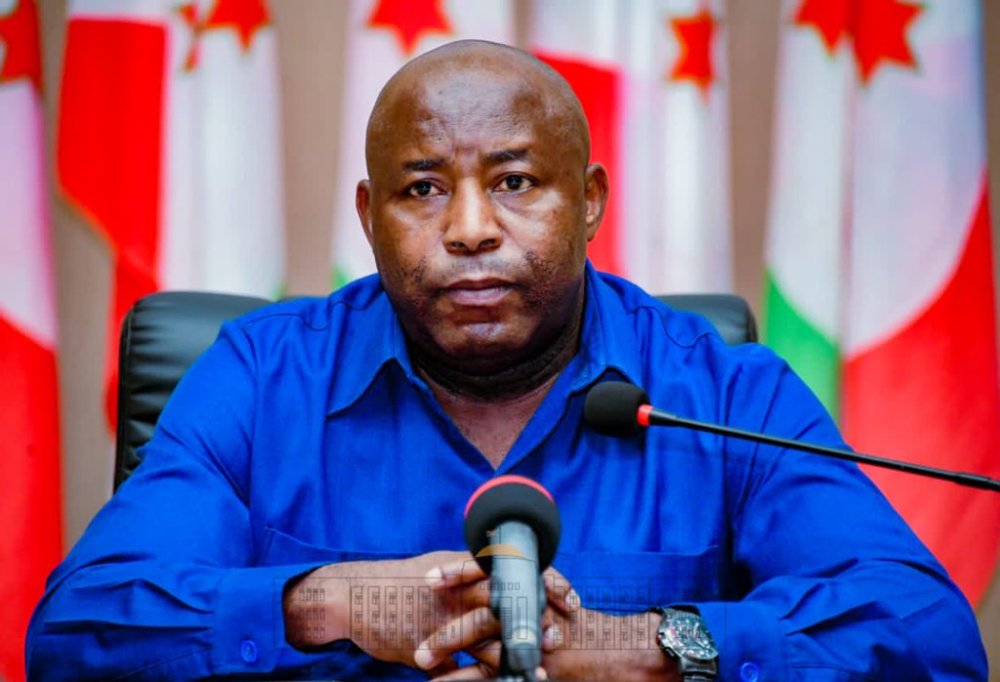
The President of Burundi made these remarks during an interview with the BBC, where he accused Rwanda of attempting to destabilize his country by backing RED Tabara—an armed group based in South Kivu, DRC, known for its opposition to the Burundian government.
He alleged that Rwanda plans to use this rebel group in the same way it has been accused of supporting M23 rebels in eastern DRC.
“We know that Rwanda is trying to attack us through RED Tabara operating from Congo. But if they want to come to Bujumbura that way, we can also get to Kigali through Kirundo,” Ndayishimiye warned.
This is not the first time Ndayishimiye has accused Rwanda of supporting RED Tabara. In December 2023, following an attack by the group in Gatumba zone, Bujumbura, he repeated similar accusations.
These allegations, refuted by Kigali as baseless, saw Burundi closing borders in January 2024.
Despite these tensions, recent months had seen signs of diplomatic progress. Military and intelligence officials from both countries held bilateral meetings aimed at restoring security cooperation and resolving border issues.
The latest such meeting took place on March 10 in Kirundo province, Burundi. Besides, Rwanda’s Minister of Foreign Affairs and International Cooperation, Ambassador Olivier Nduhungirehe, stated on March 14 that Rwanda and Burundi were on a good path towards de-escalation and mutual understanding as talks continue between the leadership of both countries.
President Paul Kagame also hinted at improving regional relations during a citizen outreach programme on March 16 at BK Arena, where he revealed that former colonial powers had attempted to unite Burundi and DRC against Rwanda.
However, he noted that such efforts were being unraveled and Rwanda was working to rebuild strong ties.
Speaking at a church event on the same day, President Ndayishimiye accused Rwanda of sowing chaos across the region and described any intentions to attack Burundi as madness.
“The idea that someone dreams of attacking Burundi is madness. I hear people say, ‘Rwanda has a strong army.’ Oh! They don’t know the kind of army I have,” he said defiantly.
“Burundi has both visible and invisible forces. We are well protected.” Ndayishimiye also expressed lingering frustration over Rwanda’s refusal to extradite individuals accused of involvement in the 2015 attempted coup against the late President Pierre Nkurunziza.
Rwanda has maintained that these individuals are refugees protected under international law and cannot be handed over.
The current turn of events casts doubt on the recent optimism surrounding Burundi–Rwanda relations.
While both countries had appeared to be on a diplomatic path towards peace and cooperation, President Ndayishimiye’s statements suggest deeper mistrust still lingers—potentially jeopardizing the fragile progress made in recent months.
For years, senior education and medical officers employed by the government have simultaneously managed private schools, clinics, pharmacies, and hospitals, often prioritizing their private enterprises over their official duties.
Many have been accused of neglecting government facilities while diverting resources, including medicines and equipment, to their private establishments.
Additionally, some medical officers have been found referring patients to their private facilities for services that should be freely available at government hospitals.
The National Development Plan (NDP) IV, which outlines the Government’s strategic direction for the next five years, highlights this issue of conflict of interest and public service neglect as a key area for reform.
According to the plan, the ban seeks to ensure that civil servants focus on their core responsibilities, thereby improving service delivery in public schools and hospitals.
Senior officials in the education sector, including head teachers and commissioners, have been running private nursery, primary, and secondary schools while simultaneously overseeing government institutions.
Similarly, medical professionals have been accused of setting up private health facilities, often under pseudo names or proxies, to bypass regulations.
These conflicts of interest have led to the deterioration of public services, as officials devote more time and resources to their personal businesses.
The new directive follows President Yoweri Museveni’s call for the Public Service Ministry to review civil service regulations and address the growing issue of moonlighting among public servants.
The Government aims to ensure equitable resource allocation and improve the quality of education and healthcare services.
“Conflict of interest is especially rampant in the health sector. Many senior health workers are rarely available at public hospitals and instead operate their own facilities.
Patients are often referred to these private establishments to purchase medicines, even when the same drugs are available in government stores. This is unfair and undermines public healthcare,” a government source explained.
Meanwhile, there is uncertainty over how the Government will handle civil servants who already own private schools and hospitals.
A senior official suggested that affected individuals might be required to either resign from public service and run their businesses or sell their private facilities to remain in government employment. Cabinet is expected to provide final guidance on this matter.
{{Challenges in education and health sectors}}
The Government acknowledges that despite efforts to improve public services, significant challenges remain. According to NDP IV, the cost of education and healthcare continues to rise due to inefficiencies, population growth, and weak policy implementation.
Currently, households contribute nearly 47% of education funding in Uganda. The healthcare sector also struggles with affordability, with out-of-pocket expenses still accounting for 29% of total health expenditure.
The country faces severe shortages in both sectors, with only 8,900 doctors serving a population of over 45 million, far below the World Health Organization’s recommended doctor-to-patient ratio. Similarly, the education sector is short by 78,000 teachers at the primary level and 20,000 at the secondary level.
By ensuring that civil servants dedicate themselves fully to their roles, the government hopes to improve the quality of public education and healthcare services and reduce reliance on costly private alternatives.
The policy does not extend to political leaders, but it marks a significant step towards accountability and efficiency in Uganda’s public sector. The implementation of this directive will be closely monitored, with Cabinet expected to issue further guidelines to ensure a smooth transition.
He was speaking at the 2nd joint virtual summit of East African Community (EAC) and Southern African Development Community (SADC) Heads of State held on March 24, 2025.
The summit, co-chaired by EAC Chairperson President William Ruto of Kenya and SADC Chairperson President Emmerson Mnangagwa of Zimbabwe, was focused on addressing the worsening security situation in the region.
The government of the DRC has frequently accused Rwanda of violating its sovereignty, claiming that Rwanda has sent troops onto its territory and is supporting the M23 armed group, which controls large areas.
Rwanda has denied these accusations, explaining that in response to security threats originating from the DRC, such as the FDLR, it has strengthened its border security measures.
These security measures have helped prevent some of the shelling in the Rubavu District since the morning of January 27, 2025, when M23 fighters clashed with the DRC armed forces and its coalition in Goma City.
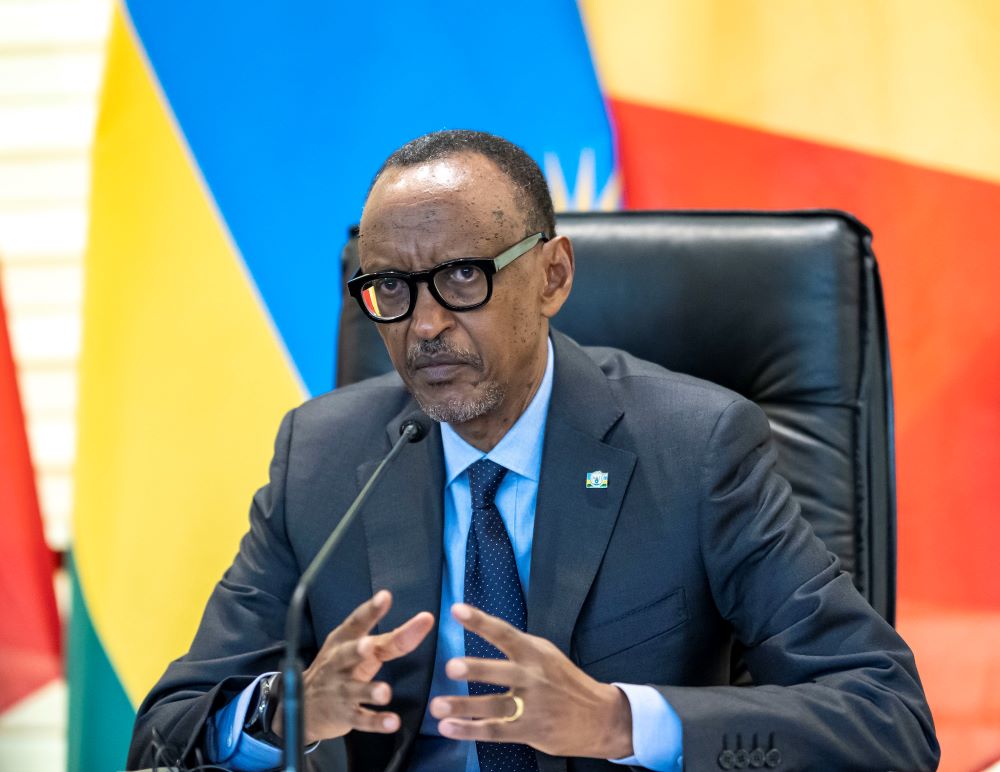
Kagame emphasized that Rwanda’s security concerns must be considered within a broader context.
“Rwanda remains concerned about our security, and this must be addressed within the framework of dealing with problems of other countries, including DRC as well,” he stated.
The summit, which was characterized by a collaborative and positive atmosphere, resulted in the appointment of five eminent persons to a newly established Panel of Facilitators tasked with finding a lasting political solution to the crisis.
Kagame reiterated the importance of respecting the sovereignty and territorial integrity of all nations, stating, “When we talk about sovereignty and territorial integrity, it should mean every country. Every country deserves respect for its territorial integrity or its sovereignty.”
Kagame’s message also underscored the significance of addressing the underlying political issues that contribute to the instability in the region.
“If you want the war to end, you end the injustice, you end political problems for not only your people, but for others, including neighbors, that are affected,” he asserted.
The meeting of the Heads of State of EAC and SADC, which followed a previous one on February 8, 2025, made decisions including calls for an end to fighting and hostilities between the conflicting parties in Eastern DRC.
This was followed by a meeting of the military chiefs of the member states leading to a report outlining how the fighting and hostilities would cease, allowing humanitarian efforts to continue without obstruction. The report was discussed and approved by the council of ministers.
Kagame also expressed cautious optimism, acknowledging the progress made in the discussions and highlighting the collective responsibility to resolve the crisis.
“I think we are making progress. We are counting on everyone to help make positive contributions towards ending all of this,” he stated.
A total of 123 police officers have been injured during protests, Yerlikaya said on the social media platform X.
Yerlikaya emphasized that, according to Article 34 of the Constitution, “everyone has the right to organize unarmed and unaggressive meetings and demonstrations without prior permission,” but noted that this right is “restricted by law for the purposes of national security, public order, crime prevention, protection of public health and morality, or the rights and freedoms of others.”
The recent protests have gone beyond peaceful demonstrations, with certain groups abusing the right and attempting to exploit the situation to disrupt public order and attack law enforcement forces, said the minister.
“We invite our citizens to be careful against such provocations and to act with common sense,” he added.
Tens of thousands of Turks have taken to the streets since March 19 after Imamoglu was detained on charges of graft and aiding a terrorist group.
Imamoglu, from the main opposition Republican People’s Party, is considered President Recep Tayyip Erdogan’s main rival in the next presidential elections.
Han, who served as co-chief executive and oversaw the company’s consumer electronics and mobile devices divisions, died in the hospital after suffering from cardiac arrest.
Joining Samsung in 1988, Han dedicated much of his career to TV-related divisions, helping the company become the global leader in television manufacturing. In 2022, he was appointed co-vice chairman and CEO.
Han was expected to attend a significant Samsung event unveiling new home appliances on Wednesday.
As one of the world’s largest technology companies, Samsung thrives in both components and finished consumer products, with separate CEOs leading major divisions like semiconductors.
All divisions operate under the overarching leadership of third-generation corporate heir and chairman, Lee Jae-yong.
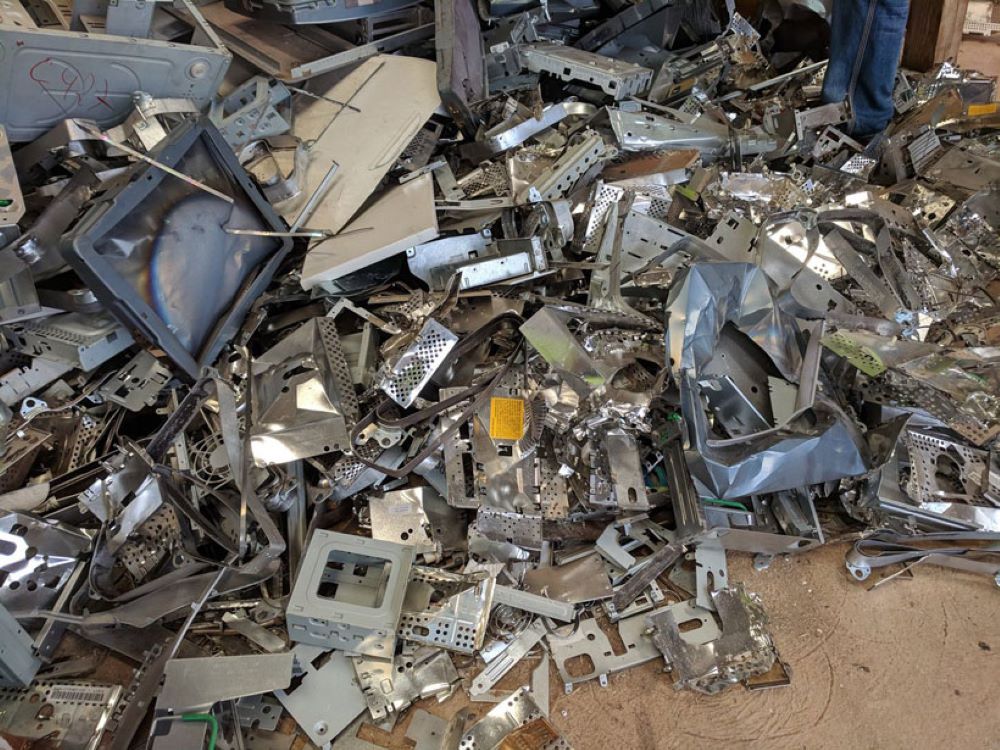
John Tanui, Kenya’s principal secretary in the Ministry of Information, Communications, and the Digital Economy, highlighted the anticipated surge in e-waste due to the increasing sale of electronic products like refrigerators, TVs, and mobile phones.
He emphasized the region’s rising awareness of the health risks linked to improper e-waste disposal.
Ally Simba, EACO’s executive secretary, noted that e-waste is the fastest-growing waste stream in Africa.
Despite this, the region lacks sufficient recycling infrastructure and repair services. However, progress has been made as Kenya, Rwanda, and Tanzania have implemented e-waste regulations, and Uganda and Burundi have adopted national policies.
Attendees stressed the need for East African countries to align their policies with international standards to tackle the transboundary nature of e-waste.
They also called for the establishment of collection centers, recycling plants, and safe disposal mechanisms.