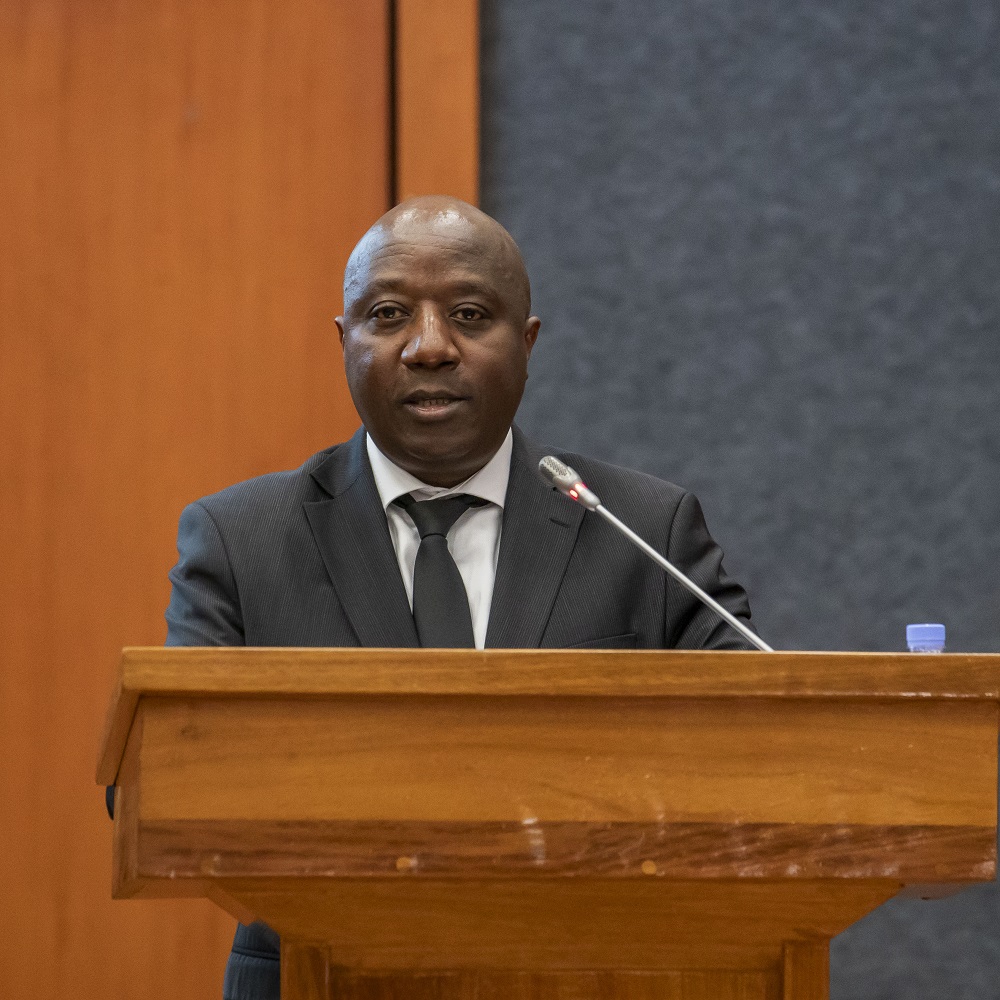
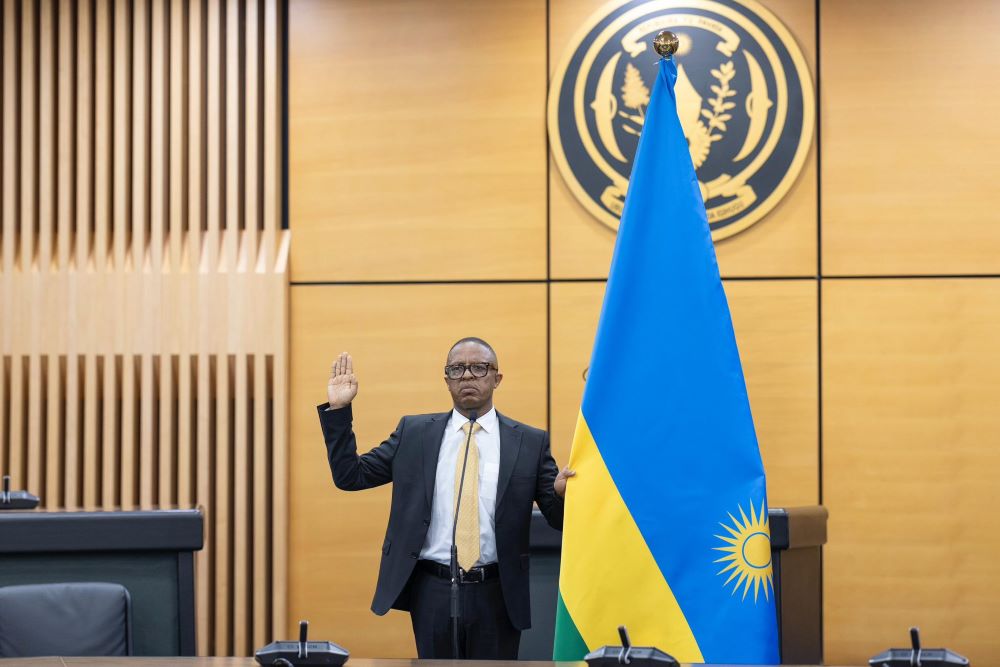
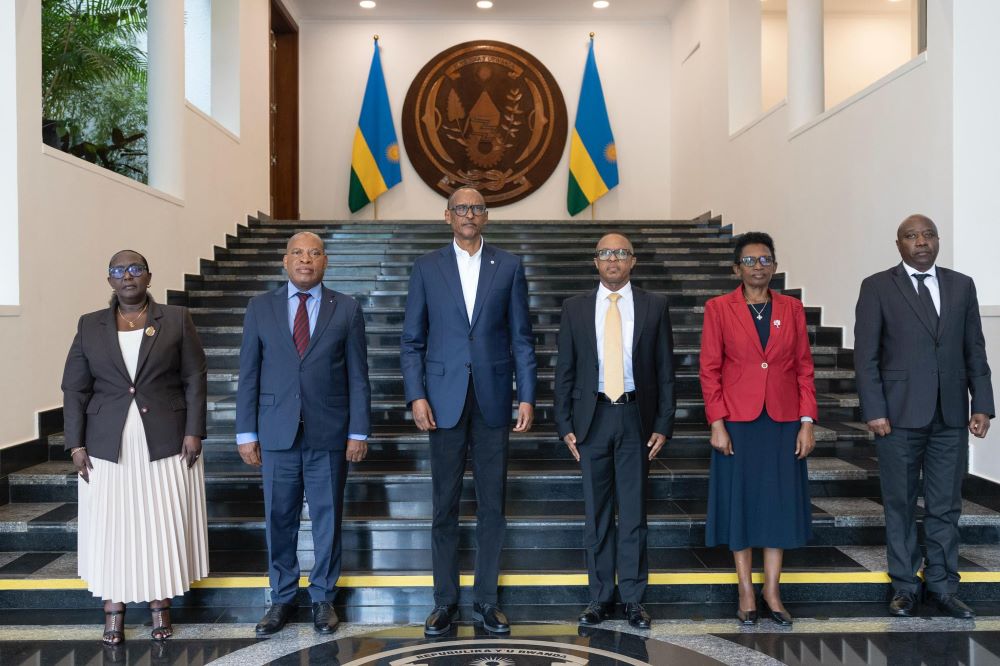
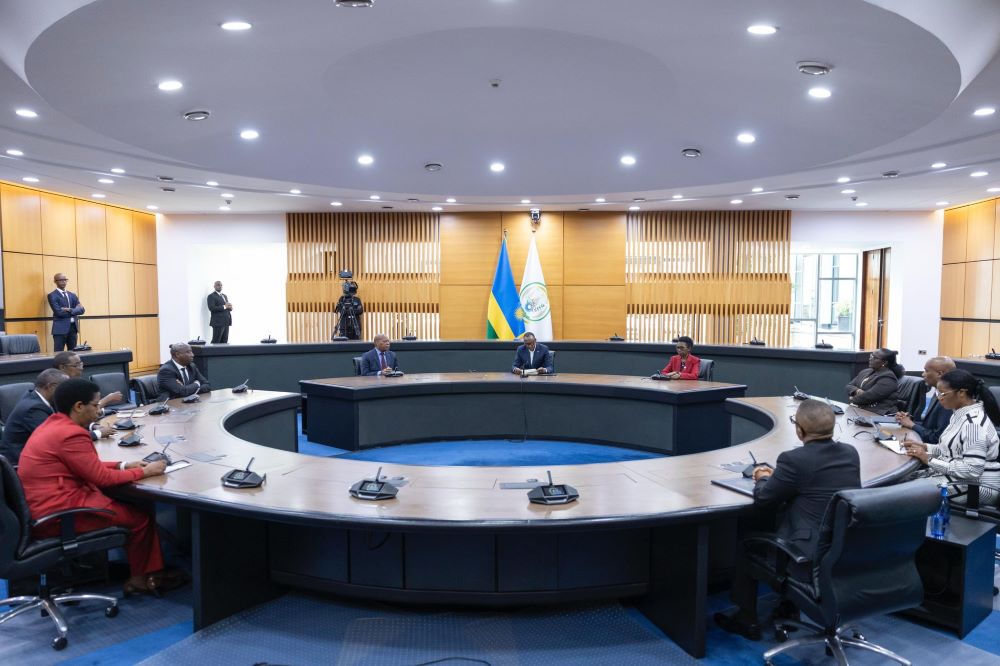
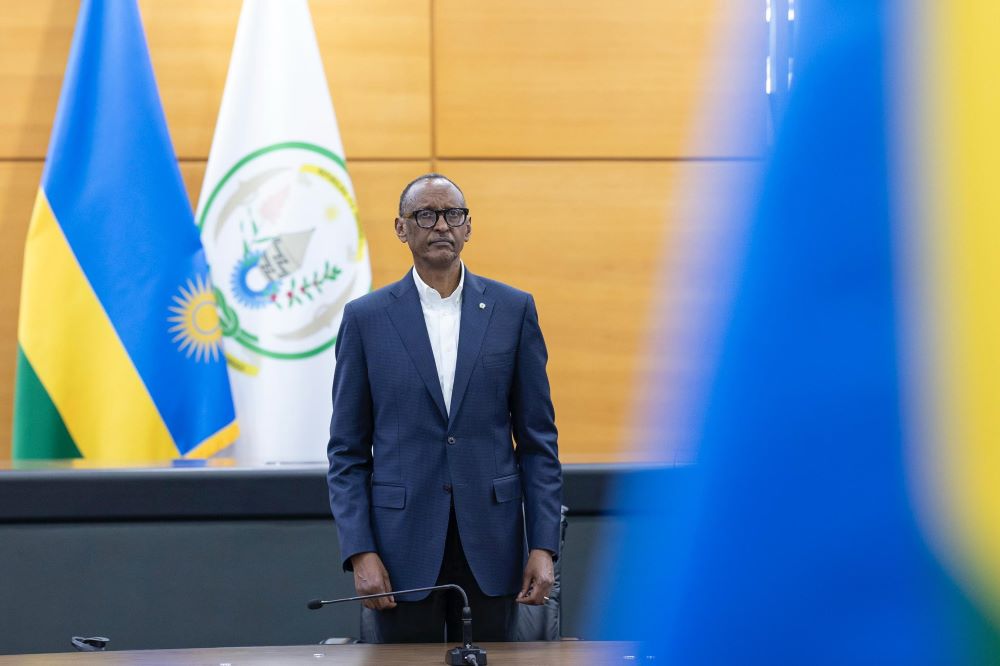
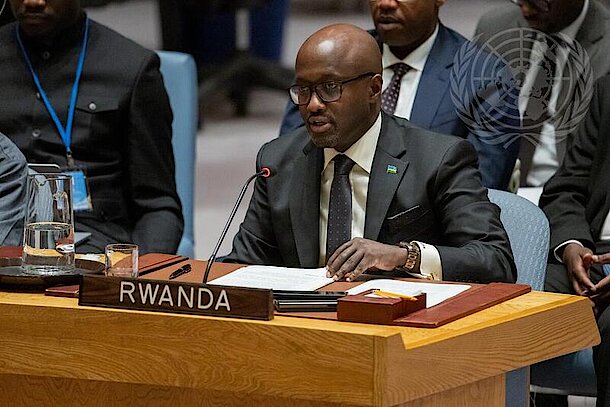
In an interview with The Telegraph, Minister Nduhungirehe confirmed that Rwanda is committed to contributing to global efforts aimed at addressing illegal migration.
He emphasized that Rwanda is open to receiving migrants relocated from other countries, as it had agreed to do under its canceled deal with the UK.
“If there is any will from another country to discuss this, we will be open to discuss, to see how it can be materialised,” Nduhungirehe stated.
The proposed arrangement would see Rwanda taking in migrants transferred from countries facing migration challenges, aligning with the nation’s broader stance on immigration.
In September, Germany’s migration commissioner had even suggested Rwanda as a third-party country to handle migrant offshoring. Italy has already moved forward with a similar agreement, using Albania for migrant relocation.
While no direct proposals have been received from the U.S. administration, the elect-President Trump’s close aides have indicated that Rwanda may be considered as a destination for migrants as part of Trump’s mass deportation plans.
Nduhungirehe said Rwanda had not yet had any direct approaches but reaffirmed Rwanda’s readiness to partner with any country willing to address the global migration crisis.
“We are open to continue contributing to the solution to the migration, if in the days or months or years to come, we have to get into partnership with another country. So we consider all the conditions, including the facilities.”
Discussing the canceled migration partnership with the UK, Nduhungirehe explained that the deal, which was terminated after the election of UK Prime Minister Sir Keir Starmer, would have provided a viable solution by acting as a deterrent while adhering to international law.
“We believe that every country should address this issue of migration in a way that will deter migration while treating the migrants in a humane way according to international law,” he said.
“We did our part and we are willing to do it again, but for other countries, especially European countries, they should talk among themselves and then find an appropriate solution to the migration aiming at deterrence, but also receiving people who have reached the territory and integrating them according to international law.”
Rwanda had started building accommodations for migrants from the UK. Nduhungirehe suggested that this infrastructure could be repurposed for any future migrant relocation schemes with other countries.
“If we get into partnership with any other country, we will discuss the terms and conditions of that partnership and that could be considered at that time,” he said.
Although the UK’s MEDP has been canceled, Nduhungirehe noted that the housing facilities built with the funds could still serve a useful purpose.
“We are still discussing within the government how to use that accommodation, not necessarily to deal with migration now that the MEDP is being terminated. They will be used for other purposes. We have started implementing the agreement, because part of the money was on development of that infrastructure.”
Rwanda’s position reflects its continued openness to contributing to global migration solutions while ensuring that agreements are mutually beneficial and aligned with international law.
The deal between the UK government, led by the Conservative Party, and Rwanda was signed in April 2022 and revised in December 2023 after doubts arose over the security of migrants while in Kigali.
In an interview with journalist Nick Ferrari of LBC, Minister Nduhungirehe explained that Rwanda was surprised by the security concerns raised in the UK after it had agreed to help the UK address the migrant issue.
“We have strong relations with the UK, and then we are working with the Labour government to terminate the migration partnership that we had worked on with the previous government, so that we can focus on our other projects and policies between our two countries,” he said.
Sir Keir Starmer, leader of the Labour Party, upon being elected as the new UK Prime Minister, stated that he would stop the deal.
When asked by Ferrari how the UK government had informed Rwanda about its decision to halt the program, Minister Nduhungirehe responded that Rwanda had not been formally notified, and it was initially disappointing.
“We knew it even through the campaign, electoral campaign. The Labour Party had stated on several occasions that they would repeal this partnership, and we knew when the results came out that this migration partnership would be repealed. We then worked with the government,” he noted.
“Initially, we were a bit disappointed with how this was handled, as we were not formally notified with the initial announcement in the media. But later on, we managed to speak with the government, including the Home Secretary and other officials, to work on how to terminate this migration partnership,” Nduhungirehe added.
UK High Commissioner to Rwanda, Alison Thorpe, during a press briefing in Kigali on October 2, 2024, suggested that it seems unlikely that the UK government would reinstate the program, as they have introduced other measures to deter illegal migrants.
The diplomat stated that after Starmer halted the agreement, it was expected that the UK Parliament would approve the decision, and the UK government would formally notify Rwanda in accordance with legal procedures.
{{France’s Minority Government falls in historic no-confidence vote
}}
French Prime Minister Michel Barnier’s government was o Wednesday evening ousted by a no-confidence vote, marking a historic first since Georges Pompidou’s administration was toppled in 1962.
The vote followed Barnier’s controversial move to push through the 2025 social security budget without parliamentary approval. With 331 lawmakers supporting the motion, Barnier’s tenure as prime minister—already the shortest in the history of the Fifth Republic—came to an abrupt end.
The no-confidence motion was spearheaded by the New Popular Front (NFP), a coalition of left-leaning parties, and supported by the far-right National Rally (RN), led by Marine Le Pen. This cross-spectrum alliance reflects the increasingly fragmented nature of French politics.
President Emmanuel Macron’s decision to dissolve parliament in June had already set the stage for a deeply divided legislature following snap elections in July.
With new elections constitutionally barred until mid-2025, the political landscape in France remains fraught.
President Macron must now navigate the complex process of appointing a caretaker government, which will oversee operations in the short term but faces significant challenges in achieving long-term stability. Financial markets have already shown signs of concern, with France’s borrowing costs spiking amid the turmoil.
This development places France at a critical juncture, further complicating the European Union’s dynamics as Germany grapples with its own electoral uncertainties and the U.S. prepares for Donald Trump’s return to the White House in January.
{{Kenya sued at East African Court of Justice
}}
Kenya is facing a legal battle at the East African Court of Justice (EACJ) over its decision to grant diplomatic immunities to the Bill and Melinda Gates Foundation.
The case, filed by Kenyan petitioners Sigi Waigumo Mwanzia and Gichohi Waweru on November 28, 2024, accuses Kenya of breaching the East African Community (EAC) Treaty and its own Constitution by failing to ensure transparency, public participation, and accountability in the process.
The immunities, granted through a gazette notice on October 4, 2024, sparked public debate. Critics argue such privileges are typically reserved for diplomatic missions, not private entities.
The petitioners demand an explanation of how the foundation qualified under Kenya’s Privileges and Immunities Act and access to related documentation. The Law Society of Kenya (LSK) has also filed a separate case, leading the High Court to suspend the immunities pending a hearing.
Kenya’s Prime Cabinet Secretary, Musalia Mudavadi, had earlier defended the decision, emphasizing the foundation’s substantial contributions to development and adherence to legal frameworks. However, questions linger about the broader implications of extending diplomatic protections to philanthropic organizations.
{{Karua returns to Kenya after delays in obtaining practice license in Uganda
}}
Kenyan lawyer Martha Karua has returned to Kenya after failing to secure a temporary practicing license from the Uganda Law Council, delaying her plans to lead the defense of Ugandan opposition leader Dr. Kizza Besigye.
Karua visited Uganda on December 1, 2024, to obtain the necessary certification but was unsuccessful. Kampala Lord Mayor Erias Lukwago, a member of Besigye’s legal team, stated that the team remains hopeful the license will be approved soon.
The legal team sought an adjournment in Besigye’s case to allow time for Karua’s certification, but the General Court Martial rescheduled the hearing to December 10, 2024, citing scheduling conflicts.
Besigye and his ally Abeid Lutale face charges including illegal possession of firearms and activities undermining national security following their controversial arrest in Nairobi, Kenya, while in the city to attend the launch of Karua’s book. Both remain remanded at Luzira Prison.
The charges have drawn criticism from rights activists, who argue they are politically
motivated, with questions raised about the military court’s jurisdiction over civilians.
Besigye, a veteran opposition figure and four-time presidential candidate, has faced repeated arrests for anti-government protests.
{{Trump nominates Jared Isaacman to head NASA
}}
United States President-elect Donald Trump has nominated Jared Isaacman, a tech billionaire and private astronaut, to lead NASA.
Isaacman, known for funding and participating in SpaceX’s private space missions, would replace the outgoing administrator, Bill Nelson, if confirmed by the Senate.
Isaacman, 41, is the founder of Shift4 Payments and an accomplished fighter pilot. He collaborated with SpaceX in 2022, making history with the first private spacewalk while testing customized spacewalking suits. His nomination signals NASA’s continued reliance on private companies like SpaceX, which plays a central role in the Artemis program aimed at returning humans to the moon.
Isaacman’s leadership is expected to deepen NASA’s focus on commercial partnerships and expand exploration efforts, including missions to Mars.
Trump highlighted Isaacman’s potential to drive breakthroughs in space science, technology, and exploration. Critics have noted Isaacman’s lack of government experience but acknowledged his expertise in private space ventures.
This early appointment aligns with Trump’s push to accelerate space exploration and expand the commercial space sector, with support from Elon Musk, a close collaborator and major donor to Trump’s campaign.
{{Rwanda to unveil Rubavu Port
}}
Rwanda is set to officially launch the Rubavu Port on December 6, a state-of-the-art facility designed to boost regional trade and connectivity, particularly with the Democratic Republic of Congo (DRC).
Situated on Lake Kivu in Nyamyumba Sector, this two-hectare port features cargo and passenger terminals and has been operational in a pilot phase since June 2024. It can handle 700,000 tonnes of cargo and 2.7 million passengers annually, with facilities including a wastewater treatment plant, petrol station, and accommodations for staff.
The project, funded by Invest International and TradeMark Africa, aims to lower trade costs and improve efficiency in transporting goods like cement, beverages, and dairy products across Lake Kivu. It also supports local communities by creating jobs and fostering tourism. Officials anticipate significant economic benefits, including streamlined logistics, reduced tariffs, and fewer cross-border trade bottlenecks.
Rubavu Port is part of a larger initiative, the Lake Kivu Harbour Transport Project, which includes the development of additional ports in Rusizi, Karongi, and Nkora.
The project aims to transform Rwanda into a regional trade corridor, reducing the cost per metric ton of goods transported across Lake Kivu by nearly 60% while promoting greener and safer alternatives to road transport.
This message was shared through a presentation he gave on December 4, 2024, at the British think tank Chatham House, focusing on Rwanda’s policy in the region and internationally.
Nduhungirehe highlighted that the FDLR, a terrorist group, poses a threat to Rwanda’s security, noting that it continues to recruit new fighters and is supported by the government of the Democratic Republic of the Congo (DRC).
“The FDLR threatens Rwanda’s security, not only because it is provided with support, weapons, and money, and is sheltered by the DRC government politically, but also it spreads the genocide ideology,” he said.
He explained that the ideology propagated by the FDLR is aligned with rhetoric from DRC leaders who keep boasting of their plans to overthrow Rwanda’s government.
He hinted on the connection between the FDLR and the DRC military, as well as with Burundi’s forces, those from the Southern African Development Community (SADC), Wazalendo militia groups, and other European mercenaries.
Nduhungirehe further explained that security is a key pillar of Rwanda’s development over the past 30 years, and that the country will not allow anything to jeopardize its security, whether from within or outside.
“Rwanda will not tolerate any threat to our security and territorial integrity, which is why our border security measures, which are legal and necessary, are still in place. These measures will only be lifted once the security threat is eliminated,” he said.
On November 25, 2024, Rwanda, DRC, and Angola’s ministerial representatives met in Luanda and agreed on a plan to dismantle the FDLR. Rwanda agreed that once the group is completely eliminated, the security measures at the border will be lifted.
It is expected that Presidents Paul Kagame of Rwanda, Félix Tshisekedi of DRC, and João Lourenço of Angola will meet in Luanda on December 15, 2024, to confirm the decisions made by the ministers of their respective countries.
The policy, which required passengers from Rwanda to be redirected to three designated U.S. airports for screening, is now no longer in effect. This decision also removes the requirement for travelers who have been in Rwanda within the last 21 days to undergo additional health assessments.
“ Passengers are now able to arrive in the United States without being redirected to one of the three designated airports where public health entry screening was previously conducted,” reads a statement released on December 4.
This change follows the November 22, 2024, downgrade of Rwanda’s travel advisory from Level 3 (“Reconsider Travel”) to Level 2 (“Exercise Increased Caution”), signaling that the situation had significantly improved.
In addition, the last known patient with Marburg Virus Disease in Rwanda tested negative on November 8, 2024, and the World Health Organization (WHO) confirmed that Rwanda had begun the 42-day countdown to officially declare the end of the outbreak.
With no new cases reported, public health officials are now confident that the risk posed by the virus has been effectively mitigated.
While the end of the screening measures marks a positive step, U.S. health authorities emphasized the continued importance of vigilance and monitoring.
The Marburg Virus Disease outbreak was first declared in Rwanda on September 27,2024.
As Rwanda approaches the official declaration of the end of the outbreak—expected to occur on December 12, 2024, this policy change is expected to improve the flow of air travel between Rwanda and the U.S., making it easier for passengers to enter the U.S. without unnecessary delays.
The suspects, a 57-year-old mother and her 27-year-old daughter, were apprehended at their residence in Runyeheri Village, Nyarushyamba Cell, Nyakiriba Sector, on the morning of Tuesday, December 3.
The Western region Police spokesperson, Superintendent of Police (SP) Bonaventure Twizere Karekezi, said the arrest followed a tip-off from the public.
“Based on credible information the Police had about a large stock of smuggled clothes stored at the suspects’ home, Police officers from the Anti-Smuggling Unit searched the premises where they found eight bales of used clothes that had been smuggled into the country from the DR Congo,” SP Karekezi said.
He commended those, who provided the information on the two suspected smugglers, and urged the public to avoid engaging in smuggling.
SP Karekezi noted that taxes are used to develop infrastructure such as roads, schools, hospitals, and other public facilities, but warned that such acts amount to illegal cross-border.
He added that evading taxes undermines the country’s economy and the well-being of its citizens.
SP Karekezi also reminded the public that the Police, in collaboration with other institutions and the community, are actively fighting smuggling and fraud.
Engaging in such illegal trade carries severe penalties, including imprisonment of up to five years and a fine equivalent to 50% of the value of the smuggled goods, as stipulated under the East African Community Customs Management Act.
The company engages in various activities aimed at improving people’s health, with a focus on supplying equipment that rehabilitates people with disabilities and helps those without to improve their physical well-being.
The event, held on December 3, 2024, took place in Nyaruguru District, Kibeho Sector, where the national celebration of the day was held. The event was attended by several key diginitaries, including the State Minister at the Ministry of Local Government, Marie Solange Kayisire, and the Governor of the Southern Province, Alice Kayitesi.
During the cellebrations, Mega Global Market showcased some of the equipment they distribute, which assist individuals with disabilities in physical exercises.
Attendees were given an opportunity to see these machines and were educated by Mega the company employees on maintaining good health. The staff also demonstrated innovative solutions designed to help, treat, and prevent non-communicable diseases and their effects.
In addition to selling these machines, Mega Global Market also offers natural supplements that prevent diseases and are certified by international quality standards recognized worldwide.
The company also supports individuals looking to travel abroad for education, tourism or even work in Europe, Canada, and the United States.
Mega Global Market was recently awarded the “Abroad Education Agency of the Year” by Karisimbi Events, recognizing its excellence in assisting people to pursue educational opportunities and travel abroad.
Mega Global Market has established branches in Rwanda, New York, Canada, and Europe, continuing to support individuals pursuing various international opportunities.
Located in the vibrant Remera neighbourhood, the hotel opened its doors in 2014 and has since become a key player in the country’s hospitality sector, helping shape the experience of both travellers and business professionals.
Since its inception, Grand Legacy Hotel has been committed to providing world-class accommodation, hosting international conferences, and offering a wide range of amenities. These include two restaurants, a gym, aerobics facilities, a steam room, sauna, massage services, and a pool for guests to enjoy.
The hotel has also established itself as a trusted venue for events, offering catering services for meetings and private parties, ensuring guests’ needs are met with unparalleled hospitality.
With 43 rooms, including 33 superior rooms, and exclusive facilities for business conferences and meetings, Grand Legacy Hotel has earned a stellar reputation for its professional and welcoming service. The hotel has hosted over 3,000 guests at notable events, such as the African Development Bank’s Annual Meeting, earning accolades from both customers and international organizations.
In 2015, just one year after opening, the hotel won the prestigious “Best 2nd Hotel for Excellent Service” award at the Gateway Tourism Expo in Nairobi, surpassing some of the world’s largest hotel chains. This recognition was followed by glowing reviews on platforms like Tripadvisor and Booking.com, where the hotel earned praise for its exceptional service and guest satisfaction.
Reflecting on this milestone, Christian Ndagijimana, CEO of Grand Legacy Hotel, said, “When we started, there were few hotels in Rwanda. Our goal was to contribute to the development of the country’s hospitality and tourism sectors, and we are proud of the progress we’ve made. Today, we’ve seen our hotel grow in both reputation and clientele, and we look forward to continuing our support for Rwanda’s tourism industry for years to come.”
François Nsengimana, Development Manager at Salvation Army and one of the hotel’s most loyal clients, expressed his satisfaction with the hotel’s services, saying, “Grand Legacy Hotel is a modern establishment with professional staff who pay attention to every detail. Its location—close to the airport and Kigali’s key attractions—makes it an ideal place for both business and leisure.”
To celebrate this significant achievement, Grand Legacy Hotel will host a special anniversary event at its premises in Remera on December 6, 2024.
The event will bring together local dignitaries, loyal clients, business partners, and media representatives to reflect on the hotel’s journey and future endeavours.
During the event, the management will unveil plans to expand its offerings with a new eco-friendly resort on Nkombo Island, reinforcing the hotel’s commitment to environmental sustainability and Rwanda’s tourism development.
Looking ahead, Grand Legacy Hotel plans to continue expanding its influence on both the local and international hospitality landscape. With several new projects in the pipeline and an unwavering dedication to excellence, the hotel is poised to play an integral role in shaping the future of Rwanda’s tourism industry.
IGIHE recently caught up with Naeem Khan, High Commissioner of the Islamic Republic of Pakistan to Rwanda, who highlighted the significant progress in the bilateral relations between the two nations.
Reflecting on his two-year tenure in Rwanda, High Commissioner Khan emphasized the growing partnership, particularly in trade, business, and diplomacy.
“The bilateral relationship is improving after high-level visits, including the Honourable President of the Senate to Pakistan, as well as defense authorities like the Chief of Defence Staff and Chief of Army Staff,” he said.
These exchanges have played a crucial role in enhancing cooperation across various sectors, fostering stronger ties between Rwanda and Pakistan.
One notable milestone in the relationship was the opening of Rwanda’s High Commission in Pakistan, marking the first time Rwanda has established an embassy in the country.
High Commissioner Khan considered this as a landmark achievement for both nations and stressed the importance of this diplomatic presence in deepening bilateral relations and enhancing collaboration.
Trade between Rwanda and Pakistan has also seen remarkable growth. “When I arrived here, our bilateral trade stood at $34 million. Today, according to statistics, it has already surpassed $70 million,” High Commissioner Khan shared.
Rwanda’s tea industry stands out as a key area of export, with Pakistan importing over 60% of the country’s tea production.
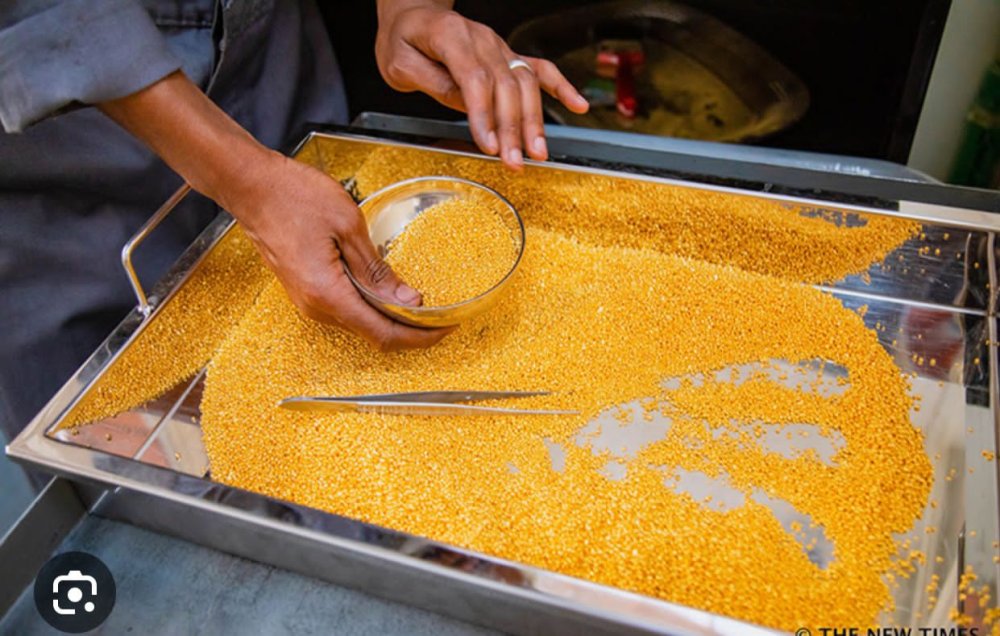
Additionally, both nations are exploring new markets for products like coffee, beans, lentils, and pulses. With Pakistan’s population of 250 million, there is considerable potential for Rwandan goods in this large consumer market.
High Commissioner Khan also emphasized the potential for collaboration in agriculture, industry, and technology. “Pakistan produces some of the world’s best lightweight tractors, which are ideal for Rwanda’s hilly terrain,” he said, noting that both countries could benefit from stronger ties in this area.
The envoy also pointed to the growing importance of Information Technology. Rwanda is becoming known for its strong digital economy, while Pakistan is positioning itself as a global leader in IT-based solutions, providing further opportunities for collaboration.
Additionally, High Commissioner Khan revealed that Pakistani investors are increasingly viewing Rwanda as a strategic hub, not just for the local market but also for the wider East African region.
“We are working on joint ventures where Pakistani companies will manufacture in Rwanda and then re-export to other countries,” High Commissioner Khan explained, highlighting potential in sectors such as textiles, pharmaceuticals, and agriculture.
Looking ahead, the High Commissioner expressed optimism about the role of bilateral agreements in promoting economic growth.
One exciting prospect is the development of a free industrial zone, which the envoy explained is currently in the early stages.
He explained that they are engaging with relevant institutions to expedite this process, promising to create employment opportunities for the local workforce.
Currently, there are around 500 Pakistanis living in Rwanda, along with their families. They are primarily involved in the car business, hotel and restaurant management, and IT services, while others work in international organizations.
With a longstanding relationship spanning 62 years, Rwanda and Pakistan continue to collaborate across various sectors, including trade, health, and investment, further strengthening their partnership.
In this article, we highlight notable events and achievements in the tech sector over the past 12 months.
{{Launch of Kigali Innovation City}}
After more than a decade of conceptualization, Rwanda, in September, laid the foundation stone for Kigali Innovation City in Gasabo District.
Spanning 61 hectares, the project aims to promote innovation and technology-driven growth. With an estimated cost of $2 billion, the development will host international universities, technology companies, commercial facilities, and more.
The initiative is spearheaded by the Government of Rwanda through the Rwanda Development Board (RDB), in collaboration with Africa50, an investment platform focused on infrastructure projects that drive development across Africa.
Kigali Innovation City will feature a state-of-the-art center with specialized bases for Artificial Intelligence and cybersecurity. Notably, some buildings will feature solar-powered roofs, and electric vehicles will serve as the primary mode of transportation within the area, further promoting efforts toward environmental sustainability.
Dr. Francis Gatare, CEO of RDB, lauded the project as a major milestone for Rwanda in its quest to establish a knowledge-based and technology-driven economy.
“We are here to celebrate this achievement for our nation, its leadership, and the people of Rwanda, who are committed to building a knowledge-based economy that fosters innovation and sustainable development,” he said.
Once fully completed, the project is expected to generate $150 million annually from the technology developed there and attract $300 million in foreign investment.
{{Rwanda Unveils National FinTech Strategy to Spur Financial Growth
}}
Rwanda’s Ministry of ICT launched a five-year FinTech Strategy (2024–2029) on November 28, 2024, aiming to foster a robust FinTech ecosystem and position the country as a regional financial hub.
The strategy prioritizes improving financial literacy, expanding access to investment, enhancing regulatory frameworks, and developing digital infrastructure.
“Today marks a significant milestone in Rwanda’s digital transformation journey as we launch our national fintech strategy. This strategy represents not just a policy document but our country’s commitment to positioning Rwanda as a leading fintech hub in Africa,” Rwandan Minister of ICT and Innovation Paula Ingabire said during the launch in Kigali.
Rwanda aims to attract 300 FinTech players, generate 7,500 jobs, and raise $200 million in investments by 2029.
{{AI Connect Hackathon}}
In September, Irembo, a Rwandan technology company behind the development of the government’s one-stop service platform, hosted its first-ever hackathon on Artificial Intelligence (AI).
The 48-hour competition, co-hosted by Irembo and the Centre for the Fourth Industrial Revolution (C4IR), brought together more than 20 teams of talented software developers to create solutions addressing real-world challenges and driving meaningful impact in sectors such as public services, healthcare, education, agriculture, financial inclusion, and cybersecurity.
21-year-old duo, Cedric Izabayo and Libériste Clarence, emerged as the winners of the hackathon, which was hosted in Nyarutarama from Friday, September 27 to Sunday, September 29, 2024.
The young software engineers’ AI project, dubbed Bwenge, was ranked first among 18 projects reviewed by judges, securing them Rwf 5 million in cash prizes and VIP passes to the Global AI Summit on Africa in April 2025.
Bwenge is an AI-powered chatbot that allows any citizen with a phone, even without internet access, to make a call and access digital government services. The winning team integrated the bot with IremboPay, ensuring seamless payments.
Peter Charles Djomga, Director of Software Engineering at Irembo, said the project has the potential to revolutionize access to information, especially for persons with limited internet access.
The second place went to a team of four developers with a technology titled Immersive AI. It’s a platform that enables businesses and individuals to create their own AI workflow agents to automate processes and improve productivity. The project developers included Dirac Murairi, Landelin Gihozo, Julien Barezi and Kevin Nkusi.
Somatek AI clinched the third place. The project was also undertaken by group of four young software developers, who built an AI-powered browser extension that simplifies complex technical documentation. The team, comprising Janvier Ntwali, Laura Celine Ishimwe, Dean Daryl Murenzi, and Leny Pascal Ihirwe, developed the extension to assist the government in its recently rolled-out scheme to train one million coders under the second National Strategy for Transformation (NST2) by 2029.
The two teams won Frw2 million and Frw1 million, respectively.
The hackathon underscored Rwanda’s commitment to leveraging artificial intelligence for sustainable development.
{{Digital Innovation in Museums}}
The introduction of virtual reality (VR) technology in Rwandan museums on August 30, 2024, has revolutionized the visitor experience by offering immersive historical and cultural exhibits.
The initiative was launched in partnership with Innorios, a local tech company specializing in the implementation of VR solutions.
The project offers two distinct types of virtual tours: a self-guided 360-degree virtual tour accessible via smartphones and computers and a more immersive VR experience using headsets. With this solution, one can experience facilities such as the Ethnographic Museum in Huye from the comfort of their living room.
“The self-guided virtual tour allows users to navigate through the museum’s exhibits at their own pace. With just a few clicks, visitors can move from one section to another, exploring artifacts in stunning 3D detail,” said Musa Shumbusho, Founder of Innorios, during the launch.
{{Broadband and Connectivity Developments}}
Over the past 12 months, Rwanda has continued its efforts to expand high-speed internet access nationwide, contributing to its Smart Rwanda Master Plan.
Partnerships with global tech firms have bolstered infrastructure for digital services and e-governance. For example, MTN Rwanda, the country’s largest telecommunications company, and Ericsson, on November 5, 2024, announced the completion of the expansion and modernization of MTN’s network in Kigali, Rwanda, to extend network coverage, enhance user experience in the country, and prepare the network for the full rollout of 5G.
With the expansion and modernization, communities in the country are expected to benefit from boosted connectivity and digitization, better access to education and healthcare, and more. These benefits are expected to bolster stronger social connections, stimulate economic development, and empower communities.
{{Hanga Pitchfest 2024}}
The Ministry of ICT and Innovation, in partnership with the Rwanda Development Board (RDB) and the UN Development Programme (UNDP), successfully organized the 2024 edition of the Hanga Pitchfest in November in Kigali.
The competition, held annually, supports young entrepreneurs with ideas that could contribute to Rwanda’s development and technological progress.
The Hanga Pitchfest 2024 concluded with five youth-led projects winning a combined total of Frw110 million, aimed at promoting innovative, technology-driven solutions.
This year’s winner, Sinc-Today Ltd, received Frw50 million for its platform that revolutionizes event planning and coordination.
The second and third prizes went to Geuza Ltd (which manufactures assistive devices for people with disabilities) and Afya Wave (focused on producing ultrasound devices for medical use), receiving Rwf 20 million and Frw15 million, respectively.
The competition recognizes projects addressing diverse issues, from waste management to healthcare innovation. Finalists were selected from over 300 entries and awarded based on their potential impact.
Speaking at the event, Prime Minister Dr. Edouard Ngirente emphasized the importance of empowering Africa’s youth through investment and collaboration to drive sustainable development.
He stressed the need for further investment in technology skills, which are essential for job creation and economic growth in the digital age. Additionally, the government launched the Hanga Hubs initiative, in partnership with the EU, which aims to support entrepreneurs and foster innovation in Rwanda’s districts.
Since its inception in 2021, Hanga Pitchfest has supported over 200 projects and invested over Frw600 million in entrepreneurial development, cementing its role as a key player in Rwanda’s technological and economic future.
Meanwhile, one of the high-level tech events scheduled for this year, the Global AI Summit on Africa, which was originally set for October, was rescheduled to April 2025. The event is being organized by the Centre for the Fourth Industrial Revolution Rwanda, in collaboration with the World Economic Forum.
According to the organizers, the summit will bring together distinguished government and business leaders, along with experts from academia and civil society, to engage in an in-depth, collaborative dialogue on AI’s transformative role in shaping Africa’s future. The summit will be held under the theme, “AI and Africa’s Demographic Dividend: Reimagining Economic Opportunities for Africa’s Workforce.”
The organizers stated that the event was postponed as part of a strategic effort to broaden perspectives, ensuring the achievement of their collective goal of fostering impactful discussions and forging transformative partnerships that will advance Africa’s AI agenda.