“We saw it coming,” Blinken said in an interview with The New York Times, noting the United States made sure that “Ukraine was prepared” by sending it billions of dollars and weapons since September 2021.
“What we’ve had to look at each and every time is not only should we give this to the Ukrainians but do they know how to use it? Can they maintain it?” he added.
When asked whether it is time to end the conflict, Blinken said a cease-fire would likely give Russia a break, and that any cease-fire must ensure Ukraine can “deter further aggression,” which, he noted, could be achieved through NATO membership.
“Russia has been talking about this for many years,” said Russian Foreign Ministry spokesperson Maria Zakharova on Saturday in response to Blinken’s remarks, noting that they underscored “the rationale behind Russia’s objective on the demilitarization of Ukraine.”
“We voiced concerns over the United States and Britain pouring arms into Ukraine, the endless NATO exercises in the Black Sea that violate Russian borders, and the dangerous proximity of Western military aircraft to civilian airliners in our airspace,” she added.
The Kremlin has repeatedly criticized Western arms shipments to Ukraine, claiming they escalate the conflict, obstruct peace efforts, and drag NATO members into direct involvement.
According to the U.S. Department of State, as of Monday, the United States has provided Ukraine with 61.4 billion U.S. dollars in military assistance since the conflict. And it has “approved” its NATO allies to deliver 12,000 anti-armor systems of all types, over 1,550 anti-air missiles, radars, night vision devices, machine guns rifles and ammunition, and body armor, to Ukraine.
The Haitian National Police confirmed the arrival of 75 Guatemalan soldiers and eight Salvadoran troops in a statement on Friday, December 3, 2024.
The forces are joining the ongoing efforts to restore law and order in Haiti, where gang violence has ravaged the country for years.
A second contingent of 75 Guatemalan soldiers is also expected to arrive soon, further strengthening the deployment and supporting the Haitian National Police’s efforts to tackle the criminal gangs wreaking havoc across the nation.
The MSS mission, authorized by the United Nations Security Council in October 2023, has been tasked with assisting the Haitian government in re-establishing security amidst growing unrest and gang-related violence.
Kenya, leading the mission, initially deployed 400 police officers to Haiti in June 2024.
The UN extended the mission’s mandate until October 2025 in a unanimous decision made in September 2024, amid warnings from experts and the Haitian government about the dire situation.
In a recent investigative report, the UN offices in Haiti documented a massacre in Port-au-Prince by the Wharf Jérémie gang, with at least 207 executions recorded between December 6 and 11, 2024.
With over 5,350 people killed in 2024 alone and 17,000 dead or injured since the gang’s rise in 2022, the UN highlighted the urgent need for international intervention.
Recent reports indicate that more than 700,000 people have been forced to flee their homes due to gang violence and insecurity. The number has been steadily increasing, with a significant rise between 2022 and 2023.
It is estimated that 2.7 million Haitians, including 1.6 million women and children, live in areas under gang control. The residents face daily threats of violence, extortion, and restrictions on their movement.
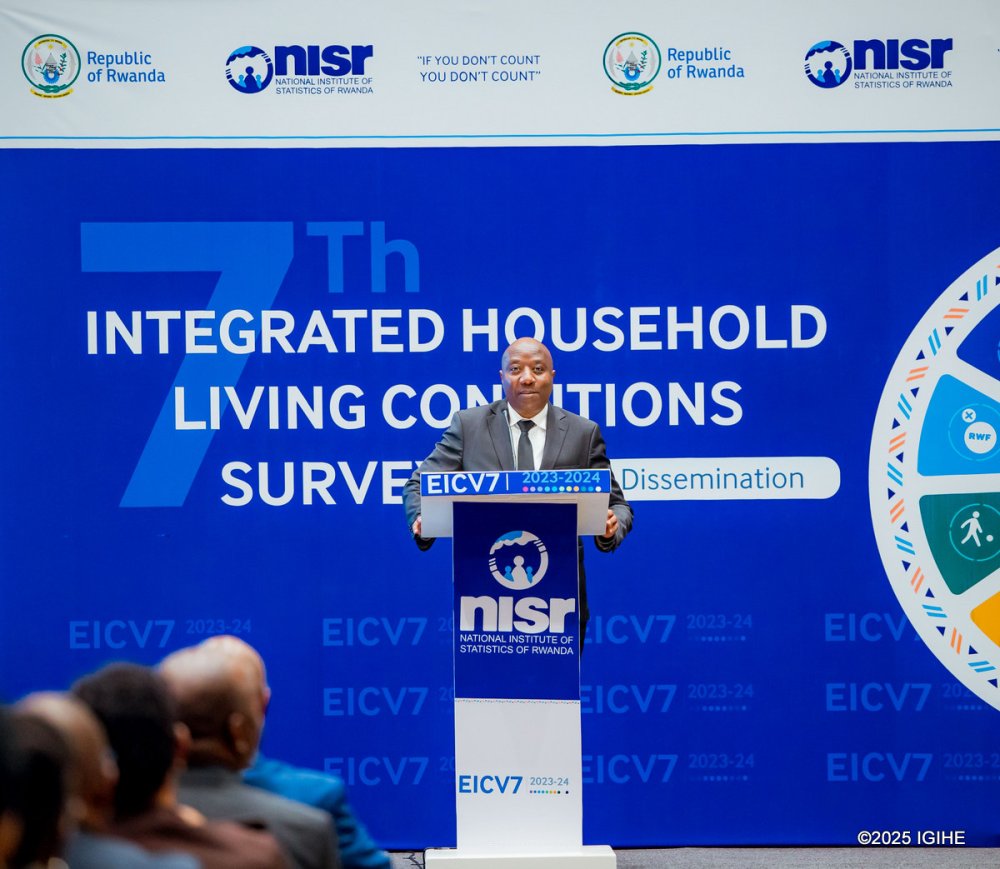
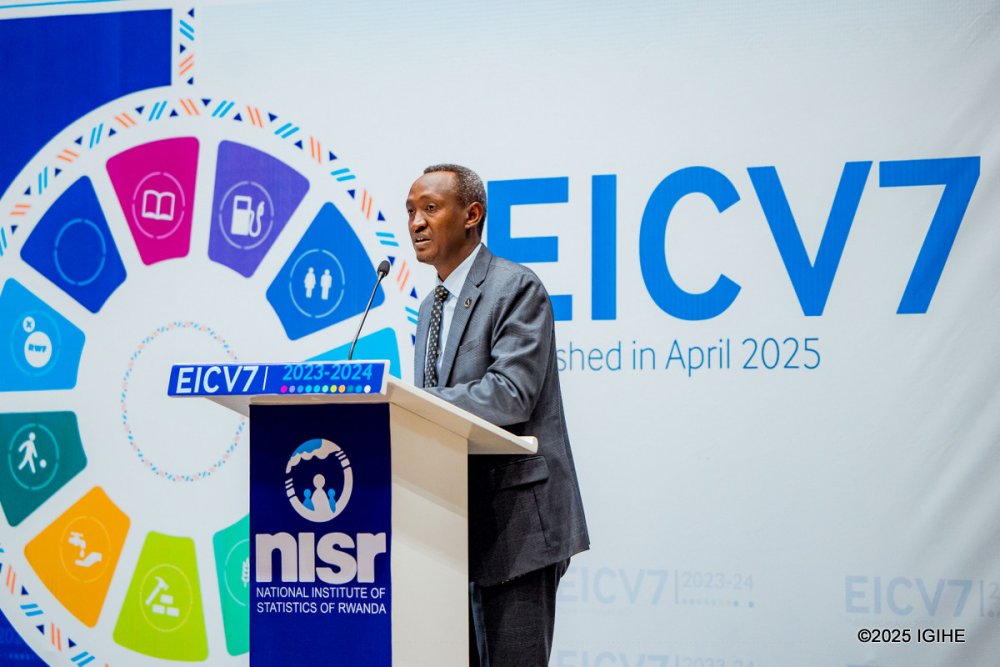
According to the Seasonal Agricultural Survey (SAS) 2024, conducted by the National Institute of Statistics of Rwanda (NISR), the country saw significant increases in crop yields, driven by sustainable farming practices and effective use of agricultural inputs.
The report highlights an impressive 30% increase in maize production during Season A, with yields reaching 507,985 metric tons compared to 390,879 metric tons in 2023.
The report attributes the growth to the widespread adoption of improved seeds and fertilizers. The average maize yield for the season stood at 2 tons per hectare, with large-scale farmers achieving up to 4.6 tons per hectare.
Paddy rice also saw notable gains, with production increasing by 8% in both Seasons A and B.
In 2024, paddy rice yields averaged 4.1 tons per hectare, showcasing the effectiveness of enhanced farming techniques and irrigation methods.
Sustainability was a cornerstone of Rwanda’s agricultural success. The SAS report revealed that 90.6% of farmers implemented anti-erosion measures in Season A, with this figure rising to 92.9% in Season C.
“In 2024, 90.6% of farmers implemented anti-erosion measures in Season A, rising to 92.9% in Season C, showcasing the widespread adoption of practices vital for preserving soil fertility and combating land degradation in Rwanda’s hilly terrain,” the report reads in part.
Irrigation practices also saw significant adoption, particularly in Season C, where 58.2% of farmers utilized irrigation systems. This marks a substantial increase from 7.5% in Season A, reflecting the government’s efforts to expand irrigation infrastructure and reduce reliance on unpredictable rainfall.
The use of agricultural inputs played a crucial role in improving yields. In Season A, 39.7% of farmers used improved seeds, a slight increase from 37.1% in 2023.
Organic fertilizers were used by 89.1% of farmers, while 64.5% opted for inorganic fertilizers. Additionally, the application of pesticides increased to 39.8%, up from 34.5% in the previous year.
These inputs have been instrumental in combating pests, diseases, and nutrient deficiencies, ensuring that crops reach their full potential.
Despite challenges such as a decline in the cultivated area for some crops, Rwanda’s agricultural sector demonstrated resilience. The area under Irish potatoes decreased by 3% in Season A, but production still managed to increase by 1%, reaching 460,830 metric tons.
This was made possible through the efficient use of inputs and improved farming techniques.
Similarly, while the cultivated area for sweet potatoes in Season A fell by 10%, production rose by 4%, totalling 692,945 metric tons.
Rwanda’s achievements in 2024 reflect the success of its Strategic Plan for Agriculture Transformation (PSTA 5), which emphasizes productivity, value addition, and sustainability. By investing in high-quality agricultural inputs, promoting sustainable practices, and expanding irrigation systems, the country is working to expand its economy through agricultural production.
Heads of State, Ministers, experts, and key stakeholders from across the continent will convene to deliberate on strategies that could transform Africa’s agrifood systems over the next decade.
The summit, jointly organized by the African Union Commission (AUC) and the Government of Uganda, will center on endorsing two cornerstone documents; The Kampala CAADP Declaration and the Ten-Year CAADP Strategy and Action Plan (2026-2035).
These documents outline a vision for agricultural growth that prioritizes inclusivity, resilience, and sustainability, addressing Africa’s persistent challenges in food security, climate resilience, and rural development.
As the 2025 targets set by the 2014 Malabo Declaration approach, concerns have emerged that Africa is falling short of its ambitious goals, including eradicating hunger, boosting intra-African trade, and building resilient agricultural systems.
This extraordinary session provides a platform to recalibrate efforts and set the continent on a trajectory toward achieving these aspirations.
On the opening day, Ministers responsible for Agriculture, Rural Development, Water, and Environment will convene to review the draft documents. Discussions will then expand on January 10 to include Foreign Ministers, ensuring a multidisciplinary approach to Africa’s agricultural transformation.
The summit will culminate on January 11 with a high-level assembly of Heads of State and Government, who are expected to officially endorse the documents, solidifying their commitment to Africa’s agricultural future.
The Ten-Year CAADP strategy and action plan acknowledges the complexities of the challenges ahead.
Political instability, climate change, health crises, and barriers to gender and youth inclusion are just some of the risks the strategy aims to address.
Proposed solutions include adaptive agricultural policies, enhanced health surveillance systems, peace-building initiatives, and measures to stabilize food prices and bolster household resilience.
At its core, the summit aligns with the African Union’s Agenda 2063 vision of “An Integrated, Prosperous, and Peaceful Africa, driven by its own citizens.” Agriculture, as the backbone of the continent’s economy, is central to this vision.
By improving food security, increasing rural incomes, and fostering economic development, the CAADP agenda has the potential to lift millions out of poverty and ensure Africa can feed its growing population in the face of environmental and economic uncertainties.
Since its inception in 2003, CAADP has played a transformative role in Africa’s agricultural landscape. The program’s early milestones, guided by the Maputo Declaration, laid the foundation for improved food security and nutrition while reducing rural poverty.
The subsequent Malabo Declaration of 2014 built on this progress, introducing ambitious goals for agricultural trade, resilience, and hunger eradication. However, as highlighted during the African Union Assembly in February 2024, achieving these targets has proven challenging, necessitating this renewed focus through the post-Malabo CAADP agenda.
Uganda’s selection as the summit’s host underscores its commitment to agricultural development. As a nation with significant investment in agribusiness and rural transformation, Uganda is well-positioned to lead discussions on shaping Africa’s agrifood systems.
The country’s collaboration with the African Union Commission and development partners ensures that the summit will yield actionable outcomes to guide the continent’s agricultural policies for the next decade.
The Extraordinary Summit will also address the importance of inclusivity in agriculture. Women and youth, often marginalized in decision-making processes, will be central to the discussions.
By eliminating barriers and creating opportunities, the CAADP strategy seeks to harness the untapped potential of these groups, driving innovation and growth in the agricultural sector.
As Africa faces pressing challenges from climate change to political instability, the Kampala summit represents a decisive moment. By fostering cooperation and aligning national policies with continental goals, the African Union aims to ensure that agriculture becomes a driving force for sustainable development, economic growth, and resilience.
With its diverse assembly of leaders, experts, and stakeholders, the summit promises to set a transformative agenda for Africa’s agricultural future.
He will also resign as the leader of the People’s Party.
Nehammer said on X that his party had ended the negotiations with the Social Democratic Party to form a new government due to disagreement over key issues.
His surprise move came just one day after the NEOS party pulled out of the coalition negotiations to form an unprecedented three-party government. Following the NEOS’ withdrawal, the People’s Party and the Social Democratic Party confirmed late on Friday to continue their two-party coalition talks.
Negotiations between the three parties had dragged on since mid-November following Austrian President Alexander Van der Bellen’s decision in October to task the People’s Party with forming a government.
In September’s parliamentary election, the far-right Freedom Party came first with around 29 percent of the vote, followed by the People’s Party and the Social Democratic Party with 26.3 percent and 21.1 percent respectively. While the Freedom Party won the parliamentary presidency, it has so far been unable to find coalition partners to form a government.
Austrian news agency APA said on Saturday that the path to forming a new government remains unclear.
The agency said the business wing of the People’s Party might now consider a coalition with the Freedom Party following the resignation of Nehammer, who has repeatedly ruled out the possibility of a coalition with the far-right party under its leader Herbert Kickl.
A snap election is also possible, but analysts say the Freedom Party stands to gain the most if one is called. Recent polls indicated rising public support for the party, positioning it as a potential beneficiary of the political deadlock.
The initiative is part of ongoing efforts to leverage technology across various sectors. Over the past five years, the police have implemented speed-monitoring cameras to enhance road safety using artificial intelligence.
Since the installation of the first speed camera in Kanzenze, Bugesera District, in July 2019, which yielded positive results, additional cameras have been placed in locations like Nyagasambu, Kamonyi, Ryabega, and Kanyinya. The cameras are now widespread across Kigali and other provinces, and drones will soon be added to the arsenal.
IGIHE has learnt that the drones, which may have been tested in Musanze District, Northern Province, are ready for deployment.
In an exclusive interview, ACP Boniface Rutikanga, spokesperson for the Rwanda National Police, explained that the use of drones is a key part of the force’s effort to improve service delivery by providing real-time, accurate information.
He emphasized that the ability to respond quickly and make informed decisions is critical for effective policing.
“Technology plays a central role in enhancing our ability to deliver timely services and respond efficiently,” Rutikanga stated.
When asked about the specific challenges prompting the adoption of drone technology, ACP Rutikanga mentioned that there were no significant obstacles.
The decision, he said, aligns with Rwanda’s broader focus on technology to expedite services and ensure professionalism.
“The use of drones is a natural progression for us, as we strive to meet the growing demand for efficient services and timely justice,” he added.
Rutikanga also shared that the police have already conducted several successful tests using drones. Over the past year, drones were used to monitor security in mining areas, especially in hard-to-reach locations.
The drones provided crucial data that allowed the police to address illegal mining activities effectively. Additionally, during the COVID-19 pandemic, drones were employed to broadcast public messages, a move that further demonstrated their potential in various policing roles.
“The tests have proven successful, and we’re now ready to expand their use to enhance road safety,” Rutikanga noted.
The police spokesperson highlighted several activities that drones will support beyond traffic enforcement. While many people associate drones primarily with penalizing traffic violations, Rutikanga pointed out that they will also help identify incidents like road blockages caused by accidents or stalled vehicles.
“For instance, drones will enable us to quickly identify and address a blocked road, reducing delays and improving traffic flow,” he explained.
The drones will also assist in detecting emergencies like fires, enabling quicker responses to protect lives and property.
As for their integration with existing systems, Rutikanga revealed that the drones will be equipped with cameras, and the data collected will be centralized for better decision-making.
This approach, he said, will enhance the effectiveness of the police in addressing both security concerns and traffic violations.
Deployment of the drones will begin in areas with the most pressing need, with plans to gradually expand their use across the country.
The police are also mindful of concerns regarding privacy, and Rutikanga assured that Rwanda’s data protection laws will be strictly adhered to.
“We operate within a legal framework that protects personal data and ensures that drone use complies with privacy regulations,” he affirmed.
To further ease public concerns, the Rwanda National Police plans to engage citizens through awareness campaigns. The campaigns will aim to explain the benefits of drone technology and clarify how it will be used to improve road safety and security.
Speaking at a press conference in Makamba province on January 3, 2025, Ndikuriyo was asked by a journalist to address Rwanda’s concerns about the ongoing collaboration.
The journalist referred to a statement by Rwanda’s Minister of Foreign Affairs and Cooperation, Olivier Nduhungirehe, who had expressed that Burundi should not be partnering with the terrorist group, given its aim to destabilize the country.
The collaboration between the Burundian military and FDLR has not only been mentioned by Rwanda but is also highlighted in a UN expert report, which states that they have been working together to fight against the M23 group in North Kivu, Democratic Republic of Congo.
“How does Rwanda get involved in Congo’s issues? Congo and Burundi have a military cooperation agreement, so how does Rwanda get involved? Rwandan soldiers have been going into Congo for over 30 years to fight these groups they accuse of genocide. If they haven’t eliminated them, it’s just the chaos they’re creating,” Ndikuriyo commented.
The Secretary-General of CNDD-FDD continued, “These are just excuses. Crying without reason! The Burundians have a good relationship with the Congolese, and they are helping each other. Is it wrong to help another? Why should that be upsetting? Why are you suffering over this? What does what happens on the other side have to do with them, given that they have their own border?”
Ndikuriyo echoed the words of the spokesperson for the Government of the DRC, Patrick Muyaya, who emphasized that no FDLR fighters are present in eastern DRC, as they supposedly do not have known bases there. However, this perspective differs from that of other DRC officials.
Among them, the Minister of Foreign Affairs, Thérèse Wagner Kayikwamba, and the spokesperson for the DRC military, Brigadier General Sylvain Ekenge Bomusa, have acknowledged that the group is indeed present in the region and has been destabilizing the security of the Congolese people for many years.
{{Border closure}}
Ndikuriyo told reporters that Rwanda had provided shelter to those who attempted to overthrow the government of Nkurunziza in 2015 and that it is not acceptable for a soldier who defects to be welcomed by another country.
He explained that Burundi had re-closed its border with Rwanda in January 2024, after briefly reopening it, due to attacks launched by those who tried to overthrow the Nkurunziza regime.
Ndikuriyo further stated that the leaders of the two countries are in constant communication, discussing what is right and wrong, and that once the issues that led to the border closure are resolved, the borders will be reopened.
The Rwandan government rejected Burundi’s allegations of assisting individuals destabilizing its security, explaining that it had disarmed those it sheltered when they entered Rwanda and handed them over to the United Nations Refugee Agency.
In 2023, Rwanda welcomed 25,927 tourists who visited the gorillas, compared to 20,035 the previous year.
The Volcanoes National Park was established as a protected area in 1925 as the Albert National Park of Belgian Congo.
After Rwanda gained independence in 1962, the surface area of the park within Rwanda became the Volcanoes National Park, which originally covered over 320 square kilometers.
Currently, the park covers an area of 160 square kilometers, bordering Uganda to the north and the Democratic Republic of Congo in the northwest.
In 2023, the Volcanoes National Park received 46,187 visitors, engaging in various activities including gorilla trekking, which costs $1,500 for foreigners, $500 for Africans and EAC nationals, while Rwandans benefit from a discounted fee of $200 if booked at least 72 hours in advance.
Visiting monkeys costs $100 for foreigners and Rwf4, 000 for Rwandans. Visiting Dian Fossey’s grave costs $75 for foreigners and Rwf4,000 for Rwandans. Visiting the Buhanga area of the park costs $40 for foreigners and Rwf3,000 for Rwandans.
Exploring caves costs $50 for foreigners and Rwf4,000 for Rwandans. Trekking in the forest and climbing any of the five volcanoes, including Muhabura, at an altitude of 4,127 meters, visible from across the country, costs $55 for foreigners and Rwf3,500 for locals.
There’s also Mount Gahinga at 3,473 meters, Sabyinyo at 3,669 meters, known for its jagged peaks, and Bisoke, attracting tourists with its crater lake at 3,711 meters, costing $75 for foreigners and Rwf4,000 for locals. Mount Karisimbi, the highest in the country at 4,507 meters, costs $400 for foreigners and Rwf30,000 for locals to climb.
These large apes inhabit the high mountain forests of the Virunga range, which spans Rwanda, to Bwindi in Uganda, and Sarambwe in the Democratic Republic of Congo.
Their scientific name is Gorilla beringei beringei, named after German soldier Robert Von Beringe, who first reported them in 1902.
These animals have moved from being critically endangered to now being classified as endangered, as reported by the World Wildlife Fund.
After extraordinary conservation efforts, medical care, and protection from poachers, led by the Rwandan government through the Rwanda Development Board, the most recent census indicates that there are now 1,063 gorillas worldwide. In the Virunga mountain range, which includes Rwanda, there are 604 gorillas.
Gorillas evoke strong emotions in those who visit them, with some considering it a once-in-a-lifetime experience. The one-hour encounter with these creatures is often described as unmatched by any other experience.
Gorilla tourism attracts people because visitors leave amazed by their human-like nature, their way of life in the forest, and their social structures that resemble those of humans.
One of the most astonishing aspects of mountain gorillas is their size and strength, with mature females weighing between 150 and 200 kilograms, and males between 200 and 250 kilograms. They can live between 35 and 45 years if they mature without encountering major issues.
Their babies are born after a nine-month gestation period weighing between three and five kilograms, and are weaned at around three and a half years.
In its lifetime, an adult female gorilla can give birth to between four and six offspring, although a notable exception is Kampanga from Sabyinyo family, who gave birth to eight.
Currently, the oldest gorilla is a female named Kibyeyi a member of the Hirwa family, who is 49 years old. The youngest is a one-month-old baby of the Sabyinyo family.
Their daily life closely resembles that of humans, mainly focused on survival, including feeding on vegetation and bamboo shoots. An adult gorilla can eat up to 15% of its body weight in vegetation per day, meaning a 200-kilogram gorilla consumes 30 kilograms of vegetation daily.
After feeding, they rest for over an hour, and at night, they make nests where they sleep. They live in families led by a dominant male, usually identified by a silverback, who is responsible for the family’s protection and territory, although they live in relative freedom, with families establishing their boundaries within the park.
Currently, 14 families are visited by up to eight tourists each per day, limiting the number of daily visitors to 112. However, these are not the only gorilla families, as new families form as the gorilla population grows. These families are closely monitored by experts until they are ready to be visited by tourists.
Initially, the Susa, Sabyinyo, and Group 13 families, now known as Agashya, were the first to be visited after American researcher Dian Fossey began studying gorilla behavior and conservation and habituating them to tourists in 1979.
The Susa family later splits into three new families: Karisimbi, Igisha, and Isimbi. This expansion occurs as the gorilla population increases.
This knowledge and data have been gathered by experts who monitor the gorillas at Volcanoes National Park, in collaboration with conservation partners such as The Dian Fossey Gorilla Fund, Gorilla Doctors, and the International Gorilla Conservation Program.
To protect the park’s wildlife, 149 daily staff members monitor the animals in the high-altitude forest, while 27 others assist tourists visiting the park.
Dusseldorf airport reported that “a nationwide IT malfunction” at the federal police led to delays in both entry and exit at border control.
According to Bild, passengers were experiencing waiting times of up to two hours at Dusseldorf airport, while passengers at Berlin airport also expected similar delays.
At 18:13 local time (1713 GMT), Dusseldorf airport, one of the most affected ones, announced that the IT malfunction at the federal police had been resolved, allowing unrestricted entry and exit for non-Schengen flights.
The outage, lasting approximately four hours, was attributed to a technical problem in the Federal Criminal Police Office’s information system. Airports in Frankfurt, Hamburg, Munich, and Berlin experienced only minor delays.
Heiko Teggatz, chairman of the Federal Police Union, criticized the government for inadequate IT modernization funding, highlighting a lack of approximately 150 million euros (154.48 million U.S. dollars).
According to the FAO, the Food Price Index for 2024 stood at 122 points, 2.6 points lower than the 2023 average.
Despite a general upward trend in most food categories—such as dairy, meat, and vegetable oils—this increase was not enough to counterbalance the declines in cereals and sugar.
The FAO Cereal Price Index saw a notable decrease of 13.3% in 2024 compared to 2023, while the Sugar Price Index dropped by 13.2% year-on-year.
The report attributes the decline in cereal prices to falling wheat and coarse grain prices, which had a major impact on the overall food price landscape.