As part of his visit, Gen. Muganga delivered a lecture to senior officers attending the Senior Command and Staff Course in Jinja, a move hailed as a significant step in regional military cooperation.
The lecture titled “The Pursuit of African solutions to African problems: A case of Rwanda’s bilateral interventions on the African continent” examined Rwanda’s contributions to finding solutions to security problems affecting allies and partners on the continent.
He reiterated the need for African countries to address continental security challenges by harnessing opportunities of both bilateral and multilateral arrangements in order to build internal resilience.
“I thank General Muganga for responding to my invitation positively and coming to deliver a lecture of opportunity to officers… Long live the brotherly relations between UPDF and RDF! God bless Uganda and Rwanda!” Gen. Muhoozi posted on X.
The visit comes just weeks after Gen. Muhoozi concluded a three-day trip to Rwanda, from March 20 to 22, during which he met with President Paul Kagame, First Lady Jeannette Kagame, and RDF senior leadership.
The Uganda military chief’s visit included a lecture at the RDF Senior Command and Staff College in Nyakinama, Musanze District, where he spoke on peacekeeping and security in Africa.
At the time, Muhoozi underscored the importance of defence diplomacy in securing regional peace.
“When we combine the strength of our powerful armies, there is no challenge we cannot overcome together,” he said.
His Rwandan visit also featured high-level talks with RDF commanders and Ugandan military officials, where the two sides explored avenues for enhanced cooperation in defence and regional security.
The back-to-back visits between the two military chiefs reflect a renewed momentum in military engagement and diplomatic relations between Uganda and Rwanda, two countries whose cooperation is seen as vital to the region’s stability.
The public display took place on Saturday, May 10, 2025, in what M23 described as a direct response to violations of a recently agreed ceasefire.
In a statement, AFC/M23 spokesperson Lawrence Kanyuka said the captured individuals were responsible for recent insecurity in and around Goma and South Kivu.
The group praised the ARC for its “professionalism” and claimed their actions had halted civilian massacres in the region.
AFC/M23, which controls large swathes of eastern Congo, also accused Burundi of playing a destabilising role by deploying troops in support of the Kinshasa regime and by financing and arming Wazalendo militias via the eastern Congolese town of Uvira.
“We commend the professionalism of the ARC, whose actions not only brought an end to the massacres of civilians… but also exposed Burundi’s involvement,” the statement read.
The rebel group further accused the Congolese government, led by President Félix Tshisekedi, of repeatedly violating the April 23 joint declaration and the unilateral ceasefire announced by AFC/M23.
“We alert the national and international community to the repeated violations by the Kinshasa regime,” the group stated, reaffirming its commitment to protecting civilians and “eliminating the threat at its source.”
Ce samedi 10 mai 2025, l'Armée Révolutionnaire Congolaise (ARC) a capturé et présenté aux médias des éléments des forces du régime de Kinshasa, notamment des FARDC, des Wazalendo et des FDLR, responsables de l'insécurité à Goma.
— Lawrence KANYUKA (@LawrenceKanyuka) May 11, 2025
The developments come just weeks after the two parties issued the rare joint statement, signalling a mutual willingness to halt hostilities and work toward a permanent truce.
The Qatar-mediated talks raised cautious optimism after years of failed ceasefires in the volatile eastern region, where more than half a dozen such agreements have collapsed since 2021.
Saturday’s public parading of captured combatants and the subsequent accusations could undermine fragile progress and reignite tensions, casting doubt on the durability of the current peace efforts.
In a public notice released on Saturday, RGB stated that Grace Room had engaged in prayer-related activities inconsistent with its registered mission, leading to the decision to revoke its legal status.
The move underscores RGB’s commitment to ensuring that all registered organizations adhere strictly to the mandates under which they were approved.
“Grace Room has been engaging in prayer-related activities that are inconsistent with its stated mission,” the notice reads.
RGB emphasized that any deviation from an organization’s declared objectives can trigger administrative action, including the withdrawal of legal recognition.
RGB reiterated its message to all faith-based entities, urging them to uphold the integrity of their legal status by aligning their operations with approved objectives and national laws.
The agency assured continued oversight and enforcement across the sector.
“The Rwanda Governance Board reminds all Faith-Based Organisations of their obligation to uphold the integrity of their legal personality,” the statement said. “Continued oversight and enforcement will be applied to ensure accountability and lawful conduct within the sector.”
Grace Room Ministries is led by Pastor Julienne Kabirigi Kabanda and is based in Nyarutarama. It is currently one of the most attended ministries in the country and has recently held high-profile events at the BK Arena, attracting large crowds.
Attempts to reach Pastor Kabanda by phone for comment were unsuccessful.
Pastor Julienne Kabanda has previously stated that she founded Grace Room Ministries in 2018 after receiving a divine revelation.
According to her, the ministry was established with a vision to help two million people receive Jesus Christ and support the vulnerable within a span of seven years.
This journey offers meaningful parallels for Rwanda, where tea remains a vital contributor to both rural livelihoods and national export revenues.
Jason Choi, Director of Sunwah Group and President of its GBA and Southwest Region, described the early challenges in Malipo: “Each household made tea in its own way—sometimes in a barbarous way. Some would cut down the tea tree entirely, harming both the environment and sustainability.” To change this, Sunwah Group invested in a modern tea processing facility.
Since its October 2023 launch, the Malipo Sunwah Tea Factory has processed over 60 tons of tea leaves, created 28 products, and introduced 11 varieties of “International Friendship Tea.” It now collaborates with 15 cooperatives and supports over 8,000 direct and indirect jobs.
The factory’s goals are two-fold: improving local livelihoods and building a standardized, globally recognized tea industry. Malipo’s tea is now being positioned for both domestic and international markets, including Africa.
Rwanda’s own tea journey, though unique in context, shares striking similarities in ambition and reform. Rwanda’s tea production has steadily increased from 5,910 tons in 1980 to 40,003 tons by June 2024.
Smallholder farmers contribute about 65 percent of the green leaves used in production, while industrial blocs account for the rest. In 2023/2024 alone, Rwanda earned 114.8 million USD from 38,467.7 tons of tea exports, according to the Rwanda Development Board.
Notably, about 97.3 percent of Rwanda’s tea exports remain in raw form. However, the distribution of these exports offers insight into the evolving market dynamics.
Eighty percent of Rwanda’s tea exports are sold via auctions, where prices can fluctuate based on demand and quality. 17.3% are sold directly to buyers, enabling a more stable price and fostering long-term relationships with international tea importers.
A modest 2.7 percent is consumed locally, a figure that reflects the nation’s commitment to expanding its export markets.
Despite these figures, Rwanda is working to shift the focus toward value-added products and greater market diversification. For instance, initiatives to increase the processing of tea into ready-to-sell products, such as tea bags, are in progress to reduce dependence on raw exports and increase revenue per unit.
The government’s drive to plant 40 million new tea seedlings as part of a broader sustainability and industry transformation strategy further underlines Rwanda’s vision to build a globally competitive tea industry.
In Malipo, the transformation was accelerated by both private investment and proactive local governance. “Even at night, government officials would offer help—talking to villages and farmers the next day,” said Choi. Diana Yinan Dai, Chief Representative of Sunwah Tea in Beijing and Yunnan, highlighted the transition from informal, manual production to a more mechanized, skill-based industry.
“We teach the locals how to make the tea properly, and they get paid… Now tea has become an industry,” she said.
This modernization has had a tangible economic impact. By 2024, Malipo’s GDP hit 11.05 billion yuan, with agriculture and related sectors contributing 3.06 billion. The average rural income rose by 7.4 percent to 16,679 yuan. Chaping Mountain’s 133-hectare ancient tea garden now stands as a cultural and economic icon.
Rwanda has similarly invested in modernizing agriculture. Digital transformation, rural infrastructure, and strategic investor partnerships are enhancing productivity and export readiness.
Digital payment systems are being rolled out across the sector to improve efficiency and transparency. These changes are expected to yield long-term cost savings and reinvestment opportunities.
Rwanda’s tea industry has also gained international recognition. Rwanda Mountain Tea Ltd won first prize for BP1 (Kitabi) at the 2015 Gold Medal Tea Competition hosted by the Tea Associations of the USA and Canada, affirming the country’s quality credentials.
Drawing a compelling parallel, the experiences of Rwanda and Malipo underscore the potential for even geographically challenging regions to emerge as significant players in the global agricultural landscape. Both their journeys highlight the transformative power of innovation, strategic partnerships, and the modernization of agricultural value chains.
This transformative move builds on a longstanding partnership between the two institutions and aims to unlock up to $1 billion in lending for MSMEs in the region, with a projected impact of creating or sustaining more than 50,000 jobs.
Building on a robust collaboration established in 2018, which was later enhanced in 2020 with a $75 million facility, this renewed partnership represents the largest single guarantee engagement in AGF’s history. It targets MSMEs in Kenya, Uganda, Rwanda, Tanzania, and the Democratic Republic of Congo (DRC), with plans to extend to future Equity Group subsidiaries over the next 10 years.
The framework will be implemented in three phases, starting with an initial USD 115 million tranche already committed to the five core subsidiaries. It will cover loans to MSMEs, with a focus on women-owned, youth-led, and green enterprises. To date, the AGF–Equity partnership has unlocked over $160 million in loans for nearly 2,000 MSMEs, including 500 women-led and 900 youth-led businesses.
“This expanded partnership with the African Guarantee Fund underscores our shared vision of empowering MSMEs, which are the backbone of African economies,” said Dr. James Mwangi, Managing Director and CEO of Equity Group. “By enhancing access to finance and promoting sustainable business practices, we are investing in the future of our communities, preserving jobs and driving inclusive growth across the region.”
The initiative reflects a broader strategy by Equity Group to align its lending with high-impact sectors and support its Africa Recovery and Resilience Plan (ARRP), which emphasizes strategic partnerships and collaborative development. According to Dr. Mwangi, “We see a unique opportunity to deepen our focus on high-impact SME sub-sectors, including agriculture, women- and youth-led enterprises, among others.”
AGF Group CEO Jules Ngankam also emphasized the depth of impact expected from the renewed partnership. “By supporting the bank to accelerate SME financing, we envision several development impact indicators, including increasing the number of people employed and engaged in businesses and growth of enterprises from one stage to another, for instance, from Small to Medium enterprises,” he said.
Part of the initiative’s strength lies in its alignment with the African Development Bank’s Affirmative Finance Action for Women in Africa (AFAWA) Guarantee for Growth program.
This program aims to unlock up to $3 billion for women-led businesses in Africa. Through the AGF–Equity partnership, women entrepreneurs will benefit from increased guarantee cover and receive technical support via the Equity Group Foundation, helping to close the persistent gender finance gap.
The partnership also places environmental sustainability at the core of its mission. Through AGF’s Green Guarantee Facility and Equity’s support for coastal and freshwater livelihoods, both organizations are championing green and blue economy activities that promote sustainable use of natural resources.
In addition to financial support, AGF will continue to build capacity within Equity Group through specialized training programs, focusing particularly on gender-smart investing—an area that is increasingly crucial for ensuring inclusive growth.
Equity Group, a Pan-African financial services powerhouse listed on several stock exchanges, has grown to serve over 21.6 million customers with an asset base of $13.96 billion. Its diversified portfolio spans banking, insurance, fintech, investment, telecom, and social impact. In 2024, it was named the second strongest financial brand in the world by Brand Finance.
AGF, backed by major development institutions including DANIDA, AfDB, AFD, and the Mastercard Foundation, has already unlocked more than $5 billion in SME financing through 250 financial institutions in 44 countries. Its model of risk-sharing and capacity-building has made it a cornerstone of SME development in Africa.
The ruling followed a pre-trial detention hearing held on May 6, 2025.
In his defense, Turahirwa cited ongoing mental health challenges, which he said have led to impulsive behavior and poor judgment. He also informed the court that he has begun receiving medical and psychological treatment.
During the hearing, the Prosecution accused Turahirwa of drug trafficking, referencing his own admission during interrogation, where he acknowledged that the narcotics found in his possession had been brought from Kenya, and that he had personally consumed them.
The prosecution further argued for continued detention based on Turahirwa’s admission of possession, stating he was found with cannabis, although he disputes the quantity. The prosecutor claimed that he was in possession of 13 pellets at the time of arrest.
After reviewing the evidence and submissions, the court determined that remand in custody was warranted. Turahirwa has been in detention since April 22, 2025.
This is not the first time the fashion entrepreneur has faced legal trouble related to drugs. In April 2023, he was arrested on charges, including drug abuse and forgery.
He later admitted to cannabis use during his appearance before Nyarugenge Primary Court in May 2023 and was granted bail by the Nyarugenge Intermediate Court on July 15, 2023.
Following trial proceedings, on December 20, 2024, the court found him guilty of both forgery and drug consumption, sentencing him to three years in prison and imposing a fine of Rwf 2 million, in addition to Rwf 20,000 in court fees.
Turahirwa has since appealed the conviction, though the appeal hearing has not yet taken place.
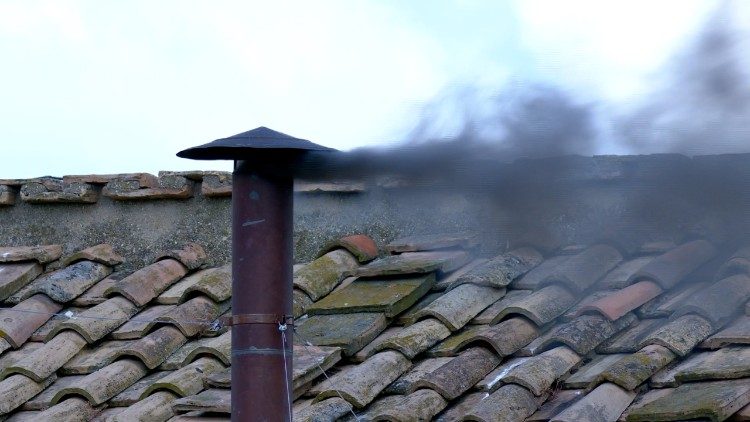
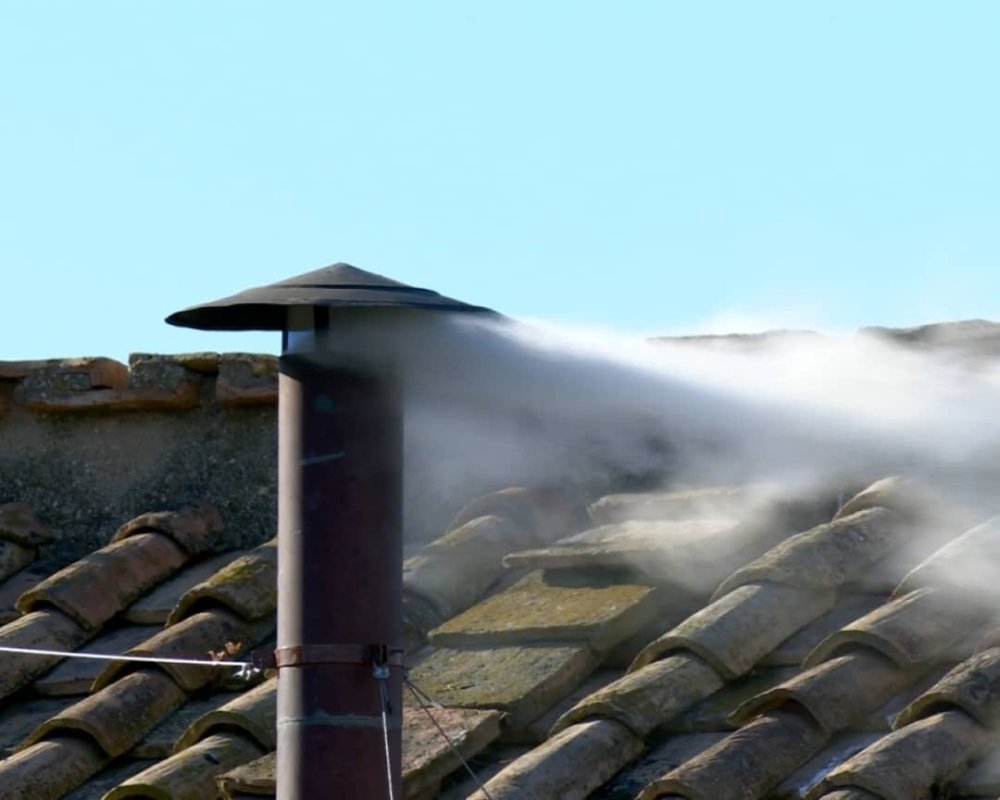
The use of black and white smoke during the papal election is one of the most recognizable and symbolic traditions of the Catholic Church. It communicates the outcome of the secretive conclave process to the world using a simple visual code: black smoke (fumata nera) indicates an inconclusive vote, while white smoke (fumata bianca) announces that a new pope has been chosen.
This tradition dates back to the late 19th century, becoming more consistent in the early 20th century. During the conclave, ballots are burned after each voting round. If no decision is reached, chemicals are added to the paper to produce thick black smoke, signaling the faithful in St. Peter’s Square and around the world that deliberations continue.
When a new pope is elected by the required two-thirds majority of cardinals, the ballots are burned with substances that produce white smoke—a visual message that centuries of ritual and reflection have led to a new spiritual leader.
Over the years, the Vatican has improved the process by using chemical additives to make the smoke colors more distinguishable. This adjustment was introduced after several confusing moments in past conclaves when smoke appeared gray or ambiguous. Today, the appearance of white smoke is often accompanied by the ringing of St. Peter’s Basilica’s bells, adding further clarity and celebration to the moment.
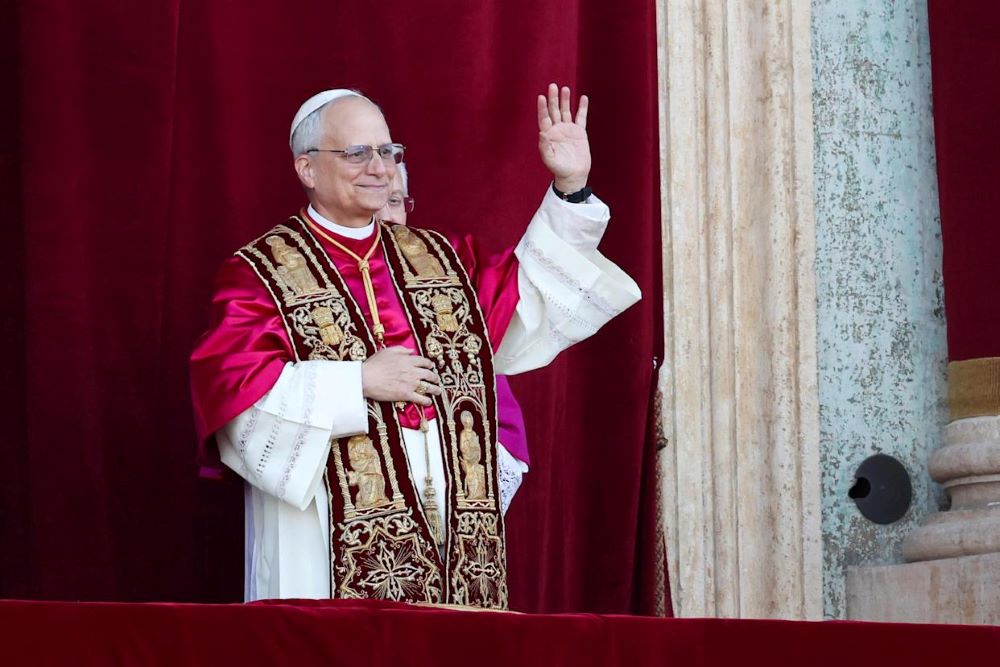
This sacred signal marked the beginning of a new era for the Catholic Church under Pope Leo XIV. Born in Chicago in 1955, Robert Francis Prevost is a member of the Order of Saint Augustine. He holds dual citizenship with Peru, a testament to his long years of missionary service in Latin America. Before his election, he served as Prefect of the Dicastery for Bishops, a role to which he was appointed by Pope Francis in 2023.
Following the passing of Pope Francis on April 21, 2025, the conclave of 133 cardinal electors convened in the Sistine Chapel. After two days of deliberation, they selected Cardinal Prevost, whose experience and global perspective made him a compelling choice to lead the Church through its next chapter.
From the balcony of St. Peter’s Basilica, Pope Leo XIV greeted the waiting crowd with the words, “Peace be with all of you,” a message of unity and continuity. His choice of name pays homage to Pope Leo XIII, known for his strong stance on social justice and workers’ rights, suggesting that Pope Leo XIV may likewise emphasize outreach, inclusion, and moral leadership in an increasingly complex world.
In addition to his deep pastoral experience, Pope Leo XIV’s election reflects the growing global nature of the Church. His background—rooted in both North and South America—symbolizes a bridge between cultures and traditions, and offers fresh hope to millions of Catholics around the world.
As white smoke once again rose into the Roman sky, it signaled more than the end of a conclave. It marked the start of a new papacy, shaped by tradition, strengthened by global diversity, and guided by the same faith that has carried the Church for centuries.
Celebrating Mass in the Sistine Chapel alongside the College of Cardinals, Pope Leo XIV opened with heartfelt words before switching to Italian and Latin, the traditional liturgical languages of the Vatican.
“I’ll begin with a word in English, and the rest is in Italian,” he said gently, pausing for a moment before continuing: “But I want to repeat the words from the Responsorial Psalm. I will sing a new song to the Lord because he has done marvels.”
With those words, [the new pontiff->https://en.igihe.com/news/article/catholic-church-gets-new-pope]—Cardinal Robert Francis Prevost, now Pope Leo XIV—invited the Church to recognize the grace and wonders of God not only in his own election, but in the collective journey of the Church itself.
“And indeed, not just with me, but with all of us, my brother cardinals, as we celebrate this morning, I invite you to recognize the marvels that the Lord has done, the blessings that the Lord continues to pour out upon all of us.”
In his brief English introduction, Pope Leo XIV emphasized themes of gratitude, humility, and shared mission, calling on the cardinals to accompany him in service to the Church and the world.
“Through the ministry of Peter, you have called me to carry that cross and to be blessed with that mission. And I know I can rely on each and every one of you to walk with me as we continue, as a church, as a community of friends of Jesus, as believers, to announce the good news, to announce the gospel.”
“God has called me by your election to succeed the Prince of the Apostles, and has entrusted this treasure to me so that, with his help, I may be its faithful administrator…” he added.
The choice to begin in English—spoken in his native Chicago and around the globe—was not only personal but pastoral, offering a sign of accessibility to a global audience at a time when the Catholic Church is increasingly diverse and interconnected.
By invoking the image of the Church as a “community of friends of Jesus,” Pope Leo XIV set a tone of closeness, fraternity, and evangelization for his pontificate.
His words echoed across the chapel and beyond, offering a message of hope, unity, and spiritual renewal as he steps into the role of shepherd to more than a billion Catholics worldwide.
Xi made the remarks when he and Russian President Vladimir Putin jointly met the press after their talks at the Kremlin in Moscow.
In the face of the changes of the world, of the times and of historical significance, China and Russia should keep a firm grasp on the development direction of bilateral ties and the general trend of the development of human society, Xi said.
Noting that his talks with Putin were in-depth, cordial and fruitful, Xi said he and Putin reached many important new consensus, signed a joint statement on further deepening China-Russia comprehensive strategic partnership of coordination for a new era and witnessed the exchange of multiple bilateral cooperation documents, which injected new impetus into the development of China-Russia relations.
Xi said this is his 11th visit to Russia, the country he has visited the most since becoming the president of the People’s Republic of China. On Friday, he will attend the celebrations marking the 80th anniversary of the victory of the Soviet Union’s Great Patriotic War, his second time attending the grand commemoration event in ten years.
Xi said the past decade has witnessed major turbulence and transformation in the international situation, as well as great leapfrog in China-Russia ties. The two countries have jointly witnessed the continuous consolidation and deepening of political mutual trust, and the continuous improvement of cooperation in various fields.
Xi said that China and Russia must uphold long-standing friendship from generation to generation and remain true friends forged through trials and tribulations. Eighty years ago, in the face of brutal aggression of militarism and Nazism, the Chinese and Russian peoples stood united, fighting side by side against a common enemy and writing a remarkable and heroic chapter in history, he said.
The great friendship forged between the two peoples through the trials of war and bloodshed has laid a solid foundation for the high-level development of bilateral relations, Xi said, adding that the two countries should deepen political mutual trust, enhance strategic coordination and advance bilateral ties toward a more mature and resilient future.
Xi said that the two countries should uphold mutual benefit and win-win cooperation, and be good partners who help each other prosper.
From overcoming hardships to deliver urgently needed supplies to each other during World War II, to the current record-breaking bilateral trade volumes, the “high-speed train” of China-Russia mutually beneficial cooperation has taken an extraordinary journey through mountains and valleys, overcoming challenges and obstacles, he said.
China and Russia should continue to deepen practical cooperation in various fields and solidify the material foundation for their comprehensive strategic coordination, bring more benefits to the people of both countries and give stronger momentum to global development, he said.
Xi noted that the two countries should uphold fairness and justice and defend the international order. China and Russia, as main theaters of Asia and Europe in WWII, have made decisive contributions to the victory of the World Anti-Fascist War and laid a solid foundation for the establishment of the post-war international order, he said.
As forces for stability, progress, and development in the international community, China and Russia should continue to firmly stand together, resolutely safeguard the UN-centered international system and the international order underpinned by international law, and continuously promote an equal and orderly multipolar world, said Xi.
China and Russia must uphold solidarity and mutual assistance and act as leading forces in global governance, Xi noted, stressing that the future of the world should be decided by all countries together, and the fruits of global development should be shared by all.
As major countries and key emerging market economies, China and Russia both shoulder the lofty mission of advancing global governance toward greater equity and justice, and the two sides should enhance coordination within multilateral platforms such as the UN, the Shanghai Cooperation Organization and BRICS, remain committed to true multilateralism, guide global governance in the right direction, and promote a universally beneficial and inclusive economic globalization, he said.
Xi emphasized that in the face of a turbulent and complex international situation, China and Russia must firmly uphold the spirit of lasting bilateral good-neighborliness and friendship, comprehensive strategic coordination and mutually beneficial cooperation.
The two countries should stand together to overcome challenges, comprehensively elevate the level, scope and resilience of China-Russia relations, inject greater stability into world peace and security, and provide stronger momentum for global development and prosperity, said Xi.
Xi made the remarks during a chat over tea with Russian President Vladimir Putin at the president’s office of the Kremlin in Moscow.
As long as China and Russia maintain strategic resolve and coordination, no force can stop the two countries from achieving their respective development and revitalization, no force can shake the strong foundation of long-standing friendship between the two peoples, and no force can hold back the prevailing trend toward a multipolar world and economic globalization, said Xi.
Xi also voiced readiness to stay in close communication with Putin to chart the course for China-Russia relations and make contributions to advancing global governance.
For his part, Putin said that Russia and China have always stood together in solidarity and supported each other, forging an unbreakable friendship.
The Russian president said he is willing to maintain close strategic communication with Xi, provide strategic guidance for the development of bilateral relations, jointly respond to the challenges of a complex international landscape, deepen comprehensive strategic coordination, safeguard common interests of the two countries and promote the development of a more equitable, democratic and multipolar world.
The two heads of state exchanged views on the Ukraine crisis and other issues. Xi said that China advocates for and remains committed to the vision of common, comprehensive, cooperative and sustainable security at the global level, and believes it is important to take seriously the legitimate security concerns of all countries and eliminate the root causes of the Ukraine crisis.
China welcomes all efforts conducive to peace and looks forward to reaching a fair, lasting and binding peace agreement on the Ukraine crisis that is accepted by all relevant parties through dialogue, Xi noted.
Putin highly commended China’s objective and impartial position on the political settlement of the Ukraine crisis, saying that Russia is ready to engage in peace talks without preconditions and hopes to reach a fair and lasting peace agreement.