Among the bodies are soldiers who died fighting M23 in its battle to capture the city, as well as others who lost their lives in combat around Sake.
South African opposition politician Julius Malema revealed that a soldier stationed in Goma reported how his fallen comrades’ bodies had begun to rot.
“We were informed that the bodies are decomposing. There is no way to retrieve them. The South African military base near Goma’s airport has been taken over. Our soldiers are in M23’s hands. When they need to use the restroom, they have to ask M23 for permission, and they are escorted there. This was reported by a soldier on the ground,” Malema stated.
He accused the South African government of hiding the truth about the situation, claiming they have chosen to mislead the public about the real reasons behind the troops’ deployment to the DRC.
South Africa has announced that the bodies of the fallen soldiers will be repatriated on Wednesday, February 5, 2025. However, concerns remain over how this will be executed, given that air and sea routes have been blocked. The only viable option is to transport the bodies through Rwanda.
Reports indicate that Rwanda had granted South Africa permission to use its territory for repatriation, but South Africa allegedly refused the offer.
For the first time in years, residents of Goma are sleeping peacefully, moving freely at night, and resuming daily activities as usual without fear.
Anastasie, a mother who has lived in Goma for over four years, shared her surprise at the newfound sense of security. “I never imagined M23 fighters were good people, that they serve God. In all my years in Goma’s refugee camps, this is the first time I have spent a night without fear,” she told IGIHE.
Over the weekend, IGIHE toured various parts of the city, from the La Corniche border with Rwanda to Bilele, the Governor’s Office, and Quartiers Les Volcans. While remnants of war were still visible, businesses had largely resumed.
One of the key battlegrounds was Mont Goma, where government troops made their last stand. On Tuesday, FARDC and Wazalendo militia held onto Camp Katindo, a major military base in the city center. By the weekend, however, M23 had taken full control.
At the entrance to the camp, as in most of Goma, M23 forces were stationed, ensuring security. Burned-out military trucks and abandoned ammunition provided evidence of the fierce battles that had taken place.
Stade de l’Unité, one of the city’s largest stadiums, also saw combat. While bullet holes marked the walls, there were few other visible signs of the battle.
M23 fighters are now present throughout the city, including on the road to Goma International Airport. In Bilele, they walked freely through the market, greeted by residents who waved at them, a stark contrast to the fear that once gripped the population.
At UN peacekeeping bases hosting troops from Uruguay and Senegal, operations continued as usual.
Sources indicate that at least 2,100 Congolese soldiers sought refuge with MONUSCO as the fighting escalated. Their fate remains uncertain, whether they will surrender to M23, flee, or attempt to regroup.
Close to the airport, Red Cross workers were seen assessing the area trying to locate any dead bodies, as the site had witnessed heavy clashes between M23 and government forces.
Goma International Airport is currently non-operational, with M23 fully in control. Civilians passing by engaged in casual conversations with the rebels, showing no signs of fear or resistance.
Goma, a city of two million people spread across 75.72 square kilometers, is slowly returning to normal. The local economy, reliant on small-scale trade, fishing, and mineral extraction, is resuming operations under the new administration.
M23 leaders have declared that their advance will not stop in Goma. They have vowed to continue their push toward Kinshasa, aiming to overthrow President Félix Tshisekedi’s government, which they accuse of oppressing civilians, particularly Congolese Tutsis, many of whom have been forced to seek refuge in neighboring countries like Rwanda and Uganda.
However, a few days ago, operating under the Alliance Fleuve Congo (AFC), the M23 rebel group announced a unilateral ceasefire citing humanitarian concerns amid the escalating conflict in eastern DRC.
Born on December 13, 1936, in Geneva, Switzerland, he was a direct descendant of the Prophet Muhammad and the 49th hereditary Imam of the Nizari Ismaili sect. He assumed the role of Imam in 1957 at the age of 20, succeeding his grandfather, Aga Khan III.
Throughout his nearly seven-decade long leadership, Aga Khan IV was renowned for his profound commitment to philanthropy and the betterment of society. He established the Aga Khan Development Network (AKDN), which operates in over 30 countries, focusing on initiatives in health care, education, cultural preservation, and economic development.
The network invests approximately $1 billion annually in various projects, particularly in Africa and Asia, aiming to improve living conditions and promote sustainable development.
In a 2018 interview with the Financial Times, Aga Khan IV described his role as akin to a venture capitalist for challenging environments, emphasizing the integration of social and economic development. He stated, “We are investing in people’s quality of life.”
Beyond his philanthropic endeavors, Aga Khan IV was an accomplished horse breeder and racing enthusiast. He owned several notable racehorses, including Shergar, the 1981 Epsom and Irish Derby winner. His passion for horse racing brought him significant acclaim in the equestrian world.
Despite his immense wealth, estimated between $800 million to $13 billion, Aga Khan IV led a life dedicated to service and the development of marginalized communities. He was honored globally for his contributions, receiving numerous accolades maintaining close relationships with international leaders. Former Canadian Foreign Minister John Baird remembered him as “a remarkable leader.”
Following his passing, ceremonies and tributes have taken come through worldwide, especially within Ismaili communities. His successor will be named based on his will, with his eldest son, Prince Rahim, anticipated to assume the role.
Reflecting on his life’s work, Aga Khan IV once remarked, “The role of the Imam is to guide his community and to contribute to improving the quality of life of all those amongst whom they live.”
The Aga Khan’s burial is scheduled to take place in Lisbon, though the date remains unannounced. His enduring legacy of compassion, leadership, and dedication to humanity will continue to inspire generations to come.
On February 4, 2025, Minister Motshekga and commanders of the South African National Defence Force (SANDF) appeared before Parliament, where they explained that their soldiers did not expect to be engaged in combat when sent on the Southern African Development Community (SADC) mission, as they were intended to serve as peacekeepers.
However, MP Carl Niehaus dismissed this reasoning, insisting that the real purpose of the mission was to fight, not to keep the peace.
“Why are you Minister? And why is the President lying to us about the nature of the operation that we have in the DRC?” Niehaus asked.
“It is not a peacekeeping mission. It is an offensive mission and it is defined as such by the SADC. Therefore, you knew that our soldiers were going to be shot at, and you knew that you were sending our young men into the DRC to die in the killing fields of the DRC.”
Another MP criticized the government for misusing taxpayer money to fund the mission without providing clear justification. The MPs also pointed out contradictions regarding the financial support for the operation. Initially, the government promised billions of rand for the mission, only to later claim that the funds were provided by SADC.
The MPs, dissatisfied with the explanations, insisted that South African troops were not contributing to peace in the DRC and called for their immediate withdrawal.
Concerns about transparency were also raised, with many MPs questioning the unclear role of South African soldiers in the conflict. These concerns intensified after reports emerged that South Africa had lost several soldiers in the DRC.
On January 27, 2025, up to 14 South African soldiers were killed during clashes with M23 rebels, who had taken control of the strategic city of Goma in North Kivu Province.
Motshekga acknowledged that the South African troops faced a shortage of equipment, which hindered their ability to defend themselves.
Lawmakers also asked the foreign minister and SANDF Chief when the soldiers would be repatriated and for how long the mission was planned.
However, they were unable to provide answers. MP Virgill Gericke emphasized that South Africa should not hide behind SADC, noting that countries are not forced to participate in missions under the organization.
South African forces are reportedly working alongside the Congolese Army’s coalition including the FDLR, a terrorist group formed by remnants of the perpetrators of the 1994 Genocide against the Tutsi in Rwanda.
Over 1,500 South African soldiers were deployed to the DRC as part of a SADC mission to assist the DRC’s army in combating armed groups in the region.
The role of South Africa in the conflict drew [criticism ->https://en.igihe.com/news/article/president-kagame-rebukes-ramaphosa-s-distortions-about-their-conversations-on] from President Paul Kagame, who responded to a controversial message from South Africa’s President Cyril Ramaphosa on X last week.
Ramaphosa’s message referred to the Rwanda Defense Force (RDF) as a militia and incorrectly called South African forces in the DRC peacekeepers.
Kagame condemned the message, calling it misleading and accusing Ramaphosa of distorting facts.
“The RDF is an army, not a militia,” Kagame asserted. He also criticized the SAMIDRC mission, stating, “SAMIDRC is not a peacekeeping force, and it has no place in this situation. It was authorized by SADC as a belligerent force engaging in offensive combat operations to help the DRC Government fight against its own people, working alongside genocidal armed groups like FDLR which target Rwanda.”
This model comes in three variants, two of which are automatic. The car was officially unveiled in Kigali on the afternoon of January 30, 2025.
Alphonse Manege, the Sales Supervisor at Toyota Rwanda Ltd, highlighted that the Starlet Cross maintains the renowned quality of other Toyota models, tailored to meet the specific needs of Rwanda’s road conditions.
“This car is designed for travelling everywhere, as it belongs to the SUV category. Its engine capacity has been reduced to allow Rwandans to use less fuel,” he said.
“We brought it in as a solution because its price is relatively lower compared to the other models we’ve introduced.”
These cars are currently available at Toyota’s Karuruma showroom. Nenad Predrevac, the Managing Director of Toyota Rwanda, encouraged companies, entrepreneurs, and individuals to consider purchasing this car because it is durable, and its maintenance is affordable, offering numerous benefits.
{{The 2025 Toyota Starlet Cross specifications}}
This model is equipped with a 1.5-liter gasoline engine, generating 105 horsepower and 138 lb-ft of torque. The engine’s power is transferred to the front wheels, making it a Front-Wheel Drive (FWD) vehicle.
This engine performance makes it easy to drive on smooth roads, while it also manages to handle rougher terrain.
The 2025 Starlet Cross has a width of 1.76 meters, a ground clearance height of 1.55 meters, and a length of 3.99 meters from front to back.
The distance between the front and rear tires is 2.52 meters, and the car weighs 1,005 kg when empty (without passengers or cargo).
It is equipped with airbags in both the front and rear positions, including the doors, to reduce the impact of accidents.
The car also features an Anti-lock Braking System (ABS), which prevents the wheels from locking when sudden braking occurs, making it easier for the driver to maintain control.
Additionally, the 2025 Starlet Cross is equipped with Hill-Start Assist technology, which prevents the car from rolling backward when starting on a steep incline. Its tires are 16 inches in size.
For those interested in test-driving the car before purchasing, Toyota Rwanda has provided a [platform->https://www.toyotarwanda.com/?form=book-a-test-drive] to book a test drive, either online on their website or by calling 0788 314072.
Also on Tuesday, Trump is scheduled to meet visiting Israeli Prime Minister Benjamin Netanyahu, who has long criticized the UNRWA.
During Trump’s first term in June 2018, the United States withdrew from the United Nations Human Rights Council, saying that it has rendered membership to unworthy nations and harbored “disproportionate focus and unending hostility towards Israel.”
However, in February 2021, then U.S. Secretary of State Antony Blinken said in a statement that the Biden administration would reengage with the council as an observer.
Since 1950, UNRWA has been assisting Palestine refugees in Jordan, Lebanon, Syria, Gaza and the West Bank, including East Jerusalem.
The Congolese government has called for Arsenal, Bayern Munich, and Paris Saint-Germain to sever their partnerships, accusing the Rwandan government of using sports as a tool for “sportswashing” amid ongoing tensions in eastern DR Congo.
Congo’s Foreign Minister, Thérèse Kayikwamba Wagner, recently wrote to the clubs, questioning the morality of their deals with Rwanda, alleging the sponsorship is funded by illicit mining from conflict zones in eastern DR Congo.
However, during an exclusive interview with CNN, President Kagame firmly rejected the accusations, terming the Congolese government’s campaign a “wasted effort.”
The Head of State suggested that the Congolese government’s focus should be on managing internal issues and solving the country’s political problems.
President Kagame maintained that Rwanda is not directly involved in arming or supporting the M23 rebels.
He pointed out that much of the “sophisticated equipment” used by M23 in the recent fighting, which led to the capture of Goma City, came from the Congolese army, which had been defeated and pursued by the rebels.
During the interview, President Kagame expressed frustration with President Félix Tshisekedi’s absence from diplomatic engagements aimed at addressing the conflict, especially after he skipped a Heads of State extraordinary summit that brought together Heads of State from the East African Community (EAC) to deliberate on the security situation in eastern Congo.
“When you have a problem, you must look for the cause. The one with the problem must seek a solution,” Kagame emphasized.
President Kagame has often accused the Congolese administration of ignoring the root causes of the conflict in the eastern region and prioritizing military solutions over a political resolution, which can be achieved through dialogue with the M23 group fighting for the interests of the Congolese Rwandophones, particularly the Tutsi community.
Speaking in a separate interview with Al Jazeera, Rwanda’s Foreign Minister Olivier Nduhungirehe dismissed the narrative of Rwanda exploiting minerals in Congo as a distraction from the more profound issues of ethnic persecution and governance failures.
“This narrative of minerals as the root cause of this conflict is really a lazy and unacceptable narrative,” he remarked, stressing that the conflict’s core lies in the protection and rights of communities.
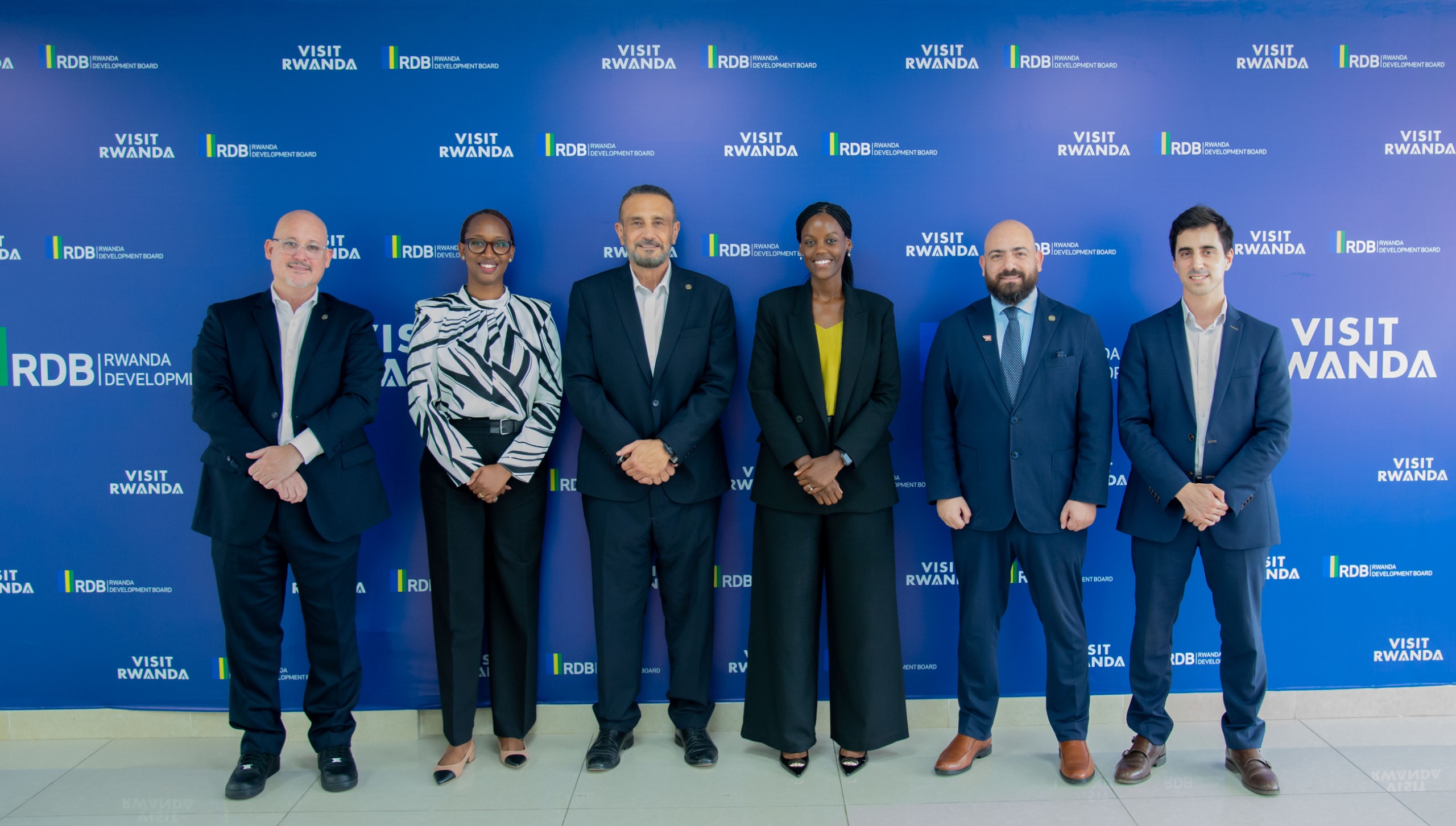
The Visit Rwanda campaign, launched in 2018, has helped raise the country’s global profile, with significant partnerships with high-profile football clubs, which have boosted Rwanda’s tourism sector and foreign investments.
Rwanda has repeatedly dismissed sportswashing claims, with the country’s Chief Tourism Officer, Irene Murerwa, calling such claims a “distraction” from Rwanda’s achievements.
In a candid interview with Al Jazeera, Minister Nduhungirehe highlighted the historical context of the conflict, pointing to the artificial borders drawn by colonial powers in the early 20th century, which he argues have led to the marginalization and persecution of Congolese Rwandophones, particularly the Tutsi community in Eastern DRC.
“Rwanda was a German colony, and in 1910, 1912, and 1911, there was a meeting in Brussels where Belgium, Germany, and the United Kingdom decided to draw the borders between the three countries artificially. We had part of the Kingdom of Rwanda which was given to Congo with the people, and another part was given to Uganda. Then we have people of Rwandan culture and heritage in those two countries; in DRC, which was Congo at that time, and Uganda,” Nduhungirehe explained.
“But those in Uganda never had any problem; they were integrated into society, considered as Ugandans. However, those in Congo, who have lived there since 1910, were never considered as Congolese; they were always suspected to be Rwandan. And this went on until the independence of Congo, and this marginalization under suspicion continued. In the 1970s, the then President of Zaire, which was the name of the country, President Mobutu, decided to give them citizenship, but 10 years later in the 80s, he stripped that citizenship from them, so their situation was always difficult,” he added.
The minister insisted that the continued persecution of Rwandophones in eastern Congo birthed the M23 group, which is fighting for the rights of the marginalized group.
He emphasized that the M23 is fundamentally a Congolese movement defending its community, dismissing the narrative that marginalized groups were foreigners in their own land and that Rwanda was aiding them.
“The M23 is a Congolese movement supporting and defending a Congolese community,” he stated, adding that Rwanda’s purported involvement in the conflict had been misrepresented.
Nduhungirehe was particularly vocal about the international community’s failure to address the genocide ideology propagated by the FDLR, a group sanctioned by the United Nations but still active and collaborating with the DRC government. The FDLR continues to pose a security threat to Rwanda, three decades after being involved in the 1994 Genocide against the Tutsi in Rwanda.
“It’s unacceptable for the government of DRC to collaborate with this group of genocidaires, the FDLR,” he noted, criticizing the bias in international reports and the lack of condemnation for atrocities committed against Congolese Tutsis.
He further accused the UN peacekeeping mission, MONUSCO, of not only failing in its mandate but also exacerbating the situation by supporting forces that include genocidal elements and mercenaries. He maintained that such actions violate international conventions.
“MONUSCO in Eastern DRC has not been part of the solution; it has been part of the problem,” Nduhungirehe asserted.
More than 280 European mercenaries recently fled DRC after being defeated by the M23 in a battle that led to the capture of Goma, the capital and largest city of the North Kivu Province. The Romanian mercenaries departed for their home country through Rwanda last week following the closure of Goma airport.
The minister also addressed the often-cited narrative that the conflict is primarily driven by mineral wealth, dismissing it as a distraction from the more profound issues of ethnic persecution and governance failures.
“This narrative of minerals as the root cause of this conflict is really a lazy and unacceptable narrative,” he remarked, stressing that the conflict’s core lies in the protection and rights of communities.
Regarding peace processes, Nduhungirehe spoke with frustration about the stalled negotiations, particularly under the Nairobi and Luanda frameworks.
He criticized the international community for not pushing for a political solution to the M23 issue, despite Rwanda’s consistent advocacy for direct talks between the DRC government and the M23.
“We have always supported a political solution to the M23 question,” he said.
Nduhungirehe’s remarks come at a time when tensions in DRC remain high following the capture of Goma and several key towns by M23.
Heads of State from the East African Community (EAC) and Southern African Development Community (SADC) are expected to hold a joint crisis meeting in Tanzania later this week to chart the way forward in silencing the guns in eastern DRC.
SADC is contributing troops to the region and has, in recent days, suffered at least 14 deaths from the fight between the M23 and coalition forces allied with the Congolese government.
In an official communiqué issued a day before, M23 claimed that the ceasefire was in response to the “humanitarian crisis caused by the Kinshasa regime,” while reiterating its commitment to protecting civilians in areas under its control.
“The Alliance Fleuve Congo (AFC/M23) hereby informs the public that, in response to the humanitarian crisis caused by the Kinshasa regime, it declares a ceasefire starting February 4th, 2025, for humanitarian reasons,” the statement read, signed by Lawrence Kanyuka, the Communication focal-point of the AFC.
Addressing widespread concerns over its territorial ambitions, M23 denied having any plans to seize Bukavu, despite recent reports of its forces advancing toward the city.
“It must be made clear that we have no intention of capturing Bukavu or other areas. However, we reiterate our commitment to protecting and defending the civilian population and our positions,” the statement continued.
In its communiqué, M23 also condemned the Congolese Armed Forces (FARDC) for what it described as continued aerial bombardments targeting civilian areas. The rebels criticized military operations conducted from Kavumu Airport, accusing FARDC of loading “bombs that kill our compatriots in liberated areas.”
Additionally, the rebels renewed their call for SAMIDRC to withdraw from the DRC, claiming that the regional peacekeeping force’s mission is no longer justified.
“We urge SAMIDRC to withdraw its forces from the DRC, as we have repeatedly stated that their mission is no longer justified,” the statement read.
The ceasefire announcement comes ahead of an extraordinary regional summit scheduled in Dar es Salaam, Tanzania, where leaders from Rwanda, Uganda, South Africa, Kenya, Tanzania, Somalia, and the DRC will meet to discuss the worsening crisis.
Meanwhile, the United States has issued an emergency security alert, advising its citizens to leave Kinshasa amid fears of potential unrest, reflecting growing global concern over the conflict’s potential to destabilize the broader region.
He stated that Rwanda received a request from the UN to allow passage for these workers, who were stationed in different branches of the organization in Bukavu.
“A total of 224 UN employees crossed the border into Rwanda from Bukavu. They are UN staff, not diplomats from embassies. What we can confirm is that they crossed the border into Rwanda,” he clarified.
Mukuralinda refrained from providing further details regarding how the staff would be accommodated or taken care of as they continued their journey. According to him, the UN had initially engaged with the Rwandan government to seek approval for the passage of its personnel.
This development comes as the M23 rebel group, having taken control of the city of Goma on January 26, 2025, have dismissed any plans to seize Bukavu despite recent reports of its forces advancing toward the city.
On January 31, Jean Pierre Lacroix, the UN Under-Secretary-General for Peacekeeping Operations, confirmed that the M23 rebels were advancing towards Bukavu, the capital of South Kivu province.
Rwanda had recently facilitated the evacuation of UN staff from Goma, allowing them passage through its border with the DRC in Rubavu District.
Upon arrival in Kigali, they were provided with initial assistance at Kigali Pelé Stadium then transferred to hotels for rest before continuing their journey. At that time, more than 1,800 UN employees and their families were received.
Besides the UN personnel who fled the conflict between the Congolese army (FARDC), M23, and allied armed groups such as FDLR, European mercenaries from Romania were also evacuated through Rwanda. Additionally, some FARDC soldiers, after suffering defeats at the hands of M23, fled into Rwanda.