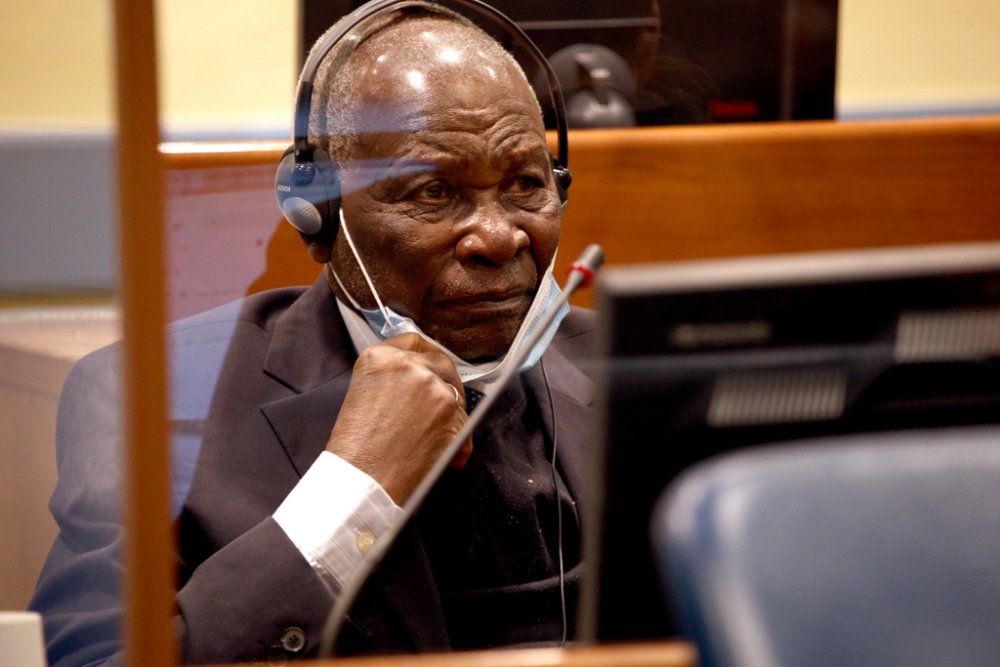
Kabuga, a former Rwandan businessman and financier of the genocide, remains in detention in The Hague, Netherlands, as no country has agreed to host him. In 2023, the IRMCT suspended his trial, citing his inability to participate because of illness.
His lawyer, Me Emmanuel Altit, said Kabuga wishes to spend his remaining years in France, where his family lives, and has requested court approval for his transfer. Me Altit noted that if approved, the process would require authorisation from the French government and could take 8 to 10 months.
The CPCR denounced the request as an insult to survivors of the Genocide against the Tutsi.
“This act is an affront to the victims and a disgrace to anyone committed to justice,” the association said. It emphasised that France has a history of granting refuge to some officials involved in the genocide, giving them confidence that they could evade justice.
The organisation also urged that, beyond denying Kabuga entry, France should strengthen efforts to prosecute those still in the country, providing sufficient resources to ensure suspects are tried before age or illness prevents justice.
The CPCR noted that, since the start of this year, no new trials of the genocide suspects have been launched, though around 35 individuals remain accused of genocide-related crimes.
“North Kordofan State is witnessing major operational gains, including the killing of hundreds of militia fighters, the seizure of more than 100 combat vehicles, and the liberation of several areas,” the SAF spokesperson’s office said in a statement.
The statement also noted that Abdel Fattah Al-Burhan, chairman of Sudan’s Transitional Sovereign Council and commander of the SAF, visited the strategic city of Bara, which the military recaptured on September 11.
Fierce fighting has continued since Friday night between the SAF and the RSF on the western outskirts of El Obeid, the capital of North Kordofan State.
Field sources said the SAF, backed by allied joint forces, recaptured the town of Um Sumaima, west of El Obeid near the border of North and West Kordofan. The area has changed hands several times between the two sides.
The SAF Special Forces said in a statement that it had expelled RSF units from Um Sumaima, pushing them about 50 km west of El Obeid toward the outskirts of Al-Khuwei, a town in West Kordofan.
The Joint Forces of armed movements allied with the army stated Saturday: “Military operations in the Kordofan area are proceeding according to plan, with precise implementation on the ground driven by determination and resolve. We have achieved significant victories, and the sacrifices of our heroes will bear fruit in a victory worthy of Sudan’s dignity.”
For its part, the RSF said it had repelled an SAF-led attack on multiple fronts west of El Obeid.
“We inflicted heavy losses in personnel and equipment on the attacking forces,” the RSF said. “Our forces remain stationed at their positions and are determined to advance toward new fronts in preparation for continuing the march toward enemy strongholds.”
Meanwhile, in El Fasher, the capital of North Darfur State, the SAF’s 6th Infantry Division reported that it had repelled a new RSF assault on the besieged city.
“The militia attempted to infiltrate and attack El Fasher from the north and southwest, but our forces repelled them and inflicted significant losses in personnel and equipment,” the division said. “In the evening, the militia shelled residential neighborhoods with heavy artillery, suicide drones, and light weapons, but no civilian casualties were reported.” It added that the situation in the city remains “stable.”
Since May 10, 2024, violent clashes have been ongoing in El Fasher between the SAF and its allies on one side, and the RSF on the other, with the fighting intensifying in recent days.
Sudan remains gripped by a conflict between the SAF and the RSF, which erupted in April 2023. The fighting has killed tens of thousands of people and displaced millions, both internally and across borders, deepening the country’s humanitarian crisis.
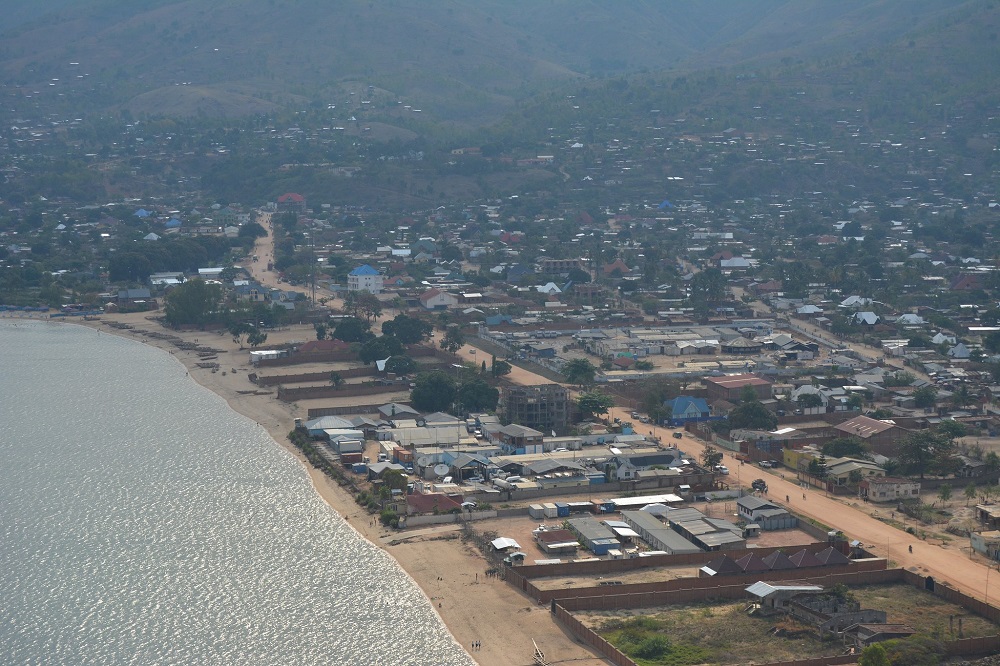
The positions of the Wazalendo Lunyuki group in Uvira were reportedly heavily shelled by FARDC troops.
André Byadunia, a civil society leader in Uvira, said those killed included one soldier and members of the Wazalendo Lunyuki group, while others were wounded.
“The figures show that two civilians were killed by gunfire, one FARDC soldier was also shot dead by the Lunyuki group, and one member of Wazalendo from the Lunyuki faction was injured,” he said.
FARDC forces and Wazalendo fighters have frequently clashed despite being allies in the fight against AFC/M23 rebels.
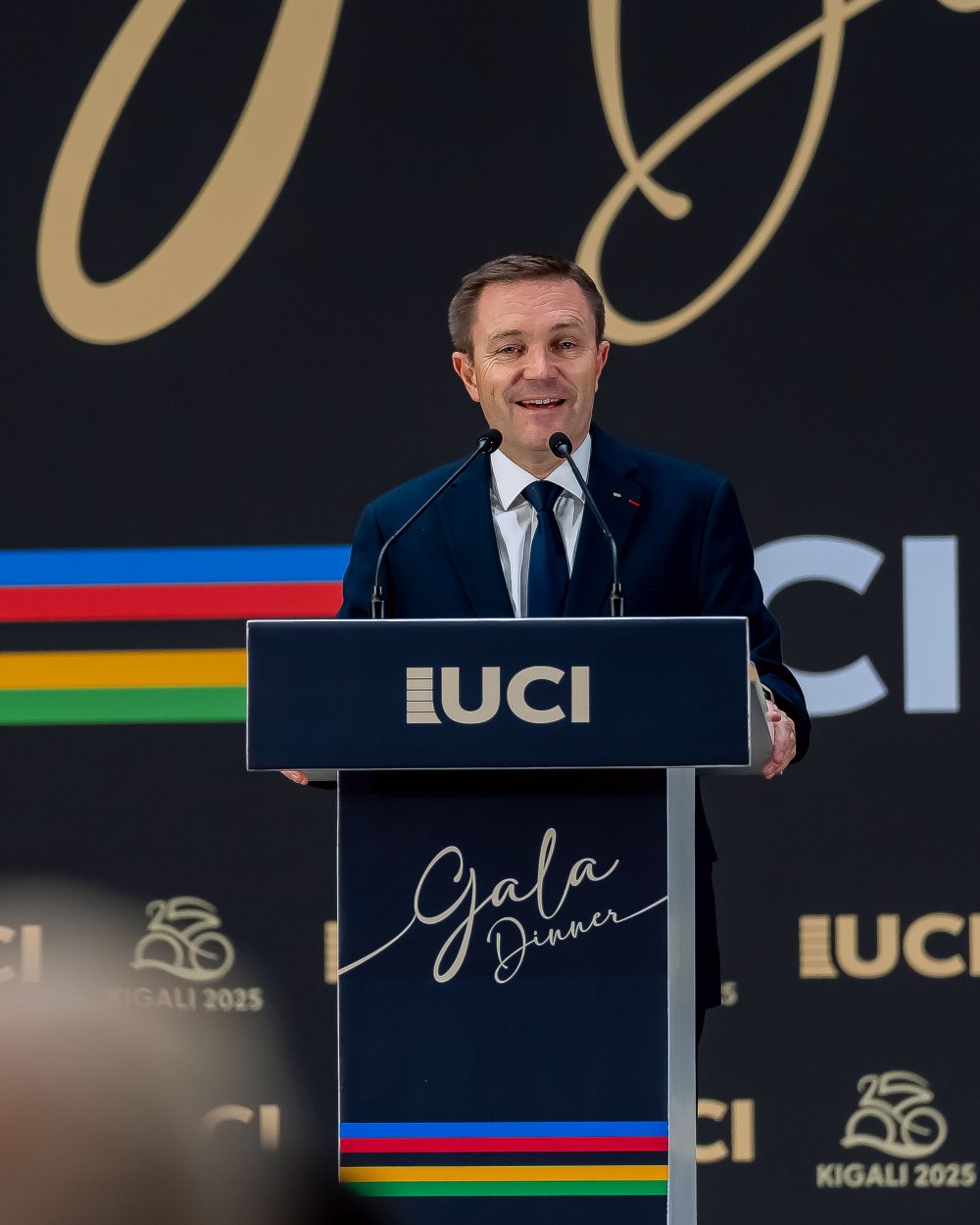
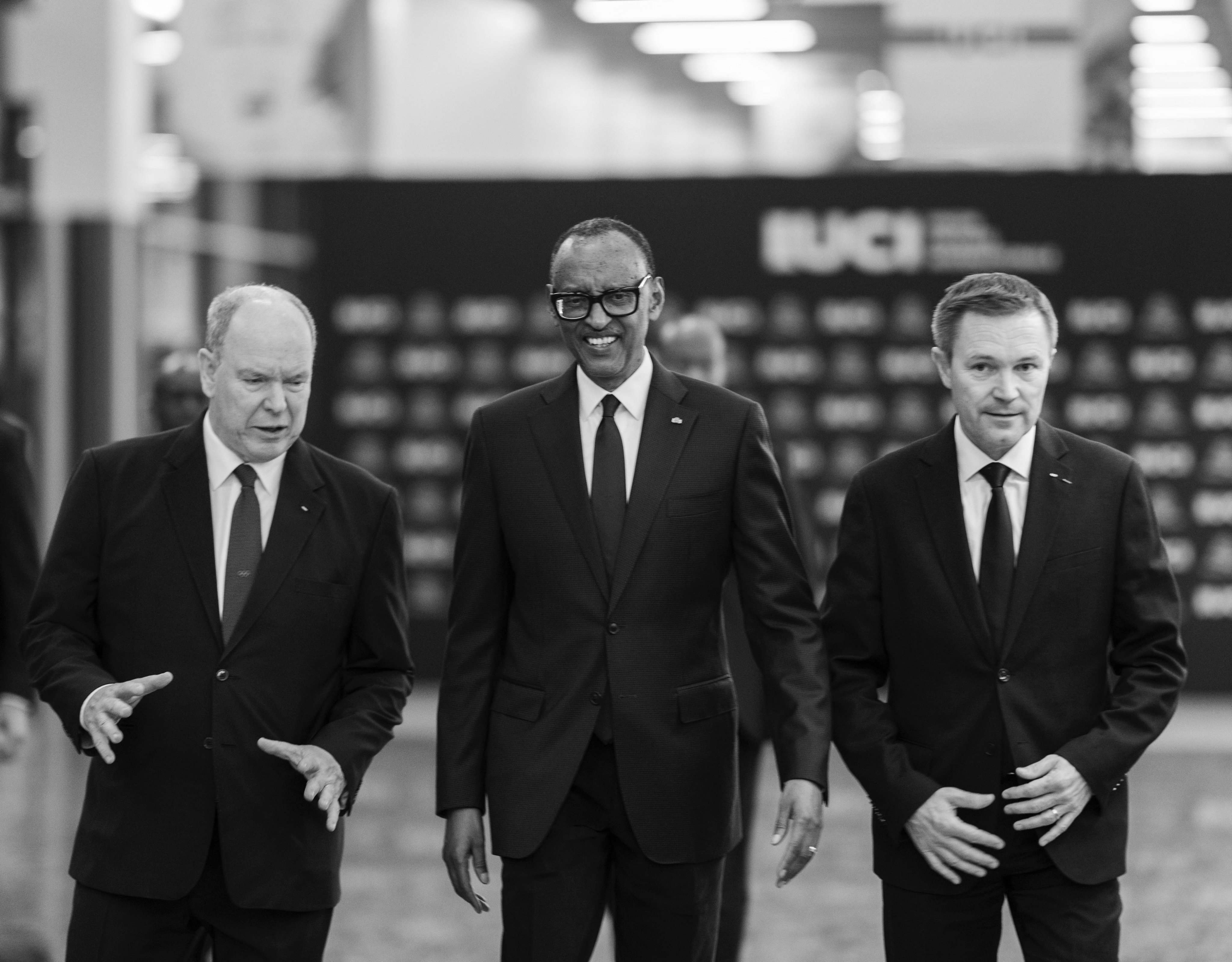
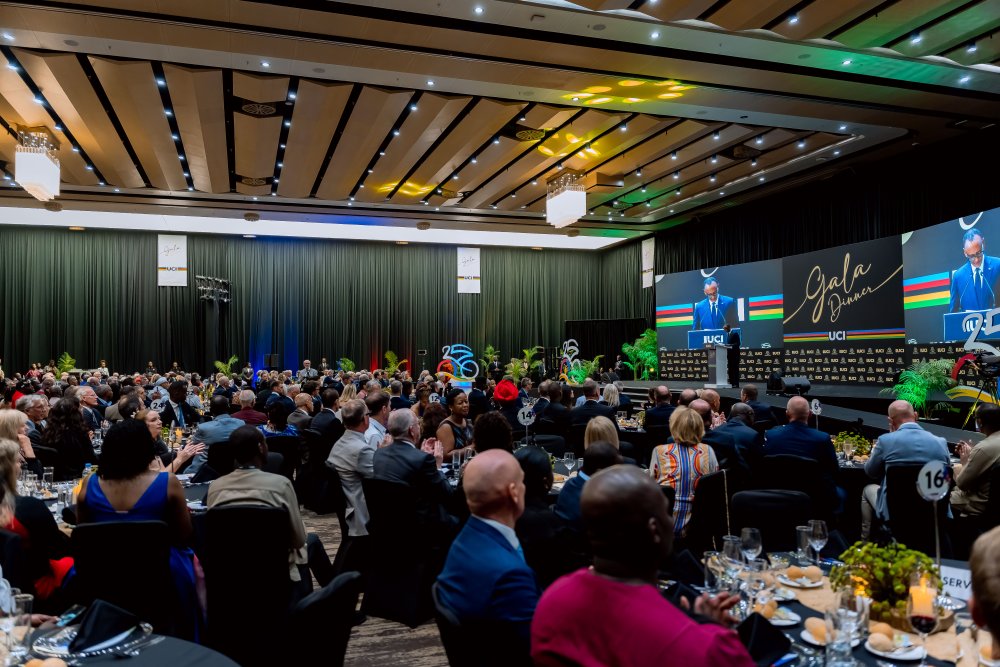
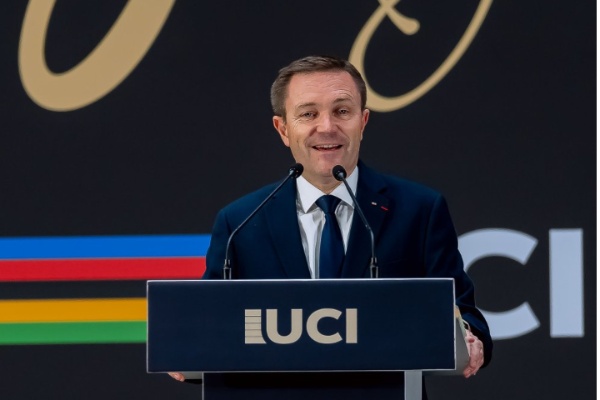
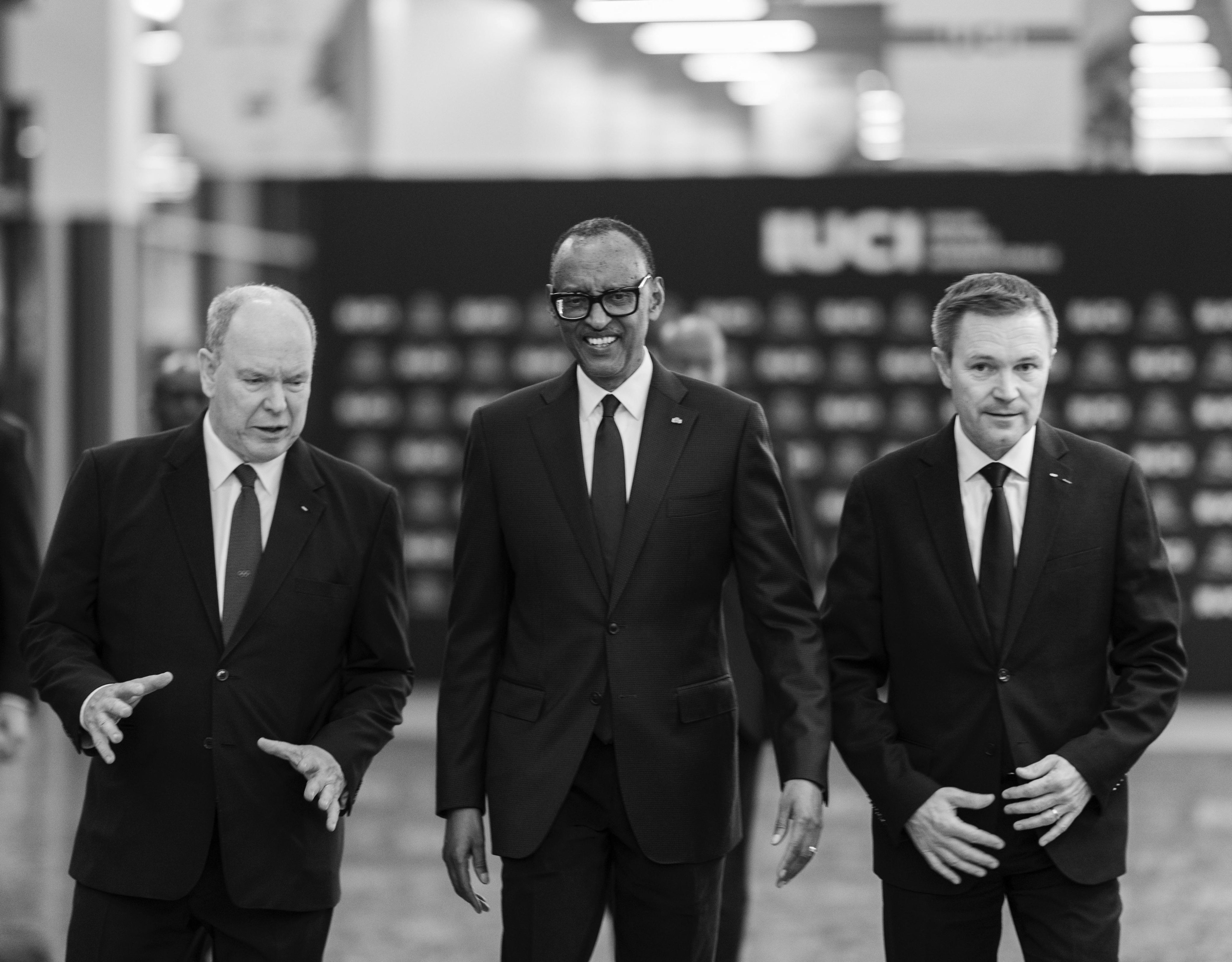
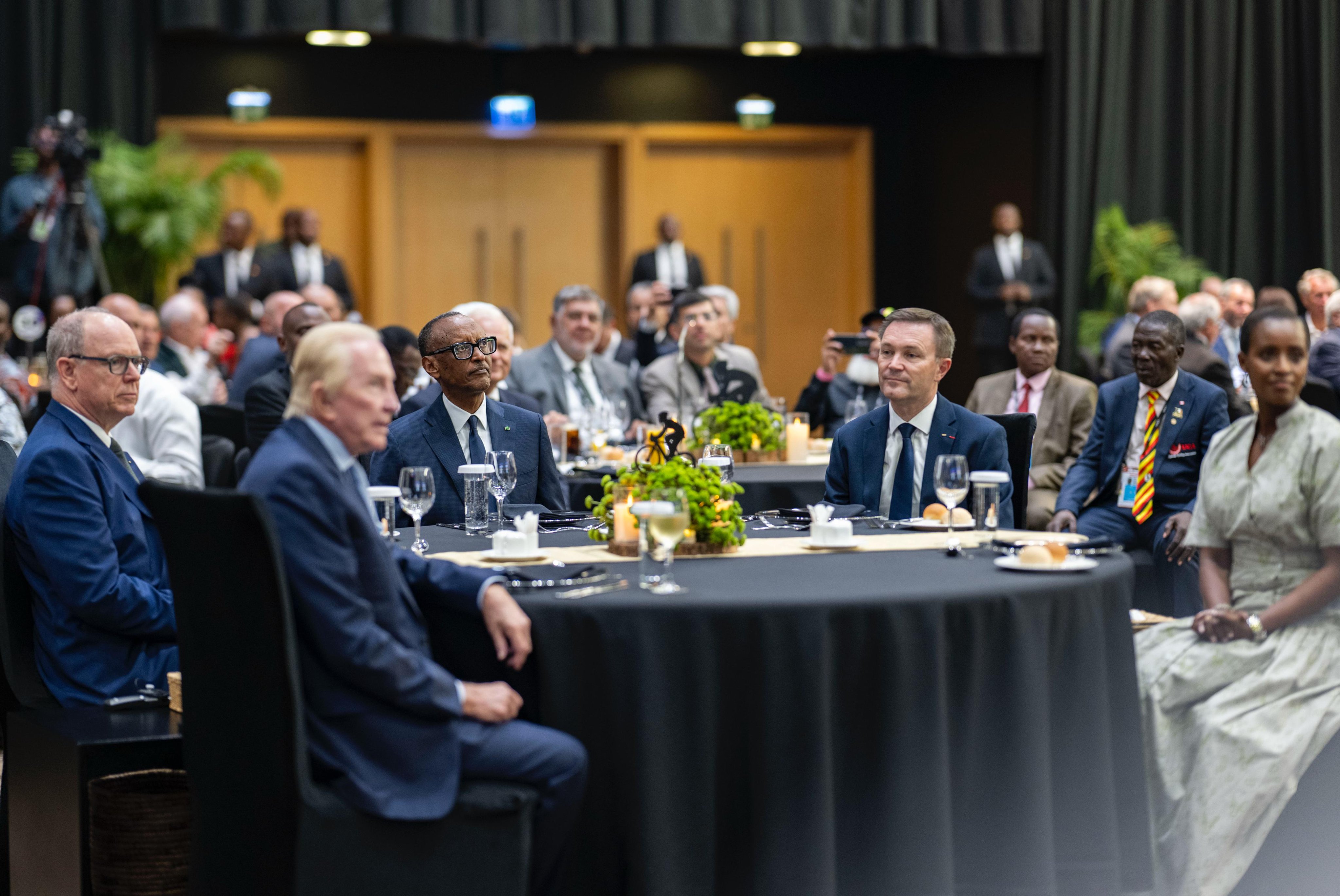
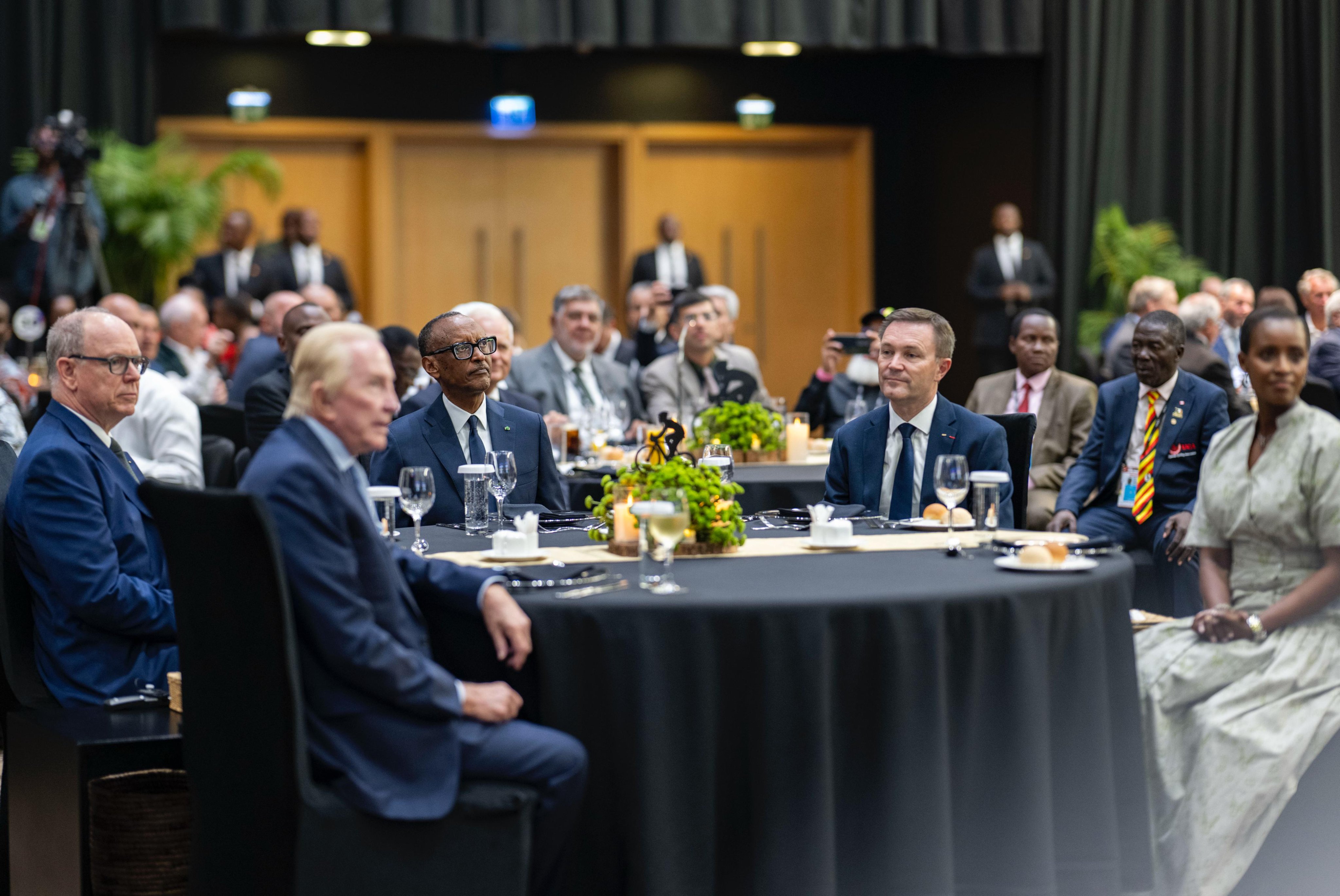
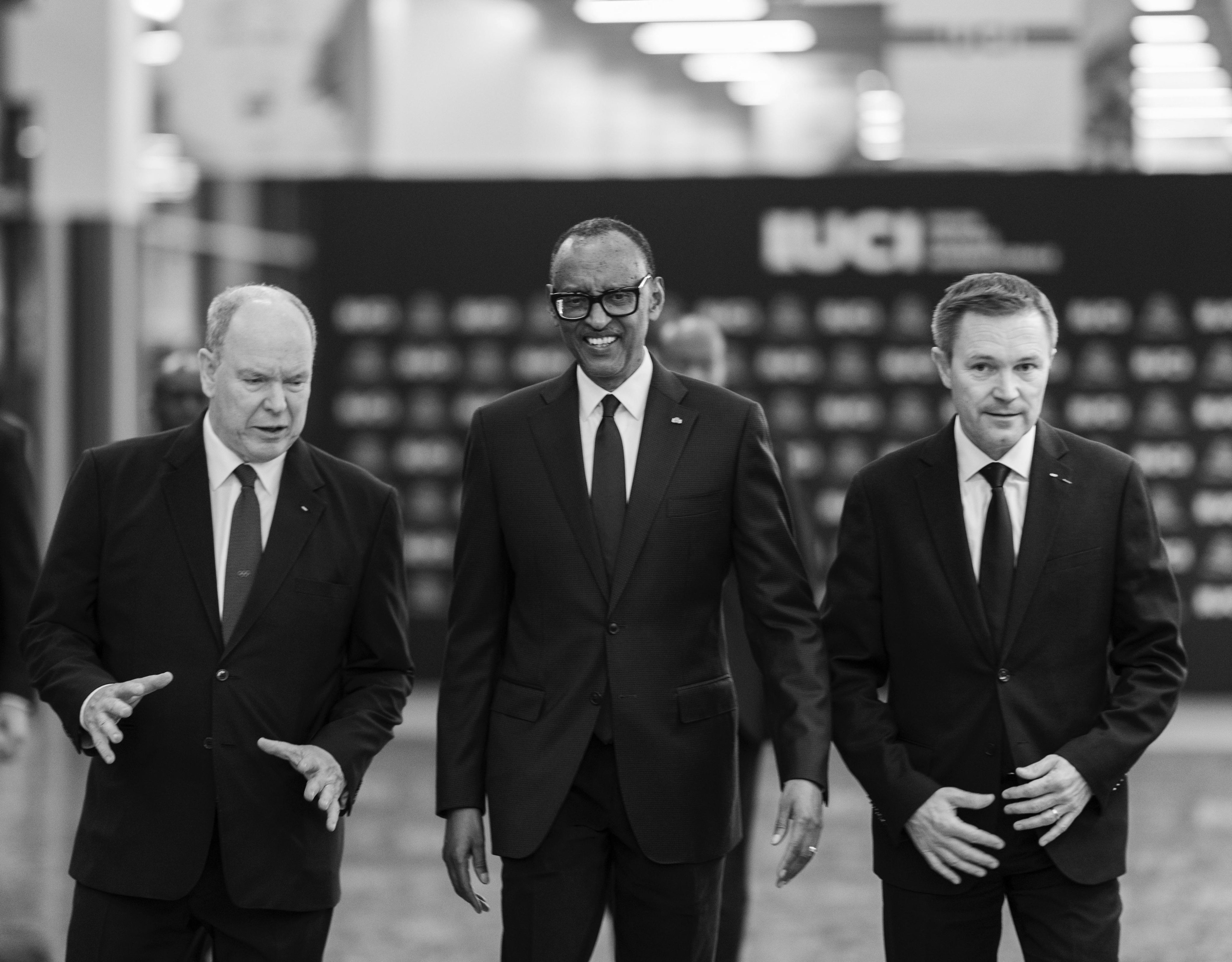
Addressing President Paul Kagame, His Serene Highness Prince Albert II of Monaco, and international delegates, Lappartient said the 2025 edition in Kigali had exceeded all expectations.
“This week in Kigali has not just met our expectations. It has, of course, done more than that. It has taken our breath away,” he said. “In love with its countryside, in love with its people, in love with its beauty, in love with its vitality — we will never forget your country’s welcome.”
The UCI President hailed the historic significance of this year’s championships, the first to be hosted in Africa. He highlighted two milestones: the debut of dedicated women’s under-23 races and the crowning of 12 world champions before Sunday’s men’s elite road race.
“Quite simply, we have never experienced an event like this before,” he said.
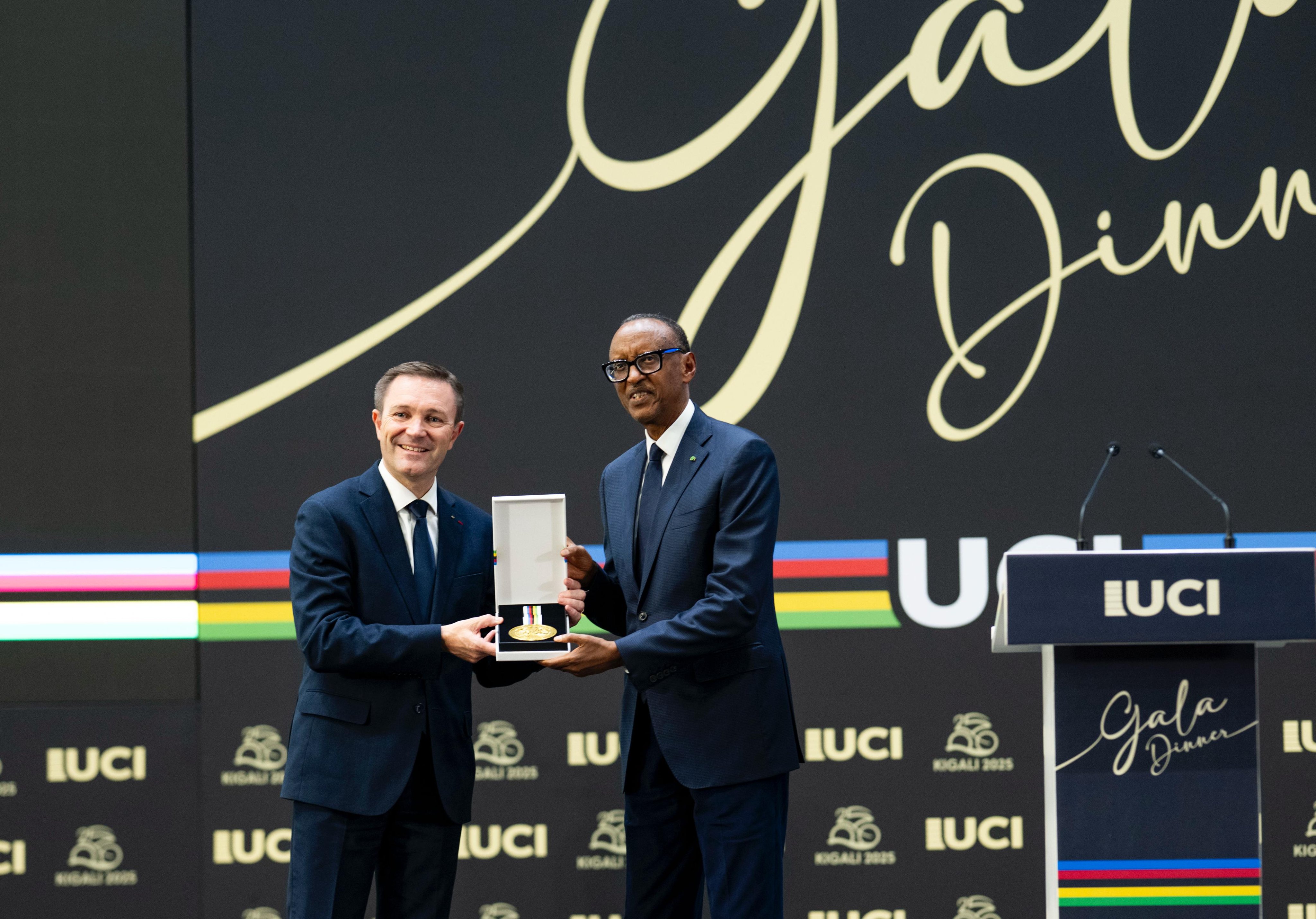
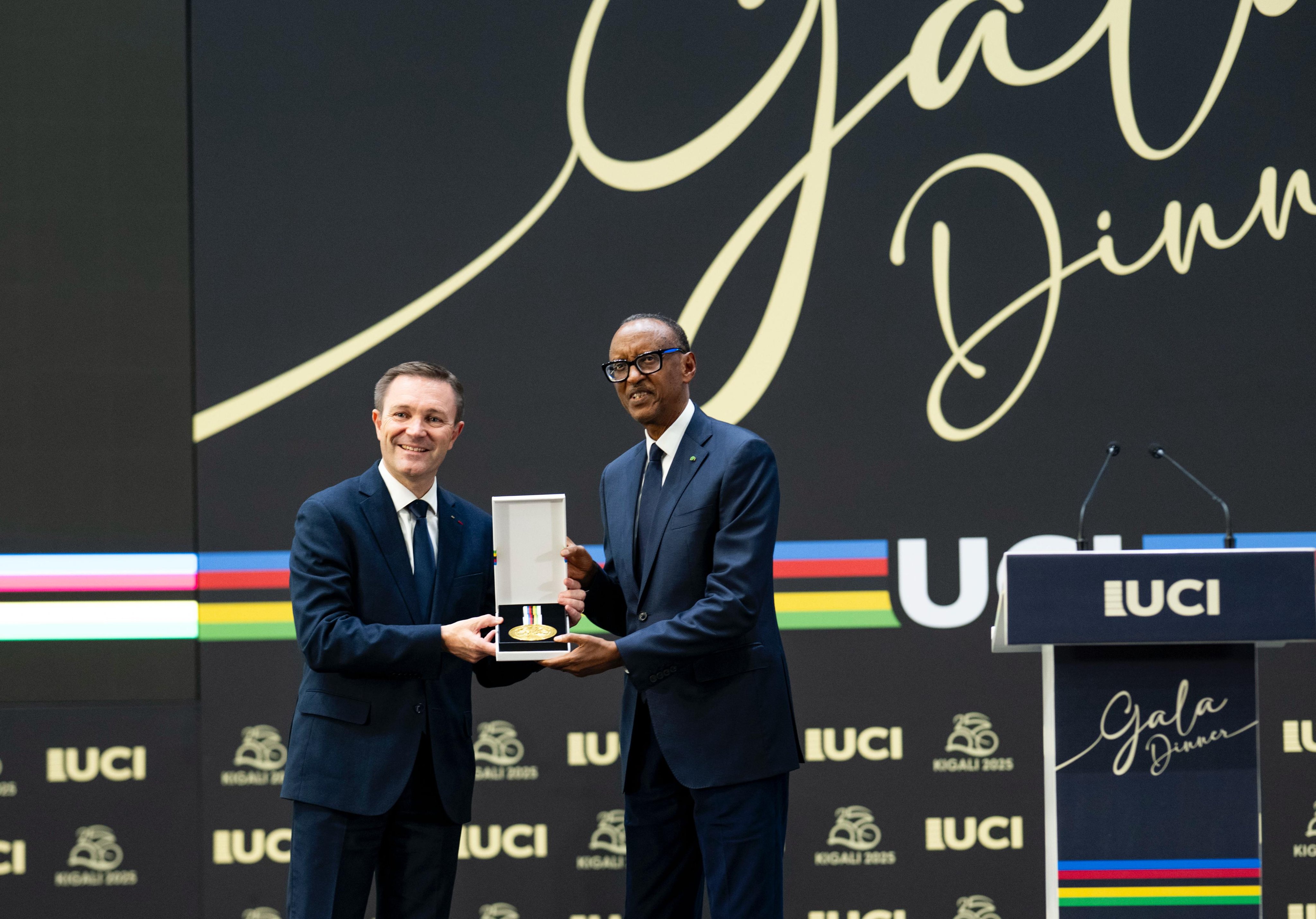
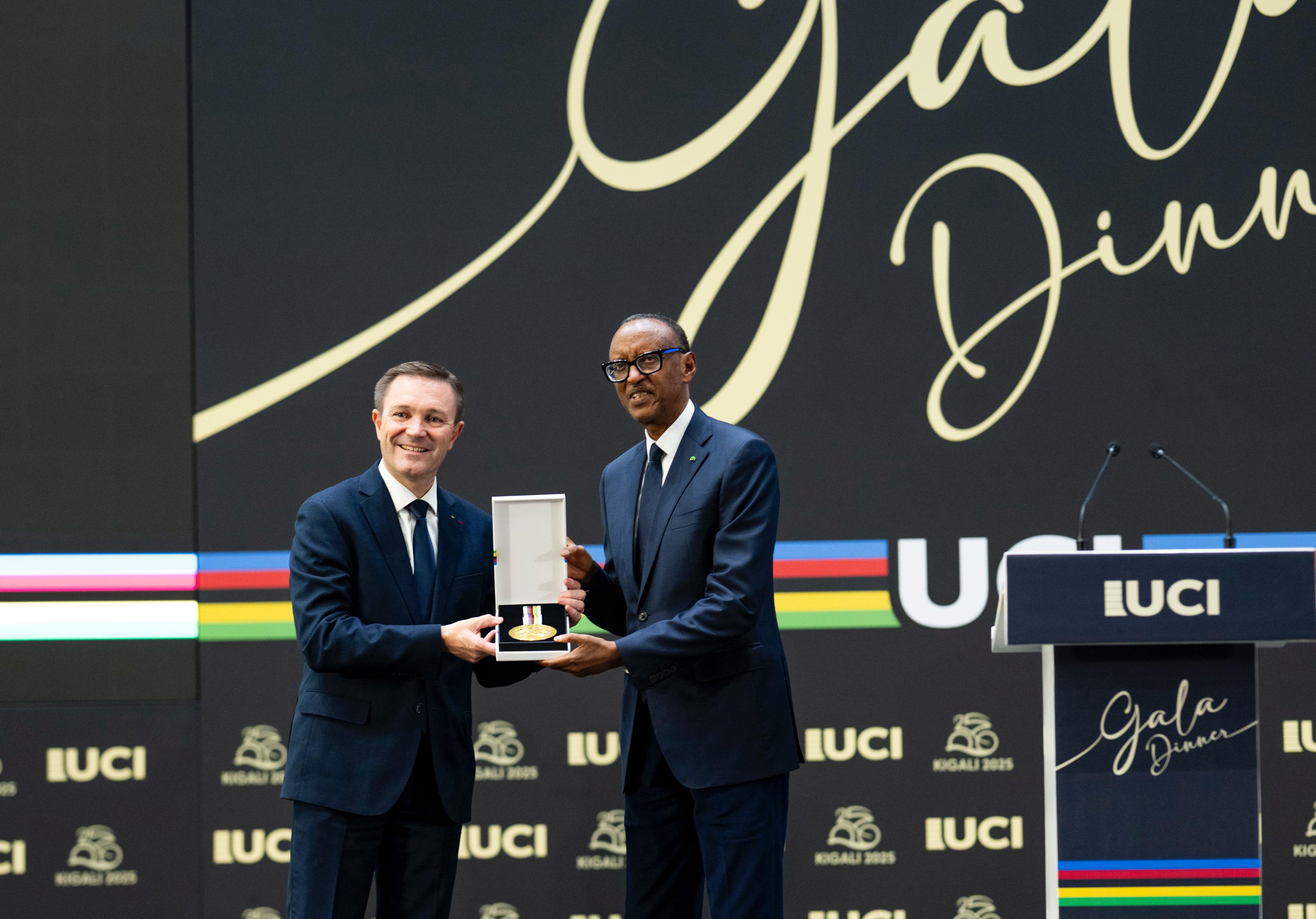
In recognition of Rwanda’s role, Lappartient presented President Kagame with a framed rainbow jersey and the UCI Order, the federation’s highest distinction.
“This is the highest award given to people who make an outstanding impact on the sport of cycling,” he said.
President Kagame, in his own remarks, welcomed the honour and congratulated Lappartient on his election as UCI President. He also acknowledged the warm presence of Prince Albert II of Monaco.
With humour, Kagame noted the symbolic value of the gift: “So, for me, I won’t necessarily have to participate in the competition. I have more or less already won.”
The President emphasised the unifying power of sport and its role in inspiring Africa’s youth.
“The chants, the crowds, and the smiles are a true testament to the unifying power of sports,” he said.
“For our young and talented people, this is an inspiration for them to follow their own dreams with a spirit of sacrifice and endurance, like true champions.”
He added that investment in sports across the continent is part of investing in Africa’s future.
“It all comes down to giving everyone a fair chance, not out of sympathy, but because everyone has something good to give back and because the sport is stronger for it,” Kagame said.
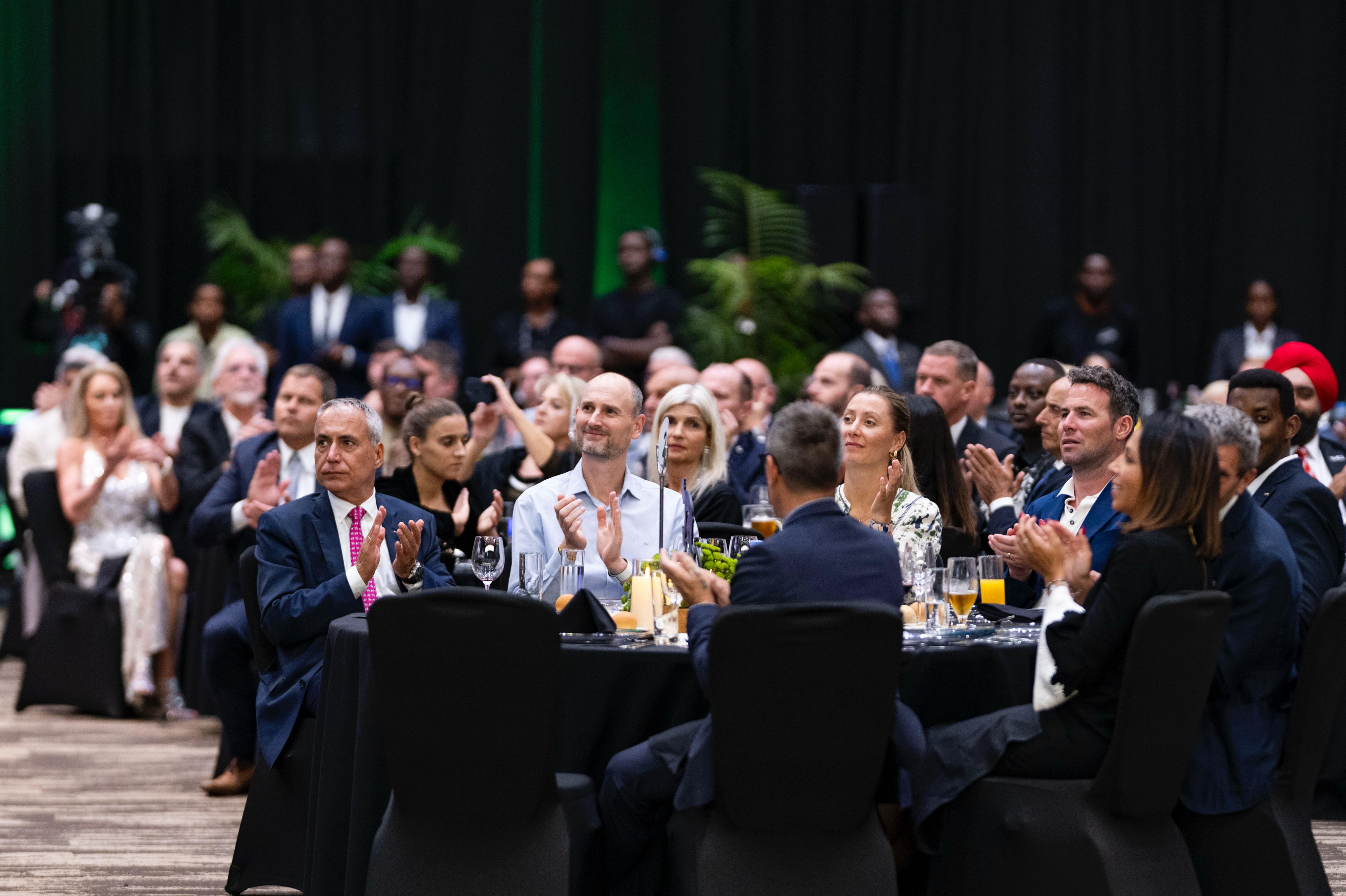
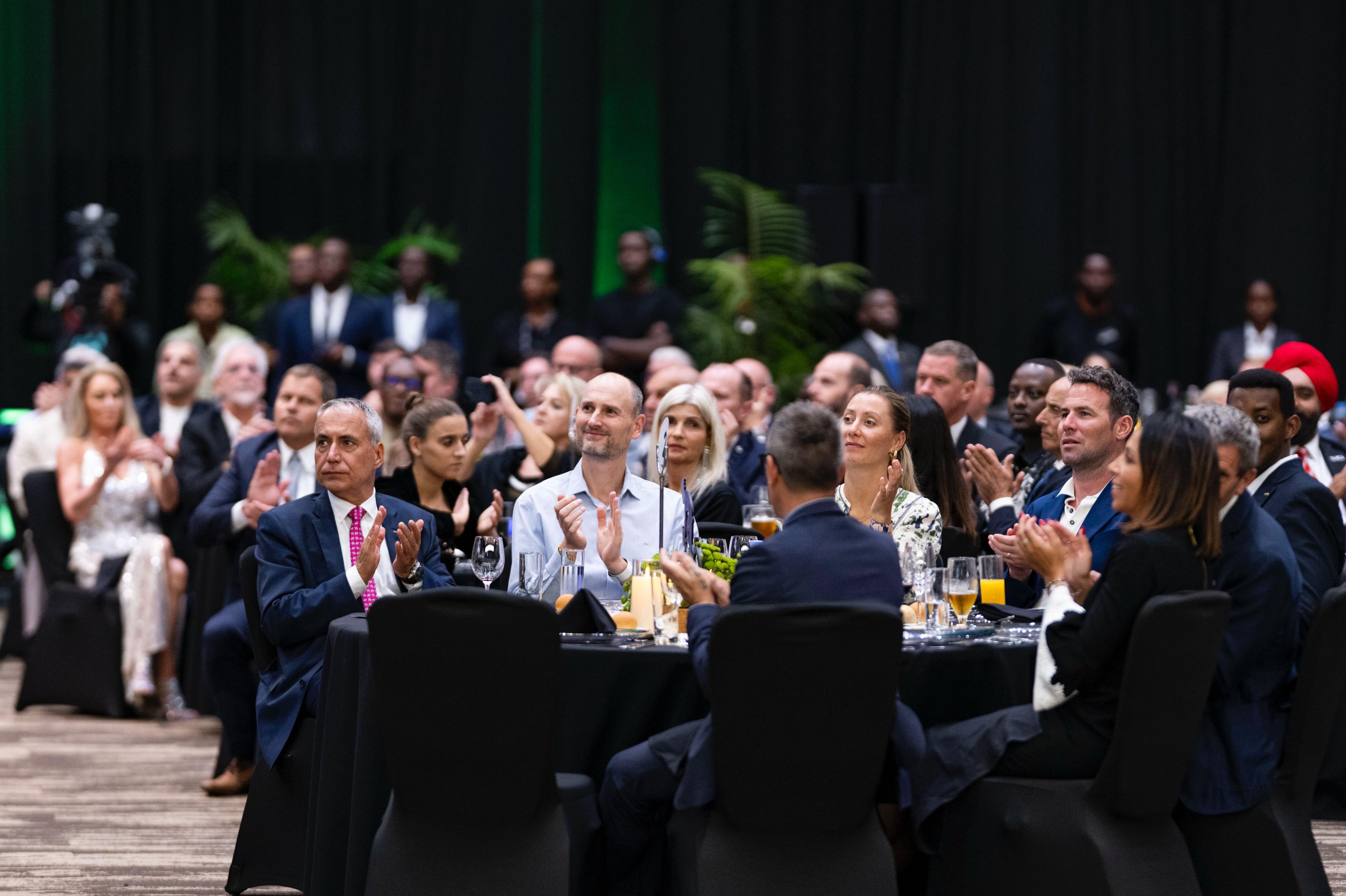
As the evening drew to a close, both leaders praised the organisers, the Rwandan Cycling Federation, and hundreds of volunteers whose smiles and energy were credited for much of the event’s success.
The 2025 UCI Road World Championships conclude on Sunday with the highly anticipated men’s elite road race, set to feature some of the world’s top riders in what promises to be a historic finale.
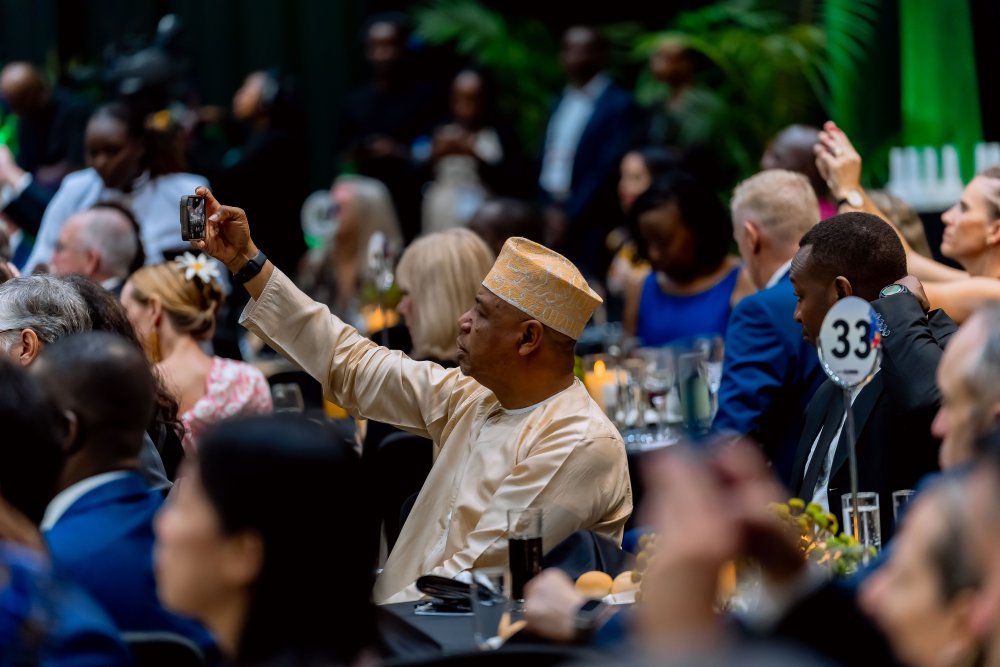
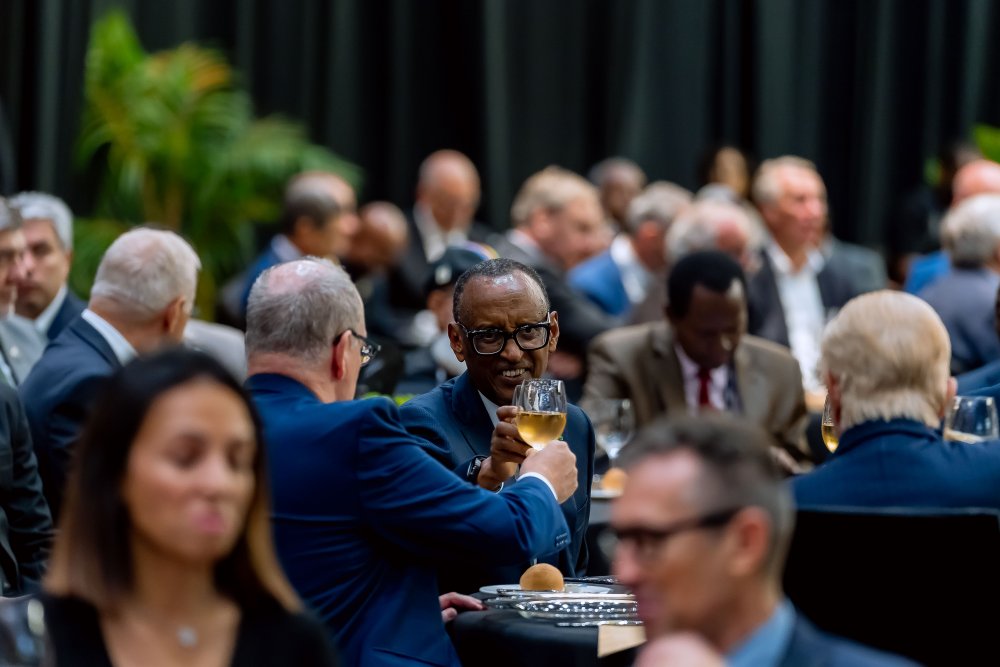
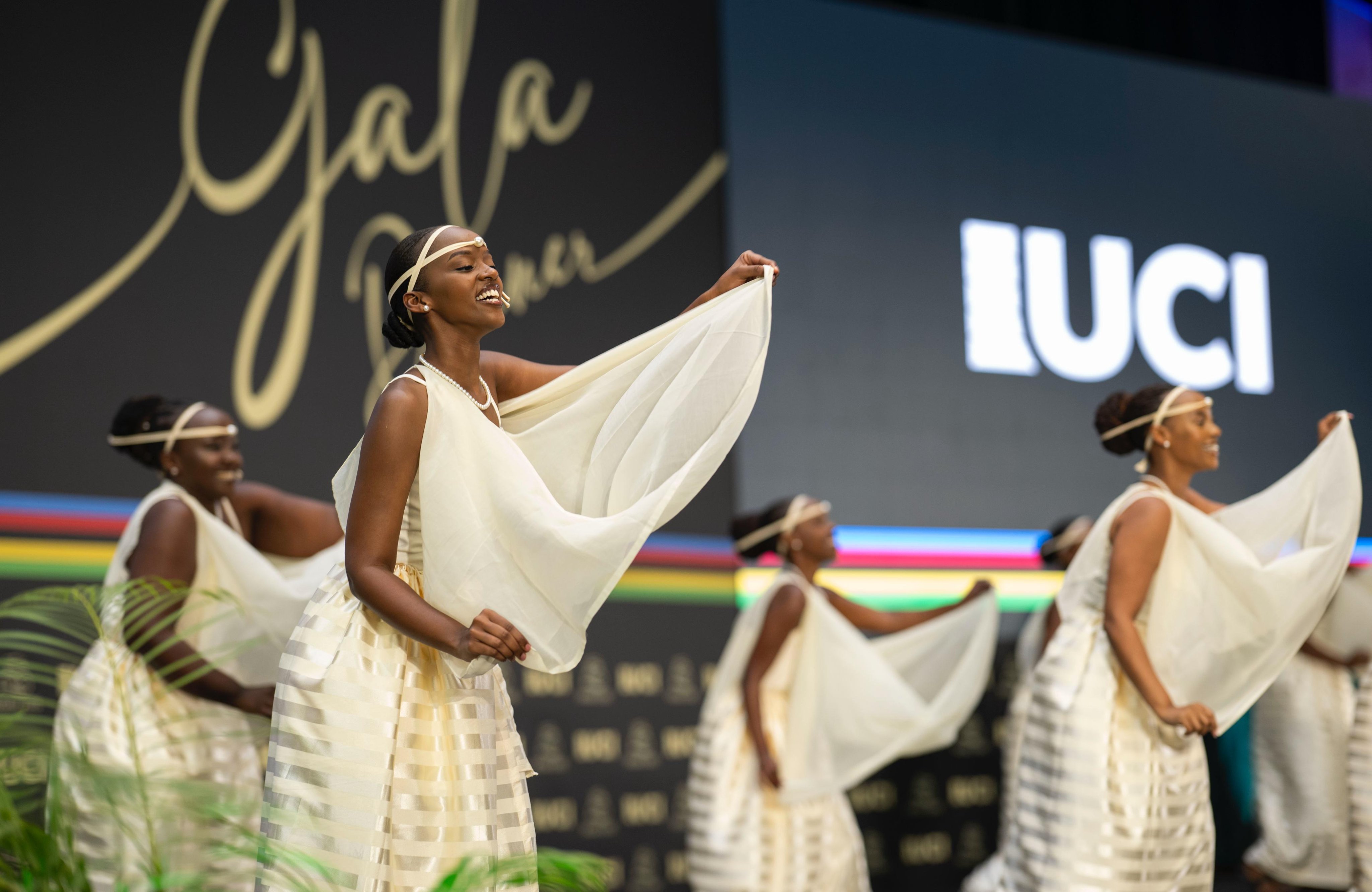
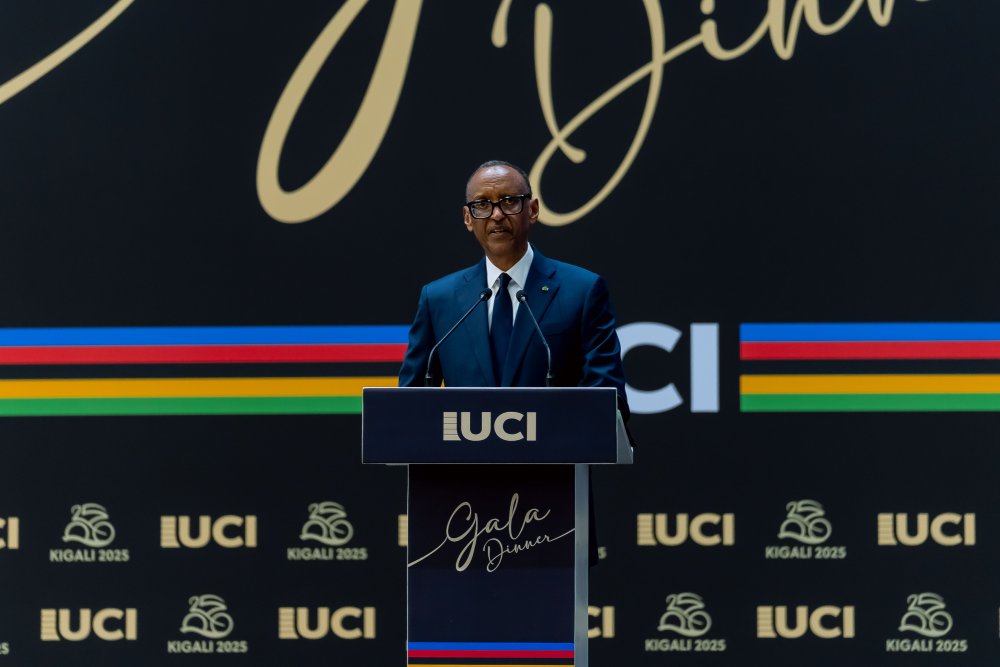
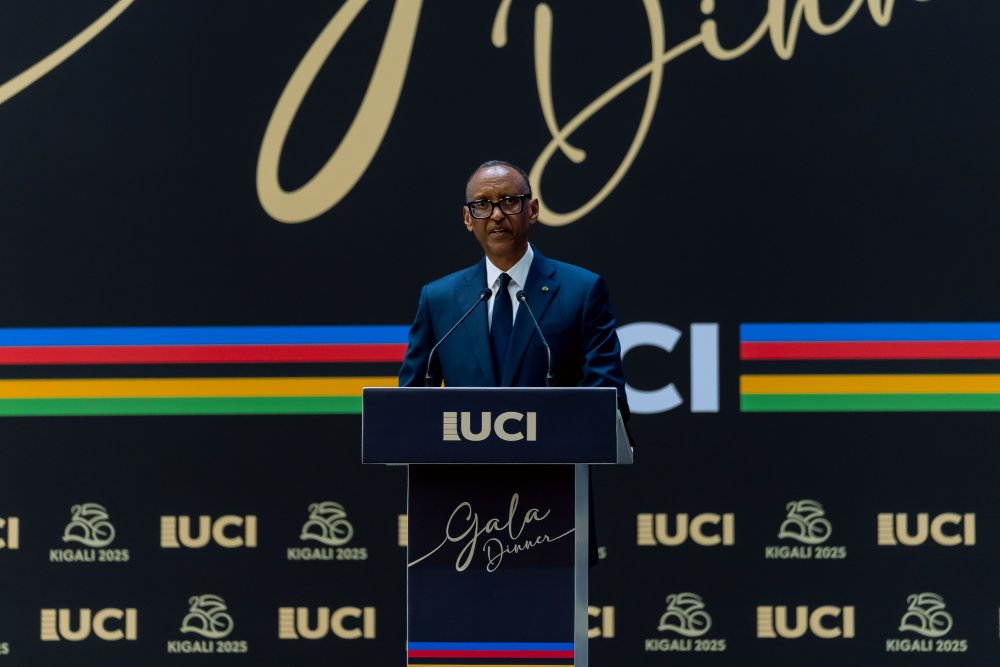
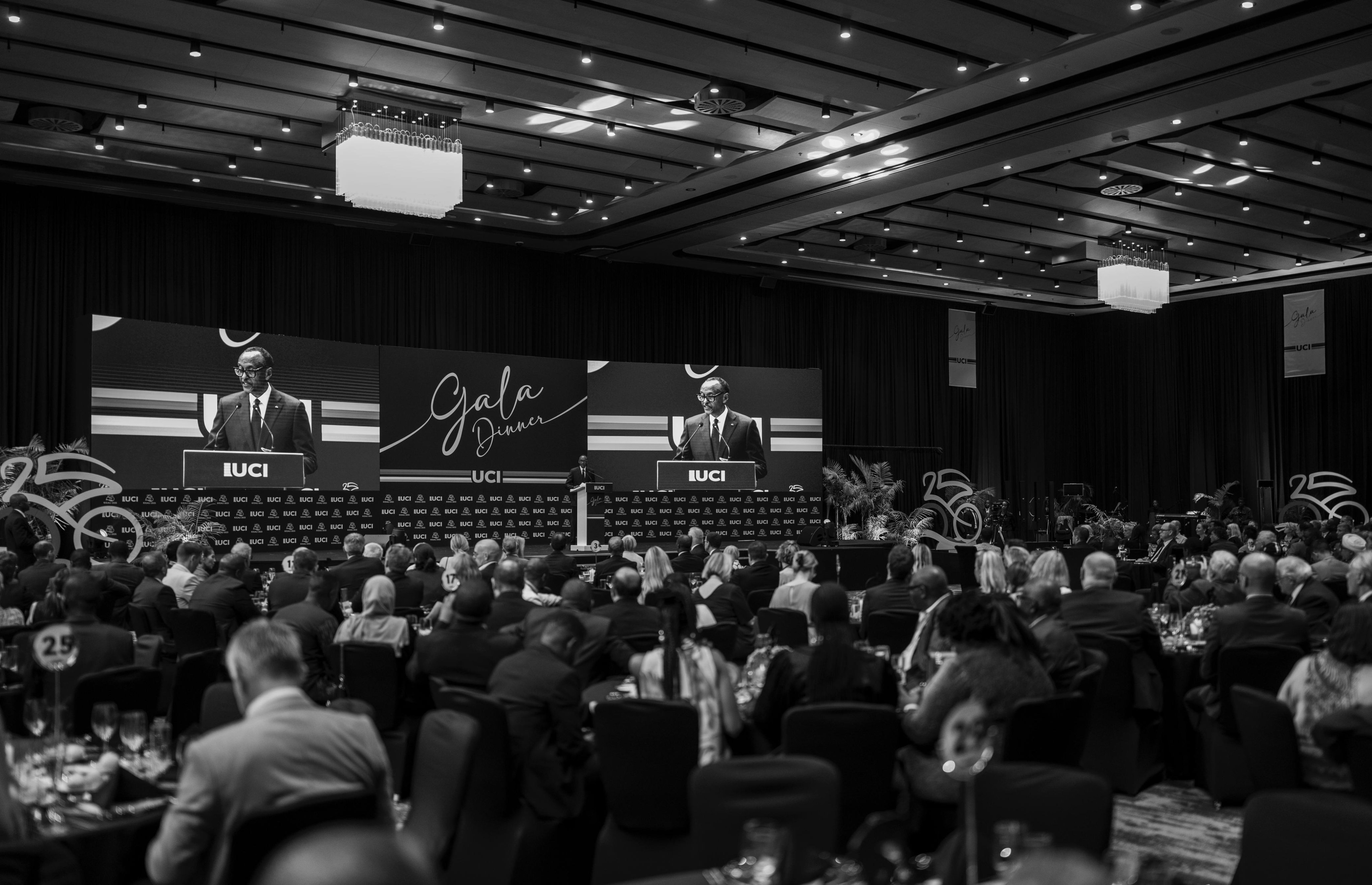
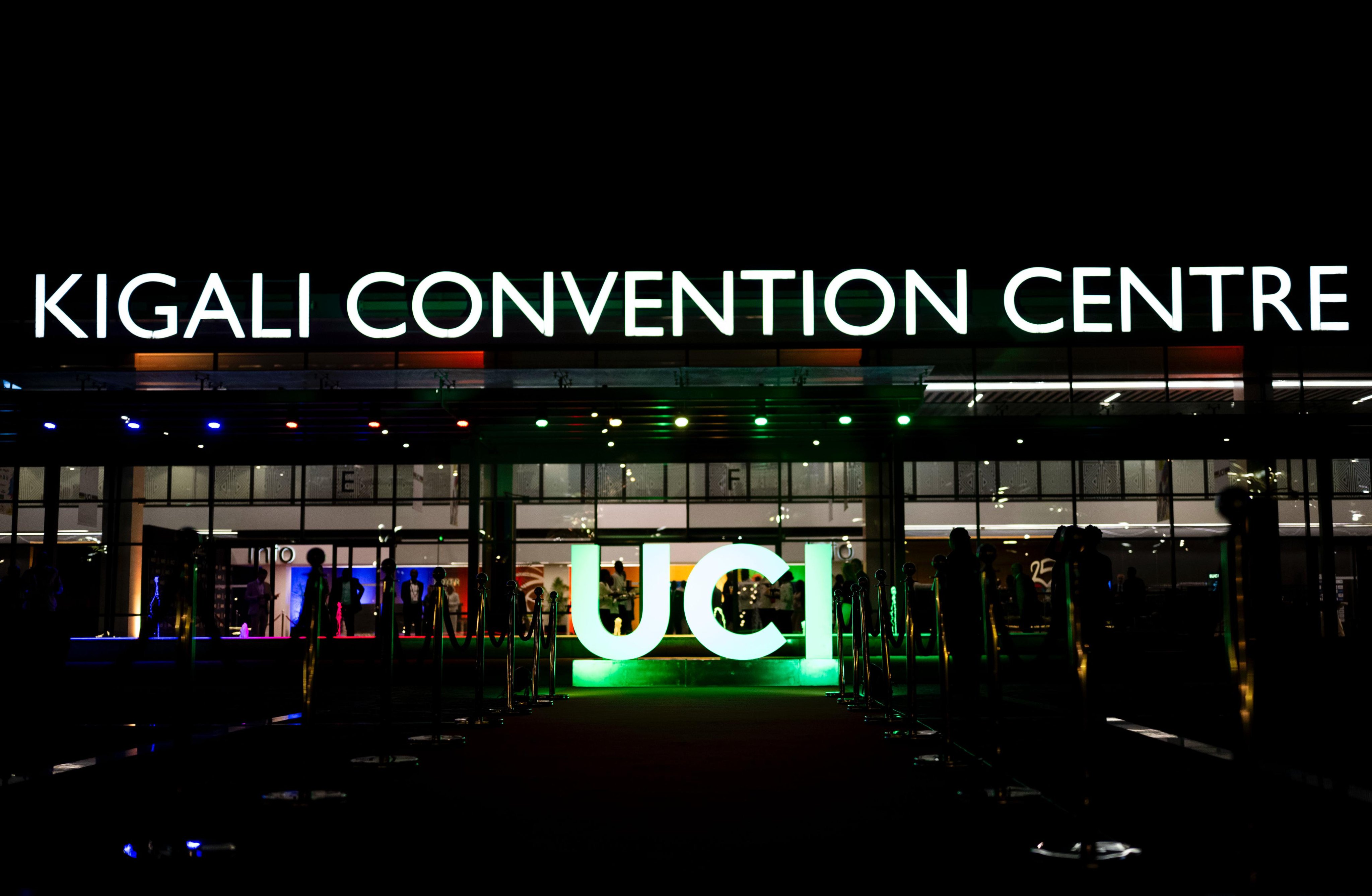
Speaking at the gala dinner in Kigali, Kagame thanked UCI President David Lappartient, His Serene Highness Prince Albert II of Monaco, and cycling fans worldwide for supporting the championship.
“Today, we stand here because the leadership at UCI put their trust in our country and our people to provide you with the best possible experience,” Kagame said.
“Rwanda is proud to be contributing to such an important moment in cycling history, and we are happy to be sharing it with you all as one team.”
The President described the week-long championships as a source of inspiration for Africa’s youth.
“The chants, the crowds, and the smiles are a true testament to the unifying power of sports,” he said. “For our young and talented people, this is an inspiration for them to follow their own dreams with a spirit of sacrifice and endurance, like true champions.”
Kagame stressed that investing in sports on the continent goes hand in hand with creating opportunities for the next generation.
“It all comes down to giving everyone a fair chance, not out of sympathy, but because everyone has something good to give back and because the sport is stronger for it,” he said.
UCI President David Lappartient, in his remarks, hailed Rwanda’s successful staging of the first Road World Championships ever held in Africa.
“This week in Kigali has not just met our expectations. It has, of course, done more than that. It has taken our breath away,” Lappartient said.
“The cycling family has fallen in love with your country, Your Excellency — in love with its countryside, in love with its people, in love with its beauty, in love with its vitality.”
Lappartient highlighted the historic nature of Kigali 2025, which included dedicated women’s under-23 races for the first time and the crowning of 12 world champions so far.
He presented Kagame with a framed rainbow jersey and the prestigious UCI Order, the federation’s highest distinction, in recognition of his role in advancing cycling and supporting the championships.
Both leaders paid tribute to organisers, the Rwandan Cycling Federation, and the volunteers who ensured the success of the event.
“They are always ready with a big smile and assistance,” Lappartient noted, to applause.
The 2025 UCI Road World Championships conclude on Sunday with the men’s elite road race, a highly anticipated finale that will feature some of the sport’s top riders after an unforgettable week in Kigali.
Speaking at the event, Lappartient praised Rwanda for staging a championship that “took our breath away,” describing it as an unforgettable milestone for the global cycling community.
“The cycling family has fallen in love with your country, Your Excellency, Rwanda, this week,” he said. “In love with its countryside, in love with its people, in love with its beauty, in love with its vitality. These UCI World Championships are not over, but we can already declare them an immense success.”
The UCI President also noted the groundbreaking nature of the Kigali edition, highlighting that it was the first time the Road World Championships were held on the African continent, and the first time women in the under-23 category had their own dedicated races.
“Quite simply, we have never experienced an event like this before,” he said.
In a gesture of appreciation, Lappartient presented President Kagame with a framed rainbow jersey, the same awarded to world champions during the week, along with the UCI Order medal.
“This is the highest distinction awarded to people who make an outstanding impact on the sport of cycling,” he said. “We will leave Rwanda with unforgettable memories, and we sincerely hope that you will also have unforgettable memories of the UCI World Championships.”
For his part, President Kagame welcomed guests, including His Serene Highness Prince Albert II of Monaco, senior officials, and the wider cycling family.
He congratulated Lappartient on his recent election and thanked him for the honour bestowed upon him. “So, for me, I won’t necessarily have to participate in the competition. I have more or less already won,” Kagame joked, drawing applause.
The President emphasised the power of sport to unite and inspire, particularly among Africa’s youth. “The chants, the crowds, and the smiles are a true testament to the unifying power of sports,” he said.
“For our young and talented people, this is an inspiration for them to follow their own dreams with a spirit of sacrifice and endurance, like true champions.”
Kagame added that investing in sport on the continent is part of investing in Africa’s future. “It all comes down to giving everyone a fair chance, not out of sympathy, but because everyone has something good to give back and because the sport is stronger for it,” he said.
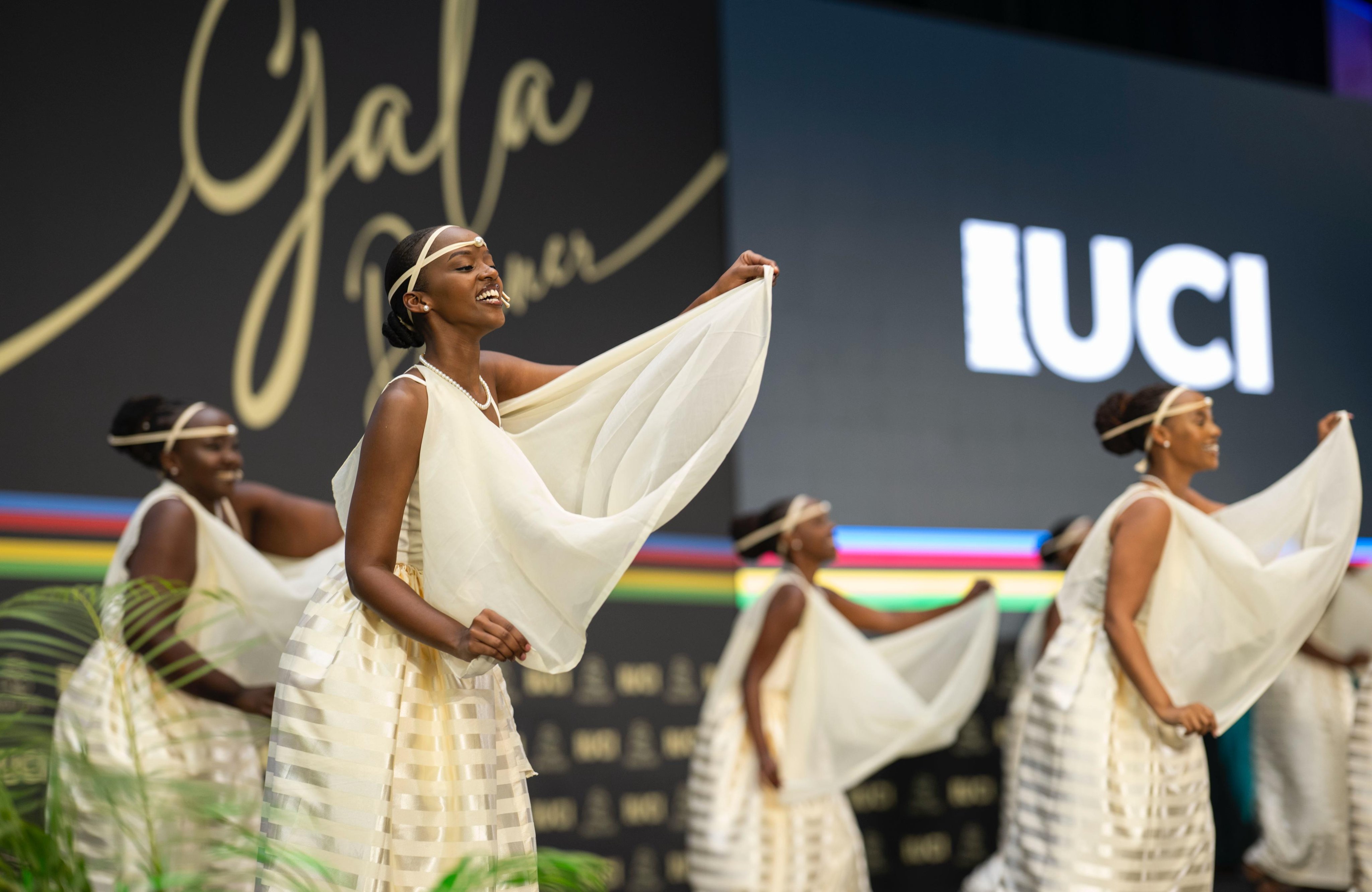
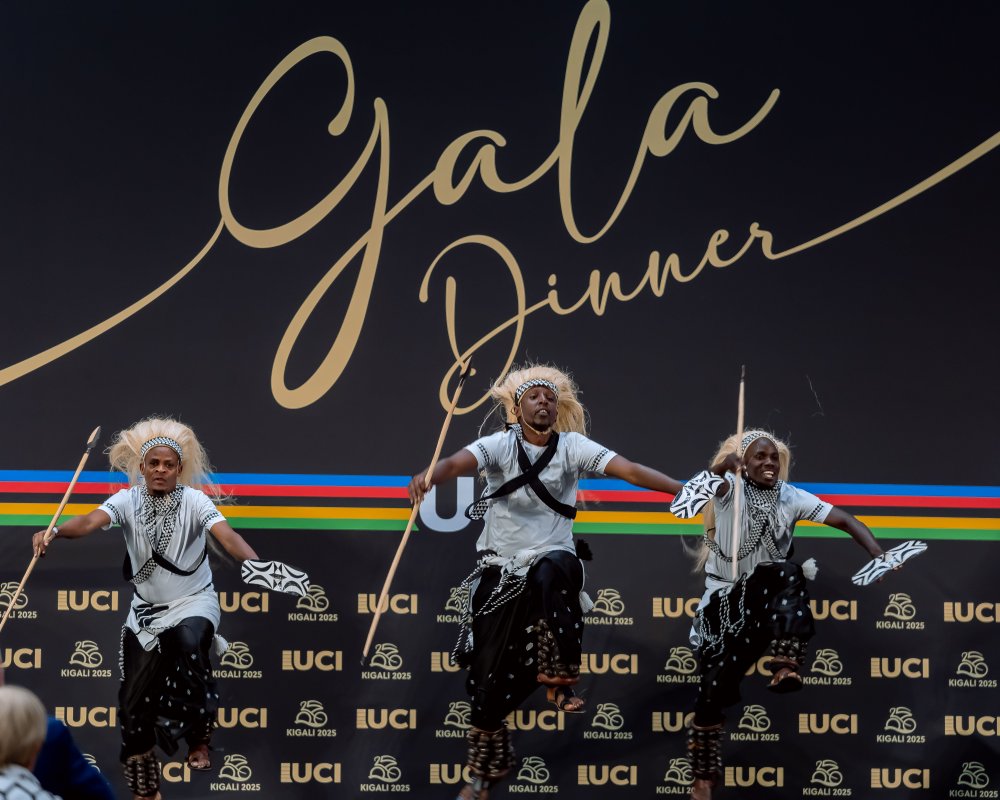
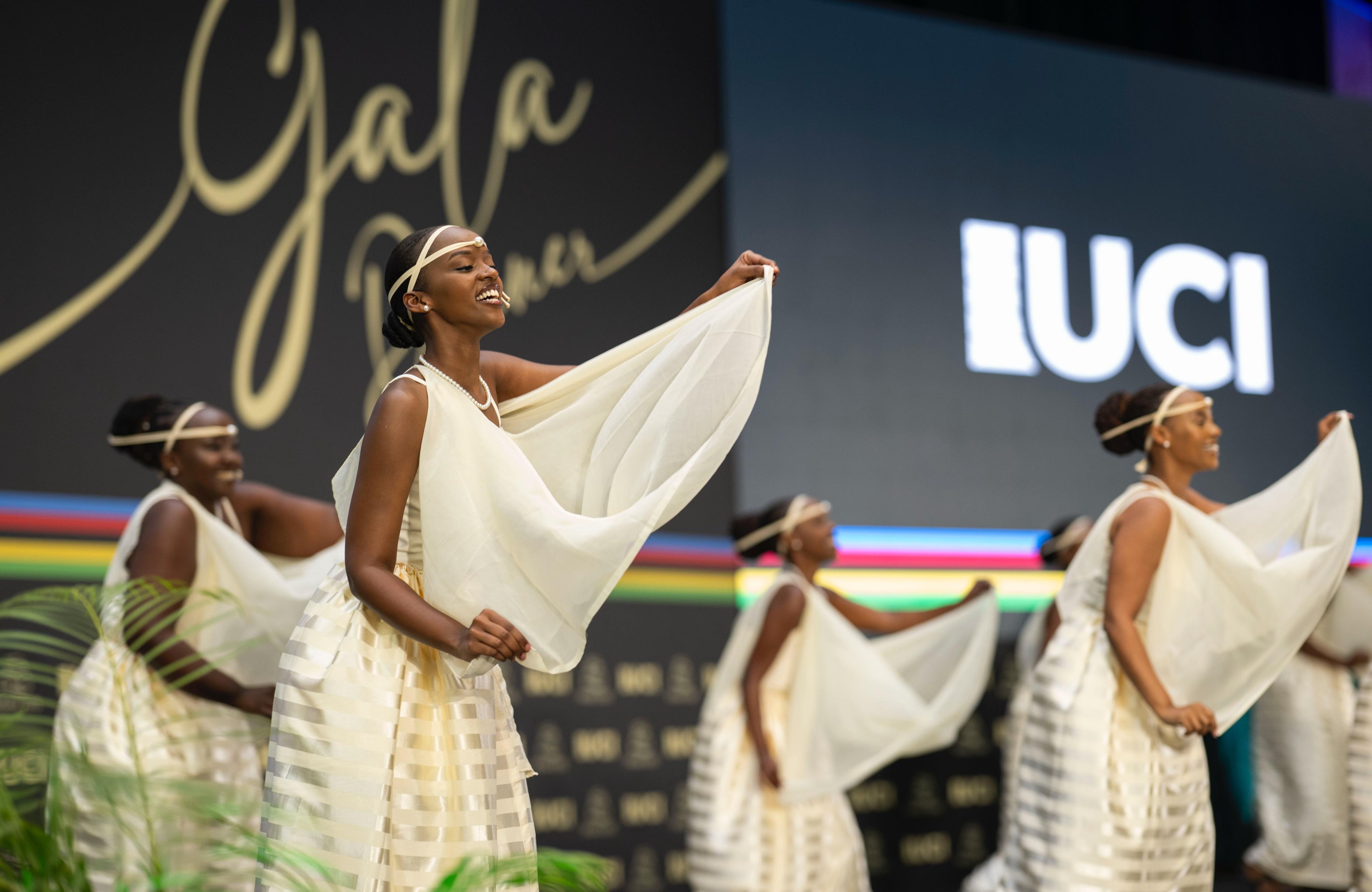
The evening closed on a celebratory note, with both leaders commending the tireless work of organisers, volunteers, and the Rwandan Cycling Federation in delivering what has already been hailed as one of the most memorable championships in UCI history.
The UCI Road World Championships conclude on Sunday with the highly anticipated men’s elite road race, bringing together some of the world’s best talent after an unforgettable week in sporting history.
The 164.6-kilometre battle on Kigali’s demanding circuit, comprising 11 laps lined with punishing gradients and bone-rattling cobbles, tested the world’s best. With altitude, heat and 3,350 metres of climbing, the race promised attrition and delivered it in spades. One hundred and four riders from 44 nations rolled out; only the strongest would survive.
{{A day of early ambition and constant upheaval
}}
Austria’s lone entrant, Carina Schrempf, set the early tone with an audacious solo move before the second ascent of the Côte de Kigali Golf. She built a gap beyond three minutes, her boldness briefly stirring memories of Austria’s Olympic shock gold in Tokyo. Behind, the peloton watched and waited, Italy and the Netherlands quietly policing the pace.
But patience turned to action mid-race. Spain’s Usoa Ostolaza attacked, Hungary’s Blanka Vas countered, Belgium’s Julie Van de Velde chased, and the Dutch rolled through moves with Yara Kastelijn, Femke de Vries and Shirin van Anrooij. Van Anrooij eventually forged a solo lead of more than 30 seconds before being reeled back with 55 kilometres to ride.
Then Switzerland’s Noemi Rüegg and Spain’s Mireia Benito surged clear and prised out a half-minute, Australia steadying the chase as numbers in the bunch dwindled. Amanda Spratt’s sharp acceleration on the approach to the final laps tore the race apart and forced the favourites to commit.
By 30 kilometres to go, defending champion Anna van der Breggen was gone, her Dutch squad still clinging to Riejanne Markus as their hope.
{{The front group sharpens and a moment to strike
}}
With the peloton two minutes behind, a decisive move formed: Vallieres, Fisher-Black, García, Markus, Antonia Niedermaier and others worked to consolidate the lead. From behind, time trial world champion Marlen Reusser surged with Silvia Malcotti, later joined by Swiss teammate Elise Chabbey, briefly threatening to bring the front back.
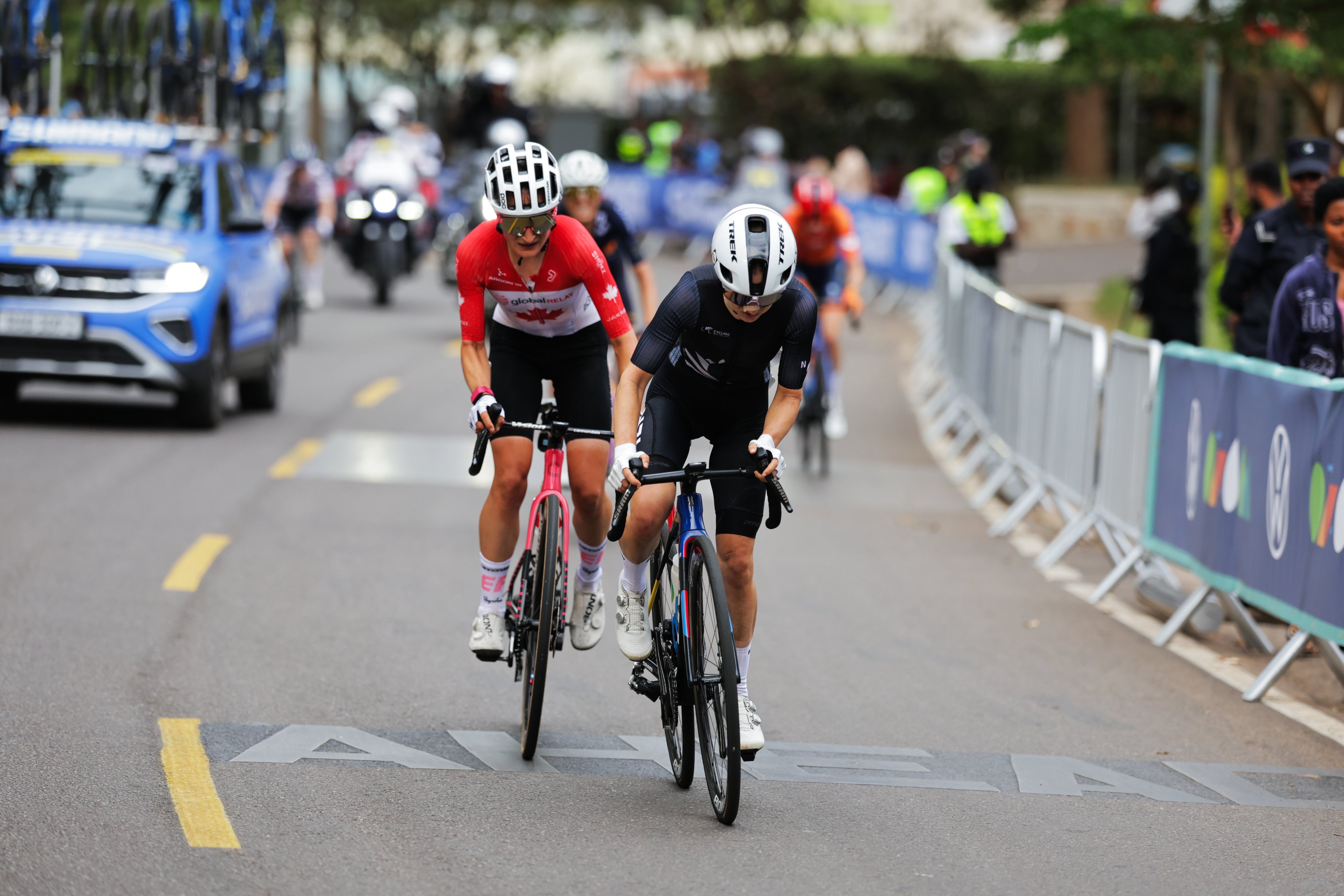
Then came the first true warning shot. On the penultimate ascent of the Côte de Kigali Golf, Spain’s García exploded from the group. Vallieres and New Zealand’s Fisher-Black matched the move, forming a trio of clear favourites. Niedermaier clawed back, Markus hovered but could not fully latch on. Behind, Chabbey jumped in pursuit but could not close the gap.
{{A fearless final attack
}}
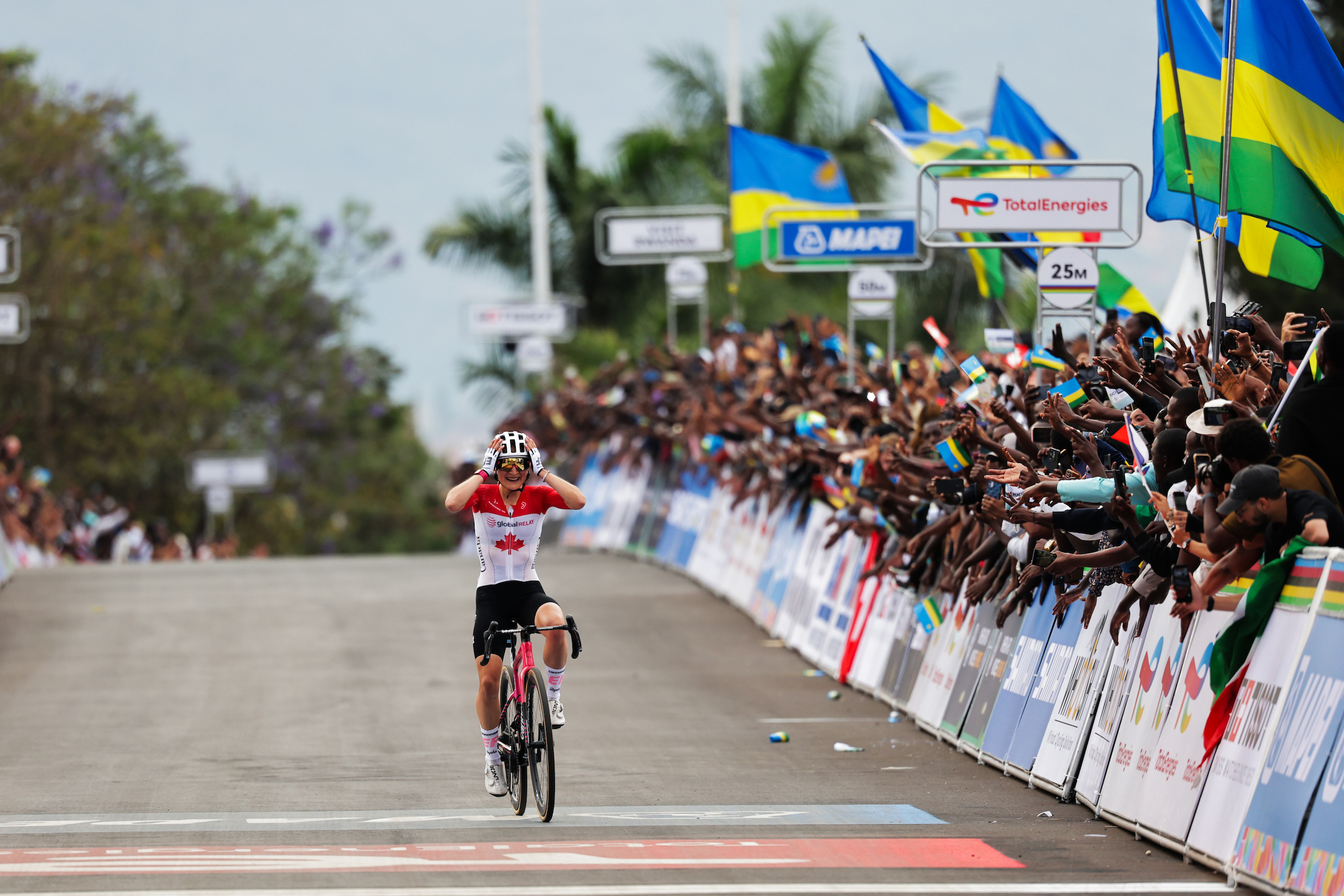
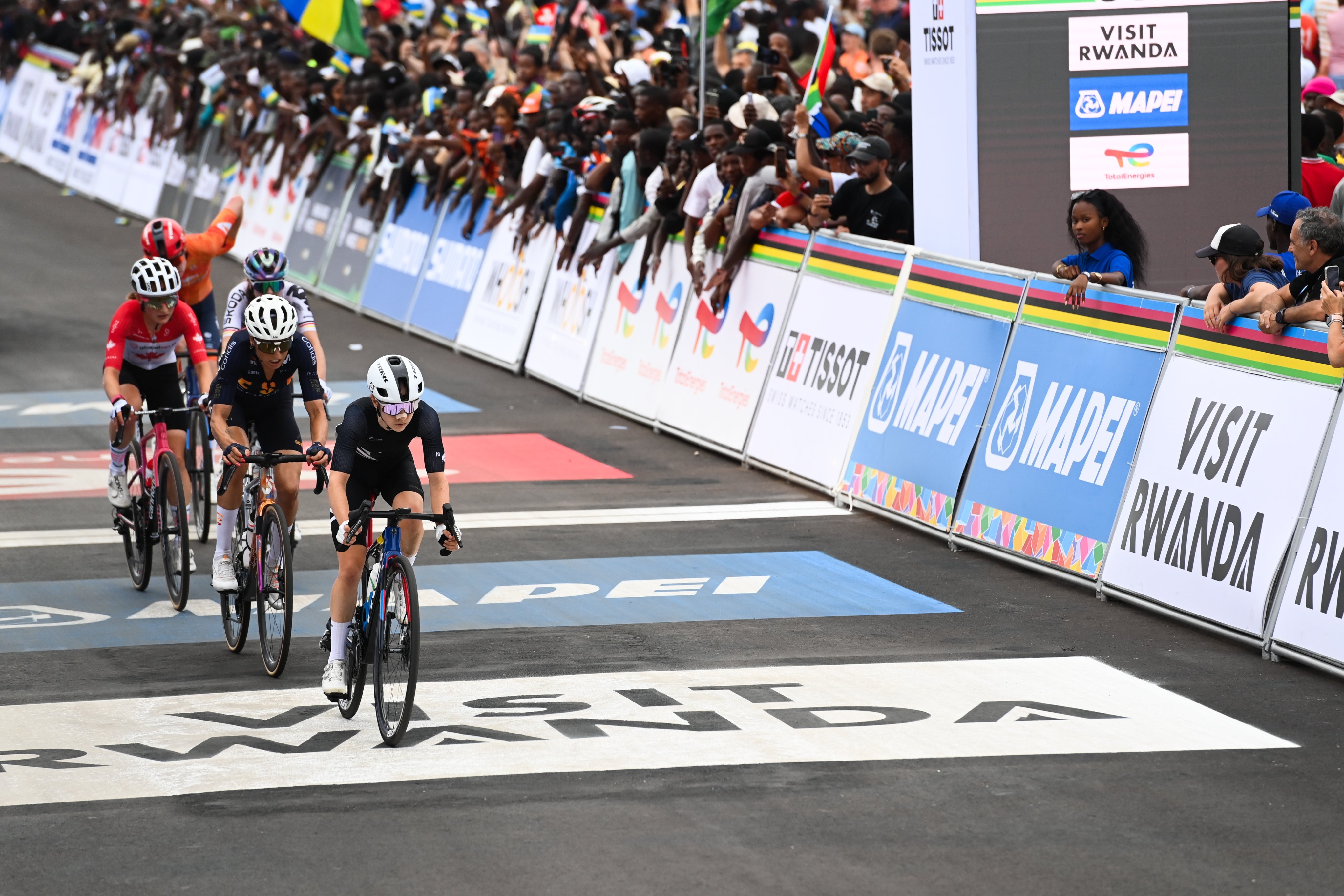
Inside two kilometres to go, on the cobbles of Kimihurura, Vallieres made the move of her life. Knowing Fisher-Black’s sprint would be lethal, she surged as soon as she sensed fatigue in the Kiwi’s pedal stroke. The cobbles amplified her advantage; in seconds she was alone, powering clear while the chasers hesitated.
Fisher-Black and García could only watch the Canadian disappear into the deafening cheers of the Rwandan crowd. Behind them, the chasers splintered; Chabbey’s brave pursuit ran out of road.
{{A breakthrough win and emotional finish
}}
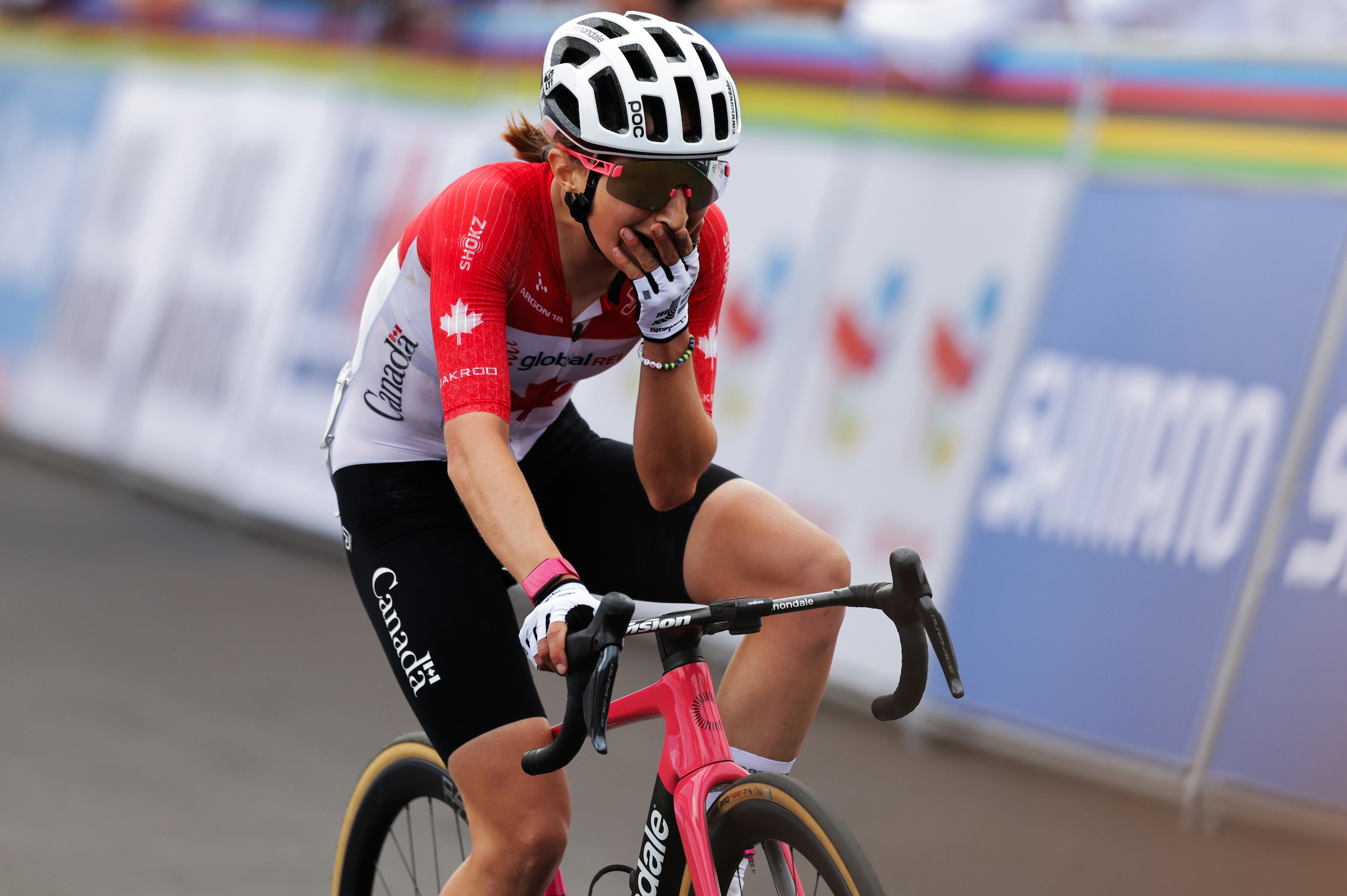
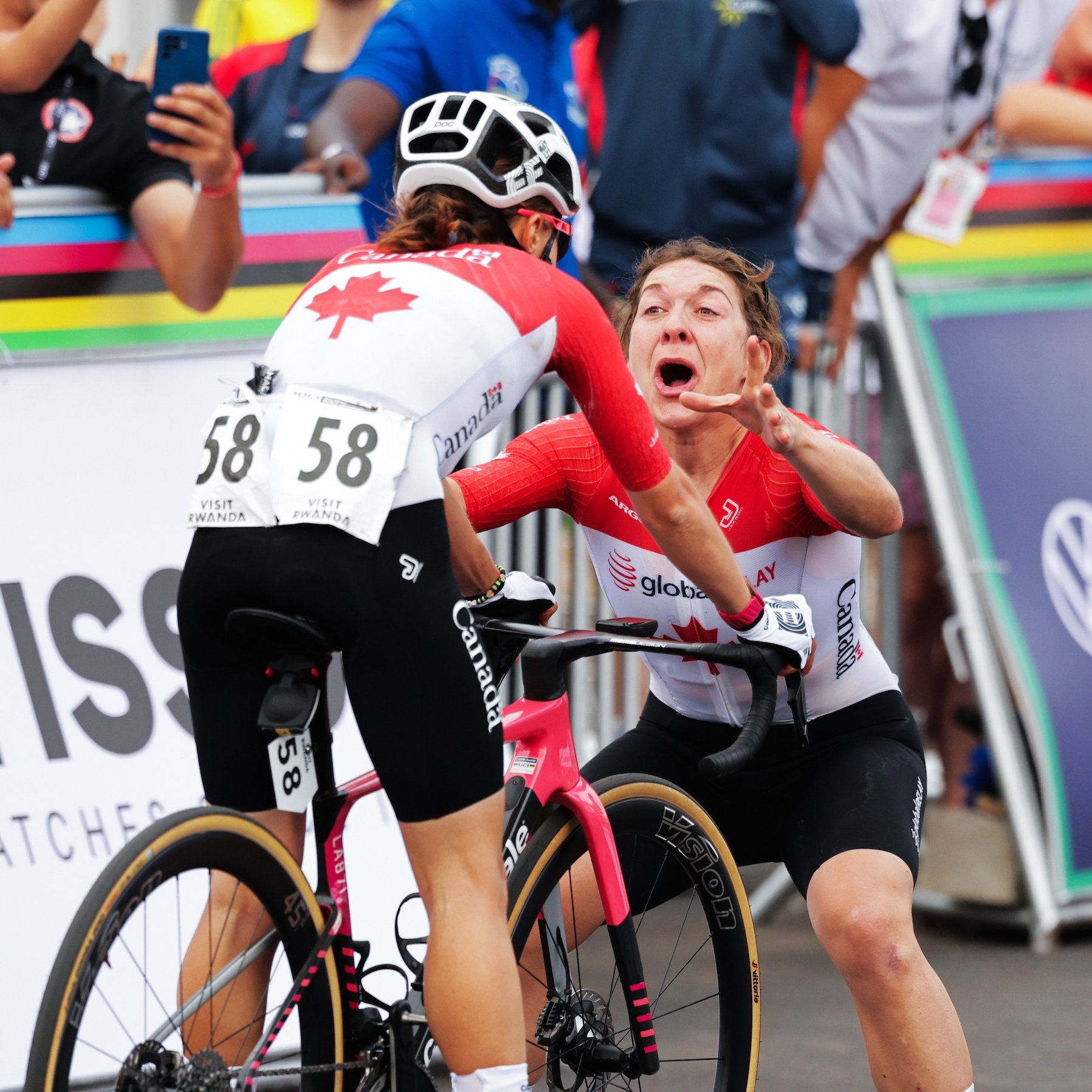
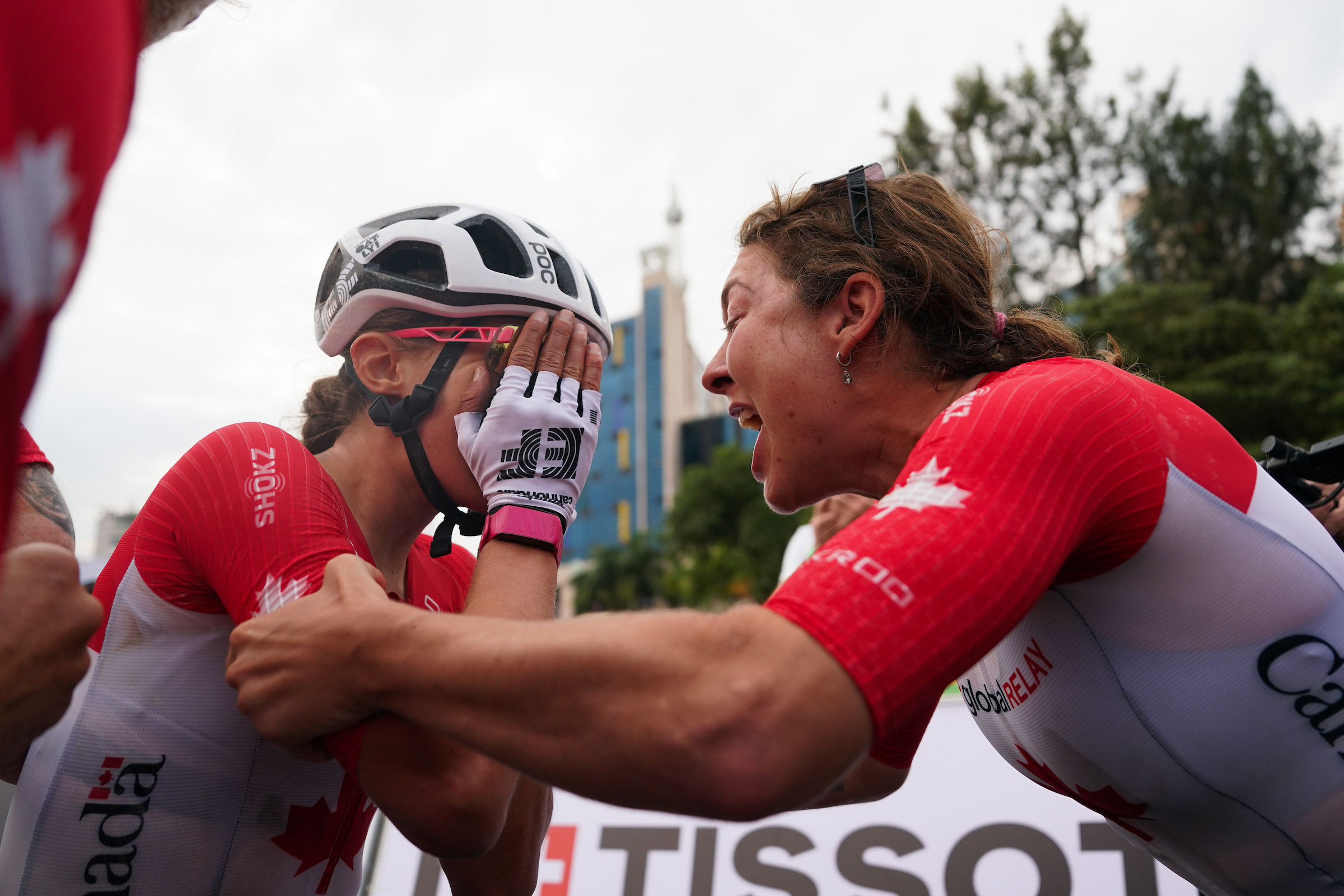
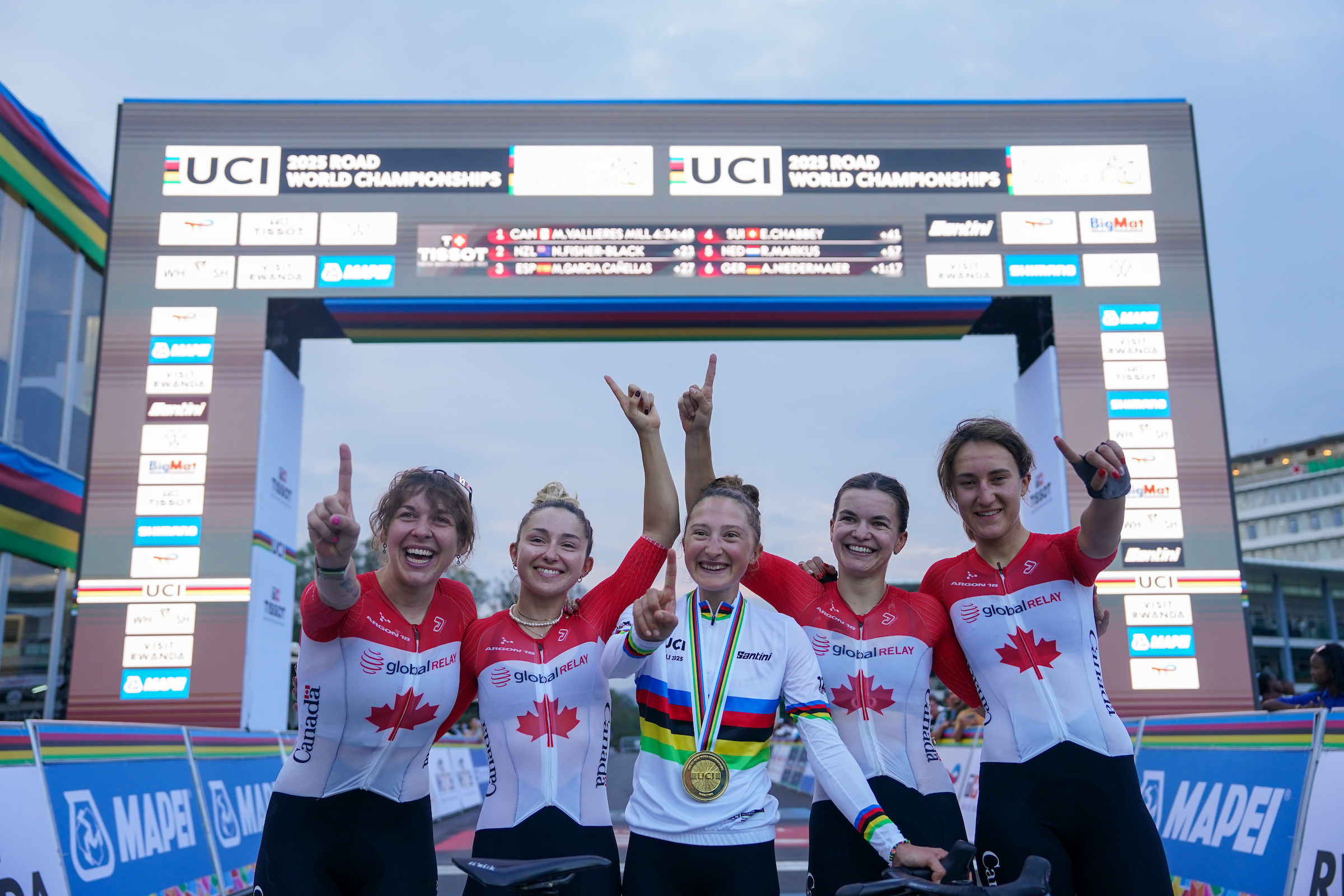
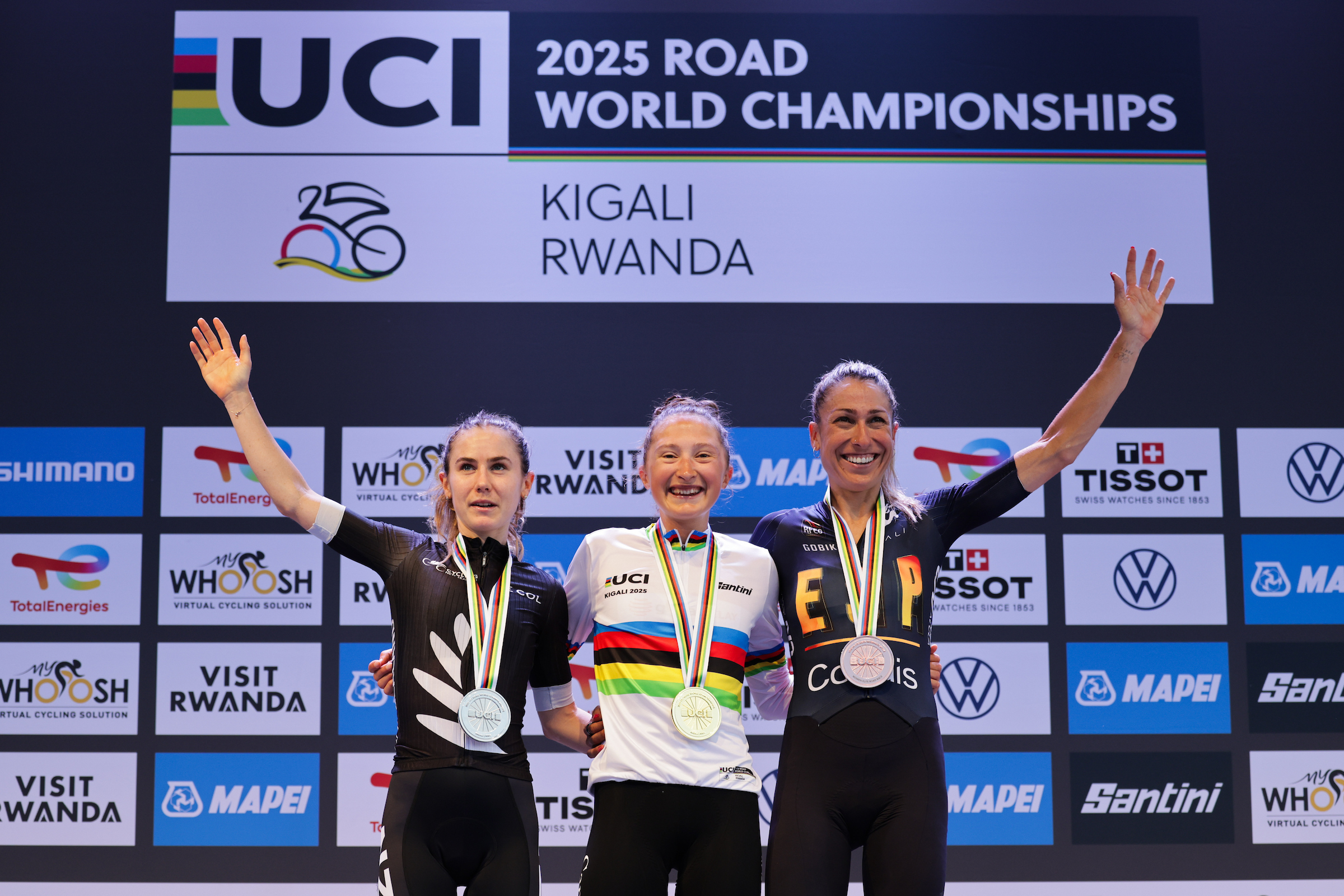
Vallieres hit the final steep ramp alone and unstoppable, punching the air as she crossed the line for Canada’s first rainbow jersey in the elite women’s road race.
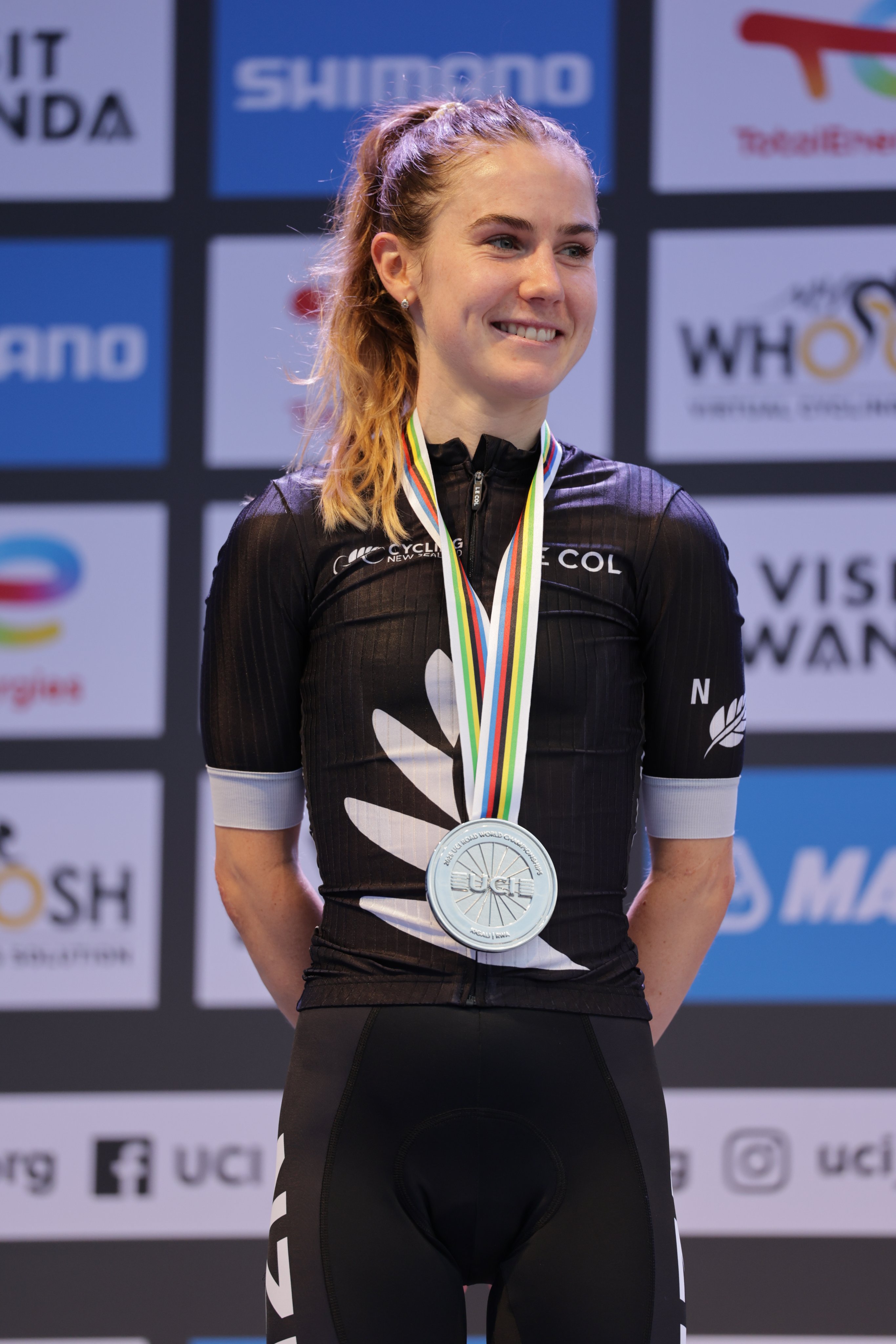
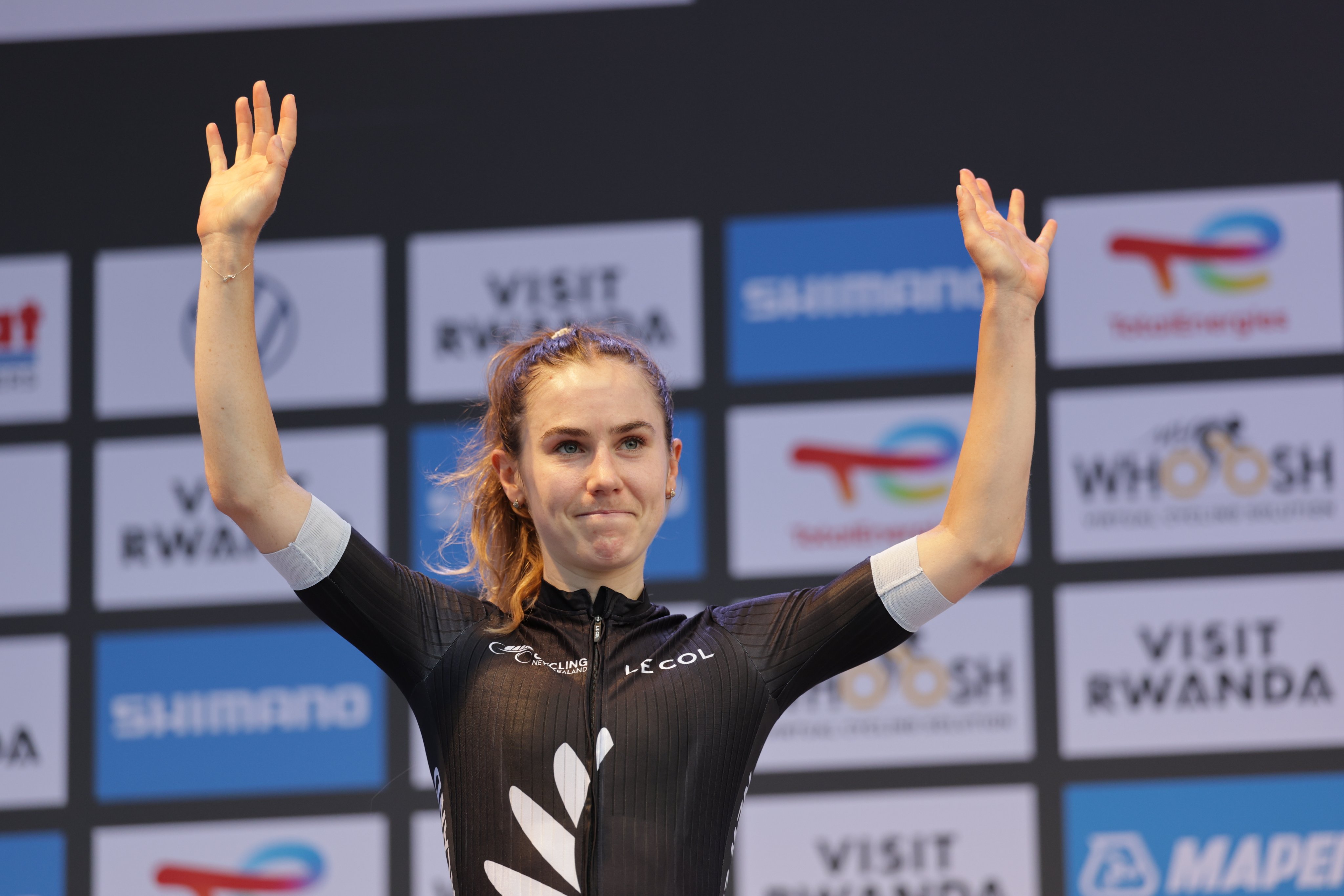
Fisher-Black took silver 23 seconds back, García bronze at 27 seconds. Chabbey arrived fourth at 41 seconds, Markus fifth at 57, while Demi Vollering, tipped as the top favourite, led the remnants of the big names 1:34 down in seventh.
“The girls believed in me, so I believed in myself,” Vallieres said after the finish. “I told myself I didn’t want to have regrets. I knew I probably wouldn’t beat Niamh in a sprint, so when I saw her fade, I went all in. It was my dream to win it, and now it’s real. It’s crazy.”
Great Britain was absent altogether despite having six allocated spots. Former champion Lotte Kopecky skipped the race after an injury-disrupted season, and Denmark’s Cecilie Uttrup Ludwig also withdrew earlier in the week. But the quality of the field and the savagery of the Kigali circuit still produced a thriller that crowned a new, fearless champion.
{{Rwanda fights but falters on home roads
}}
For the host nation, the day was one of grit but heartbreak. Rwanda fielded four riders, including Nirere Xaveline, Ingabire Diane, Irakoze Neza Violette and Nzayisenga Valentine, cheered by passionate crowds on every climb. Yet the brutal pace and unrelenting terrain proved unforgiving; one by one, the local riders slipped back and were pulled from the race.
Among individuals frequently associated with efforts to glorify the First and Second Republics are Antoine Mukiza Zigiranyirazo, son of Protais Zigiranyirazo, and Jean-Luc Habyarimana, son of former President Juvenal Habyarimana who led Rwanda until 1994, along with other similar figures.
These individuals often claim that their parents and other officials of those regimes committed no wrongdoing, despite well-documented evidence that many played a key role in planning and carrying out the genocide against the Tutsi in 1994.
In a message shared on X , Minister Bizimana stressed that one way to preserve historical truth is to counter those who spread false narratives about the country’s past.
“The journey of building unity starts with acknowledging the truth of our history — showing how our unity was destroyed. Rwandans had lived in unity for centuries, but this was deliberately broken and culminated in the Genocide against the Tutsi in 1994.
“Let me also remind you that the genocide was planned before that year and, in some areas, killings began earlier [Kibilira, Mutara, Nasho, Rwankuba in Murambi, Mbogo in Kigali, Shyorongi, Bugesera, Gisenyi, Kibuye, Ruhengeri…].”
He explained that the real root of Rwanda’s disunity lies in Belgian colonial policies, missionary influence, and the governments of PARMEHUTU and MRND.
“To legitimize the regimes that planned and carried out the genocide is to keep destroying Rwandan unity. The genocide and its ideology defined the rule of Habyarimana and deeply fractured our unity. We cannot stand by and watch this happen. Instead, we must work together to ensure the truth prevails. That is how we strengthen, support, and safeguard our unity from those who seek to undermine it,” Dr. Bizimana stated.
According to the 2020 Rwanda Reconciliation Barometer (RRB), national reconciliation in Rwanda was measured at 94.7%, indicating a remaining 5.3% gap where continued education and engagement are needed to further strengthen social cohesion.
In an interview with the media about preparations for the elite men’s road race scheduled for Sunday, 28 September 2025, Pogačar did not hold back in comparing the two events.
Asked how he viewed the Rwanda championships compared to the 2024 edition in Australia, he said: “This is much better. Honestly, the layout of the roads here is ten times more challenging than in Australia. Please understand, I don’t mean to disrespect the Australians who designed their course, but it just didn’t feel as tough as this one.”
The 27-year-old, who won the 2024 UCI Road World Championships, said his preparations have gone well and he is determined to work with his teammates to reclaim the gold medal.
“I came here very motivated for the road race on Sunday. I have big ambitions and my legs are ready. We brought a strong team and believe we’re among the top favorites. Our goals are clear, and the energy from the fans along the roads is incredible.”
He highlighted the overwhelming support already present even during training: “Spectators fill the roads during training — it already feels like race day. The roads are in great condition. Yes, the weather is different from home, but that’s fine. We were lucky to train on the outskirts of the city, it’s beautiful and the air is fresh. It’s good that the World Championships are coming to Africa too.”
Having just reclaimed the Tour de France title for the fourth time, the Slovenian rider shared insights about the Kigali course and the challenges it presents: “The roads I’m focusing on include Mont Kigali and the cobblestones at Kwa Mutwe. The cobbles here are different from Belgium — these ones climb in a circular pattern, while others are sharper. But that’s good; it adds to the difficulty of the race.”
“I don’t know why Mont Kigali is only included once and mid-race. We have plenty of other hills to play with, so it’s fine. Overall, the course is great, and we’re ready to compete.”
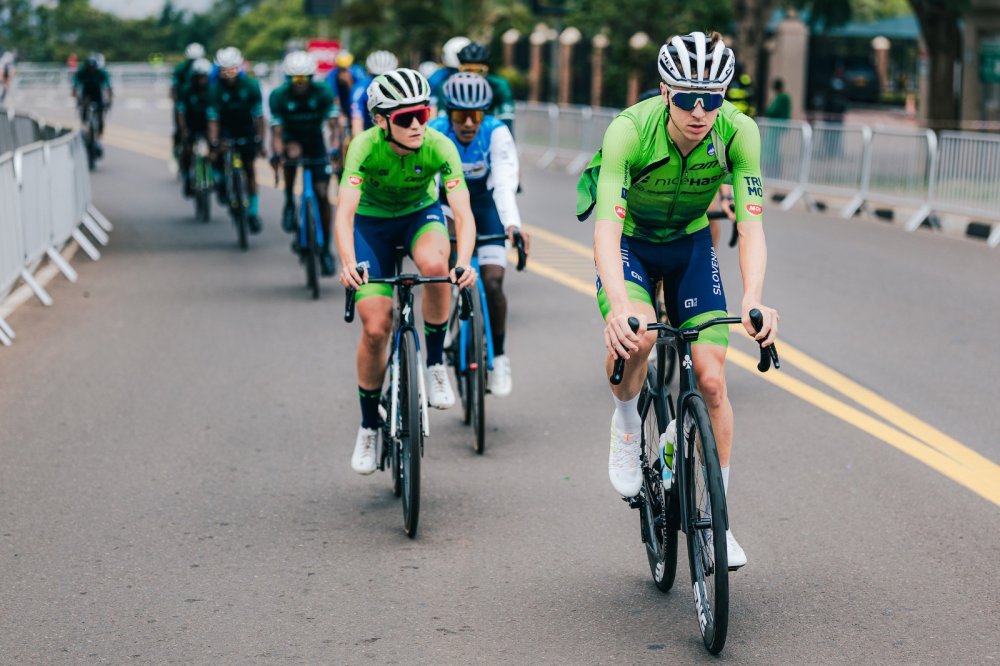
Pogačar will lead Team Slovenia, joined by top riders such as Primož Roglič, Gal Glivar, Matevž Govekar, Luka Mezgec, Matej Mohorič, Domen Novak, Jaka Primožič, and Matic Žumer.
They will face powerhouse teams including Belgium with Remco Evenepoel; Denmark with Casper Phillip Pedersen; Great Britain with Tom Pidcock; and strong competitors from 57 other countries in the 267.5-kilometer race.
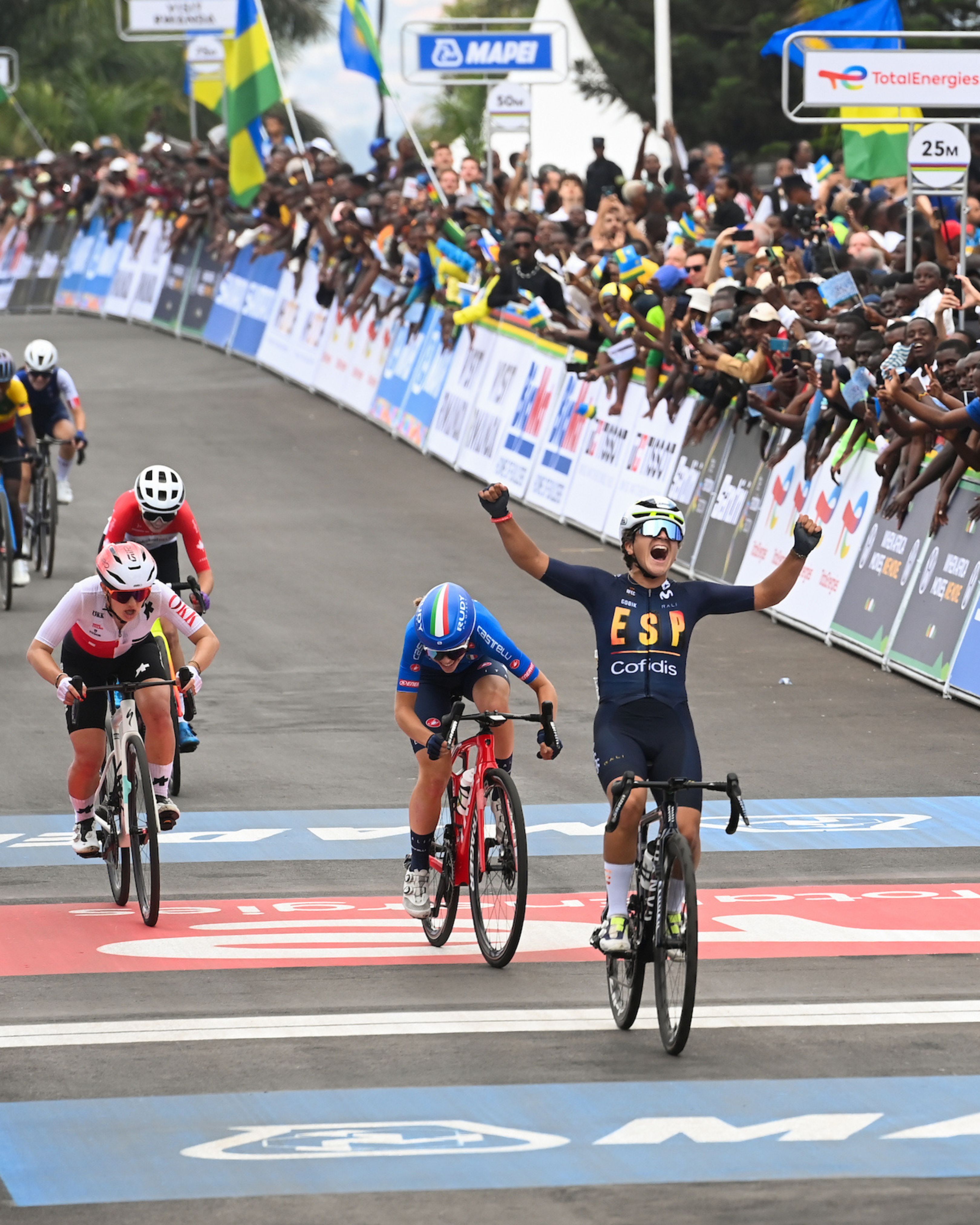
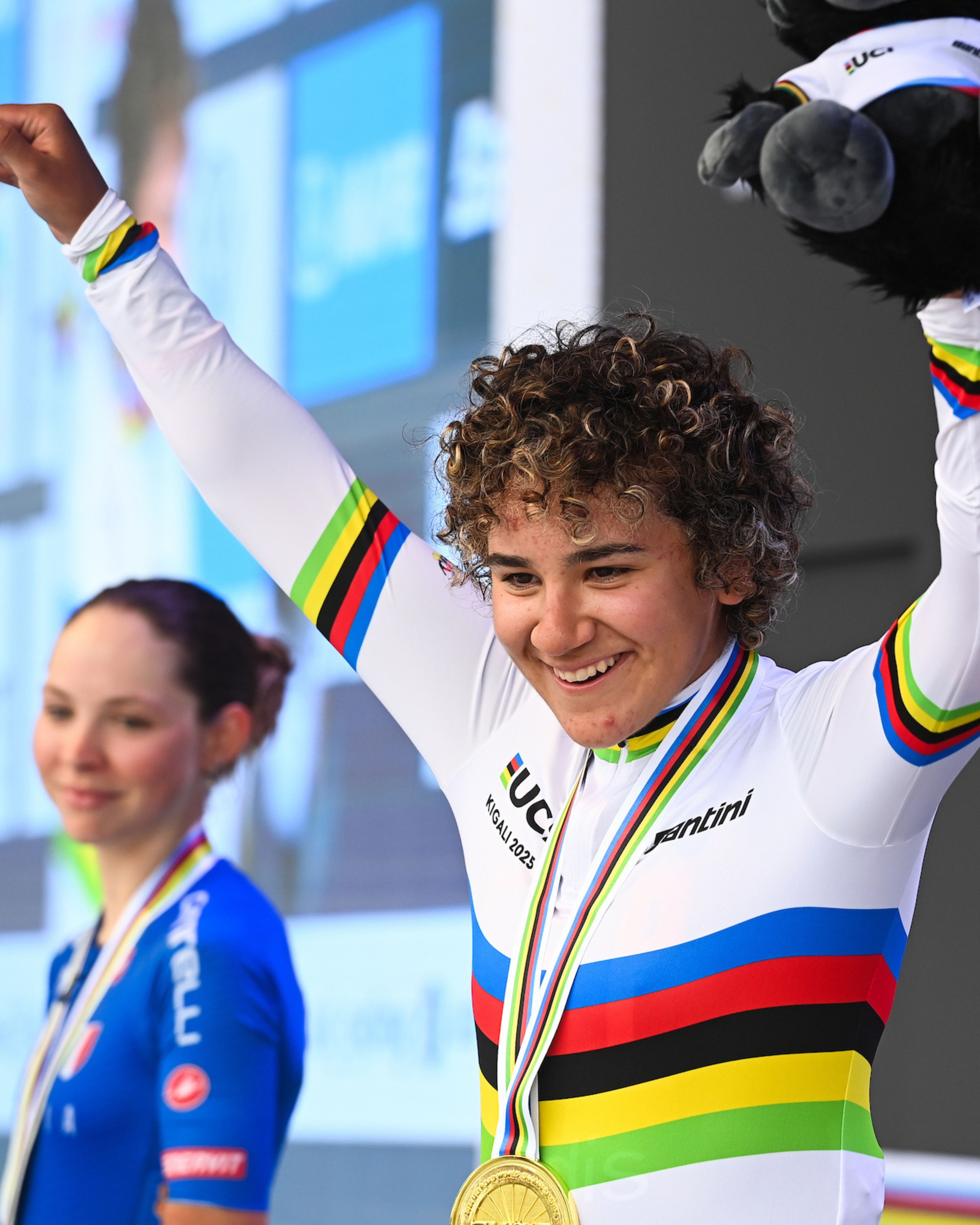
The 74-kilometre showdown kicked off at 8:20 am, with fans packing the climbs and roundabouts to cheer every move. Spain wasted no time showing intent. Leyre Almena Requena lit up the opening hour, going solo and stringing out the peloton. Her attack forced the rest of the field to burn matches early.
Crashes and mechanicals shaped the race long before the finale. Italy’s Giada Silo slid out on a slick corner but clawed back, while Dutch world time trial champ Megan Arens never looked at ease on the ascents and eventually faded to 20th.
Africa roared when Tsige Kiros of Ethiopia chased back after a costly mechanical on the cobbles. Determined and fearless, she rejoined the front group, stirring the Kigali crowds.
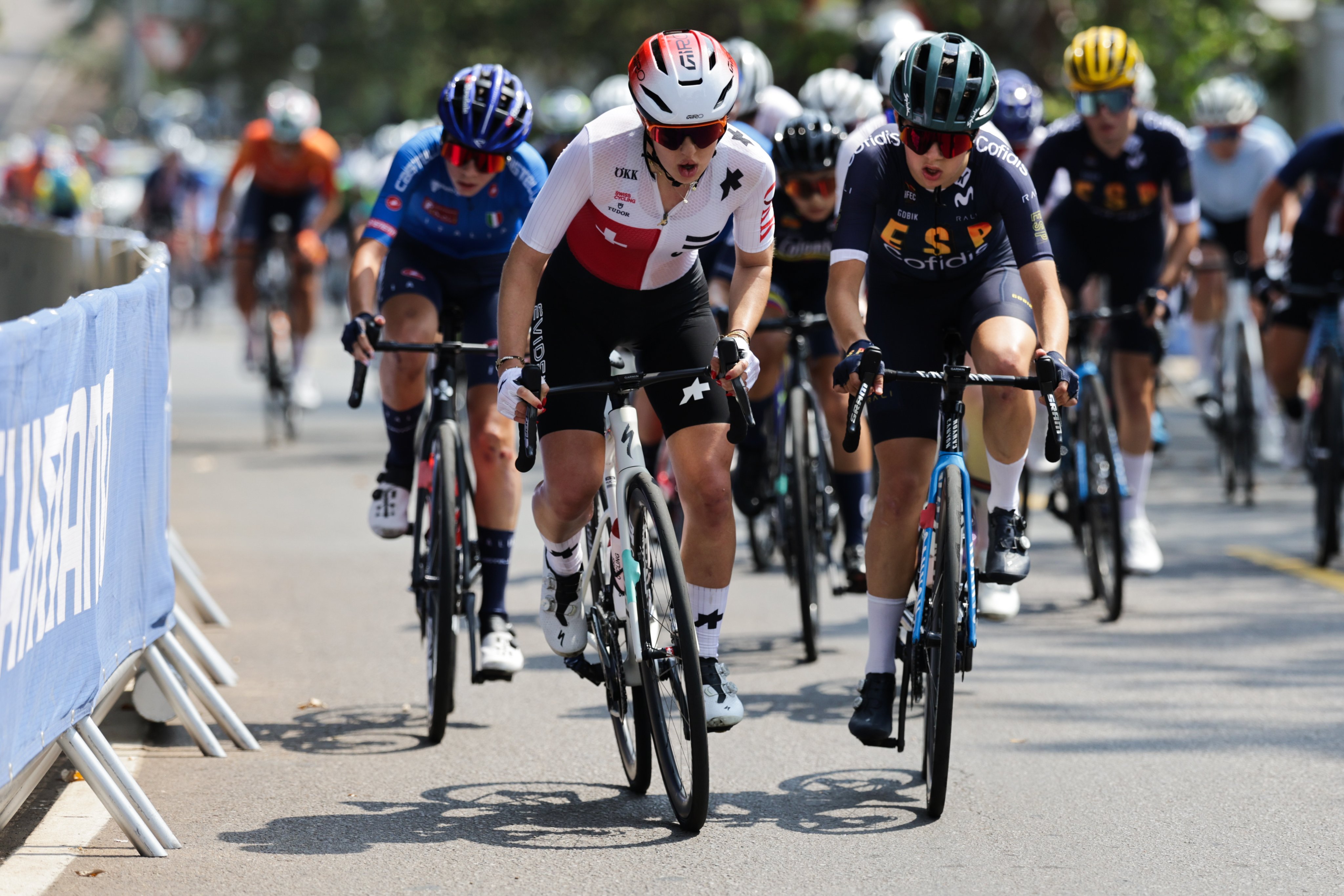
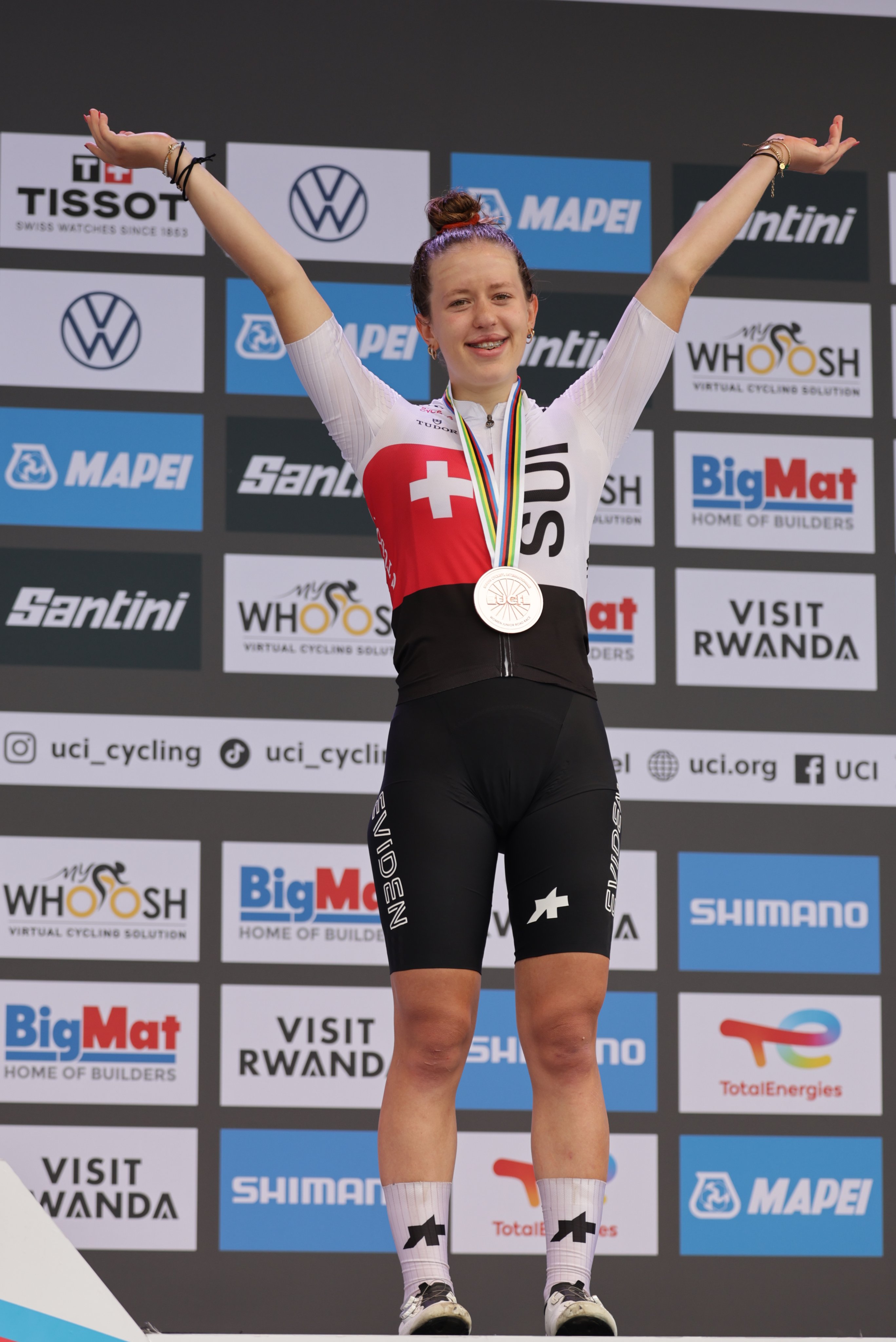
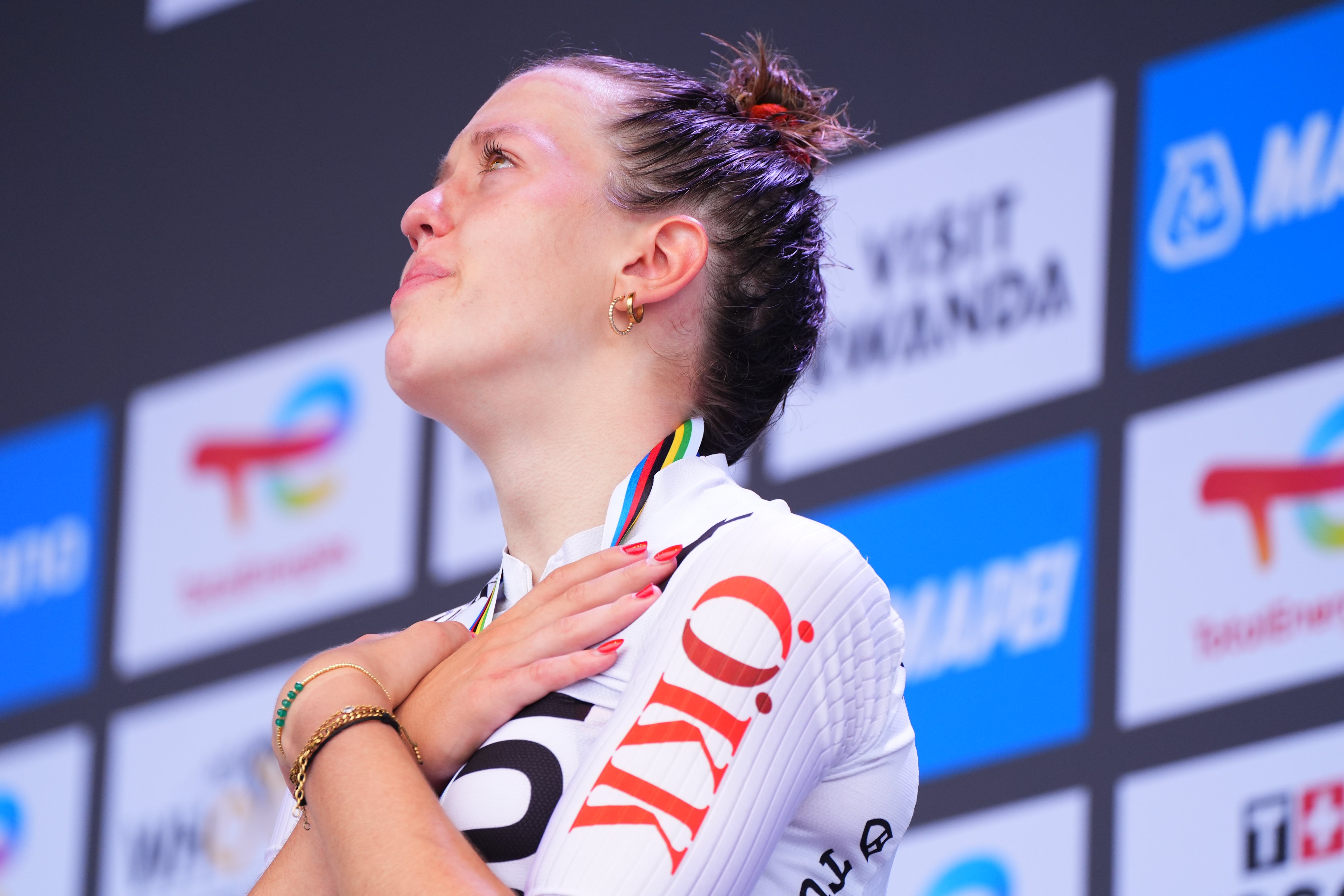
But it was Switzerland’s Anja Grossmann who dictated the pace, marking every dangerous move and keeping the peloton under control. Britain’s Arabella Blackburn tested the field, the Australians stayed watchful, and Spain quietly shielded Ostiz, saving her legs for the finale.
{{The final lap explodes
}}
With two laps to go, 37 riders were still in the hunt. Czech rider Antonie Cermanova and Dutch Roos Muller launched daring attacks, only for Grossmann to snuff them out. Greece’s Stampori had a go too, but Spain reeled her in.
By the bell lap, just 24 remained. The heat was biting, and bottles were tossed. Then came the race’s make-or-break feature: the jagged Côte de Kimihurura.
Grossmann hit the gas on the final cobbled climb, shredding the group. Kiros finally cracked, joined by Australia’s Tuffy S and Britain’s Erin Boothman, whose bad luck with mechanical issues resurfaced and ended her day.
{{The rainbow sprint
}}
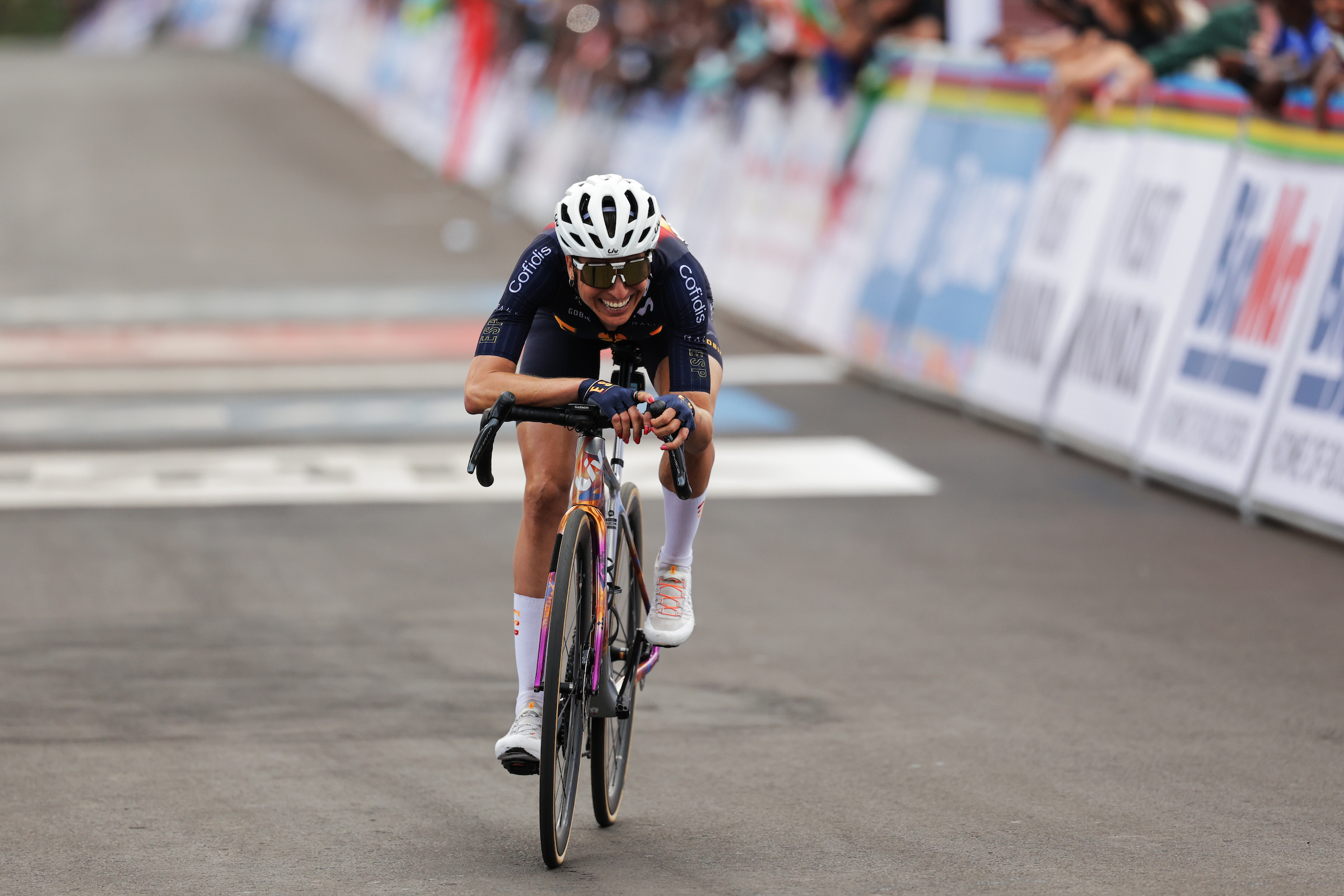
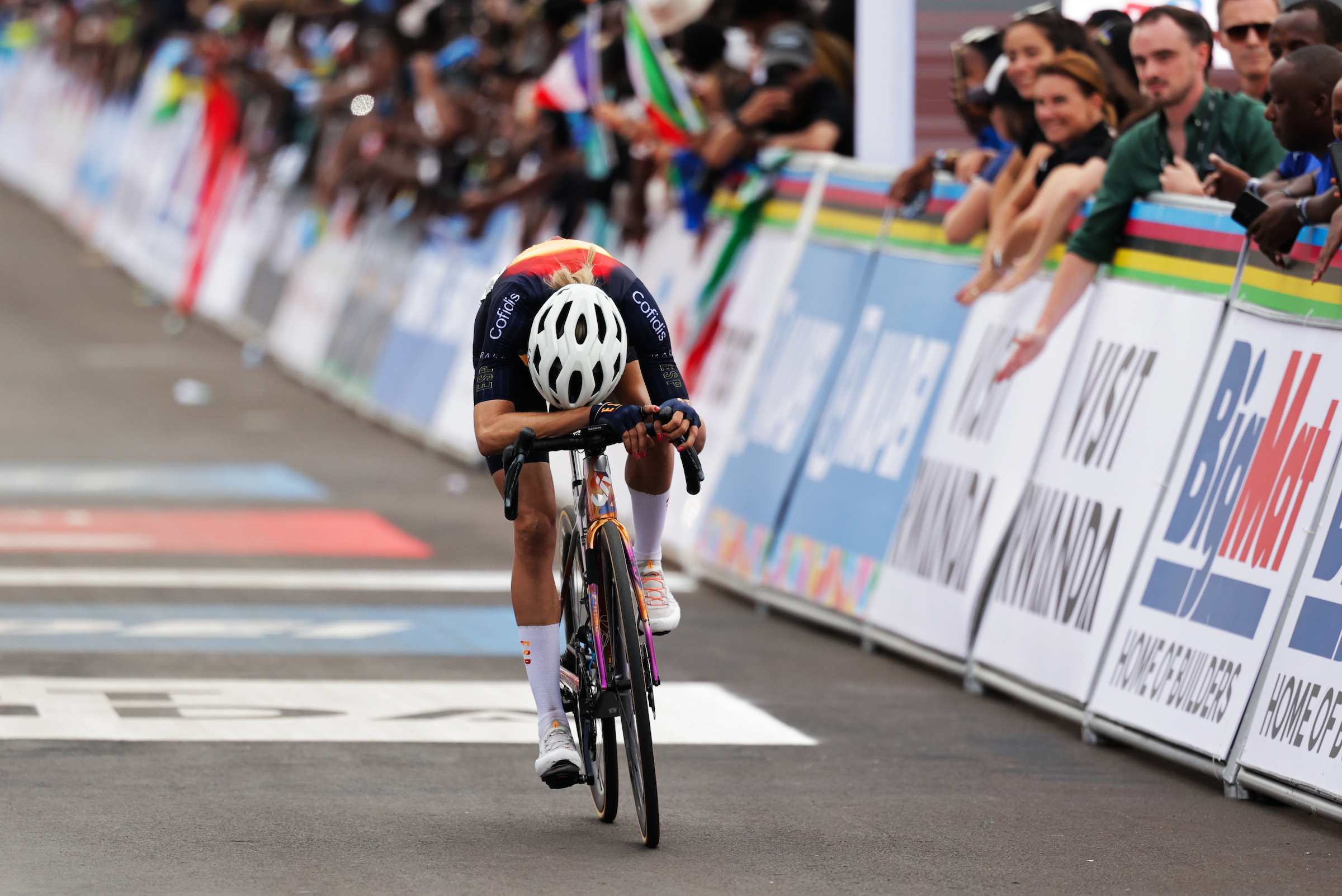
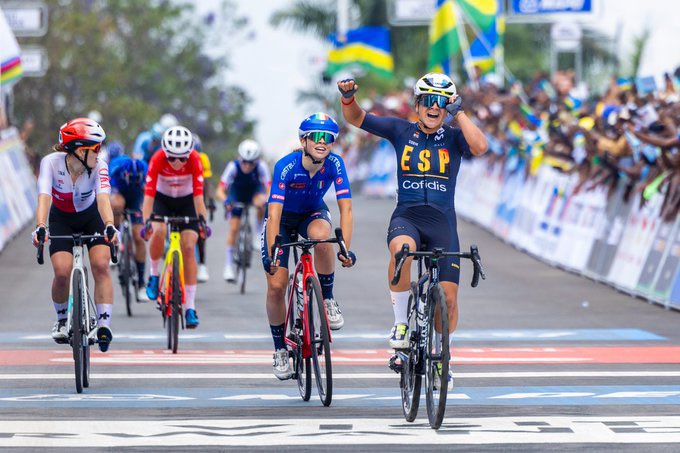
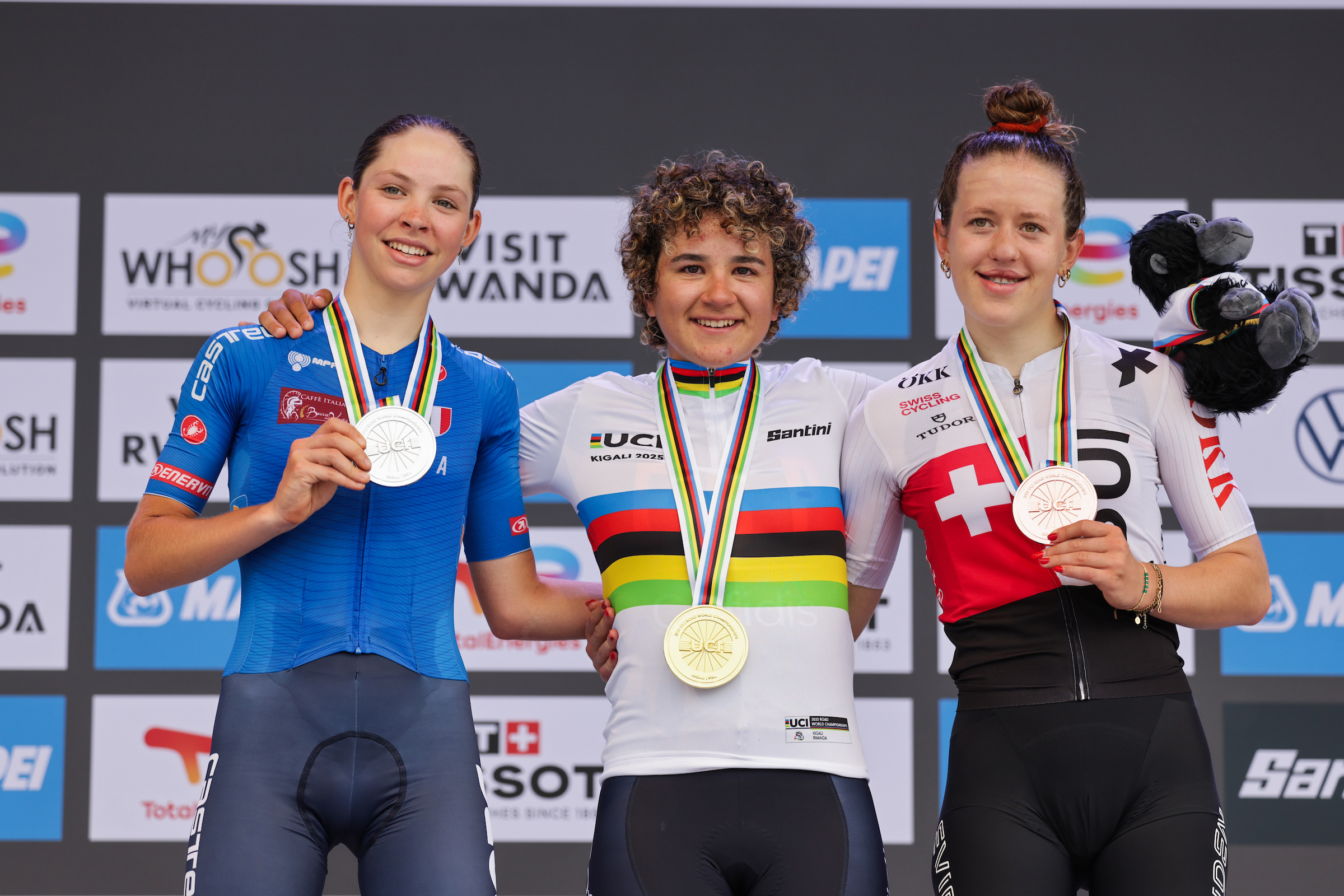
Five riders crested the climb together — Grossmann, Italy’s Chantal Pegolo, and a perfectly poised Ostiz among them. With 200 meters to go, the Spaniard unleashed her sprint. Calm all day, she rocketed past her rivals in an unstoppable burst.
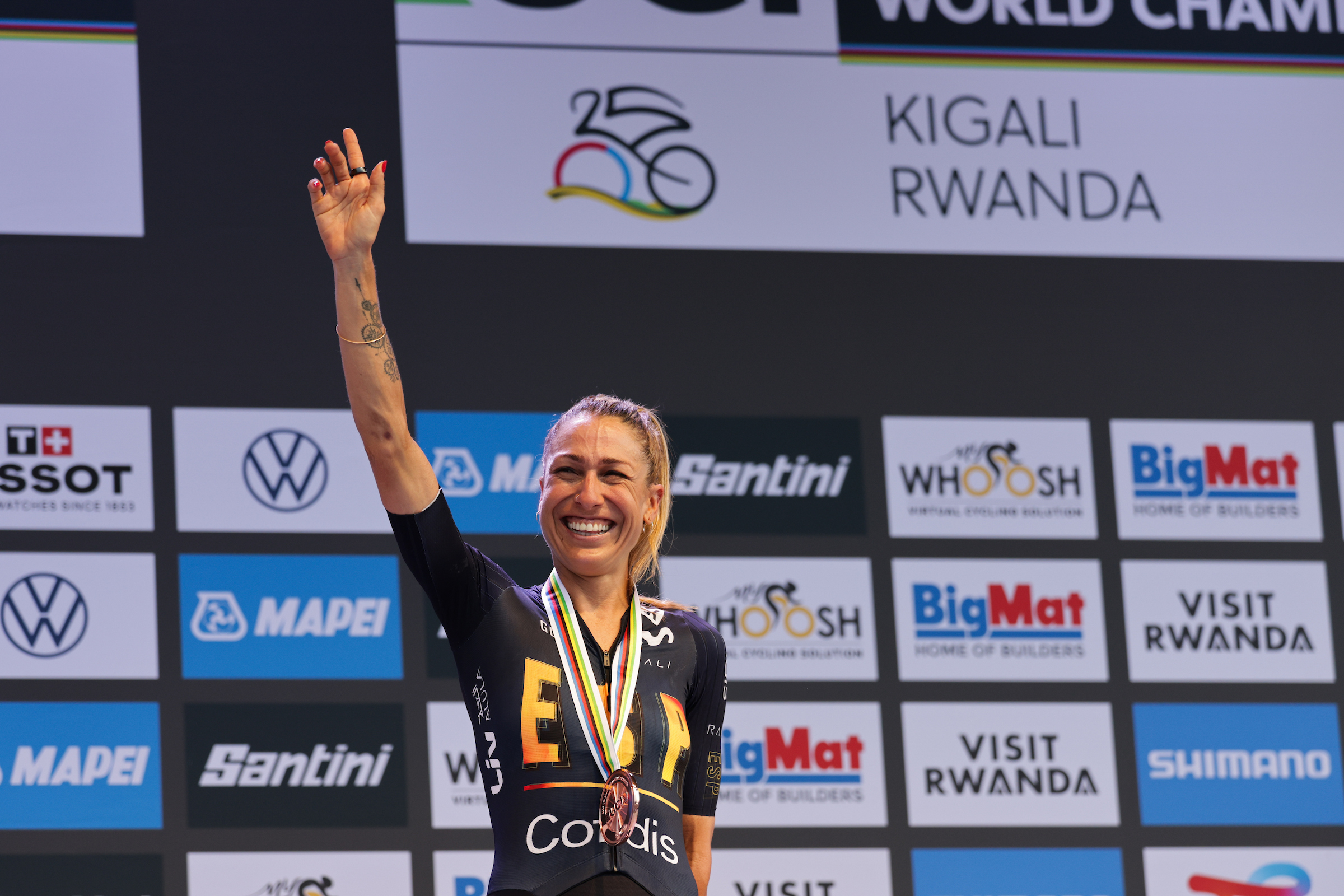
All three podium finishers clocked 2:09:19, but Ostiz’s raw speed gave her clear daylight at the line. Pegolo and Grossmann settled for silver and bronze.
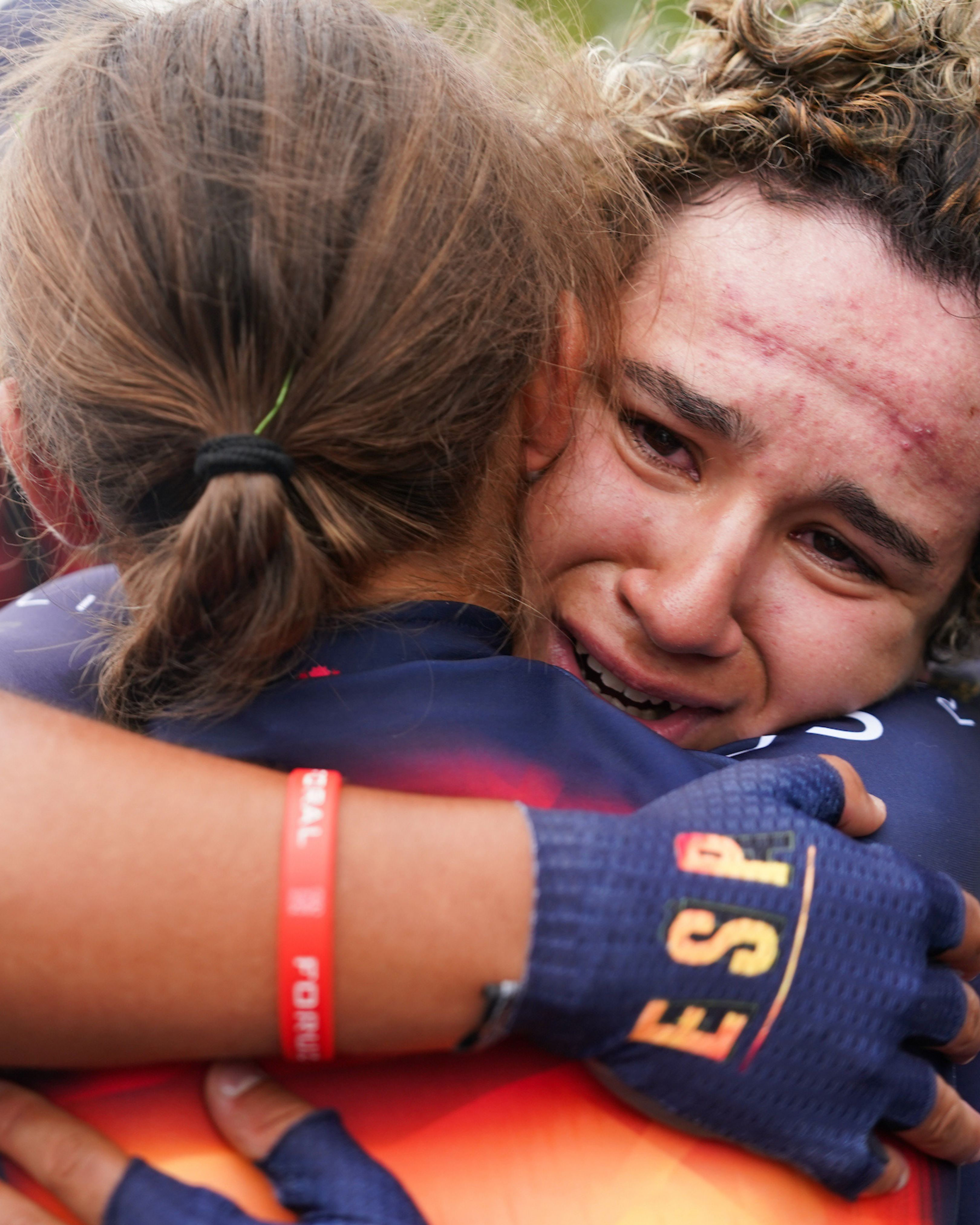
“It’s a dream come true,” Ostiz said, fighting back tears as she celebrated Spain’s breakthrough. “My family is watching me now, and I can only thank God. I knew I had to save my strength until the end because the climbs were tough. I trusted my sprint, and it worked when it mattered most.”
{{Pride for the hosts
}}
The home crowd had reason to cheer, too. Rwanda’s Yvonne Masengesho and Liliane Uwiringiyimana toughed out the savage course to finish 48th and 49th from a 73-rider start. They were loudly applauded as they completed each lap.