“Three U.S. Army soldiers (…) were found deceased in Lithuania today,” the statement reads, adding that their identities are being withheld pending notification of next of kin.
Lithuanian President Gitanas Nauseda has extended condolences over the deaths of the soldiers, Baltic News Service (BNS) reported.
Search and recovery operations continue for the remaining fourth soldier.
The search and recovery operation was launched on March 25 to locate four U.S. servicemen and a tracked vehicle that went missing during a training exercise in the General Silvestras Zukauskas Training Area in Pabrade. Defense Minister Dovile Sakaliene confirmed on Monday that the armored vehicle had been recovered. It had sunk into a swamp and become deeply lodged in the mud.
The large-scale rescue operation has involved both Lithuanian and U.S. forces, along with other Lithuanian authorities. Several dozen Polish troops equipped with specialized equipment have also joined the effort.
The Travel Expenditure Survey (TES), conducted by the National Institute of Statistics of Rwanda (NISR) in collaboration with key partners, provides detailed insights into travel-related spending, offering a comprehensive breakdown of both inbound and outbound travel expenditures.
For non-resident visitors in Rwanda, the survey categorises their spending on goods and services as credits or exports. Conversely, payments made by Rwandan residents while travelling abroad are classified as debits or imports.
The data collection process for the survey involved gathering expenditure details from a diverse sample of travelers. Spending was analysed across key categories, including accommodation, food and beverages, transportation, shopping, entertainment, sightseeing, education-related expenses, and health-related costs. Notably, international transportation expenses were excluded from the findings.
The latest report presents findings from the survey conducted between November 1, 2024 and January 30, 2025. These insights were used to estimate travel service earnings for the fourth quarter of 2024 and the entire year’s figures.
According to the report, Rwanda’s travel sector performed strongly in 2024, with travel service earnings in the fourth quarter alone amounting to $126.1 million. Holiday tourism was identified as the primary driver, generating $56.2 million.
The analysis of visitor spending patterns showed that tourists arriving by air accounted for 81.1% of total visitor expenditures, while those entering via land borders contributed the remaining amount.
Foreign visitors’ spending varied based on origin and mode of travel. Air travelers from Asia had the highest average daily expenditure at $197 per person, followed by those from North America and other African countries at $151 per day.
European visitors spent an average of $129 daily, while East African visitors had the lowest daily expenditure at $82. For land travelers, North Americans on holiday spent an average of $146 per day, while visitors from Asia and Europe spent $109 and $100 per day, respectively.
For the full year, travel exports amounted to $579.5 million, while travel imports stood at $363.8 million. This resulted in Rwanda recording a net surplus of $215.6 million in travel services.
In 2024, 44.6% of foreign visitors traveled to Rwanda for holidays, 28.1% visited friends and relatives, while 14.1% came for business purposes.
Rwanda aims to double its tourism revenue in the coming years, targeting an increase from $620 million in 2024 to $1.1 billion by 2029.
The latest findings are essential for, among other purposes, guiding policymakers, businesses, and other stakeholders in making informed, data-driven decisions to further enhance Rwanda’s tourism and travel sector.
Traor announced an “amnesty pardon” in December last year for several people convicted over the 2015 attempt to overthrow the transitional government in place after the fall of former president Blaise Compaor.
“The following persons, who have been convicted or prosecuted before the courts for acts committed on September 15 and 16, 2015, are granted amnesty,” stated the decree, issued last week, listing the 21 soldiers.
Six officers, including two former unit commanders of the former presidential guard, are on the list alongside 15 non-commissioned officers and rank and file soldiers. They were convicted at a military tribunal in Ouagadougou in 2019 for “harming state security,” murder or treason.
Two generals considered the masterminds of the failed coup, Compaor’s former chief of staff Gilbert Diendr and head of diplomacy Djibril Bassol, were sentenced to 20 and 10 years in prison respectively. They were not part of the amnesty.
Burkina Faso has extended amnesty to those involved in failed 2015 coup and those convicted have until June this year to request a pardon.
To do so, they have to “demonstrate a patriotic commitment to the reconquest of the territory” and “express their willingness to actively participate in the fight against terrorism.”
The 21 soldiers pardoned will rejoin the army, which has been fighting jihadist groups linked to Al-Qaeda and the Islamic State group for more than 10 years. But the decree stipulates that they will not be eligible for compensation or career progression.
Diendr and Bassol tried to oust the transitional government put in place after Compaor was forced out of office in October 2014 by apopular uprising, after 27 years in power. Loyalist forces put down the attempted coup within two weeks. A total of 14 people died and 270 were wounded.
The justice ministry in December said that some 1,200 people convicted in connection with the coup attempt would be pardoned from 1 January. Burkina Faso’s ruling president announced last May that he will remain in power for another five years under an accord adopted during national consultations.
The deadline for transition to civilian rule was originally set for 1 July 2025. According to the charter, signed by Traor, elections may be organized before the deadline “if the security situation so permits.”
Yet, as time passes, that intensity often diminishes, sometimes gradually, sometimes abruptly. Many interpret this shift as love slipping away, but in reality, the process is more intricate and hopeful than it appears.
{{The science behind changing emotions}}
Love’s initial euphoria is not just a poetic concept but a well-documented chemical phenomenon. The early stages of romance flood the brain with dopamine, norepinephrine, and serotonin, creating a natural high similar to that induced by certain drugs.
This biochemical storm serves an evolutionary function, encouraging deep bonds between individuals while bypassing rational hesitations.
However, the brain cannot sustain this level of chemical intensity indefinitely. The heightened emotions that once felt intoxicating gradually stabilize. What was once an all-consuming passion shifts into a more sustainable emotional state.
This transition is often mistaken for falling out of love, but in reality, it is a necessary adaptation. Love does not disappear; it evolves into something more enduring and stable.
Another crucial factor is the familiarity paradox. In the beginning, everything about a partner is new and exciting. Their quirks, stories, and habits create a continuous stream of discoveries that stimulate dopamine release, reinforcing attraction and emotional engagement.
Over time, however, novelty gives way to predictability. The same qualities that once fascinated now become expected, and in some cases, taken for granted. The security of familiarity is comforting, but it can also diminish the sense of excitement and adventure that originally fueled passion.
{{Unspoken expectations and communication barriers}}
Every relationship carries an invisible rulebook, shaped by personal history, cultural norms, and past experiences. These unspoken expectations influence everything from emotional availability to household responsibilities, yet they are rarely discussed openly.
When reality fails to align with these internalized beliefs, frustration and disappointment take root. It is not necessarily love that fades but rather the disillusionment of unmet expectations accumulating over time.
Communication is often hailed as the solution to relationship struggles, yet it remains one of the most challenging aspects of maintaining a healthy connection. Expressing deep-seated fears, insecurities, or frustrations requires vulnerability, which becomes harder as relationships progress.
In the early stages, sharing personal thoughts feels exhilarating, but as emotional stakes increase, so does the fear of rejection or misunderstanding. When difficult conversations are avoided, emotional distance grows, creating the illusion of love fading when, in reality, it is simply buried beneath unresolved tension.
External pressures also play a significant role in the shifting dynamics of love. Early in a relationship, couples prioritize each other, rearranging schedules and making time for connection.
However, as responsibilities increase, careers, financial obligations, family duties, emotional and physical energy become stretched.
The effort once devoted to nurturing the relationship is often redirected toward managing life’s demands, leading to a perceived decline in love when it is actually an issue of attention and resource allocation.
Personal growth further complicates long-term relationships. No two individuals evolve at the same pace or in the same direction. Over time, differences in ambitions, values, or interests can create emotional distance.
What once felt like a shared journey can start to resemble parallel paths. This does not necessarily mean love has disappeared; rather, it requires a renewed commitment to understanding and adapting to each other’s evolving identities.
Finally, the balance between closeness and independence is essential for sustaining passion. Many couples, in pursuit of unity, unconsciously diminish the distinct identities that once attracted them to each other.
The loss of individuality can lead to a lack of intrigue, making the relationship feel stagnant. Maintaining a degree of separateness allows for continued discovery and rekindles the curiosity that first sparked attraction.
Understanding why love appears to fade provides the opportunity to approach relationships with greater awareness. The disappearance of infatuation does not signify the end of love but rather an invitation to nurture a deeper, more resilient connection.
By recognizing the natural evolution of emotions, addressing unspoken expectations, and fostering open communication, couples can move beyond the transient highs of early romance to build something truly enduring.
The mass action, informally dubbed the Geza revolution after war veteran leader Blessed Geza, saw urban centres largely deserted as businesses, shops, schools, and public institutions remained closed.
From Chirundu in the north to Beitbridge in the south, and across major cities such as Harare, Bulawayo, Gweru, Kwekwe, Masvingo, and Mutare, citizens heeded the call to protest by staying home.
The demonstration, spearheaded by war veterans aligned with Vice President Constantino Chiwenga’s faction within Zanu-PF, is widely seen as Mnangagwa’s most significant political test since the January 2019 fuel protests, which were met with a violent crackdown that left at least 17 people dead.
While the stayaway remained largely peaceful, there were reports of minor skirmishes in Harare, particularly at Robert Mugabe Square, where police dispersed small groups of people attempting to march.
Security forces maintained a heavy presence in urban areas, but notably, the military, often regarded as Zimbabwe’s ultimate power broker, was absent from the streets.
The protests come amid intensifying factional battles within Zanu-PF, as rival camps loyal to Mnangagwa and Chiwenga clash over the party’s leadership succession. Mnangagwa’s allies have been pushing for a constitutional amendment to extend his rule beyond 2028, a move that has sparked outrage even within his own party.
War veterans, once staunch allies of the ruling party, have now turned against Mnangagwa, calling for his resignation and throwing their weight behind Chiwenga’s camp.
Although their mobilisation efforts appeared weak, the overwhelming public participation in the stayaway signaled deep-seated discontent with Mnangagwa’s rule.
Some political analysts argue that, while war veterans may have their own political motives, the people are sending a clear message. They agree that Mnangagwa has failed,” hence the convergence of frustration, possibly warning of bigger unrest ahead.
Notably absent from today’s protests was Zimbabwe’s main opposition leader, Nelson Chamisa. Sources close to Chamisa suggest he is wary of aligning with a factional Zanu-PF power struggle, preferring instead to push for a broad-based national movement demanding democratic change.
Chamisa’s allies reportedly fear a repeat of November 2017, when public frustration was leveraged by the military to remove long-time leader Robert Mugabe, only to replace him with Mnangagwa, another Zanu-PF figure.
The stayaway delivered a significant blow to Zimbabwe’s already fragile economy, bringing commercial activity to a standstill. Many businesses shut their doors, while the informal sector, on which millions of Zimbabweans rely, was largely inactive.
At the core of the economic crisis is the instability of the Zimbabwean dollar, which continues to lose value amid soaring inflation and declining public confidence. Under Mnangagwa’s leadership, unemployment has surged, and an increasing number of Zimbabweans are leaving the country in search of better opportunities abroad.
In response to the growing pressure, Mnangagwa has taken a series of preemptive security measures, including the recent dismissal of key military and security officials, among them Zimbabwe National Army Commander Lt-Gen Anselem Sanyatwe, Police Commissioner-General Godwin Matanga, and CIO Director-General Isaac Moyo.
These shake-ups are widely viewed as efforts to consolidate power and neutralize internal threats. Despite the crackdown, war veterans have vowed to press on. “We fought for democracy, not for one man’s rule,” said a spokesperson for the group.
As tensions simmer, the question remains: Is this the beginning of a broader movement against Mnangagwa, or merely a momentary flare-up? What is certain is that Zimbabwe’s political landscape is becoming increasingly volatile, and Mnangagwa faces his biggest challenge ahead.
The Make Way programme, a consortium of 14 organizations, with funding from the Ministry of Foreign Affairs, is working to dismantle these barriers by applying an intersectional approach to policy advocacy and implementation.
“We advocate for better sexual protection, health, and rights for everyone. There are challenges when vulnerable individuals try to access SRHR services, and we aim to remove those obstacles.” said Aliane Dusenge, Country Coordinator of the Make Way consortium.
People with disabilities, those living in extreme poverty, and individuals in remote areas often struggle to obtain vital health information and services. Make Way seeks to address these disparities through the development and dissemination of intersectional tools that analyze policies and identify gaps in inclusivity.
At a recent event, stakeholders gathered to explore the impact of these tools. “The event was about disseminating the tools we use in the programme. These tools help us analyze policies to determine whether they include everyone, particularly marginalized communities. We then provide recommendations for making these policies more inclusive,” Dusenge explained.
One such tool is the Intersectional-Based Policy Analysis (IBPA), which examines policies to identify gaps that may exclude vulnerable populations. Another is the Meaningful Youth Engagement tool, which ensures young people are not just participants in discussions but active contributors to decisions that affect them.
The Budget Analysis tool assesses financial allocations within the health sector to determine whether adequate resources are directed toward reproductive health services.
“These tools enable us to critically analyze how some populations are left behind. More importantly, they help us propose solutions and recommendations,” Dusenge noted.
The programme’s work extends beyond policy analysis to advocacy and capacity building. The tools are designed to be adopted by other organizations, ensuring broader reach and impact. “We want other organizations to borrow a leaf from our work and implement inclusive approaches in their advocacy,” she added.
Franklin Murangira, Chief of Party at Volunteering Services Overseas (VSO), emphasized the importance of intersectionality in addressing the needs of different vulnerable groups.
“The people we work with have multiple vulnerabilities, for example, someone might have a disability and also be a teenage mother. These tools help us assess whether policies are designed to accommodate such intersecting identities,” he explained.
Revealed that VSO’s mission aligns with Make Way’s objectives, ensuring that no one is left behind. “We must ensure that all voices are heard and that policies reflect the real needs of diverse populations,” Murangira stated.
Dr. Beth Mukarwego, Chairperson of the National Union of Disability Organizations in Rwanda (NUDOR), highlighted the importance of societal attitude shifts.
“People with disabilities often face exclusion, even in religious spaces and healthcare facilities. The tools developed by Make Way help communities recognize these challenges and advocate for change,” she said.
The tools are now being introduced at the community level, where trained individuals will champion their use. “Some people are already trained, and they can advocate for the broader adoption of these tools. The goal is to ensure that policies and practices evolve to be more inclusive, Mukarwego explained.
By addressing overlapping vulnerabilities, Make Way is pioneering a holistic approach to SRHR advocacy. Their intersectional tools not only highlight systemic inequalities but also provide actionable solutions, ensuring that every individual, regardless of their background, can exercise their sexual and reproductive rights without barriers.
With growing awareness and adoption of these tools, the hope is that policymakers, organizations, and communities will work together to create a more equitable and just society.
In a post shared on X, renowned Ugandan journalist Sudhir Byaruhanga, who is also said to be a distant relative of the late Ssali, wrote, “He had requested to be cremated and his ashes sent back home and to other countries in Africa.”
He further stated that the family will honor his request, with details of his sendoff services in Washington, D.C., and Uganda to be announced soon.
“We shall respect his wish, and soon, a date for his sendoff service in Washington, D.C., and Uganda will be communicated. #RIPShakaSsali,” Byaruhanga wrote.
For over two decades, his show, Straight Talk Africa, provided a vital platform for critical discourse, engaging African leaders and intellectuals while bridging the gap between the continent and the global stage.
His signature introduction, “I’m profoundly honored and exceedingly humbled,” along with his famous phrase, “Let’s keep the African hope alive,” became defining elements of his enduring legacy.
The appointment follows the conclusion of the term of office for the previous Commissioner, H.E. Amb. Albert Muchanga, and serves as a transitional measure to ensure continuity in the department’s strategic and operational responsibilities.
The decision was made in accordance with Article 18(4) of the AU statute on the procedure for election of commissioners and after consultations with the Chairperson of the Executive Council.
“In this regard, I hereby appoint you as the Acting Commissioner for economic development, trade, tourism, industry, and minerals.… until the assumption of duty of the substantive commissioner,” the official AU memorandum reads.
H.E. Vilakati brings a strong background in both public service and regional economic development. He previously served as Eswatini’s Minister of tourism and environmental affairs from 2018 to 2023, during which he championed sustainable tourism, conservation, and regional trade integration.
His leadership is widely credited with positioning Eswatini as a key destination in Southern Africa and promoting green economic policies. The African Tourism Board (ATB) has lauded his appointment, describing it as a symbolic and transformative moment.
In a congratulatory message, ATB Executive Chairman Hon. Cuthbert Ncube wrote: “You have walked with us over the years as a trusted leader and ally, always grounded in purpose and committed to Africa’s collective advancement. Your leadership across these key sectors is not only a blessing to the continent but also an inspiration to all who believe in Africa’s promise.”
Although the appointment is temporary, it comes at a time when the AU is ramping up efforts under Agenda 2063, Africa’s blueprint for inclusive and sustainable development.
The substantive ETTIM Commissioner position has been allocated to the Central African Republic (CAR), and once elected, H.E. Vilakati is expected to step down within 48 hours, per AU regulations.
Until then, he will oversee key portfolios vital to the continent’s economic resilience, trade liberalization, and industrial transformation. His dual role positions him to strengthen synergies across agriculture, environmental sustainability, and economic growth.
This means that in 2024, roughly for every seven people in the labour force, there was one person unemployed. This represents a decrease of 2.3 percentage points compared to 2023.
The report indicates that Rwanda’s working-age population stands at approximately 8.3 million individuals. Of this, around 4.4 million are employed, while 780,000 remain unemployed.
Additionally, 3.1 million people are not part of the labour force. The labour force participation rate has also seen positive growth, rising to 62.9% in 2024, an increase of 3.6 percentage points from 2023, reflecting a larger share of the population engaging in the labour market.
However, the survey also highlights persistent disparities in the labour market. The gender gap in labour force participation remains significant, with males consistently outperforming females. In 2024, the gender gap stood at 15.5 percentage points, a figure consistent with 2023 levels.
The employment-to-population ratio has also improved, climbing to 53.5% in 2024, up from 49% the previous year. However, this ratio was notably higher among males (62.2%) compared to females (45.9%). It was also higher for adults (31 years and above) than for the youth (16-30 years).
Sectoral employment trends show that the services sector has become the primary driver of employment, accounting for 42.9% of total employment in 2024, up from 39.8% in 2023. On the other hand, employment in the agriculture sector has declined to 39.9%, down from 43.4% in 2023.
Despite the decrease in overall unemployment, it remains higher among females, who face an unemployment rate of 17.6%, compared to 12.6% for males. Additionally, the youth (16-30 years) continue to face higher unemployment rates at 18.5%, compared to 12.3% for adults.
Labour underutilization, which includes unemployment and other factors such as time-related underemployment, stood at 54.2% in 2024. This rate was higher among females (61.2%) and the youth (56.2%), compared to males (47%) and adults (52.8%).
The report also sheds light on the prevalence of informal employment, with 82.3% of the employed population working in the informal sector in 2024. This highlights the continued challenges of securing formal employment opportunities.
The enhanced sampling methodology used in the 2024 RLFS, which incorporated data from the 2022 National Population and Housing Census, offers a comprehensive overview of the nation’s labour market.
The insights provided in the report are crucial for policymakers and stakeholders as they seek to address challenges such as unemployment, labour underutilization, and gender disparities, while working towards ensuring decent work for all.
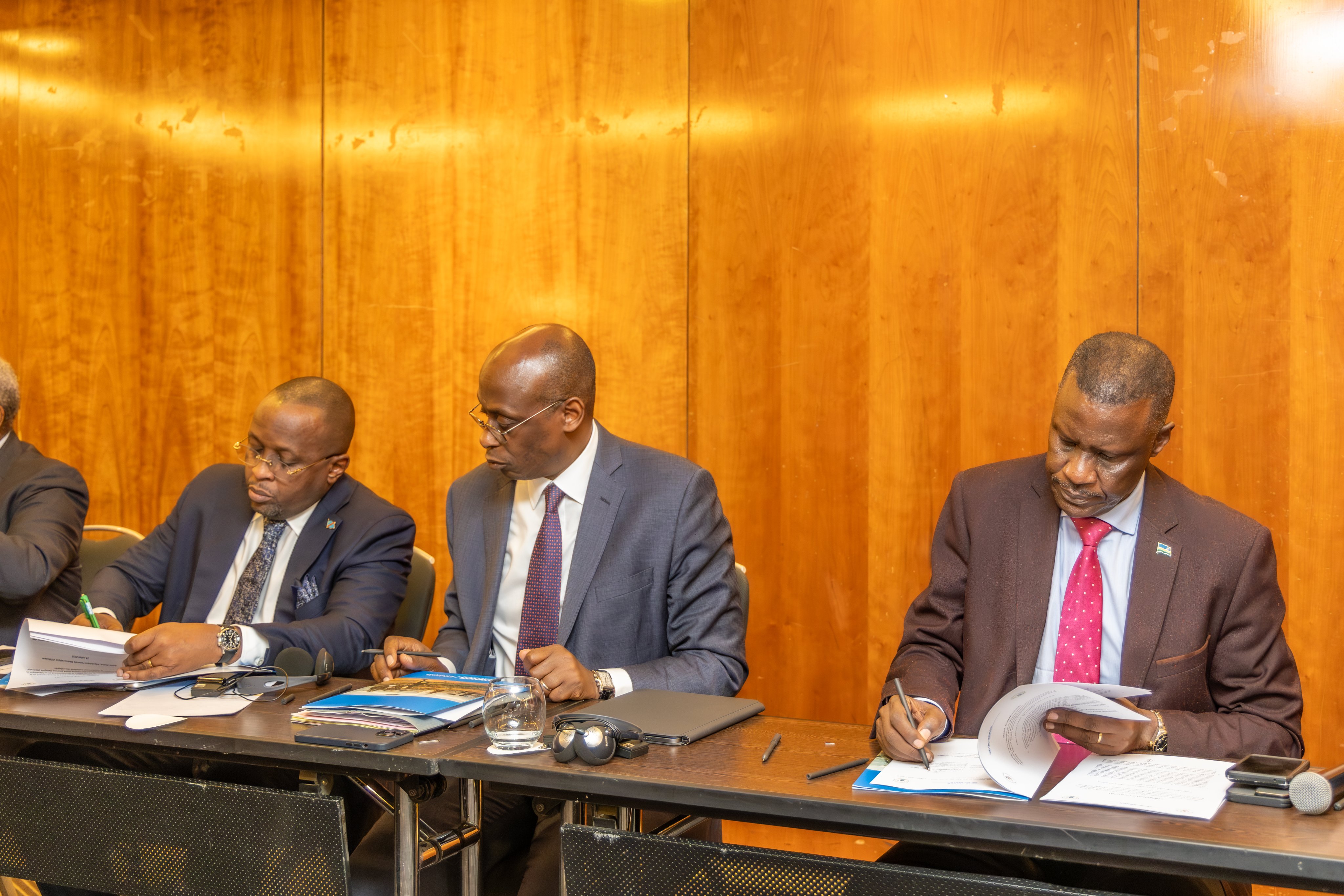
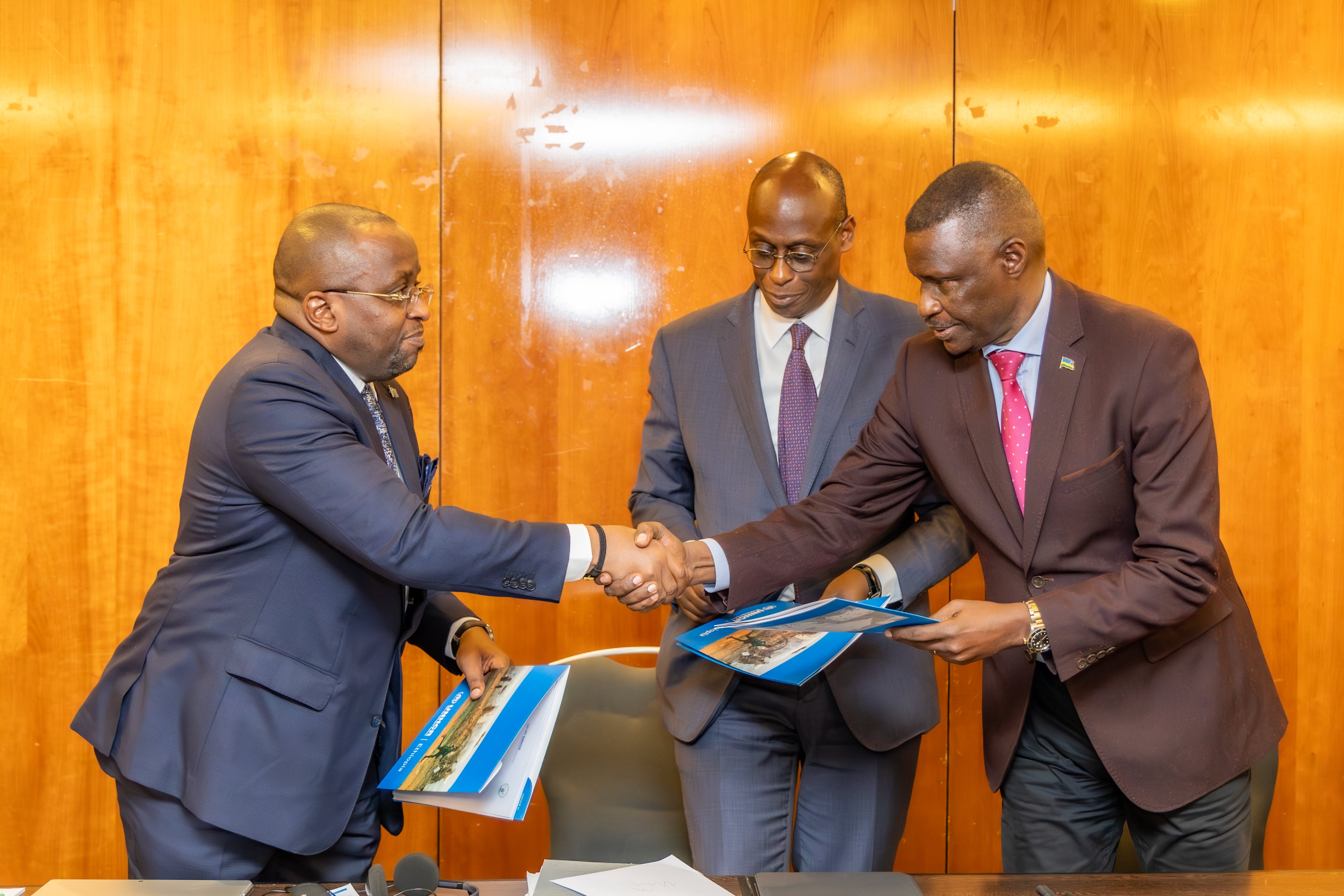
These talks aim to resolve ongoing conflicts in the Democratic Republic of Congo (DRC) and the broader Great Lakes region.
The decision to merge the Luanda and Nairobi talks was made during a meeting chaired by the Presidents of Kenya and Zimbabwe, bringing together the East African Community (EAC) and the Southern African Development Community (SADC).
The Luanda talks initially aimed to mediate tensions between the DRC and Rwanda, while the Nairobi talks focused on addressing internal Congolese conflicts.
However, both processes stalled due to a lack of commitment from the Kinshasa government. By merging these efforts, regional leaders hope to achieve lasting peace and stability in eastern DRC and the surrounding region.
To facilitate the process, five prominent mediators have been appointed: Olusegun Obasanjo, Uhuru Kenyatta, Catherine Samba Panza, Sahle-Work Zewde, and Kgalema Motlanthe. Their expertise is expected to be instrumental in guiding the talks toward a peaceful resolution.
On March 24, 2025, the Heads of State instructed EAC Chairperson President Dr. William Samoei Ruto and SADC’s President Emmerson Mnangagwa to engage with these mediators within a week before the talks officially begin.
According to local media in Zimbabwe, Prof. Murwira confirmed on March 30 that preparations were well advanced, and the meeting between Dr. Ruto, Mnangagwa, and the mediators was expected within the set timeframe.
He expressed confidence that the high-level meeting could take place at any time, noting that the agenda had been finalized by March 28, and official letters had been sent to the mediators.
The only step remaining was for the regional leaders to deliver their opening remarks.
Ambassador Albert Chimbindi, Zimbabwean Foreign Affairs Permanent Secretary, also assured that efforts were being made to ensure that the Luanda-Nairobi talks commence as soon as possible.
While the exact date of the meeting had not been finalized, he acknowledged the ongoing commitment to making the talks a success.