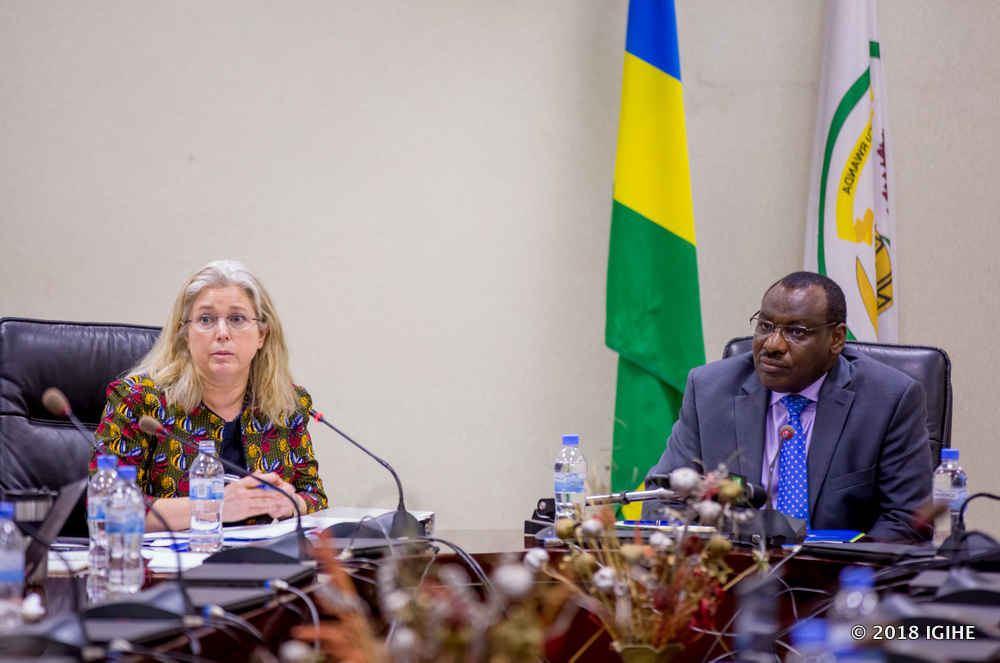
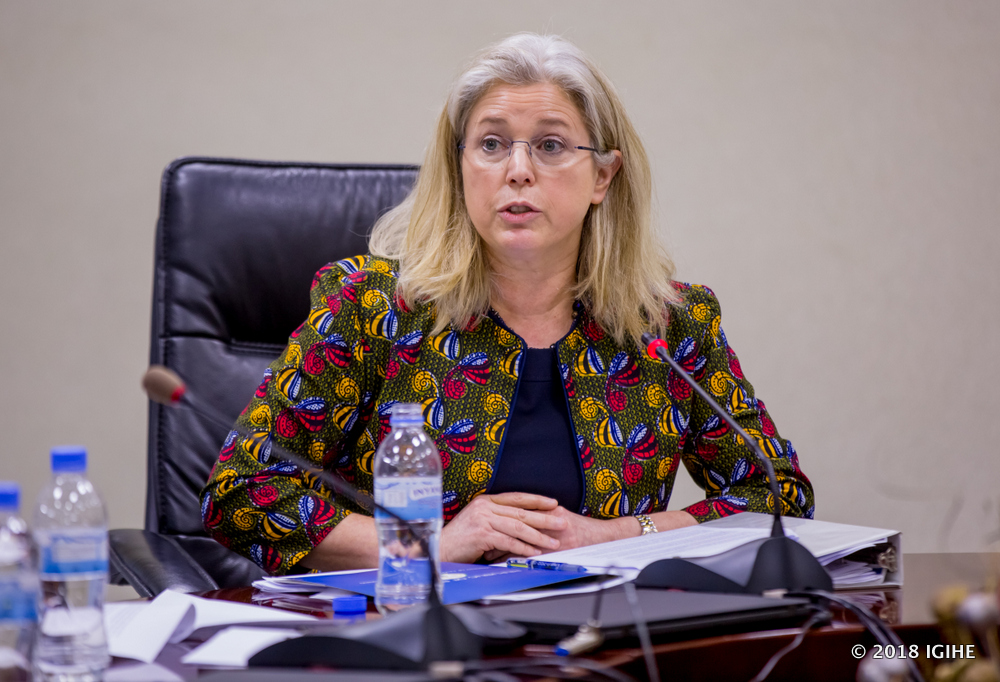
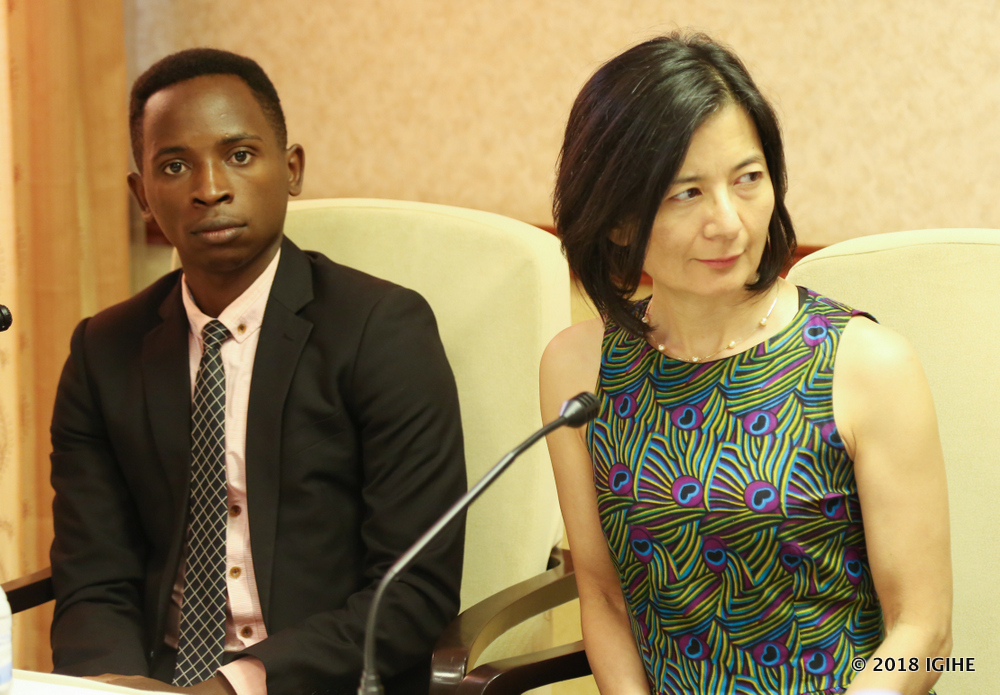
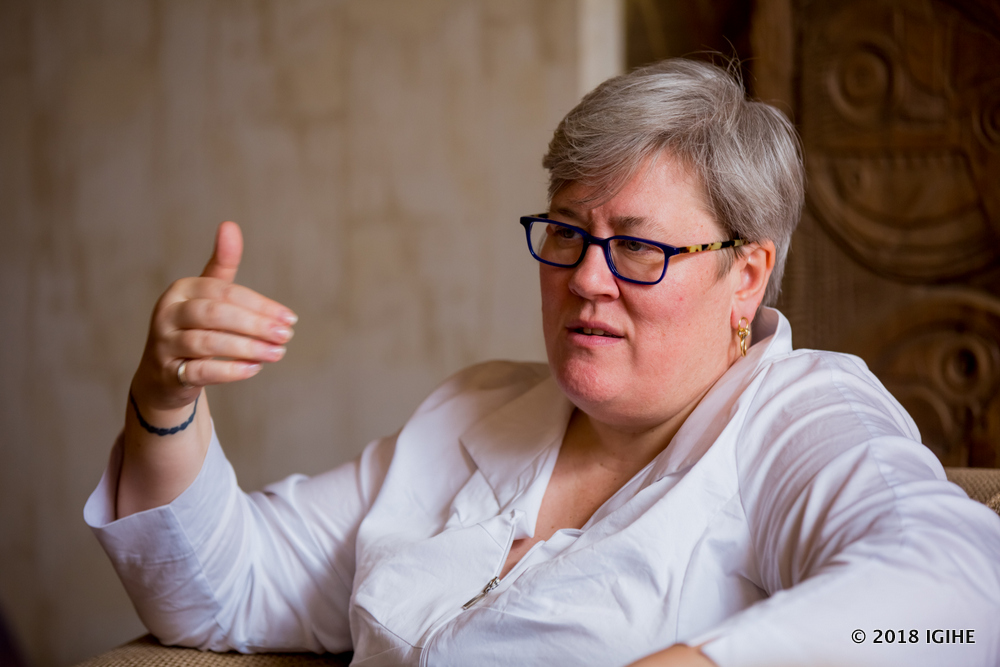
The IMF Mission in Rwanda Chief, Laure Redifer announced this in a press conference in Kigali.
She was speaking about Rwanda’s economic growth prospect after IMF staff completed discussions in the ninth review Policy Support Instrument supported program.
Redifer observed that Rwanda’s economy is rebounding as the economic growth in 2017 outpaced expectation by rising to 6.1%.
Inflation, she said has remained very low, 0.7 percent in February over the previous year, due to ample food supplies causing food prices to decline.
External imbalances have continued to decline, on the basis of exchange rate adjustment and other policies to improve competitiveness and diversify Rwanda’s production and exports.
Foreign exchange reserves are accumulating faster than anticipated and pressure on the Rwandan franc has abated.
“Looking forward, IMF team projects growth to return to between 7-8 percent in 2018-2019, and prices on the market will remain at 5%,” she said.
She said that the strong economic growth, tax revenues have increased more than expected and the supplementary resources will be used for additional public spending in priority areas, especially health, education and irrigation for agriculture.
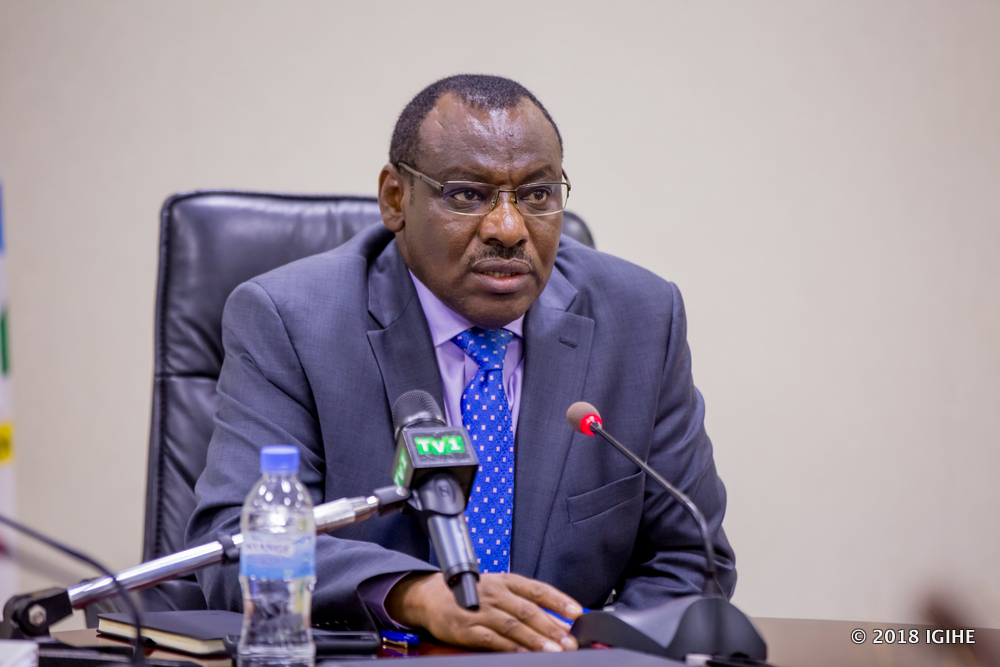
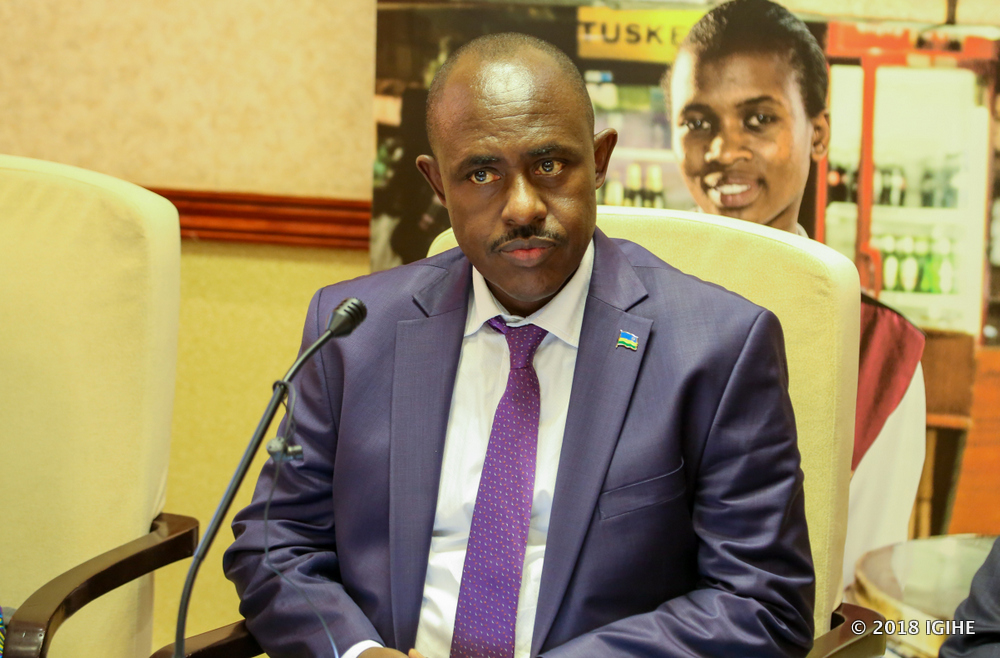
The Minister of Finance and Economic Planning, Amb. Claver Gatete said that industries will develop by 8%, service sector by 8% and agriculture by 6%; and agriculture he said will continue to develop due to promising rains and investment that has been allocated there.
“Based on current information, we expect economic growth of 7.2% by this year and 7.8% next year,” he said.
Last year, agriculture production increased by 7%, industry by 4% and services by 8%.
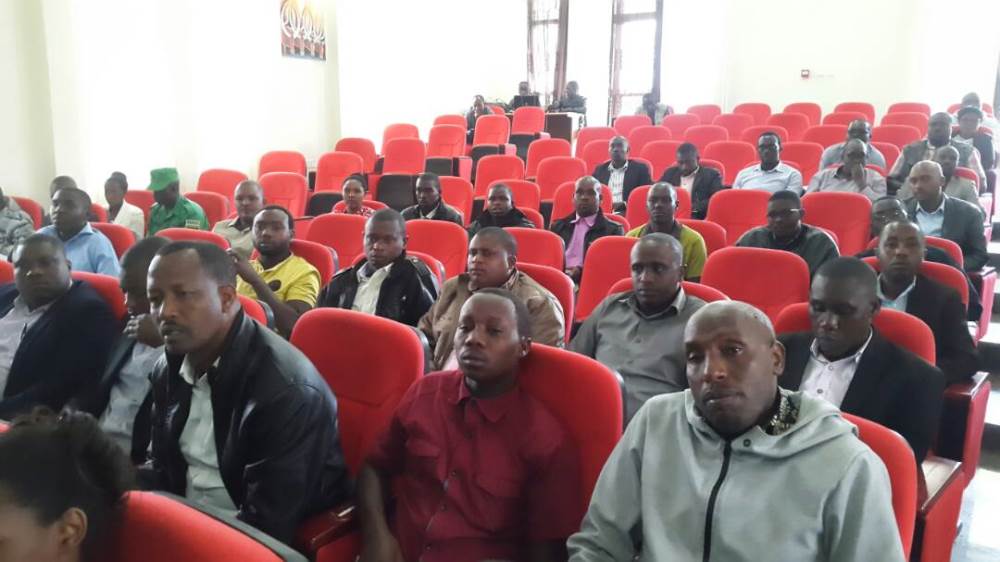
Gatare who was speaking yesterday in a meeting with miners in Muhanga urged miners to continue increasing productivity by fighting illegal mining which cause disastrous deaths. He also reminded them to perform their job while preserving the environment.
“This sector contributes enough to raise the economy of the country as products are exported and bring foreign currencies. We should put efforts together to fight those practices that interfere with production. We should not let them get the market for their minerals,” he said.
Dr. Hilaire Habyarimana, one of miners in Muhanga District said that they still have many problems in the sector including bad mining practices.
He said that they should re-asses themselves and do what their permits allow them to.
In eleven sectors of Muhanga District, there are 42 mining companies employing 13,432 people.
In the recently released Gross Domestic Product (GDP) of 2017, mining and quarrying contributed 51% to the growth of industry sector in Rwanda.
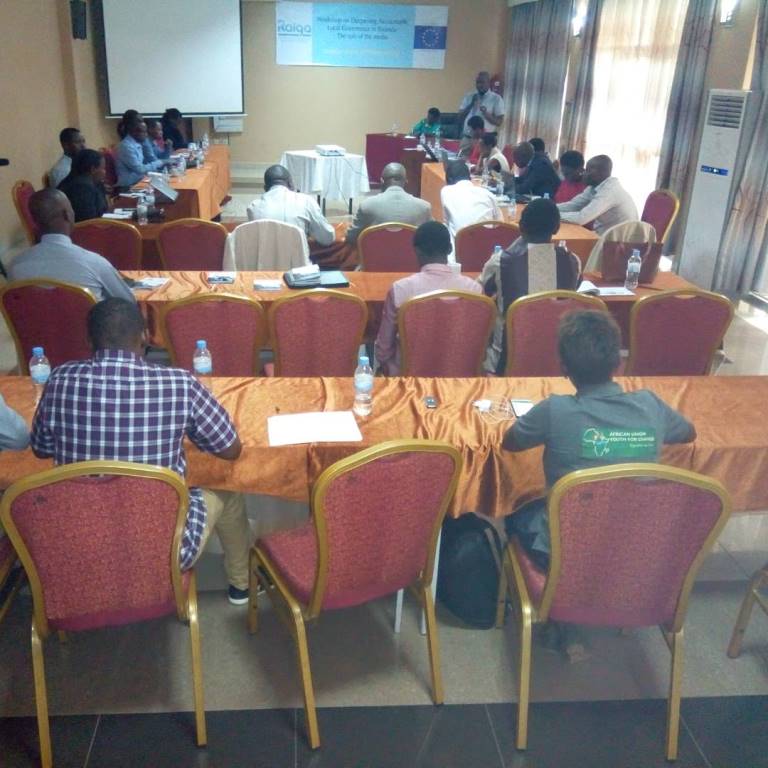
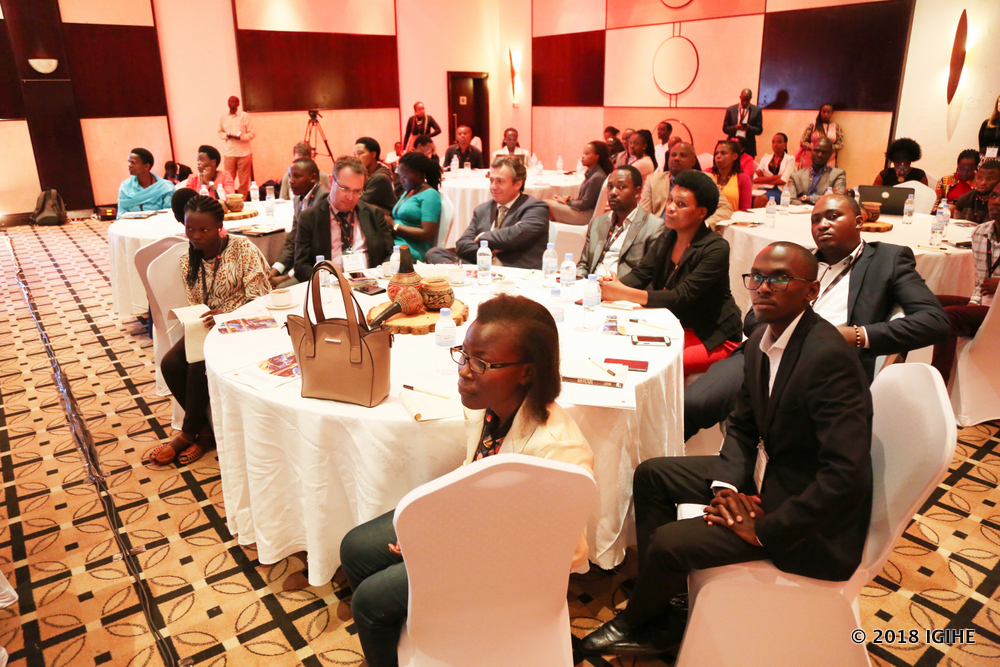
Speaking during a workshop on the role of media in Deepening Accountable Local Governance in Rwanda (DALGOR) on Friday, RALGA Chairperson Innocent Uwimana asked media practitioners to offer a greater contribution in promoting accountable governance.
“We all recognise that bad collaboration between the media and local governments impedes good governance and seriously affects the citizens whose welfare we all claim that we are working for,” he said.
Journalists complained that they are sometimes denied access to information by local leaders and wondered if those leaders give any information to citizens who are supposed to hold them accountable.
Jean-Claude Rusakara Mugwaneza, a reporter with KT Radio, said leaders denied him information on different occasions, adding that some local leaders openly say that they do not like talking with journalists.
Albert Baudouin Twizeyimana, National Coordinator of Pax Press, said that local leaders need sensitisation about Access to Information law and media role in helping them carry out their activities. He also urged RALGA to improve its collaboration with the media and advised journalists to create a friendly relationship with leaders so that they stop seeing media as hostile.
About these issues, RALGA acting Secretary-General Winifrida Mpembyemungu pledged RALGA mediation between the media and local leaders.
“We are looking into how we can have a memorandum of understanding with the media on collaboration for the better of the citizens we are all serving. We are together with you to promote good governance and citizen participation,” she said.
Poor citizen participation revealed
RALGA also presented to media the findings of the study on Dynamics of Direct Citizen Participation in Rwanda’s Local Governance between 2011 and 2017 which indicated that the level of direct citizen participation in monitoring and evaluation is less than 40% due to insufficient knowledge and skills of citizens, wrong belief that government should do everything for the citizens, lack of citizens’ sensitisation and mobilisation, among other challenges.
Funded by the European Union through DALGOR project, the study covered five districts namely Burera, Nyamagabe, Nyamasheke, Gasabo and Ngoma with the target population for the study was 1,027,721 while the total sample was 2,288.
Only 21.7% of respondents confirmed that they participated in planning and budgeting while the level of direct citizen participation in implementation of local agenda was at 66%.
At least 53.2% of citizens said that they did not directly participate because they were not invited by local leaders while 51.9 % confirmed that the reason was that they did not have knowledge and skills in planning and budgeting, Among local leaders, 51.2% said that citizens do not have enough knowledge and skills necessary for them to directly participate in planning and budgeting while 28.6% of citizens said that there was lack of clear information about what was supposed to be done.
Article 48 of the 2003 Constitution of the Republic of Rwanda as revised in 2015, provides for the right of every Rwandan to directly and or indirectly involve in the governance and development of the country.
Rwanda Governance Scorecard report highlighted indicated in 2014 that overall citizens’ participation was at 71.68%)
According to a statement released by the African Union Commission, President Paul Kagame announced the support in Kigali yesterday during a meeting, with President Mahamadou Issoufou of Niger, the Chairperson of the Commission, and the Executive Secretary of the G5 Sahel, Maman Sidiko.
The meeting took place on sidelines of the Extraordinary Summit on the Continental Free Trade Area which took place on Wednesday.
“The Chairperson of the African Union Commission, Moussa Faki Mahamat, wishes to commend President Paul Kagame of Rwanda, Chairperson of the African Union, for his country’s contribution of one million US dollars in support of the operationalisation of the G5 Sahel joint force,” the statement reads.
Mahamat stressed that the contribution is a strong expression of solidarity with the G5 Sahel countries in their fight against terrorism and organized crime.
Also, Rwanda pledged to provide in-kind support.
The statement says that the financial contribution will be immediately available.
“The Chairperson of the Commission seizes this opportunity to appeal to member states to extend support to the G5 countries,” reads the statement.
The Sahel region is facing political instability involving a combination of rebellions, jihadist insurgencies, coups d’état, protest movements and illegal trafficking.
Nyirasafari was speaking yesterday to the Committee on Social Affairs and Human Rights and Petitions in the Senate.
In August 2016, Catholic Church banned all artificial contraceptives in affiliated health facilities saying that they negatively impact lives of users. However they urged for natural family planning control measures.
Nyirasafari said that Churches should understand that family planning is in the benefit of the country, and, whoever sees it to the contrary is not building the nation.
Senator Jean Damascène Ntawukuriryayo said the government has the power to change mindsets of the Catholic Church.
“These are partners who should change mindsets, the government should discuss with them so that they will understand the problem,” he said.
Speaking to the media, Nyirasafari urged Catholic Church community to choose ways which are better for them as the government encourages citizens to have children they are able to take care of.
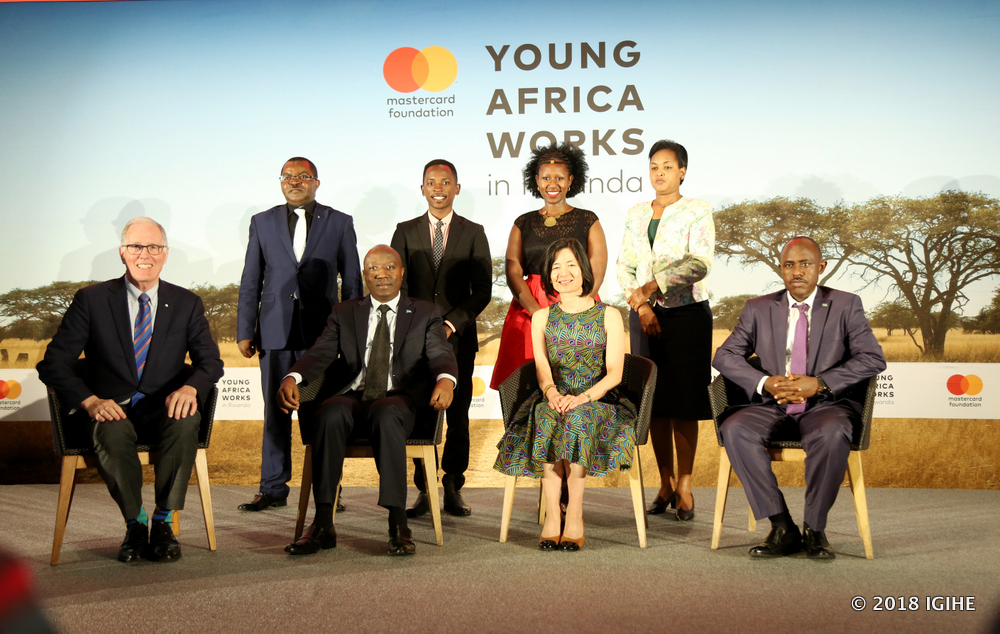
Dubbed ‘Young Africa Works’, the project has two initiatives which are ‘Hanga Ahazaza’ with $50 million to promote economic opportunities, businesses and tourism, and ‘Leaders in Teaching’ which aims at teachers’ capacity building.
Speaking at the launch of the five-year project, MasterCard Foundation Chief Executive Officer, Reeta Roy said that the initiatives are the beginning of organization’s new strategy focused on youth employment.
“There has never been a more consequential time to come of age in Africa. Young people today are growing up with better access to education, health, technology and opportunities undreamed of by their grandparents and parents. It’s amazing to behold,” she said.
“A job is about so much more than money. It’s about dignity. When people have the dignity of work, they are invested in the future,” she added.
Speaking at the launch of the project, Prime Minister, Dr. Eduard Ngirente said that the new Pan-African strategy marks a new partnership between the Government of Rwanda and MasterCard Foundation.
“I am honored privileged to witness the launch of this new MasterCard Foundation Strategy. As it has been explained, this strategy has two significant initiatives: {To develop tourism and hospitality industry, and to improve quality of secondary education.} The initiatives are in line with Rwanda’s National Strategy for Transformation which was launched last year,” he said.
“In this National Strategy that aims at taking Rwanda beyond high income to high living standards by 2050, tourism and improved quality of education are among key priorities,” he added.
He said Rwandan Government appreciated the new initiative which is also aligned with the Africa’s broader transformation agenda as planned in the Africa Agenda 2063.
He promised Rwanda’s support to ensure the new partnership will remain strong and fruitful.
With $50 million Hanga Ahazaza Initiative, 30,000 people in tourism will be trained in ICT, good services delivery and access to finance services by small businesses.
The Leaders in Teaching Initiative will help to train teachers and school head teachers and over 250 students from secondary school will benefit from the initiative through Smart Classroom Programme.
Ms. Kyte was in Kigali for the three-day Sustainable Energy Forum for East Africa 2018 that kicked off on Monday.
In an exclusive interview with IGIHE on Tuesday, Kyte hailed the East African (EA) countries’ efforts towards providing universal access to affordable, reliable and sustainable energy to their populations as set out in goal 7 of the Sustainable Development Goals (SDGs) that must be achieved by the year 2030.
She, however, noted that EA’s 25% energy access is still among the lowest in the world because it started from a low base and urged the EA countries to set aggressive targets and to move at the highest speed to ensure that energy access goal is achieved earlier because it is a precondition for other goals to be achieved by 2030.
Kyte said there isn’t any reason the region cannot achieve the goal considering its energy resources and technical potentials, calling for contribution of all stakeholders including governments, development partners, private sector, civil society and every citizen.
{ {{Below are interview’s excerpts:
}} }
{{IGIHE: How do you perceive the state of renewable energy in the East African region and Rwanda in particular compared to other parts of the world?}}
{{Kyte:}} There is good news and bad news for East Africa. The good news is that there is abundant renewable energy in the region: hydropower, geothermal, solar, wind, everything. There has been incredible innovation in East Africa particularly in helping low income people participate in economy. So the advance of using business models with renewable energy started in East Africa to inspire the world. The other part of the good news is that the East African countries are making incredible progress including in renewable energy sector in closing energy access gaps.
The bad news is that there is still a very long way to go. East Africa started the journey from a low base. It is still one of the parts of the world where energy access gap is the largest. We are not yet where we need to be, we need to move at big speed and scale to achieve the sustainable development goal 7. By energy access gap, I’m talking about one billion people in the world who do not have access to electricity, three billion people worldwide who don’t have access to the technology and fuels to cook cleanly.
The goal is to achieve universal energy access by 2030. In East Africa, the access is at 25%; so we have got a long way to go. It is however important to note that having energy access is important, but it is more important of what you can do with it.
{{What are the issues impeding effective development and use of renewable energy in this region and Rwanda in particular?
}}
When we think of sustainable energy, we think of three things happening at the same time. Energy system must be more efficient; so we have to use less power to do things. Secondly, we have universal access, everybody should have access. Thirdly, the energy mix should be cleaner; so there is need for more renewable energy.
In this forum, we are talking about what the East African governments can do to set more aggressive targets for energy efficiency and to improve the regulations and standards across the region. If East Africa has the same standards, that creates a bigger market for the private sector. Secondly, we are talking about what works for attracting investors in renewable energy for both the grid and off-grid. Thirdly, there is a lot of conversation about off-grid energy systems providing cheaper access to those people who do not have access. People in isolated areas, it is more likely that they will get affordable and reliable power from off-grid solutions like mini-grid or solar home systems.
Underpinning those three things is finance. Is finance available? Are the local banks lending enough into energy sector in particular to off-grid? Are the financial institutions supporting this sector enough? What can governments do? All this is being discussed.
{{What do you think of Rwanda’s higher focus on off-grid to achieve energy access by 2024?
}}
First of all, Rwanda has made incredible progress. When I first came to Rwanda (in 2008), people were talking aspirationally about Methane Gas from Kivu, about hydros on paper, about extending the grid, solar was an aspiration. Rwanda has now come a long way in a very short time. About grid or off grid, the leading countries in the world think about energy systems in an integrated way. So, there is no either or. There must be the grid, it must be as smart as possible, has to be efficient with no transmission losses, it has to be clean. And there must be mini-grids, solar, etc. So the consumer will choose what is better for them, but all must be made efficient and affordable. If the price is coming down, people can choose either grid or off-grid.
{{What do you think can make energy affordable to the most vulnerable people in East Africa?
}}
We are lucky that the energy technology has dropped in prices, at least by 75% in the last seven years. Prices of batteries for solar home systems have also dropped by 75%. There are many projects spreading solar home systems to rural communities here in Rwanda and government can step in with development partners to help set the prices affordable to the most vulnerable. We are even now looking at how we can provide renewable energy to displaced people, to refugee camps in countries like Uganda, Kenya and Tanzania because they host very large numbers of displaced people, the most vulnerable people in society.
The advance of technology makes it possible for the most vulnerable people to have access to power for, first, lighting and charging phones, then, to add appliances like television, refrigerators, etc; all this is thought about as a step towards economic prosperity and how to cook cleanly in a sustainable way. Here in Rwanda, you have got people who are innovating business models the rest of the world is looking at. For example, pellets for cooking. So, here in Rwanda, some of the things the world thinks can be solutions are happening, so it makes East Africa quite special.
About prices, it is good to understand what people can pay, to understand the market, understand what people will use energy for. Traditionally elsewhere in Africa, the focus was on subsidising the utility to make it very cheap perhaps cheaper than what can make the energy sustainable, only going for grid but without any support to off-grid. It is up to governments to balance grid and off-grid to give people access, not just rolling out the grid. It is about how the government approaches the problem because if energy is not affordable, people will not use it.
There is another issue; this is not an issue in Rwanda but it is an issue in other countries in East Africa: the social cost of dirty energy. Countries may not count the cost to their health systems, costs on people with respiratory diseases because of dirty energy. The good thing with renewable energy is that it does not pose those risks; it does not affect the way people breathe. So, by cutting off those costs, renewable energy becomes much cheaper.
{{What do you find as available potentials and opportunities that regional countries can exploit to develop their energy sector?
}}
EAC as a bloc can create a big market if members come together and will make it easier to achieve their goals. Governments should educate local financial institutions on supporting energy sector. The region has great solar capacity, great wind capacity, great geothermal capacity, hydro capacity and potential bio-fuels, the region has everything.
{{What should the regional governments do to provide affordable and sustainable energy to their populations?}}
For the families in the lowest income boundaries, it is the state’s responsibility to make sure the access to energy is established because that access will help with the family’s health, in the children’s education, etc; it is in the state’s interests. The poorest segment in the society can receive some assistance in paying electricity bills to maintain access; they can get subsidised on healthcare, meals, clean cook stoves and fuels.
{{Which role can private sector, civil society and each citizen play in the process?
}}
First of all, this region is ahead of many regions in the world in creativity and innovation, in private sector and civil society organisations (CSO) activities. So, you have got plenty of innovations providing energy services. The role of CSO is to keep government honest, to demand clean, affordable and reliable energy; to demand that the area is clean. Private sector needs a regulatory environment that allows investment to flow domestically from foreigners; good regulatory regime without changing tariffs; good subsidies, procurement regimes, etc. Private sector has to sell good products and government must ensure that the consumer is protected. When the three are together, there is no reason this region cannot meet its targets.
We believe that governments should set the targets for themselves to achieve universal energy access goal before 2030 because if you don’t meet the target, that means you don’t have healthcare, your education systems are not working well. So, we think countries should set targets to achieve energy access early because it is a precondition for the other goals to be achieved.
{{As the UN SG’s Special Representative for Sustainable Energy for All, what’s your message to the region?
}}
My message is that there a lot of good things happening in the region, a lot of things that are working but we are not there yet; we need speed, we don’t need anyone behind. This region has the resource, has technical capacity to ensure that it doesn’t leave anyone behind. I now encourage everybody to check their ambition, to ensure that their ambition is high enough because I don’t think there is any reason this region cannot catch up and overtake the rest of the world.
The project is the first phase of 120-kilometer Ngoma-Nyanza road. Another phase of 66-kilometers Kibugabuga- Gasoro road was funded by World Bank at a cost of Rwf70 billion.
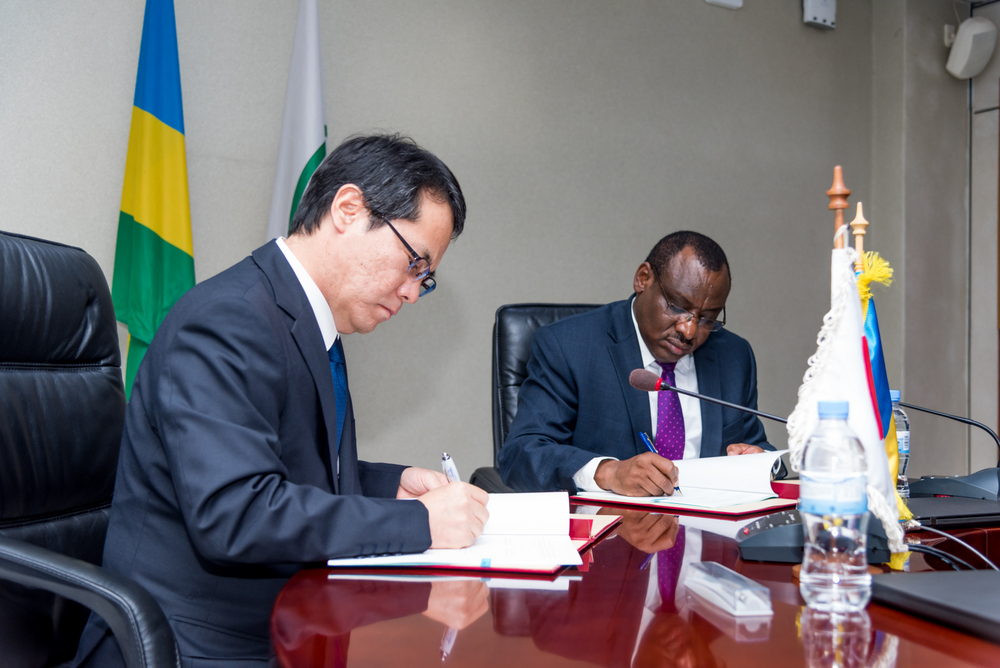
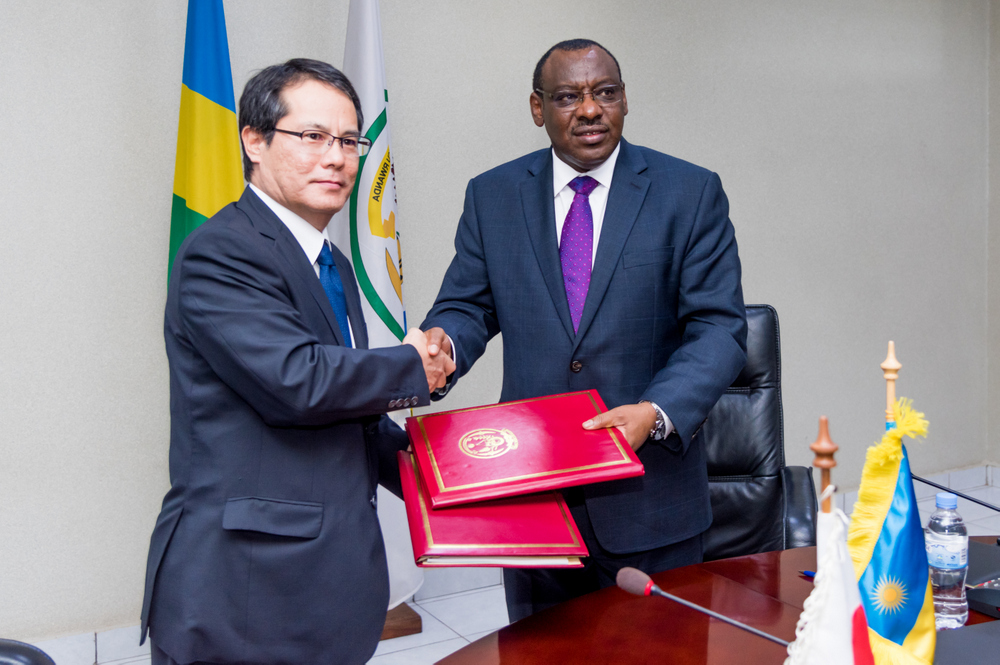
While signing the loan agreement this Thursday in Kigali, the Minister of Finance and Economic Planning, Amb. Claver Gatete said that the government has earmarked all the required money to construct the whole Ngoma-Nyanza road (From Ngoma District in Eastern Province to Nyanza District of Southern Province).
“Today, the budget is available. Thee next activity is the construction works and I hope that the project will be completed within two years,” he said.
The Director General of Rwanda Transport Development Agency (RTDA), Guy Kalisa said that they are well prepared to start construction works as the expropriation process also gets underway. He said there are 68 households yet to be relocated.
He said that construction works will start by next fiscal year.
Japan International Cooperation Agency (JICA) Rwanda Chief Representative, Takada Hiroyuki said that the project has many benefits for people of Eastern and Southern Provinces and will link Rwanda with regional countries.
“The Ramiro-Ngoma road is expected to ease transportation of goods from different parts of the country to Kigali City and elsewhere. It will also help with integration in Africa as Heads of States have signed the Continental Free Trade Area agreements,” he said.
Japan has also financed other country’s projects like 92km Kayonza-Rusumo road which is under rehabilitation and expansion and Rusumo Bridge linking Rwanda and Tanzania and the construction of One Stop Boarder Post offices.
The awards are given to women from around the globe who have demonstrated exceptional courage and leadership in advocating for peace, justice, human rights, gender equality, and women’s empowerment, often at great personal risk and sacrifice.
Dubbed ‘International Women of Courage (IWOC) Awards’, the event will be hosted by the Deputy Secretary of State John J. Sullivan on Friday.
Under the annual event, First Lady of the United States Melania Trump will deliver special remarks. In addition, Acting Under Secretary for Public Diplomacy and Public Affairs and Department Spokesperson Heather Nauert will deliver opening and closing remarks.
{{About Mukasarasi}}
Mukasarasi dedicated her life after the 1994 Genocide against the Tusti to fighting for a culture of peace and non-violence in Rwanda, as well as promoting the rights of women and girls affected by sexual violence in conflict zones worldwide.
The Founder and Coordinator of the organization Solidarity for the Development of Widows and Orphans to Promote Self-Sufficiency and Livelihoods (SEVOTA), Mukasarasi works with communities across Rwanda to reset human, social, and economic relations destroyed during the Genocide.
In 1996, she was approached by the United Nations team putting together the case against former Mayor of Taba Jean-Paul Akayesu for his role in the Genocide. Overcoming intimidation by community members and the murder of her daughter and husband, likely for her decision to testify at the International Criminal Tribunal for Rwanda, she mobilized four members of SEVOTA to testify against Akayesu.
Although rape has been considered an international war crime since 1919, it had never been prosecuted as a war crime until the conviction of Akayesu.
These women’s actions, through Mukasarasi’s leadership, changed the world of criminal justice forever, giving women who were sexually assaulted in conflicts a voice and access to justice.
Since 1994, SEVOTA has reached over 300 genocide rape victims and helped them to reintegrate socially and economically into their communities. They have organized more than 1,300 households to participate in micro-savings clubs and 2,000 youth and children in peace and development clubs.
Mukasarasi is a woman of courage, and has been an important figure in the peace and reconciliation of Rwanda and the protection of women and children across the globe.
Mukasarasi received the John Humphrey Freedom Award by Law and Democracy in 2004; the Outstanding Achievement Award for Rural Women’s Creativity Award from the World Women’s Summit Foundation in Geneva in 1996; and, SEVOTA was honored with the Award for Human Rights for its contribution to the promotion of the rights of vulnerable women by Human Right International in 2011.
Since the inception of IWOC awards in 2007, the State Department has recognized more than 120 women from more than 65 different countries. U.S. diplomatic missions overseas nominate one woman of courage from their respective host countries. The finalists are selected and approved by senior Department officials.
Others who will be awarded are from Afghanistan, Guatemala, Honduras, Iraq, Italy, Kazakhstan, Kosovo, Mauritania and Thailand
The $1 million (over Rwf85 million) project expected to benefit 3,000 smallholder farmers was launched yesterday by ‘Energy 4 Impact’, a non-profit organisation that supports businesses that provide energy access to off-grid communities in Africa.
Dubbed ‘Solar Irrigation in Rwanda (SIR)’, the project was funded by the OPEC Fund for International Development (OFID) and is expected to create the conditions for a sustainable market by increasing awareness, availability and affordability of appropriate solar irrigation technologies.
Small-scale irrigation has the potential to contribute to improved food security and higher rural incomes. However, a combination of factors has hampered its development. These include low awareness among farmers and high upfront costs of solar irrigation systems, as well as limited access to finance for farmers and technology suppliers.
Speaking at the launch of the project, the Acting Head of Land Husbandry, Irrigation and Mechanisation at the Rwanda Agriculture Board (RAB), Hanson Imicomyiza said that the project will positively impact farmers.
“Given Rwanda’s geography and its solar radiation potential, the density of cultivated land and the availability of water resources, solar irrigation can enable smallholder farmers to use the water sources more productively, adapt to climate change and improve nutritional outcomes and rural development,” Imicomyiza said.
The Project Manager at Energy 4 Impact, Espoir Serugo said that the initiative will help women to enhance productivity.
“This support will empower women to enhance productivity, generate more income and increase the availability of food for their families and the communities around them. Solar irrigation will also help them save the time and labour spend on tasks such as hauling water, usually over long distances, for farming,” Serugo said.
The project will be implemented in eight districts in Eastern and Southern Provinces in the districts of Bugesera, Kirehe, Nyagatare, Ngoma, Gatsibo, Gisagara, Kamonyi and Muhanga.