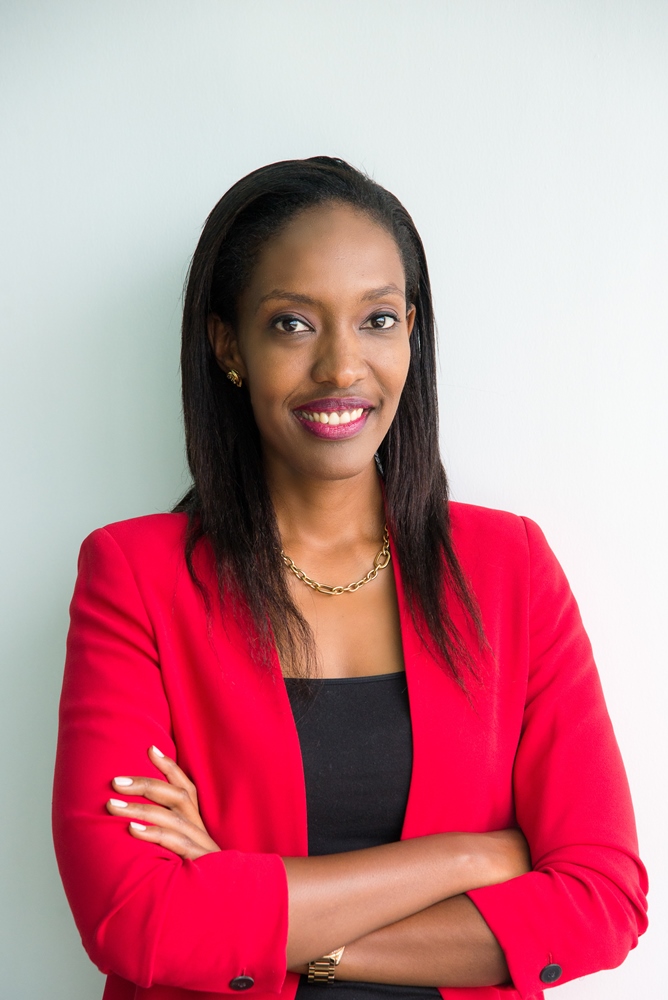
According to a statement released on Monday, Rugwizangoga, a Chemical Engineer by profession enters Volkswagen with a wealth of strategic planning, project management and product development experience.
As a World Economic Forum’s Global Shaper and an active member of the Kigali Hub, Rugwizangoga will be able to use her international experience and Rwandan heart to lead Volkswagen Mobility Solutions Rwanda to become an integrated part of Rwandan life, the statement says.
“Being asked to start and run a new company from the ground up, whilst having the opportunity to implement a world first in mobility solutions for Volkswagen, is a challenge I relish and am looking forward to. The conducive local environment is also the ideal springboard for future expansions across the African continent,” she said.
At a media briefing in Kigali in January, Thomas Schaefer, Chairman and Managing Director of Volkswagen Group South Africa announced the registration of Volkswagen Mobility Solutions Rwanda and the introduction of the integrated automotive mobility solution in Rwanda.
This concept is a first for Rwanda and also a first for Volkswagen worldwide.
“We welcome Michaella into the Volkswagen family and we know she will be a worthy asset to our company. Rwanda’s forward thinking attitude to technology and development is one of the reasons we saw potential in this country. I believe that the offerings we will be introducing together with the support of Volkswagen partners and Michaella’s experience, will see our innovative mobility initiatives prove to be successful,” Said Thomas Schaefer.
Volkswagen will launch it’s mobility solution including an assembly facility in Kigali by midyear. All the mobility services will be accessed by the custom developed App through which all bookings and payment will be made. Services will also be able to be booked online or via a hotline to cater for people who do not have a smartphone.
VW South Africa will US invest $20 million in Rwanda during phase one of the integrated automotive mobility solutions.
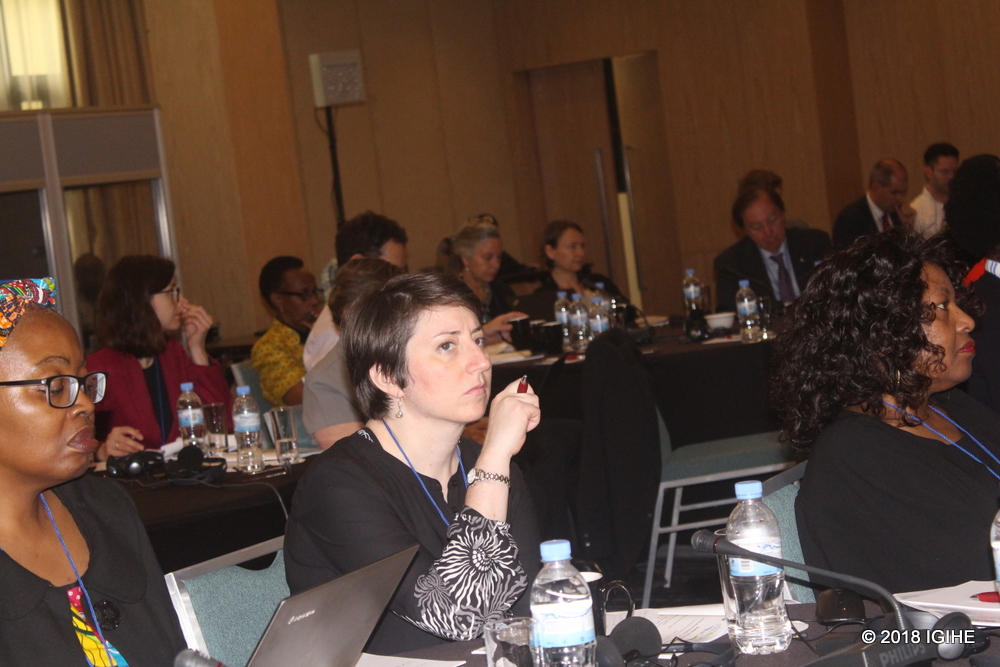
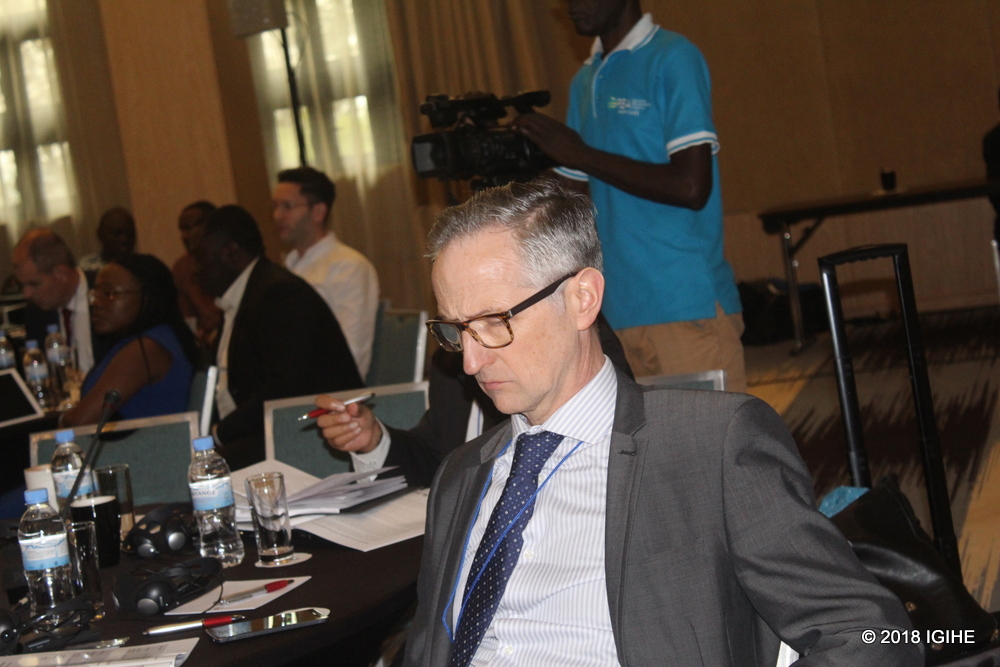
The five-day meeting that started yesterday in Dar Es Salaam is attended by members of different technical working groups from five Revenue authorities including Rwanda Revenue Authority, Uganda Revenue Authority, Kenya Revenue Authority, Burundi Revenue Authority and the hosts Tanzania Revenue Authority. The South Sudan is not represented in this technical meeting.
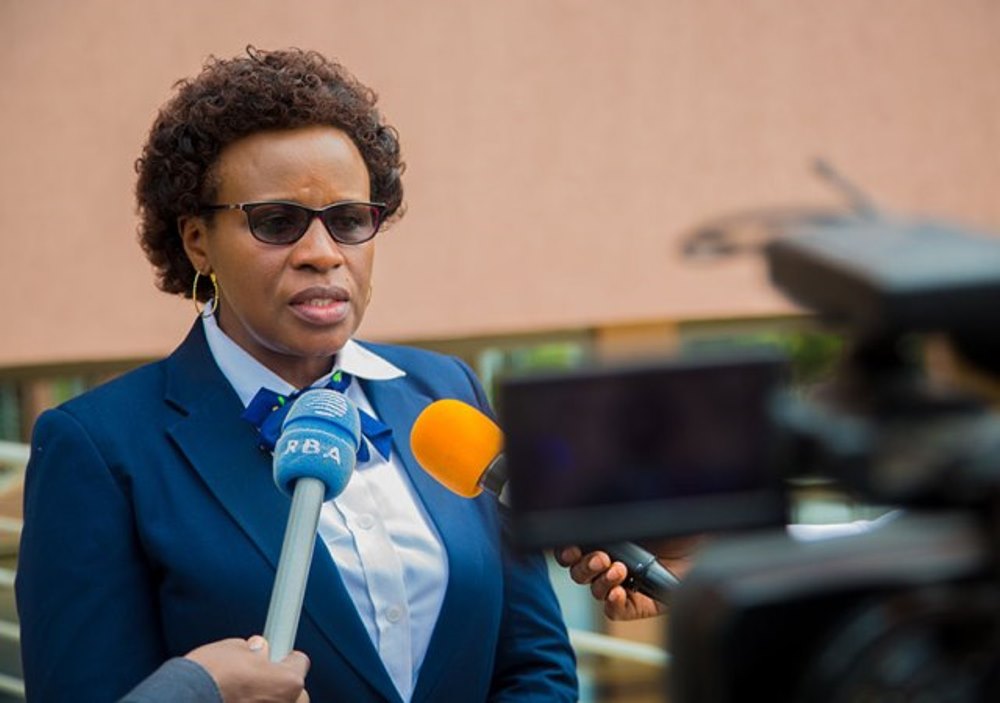
According to Drocelle Mukashyaka, Rwanda Revenue Authority’s (RRA) Deputy Commissioner in charge of Taxpayer Services, and member of Capacity Building and Change Management Technical working Group, the meeting is expected to review implementation of the SCT export process, including piloting and full rollout, update the SCT Procedures manual to take into account new changes including electronic certificate of origin, temporary importation of vehicles at border crossings, transshipment reports and notifications, electronic documents and movement of goods on standard gauge railway among others.
“We shall also review and develop change management and capacity building interventions to include developments that have taken place with regard to the SCT over the last 3 years, because this serves the key points during our awareness campaigns on Single Customs Territory implementation” Mukashyaka said.
In his opening remarks the Chairman of the meeting Salim Mubiru from Uganda Revenue Authority (URA) recommended the efforts of the partner states and applauded them for what has been achieved in the last 3 and 1/2 years. He also called upon the team to focus on the objectives of the meeting in the next six days and have outputs that are measurable by the end of the meeting.
SCT is a stage towards the full attainment of the Customs Union attainable by the removal of duties and other restrictive regulations and/or minimisation of internal border customs controls on goods moving between Partner States with an ultimate realization of free circulation of goods.
The SCT aims at improving clearance times, reducing the cost of doing business, enhancing application of cross border ICT systems and improving coordination of the private and public sector agencies among others.
The East African Community has been implementing the SCT progressively since 2014.
Kagame who was speaking Monday in Kigali in a three-day Next Einstein Forum (NEF) said that the joint commitment to promoting mathematics and sciences reflects their importance in human progress.
NEF is a biennial meeting that brings together Africa’s innovators to highlight breakthrough discoveries and catalyze scientific collaboration for human development.
Kagame said that when researchers and commercial enterprises apply those capabilities to solve practical problems, they become innovations that enhance livelihoods.
He reminded science policy authors to incorporate women and girls as the continent catches up with the World.
He said the gender gap in science is a global phenomenon, but added that there is no reason to accept it, as inevitable. He said whatever the causes may be; they have to dedicate themselves to closing the gap, because opportunity will never be equal, without equal access to knowledge.
“It’s not just about filling heads with information, and performing well in exams. The purpose is to apply that knowledge, to solve the problems facing our continent and our world,” he reminded.
To achieve that, Kagame said it requires an innovation ecosystem, in which government, business, and educational institutions all reinforce each other.
He said they need to build on the good initiatives underway, to create more productive linkages between the African research and innovation community, both in universities and start-up firms.
{{Use available resources}}
Kagame said that it is assumed that technical expertise is unavailable in Africa and governments are as guilty, as big companies, in this regard.
“We keep going back to the same external suppliers for solutions, without making every effort to procure the services here. It doesn’t make sense. Let’s use the resources we have, to give these talented African specialists, the chance to grow and compete professionally,” he urged.
“There may be some extra costs, in the short term. But doing so, will not only build our institutions, but increase our capacity for international collaboration, as well,” he added.
The President and Chief Executive Officer of African Institute for Mathematical Sciences (AIMS) and also the Chair of Next Einstein Forum, Thierry Zomahoun said that the meeting aims at celebrating the contribution of Africa to Global Science.
He said, as they come together, they celebrate the achievements of some of Africa’s brightest scientific minds.
“We know that humans already had cognitive ability in Africa, as we agree by now, Africa is cradle of humanity, Africans were the first to count and the continent was the place where humans started counting for the first time, not only Africa is the cradle of humanity, but we arguably suggest that Africa is the cradle of mathematics,” he said.
Using the examples of oldest mathematical instruments like ‘Lebombo Borne (35,000 BC) which was found in Swaziland and Ishango Bone (20,000 BC) which was found in the Democratic Republic of Congo among others, Zomahoun called scientists to recall the contribution of Africa to science.
NEF is an initiative of the African Institute for Mathematical Sciences in partnership with Robert Bosch Stiftung, a European foundation which promotes sciences.
Mutimura was speaking Yesterday in Kigali, in a Pre-event to the Next Einstein Forum Global Gathering in a one day discussion with researchers under ‘Science Africa Workshop’.
He said that researches are being carried out, but their outcomes do not reach people who have problems which they would help to solve.
“We should conduct research that creates impact. Findings should help us during planning and execution of projects that lead to people’s development. Research should help us in devising sustainable solutions,” he said.
The Principal of College of Agriculture, Animal Sciences and Veterinary Medicine in University of Rwanda, Dr Laetitia Nyinawamwiza said that research carried out by university lecturers helps them attain high level of education, but do not facilitate in solving people’s problems.
“In university, researches are being carried out, the reason why you will see lecturers continue to climb high in grades; however, most of their findings are published in scientific journals but citizens or business community do not know their findings,” she said.
However, Nyinawamwiza said that researchers still have funding issues where research results are not disseminated to grassroots, staying academic other than being translated into practical solutions.
The celebration that took place under the theme; ‘Women of Rwanda, keep up the good work and let’s build Rwanda we want and deserve”, served as a platform to reflect on the achievements registered so far, the challenges and the way forward in regard to women empowerment in Rwanda and The Netherlands.
In his speech during the celebrations, Rwanda’s Ambassador to The Kingdom of the Netherlands, Jean Pierre Karabaranga emphasized Rwanda’s achievements in the last 24 years, especially in empowering women.
In his remarks, Amb. Karabaranga quoted President Kagame’s message on March 8th, 2018 where he designated Women as a cornerstone of prosperity for the society.
“It is no accident that the renewal of Rwanda was also accompanied by significant upgrades in the status, roles, and responsibilities of women. The same is true in nearly every country where gender equality has been taken seriously. Women are a cornerstone of prosperity for society as a whole. Even in situations of conflict, they are in a position to make unique contributions to peace and stability”, President Kagame said.
Rwanda was ranked 4th worldwide in the World Economic Gender Gap Report 2017; a report that ranks countries on their ability to close the gender gap in four fundamental areas: economic participation and opportunity, education, health and survival, and political empowerment.
Here below is a Joint Communiqué on the Occasion of President Kagame’s Official visit to Uganda
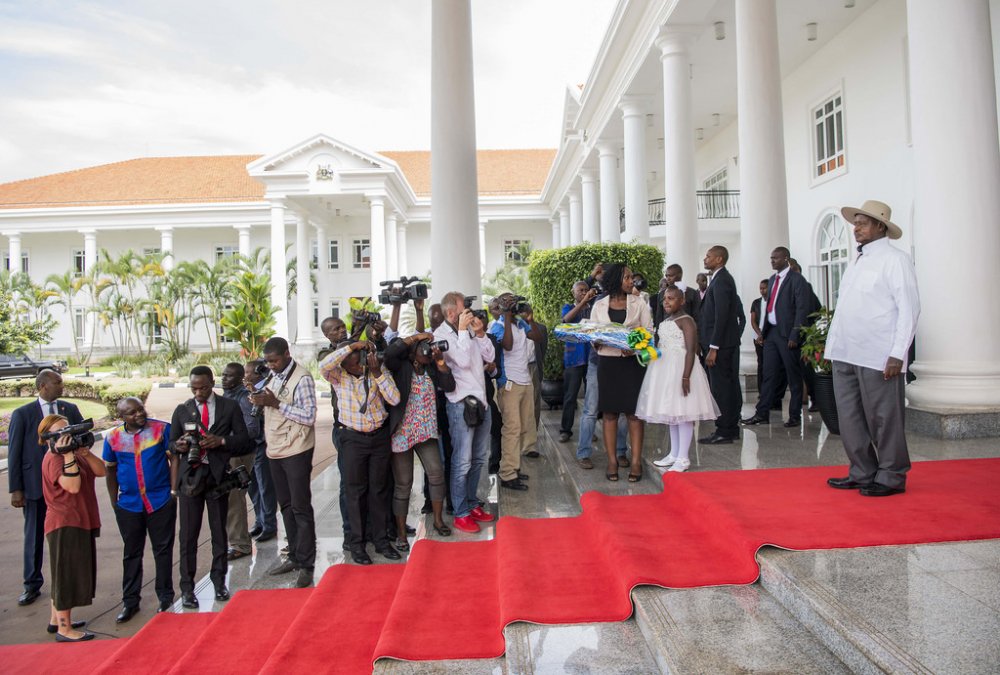
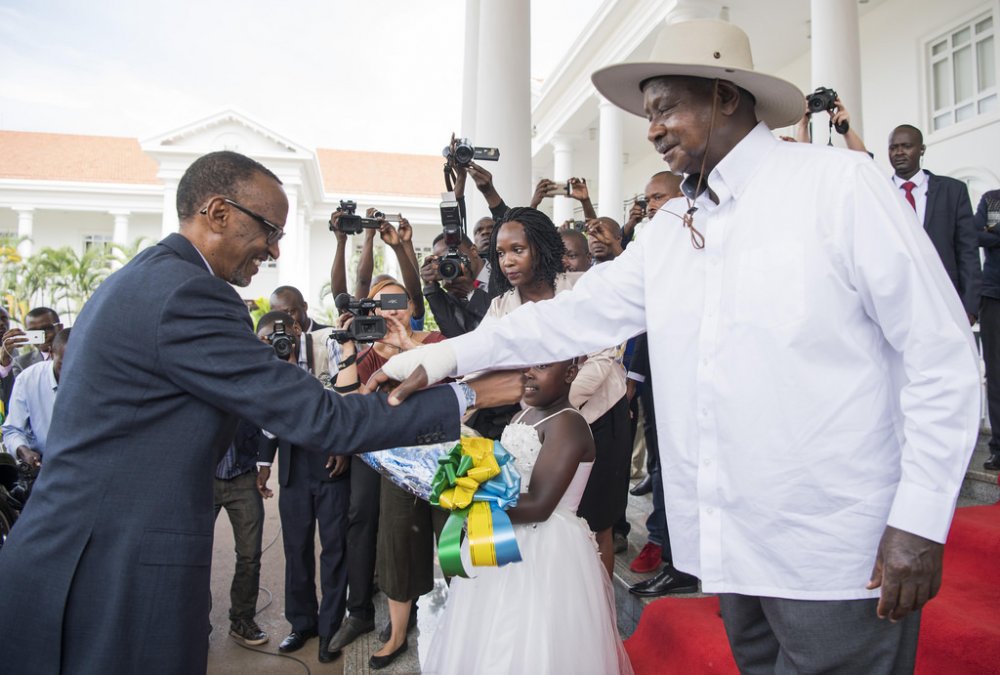
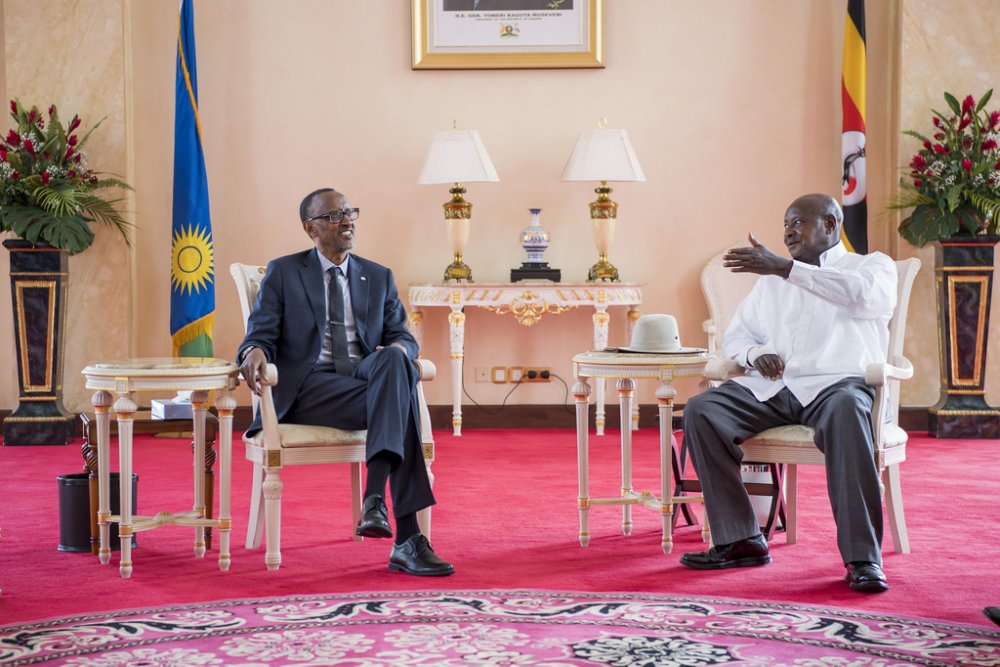
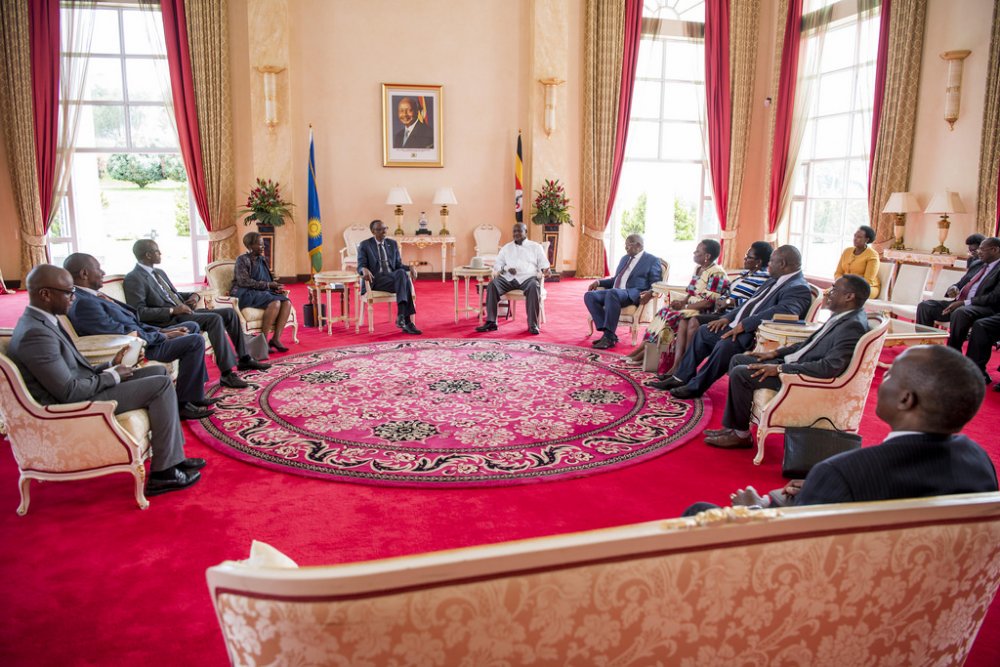
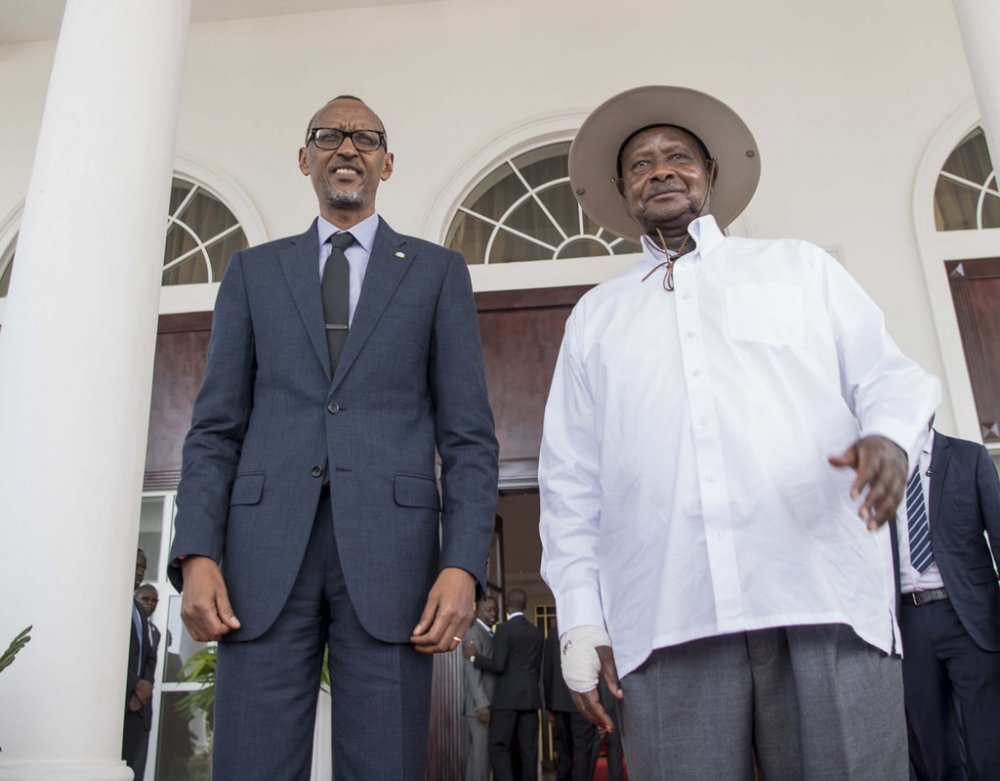
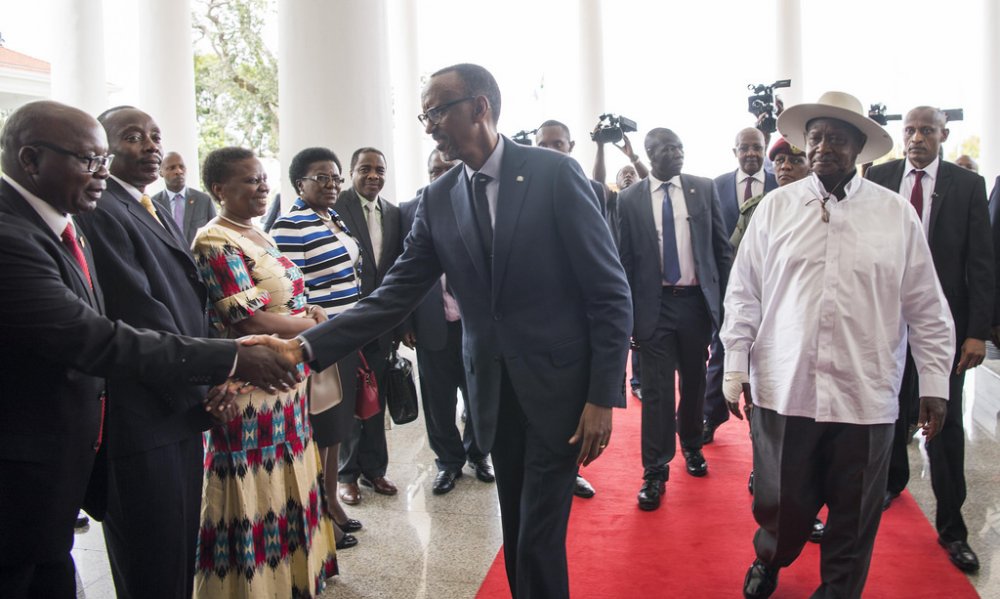
1. At the invitation of His Excellency Yoweri Kaguta Museveni, President of the Republic of Uganda, His Excellency Paul Kagame, President of the Republic of Rwanda, paid a one-day Official Visit to Uganda on March 25, 2018. His Excellency President Paul Kagame was accompanied by the Minister of Foreign Affairs, Cooperation and East African Community and other Senior Government Officials.
2. The two Heads of State held Official Talks at State House, Entebbe in a cordial and friendly atmosphere on a wide range of bilateral, regional and international issues.
3. Their Excellencies noted the existing bonds of friendship and mutually beneficial cooperation between the two countries and reiterated their commitment to strengthen them further. In this regard, they reviewed cooperation particularly in the sectors of railway and air transport as well as electricity interconnection.
4. The two Heads of States observed that the Joint Permanent Commission (JPC) between the two countries provides a good mechanism for discussing matters of mutual interest and strengthening cooperation. They therefore directed their Ministers responsible for Foreign Affairs to convene the next JPC within three months.
5. His Excellency President Yoweri Museveni congratulated His Excellency President Paul Kagame, the Government and people of Rwanda on the successful hosting of the historic African Union Extra Ordinary Summit in Kigali on March 21, 2018 during which the Agreement establishing the African Continental Free Trade Area as well as the Protocol on Free Movement of Persons were signed.
6. The two Heads of State reiterated their commitment to the economic integration of Africa, accelerating industrialization, development of regional and continental infrastructure to improve the livelihoods of the peoples of Africa. His Excellency President Yoweri Museveni commended His Excellency President Paul Kagame, in his capacity as current Chair of the African Union, for his leadership.
7. His Excellency President Yoweri Museveni expressed his appreciation to His Excellency President Paul Kagame for honouring his invitation and for the fruitful discussions they held. His Excellency President Paul Kagame, on his part, expressed his appreciation to His Excellency President Yoweri Kaguta Museveni, the Government and people of the Republic of Uganda for the warm reception and hospitality accorded to him and his delegation during the visit.
8. His Excellency President Paul Kagame extended an invitation to His Excellency President Yoweri Museveni to pay a State Visit to the Republic of Rwanda. The invitation was gladly accepted and the dates will be agreed upon through diplomatic channels.
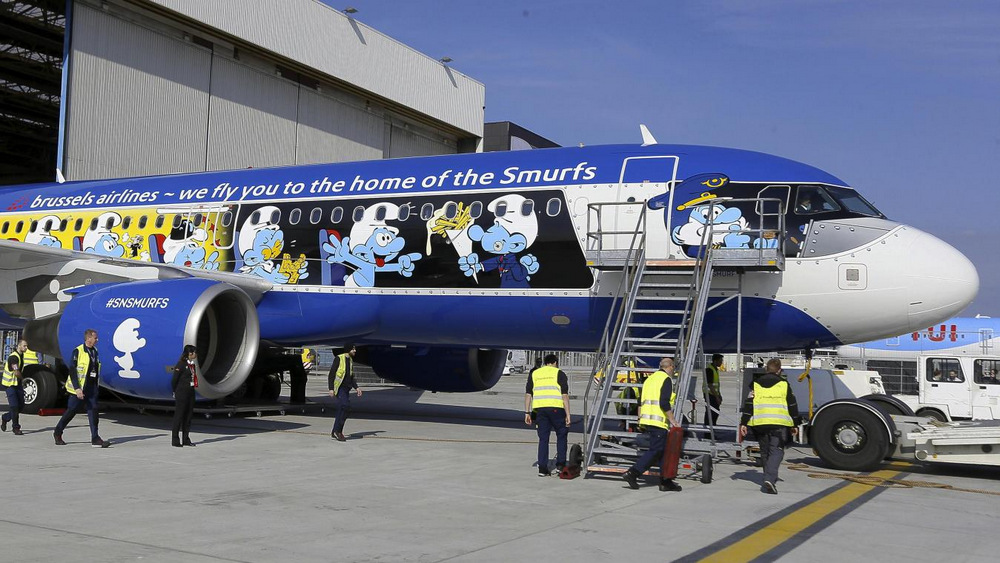
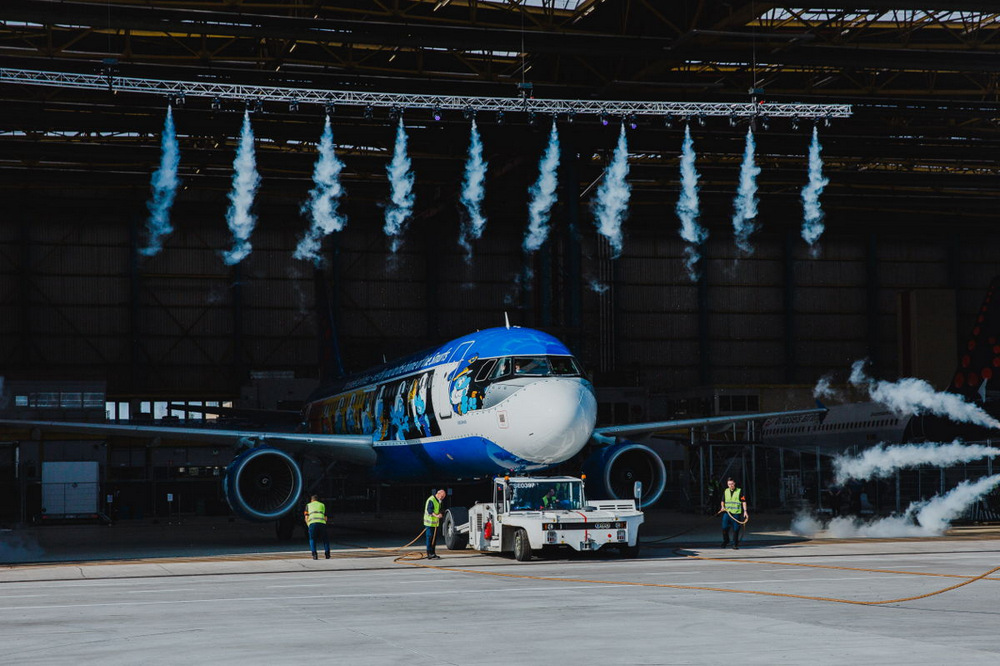
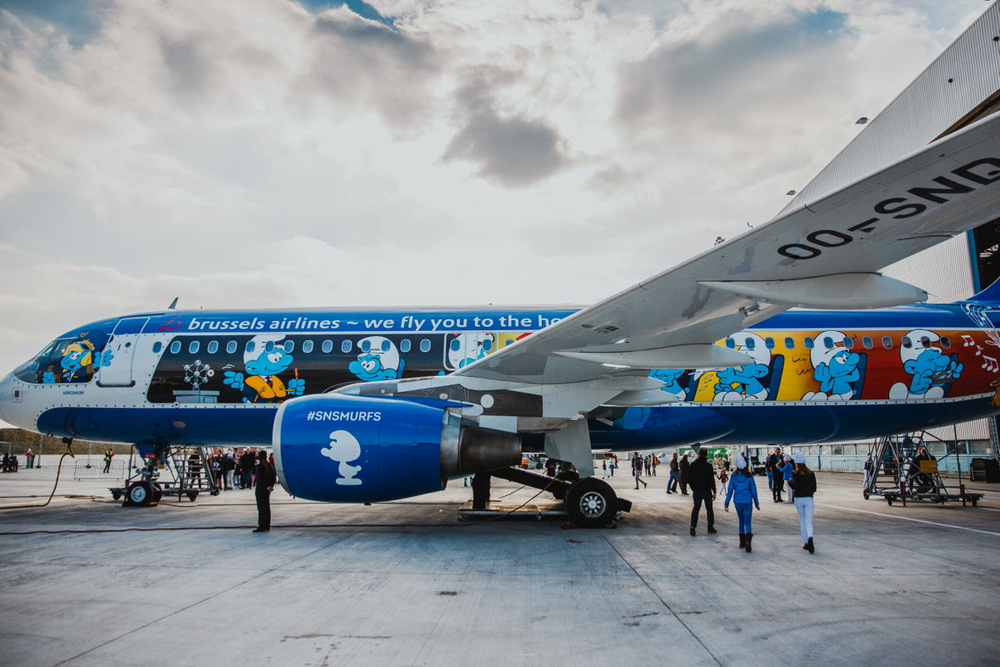
Unveiled in Brussels yesterday, the new Belgian Icon will represent Belgium on the carrier’s aircraft A320 named Aerosmurf as part of the Brussels Airlines fleet until 2023.
Seven months on with 1415 submitted ideas since the start of the Belgian Icon contest, Brussels Airlines’ fifth iconic plane has finally got ready to carry out its Belgian colours around Europe and beyond with the Smurfs design by the Italian Marta Mascellani but chosen by the public.
“The Smurfs, who celebrate their 60th birthday this year, are one of Belgium’s most loved comic characters and are sure to be the perfect flying ambassadors for Belgium. As from tomorrow, Aerosmurf will bring the world to Belgium and the best of Belgium to the world, just like the four other Belgian Icons,” reads Brussels Airlines’ statement released on Saturday.
The name Aerosmurf is the title of a Smurfs comic album which tells the story of a little Smurf whose dream is to fly. The little Smurf tried several ideas but none of them work until he builds a plane. Since then, the little Smurf is known as Aerosmurf.
“To design our fifth Belgian Icon, we wanted to ask the public who they wish to see flying through the skies as an ambassador for Belgium. That’s why we launched a contest last year to which everyone with a heart for Belgium, every enthusiast and every designer, could participate by sending in their idea or plane design. And we received an overwhelming amount of ideas, from fries to the saxophone,” says Tanguy Cartuyvels, VP Marketing at Brussels Airlines.
{{Aerosmurf design
}}
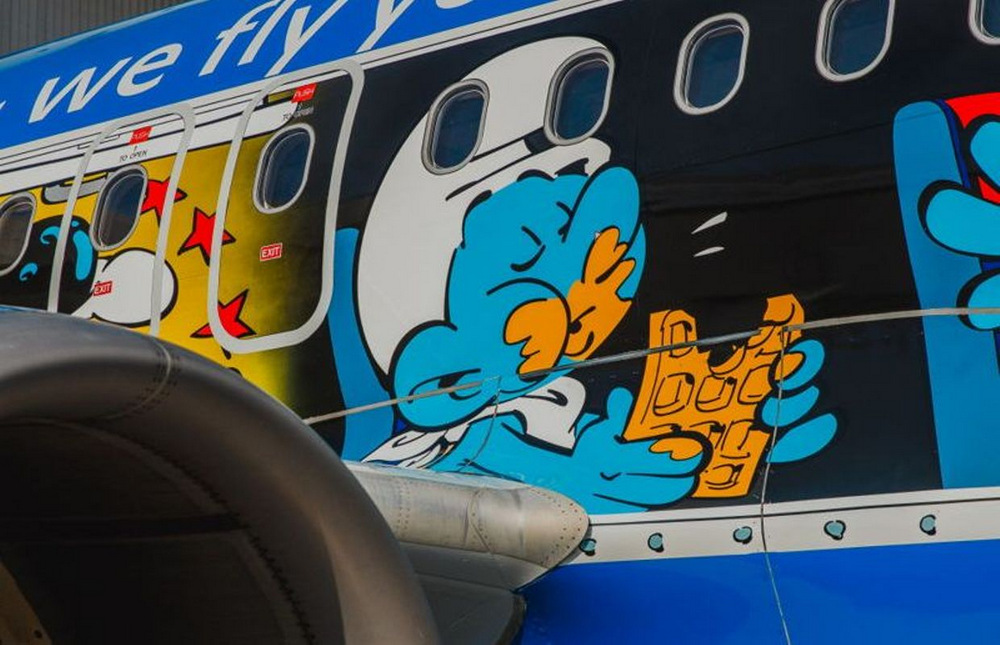
The designers of studio Peyo adapted Marta’s design to fit the round fuselage of an aircraft. The result is a plane with 19 smurfs, passengers as well as crew, interacting with each other. In the cockpit, we find Smurfette as the captain and Papa Smurf as co-pilot. The design contains Belgian details, representing the many other ideas that were submitted during the contest.
On the left hand side, Harmony Smurf is playing the Belgian national anthem on the saxophone – a Belgian invention – together with another smurf who is playing the harmonica, referring to the famous Belgian musician Toots Thielemans. On the crew smurf’s trolley, we find a miniature Atomium.
On the right side of the plane, a crew smurf is serving Belgian fries and waffles to the smurf passengers. Aerosmurf also has two secret passengers, Gargamel and Azrael, trying to escape through a hatch in the belly of the plane, a treat for plane spotters since they are only visible during takeoff and landing.
For passengers flying with Aerosmurf, the experience continues inside. Little smurf footsteps on the carpet are leading the Aerosmurf guests to their seats, while a Smurfs video and adapted boarding music complete the Smurfs experience.
Led by airbrush specialist André Eisele, 14 artists worked 14 days non-stop to paint the eleven meters high and 37.56 meters long design on the plane by hand. They used 28 colours, 420 littres of paint, 24,000 meters of masking tape and 4,500 m² masking paper.
As the winner of the contest, Marta Mascellani followed the plane’s creation process behind the scenes. She stood front row at the revealing of the aircraft yesterday and the Aerosmurf is taking Marta home to Milan today with, in the cockpit, her brother Lorenzo who is a pilot at Brussels Airlines.
“It is amazing to see how they really made my design come alive. Drawing is a passion of mine and seeing my design on a plane that will fly around Europe is a wonderful way to share that passion with the world,” said Marta Mascellani, designer of Aerosmurf
{{Belgian Icons series
}}
As the fifth Belgian Icon, Aerosmurf joins Rackham, Magritte, Trident and Amare in the Belgian Icons series. To carry out the best of Belgium to the world, Brussels Airlines decided to dedicate a plane named Rackham to Tintin in 2015. With Aerosmurf the company launches a possible successor for Rackham as one of the most photographed planes in the world.
Two years later Magritte followed together with Trident, dedicated to the Belgian national soccer team, Red Devils. In 2017 Brussels Airlines and Tomorrowland created Amare, a tribute to the iconic Belgian music festival.
The talks between the two leaders are expected to ease tension between Rwanda and Uganda; considering the frosty relations between the two neighbors in the recent past.
Some of the dignitaries present in the meeting were Rwandan Minister of Foreign Affairs, Cooperation and East African Community, Louise Mushikiwabo; Secretary General at the national intelligence and security services (NISS), Maj. Gen. Joseph Nzabamwita; Rwanda’s High Commissioner to Uganda, Frank Mugambage and Principal Private Secretary to the President, Lt. Col. Patrick Karuretwa.
The visit comes a few days after a historic signing of the African Free Trade Area pact in Kigali, an event that President Museveni skipped and was represented by Foreign Affairs Minister Sam Kutesa.
The two governments have at different times accused each of other of supporting dissidents from the other country and espionage, among others.
Although in a recent press conference, Foreign Affairs Minister, Louise Mushikiwabo, said that the problems between Rwanda and Uganda were being addressed in the interest of citizens of both countries.
“We cannot mistreat Ugandans, they are our relatives, we share a lot; we share history, we share blood. Many Ugandans are our relatives. To us that is very important.” she said.
The meeting is a follow up on the Addis Ababa talks of February, whose aim, included to find a solution to the tensions between the two countries.
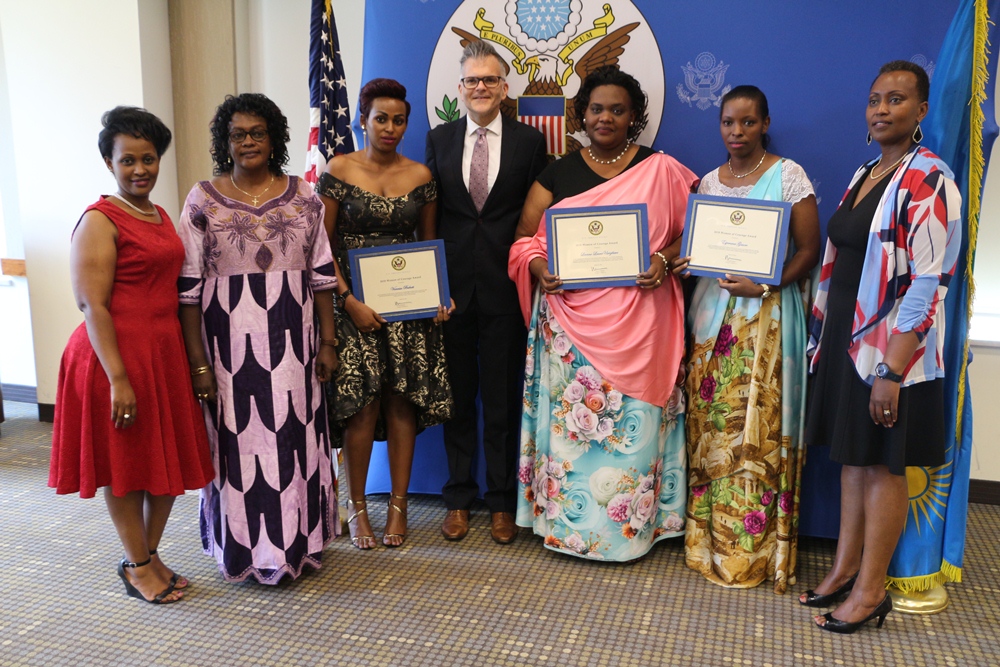
The event took place at U.S. Embassy and three women were selected from over one thousand nominations submitted by U.S. Embassy Kigali’s Facebook fans.
Awarded at the fourth annual Rwandan Women of Courage award are; Leonne Laura Uwizihiwe, Vanessa Bahati and Esperence Gasore.
Since 2007, the U.S. State Department in Washington, DC has presented International Women of Courage awards to inspiring women from around the world who have demonstrated exceptional courage, strength, and leadership in advocating for human rights, social justice, and women’s equality and advancement.
In 2015, the U.S. Embassy in Kigali launched the “Rwanda’s Women of Courage,” to recognize inspiring women of Rwanda.
{{About the Awardees}}
{{Leonne Laura Uwizihiwe}} is a teacher and an advocate for gender equality. She has been a strong advocate for girls’ empowerment through mentoring students at the FAWE school, petitioning the government to provide social services to keep teen mothers in school, and campaigning against female genital mutilation across the region.
{{Vanessa Bahati }} is the founder of the Jordan Foundation. The mission of the Foundation is to improve the lives of visually impaired children between the ages of three and eight years old. The Jordan Foundation helps visually impaired children and their families thrive by offering health and educational services, emotional support, and socioeconomic empowerment.
{{Esperence Gasore}} is a nurse and founder of the NGO Rwanda Children and director of Rwanda Children’s Health Center. The Rwanda Children’s Health Center provides health services to poor and vulnerable families in Ntarama. Rwanda Children also provides social support to the community through education and entrepreneurship programs, clean water programs, and incoming generating skills programs.
Since 2015, 13 women of courage have been recognized by the U.S. Ambassador to Rwanda.
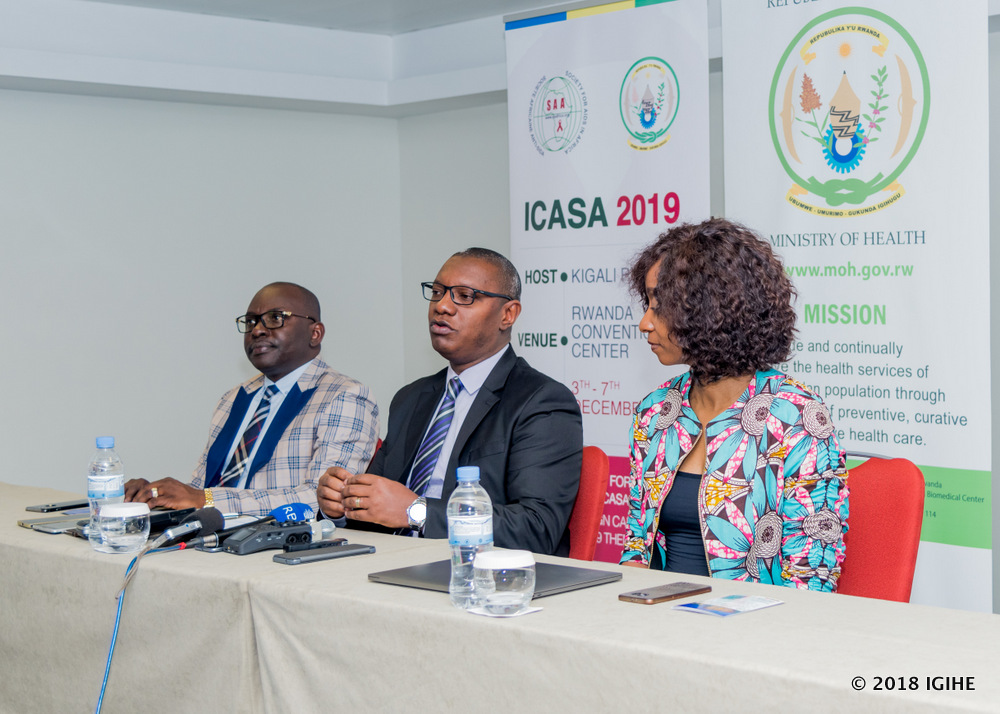
As part of the oganisations of the 21st edition of the conference, the organisers have called for bids to brand and design the logo and theme, which would reflect the values of the country, the Sustainable Development Goals (SDGs), the 90-90-90 goal and the end of AIDS by 2030.
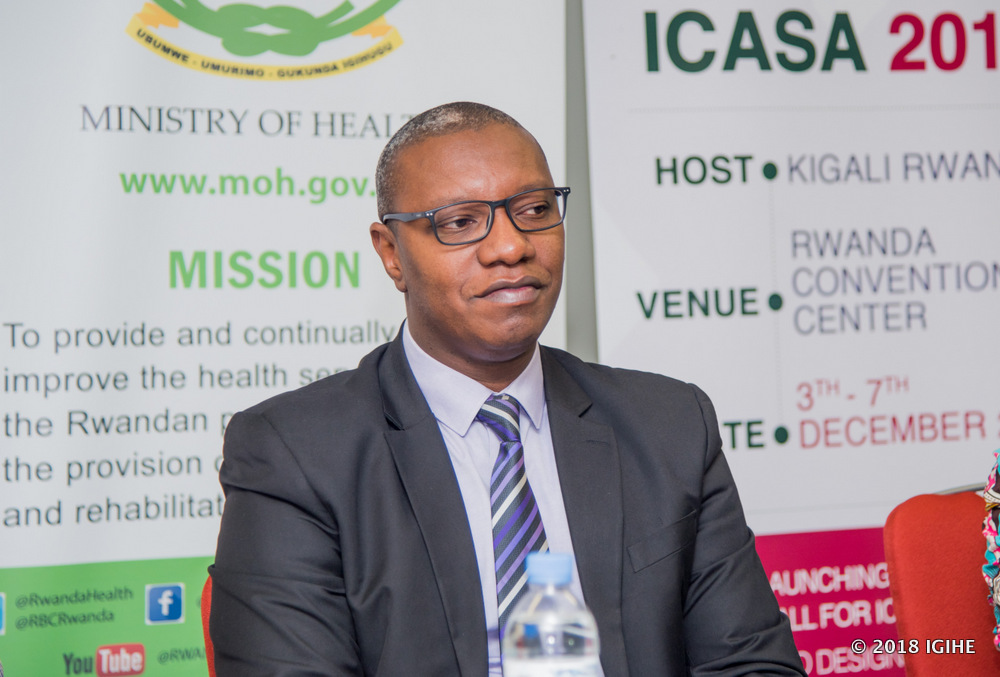
Speaking in a press conference on Saturday, the State Minister of Public and Primary Healthcare in the Ministry of Health, Dr. Patrick Ndimubanzi said that the conference will discuss the policies and strategies that countries need to put in place in order to tackle HIV and STIs.
Ndimubanzi said that the global community and everyone is working in the framework of solidarity and mutual accountability where people are responsible of what’s happening in health sector for any country.
“And given that now we are in a World where people continue to go everywhere, we think that it’s very good that at some point the whole community comes together and review together policy and strategies that will address diseases,” he said.
For Rwanda, he said the conference will help people in health sector learn from strategies from other countries.
“Rwanda as scientific committee, as policy makers, we want to see strategies that our sister countries are adapting,” he added.
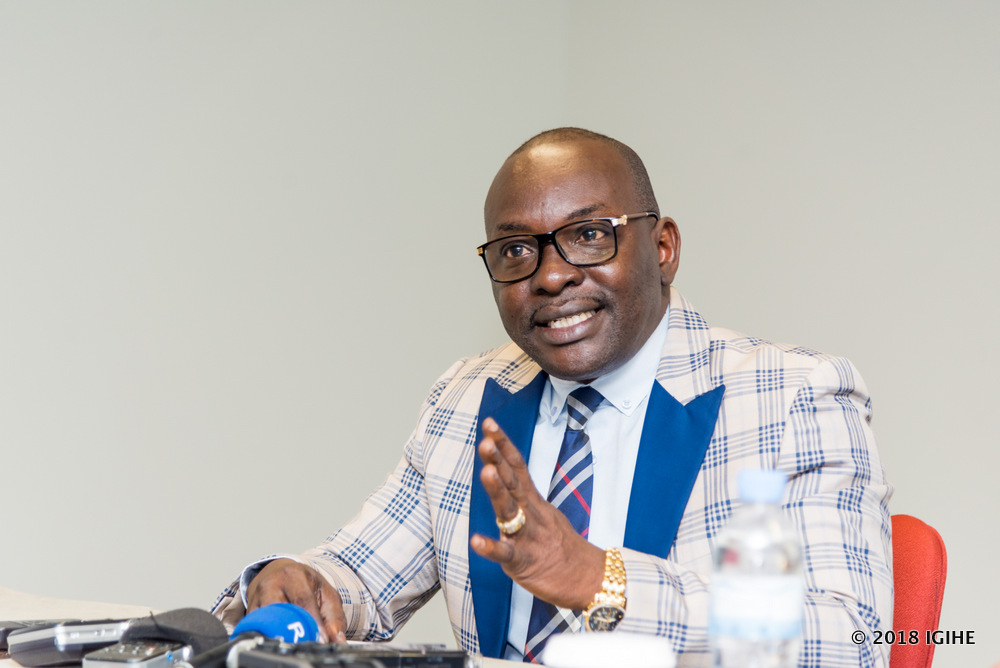
Society for AIDs in Africa Coordinator, Luc Armand Bodea said that they are organizing the conference to know the new trend about HIV/AIDS.
“As we are talking now, people are still victims of discrimination, more than discrimination; they are still facing some challenges in some health facilities. This is why ICASA is there to give platform to people that could not voice out to talk about challenges they are facing on a daily basis and go beyond barriers,” he said.
Bodea said that today there are countries that do not have drugs and ICASA aims at raising the level of awareness both from leadership, scientists and the community to put them together and give them platform so that they can address their issues in Africa.
ICASA is a biennial conference which alternates between Anglophone and Francophone African Countries. More than 10,000 participants are expected in ICASA2019.