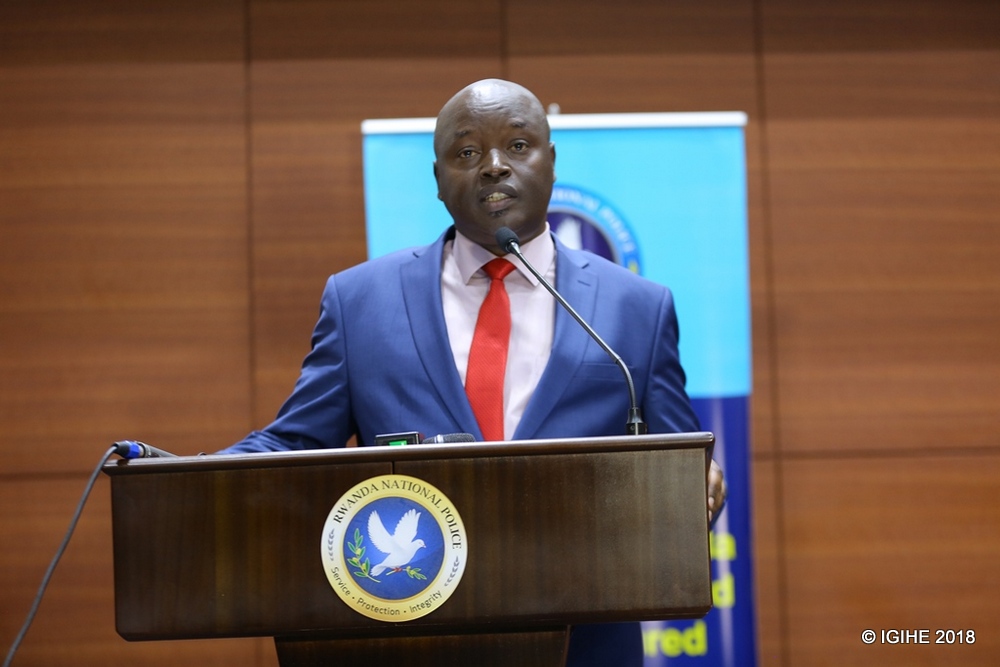
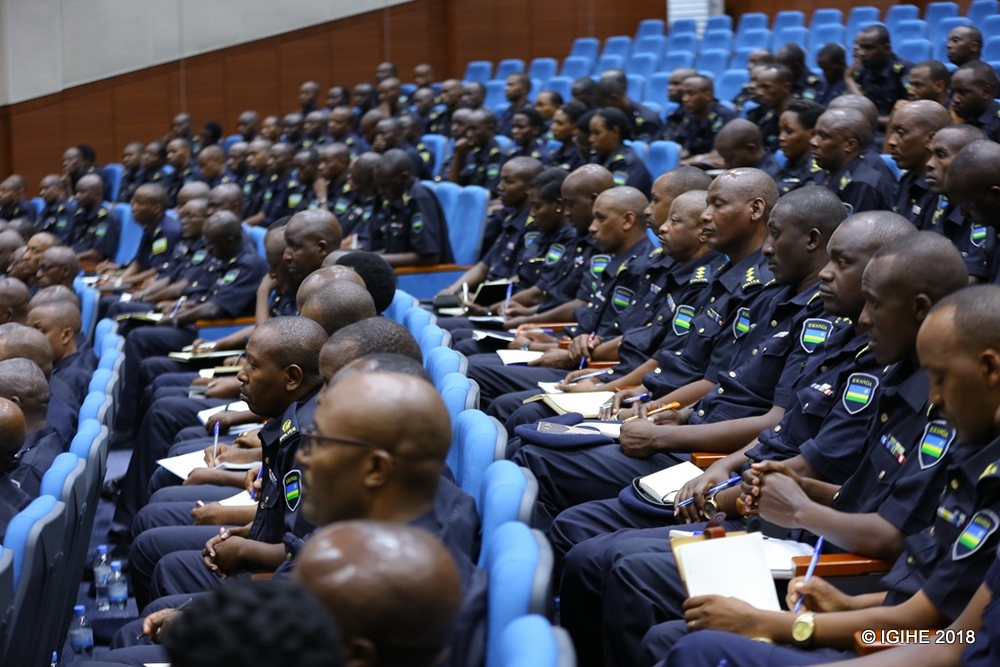
The UN delegation was made of Hakan Svedberg, Qader Alhabahbeh and Katherine. They were accompanied by the UNPOL Planning Officer Elisabeth Silenje, the Coordinator Protection of Civilians (PoC) in Malakal region, Ayhan Altok and Formed Police Units (FPU) Coordinator in Malakal region, Mikhail Bychikhin.
They visited Rwandan Police peacekeepers Base Camp, UNMISS Base Camp and Malakal PoC site and throughout the tour, they were guided and accompanied by Contingent Commander (CONTICO), Assistant Commissioner of Police (ACP) Charles Butera.
During the visit, ACP Butera presented to them what the peacekeepers have been engaged into from the beginning of their mission, success stories and the challenges they encounter.
In his remarks, ACP Butera said that; “In partnership with fellow peacekeepers, we exhibit values in conducting our daily duties and keeping up the spirit of hard work. By doing this, we uphold our country’s values and work as a team with other peacekeepers to successfully complete our mission.”
“We always ensure we fulfill our tasks and prioritize restoring sustainable peace, security and development. It is our key responsibility to work exceptionally with local population to restore peace and security” he added.
After the tour around the camps, the delegates hailed Rwanda Police peacekeepers for their exceptional, commitment and hardwork in restoring peace in South Sudan.
The agreement was signed yesterday in Washington DC between the Minister of Finance and Economic Planning Dr. Uzziel Ndagijimana and the World Bank Vice President for the African Region Makhtar Diop.
The event took place on the sidelines of the ongoing Spring Meetings in Washington DC.
Through the Nutrition Sensitive Direct Support (NSDS), this additional financing for the Rwanda Strengthening Social Protection Project will provide cash transfers to vulnerable families to incentivize the use of health and nutrition services, strengthen their knowledge on better parenting and child care, and support Rwanda’s Civil Registration and Vital Statistics in the development of a clear road map for effective implementation.
“Given its long-term negative effects on human capital development and poverty eradication, stunting is high on the government of Rwanda’s political and development agenda. We are very grateful to all of you who are contributing to this effort,” said Minister Ndagijimana.
The Government of Rwanda, in partnership with the World Bank, The Power of Nutrition, and the Global Financing Facility (GFF), has developed an integrated program to combat chronic malnutrition, with a focus on high-stunting districts, vulnerable populations, and the critical 1,000 days beyond which stunting becomes largely irreversible.
“I would like to congratulate the Government of Rwanda on setting these ambitious targets and its commitment to fight chronic malnutrition and invest in human capital. The World Bank Group will continue to work with Rwanda to scale up the program nationally bend the curve on stunting,” World Bank’s Makhtar Diop said.
The Power of Nutrition is investing $35 million into the overall Program, of which $15 million is part of the additional financing signed yesterday, while the remaining $8 million is from the Global Financing Facility which contributes $18 million into the overall program.
The Strengthening Social Protection Project was approved in December 2017 to help the Government of Rwanda improve the effectiveness of Rwanda’s social protection system, notably the flagship Vision 2020 Umurenge Program (VUP), for targeted vulnerable groups.
Inside the house were Claudine Maniriho and her four children as his husband was still out fending for the family.
The flood waters from the hills around River Sebeya caused the catastrophe. Speaking to IGIHE, the Executive Secretary of Kanama Sector, Annonciata Tuyisenge confirmed the tragedy.
“The mudslides hit one side of the house and a wall collapsed on four children and their mother who had been cooking. Two died and others are hospitalized,” she said.
Rubavu District is one of the districts mostly affected with extreme climatic vagaries, claiming lives, damaging crops and destroying infrastructures. Last month floods completely destroyed 26 houses and left over 900 partially destroyed.
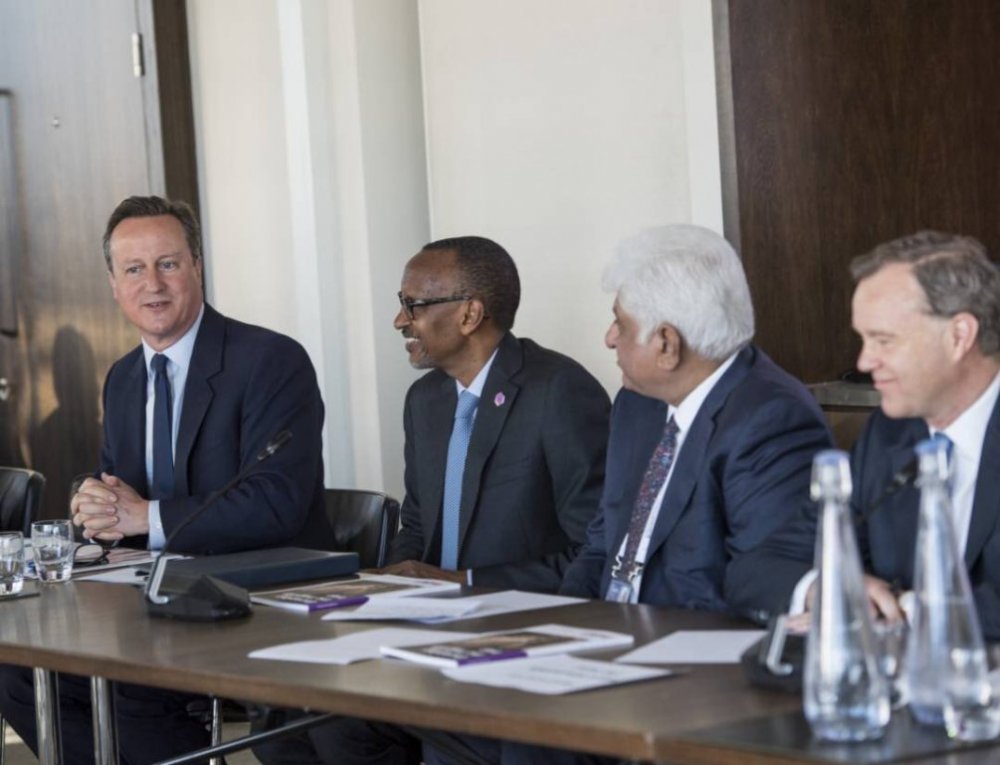
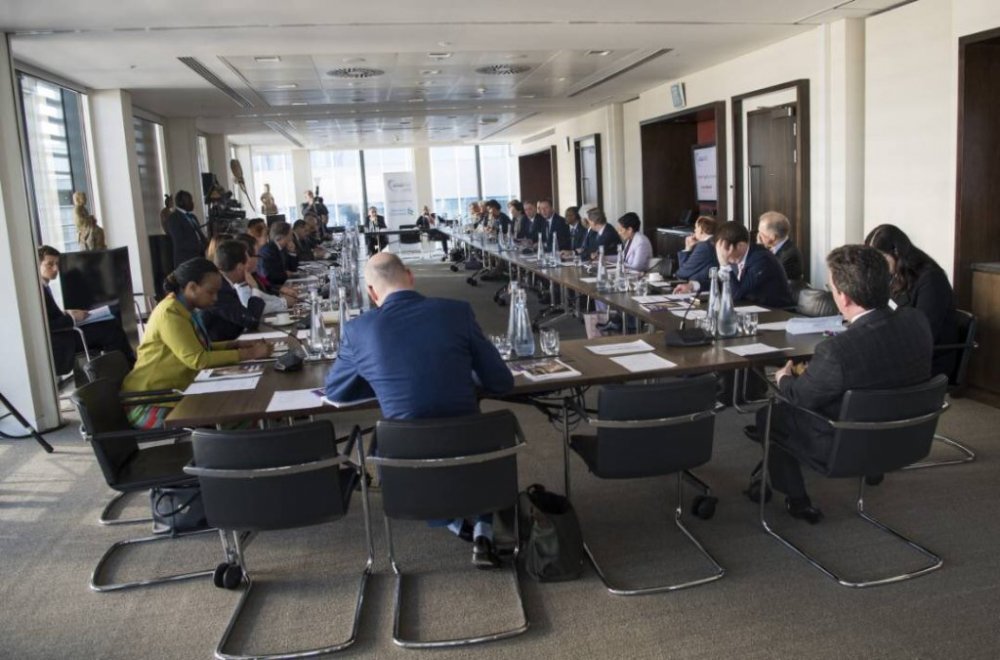
Kagame was speaking Wednesday while participating in a High-level roundtable discussion on the ‘State Fragility, Growth and Development’ in London, United Kingdom ahead of the Commonwealth Heads of Government Meeting.
The discussion focused on encouraging and promoting inclusive economic growth in fragile and conflict situations as a key priority for global security and international development.
“The difference between resilience and fragility is the quality of politics. Are we mindful of the need for accountability and to benefit all citizens without exclusion?,” he questioned.
He challenged sponsors whether they keep putting money into a country without knowing how it is being put to use.
Using an example of Rwanda, Kagame said that the government put a framework in place where both sides could measure the results.
“We involved our citizens as we went along. The story of Rwanda proves that fragility need not be a permanent state. It can be resolved,” he said.
Kagame observed that fragility can affect all countries regardless of level of their economies.
“Fragility, as we have discovered, can affect both small and big states, poor countries as well as rich ones, including multiparty systems. This affects growth and human development,” he added.
The High-level roundtable brought together Heads of Government and senior business leaders from across the Commonwealth and is chaired by Former United Kingdom Prime Minister David Cameron, the Chair of the Commission of State Fragility, Growth and Development.
The new body was established under the Law No 12/2017 of 07/04/2017. It has the responsibilities to carry out criminal and counter-terrorism investigation, crime intelligence, and economic and financial crimes investigations.
The handover event which took place at Police Headquarters in Kacyiru was presided over by Justice Minister Johnston Busingye.
RIB will be supervised by the Ministry of Justice and will have its headquarters in Kacyiru.
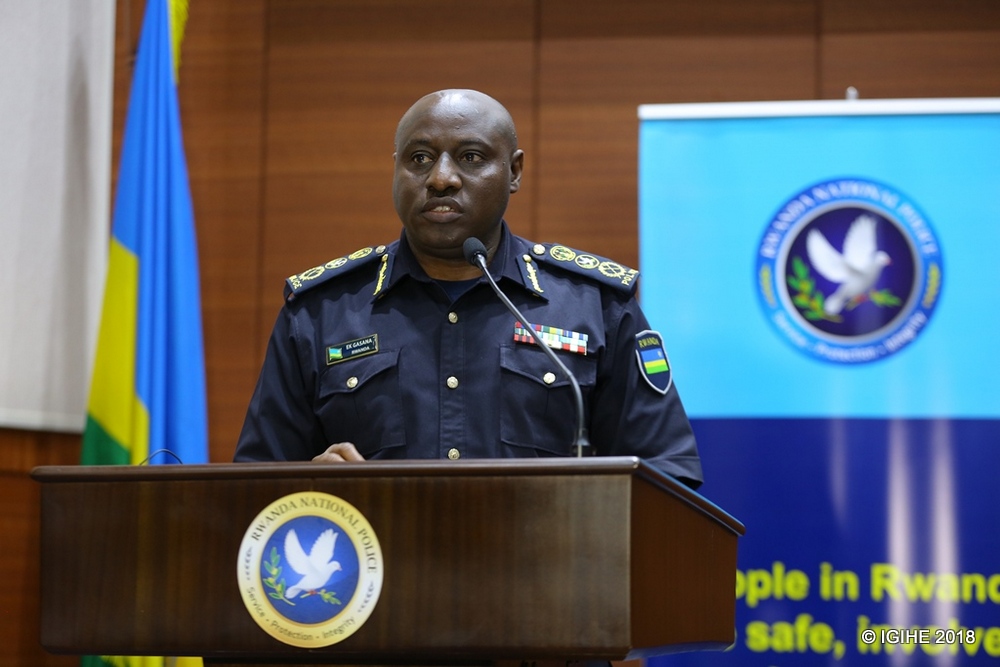
At the handover ceremony also was the Inspector General of Police Emmanuel Gasana; the Secretary General of RIB, Jeannot Ruhunga and Deputy Secretary General Isabelle Kalihangabo.
Speaking at the event, Busingye said that the handover marks the history of the country especially in the rule of law. He said that it is a journey which started back in 1990s and a journey for good and forever.
“I want to thank the great work done by Rwanda National Police in ensuring safety of Rwandans and their property. Police has contributed to the growth of our country and the formation of RIB is proof to that,” he said.
He said that the handover of responsibilities is going to ease the work of all parties in the justice sector and improve professionalism and efficiency.
“RIB was established to continue in the line that RNP has drawn in stopping and dismantling different crimes. I encourage close partnership between both institutions and thrive for good of all Rwandans,” he said.
Speaking at the event, IGP Gasana said that restructuring security organs helps them acquire new knowledge in combating contemporary crimes like cyber-crimes, cross border crimes, terrorism, crimes undermining the economy of the country and drug abuse and trafficking among others.
“RNP will work closely with RIB in our respective responsibilities so that we will leave no vacuum for criminals to occupy,” he said.
“I want to thank the police officers who have been transferred to RIB for the job well done. They are professional and committed officers who contributed greatly to the mandate of the police and I’m certain they will continue to perform exceptionally while in RIB,” he said.
RIB Secretary General, Col Ruhunga, thanked RNP for the efforts invested in building the judicial police to where it is today having contributed to effective justice delivery.
“This is a firm foundation we are going to build on and take it forward,” he said.
RIB has the mission of preventing and pre-empting criminal acts by identifying and investigating all kinds of physical or cyber-crimes.
“The hearing is scheduled for May 14th 2018 in the Supreme Court,” Mutabazi said.
Kizito was arrested in April 2014 with three accomplices. He was charged with complicity in acts against state security.
In February 2015, the High Court in Kigali sentenced Kizito to 10 years in jail after finding him guilty of conspiracy to murder and formation of a criminal gang.
The co-accused, former Amazing Grace Radio Journalist, Cassien Ntamuhanga (escaped prison) was sentenced to 25 years in prison after finding him guilty of formation of a criminal gang, conspiracy against the established government and complicity in a terrorist act.
The demobilized soldier, Jean Paul Dukuzumuremyi was sentenced to 30 years in prison, but, the court acquitted Agnès Niyibizi after they found her not guilty of all charges.
Police rescued the children from Nyagatare District, Karama sector, Ndego cell as they were being transported through Rutoma Village, a porous area.
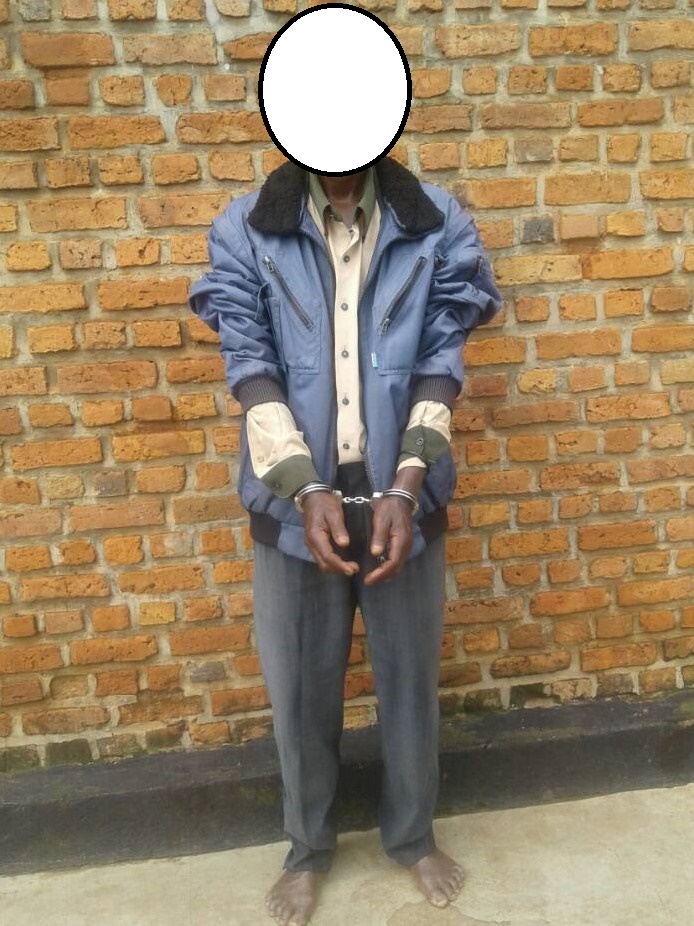
Police also arrested Lambert Semana 48 who was transporting the children. The suspect claims to have agreed with the parents of the four minors to carry-out the illegal act.
Preliminary investigations reveal that parents of the four children aged between the ages of 13-15 connived with Semana to take them to a place known as Gahondo in Uganda for purposes of herding goats for a pay.
According to the laws, the four children fits within the classification of minors that not permissible for the kind of work they were being taken to do.
The Eastern Region Police Spokesperson Chief Inspector of Police (CIP) Thobald Kanamugire said that the children have since been reunited with their parents.
He said the minimum employment age in Rwanda is 16 years. Children between the ages of 16 to 17 are, however, allowed to perform some limited activities and work as stipulated by the law.
Children aged between the ages of 13 to 15 are allowed to perform light work, including domestic work and other family income generating activities inside or outside of their household, in not more than 20 hours a week.
The penal code punishes child labour with imprisonment term of up to seven years and a fine of up to Rwf500, 000.
“If it’s established that parents were involved they will also be held liable to the act,” Kanamugire said.
Rwanda’s laws prevent child labour by making education compulsory up to age 14 and prohibiting their employment in hazardous occupations.
The memorial site comes as a response to bodies which were buried in unsafe graves in sectors of Muyira, Kibirizi, Busoro, Ntyazo and Kigoma.
Over 100,000 Tutsi were killed in these sectors formerly known as Amayaga region.
After the 1994 Genocide Against the Tutsi, some bodies were found and buried in different graves across different sectors.
In Muyira sector alone, there are two graves with each having remains of over 26,000 victims. Another grave is in Nyamure Sector with over 22,300 bodies.
Speaking to IGIHE, the Executive Secretary of Muyira Sector, Valens Murenzi said that in the post genocide period, the government had no means of constructing memorial sites, but today it has started to construct it to accord decent burial to genocide victims.
“In Muyira Sector alone, over 52,000 Tutsi were killed during the genocide. Remains of over 89,000 victims bodies who were killed in Amayaga region will be interred in the memorial which will be completed at a cost of Rwf400 million,” he explained.
He said that construction activities are ongoing and the memorial is expected to be completed by 2019.
“The memorial has two phases, the first phase is construction of mass grave which has started and the second phase is the construction of a history gallery which will be funded and constructed in next year’s budget,” he explained.
Genocide survivors welcomed the memorial saying that their slain families will be rested in a dignified place.
“Having genocide victims rested in a safe and dignified place makes us happy, it comforts us and then we work towards development,” said André Ntambara a genocide survivor from Muyira Sector.
The reforms are part of the government’s reforms to improve the business climate in the country.
According to RDB, currently, exporters are able to obtain certificates of origin online. And also are able to apply for the phytosanitary certificate from the Ministry of Agriculture and Animal Husbandry online, a move that has facilitated businesses that export tea, coffee and other agricultural produce.
In terms of electricity provision, Rwanda Energy Group (REG) has introduced a client charter, ensuring that investors are connected to the national grid in not more than 20 days, down 34 days. Also, REG customers can apply online to get connected to the national grid.
In addition, in order to simplify the purchase of the equipment needed for electricity connection such as transformers and cables, REG works with authorized suppliers to reduce the import costs of the equipment while ensuring the quality of equipment.
Alongside the introduction of Rwanda Utilities Regulatory Agency (RURA) guidelines governing electricity outages to industry, which place sanctions on electricity outages that last more than ten minutes, the automation of System Average Interruption Duration Index (SAIDI) and System Average Interruption Frequency Index (SAIFI) systems, will allow REG to better monitor the frequency and duration of electricity outages.
RDB statement says that in order to ease the challenges in the construction sector, Rwanda has introduced various reforms to reduce bureaucracy in obtaining construction permits.
Today Rwanda utilizes a risk-based approach in the Environmental Impact Assessment (EIA) of projects. In addition, specific construction projects will be exempted from carrying out geotechnical studies before construction commences.
In a new move, businesses will be no longer mandated to indicate the commencement date of construction before obtaining construction permits.
RDB says that these reforms will reduce the cost and duration of construction projects in Rwanda.
Commenting on the reforms that the Government of Rwanda has instituted, the Chief Executive Officer of the Rwanda Development Board, Clare Akamanzi said the new reforms will improve services delivery.
“This year we will introduce new reforms in addition to the ones that are being announced today. These reforms will include revised insolvency laws, improved contract enforcement and credit monitoring mechanisms,” she said.
Ease of doing business is aligned with the government’s policy of transforming Rwanda into a private sector-led country.
She said that these business reforms are a significant tool in improving and promoting the business environment in the country through the shared effort of all institutions involved.
“We need to continue working hard to improve our business and investment climate so that Rwanda continues to enable the growth of our private sector and increase foreign direct investment”, she said.
Rwanda was ranked the second easiest place to do business in sub- Saharan Africa and the 41st globally out of the 190 economies assessed in the 2017 World Bank Doing Business report.
Last year, the World Bank Doing Business report revealed significant improvements in a number of growth indicators compared to the previous year. According to the report, Rwanda recorded its biggest improvement in the area of property registration as it is ranked second in the World.
The new internet-based electronic billing machine client software “EBM Version 2” will be offered to all Value Added Tax (VAT) registered taxpayers free of charge.
RRA says that the new system offers different options like capturing the stock which will serve as an internal control tool to the taxpayers since they will be able to balance stock and sales to check stock movement.
According to RRA, the new version will also enable easy declaration as users will have instant access to their sales data.
Speaking at the launch of new software on Tuesday, the RRA Deputy Commissioner General, Pascal Bizimana Ruganintwali said that the new system is trusted and comes to solve concerns that were raised by taxpayers.
“Many taxpayers claimed that the EBM machines were expensive and hampered the ease of doing business. The machines have had different technical problems which hampered taxpayers. So, we observed that it was necessary to establish the new system,” he said.
For importers, the programme will enable them to monitor their goods from entry point at customs until the selling point as it is interfaced with Electronic Single Window.
The IT Strategic Advisor to RRA Commissioner General, Jean Louis Kaliningondo said that they will give taxpayers ample time to instal the new machines.
“There will be a time for people who have these EBM machines to shift to the new system;, we are yet to give a precise deadline, but we expect that it will not go beyond June this year,” he explained.
According to RRA, installation started yesterday at RRA headquarters. The RRA encouraged taxpayers to register and get the new software.